Makgeolli and the Rainy Day: Why Koreans Order Pancakes When the Weather Turns

Rain starts, and somebody in the office says it out loud: today is a jeon day. Nobody explains why, because to a Korean the sentence does not need explaining.
Makgeolli is a cloudy, lightly fizzy rice wine, and it is the drink Koreans pair with hot savoury pancakes when it rains. This guide covers what is actually in the bottle, why the rain pairing exists, how to order and pour it, and the one label difference that decides whether you can take a bottle home.
If you have only met soju, this is a different drink in every way that matters. It is cloudy rather than clear, it is served in a bowl rather than a shot glass, and it is weak enough that people drink it through a long lunch.
The confusing part is that it looks like something that should be sweet and tastes like something that should not be. That gap is why the first bowl surprises people.
What is actually in the bottle
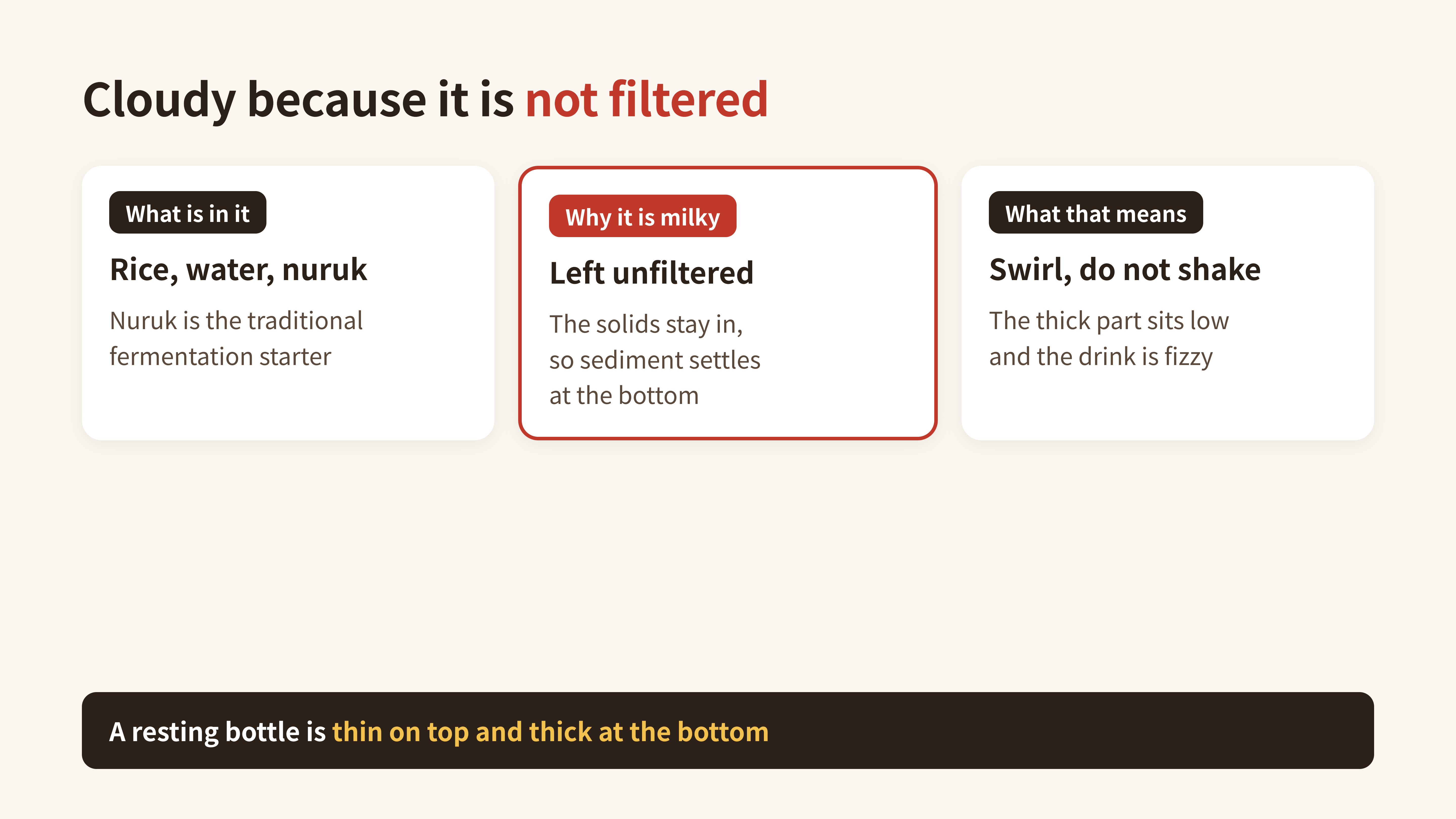
It is made from rice, water and nuruk, a traditional fermentation starter. It is not filtered clear, which is why the liquid is milky and why sediment sits at the bottom of a resting bottle.
That sediment is the reason for the first rule. You turn the bottle gently or swirl it before pouring, because the thick part settles and the top of the bottle is thin and watery. Shaking it hard is a good way to redecorate the table, since the drink is mildly carbonated.
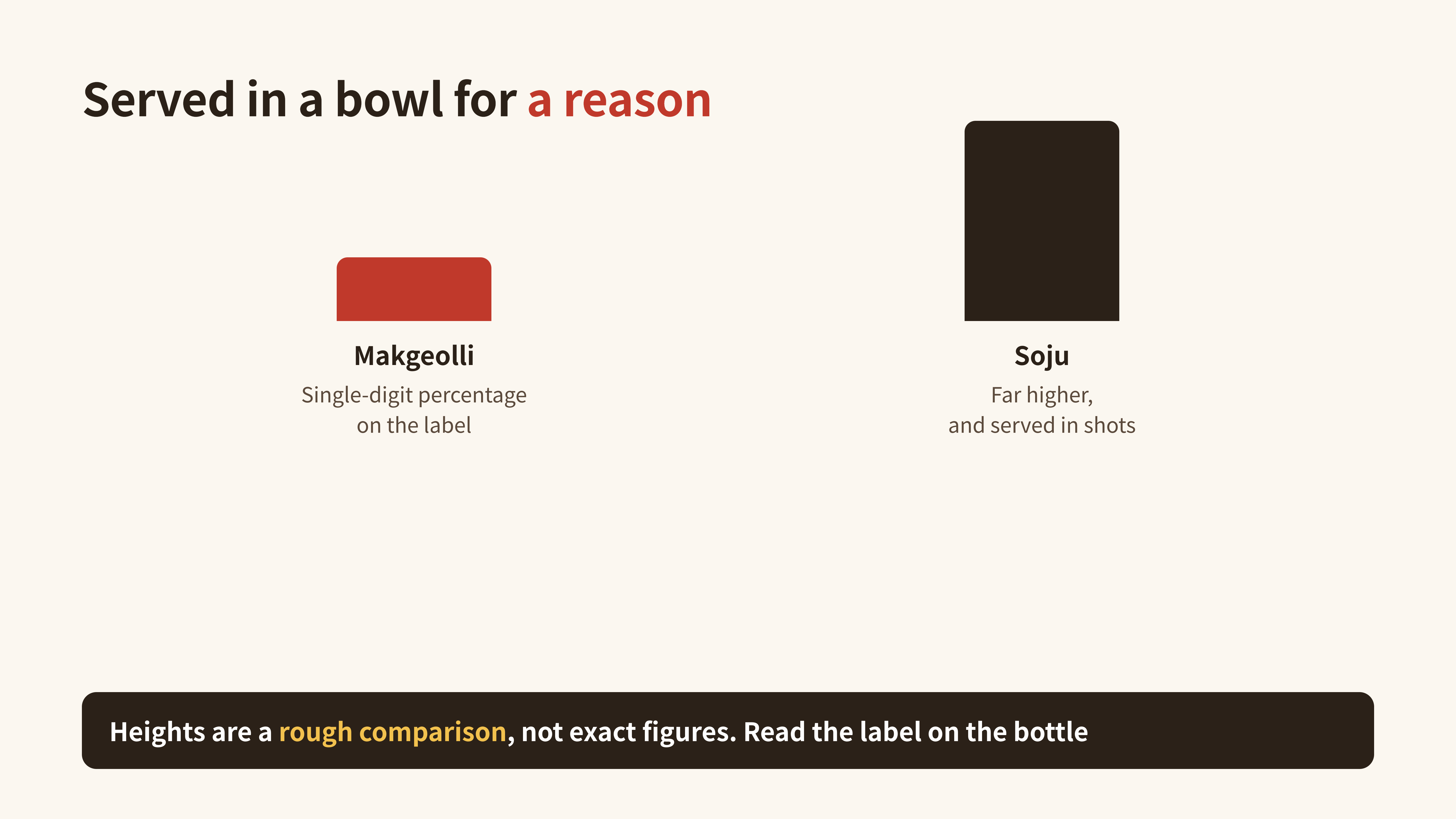
Strength is the second surprise. The label on a supermarket bottle usually states a single-digit percentage, which puts it well below soju. That is why it arrives in a bowl and gets treated as something you sip through a meal rather than something you toast with.
Flavour depends on the maker. Supermarket bottles lean sweet and simple, while craft breweries produce versions that are drier, fruitier or heavier. If you have tried one bottle and decided you dislike it, you have tried one bottle.
The rain thing is real, and the explanation is about sound
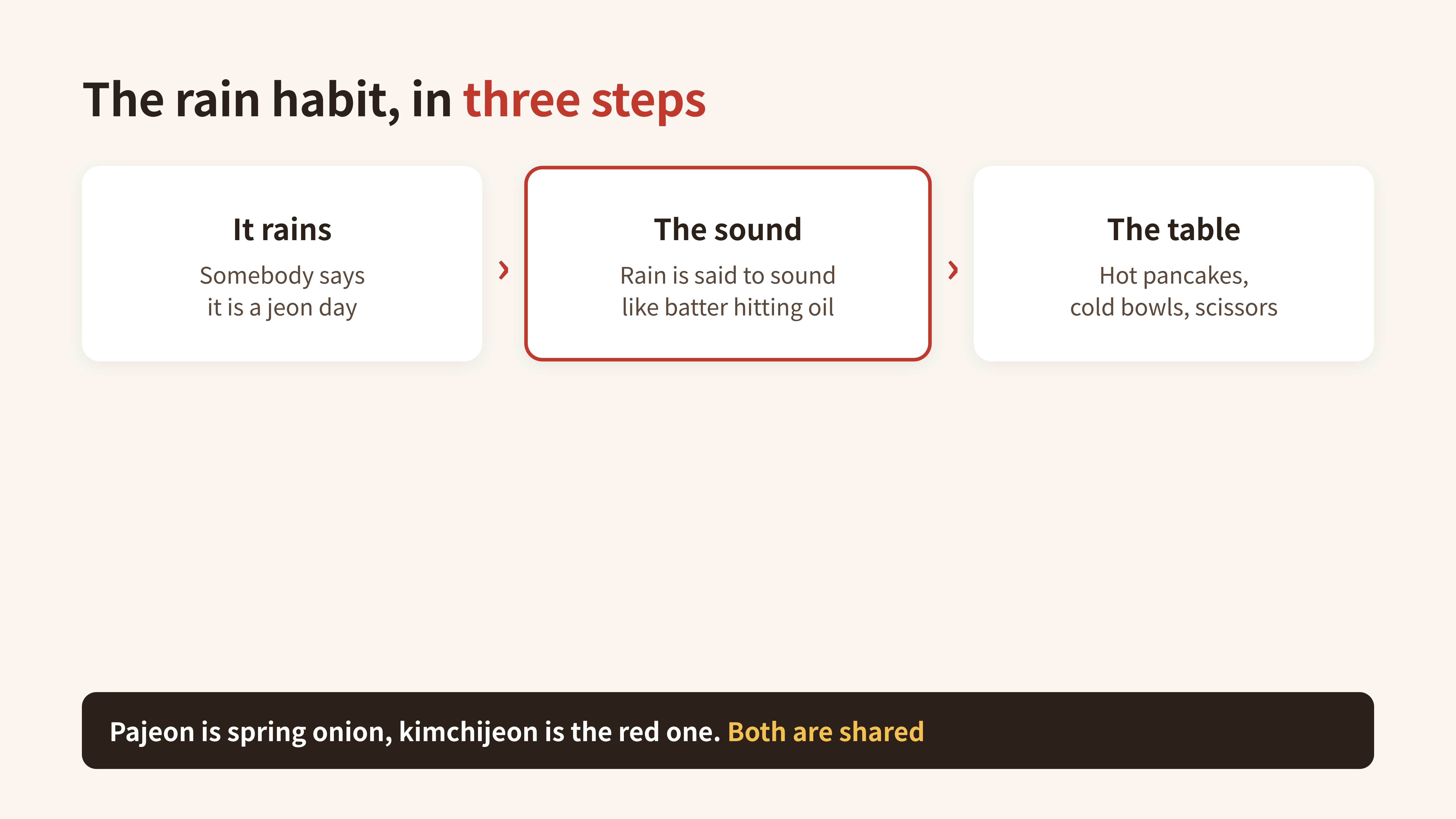
Ask around and you will get the same answer. The sound of rain on a window is said to resemble the sound of batter hitting hot oil, which pulls people towards a jeon place, and jeon is the food that makgeolli belongs with.
Whether the explanation is the real cause matters less than the behaviour, which is consistent. On rainy days the queues outside pancake places in markets get longer, and delivery apps push the same thing.
What arrives is a plate of savoury pancakes. Pajeon is the spring onion version, often with seafood mixed in, and kimchijeon is the sharper, red one. Both come hot, both are cut with scissors at the table, and both are shared.
The pairing has a practical side too. The pancakes are oily and salty, and the drink is cold, slightly sour and lightly fizzy, so one resets your mouth for the other.
Ordering and pouring without getting it wrong
In a jeon restaurant the drink often arrives in a kettle with shallow bowls rather than in the bottle it came from. Pour into the bowl, not to the brim, and expect to finish it faster than you planned because the bowl is wide.
Pouring follows the same courtesy as the rest of Korean drinking. You pour for the people next to you rather than for yourself, and you let someone else fill your bowl. The full set of rules, and the polite way out of a long night, is in our guide to Korean drinking culture.
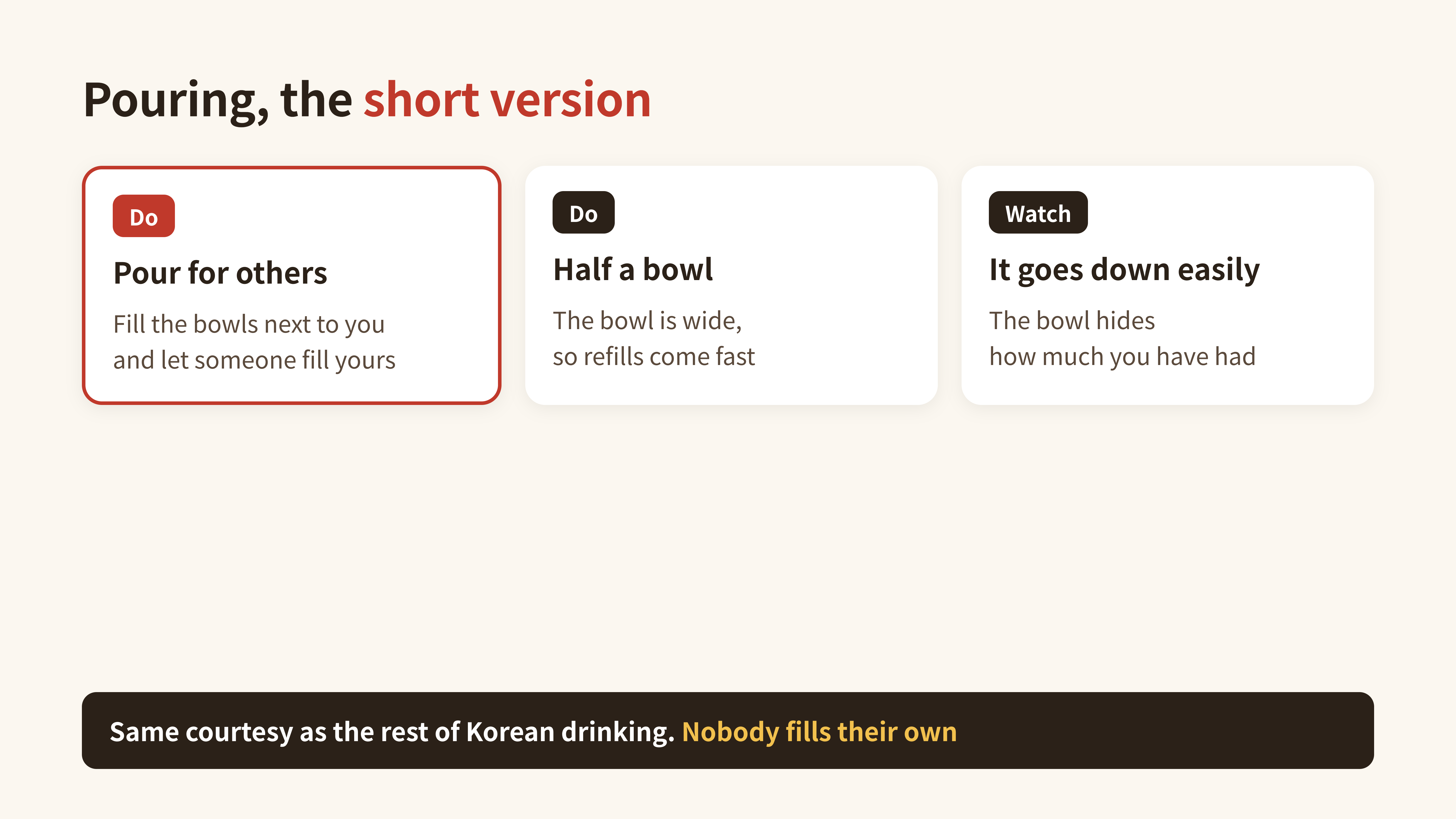
Two practical notes. The bowl hides how much you have had, because refills are constant and the drink goes down easily. And the morning after has its own menu, which is what our hangover soup guide is for.
The label difference that decides what you can take home
There are two kinds of bottle on the shelf, and the difference is not the flavour.
| Type | Where it lives | Travels? |
|---|---|---|
| Unpasteurised, live | The chilled cabinet | No, it keeps fermenting |
| Pasteurised | Room-temperature shelf | Yes, made for distance |
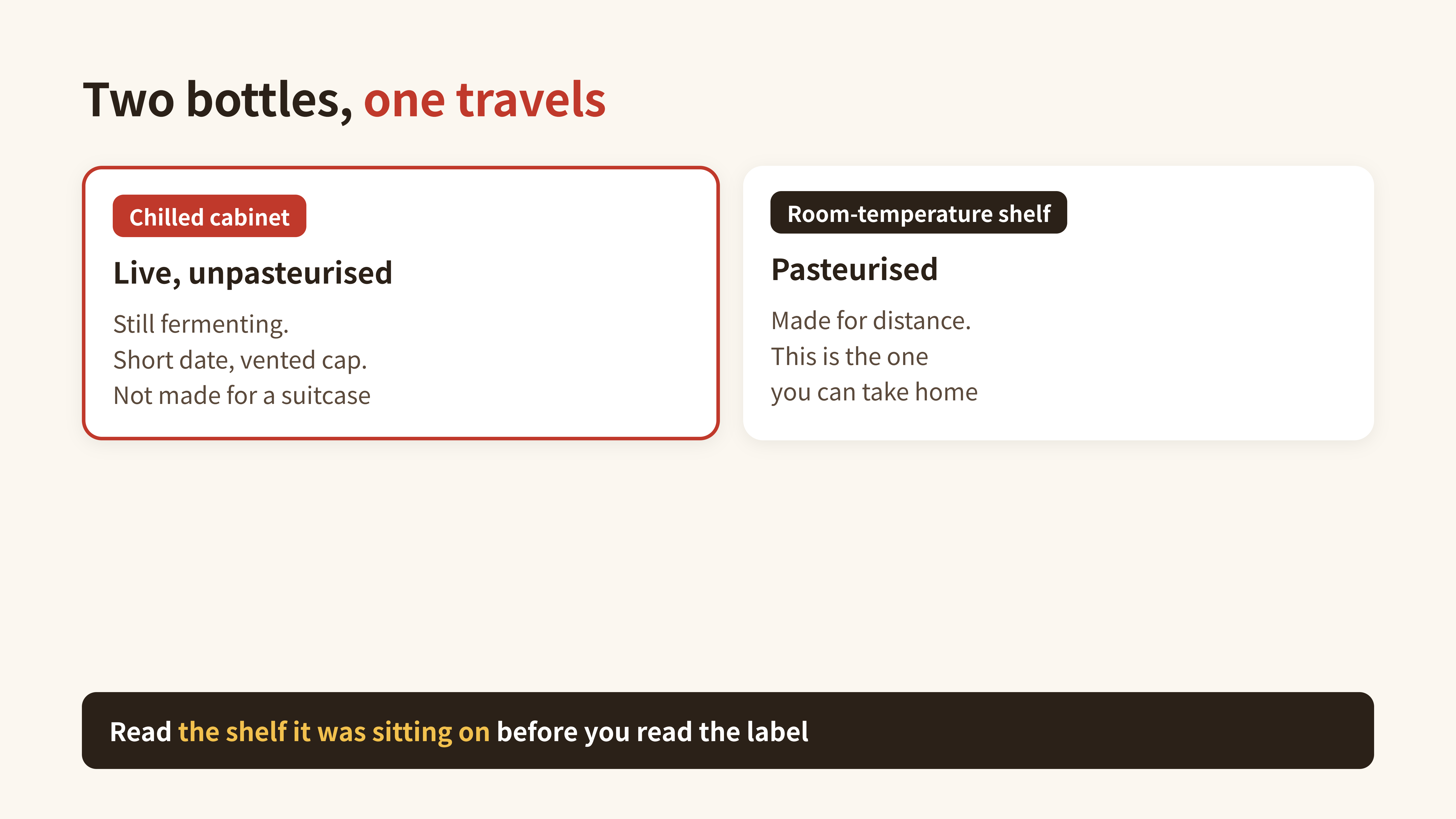
The live version is the one people talk about, and it is also the one that will not survive a suitcase. It is still fermenting, which is why it is refrigerated, why the bottle has a small vent in the cap, and why the date on it is short.
If you want to bring some home, the pasteurised bottles are made for exactly that. If you want the version Koreans mean when they talk about a rainy afternoon, drink it here, cold, with something fried in front of you.
FAQ
What does it taste like?
Lightly sweet and slightly sour, with a milky body and a faint fizz. Supermarket bottles are sweeter, and craft versions can be dry or fruity.
Is it strong?
No. The percentage printed on the label is far below soju, which is why it is served in bowls and drunk through a meal.
Why do Koreans drink it when it rains?
The common explanation is that rain sounds like batter frying, which puts people in mind of jeon, and jeon is what makgeolli is paired with. The habit is consistent whatever the reason.
Do I shake the bottle?
Turn it gently or swirl it. The sediment needs mixing, but the drink is carbonated and hard shaking ends in a mess.
Can I take a bottle back with me?
Only the pasteurised kind, which sits on the unrefrigerated shelf. The chilled, live version keeps fermenting and is not made to travel.
The short version
Makgeolli is a cloudy rice wine, weaker than soju, served in bowls, and tied to rainy days through a plate of hot pancakes. Swirl the bottle, pour for the person next to you, and eat the jeon while it is still hot. If you are buying one to take home, read the shelf it was sitting on before you read the label.
More from this series
2026-09-23
Bungeoppang: The Carts Appear When It Gets Cold, and Most of Them Do Not Take Cards
2026-09-23
The Korean Photo Booth: Nobody Takes Your Photo, and That Is the Point
2026-09-21
Daejeon, Korea: An Hour From Seoul by KTX, and Two Stations Carry the City's Name
2026-09-21
Yuseong Hot Spring: The Foot Bath Is Free and Open Until 10 p.m., and You Cannot Drink the Water
2026-09-19
Seoul Bus: The Colour Tells You Where It Goes, and Some of Them No Longer Take Cash
2026-09-18
Hangul Day: The Alphabet's Birthday Lost Its Day Off for 22 Years, and Its Museum Is Shut Until 2028
2026-09-15
Namdaemun Market Opening Hours: The Market's Own List Has 38 Timetables, and Some Floors Open at 11 p.m.
2026-09-15
Hair Salon in Seoul: The Final Price Must Be on the Wall, and Only a Barber May Shave You
2026-08-28
DMZ Tour: You Can Still Go. The JSA Is the Part You Cannot.
2026-08-28
Gyeongju Food: The Famous One Is a Souvenir, and the Meal Is Next to the Tombs
2026-08-28
Bulguksa Temple: There Is No Direct Bus to Seokguram, and You See the Buddha Through Glass
2026-08-27
Gyeongju From Seoul: Two Hours by KTX, and Then the Part Nobody Plans For
2026-08-27
Gyeongju: Three Separate UNESCO Listings, and Why One Day Does Not Cover Them
2026-08-27
K-ETA Korea: You Are Probably Exempt, and the Arrival Card Is What Catches People
2026-08-18
Autumn in Korea: Don't Pick the Dates, Pick the Latitude
2026-08-18
Hospital in Seoul: Why Koreans Don't Start at the Big One
2026-08-18
Korean Drinking Culture: The Rules Are Real, and So Is the Way Out
2026-07-31
Famous Korean Street Foods You Must Try (Yes, Including the Viral Buldak Omelette)
2026-07-31
What Is Silbi Kimchi? Korea's Spiciest Kimchi — and the Local Hack You Need to Know