Autumn in Korea: Don't Pick the Dates, Pick the Latitude

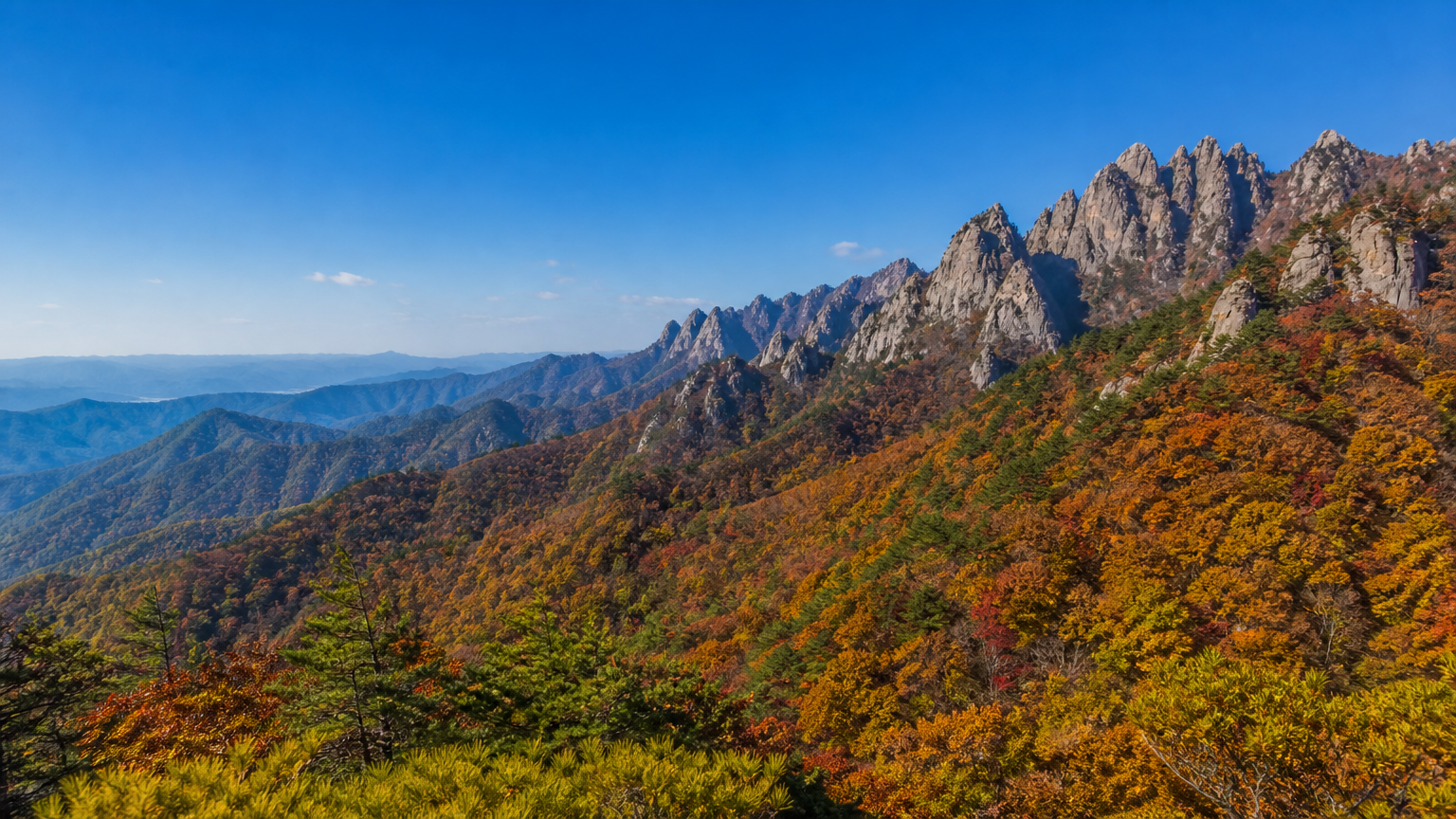
Everyone who plans a trip around autumn in Korea asks the same question first: what week should I come?
It is the wrong question, and it is the reason so many people arrive to find bare branches in one province and green leaves in another on the same trip.
The colour is not an event that happens to the country on a date. It is a line that crosses the country, from the northeast down to the southwest, at a measurable speed. Once you know the speed, you stop guessing at dates and start choosing a place instead.
What "peak" actually means, officially
The Korea Meteorological Administration does not use the word loosely. It observes autumn colour the way it observes frost or the first snow, with a written definition.
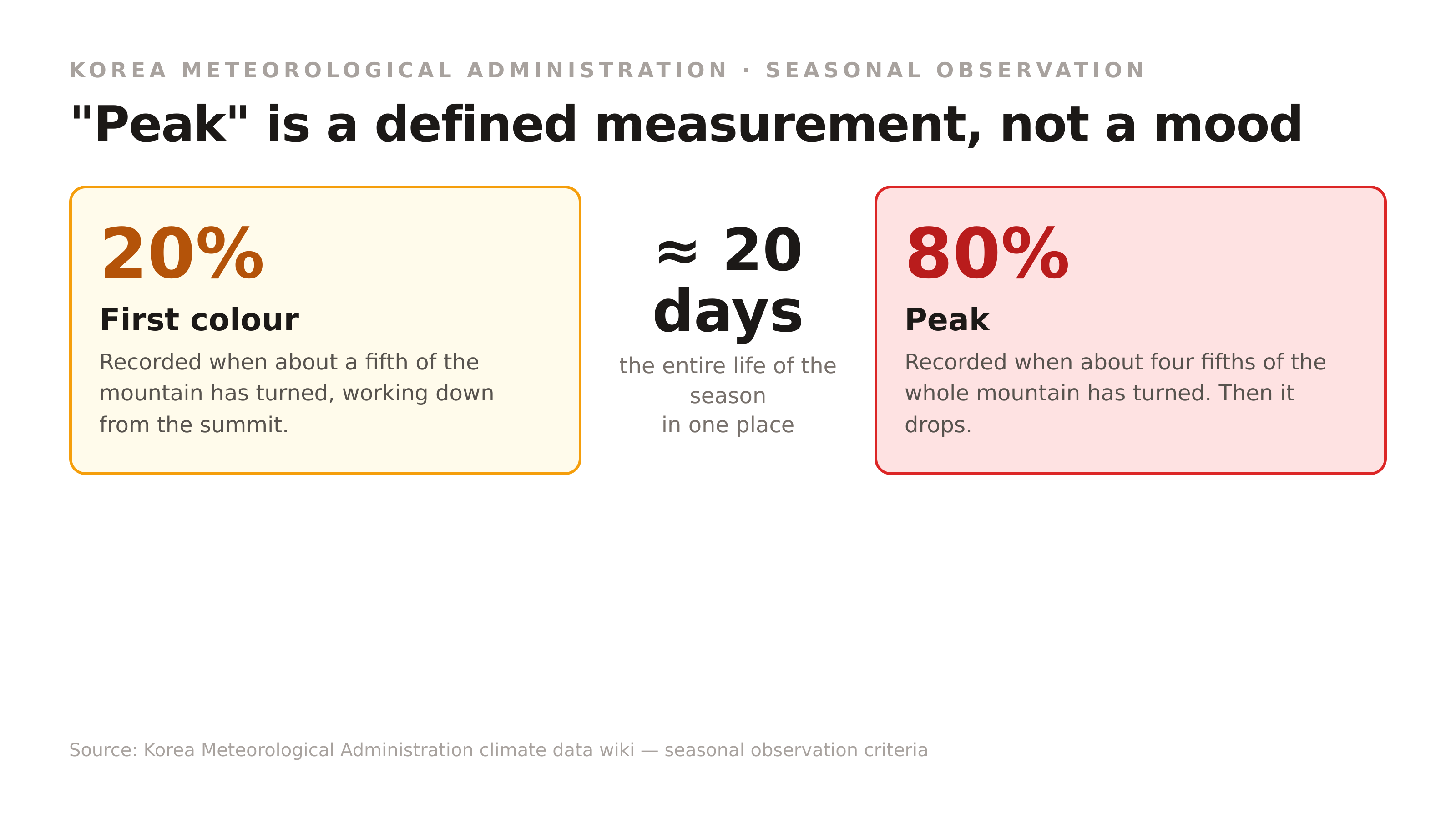
For a mountain, the first colour is recorded when roughly 20% of the mountain, working down from the summit, has turned. Peak is recorded when about 80% of the whole mountain has turned.
And the gap between those two moments is the number that matters: peak arrives roughly 20 days after the first colour appears.
That is the entire life of the season in one place. Three weeks from the first hint at the summit to full colour at the base — and then it drops.
The line moves 20 to 25 kilometres a day
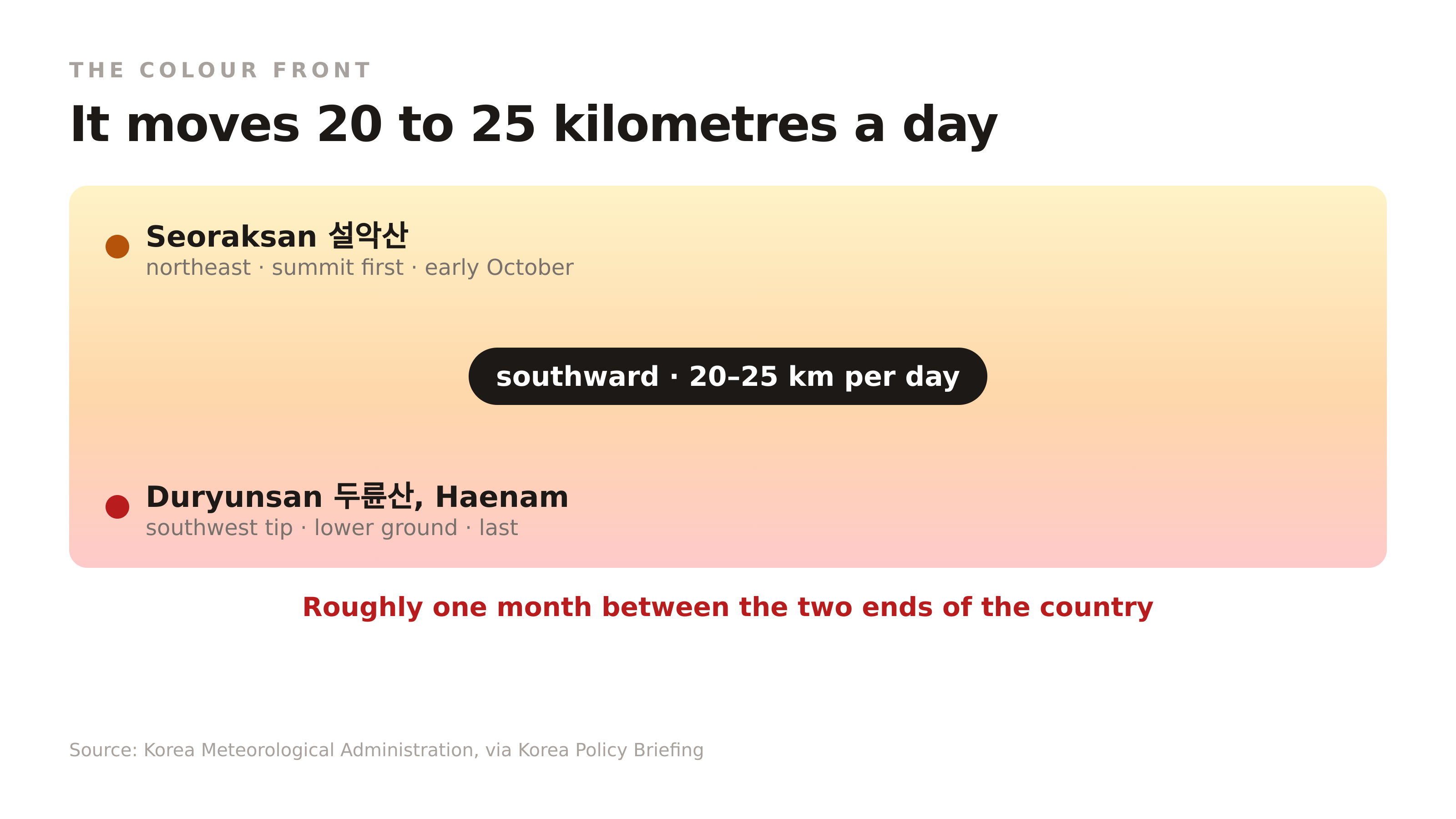
Here is the part that turns a guess into a plan. The colour front does not sit still. According to the Korea Meteorological Administration, it advances southward at about 20 to 25 kilometres per day.
Run that across the length of the peninsula and you get the number that should shape your trip: between the first colour on Seoraksan in the northeast and the first colour on Duryunsan in Haenam at the southern tip, there is roughly a month.
| Where it starts | Where it ends | |
|---|---|---|
| Direction | Northeast (Seoraksan) | Southwest (Haenam) |
| Elevation | Summit first | Base last |
| Gap between the two ends | — | About one month |
A month is an enormous window. It means that on almost any day from early October to early November, somewhere in this country is at peak. It just may not be the somewhere you booked.
So the question is where, not when
Once you accept the line is moving, planning inverts. You do not pick a week and hope. You pick your week first — because of work, flights, whatever fixes it — and then you pick the latitude that will be peaking then.
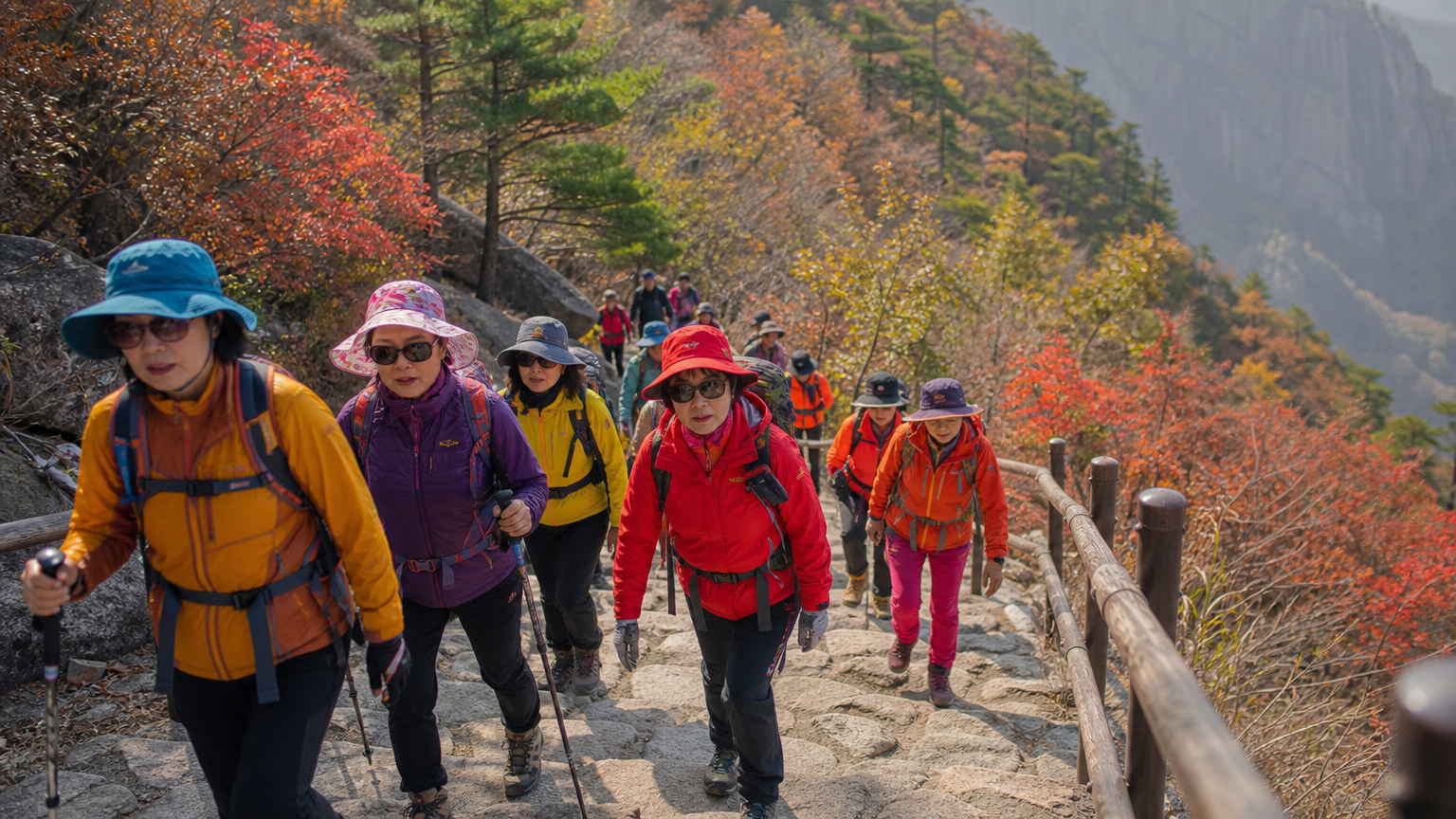
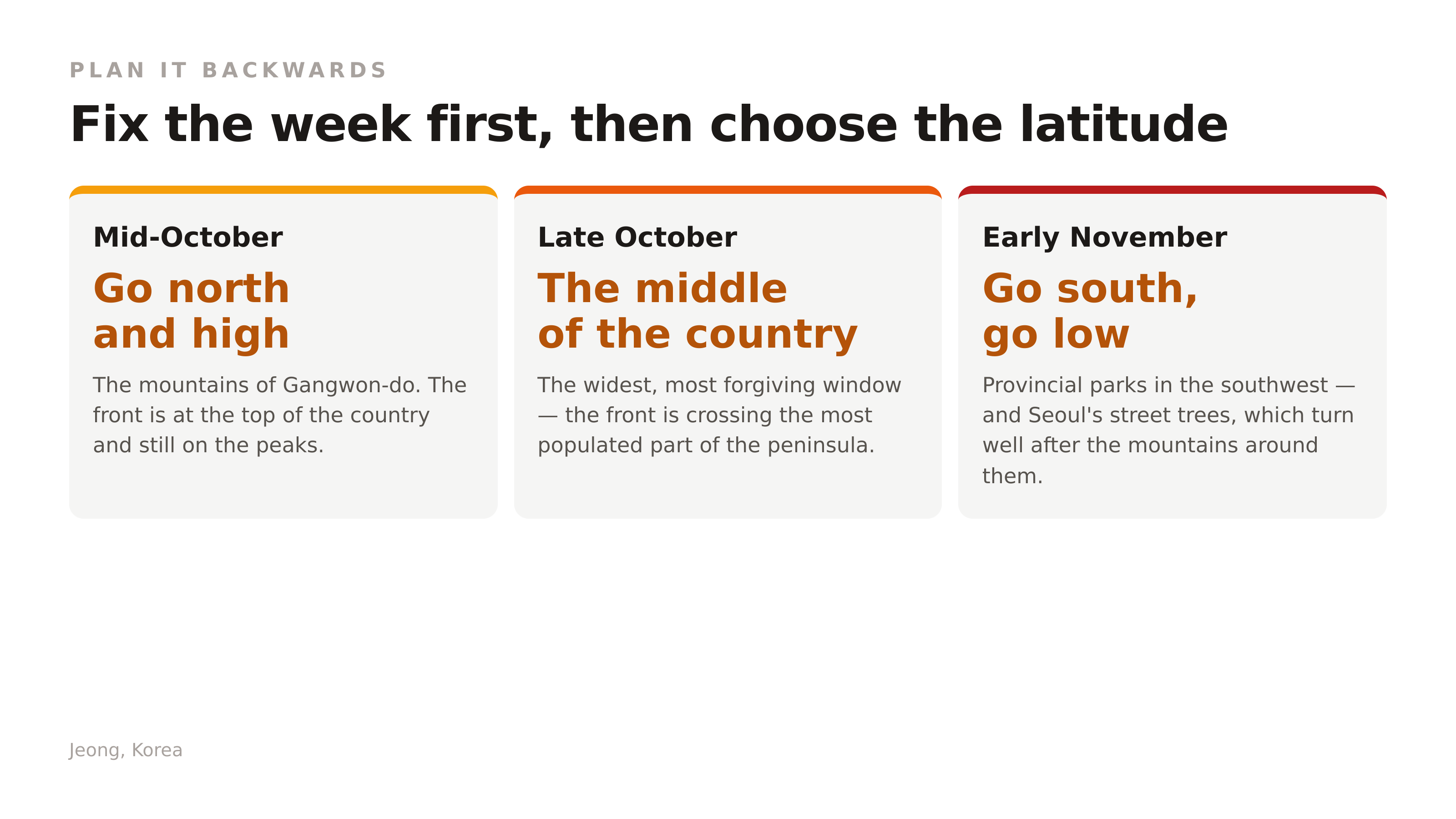
Locked into mid-October? Go north and go high. The mountains of Gangwon-do are where the colour is that week.
Locked into late October? The middle of the country. This is the widest, most forgiving window, because the front is crossing the most populated part of the peninsula.
Locked into early November? Go south, and go to lower ground. Provincial parks in the southwest, and the city trees in Seoul, which turn well after the mountains around them.
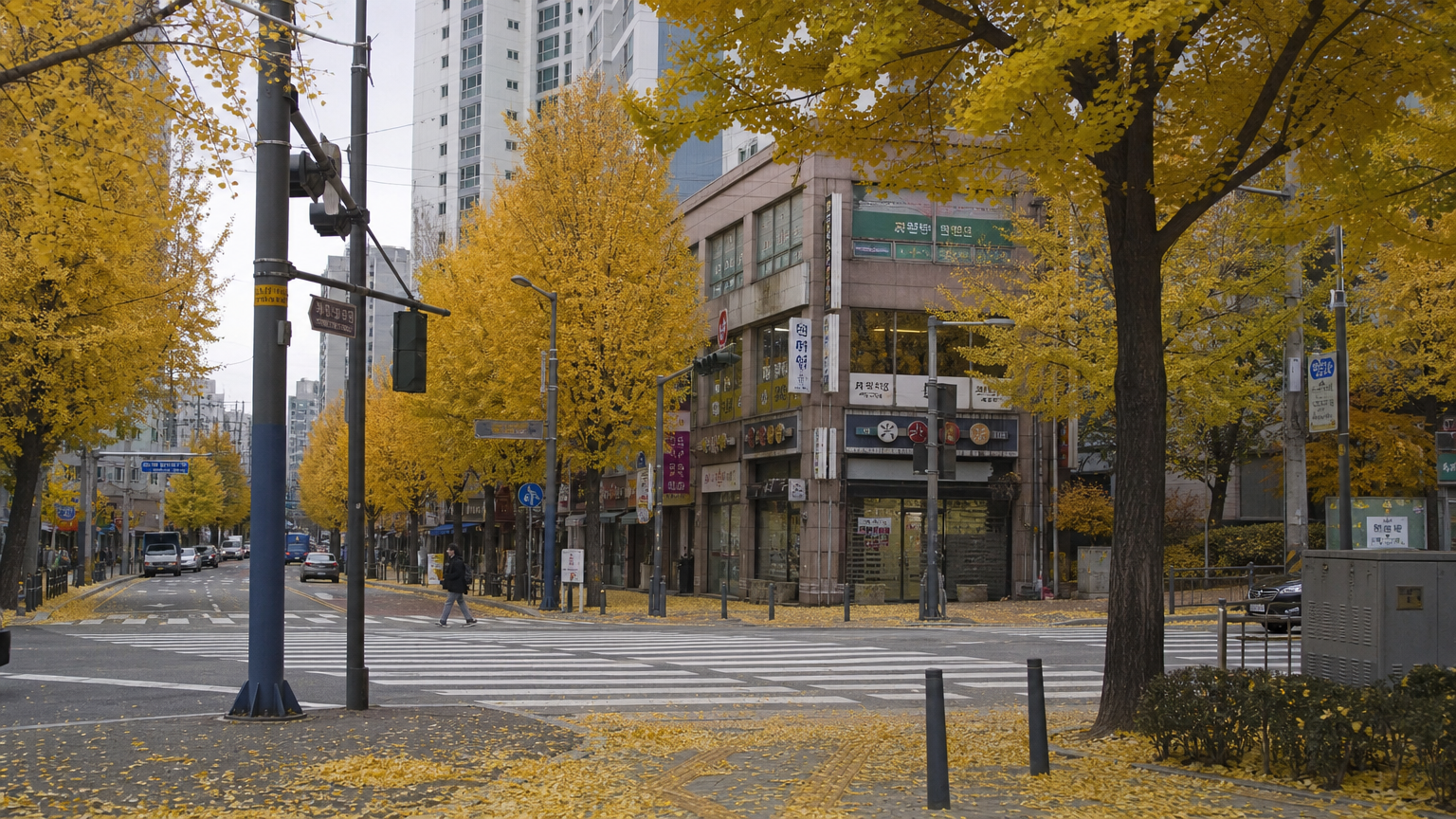
That last point catches people out. Cities lag their own mountains. Concrete holds heat, so the street trees in Seoul are still turning when the peaks an hour away have already gone bare. If you arrive "too late" for the mountains, you are often exactly on time for the city.
What Koreans actually do with it
Autumn in Korea is not primarily a leaf-viewing holiday. It is the two months when everything outdoors that was unbearable in August becomes pleasant, and the country moves outside all at once.
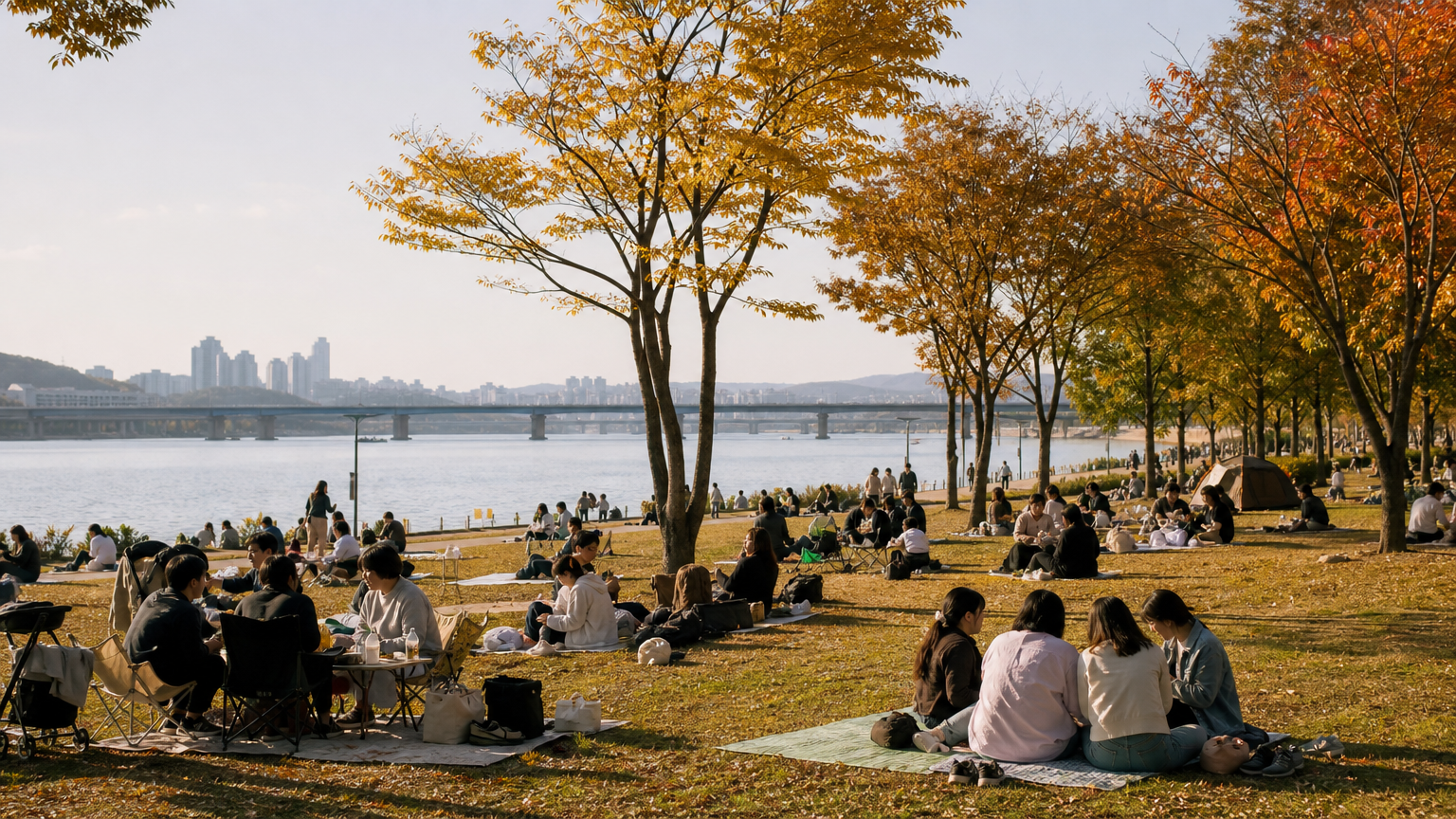
Hiking is the obvious one, and it is genuinely a mass activity here rather than a niche hobby — trailheads on an October weekend are crowded from early morning. Temple grounds and palace grounds fill up. Riverside parks that were empty in the humidity come back to life. Local festivals cluster in these weeks precisely because the weather cooperates.
None of it requires you to be at a famous mountain on the correct day.
Planning it without a forecast
The specific forecast for any given year is published by the Korea Meteorological Administration and the Korea Forest Service, and it does not appear until around late September. If you are planning earlier than that — which most people are — you are working from the pattern, not the prediction.
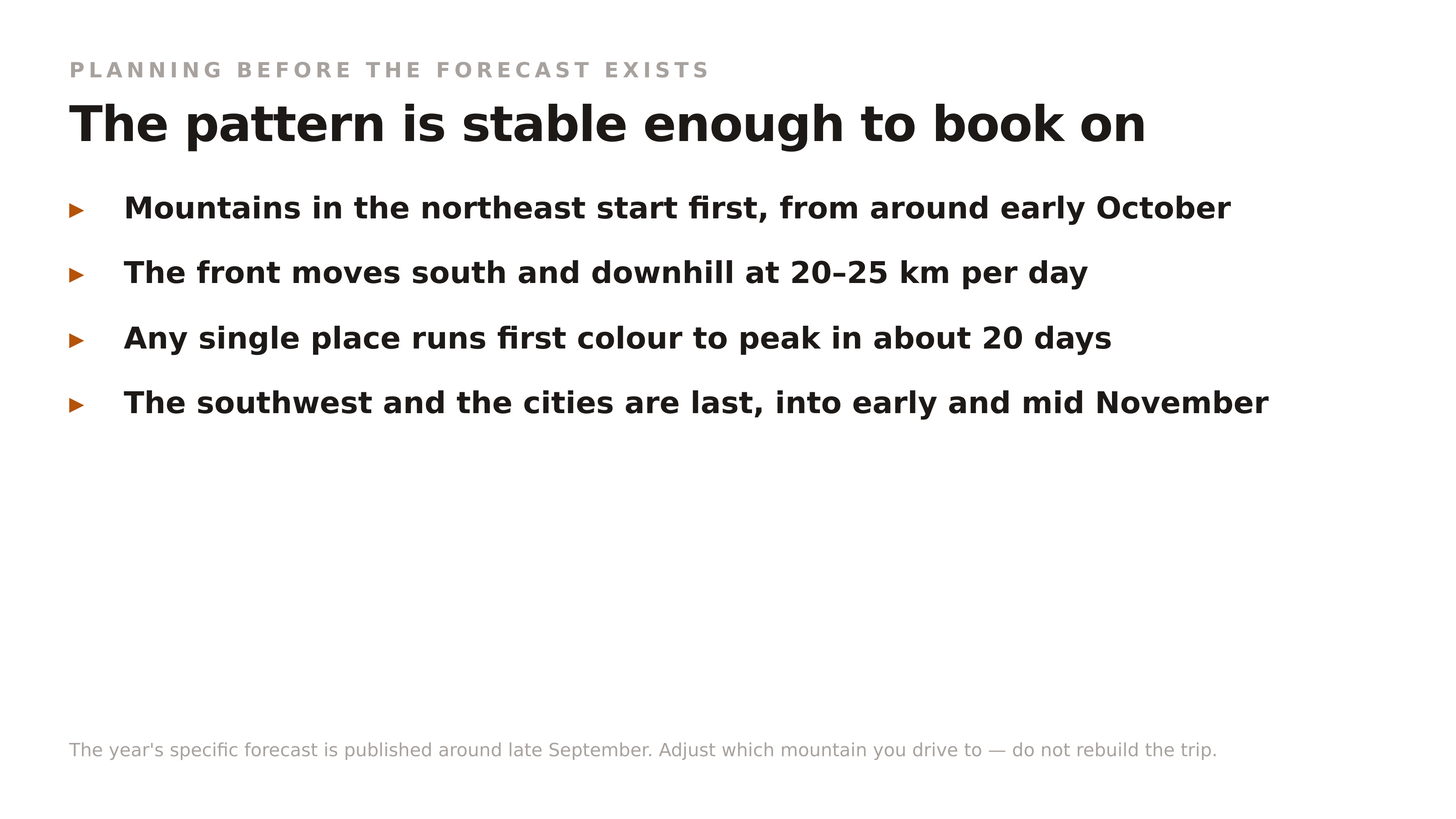
The pattern is stable enough to plan on:
-
Mountains in the northeast start first, from around early October
-
The front moves south and downhill at 20 to 25 km per day
-
Any single place goes from first colour to peak in about 20 days
-
The southwest and the cities are last, into early and mid November
Check the actual forecast once it is out, and adjust which mountain you drive to. Do not rebuild the trip around it.
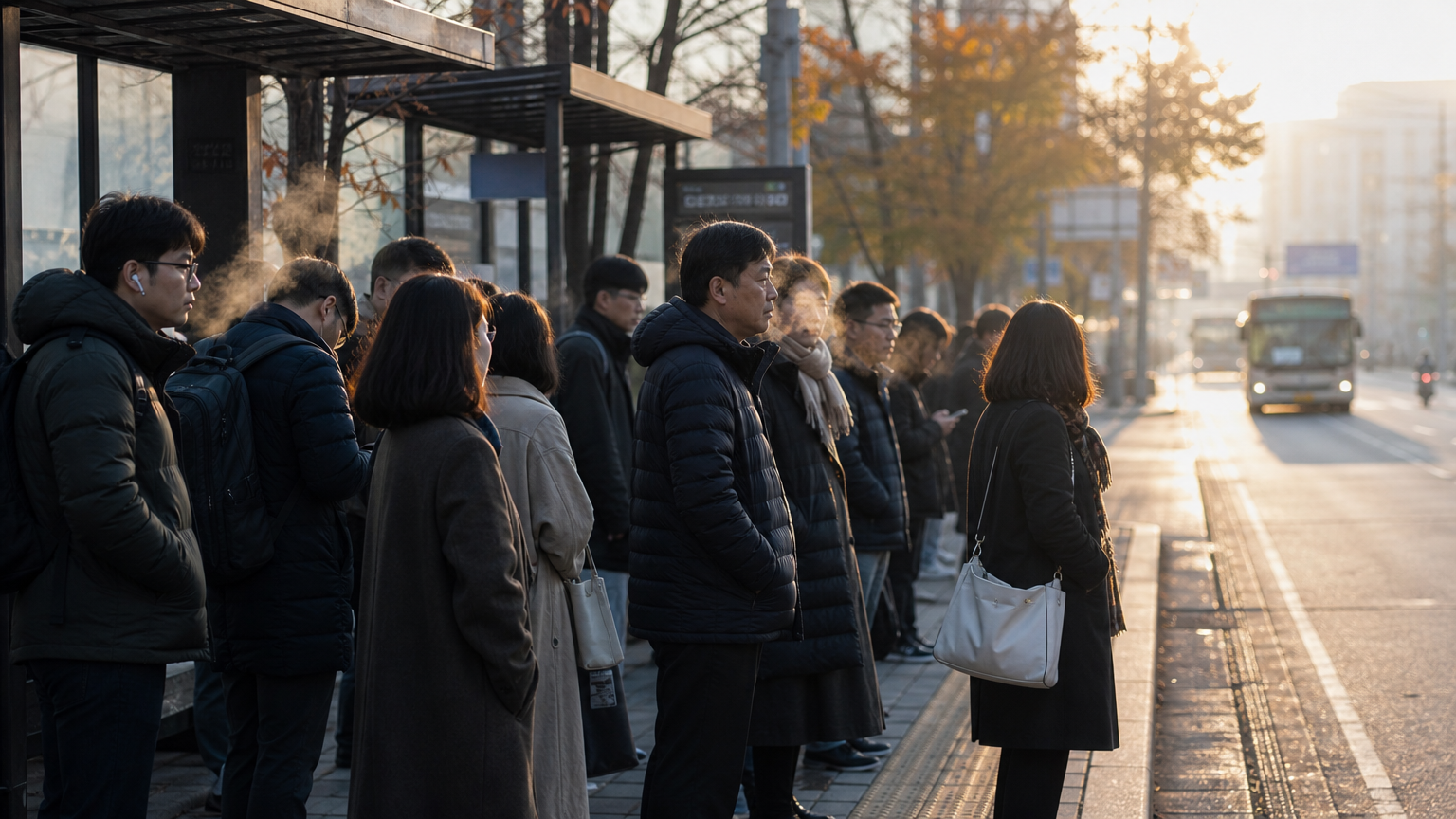
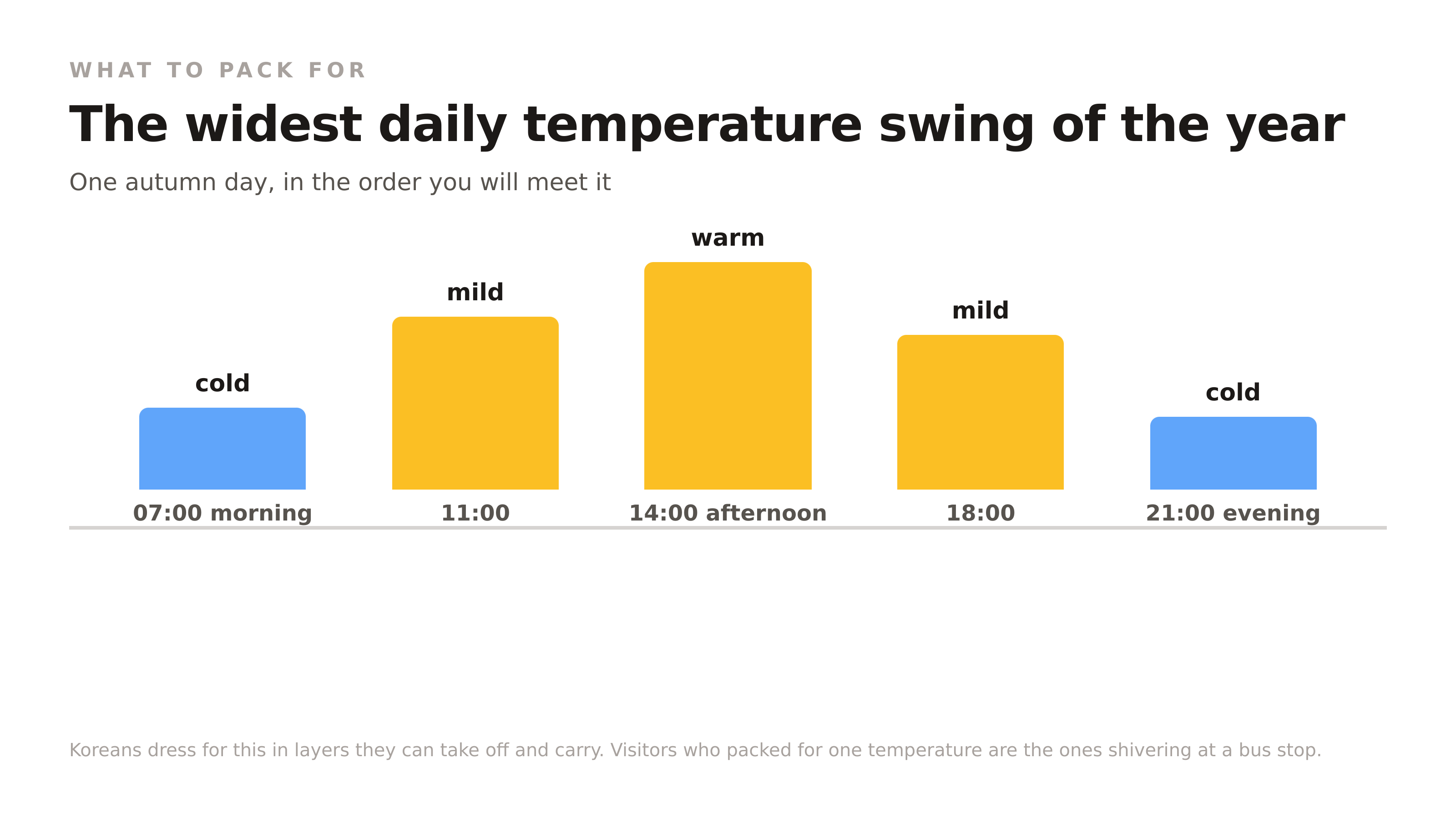
One more practical note that has nothing to do with leaves: this is the season with the widest daily temperature swing of the year. Mornings and evenings run genuinely cold while the middle of the day stays warm. Koreans dress for it in layers they can take off and carry, and visitors who packed for one temperature are the ones shivering at a bus stop at 7am.
FAQ
When is the best time to see autumn in Korea?
There is no single best week, because the colour front takes about a month to cross the country. Mid-October is best for the northeastern mountains, late October for the centre, and early to mid November for the southwest and for the cities. Pick the region that matches the dates you already have.
How long does the colour last in one place?
About 20 days from first colour to peak at a given mountain, and then it declines fairly quickly once the leaves start dropping. Any individual location is a short window, which is exactly why the region you choose matters more than the week.
Do I have to go to a famous mountain?
No, and the famous ones are the most crowded by a wide margin. Because the colour is a latitude-and-elevation phenomenon rather than a property of specific parks, a nearby provincial park at the right latitude will be turning at the same time as the famous one, with a fraction of the people.
Is Seoul itself worth seeing during autumn in Korea?
Yes, and it stays good later than the surrounding mountains. Urban heat delays the street trees, so the city often peaks in early to mid November when the peaks nearby have already finished.
What should I pack for autumn in Korea?
Layers, for a large daily temperature range — cold mornings and evenings against a mild afternoon. If you plan to walk any mountain trail, proper shoes matter more than anything else you bring.
References
-
Definitions of first autumn colour and peak colour in seasonal observation (20% from the summit; 80% of the whole mountain) — Korea Meteorological Administration climate data wiki
-
Southward advance of the colour front at 20 to 25 km per day, and the roughly one-month gap between Seoraksan and Duryunsan — Korea Meteorological Administration, via Korea Policy Briefing
-
Observation of first autumn colour on Seoraksan — Korea Meteorological Administration press release
More from this series
2026-08-18
Hospital in Seoul: Why Koreans Don't Start at the Big One
2026-08-18
Korean Drinking Culture: The Rules Are Real, and So Is the Way Out
2026-07-31
Famous Korean Street Foods You Must Try (Yes, Including the Viral Buldak Omelette)
2026-07-31
What Is Silbi Kimchi? Korea's Spiciest Kimchi — and the Local Hack You Need to Know