Korean Drinking Culture: The Rules Are Real, and So Is the Way Out
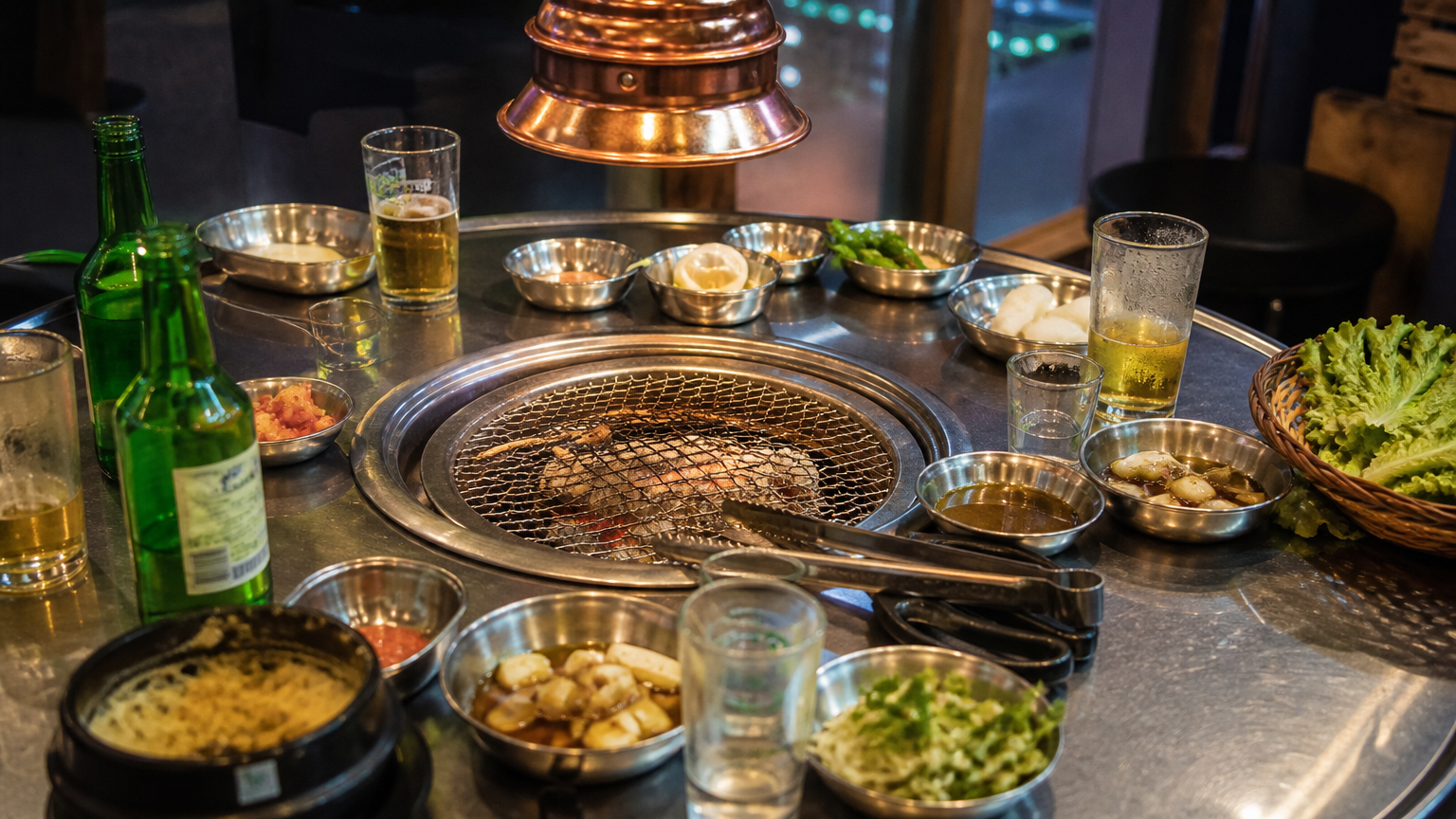
Nearly four in ten Korean adults report at least one heavy-drinking session in a given month. The number itself is not the interesting part. What surprises people is how organised it is — the pouring has rules, the night has numbered stages, and both are learned rather than improvised.
Korean drinking culture is also changing faster than its reputation, in ways that are now written into labour law. Both halves are worth knowing before someone hands you a glass.
What the numbers actually say
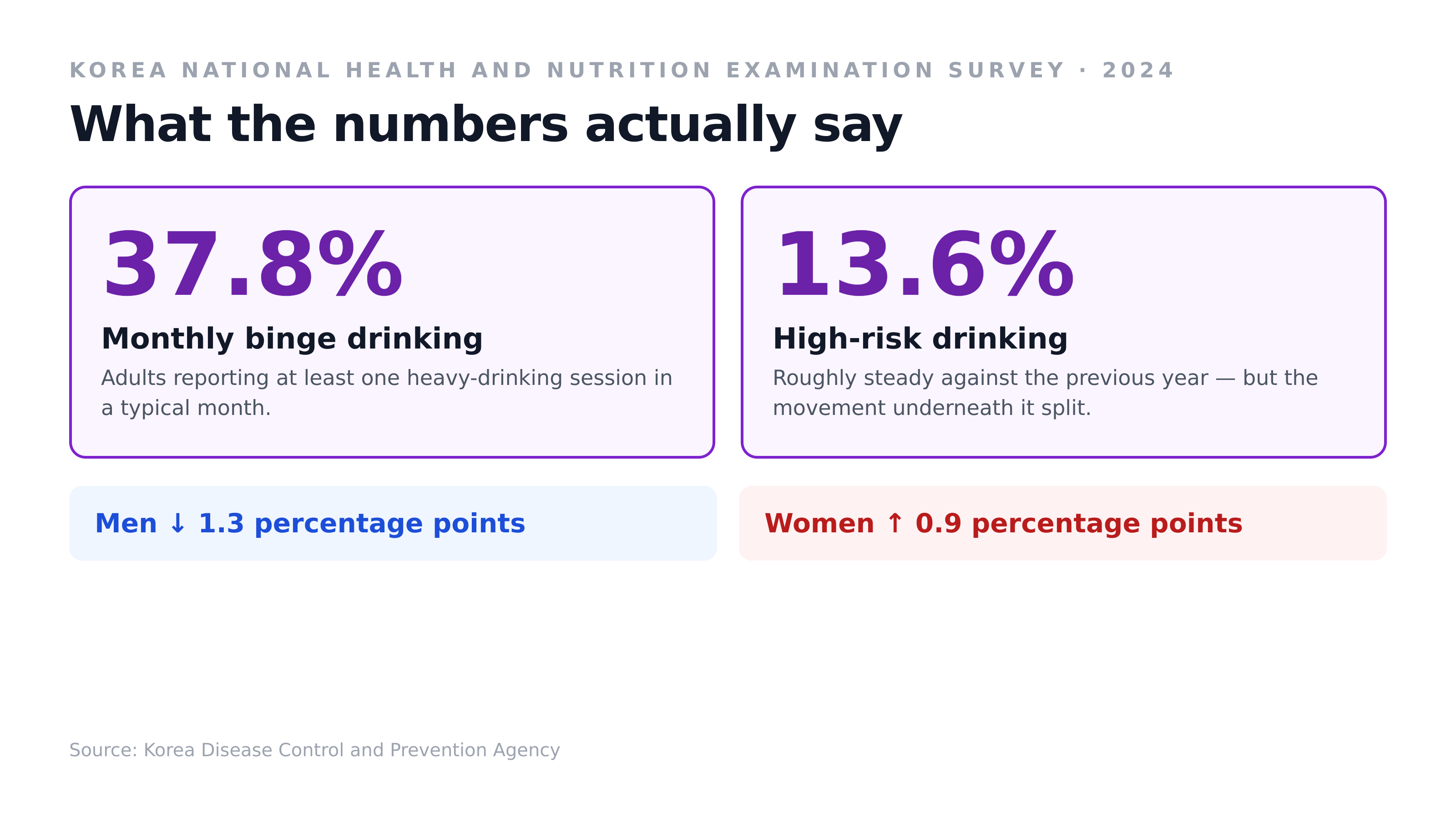
The national health and nutrition survey run by the Korea Disease Control and Prevention Agency tracks this every year.
| Measure | 2024 result |
|---|---|
| Monthly binge drinking rate | 37.8% |
| High-risk drinking rate | 13.6% |
The high-risk figure held roughly steady against the previous year, but the movement underneath it went in opposite directions: down 1.3 percentage points for men, up 0.9 points for women.
That divergence is the shape of the change. The old picture — drinking as a men's workplace obligation — is thinning out, while drinking as an ordinary social activity is spreading.
The pouring rules, in the order you will need them
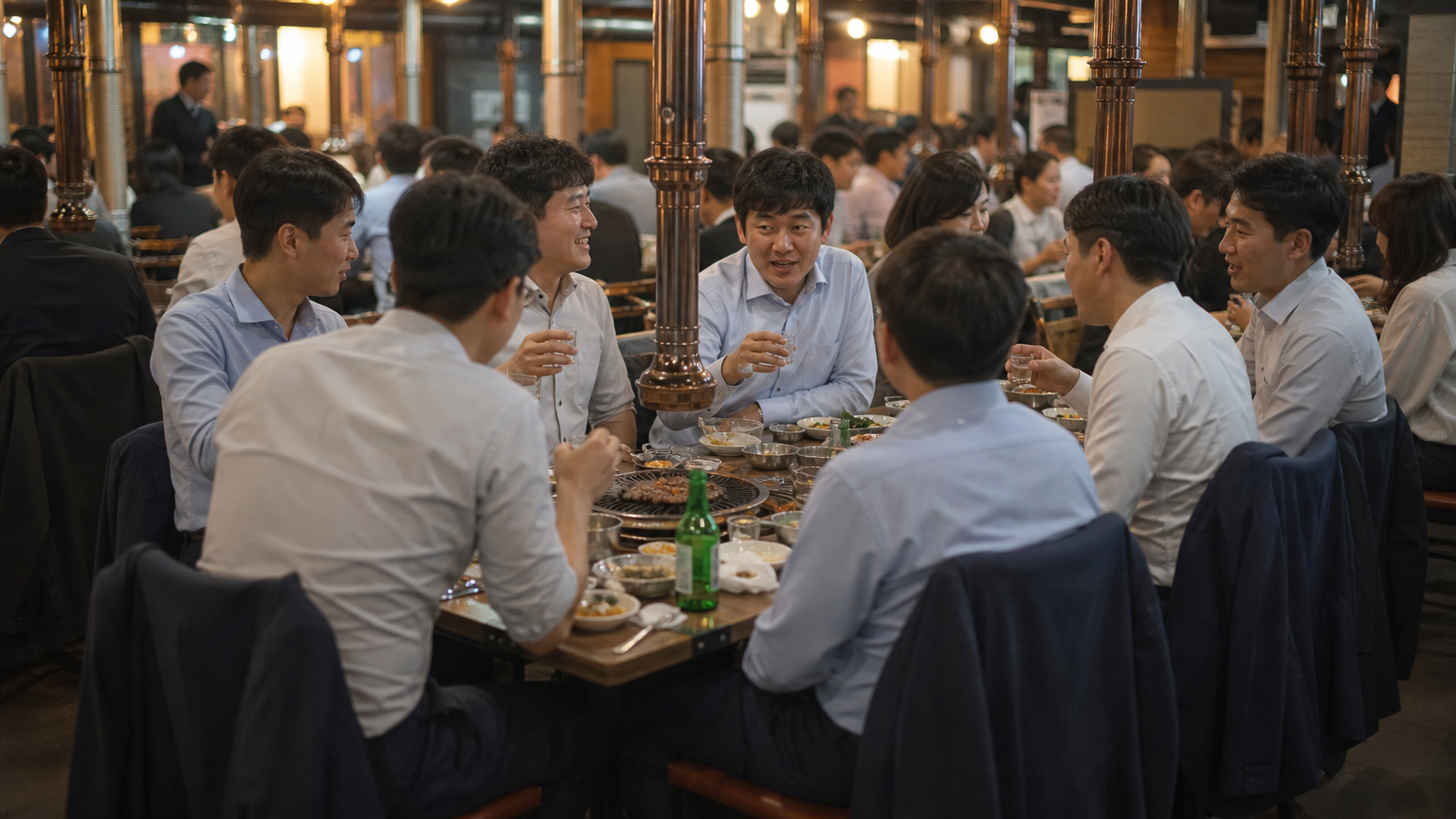
Almost every rule in Korean drinking culture is about the pouring rather than the drinking. Get these four and you will be fine anywhere.
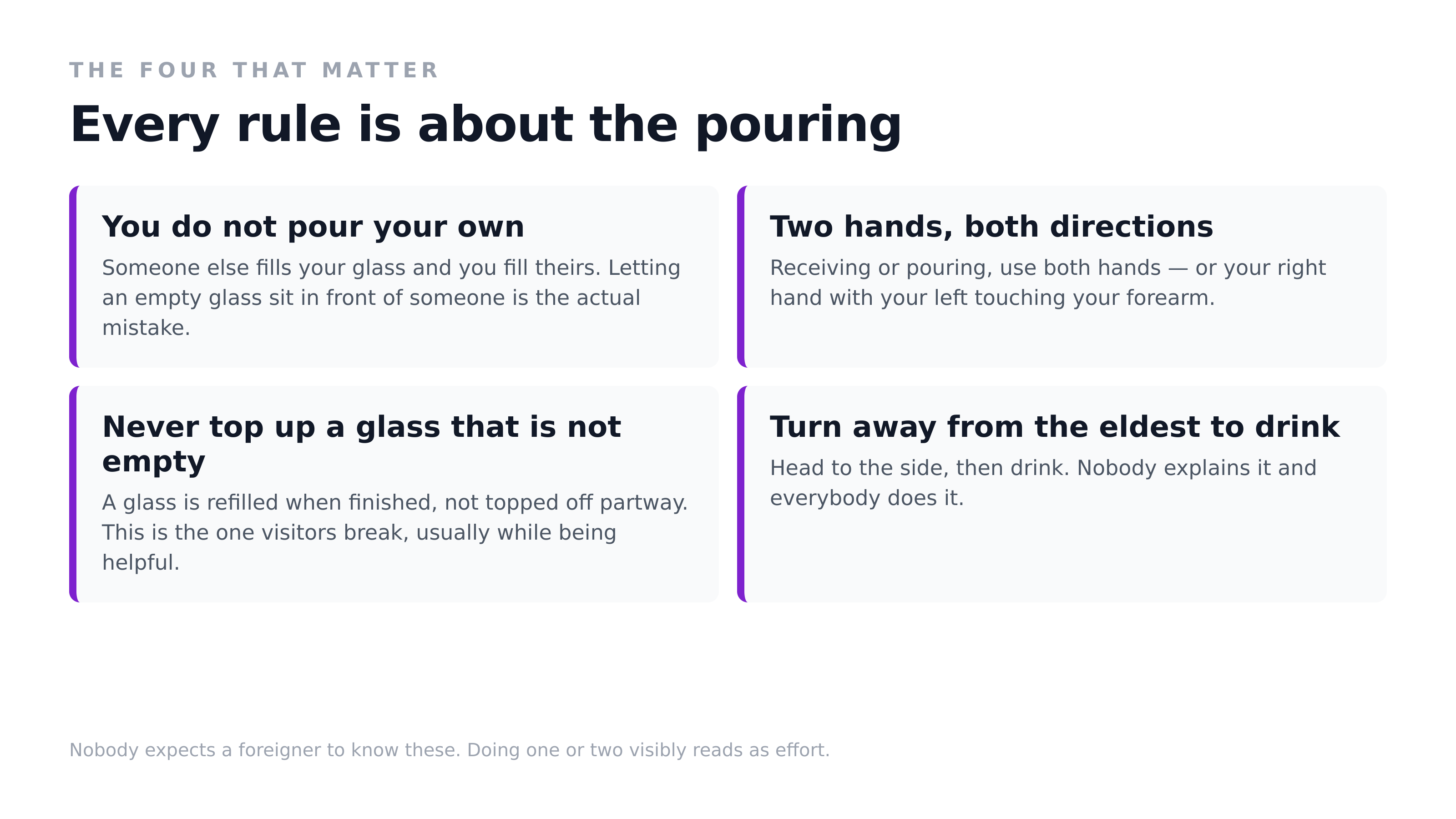
You do not pour your own. Someone else fills your glass, and you fill theirs. Watching an empty glass sit in front of someone is the actual faux pas.
Two hands, both directions. Receiving a pour, hold the glass with both hands, or with your right hand and your left touching your forearm. Pouring for someone older, do the same with the bottle.
Do not top up a glass that is not empty. A glass gets refilled when it is finished, not topped off partway. This is the rule visitors break most often, usually while trying to be helpful.
Turn away from the eldest person to drink. Turn your head to the side and drink. It is a small physical gesture and nobody explains it, but everyone at the table does it.
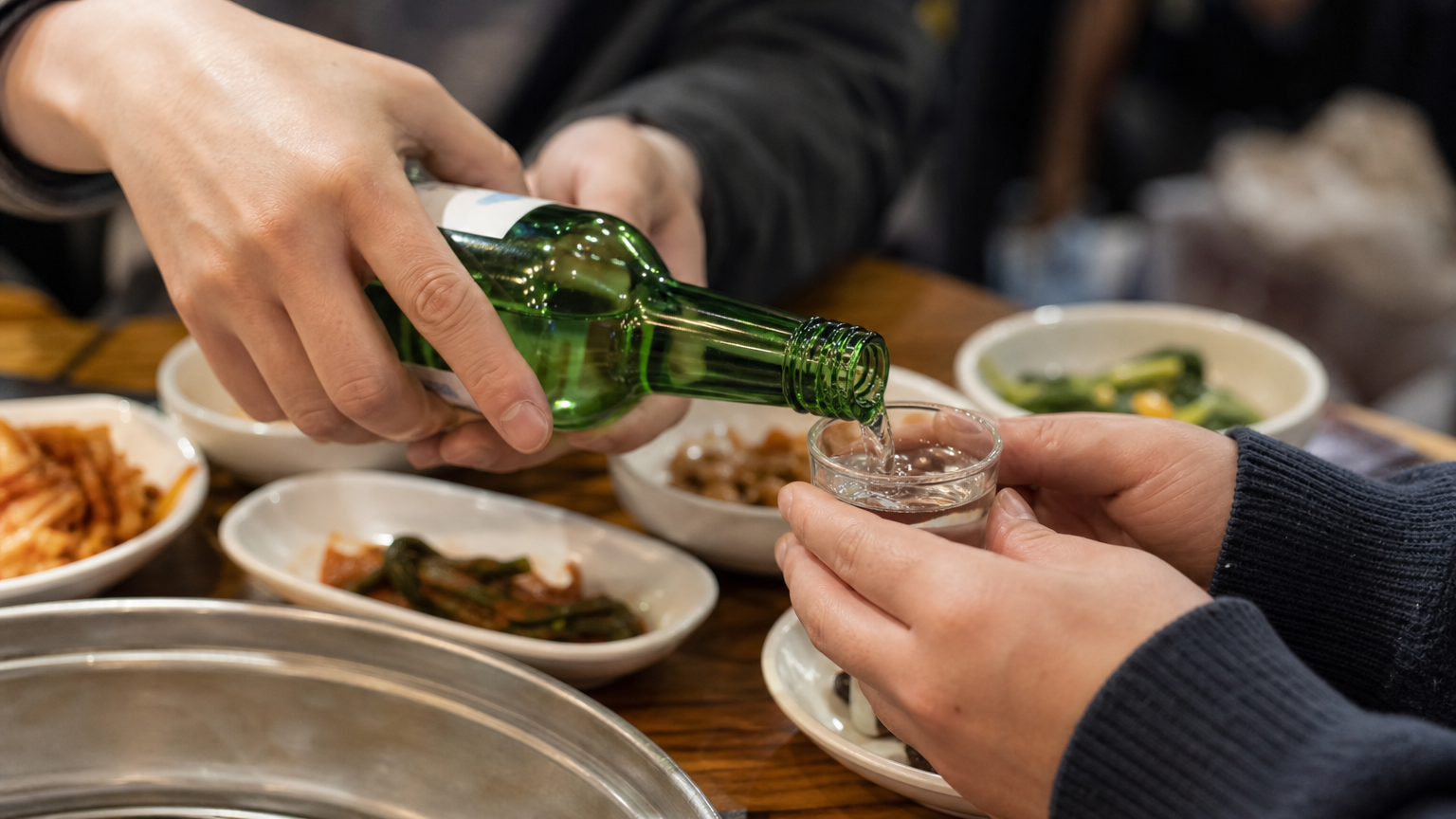
None of these are enforced in any hostile way, and nobody expects a foreigner to know them. Doing one or two visibly is read as effort, and it lands well.
Cha: why one night has numbered stages
The single most useful concept for drinking in Korea is cha (차) — the numbered stage of the evening.
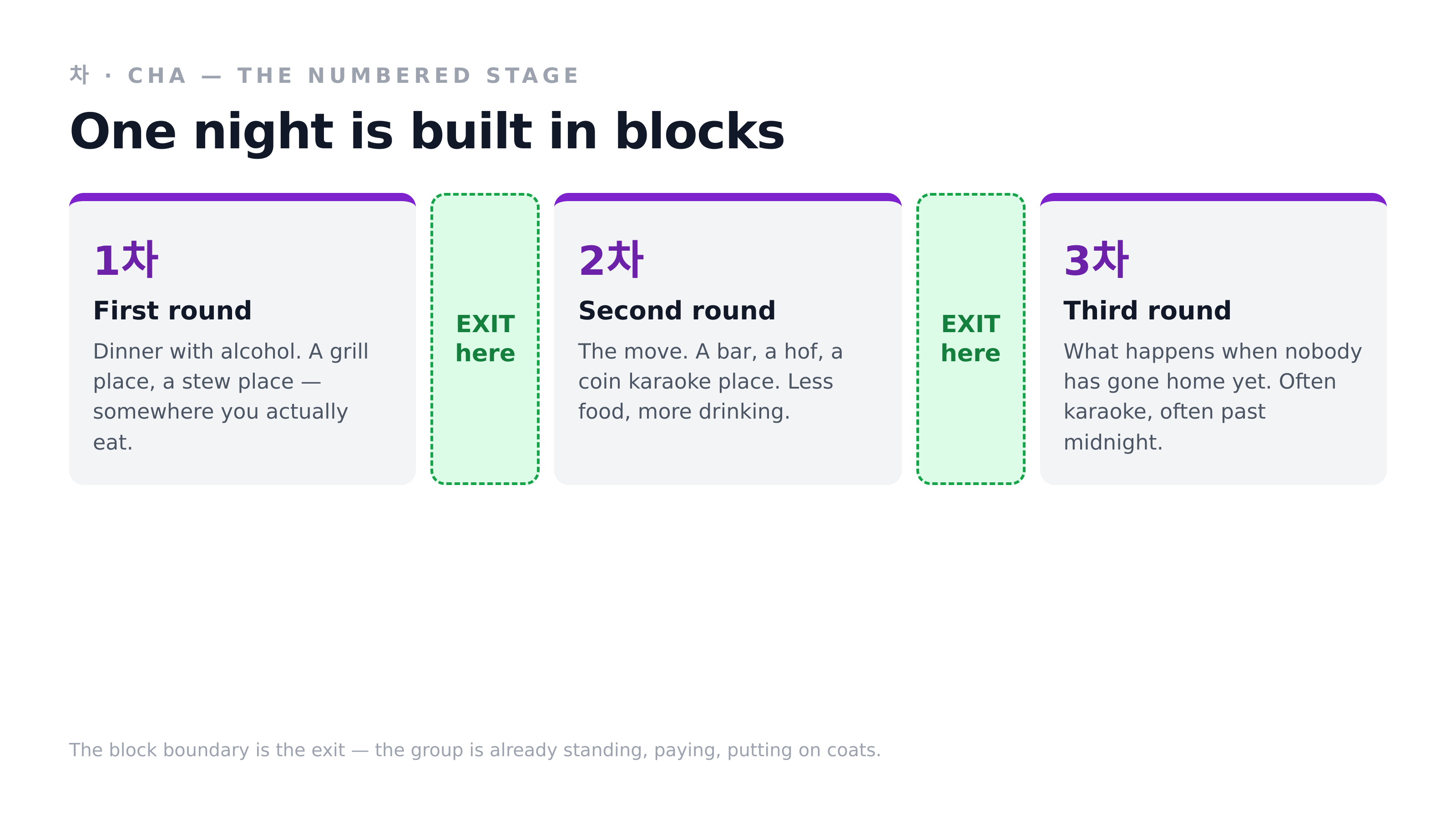
1차 (first round) is dinner with alcohol. A grill place, a stew place, somewhere you actually eat.
2차 (second round) is the move. Usually a bar, a hof, or a coin karaoke place. Less food, more drinking.
3차 (third round) is what happens when nobody has gone home yet. Often karaoke, often much later than planned.
The whole group relocates together, and the relocation itself is the ritual. Understanding that the night is built in blocks matters, because the block boundary is the exit. More on that below.
What actually lands on the table
Soju is the default. Beer is the other default. Somaek (소맥) is the two mixed — soju dropped into beer — and it is by far the most common thing being drunk at a Korean table on a weeknight.
There will be food with it, always. Drinking in Korea without food on the table is close to unheard of, and anju (안주) — the food ordered specifically to accompany drinking — is a category of its own on menus.
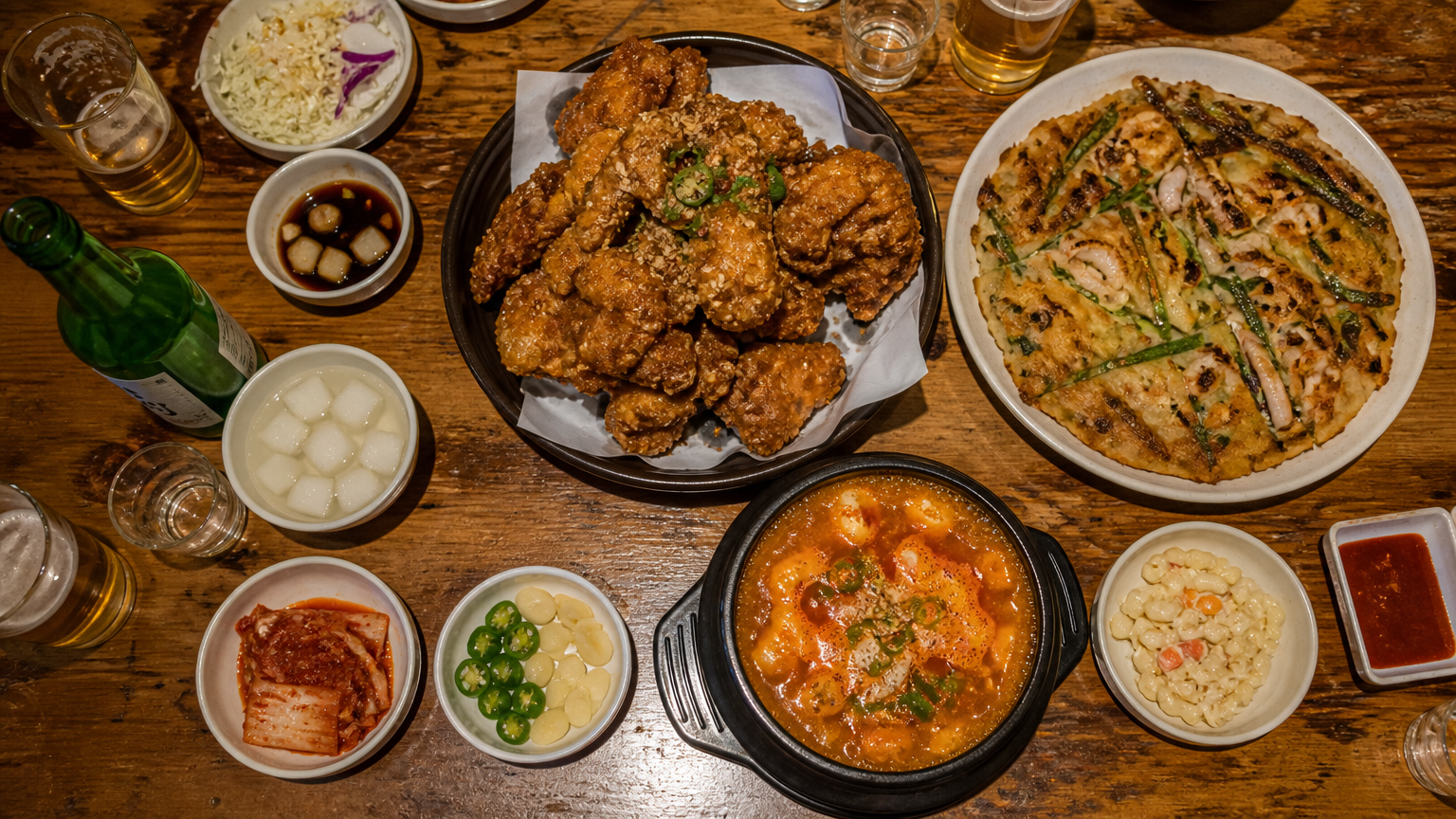
Ordering food is also the most natural way to slow down. Nobody questions someone who is eating.
The part that has changed: you are allowed to say no
This is where the reputation lags the reality.
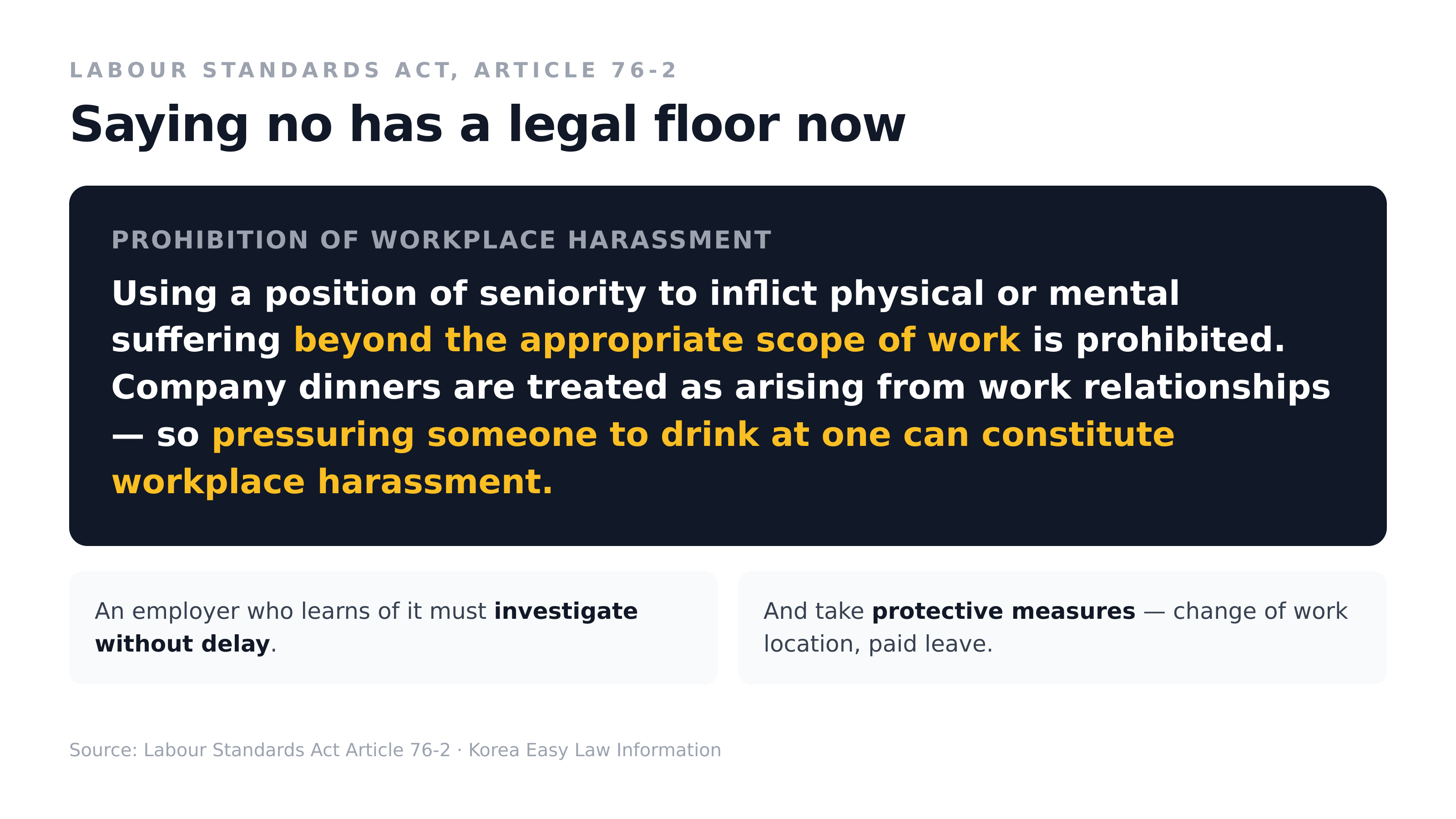
Under Article 76-2 of the Labour Standards Act, workplace harassment is prohibited — using a position of seniority to inflict physical or mental suffering beyond the appropriate scope of work. Company dinners and club activities are treated as arising from work relationships, which means pressuring someone to drink at a company dinner can constitute workplace harassment.
An employer who learns of it is required to investigate without delay, and to take protective measures for the affected worker, such as changing their work location or granting paid leave.
That is a legal floor, not a cultural description, and plenty of tables have not caught up. But the direction is one-way, and among younger colleagues the expectation of forced drinking has largely collapsed.
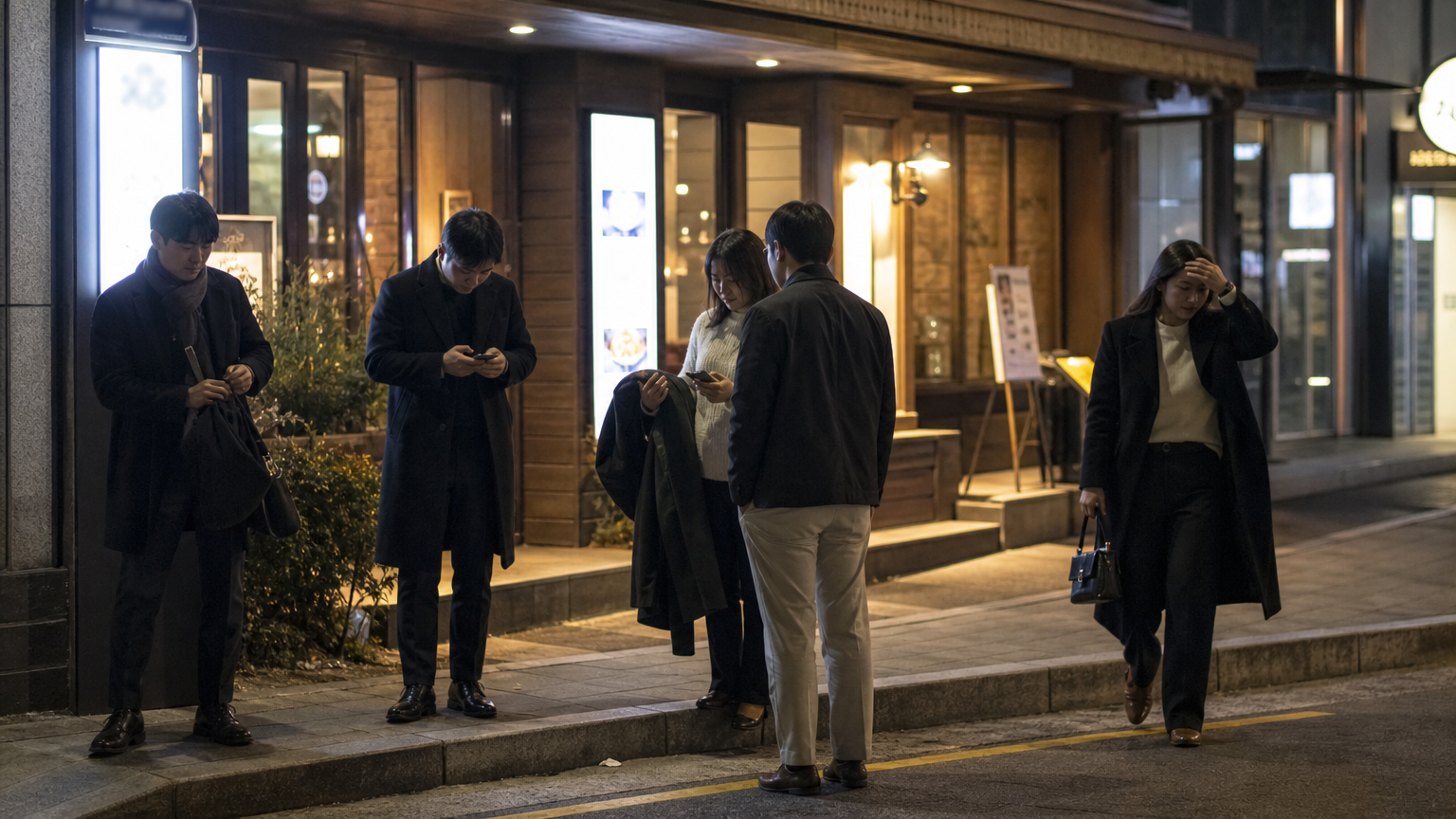
How to leave early without insulting anyone
The mechanics matter more than the words.
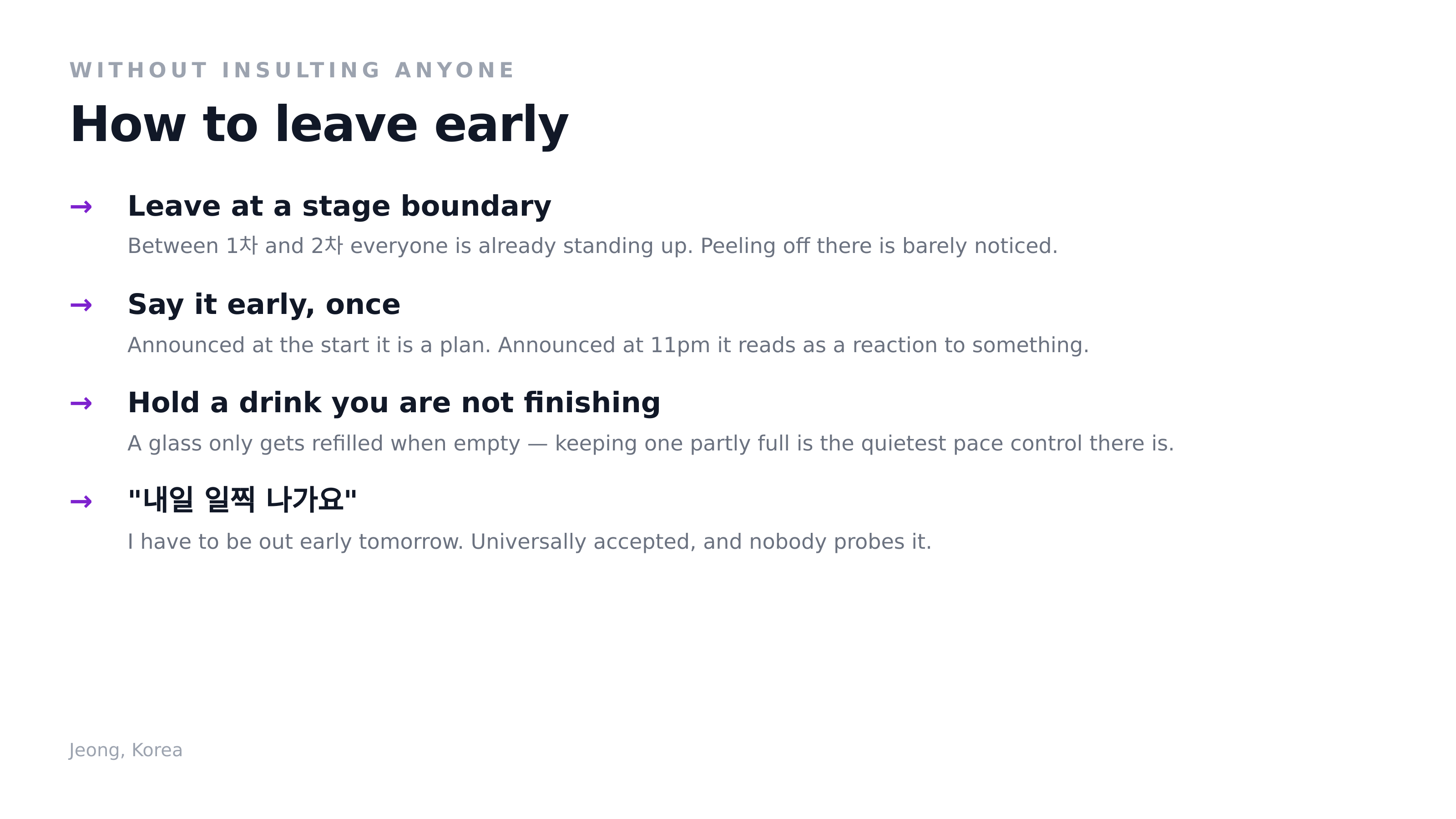
Leave at a stage boundary. The move between 1차 and 2차 is when the group is already standing up, paying, putting on coats. Peeling off there is barely noticed. Leaving mid-round from a seated table is what feels abrupt.
Say it early, once. Mention at the start that you have to leave after the first round. Announced in advance it is a plan; announced at 11pm it reads as a reaction to something.
Hold a drink you are not finishing. A full glass is not a target. Since a glass only gets refilled when empty, keeping one partly full is the quietest possible pace control.
"내일 일찍 나가요" — I have to be out early tomorrow. Universally accepted, and nobody probes it.
FAQ
Do I have to drink at all?
No. Declining entirely is normal now, particularly among younger people, and pressuring someone to drink in a work context can legally constitute workplace harassment. Saying you do not drink is enough — you do not owe a medical reason.
What is the most important rule in Korean drinking culture?
Do not pour your own drink, and keep an eye on other people's glasses. Almost everything else follows from that one habit. Refilling someone's empty glass is the core social gesture of the whole thing.
Is somaek stronger than it tastes?
Yes. Mixing soju into beer produces something that goes down like beer while carrying soju, and the pace of a Korean table is faster than most people are used to. This is the standard way visitors end up further along than they intended.
How late does a night of drinking in Korea go?
As late as the group keeps moving. Rounds are open-ended by design, and the third round frequently runs past midnight. Deciding your exit before you start is the practical approach.
Can I drink alone at a restaurant?
Yes, and it is far less remarkable than it used to be. Solo dining and solo drinking in Korea have both become ordinary in cities, and convenience stores stock a full range for exactly this reason.
References
-
Monthly binge drinking rate and high-risk drinking rate, 2024 Korea National Health and Nutrition Examination Survey — Korea Disease Control and Prevention Agency
-
Drinking and smoking indicators, national statistical portal — e-Narajipyo
-
Labour Standards Act, Article 76-2 (prohibition of workplace harassment) — Korean Law Information Center
-
Workplace harassment: scope, reporting, investigation duty and protective measures — Korea Easy Law Information
More from this series
2026-09-25
Hanok Guesthouse in Seoul: Two Licences Look the Same, and Only One Is Written for Foreign Guests
2026-09-24
Movie Theaters in Seoul: The Film Starts Ten Minutes Late, and Culture Day Moved in 2026
2026-09-24
Pojangmacha in Seoul: Fewer Than Half Have a Permit, and Jongno 3-ga Is the Street the City Kept
2026-09-15
Namdaemun Market Opening Hours: The Market's Own List Has 38 Timetables, and Some Floors Open at 11 p.m.
2026-08-27
Gyeongju From Seoul: Two Hours by KTX, and Then the Part Nobody Plans For
2026-08-27
Gyeongju: Three Separate UNESCO Listings, and Why One Day Does Not Cover Them
2026-07-31
What Is Silbi Kimchi? Korea's Spiciest Kimchi — and the Local Hack You Need to Know