Gyeongju: Three Separate UNESCO Listings, and Why One Day Does Not Cover Them

Gyeongju has three UNESCO listings. One is five separate zones. None are walking distance apart.
That is the whole problem with this city in three sentences, and it is the reason the internet cannot agree on how long you need here. Search it and you will be told two days, and also a week, and also that it makes a comfortable day trip from Seoul. All three answers are correct, because they are answers to different questions. What nobody leads with is the shape of the place. Gyeongju is not a heritage park with a gate and a ticket booth. It is a working city of a quarter of a million people with a thousand years of a vanished kingdom scattered through it, and the scattering is the part that decides your itinerary.
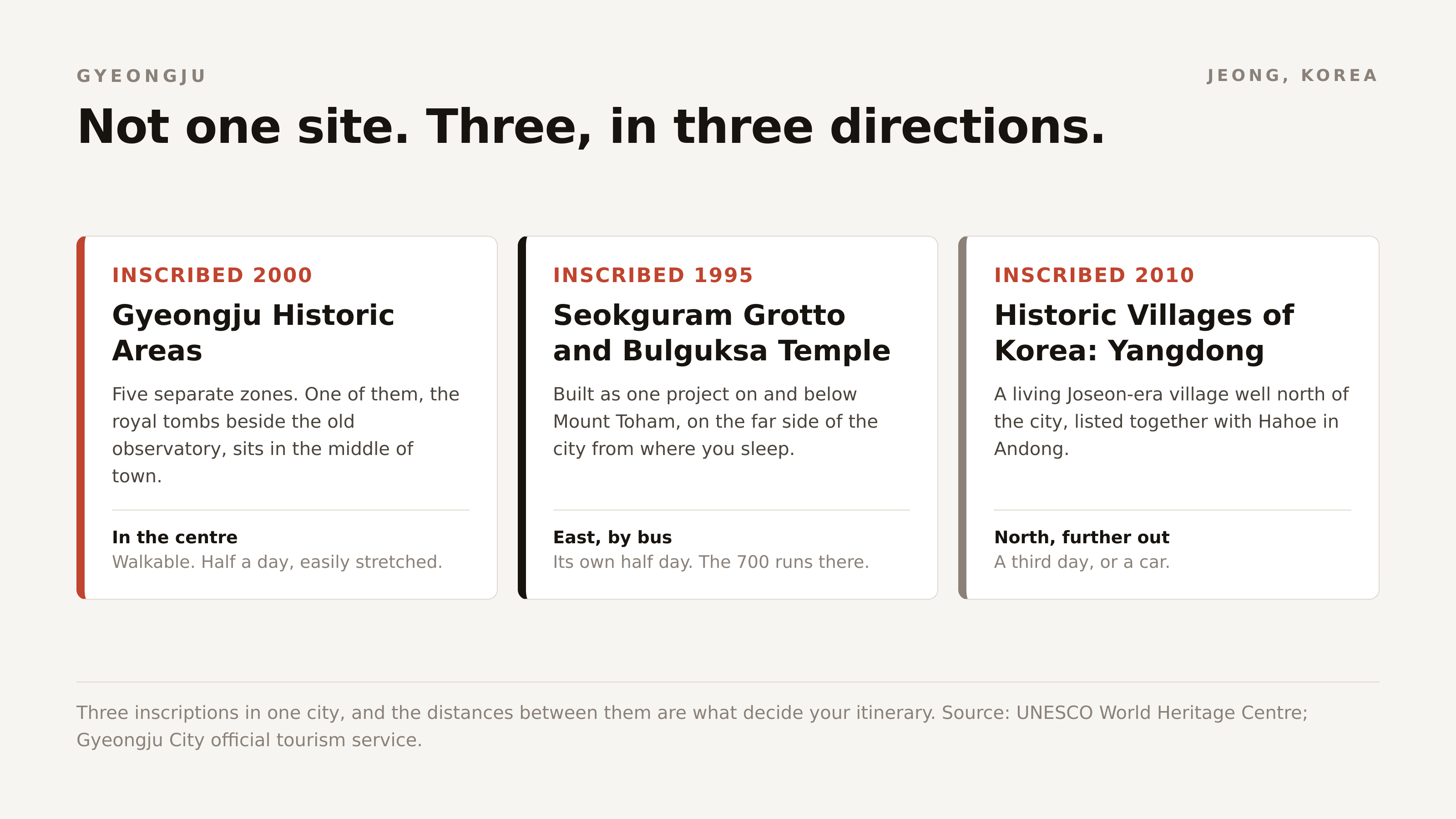
Korea has more UNESCO World Heritage properties than most visitors realise, and Gyeongju holds more of them than any other Korean city. Seokguram Grotto and Bulguksa Temple were inscribed in 1995. The Gyeongju Historic Areas followed in 2000. Yangdong Village came in 2010 as part of the Historic Villages of Korea listing. Three inscriptions, three different eras of recognition, and three genuinely different journeys once you are on the ground.
| Listing | Inscribed | Where it sits |
|---|---|---|
| Seokguram Grotto and Bulguksa Temple | 1995 | East of the city, on and below Mount Toham |
| Gyeongju Historic Areas | 2000 | Five zones spread across the centre and south |
| Historic Villages of Korea: Yangdong | 2010 | North of the city, well outside the centre |
The tombs and the old streets are one afternoon, and it is the easy one
Start in the centre, because the centre is the only part of Gyeongju you can do on foot.
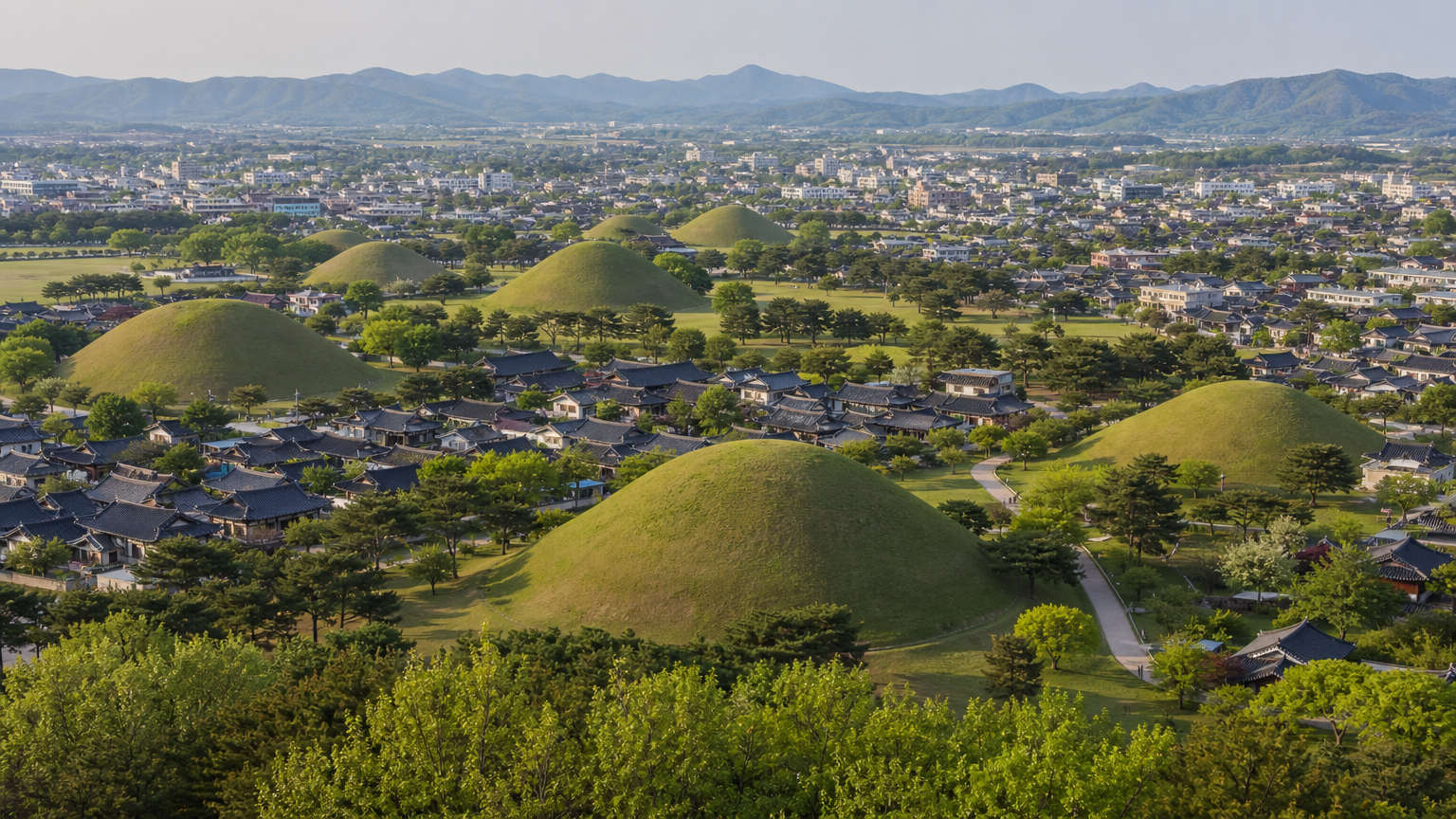
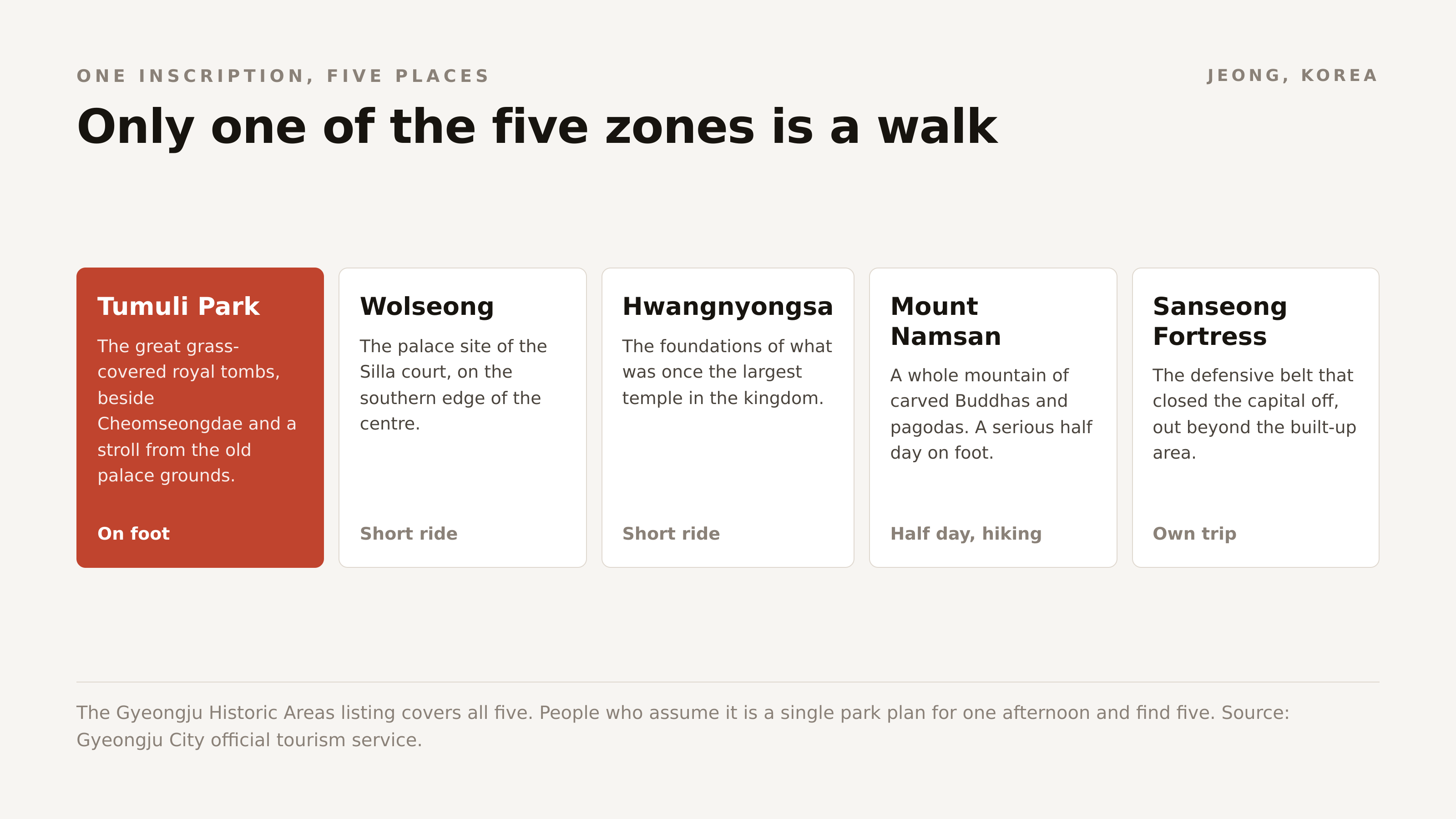
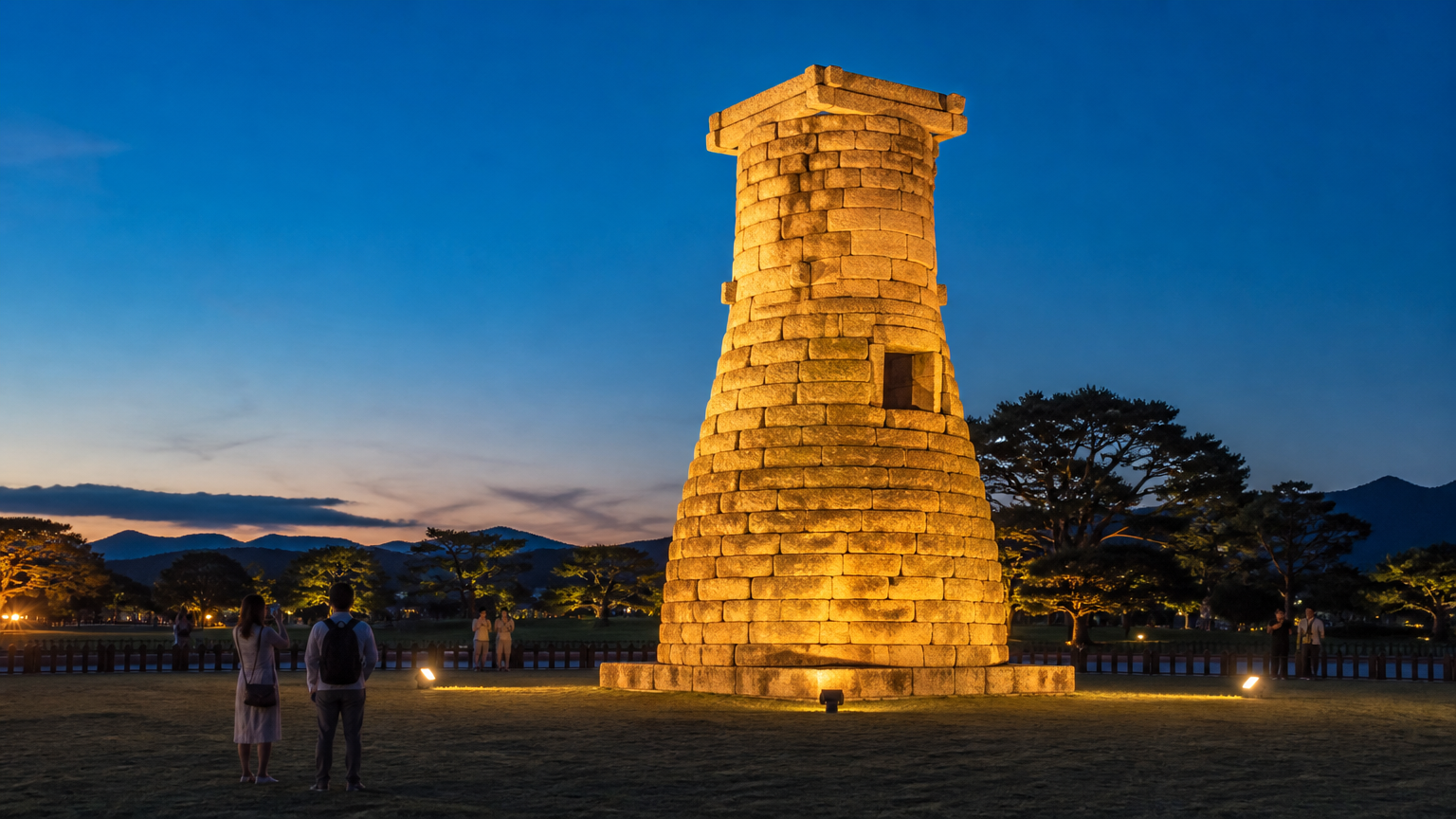
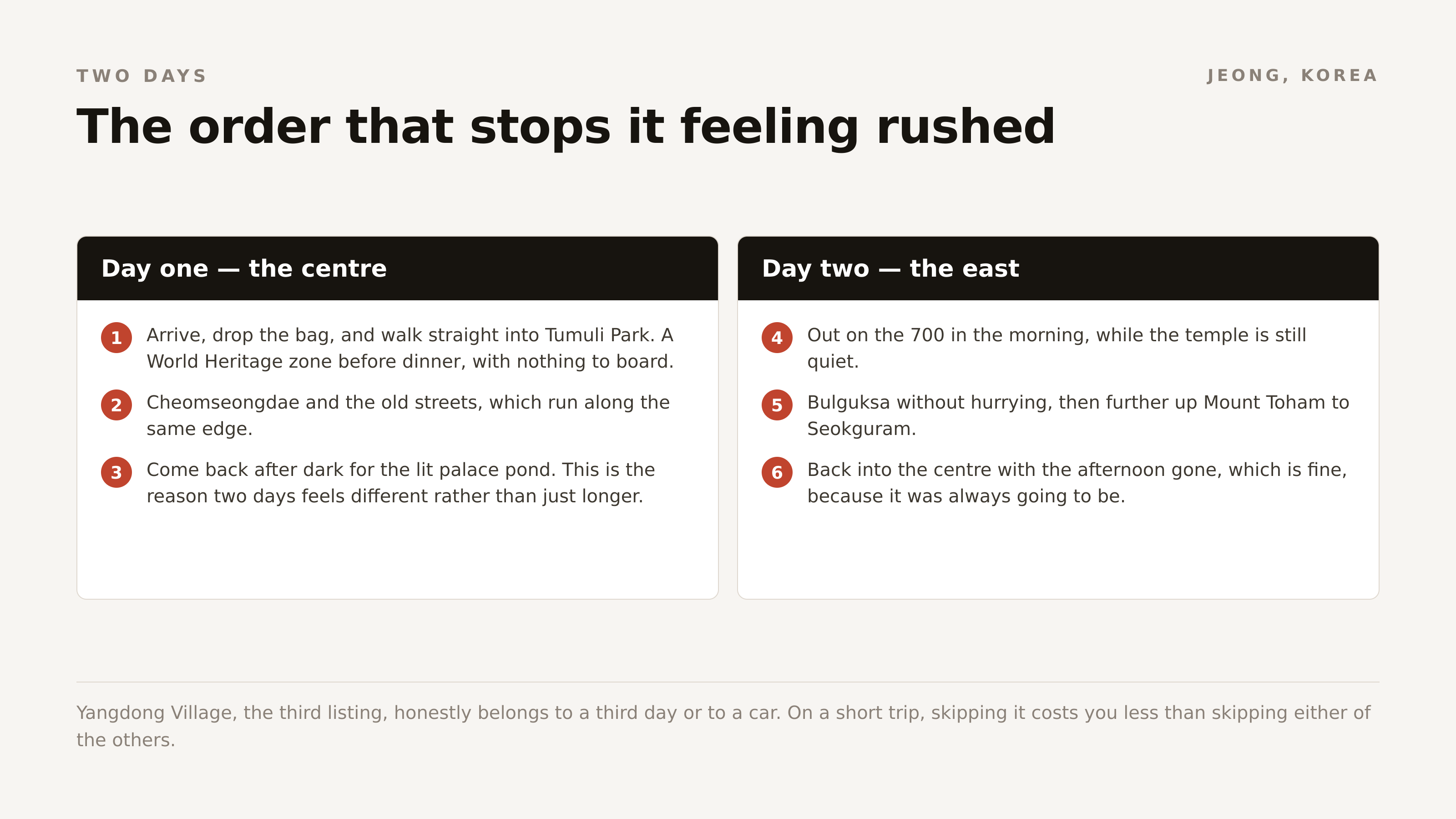
The Gyeongju Historic Areas listing is not one site. It covers five zones, and only one of them is a comfortable walk. Tumuli Park holds the great grass-covered royal tombs, and it sits directly beside Cheomseongdae, the stone observatory, and a short stroll from the pond and pavilions of the old palace grounds. The tourist streets that everyone photographs run along the same edge. You can arrive, drop your bag, and see a genuine World Heritage zone before dinner without boarding anything.
That is why the centre is where a first visit should begin rather than end. It gives you the shape of the kingdom quickly, and it is forgiving. If you are slow, you lose nothing but daylight, because everything is a few minutes from everything else. Mount Namsan, Wolseong, Hwangnyongsa and the fortress zone all belong to the same inscription and none of them behave this way. Namsan alone is a mountain covered in carved Buddhas and takes a serious half day on foot.
So the first afternoon plans itself. What about the photograph you actually came for?
Bulguksa and Seokguram are a separate half day, and the bus decides how it goes
Treat the eastern temples as their own outing rather than an add-on.
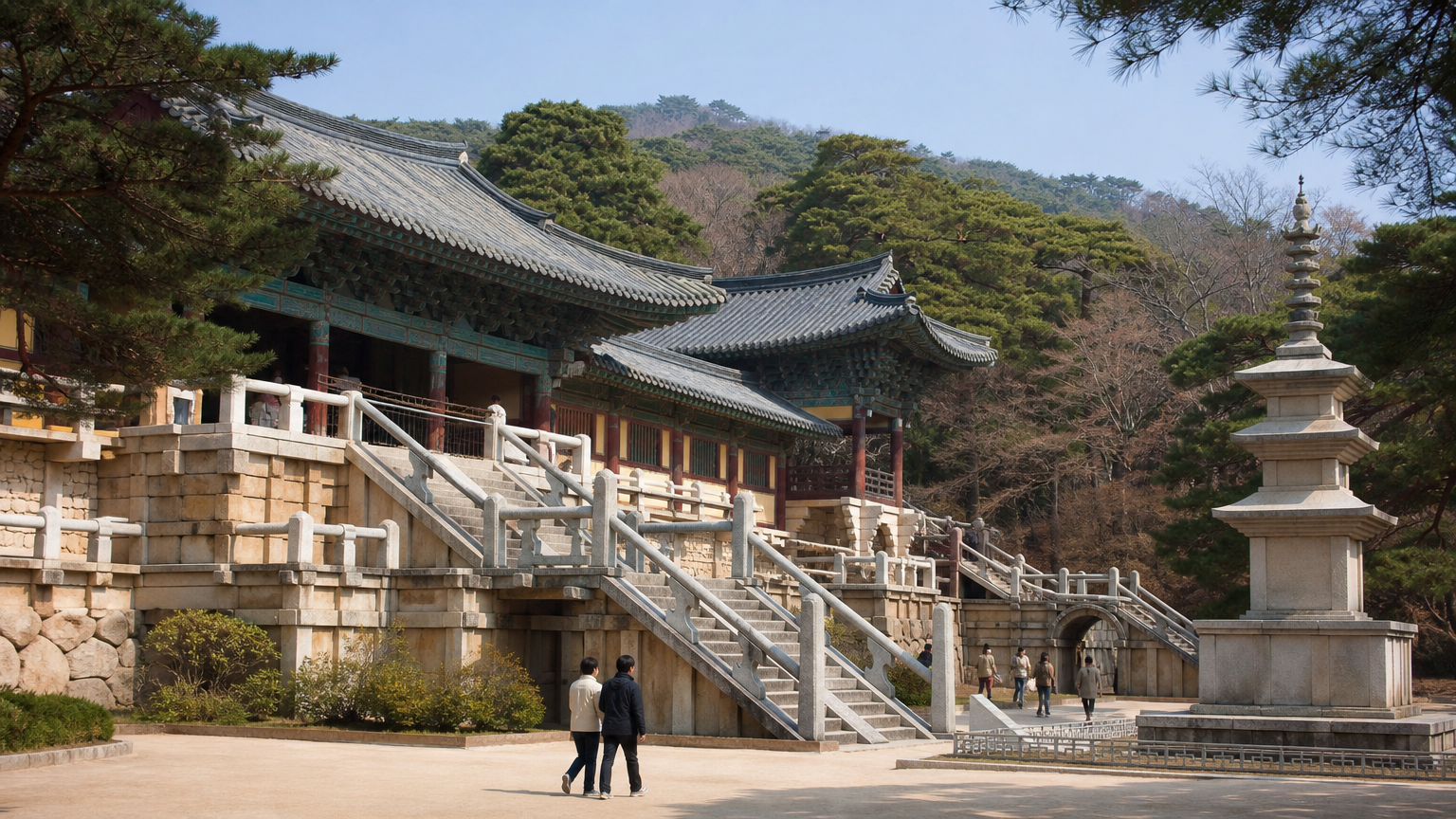
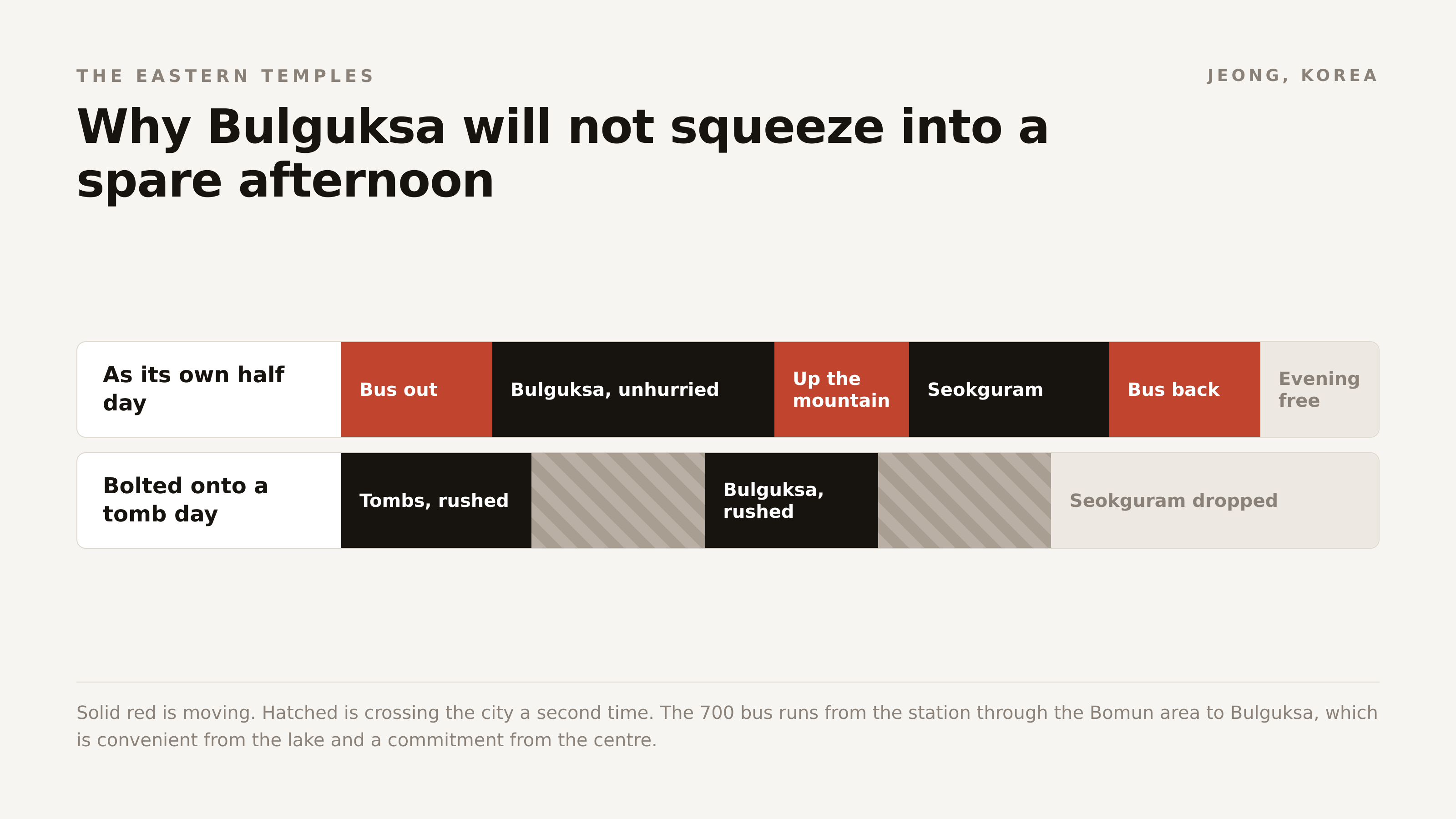
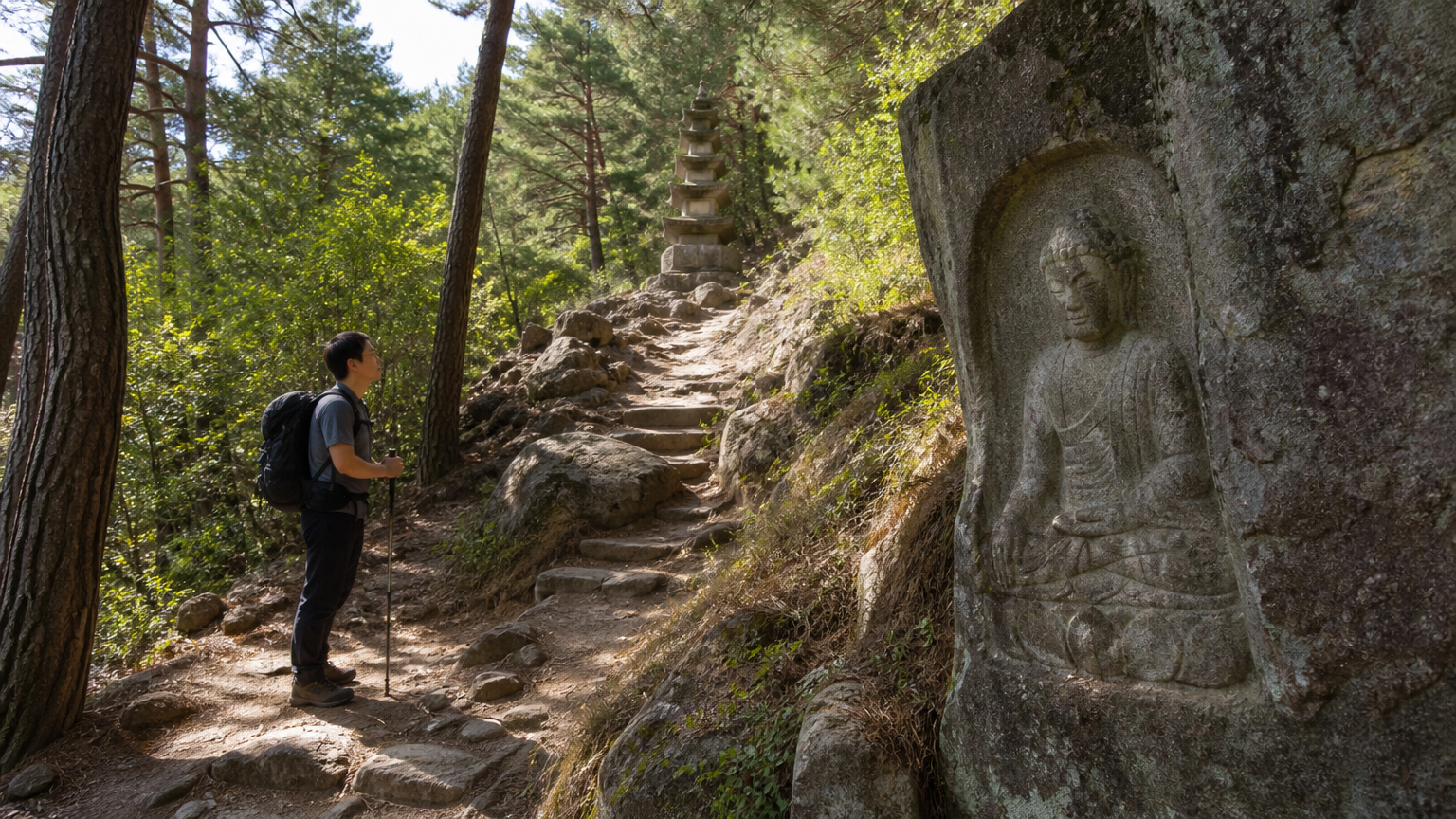
Bulguksa is the temple in the photograph, and Seokguram is the stone grotto above it holding the seated Buddha. They were inscribed together in 1995 because they were built as one project, and they still work as one visit. But they are out of town on the flank of Mount Toham, on the opposite side of the city from where you slept. The 700 bus runs there from the station and through the Bomun resort area, which is convenient if you are staying out at the lake and a commitment if you are staying in the centre.
The practical consequence is that this half day resists being squeezed. Bulguksa deserves unhurried time, Seokguram sits further up the mountain again, and the return trip lands you back in the centre with the afternoon gone. People who try to bolt this onto a tomb-and-streets day are the people who end the day annoyed on a bus, which is the same trap that catches them getting here in the first place. The transfer at the station is its own small puzzle: Seoul to Busan KTX: Why Your Card Gets Rejected, and How to Actually Book It covers the booking half of that journey.
Which leaves the question everyone actually arrives with.
What you give up if you only have one day
Pick one half of the map, deliberately, before you leave the station.
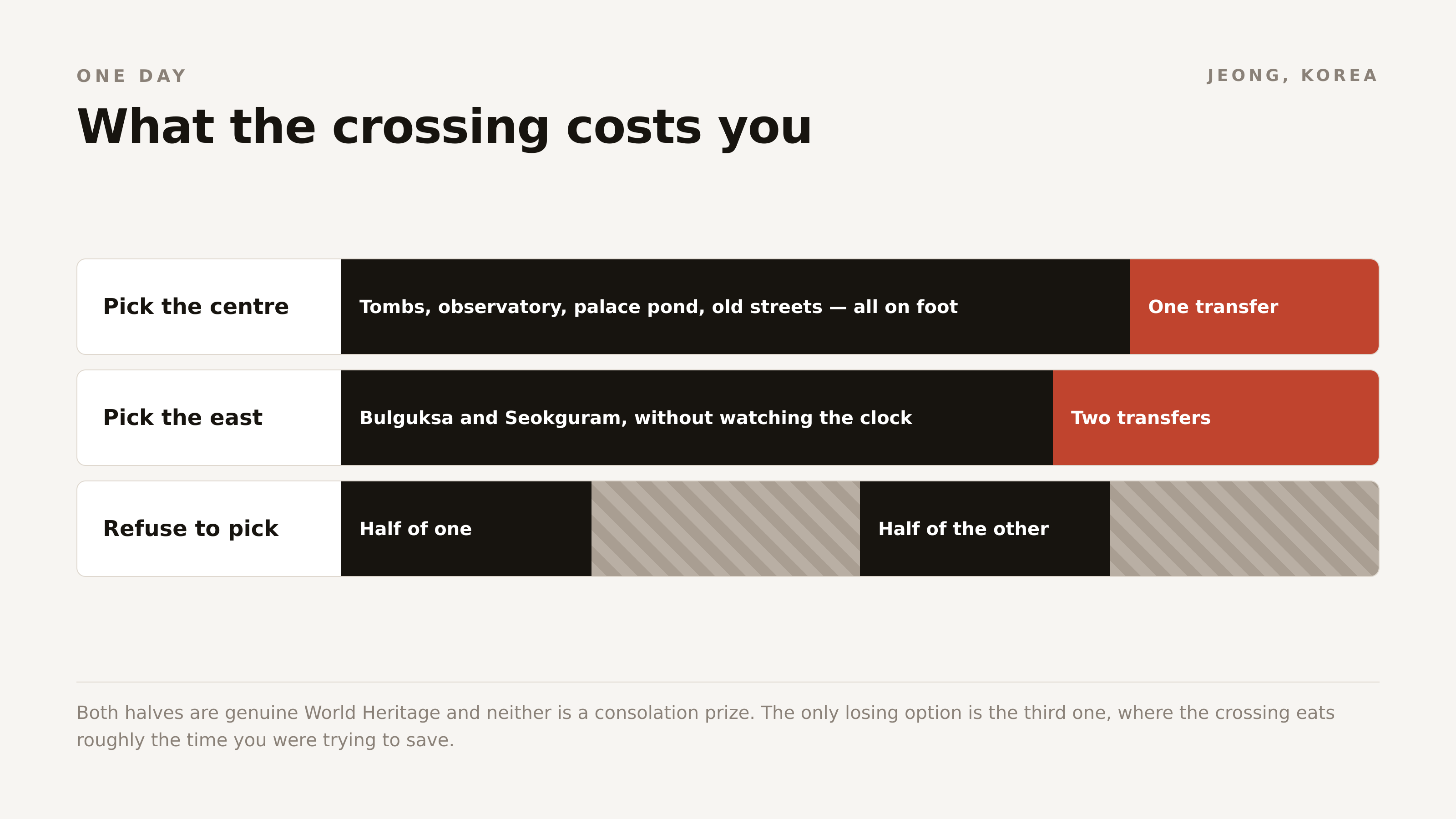
One day in Gyeongju is a real option and not a failure. It just has to be one day of one thing. Either you take the centre, walking the tombs and the observatory and the old streets and eating your way down them, or you take the east and give the day to Bulguksa and Seokguram. Both are genuine World Heritage. Neither is a consolation prize. What does not work is half of each, because the crossing eats roughly the time you were hoping to save.
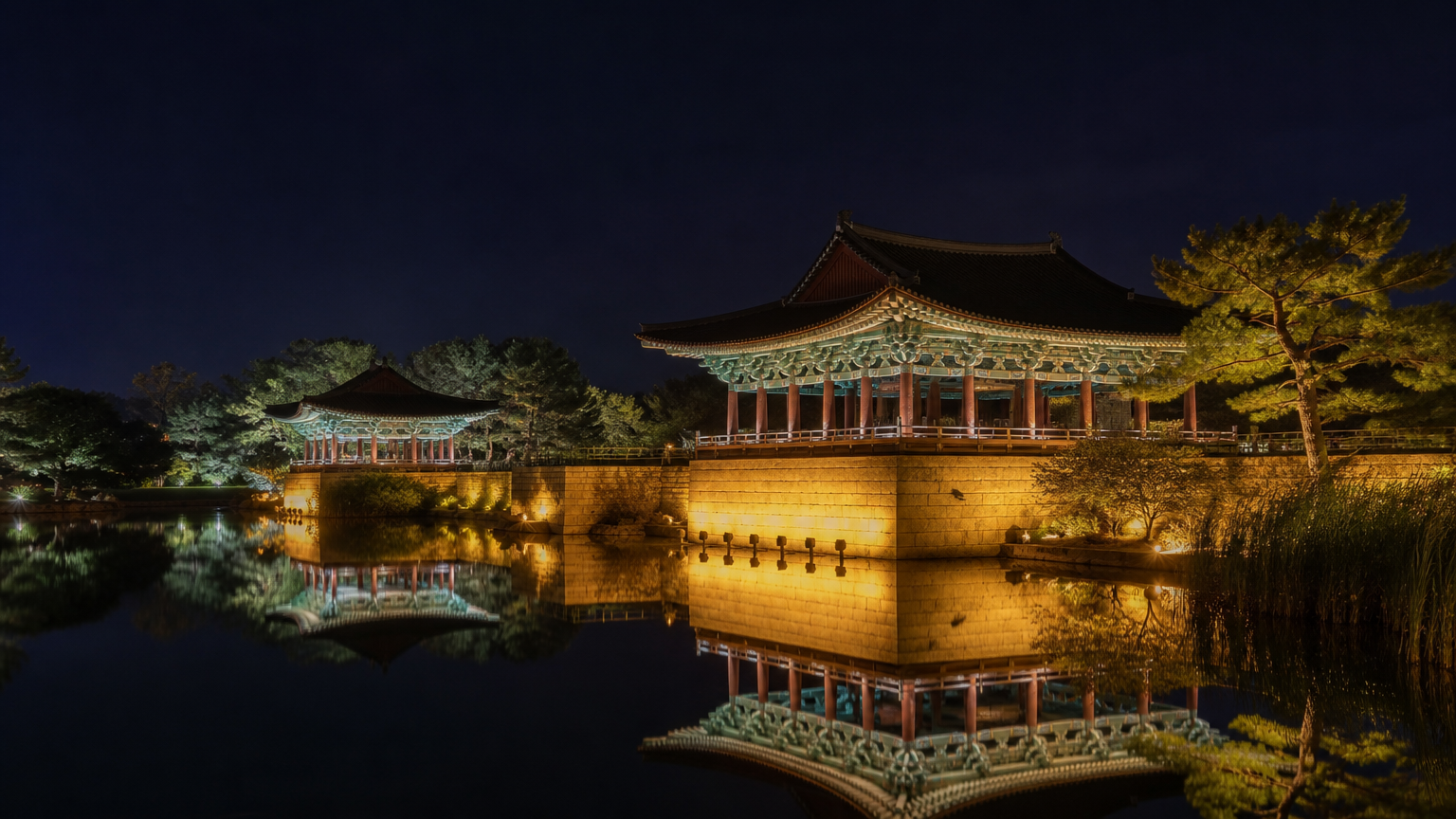
Two days is where Gyeongju stops feeling rushed, and it changes the character of the trip rather than just adding hours. You get the centre in daylight and again after dark, when the palace pond is lit and the streets fill up. You get the eastern temples without watching the clock. Yangdong Village, the third listing, honestly belongs to a third day or to a car, and skipping it on a short trip costs you less than skipping either of the others.
| If you have | Take | Leave for next time |
|---|---|---|
| One day | The centre: tombs, observatory, palace pond, old streets | Bulguksa, Seokguram, Namsan, Yangdong |
| Two days | The centre plus the eastern temples | Namsan on foot, Yangdong |
| Three days | Add Namsan or Yangdong | Whichever of the two you did not pick |
Autumn is when this city is at its most photographed, and the timing question there is the same one that governs the rest of the country: Autumn in Korea: Don't Pick the Dates, Pick the Latitude.
FAQ
Is Gyeongju worth it if I already have Seoul and Busan?
Yes, and specifically because it is not like either of them. Seoul shows you a Korea that was rebuilt, and Busan shows you a port city that grew sideways. Gyeongju shows you the capital of a kingdom that ended more than a thousand years ago, still sitting in open fields where people walk their dogs past it.
Can I visit Gyeongju as a day trip from Seoul?
You can, and the trains make it plausible. Allow two hours each way plus local transport at the Gyeongju end, then apply the rule above and take one half of the map rather than both.
When is the best time to go?
Spring for the blossom along the old roads and autumn for the colour on Namsan and around the tombs. Summer is hot and humid inland, and winter is clear, cold and very quiet, which some people prefer.
Can I combine Gyeongju with Busan?
Easily, and it is the combination locals suggest. Gyeongju sits between Seoul and Busan, so a common shape is Seoul, then Gyeongju for a night or two, then Busan, rather than doubling back.
The short version
Gyeongju holds three UNESCO World Heritage listings, and the reason that matters to your itinerary is geography rather than prestige. The tombs and old streets in the centre are walkable and forgiving. Bulguksa and Seokguram sit east of the city and want their own half day. Yangdong Village is further out again. One day means choosing one of those, two days means the first two, and the mistake that costs people an afternoon is refusing to choose at all.
Once you are here for two days rather than one, the food question changes too. The city eats differently from Busan an hour down the line, and the reason is the same reason the tombs are here.
Sources
-
UNESCO World Heritage Centre — inscription years and zone composition for Seokguram Grotto and Bulguksa Temple, the Gyeongju Historic Areas, and the Historic Villages of Korea
-
Gyeongju City official tourism service — the five zones of the Gyeongju Historic Areas, and bus routes from the station to Bulguksa and the Bomun area
More from this series
2026-08-28
DMZ Tour: You Can Still Go. The JSA Is the Part You Cannot.
2026-08-28
Gyeongju Food: The Famous One Is a Souvenir, and the Meal Is Next to the Tombs
2026-08-28
Bulguksa Temple: There Is No Direct Bus to Seokguram, and You See the Buddha Through Glass
2026-08-27
Gyeongju From Seoul: Two Hours by KTX, and Then the Part Nobody Plans For
2026-08-27
K-ETA Korea: You Are Probably Exempt, and the Arrival Card Is What Catches People
2026-08-18
Autumn in Korea: Don't Pick the Dates, Pick the Latitude
2026-08-18
Hospital in Seoul: Why Koreans Don't Start at the Big One
2026-08-18
Korean Drinking Culture: The Rules Are Real, and So Is the Way Out
2026-07-31
Famous Korean Street Foods You Must Try (Yes, Including the Viral Buldak Omelette)
2026-07-31
What Is Silbi Kimchi? Korea's Spiciest Kimchi — and the Local Hack You Need to Know