Famous Korean Street Foods You Must Try (Yes, Including the Viral Buldak Omelette)

You think you know Korean food. Bibimbap. Kimchi. Fried chicken. But step into the streets of Myeongdong at dusk, and you will realize you have only seen the menu cover.
The street food scene here is a world of its own — affordable, dramatic, and constantly evolving. In 2026, it has a new headliner. A vendor cracks two eggs onto a flat pan, splashes oil, and suddenly there is fire. A 30-second flame show. Then come the buldak noodles, the sausage, the avalanche of mozzarella.
That ₩10,000 Buldak Omelette is not a gimmick. It is the best summary of what famous Korean street food has always been — bold, unapologetic, and worth every won.
Here are the must-try items, from the viral to the quietly essential.
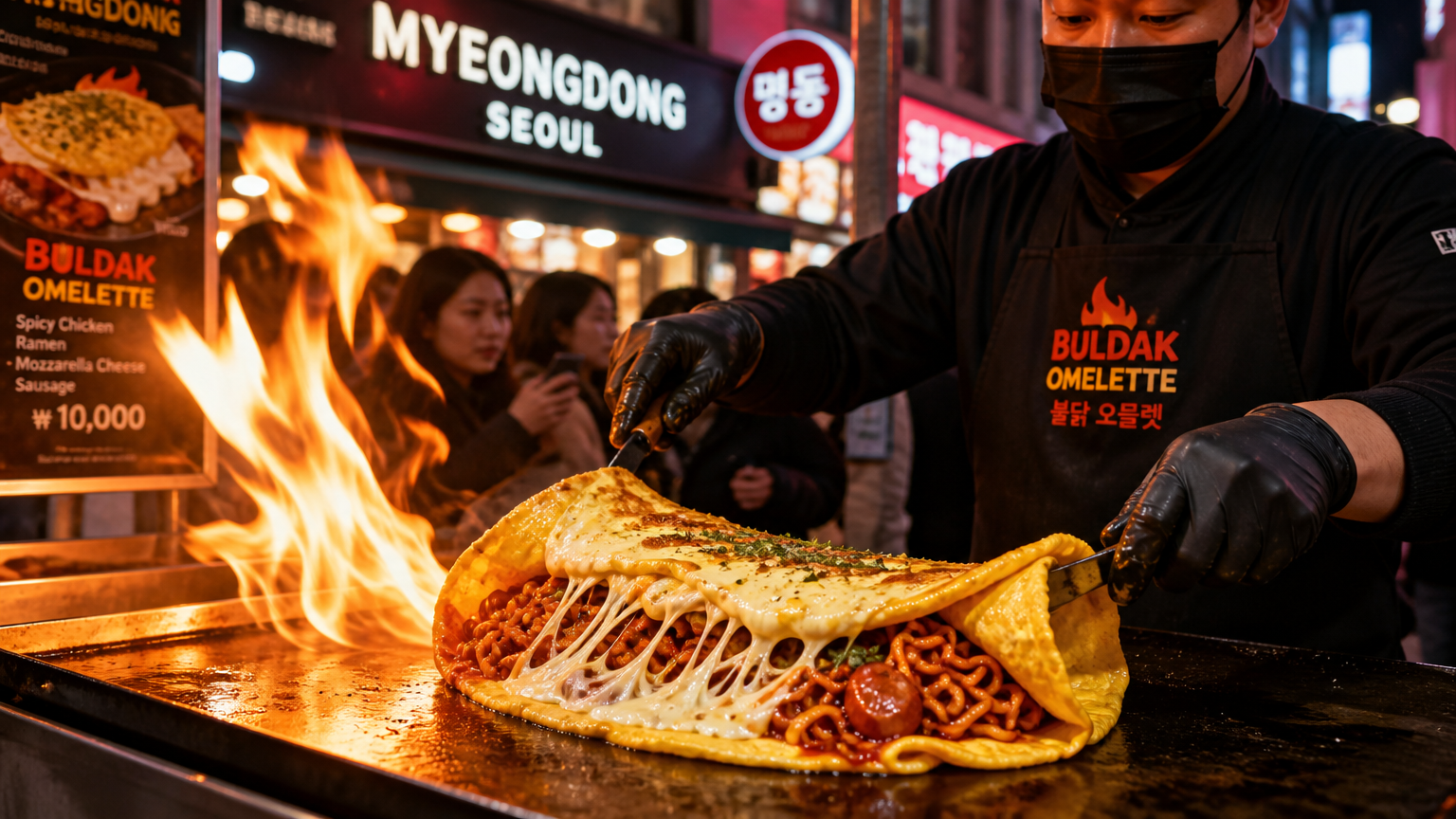
1. Buldak Omelette — The One Everyone's Filming
If you have seen Seoul's street food on TikTok or YouTube Shorts in 2026, you have seen this. The Myeongdong Buldak Omelette is a performance before it is a meal.
A thin egg sheet is laid flat on the griddle, filled with Samyang buldak noodles, sliced sausage, and a waterfall of mixed mozzarella and cheddar. The vendor douses it in oil and the pan erupts. You watch. You film. Then you eat.
What to know:
-
Price: ₩10,000 (around $7 USD)
-
Extra toppings: Cheddar cheese, mozzarella, or sausage — each +₩2,000
-
Spice level: Milder than you expect — cheese and egg absorb most of the heat
-
Where: In front of Lloyd Myeongdong and Myeongdong Temtem Branch 1, Myeongdong
-
Hours: Weekdays 4:30 PM – 10:30 PM / Weekends 1:30 PM – 10:30 PM
GaminTraveler called it "a gimmick until you taste it" — and then could not stop eating it.
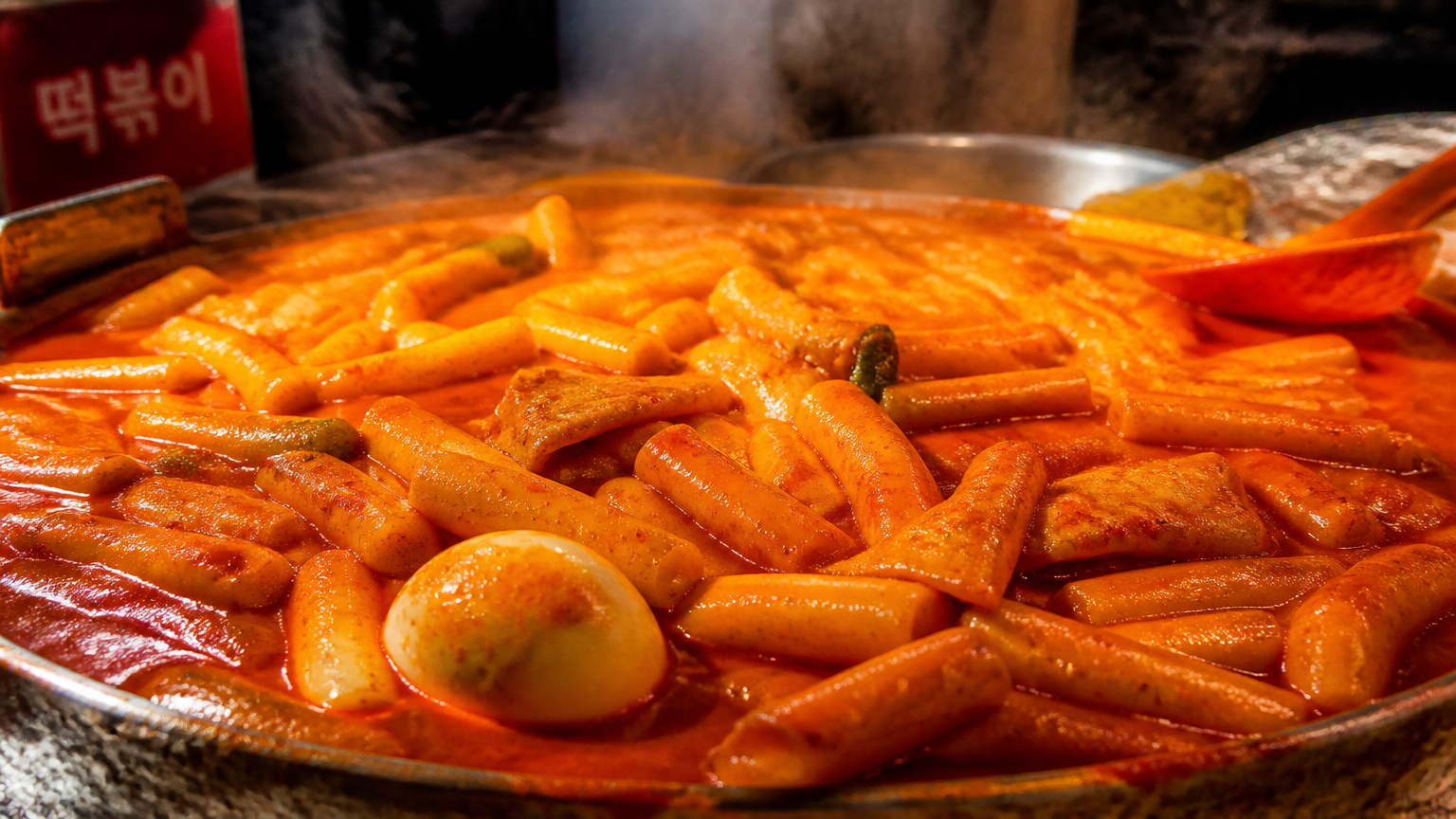
2. Tteokbokki — The One That Started It All
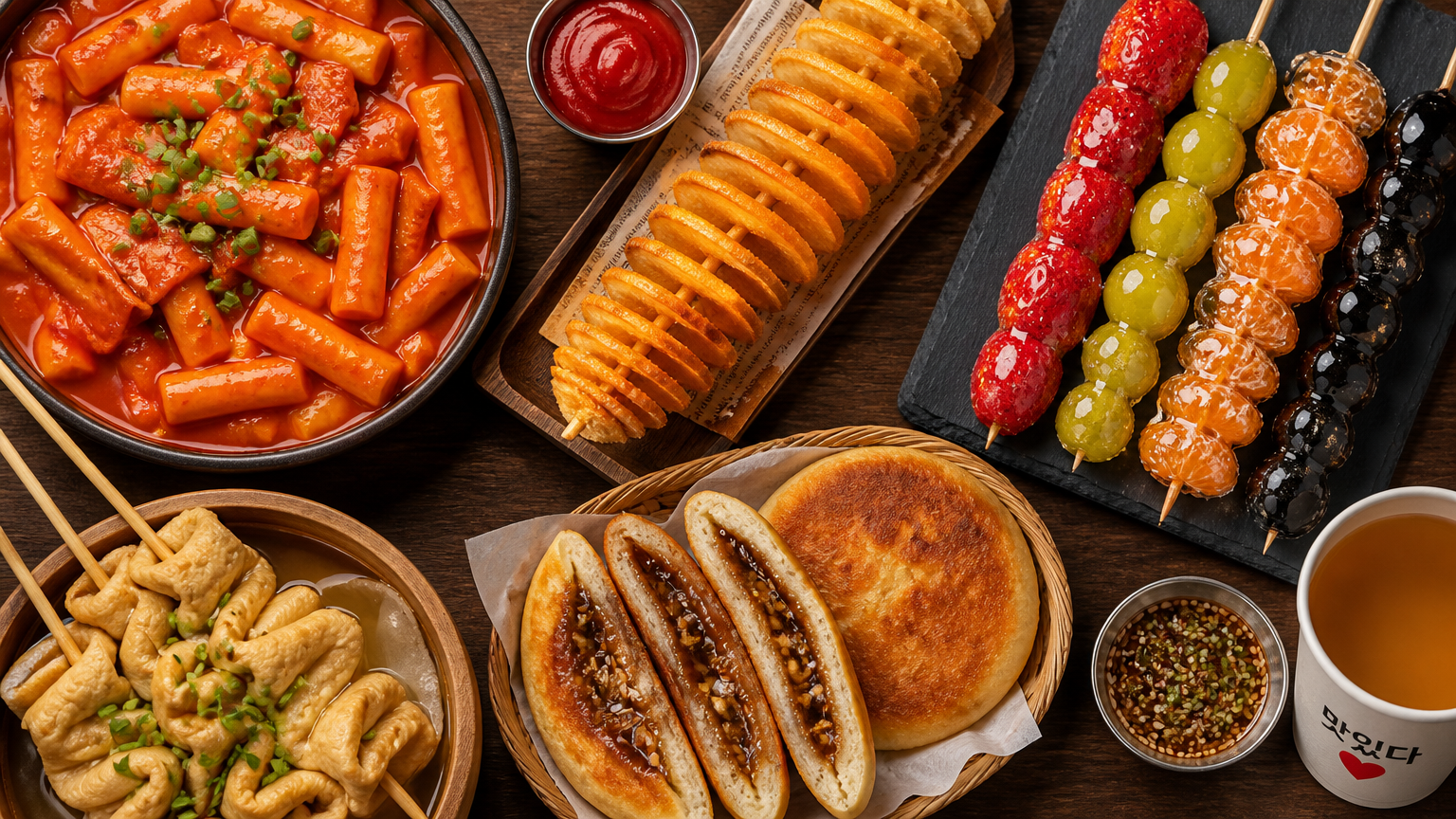
No guide to famous Korean street food skips tteokbokki. Chewy cylinder-shaped rice cakes simmered in a deep, sweet-spicy gochujang sauce, usually served with fish cake and a hard-boiled egg.
This is the dish Koreans eat after school, after work, and after everything else. Every stall does it slightly differently. Some add cheese. Some add ramen noodles. The base is always the same: heat, depth, and a sauce that will stain your jacket if you are not careful.
What to know:
-
Price: ₩3,000–₩5,000
-
Spice level: Medium. Ask for "덜 맵게" (deol maepge) if you want it milder
-
Tip: Order with odeng broth on the side (explained below)
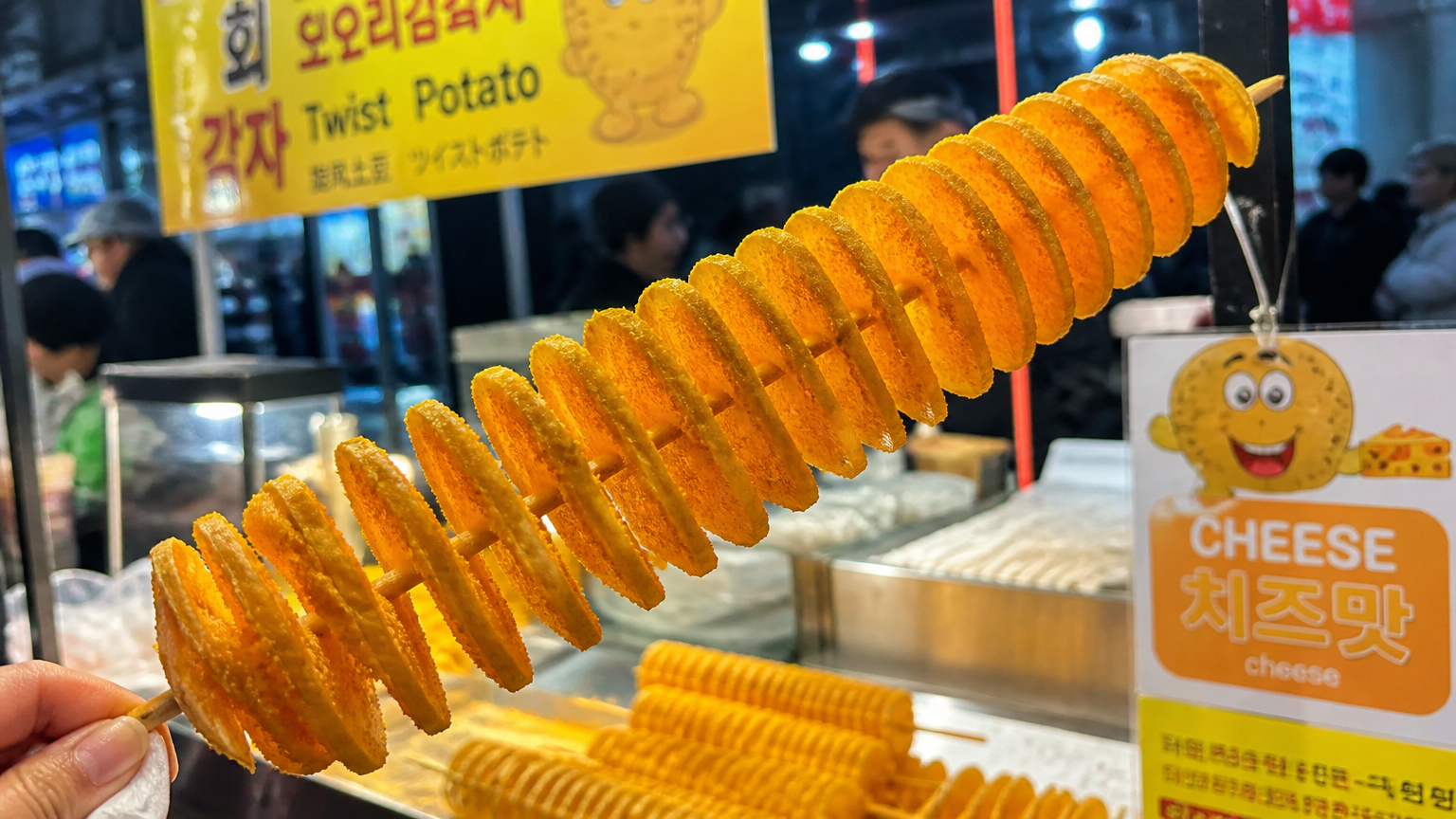
3. Tornado Potato — Myeongdong's Most Photogenic Snack
A whole potato sliced into a single continuous spiral, stretched onto a skewer, and deep-fried until golden and crispy. In 2026, some Myeongdong stalls have added robotic arms that cut the spiral with mechanical precision. People film the robot as much as the food.
Finish with cheese powder, spicy chili seasoning, or plain salt. It is crunchy, warm, and almost impossible to eat without photographing first.
What to know:
-
Price: ₩3,000–₩5,000
-
Best seasoning: Cheese powder — the crowd default for a reason
-
Where: Multiple stalls throughout Myeongdong street
4. Tanghulu — The 2026 Instagram Standard
Tanghulu is a candy-coated fruit skewer with Chinese origins that Korea has fully absorbed into its food culture. A thin shell of hardened sugar coats fresh fruit — crack it and it shatters like glass.
In 2026, the fruit combinations have expanded far beyond classic strawberry: grape clusters, mandarin segments, mixed berry skewers. Health-conscious versions using stevia are also appearing, making this one of the lighter options on the street.
What to know:
-
Price: ₩3,000–₩6,000 depending on fruit
-
Tip: Photograph before eating — the sugar shell softens quickly in humidity
-
Note: Tanghulu originated in China but is now a fixture of the scene in Seoul
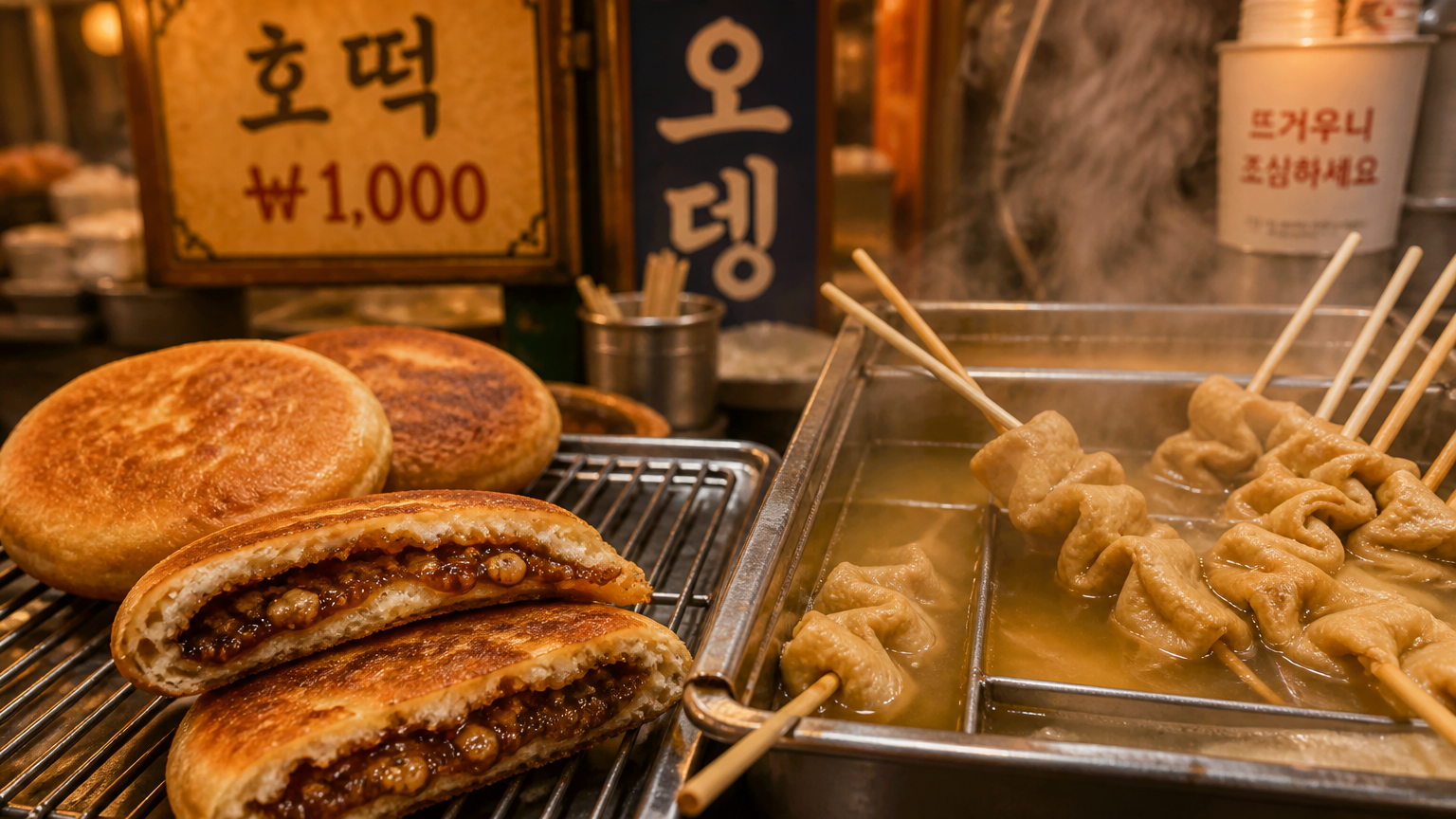
5. Hotteok and Odeng — What Locals Actually Eat
This is the section most tourist guides skip. Hotteok and odeng do not trend. They do not photograph dramatically. But ask any Korean where to warm up on a Myeongdong evening, and they will point you here without hesitation.
Hotteok is a fried dough pancake filled with brown sugar, honey, and crushed peanuts. The outside crisps in oil. The inside collapses into molten sweetness. It costs ₩1,500. No flame show, no cheese pull — just one of the best things you will eat in Korea.
Odeng (fish cake skewers) is usually self-serve: grab skewers from a simmering pot of broth, eat standing up, pay per stick. The broth is free to drink. Koreans hold the paper cup to warm their hands as much as to warm their stomachs. ₩500–₩1,000 per skewer.
These are the anti-viral items. They are probably the ones you will remember longest.
Quick Reference: Famous Korean Street Food at a Glance
| Food | Price (KRW) | Spice | Best Time |
|---|---|---|---|
| Buldak Omelette | ₩10,000 | Medium | 5 PM – 10 PM |
| Tteokbokki | ₩3,000–5,000 | Medium–Hot | All day |
| Tornado Potato | ₩3,000–5,000 | None–Mild | All day |
| Tanghulu | ₩3,000–6,000 | None | All day |
| Hotteok | ₩1,500 | None | Best Oct–Mar |
| Odeng | ₩500–1,000/skewer | None | All day |
FAQ
Is Korean street food spicy?
It depends on what you order. Tteokbokki and the buldak omelette have real heat, but both are manageable for most people. Tornado potato, tanghulu, hotteok, and odeng carry no spice at all. If you are sensitive to heat, start with the mild options and work upward.
How much does Korean street food cost?
Most items fall between ₩1,500 and ₩10,000 — roughly $1 to $7 USD. You can eat through Myeongdong's main stalls for under ₩25,000 total. It is one of the most affordable food experiences in Seoul.
Where is the best place for street food in Seoul?
Myeongdong has the widest variety and the most tourist-friendly setup. Gwangjang Market is better for traditional snacks like bindaetteok and mayak kimbap. For a younger, local scene, Hongdae and Sinchon streets run late into the night.
Is the Buldak Omelette really that spicy?
Less than you would think. The egg sheet, sausage, and melted cheese absorb most of the buldak heat. Most first-timers describe it as comfortably spicy rather than overwhelming — even visitors who usually avoid spicy food manage to finish it.
What if I have dietary restrictions?
Hotteok and tanghulu are typically vegetarian-friendly. Tteokbokki broth often contains fish cake, so ask first. The buldak omelette contains egg, cheese, and sausage. Halal and vegan options in Myeongdong are limited — check with individual vendors.
Go in Hungry
The best strategy is simple: arrive in Myeongdong with no reservation and ₩30,000 in cash. Start with the buldak omelette while the crowd is watching. Then walk slower. Find the hotteok stall. Get an odeng skewer and stand next to the pot for a minute.
These dishes are not just viral clips. They are also the ₩1,500 pancake a grandmother has been making the same way for thirty years. Both are worth your time.
Visited a jjimjilbang yet? Read our Korean Spa Etiquette guide before your first visit.
More from this series
2026-08-28
DMZ Tour: You Can Still Go. The JSA Is the Part You Cannot.
2026-08-28
Gyeongju Food: The Famous One Is a Souvenir, and the Meal Is Next to the Tombs
2026-08-28
Bulguksa Temple: There Is No Direct Bus to Seokguram, and You See the Buddha Through Glass
2026-08-27
Gyeongju From Seoul: Two Hours by KTX, and Then the Part Nobody Plans For
2026-08-27
Gyeongju: Three Separate UNESCO Listings, and Why One Day Does Not Cover Them
2026-08-27
K-ETA Korea: You Are Probably Exempt, and the Arrival Card Is What Catches People
2026-08-18
Autumn in Korea: Don't Pick the Dates, Pick the Latitude
2026-08-18
Hospital in Seoul: Why Koreans Don't Start at the Big One
2026-08-18
Korean Drinking Culture: The Rules Are Real, and So Is the Way Out
2026-07-31
What Is Silbi Kimchi? Korea's Spiciest Kimchi — and the Local Hack You Need to Know