Bungeoppang: The Carts Appear When It Gets Cold, and Most of Them Do Not Take Cards

Bungeoppang is not sold in shops. It arrives on the pavement when the air turns cold, and by spring the same corner is empty again.
Bungeoppang is a fish-shaped pastry filled with sweet red bean paste, cooked in a hinged iron mould on a street cart. This guide covers when the carts appear, how to pay at one, how it differs from ingeoppang and taiyaki, and how locals find a cart in the first place.
The first time you see one, it looks like a snack stall that forgot to open a shop. A small cart, a gas burner, two iron moulds shaped like fish, and a queue of people standing in the cold with their hands in their pockets.
Most visitors walk past it. Koreans do not, because the cart is a seasonal thing and everyone knows it will be gone in a few months. That is the part nobody explains: this is not street food you can plan around. You eat it when you find it.
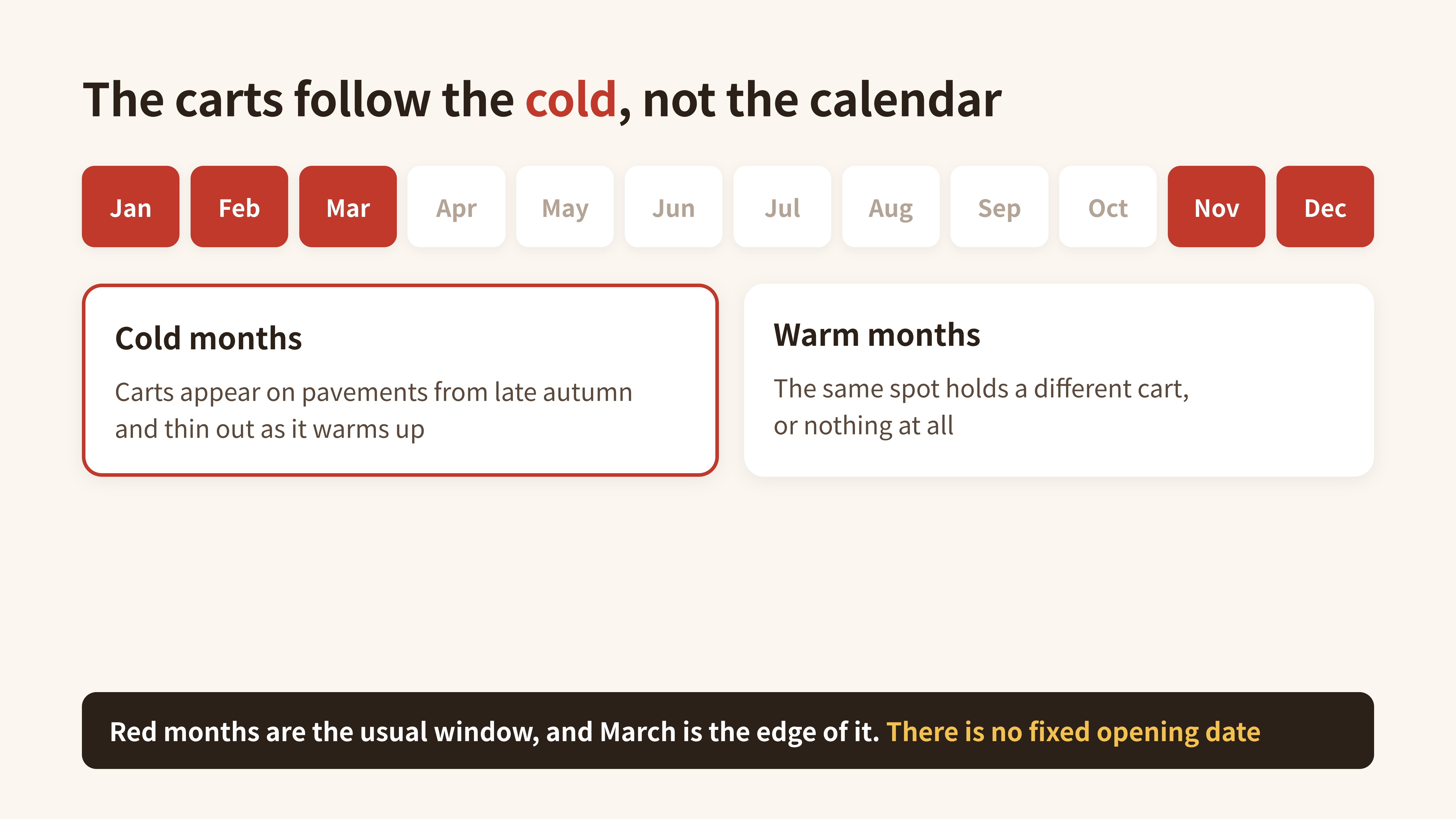
The season is the whole point
Carts start showing up as the weather turns, usually from late autumn, and they thin out again as it warms up. The vendors are not running a year-round business at that spot. Many of them sell something else in summer, and the same pavement can hold a completely different cart in August.
This is why Koreans talk about it the way other countries talk about the first snow. It marks the season rather than the menu. If you are visiting in the colder half of the year, you are in the window. If you are here in autumn, the carts usually arrive near the end of it.
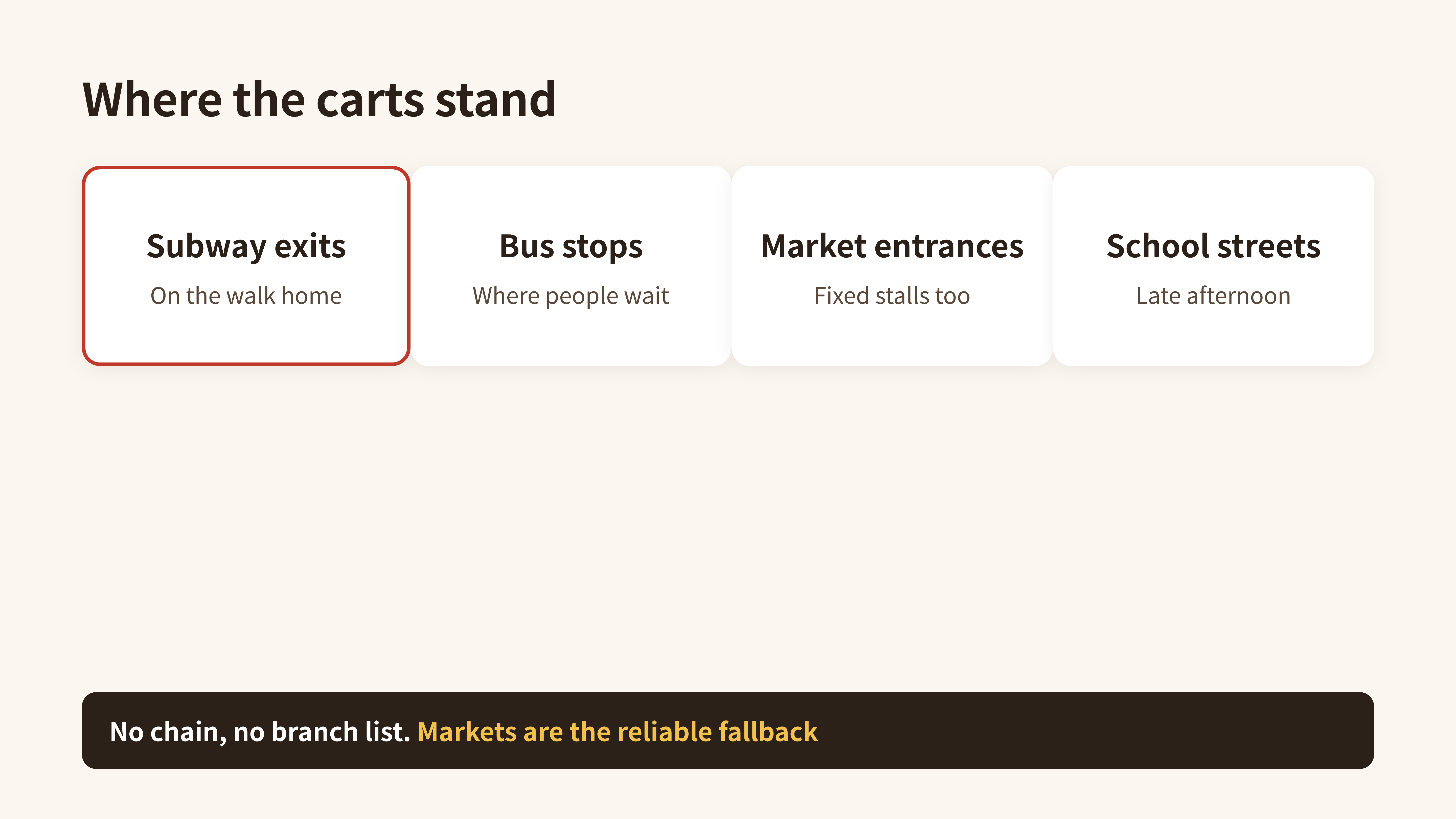
There is no chain, no branch list, and no guaranteed corner. Carts cluster near subway exits, bus stops, market entrances and the streets around schools, because those are the places people walk past on the way home.
So where do locals actually find one?
Locals use apps, and the apps are crowd-sourced
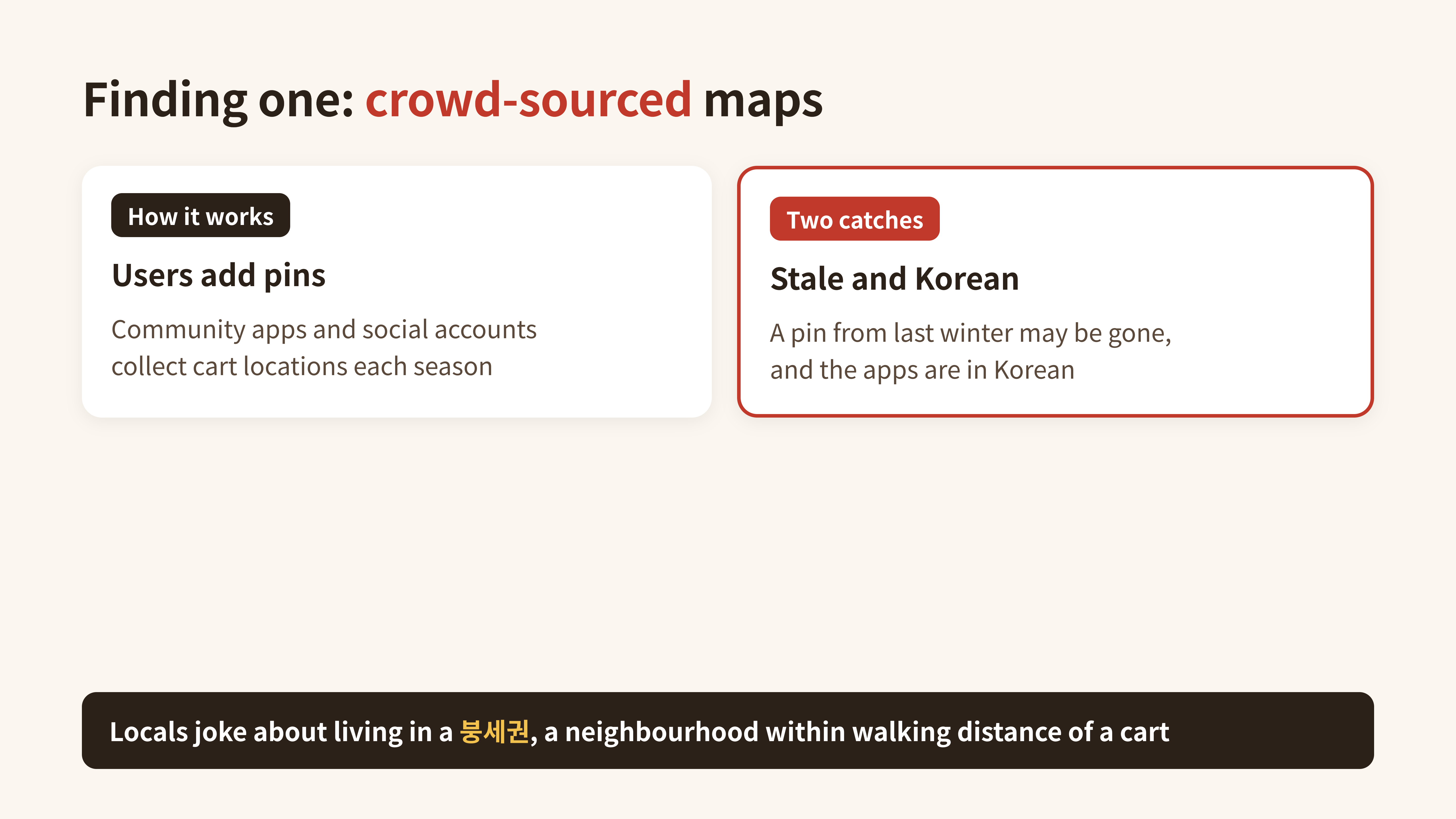
Because the carts move, people started mapping them. Community-run apps and social media accounts collect cart locations for the season, and Koreans use them the way you would use a restaurant map.
Two things to know before you rely on one. The listings are added by users, so a cart that was there last winter may not be there this week. And the apps are in Korean, which means you are matching a pin on a map rather than reading a review.
There is even a word for living near one. People joke about being in a 붕세권, a neighbourhood with a cart in walking distance, built from the same pattern as the word for being near a subway station.
If you would rather not chase a cart, markets are the reliable fallback. Market stalls sell the same thing from a fixed spot, and market pricing has its own rules, which we covered in the Gwangjang Market guide.
Once you find a cart, paying at one is the part that catches people out.
How to pay, and what to say
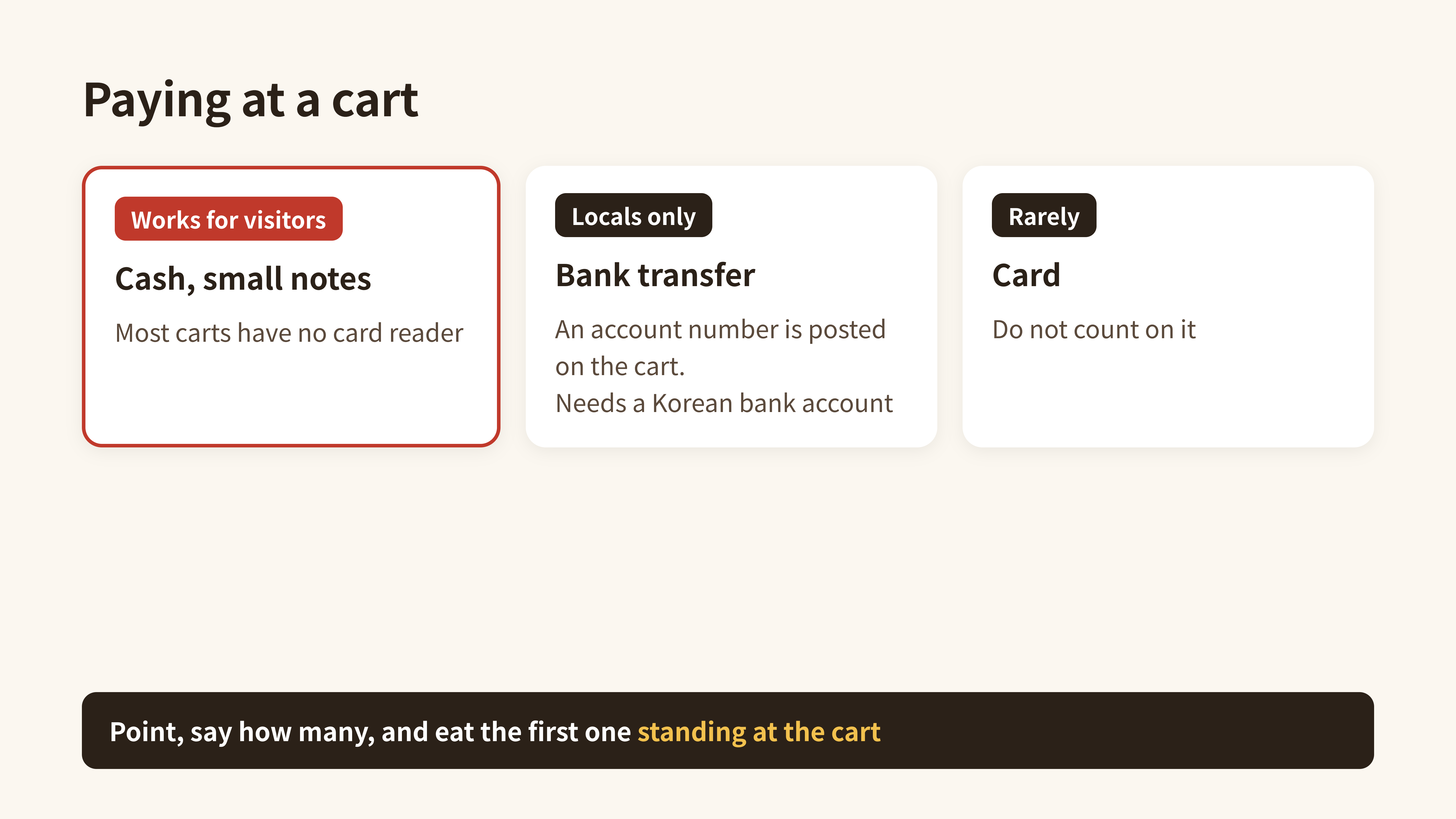
Carts are small cash operations. Many of them do not take cards, and the card readers you see in cafes are not there. Bring small notes if you are heading out on a cold evening.
What surprises visitors is the second option. A lot of carts have a bank account number written on a sign, and customers transfer the money from their phone instead of handing over cash. If you do not have a Korean bank account, that route is closed to you, so cash is the safe answer.
Ordering takes one sentence. You point at what you want and say how many. The vendor counts them into a paper bag, and the bag goes soft almost immediately because the pastries are still steaming.
Two small things locals do. They eat the first one standing at the cart, because it stops being good once it cools. And they hold it by the tail, since the head end holds more filling and more heat.
Fish-shaped pastries: the same shape, different batter
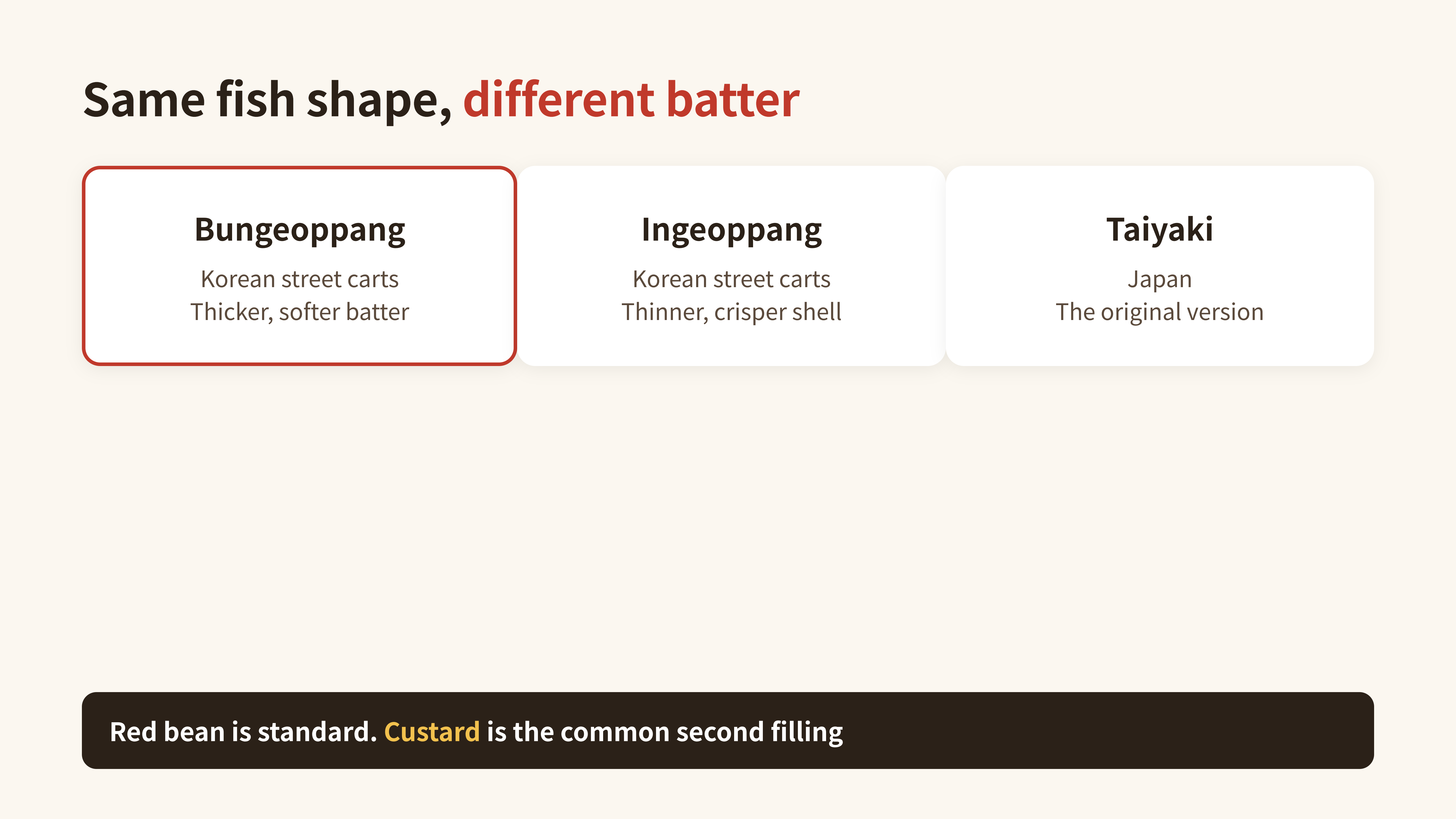
The fish shape is shared across all three, which is why the comparison keeps coming up.
| Name | Where you meet it | What differs |
|---|---|---|
| Bungeoppang | Korean street carts | Thicker, softer batter |
| Ingeoppang | Korean street carts | Thinner, crisper shell |
| Taiyaki | Japan | The original fish-shaped version |
In practice, Korean carts sell both without making a fuss about which is which, and many people use the two names interchangeably. The filling is the thing that changes more often: red bean is standard, and carts increasingly sell custard, sometimes pizza-flavoured filling, and in summer an ice cream version from convenience store freezers.
That freezer version is a different experience from the cart. It is made to be eaten cold, and it is the only form you will find in July.
FAQ
When can I find bungeoppang in Korea?
In the colder months. Carts typically appear as the weather turns in late autumn and disappear again in spring, so a summer trip will not have them on the street.
Is bungeoppang the same as taiyaki?
They share the fish shape and the sweet bean filling. Taiyaki is the Japanese version, and Korean carts sell the thicker version alongside the thinner-shelled ingeoppang.
Can I pay by card at a street cart?
Often not. Many carts are cash only, and some accept a bank transfer to an account number posted on the cart, which needs a Korean bank account. Carry small notes.
What does it taste like?
The shell is lightly sweet and soft, and the filling is sweet red bean paste with a texture closer to jam than to beans. Custard versions taste like warm vanilla pudding.
Where do I look for a cart?
Subway exits, bus stops, market entrances and busy residential streets. Markets are the more reliable option if you do not want to walk around looking.
The short version
This is a seasonal cart food, not a shop product. It shows up when the weather turns cold, payment is usually cash, and the cart you found last week may not be there tomorrow. If you see one and it is cold outside, that is the whole decision.
If you want a broader list of what to eat on the street while you are here, start with our guide to famous Korean street foods.
More from this series
2026-09-23
The Korean Photo Booth: Nobody Takes Your Photo, and That Is the Point
2026-09-23
Makgeolli and the Rainy Day: Why Koreans Order Pancakes When the Weather Turns
2026-09-21
Daejeon, Korea: An Hour From Seoul by KTX, and Two Stations Carry the City's Name
2026-09-21
Yuseong Hot Spring: The Foot Bath Is Free and Open Until 10 p.m., and You Cannot Drink the Water
2026-09-19
Seoul Bus: The Colour Tells You Where It Goes, and Some of Them No Longer Take Cash
2026-09-18
Hangul Day: The Alphabet's Birthday Lost Its Day Off for 22 Years, and Its Museum Is Shut Until 2028
2026-09-15
Namdaemun Market Opening Hours: The Market's Own List Has 38 Timetables, and Some Floors Open at 11 p.m.
2026-09-15
Hair Salon in Seoul: The Final Price Must Be on the Wall, and Only a Barber May Shave You
2026-08-28
DMZ Tour: You Can Still Go. The JSA Is the Part You Cannot.
2026-08-28
Gyeongju Food: The Famous One Is a Souvenir, and the Meal Is Next to the Tombs
2026-08-28
Bulguksa Temple: There Is No Direct Bus to Seokguram, and You See the Buddha Through Glass
2026-08-27
Gyeongju From Seoul: Two Hours by KTX, and Then the Part Nobody Plans For
2026-08-27
Gyeongju: Three Separate UNESCO Listings, and Why One Day Does Not Cover Them
2026-08-27
K-ETA Korea: You Are Probably Exempt, and the Arrival Card Is What Catches People
2026-08-18
Autumn in Korea: Don't Pick the Dates, Pick the Latitude
2026-08-18
Hospital in Seoul: Why Koreans Don't Start at the Big One
2026-08-18
Korean Drinking Culture: The Rules Are Real, and So Is the Way Out
2026-07-31
Famous Korean Street Foods You Must Try (Yes, Including the Viral Buldak Omelette)
2026-07-31
What Is Silbi Kimchi? Korea's Spiciest Kimchi — and the Local Hack You Need to Know