Gyeongju From Seoul: Two Hours by KTX, and Then the Part Nobody Plans For

There is a station called Gyeongju Station. Your KTX stops there. It is not in the old city. That one closed in 2021.
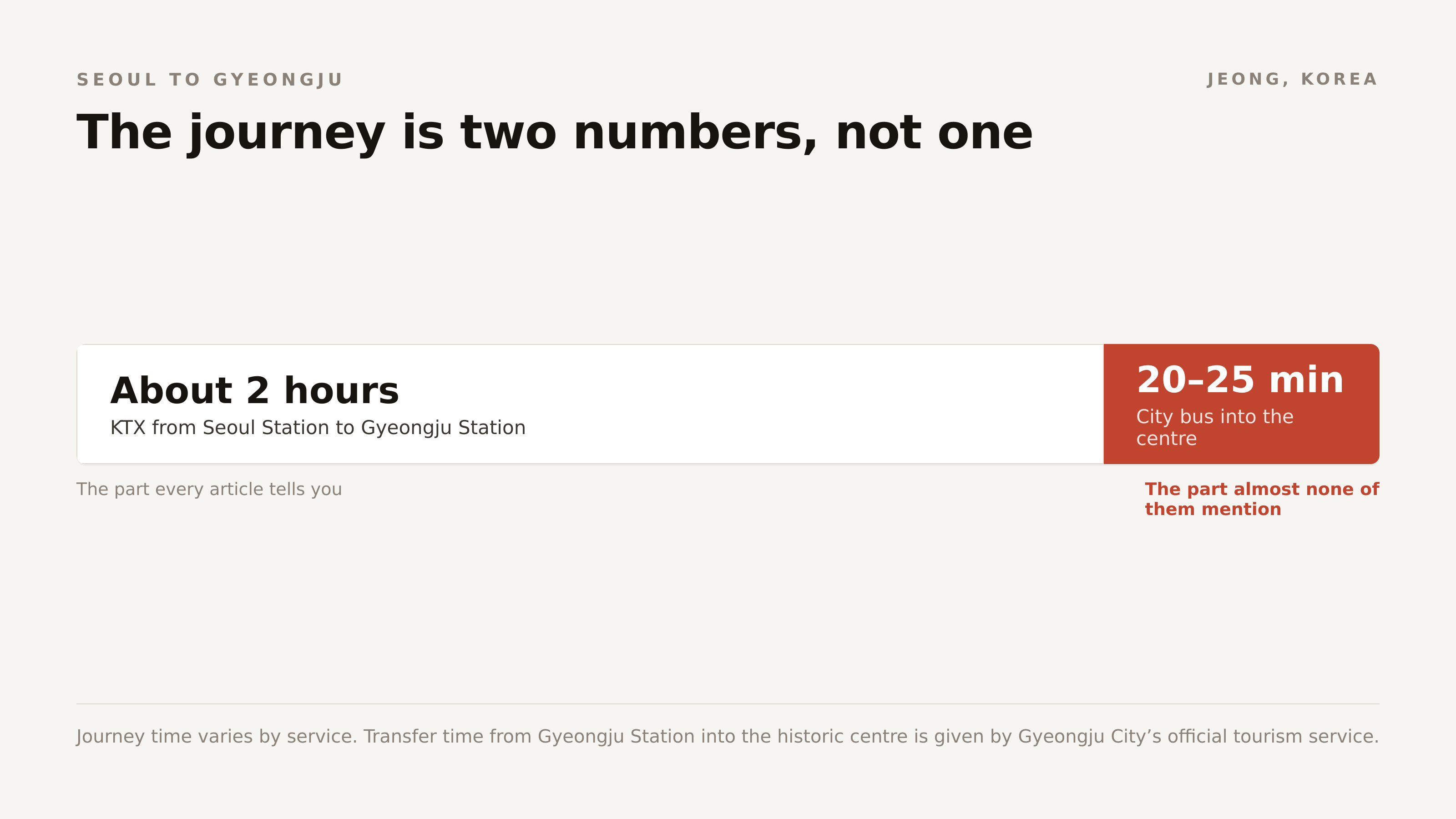
Getting to Gyeongju from Seoul is genuinely easy. Two hours on a high-speed train, one seat, no transfers. That part is true and every article says it. What almost none of them say is that the train puts you down outside the old city, that the taxi from there costs more than you have budgeted for, and that the bus you take out of the station car park decides which half of Gyeongju you see first. The two hours are the easy part. The twenty-five minutes after them are where people lose an afternoon.
There are two trains, and they leave from two different Seoul stations
Most people book the wrong one by accident, because the booking screen sorts by price.
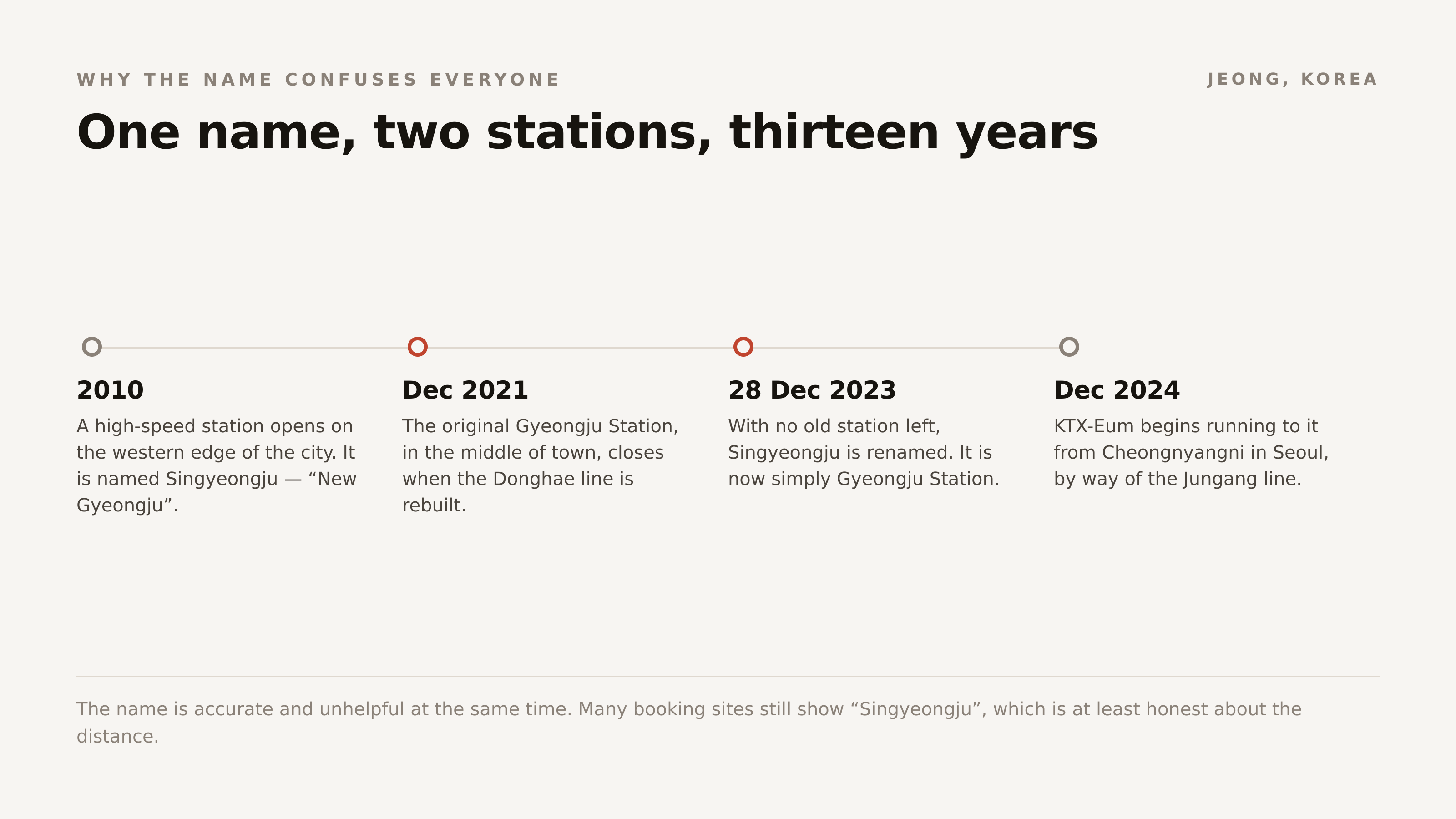
There are two rail routes to Gyeongju from Seoul, and they do not start in the same place. The fast one is the Gyeongbu line KTX out of Seoul Station, which reaches Gyeongju in around two hours. The other is the Jungang line KTX-Eum, which leaves from Cheongnyangni in the north-east of the city, runs down the spine of the country through Andong, and began serving Gyeongju in December 2024. It is slower and it runs a handful of times a day rather than every hour.
That matters because a booking site will happily show you both in one list. If you sort by fare and pick the cheapest departure without reading the origin station, you can end up committed to a train that leaves from a station forty minutes away from the one you assumed, on a route that takes considerably longer. Check the departure station and the arrival time before you check the price.
| Gyeongbu line KTX | Jungang line KTX-Eum | |
|---|---|---|
| Leaves from | Seoul Station | Cheongnyangni Station |
| Journey | About two hours | Noticeably longer |
| Departures | Frequent through the day | A few times a day |
| Goes on to | Busan | Bujeon, in eastern Busan |
Fares move with train type, seat class and how far ahead you book, so the only number worth trusting is the one on the Korail booking screen on the day you buy. If you have already read how the booking site handles foreign cards, you know the part that trips people up is payment rather than availability: Seoul to Busan KTX: Why Your Card Gets Rejected, and How to Actually Book It.
So you have a seat on the fast train. Where does it actually leave you?
The station is in Gyeongju city, and it is not in old Gyeongju
The name on your ticket is younger than the confusion around it.
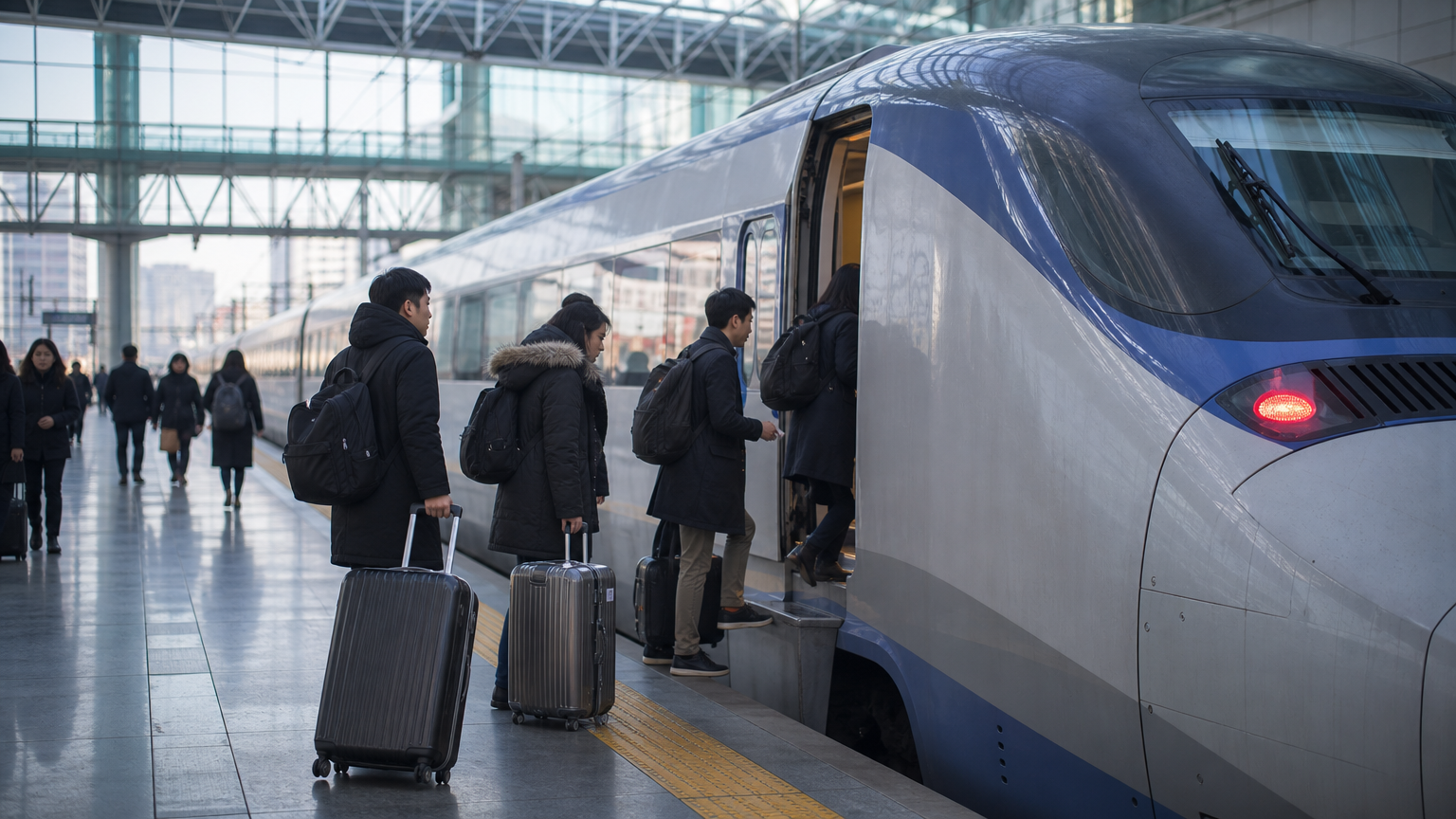
Until December 2021 there was a Gyeongju Station in the middle of town, a short walk from the market and a few minutes from the tombs. When the Donghae line was rebuilt, that station closed. The high-speed station out on the western edge of the city, which had opened in 2010 under the name Singyeongju, was then renamed. Since 28 December 2023 it has simply been Gyeongju Station.
The result is that the name is correct and useless at the same time. It is genuinely Gyeongju Station, in Gyeongju, and it is a car park and a road and a set of bus bays with the historic quarter about twenty to twenty-five minutes further east. Booking sites and half the travel blogs still call it Singyeongju, which is at least honest about the distance.
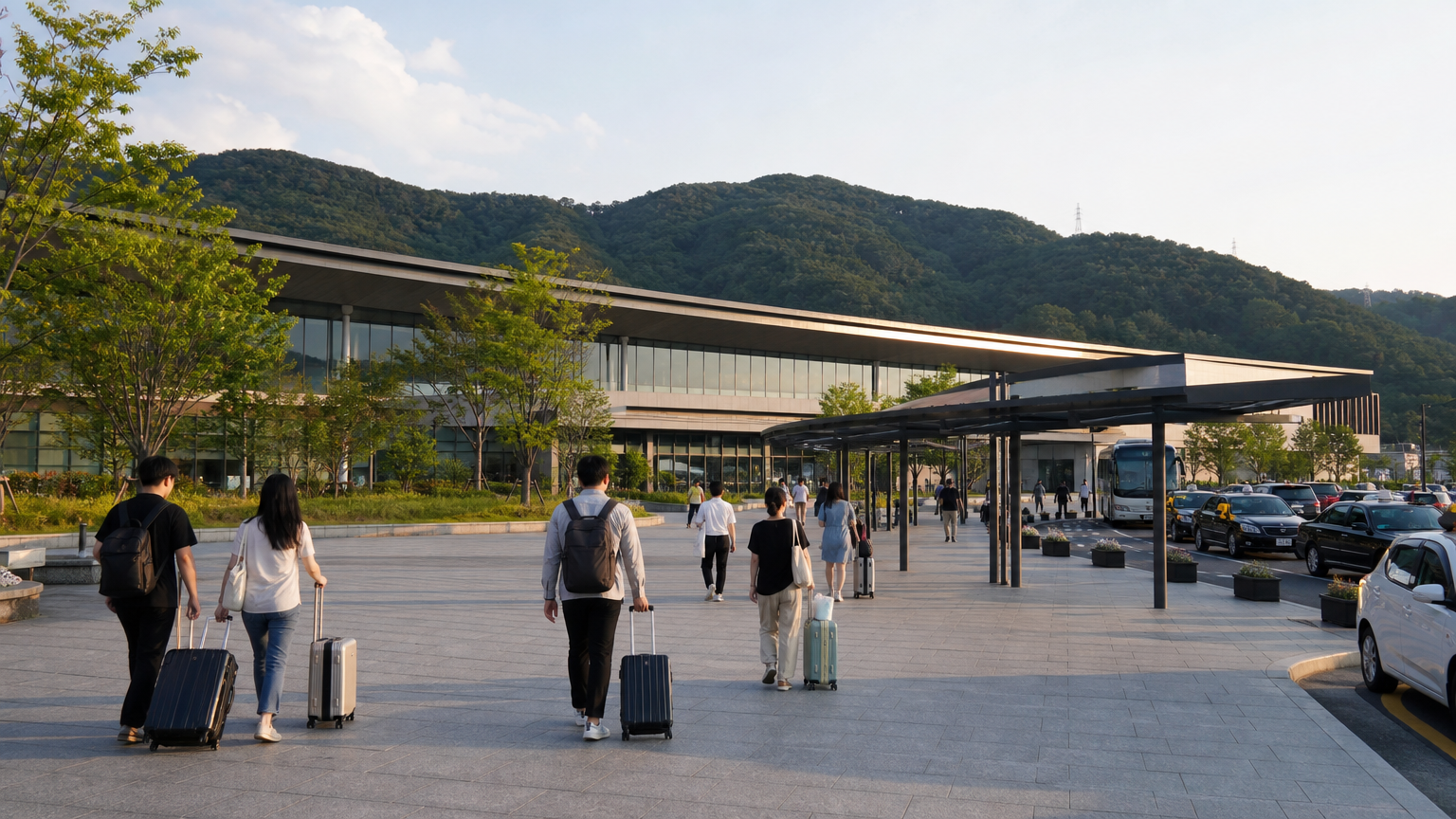
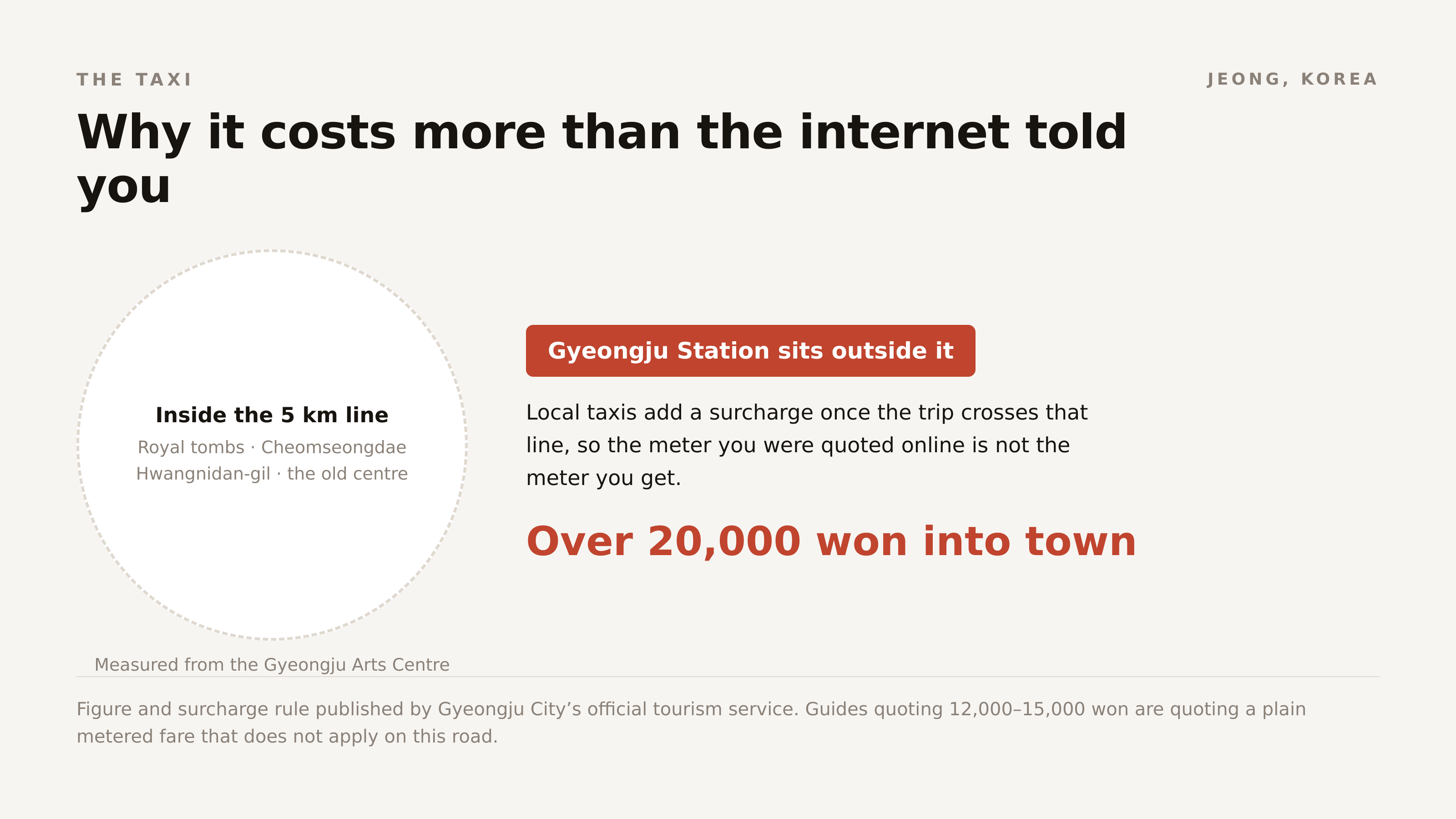
The taxi is where this stops being trivia. Gyeongju city's own tourism service puts the fare from the station into town at over twenty thousand won, and explains why: local taxis add a surcharge once you travel more than five kilometres out from the city's arts centre, and the station sits outside that line. Guides that quote you twelve or fifteen thousand won are quoting a plain metered fare that does not apply on this particular road. Two people splitting it is fine. Four people with luggage is fine. One person doing it twice in a day is a meal.
Which is a long way of saying the bus is not the budget option here. It is the normal option.
The bus number decides where your day starts
Take the bus that matches your first stop, not the first bus that arrives.
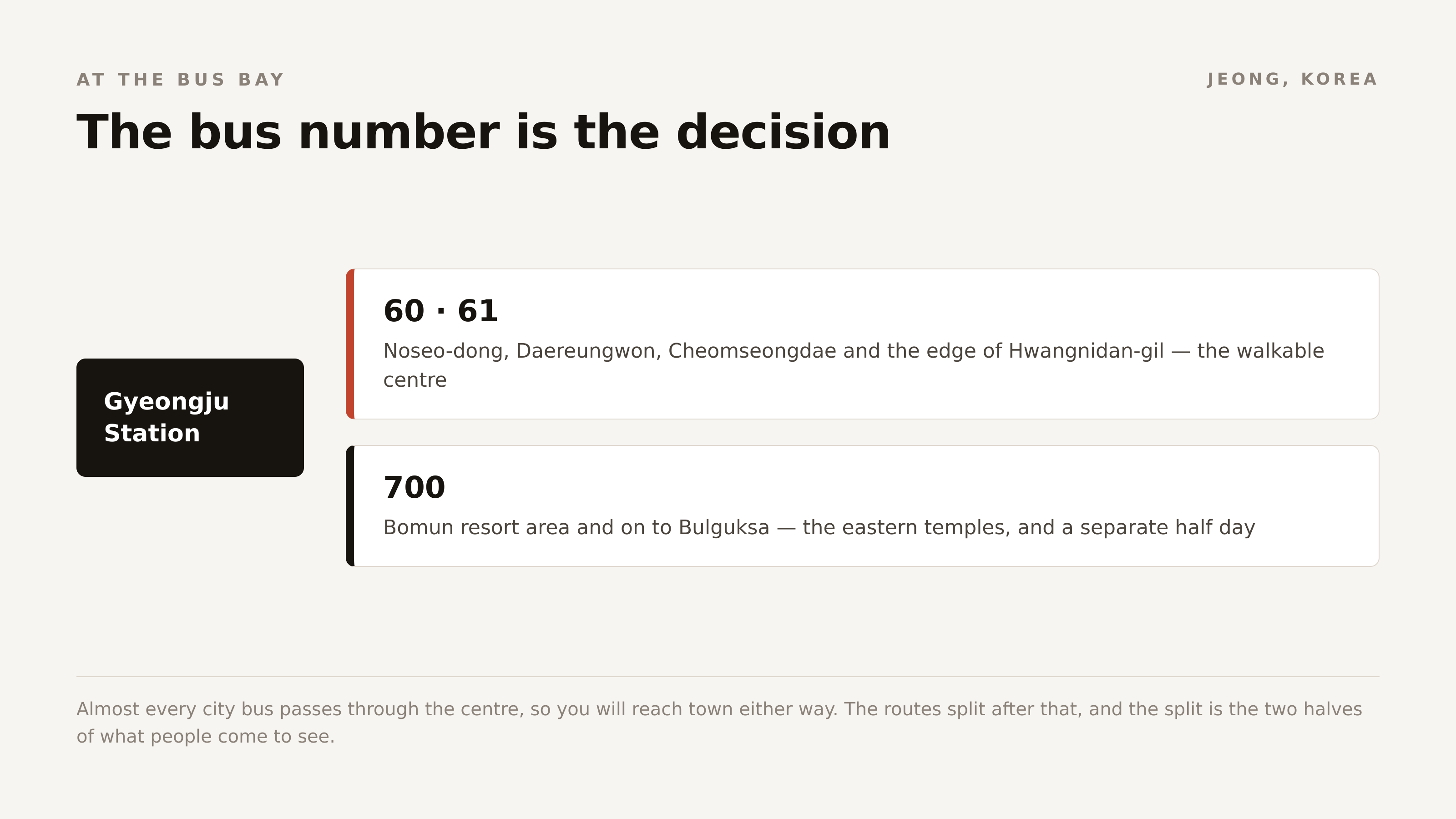
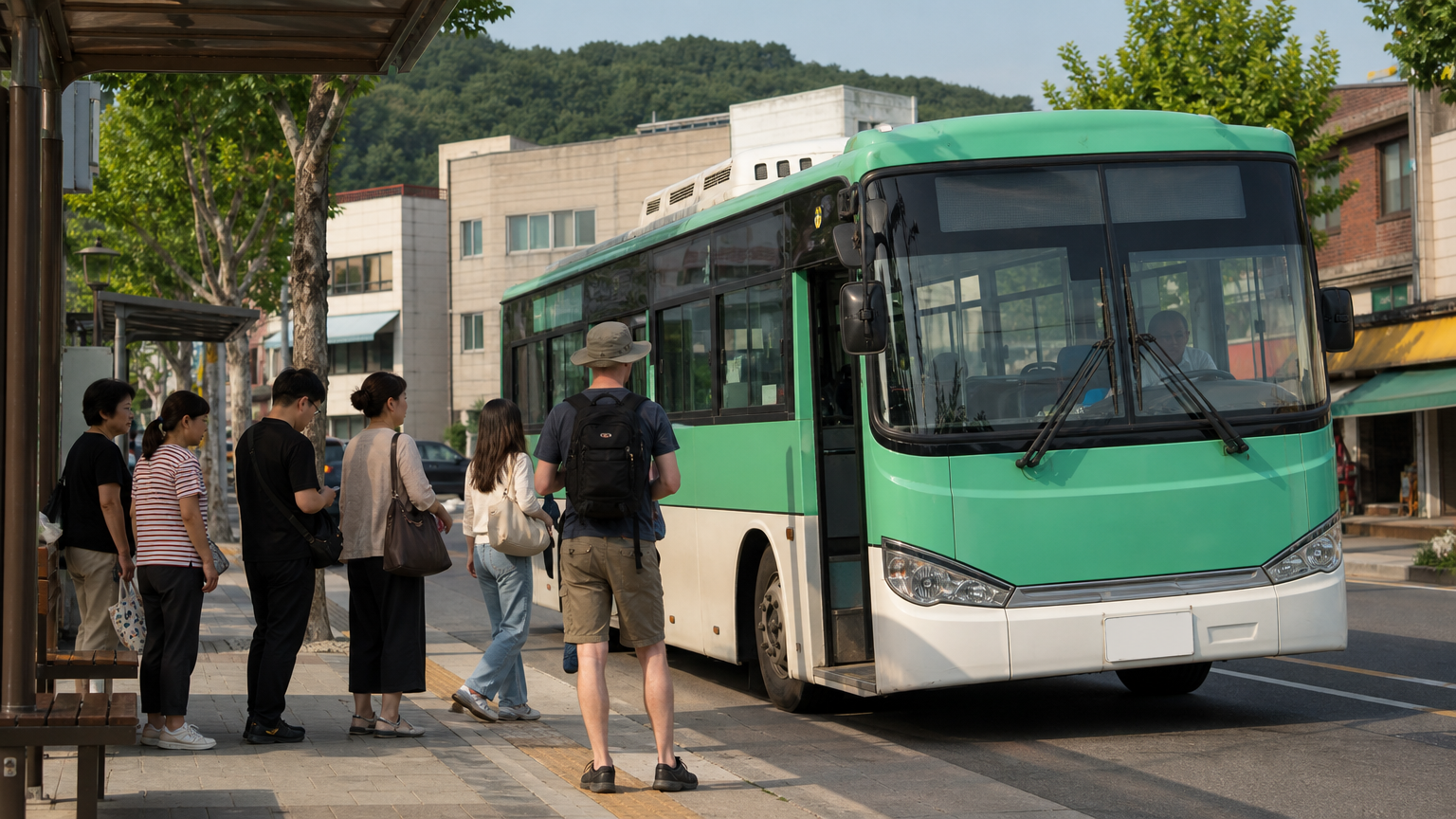
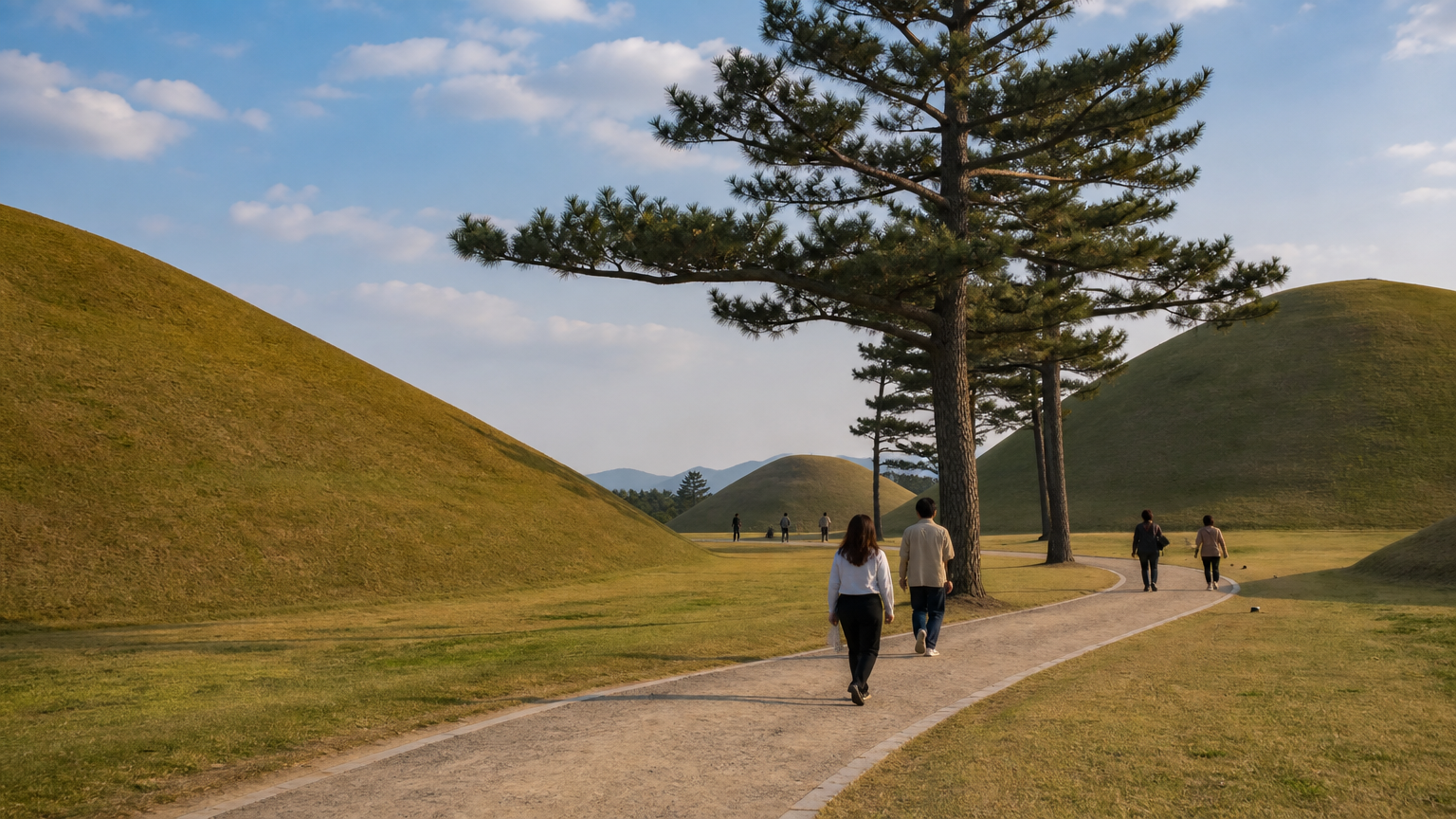
Almost every city bus leaving Gyeongju Station passes through the centre, so you will get to town whichever one you board. But the routes split after that, and the split maps neatly onto the two halves of what people come to see. The 60 and 61 run to Noseo-dong, Daereungwon and Cheomseongdae, which is the walkable cluster of royal tombs and old streets. The 700 runs the other way, out to the Bomun resort area and on to Bulguksa, which is the temple most people have seen a photograph of.
In practice that means the decision is made before you leave the station. If your hotel is near Hwangnidan-gil and you want to walk among the tombs on your first afternoon, you want the 60 or the 61. If you are heading straight for Bulguksa because you only have one afternoon and that is the photograph you came for, you want the 700 and you should accept that you are not seeing the tombs today. Boarding whichever bus is idling and working it out later is how people end up crossing the city twice.
| Bus | Where it takes you |
|---|---|
| 60, 61 | Noseo-dong, Daereungwon, Cheomseongdae, the edge of Hwangnidan-gil |
| 700 | Bomun resort area, Bulguksa |
| 50, 51, 70, 700 | Seongdong Market, the express and intercity bus terminals |
The ride into the centre takes about twenty to twenty-five minutes, which is the figure to put in your plan rather than the two hours on the train. And if the train is sold out or you would rather sleep than sit upright, the express bus is a real alternative rather than a consolation prize, in the same way it is on the Busan route: Seoul to Busan Bus: Cheaper Than the Train, and It Stops at a Rest Area.
FAQ
Can I do Gyeongju from Seoul as a day trip?
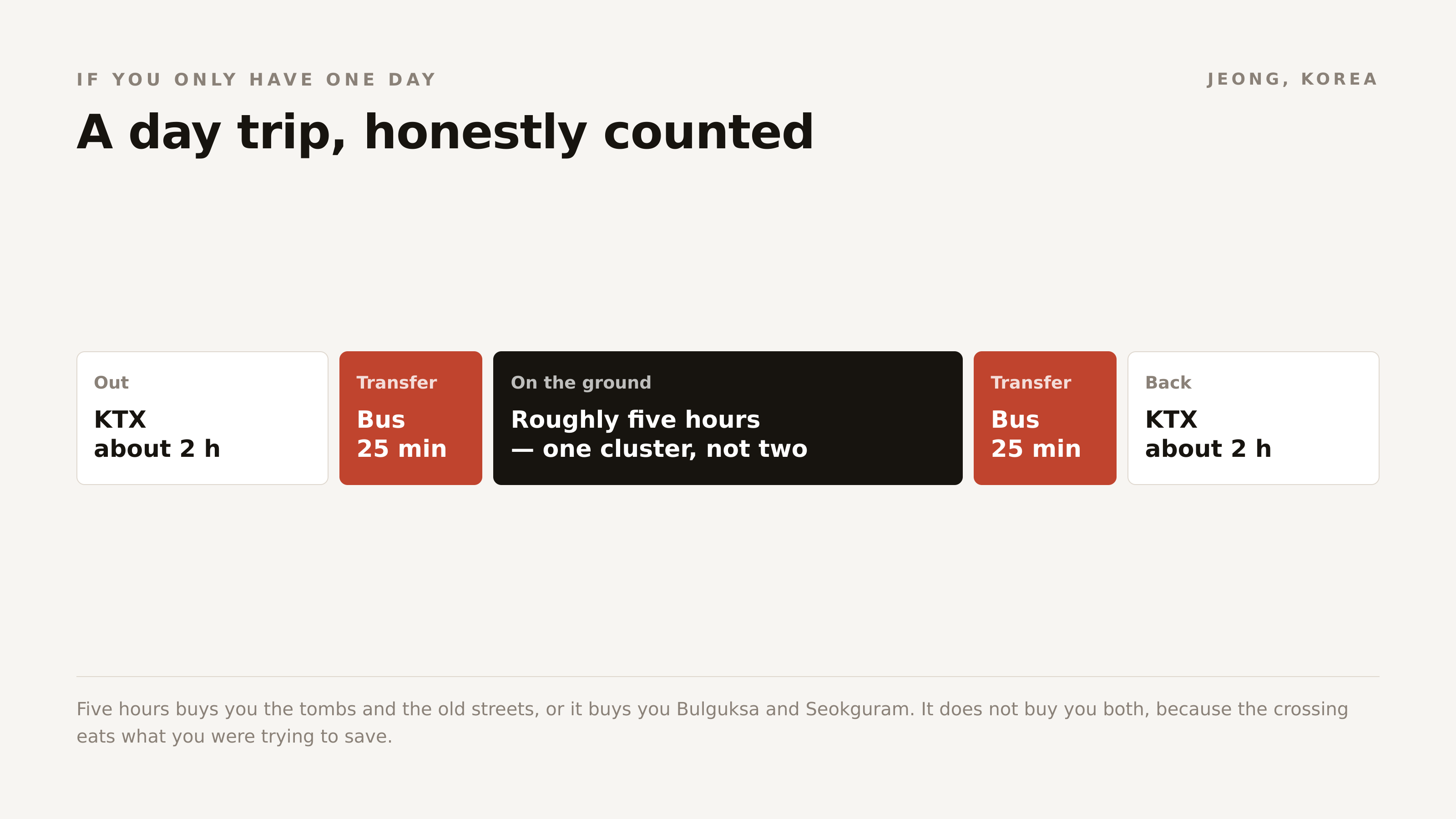
You can, and people do. Two hours out, two hours back, and roughly fifty minutes of local transport at the Gyeongju end. That leaves you one cluster of sites, not two. Pick the tombs and the old streets, or pick Bulguksa. Trying to do both on a day trip is the single most common way to spend the afternoon on a bus.
Is the station still called Singyeongju?
Not officially. It was renamed Gyeongju Station on 28 December 2023. Many booking sites, maps and older articles still show Singyeongju, and it is the same building either way, so do not panic if your ticket and your map disagree.
Can I use my Seoul transport card on the buses?
Rechargeable national transport cards are accepted on Gyeongju city buses. Top yours up before you leave the station rather than after, because the reload points thin out quickly once you are away from the terminals.
Should I rent a car instead?
Only if Bulguksa, Seokguram and Yangdong Village are all on your list. Those sit far enough apart that buses start eating the day. For the central cluster of tombs, Cheomseongdae and Hwangnidan-gil, a car is a parking problem rather than a solution.
The short version
Gyeongju from Seoul is two hours plus twenty-five minutes, and only the first number appears in most articles. Book from Seoul Station rather than Cheongnyangni unless you have read the timetable properly. Expect the station to be outside the old city, expect the taxi to cost more than the internet told you, and decide on the platform whether your first stop is the tombs or the temple, because the bus bay you walk to is the decision.
Once you are actually in Gyeongju, the same problem repeats at a larger scale. The city holds three separate UNESCO World Heritage listings, and they are not variations on one site. They are in different parts of the map, and that is what quietly decides whether you needed one day or two.
Sources
-
Gyeongju City official tourism service — station-to-city transfer guidance, bus routes and the taxi surcharge
-
Newsis and Maeil Shinmun — reporting on the closure of the former Gyeongju Station in December 2021 and the renaming of Singyeongju Station on 28 December 2023
-
Korail — train services and booking; fares and timetables should be checked at the time of travel
More from this series
2026-08-28
DMZ Tour: You Can Still Go. The JSA Is the Part You Cannot.
2026-08-28
Gyeongju Food: The Famous One Is a Souvenir, and the Meal Is Next to the Tombs
2026-08-28
Bulguksa Temple: There Is No Direct Bus to Seokguram, and You See the Buddha Through Glass
2026-08-27
Gyeongju: Three Separate UNESCO Listings, and Why One Day Does Not Cover Them
2026-08-27
K-ETA Korea: You Are Probably Exempt, and the Arrival Card Is What Catches People
2026-08-18
Autumn in Korea: Don't Pick the Dates, Pick the Latitude
2026-08-18
Hospital in Seoul: Why Koreans Don't Start at the Big One
2026-08-18
Korean Drinking Culture: The Rules Are Real, and So Is the Way Out
2026-07-31
Famous Korean Street Foods You Must Try (Yes, Including the Viral Buldak Omelette)
2026-07-31
What Is Silbi Kimchi? Korea's Spiciest Kimchi — and the Local Hack You Need to Know