The Korean Photo Booth: Nobody Takes Your Photo, and That Is the Point

Walk two blocks in a Korean student district and you will pass a glass shopfront full of booths, with music playing and nobody working there. It is a photo studio with no photographer.
A korean photo booth is a self-service studio: you pay at the machine, pick a frame, pose for a fixed number of shots, and walk out with printed strips and a digital copy. This guide covers how the machines work, what the chains differ on, and the small rules that regulars follow.
Most visitors meet one by accident. You are looking for a cafe, you see a bright shopfront with curtains, and inside there are three or four booths with people laughing behind the fabric.
The instinct is to walk past, because it looks like something you need a Korean friend to explain. You do not. The screen walks you through it, the buttons are large, and the whole thing takes less time than queueing for coffee.
What actually happens inside the booth
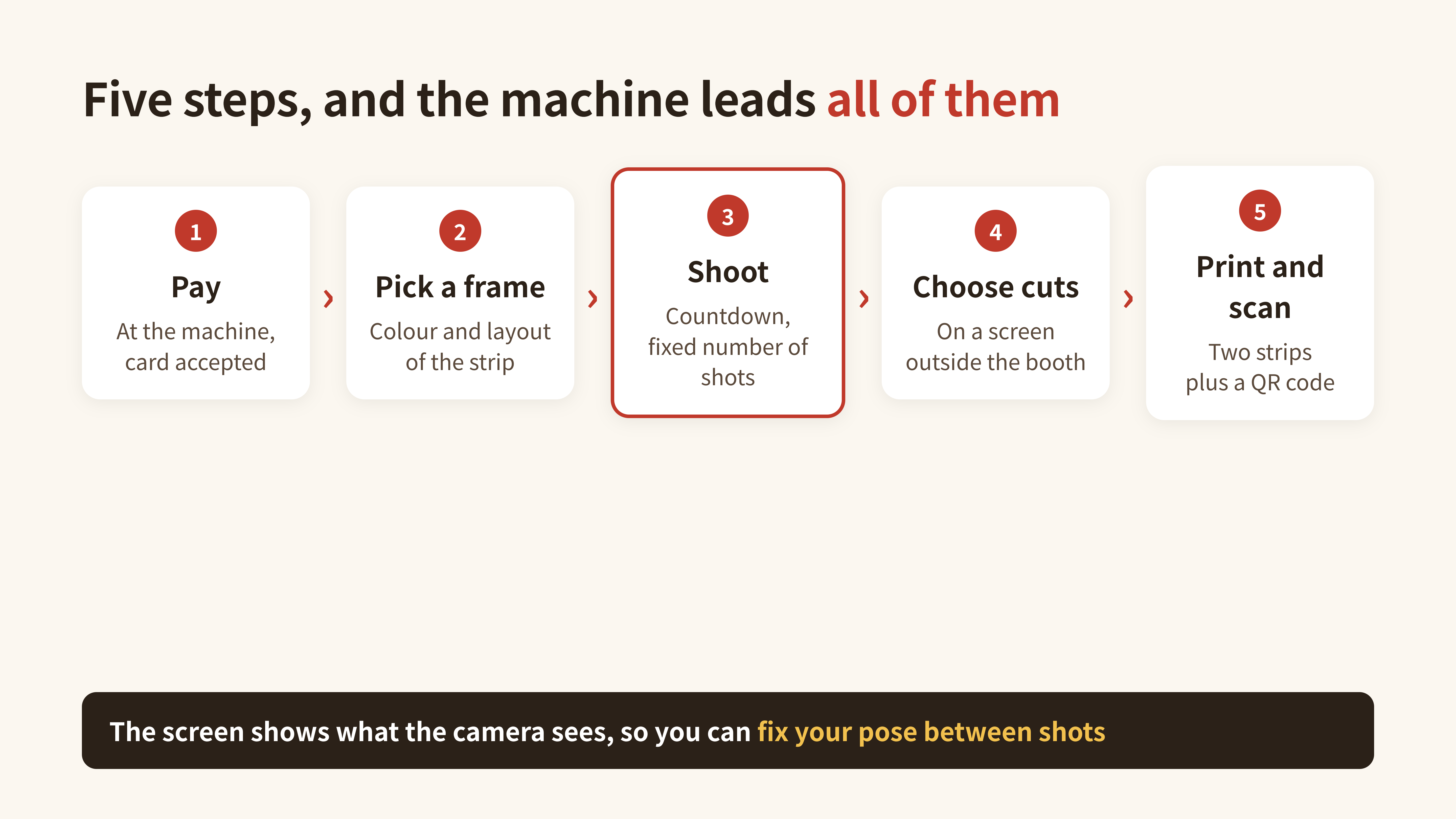
The flow is the same across the chains, and it goes in one direction.
You pay first, at the machine outside or inside the booth. Then you choose a frame, which means the colour and layout of the printed strip. The countdown starts, the shutter fires a set number of times, and a screen in front of you shows what the camera sees so you can fix your pose between shots.
When the shooting ends, you move to a second screen to pick which cuts go on the strip. That screen is usually just outside the booth, which is why the curtain opens and a group shuffles two steps left while the next people wait.
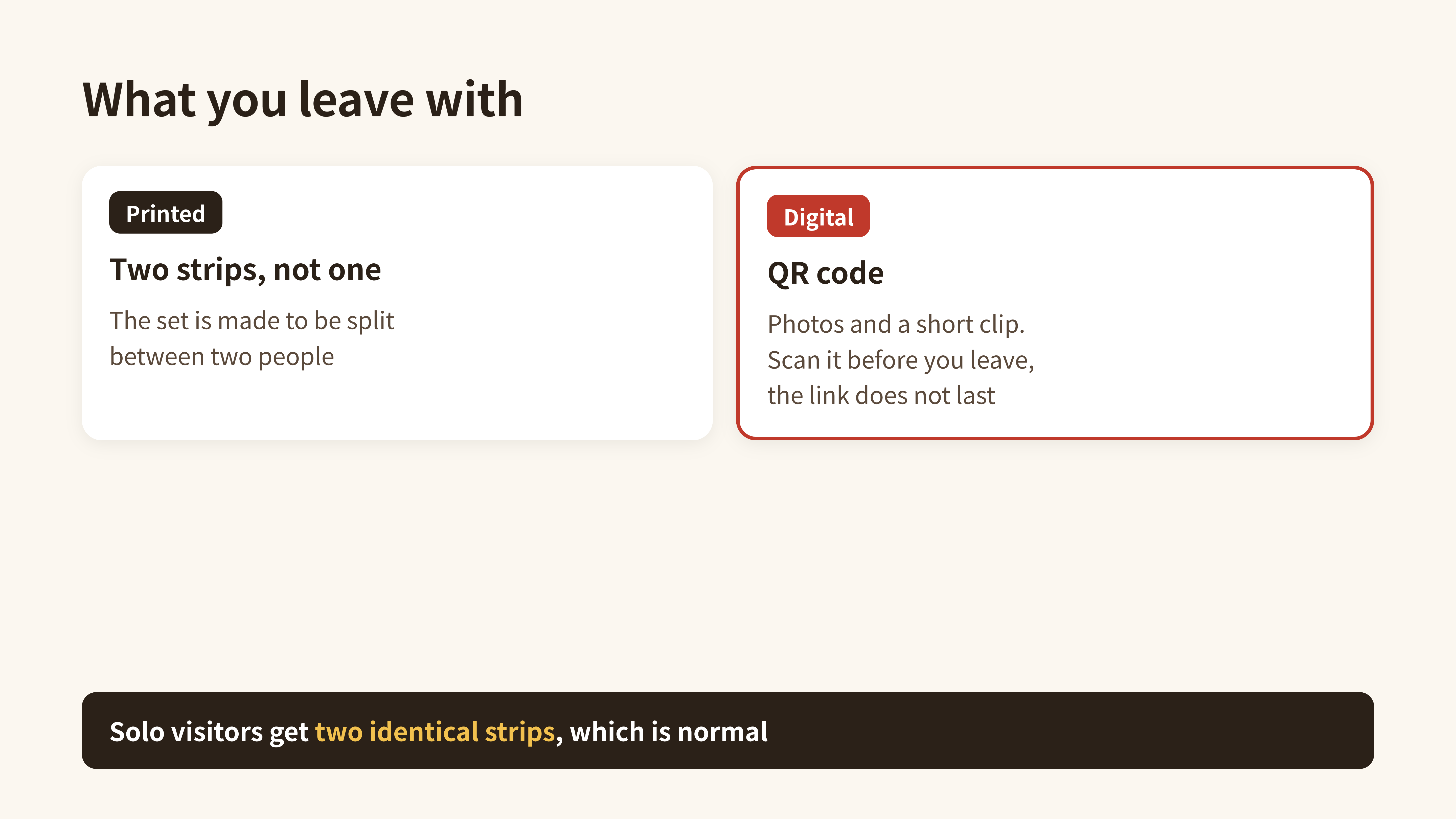
Two prints come out, not one. This is the part nobody explains to visitors: the strip is designed to be split between two people, which is why couples and friends use it and solo travellers end up with a spare.
Most machines also give you the digital file. A QR code appears on the screen, you scan it with your phone, and the photos and a short video clip are there. Do it before you leave, since the link does not sit there forever.
The chains are not the same, and the difference is the look
There are several chains, and Koreans do have preferences. Life4Cuts is the name most people abroad have heard, and Photoism, Haru Film and Photogray sit alongside it on the same streets.
| What changes | What to look for |
|---|---|
| Frame designs | Colour, borders, seasonal collaborations |
| Lighting | Softer studio lighting in the bigger shops |
| Retouching | On-screen skin smoothing, sometimes adjustable |
| Extras | Props, wigs, headbands, occasional video booths |
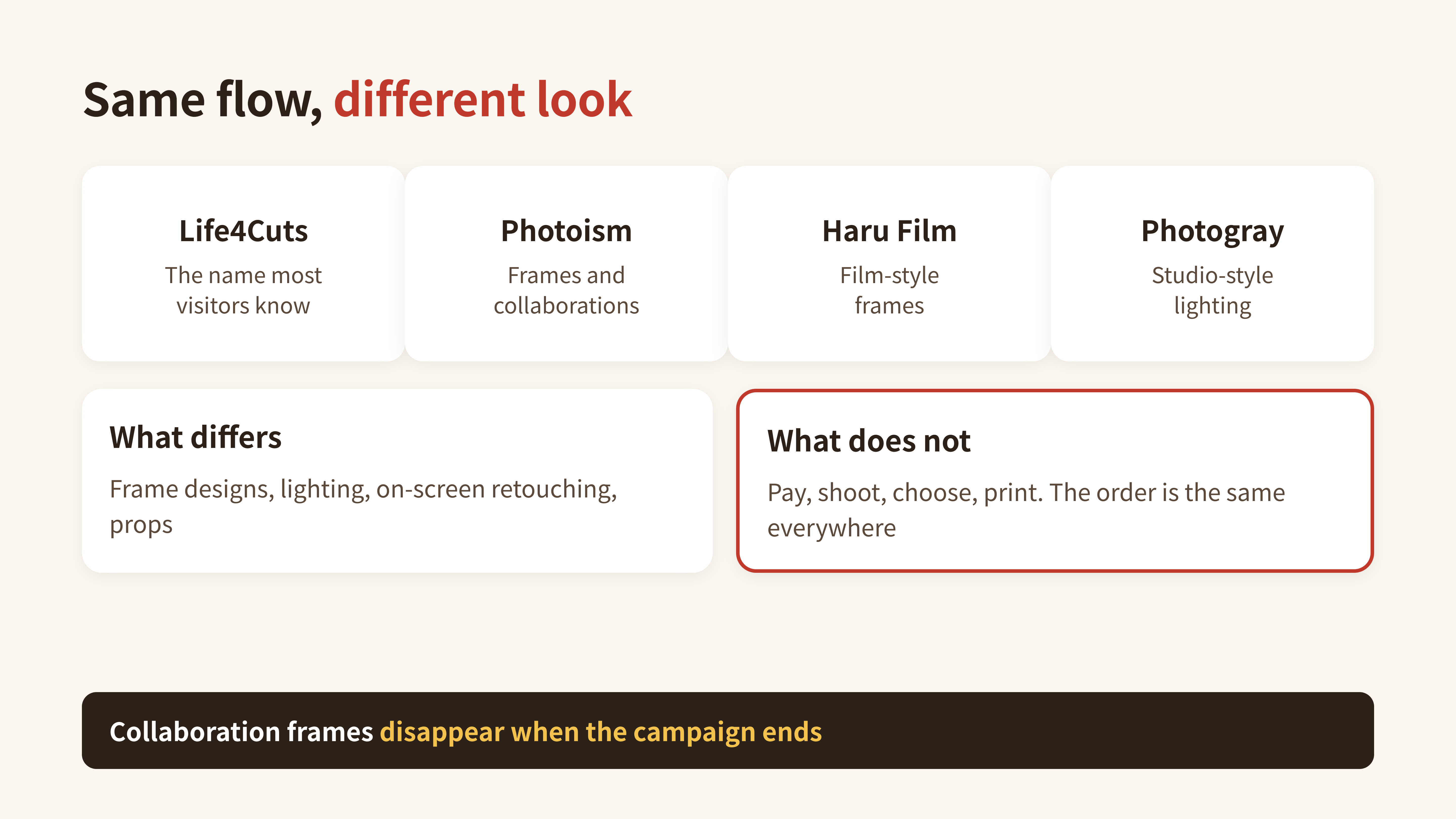
Collaborations are the reason the same chain looks different from month to month. A booth may run a frame tied to a drama, an idol group or a cartoon character, and those frames disappear when the campaign ends. If a frame matters to you, that is a reason to shoot on the day you see it rather than the day you planned.
The unwritten rules regulars follow
None of these are posted on the wall, and all of them are obvious once you have seen a queue.
Groups take turns rather than crowding one booth, because the booth fits a small number of people and the next group is watching the timer. When you finish shooting, you move to the selection screen quickly, since the booth itself is what the queue needs.
Props live on a shelf by the entrance and go back on that shelf. The last group leaving usually straightens them without being asked.
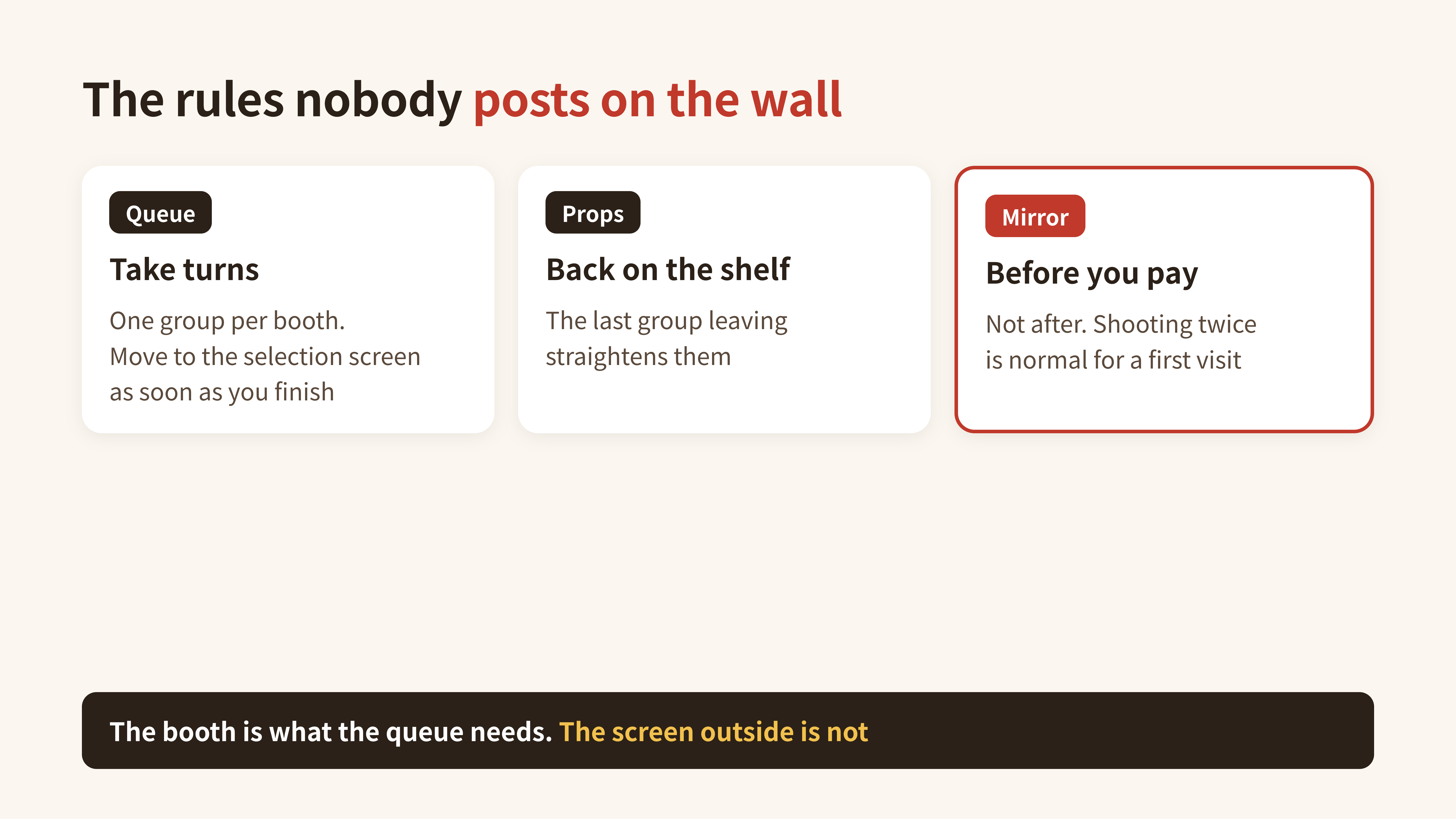
Hair and makeup get a mirror near the door, and people use it before they pay, not after. It is also normal to shoot twice, because the first round is where you learn how fast the countdown is.
Where to find one, and when it is busiest
Student districts are the densest. Hongdae is the obvious one, and the streets around Konkuk University, Sinchon and Gangnam are the same story.
They cluster in the same buildings as the other things young Koreans do in a group, which means you will often find a booth on the way to coin karaoke or a PC bang in the same block.
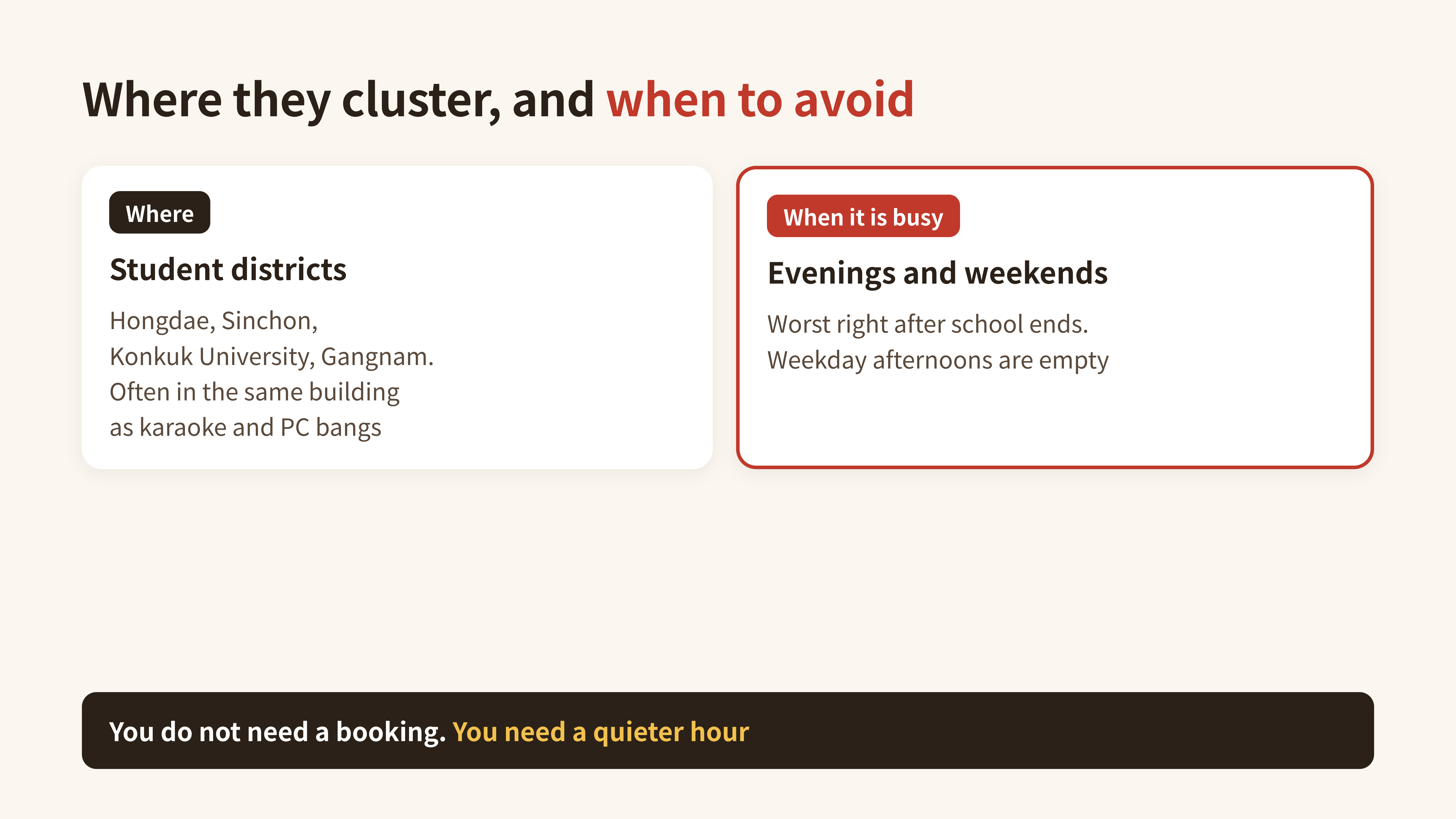
Evenings and weekends are when the queues form, and the worst time is right after school lets out. If you want an empty shop, go on a weekday afternoon.
FAQ
How much does a korean photo booth cost?
The price is posted on the machine and differs by chain, frame and whether you add extras. Most machines take cards, so you do not need cash.
Do I get the photos on my phone?
Usually yes. A QR code appears after the session and gives you the digital files and a short clip. Scan it before you leave the shop.
How many people fit in one booth?
A few, standing close. Larger groups split across two rounds, and the booths in bigger shops have more room than the ones squeezed into a shopfront.
Is there an English option?
Many machines have an English menu, and the layout is simple enough to follow even when there is not. The screen shows what the camera sees, so you are not guessing.
Can I go alone?
Yes, and people do. You will get two identical strips, which is how solo travellers end up leaving one in a notebook and posting the other.
The short version
A korean photo booth is a self-service studio, and the whole visit is shorter than the queue for a coffee. Pay, pick a frame, pose for the countdown, choose your cuts, scan the QR code, and take the two strips with you. The only real mistake is leaving before you scan.
More from this series
2026-09-23
Bungeoppang: The Carts Appear When It Gets Cold, and Most of Them Do Not Take Cards
2026-09-23
Makgeolli and the Rainy Day: Why Koreans Order Pancakes When the Weather Turns
2026-09-21
Daejeon, Korea: An Hour From Seoul by KTX, and Two Stations Carry the City's Name
2026-09-21
Yuseong Hot Spring: The Foot Bath Is Free and Open Until 10 p.m., and You Cannot Drink the Water
2026-09-19
Seoul Bus: The Colour Tells You Where It Goes, and Some of Them No Longer Take Cash
2026-09-18
Hangul Day: The Alphabet's Birthday Lost Its Day Off for 22 Years, and Its Museum Is Shut Until 2028
2026-09-15
Namdaemun Market Opening Hours: The Market's Own List Has 38 Timetables, and Some Floors Open at 11 p.m.
2026-09-15
Hair Salon in Seoul: The Final Price Must Be on the Wall, and Only a Barber May Shave You
2026-08-28
DMZ Tour: You Can Still Go. The JSA Is the Part You Cannot.
2026-08-28
Gyeongju Food: The Famous One Is a Souvenir, and the Meal Is Next to the Tombs
2026-08-28
Bulguksa Temple: There Is No Direct Bus to Seokguram, and You See the Buddha Through Glass
2026-08-27
Gyeongju From Seoul: Two Hours by KTX, and Then the Part Nobody Plans For
2026-08-27
Gyeongju: Three Separate UNESCO Listings, and Why One Day Does Not Cover Them
2026-08-27
K-ETA Korea: You Are Probably Exempt, and the Arrival Card Is What Catches People
2026-08-18
Autumn in Korea: Don't Pick the Dates, Pick the Latitude
2026-08-18
Hospital in Seoul: Why Koreans Don't Start at the Big One
2026-08-18
Korean Drinking Culture: The Rules Are Real, and So Is the Way Out
2026-07-31
Famous Korean Street Foods You Must Try (Yes, Including the Viral Buldak Omelette)
2026-07-31
What Is Silbi Kimchi? Korea's Spiciest Kimchi — and the Local Hack You Need to Know