Bulguksa Temple: There Is No Direct Bus to Seokguram, and You See the Buddha Through Glass

Bulguksa and Seokguram are one visit. There is no direct bus. And you see the Buddha through glass.
Those three sentences are the whole trip, and the second and third are the ones nobody puts in the article you are currently reading somewhere else. Bulguksa Temple gets the photographs, Seokguram gets a line saying it is nearby, and visitors arrive assuming the second one is a ten minute add-on to the first. It is not. It sits further up the mountain on a bus that runs roughly once an hour, and when you get there you look at the most famous carved Buddha in Korea from behind a glass screen. Both of those are fine once you know. Neither is fine at four in the afternoon with a train to catch.
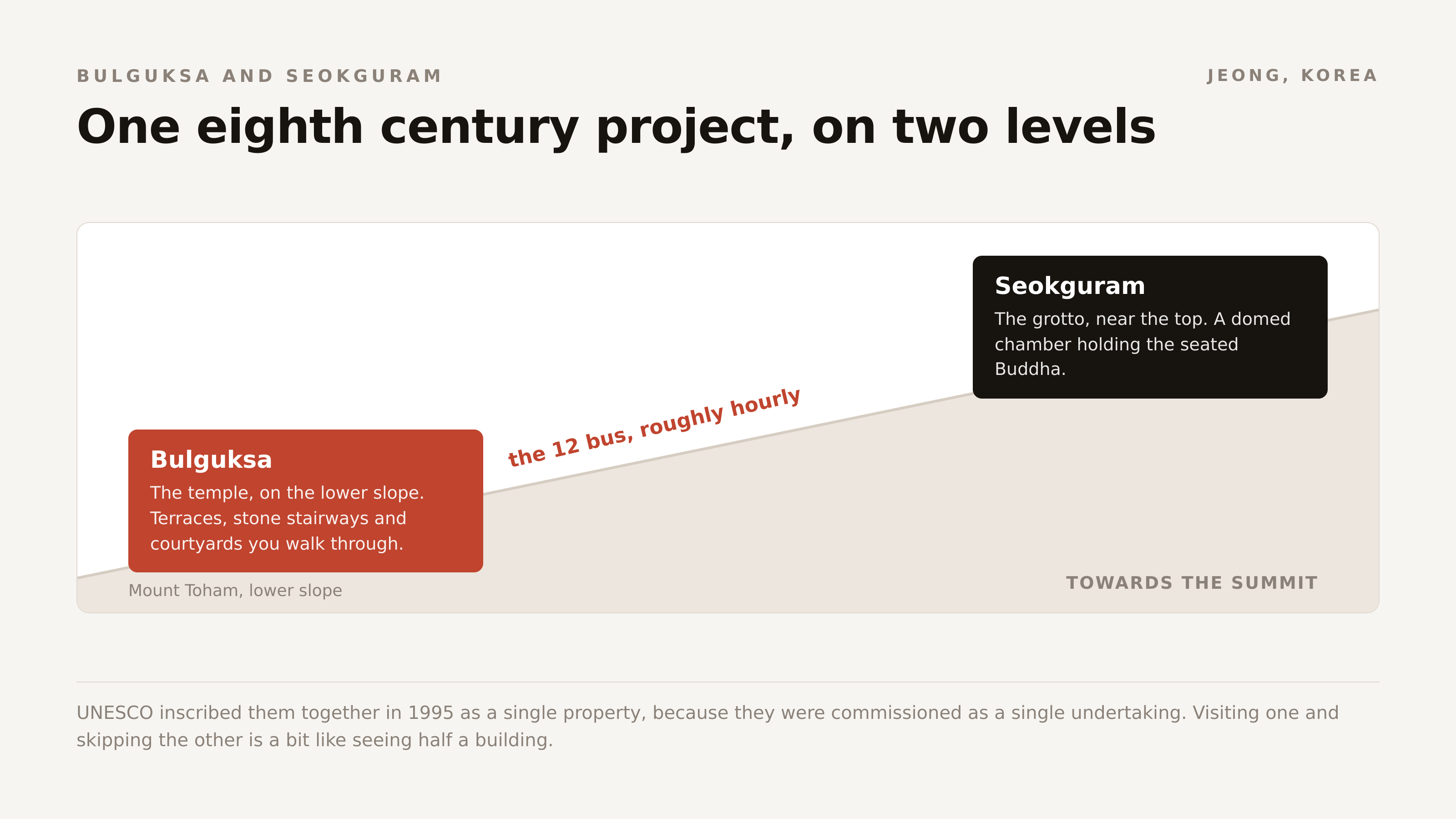
They were built as one project, which is why they share a listing
Treat them as a single site with two halves rather than two attractions near each other.
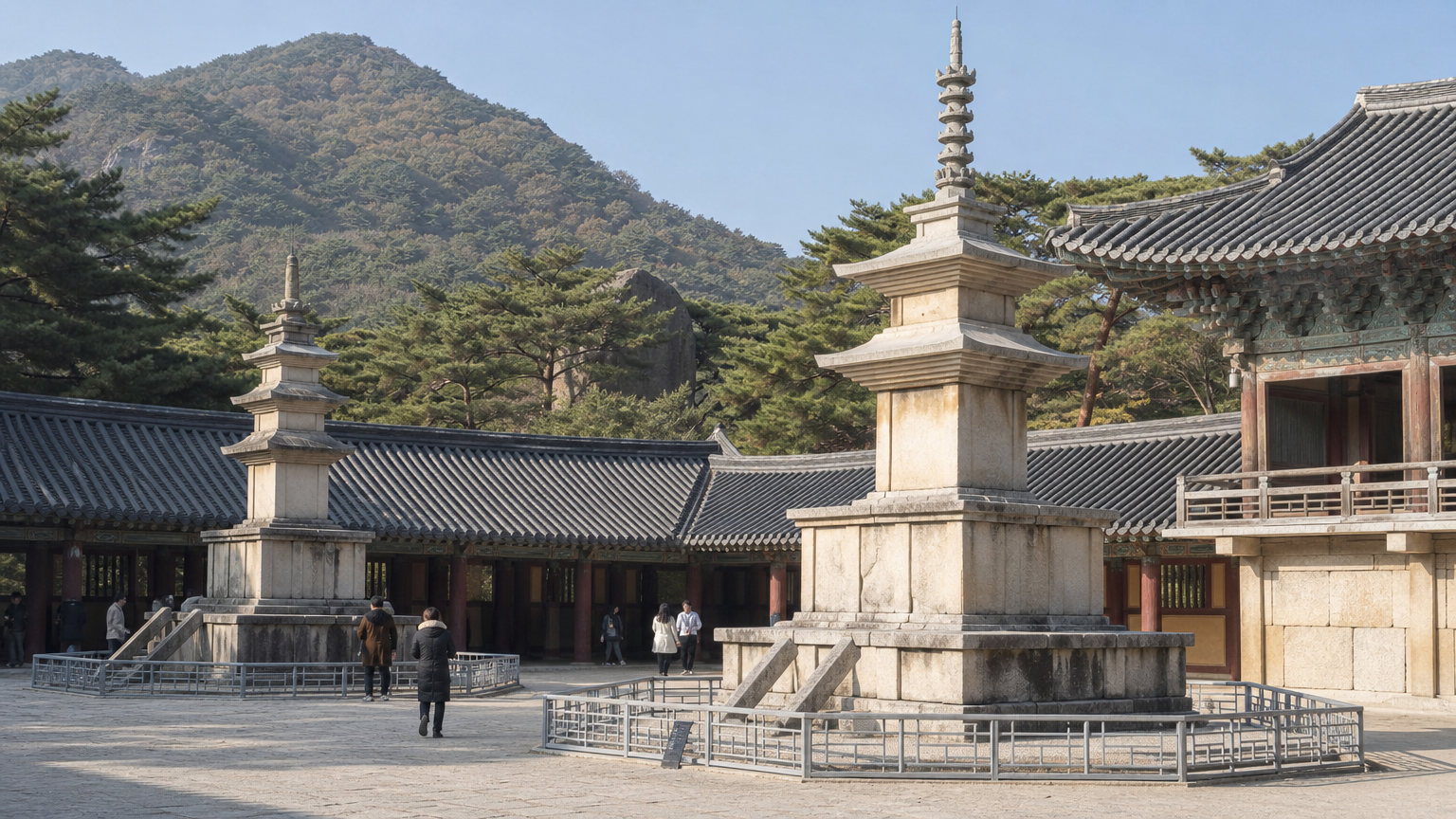
UNESCO inscribed Seokguram Grotto and Bulguksa Temple together in 1995, as one property with one name. That is not an administrative convenience. They were commissioned as part of the same eighth century undertaking, the temple below on the slope and the grotto above it near the top of Mount Toham, and the relationship between the two is the reason the property is considered exceptional rather than merely old. Visiting one and skipping the other is a bit like seeing half a building.
Which is exactly why the practical stuff matters so much here. If they were two unrelated sites you could pick one guilt-free. Because they are one, the bus timetable stops being trivia and becomes the thing that decides whether your day works. The wider version of that problem, across all three of the city's listings, is here: Gyeongju: Three Separate UNESCO Listings, and Why One Day Does Not Cover Them.
So you are going to both. What are you actually going to see at the top?
You will see Seokguram through glass, and that is permanent
Know this before you climb, because it changes what the trip is for.
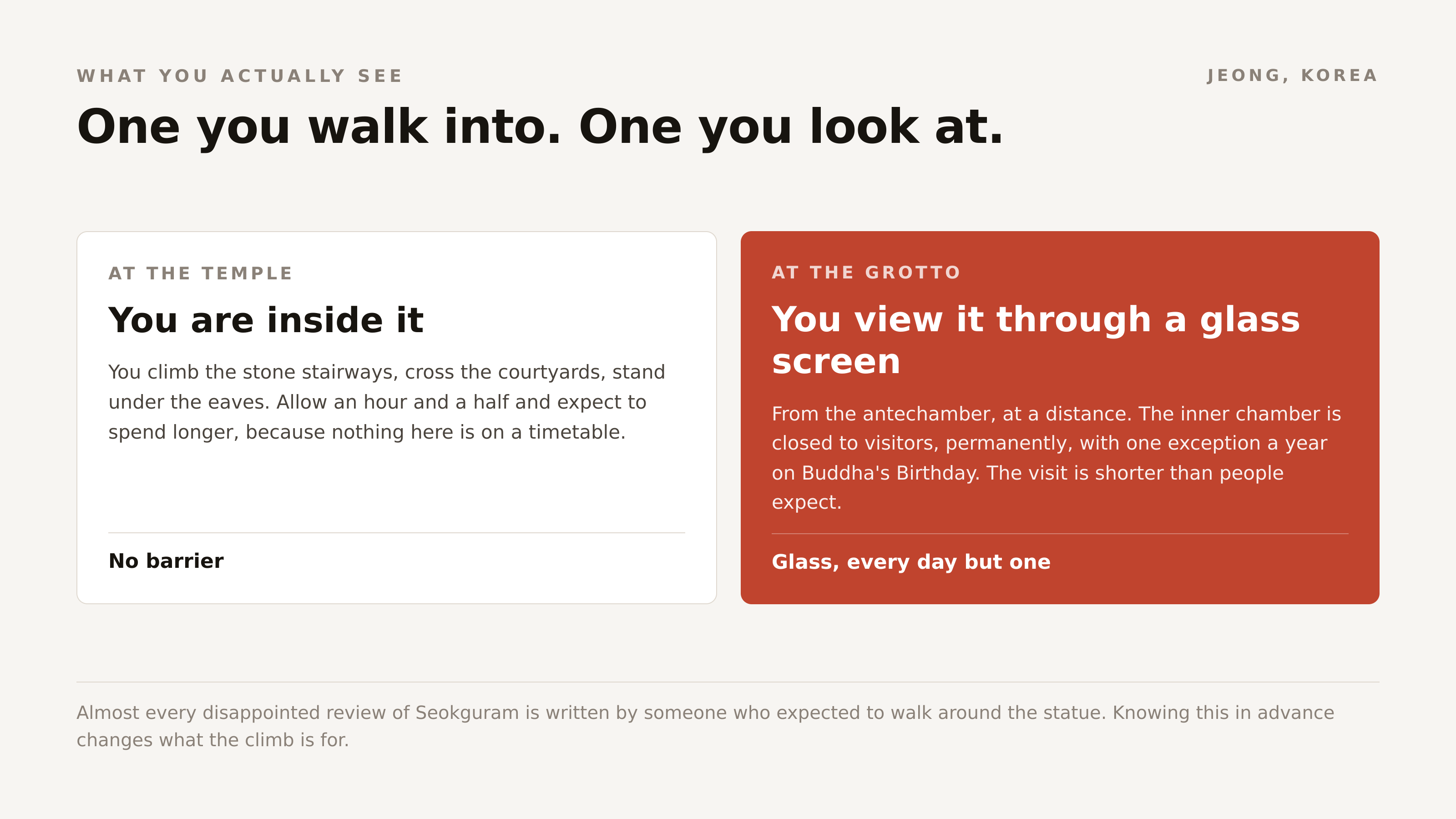
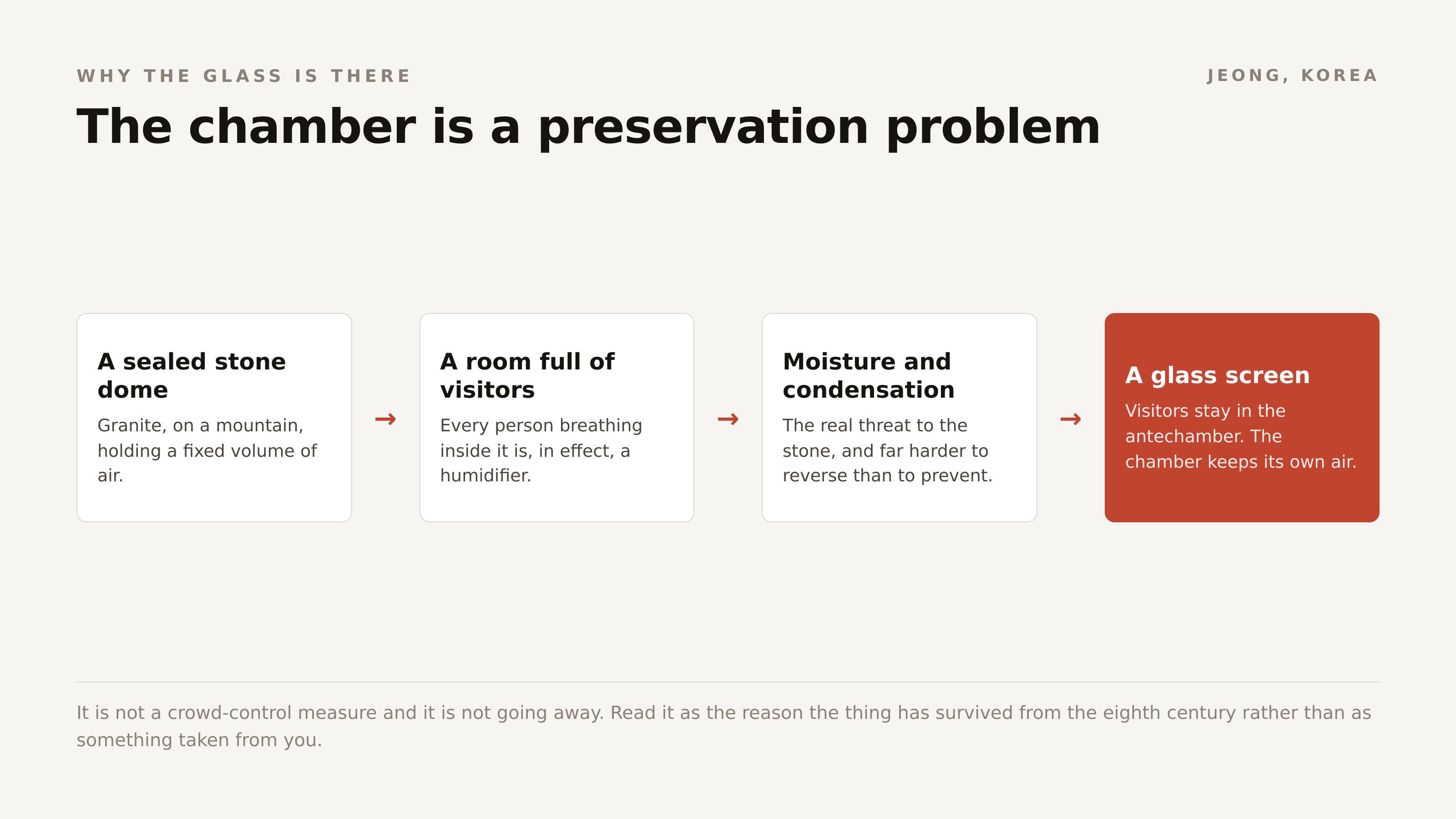
The grotto holds a seated stone Buddha in a domed chamber, and for most of its modern life visitors have not been able to walk into that chamber. You view it from the antechamber, through a glass screen, at a distance. The screen is there because the interior is a preservation problem rather than a display problem. Moisture and condensation are the real threats to the granite, and a room full of breathing visitors is a humidifier. There is one exception, on Buddha's Birthday, when the inner chamber opens for the day.
This is where a lot of disappointment comes from, and it is avoidable disappointment. Read reviews of Seokguram and you will find people saying it can be skipped, almost always people who expected to walk around the statue the way the Silla court did. If you arrive knowing you are going to look through glass at something you have seen photographed from angles you personally will never get, the visit is a completely different experience. You go for the setting, the climb, the dome, and the fact that this thing has been sitting up there since the eighth century. Not for a close-up.
| Bulguksa | Seokguram | |
|---|---|---|
| Where | On the lower slope of Mount Toham | Further up the same mountain |
| What you do | Walk the terraces, stairways and courtyards | View the grotto from the antechamber |
| How close | You are inside the temple grounds | Behind a glass screen |
| Time to allow | Unhurried, an hour and a half or more | Shorter than you think |
Which brings it back to the bus.
The 12 bus is the whole plan
Build the day around the departure times, not around how long you want to spend.
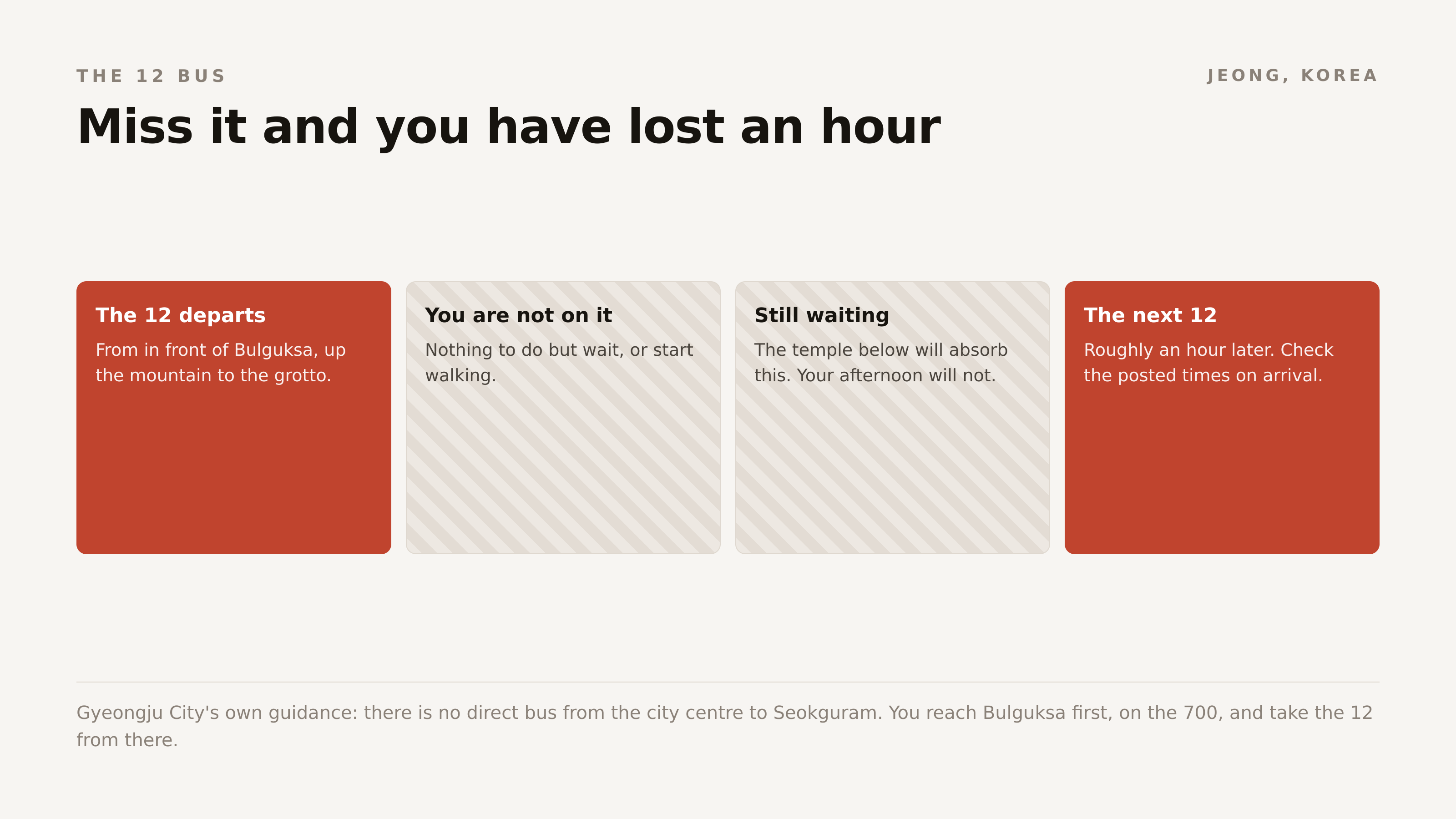
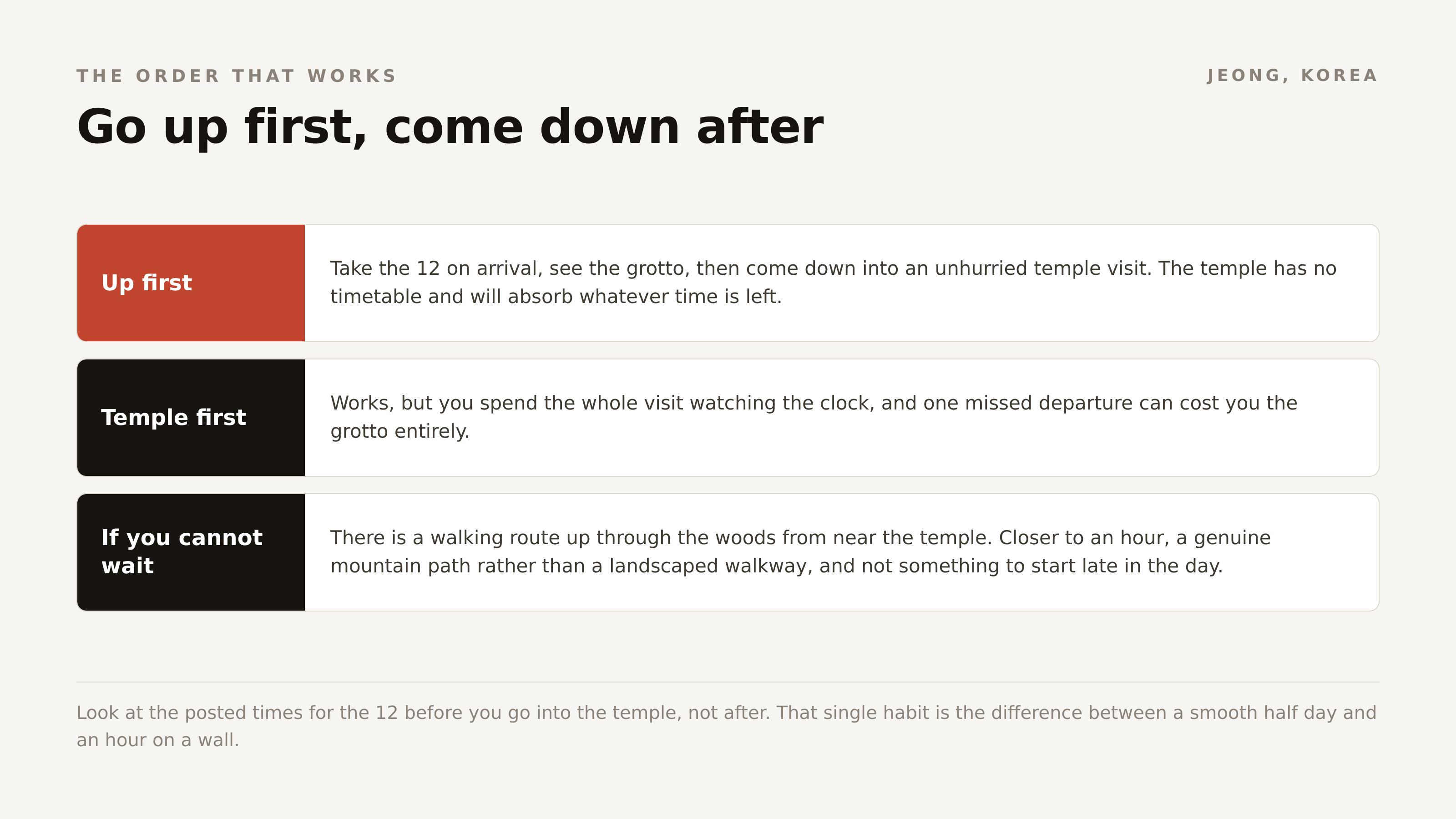
Gyeongju City's own transport guidance is blunt about it: there is no direct bus from the city centre to Seokguram. You go to Bulguksa first, and from in front of Bulguksa you take the 12, which runs up the mountain. The 12 comes roughly once an hour. That single fact is the difference between a smooth half day and an hour spent sitting on a wall.
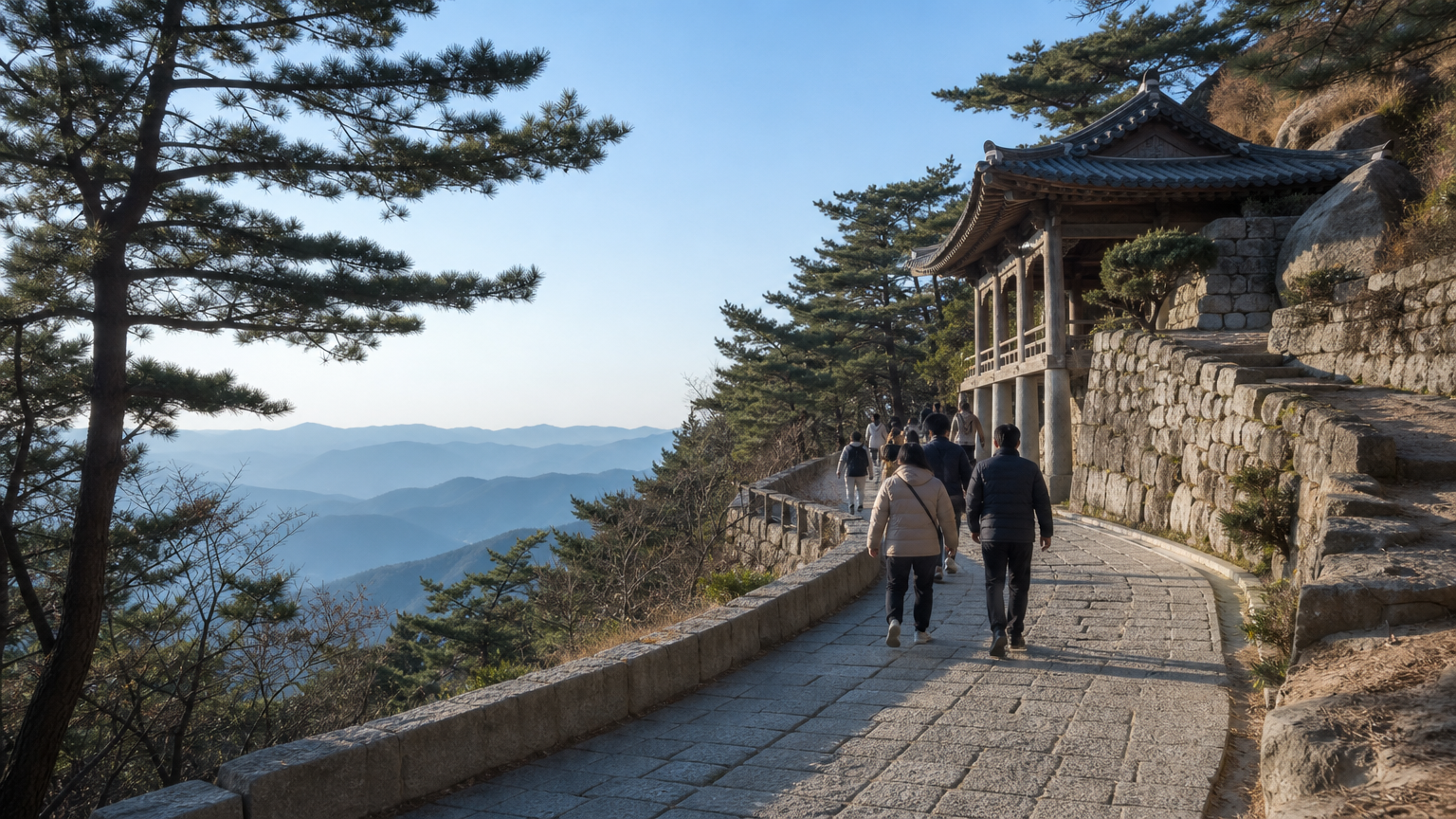
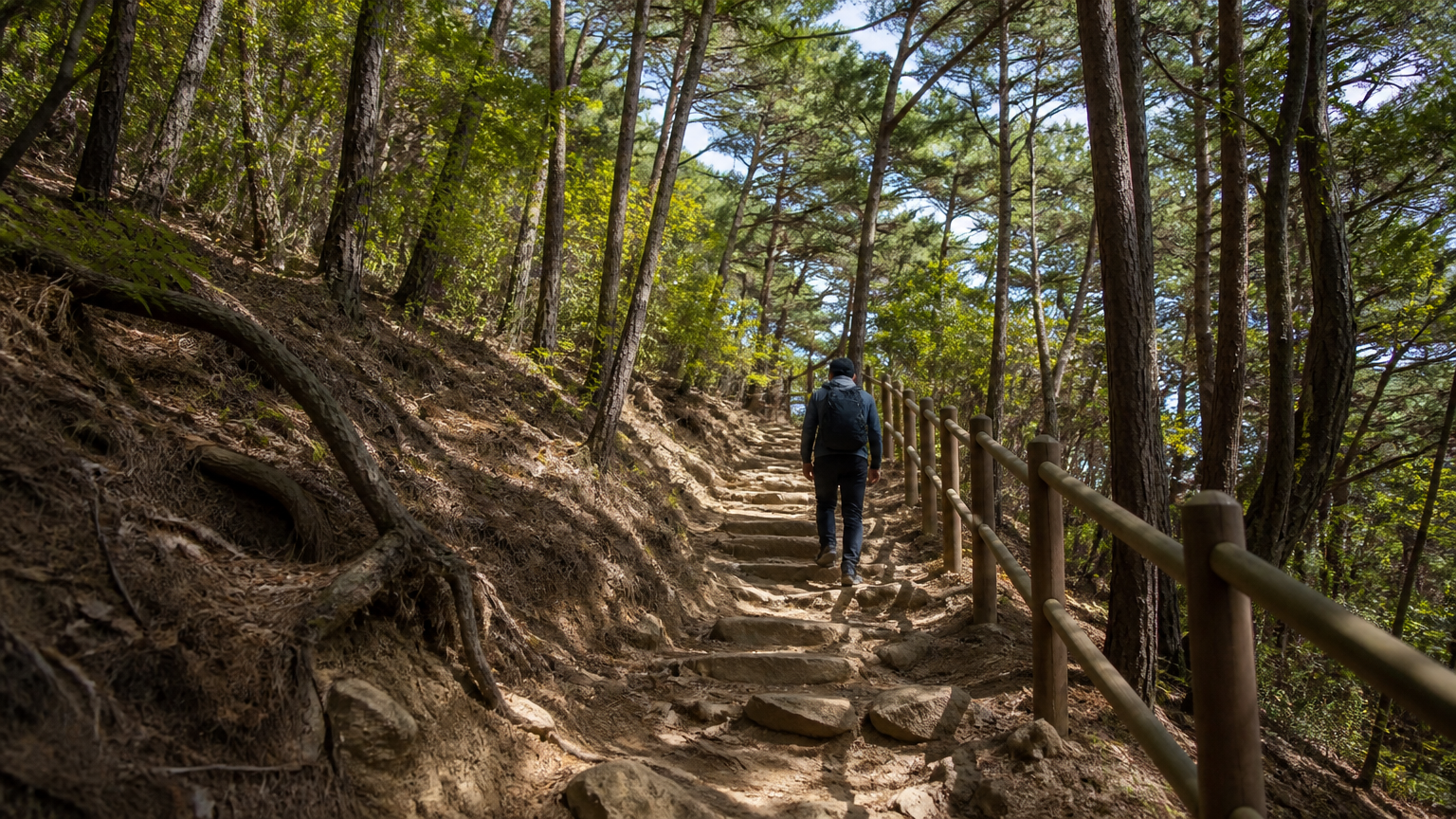
In practice the sequence writes itself. Get out to Bulguksa in the morning on the 700 from the station or the centre. Look at the posted times for the 12 before you go into the temple, not after. Then either go up first and come down into an unhurried temple visit, or do the temple first with one eye on the clock. Going up first is the safer of the two, because the temple below has no timetable and will absorb whatever time is left, while the grotto above will not wait for you. If the 12 has just gone and you are impatient, there is a walking route up through the woods, which takes the better part of an hour and is a real hike rather than a stroll.
| Detail | |
|---|---|
| From the city centre | No direct bus to Seokguram |
| To Bulguksa | The 700, from Gyeongju Station and through the Bomun area |
| Bulguksa to Seokguram | The 12, from in front of Bulguksa |
| Frequency of the 12 | Roughly hourly. Check the posted times on arrival |
| On foot instead | A woodland path up Mount Toham, closer to an hour |
Getting out here in the first place is its own small puzzle, and the station is not where you think it is: Gyeongju From Seoul: Two Hours by KTX, and Then the Part Nobody Plans For.
FAQ
Can I skip Seokguram?
You can, and if your day is tight it may be the right call. Just make it a decision rather than something that happens to you at the bus stop. The two were built as one project, so skipping it is skipping half of the listing, but half of the listing on a calm schedule beats all of it in a panic.
Can I walk up to Seokguram instead of waiting for the bus?
Yes. There is a path up through the woods from near Bulguksa Temple. Allow closer to an hour, wear something you can climb in, and do not start it late in the day. It is a genuine mountain path, not a landscaped walkway.
Can I take photographs of the Buddha?
You are looking through a glass screen from the antechamber, which answers most of the question by itself. Photography rules at the grotto are posted on site and are stricter than at the temple below, so read the signs rather than assuming.
How early should I set out?
Early enough that the 12 bus is not your problem. If you are at Bulguksa by mid-morning you have room for a missed departure. Arrive mid-afternoon and one missed bus can cost you the grotto entirely.
The short version
Bulguksa Temple and Seokguram are one UNESCO listing, inscribed together in 1995 because they were built together, and treating them as one visit is the only version that makes sense. There is no direct bus from the centre to the grotto. You reach the temple first, then take the 12 up the mountain, and it comes about once an hour. At the top you look at the Buddha through glass, permanently, except for one day a year.
None of that makes it less worth doing. It just means the day is decided by a timetable rather than by how you feel, and that the thing you go up there for is the place, not the close-up.
Sources
-
Gyeongju City official tourism service — no direct bus from the city centre to Seokguram; the 12 bus runs from in front of Bulguksa at roughly hourly intervals
-
UNESCO World Heritage Centre — Seokguram Grotto and Bulguksa Temple, inscribed together in 1995 as a single property
-
Publicly reported visitor guidance on the grotto's glass screen and the annual opening of the inner chamber on Buddha's Birthday
More from this series
2026-08-28
DMZ Tour: You Can Still Go. The JSA Is the Part You Cannot.
2026-08-28
Gyeongju Food: The Famous One Is a Souvenir, and the Meal Is Next to the Tombs
2026-08-27
Gyeongju From Seoul: Two Hours by KTX, and Then the Part Nobody Plans For
2026-08-27
Gyeongju: Three Separate UNESCO Listings, and Why One Day Does Not Cover Them
2026-08-27
K-ETA Korea: You Are Probably Exempt, and the Arrival Card Is What Catches People
2026-08-18
Autumn in Korea: Don't Pick the Dates, Pick the Latitude
2026-08-18
Hospital in Seoul: Why Koreans Don't Start at the Big One
2026-08-18
Korean Drinking Culture: The Rules Are Real, and So Is the Way Out
2026-07-31
Famous Korean Street Foods You Must Try (Yes, Including the Viral Buldak Omelette)
2026-07-31
What Is Silbi Kimchi? Korea's Spiciest Kimchi — and the Local Hack You Need to Know