Gyeongju Food: The Famous One Is a Souvenir, and the Meal Is Next to the Tombs

Every guide names the same bread. Koreans buy it on the way home. There is a reason for that.
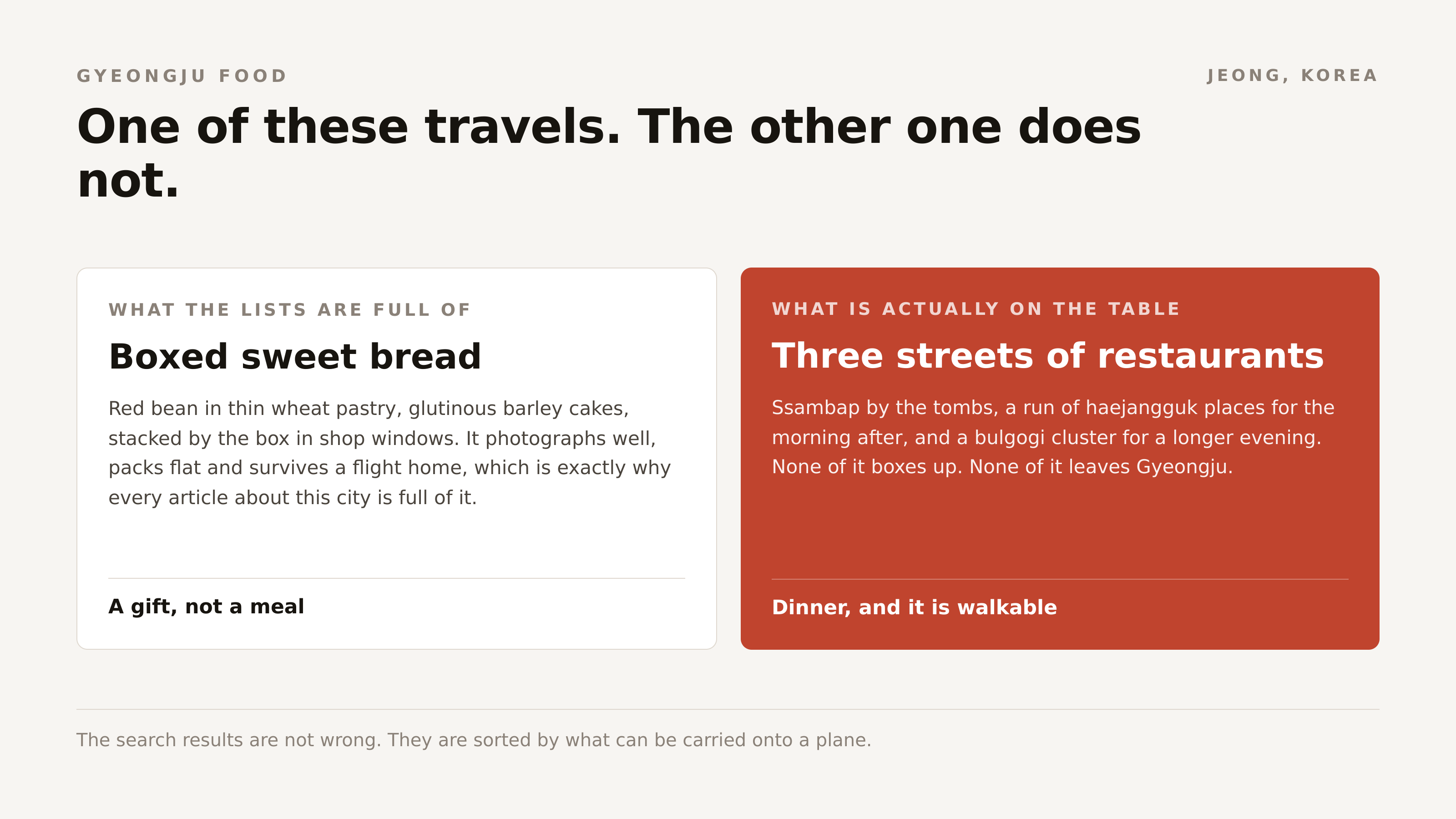
Search gyeongju food and you get a list of baked goods. Red bean pastries, barley cakes, boxes of them stacked in shop windows. All of it is real and some of it is very good, but none of it is dinner, and a visitor working from that list ends up eating convenience store kimbap beside a UNESCO World Heritage site. The reason the search results look like that is simple: the bread travels and the meal does not. Bread photographs well, boxes up, survives a flight and gets written about by people who came for the afternoon. The gyeongju food that people here actually sit down to eat is three streets of restaurants that no souvenir list has any reason to mention.
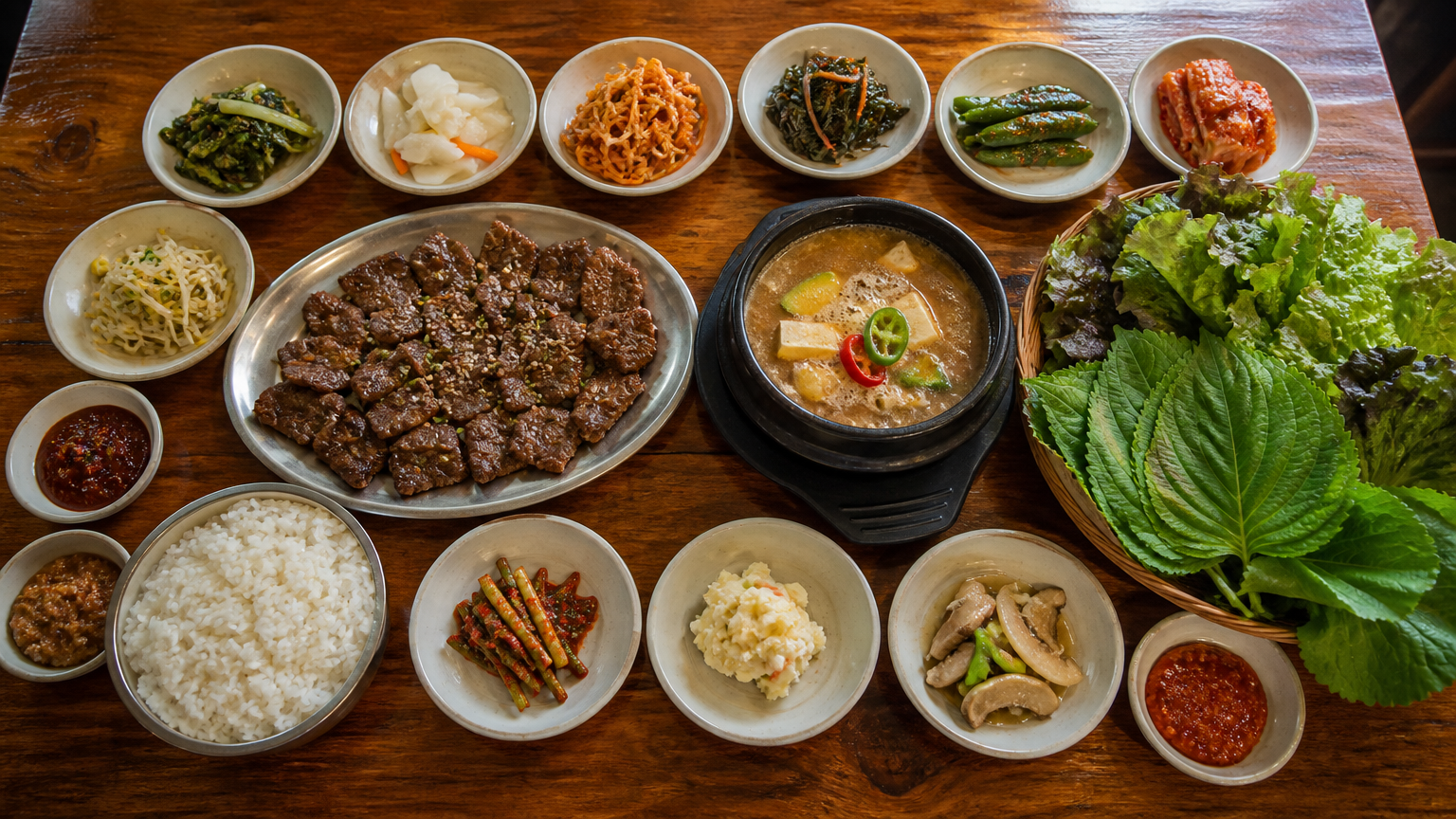
Ssambap is the meal, and it is a short walk from the tombs
If you eat one proper meal here, make it this one, because the geography is doing you a favour.
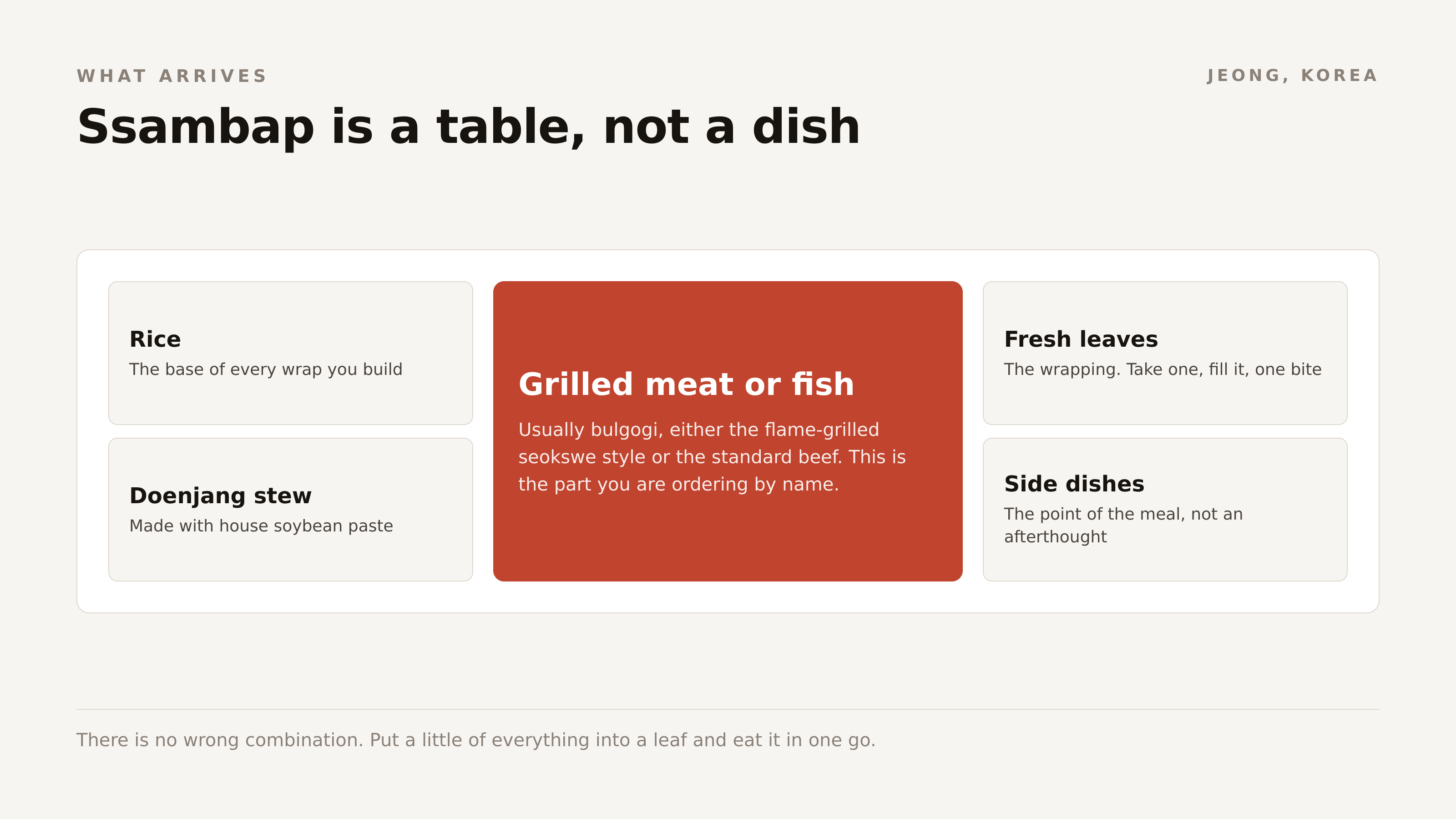
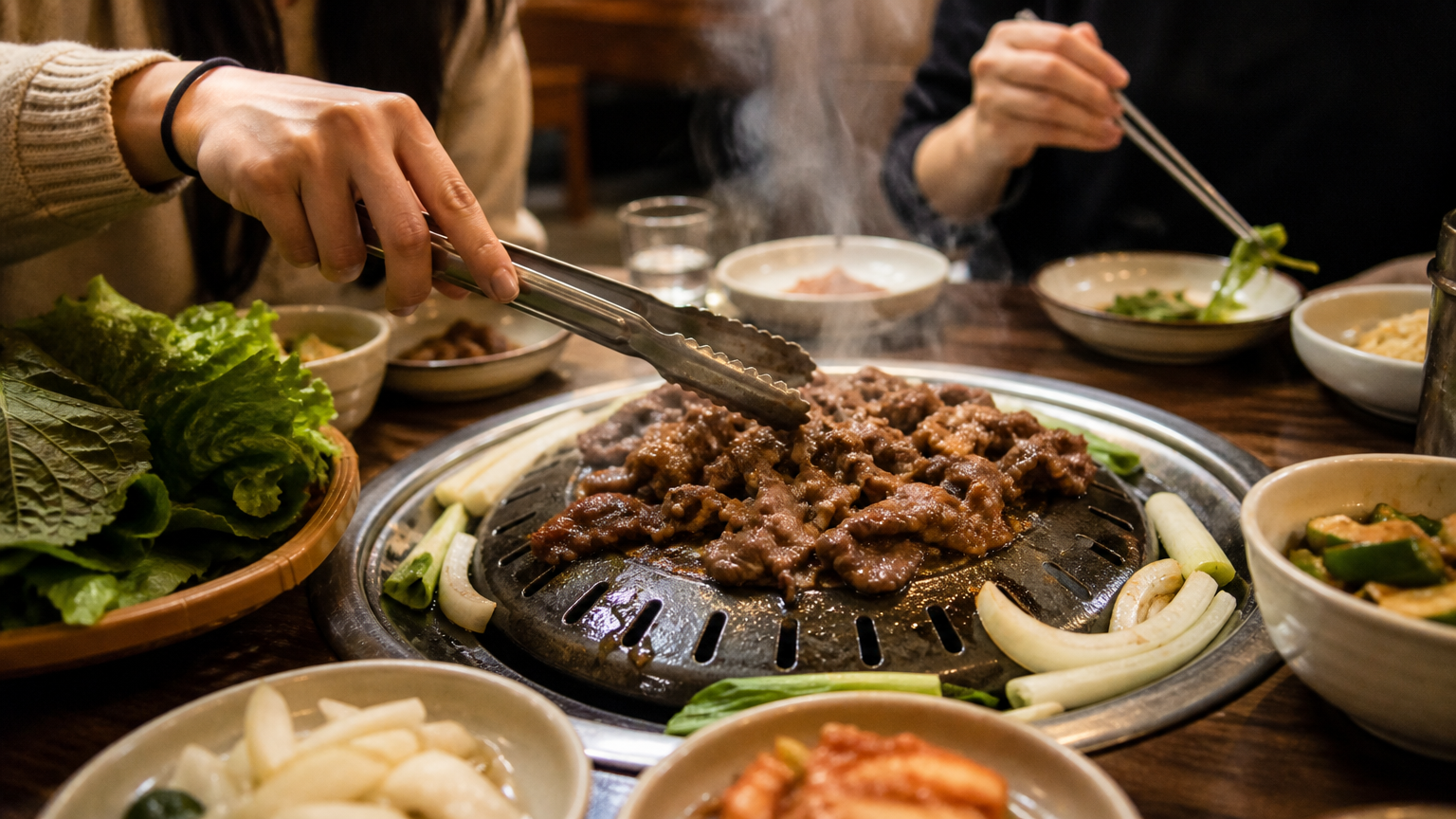
Ssambap is a set meal built around wrapping. Rice, grilled meat or fish, a doenjang stew made with house soybean paste, a spread of small side dishes, and a pile of fresh leaves you use to wrap it all. Gyeongju's version usually arrives with grilled bulgogi, either the flame-grilled seokswe style or the standard beef, and the table fills up completely because the side dishes are the point rather than an afterthought.
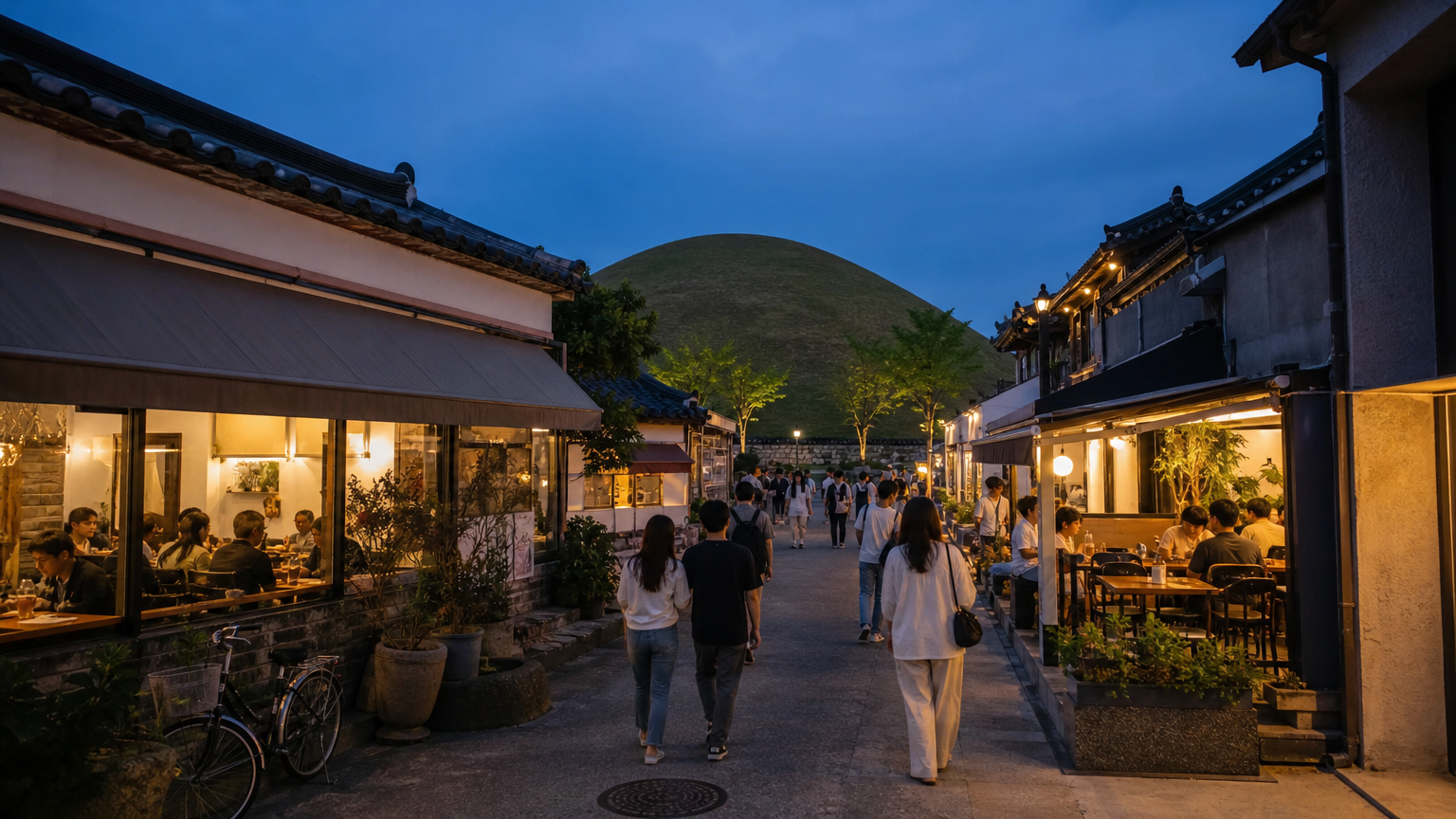
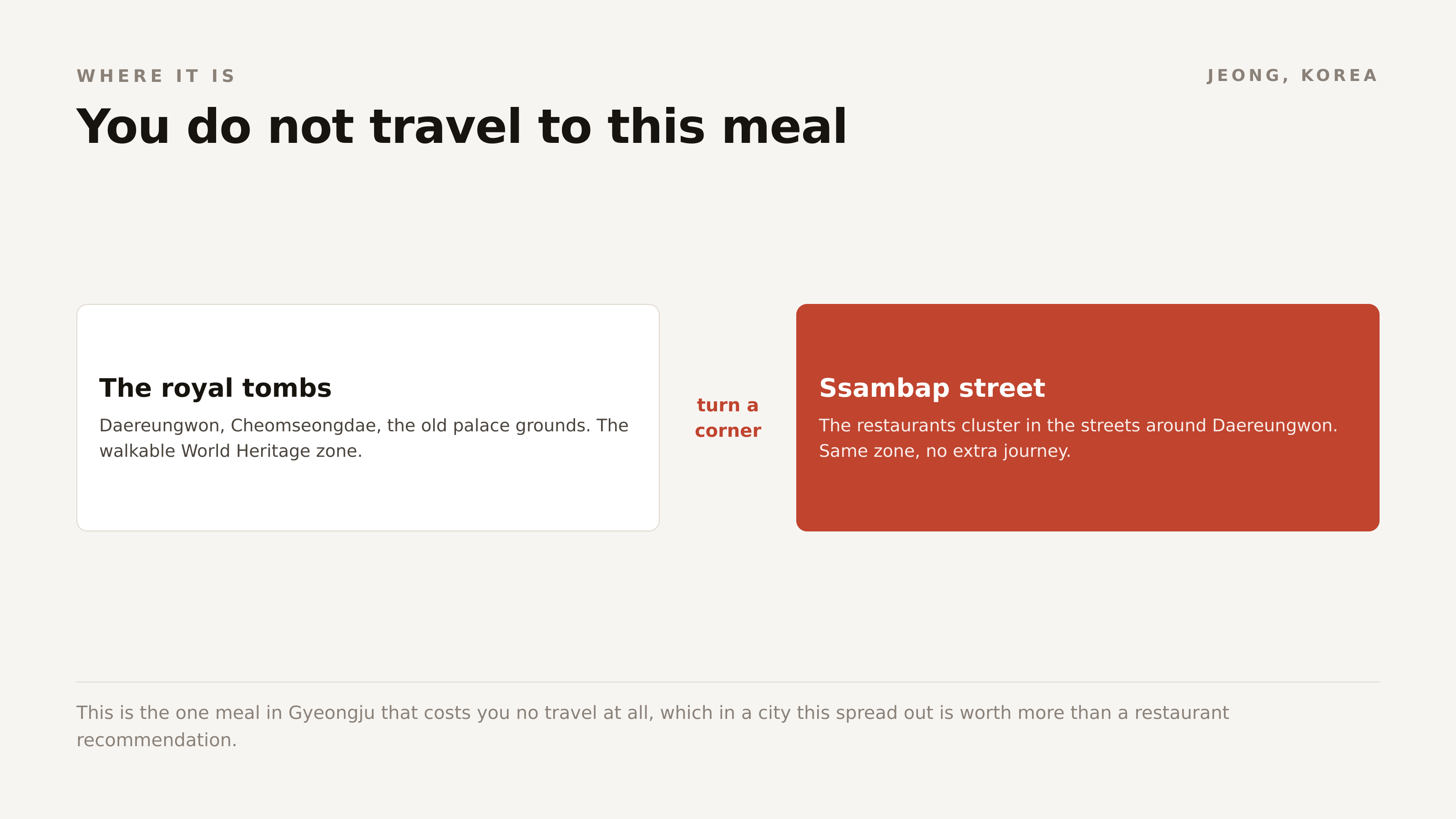
The useful part is where it is. The ssambap restaurants cluster in the streets around Daereungwon, which is the same walkable zone as the royal tombs, Cheomseongdae and the old streets. You do not schedule this meal. You finish walking among the tombs, you turn a corner, and it is there. Anyone who has already worked out that the centre is the forgiving half of Gyeongju will see why this matters: Gyeongju: Three Separate UNESCO Listings, and Why One Day Does Not Cover Them.
So dinner is solved. What about the state you are in the next morning?
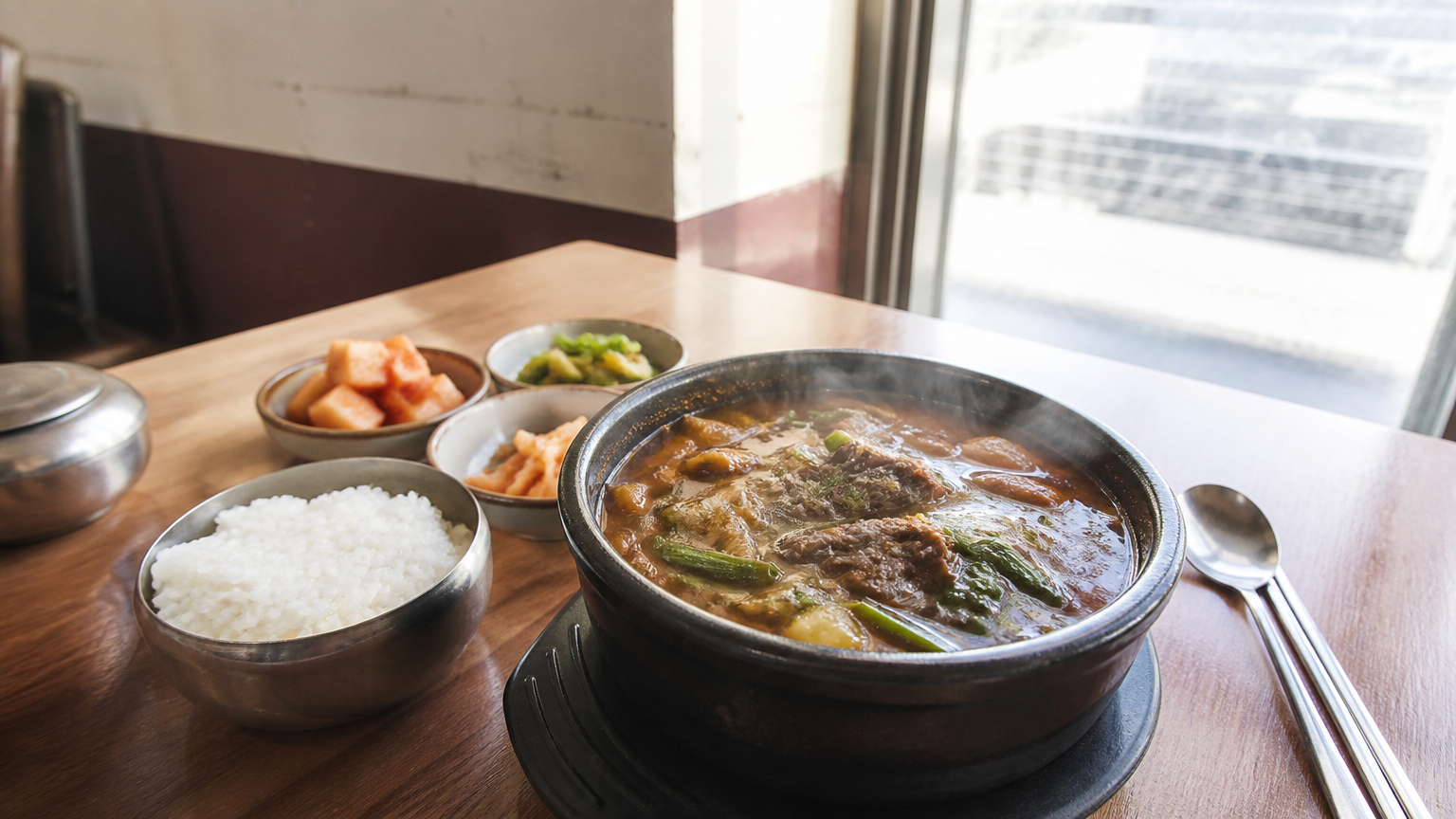
Haejangguk is what the morning after is for
Gyeongju has a whole street of it, which tells you something about the city.
Haejangguk translates as hangover soup and it is exactly that, a hot bowl designed for a person who did not plan the previous evening well. Gyeongju keeps a run of these restaurants together in one place, in the same way it keeps the ssambap places together and the bulgogi places together. Food streets are how this city organises itself, and once you know that, finding a meal stops being a search problem and becomes a walking problem.
That grouping is not a tourist arrangement. It is how Korean provincial cities have worked for a long time, and it is the reason asking a local "where is good" produces a street name rather than a restaurant name. If you want the wider version of that logic, Busan does the same thing with its own dishes an hour down the line: Busan Food: What People From Busan Actually Eat (And Why It Started With a War).
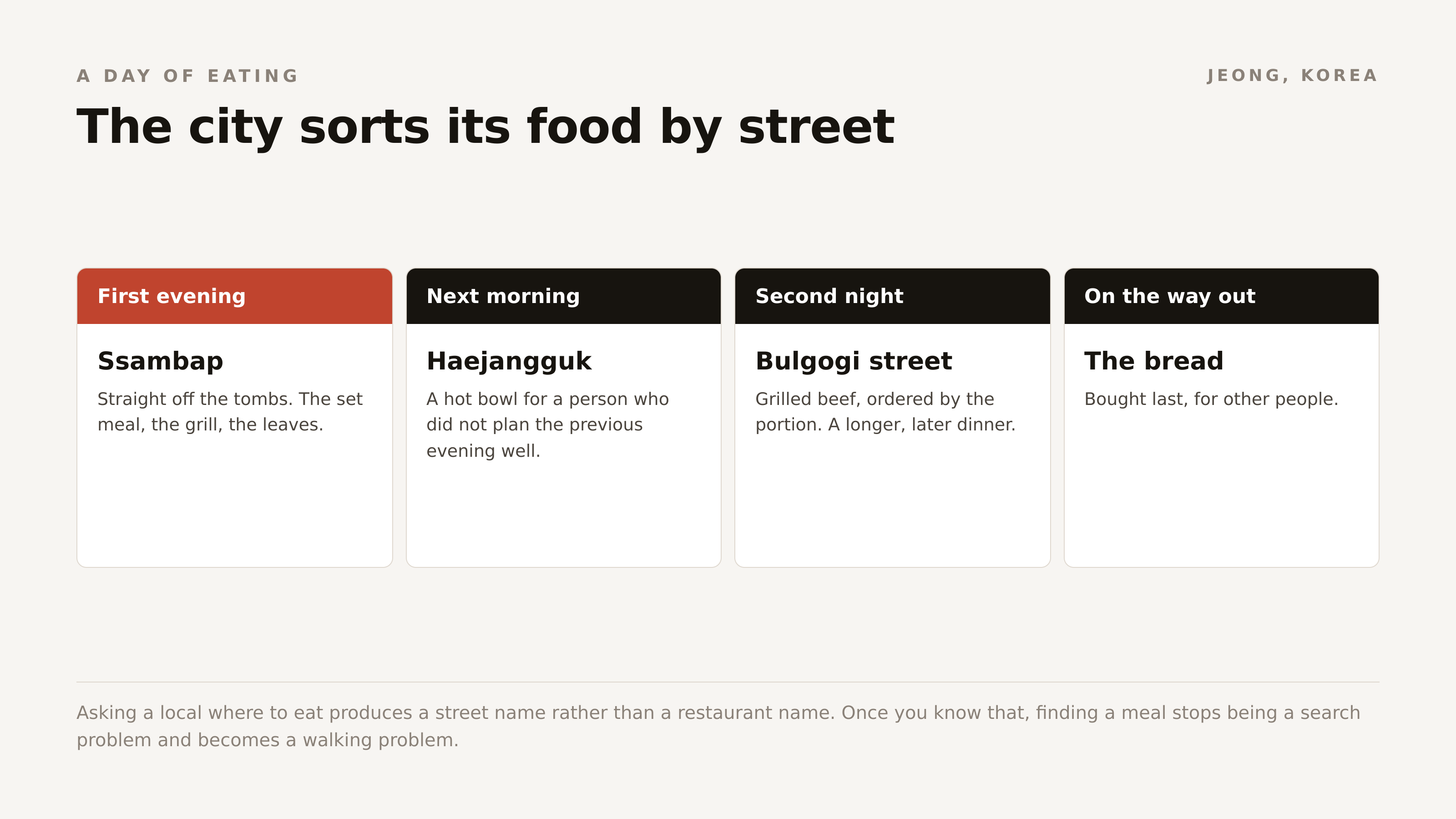
| Street | What it is for | When you use it |
|---|---|---|
| Ssambap street, by Daereungwon | Set meal, grilled meat, wrapping leaves | Lunch or dinner, straight off the tombs |
| Haejangguk street | Hot restorative soup | The morning after |
| Bulgogi cluster | Grilled beef, ordered by the portion | A longer, later dinner |
Which leaves the thing you actually came looking for.
Buy the bread last, and buy it for someone else
The bread is genuinely good. It is also a gift, and treating it as one solves the problem.
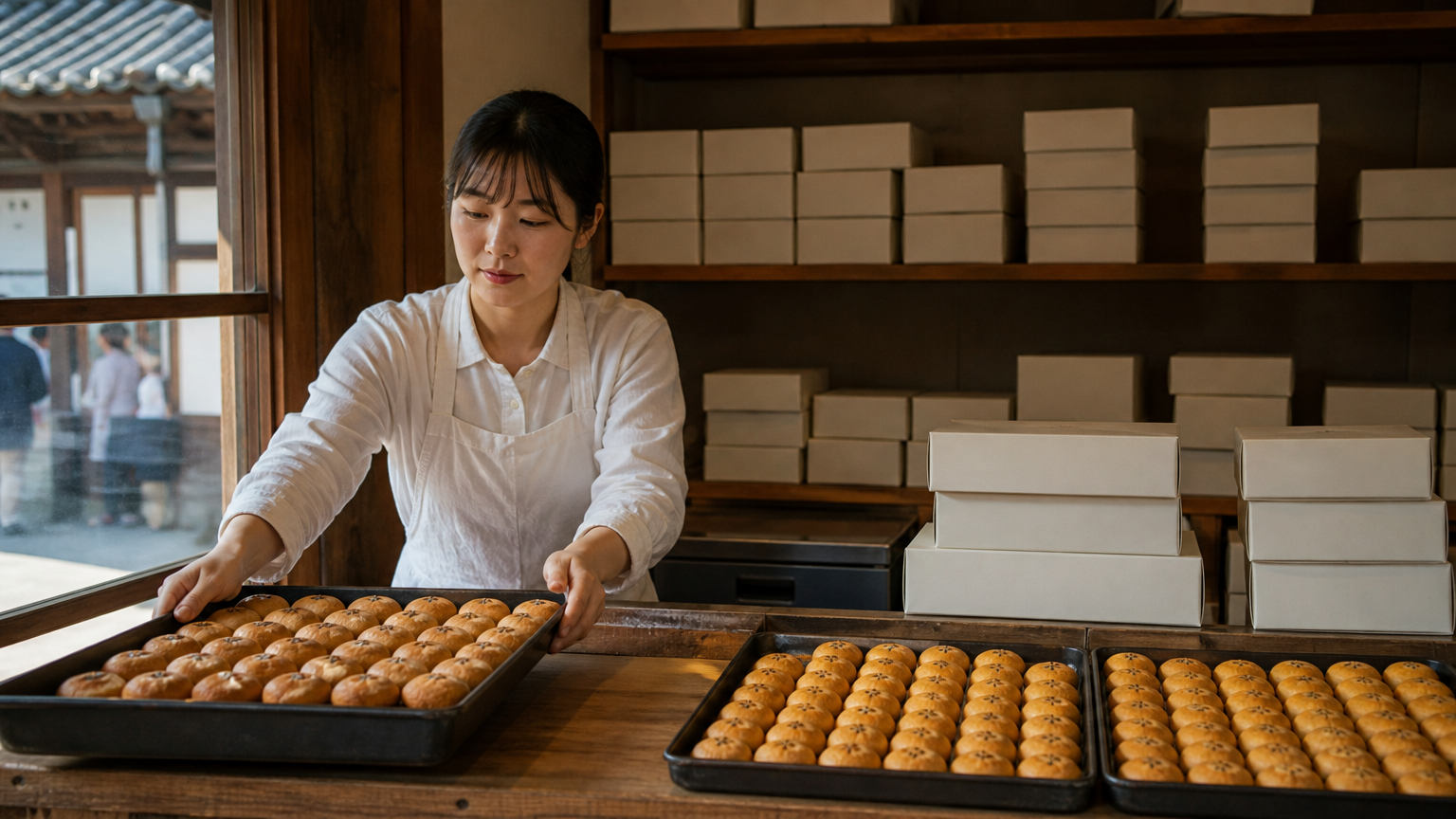
Gyeongju sells several similar sweet breads under different names, red bean inside a thin wheat pastry in one case, glutinous barley in another. Shops stack them by the box and a lot of the boxes are heading to somebody's colleagues. That is the honest frame. Nobody here eats four of them and calls it lunch, and the reason a search for gyeongju food fills up with them is that they are the part of Gyeongju that leaves Gyeongju.
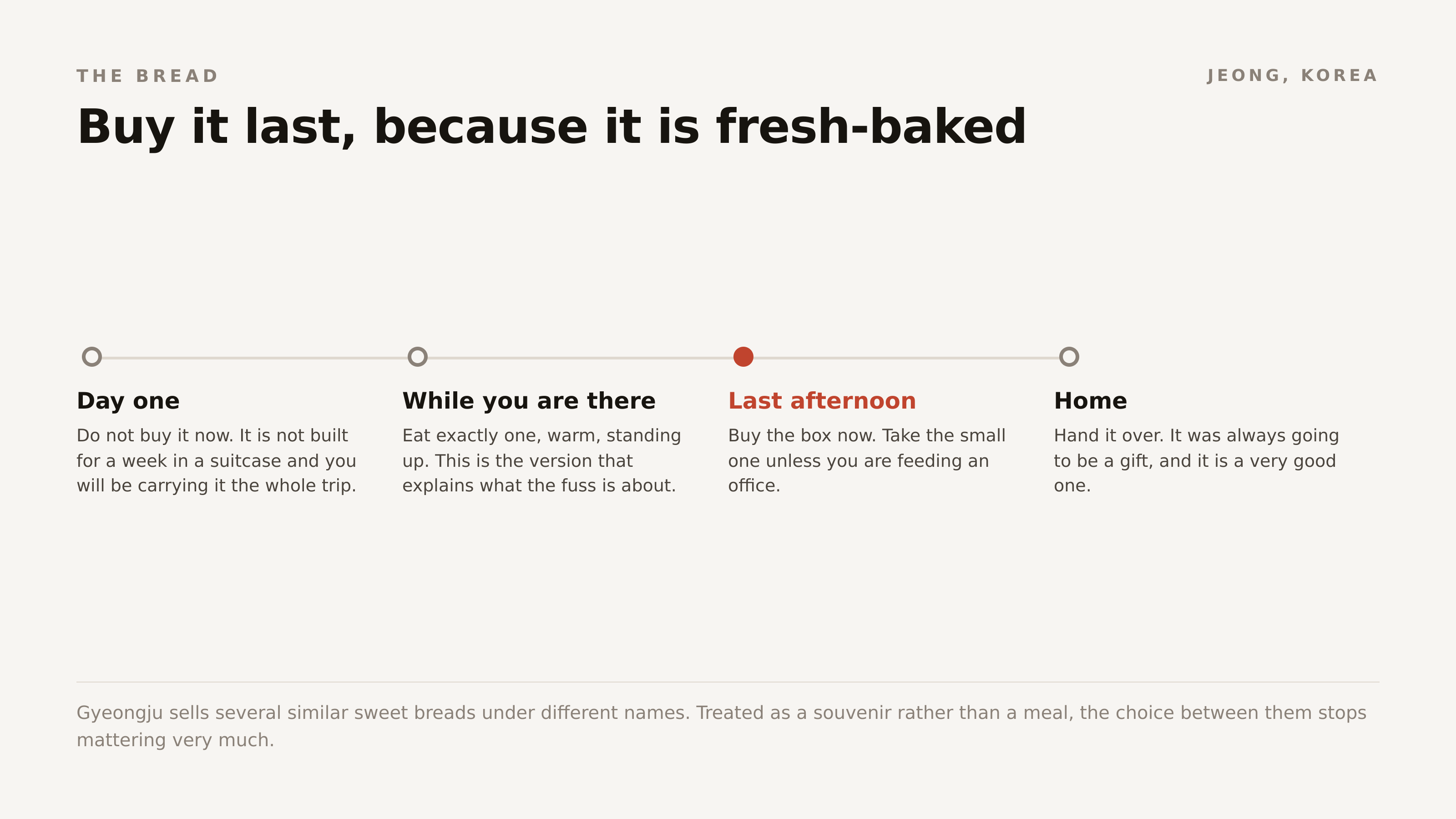
Handled as a souvenir, they are excellent, and the practical rules follow from that. Buy on the last afternoon rather than the first, because these are fresh-baked and not built for a week in a suitcase. Buy the small box unless you are feeding an office. Eat one warm while you are still standing there, which is the version that actually explains the fuss, and let the rest be the gift it was always going to be.
| If you have | Eat |
|---|---|
| One evening | Ssambap by the tombs |
| One evening and a rough morning | Ssambap, then haejangguk |
| Two full days | Add the bulgogi street on the second night |
| A suitcase to fill | Bread, bought on the way out |
FAQ
What exactly is ssambap?
A set meal you assemble yourself. Rice and grilled meat or fish arrive with a stew, a spread of side dishes and a plate of fresh leaves. You put a little of everything into a leaf, wrap it, and eat it in one bite. There is no wrong combination, which is the pleasant part.
Is there anything for vegetarians?
Ssambap is easier than most Korean set meals because so much of the table is vegetables already, but the stew and several side dishes usually contain fish or meat stock. Say so when you order rather than assuming, and expect the answer to vary by restaurant.
Is the bread worth buying?
Yes, as a gift. It is freshly baked rather than shelf-stable, so buy it near the end of your trip, not the beginning, and take the smaller box unless you have people to hand it to.
Where do I eat if I arrive late?
The food streets thin out in the evening the way they do in most provincial Korean cities. If you land late, eat near where you are sleeping rather than crossing town for a specific street, and save the ssambap for a proper sitting the next day.
The short version
The gyeongju food worth planning around is a set meal called ssambap, and it happens to sit in the same few streets as the royal tombs, so it costs you no extra travel at all. Haejangguk has its own street for the morning after. The bulgogi places have theirs. The famous bread is a real thing and a genuinely good gift, but it is the part of this city that gets packed into a box and flown somewhere else, which is exactly why it dominates every list you have read.
Eat where the walking already takes you. In a city this spread out, that is worth more than any restaurant recommendation.
Sources
-
Gyeongju City tourism information — the ssambap restaurants around Daereungwon and the city's food streets, including haejangguk and bulgogi
-
Korea Tourism Organization — regional food listings for Gyeongju
More from this series
2026-08-28
DMZ Tour: You Can Still Go. The JSA Is the Part You Cannot.
2026-08-28
Bulguksa Temple: There Is No Direct Bus to Seokguram, and You See the Buddha Through Glass
2026-08-27
Gyeongju From Seoul: Two Hours by KTX, and Then the Part Nobody Plans For
2026-08-27
Gyeongju: Three Separate UNESCO Listings, and Why One Day Does Not Cover Them
2026-08-27
K-ETA Korea: You Are Probably Exempt, and the Arrival Card Is What Catches People
2026-08-18
Autumn in Korea: Don't Pick the Dates, Pick the Latitude
2026-08-18
Hospital in Seoul: Why Koreans Don't Start at the Big One
2026-08-18
Korean Drinking Culture: The Rules Are Real, and So Is the Way Out
2026-07-31
Famous Korean Street Foods You Must Try (Yes, Including the Viral Buldak Omelette)
2026-07-31
What Is Silbi Kimchi? Korea's Spiciest Kimchi — and the Local Hack You Need to Know