Hanok Guesthouse in Seoul: Two Licences Look the Same, and Only One Is Written for Foreign Guests

A hanok guesthouse in Seoul can be two different businesses under Korean law. One of them, on paper, exists for foreign guests.
Type hanok guesthouse Seoul into a booking site and the results look alike: a tiled roof, a small courtyard, a wooden floor. What the photos do not show is the licence behind the listing. Korea sorts small lodgings into categories, and the category decides who is allowed to run the house, who is allowed to stay, and whether the host has to live there.
I think that is worth knowing before you book, because it explains a lot of what you will find when you arrive. So this post is about the paperwork behind the roof, not about which neighbourhood is prettiest.
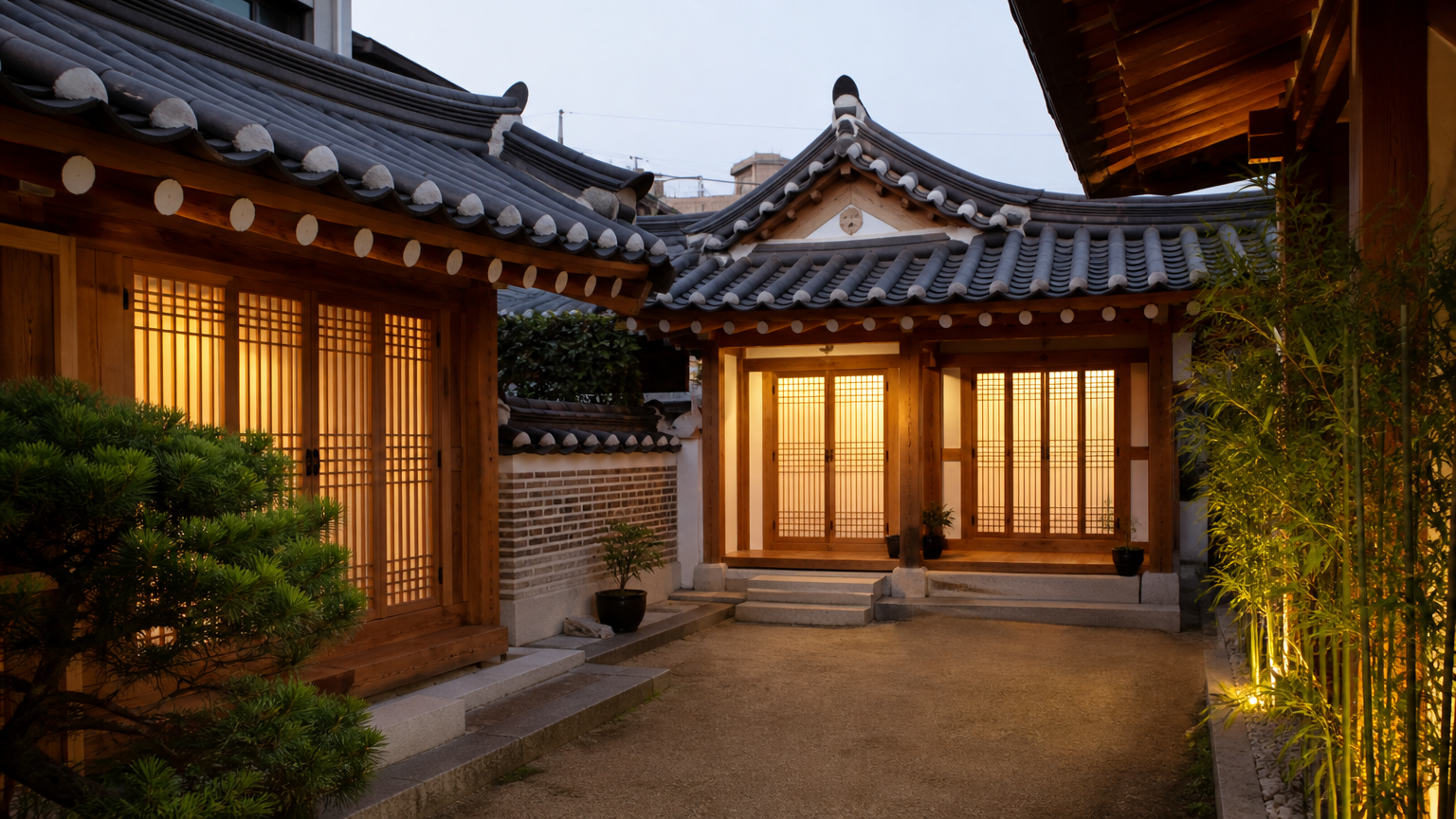
Two licences sit behind the same word
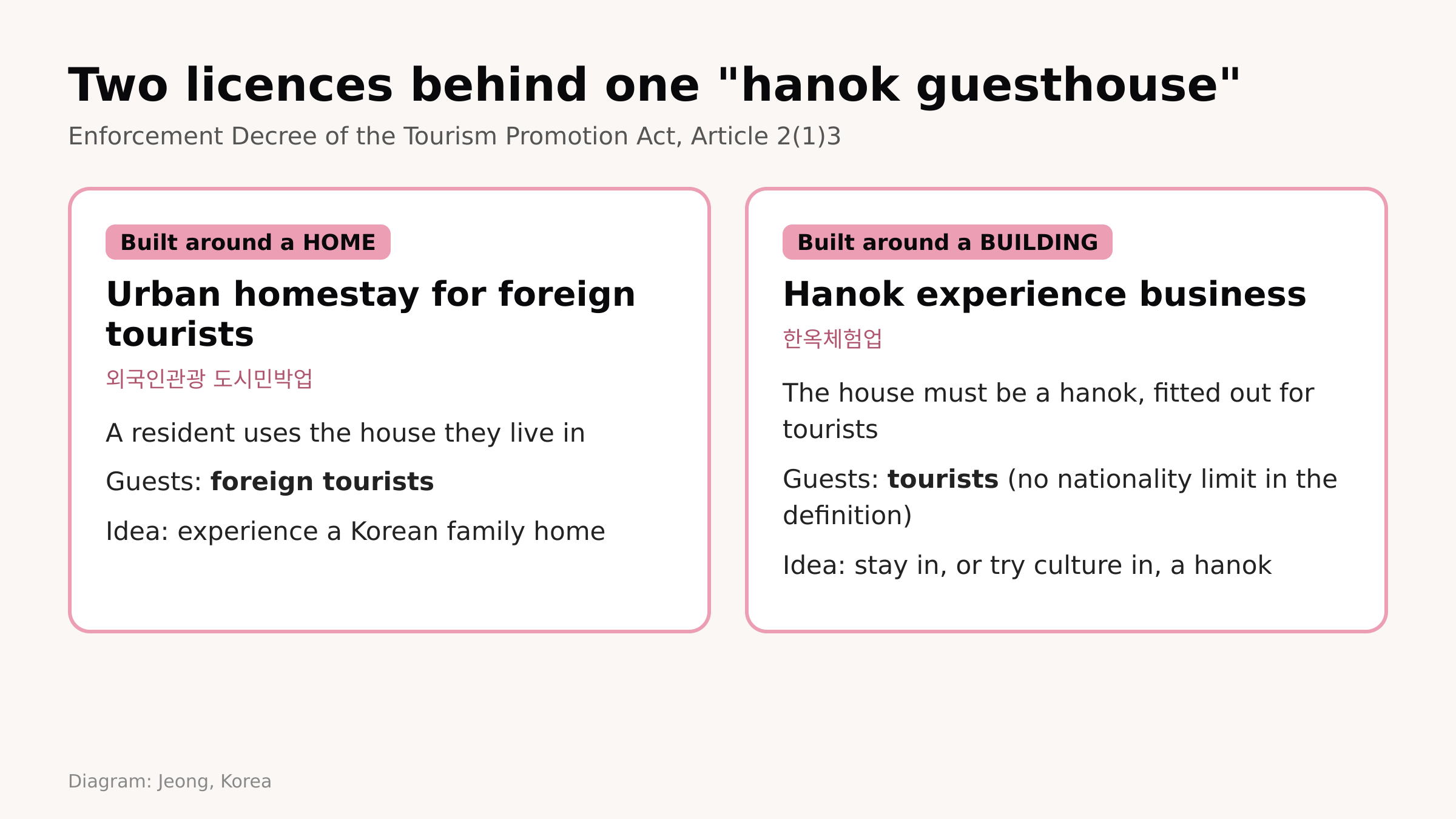
The Enforcement Decree of the Tourism Promotion Act lists the types of tourism business in Korea. Two of them matter when the house is a hanok.
| Urban homestay for foreign tourists | Hanok experience business | |
|---|---|---|
| Korean name | 외국인관광 도시민박업 | 한옥체험업 |
| Building | A house the operator lives in (detached, multi-household, apartment, row or multi-unit housing) | A hanok, the traditional Korean house as defined in law |
| Guests | Foreign tourists | Tourists, with no nationality limit in the definition |
| Idea | Experience a Korean family home | Stay in, or do traditional activities in, a hanok |
The first one is written around a home. The decree describes a resident of an urban area using the house they live in so that foreign tourists can experience Korean home culture. The second one is written around a building. It only requires that the house be a hanok and be fitted out for tourists to stay in or to try traditional culture.
So a hanok can be licensed either way. A family can register its own hanok as an urban homestay, and a hanok that nobody lives in can be registered as a hanok experience business.
If both look the same from the street, what actually changes for you once you walk in?
The homestay licence expects the host to be there
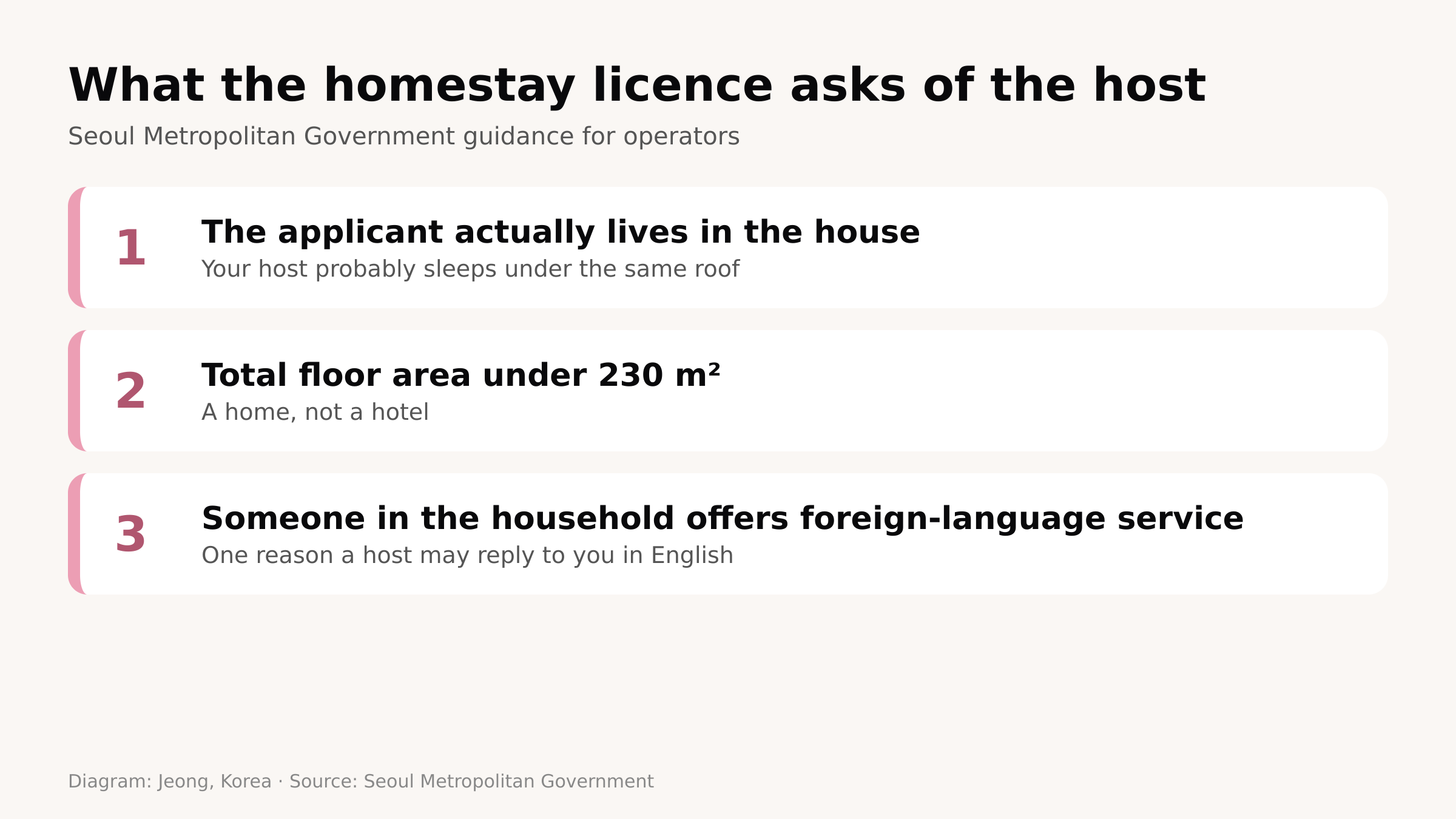
Seoul's own guidance for operators spells out what the urban homestay licence asks for. The applicant must actually live in the house. The house must be under 230 square metres of total floor area. And the applicant or someone in the household must be able to offer service in a foreign language.
Those three rules shape the stay. In a homestay, you are a guest in someone's home, and the person who answers your messages probably sleeps in the next room. The language rule is one reason a host may reply to you in English.
The hanok experience business does not carry the same residence rule in Seoul's guidance. The person running it does not have to be someone who lives in the house.
| What to check | Urban homestay | Hanok experience |
|---|---|---|
| Does the host live there? | Required | Not required |
| Size limit in Seoul's guidance | Under 230 m² | Not stated |
| Foreign-language service | Required | Not stated |
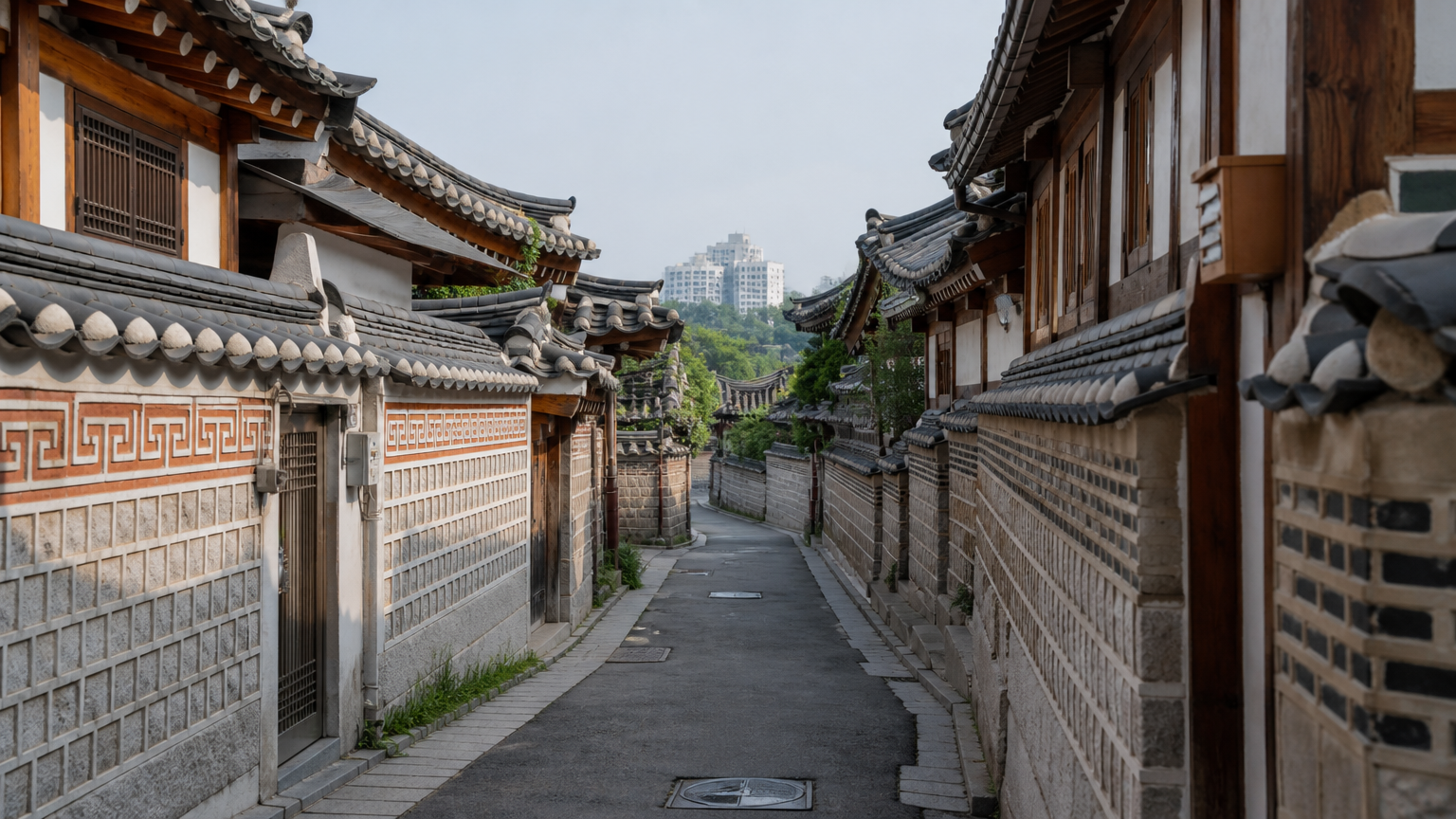
The streets these houses sit in come with their own rules. Bukchon is the clearest case, and I wrote about its visiting hours and fines in Bukchon Hanok Village: no entrance fee and a 100,000 won fine. A guesthouse in that area sits inside those rules too.
That covers who runs the house. But how would you know which licence a listing has before you pay?
Listings now have to show a registration
This part changed recently. In July 2024 Airbnb announced that listings in Korea would need to submit their business registration. New listings that could not provide it would not be allowed onto the platform from the end of 2024. Existing listings had until the end of 2025, after which listings without it would be removed. Airbnb also said the registration details would be shown on every listing page.
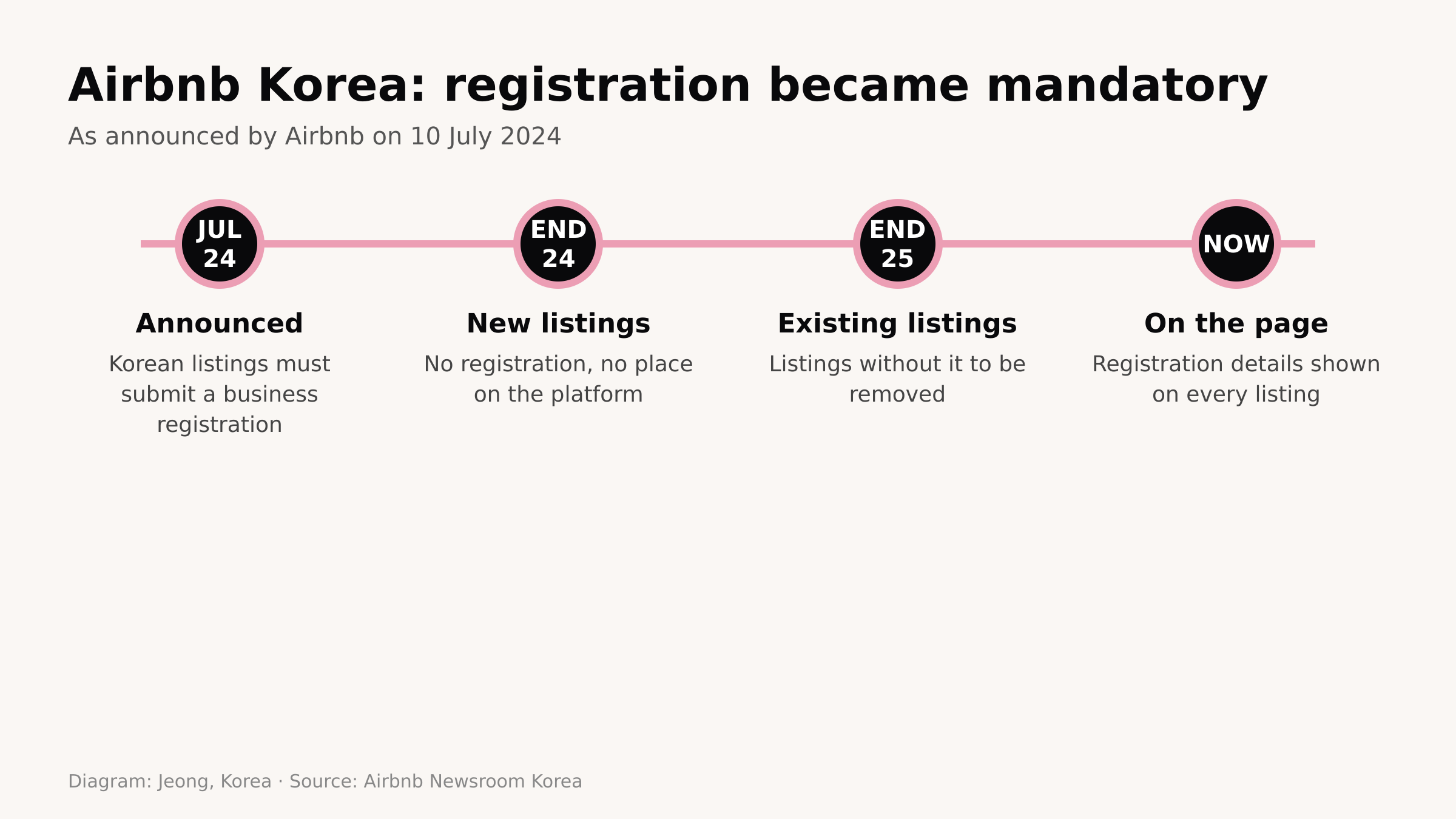
Airbnb named officetels and places without a local government report as the kind of listings the rule targets. For you, the practical result is simple: the registration line on the listing is now the place to look. It is the listing's own statement that the house is registered.
There is one exception I should mention. Under a government regulatory sandbox, a home-sharing platform has been allowed to book Korean guests into some of these homes for a limited number of days a year. I have not gone through the conditions line by line, so I will leave it there. The general rule in the decree is still that the urban homestay is for foreign tourists.
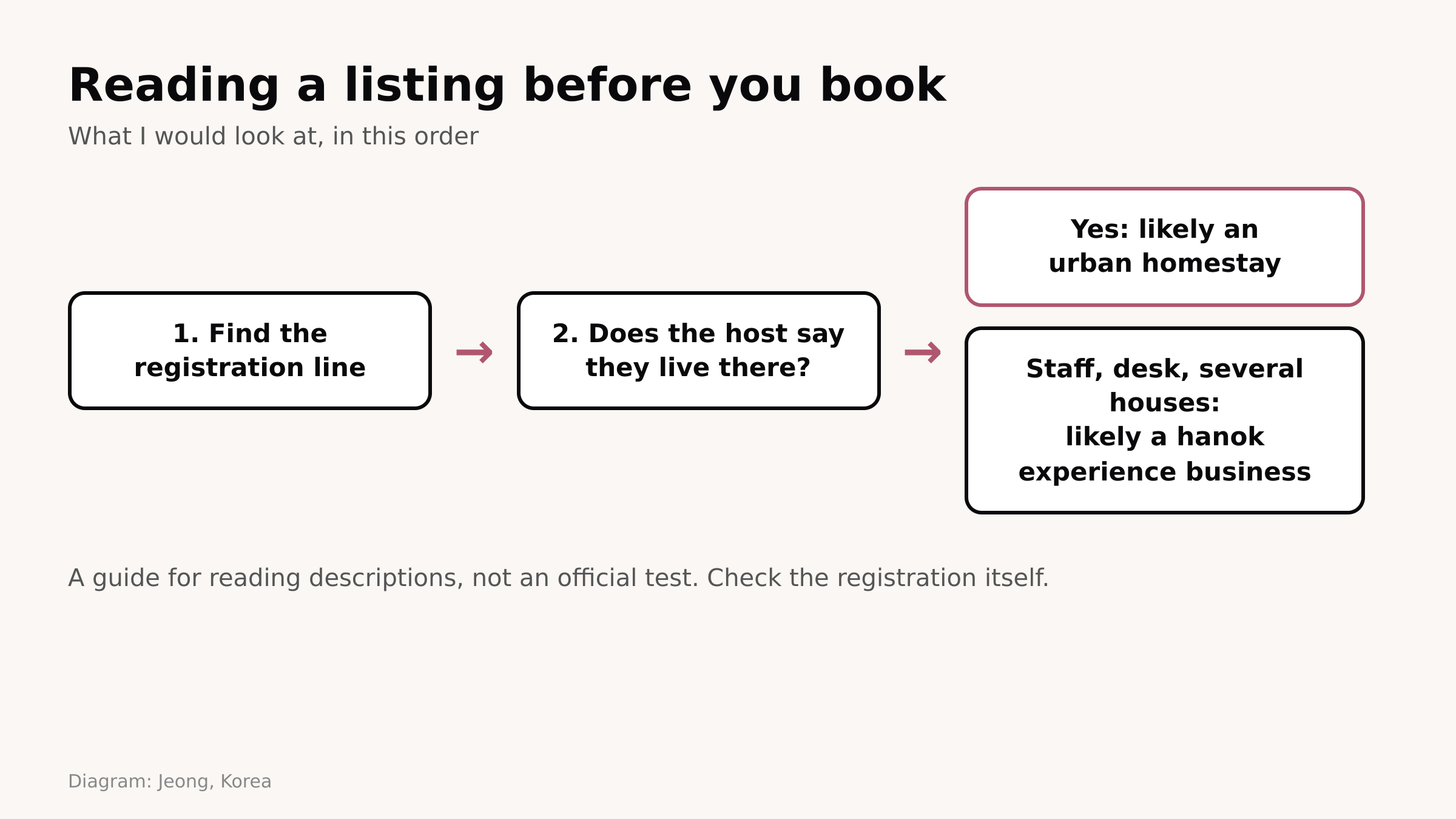
Seoul also runs its own label on top of the licence. Under the Seoul Stay programme, the city and the Seoul Tourism Foundation support homestays and hanok stays that host foreign visitors. In August 2026 they picked 18 places for extra support, 10 urban homestays and 8 hanok experience businesses, out of 48 applicants. According to the same report, about 803 Seoul Stay operators are running, and safety and fire checks were given more weight this year.
If you are planning around the October holidays, book early. I explained why the dates matter more than the weather in Korea in October: two long weekends decide your trip.
How I would choose one
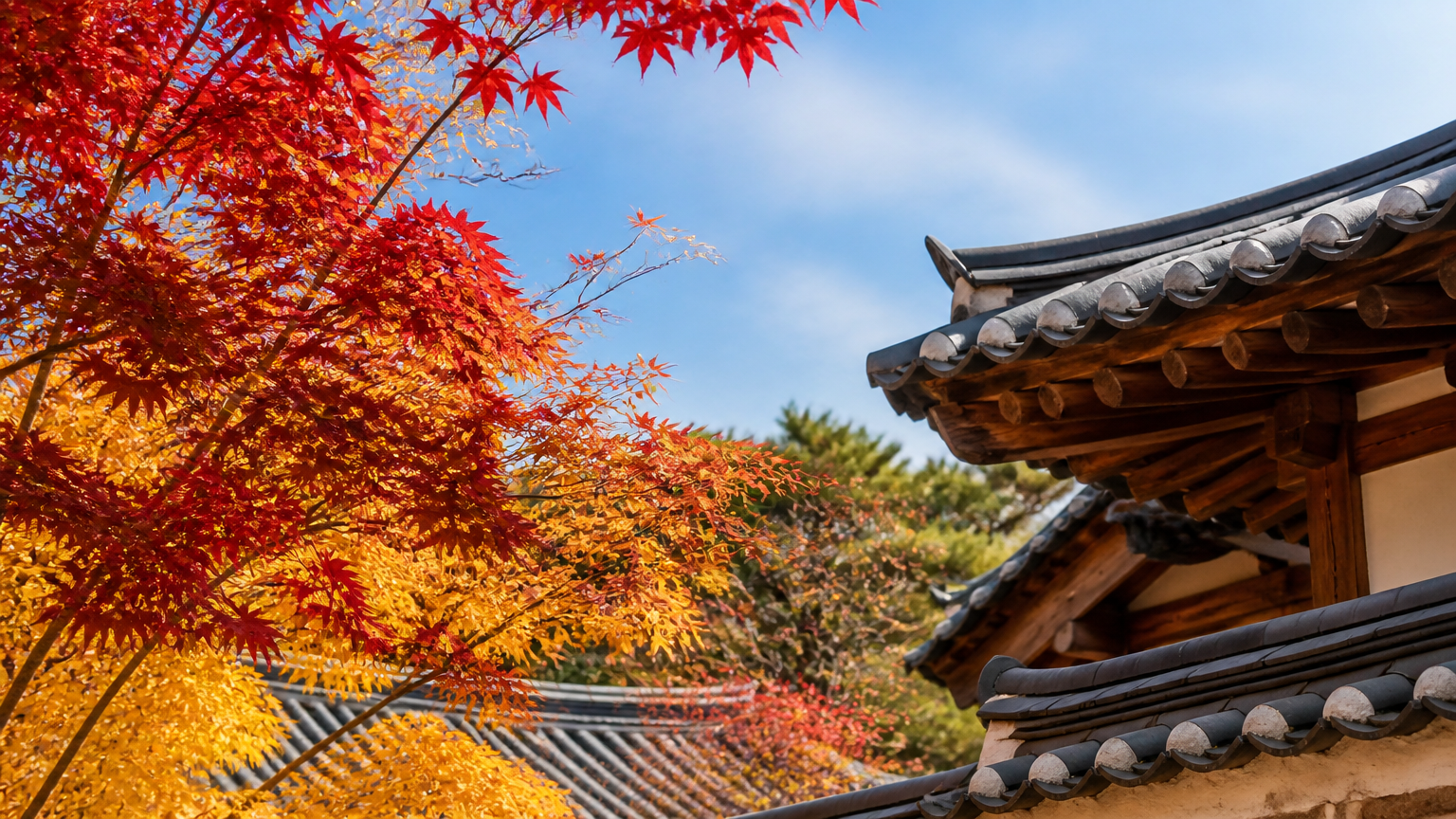
I would start with the registration line on the listing, then read the description for signs of the licence. A host who writes about living in the house and sharing the kitchen is describing a homestay. A listing that talks about staff, check-in desks or several hanok buildings is more likely a hanok experience business.
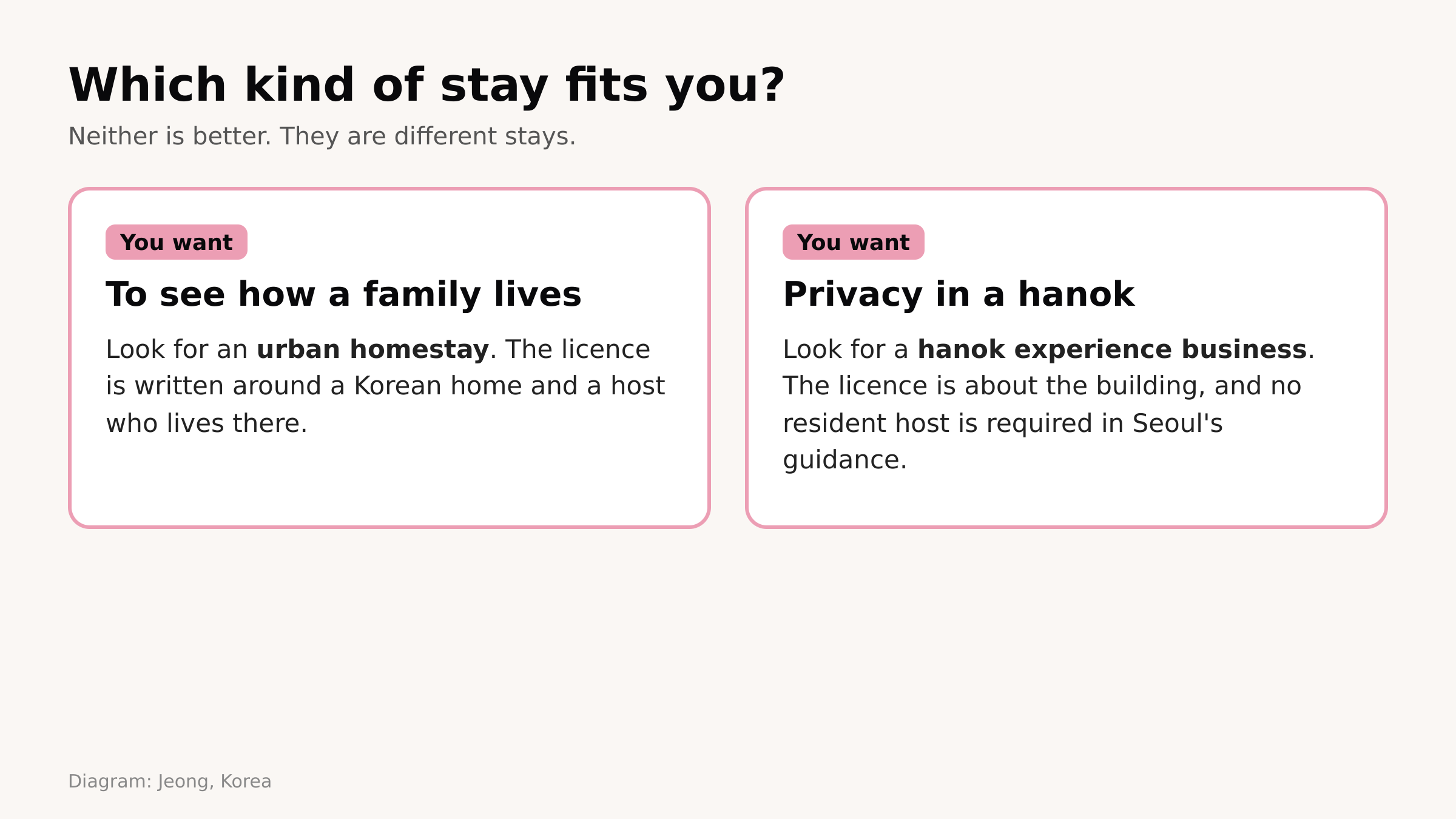
Neither is better. They are different kinds of stay. If you want to see how a family lives in a hanok, the homestay is the one built for that. If you want privacy in a hanok and do not need a host nearby, the hanok experience business fits better.
If the house you like sits in a café district, it helps to know how that area came to look the way it does. I covered that for one neighbourhood in Ikseon-dong: the redevelopment that never happened.
There are also things I could not confirm from an official source, so I will not state them as fact: how many of the hanok guesthouse Seoul listings on each site are homestays versus hanok experience businesses, what the typical price is, and what the rooms and bathrooms are usually like. Those vary house by house, and the listing photos are your best guide.
FAQ
Can Korean citizens stay at an urban homestay?
The decree defines the urban homestay as a business for foreign tourists. A regulatory sandbox exception has let one home-sharing platform book Korean guests for a limited number of days a year, but the general rule is foreign tourists.
Does the host have to live in the hanok?
For an urban homestay, yes. Seoul's guidance says the applicant must actually live in the house. For a hanok experience business, Seoul's guidance does not set that rule.
How do I check whether a hanok guesthouse Seoul listing is registered?
Look at the listing page. Airbnb said it would show registration details on every Korean listing, and listings without a registration were to be removed after the end of 2025.
Is Seoul Stay a licence?
No. Seoul Stay is a city support programme for licensed homestays and hanok stays that host foreign visitors. In 2026 the city picked 18 places for extra support.
In short
The word hanok tells you about the building. The licence tells you about the stay. Before you book a hanok guesthouse Seoul listing, look for the registration line, read how the host describes the house, and pick the kind of stay you actually want.
Sources
-
Enforcement Decree of the Tourism Promotion Act, Article 2(1)3 (바) and (사), Korea Law Information Center: https://www.law.go.kr/법령/관광진흥법시행령
-
Seoul Metropolitan Government, guidance on urban homestays for foreign tourists and hanok experience businesses: https://news.seoul.go.kr/culture/archives/27478
-
Airbnb Newsroom Korea, business registration requirement (2024-07-10): https://news.airbnb.com/ko/compliance
-
Herald Korea, Seoul Stay 2026 selection (2026-08-08): https://www.heraldk.com/article/2026080815102430482
-
Wehome, regulatory sandbox special exemption notice: https://wehome.me/trust/ko/notice\_sandbox/
More from this series
2026-09-24
Movie Theaters in Seoul: The Film Starts Ten Minutes Late, and Culture Day Moved in 2026
2026-09-24
Pojangmacha in Seoul: Fewer Than Half Have a Permit, and Jongno 3-ga Is the Street the City Kept
2026-09-23
Bungeoppang: The Carts Appear When It Gets Cold, and Most of Them Do Not Take Cards
2026-09-23
The Korean Photo Booth: Nobody Takes Your Photo, and That Is the Point
2026-09-23
Makgeolli and the Rainy Day: Why Koreans Order Pancakes When the Weather Turns
2026-09-21
Daejeon, Korea: An Hour From Seoul by KTX, and Two Stations Carry the City's Name
2026-09-21
Yuseong Hot Spring: The Foot Bath Is Free and Open Until 10 p.m., and You Cannot Drink the Water
2026-09-18
Hangul Day: The Alphabet's Birthday Lost Its Day Off for 22 Years, and Its Museum Is Shut Until 2028
2026-09-15
Namdaemun Market Opening Hours: The Market's Own List Has 38 Timetables, and Some Floors Open at 11 p.m.
2026-09-15
Hair Salon in Seoul: The Final Price Must Be on the Wall, and Only a Barber May Shave You
2026-08-28
DMZ Tour: You Can Still Go. The JSA Is the Part You Cannot.
2026-08-28
Gyeongju Food: The Famous One Is a Souvenir, and the Meal Is Next to the Tombs
2026-08-28
Bulguksa Temple: There Is No Direct Bus to Seokguram, and You See the Buddha Through Glass
2026-08-27
Gyeongju From Seoul: Two Hours by KTX, and Then the Part Nobody Plans For
2026-08-27
Gyeongju: Three Separate UNESCO Listings, and Why One Day Does Not Cover Them
2026-08-18
Hospital in Seoul: Why Koreans Don't Start at the Big One
2026-08-18
Korean Drinking Culture: The Rules Are Real, and So Is the Way Out
2026-07-31
What Is Silbi Kimchi? Korea's Spiciest Kimchi — and the Local Hack You Need to Know