Gwangjang Market: The Opening Hours Are Three Different Answers, and the Price Rule Changed on 1 September

Everyone has a list of what to eat here. Almost nobody mentions the closing time. There are three of them.
The market sells three different things under one roof and each part keeps its own hours, which is why some visitors arrive at seven in the evening to find half the place shuttered and the other half packed. That gap explains most of the bad first visits I hear about. The second thing worth knowing is newer: on 1 September the penalties for stalls that do not show a price, or that charge more than the price they show, got considerably heavier.
If you have seen the videos about tourists being overcharged at Korean markets, this is the part of the story that came afterwards.
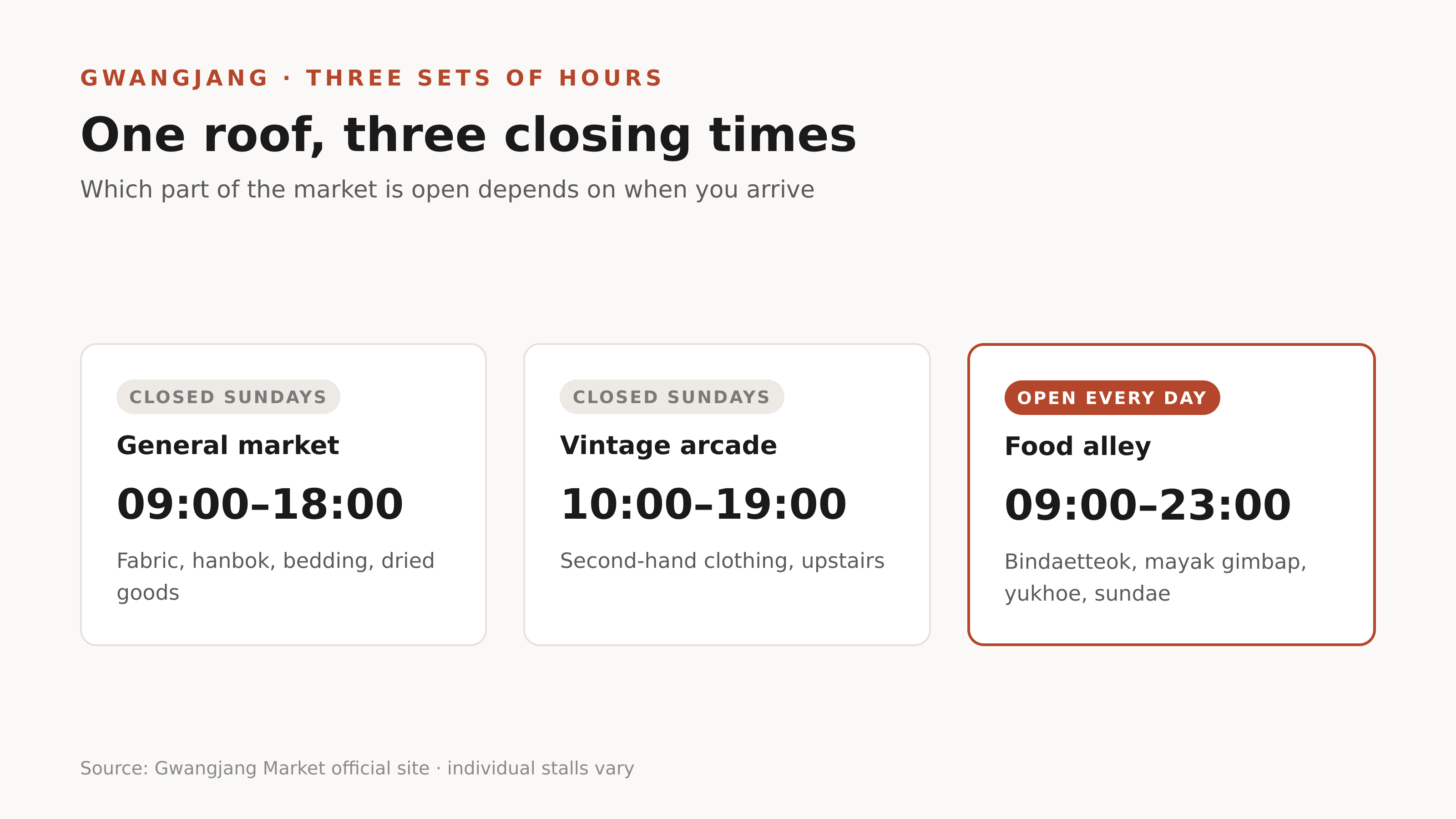
Three closing times, and which one you want
Come in the evening, not the afternoon.
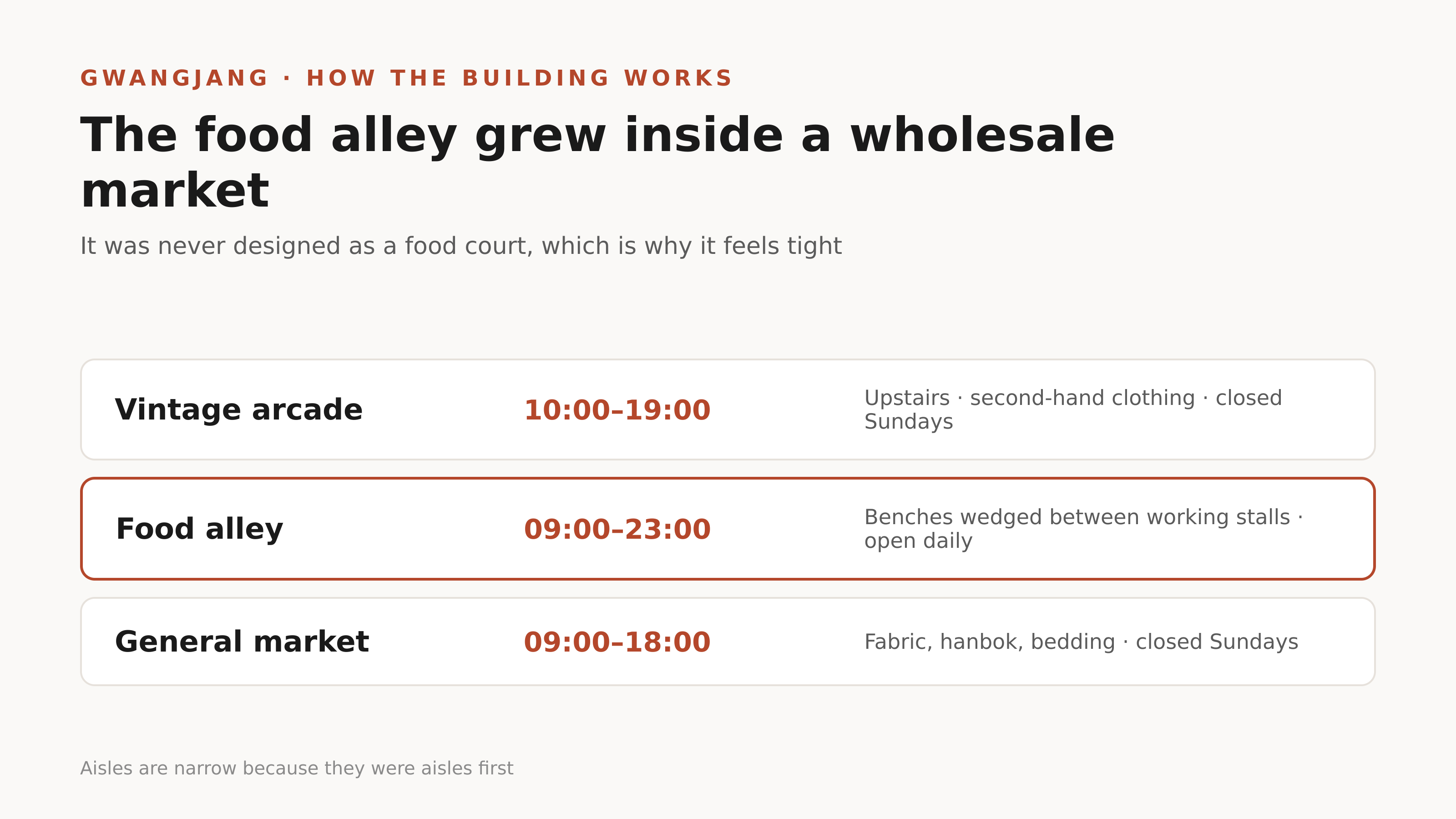
The reason is that Gwangjang Market is really three businesses stacked in the same building. The general market — fabric, hanbok, bedding, dried goods — runs 09:00 to 18:00 and closes on Sundays. The vintage clothing arcade upstairs runs 10:00 to 19:00, also closed Sundays. The food alley runs 09:00 to 23:00, every day of the year. One shuts while another is still filling up.
In practice an afternoon visit gives you the shopping and a half-empty food alley. An evening visit gives you the opposite. Most people are coming for the food.
| General market | Vintage arcade | Food alley | |
|---|---|---|---|
| Hours | 09:00–18:00 | 10:00–19:00 | 09:00–23:00 |
| Sundays | Closed | Closed | Open |
| Best time to arrive | Late morning | Afternoon | After 18:00 |
| What you get | Fabric, hanbok, bedding | Second-hand clothing | Bindaetteok, gimbap, yukhoe |
Individual stalls vary, so treat this as the shape of the day rather than a timetable.
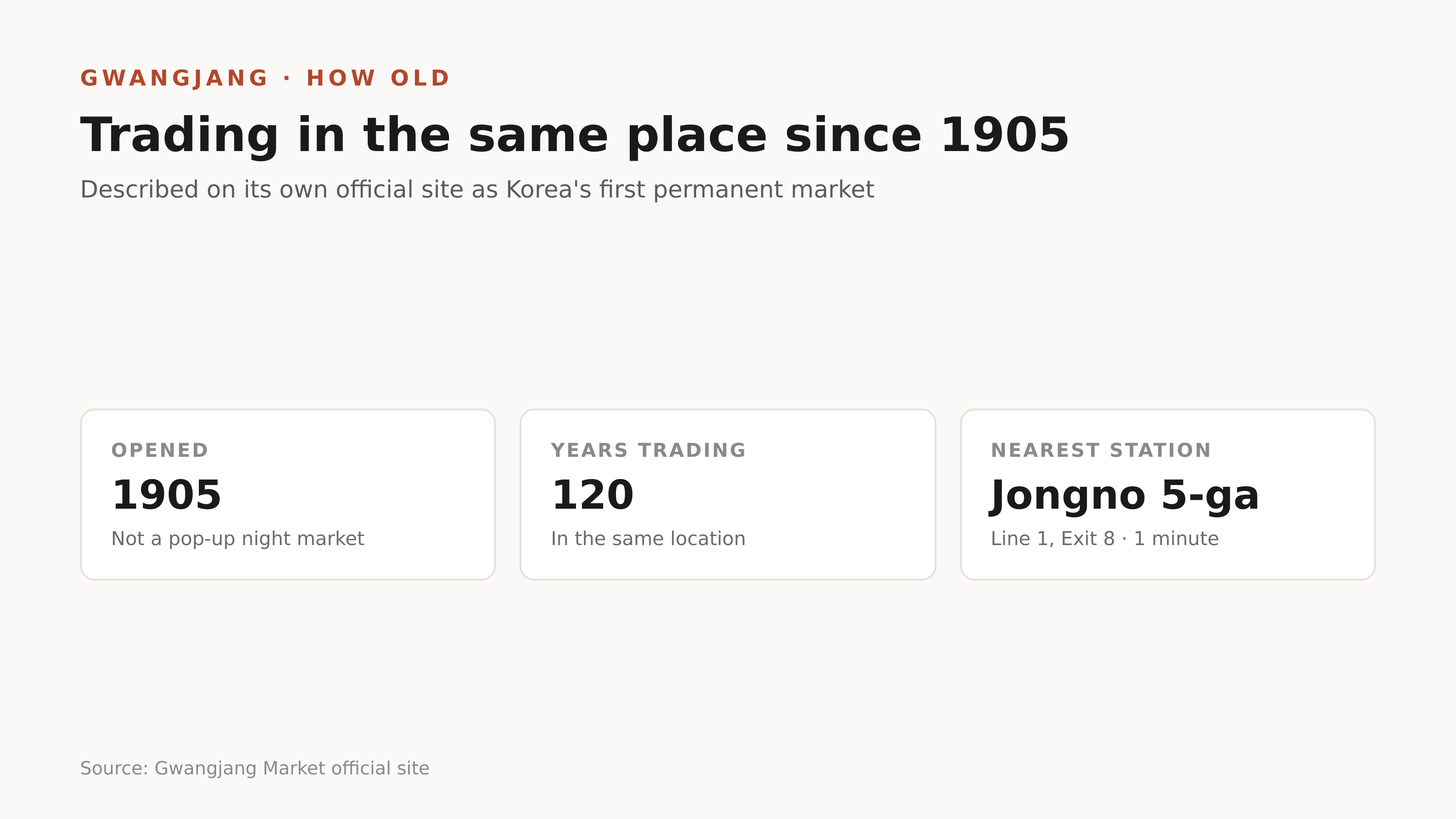
Getting there is the easy part. Jongno 5-ga Station on Line 1, Exit 8, is a one-minute walk. Euljiro 4-ga on Lines 2 and 5, Exit 4, is about a hundred metres. If the transfer rules are still new to you, how to actually read the Seoul subway map covers the part that catches people out.
So you have arrived at the right hour. What is the second thing nobody tells you?
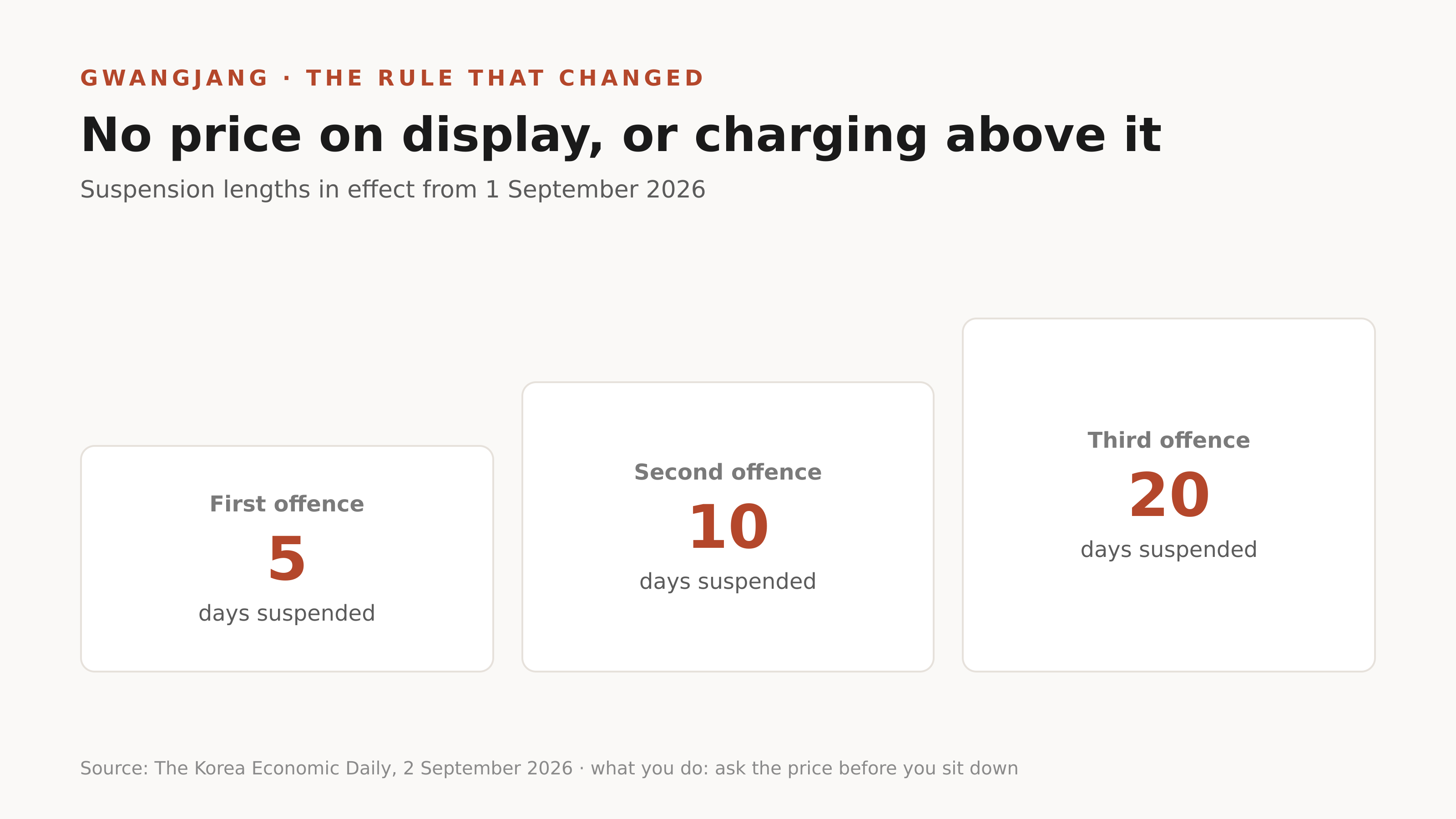
The price has to be on display, and the penalty changed this month
Ask what something costs before you sit down, and expect to see it written.
Korea tightened the enforcement side of this at the start of September. Under rules that took effect on 1 September, a food stall that fails to display its prices, or charges more than the displayed price, faces an immediate five-day suspension on a first offence. A second offence extends to ten days and a third to twenty, according to the Korea Economic Daily. The stricter schedule follows price-gouging measures the government announced in February.
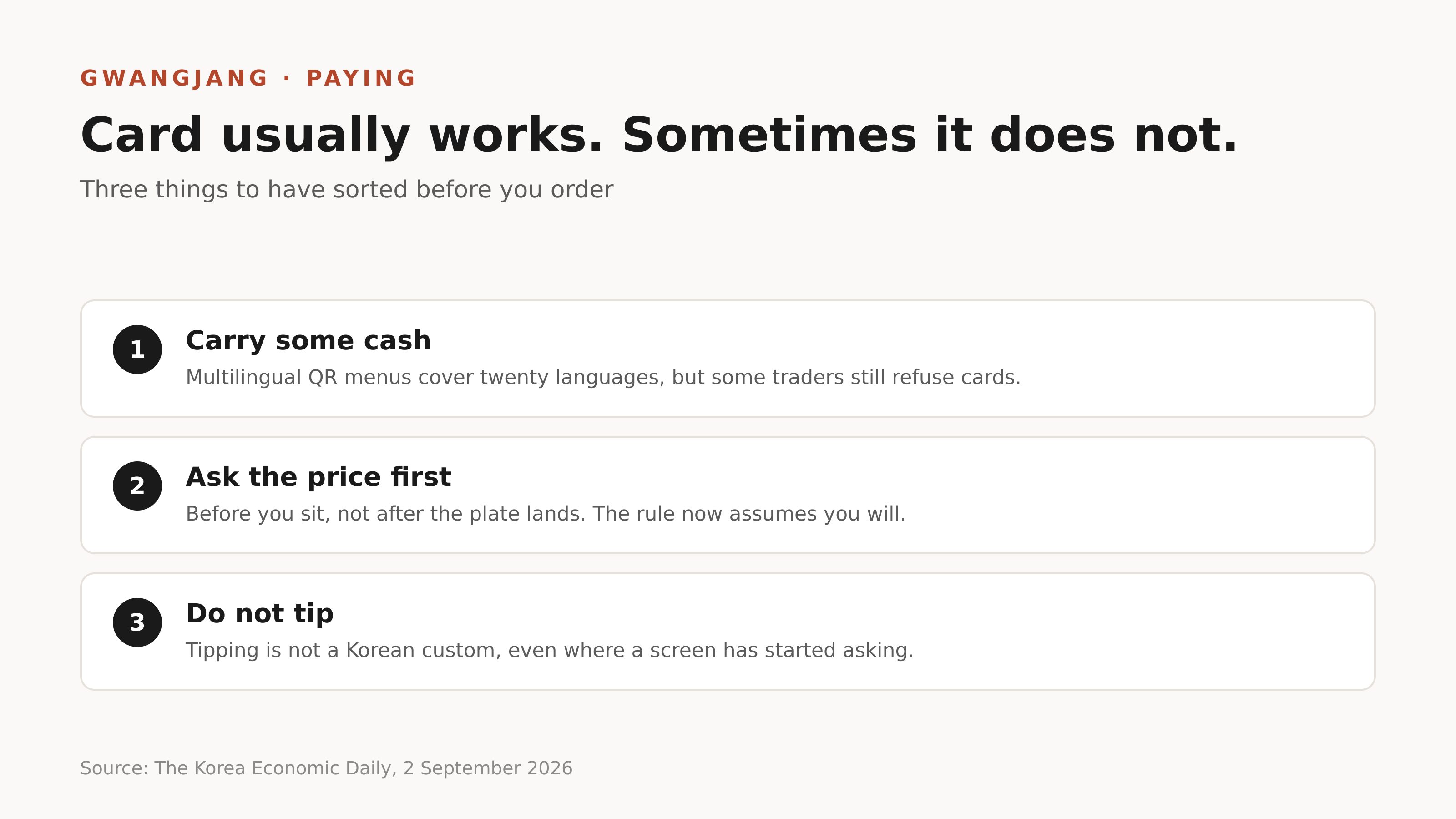
What that means for you is small but concrete. A price should be visible before you order. If it is not, ask — and ask before you take a seat rather than after the plate lands. You are not being difficult. You are doing the thing the rule now assumes you will do.
None of this is unique to one market. The queue at a famous stall is rarely where the value is, which is the same pattern I found at Gangneung's central market, where the locals eat 700 metres from the line.
And when the food does arrive, what should be on the plate?
What to order, and how to pay for it
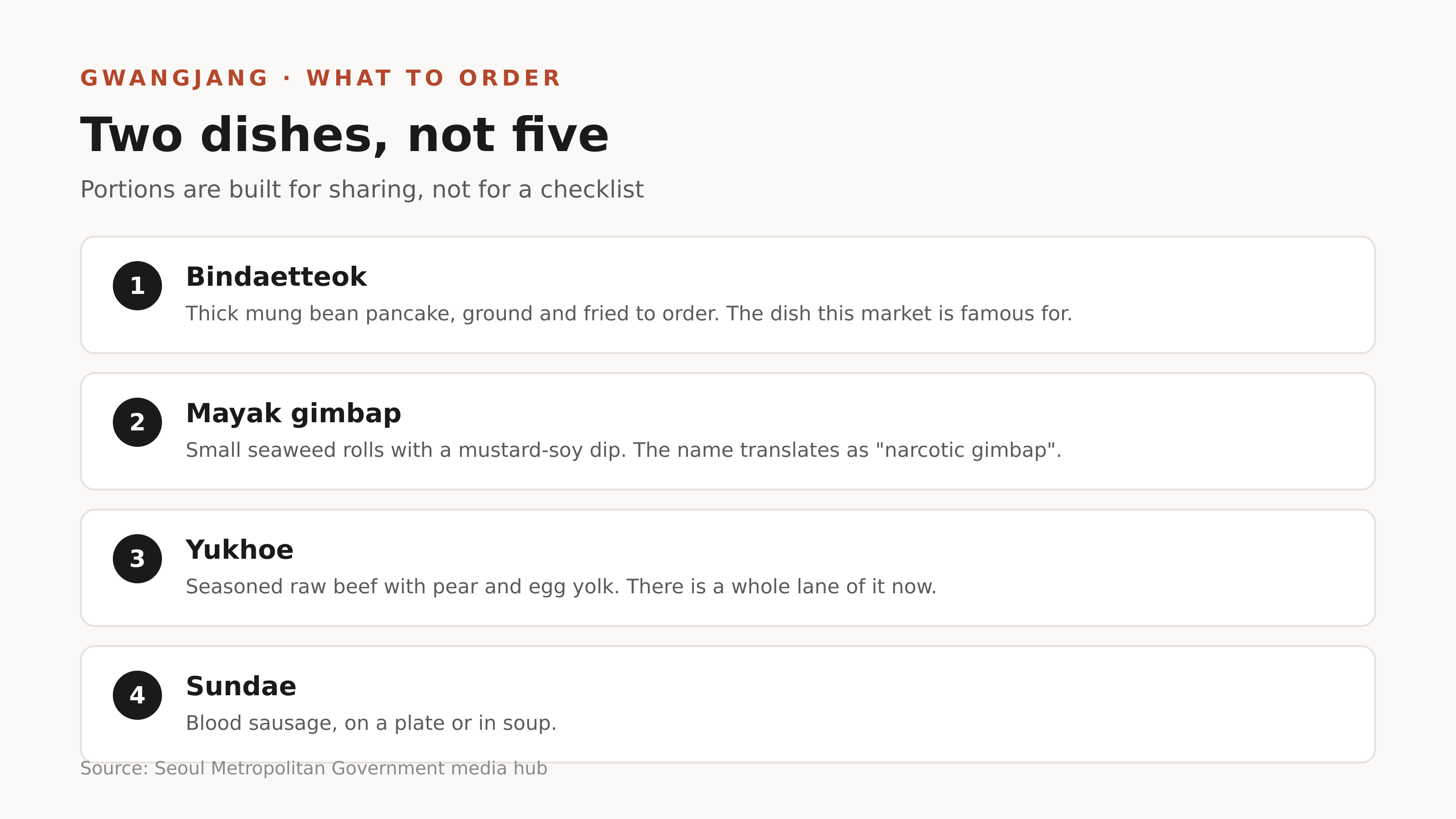
Order two things, not five.
Portions here are built for sharing between two or three people and a bottle, not for one person working through a checklist. Three or four stalls in an evening is already a lot of food.
What this market is actually known for:
-
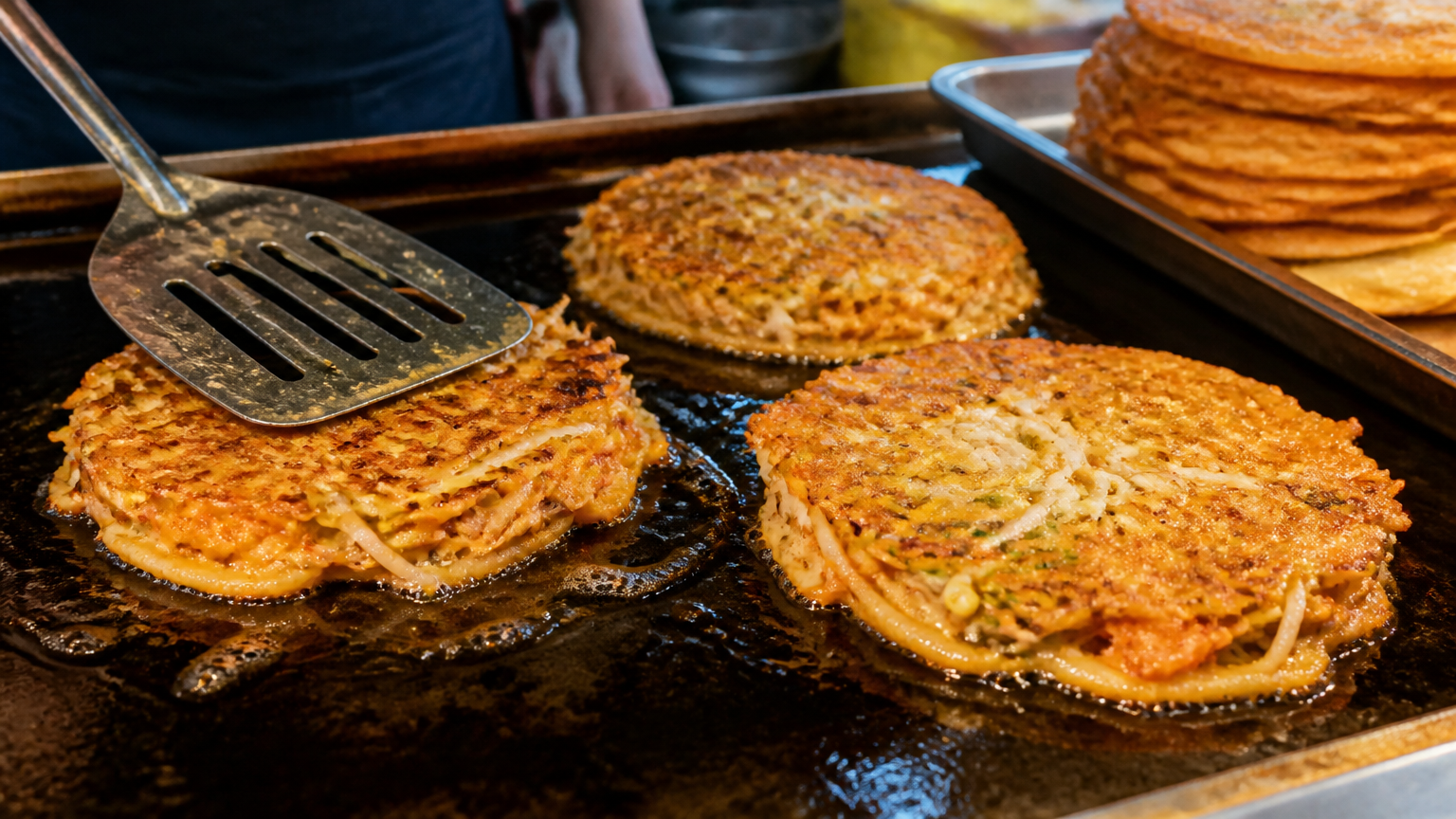
Bindaetteok — a thick mung bean pancake, ground and fried to order. This is the dish the place is famous for, and the one worth queuing a little for.
-
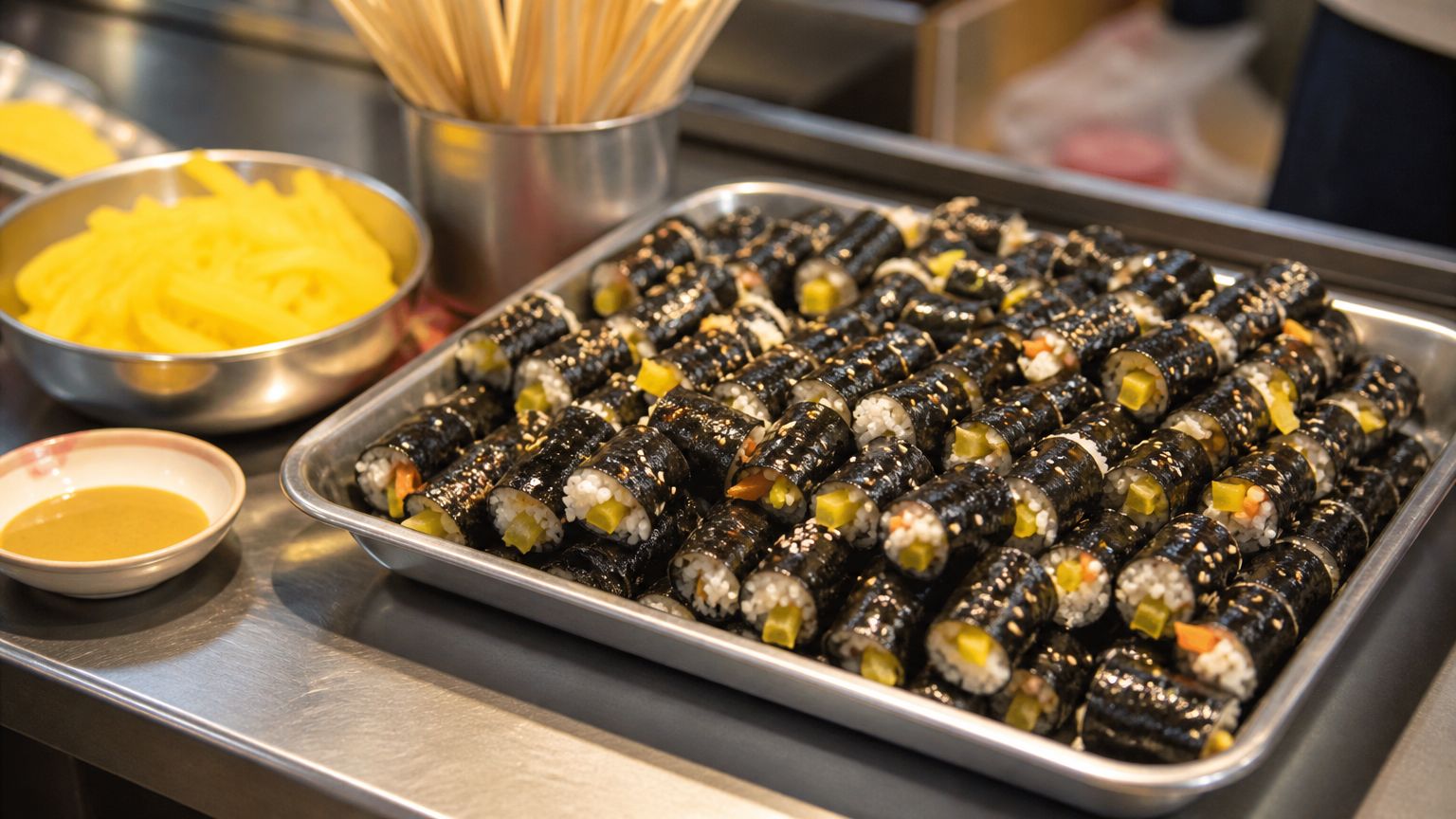
Mayak gimbap — small seaweed rolls with a mustard-soy dip. The name translates as "narcotic gimbap", which tells you what people think of the dip.
-
Yukhoe — seasoned raw beef with pear and egg yolk. There is a whole lane of yukhoe restaurants now, grown out of one long-running shop.
-
Sundae — blood sausage, served on a plate or in soup.
On paying: there are multilingual QR menus covering twenty languages, but the Korea Economic Daily also reported that some traders still refuse card payment. Carry some cash as a backup. And you do not tip — tipping in Korea is not a thing, even where a screen has started asking.
Why this market and not another one
Gwangjang Market opened in 1905 and is described on its own official site as Korea's first permanent market — not a night market that assembles and disappears, but a covered market with fixed shops that has traded in the same place for a hundred and twenty years.
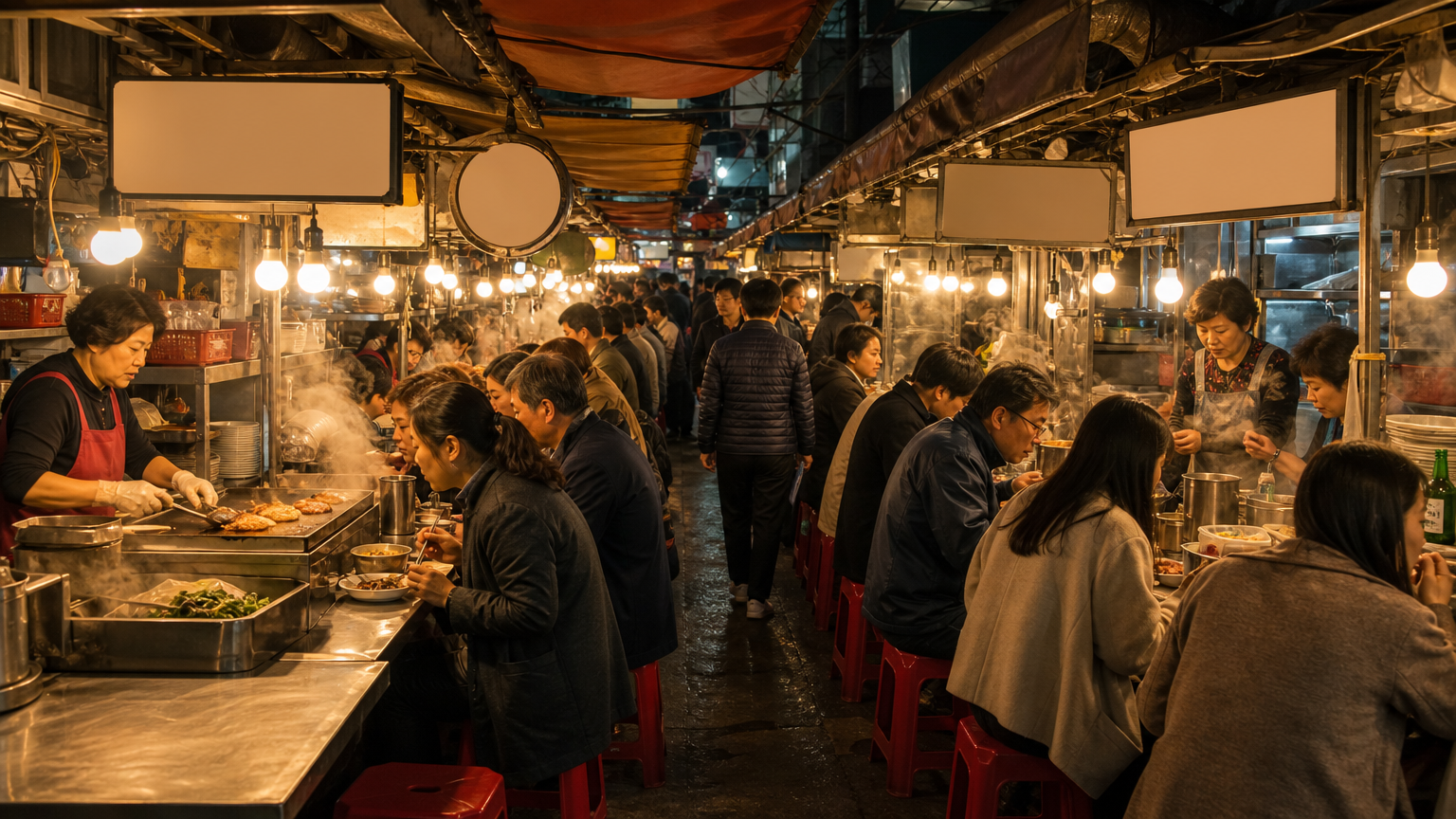
That history is also why the layout confuses people. The food alley grew inside a wholesale market rather than being designed as a food court, so the seating is benches wedged between working stalls, and the aisles are narrow because they were aisles first. It is loud, it is tight, and at eight in the evening it is one of the better places to eat in central Seoul.
FAQ
What time does Gwangjang Market close?
Three answers. The general market closes at 18:00 and the vintage arcade at 19:00, both shut on Sundays. The food alley runs to 23:00, seven days a week.
Is it expensive?
It should not be. Since 1 September a stall that does not display its price, or charges above the displayed price, faces a five-day suspension for a first offence. Ask for the price before you sit down.
Can I pay by card?
Often yes, but not always — some traders still refuse cards. Bring cash as a backup.
What is the one dish to order?
Bindaetteok, the mung bean pancake. If you eat one thing here, eat that.
One sentence is enough
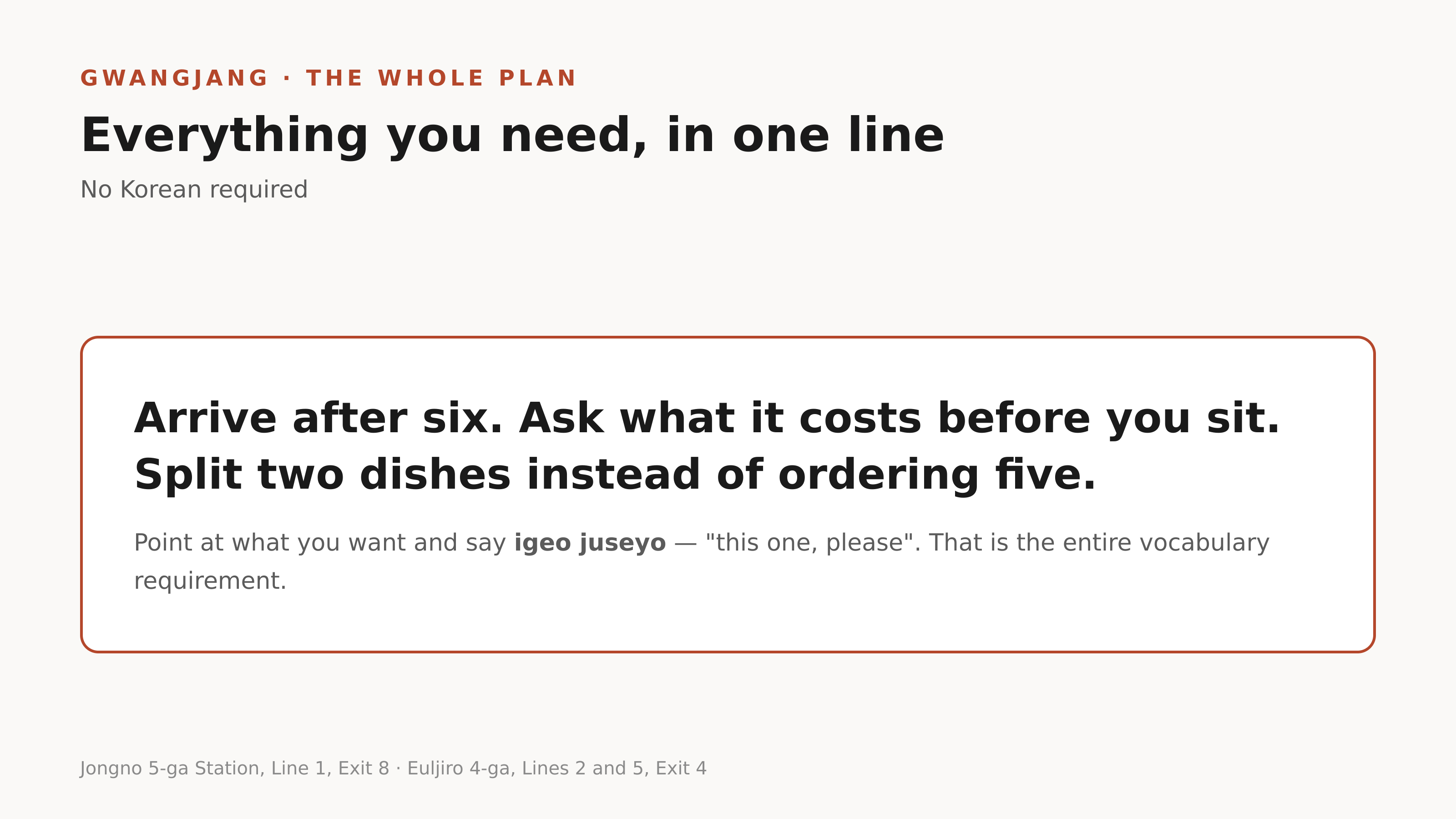
You do not need Korean to eat well at this market. You need to arrive after six, ask what something costs before you sit, and split two dishes instead of ordering five.
Point at what you want and say igeo juseyo — "this one, please". That is the whole vocabulary requirement.
References
-
Gwangjang Market official site — trading hours by section, 1905 opening, and directions
-
The Korea Economic Daily, 2 September 2026 — penalties effective 1 September for failing to display prices or overcharging, and the multilingual QR menus
-
Seoul Metropolitan Government media hub — food alley and signature dishes