Noraebang in Korea: How It Actually Works (and Why It's Not the Karaoke You Know)

The first time I took a friend from Chicago to a noraebang, he stood in the hallway looking genuinely confused. He had been picturing a bar. A small stage in the corner, a signup sheet, strangers clapping politely while someone butchers a ballad.
What he got instead was a corridor of closed doors, each one leaking a different song, and a staff member handing us a key to room 7.
That is the part nobody explains before you get here. It is not a karaoke bar with the labels swapped. It is a different object entirely, and once you see why, the rest of it makes sense — including the thing that surprises people most, which is that they will not sell you a beer.
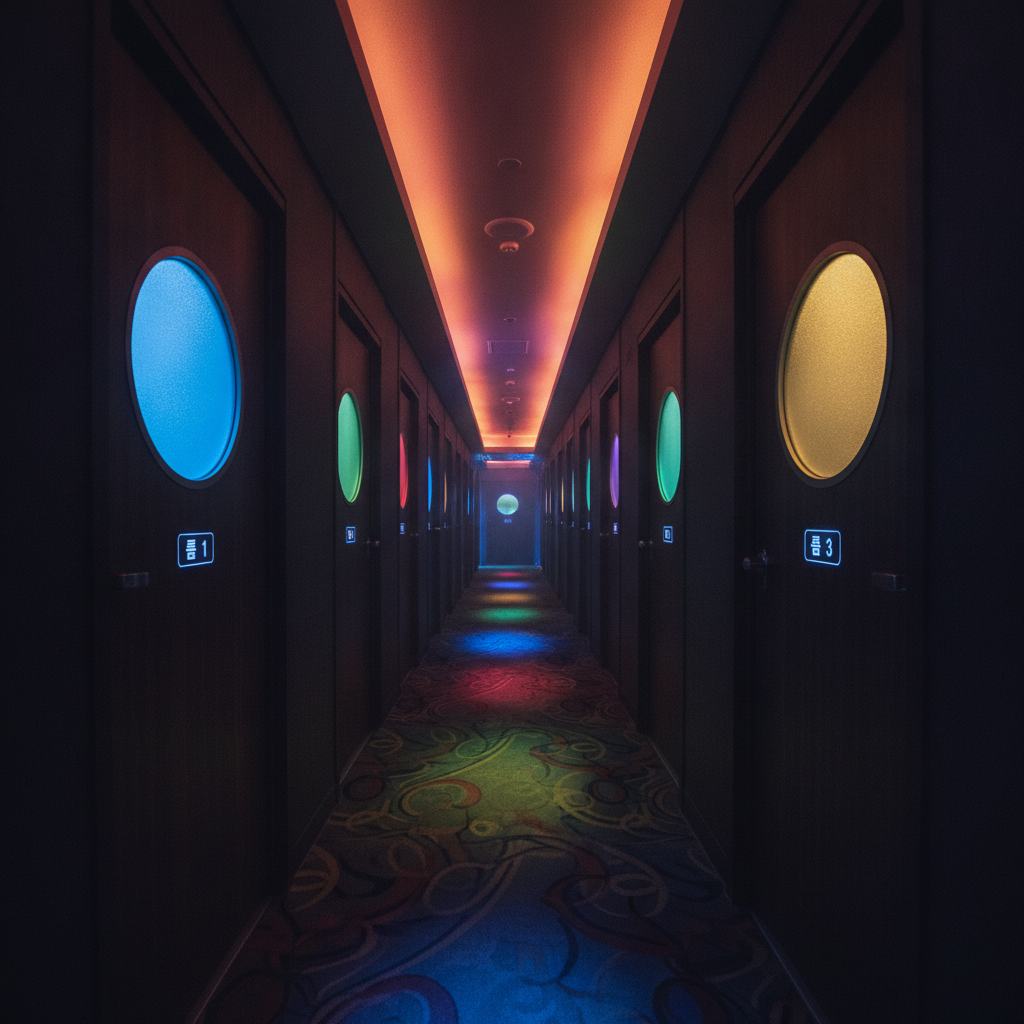
There is no stage, and that changes everything
The word breaks down as norae (song) plus bang (room). The room is the whole idea.
You rent a private room. You and your friends go in. The door closes. Nobody outside hears anything except a muffled chorus, and nobody is waiting for their turn to judge you.
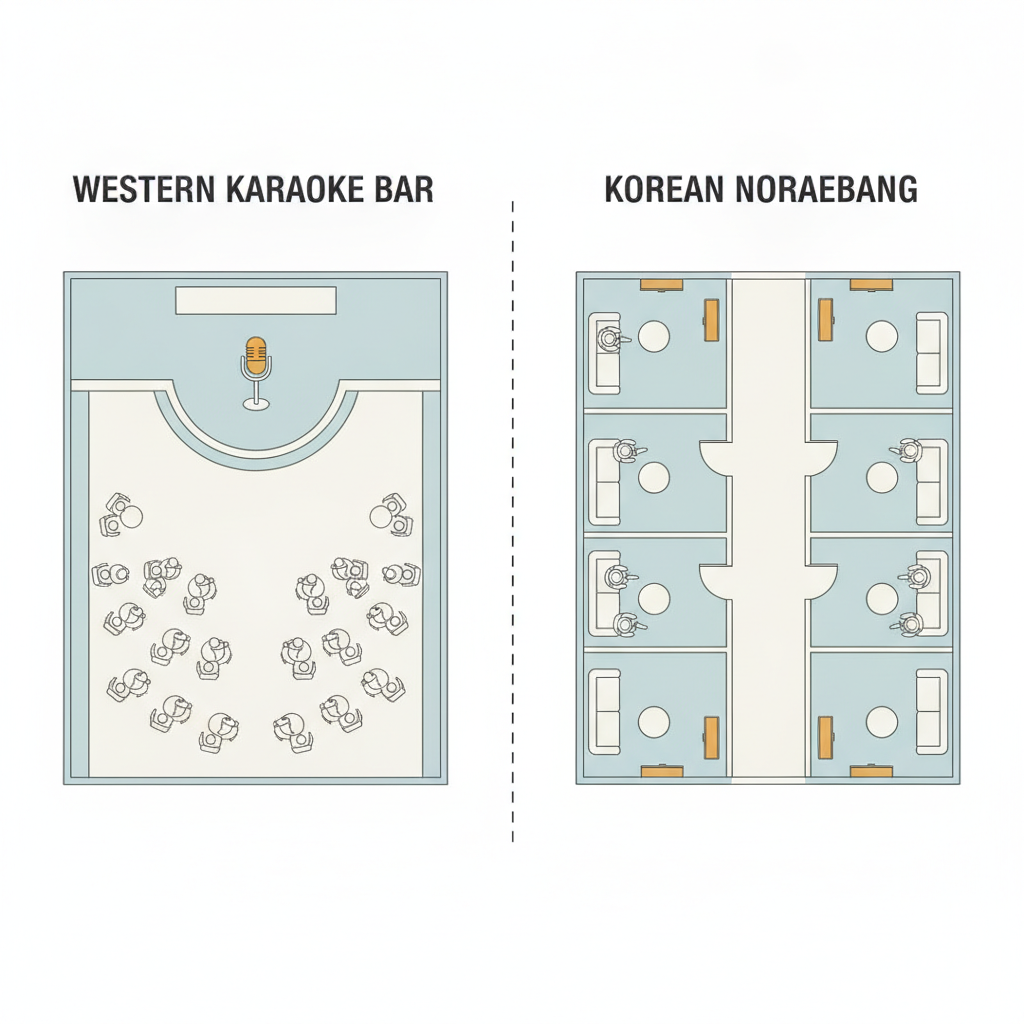
This is why Koreans of every age use it and nobody treats it as a performance. A group of office workers at 9pm, high school students after exams, a couple killing forty minutes before a movie. Singing badly in front of four friends is not a social risk. That is the entire design.
Two kinds, and they are not interchangeable
Before you go, decide which one you want, because they are different experiences at different prices.
| Coin (코인노래방) | Standard (노래방) | |
|---|---|---|
| You pay for | Songs | Time (the room) |
| Room size | Booth for 1–2 | Room for 4–10 |
| Typical price | Around ₩1,000 for 2–4 songs | Roughly ₩15,000–20,000 per hour |
| Staff contact | Usually none, just a machine at the door | Someone at a front desk |
| Best for | Going alone, or a quick 20 minutes | A group, a full evening |
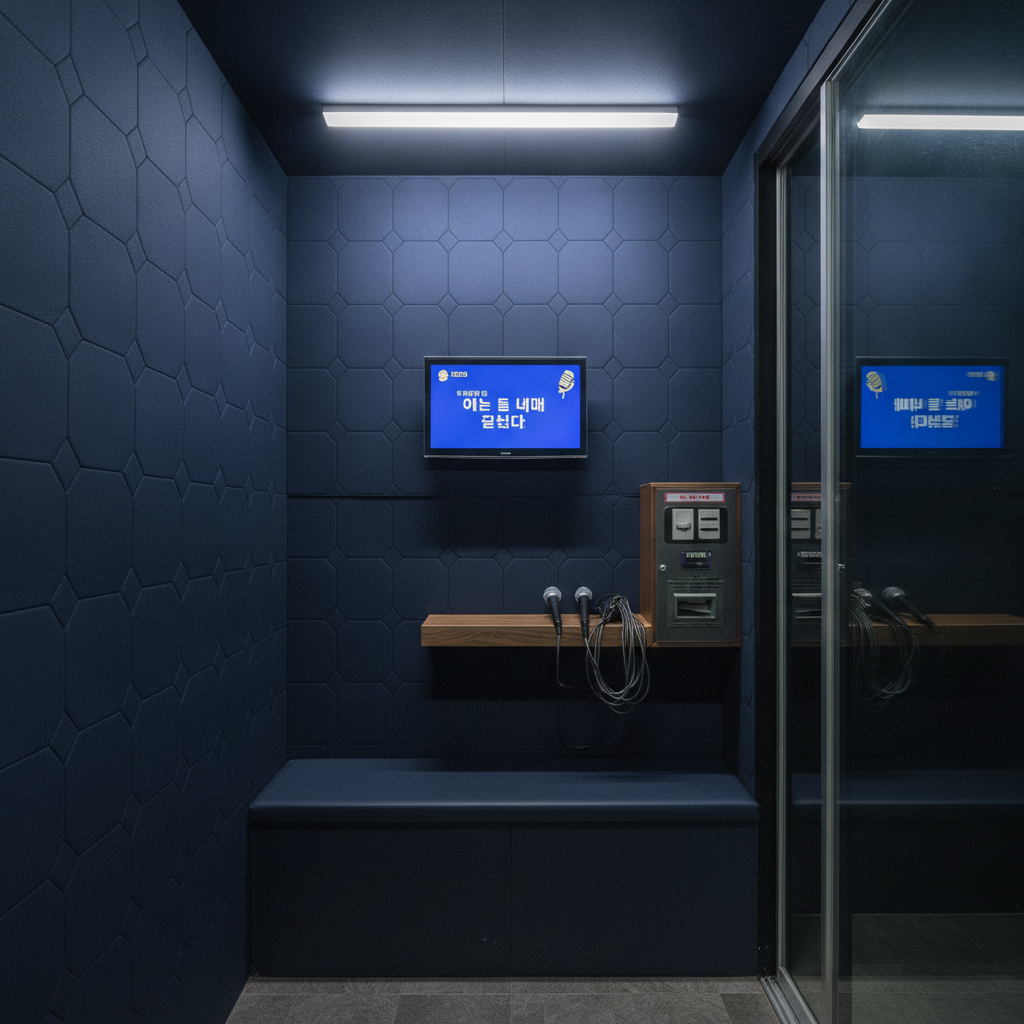
The coin version is the one I would send you to first if you are travelling alone or nervous. You feed in a bill, you get songs, you leave when you are done. No conversation required, no minimum, no commitment. Plenty of Koreans stop by one on the way home from work, sing three songs, and go. It is closer to a vending machine than a night out.
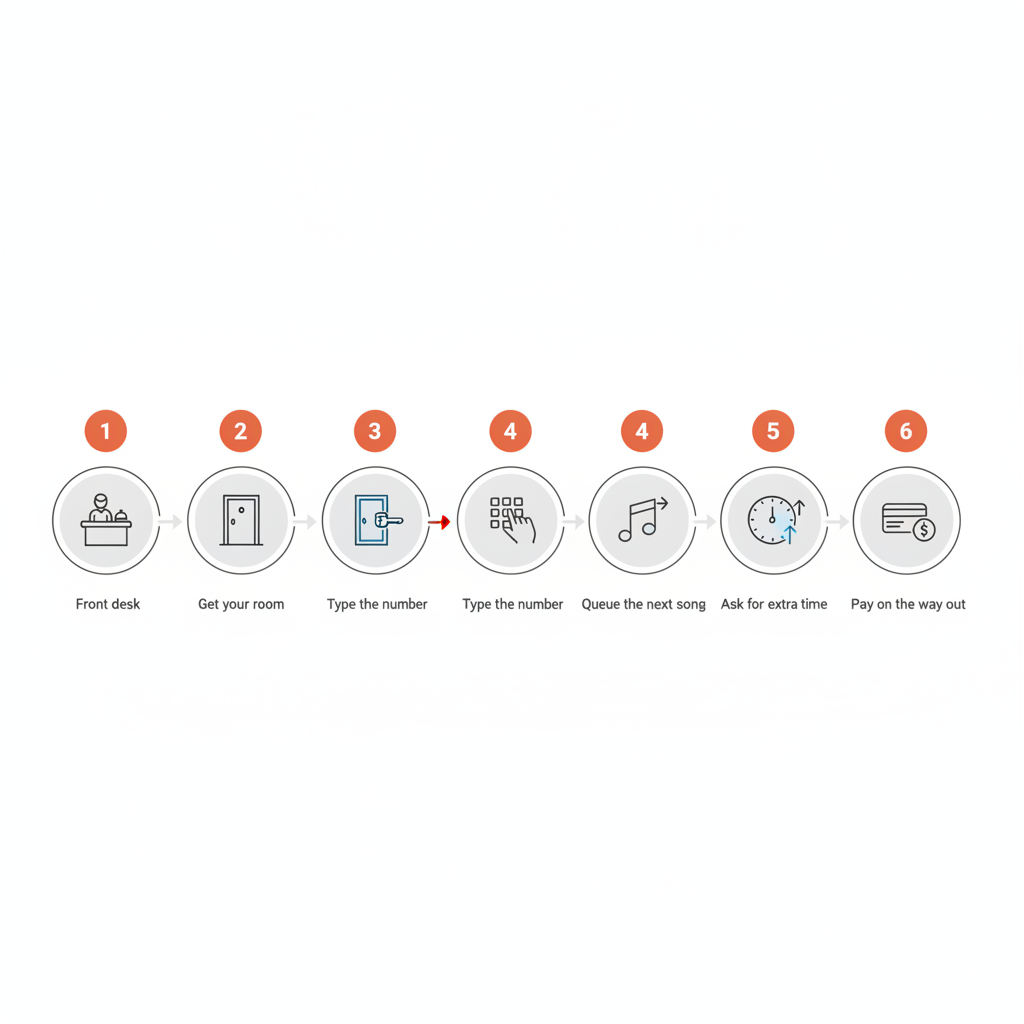
The standard version is the group experience, and it is where the actual culture lives. You book the room by the hour, and the hour is elastic — ask nicely at the end and staff will often add ten or fifteen minutes for free. This is called service (서비스), and it is common enough that regulars expect it.
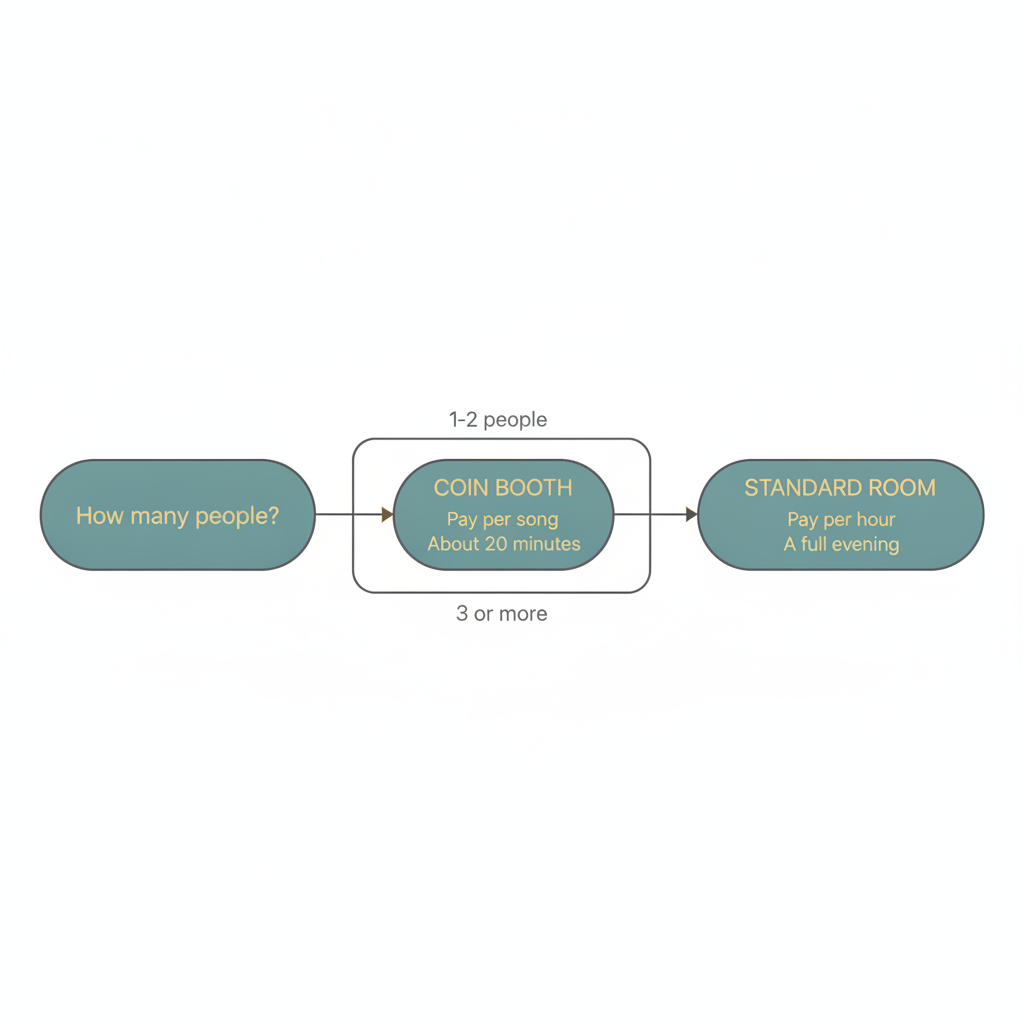
Prices above are what I see around Seoul in 2026 and they move by neighbourhood — university areas are cheaper, Gangnam is not. Nobody sets these rates centrally.
They do not sell alcohol, and that is not the venue being strict
Here is the rule that catches every visitor who is expecting a bar.
Under the Music Industry Promotion Act, a registered noraebang operator must "not sell or provide alcoholic beverages." It sits in the same list as fire safety measures and the ban on hostess services. It is not a house policy that varies shop to shop. It is the licence.
The same article restricts youth access to between 9:00 and 22:00, with exceptions when a guardian comes along.
So what do people actually do? They drink first. Dinner with soju, then singing after — and that sequencing is not people working around the law so much as the law having formalised what was already the shape of a Korean night out.
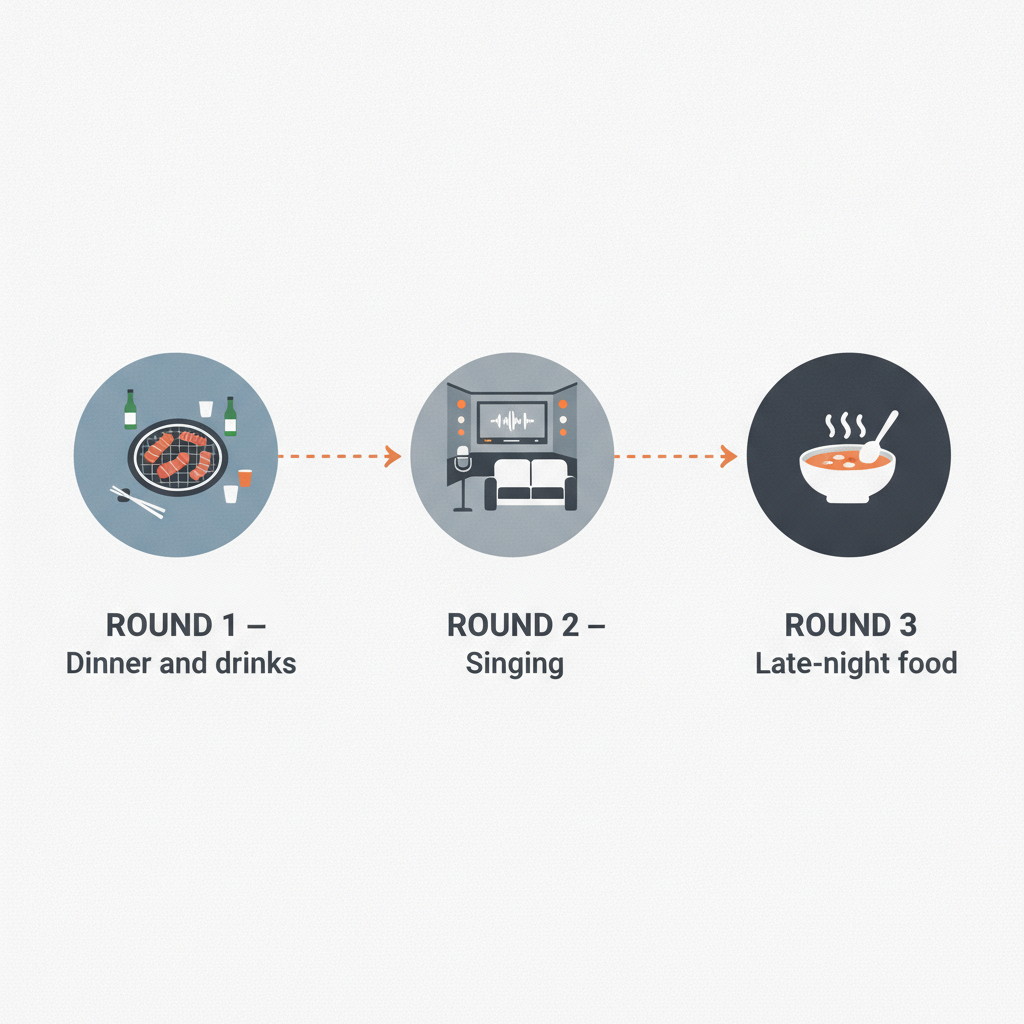
If you walk into a place that offers you whisky and someone to pour it, you have not found a noraebang. You have found a different category of business (유흥주점), it is priced accordingly, and the bill at the end is where tourists get hurt. The real thing sells you soft drinks and dried squid.
What actually happens in the room
You get a remote, a thick book of songs, and usually two microphones and a tambourine.
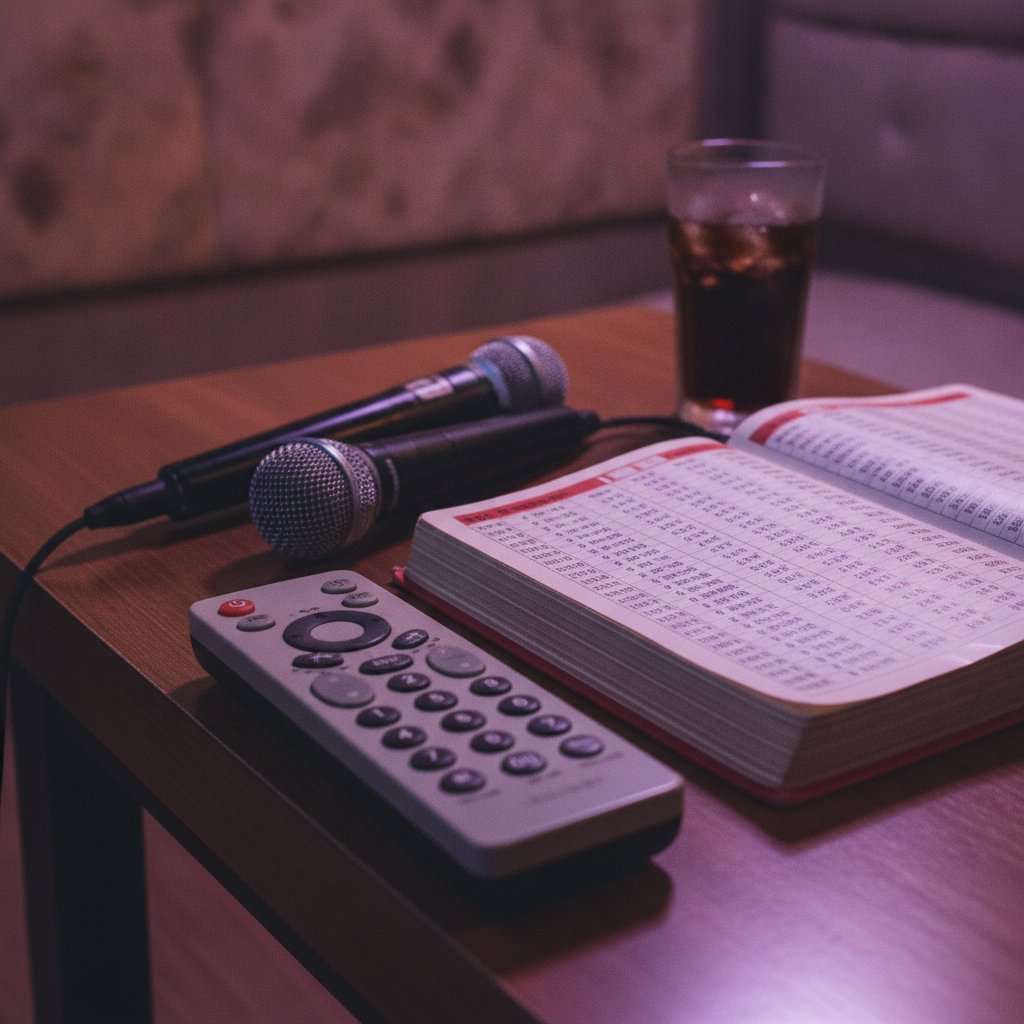
The song book is organised by number. You find the song, you type the number, you press start — and the number is what matters, not the title, so you never have to spell anything in Korean. Most machines also have an English search, and the English catalogue is much larger than people expect. Beatles, Queen, Bruno Mars, Taylor Swift, most of what you would want.
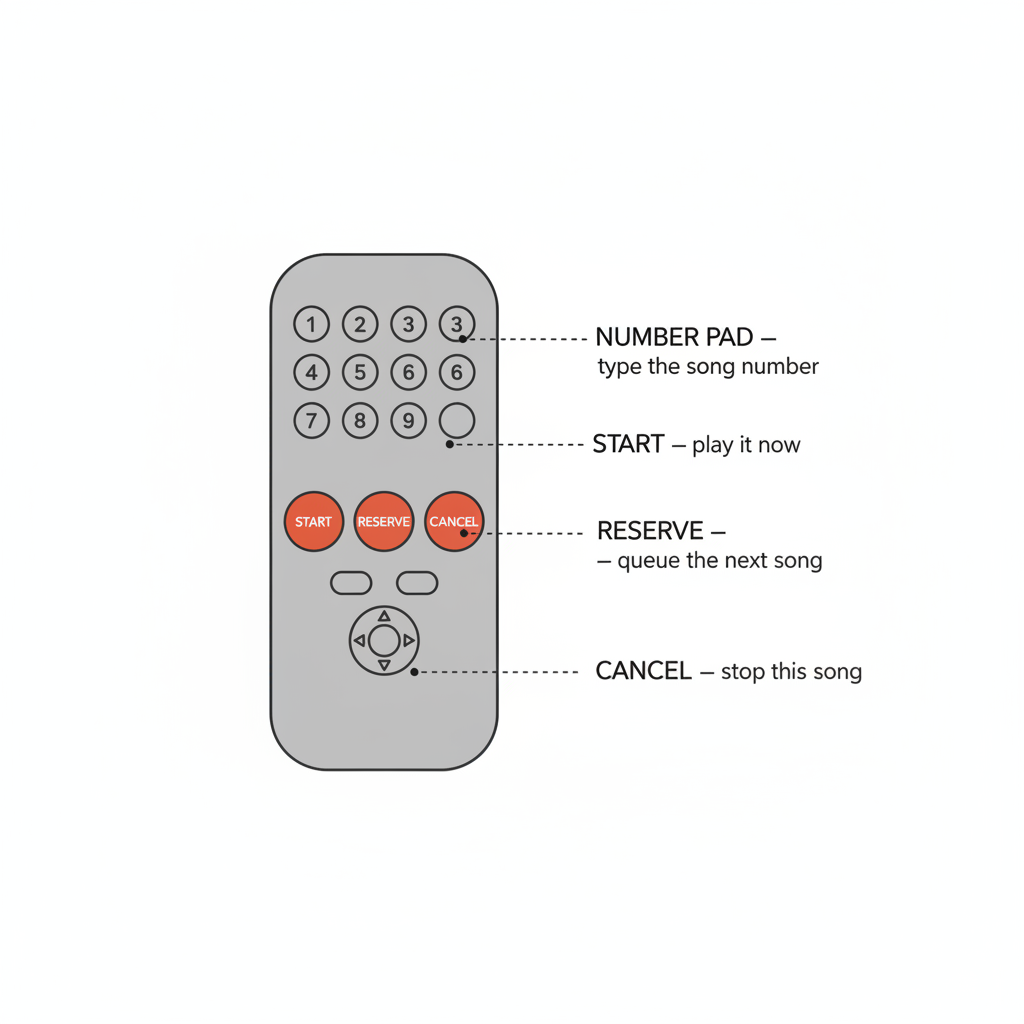
Four buttons do almost everything:
-
번호 + 시작 — enter the number, start the song
-
예약 — queue a song while the current one plays. This is the one people miss, and it is what keeps a night moving
-
취소 — cancel. Use it. Everyone does
-
간주점프 — skip the instrumental intro
At the end of each song a score flashes up, out of 100. It is meaningless. The machine rewards holding notes steady, so shouting scores badly and a quiet, dull performance scores well. Koreans treat the number as a joke, not a verdict. The running gag is that the person who sang worst gets the 98.
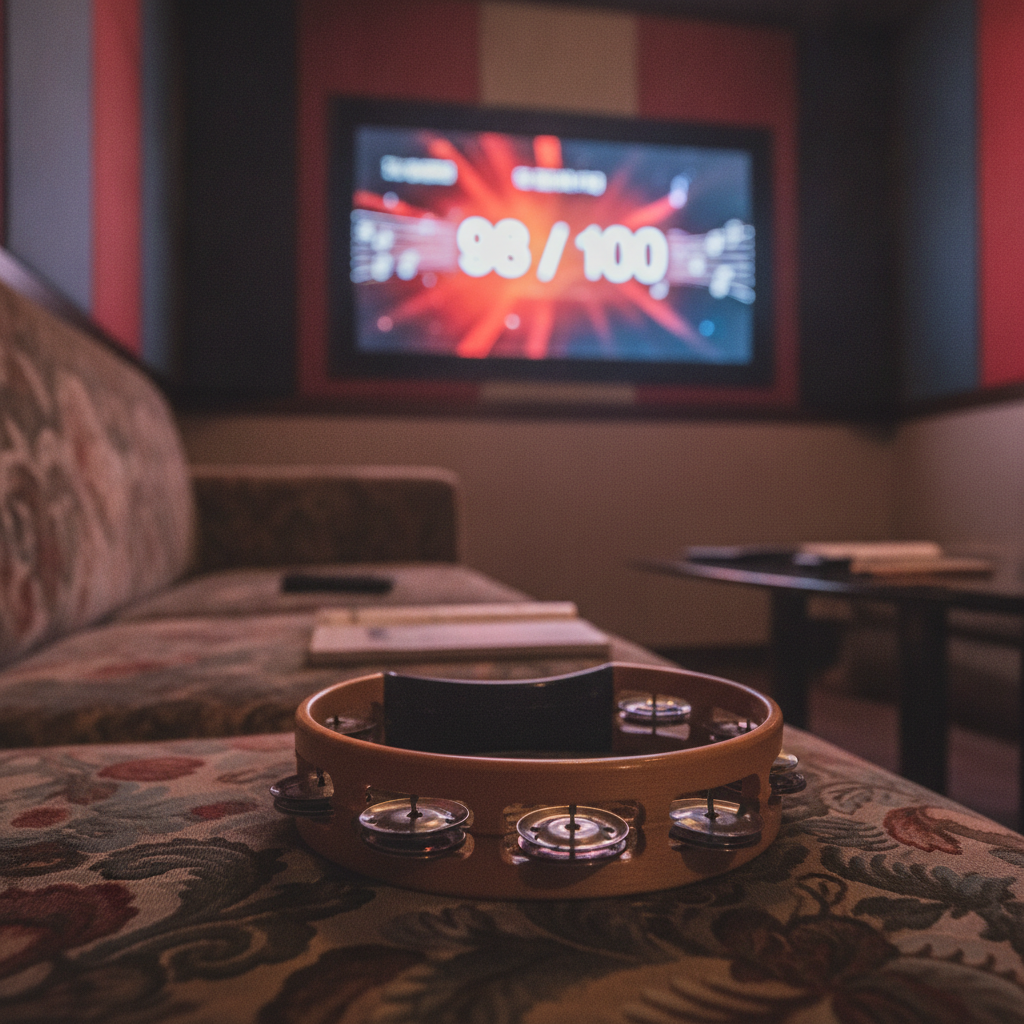
And the tambourine is not decoration. Whoever is not singing plays it. It is the mechanism that stops the room from becoming an audience.
A few things that are only obvious once someone tells you
Book less time than you think. An hour goes slowly with three people. Add time at the end if you want it — that is easy, and you may get some free.
Two microphones means duets are the default. If you are nervous about singing alone, you never have to. Pick someone and split the verses.
Nobody listens as closely as you fear. Half the room will be flipping through the book looking for their next song while you sing.
Cash is not required but it helps at coin places. Some booths take cards, some want a bill. A ₩10,000 note covers a solo session comfortably.
Late is normal. Many standard rooms are open past midnight, and in nightlife districts some run until dawn. If your dinner ends at eleven, the evening has not ended.
FAQ
Can I go to a noraebang alone?
Yes, and it is completely ordinary. The coin booths exist largely for this — single rooms, pay by the song, no staff interaction. Going alone to a standard room is also fine, though you would be paying group rates for a room by yourself.
How much does it cost?
At coin places, roughly ₩1,000 for two to four songs, which makes twenty minutes of singing cost about the price of a coffee. Standard rooms run around ₩15,000–20,000 an hour depending on the neighbourhood and the time of night. These are market rates, not fixed prices, so check the board at the entrance.
Do they have English songs?
Yes, far more than most visitors assume. Every machine has an English catalogue covering decades of Western pop, and the remote has an English search mode. If you know the song's number from the book, you do not need to type any Korean at all.
Can I drink alcohol there?
No. Korean law prohibits registered operators from selling or providing alcohol, so the fridge holds soft drinks and the snacks are things like dried squid and crisps. This is why Koreans drink at dinner first and come here afterwards. A place that serves you liquor and provides company is a different, far more expensive kind of venue.
Is there an age limit?
Adults can go any time the shop is open. For minors, the law limits access to between 9:00 and 22:00, unless a guardian is with them.
One more thing
Do not save it for a special night. The reason a noraebang sits on almost every block is that it is small — twenty minutes on the way home, ₩3,000, three songs, out. That is how most Koreans use it, and it is a much better introduction than a booked three-hour room with people you just met.
If you are building the rest of the evening: dinner and drinks come first, and how strong the soju actually is is worth knowing before you agree to a second round. If you end up out past the last train, the taxi apps are here. And for the morning after, the bathhouse is the traditional answer.
Sources
-
Music Industry Promotion Act, Article 22 (Matters to be Observed by Karaoke Establishment Operators) — National Law Information Center: https://www.law.go.kr/법령/음악산업진흥에관한법률
-
Enforcement Decree of the Music Industry Promotion Act — youth access hours (09:00–22:00): https://www.law.go.kr/법령/음악산업진흥에관한법률시행령
Prices are market observations in Seoul as of 2026 and vary by neighbourhood and time of night; they are not set by any authority.