Korea Taxi App Guide: What to Install, and How to Pay Without a Korean Phone Number

It is eleven at night in Hongdae. The subway has stopped running, the street is full of people doing exactly what you are doing, and you have finally installed the app everyone told you to install. Then the payment screen asks for a Korean identity verification you do not have, and you are back where you started, standing on a corner with a dead end on your screen.
Nothing is broken. You have hit the real barrier in Korea, which is not language and not availability. It is identity verification, and once you route around it the rest is easy.
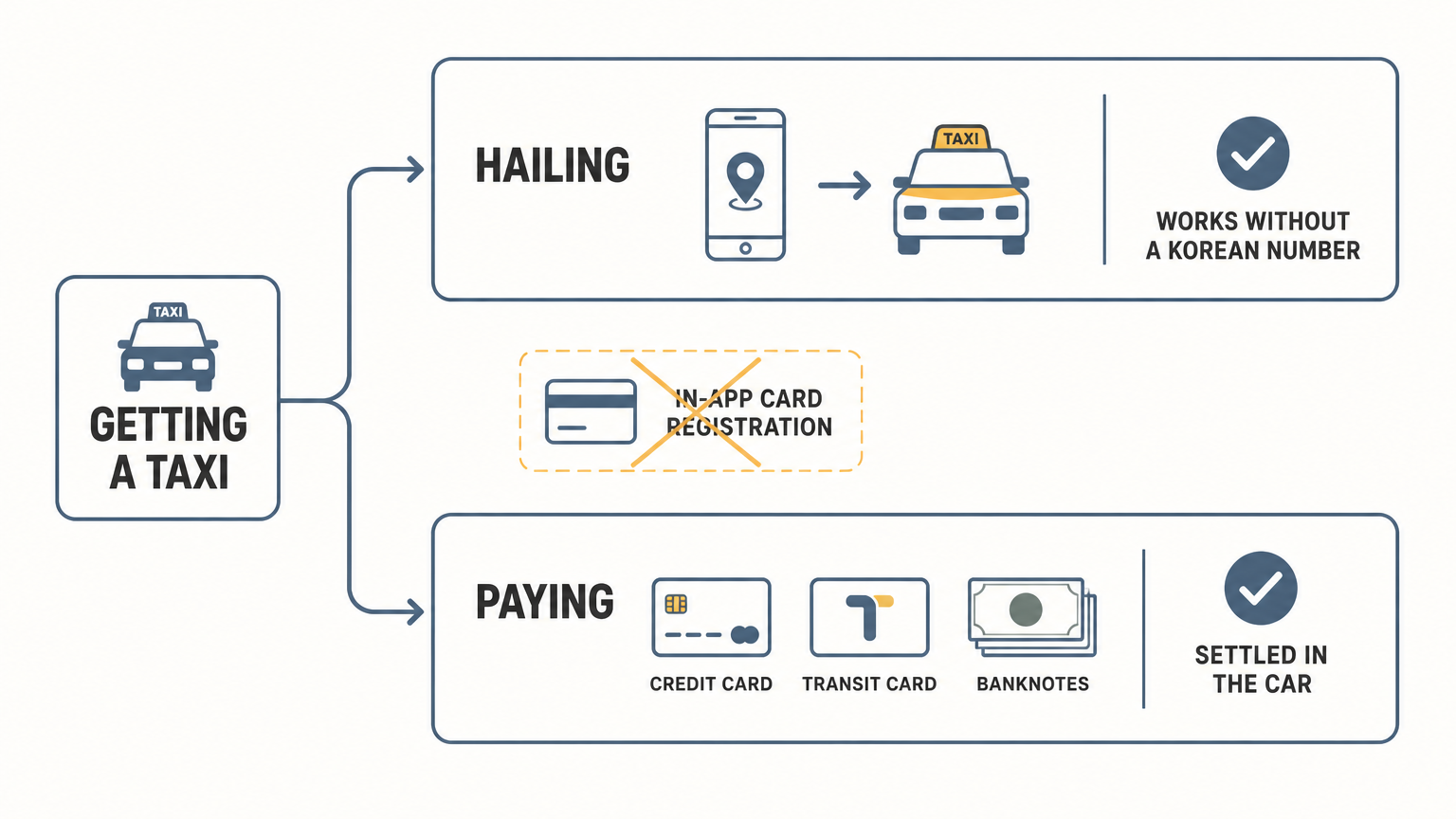
Here is the part most guides skip: you do not need in-app payment to use a Korea taxi app. You need the app to hail the car. You can pay the driver directly, the same way Koreans did for decades before any of these apps existed.
Your Three Options for a Korea Taxi App
There are three realistic ways to get a taxi in Korea, and the right answer depends on how long you are staying and how much friction you will tolerate.
| Kakao T | Uber | Street hail | |
|---|---|---|---|
| App interface in English | Yes | Yes | Not applicable |
| Sign up with an overseas number | Yes | Already have it | Not applicable |
| In-app card payment for visitors | Usually blocked | Yes | No |
| Number of cars on the road | Largest | Smaller | Whatever passes |
| Works outside big cities | Yes | Thin | Varies |
| Fare | Government-set | Government-set | Government-set |
That last row is the one people find surprising. Taxi fares in Korea are set by the local government, not by the app. A standard medium taxi costs the same whether you hailed it through an app or waved at it. There is no surge pricing on a regular taxi, and no app gives you a cheaper ride than another.

Kakao T: Sign Up Before You Fly
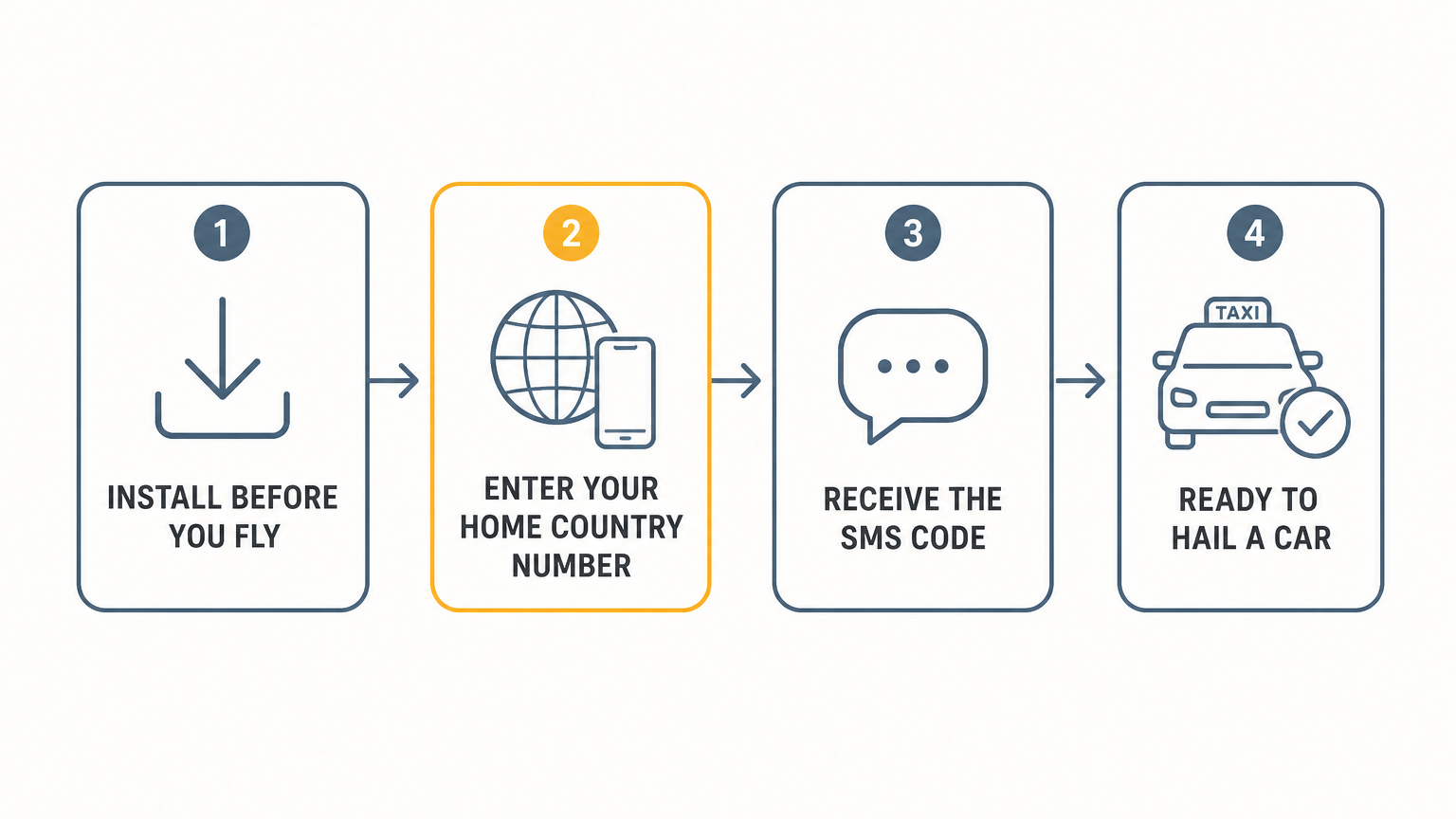
Kakao T is the app with the most cars, which matters at midnight and matters more in a suburb. You can register with an overseas mobile number, and the verification code arrives on your home phone the same way it would anywhere else.
Do this while you are still at home. Airport Wi-Fi is fine for it, but a verification SMS that has to cross networks is exactly the thing you do not want to be troubleshooting with luggage at your feet.
Where visitors get stuck is the next screen. Registering a foreign card for automatic in-app payment generally runs into Korean identity verification, which needs a domestic phone number tied to your name. If the app pushes you toward that step, you can decline it and keep using the account. Hailing still works.
How to Actually Pay
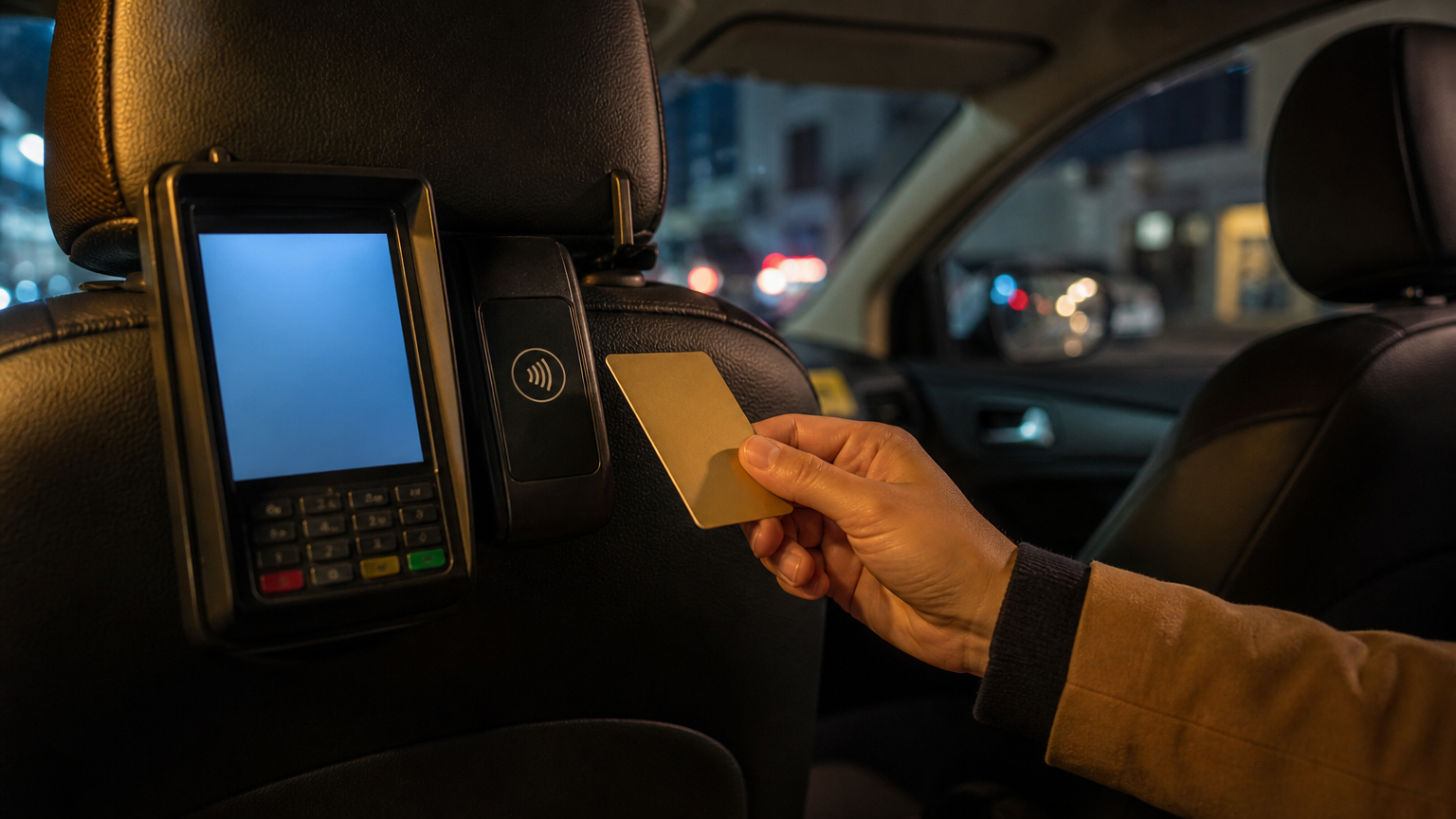
This is where the anxiety lives, and it should not. Every licensed taxi in Korea takes payment in the back seat, and the terminal is mounted where you can reach it.
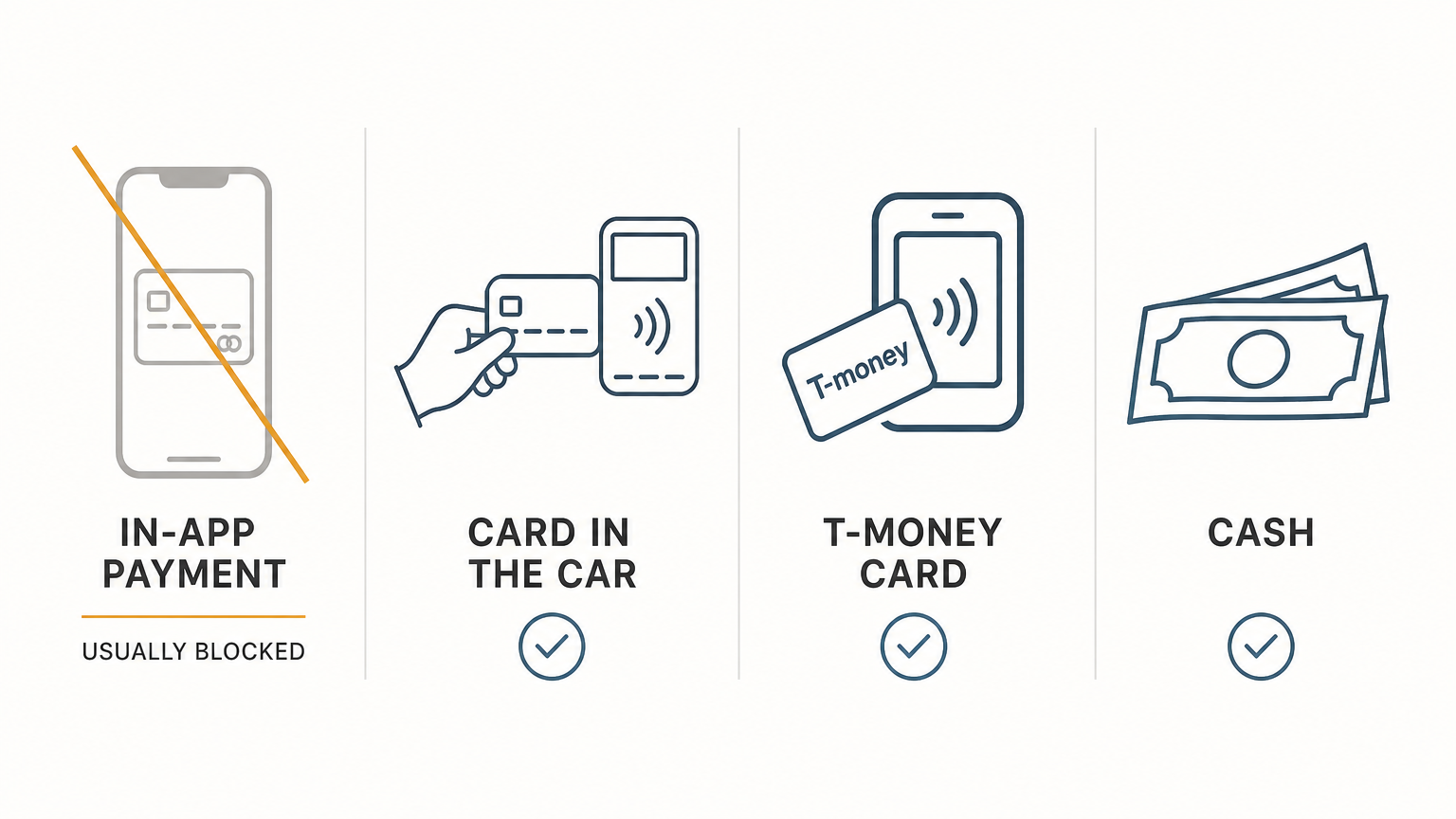
You have three ways to settle a fare without in-app payment.
Pay by card. Korean taxis accept international credit cards through the in-car terminal. Hand it over or tap it yourself. This is the default for most visitors and the least fuss.
Pay with a T-money card. The same rechargeable transit card you use for the subway and buses works in taxis. Tap it on the reader when you arrive. If you already bought one for the subway, you already have a taxi payment method.
Pay cash. Always works, and drivers carry change. Keep some 10,000 won notes for this, especially late at night.
Say nothing at the start of the ride about how you plan to pay. Just get in, get where you are going, and settle at the end.
What the Ride Actually Costs
Seoul publishes its taxi fares, and knowing the structure means you can sanity-check the meter instead of wondering.
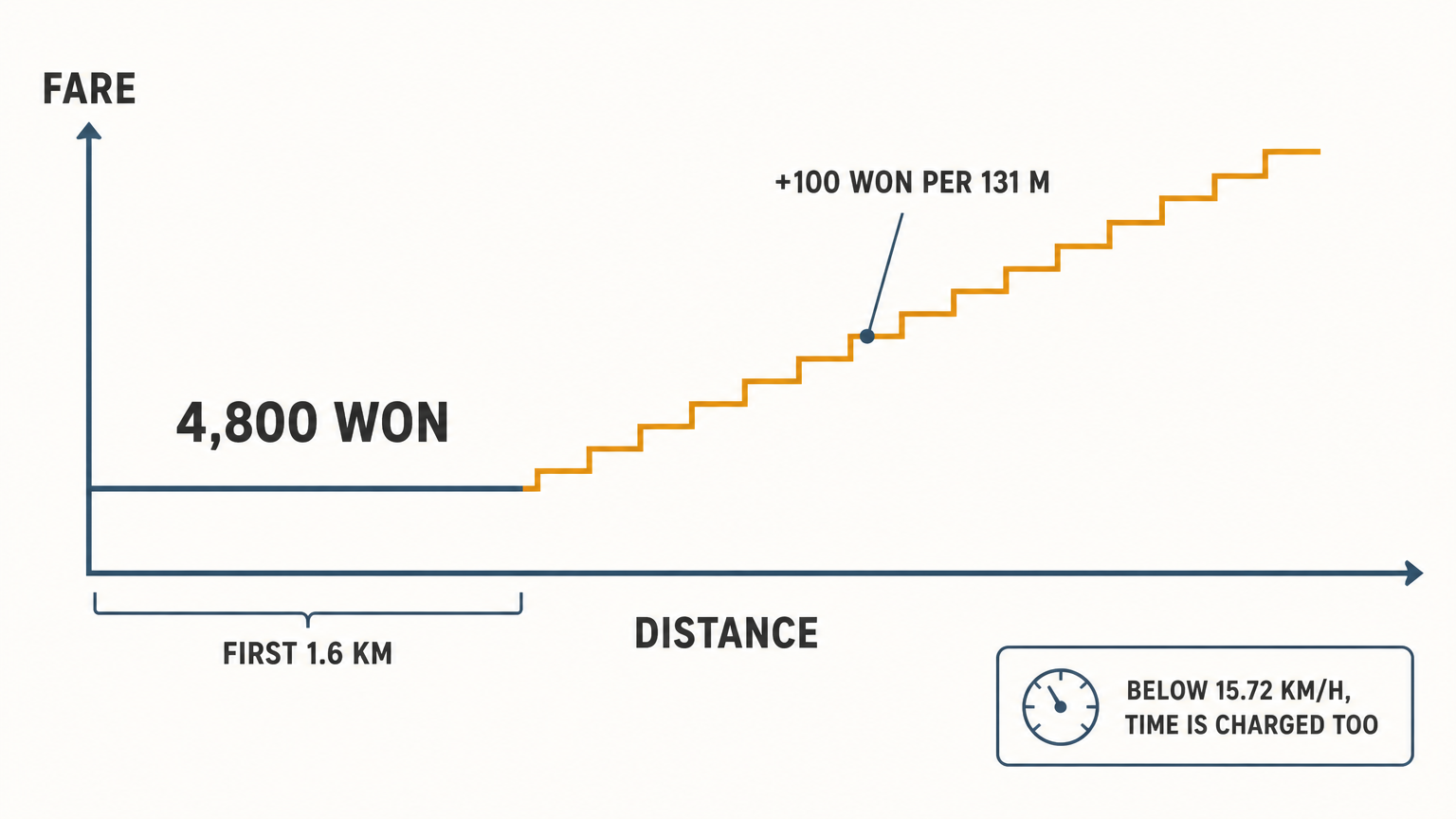
A medium taxi starts at 4,800 won covering the first 1.6 kilometres, then adds 100 won per 131 metres. When traffic drops below 15.72 kilometres per hour the meter switches to charging by time as well as distance, which is why a short trip through a jam can cost more than a longer one on an open road.
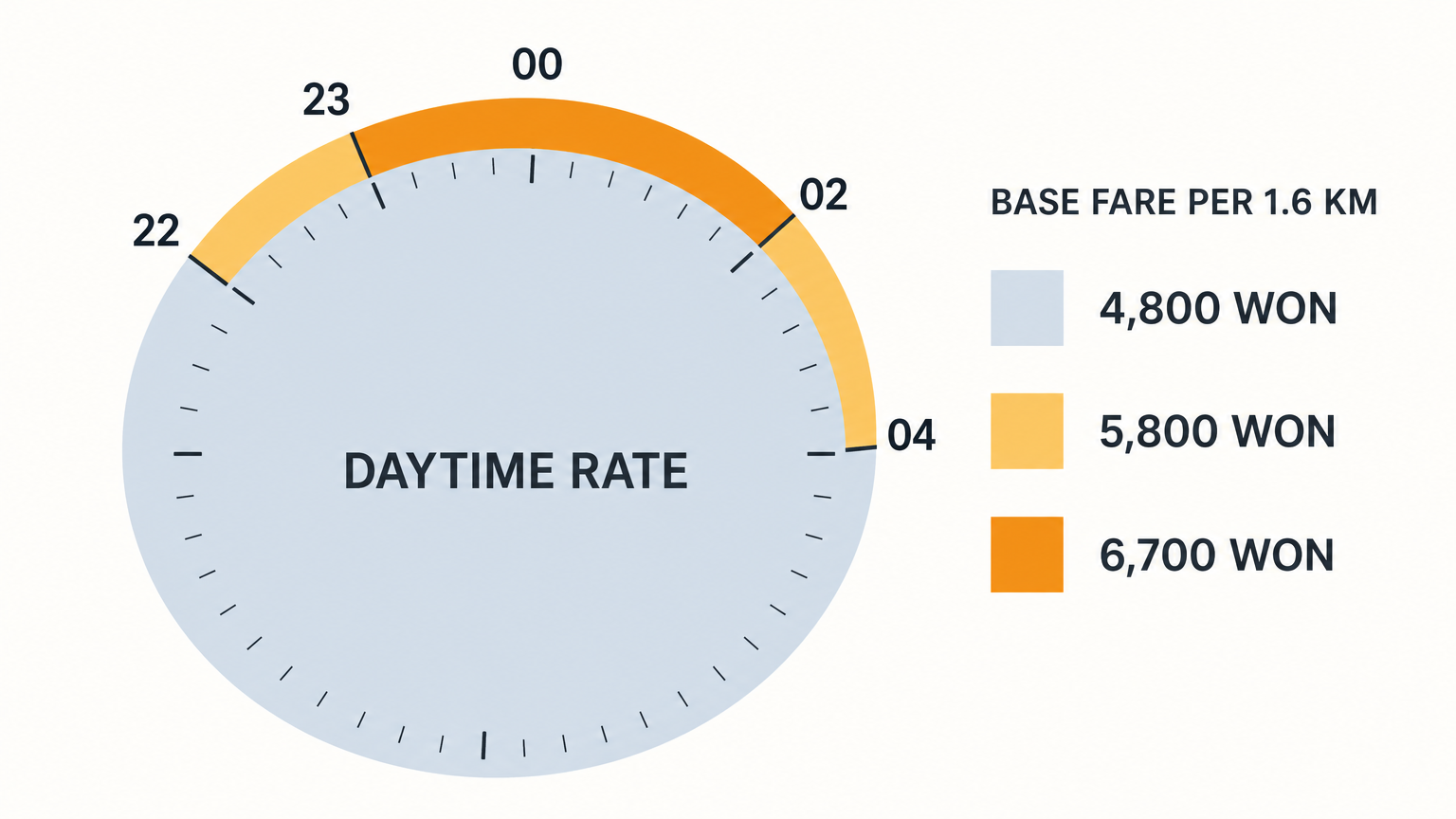
Late at night the base fare changes three times, and the boundaries are not where most visitors assume.
| Time | Base fare | Distance increment |
|---|---|---|
| Daytime | 4,800 won / 1.6 km | 100 won / 131 m |
| 22:00 to 23:00 and 02:00 to 04:00 | 5,800 won / 1.6 km | 120 won / 131 m |
| 23:00 to 02:00 | 6,700 won / 1.6 km | 140 won / 131 m |
Crossing out of Seoul into a city outside the integrated service zone adds a further 20 percent. If you are heading to a suburb after midnight, both surcharges apply, and the total can be well above what the same trip costs at lunchtime.
None of this is the app's doing, and none of it is a scam. It is published rates, applied by a meter.
Telling the Driver Where You Are Going
The app handles this when you set a destination, so most of the time you say nothing. It matters on a street hail.
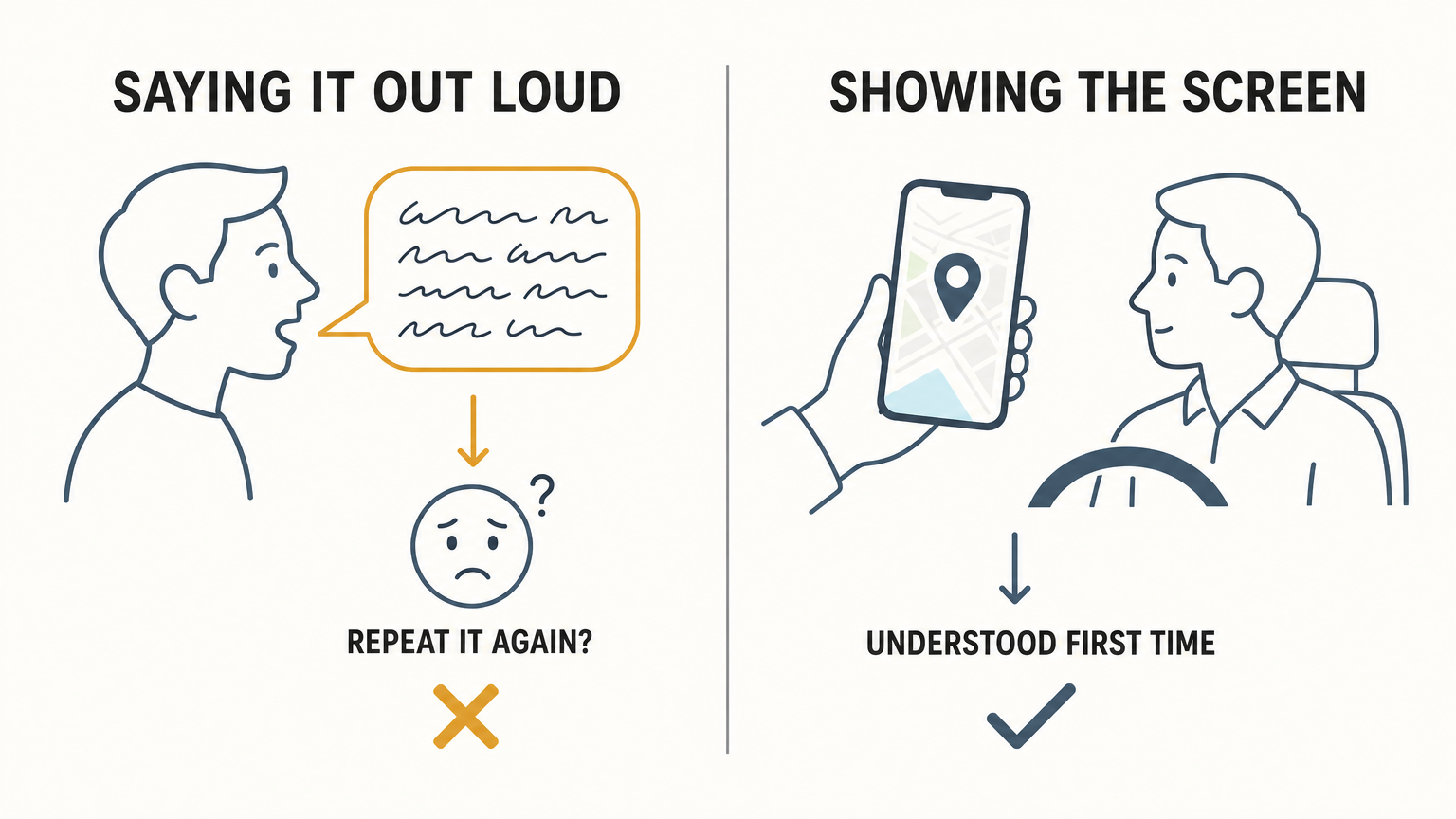
Do not read a romanized address out loud. Korean addresses romanize inconsistently, and a driver hearing an unfamiliar approximation of a street name will ask you to repeat it while the meter is running. Show the screen instead. Pull up the destination in a Korean map app, turn the phone around, and point. That works with every driver, every time, and requires no shared language at all.
If you are going somewhere well known, the Korean name spoken plainly usually lands. Anything smaller than a landmark is a screen you show, not a phrase you attempt.
Uber Works Here, Differently Than You Expect
Uber operates in Korea through UT, a joint venture it formed with T Map Mobility in 2021 and in which it holds the majority stake. The practical effect for a visitor is good news: your existing Uber app connects to the local network without a separate download or a new account, and your card is already on file.
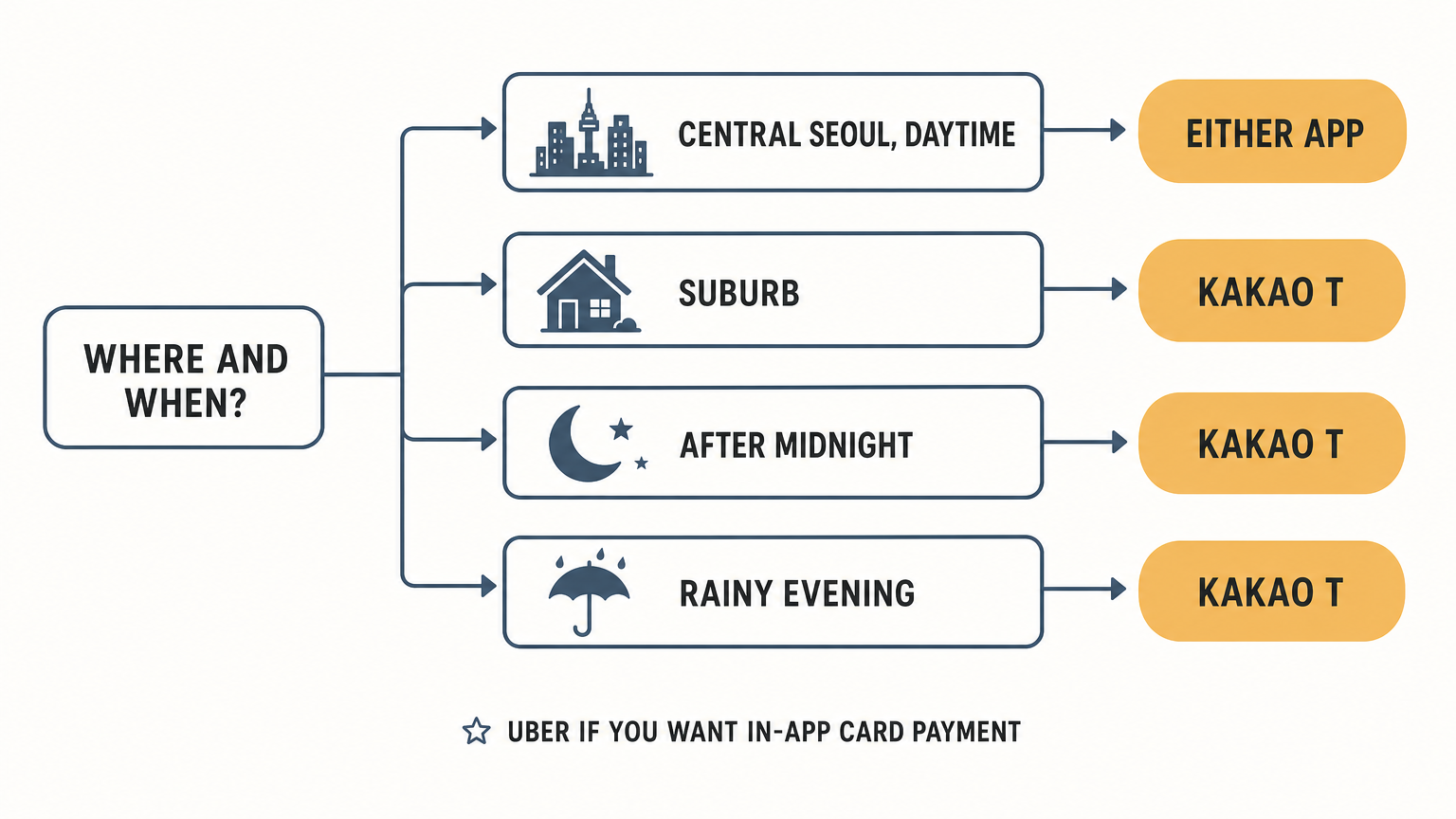
What you give up is density. UT dispatches the same government-regulated taxis at the same fares, but from a smaller pool of drivers. In central Seoul at a reasonable hour that difference is invisible. In a suburb, on a rainy Friday, or at two in the morning, it is the difference between a car in four minutes and no car at all.
The sensible setup is both. Uber for the convenience of a card that already works, Kakao T for the nights when you need whatever is nearest.
The Things Nobody Warns You About
Tipping is not expected and can confuse a driver. The meter figure is the figure.
Front seat or back seat is your choice, and solo passengers commonly ride in front. Nobody reads anything into it either way.
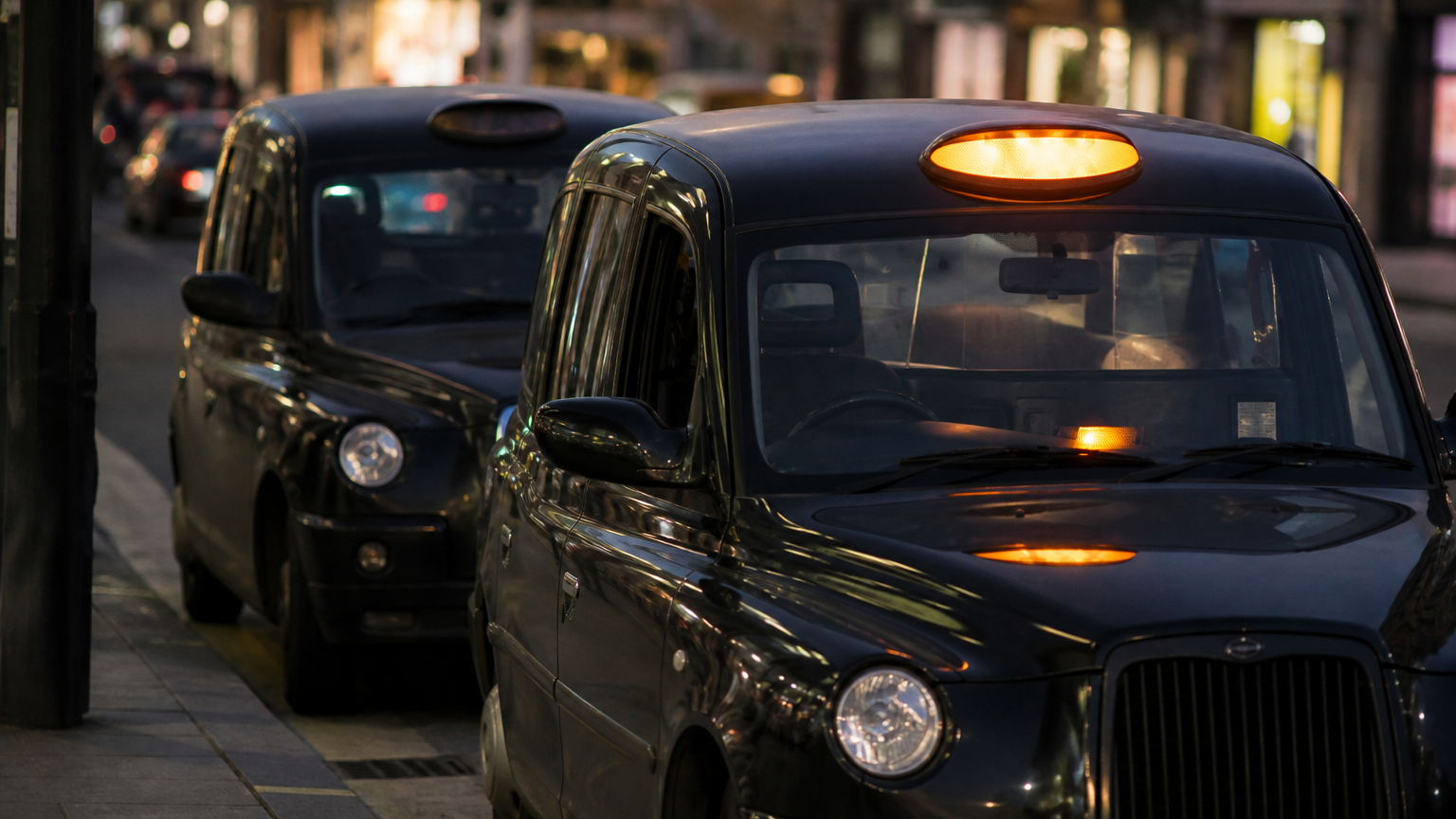
A taxi with its roof light on and a red or amber sign in the windscreen is empty and looking. One with the light off is taken. This is worth learning because it saves you from waving at cars that were never going to stop.
Some drivers will decline a very short trip during a shift change. It is not personal. Walk twenty metres and try the next one, or use the app, which routes around the problem entirely.
FAQ
Can I use a Korea taxi app without a Korean phone number?
Yes. Kakao T accepts an overseas mobile number for account verification, and the code arrives on your home phone. The limitation is on registering a foreign card for automatic in-app payment, not on hailing. You can call a car and pay the driver directly.
Can I register a foreign credit card in Kakao T?
Usually not, because the card registration flow asks for Korean identity verification that requires a domestic phone number in your name. If the app prompts you for it, decline and continue. Pay by card, T-money, or cash at the end of the ride instead.
Does Uber work in Korea?
Yes, through its local joint venture UT. Your existing Uber app connects automatically, so in-app payment with your usual card works. The driver pool is smaller than Kakao T's, which shows up as longer waits in suburbs and at peak times.
Is one taxi app cheaper than another?
No. Fares are set by local government and applied by the meter, so a standard taxi costs the same regardless of how you hailed it. Optional premium vehicle categories cost more, but that is a different class of car, not a different price for the same ride.
Do I tip a taxi driver in Korea?
No. Tipping is not part of the culture here and offering one tends to create confusion rather than goodwill. Pay the metered fare.
How much more expensive is a late-night taxi?
The base fare rises to 5,800 won between 22:00 and 23:00 and again between 02:00 and 04:00, and to 6,700 won between 23:00 and 02:00, with distance and time charges rising alongside it. Leaving Seoul for a city outside the integrated zone adds 20 percent on top.
Before Your Trip
Install Kakao T at home and finish the phone verification there, where a cross-border SMS is a minor annoyance rather than a crisis. Leave Uber on your phone as the backup with payment already sorted. Buy a T-money card at the airport or any convenience store, because it covers subway, bus, and taxi with one tap.
Then stop thinking about it. A taxi in Korea is a metered, licensed, card-accepting ride, and the only thing standing between you and one was a verification screen you were allowed to skip.
Sources
-
Seoul Metropolitan Government, Seoul taxi fares — https://news.seoul.go.kr/traffic/archives/1659
-
The Korea Herald, reporting on Uber's Korean joint venture UT — https://www.koreaherald.com/article/10587997
-
Korea Tourism Organization (VISITKOREA) — https://english.visitkorea.or.kr