Grocery Shopping in Seoul: The Big Supermarket Closes Twice a Month, and Your District Picks the Days

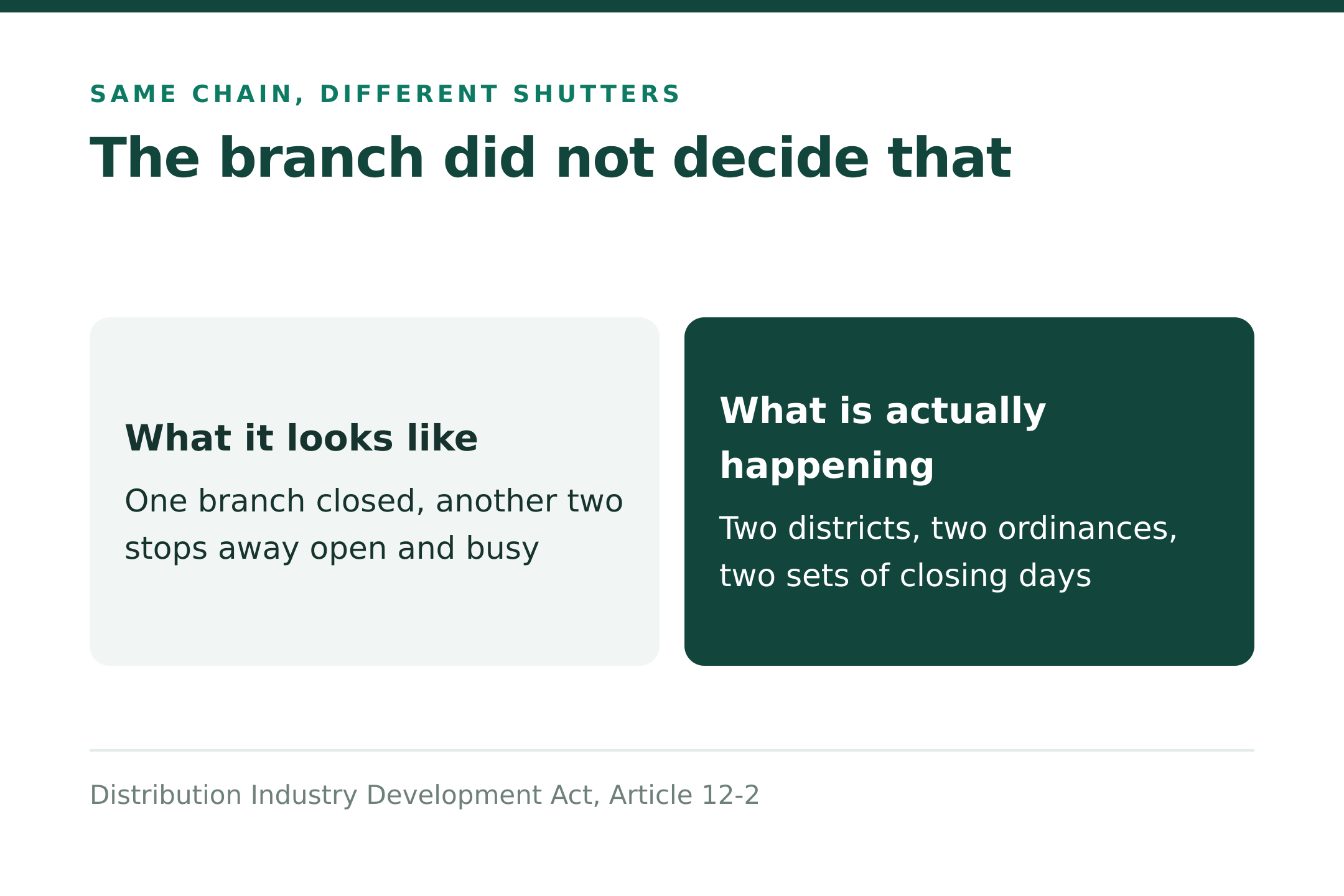
Two branches of the same chain can close on two different days. Neither branch decided that. The district office did, and it did it one district at a time.
A large store in Korea can be ordered to shut two days every month, and can be barred from opening between midnight and 10 a.m. This article covers which shops the rule catches, why the closing day changes when you cross a district line, the exception that keeps some big stores trading, and what is open when yours is not.
People who move here usually work out the chains within the first fortnight. The large-format stores, the smaller branded supermarkets under the same corporate roof, the convenience store on the corner. After that, grocery shopping settles into a routine and stops being something you think about.
Then one Sunday the shutters are down, and the branch two subway stops away is open and busy. Nothing on the door explains it in a language you read, and the obvious conclusion, that this particular branch is having a bad week, is wrong.
Today I want to go through the statute that produces that Sunday, because once you know which lever it pulls, the pattern stops being random.
The rule only catches stores above a certain size
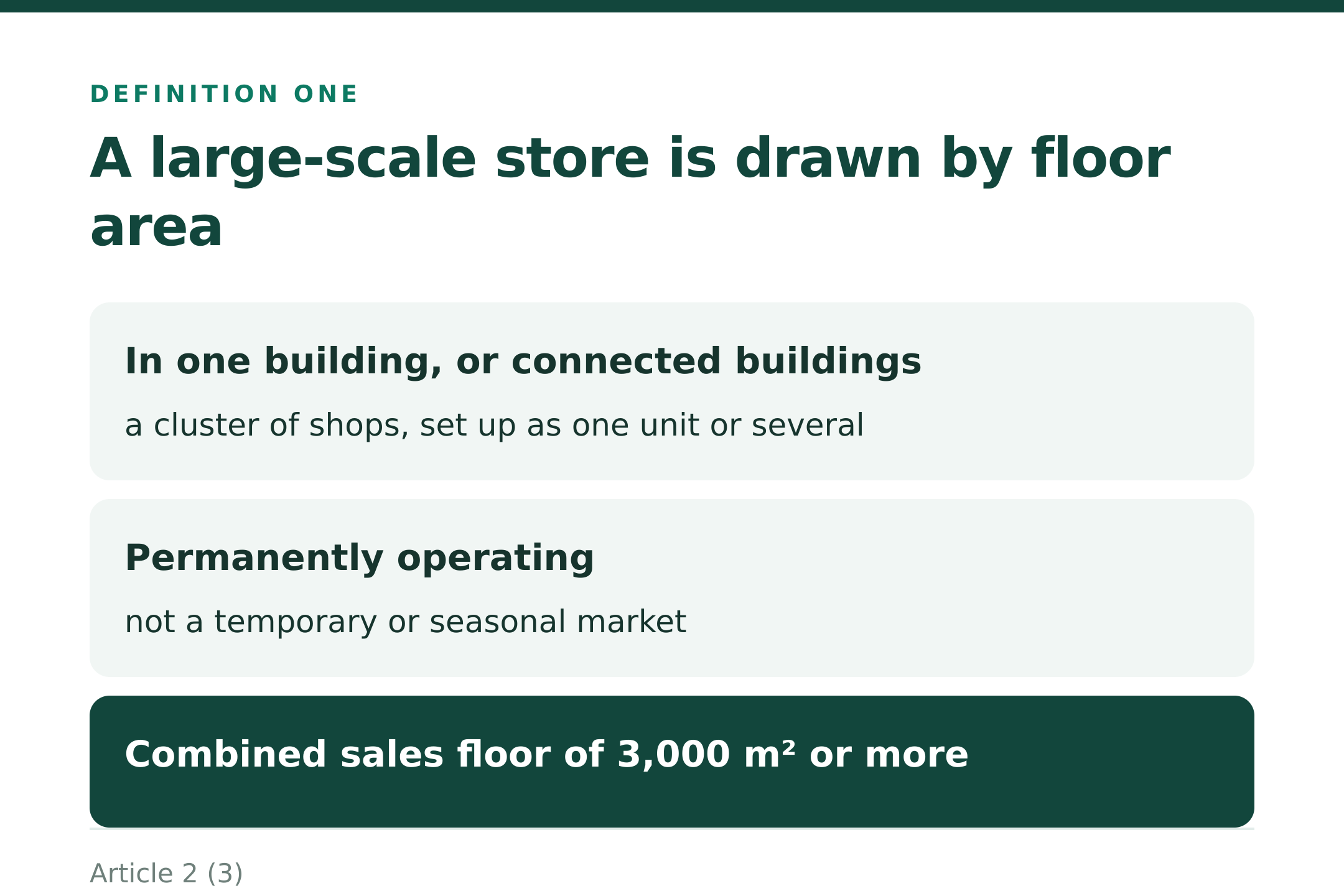
The Distribution Industry Development Act draws its line by floor area. A large-scale store is a cluster of shops in one building, or in connected buildings, that is permanently operating and has a combined sales floor of 3,000 square metres or more.
There is a second category, and it is the one that surprises people. A quasi-large-scale store is a shop directly operated by a company that runs a large-scale store, or by an affiliate of one, or run by such a company as a chain or franchise operation.
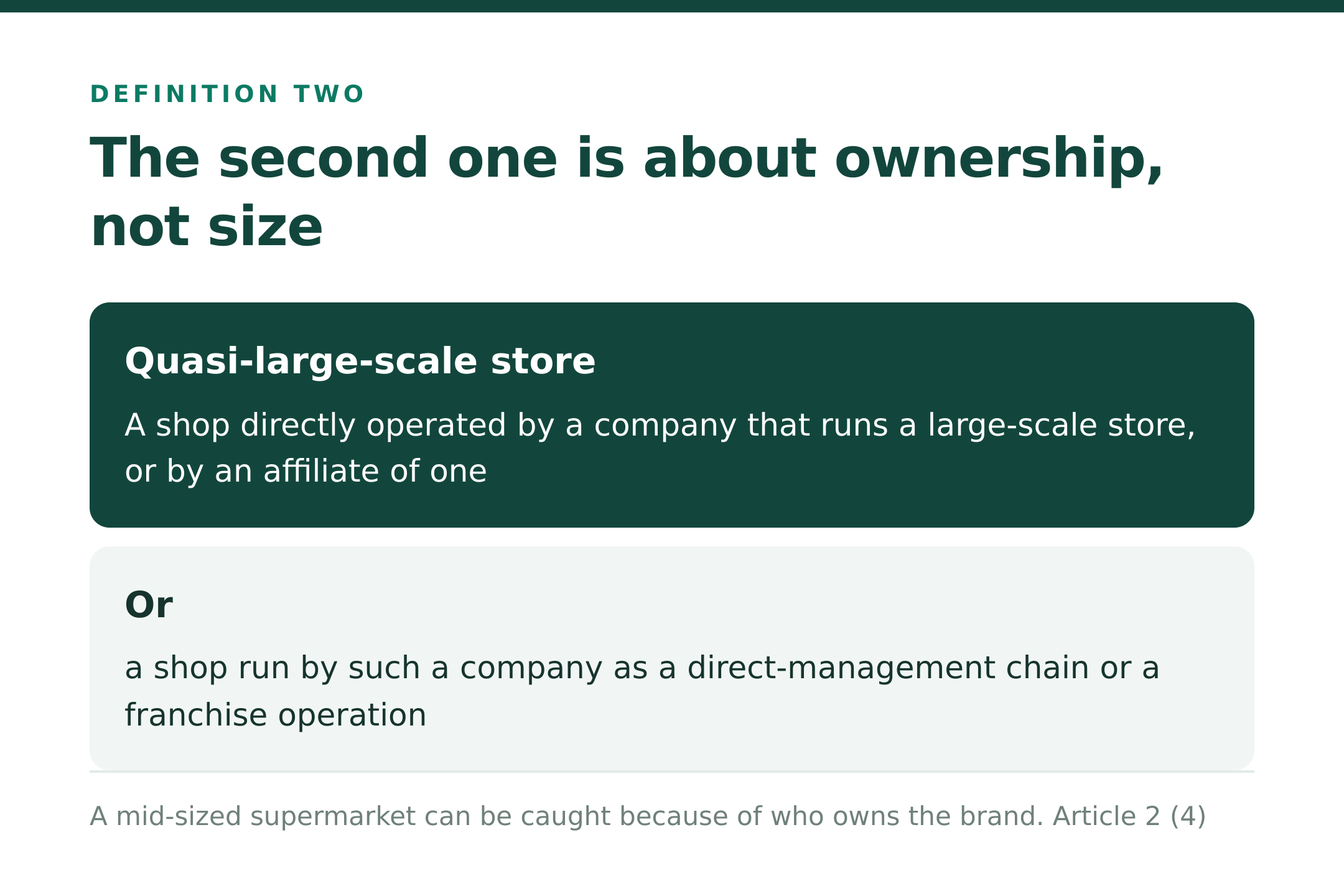
That second definition is about ownership, not size. A mid-sized neighbourhood supermarket can fall inside it because of who owns the brand, while an independent shop of the same footprint falls outside it entirely.
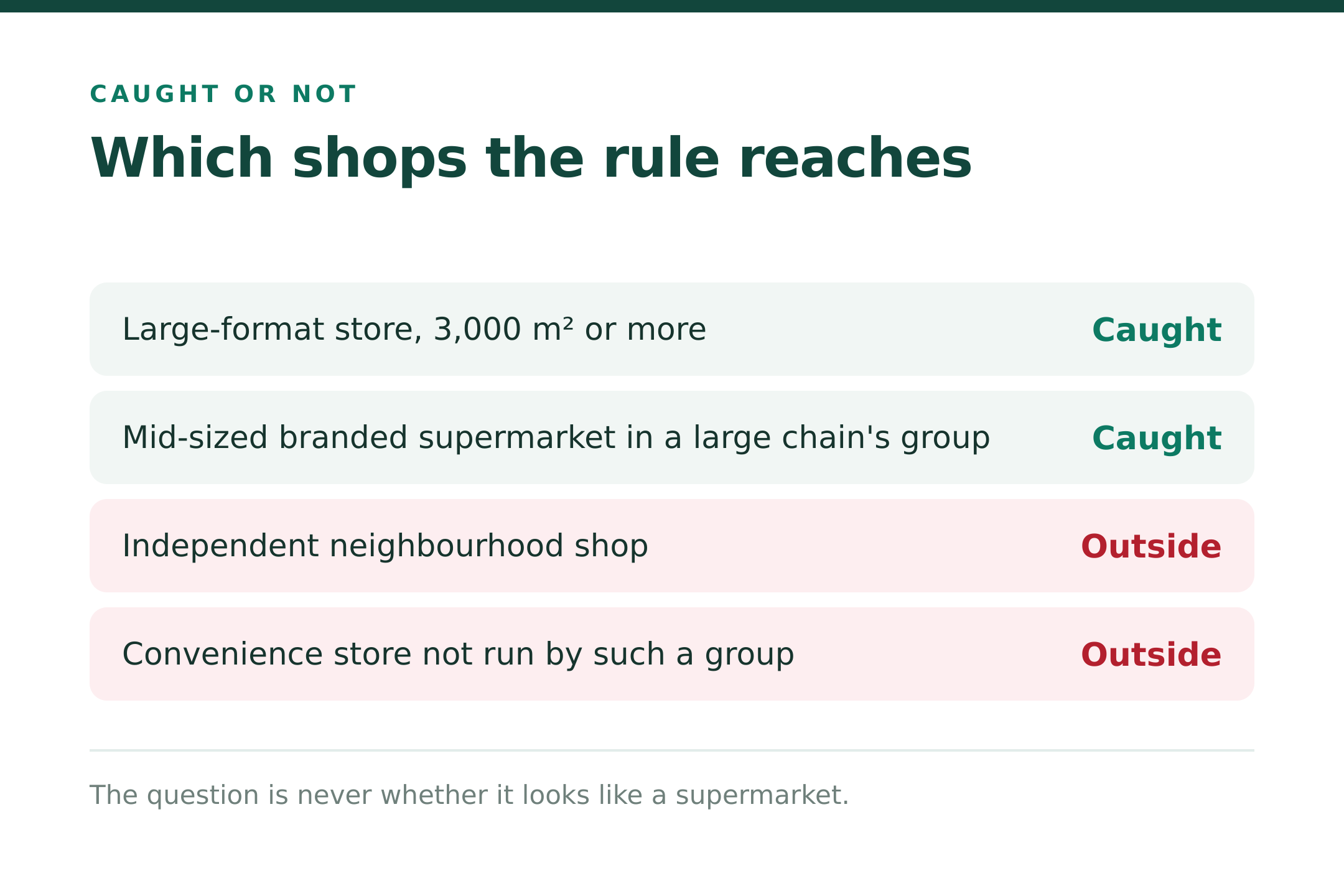
| Kind of shop | Caught by the rule? |
|---|---|
| Large-format store, 3,000 square metres or more | Yes, as a large-scale store |
| Mid-sized branded supermarket owned by a large chain's group | Yes, as a quasi-large-scale store |
| Independent neighbourhood shop | No |
| Convenience store not run by such a group | No |
So the question is never whether this is a supermarket. It is whether the shop sits inside one of those two definitions.
Then what is the district allowed to do about it?
Two days a month, and a window before 10 a.m.
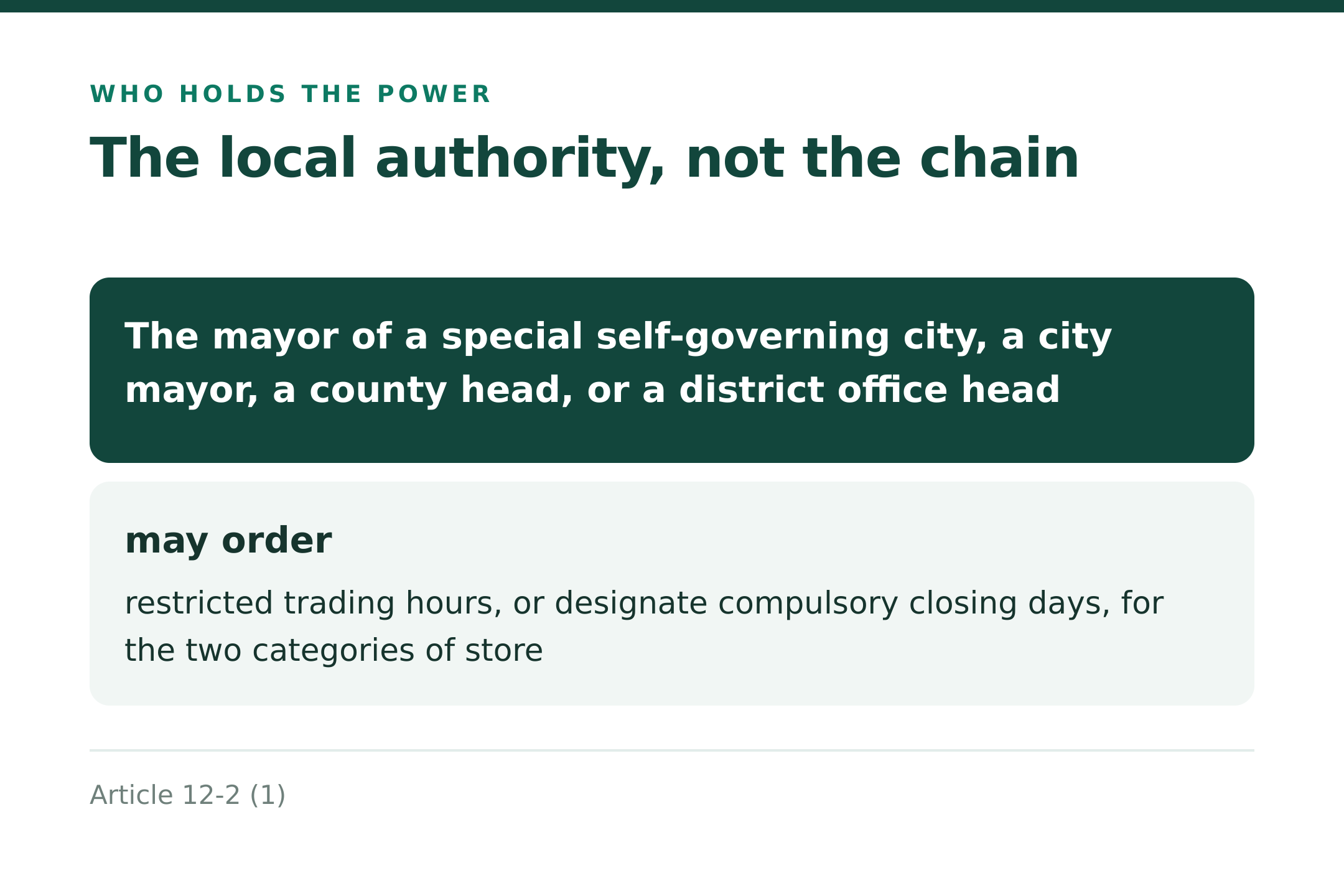
The Act gives the power to the head of the local authority, meaning the mayor of a special self-governing city, or a city mayor, county head, or district office head. They may order restricted trading hours, or designate compulsory closing days, for the two categories above.
The two powers have different shapes, and it is worth separating them.
| Power | What the Act allows |
|---|---|
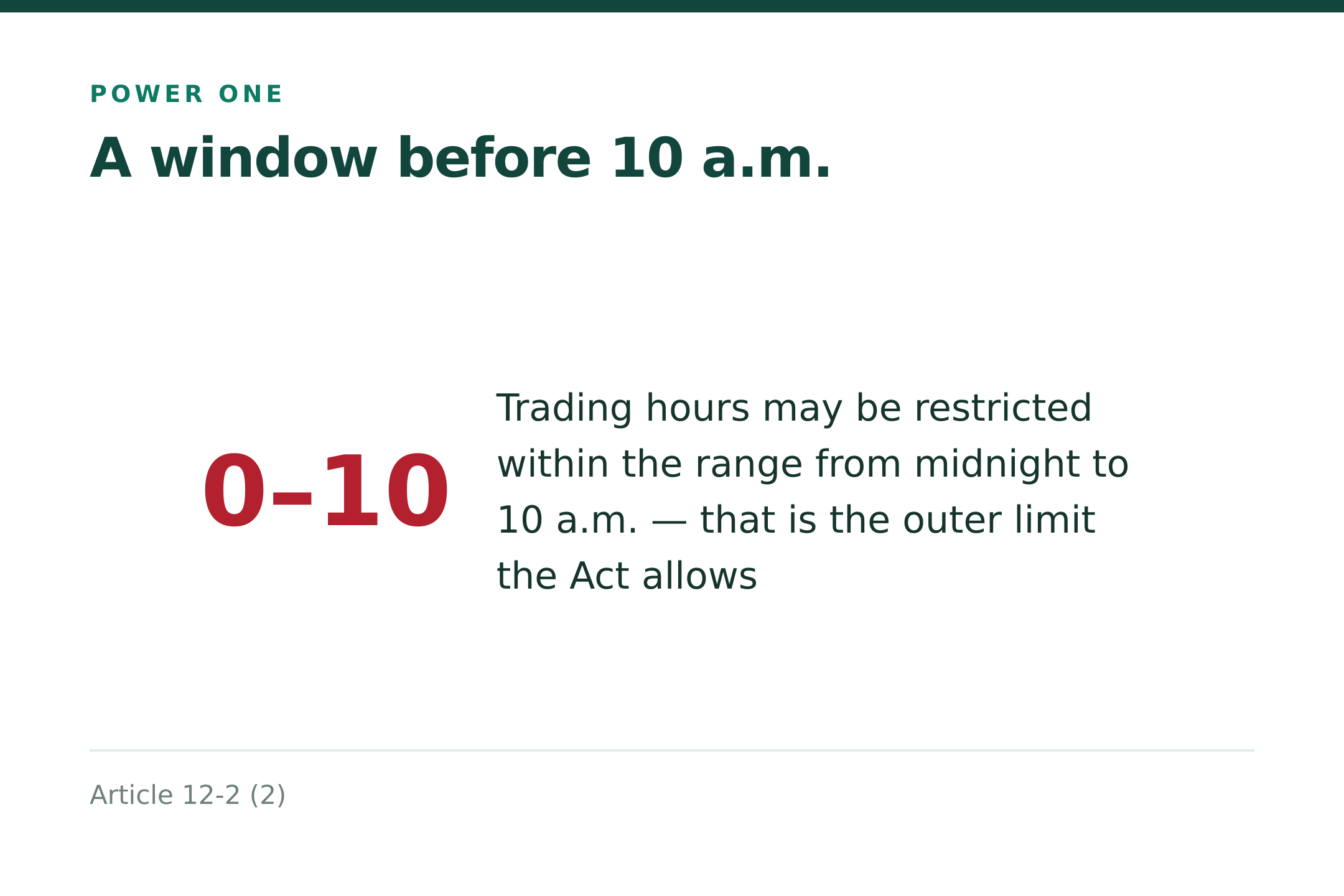
| Restricted hours | A restriction within the range from midnight to 10 a.m. |
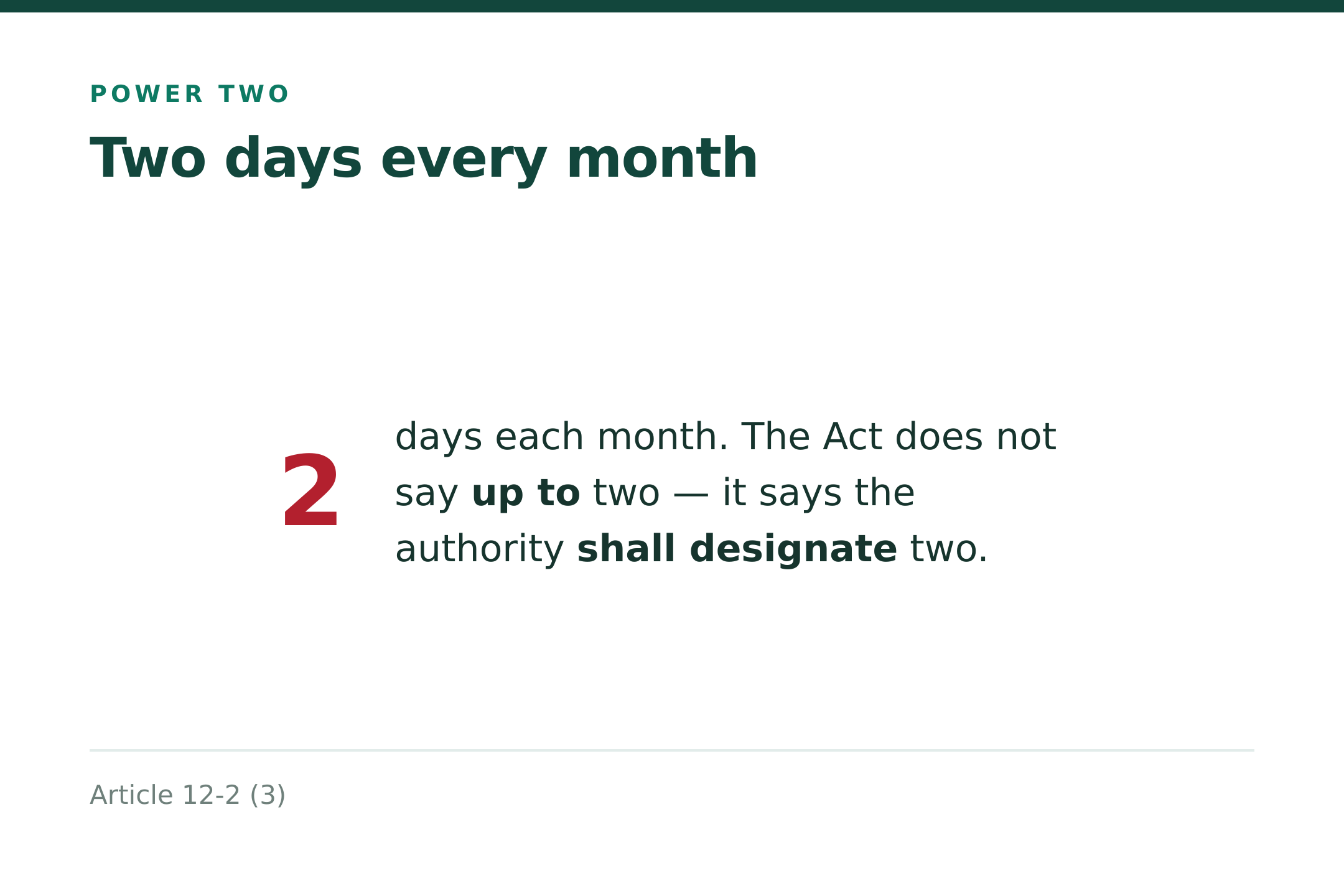
| Compulsory closing | Two days each month, which the authority shall designate |
Read the second row again. The Act does not say the authority may designate up to two days. It says the authority shall designate two days a month.
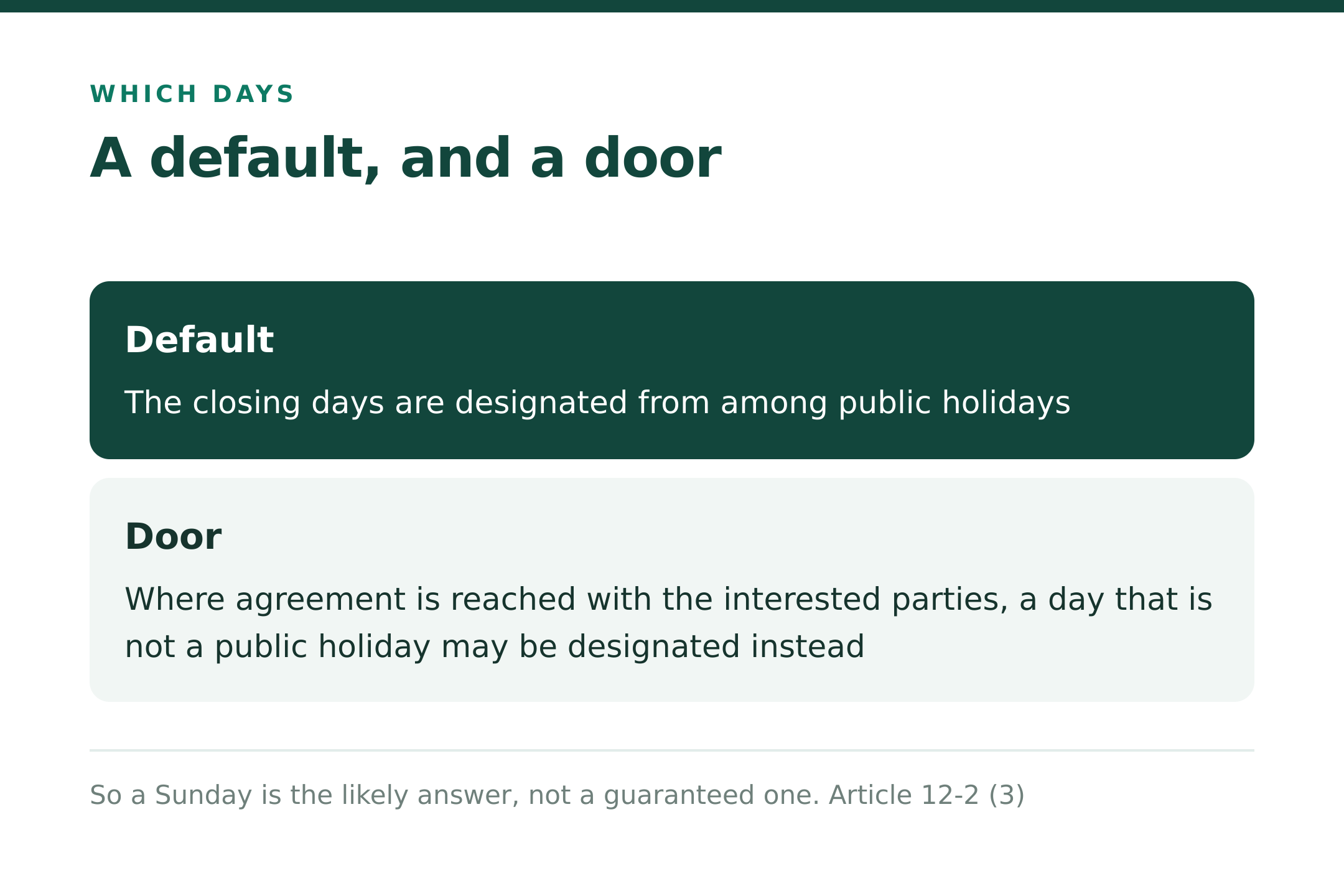
On which days, the Act sets a default and then opens a door. The closing days are to be designated from among public holidays. But where agreement is reached with the interested parties, a day that is not a public holiday may be designated instead.
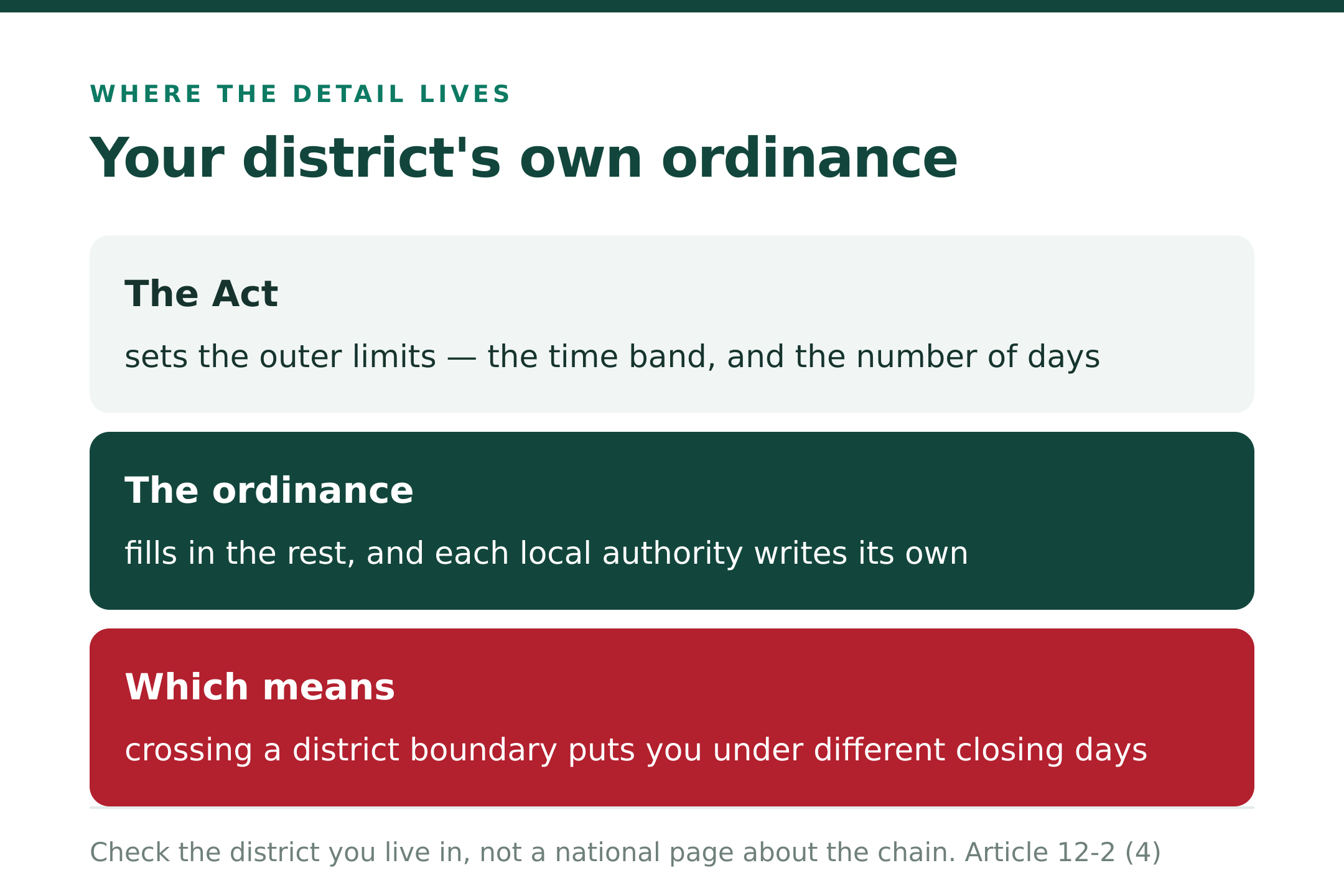
That is the whole explanation for the two branches with different shutters. The statute hands the choice down, and the detail is then settled by the local authority's own ordinance. Cross a district boundary and you are under a different ordinance.
So the practical instruction is short: the closing days for your nearest large store are a matter of local ordinance, and the reliable place to check is the district you actually live in, not a national page about the chain.
Is there any large store the rule leaves alone?
One exception, and what to do on the day
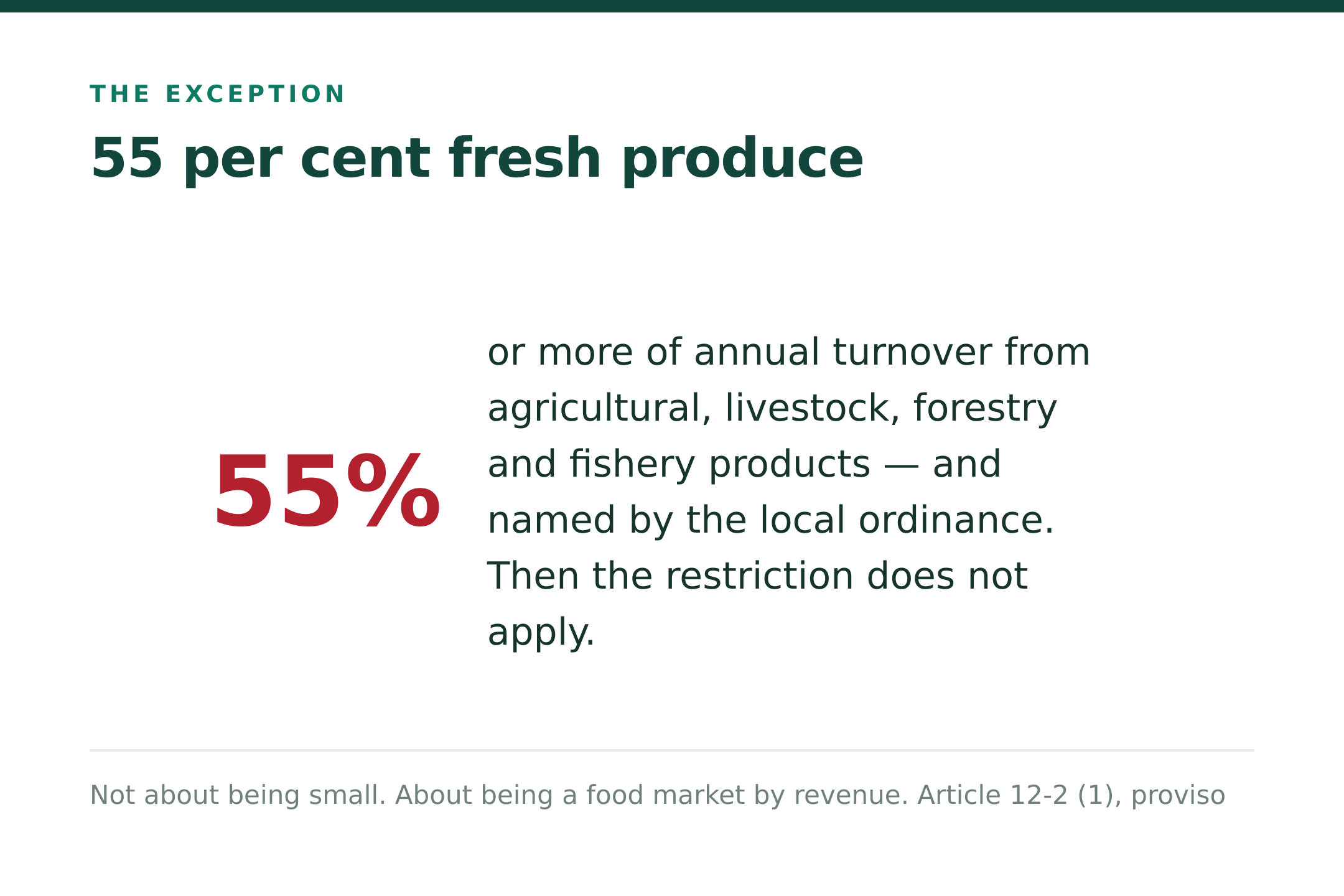
There is an exception written into the same paragraph, and it turns on what the store sells. Where a large-scale store's annual turnover is 55 per cent or more agricultural, livestock, forestry and fishery products, and the local ordinance designates it, the restriction does not apply.
In other words the exception is not about being small. It is about being a food market by revenue, and it still needs the ordinance to name it.
Which brings up the alternative that was always there. Traditional markets are not large-scale stores under these definitions, and their hours run on their own logic, one that is considerably less uniform than a chain's. Two of the big ones have their opening hours pulled apart in Gwangjang Market and Namdaemun Market.
For the smaller things, meaning kitchen items, storage boxes, the stuff you buy once and then buy again, Daiso sits outside these definitions as well, so a closed-supermarket Sunday does not take it with it.
None of this makes grocery shopping complicated. It just means the calendar has two dates on it that are set by your district office rather than by the shop, and it is worth finding out which two before you plan a big shop around them.
Frequently Asked Questions
Why is one branch open when another is closed?
Because the closing days are fixed by the local authority's ordinance, and authorities set their own. Two branches in different districts are answering to different ordinances.
Are the closing days always Sundays?
The Act says the days are to be designated from among public holidays, but it also allows a non-holiday to be designated where agreement is reached with the interested parties. So a public holiday is the default, not a guarantee.
Does the rule apply to convenience stores?
Only if the shop falls within the quasi-large-scale store definition, which turns on whether it is directly operated by, or a chain operation of, a company running a large-scale store or its affiliate. An ordinary independent shop is outside the rule.
Can a large store be exempt?
Yes. Where 55 per cent or more of annual turnover comes from agricultural, livestock, forestry and fishery products and the local ordinance so provides, the restriction does not apply to that store.
In short
Grocery shopping here is shaped by one statute more than by any chain's policy. Stores of 3,000 square metres or more, and smaller shops owned or franchised by the same corporate groups, can be ordered to close two days a month and can be kept shut between midnight and 10 a.m.
The days themselves are set locally. Public holidays are the default, a non-holiday is possible by agreement, and a store that earns 55 per cent or more of its turnover from fresh produce can be exempted by ordinance. Check the district you live in, and keep a market and a variety store on the list for the days the shutters are down.
Sources
-
Distribution Industry Development Act, Article 2 (definitions) : available at the Korean Law Information Center
-
Distribution Industry Development Act, Article 12-2 (restrictions on business hours of large-scale stores) : available at the Korean Law Information Center