Dongdaemun Market: Two Markets Share the Name, and They Never Share an Hour

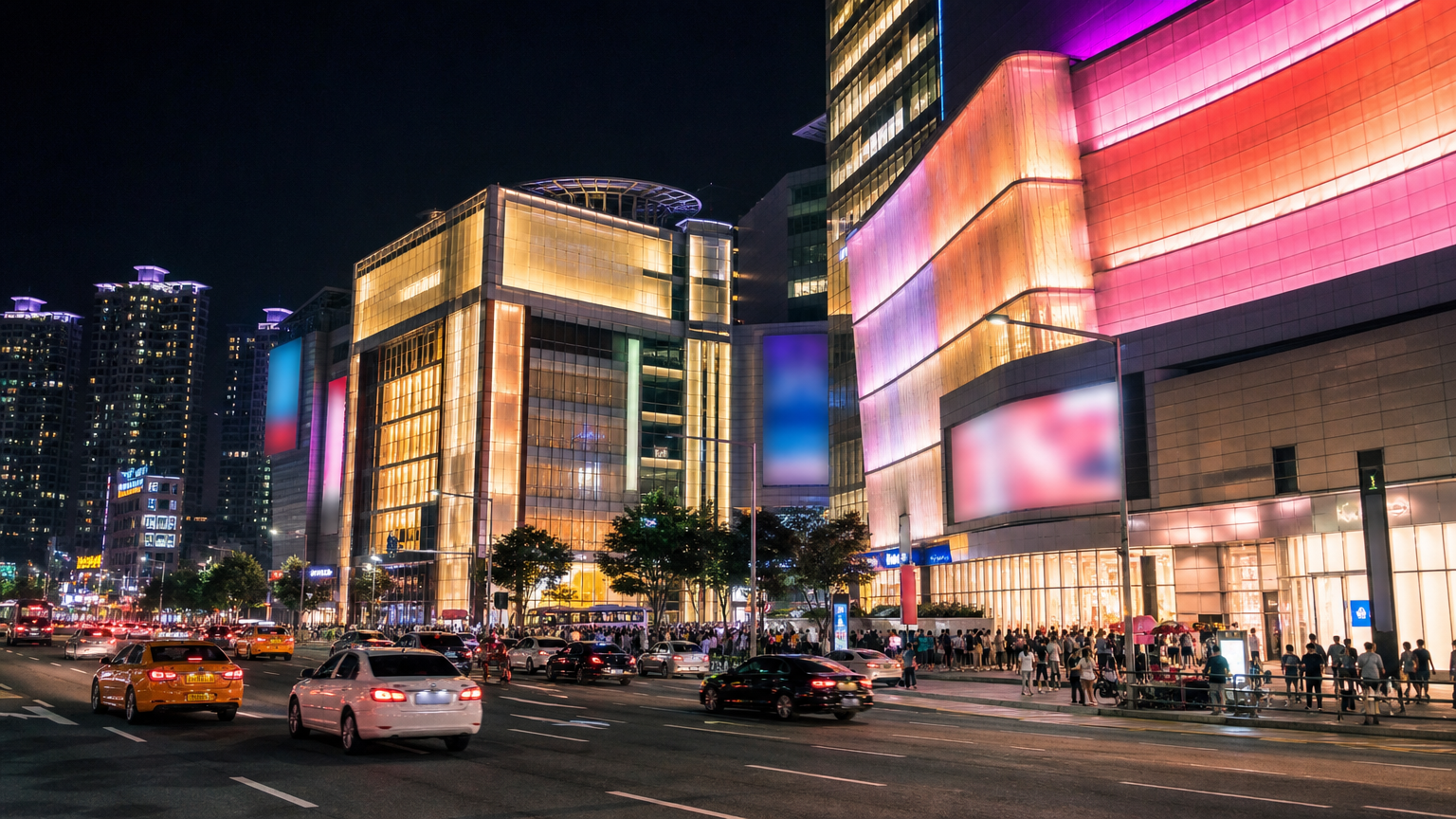
Arrive at Dongdaemun at three in the afternoon and you find a shopping district. Arrive at three in the morning and you find a different one. Same buildings, same block.
The second one is not an after-hours version of the first. It is the business the first one sits on top of, and almost nothing written for visitors explains that the two barely overlap.
The designation is for a market that does its real work at night
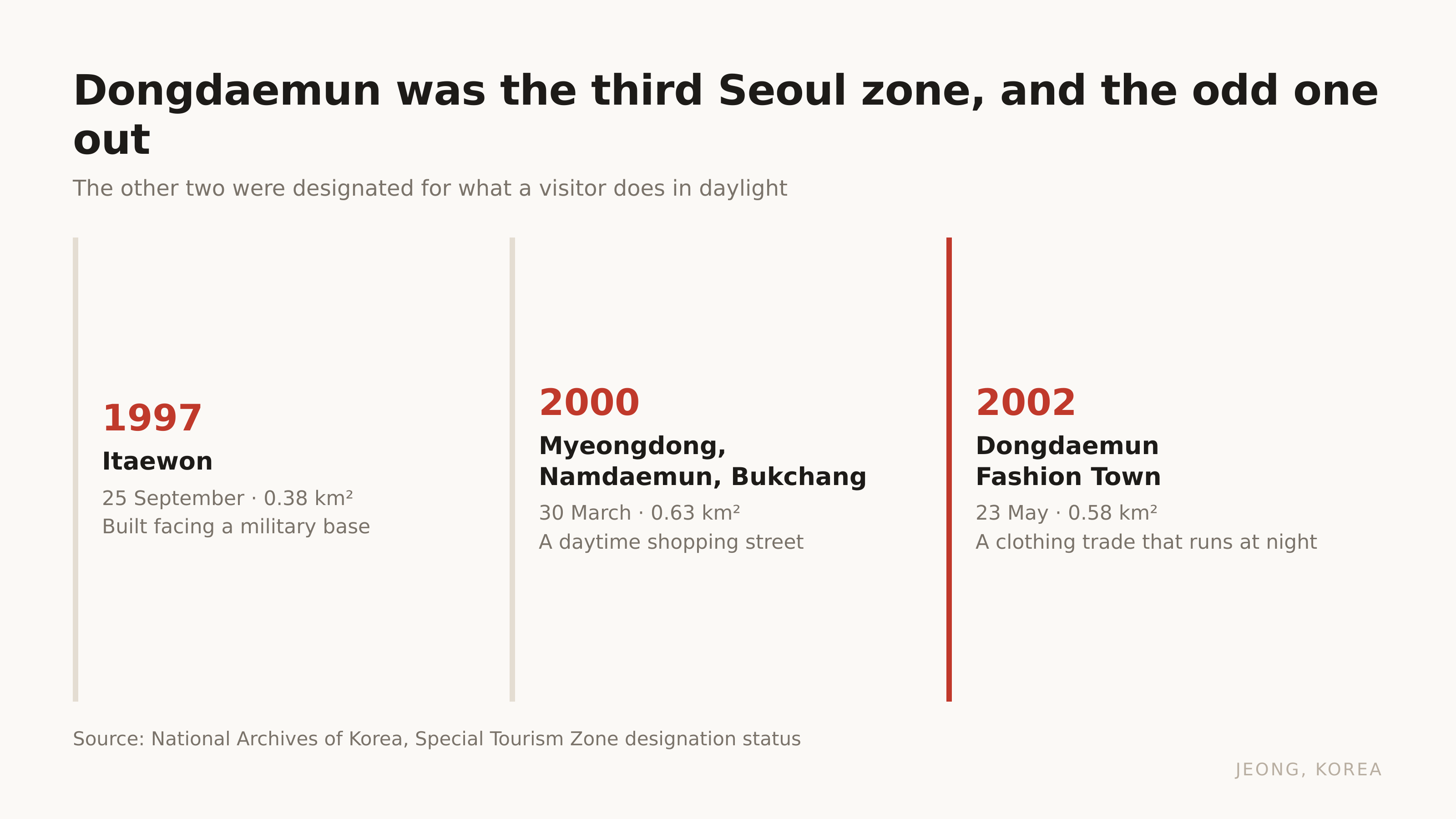
Dongdaemun Fashion Town became a Special Tourism Zone on 23 May 2002. Itaewon had the same status from 1997, Myeongdong from 2000, so Dongdaemun was the third of the four in Seoul.
The other two were designated for what a visitor does in daylight. Dongdaemun was designated around a clothing trade that had been running on a night shift for decades, because that is when buyers from shops all over the country can close their own doors and come to restock.
So the zone covers something strange: a tourist area whose defining activity happens while tourists are asleep.
| Zone | Designated | Area |
|---|---|---|
| Itaewon | 25 September 1997 | 0.38 km² |
| Myeongdong, Namdaemun, Bukchang | 30 March 2000 | 0.63 km² |
| Dongdaemun Fashion Town | 23 May 2002 | 0.58 km² |
Myeongdong is three layers and the street carts are licensed one year at a time is the daylight version of the same idea, and the contrast between the two is the fastest way to understand what Dongdaemun actually is.
So which hours belong to which market?
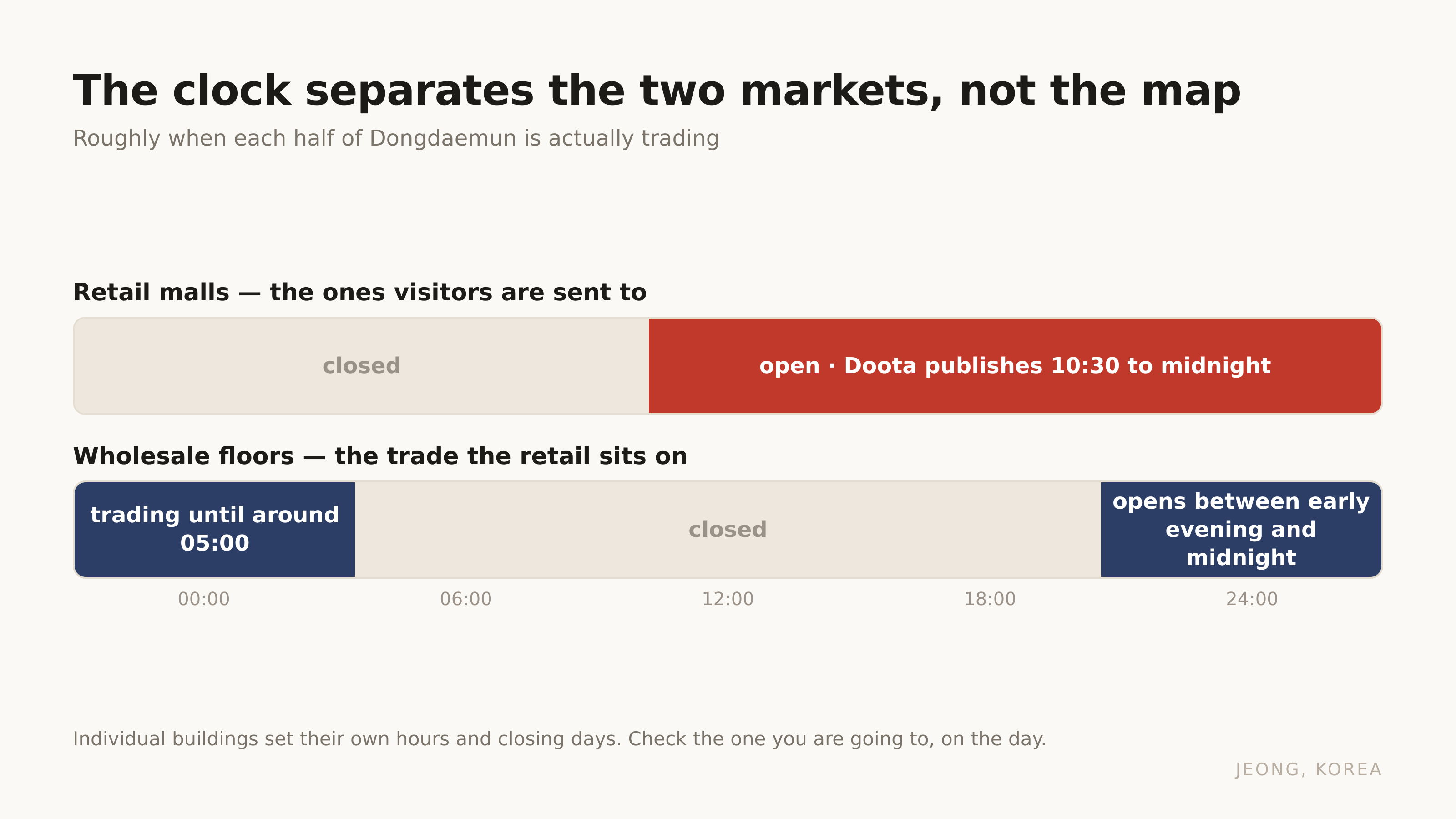
The clock is what separates them, not the map
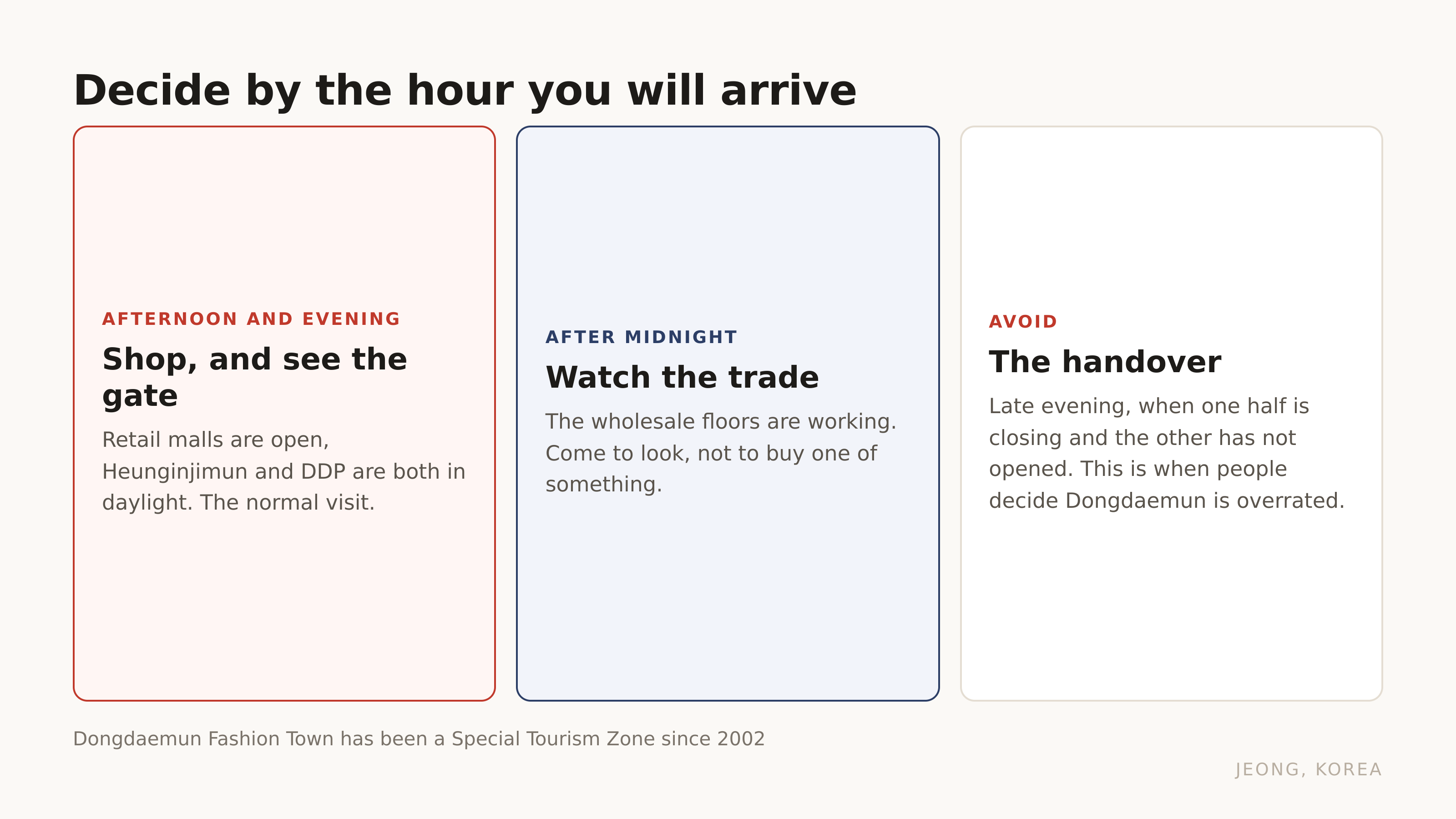
The Dongdaemun market that tourists get sent to is the retail half. Doosan Tower, usually called Doota, publishes hours of 10:30 to midnight, and the other retail malls on that side run on a similar shape. You walk in, you buy one of something, you leave.
The wholesale floors behind and around them run overnight. Depending on which family of buildings you mean, they open somewhere between the early evening and midnight and trade until around five in the morning. The trade has its own names for these two groups, and confusingly the labels do not line up with what an outsider would guess, so they are not worth memorising.
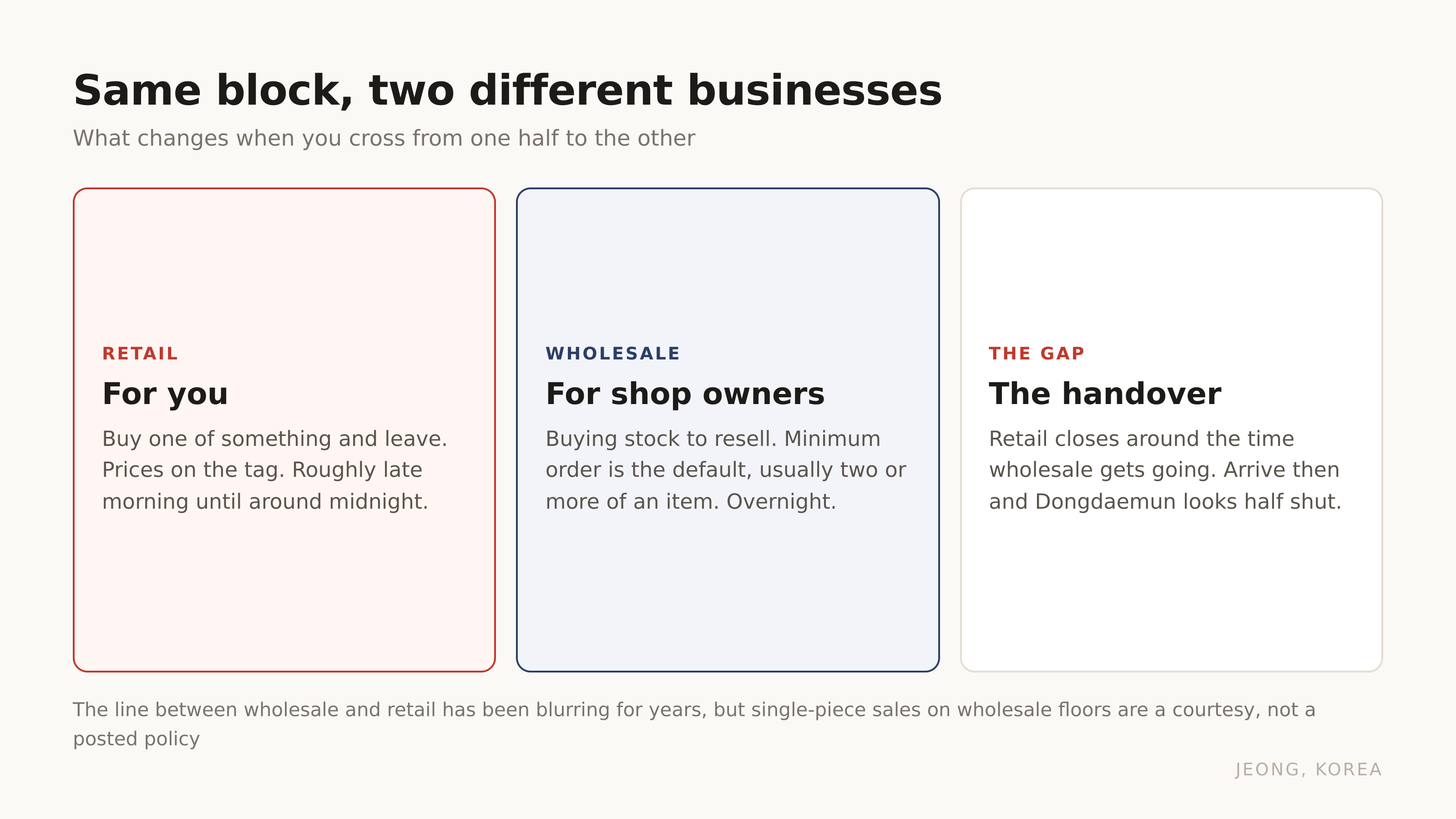
What matters is the shape, and the shape is simple. The retail side closes around the time the wholesale side gets going.
That is why people say Dongdaemun never sleeps and then find it half shut. They came at the handover.
Do not plan this by guessing. Individual buildings set their own hours and closing days, and they change. Check the specific building on the day.
And if you do walk into the overnight half, what are you actually standing in?
The overnight floors are a supply chain, not a shop
This is the part that catches people out, and it is worth understanding before you push open a door at two in the morning.
Those floors exist so that shop owners can buy stock. The default is a minimum order rather than a single piece, and the usual starting point is two or more of the same item. Single-piece buying happens, more than it used to, and the line between wholesale and retail here has been blurring for years. But it is a courtesy extended to buyers a seller knows, not a posted policy you can rely on.
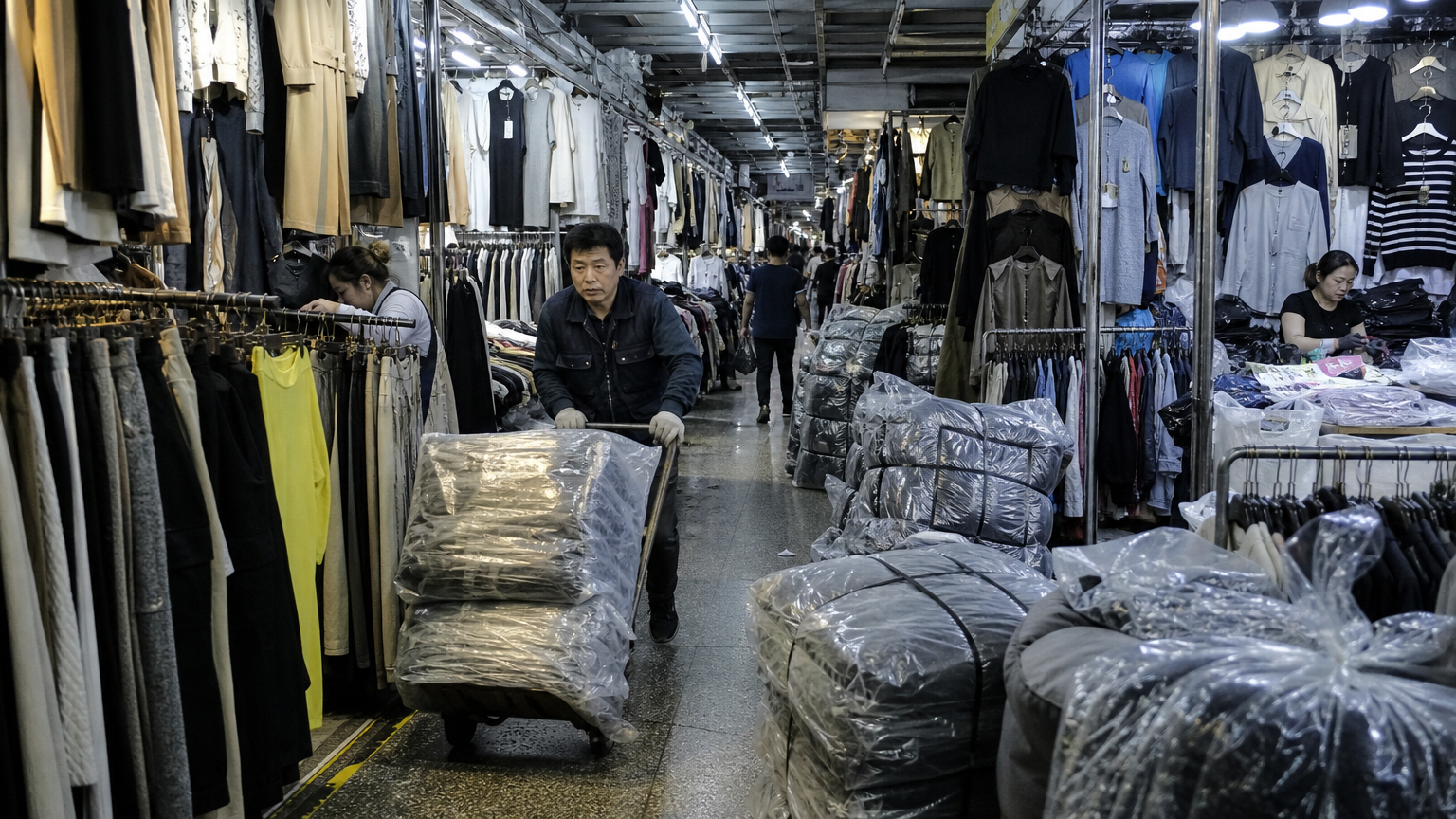
Which means the honest advice is this. You are welcome to look, and looking at it is genuinely one of the more interesting hours you can spend in Seoul. Rails of stock moving on trolleys, men carrying bales through traffic, an entire district doing inventory at a time when the rest of the city is closed. Just do not arrive expecting to shop the way you would in the retail malls, and do not be offended if someone says no.
If you want to know what is worth carrying home from Korea in general, what Koreans actually buy, and what your own country will let back in is a more useful list than anything you will assemble at 3am.
Fine. What is on this block when the shopping is not the point?
The gate is the actual Dongdaemun, and it is the only one with a wall around its wall
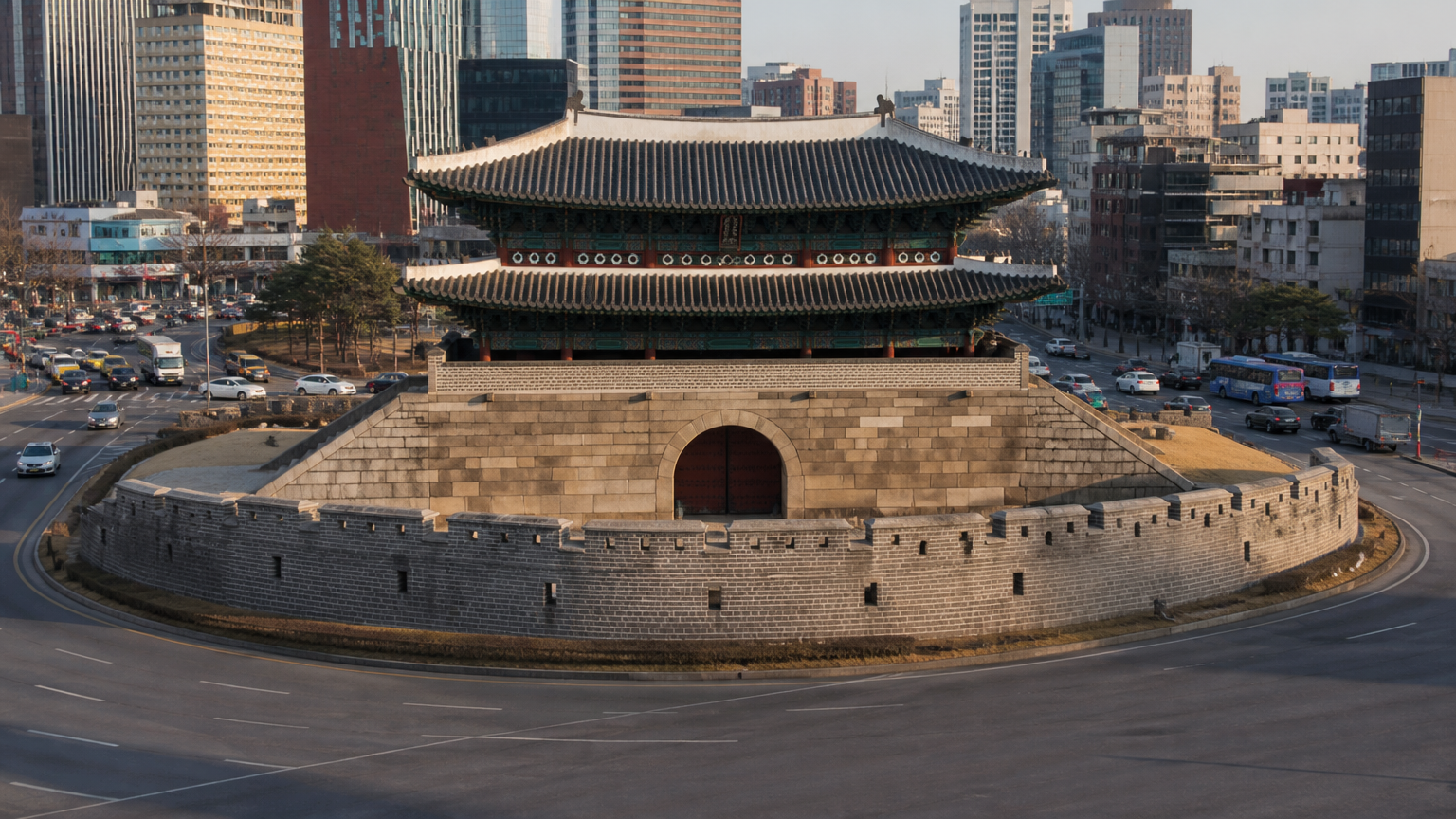
The name means east gate, and the gate is still standing at the end of the block.
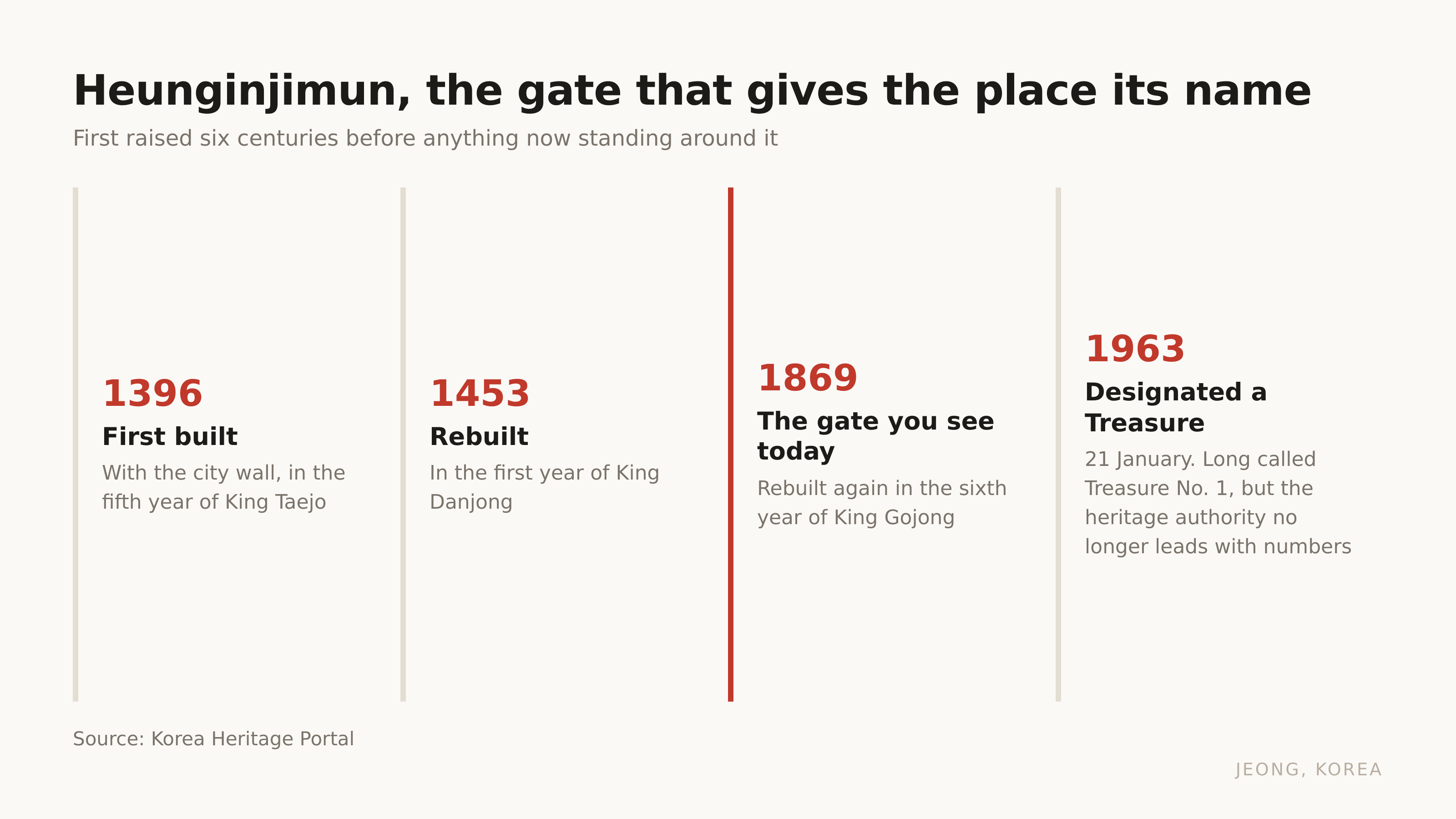
Its proper name is Heunginjimun. It was first built in 1396, rebuilt in 1453, and the structure you are looking at today went up in 1869. It has been a designated national Treasure since 21 January 1963, and it is the only one of the four main city gates that still carries its Joseon-era form.
You will see it called Treasure No. 1 in a great many places. That number is a legacy of an older listing system, and the heritage authority no longer leads with designation numbers, so treat it as a nickname rather than a rank.
The detail actually worth crossing the road for is different. Heunginjimun has an ongseong, a semicircular wall built around the outside of the gate to shield and defend it. Of all the gates in the Seoul city wall, this is the only one that has one. The ground here was low, so the gate needed help the others did not.
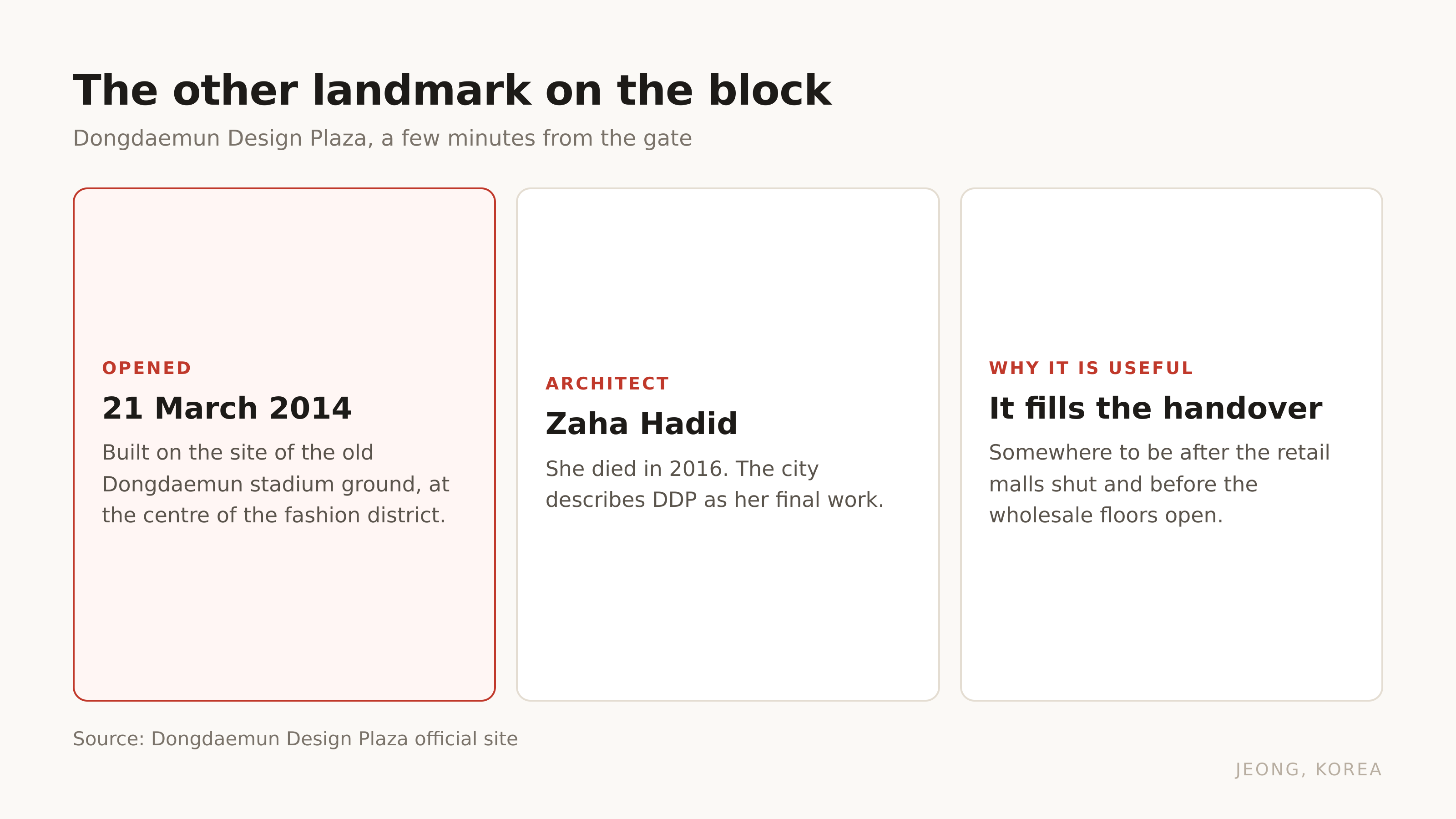
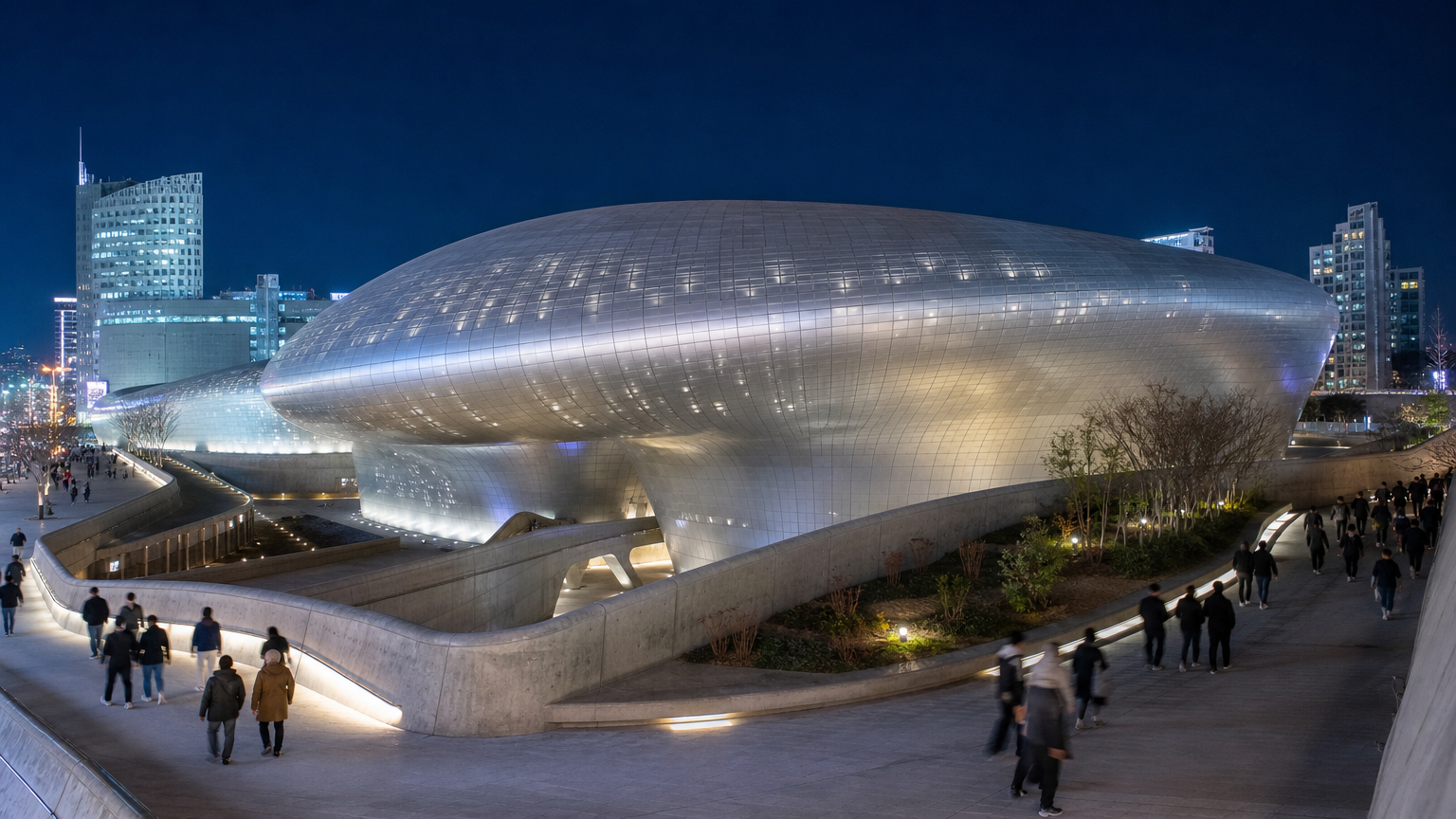
A few minutes away is the other landmark on the block, the Dongdaemun Design Plaza. It opened on 21 March 2014 to a design by Zaha Hadid, who died in 2016; the city describes DDP as her final work. It is a good place to be when the retail malls have shut and the wholesale floors have not yet opened.
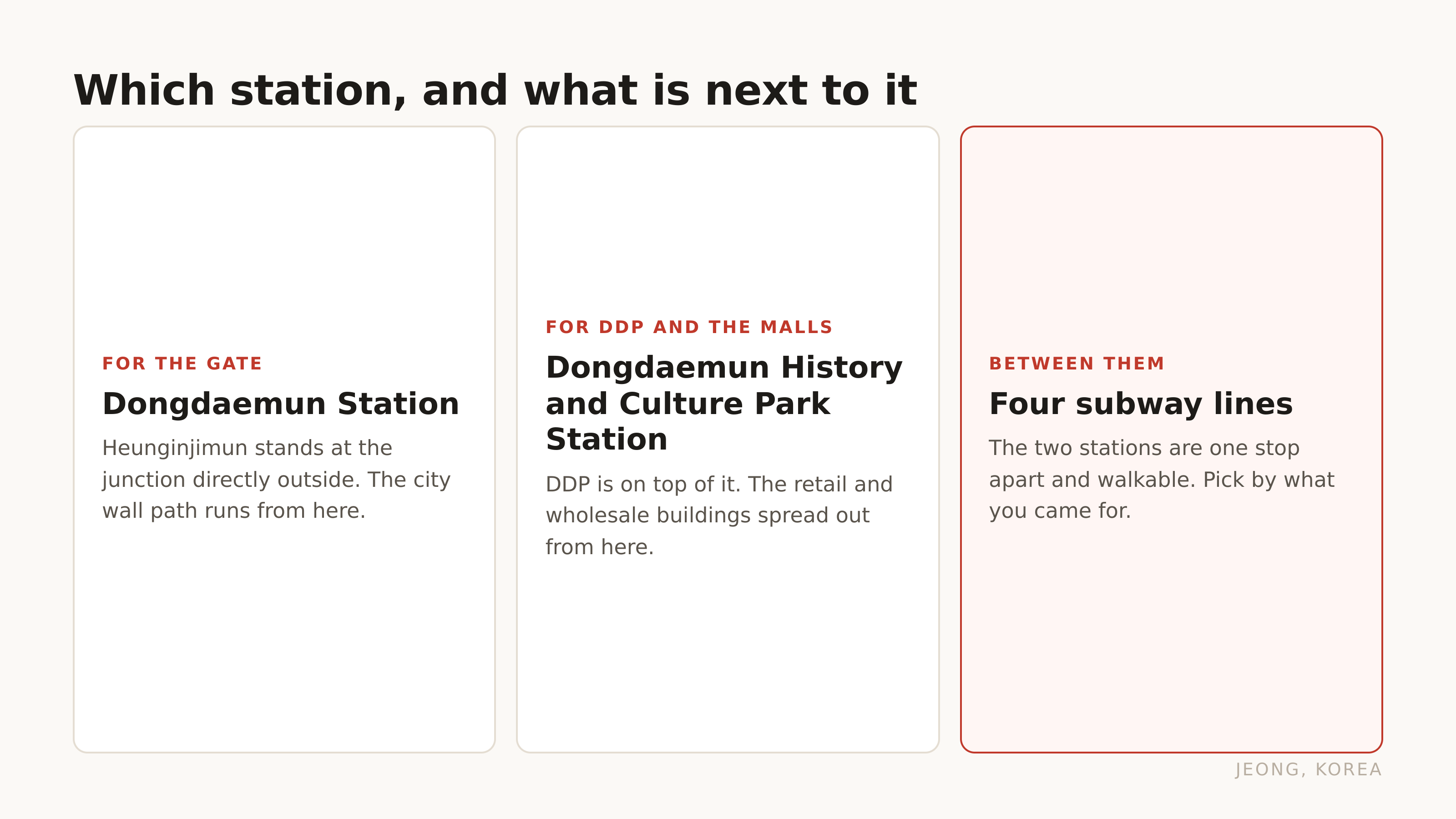
Both are a short walk from Dongdaemun Station and Dongdaemun History and Culture Park Station, which between them put four subway lines on this block. How to read the Seoul subway map, and the transfer rules nobody explains covers picking between them.
FAQ
What time does Dongdaemun market open?
It depends which market you mean. Retail malls run roughly late morning to around midnight, and Doota publishes 10:30 to midnight. The wholesale floors trade overnight, opening between early evening and midnight and closing around five in the morning. Check the individual building before you go.
Can I buy just one item at Dongdaemun?
In the retail malls, yes, that is what they are for. On the wholesale floors the default is a minimum order rather than a single piece, and single-piece sales are a courtesy rather than a rule.
Which station is Dongdaemun market?
Dongdaemun Station and Dongdaemun History and Culture Park Station both serve the area, and between them they cover four subway lines. Which one you want depends on whether you are heading for the gate or for DDP and the malls.
Is Dongdaemun worth visiting if I am not shopping?
Heunginjimun, the gate itself, is a designated Treasure and the only gate in the Seoul city wall with a semicircular defensive wall around it. DDP is a few minutes away. That is a reasonable hour even if you buy nothing.
One sentence is enough
Dongdaemun is a retail district layered on top of an overnight wholesale trade, the two are separated by the clock rather than by the map, and the gate that gives the place its name was first raised six centuries before anything now standing around it.
Next in this series, the part of Seoul that had no name of its own until the city went looking for somewhere to build: what Gangnam was before it was Gangnam.
References
-
National Archives of Korea — Special Tourism Zone designation status — designation date and area for Dongdaemun Fashion Town, Itaewon and Myeongdong
-
Korea Heritage Portal — Seoul Heunginjimun — designated a Treasure on 21 January 1963, present structure from 1869, and the only gate in the Seoul city wall with an ongseong
-
Doota Mall official opening hours — retail trading hours of 10:30 to midnight
-
Dongdaemun Design Plaza official site — opened 21 March 2014, designed by Zaha Hadid, on the site of the former Dongdaemun stadium