What to Buy in Korea: What Koreans Actually Put in Their Own Carts (and What Survives the Flight Home)

In one year, Incheon Airport confiscated 10.7 tonnes of kimchi from departing passengers.
Not smuggling. Not anything exotic. Just people who bought something lovely on their last afternoon in Seoul, put it in their carry-on, and lost it at the security line — because kimchi is a liquid, and nobody told them.
That is the part missing from every shopping list I have read. Deciding what to buy in Korea is only half the job. The other half is knowing which of it actually gets on the plane with you.
So here is both, from the person your Korean friend would be: what we genuinely keep in our own kitchens and bathrooms, and then the two rules that decide whether it makes it home.
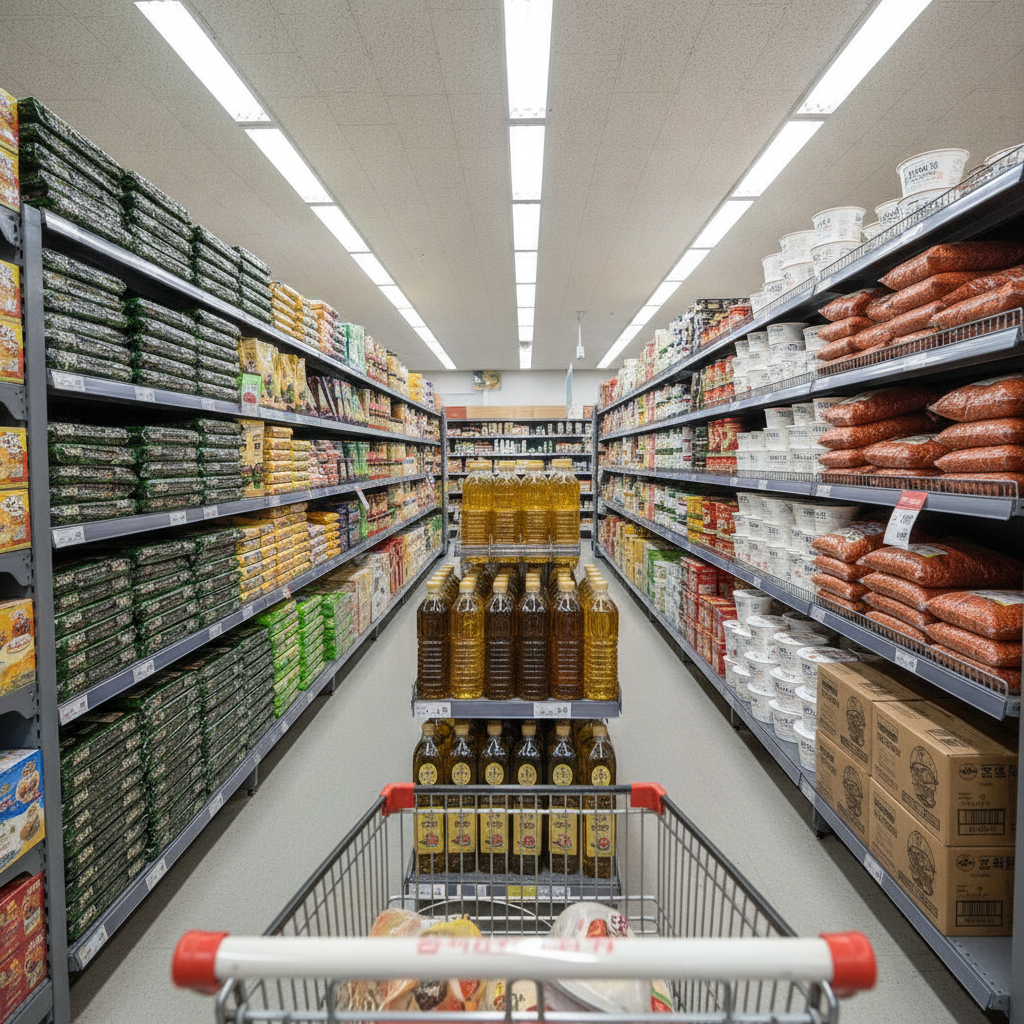
What Koreans actually keep in the kitchen
Skip the gift shop aisle with the ribboned boxes. This is the everyday stuff, the things that are in almost every Korean home, and they travel better than you would expect.
| Item | Why it is in every Korean kitchen | Travels well? |
|---|---|---|
| Seasoned gim (roasted seaweed sheets) | Eaten with rice at ordinary meals, not as a snack novelty | Yes — light, dry, flat |
| Toasted sesame oil (참기름) | Goes into almost everything; the Korean version is darker and stronger than most | Checked bag only — it is a liquid |
| Perilla oil (들기름) | The one foreigners never hear about, nuttier than sesame | Checked bag only |
| Gochugaru (chili flakes) | Coarse, fruity, not interchangeable with generic chili powder | Yes — dry |
| Anchovy or kelp stock packets | How a weeknight soup base actually gets made here | Yes — dry |
| Instant rice cups | Genuinely good, and nothing like the shelf-stable rice sold abroad | Yes — sealed |
If you buy one thing, make it the perilla oil. It is the flavor people cannot reproduce once they go home, and it is the one I put in friends' bags myself.
A note on the pastes — gochujang and doenjang. They are worth buying, but see the airport section below before you decide the container size.
The non-food things we buy without thinking
This is where the honest answer to what to buy in Korea diverges hardest from the tourist list.
-
A Korean exfoliating mitt (때수건). The rough green cloth from the bathhouse. It costs almost nothing, it exists in every Korean bathroom, and it is the single most-thanked thing I have ever given a friend abroad. If you have not been to a jjimjilbang yet, read the etiquette first — the mitt makes sense once you have.
-
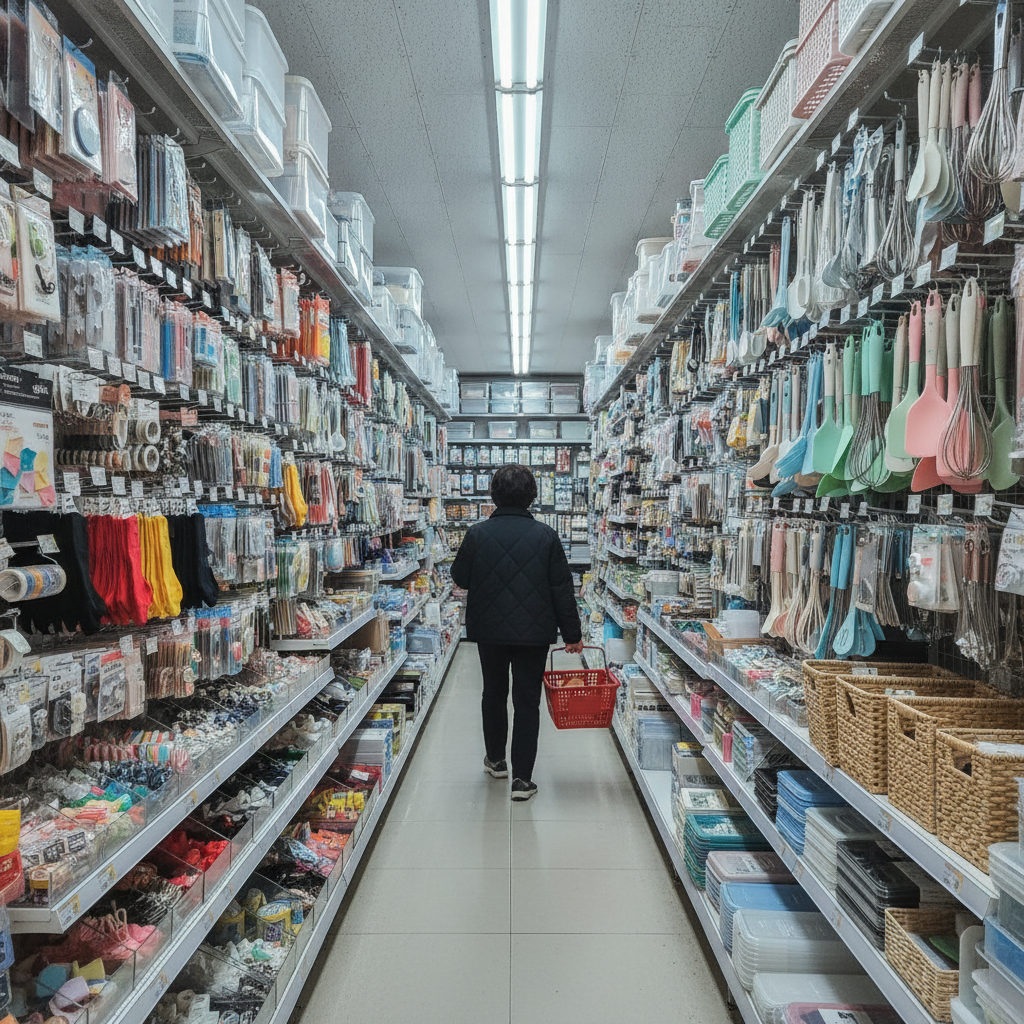
Daiso. The Korean chain is its own thing, not a copy of the Japanese one: kitchen tools, storage, stationery, socks, phone accessories, all at a few thousand won. Koreans shop here constantly. It is the most efficient place in the country to fill the gaps in a suitcase.
-
Stationery. Pens and notebooks here are absurdly good for the price, and the gel pens in particular have a following abroad for a reason.
-
Socks. Street stalls and underground shopping arcades sell them in bundles. Everybody in Korea buys socks this way.
-
A nail clipper. Sounds like a joke. Korean-made clippers are a genuinely well-known export, and Koreans buy them as small gifts without irony.
The 100ml rule takes more shopping than customs ever will
Here is the rule that produced those 10.7 tonnes.
Incheon Airport limits liquids, sprays and gels in carry-on baggage to containers of 100ml or less, judged by the size of the container rather than how much is left inside it. Everything has to fit in one transparent zip bag of about 20cm × 20cm, one bag per person.
Then comes the part that catches people:
| What you bought | How the airport classifies it | Where it has to go |
|---|---|---|
| Kimchi | Liquid (it sits in brine) | Checked bag |
| Gochujang, doenjang | Gel | Checked bag |
| Sesame oil, perilla oil | Liquid | Checked bag |
| Honey, jam, yuja tea paste | Liquid or gel | Checked bag |
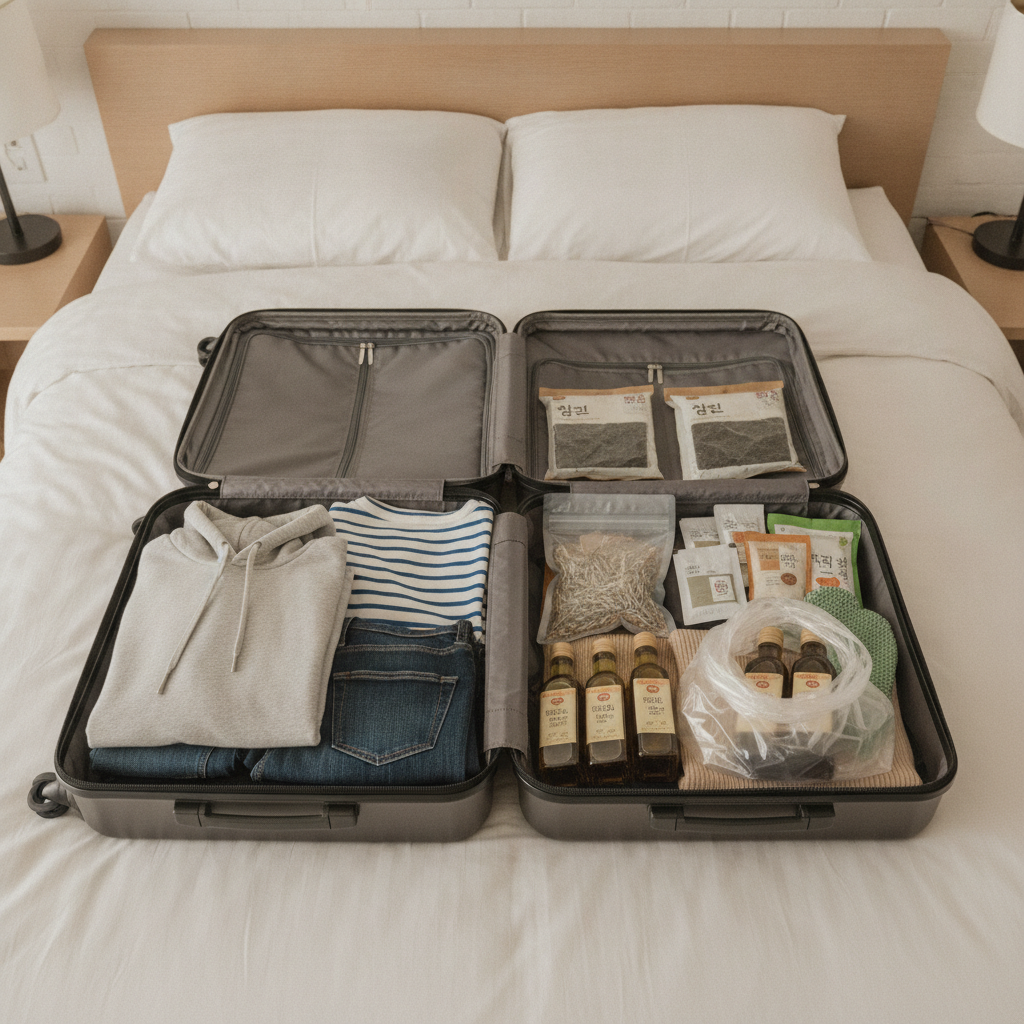
| Gim, gochugaru, stock packets, instant rice | Dry | Either |
Checked baggage has no volume limit for these, so none of this is a ban — it is a packing decision. Make it before you are standing at the security line with a jar in your hand.
Source: Incheon International Airport — Carry-on Restricted Items. The 10.7-tonne figure was reported by the Korea Herald.
Two practical habits. Buy the pastes and oils on any day except your last one, so they end up in the checked bag by default. And double-bag anything with liquid in it, because cabin pressure is not kind to jar seals.
What your own country will let in — the rule people find out too late
Getting it out of Korea is one gate. Getting it into your own country is the second, and the answer is not the same everywhere.
For travellers heading to the United States, U.S. Customs and Border Protection is specific about this: noodles and instant ramen are admissible only if the seasoning packets contain no meat or egg, and almost anything containing meat products — bouillon, soup mixes — is not admissible. Meanwhile condiments, vinegars, oils, packaged spices, honey, coffee and tea are generally fine.
Read that against the Korean supermarket shelf and it changes your basket. The beef-flavoured ramen and the meat-based soup bases are the risk. The oils, the chili flakes, the seaweed, the tea are not.
Source: U.S. Customs and Border Protection — Bringing Food into the U.S.
If you are flying somewhere else, check your own agriculture rules before you shop — Australia and New Zealand in particular are far stricter than most people expect. And declare it either way. Declaring something that turns out to be fine costs you a minute. Not declaring it costs you a fine.
Where Koreans buy all of this
Not in Myeongdong. The honest answer is a large supermarket — Emart or Homeplus — where the same items sit at everyday prices and the food section is a genuinely interesting place to wander. A traditional market is the other good answer, and a better afternoon.
If you are already going to be around Myeongdong for the evening, the street food there is worth planning around — do the shopping earlier in the day, elsewhere.
One more thing worth knowing: many stores offer an on-the-spot tax refund for foreign visitors when you show your passport at the register. Ask at the counter, because the thresholds and the paperwork differ by store, and the staff will tell you in ten seconds whether your receipt qualifies.
FAQ
Can I actually bring kimchi home?
Yes, in your checked bag. Kimchi counts as a liquid, so it cannot go in your carry-on in any meaningful quantity, but there is no volume limit once it is checked. Buy the vacuum-sealed pouches rather than a jar — they survive the trip better and weigh less. If you want to know which kimchi is worth carrying, the spiciest one has a story.
Is Daiso in Korea worth it if we have one at home?
The Korean chain carries a different range from the Japanese one, weighted toward Korean household habits — kitchen storage, bathroom goods, stationery. Even people who have a Daiso at home tend to leave the Korean stores with a full basket.
What should I not buy in Korea?
Anything with a meat-based seasoning packet if you are flying to the US. Anything liquid if it is your last day and you are only carrying a cabin bag. And the pre-boxed gift sets near the tourist streets, which are usually the same contents at a markup — the supermarket version is better value.
Do I need cash for any of this?
Cards work almost everywhere, including small shops. Traditional markets are the exception where cash still helps, so carry some for that specific trip.
Is there anything Koreans buy that foreigners never think of?
The exfoliating mitt, the stock packets, and the stationery. Those three are the ones my friends message me about after they get home and run out.
The short version
If you only remember one thing about what to buy in Korea, remember the shape of it: buy the ordinary things, buy them at a supermarket, and buy the liquid ones before your last day.
That is the whole trick. It is also, roughly, how you end up with a suitcase that looks like a Korean person packed it — which is the point.
And if you are planning the rest of your Seoul days, renting hanbok for an afternoon at the palaces is the one I would put next to a market morning.
Sources
-
Incheon International Airport — Carry-on Restricted Items: https://www.airport.kr/ap\_en/1434/subview.do
-
U.S. Customs and Border Protection — Bringing Food into the U.S.: https://www.cbp.gov/travel/international-visitors/agricultural-items
-
Korea Herald, on kimchi confiscated at Incheon Airport: https://www.koreaherald.com/article/10409967
Rules change and vary by airline and destination country. Check before you fly.