Gangneung Jungang Market: The Queue Is for Fried Chicken, and the Locals Are 700 Metres Away

Every English guide to Gangneung Jungang Market points at the same thing. Dakgangjeong, sweet crispy fried chicken, sold from a handful of shops with a queue in front of them.
The chicken is good and the queue is real. It is also, as far as I can tell, the only part of this market that has crossed into English at all, which means most visitors walk in, join a line, eat standing up, and leave without ever finding out what the surrounding neighbourhood is for.
I only found out because someone took me. That is the honest version, and it is also the point of this piece.
The market is real, and the fried chicken is the part that got famous
Gangneung Jungang Market sits in the old downtown, about a kilometre south of Gangneung Station. It is a working traditional market rather than a restored one, with a covered section, a basement food floor and a street market that spills out around it.
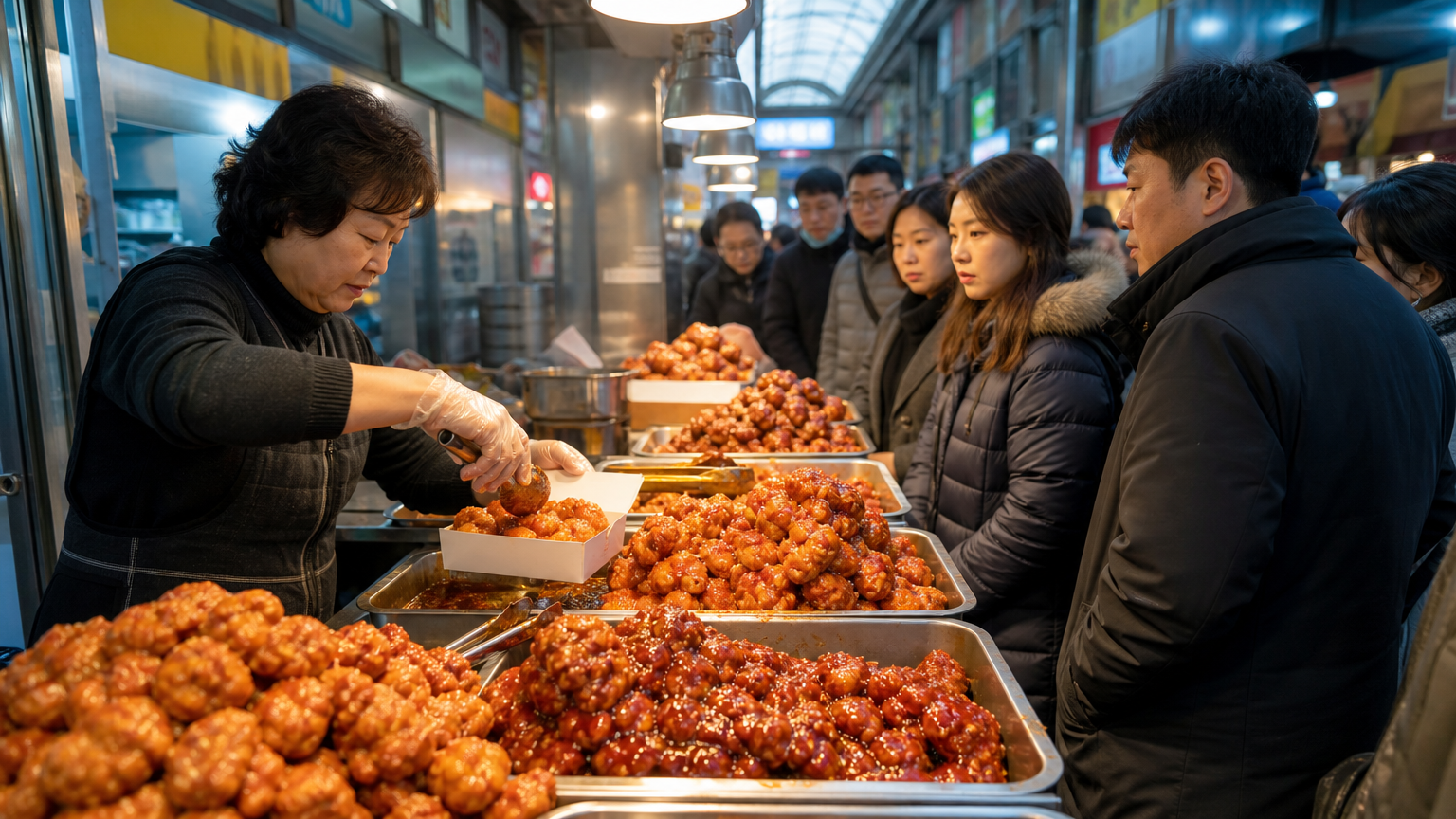
Dakgangjeong is genuinely a local thing and the queue is not manufactured. Chicken is fried, then coated in a sticky sweet-and-spicy glaze, and it holds its crunch long enough to travel, which is why people carry boxes of it onto the train home. If you have half an hour here, buying it is a reasonable use of the half hour. It belongs to a wider category of Korean street food that is worth knowing before you order anything: Famous Korean Street Foods You Must Try.
What the queue does is absorb the entire visitor budget for this part of the city. People allocate an hour, spend it standing in a line, and never walk south.
A professor walked me 700 metres south, and that is where people here actually eat
I was in Gangneung for work. A professor at one of the universities in the city took me to lunch, and on the way he said that this was where his colleagues ate, more or less every day.
The place is called Samgeori Sikdang, and it is on Nammun-gil, in the old quarter south of the market. Measured on the map it is about 736 metres from Gangneung Jungang Market, which is a walk of roughly ten minutes. From Gangneung Station it is around 1.7 kilometres in a straight line and about 2.4 kilometres by road, so from the station it is a short taxi ride or a walk of twenty-five to thirty minutes.
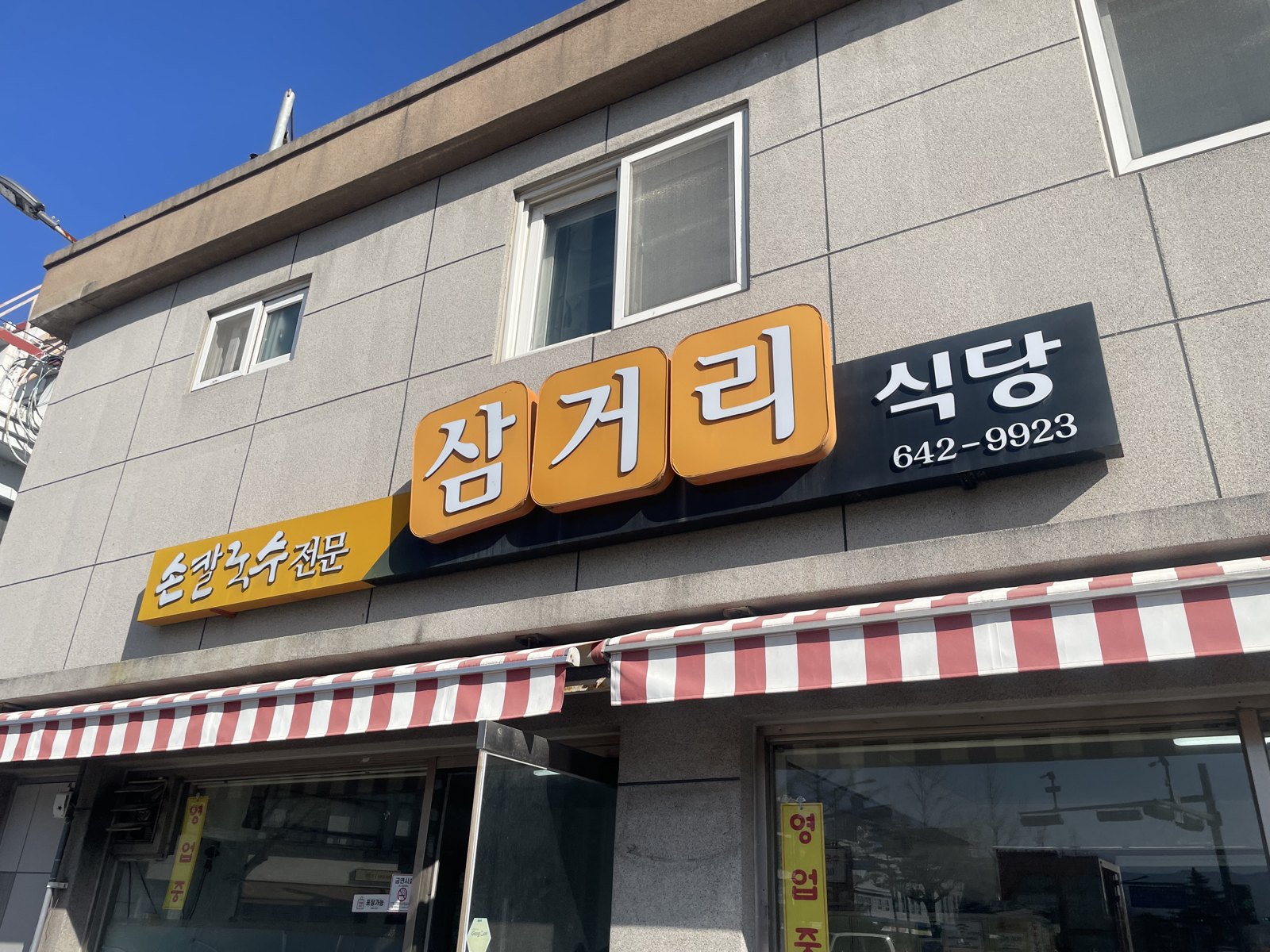
It is not a place you find. There is no reason a visitor would turn down that street, the building is an ordinary two-storey block with a striped awning, and it does not appear in the English-language coverage of the city. The sign says the name and a phone number, and a second sign underneath says the place specialises in hand-cut noodles. That is the entire pitch. I would not have known it existed.
That is not a complaint about the restaurant. It is what a restaurant looks like when its customers are the people who work nearby. The queue situation tells you the same thing. There is a bit of a wait at lunch, and it is not a long one. It is the wait of a place that local office and campus people go to, not the wait of a place with a hashtag.
| Market dakgangjeong | Samgeori Sikdang | |
|---|---|---|
| Who is in the line | Visitors, mostly | People who work nearby |
| Walk from the market | You are already there | About 736 m, roughly 10 min |
| From Gangneung Station | About 1 km | About 2.4 km by road |
| What you are buying | A snack to carry | A sit-down lunch |
Which brings us to what he ordered for me, because it is not a dish that travels well into English.
Jang kalguksu is not the noodle soup you are expecting
Kalguksu means knife-cut noodles, and most Korean kalguksu arrives in a clear, mild anchovy or chicken broth. Jang kalguksu is the Gangwon province version and it is a different proposition. The broth is built on fermented pastes, so it comes out red and cloudy rather than clear, and it tastes savoury and properly spicy in a way the pale version does not attempt.
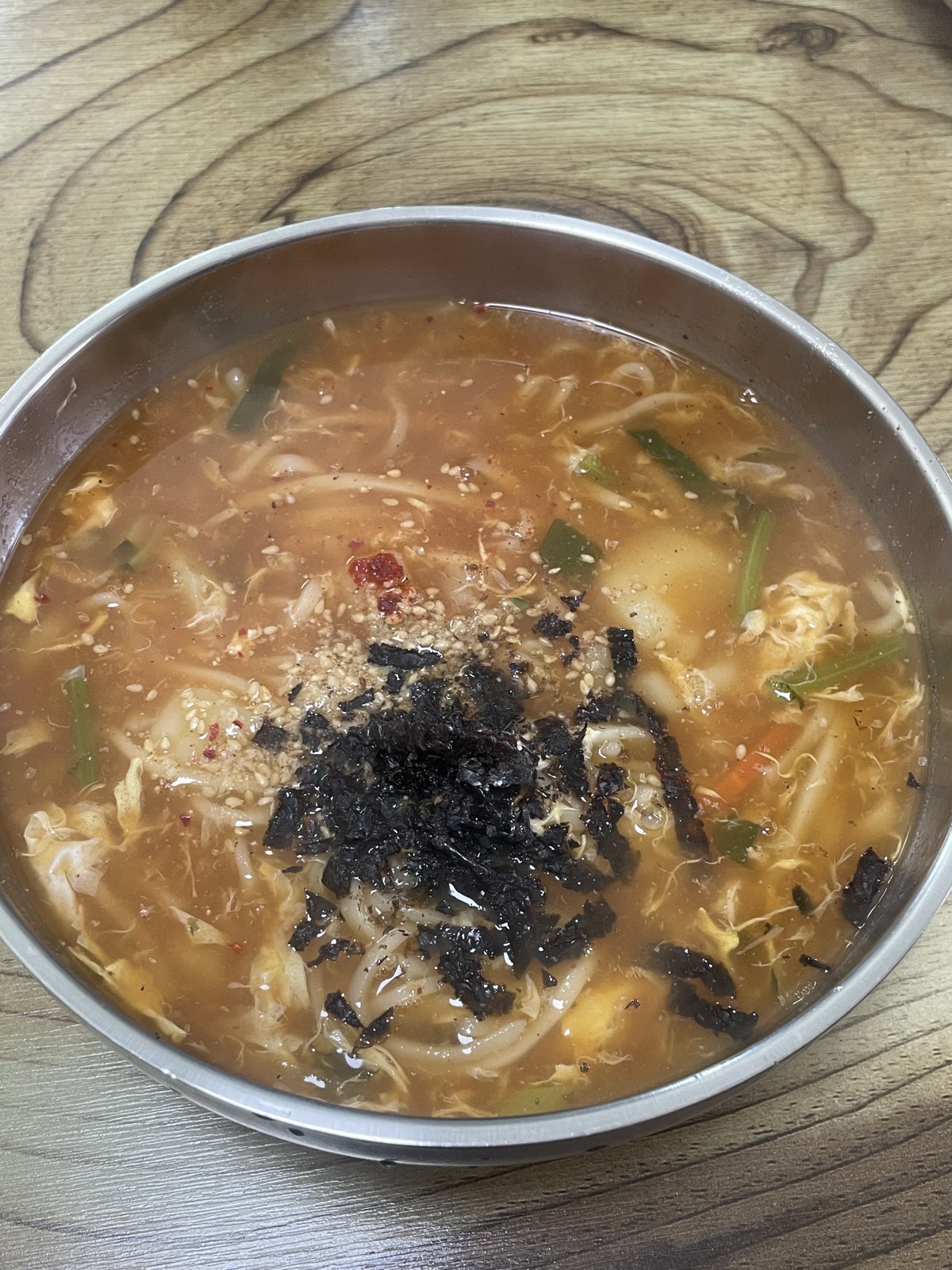
It arrives in a battered stainless steel bowl, which is its own kind of signal. Egg is stirred through the broth in ribbons, there are bean sprouts and soft courgette in there with the noodles, and crumbled dried seaweed, sesame and chilli flakes go over the top at the end. The noodles are made by hand when you order, which the sign outside says plainly and which the kitchen is not quiet about. The consequence is that the food takes a while. If you sit down expecting a fast lunch you will misread the wait. The wait is the reason the noodles have the texture they have.
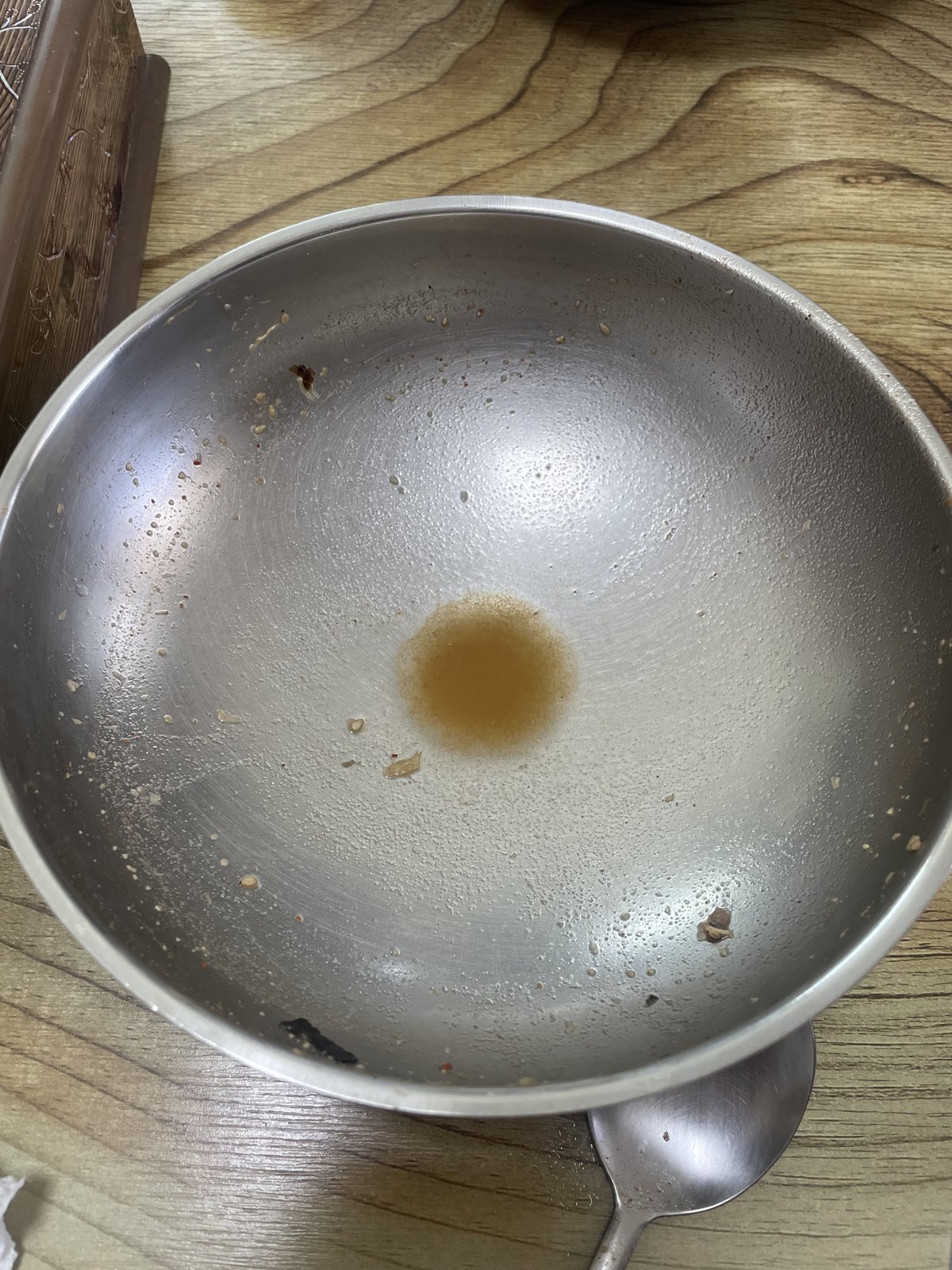
The detail I liked most is what arrives alongside. A bowl of plain rice comes with it, and it is not a side dish in the ordinary sense. It is there so that when the noodles are gone you tip the rice into the remaining broth and eat that too. Nothing is left in the bowl. That is the intended sequence rather than a thing you invent yourself, and it is the kind of instruction nobody writes down because everyone at the table already knows it.
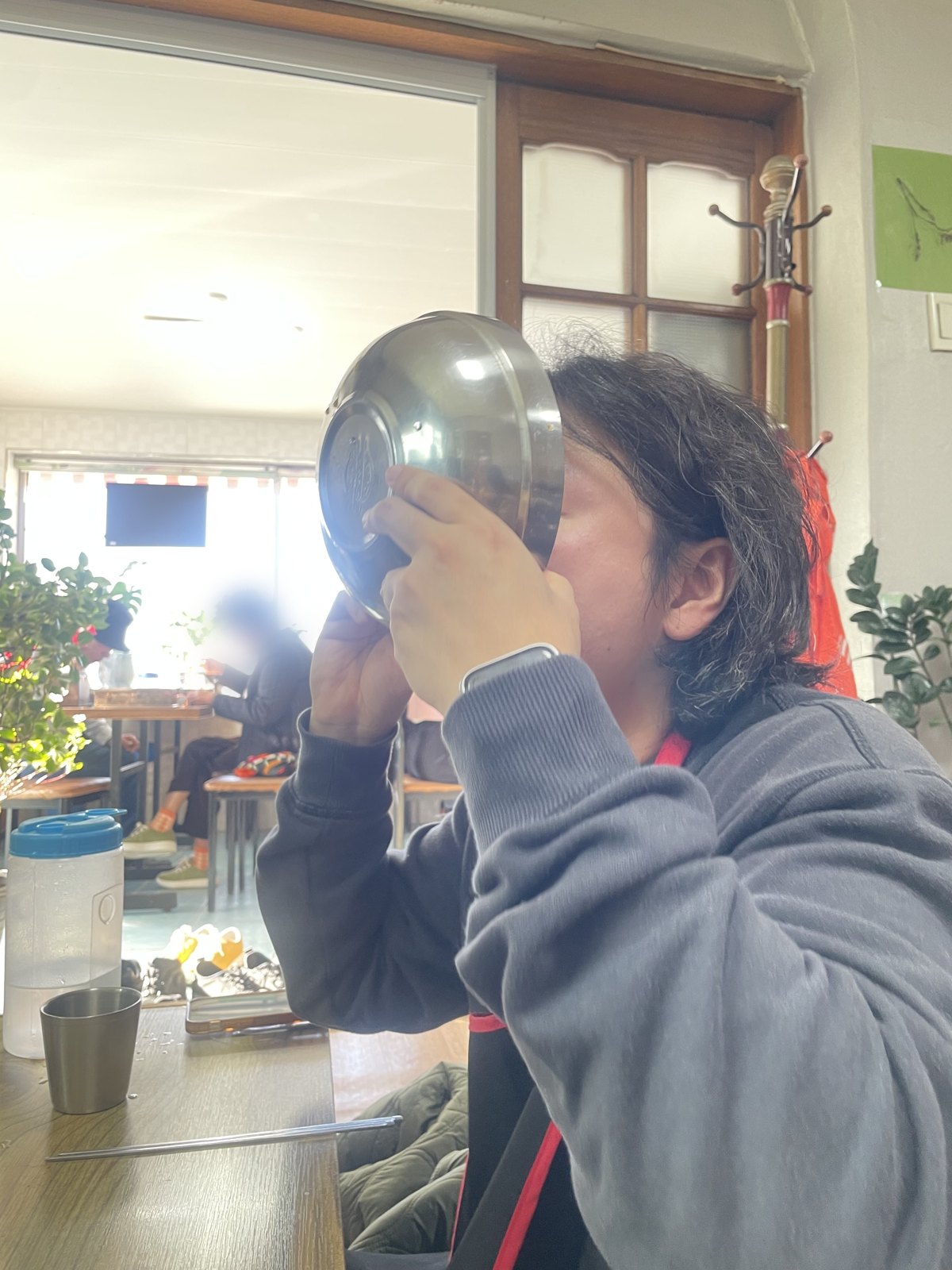
If you want to know whether a place like this is any good, look at the bowls going back to the kitchen rather than at the reviews.
Prices are the other giveaway. Jang kalguksu is 7,000 won and kongguksu, the cold soybean noodle dish, is 8,000. I had the jang kalguksu. Those numbers are not visitor prices.
The address is 38 Nammun-gil, Gangneung, and the phone number is 033-642-9923. Opening hours are not published anywhere I could verify, so if you are making a special trip, ring first. Lunch is when it fills up.
If you have not eaten in this kind of restaurant before, a few of the table conventions are worth knowing in advance, and several of the ones you have read about are invented: Korean Dining Etiquette: The Rules Koreans Actually Follow.
FAQ
Is Gangneung Jungang Market worth visiting?
Yes, as a market rather than as a single stall. The covered section and the basement food floor are the actual market. If your entire visit is the fried chicken queue, you have seen a queue.
How far is Samgeori Sikdang from the market?
About 736 metres, which is roughly a ten-minute walk south through the old downtown. From Gangneung Station it is about 2.4 kilometres by road, so a short taxi or a twenty-five to thirty minute walk.
What is jang kalguksu, and is it very spicy?
Knife-cut noodles in a broth built on fermented Korean pastes rather than a clear stock. It is red, savoury and properly spicy rather than mild and clear. If you eat Korean stews comfortably, it will not surprise you.
Why does the rice come with the noodles?
So that you can put it into the leftover broth once the noodles are finished. It is the second half of the dish rather than a side, and it is why the portion feels larger than it looks.
Will anyone speak English there?
Assume not. It is a neighbourhood restaurant with a short menu, and pointing at the two items works. That is also precisely why it is worth the walk.
The short version
Gangneung Jungang Market is a real working market whose fried chicken queue has absorbed all of its English-language attention. About 736 metres south, roughly ten minutes on foot, is Samgeori Sikdang on Nammun-gil, where a professor told me his colleagues eat most days. The dish is jang kalguksu, knife-cut noodles in a red fermented-paste broth with egg stirred through it, made by hand after you order, at 7,000 won, served with a bowl of rice you are meant to tip into what is left. There is a modest lunchtime wait. There is no reason you would ever find it on your own, which is the whole argument for walking the 736 metres.
Sources
Restaurant listing for Samgeori Sikdang, Gangneung: road address 38 Nammun-gil, lot address 157-8 Nammun-dong, telephone 033-642-9923, and menu prices for jang kalguksu and kongguksu. https://www.diningcode.com/profile.php?rid=COmvbOQ4sxqM
Distances calculated from OpenStreetMap coordinates for Gangneung Station, Geumseong-ro in the market block, and Nammun-gil, with road distance from public routing data.
First-hand account and photographs: lunch at Samgeori Sikdang during a work trip, on the recommendation of a professor at a university in the city.