Tax Refund in Korea: You Do Not Get 10% Back

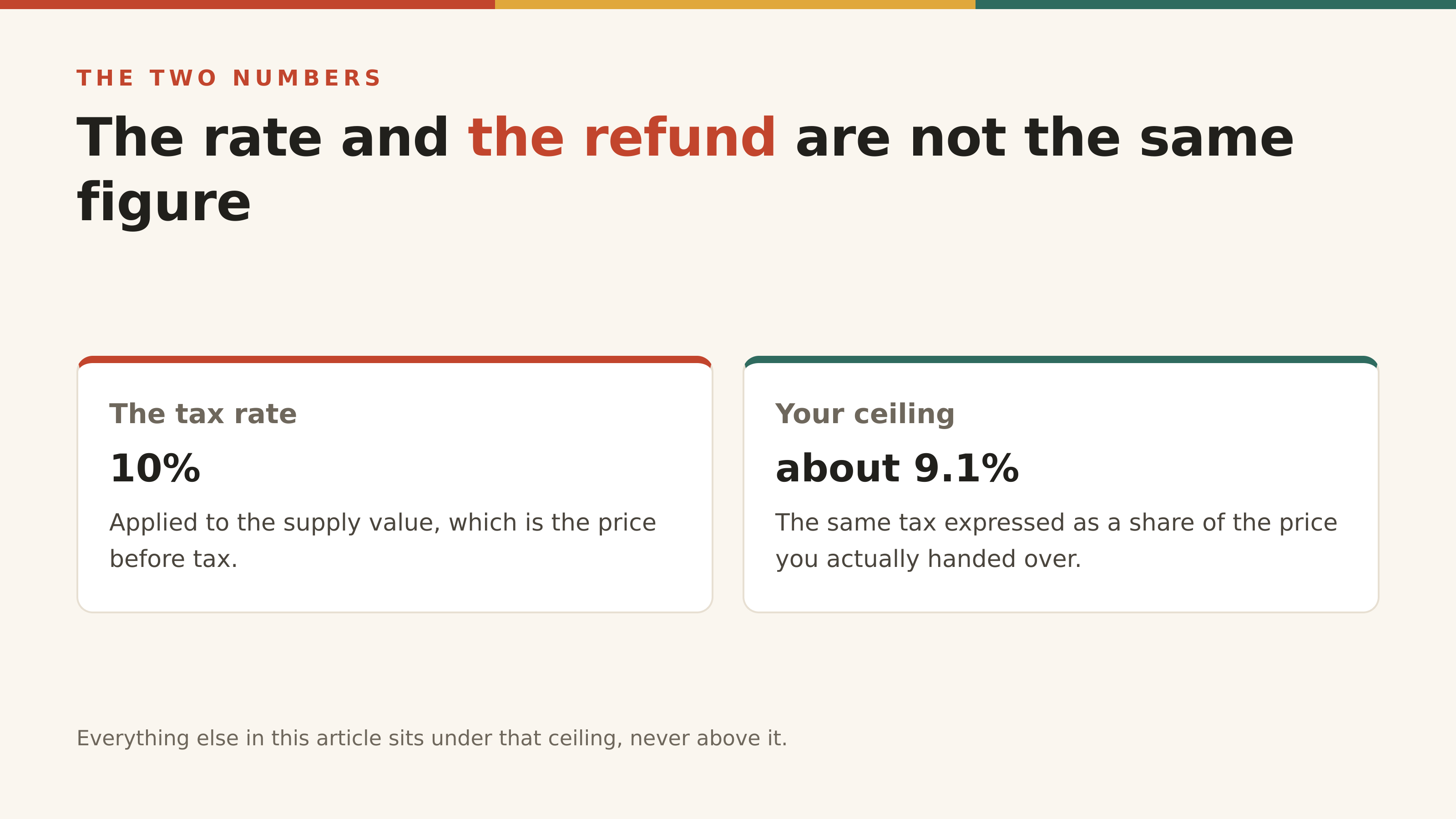
Ten percent is the tax rate. It was never your refund.
Almost every guide says the same two things. Korean VAT is 10 percent, and you claim it back at the airport before you fly home. Both halves are close enough to sound right, and both of them will leave you standing at a counter doing arithmetic that does not match.
The number you get back is smaller than ten percent, and for most purchases the airport is not the only place you can collect it. Neither of those is a loophole. Both are written into the rule that governs the scheme.
The ten percent is already inside the price you paid
The rate and the refund are two different numbers.
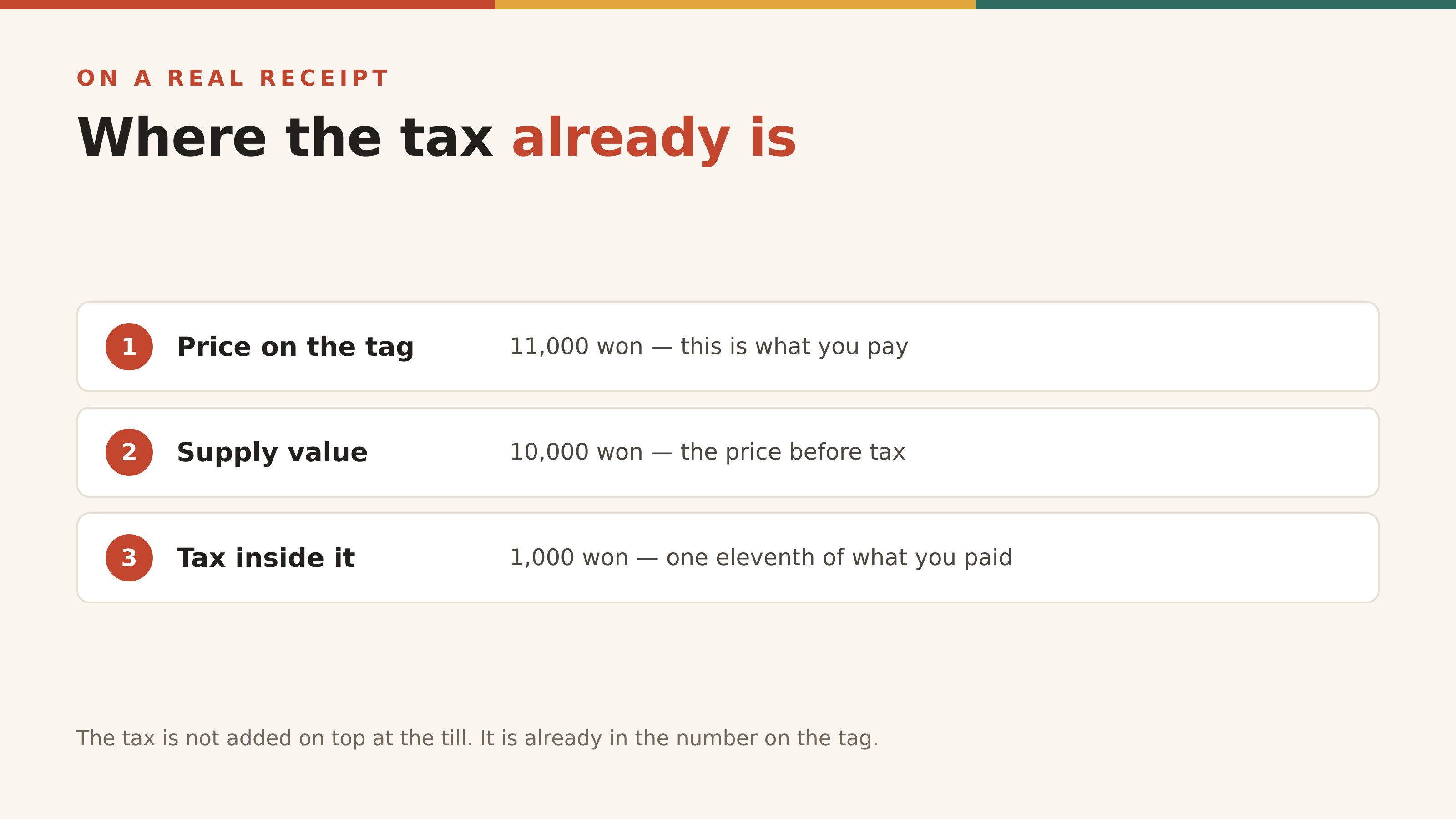
That is because prices on Korean shelves are quoted with the tax already in them. The figure on the tag is what you hand over at the till, tax included, so the tax is not added on top the way it is in some countries.
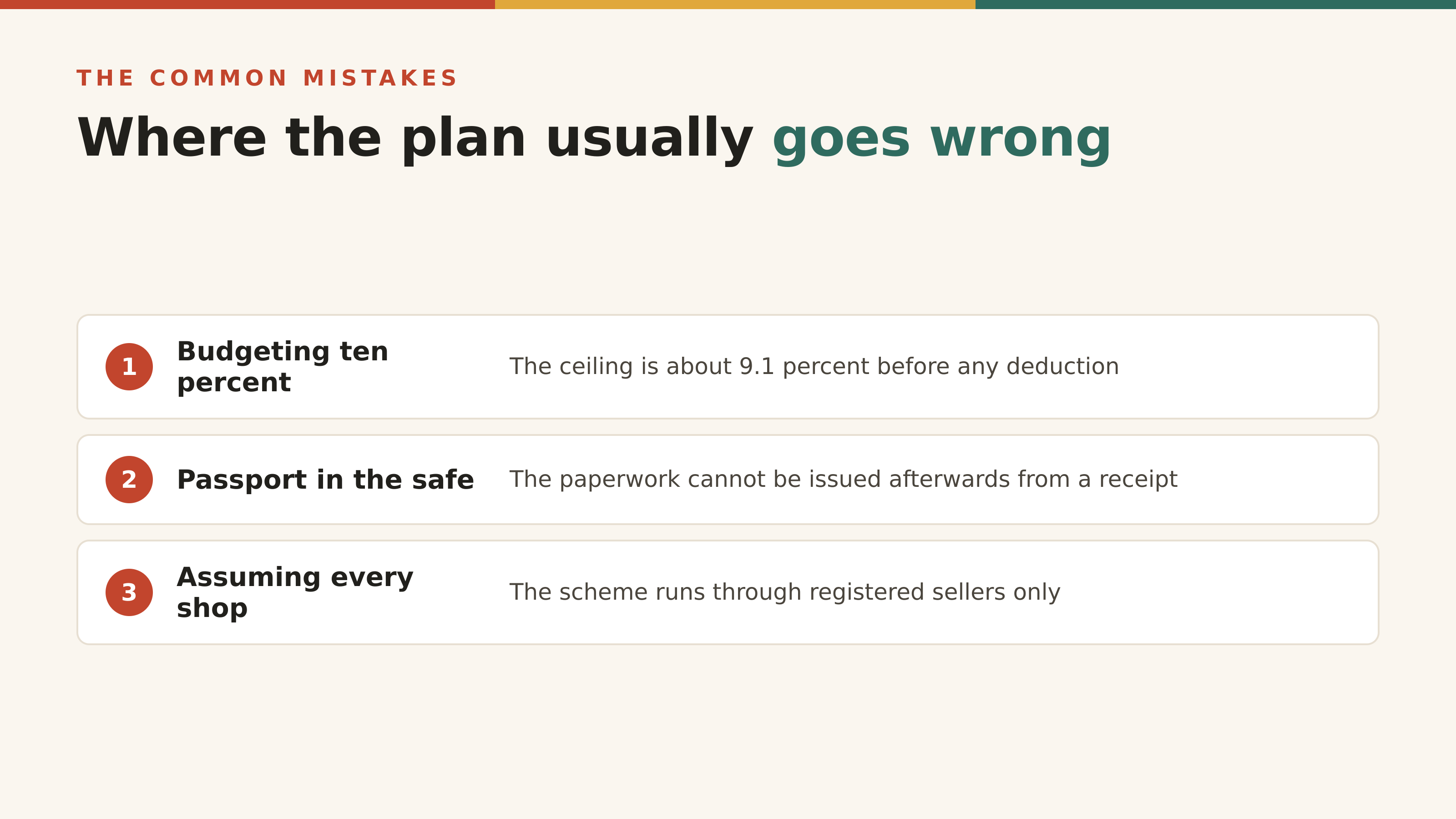
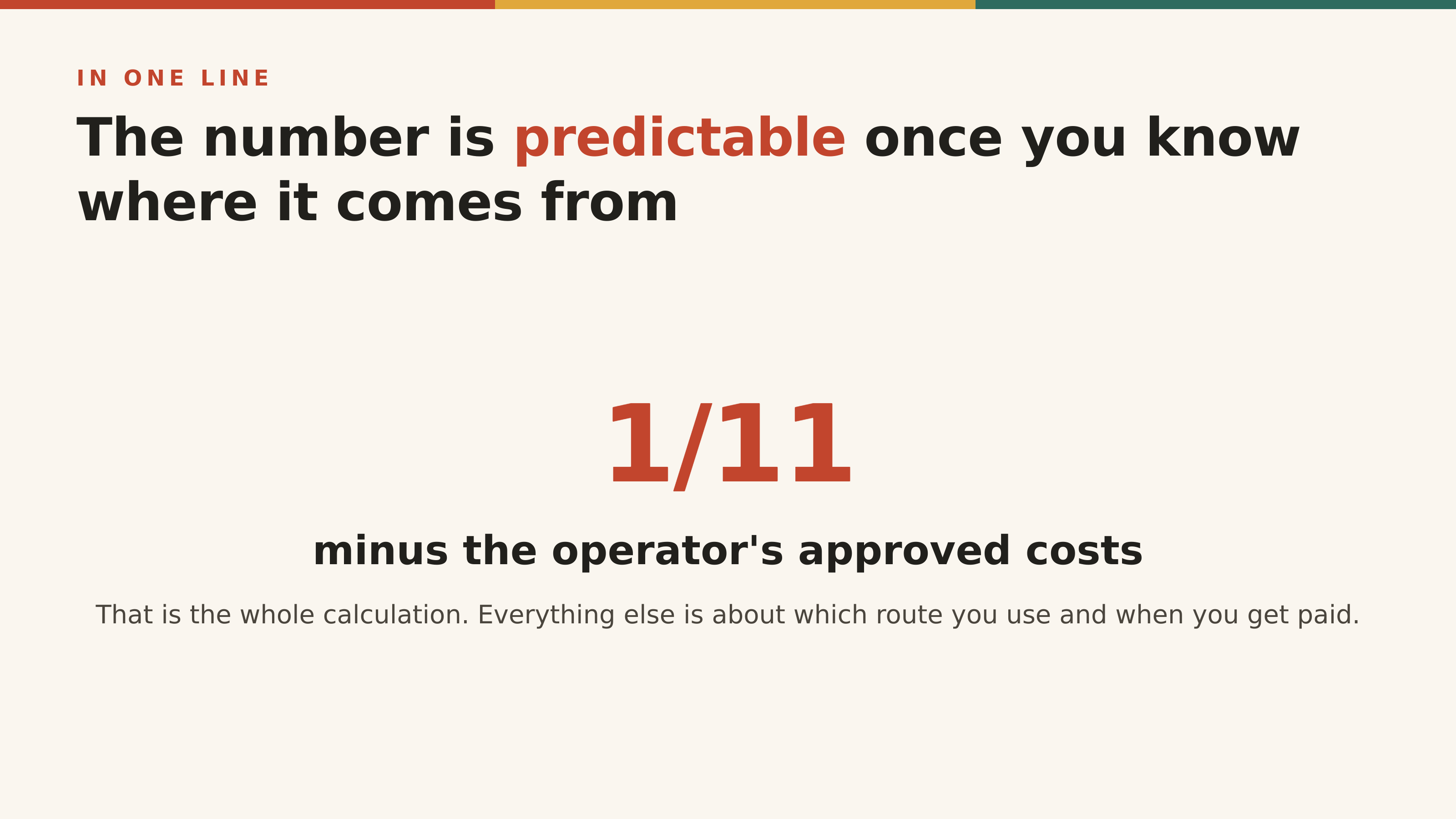
Work it through on a real receipt. On an item marked 11,000 won, the supply value is 10,000 won and the tax on it is 1,000 won. That 1,000 won is ten percent of the supply value, but it is one eleventh of what came out of your wallet. As a share of the price you actually paid, it is about 9.1 percent. That is the ceiling. Nothing in the scheme can hand you more than the tax that was charged in the first place.
So when you plan a shopping day around "I will get ten percent back", you have started about nine percent too high. If you want to know what is worth buying before you worry about the tax refund at all, what to buy in korea covers the goods themselves.
So why is the figure on my slip smaller still?
A refund operator sits in the middle, and the rule lets it take a cut
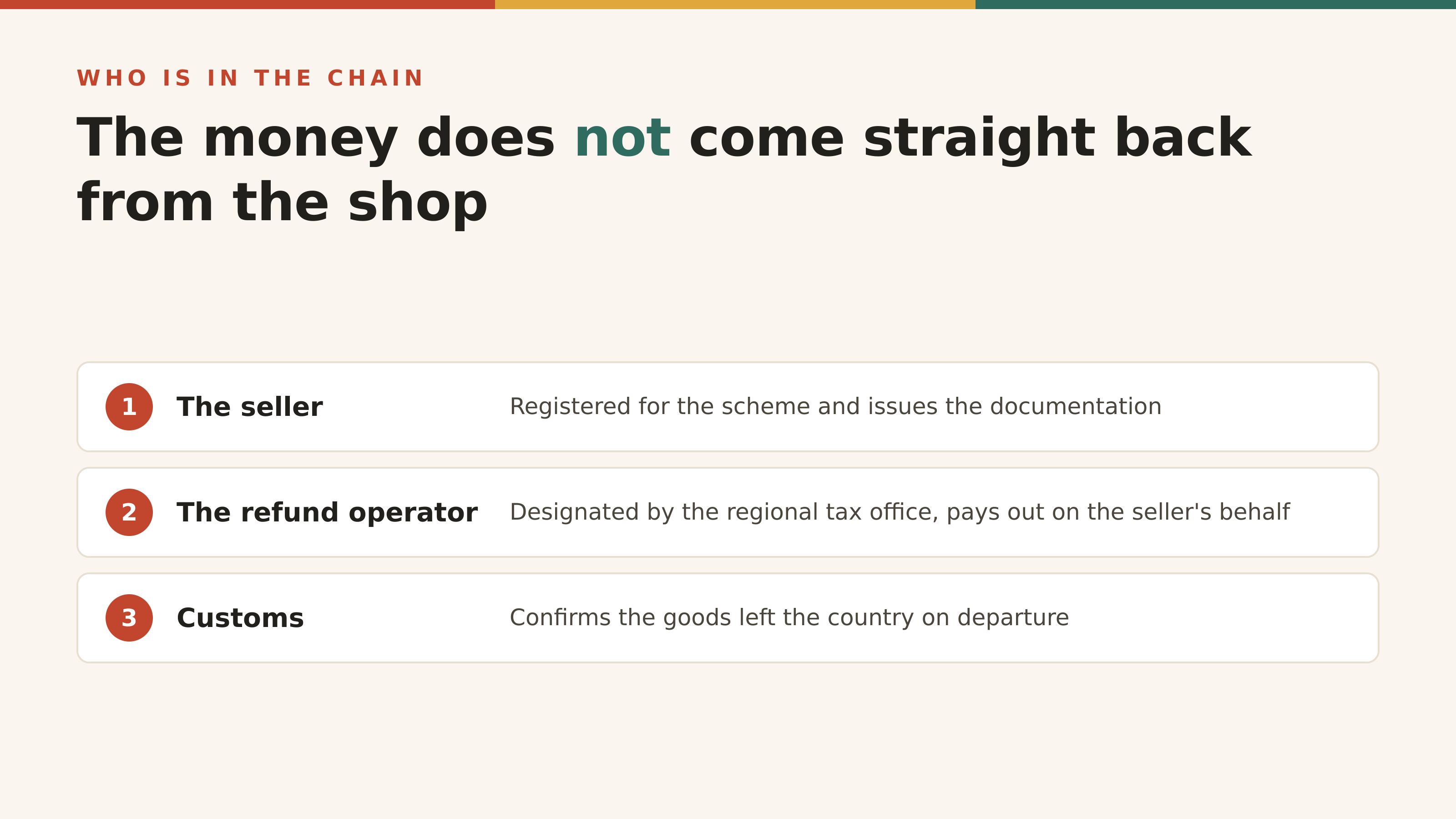
The money does not travel from the shop to you directly.
Korea's scheme runs through licensed intermediaries. The Presidential Decree on special cases of VAT and individual consumption tax for foreign tourists provides for refund counter operators, designated by the regional tax office, who pay out on the seller's behalf.
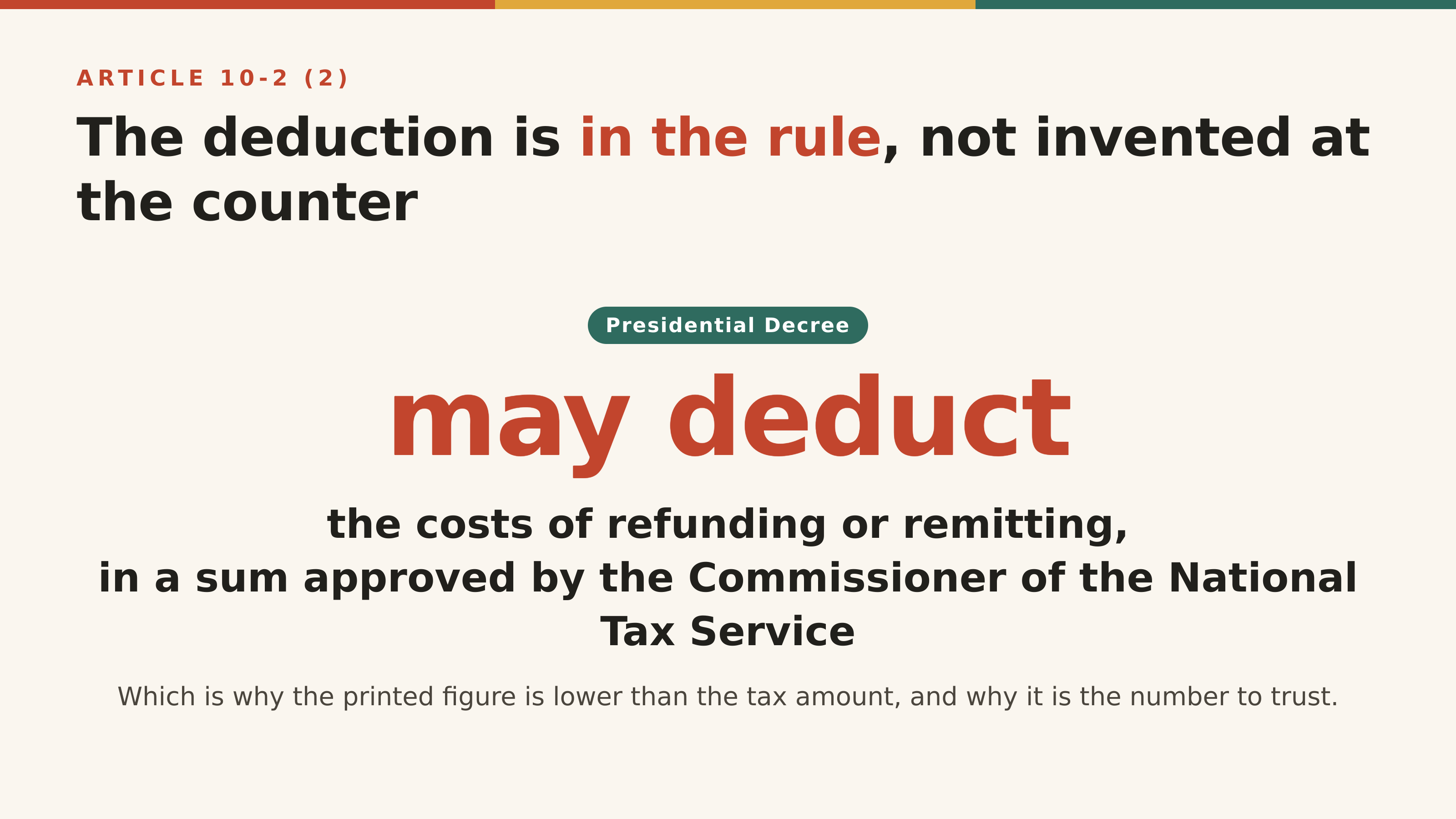
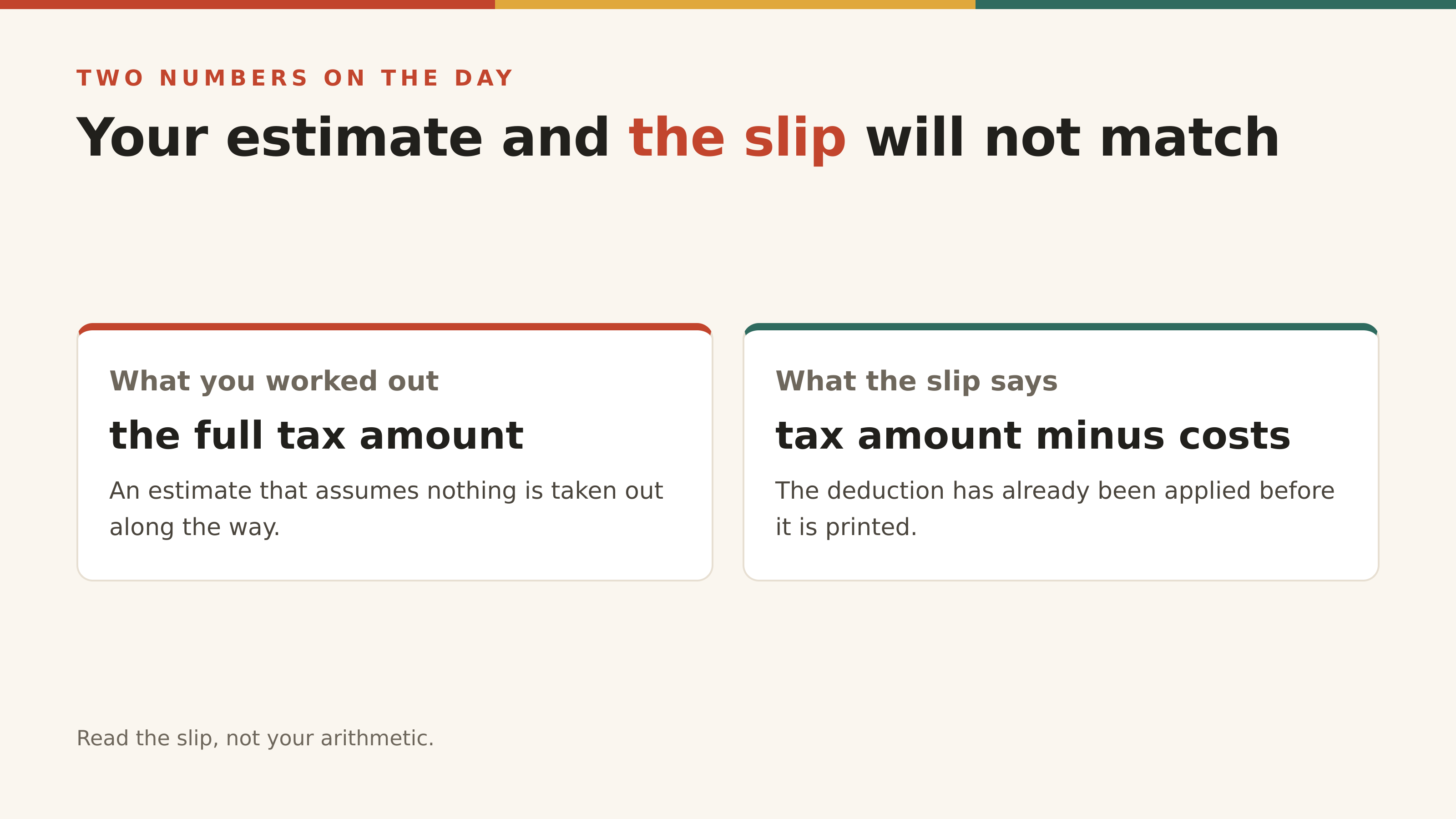
Article 10-2 (2) of that decree then says the quiet part out loud. When the operator refunds or remits the tax amount, it may deduct from that amount the costs of refunding or remitting, in a sum approved by the Commissioner of the National Tax Service. The deduction is not a fee someone invented at the counter. It is provided for in the rule itself.
This is why the printed figure is the only one worth trusting. Your own estimate assumes you receive the whole tax amount; the slip already has the deduction taken out. Read the slip, not your arithmetic.
If you are buying cosmetics, you have probably already met this system without noticing, because the big chains run it at the till. Olive Young Seoul store and tax refund walks through that counter specifically.
And do you actually have to wait until the airport?
For most purchases, you can be paid before you fly
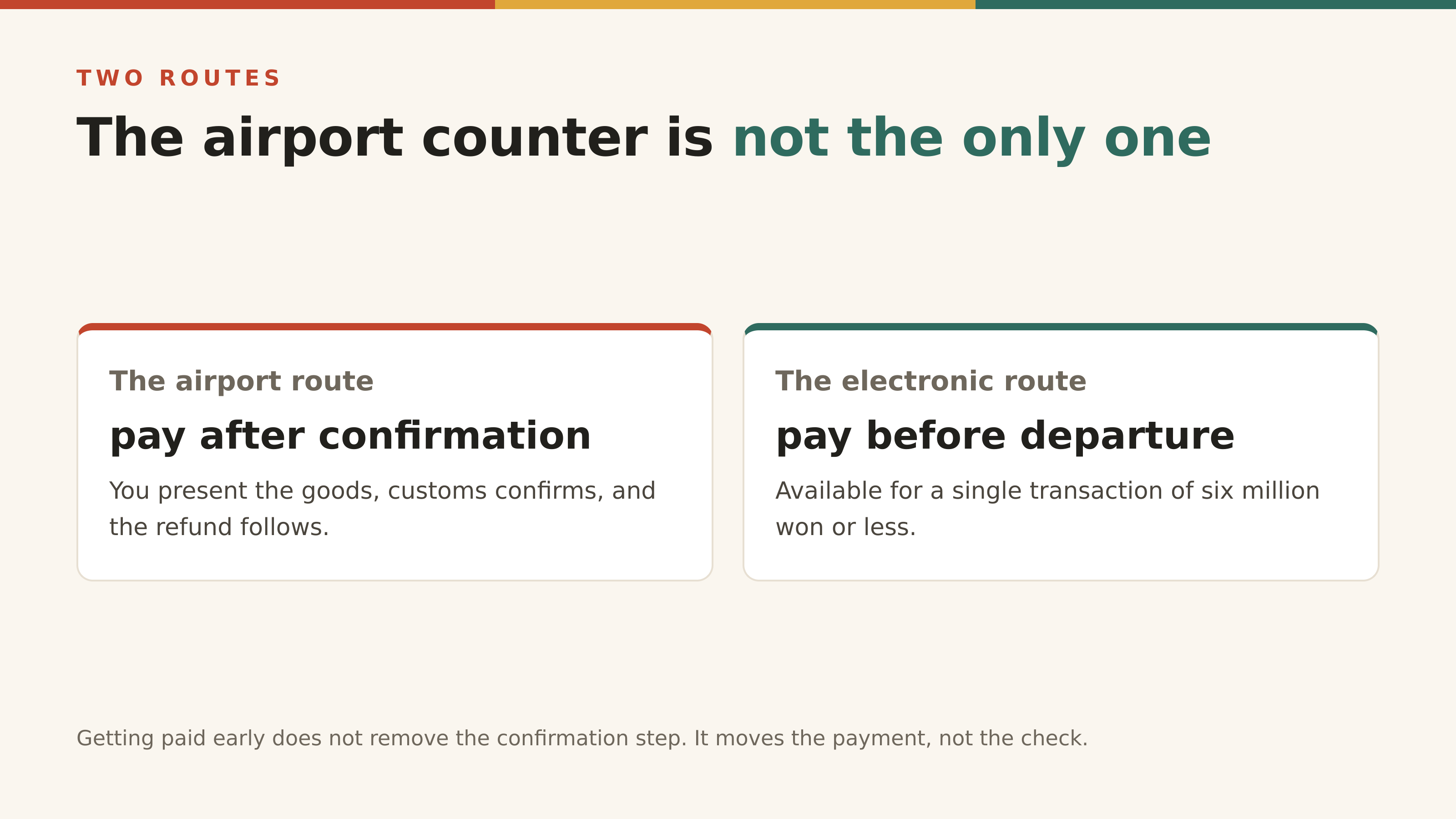
The airport counter is one tax refund route, not the only one.
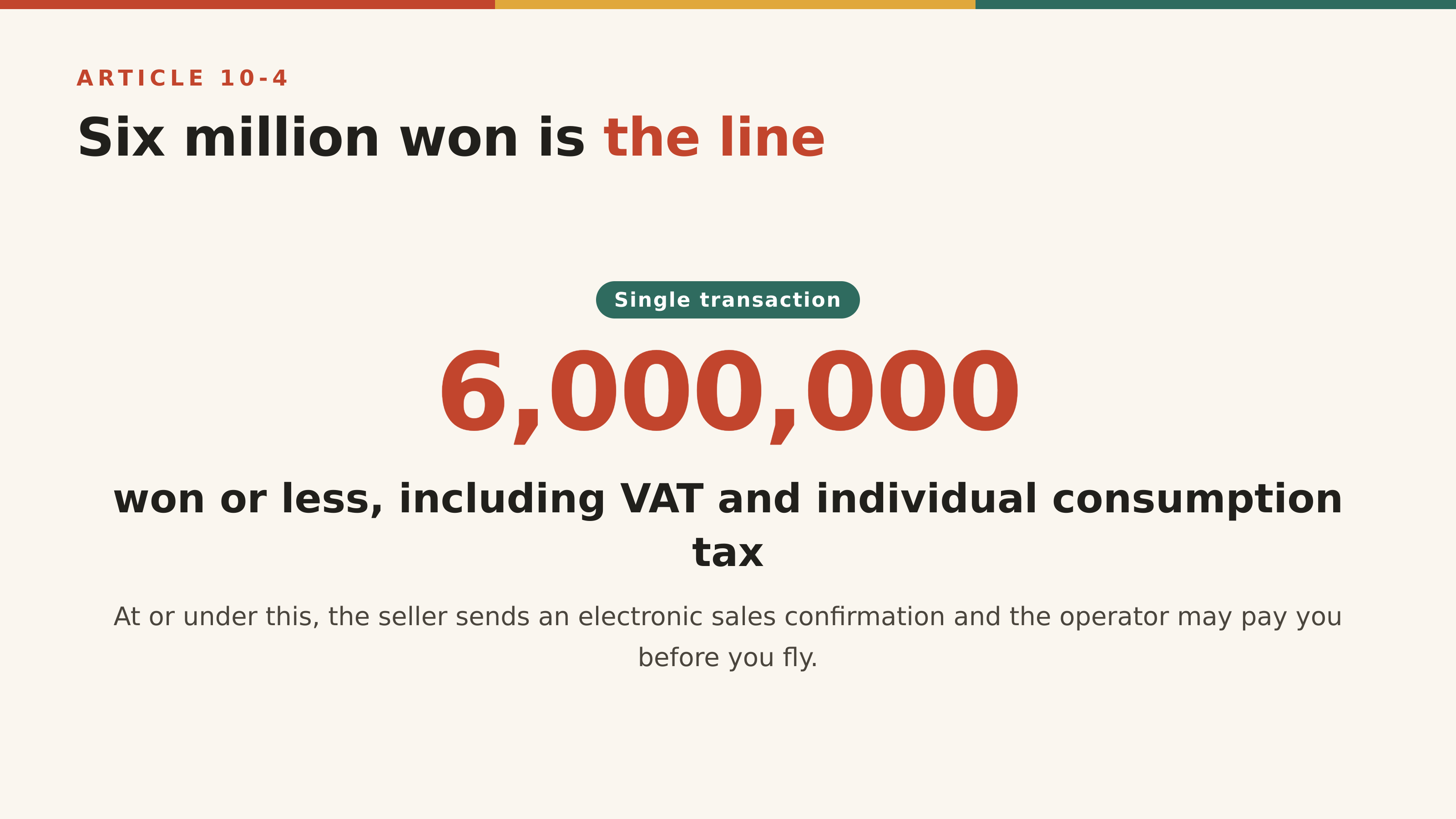
The same decree provides an electronic route. Under Article 10-4, where a single transaction is 6,000,000 won or less including VAT and individual consumption tax, the seller sends an electronic sales confirmation to the refund operator, and the operator may refund or remit the tax amount to you rather than making you wait for the customs check on the way out.
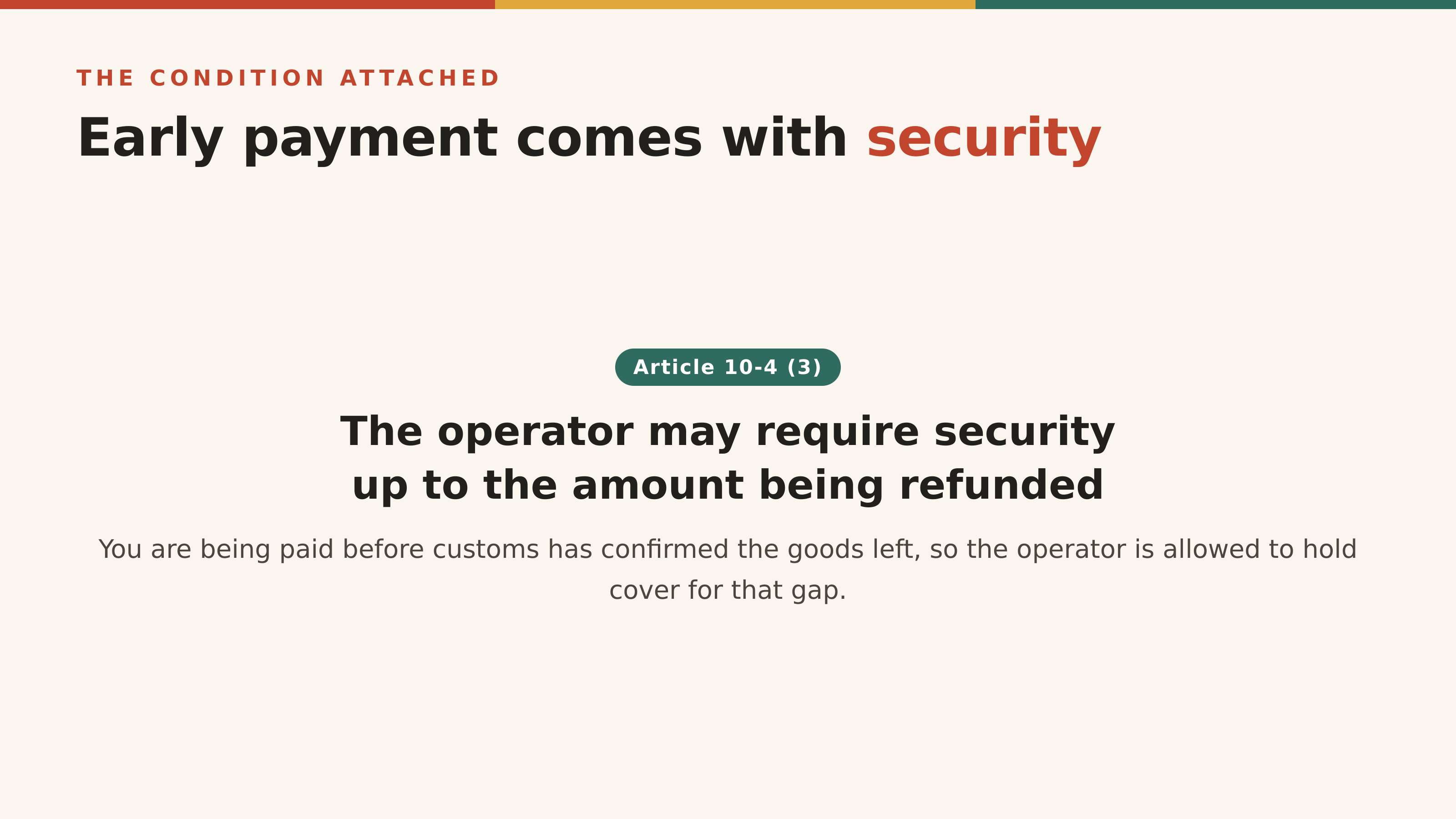
There is a condition attached, and it is reasonable. Because you are being paid before customs has confirmed that the goods actually left the country, the operator may require you to provide security up to the amount being refunded. In practice that is why a card is often taken as a guarantee. Your goods still have to be presented for confirmation at the departure port; getting paid early does not delete that step.
So the decision is not "airport or nothing". It is a question of the size of the transaction and how much time you have on the day you fly.
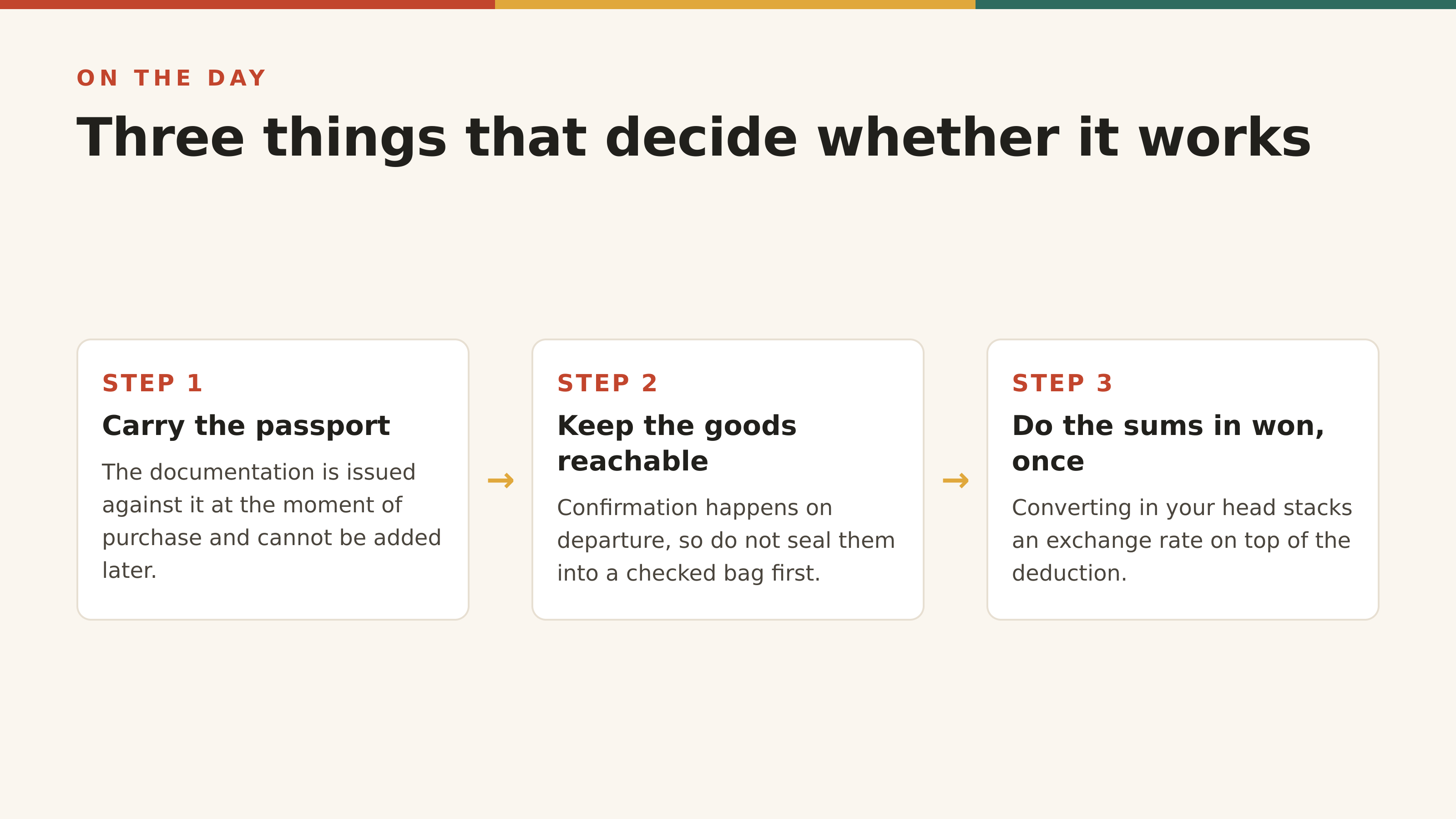
Three things make the difference on the day.
First, keep the passport on you while shopping, not in the hotel safe. The paperwork is issued against it at the moment of purchase, and it cannot be added afterwards.
Second, keep the goods reachable. Confirmation happens on departure, so anything sealed into a checked bag before you have been through the process is a problem you have created for yourself.
Third, do the sums in won, once. If you convert the refund into your own currency in your head, you are stacking an exchange rate on top of a deduction and the number will drift. Where and how Koreans actually change money is a separate question, covered in currency exchange in seoul.
What this adds up to
The ten percent figure is the tax rate applied to the supply value, not a share of your receipt, so the most the scheme can return is about one eleventh of what you paid. From that, the decree expressly permits the refund operator to deduct its approved costs. And for a single transaction of six million won or less, the electronic route exists so that you do not have to queue at the airport to see any of it.
None of this makes the tax refund not worth claiming. It makes the number predictable, which is the part most people get wrong.
Coming next in this series: the receipt itself. Korean receipts carry more information than they look like they do, including the line that decides whether a purchase was eligible in the first place.
FAQ
How much money do I actually get back?
Less than ten percent of what you paid. The tax inside a tax-inclusive price is one eleventh of that price, roughly 9.1 percent, and the refund operator is permitted to deduct its approved costs from that amount. The figure printed on your refund slip is the one to go by.
Can I get the refund without going to the airport counter?
For a single transaction of 6,000,000 won or less including VAT and individual consumption tax, the decree provides an electronic route where the operator can refund or remit before departure. The operator may ask you to provide security up to the refunded amount, and your goods still have to be confirmed on the way out.
Do I need my passport at the moment I buy something?
Yes. The sales documentation is issued against your passport at purchase. It is not something a shop can add later from a receipt, so leaving the passport at your accommodation is the most common way people lose the refund entirely.
Does every shop take part?
No. The tax refund scheme runs through sellers registered for it, which is why some stores display the signage and others do not. If it matters to your budget, ask before you queue rather than after you have paid.
References
- Special Cases Concerning Value-Added Tax and Individual Consumption Tax for Foreign Tourists (Presidential Decree), Articles 5-2, 10-2 and 10-4 — Korean Law Information Center