The Alien Registration Card: The 90-Day Clock Starts the Day You Land

There is a deadline attached to your arrival. Nobody mentions it at the airport, and it is ninety days long.
If you are staying longer than that, you already know you need to register. Almost everyone does. What people get wrong is not the requirement, it is the date the count begins from, and that mistake is expensive in a specific way: it eats the buffer you thought you had, and the office you need cannot be walked into.
So this is the part of getting an alien registration card that actually goes wrong, and how to keep the clock from closing on you.
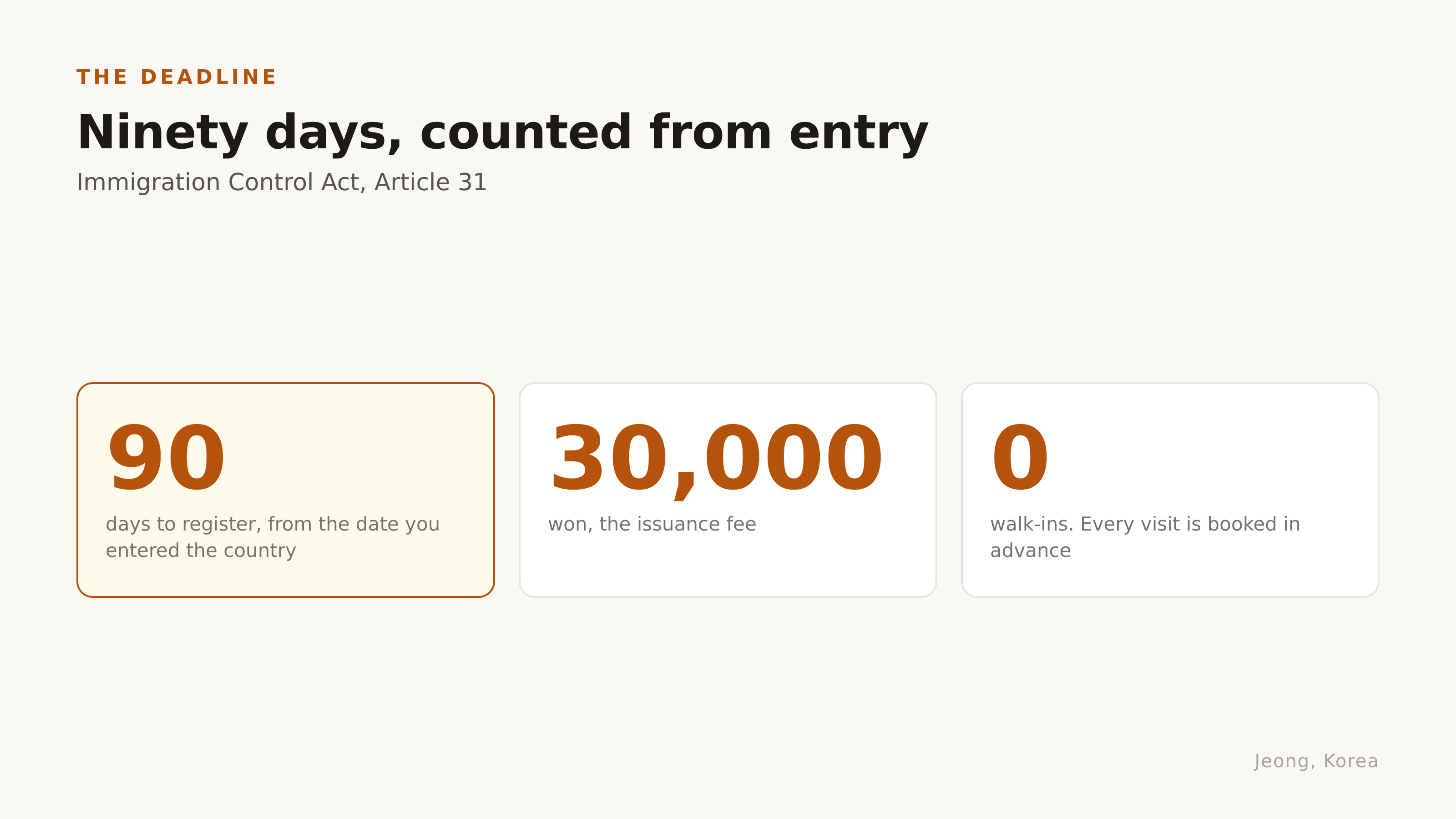
Ninety days from entry, not from anything else
Put your arrival date in the calendar and count from there.
The reason is that the obligation is written that way. Article 31 of the Immigration Control Act requires a foreigner staying more than ninety days to register with the immigration office covering their place of residence, and the ninety days run from the date of entry.
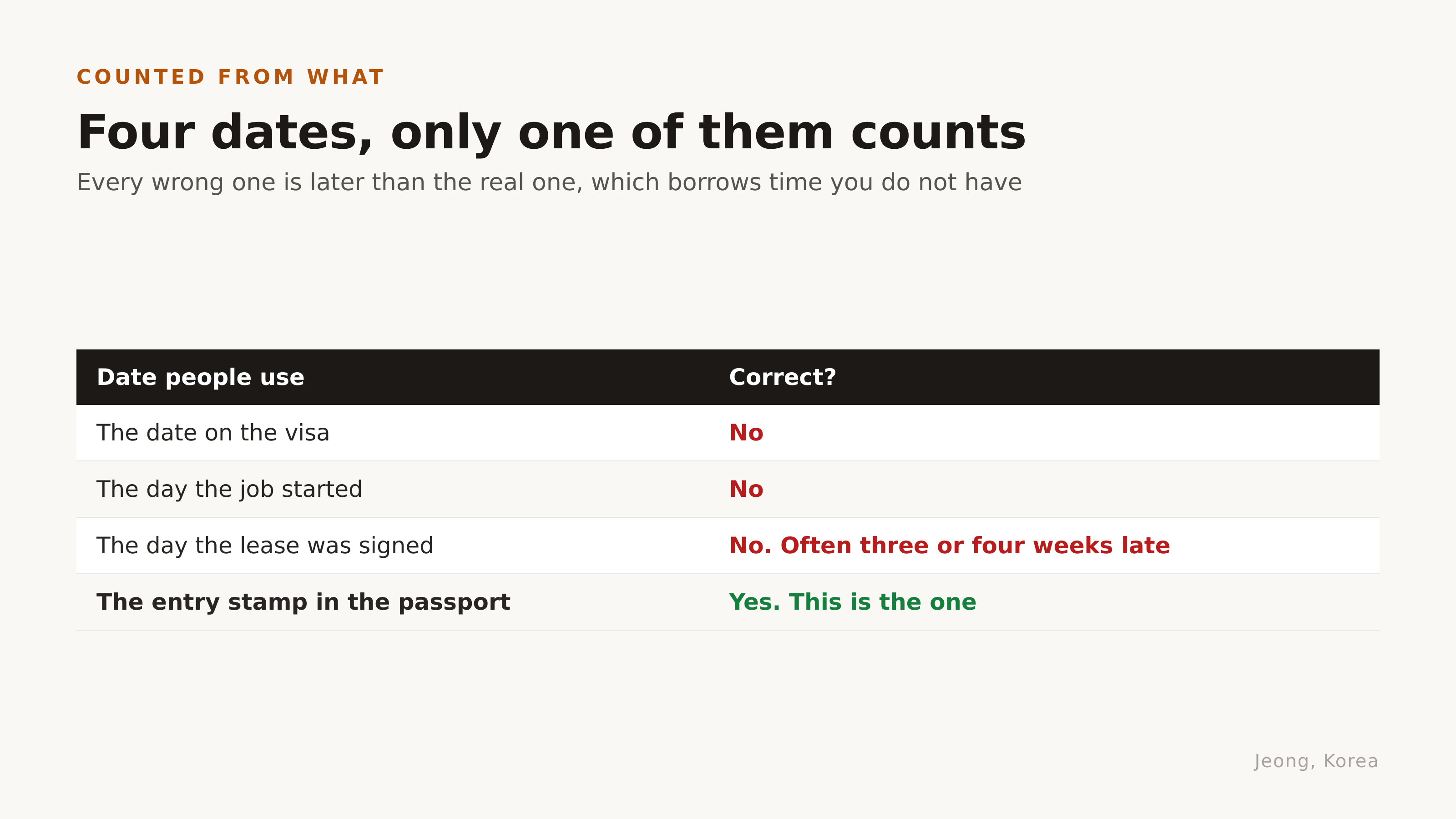
That sounds obvious until you see what people count from instead. The date on the visa. The date the job started. The date the lease was signed, which for a lot of people is three or four weeks after landing because they were in temporary accommodation first. Every one of those is later than the real start date, and every one of them quietly borrows time you do not have.
So the only date that matters is the stamp in your passport. Count ninety from that, and treat every other date as decoration.
The wider order of operations in a first month is its own problem, and getting it wrong stacks: Living in Korea as a Foreigner: Your First 30 Days.
Which brings up the thing that actually catches people.
You cannot walk in, and that is the part that eats the deadline
Book the appointment before you do anything else.
The reason is that immigration offices run on a reservation system. Visits are booked online through Hi Korea, the government's immigration portal, rather than by turning up and taking a ticket. So the question is not whether you can get there inside ninety days. It is whether there is a slot inside ninety days.
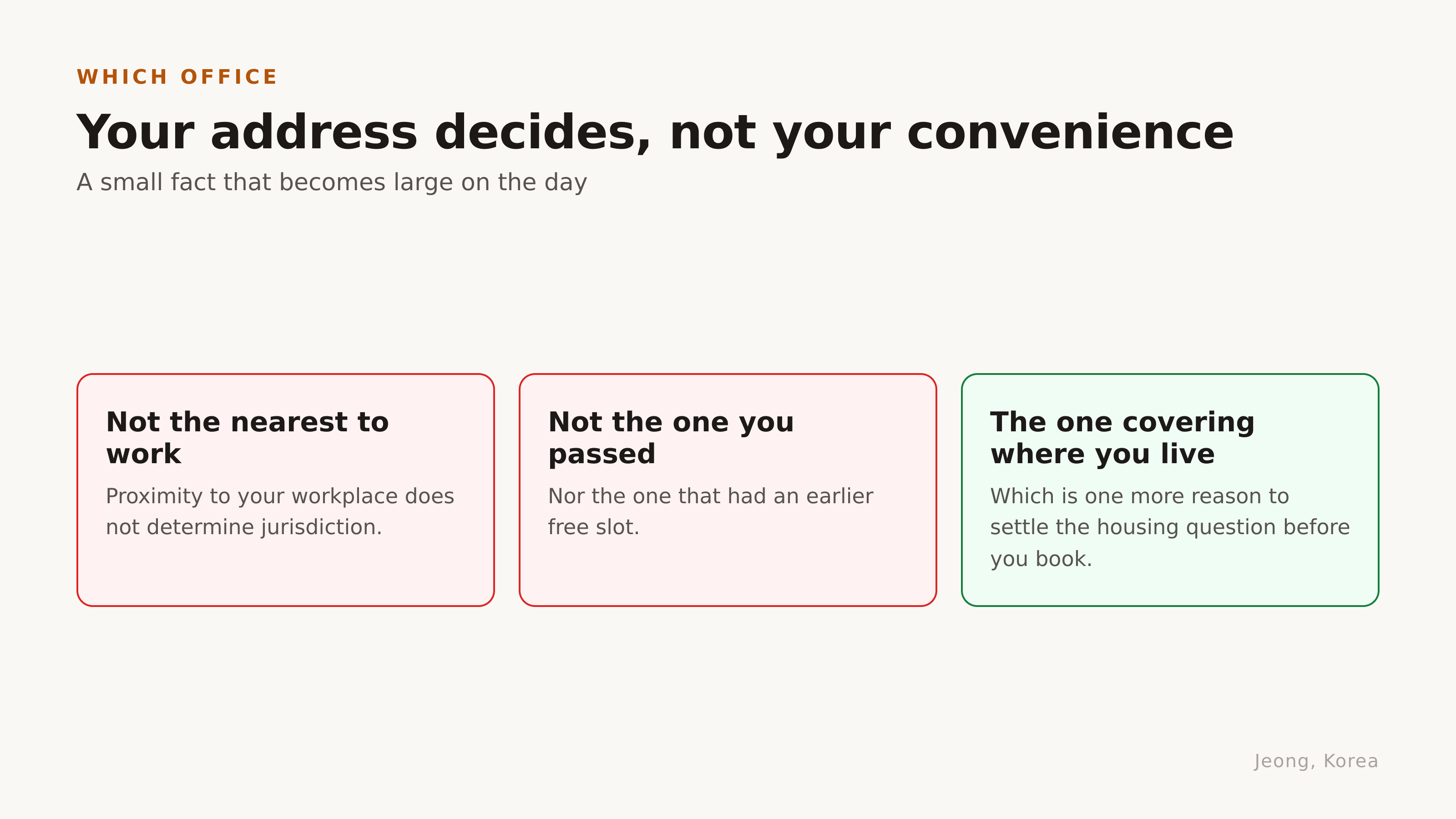
The fee for issuing the card is 30,000 won, and the office you deal with is the one covering where you live, not the one nearest your work or the one you happened to pass. Both of those are small facts that become large if you discover them on the day.
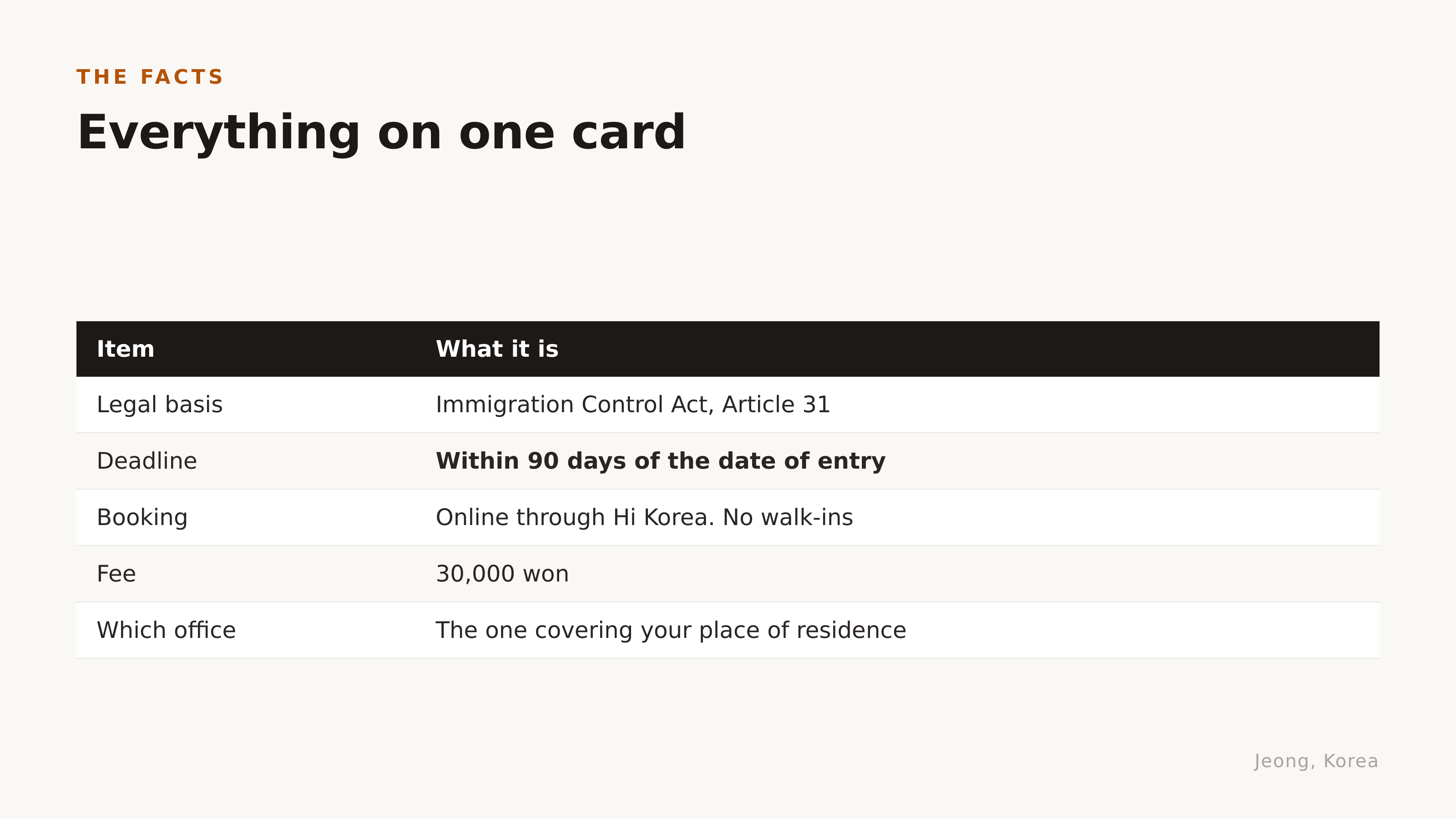
| Item | What it is |
|---|---|
| Legal basis | Immigration Control Act, Article 31 |
| Deadline | Within 90 days of the date of entry |
| Booking | Online through Hi Korea. No walk-ins |
| Fee | 30,000 won |
| Which office | The one covering your place of residence |
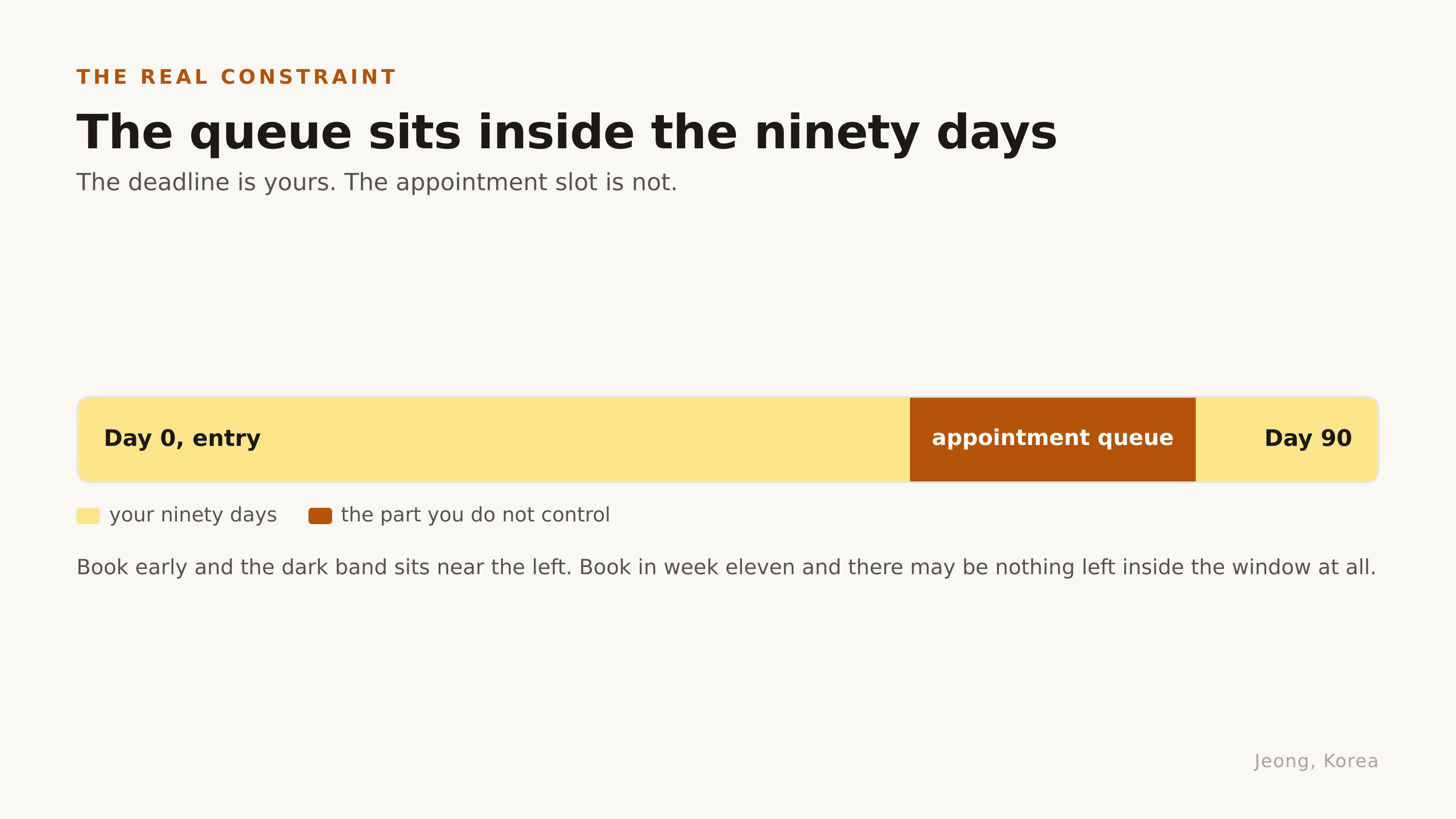
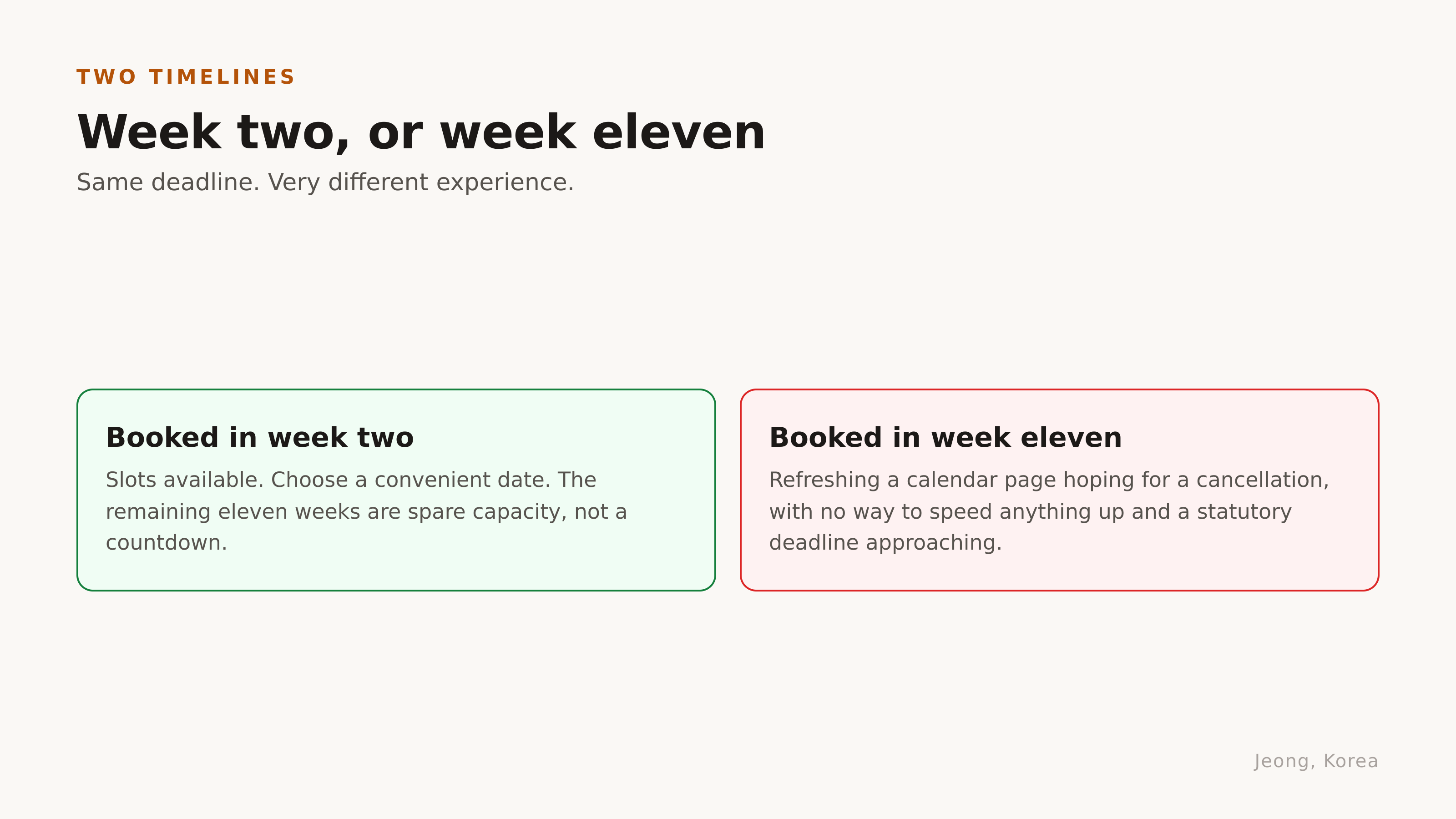
The practical arithmetic is this. Ninety days is your outer limit, the appointment queue sits inside it, and the queue is not something you control. People who book in week two are relaxed. People who book in week eleven are refreshing a calendar page hoping for a cancellation.
So subtract the queue before you plan anything, and book as early as your paperwork allows.
Your registered address decides which office is yours, which is one more reason the housing question comes first: Renting an Apartment in Seoul.
And then there is what the card is actually for.
It is not one document. It is the key to a chain.
Assume that everything else is waiting on this.
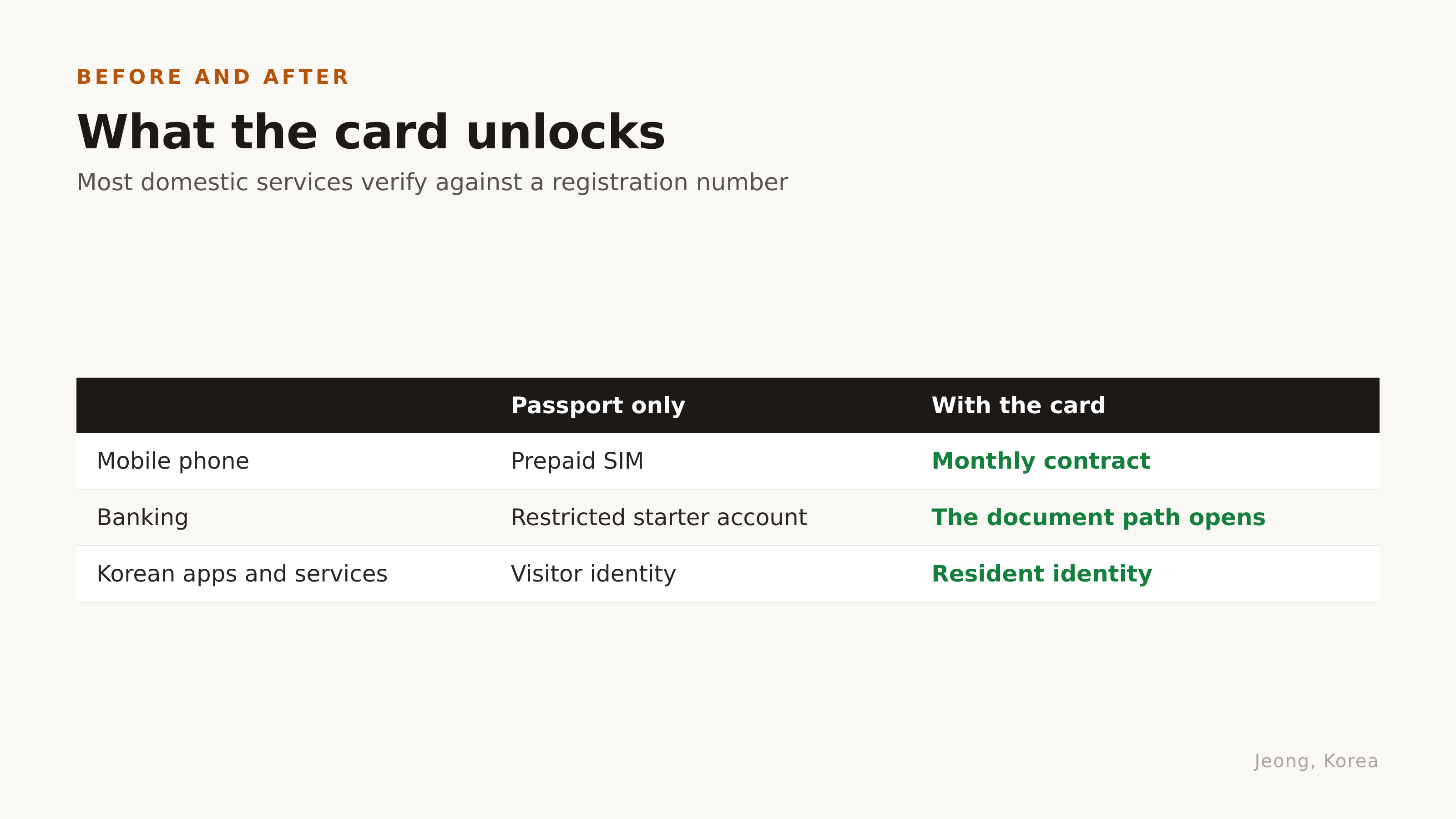
The reason is structural. A great many domestic services here verify identity against a registration number, and for a foreign resident that number lives on the alien registration card. Until the card exists, you are dealing with the passport-only version of each service, and the passport-only version is consistently the smaller one.
You can see it clearly in phone contracts, where a passport gets you a prepaid SIM and a residence card gets you a monthly plan. Korea SIM Card: What You Are Actually Buying lays that split out. Banking has the same shape. So does a lot of what sits behind Korean apps, which tend to assume a resident identity rather than a visitor one.
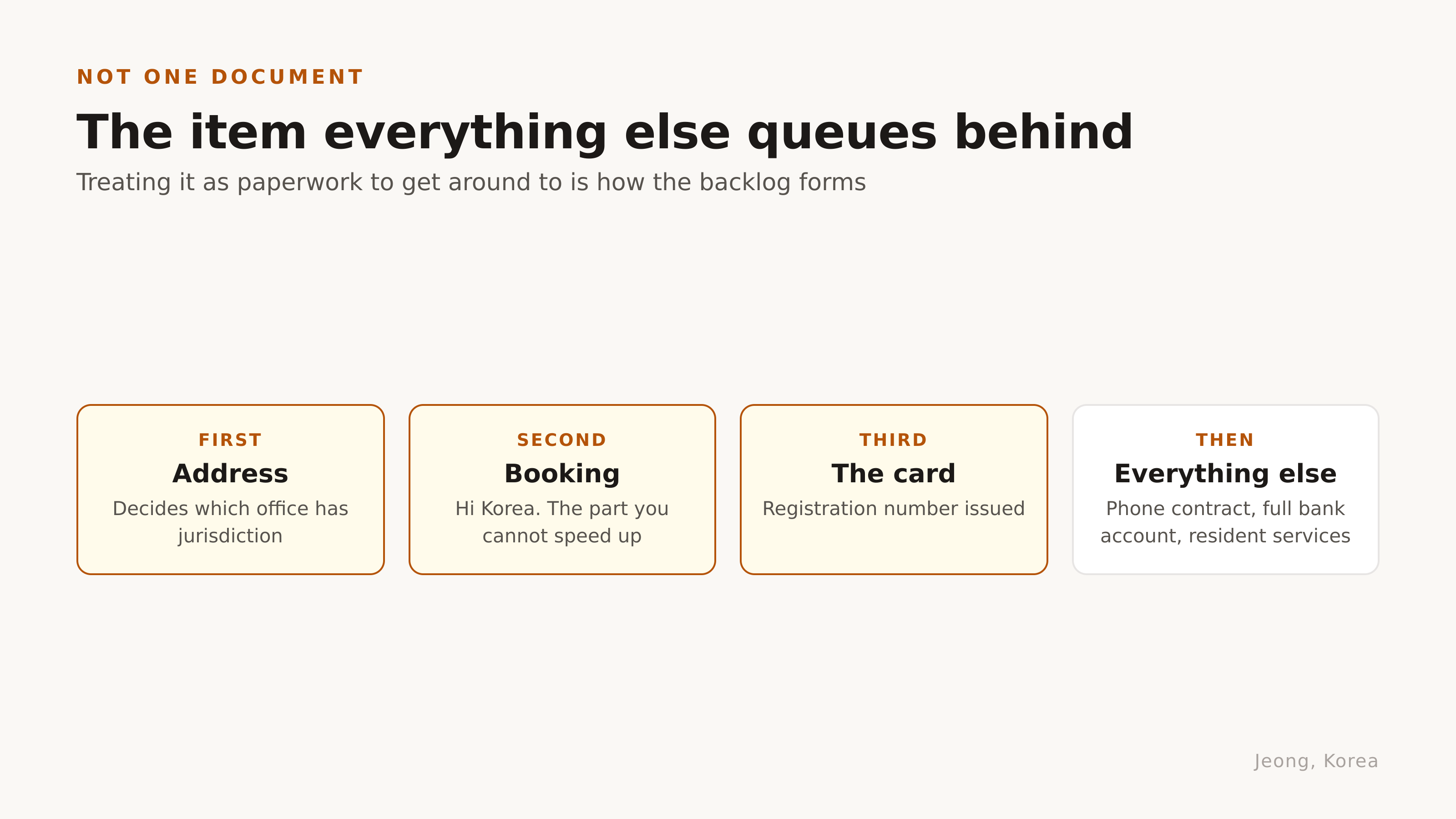
So the alien registration card is not the last item on the arrival list. It is the item the rest of the list is queued behind, and treating it as paperwork to get around to is how people end up two months in with a prepaid phone, a restricted bank account and a growing sense that the country is being difficult.
What this comes down to
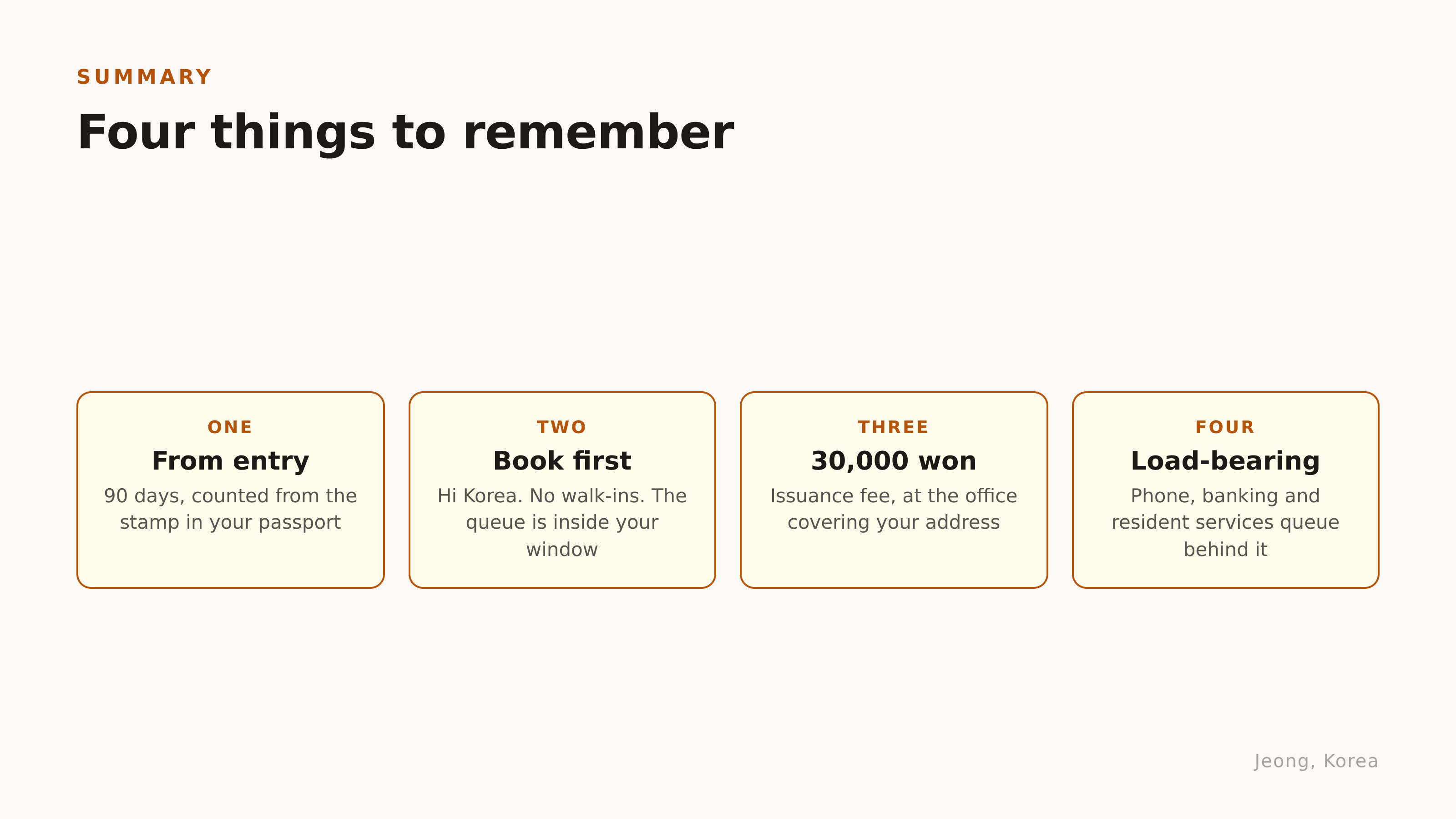
Ninety days, counted from the day you entered the country, is a statutory deadline under Article 31 of the Immigration Control Act. The appointment is booked through Hi Korea rather than by walking in. The fee is 30,000 won. The office is decided by where you live.
And the card is load-bearing. Nearly every other thing you are trying to set up is waiting behind it.
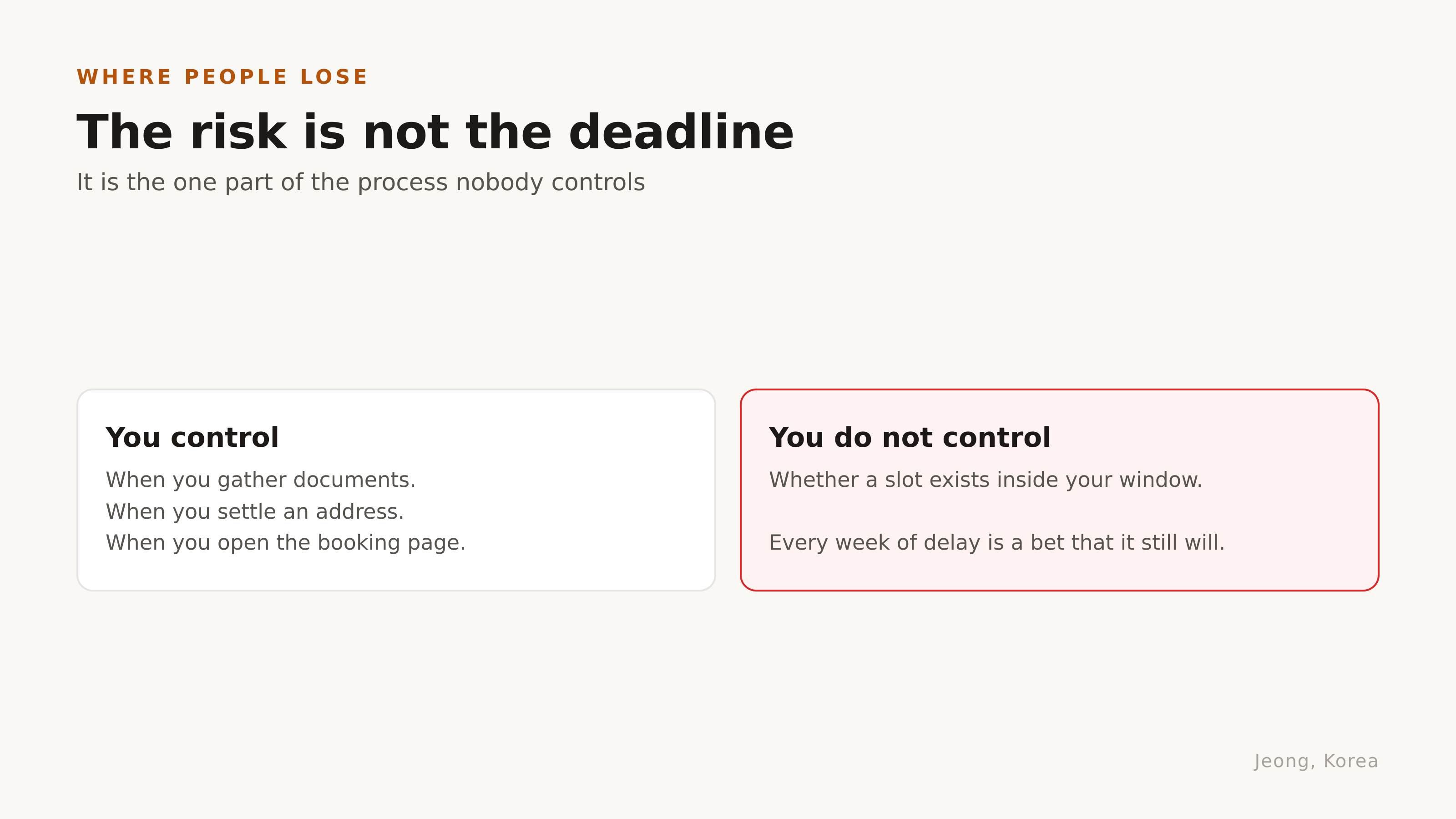
Here is the part I would take seriously if I were you. The ninety days are not the risk. The queue inside the ninety days is the risk, and it is the one thing on this list you have no control over. Every week you leave it, you are betting that the slot will still be there. People lose that bet, and losing it means falling out of compliance with an immigration requirement while you were being organised about everything else.
Open the booking page tonight. Not because the deadline is close, but because the appointment is the only part you cannot fix later.
FAQ
When exactly does the 90 days start?
From your date of entry into the country. Not the visa issue date, not your start date at work, and not the date you signed a lease. Use the entry stamp in your passport.
Do I need to register if I am staying less than 90 days?
The registration obligation under Article 31 applies to foreigners staying more than 90 days. If your stay is shorter, it does not apply, but check your specific visa conditions, since some statuses carry their own requirements.
Can I just turn up at the immigration office?
No. Visits are booked in advance through the Hi Korea portal. This is the step people underestimate, because the appointment queue sits inside your 90-day window and you cannot speed it up.
How much does the alien registration card cost?
The issuance fee is 30,000 won.
Which immigration office do I go to?
The one with jurisdiction over your place of residence. That means your address determines your office, so it is worth settling your housing before you book.
References
출처 : 출입국관리법 제31조 (Immigration Control Act, Article 31) — foreign resident registration obligation and the 90-day period from entry 출처 : Hi Korea (hikorea.go.kr), immigration office visit reservation system 출처 : Ministry of Justice / Korea Immigration Service, alien registration issuance fee of 30,000 won