Jeonju: Korea's Only UNESCO City of Gastronomy, and the Train There Leaves From Yongsan

Most people come to Jeonju for one bowl of rice. That is fair enough. It is also the smallest part of why the city has the title it has.
UNESCO added Jeonju to its Creative Cities Network in 2012 as a City of Gastronomy. It was the first Korean city to hold that designation and the fourth in the world. UNESCO's own entry calls it the Taste City, and the reasoning underneath that phrase is not a single famous dish. It is a whole regional food system that happens to have produced one dish famous enough to travel.
Two hours south of Seoul, and the trains do not leave from where you expect.
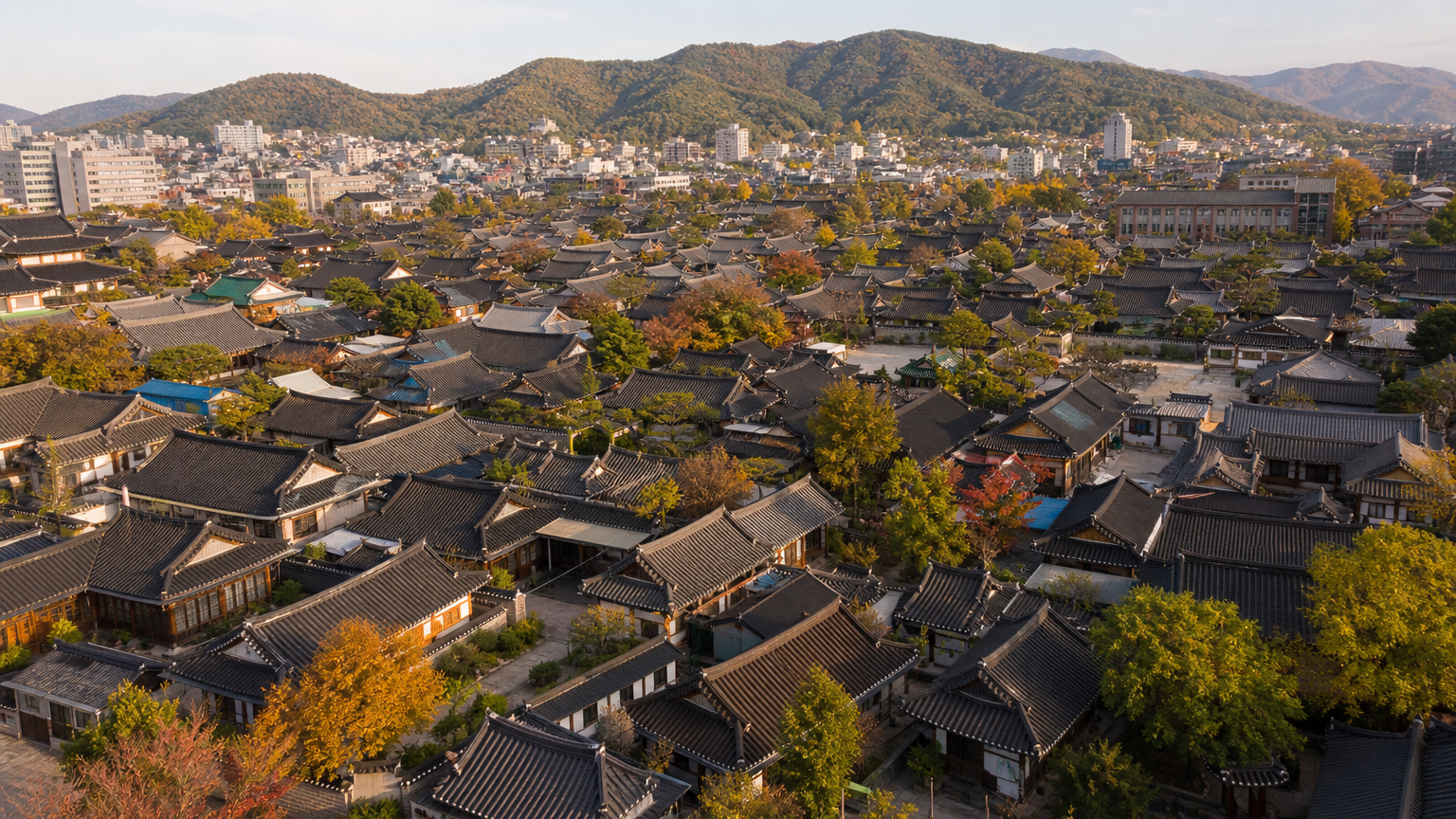
The title is about a food system, and bibimbap is the part that travelled
Jeonju sits at the top of the Honam plain, which is the rice country of the peninsula. The Yellow Sea is to the west, and the mountains of Muju, Jangsu and Jinan are to the east. That geography is the whole argument. Rice from the plain, salted fish and seafood from the coast, wild greens from the mountains, and a long local tradition of fermenting all of it.
UNESCO's citation points at that tradition rather than at any restaurant. The city runs the Jeonju Bibimbap Festival, and it also runs the International Fermented Food Expo, and it is the second one that explains the first. Soy sauce, soybean paste, chilli paste and salted seafood are the base layer of Korean cooking, and this is where a lot of that base layer was refined and written down. The bowl of bibimbap is what you get when a place with that much fermented depth decides to put everything in one dish.
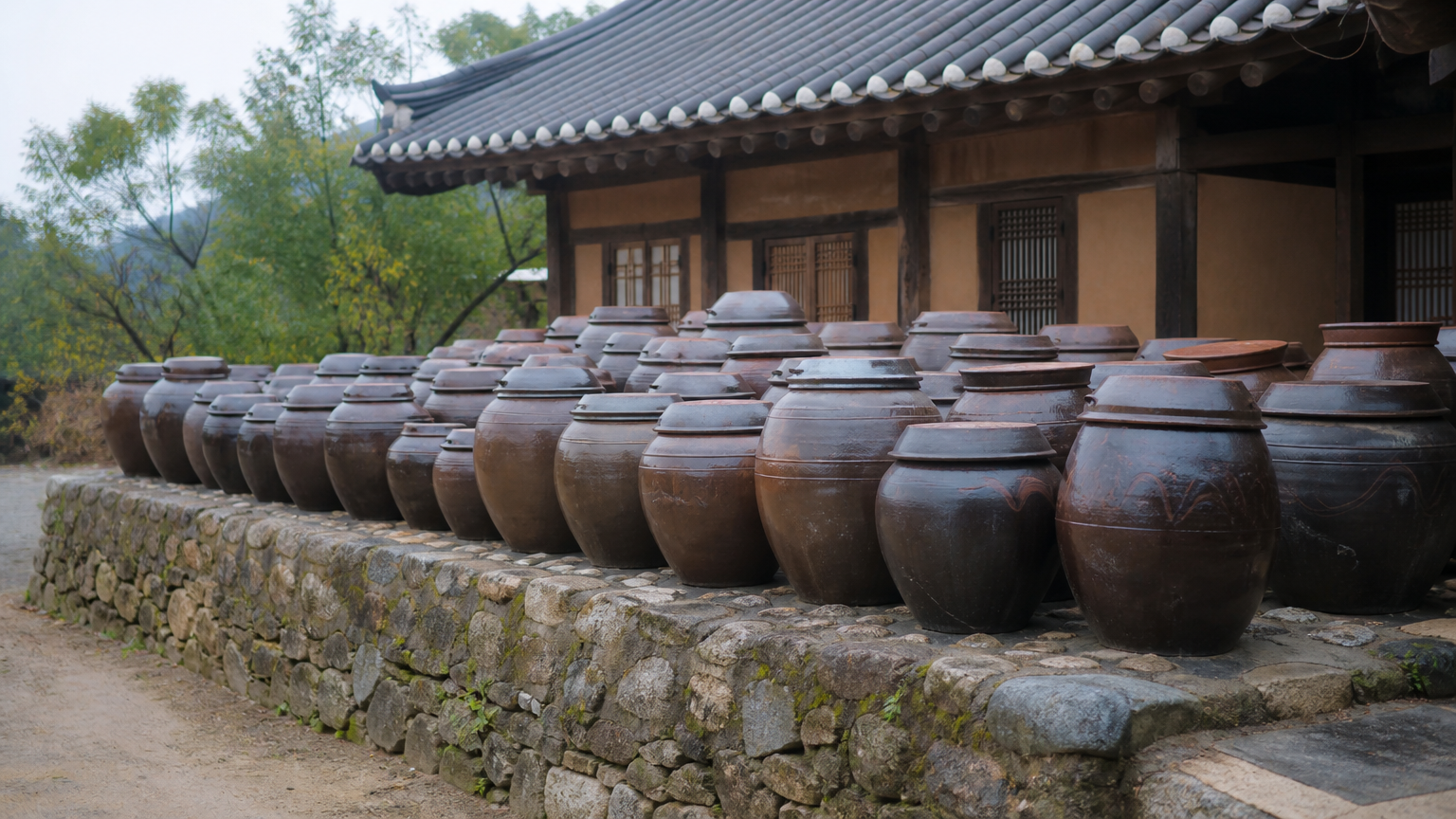
So the useful way to think about the city is not as a place with a famous dish. It is a place where the ingredients of Korean food are unusually good, and where the local habit is to eat a lot of small things rather than one large thing.
Which is worth knowing before you book, because getting here is the part people get wrong.
The train does not leave from Seoul Station, and that catches people out
Jeonju is on the Jeolla Line. KTX services run from Yongsan, not from Seoul Station.
This matters more than it sounds. Seoul Station and Yongsan are both major stations, they are three stops apart on Line 1, and almost every English-language itinerary tells you to go to Seoul Station because that is where the Busan trains leave from. If you turn up at Seoul Station with a ticket for the Jeolla Line, you have a twenty-minute problem before you have even started.
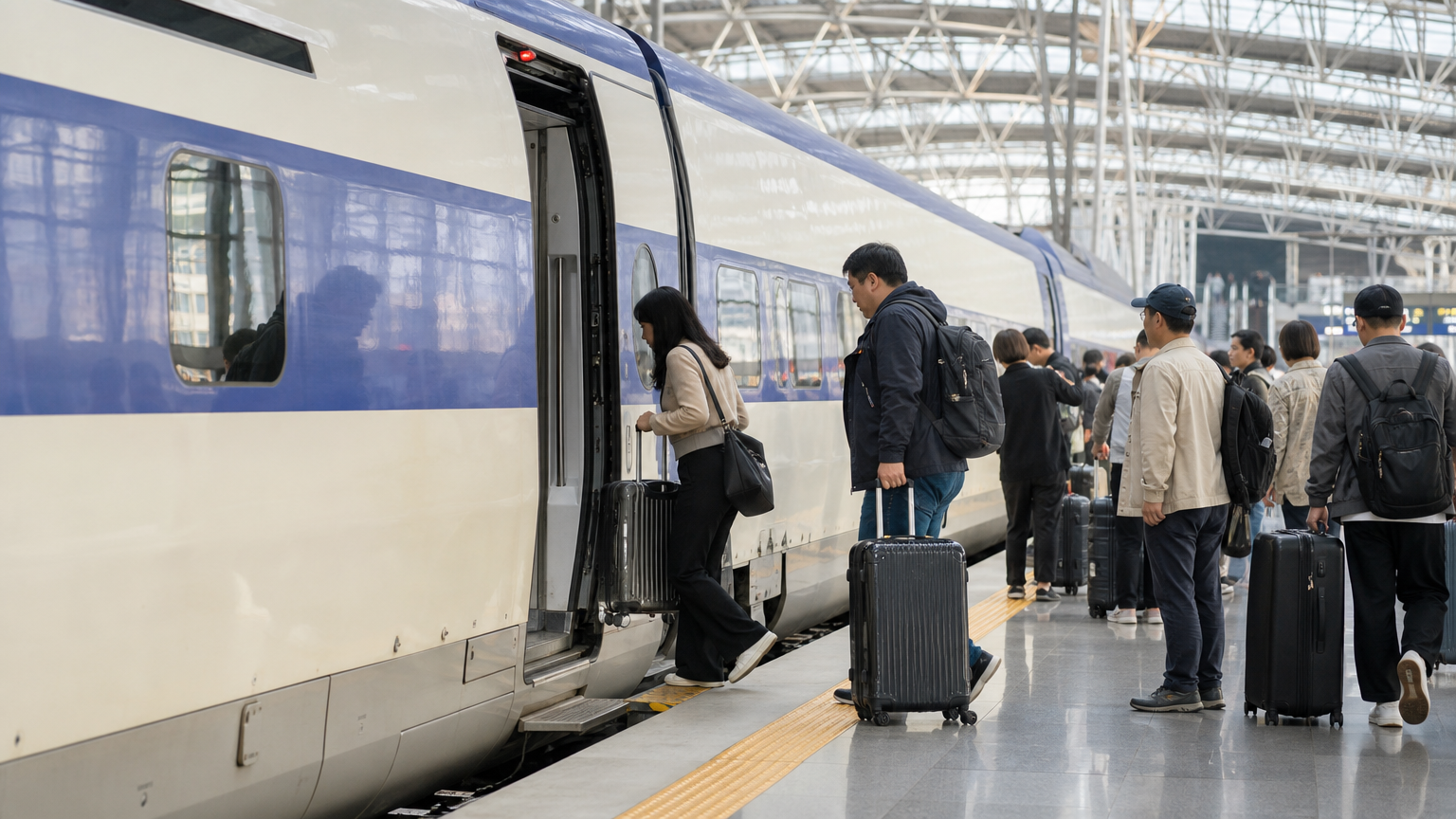
The journey itself is short. Fastest services run about 1 hour 33 minutes, most run 1 hour 44 to 1 hour 48 minutes, and there are roughly 28 trains a day in each direction, with the first out around 06:25 and the last back around 23:11. That frequency is what makes this a genuine overnight trip rather than an expedition. You can leave Seoul after breakfast and be eating lunch in the old quarter.
| Detail | What to know |
|---|---|
| Departs from | Yongsan Station, not Seoul Station |
| Line | Jeolla Line |
| Fastest service | About 1 hr 33 min |
| Typical service | About 1 hr 44 to 1 hr 48 min |
| Trains per day | Around 28 each way |
| First and last | About 06:25 out, about 23:11 back |
Booking a Korean train with a foreign card has its own set of failure points, and they are the same ones that catch people on the Busan route: Seoul to Busan KTX: Why Your Card Gets Rejected, and How to Actually Book It covers what actually works.
Once you are here, the city is smaller than the guides make it look.
The hanok village is one afternoon, and the eating is spread across the city
Jeonju Hanok Village is the reason most people come and it is not the reason to stay. It is a dense grid of traditional roof lines in Gyo-dong and Pungnam-dong, it is genuinely beautiful, and on a weekend afternoon it is extremely full. You can walk the whole thing comfortably in an afternoon.
The rest of the city is where locals eat, and it is close. Nambu Market sits directly against the southern edge of the village, which means the transition from photographed streets to working market is a two-minute walk. That market has a night market on weekends and a second-floor youth market that runs a completely different kind of food from the ground floor.
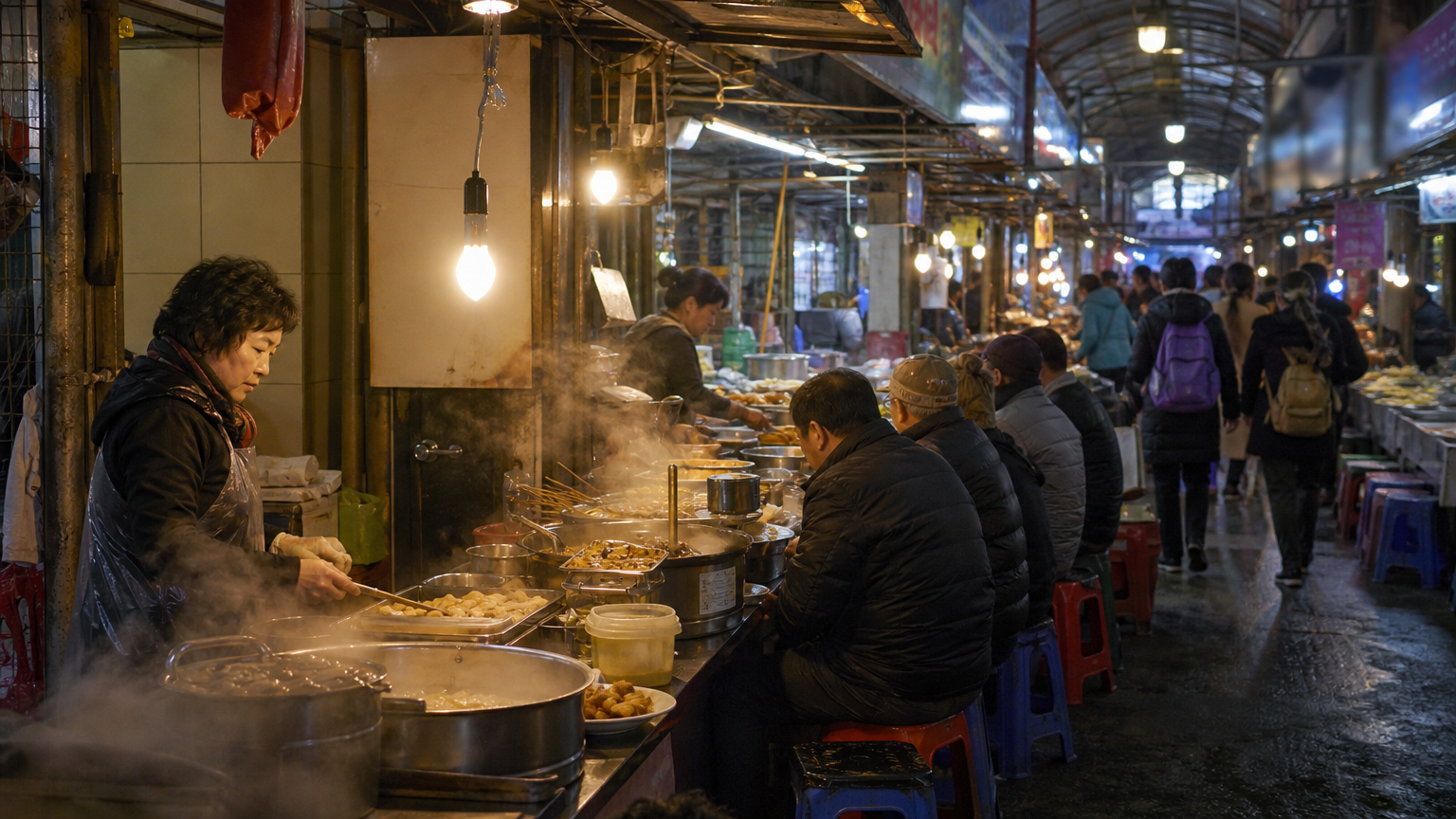
Three things worth ordering that are not bibimbap:
| Dish | What it is | When it belongs |
|---|---|---|
| Kongnamul gukbap | Bean sprout soup with rice, served scalding | Breakfast, or after drinking |
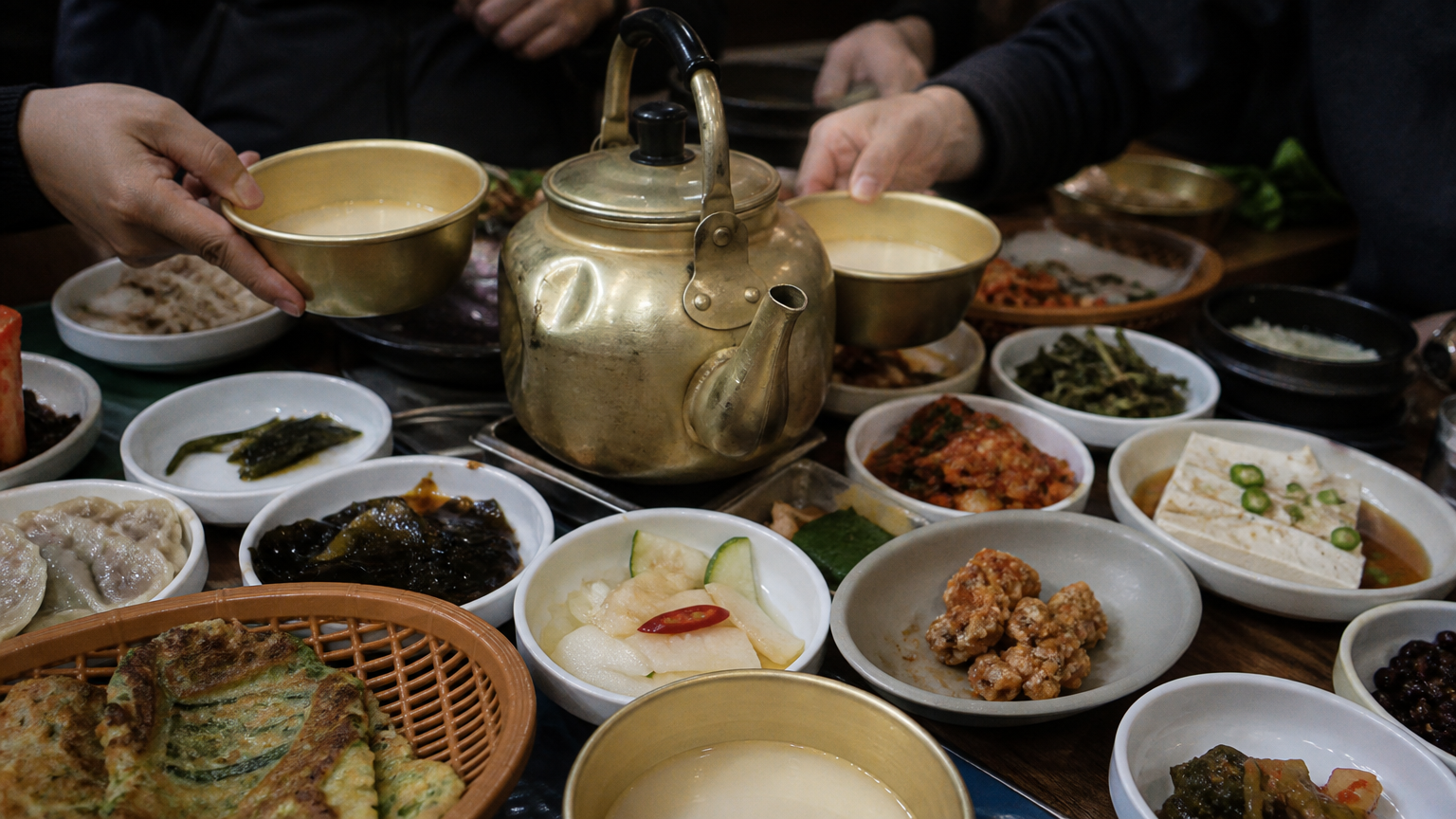
| Makgeolli by the kettle | Rice wine ordered by the pot, with free food that keeps arriving | Evening, in a makgeolli alley |
| Gamaek | Convenience-shop beer with dried fish, grilled on the spot | Late, cheaply |
The makgeolli alleys work on a rule that surprises people. You order the alcohol and the food comes with it, and it keeps coming as you order more kettles. You are not choosing dishes. You are choosing how many rounds you want, and the kitchen decides the rest.
If that sounds like it needs some ground rules, Korean Dining Etiquette: The Rules Koreans Actually Follow covers the parts that are real and the parts that are guidebook invention.
Autumn is the busiest season here and the best one, and the timing question is the same one that governs the whole country: Autumn in Korea: Don't Pick the Dates, Pick the Latitude.
FAQ
Is Jeonju a day trip from Seoul, or do I need to stay over?
It works as a day trip because the train is under two hours, but it is a much better overnight. The city changes after dark. The village empties of day visitors, the market night stalls open, and the makgeolli alleys are an evening thing that a day trip cannot reach.
Do I go to Seoul Station or Yongsan?
Yongsan. The Jeolla Line KTX services run from Yongsan Station. Seoul Station is three stops away on Line 1 if you get it wrong, but that is twenty minutes you did not budget.
Is Jeonju bibimbap actually different, or is it a marketing name?
It is genuinely different, and the difference is in the rice rather than the toppings. That is its own subject and it is covered separately.
Is one day in the hanok village enough?
For the village itself, yes. An afternoon covers it. What one day does not cover is the food, because the eating here is spread across a market, a set of alleys and a breakfast dish, and those happen at different hours.
The short version
Jeonju has been a UNESCO City of Gastronomy since 2012, the first in Korea and the fourth in the world, and the citation is about a regional food system rather than about one dish. The trains leave from Yongsan and not from Seoul Station, they take about an hour and three quarters, and there are around 28 a day. The hanok village is one good afternoon. The food is the reason to stay a night.
The rice bowl still deserves its own explanation, because the thing that makes it different is not visible in the photograph.
Sources
UNESCO Creative Cities Network, Jeonju entry: designation year, City of Gastronomy status, and the festivals and institutions cited in the listing. https://www.unesco.org/en/creative-cities/jeonju
Korail Jeolla Line timetable: departure station, journey times and daily service count between Yongsan and Jeonju.
Jeollabuk-do official tourism service: Jeonju Hanok Village location and the districts it covers. https://tour.jb.go.kr/travel/info/view.do?category\_top\_id=a&menuCd=DOM\_000000102003002000&contentsSid=38&ctnt\_id=20976