Haeundae: Every Other Busan Beach Closes on 31 August. This One Does Not.

On 1 September, six of Busan's beaches are closed and one is not.
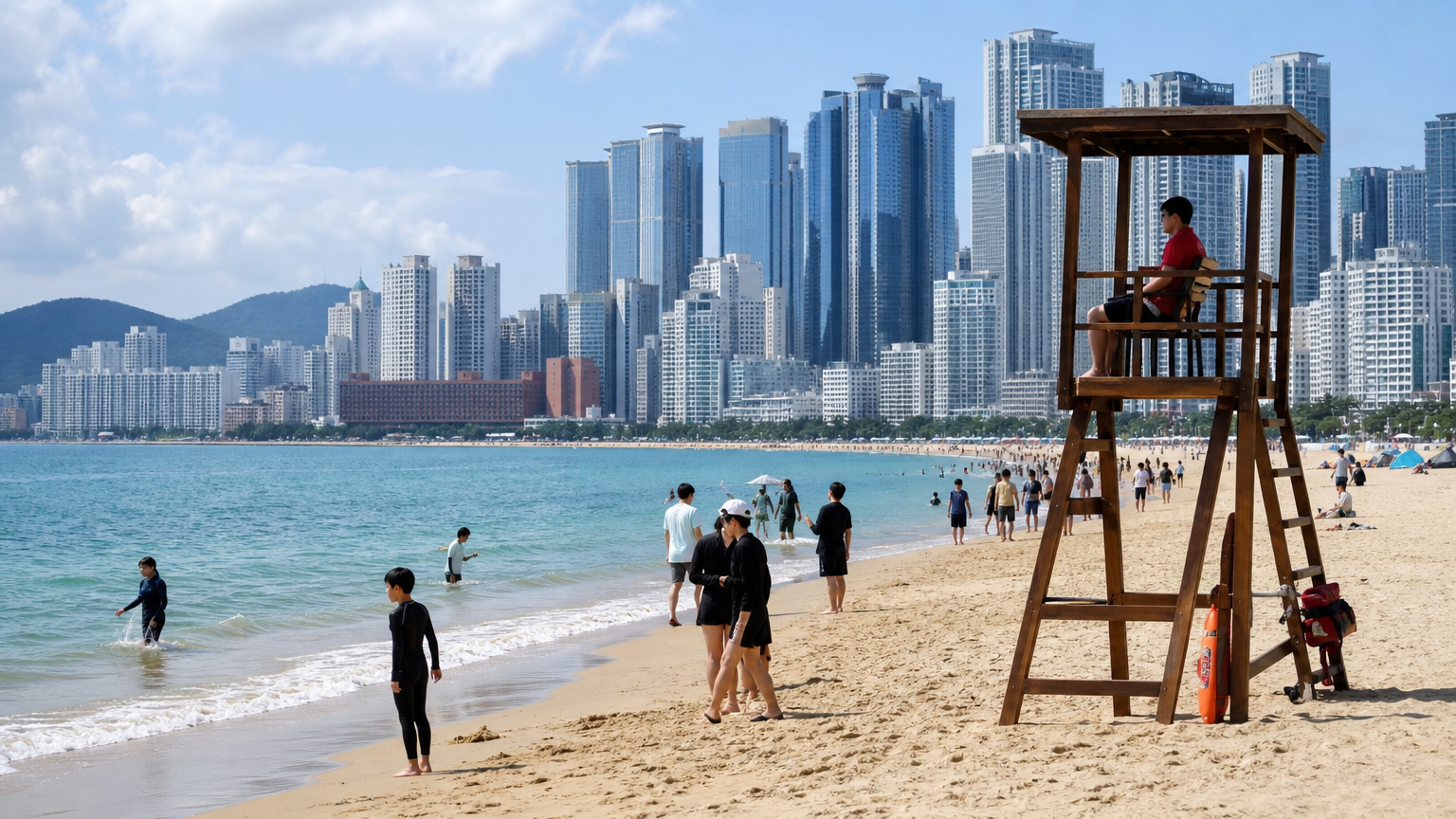
Haeundae runs from 26 June to 15 September — eighty-two days, the longest season in the city. Songjeong opens on the same June date but shuts on 31 August. Gwangalli, Songdo, Dadaepo, Ilgwang and Imnang open on 1 July and also close on 31 August.
So there is a two-week window at the start of September when the answer to "which Busan beach should I go to" has exactly one entry. Almost nothing written in English mentions this, because almost everything written in English about Korean beaches was written with July in mind.
What "open" actually buys you
A Korean beach in season is a managed facility, not simply a stretch of sand you are allowed to stand on. Haeundae's official hours are 09:00 to 18:00, and inside those hours the district runs ten observation towers, two patrol teams, seven rescue boxes and a defibrillator.
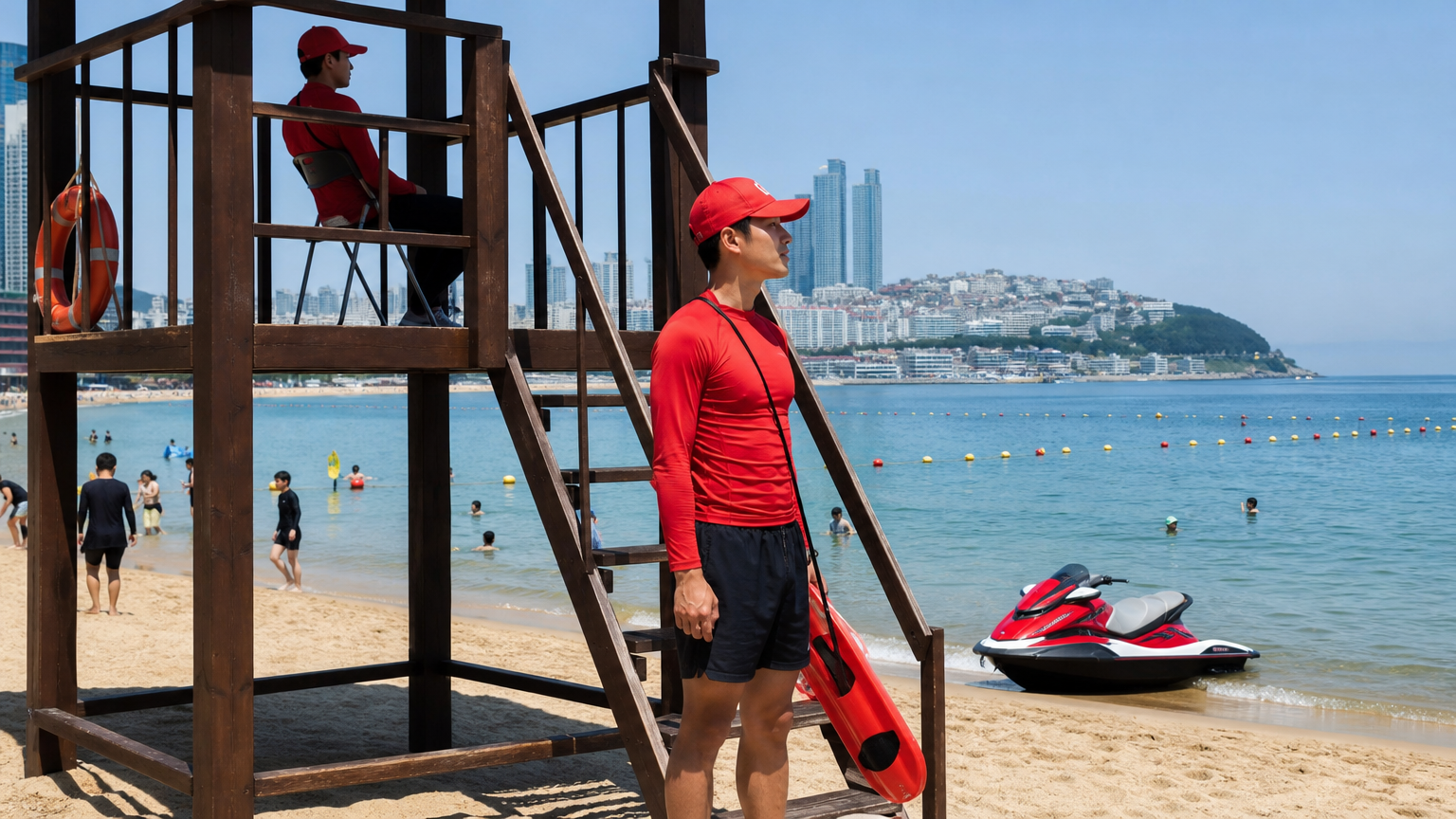
Outside the season the sand does not disappear and nobody stops you walking on it. What disappears is all of that. No lifeguards, no rental stands, no supervised swimming zone. In early September at Gwangalli you can sit on the beach; at Haeundae you can swim in it with someone watching.
That distinction is the whole reason the dates matter.
Water quality is checked before the season opens. In 2026 the Busan Institute of Health and Environment tested all eight of the city's beaches for enterococci and E. coli in the water and five heavy metals in the sand, and rated every one of them suitable.
And the thing everyone actually worries about — being overcharged?
The rental prices are published now, and that is new
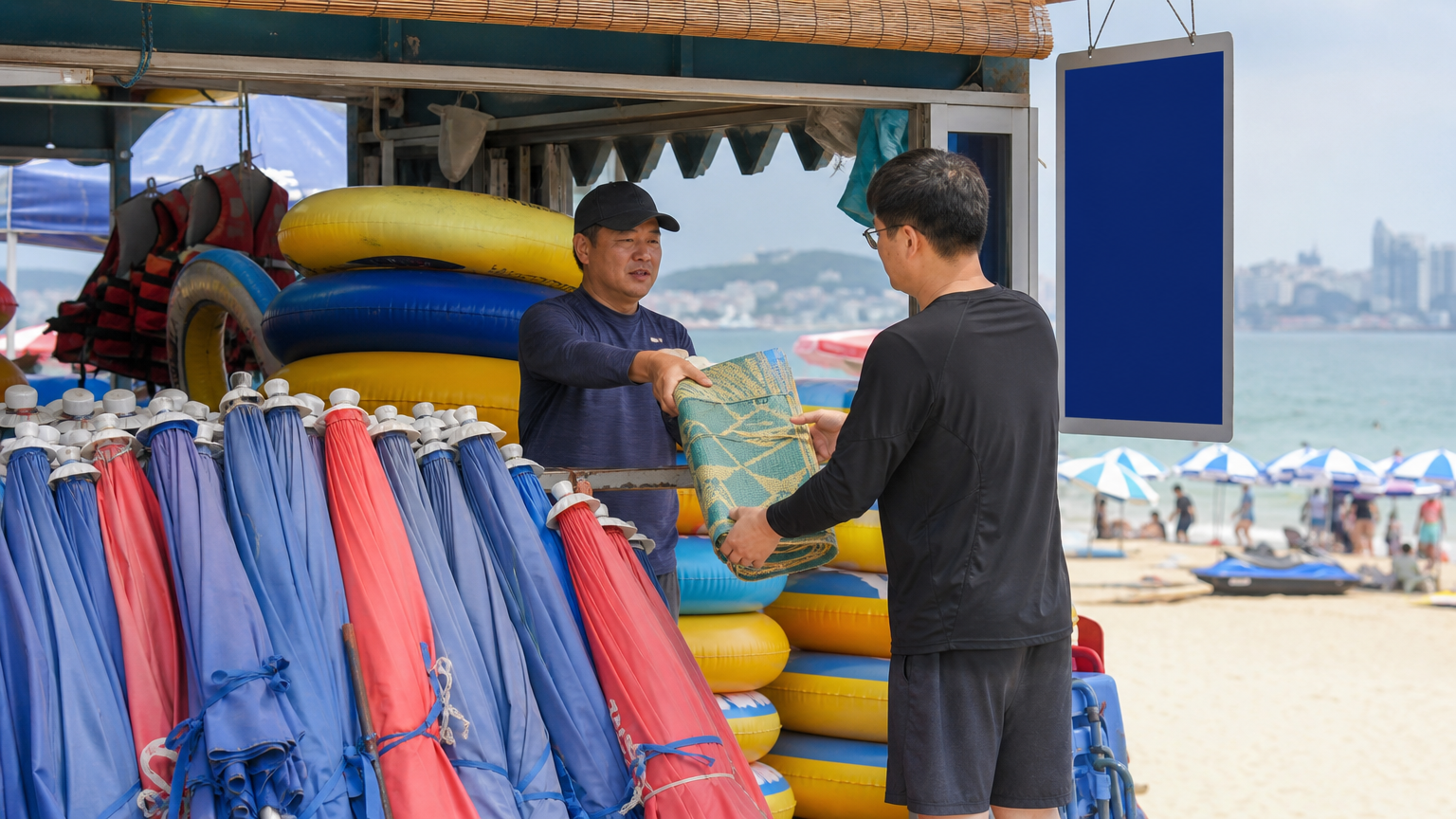
Korean beaches had a reputation for improvised pricing. A parasol cost whatever the person renting it decided you looked like you would pay. From 2026 there is a standard price system: local governments publish the rates for parasols, tubes and showers on their websites and post them on site.
For Haeundae, the published list runs:
Parasol, including mat — 10,000 won per use. The same price for a tube, and the same for a beach bed.
Life jacket — 5,000 won per use.
Air for your tube — 2,000 won small, 3,000 won large. Yes, inflation is a separate line item.
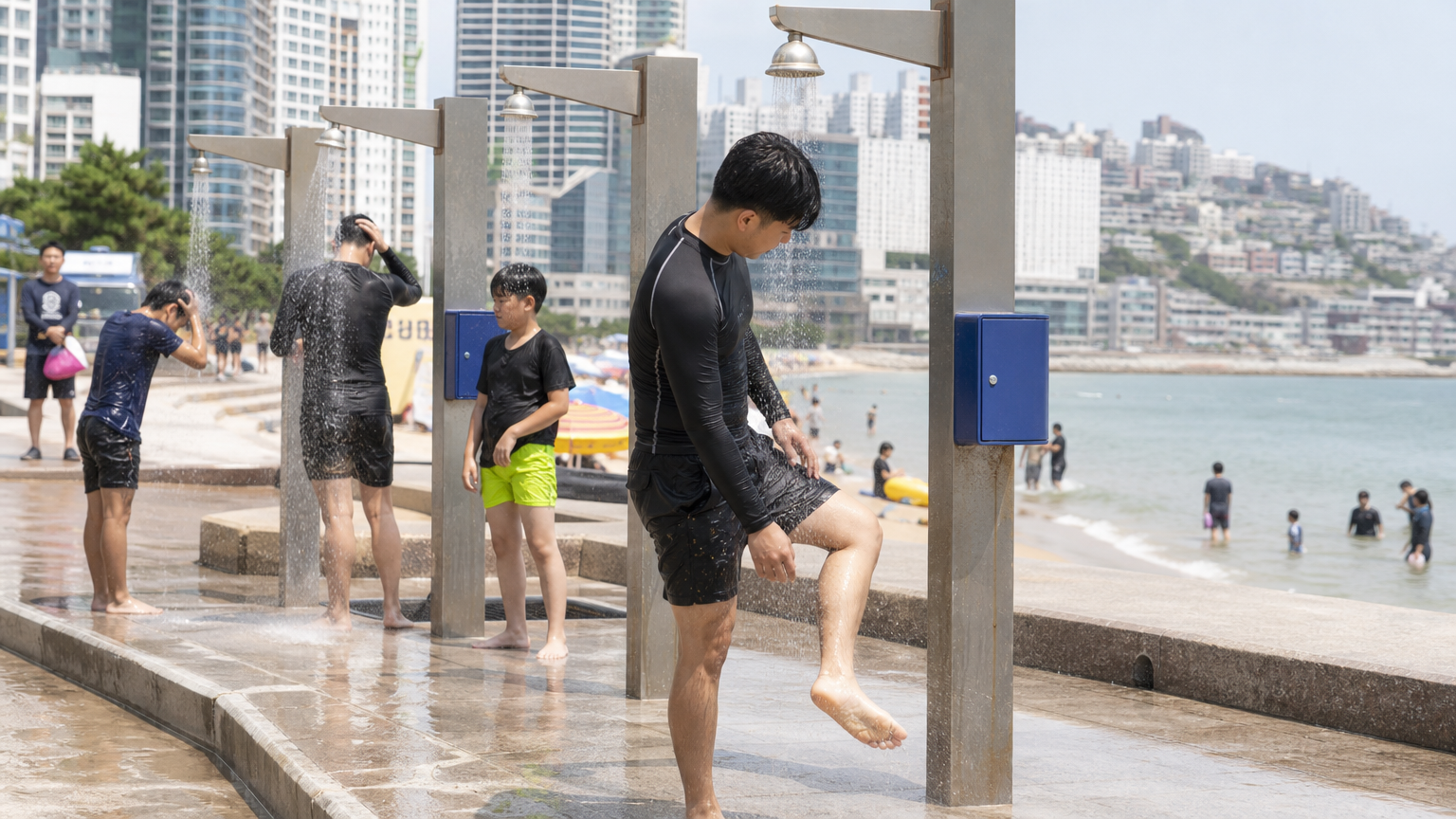
Shower and changing room — 1,000 won for sixty seconds. The clock is not a metaphor.
Lockers — 1,000, 3,000 or 4,000 won by size.
Large boats rent at 4,000 won, available 1 July to 31 August and at Haeundae only, which means that particular item is gone by the time the September window opens.
The practical use of a published list is not that it is cheap. It is that you can check it. If someone quotes you a different number, the rate card is on the district website and posted at the stand, and pointing at it is a normal thing to do rather than a confrontation.
So what does the September window actually feel like?
Two weeks that are better than July, with one condition
The reason Haeundae extends into September is the same reason it is worth going then. The heat holds. The crowds do not.
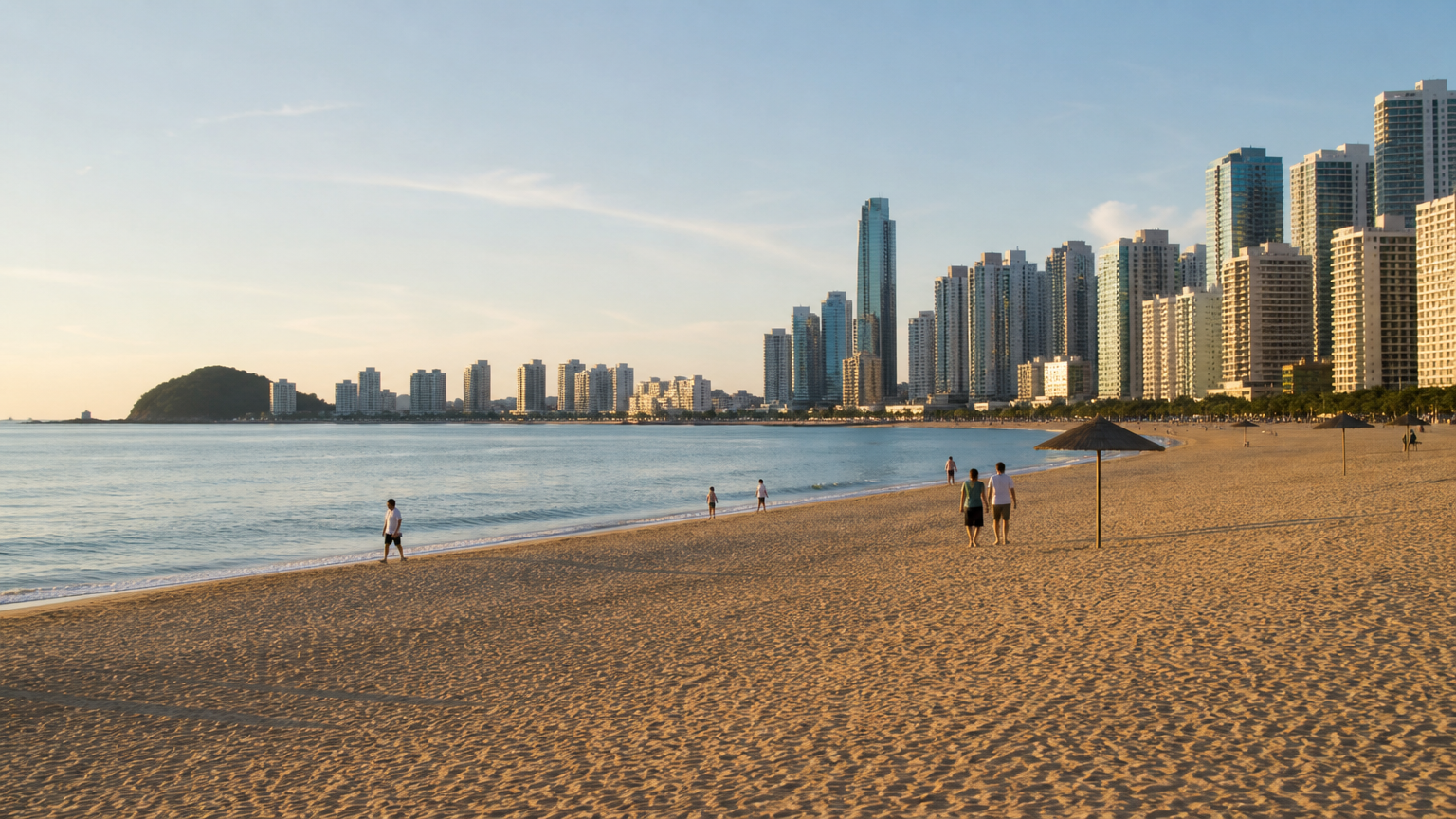
July and August at Haeundae are genuinely crowded — this is the most famous beach in the country and the whole country knows it. The first half of September keeps the operating hours, keeps the lifeguards, keeps the rentals, and loses most of the people.
The condition is the calendar. On 16 September it closes like the others, and everything in the paragraph above stops being true. If you are planning around this, the window is 1 to 15 September and it does not stretch.
One more piece of context worth having: the sea is not the only supervised water in Korea with a hard closing date. Seoul's outdoor pools run a similarly short season on similar logic: Hangang Swimming Pool: 5,000 Won in the Middle of Seoul
And when you come off the sand, Busan's actual argument for itself starts: Busan Food: What People From Busan Actually Eat
FAQ
Can I still swim at Haeundae after 15 September?
You can enter the water — nobody prevents it. But the beach is out of season, which means no lifeguards, no supervised zone and no rental stands. Treat it as open water rather than a managed beach.
Are the other Busan beaches worth visiting in September?
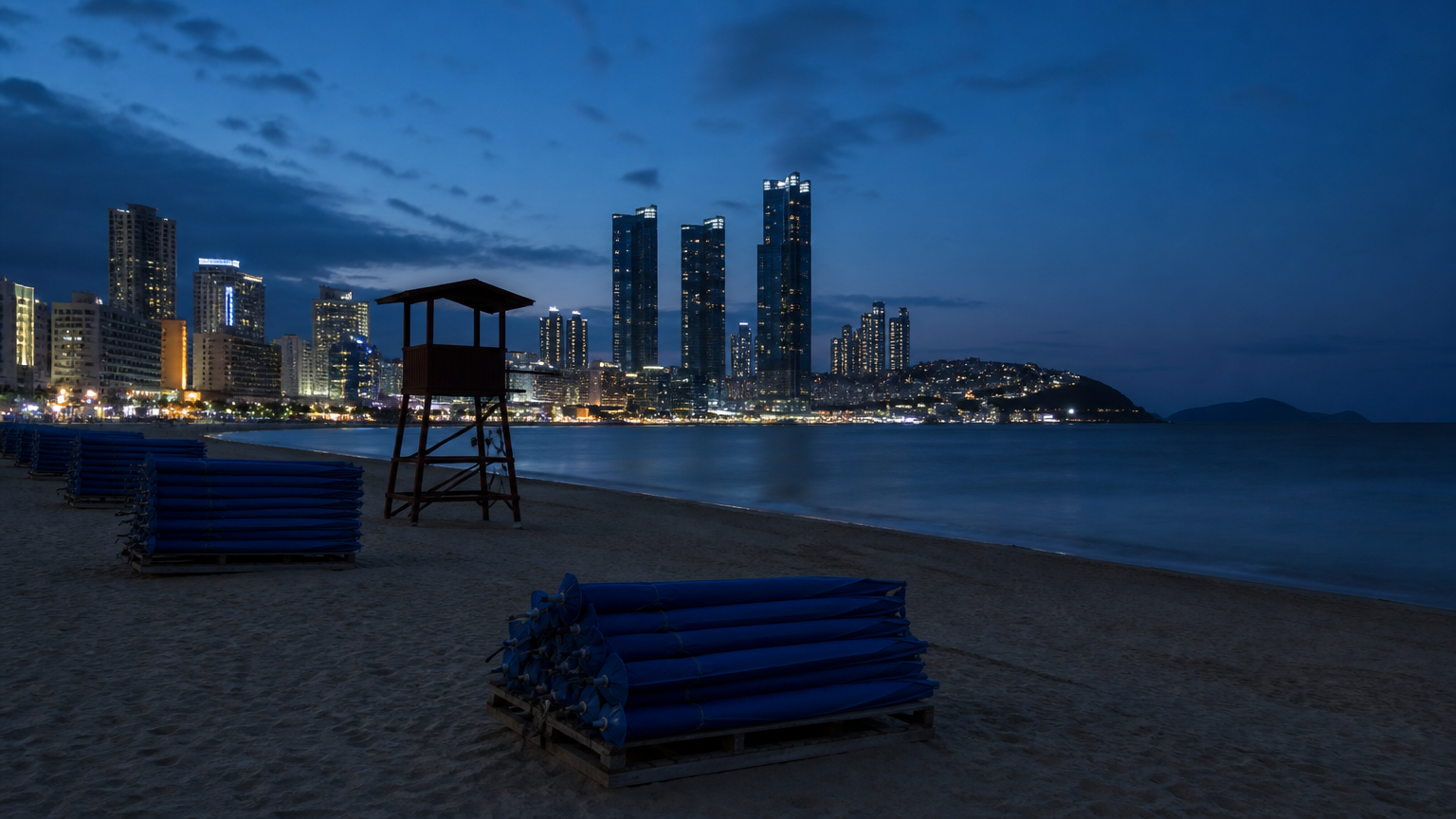
For walking, eating and looking at, yes — Gwangalli in particular is a night view rather than a swimming destination. For actually going in the water with supervision, Haeundae is the only one still operating.
Do I have to pay to get onto the beach?
No. Entry is free. You pay only for what you rent — parasol, tube, locker, shower — and those rates are published.
What are the opening hours?
09:00 to 18:00 during the season. Those are the hours the safety infrastructure is staffed, which is the meaningful part of the number.
The short version
Haeundae is open from 26 June to 15 September, and every other Busan beach closes on 31 August. That leaves a fortnight at the start of September when it is the only officially operating beach in the city — still 09:00 to 18:00, still with ten observation towers and two patrol teams, still with rentals at published rates. A parasol or a tube is 10,000 won, a life jacket 5,000, a locker between 1,000 and 4,000, and a shower is 1,000 won for sixty seconds. After 15 September the sand stays and the system goes home.
References
-
Haeundae-gu Office — Haeundae Beach visitor information: 2026 season 26 June to 15 September (82 days), operating hours 09:00–18:00; Songjeong Beach 26 June to 31 August (67 days)
-
Haeundae-gu Office — 2026 published rental rates: parasol with mat 10,000 won, tube 10,000 won, beach bed 10,000 won, life jacket 5,000 won, air pump 2,000/3,000 won, large boat 4,000 won (1 July–31 August, Haeundae only), shower and changing 1,000 won per 60 seconds, lockers 1,000/3,000/4,000 won
-
Haeundae-gu Office — safety provision: 10 observation towers, 2 patrol teams, 7 rescue boxes, 1 defibrillator
-
Busan Metropolitan City — 2026 beach season: Gwangalli, Songdo, Dadaepo, Ilgwang and Imnang open 1 July and close 31 August
-
Busan Institute of Health and Environment, 26 June 2026 — all eight Busan beaches rated suitable on water quality (enterococci, E. coli) and beach sand (five heavy metals)
-
Ministry of Oceans and Fisheries — standard price system for beach rental items introduced in 2026