Hangang Swimming Pool: 5,000 Won in the Middle of Seoul (and It Closes August 30)

Every August I get the same message from a friend who is in Seoul for the first time. It is thirty-three degrees, the hotel pool is the size of a bathtub, and they have just found out that the big water parks are an hour and a half away and cost more than a day of everything else combined.
They never ask about the river. Foreigners rarely do. But for a couple of months every summer there are outdoor pools sitting directly on the Han River, inside the city, and a ticket costs about the same as a coffee and a pastry.
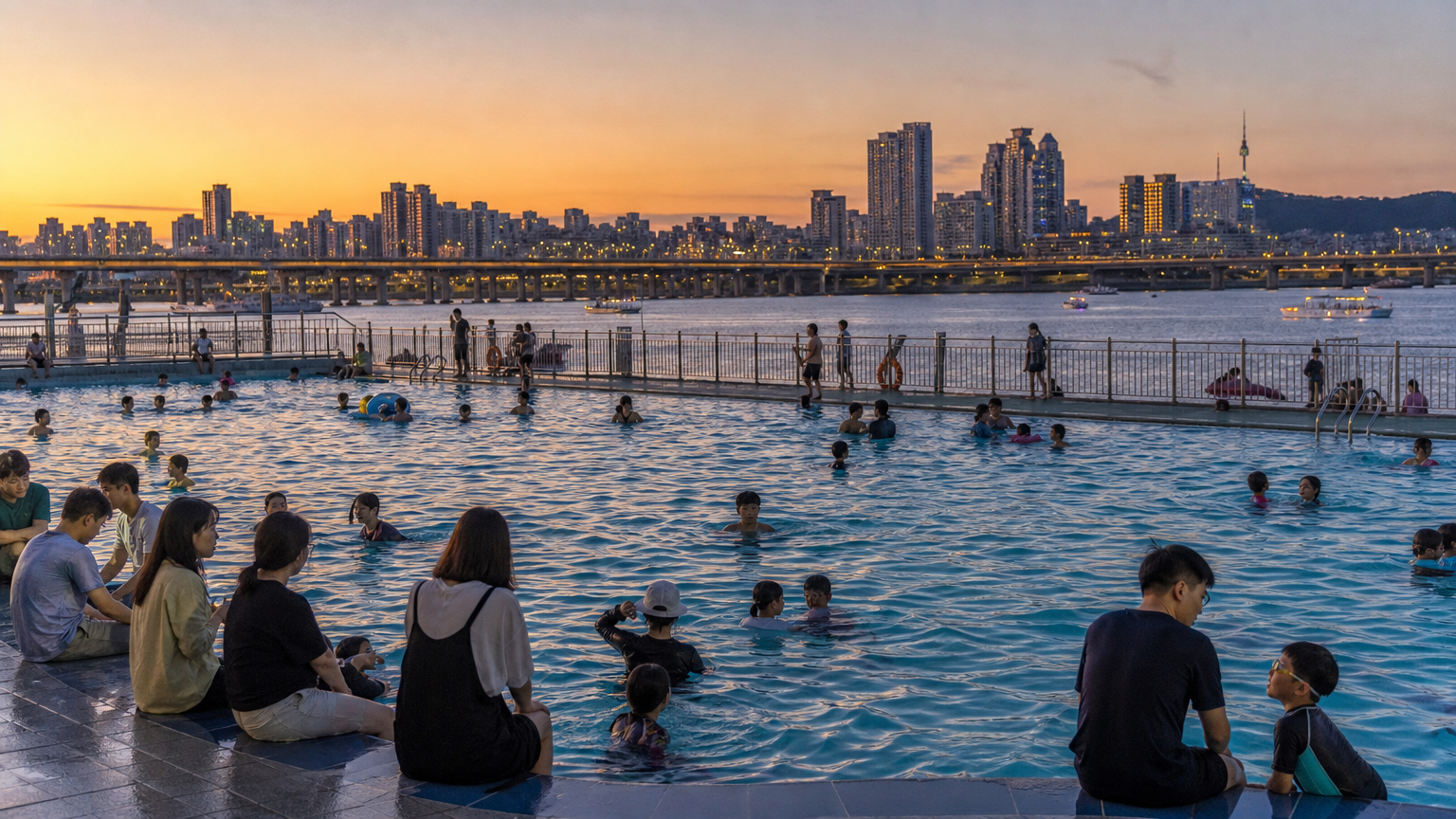
This is not a hidden gem I am dressing up. It is where Seoul actually goes when it is too hot to do anything else — office workers after six, families on Saturday morning, high schoolers who have worked out that the evening slot is the good one. Nobody there is on holiday. That is the whole point.
One thing first, because it decides whether this post is useful to you today or next June: the 2026 season runs June 19 to August 30. If you are reading this in September, bookmark it.
What a Hangang swimming pool actually is
The Han River runs through the middle of Seoul, and along both banks there is a chain of public parks. Every summer the city opens outdoor pools and water playgrounds inside six of those parks.
The Han River swimming pools are municipal facilities, not resorts. That shapes everything about the experience:
-
The water is clean and heavily supervised, with lifeguards and scheduled breaks.
-
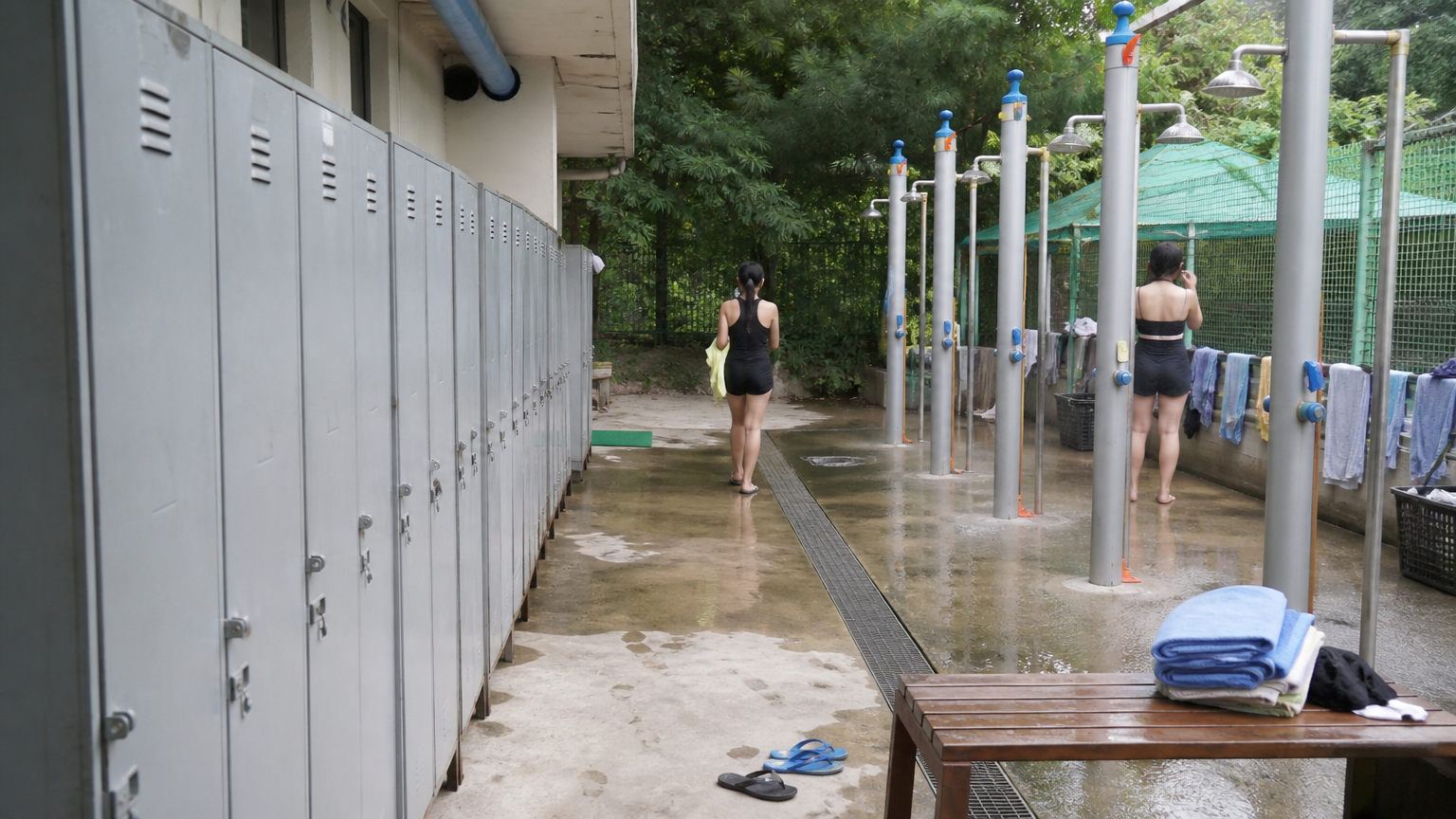
The buildings are basic. Changing rooms, showers, lockers, a food stand. No spa, no cabanas.
-
The prices are set by the city, so they are the same whether you are Korean or not, and they do not move with demand.
If you have been to a water park in Korea, forget that comparison. A Hangang swimming pool is closer to a very large, very well-run neighbourhood pool that happens to have a skyline behind it.
Six locations, and the difference nobody explains
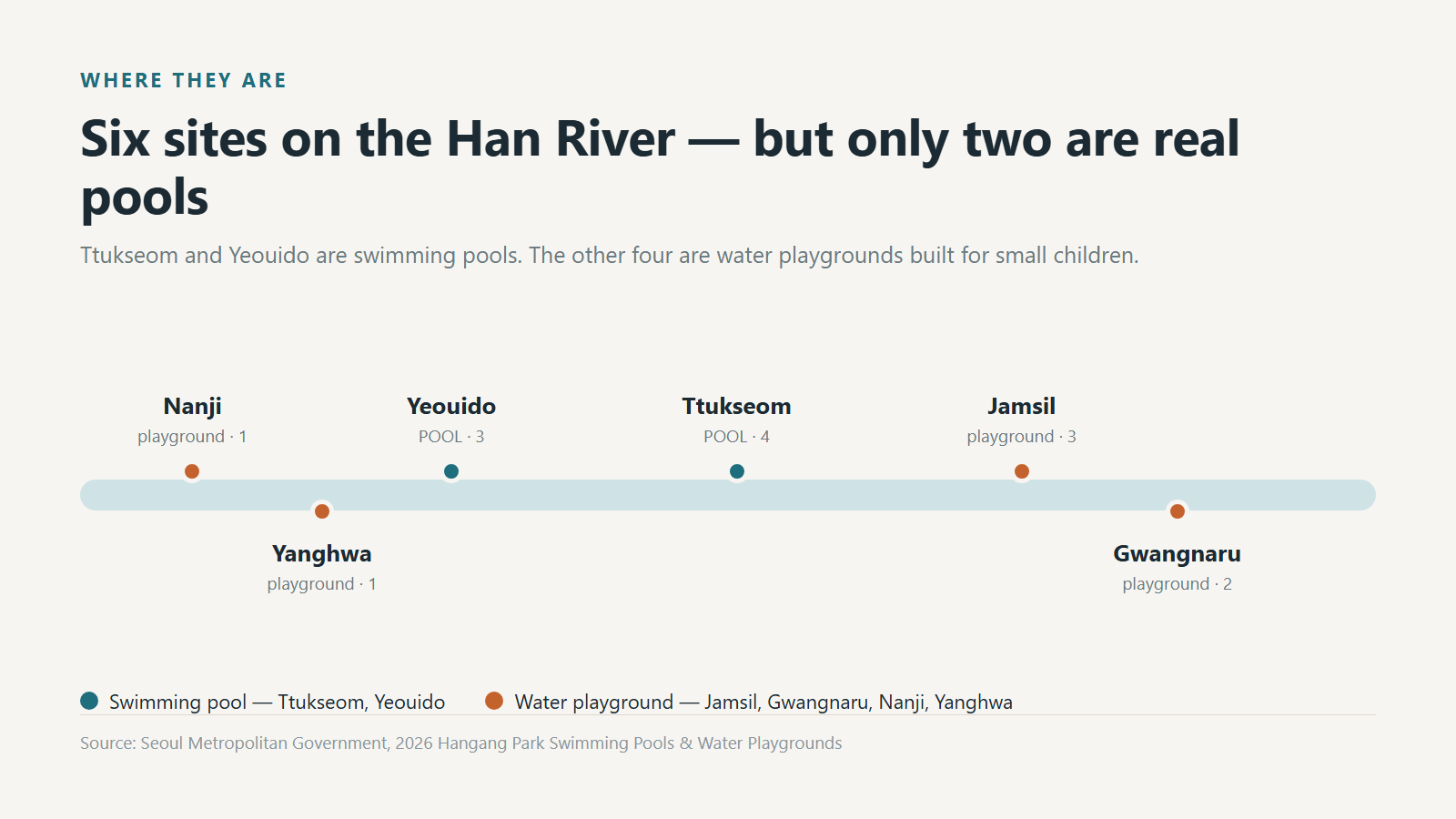
Every list of Han River swimming pool sites gives you the same six names in a row, which is where most guides quietly mislead you. The six sites are not the same kind of facility, and the ones that get recommended most on English blogs are sometimes the ones you did not want.
There are two real swimming pools:
| Site | What it is | Number of pools |
|---|---|---|
| Ttukseom | Swimming pool | 4 |
| Yeouido | Swimming pool | 3 |
| Jamsil | Water playground | 3 |
| Gwangnaru | Water playground | 2 |
| Nanji | Water playground | 1 |
| Yanghwa | Water playground | 1 |
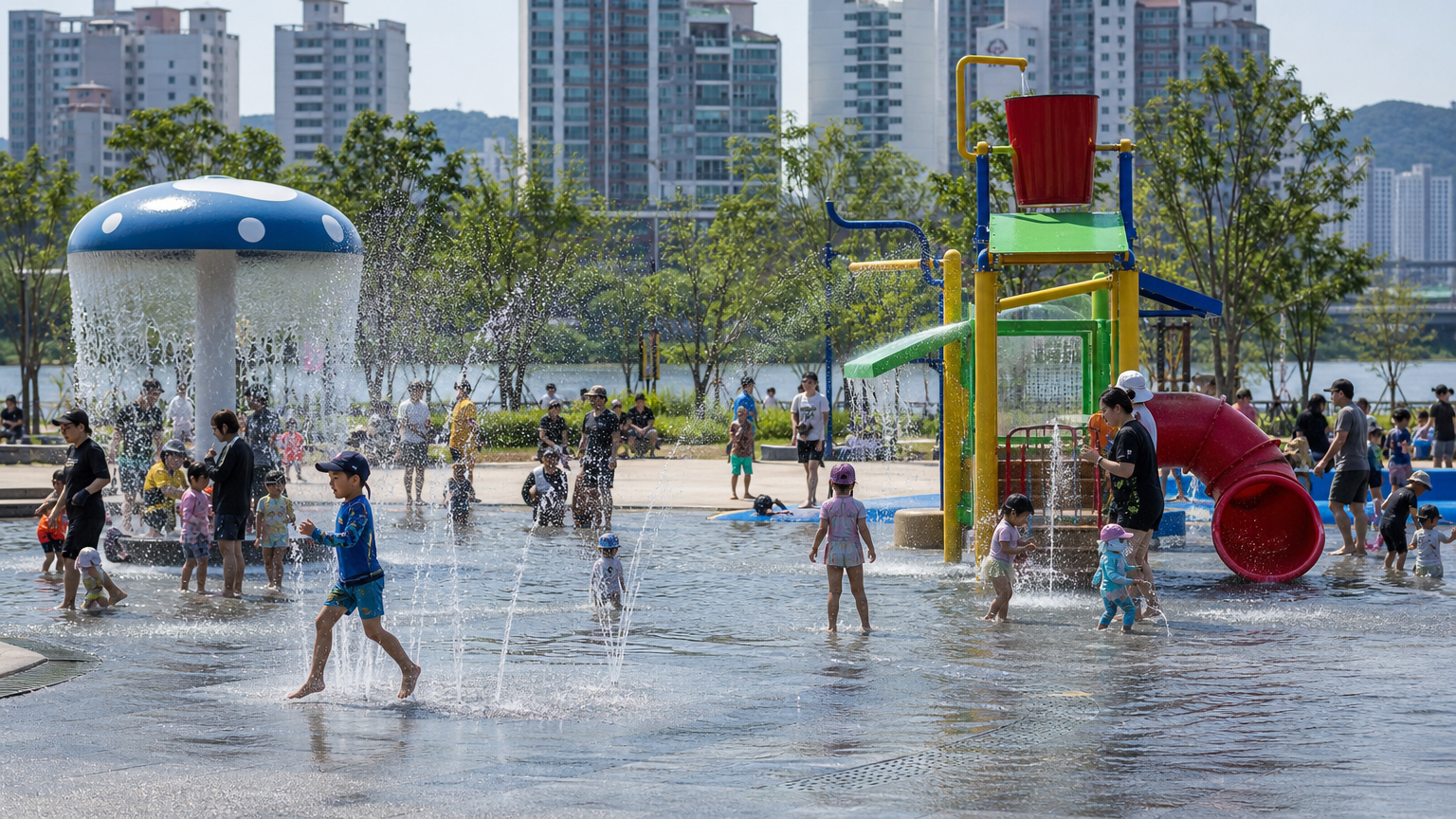
A water playground is built for small children — shallow water, sprays, fountains. If you are an adult who wants to swim lengths, or a couple who wants to lie in the sun and get in when it gets unbearable, you want Ttukseom or Yeouido. If you have a five-year-old, the playgrounds are genuinely better and also cheaper.
What it costs
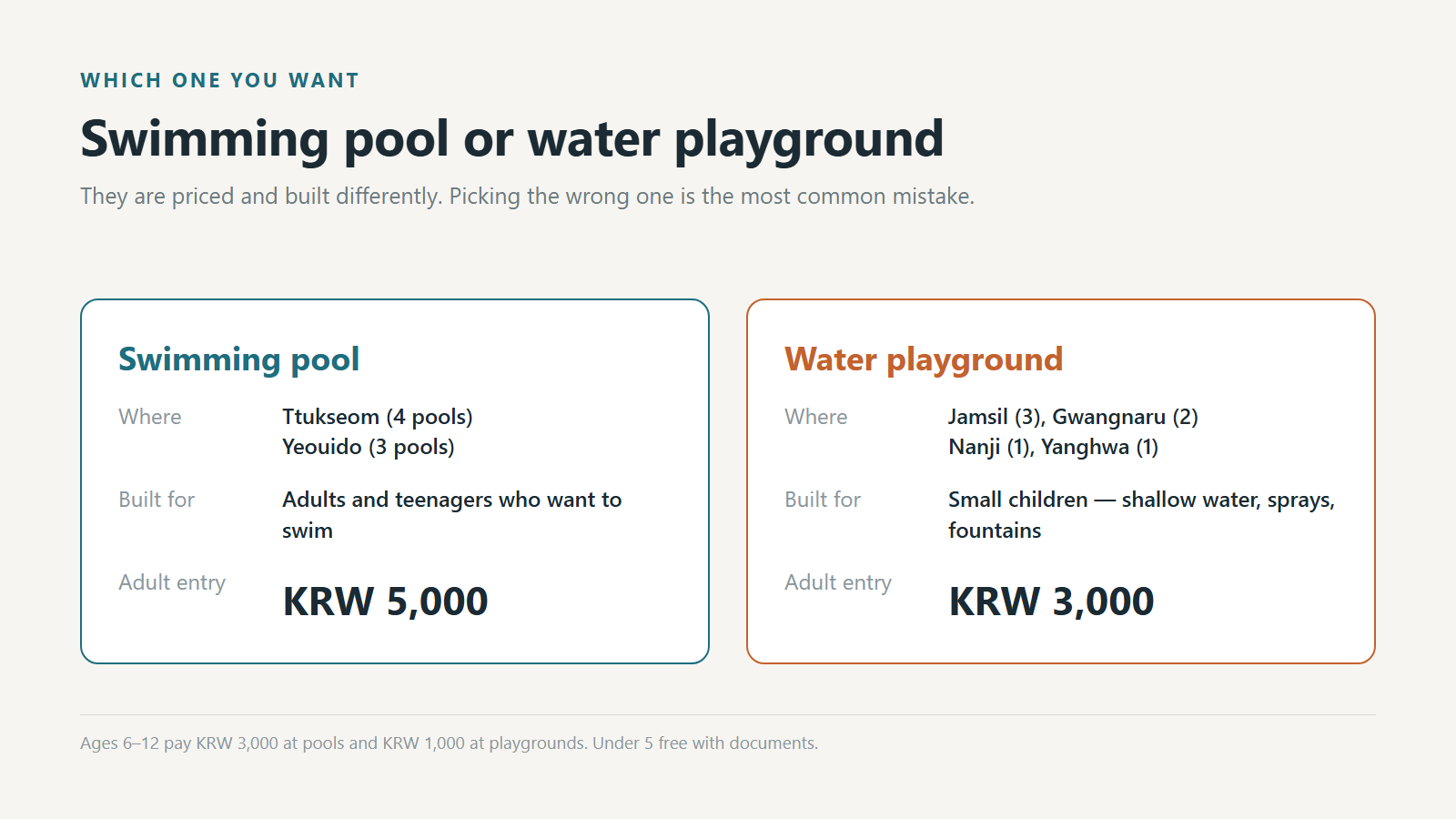
The two categories are priced separately, and the gap is bigger than people expect.
| Age | Swimming pool | Water playground |
|---|---|---|
| 19 and over | KRW 5,000 | KRW 3,000 |
| 13–18 | KRW 4,000 | KRW 2,000 |
| 6–12 | KRW 3,000 | KRW 1,000 |
| 5 and under | Free | Free |
Free entry for the youngest group needs supporting documents, so bring something with the child's date of birth on it.
Five thousand won for an adult. I want to sit with that number for a second, because it is the reason I am writing this at all. A cinema ticket in Seoul is around three times that. There is no resident discount, no tourist surcharge, no online booking premium. You walk up, you pay, you swim.
Hours, and the two breaks that catch people out
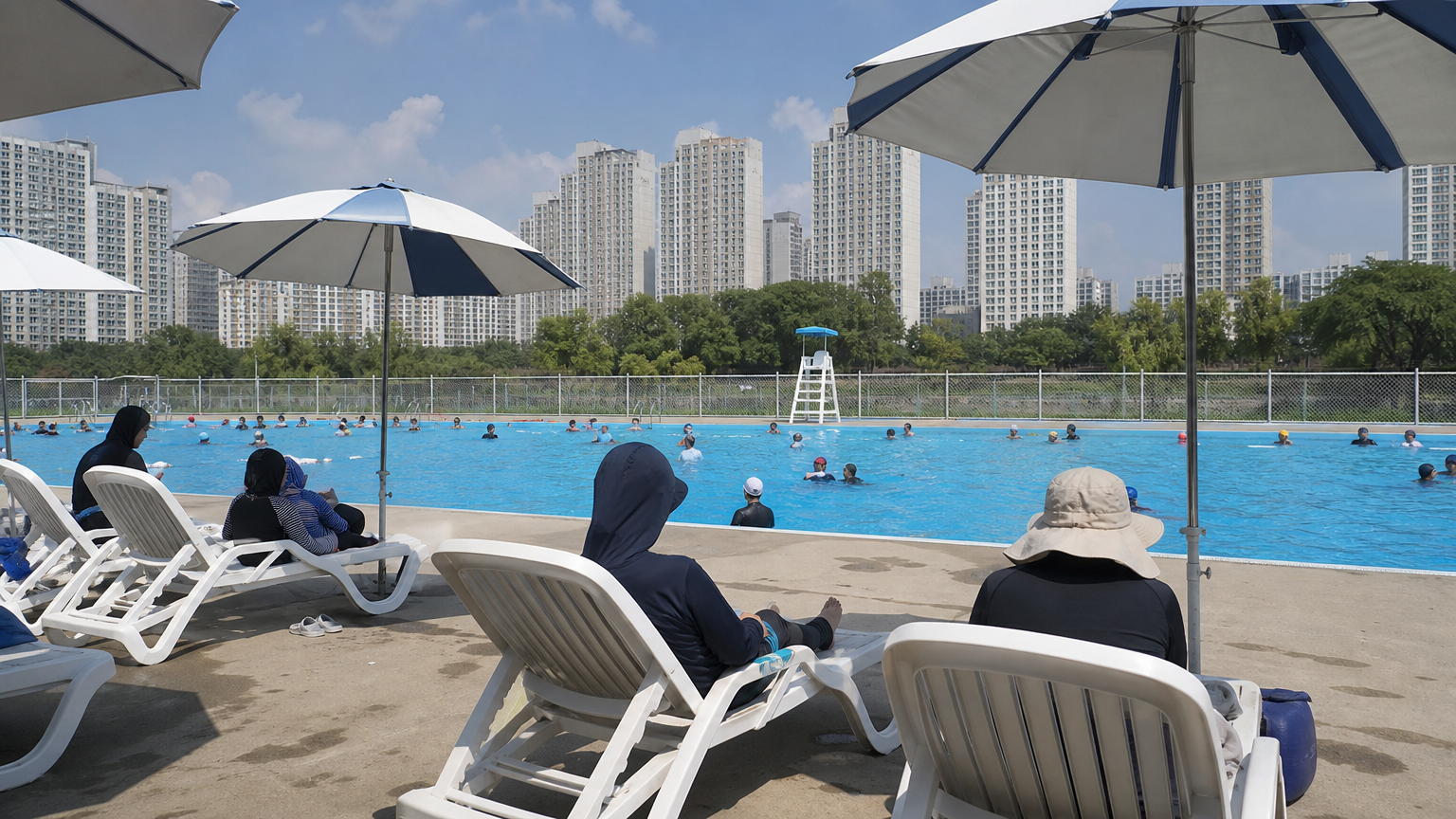
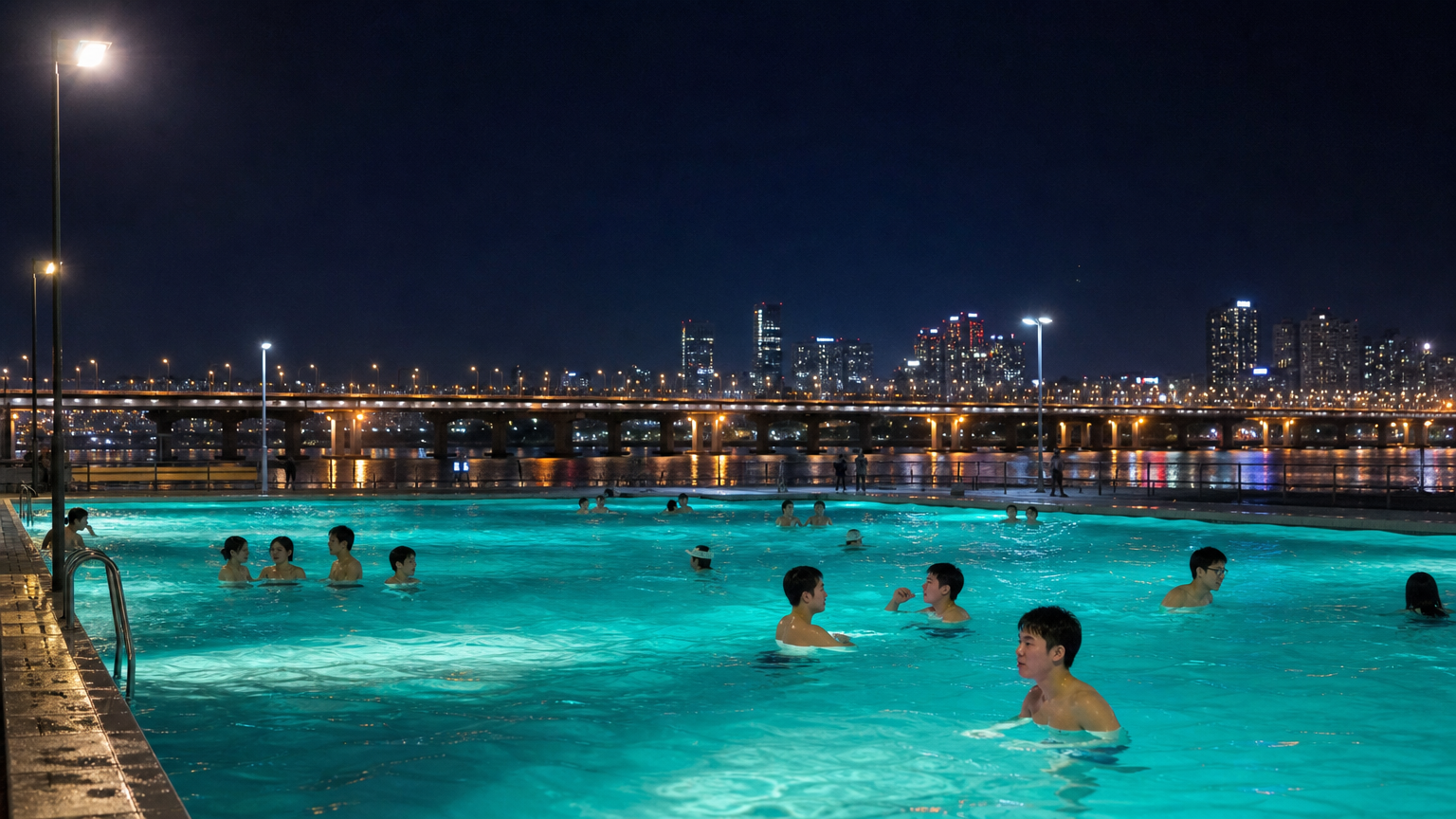
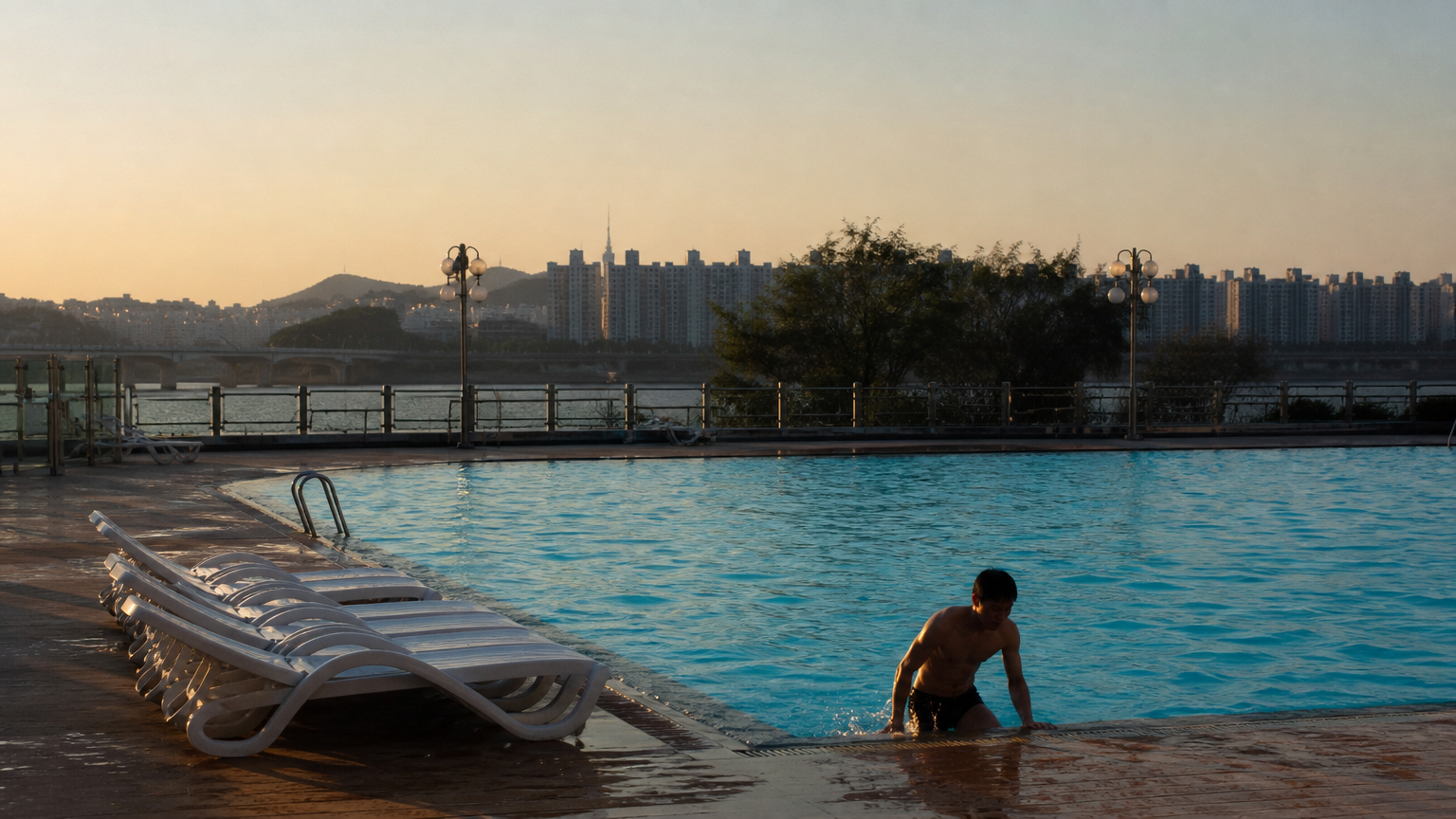
The pools run 9 AM to 10 PM, which means night swimming is not a special event here — it is just the second half of the day. Swimming with the bridges lit up behind you is, honestly, the version I would send anyone to.
Two exceptions that will save you a wasted trip:
-
Yanghwa and Gwangnaru close at 6 PM. No evening session at those two.
-
Entry is restricted during two breaks — 12 PM to 1 PM and 5:30 PM to 7 PM. Turning up at 5:45 on a Friday and being told to wait is a specifically miserable experience, and it happens to people all summer.
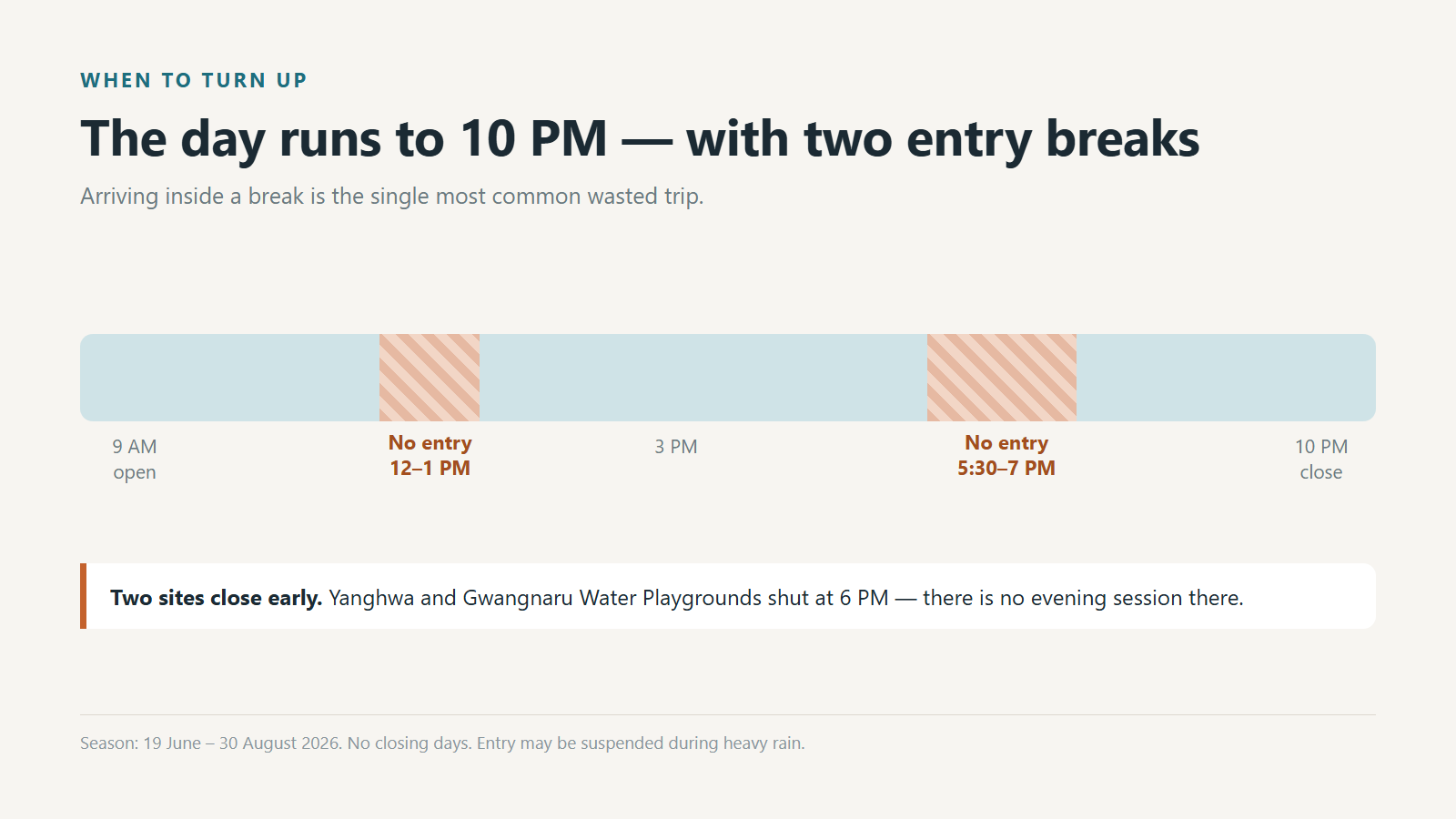
There are no closing days during the season. Heavy rain can suspend entry, and in a Seoul August that is not a remote possibility — check before you travel across the city.
What you cannot bring
The rules here are stricter than most visitors assume, and they are enforced at the gate rather than apologised for later.
Not allowed:
-
Large inflatable tubes
-
Swimming equipment such as fins and snorkels
-
Swimming aids, including kickboards and similar
-
Alcohol
-
Delivered food
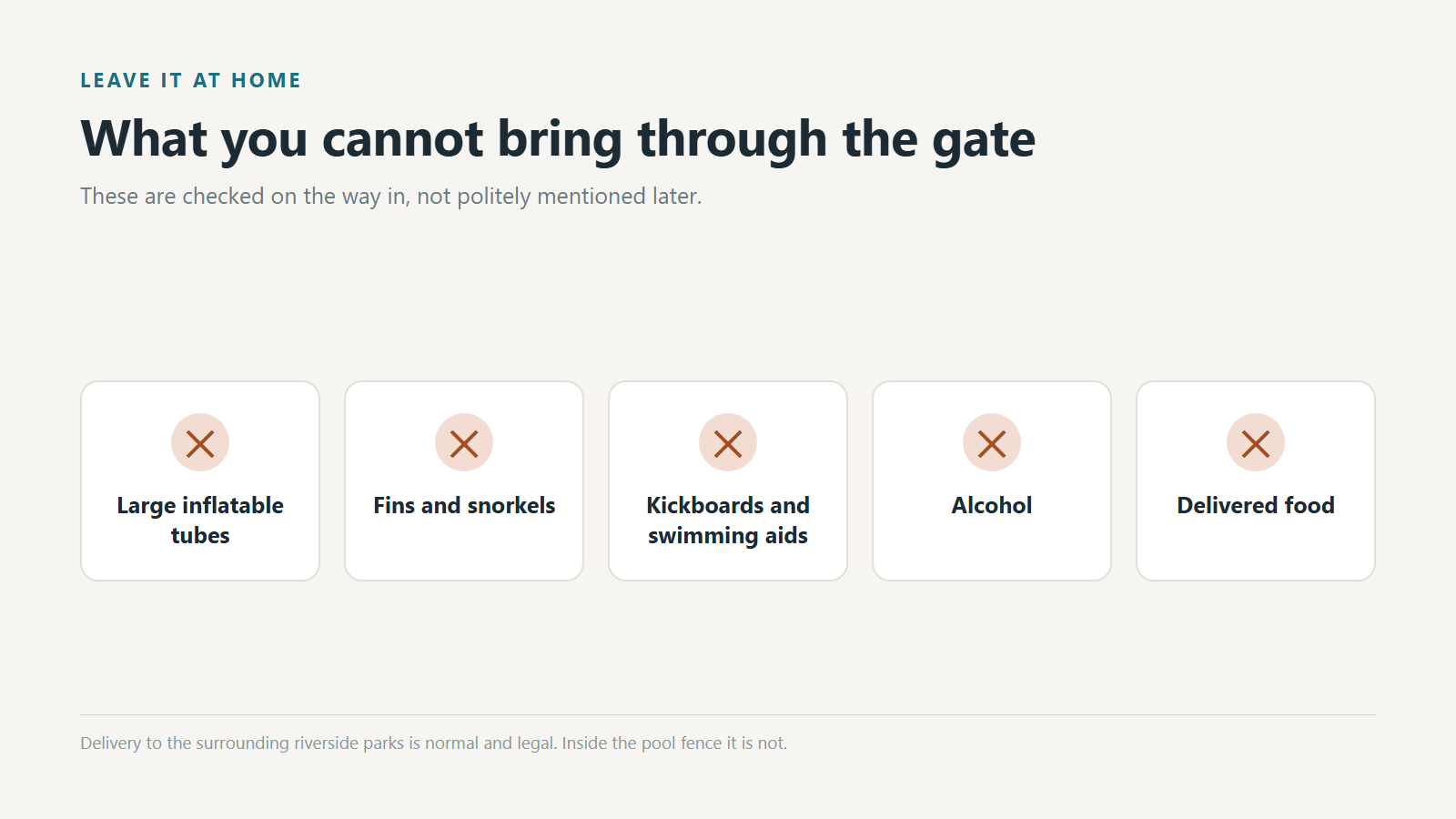
The alcohol rule surprises Koreans too, because drinking by the river is otherwise a national pastime. Inside the pool fence it stops. The delivery ban is the other one worth internalising — ordering fried chicken to a Han River park is one of the great local rituals, and it works everywhere along the water except inside these gates. Eat before, or use the food stand.
Children cannot enter without a guardian, and for group visits one adult is required for every four children. If your child is going to use the adolescent or adult pools, they need an approved flotation device and an adult with them.
What the visit actually looks like
Nothing here is complicated, but the order matters and the signage is mostly in Korean.
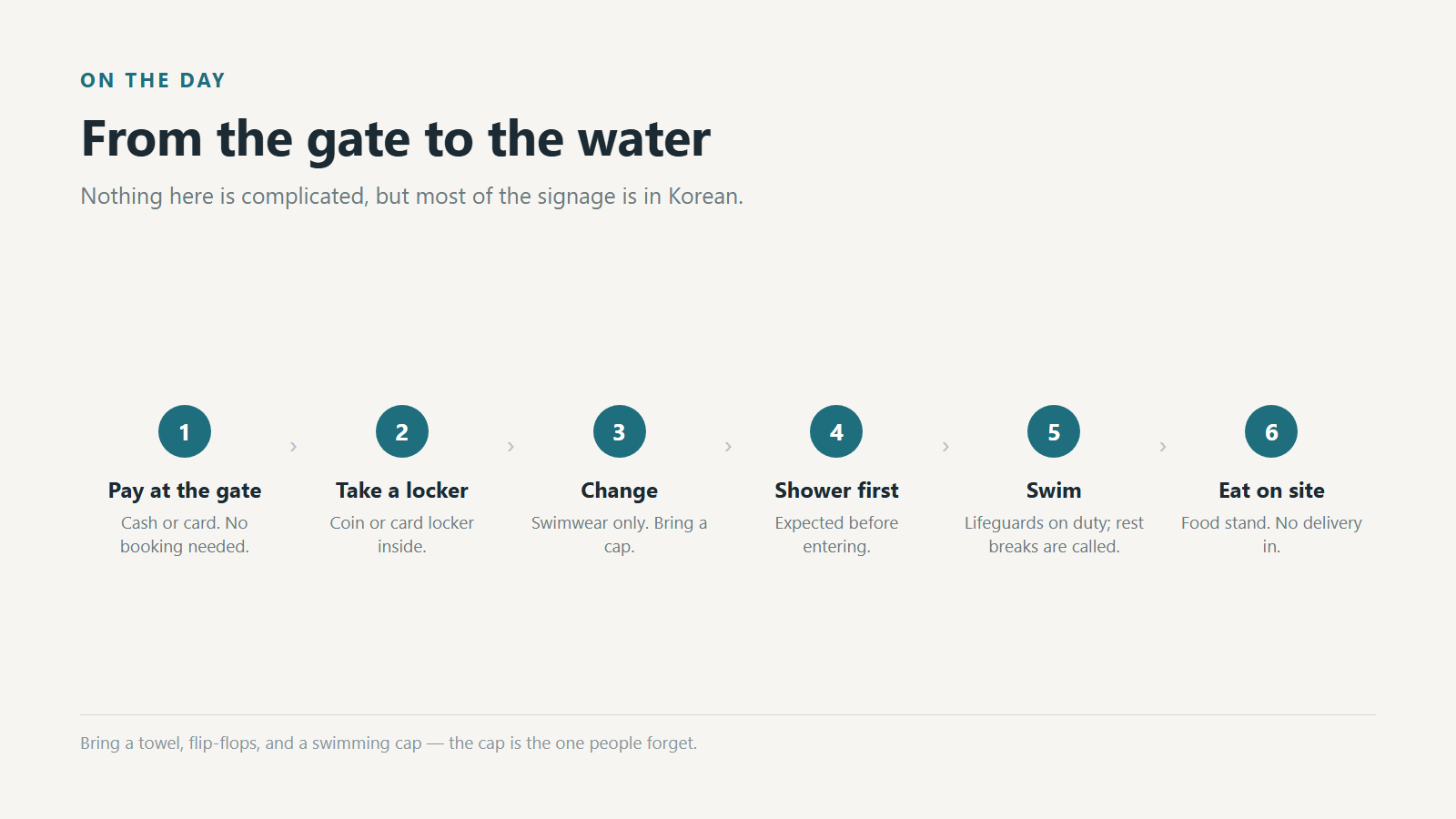
Bring a towel, flip-flops, and a swimming cap. The cap is the one people forget. Bring cash or a card for the locker and the food stand. Do not bring anything you would mind carrying home wet.
Which one I would send you to
Of the six Han River swimming pool sites, the choice comes down to who you are bringing.
If you have one evening and no children: Ttukseom, after seven, when the entry break ends and the light goes orange over the water. Four pools, the largest set-up, and the subway drops you close.
If you are staying west or want the postcard version of the skyline: Yeouido.
If you have a small child: any of the four playgrounds, and you will pay 1,000 won for them.
It closes on August 30
That is the part I would not leave to chance. The season is short — a little over ten weeks — and the last two weeks are the busiest of the year, because every Korean who meant to go all summer suddenly realises the same thing at once.
If you are in Seoul in the next two weeks, this is the cheapest good decision available to you. If you are coming next year, the season opens again in June.
FAQ
Can I bring an inflatable tube to a Hangang swimming pool?
No. Large inflatable tubes are prohibited, along with fins, snorkels, and swimming aids such as kickboards. This is checked at the entrance.
Is a swimming cap required?
Bring one. Caps are standard practice at Korean public pools and you should not count on being waved through without one.
How late can I swim?
Until 10 PM at most sites. Yanghwa and Gwangnaru Water Playgrounds close at 6 PM. Entry is also restricted from 12 PM to 1 PM and from 5:30 PM to 7 PM.
Are there lockers and showers?
Yes. All sites have changing rooms, showers, and lockers. They are functional rather than luxurious.
What happens if it rains?
Entry can be temporarily suspended during heavy rainfall. There are no scheduled closing days during the season, so rain is the only thing likely to stop you.
Can I order delivery food to the pool?
No. Delivered food and alcohol are both prohibited inside the Han River swimming pool areas, even though ordering delivery to the surrounding riverside parks is completely normal.
References
-
Seoul Metropolitan Government, "2026 Hangang Park Swimming Pools & Water Playgrounds Open" — season dates, hours, admission fees, prohibited items
-
Seoul Metropolitan Government, Future Hangang Headquarters, Hangang Park swimming pools and water playgrounds — site-by-site facility list