Jeju Black Pork: The Natural Monument Is 250 Pigs, and None of Them Are on Your Plate

Jeju black pork is a designated Natural Monument of Korea. There are about 250 of them. You will not be eating one.
That is not a warning about your dinner — the pork you order on this island is genuinely worth ordering. It is that two different animals share one name, and almost every English page about Jeju black pork quietly merges them. This guide separates them, then tells you what is actually on the grill, where to go for it, and what to do with the bowl of fermented anchovy sauce that arrives beside it.
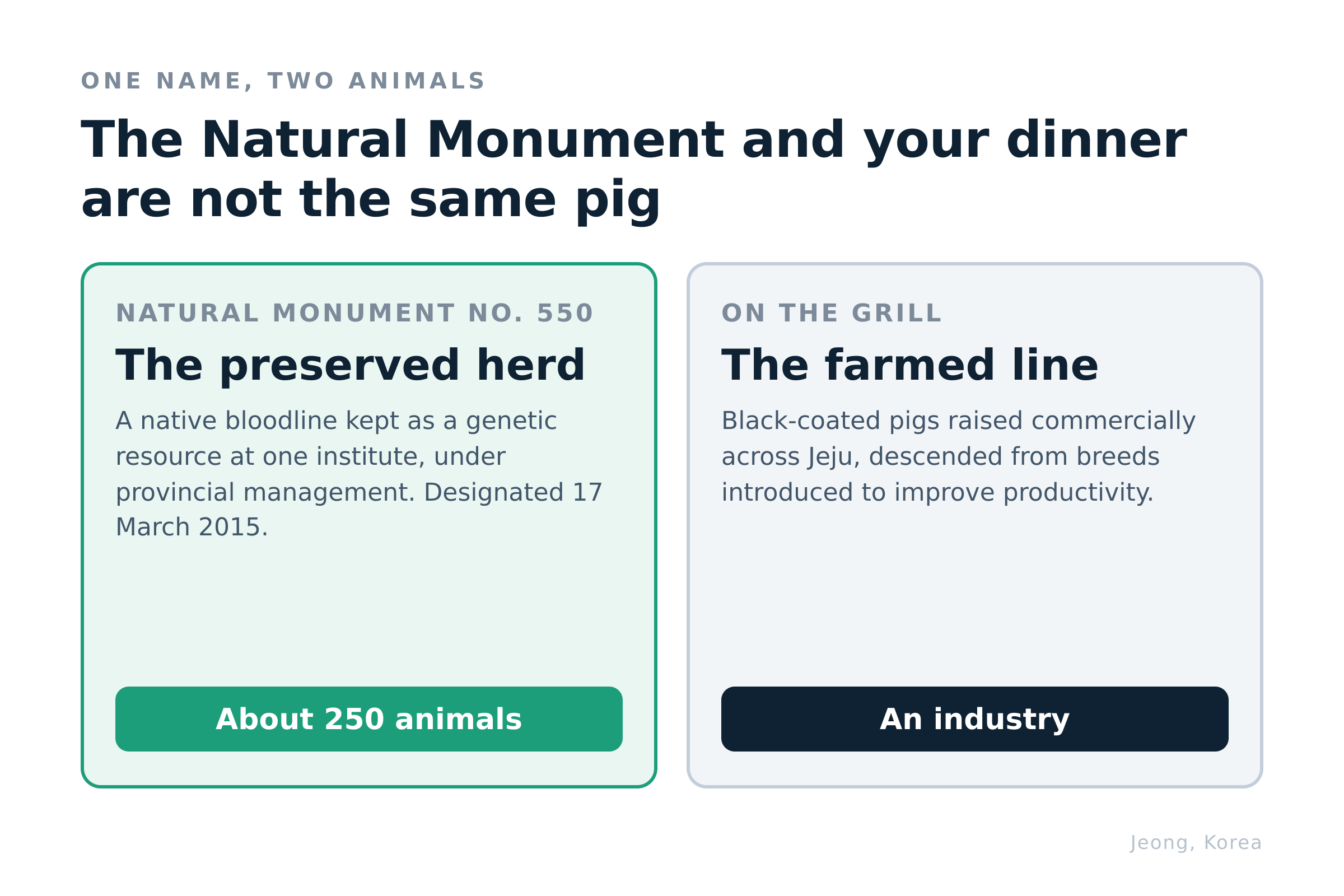
Here is where the confusion starts. In March 2015 the Korean government designated Jeju heukdwaeji — the Jeju black pig — as Natural Monument No. 550. Every travel article since has repeated the headline, and the obvious conclusion to draw is that the famous local delicacy is a protected national treasure you are somehow allowed to eat.
That conclusion is wrong, and the designation document says so if you read past the title.
What is actually protected, and what is on the grill
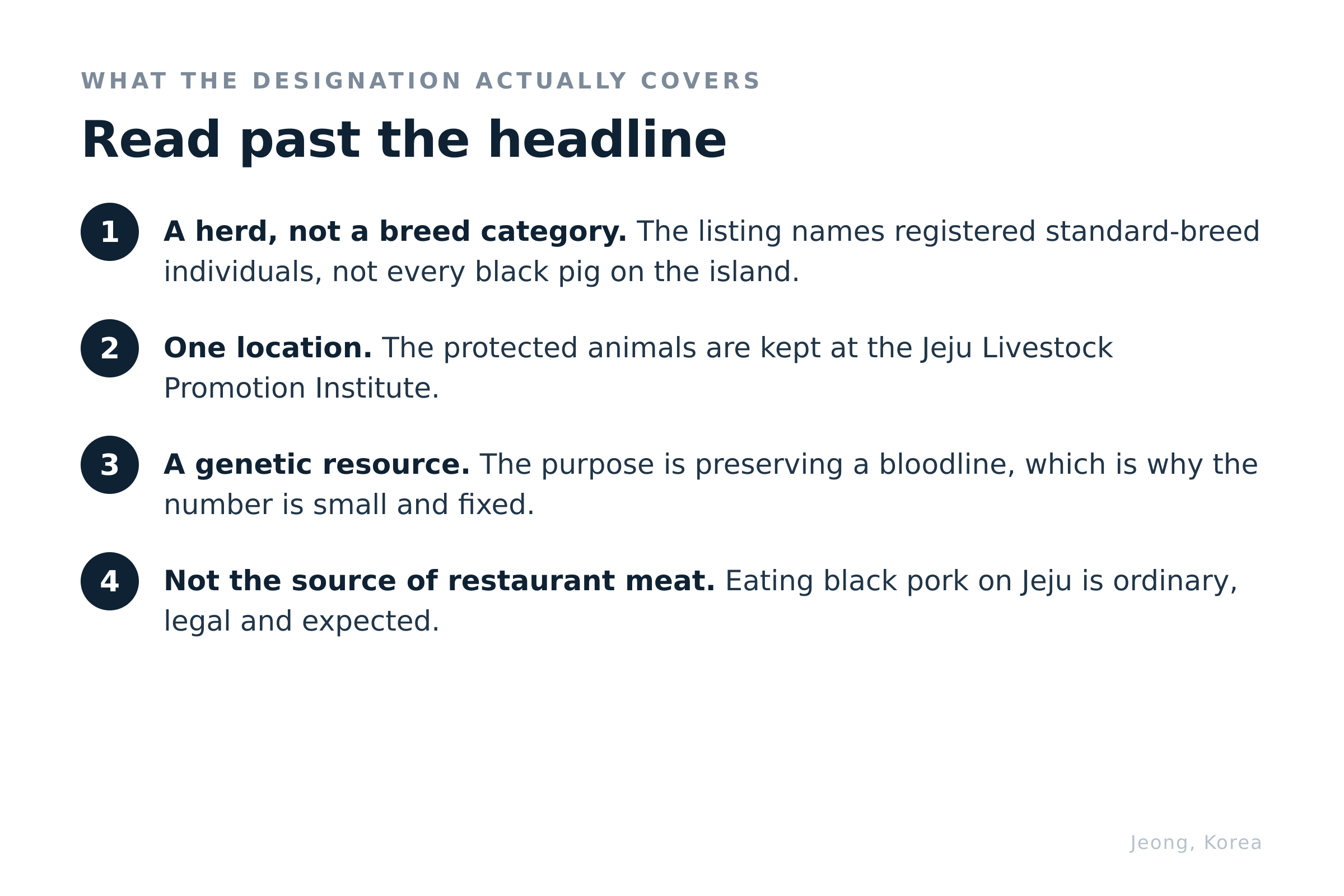
The designation covers a specific herd, not the breed as a category.
The official heritage listing puts the protected population at roughly 250 registered standard-breed individuals kept at the Jeju Livestock Promotion Institute. That is the Natural Monument: a preserved bloodline, maintained as a genetic resource, in one place, under provincial management.
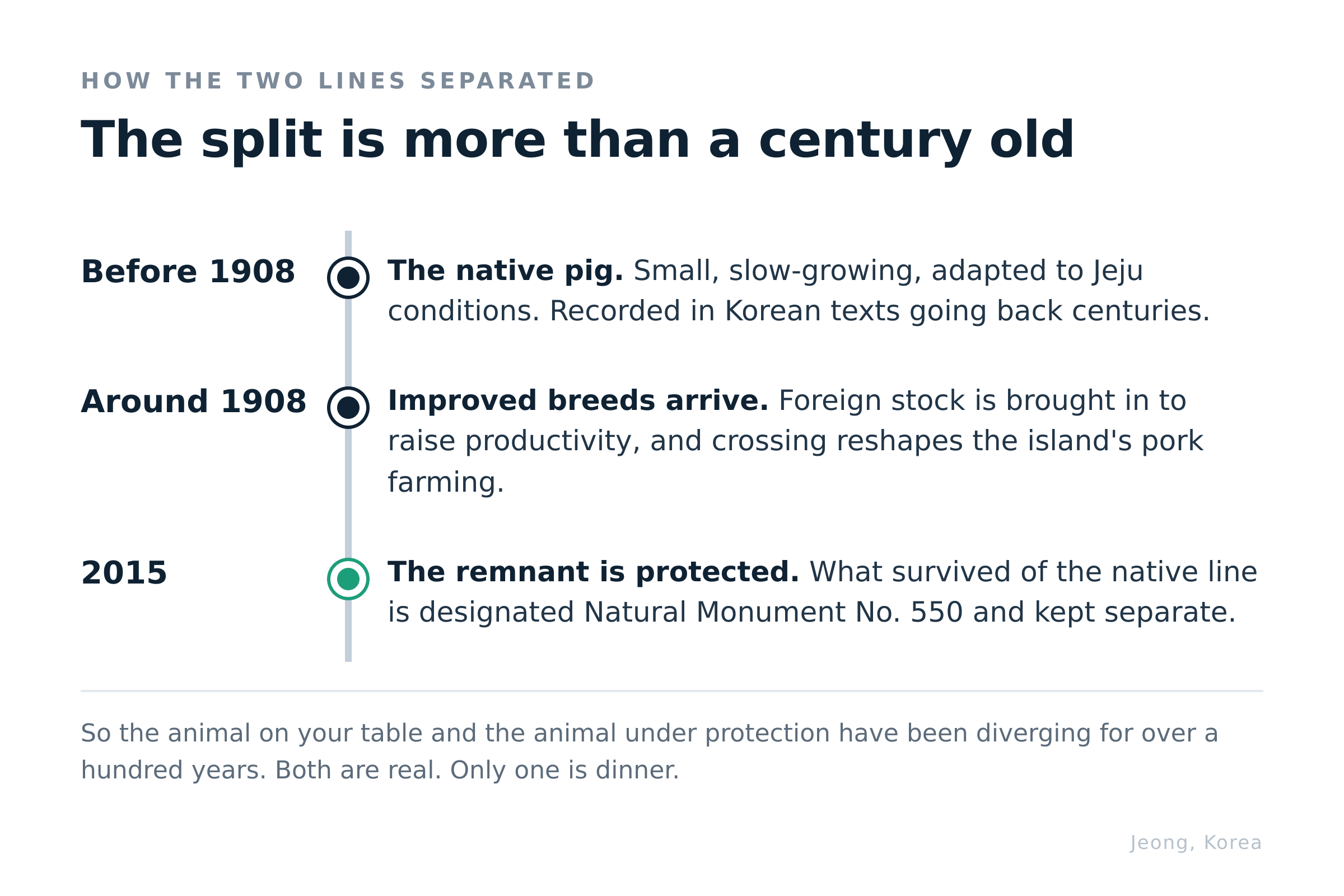
The pigs raised for meat across the island are a different line. Jeju's pork industry was reshaped from around 1908, when improved foreign breeds were brought in to raise the productivity of the small, slow-growing native pig. What most farms raise today descends from that crossing — black-coated, Jeju-raised, and commercially farmed.
So both statements are true at once, which is why they get muddled:
| Natural Monument No. 550 | The pork you order | |
|---|---|---|
| What it is | Preserved native bloodline | Improved black-coated line raised on Jeju |
| How many | About 250 registered animals | A commercial industry |
| Where | Jeju Livestock Promotion Institute | Farms across the island |
| Can you eat it | No | Yes, and you should |
None of this makes the meal less worth having. It just means the reason to eat it is not "I am eating a national treasure." The real reason is simpler and you will taste it in about four minutes.
So what makes it different, if it is not the monument?
What you are actually eating
A thicker cut, cooked slower, with the skin still attached.
That is the honest answer, and it is a matter of butchery and habit rather than genetics. The pork here is typically served in noticeably thicker slabs than the thin mainland samgyeopsal most people meet first, and the skin is usually left on. Thick cuts need time, so the staff often handle the grill themselves and will tell you when to stop touching it.
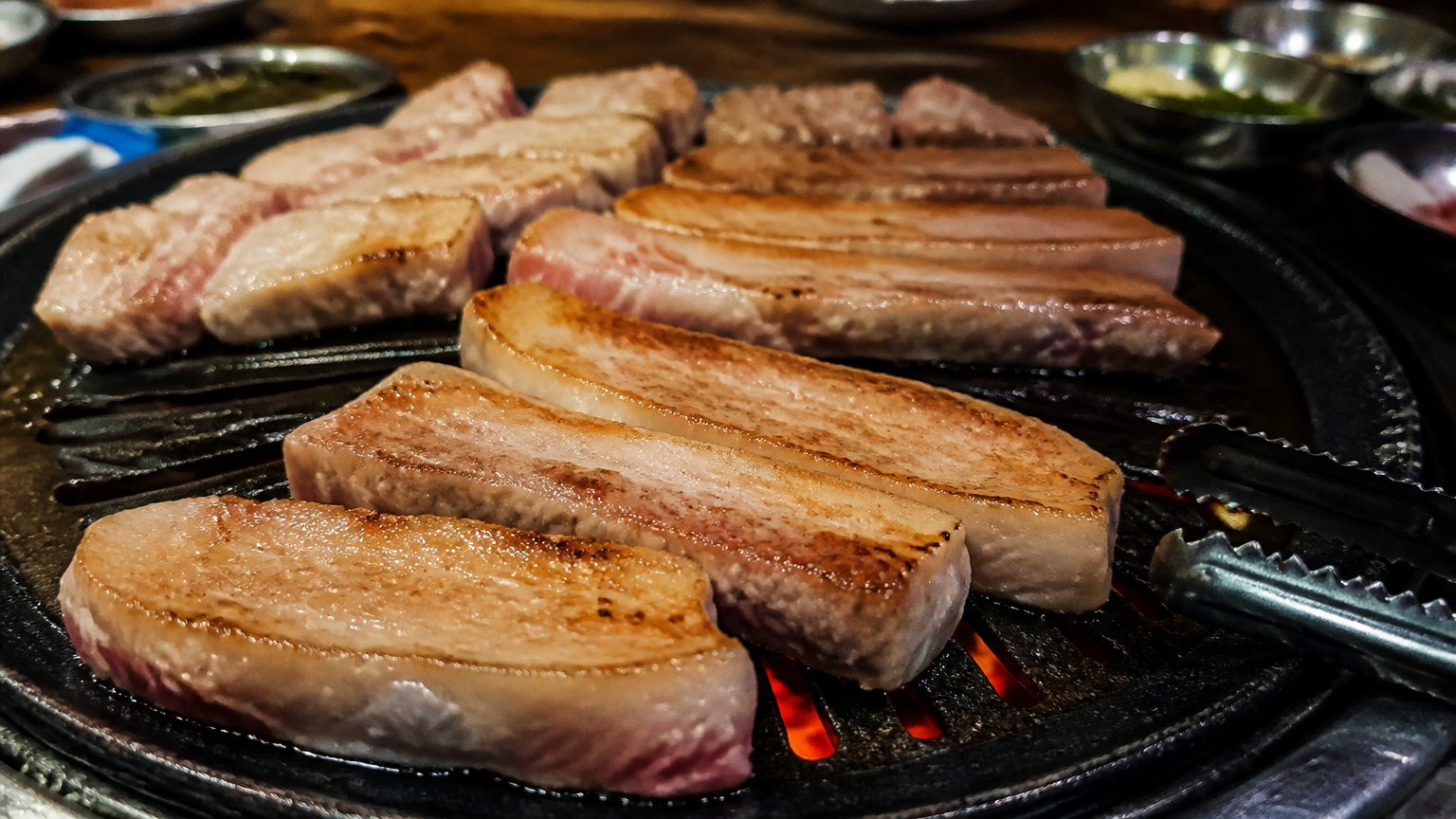
The result is texture rather than novelty. You get a chewy edge from the skin, a soft interior, and a rendered fat layer that thin-cut pork never develops. If you have only had samgyeopsal, this reads as a different dish rather than a fancier version of the same one.
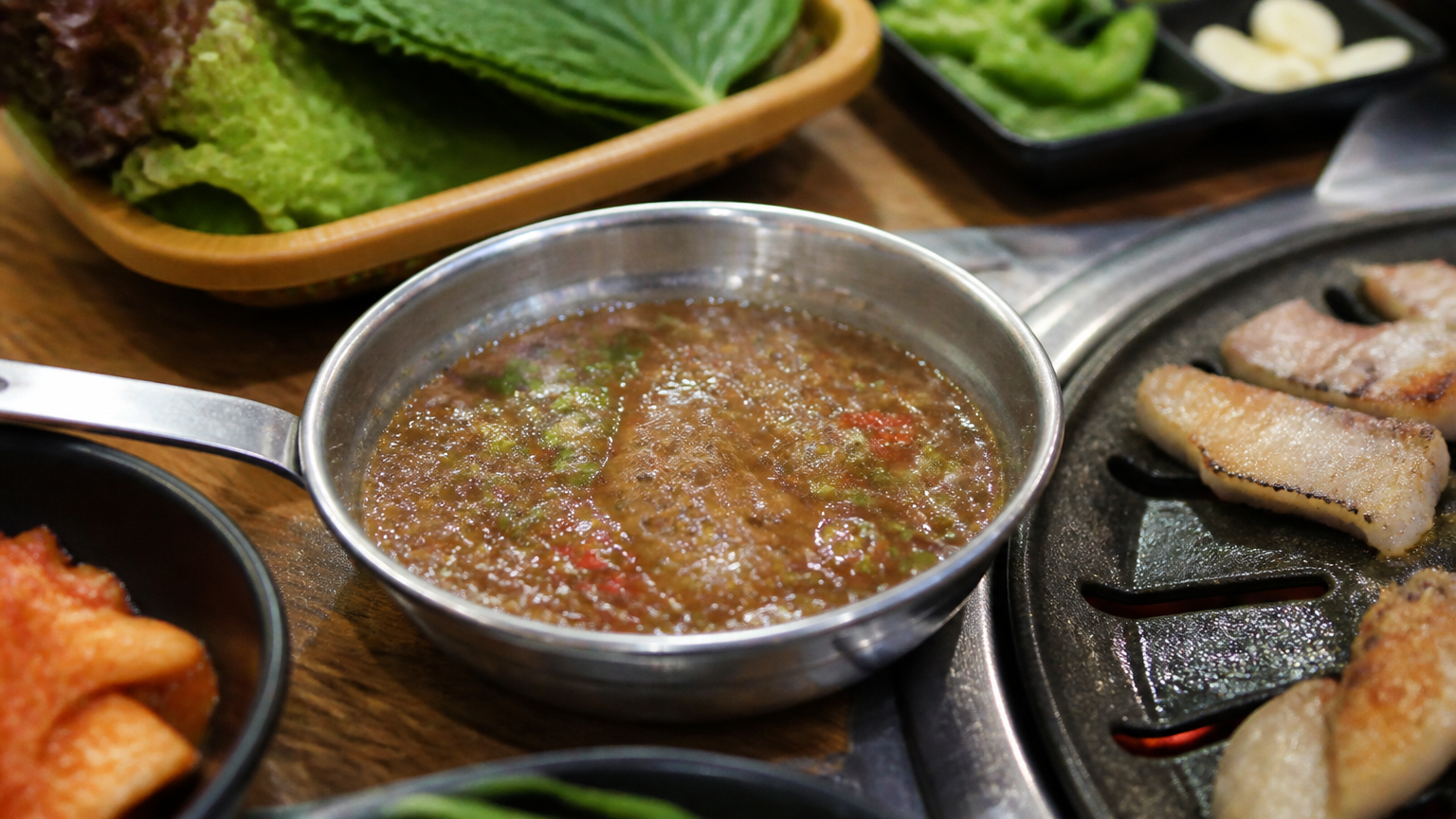
Then there is the sauce, which is the part visitors get wrong most often.
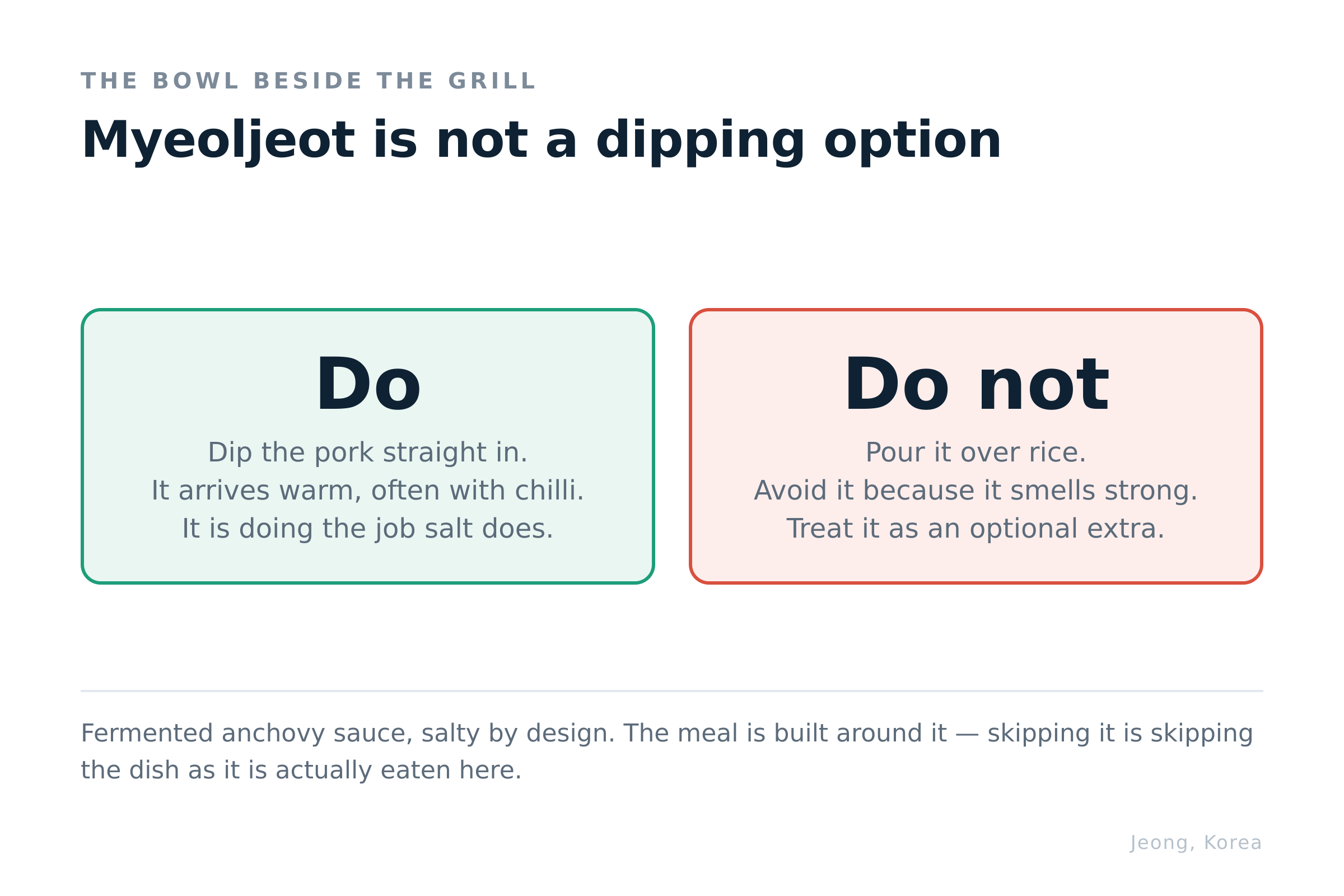
Myeoljeot is fermented anchovy sauce, and on Jeju it comes to the table warmed in a small pan, usually with chopped chilli in it. It is salty in a way that is not subtle. The move is to dip the pork in it directly — not to pour it over rice, and not to avoid it because it smells assertive. It is doing the same job that salt does with mainland pork, and the meal is built around it.
If you want the wider context of how Korean grilled meat works before you sit down — who cooks, what the side dishes are for, when to use the scissors — that is Korean dining etiquette, and it applies here unchanged.
So where do you actually go?
Where to eat it
There are two streets built specifically for this, and either works.
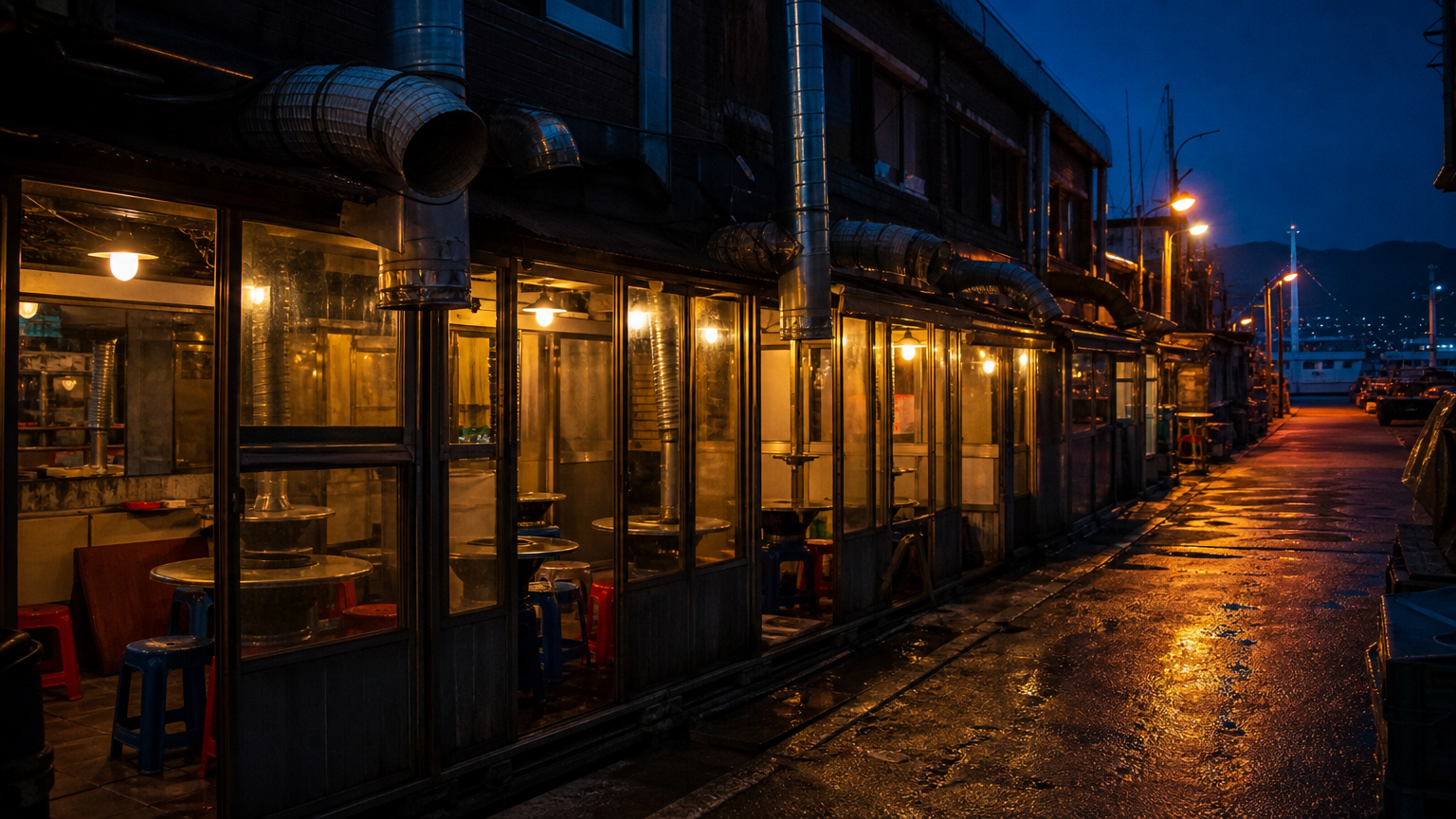
Black Pork Street in Jeju City sits in the Geonip-dong area near the harbour, walkable from Dongmun Market. It is the denser of the two, and it is the one most people hit on their first evening because it is close to where they are already sleeping. 🗺 Open in Google Maps
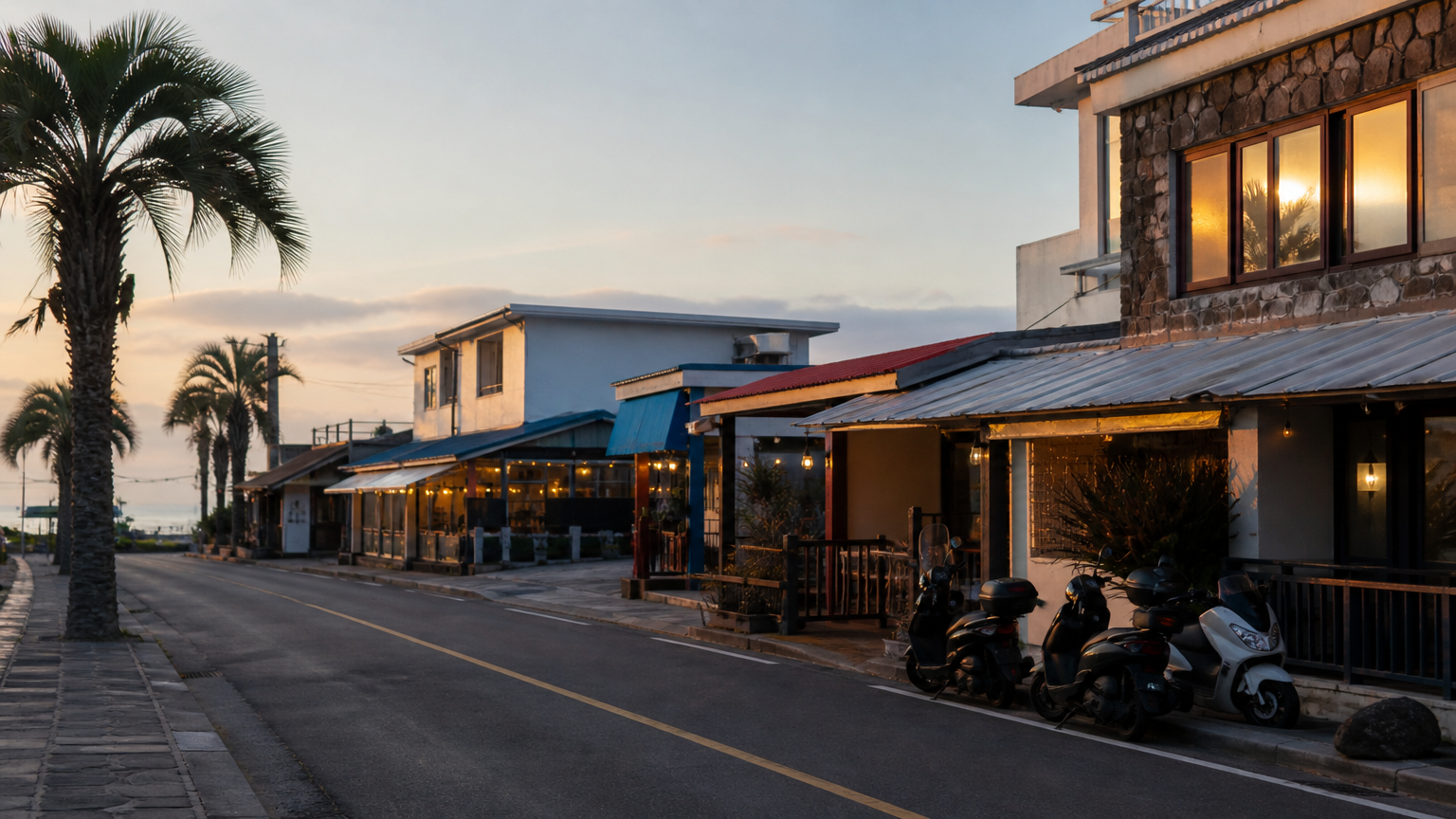
Seogwipo's black pork street is on the south side of the island, near the Olle Market. If your base is Seogwipo rather than Jeju City — which it will be if you came for the coast rather than the airport — go here instead rather than driving an hour north for the same meal. 🗺 Open in Google Maps
A few practical things about ordering.
It is sold by weight, not by person. Menus list grams rather than portions, and the standard order for two people is usually a single larger quantity to share rather than one each. If you are unsure, order less first — you can always add another round, and Korean grill tables expect you to.
Expect it to cost more than mainland samgyeopsal. That is consistent across both streets and is not a tourist markup so much as what the cut costs here. Prices move, so check the board outside rather than trusting a figure you read in an article.

Two people cannot finish three orders. The thickness does it. Whatever quantity sounds reasonable from mainland experience, take it down a notch.
Go early or go late. Both streets are busiest between about seven and nine in the evening, and neither takes reservations at most tables.
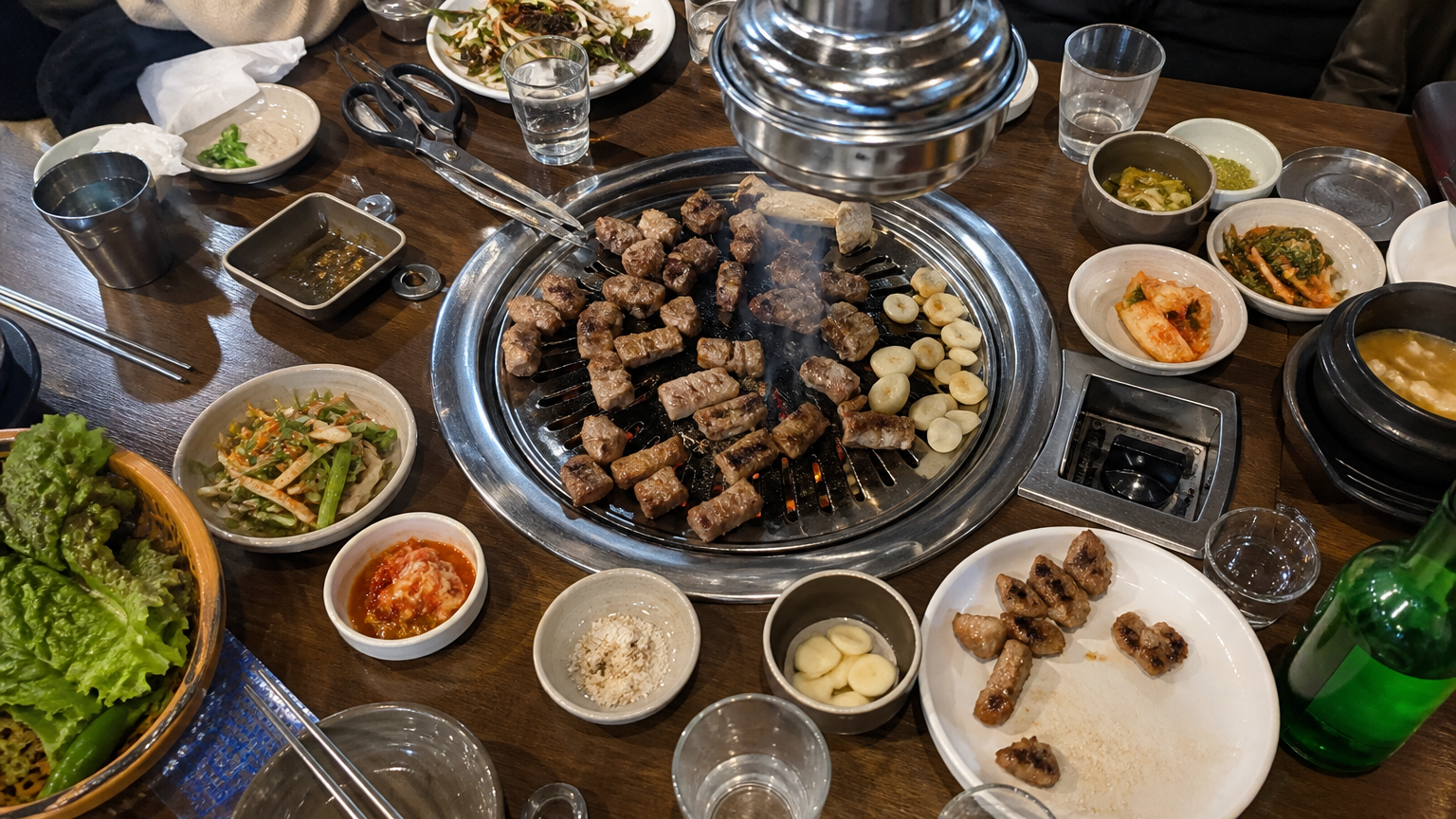
And if you are still on the mainland and want to try it before you fly, it travels — you will find it on menus in Seoul, priced accordingly. It is a fair preview. It is not the same as eating it four hundred kilometres closer to where it was raised, with the sea outside.
FAQ
Is Jeju black pork really a Natural Monument?
The Jeju black pig was designated Natural Monument No. 550 in March 2015, but the designation covers a preserved population of roughly 250 registered animals kept at the Jeju Livestock Promotion Institute. The pork served in restaurants comes from commercially farmed black-coated pigs, not from the protected herd.
So am I eating a protected animal?
No. The protected herd is maintained as a genetic resource and is not the source of restaurant meat. Eating black pork on Jeju is ordinary, legal and expected.
How is it different from normal samgyeopsal?
Mostly the cut and the cooking. It is served in much thicker slabs, usually with the skin left on, and it is grilled slowly. That produces a chewier, fattier result than thin-cut mainland pork.
What is the sauce that comes with it?
Myeoljeot — fermented anchovy sauce, served warm in a small pan, often with chilli. Dip the pork straight into it. It is intensely salty by design and is the standard pairing on Jeju.
Where should I go to eat it?
Black Pork Street in Jeju City, near Dongmun Market, or the equivalent street in Seogwipo near the Olle Market. Pick whichever is closer to where you are sleeping — the meal is the same.
How much should I order?
Order by weight and start small. Menus are priced in grams rather than per person, and the thickness means people finish less than they expect. You can always add a second round.
Can I eat Jeju black pork in Seoul?
Yes, it appears on menus in Seoul at a premium. It is a reasonable preview if you cannot get to the island.
Two animals, one name
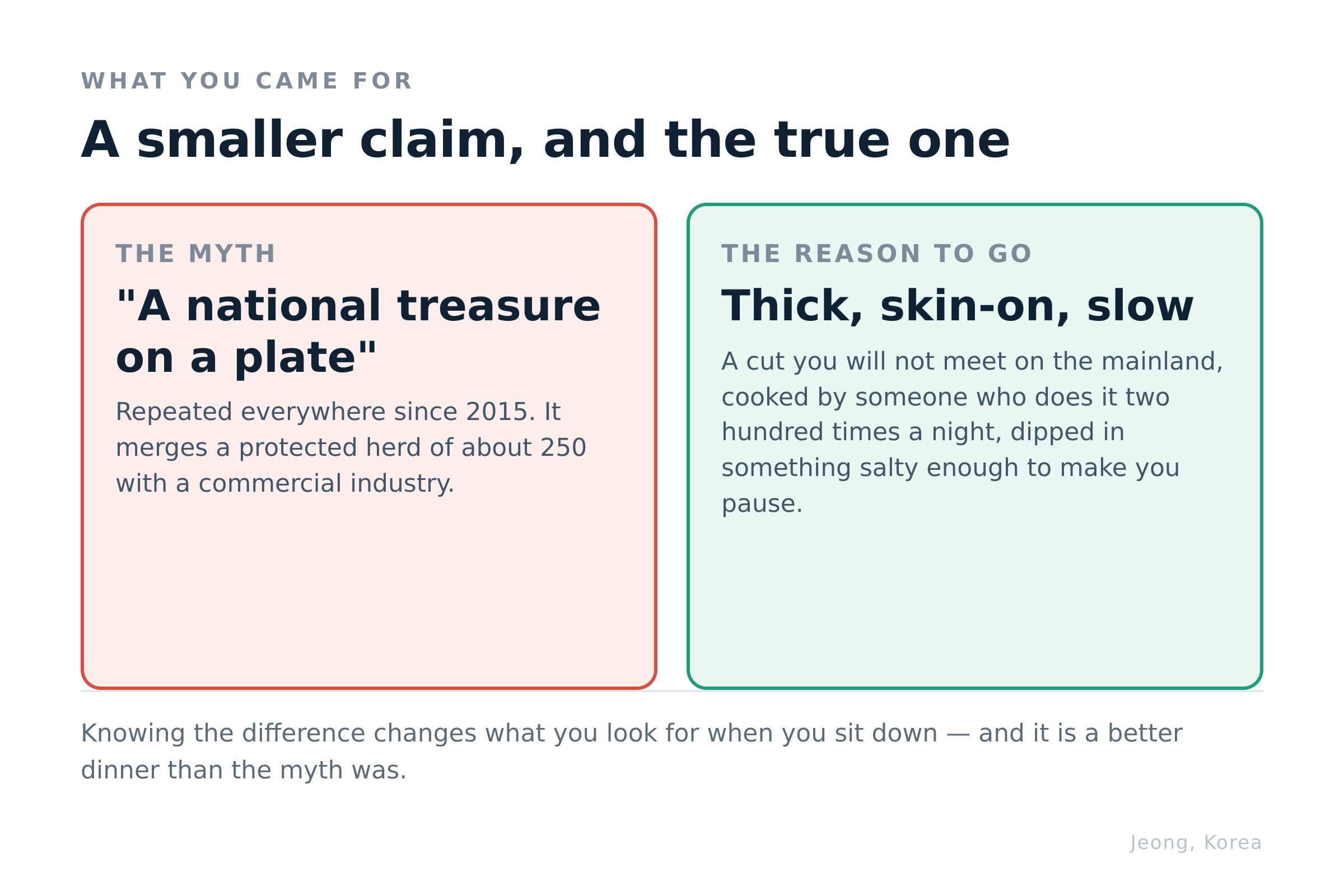
The Natural Monument and the meal are not the same animal, and knowing that changes what you are looking for when you sit down. You are not there for a protected bloodline. You are there for a thick cut of skin-on pork, cooked slowly by someone who does this two hundred times a night, dipped in something salty enough to make you pause.
That is a smaller claim than "national treasure on a plate." It is also the true one, and it is a better dinner than the myth was.
If you have not sorted out how you are getting to the island yet, start with which airport you fly into — that decision turns out to matter more than most people expect.
References
-
Jeju Black Pig, Natural Monument No. 550, designated 17 March 2015 — Korea Heritage Service, National Heritage Portal
-
Jeju black pig breed background and the introduction of improved breeds from around 1908 — Jeju Provincial Livestock and Life Science Research Institute
-
Jeju black pig entry — Encyclopedia of Korean Culture