Flights to Jeju Island: The Airport You Land At Decides Whether You Need a Visa

Two people fly to Jeju on the same day. One needed a visa. The other did not. Their passports were the same colour. The difference was the airport where they first set foot in Korea.
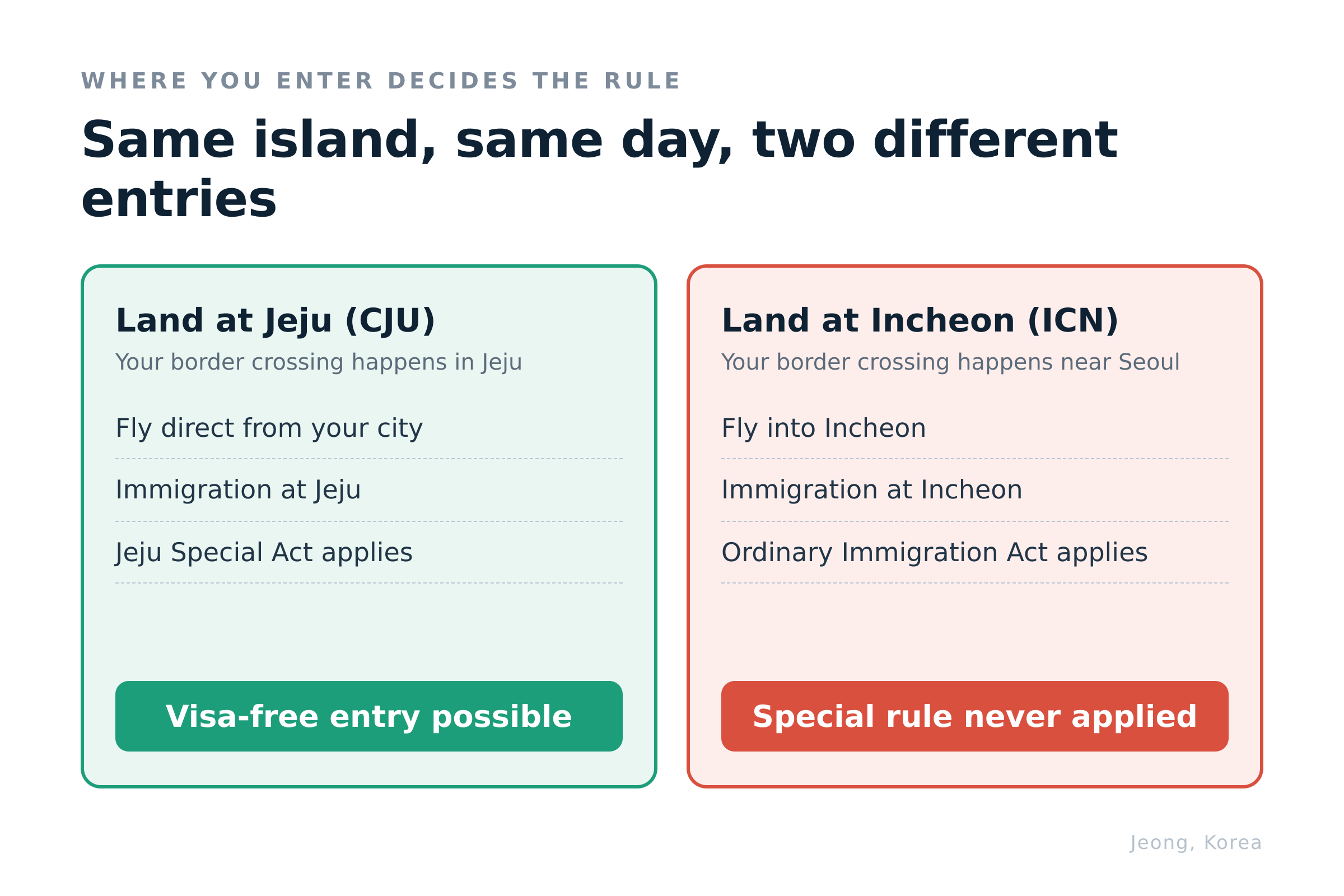
Jeju has its own international airport and, unusually, its own entry law. Where you first land in Korea — at Jeju itself, or at Incheon with a connecting flight afterwards — decides whether you can enter without a visa. This guide covers which direct flights to Jeju island actually exist, what Article 197 of the Jeju Special Act says in plain language, and how to book the trip so the legal footing is settled before you pay.
Almost every English guide to Korea assumes one shape of trip. You land at Incheon, you spend your first days in Seoul, and then, if the calendar allows, you add Jeju as a domestic hop near the end. That is a real route and a lot of people fly it happily.
It is also not the only route, and for some travellers it quietly costs more — not in money, but in paperwork. Jeju has its own international airport. It also has its own entry law, written into its own Act. Those two facts are connected, and I have never seen an English travel page put them next to each other.
So this is the piece nobody explains: not which airline is cheapest, but why the order of your airports changes what you are allowed to do.
Jeju has its own international airport, and most itineraries skip it
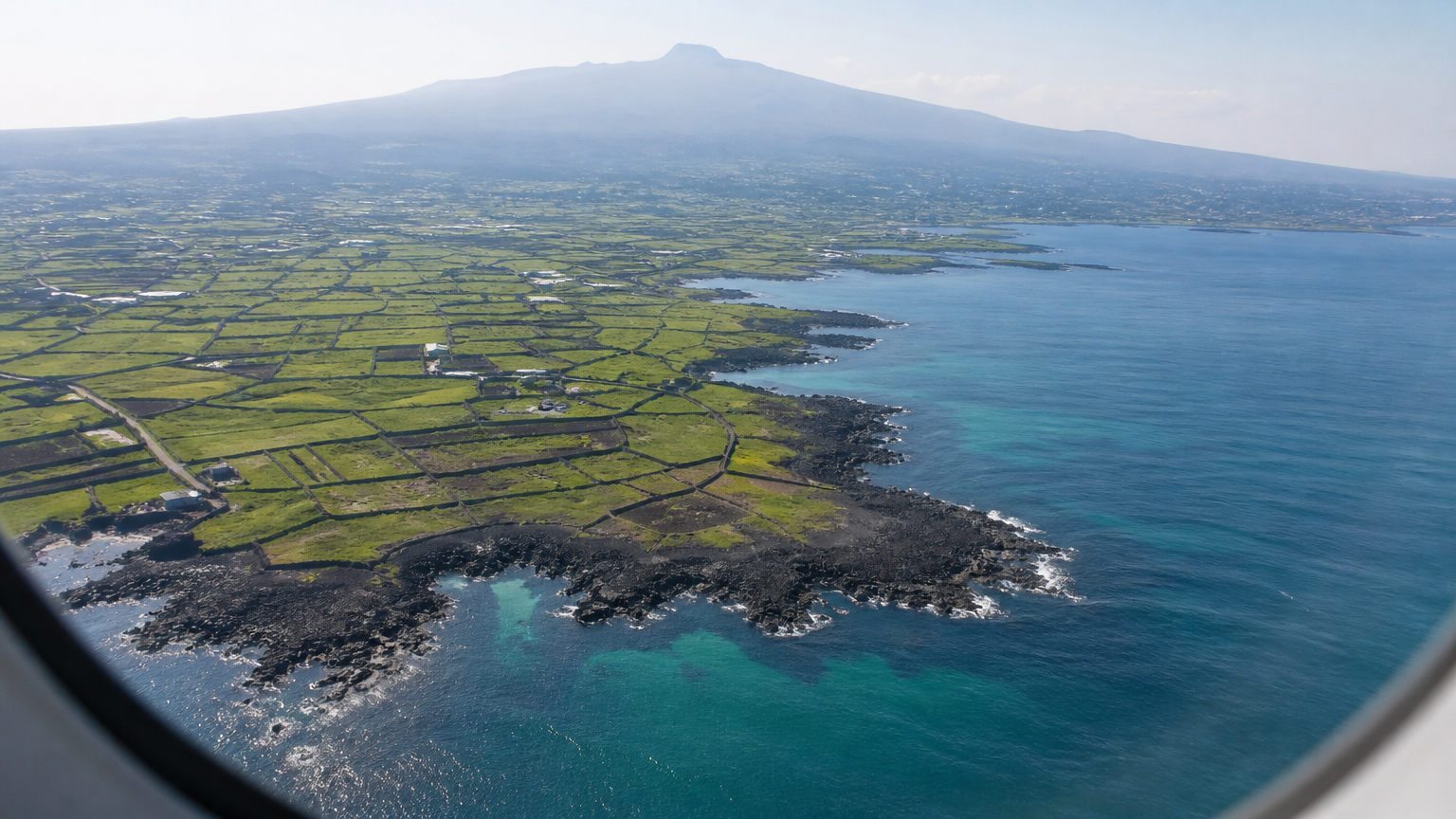
Jeju International Airport (airport code CJU) is not a domestic airstrip bolted onto a resort island. It is a full international airport, and a lot of the traffic on it never touches Seoul at all.
Why that is true is a matter of geography rather than politics. Jeju sits south of the peninsula, closer to Shanghai and Fukuoka than Seoul is to either, and the airlines flying short-haul Asian routes priced that in a long time ago.
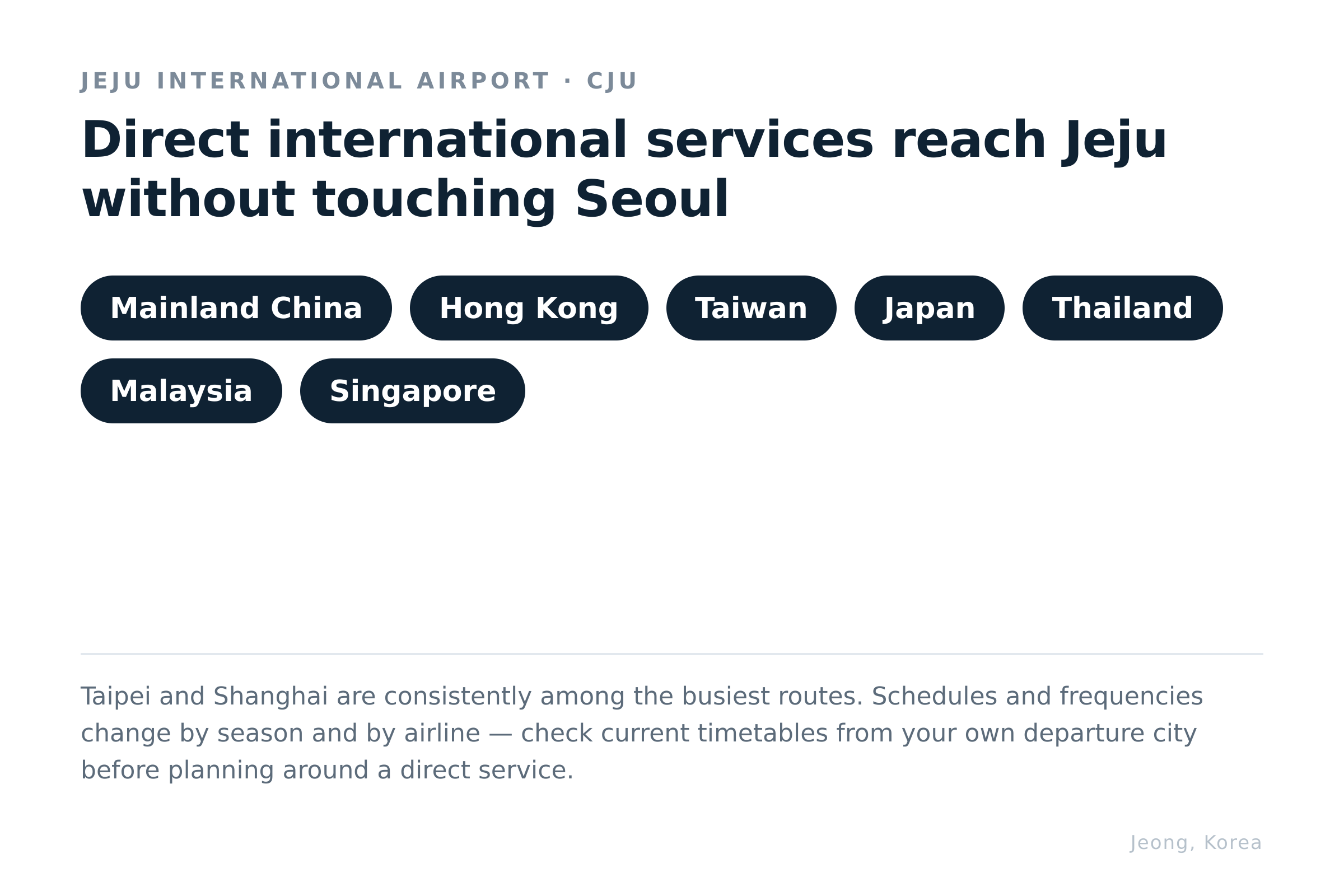
In practice that means direct international services from mainland China, Hong Kong, Taiwan, Japan, Thailand, Malaysia and Singapore. Taipei and Shanghai are consistently among the busiest of them. The Singapore run is the long one and still fits inside a single flight.
So when people search for flights to Jeju island from Manila, or Singapore, or Osaka, they are not asking a strange question. They are asking whether they can skip the peninsula entirely, and depending on where they start, the answer is yes.
The point is that "fly into Incheon, then connect" is a default, not a rule. Before you book that connection, it is worth checking whether your own city already has a direct line, because the list of cities that do is longer than most itineraries assume.
If you have already decided to start in Seoul, the mechanics of that leg are their own subject — I wrote them up separately in Seoul to Jeju: there is no train, and the ferry does not leave from Seoul.
So why does it matter so much which one you pick?
The airport you enter at decides your visa
Because entering Korea at Jeju and entering Korea at Incheon and then flying to Jeju are two different legal events, and only one of them can be visa-free.
The rule lives in the Jeju Special Act, Article 197(1), and it is worth reading slowly:
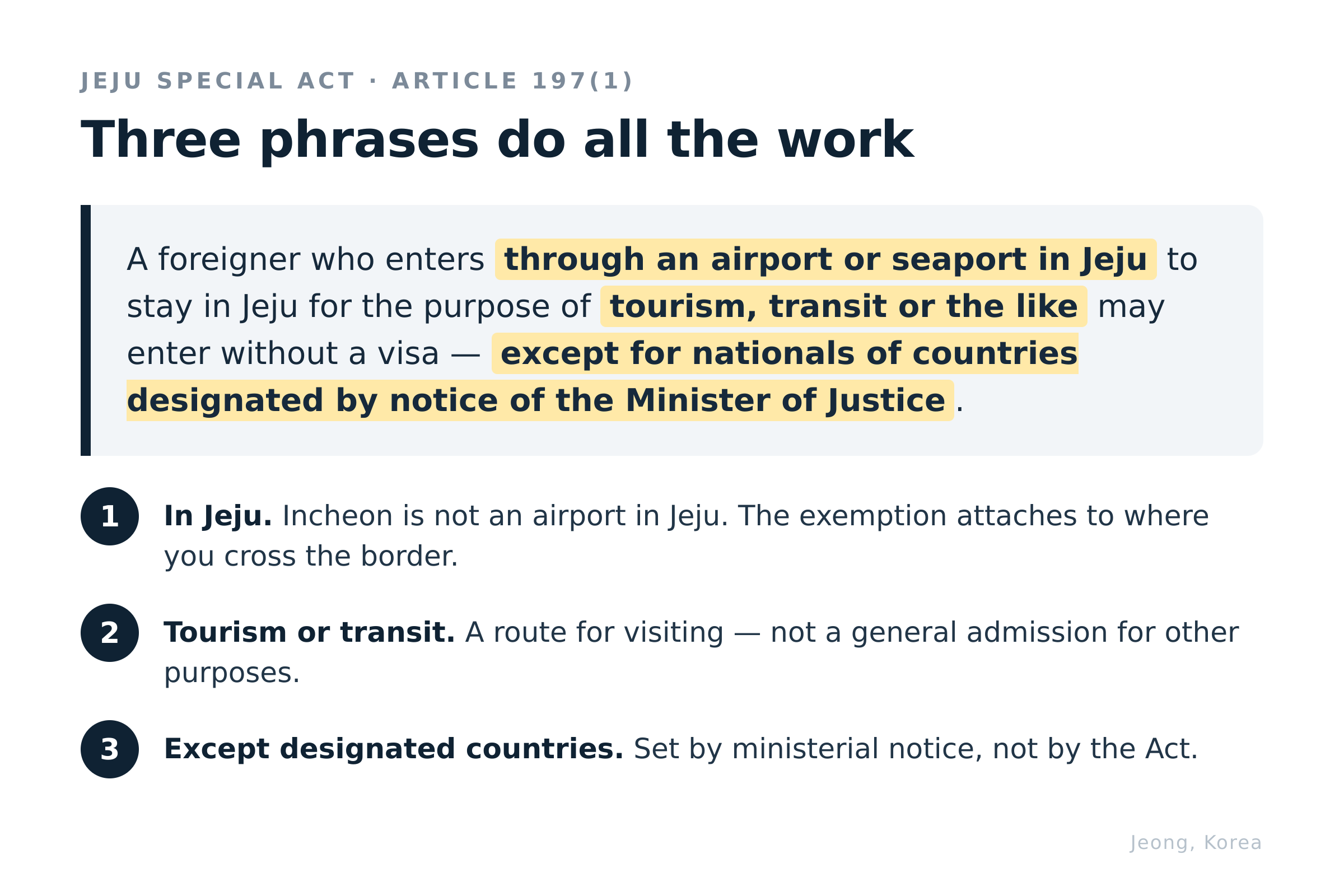
A foreigner who enters through an airport or seaport in Jeju to stay in Jeju for the purpose of tourism, transit or the like may enter without a visa, notwithstanding Article 7(1) of the Immigration Act, except for nationals of countries designated by notice of the Minister of Justice.
Three things in that sentence do the work.
"Through an airport or seaport in Jeju." Incheon is not an airport in Jeju. If your point of entry into Korea is Incheon, you have entered under the ordinary Immigration Act, and the special rule never applied to you — even if your final destination that same afternoon is Jeju. The exemption attaches to where you cross the border, not to where you sleep.
"For the purpose of tourism, transit or the like." This is an entry route for visiting, not a side door into the country for other purposes.
"Except for nationals of countries designated by notice of the Minister of Justice." There is an excepted-country list, it is set by ministerial notice rather than by the Act itself, and Article 197(2) lets the provincial governor ask for that notice to be changed during a disaster or an epidemic. In other words, it is designed to move. A list you read on a blog last year is not evidence about this year.
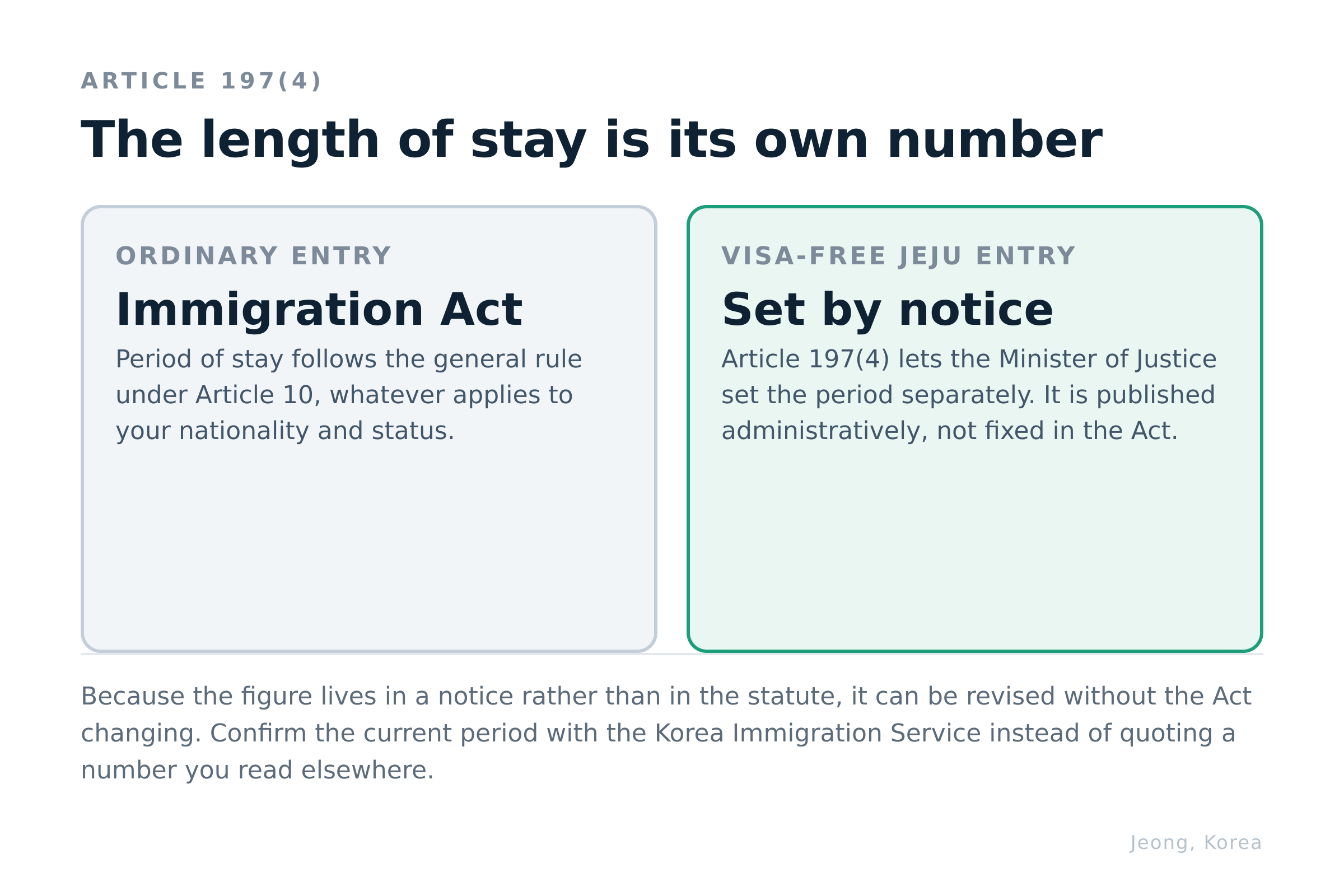
One more line matters and is easy to miss. Article 197(4) allows the Minister of Justice to set the permitted length of stay separately from the ordinary rule. So the period you get on a visa-free Jeju entry is its own number, published by notice, and not the one you may have read for a normal tourist entry.
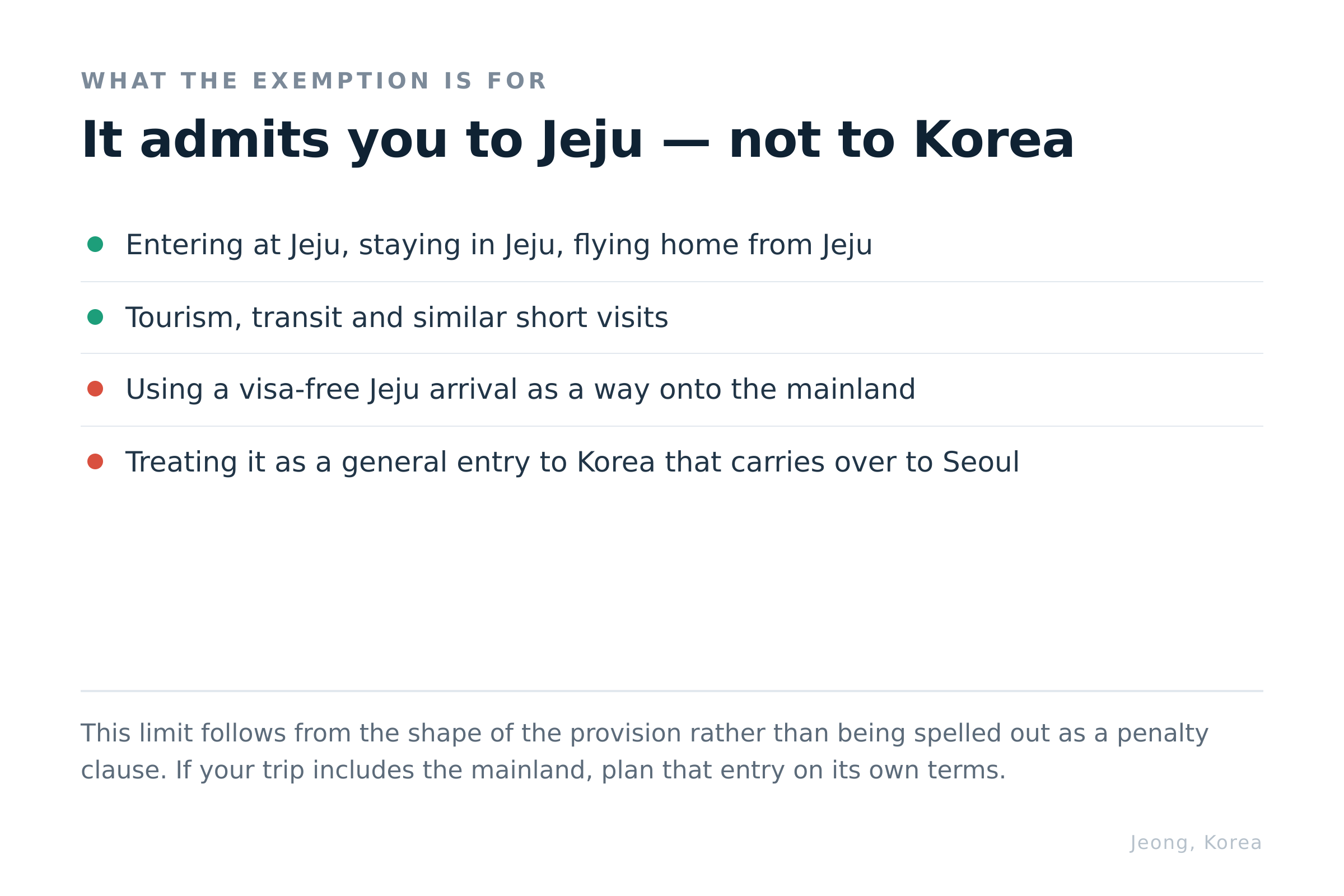
There is also a limit that follows from the shape of the rule rather than being spelled out in it. The exemption exists so you can visit Jeju. It is not a general admission to Korea, so treating a visa-free Jeju arrival as a way to reach the mainland is exactly the thing it is not.
Which leaves the practical question: how do you actually book this?
How to book flights to Jeju island without guessing
Start from your own city rather than from Seoul, and work in this order.
First, check for a direct service to CJU. Search your home airport straight to Jeju before you search anything else. If a direct route exists, you have both a shorter trip and, potentially, a different entry status. If it does not, you have lost five minutes.
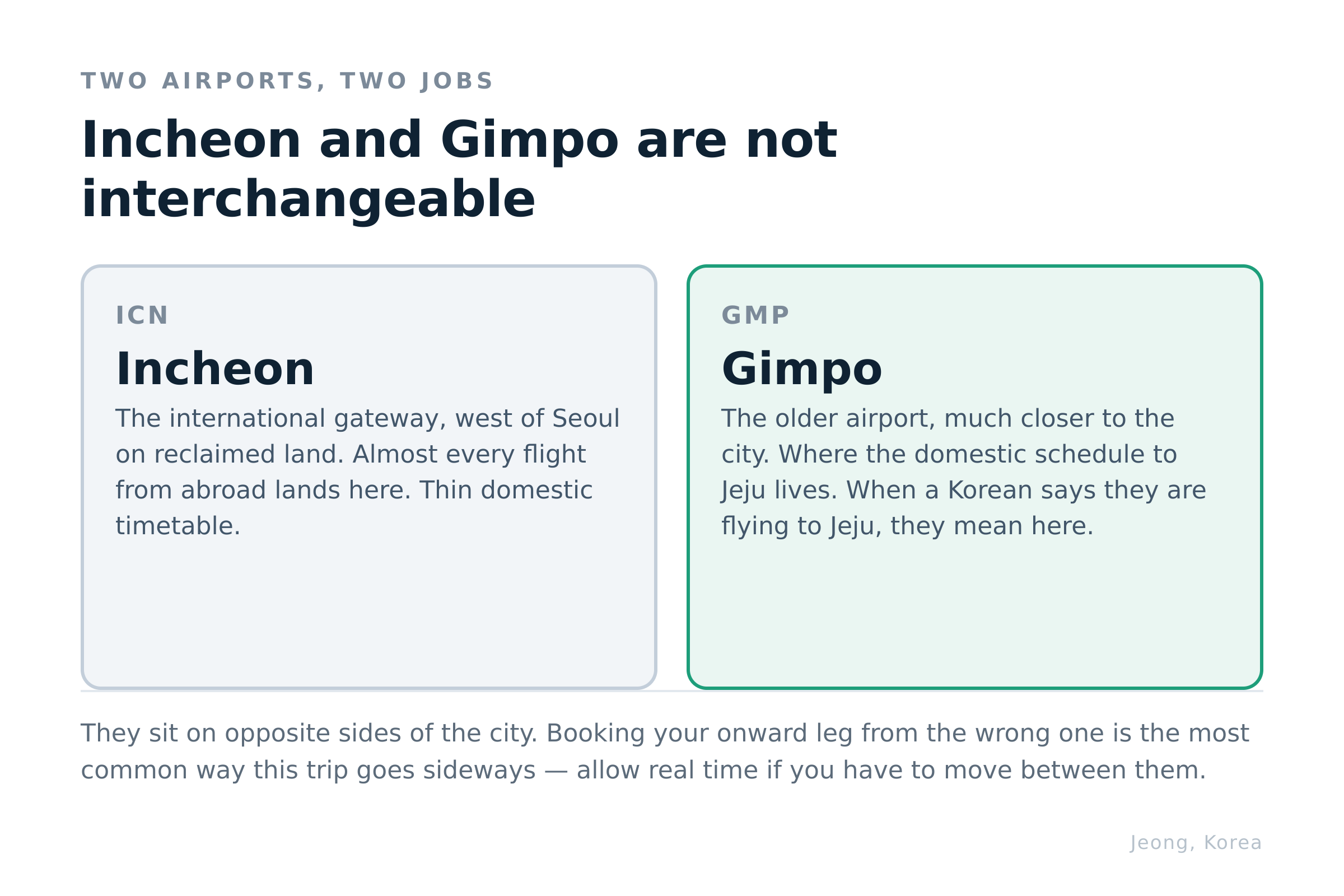
Second, if you are connecting, know which Seoul airport you need. Korea has two, and they do different jobs. Incheon (ICN) is the international gateway. Gimpo (GMP) is where the domestic schedule to Jeju lives, and it is a separate airport on the other side of the city. Booking your onward leg from the wrong one is the most common way this trip goes sideways.
Third, check the excepted-country notice before you rely on visa-free entry. Because the list is set by ministerial notice and can be revised, the only sound way to use it is to check the Korea Immigration Service directly, close to your travel date. If your nationality is on the list, the Jeju route gives you nothing and you plan a normal visa like anyone else.
Fourth, book the two legs as one ticket where you can. A separate domestic ticket bought independently gives you no protection if the international leg is late. This is ordinary travel advice, but the distances involved here punish it more than usual: miss the connection and the next seat may be the following morning.
Fifth, keep your passport out. Domestic flights inside Korea run identity checks at the gate, so the passport does not go into your bag when you land — you will need it again in a few hours.
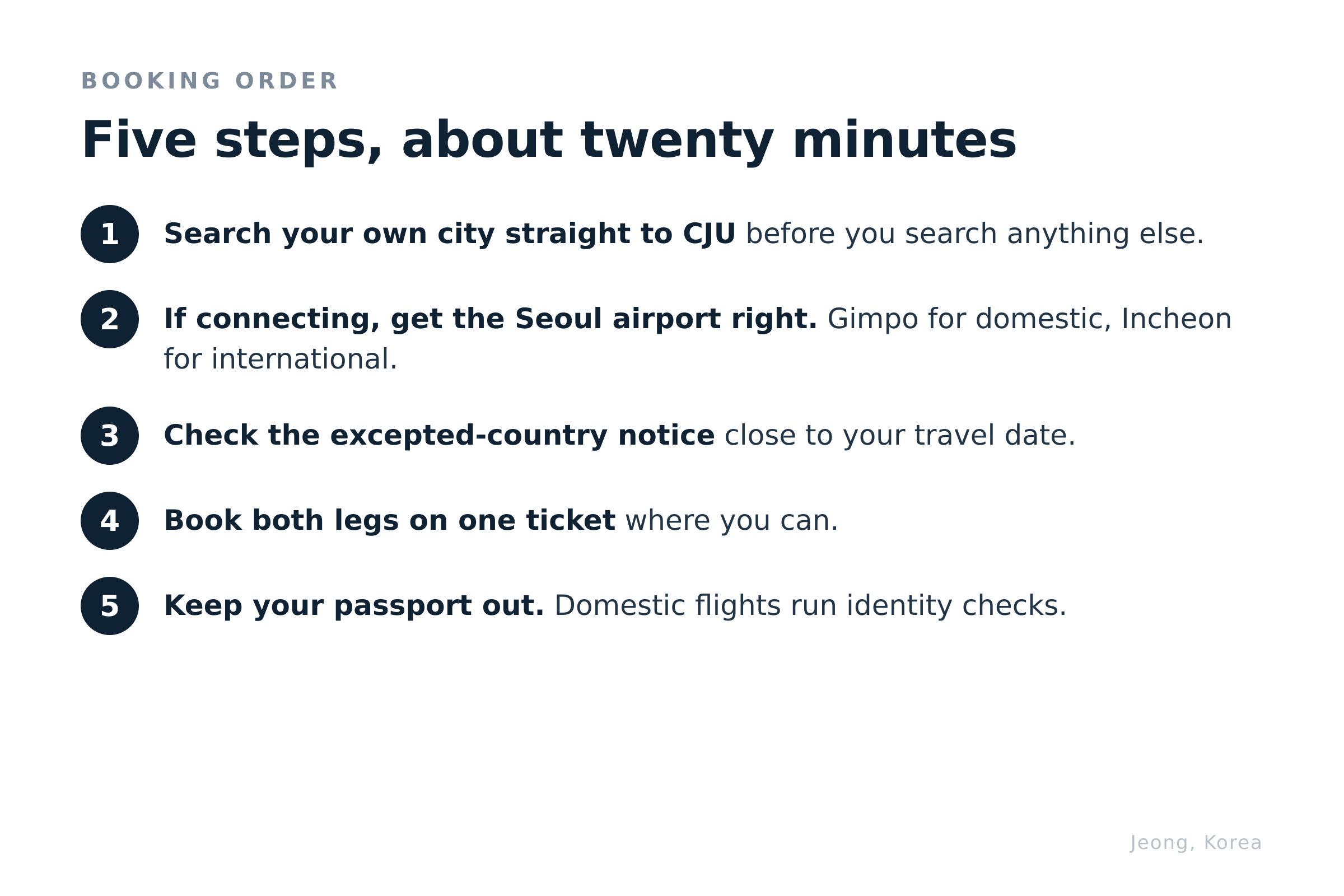
Done in that order, the booking takes about twenty minutes and you know exactly which legal footing you are standing on before you pay for anything.
FAQ
Are there direct international flights to Jeju?
Yes. Jeju International Airport (CJU) has direct international services, mostly to destinations in Asia — mainland China, Hong Kong, Taiwan, Japan, Thailand, Malaysia and Singapore. Routes and frequencies change by season and by airline, so check current schedules from your own departure city.
Do I need a visa to visit Jeju?
It depends on where you enter Korea and on your nationality. Under Article 197(1) of the Jeju Special Act, a foreigner entering through an airport or seaport in Jeju for tourism or transit may enter without a visa, except for nationals of countries designated by notice of the Minister of Justice. Check the Korea Immigration Service for the current excepted-country list before you travel.
Is Jeju still visa-free if I land at Incheon and connect?
No. The exemption applies to entry made through an airport or seaport in Jeju. If you enter Korea at Incheon, you have entered under the ordinary Immigration Act, and normal visa rules apply to that entry regardless of where you go next.
How long can I stay on a visa-free Jeju entry?
Article 197(4) allows the Minister of Justice to set the period of stay separately by notice, so the number is published administratively rather than fixed in the Act. Confirm the current period with the Korea Immigration Service rather than relying on a figure quoted elsewhere.
Can I travel from Jeju to Seoul on a visa-free entry?
The exemption is written for staying in Jeju. It is not a general entry to Korea, so do not plan a mainland leg on the assumption that it carries over. If your trip includes the mainland, plan your entry accordingly.
Which Seoul airport do domestic flights to Jeju leave from?
Gimpo (GMP) carries the domestic schedule to Jeju. Incheon (ICN) is the international gateway and has a much thinner domestic timetable. They are different airports on opposite sides of the city, so allow real time between them.
Do I need my passport for a domestic flight within Korea?
Yes. Identity is checked for domestic flights, so keep your passport accessible rather than packing it after you land.
One trip, two legal paths
The whole thing comes down to a single line in a single Act: entry made through an airport or seaport in Jeju is treated differently from entry made anywhere else in Korea. Everything else — which airline, which seat, which day — is ordinary travel planning. That one detail is the part that is genuinely different about this island, and it is decided before you board, not after you arrive.
Next in this series: the ferry. People search for it constantly, and the route most of them are looking for stopped running years ago. I will show you which ports are actually left, how long each crossing takes, and the one reason it is still worth taking a boat instead of a plane.
References
-
Jeju Special Act (Act on Special Self-Governing Province of Jeju and the Development of a Free International City), Article 197 — Korea Law Information Center
-
Immigration Act, Articles 7 and 10 — Korea Law Information Center
-
Visa-free entry notices and the excepted-country list — Korea Immigration Service, Ministry of Justice
-
Jeju International Airport (CJU) route information — Korea Airports Corporation