Ambulance in Korea: Why Nobody Hesitates to Call 119

Where you are from, an ambulance is a bill. Here it is not. Nobody hesitates, and that is deliberate.
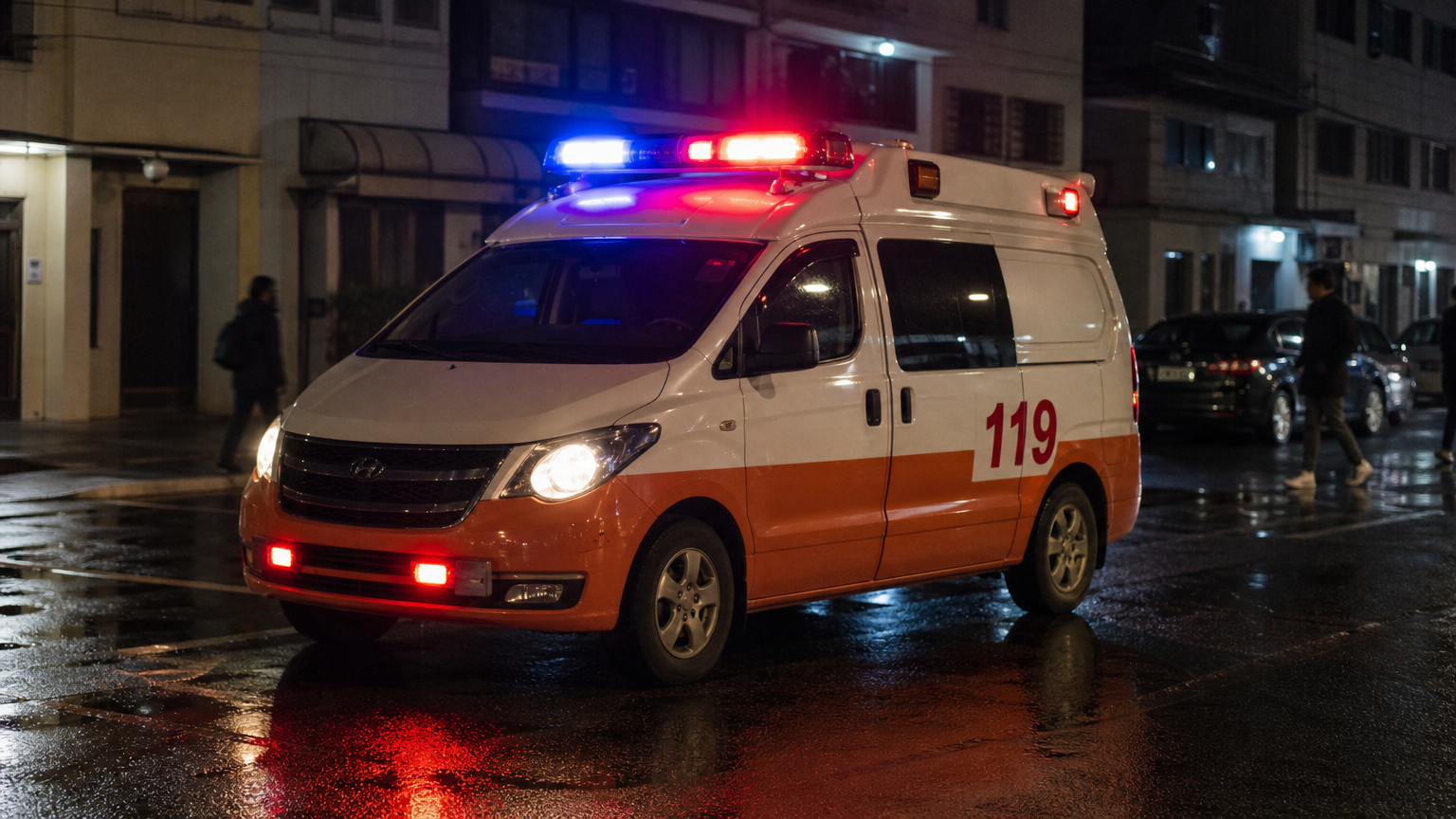
I did not know this was unusual until a friend visiting from abroad asked me what an ambulance costs, and then asked again because she assumed she had misheard the answer.
The answer is nothing. The fire service says so on its own page, in a sentence with no conditions attached to it: 어떠한 경우에도 요금을 징수하지 않습니다. No fee is collected under any circumstances. The 119 service is free anywhere in the country, regardless of how far you are carried or how many of you there are.
So that is the headline, given to you in the second paragraph rather than at the end. An ambulance in Korea does not generate an invoice.
Which leaves an obvious question, and it is the one this article is actually about. If the ride is free, why does every guide for foreigners still tell you to buy travel insurance?
119 or 112, and what the number obliges them to do
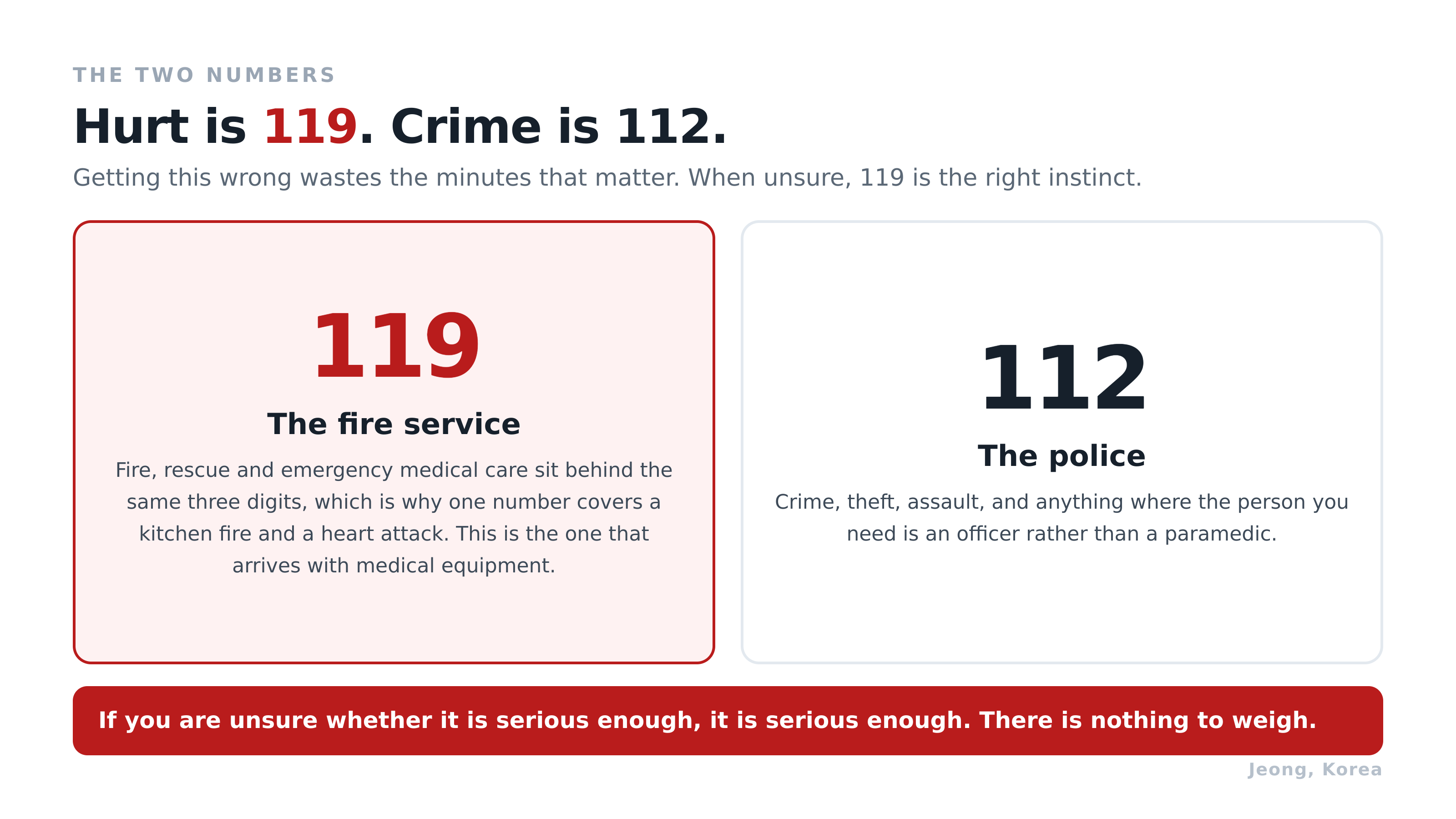
Start with the two numbers, because getting this wrong wastes the minutes that matter.
119 is the fire service. Fire, rescue, and emergency medical care all sit behind that number, which is why the same three digits cover a kitchen fire and a heart attack. 112 is the police.
If someone is hurt or cannot breathe, it is 119. If it is a crime, it is 112. When people are unsure they call 119, which is the right instinct, because the fire service is the one that arrives with medical equipment.
What happens after you dial is not discretionary. Article 13(1) of the 119 Rescue and Emergency Aid Act says that when an emergency occurs, the fire authorities shall dispatch rescue and emergency teams to the scene without delay to carry out lifesaving, first aid, and transport by ambulance. Not may. Shall.
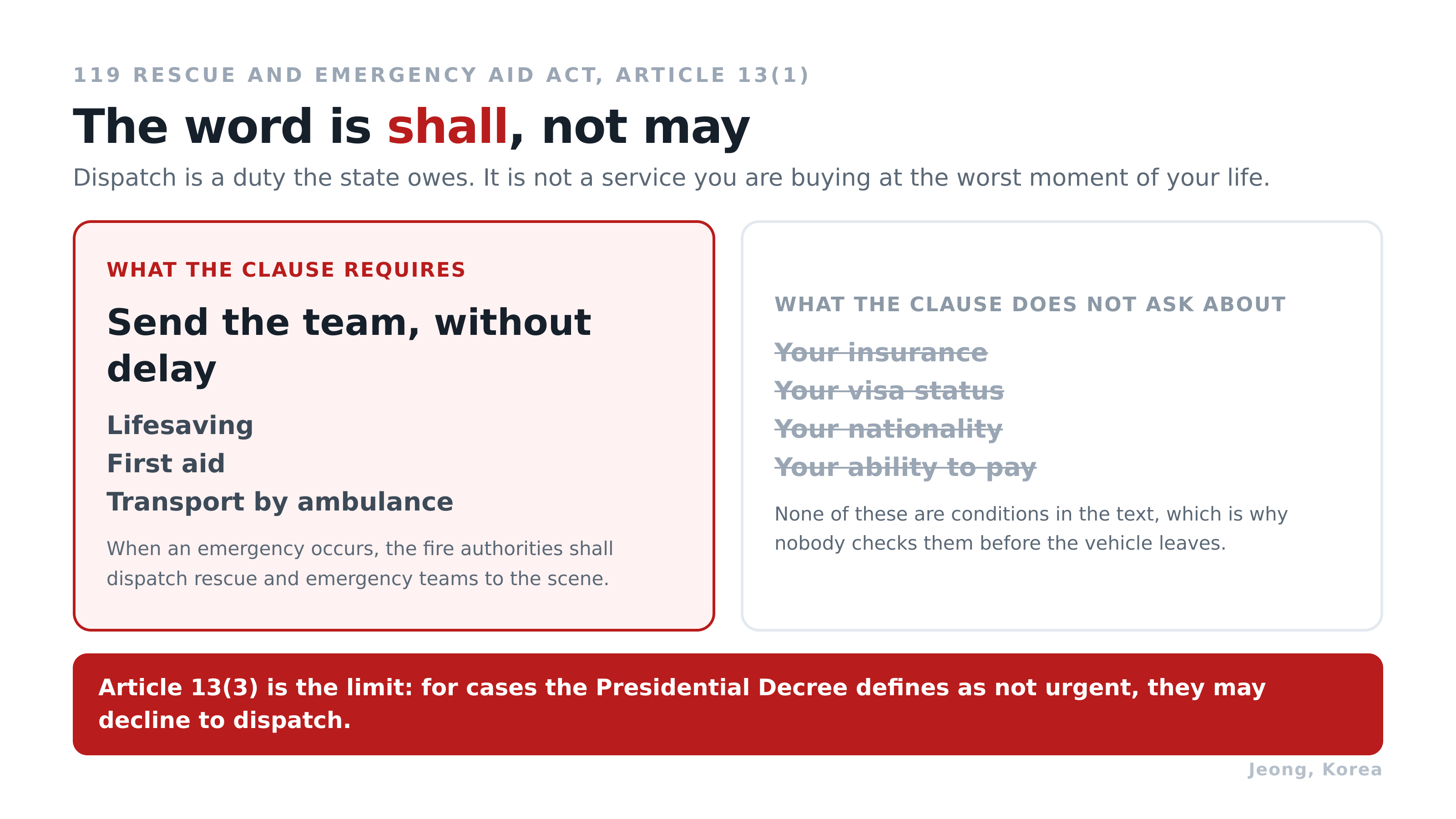
That word is the whole reason an ambulance in Korea behaves the way it does. Dispatch is a statutory duty owed by the state, not a service you are purchasing at the moment of crisis. Nobody is checking your status, your insurance, or your nationality before the vehicle leaves, because none of those are conditions in the clause.
There is a limit, and it is in the same article. Article 13(3) allows the fire authorities not to dispatch in cases the Presidential Decree defines as not urgent. That is the safety valve against the system being used as a free taxi, and it is worth knowing about before you call about something minor.
For the ordinary not-an-emergency version of being unwell, the route is different and cheaper: Hospital in Seoul: Why Koreans Don't Start at the Big One
So if 119 costs nothing, why do private ambulances exist at all?
What is free is not "the ambulance." It is 119.
This is the distinction that catches people out, and it is a real one rather than a technicality.
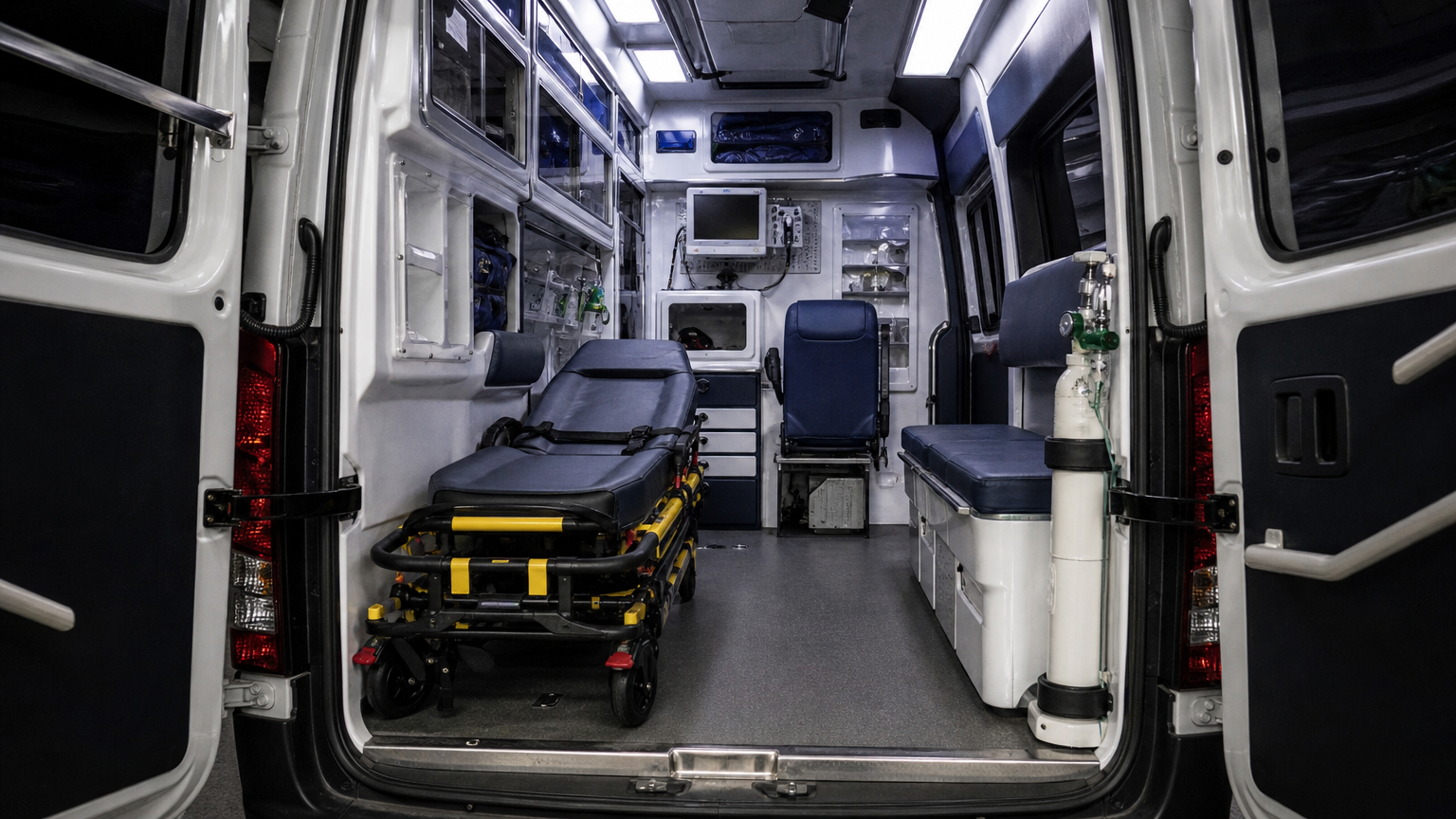
Korea has two kinds of ambulance. One is run by the fire service and dispatched under the Act above. The other is run privately, licensed by the health ministry, and used for the journeys that are not emergencies: moving a patient between hospitals, or between regions, when nobody's life is being saved in the next ten minutes.
The second kind charges. Article 24(1) of the Emergency Medical Service Act says that an operator of an ambulance may receive from the patient a transport and treatment fee prescribed by Ministry of Health and Welfare rule. That is the legal footing for the invoice, and it exists for private operators in a way it does not for the fire service.
| The question | 119 ambulance | Private ambulance |
|---|---|---|
| Run by | The fire service | An operator licensed by the health ministry |
| Legal footing | 119 Act Article 13(1): a duty to dispatch | Emergency Medical Service Act Article 24(1): may charge a fee |
| What you pay | Nothing, anywhere in the country | A transport fee set by ministerial rule |
| What it is for | Emergencies. Article 13(3) allows non-urgent calls to be declined | Transfers between hospitals or regions |
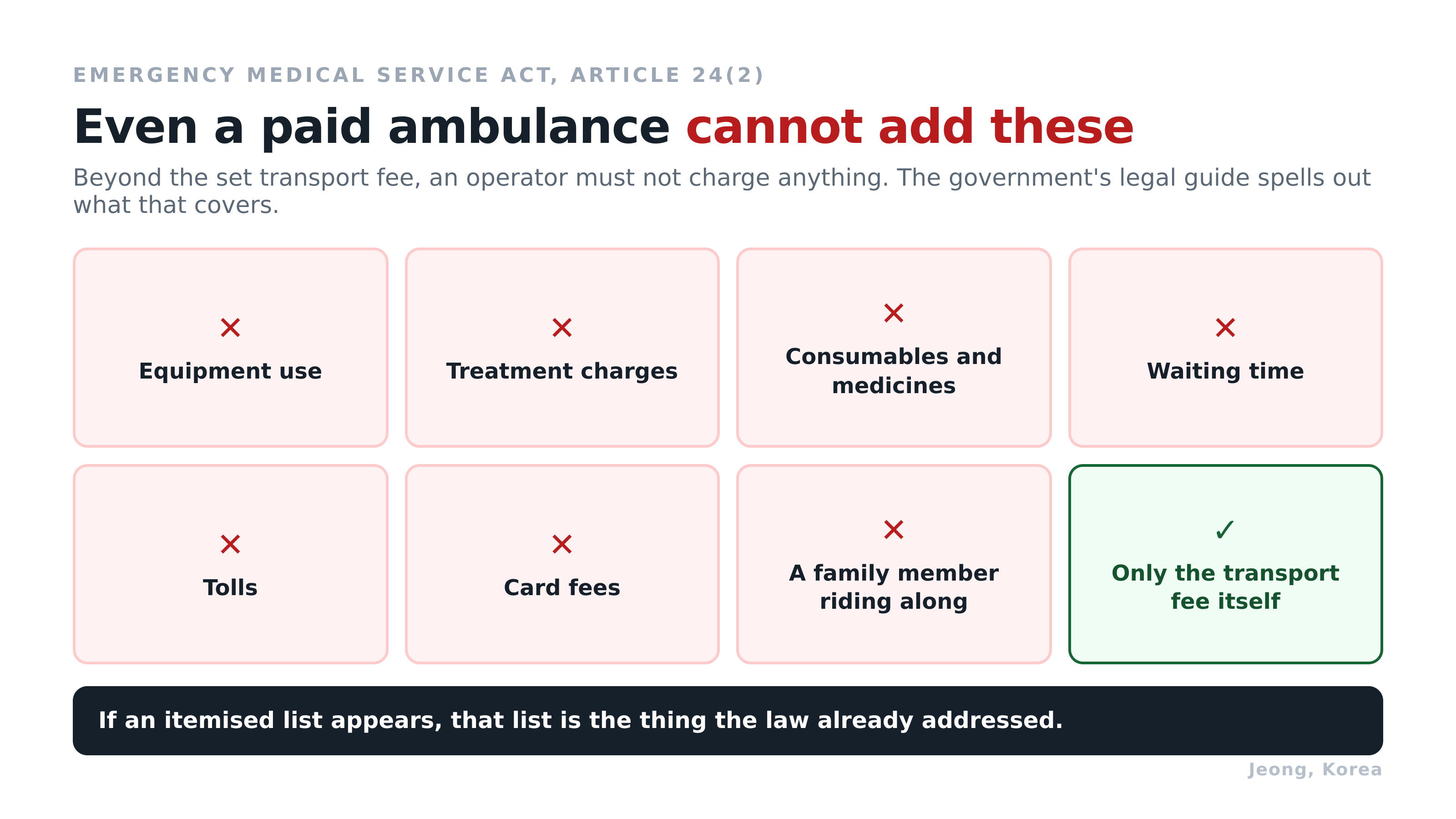
There is a protection attached to the private version that is worth knowing, because it is the kind of thing that gets padded elsewhere. Article 24(2) says the operator must not charge anything beyond that transport fee. The government's own plain-language legal guide spells out what that rules out: equipment charges, treatment charges, consumables and medicines, waiting time, tolls, card fees, and a charge for a family member riding along. None of those are billable on top.
So if you are ever in a private ambulance and an itemised list appears, that list is the thing the law already addressed.
For the mildest end of unwell, where no ambulance of any kind belongs: Korean Pharmacy Guide: What You Can Buy Without a Prescription
Which brings us back to the question from the top. If the ride is free, what is the insurance for?
The ride is free. The hospital is a separate conversation.
The free part ends when the doors open at the other end.
Getting you there costs you nothing. What happens after that is medical treatment, and medical treatment is billed the way medical treatment is always billed here. If you are a resident with national health insurance, you pay the insured share. If you are a visitor, you are outside that system and you pay as a non-covered patient.
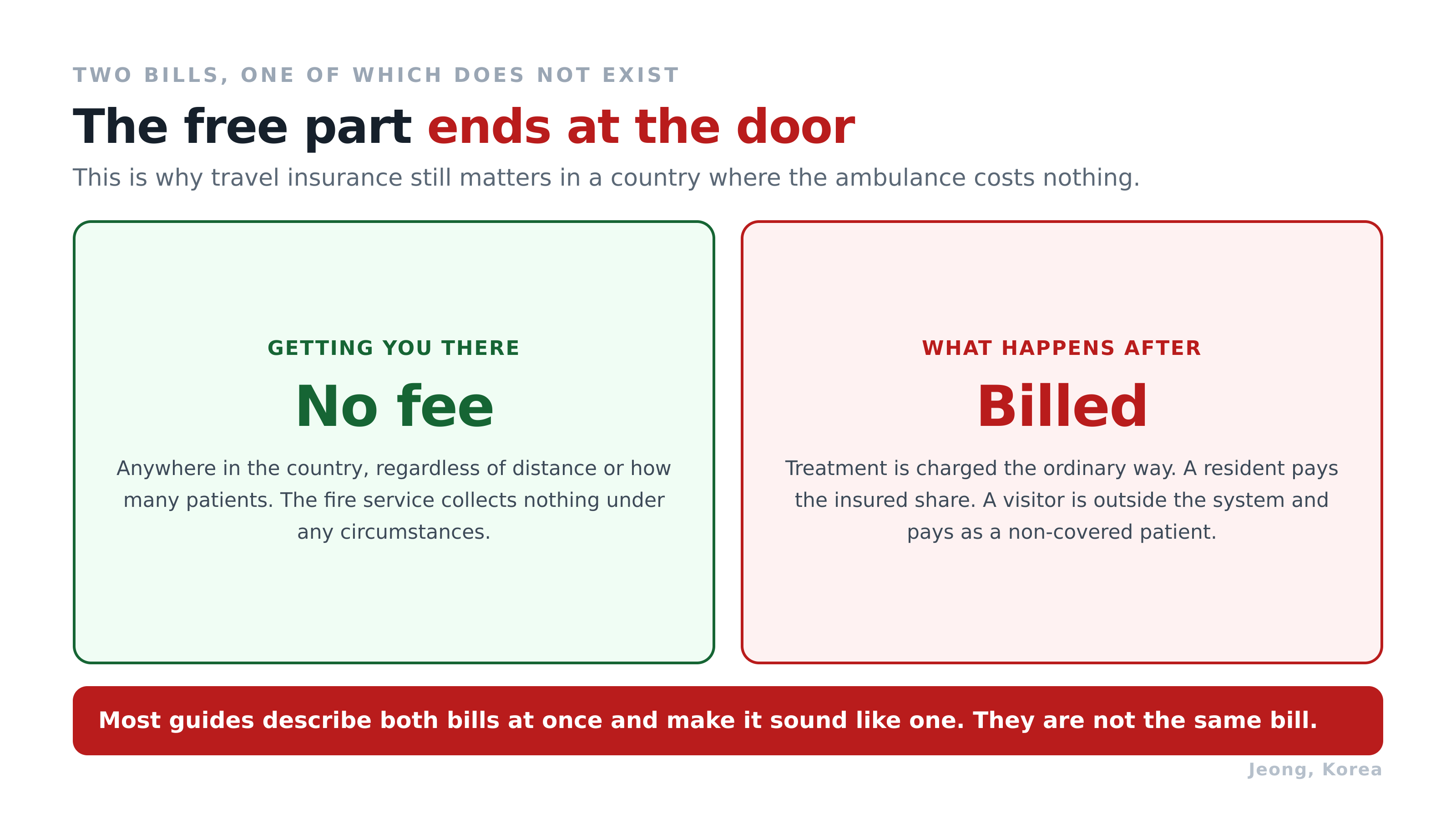
That is the entire reason travel insurance still matters in a country where the ambulance is free, and it is why the two facts sit together so confusingly in most guides. They are describing two different bills, one of which does not exist.
Now the practical part.
Say where you are, first. Before the description of what happened, before anything else. The fire service's own guidance on calling in an emergency leads with giving the exact location, calmly and correctly, and that instruction is first for a reason: everything else can be worked out on the way, and nothing can be worked out at all if the vehicle is going to the wrong place.
If you do not know the address, read whatever is around you. A shop name, a subway station and exit number, a building. Korean addresses are hard for visitors and easy for dispatchers, and a landmark is enough for them to place you.

Then say what is wrong, in the simplest words you have. Not the diagnosis you suspect. Whether the person is breathing, whether they are conscious, whether there is bleeding. Those three answers shape what arrives.
Do not hang up to look something up. Stay on the line.
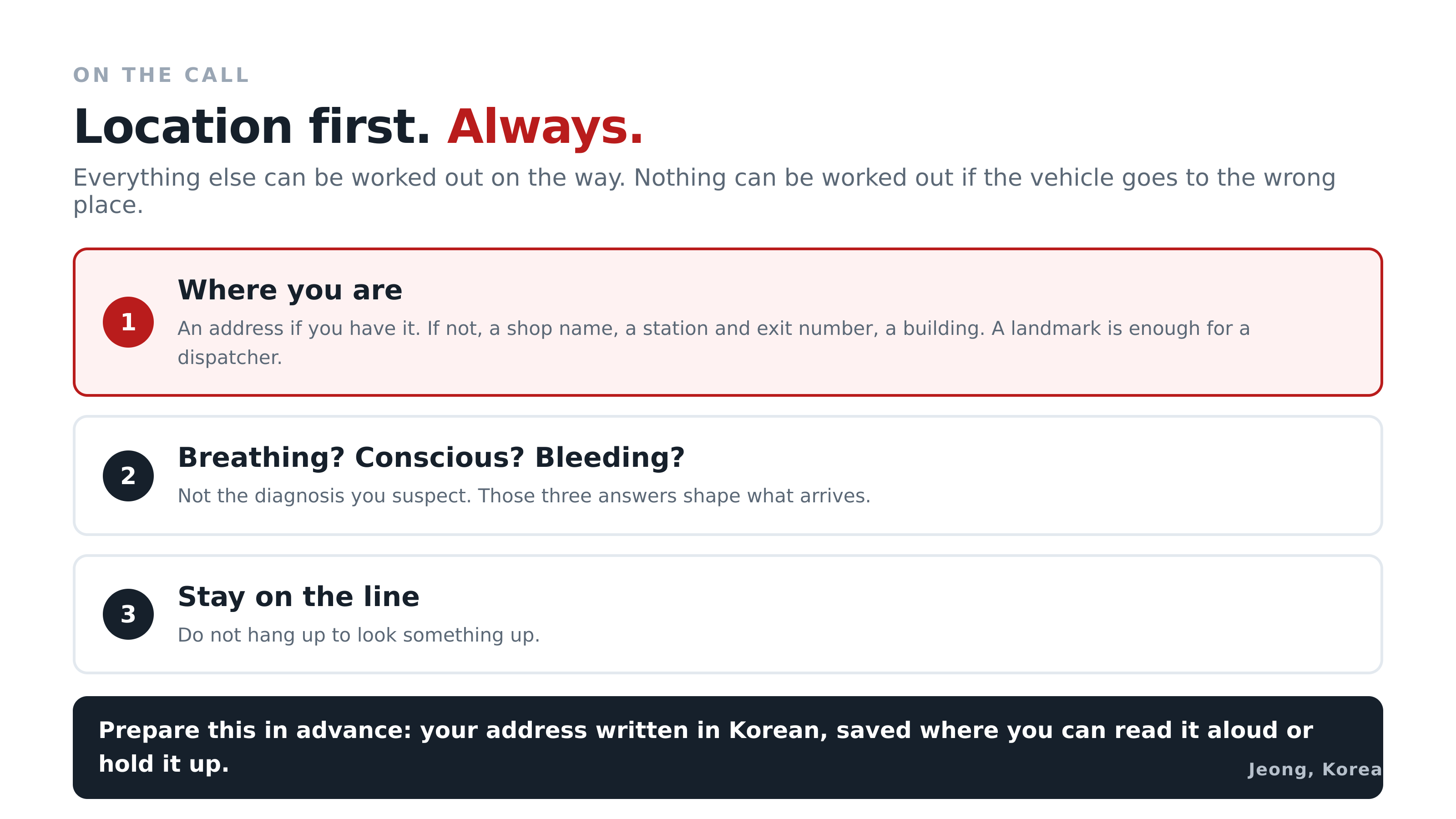
One thing to prepare in advance rather than rely on in the moment. Have your address written in Korean somewhere you can read it aloud, or saved in your phone where you can hold it up. Whatever help is available on the line, the address is the part you want to be able to deliver yourself, and it is the part that decides how fast anyone reaches you.
That takes four minutes to set up and removes the one part of the call that language actually blocks.
The short version
An ambulance in Korea arrives because the law tells the fire service to send it, not because anyone has established that you can pay. It costs nothing, anywhere, regardless of distance. The private ambulances that do charge are for a different job, and even they are barred from adding anything beyond the set fee.
The hospital afterwards is a separate matter, and that is what your insurance is for.
I want to end on the thing that actually matters here, because I have watched visitors get this wrong in a way that Koreans never do.
You are not imposing. Dispatch is an obligation the state owes, and it is worded that way in the statute. The calculation you would run at home, the one where you weigh whether this is bad enough to justify the cost, does not apply. There is nothing to weigh.
If you are unsure whether it is serious enough, it is serious enough. Dial 119, say where you are, and let the people whose job this is decide the rest.
FAQ
Is the ambulance really free in Korea?
Yes. The fire service states that the 119 ambulance service is free anywhere in the country and that no fee is collected under any circumstances, regardless of the distance travelled or the number of patients.
What is the difference between 119 and 112?
119 is the fire service and covers fire, rescue and emergency medical care. 112 is the police. For injury or illness, call 119.
Then why do I still need travel insurance?
Because the free part is the transport. Treatment at the hospital is billed separately, and a visitor without Korean national health insurance pays as a non-covered patient.
Are private ambulances free too?
No. Under Article 24(1) of the Emergency Medical Service Act, an ambulance operator may charge a transport and treatment fee set by ministerial rule. Private ambulances are used for non-emergency transfers between hospitals or regions.
Can a private ambulance add extra charges?
No. Article 24(2) prohibits charging anything beyond the set transport fee. The government's plain-language legal guide lists equipment, treatment, consumables and medicines, waiting time, tolls, card fees and family-member seating as things you should not be billed for.
What should I say when I call?
Your location first, as precisely as you can, using a landmark if you do not know the address. Then whether the person is breathing, conscious, or bleeding. Stay on the line.
What if it turns out not to be an emergency?
Article 13(3) of the 119 Act allows the fire authorities not to dispatch for cases defined as non-urgent. For something minor, a local clinic or pharmacy during opening hours is the right route.
Sources
119 Rescue and Emergency Aid Act, Article 13 (119구조ㆍ구급에 관한 법률) — National Law Information Center
Emergency Medical Service Act, Article 24 (응급의료에 관한 법률) — National Law Information Center
National Fire Agency, 119 Safety Report Centre — on the 119 ambulance service being free nationwide
Korea Ministry of Government Legislation, Easy-to-Find Practical Law (찾기쉬운 생활법령정보) — on 119 versus private ambulances and what may not be charged
Korean phrase quoted in this article: 어떠한 경우에도 요금을 징수하지 않습니다