Korean Pharmacy Guide: What You Can Buy Without a Prescription (and What You Can't)

A friend of mine got food poisoning on a Sunday evening in Seoul. She walked forty minutes past three closed pharmacies, found a convenience store, and stood in front of the medicine shelf holding her phone, trying to translate a box.
She did fine in the end. But she spent an hour on something that takes about four minutes once you know how the system is arranged. A Korean pharmacy is not the shop she was picturing, and what she needed was split across three places rather than sold in one.
Three places, and they do not overlap
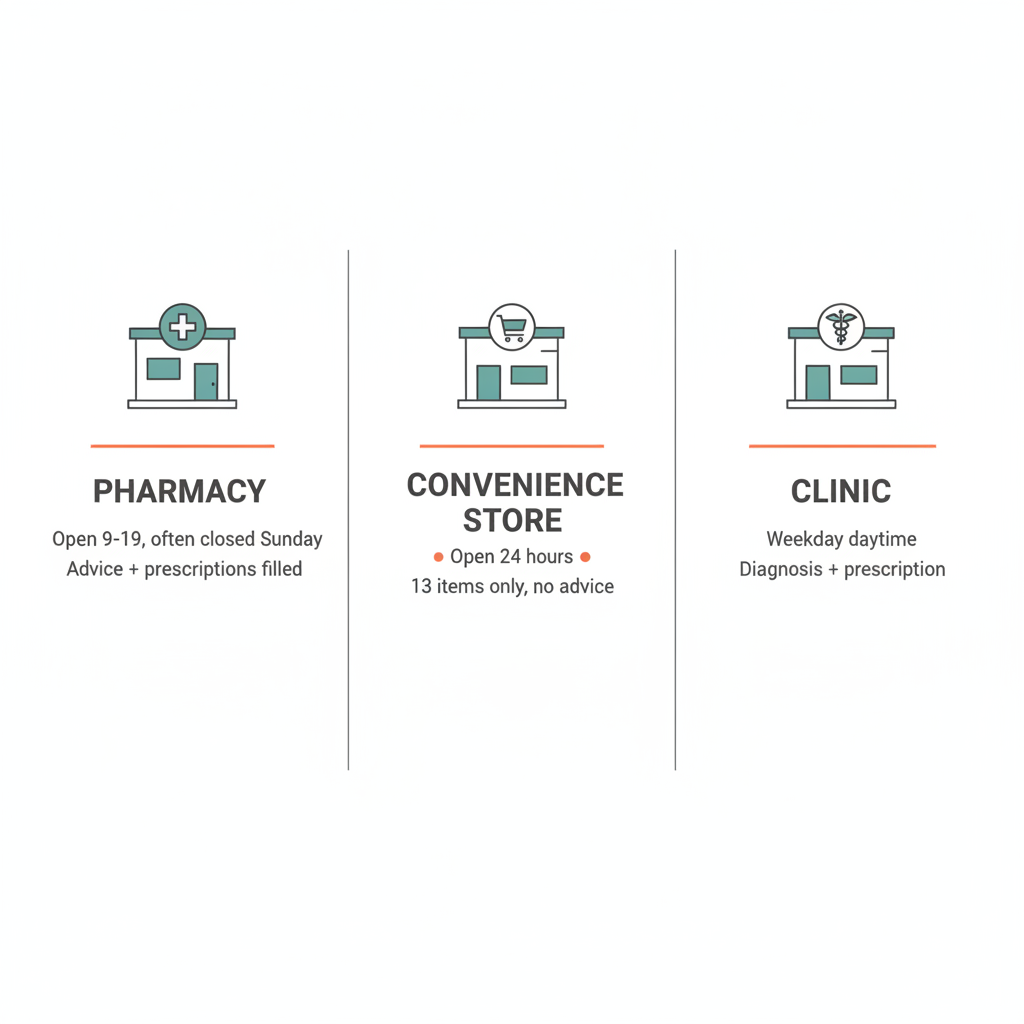
In a lot of countries a large chemist sells you painkillers, cosmetics, shampoo and a sandwich, and stays open late. Here those functions live in different buildings. A Korean pharmacy does one thing, and it is medicine.
| What it is | Hours | What you can get | |
|---|---|---|---|
| 약국 (pharmacy) | A licensed pharmacist, small shop | Roughly 9:00–19:00, many closed Sunday | Over-the-counter medicine, and prescriptions filled |
| Convenience store | 24 hours, everywhere | Always open | 13 designated household medicines only |
| 병원 / 의원 (clinic) | Doctor, needed for a prescription | Weekday daytime, some Saturday morning | Diagnosis and a prescription |
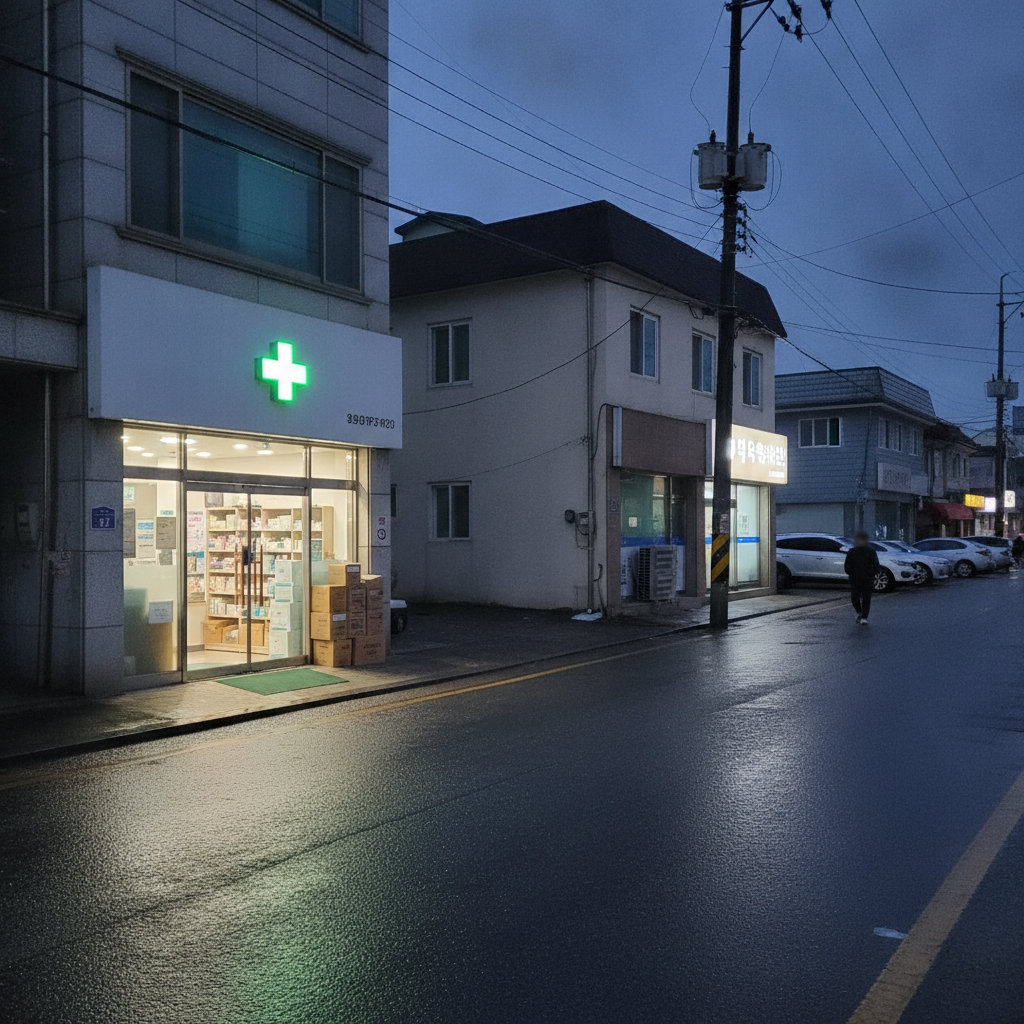
The green cross is the sign to look for. It is the same symbol used across the country, usually lit, usually at street level near a clinic or a subway exit. Where there is a clinic, there is almost always a pharmacy within thirty seconds of its door — that pairing is not a coincidence, and I will come back to why.
The convenience store list is real, and it is short
This is the part visitors get wrong most often. Korean convenience stores do sell medicine, and they are open at 3am, so people assume they can get whatever they need there.
They cannot. The Ministry of Health and Welfare designates a fixed list of 13 household medicines that may be sold outside a pharmacy, and it covers four categories only:
-
Fever and pain relief
-
Cold remedies
-
Digestive medicine
-
Medicated patches for aches
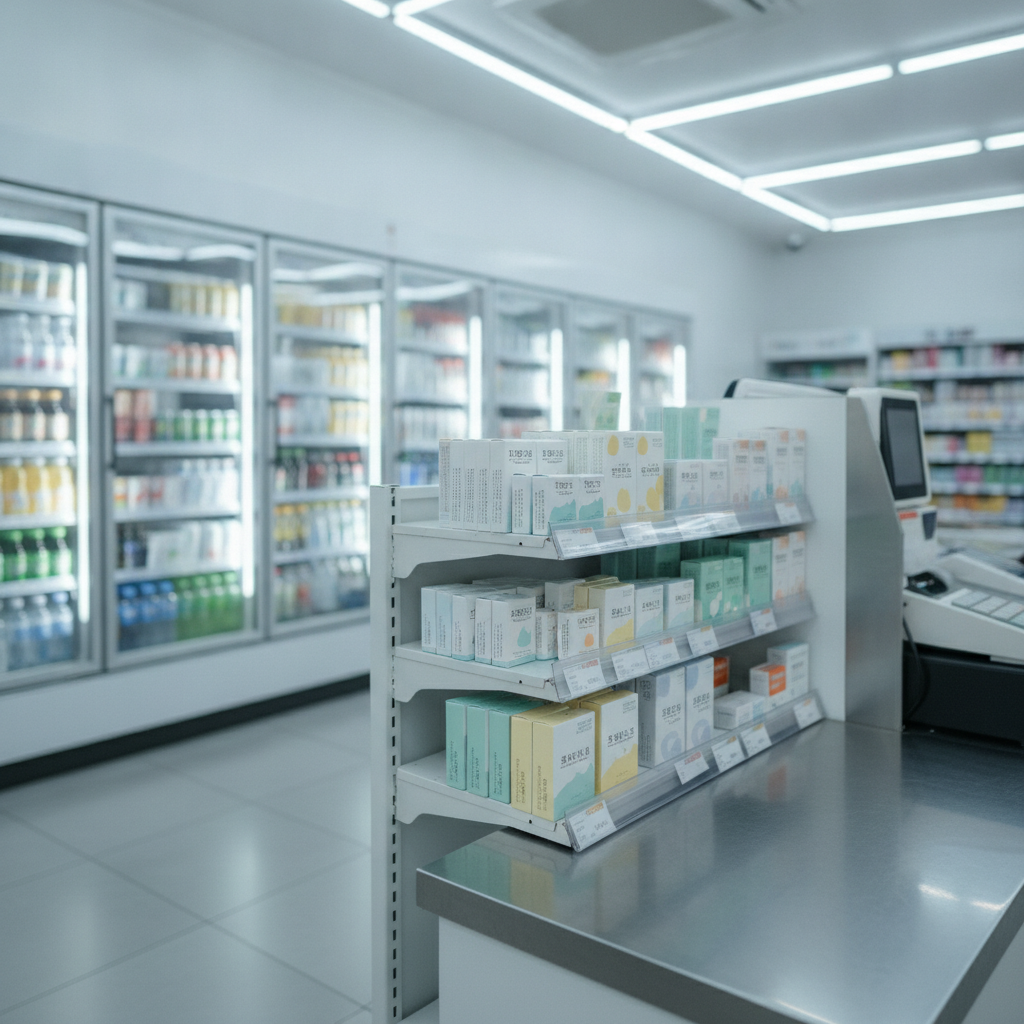
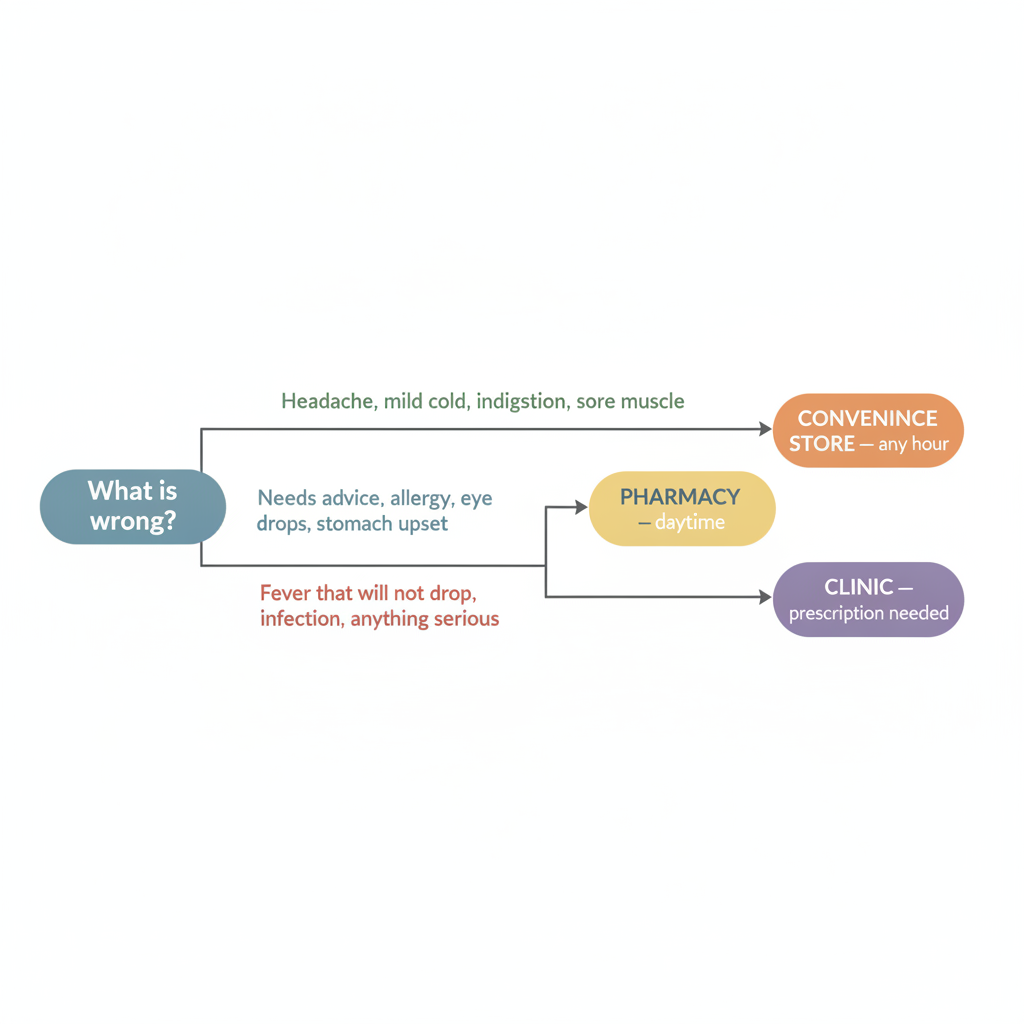
That is the whole list. No antibiotics, no eye drops, no motion sickness tablets, no anti-allergy medication. If your problem is a headache, a mild cold, indigestion or a sore shoulder, the convenience store at the end of the street solves it at any hour. If it is anything else, you need one of the other two doors.
The staff are not pharmacists and cannot advise you. They can only sell what is on the shelf.
The line that decides everything
Korea separated prescribing from dispensing in 2000. Doctors diagnose and write prescriptions; pharmacists fill them. Neither does the other's job.
The practical consequence for you is a hard line through the medicine cabinet:
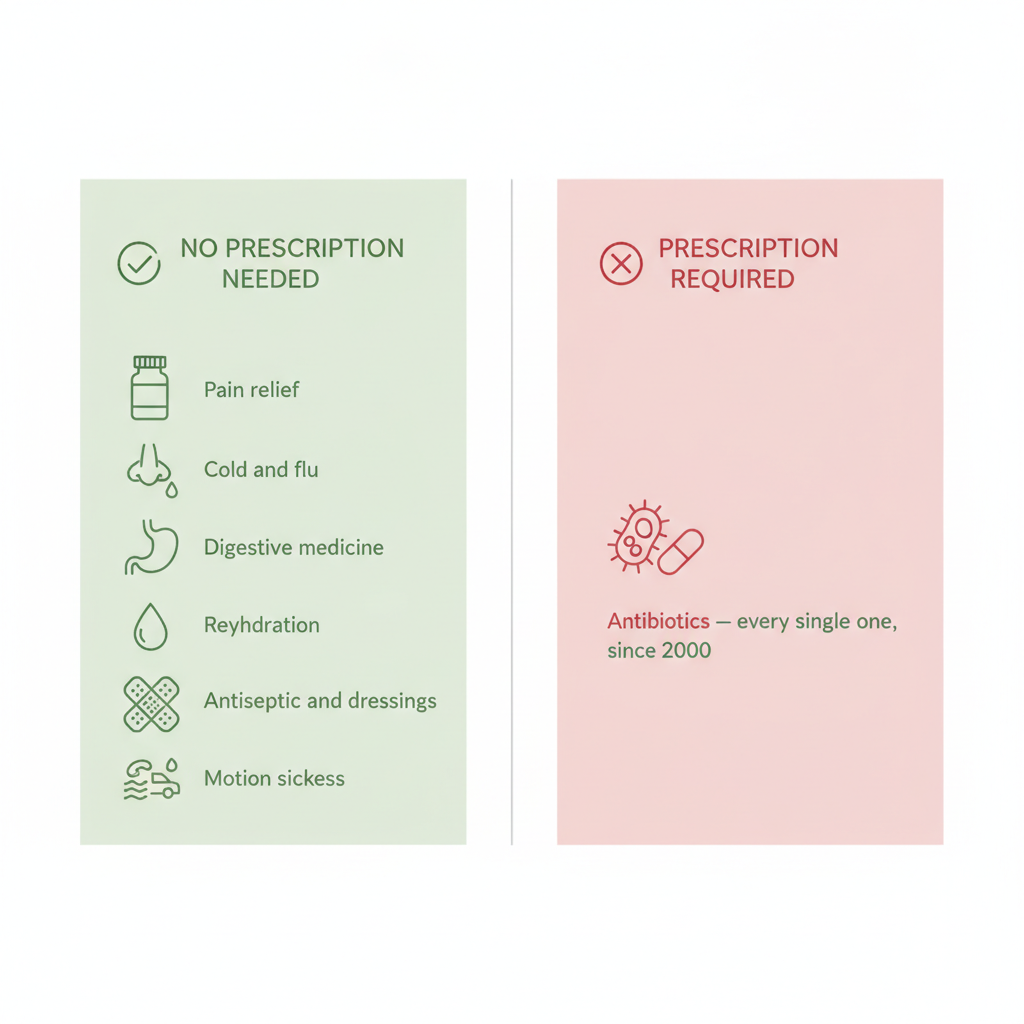
Without a prescription, a Korean pharmacy can sell you a genuinely useful range — pain relief, cold and flu remedies, digestive medicine, rehydration solutions, antiseptic and dressings, motion sickness tablets, some eye drops, some allergy medicine. For most travel problems this is enough, and the pharmacist will ask about your symptoms and choose for you.
With a prescription only: antibiotics, without exception. Since the 2000 reform every antibiotic is a prescription drug. If you have arrived expecting to buy a course over the counter the way you might elsewhere, you will not be able to, no matter how you ask or which shop you try.
This is why clinics and pharmacies sit next to each other. The sequence is: clinic, paper prescription, walk next door, hand it over, wait a few minutes. A local clinic visit for something ordinary is usually quick, and walk-ins are normal — appointments are not the default here the way they are in much of Europe.
If you do not have Korean health insurance you pay the full amount rather than the subsidised share, so bring a card and ask for a receipt if you intend to claim on travel insurance later.
What to say at the counter
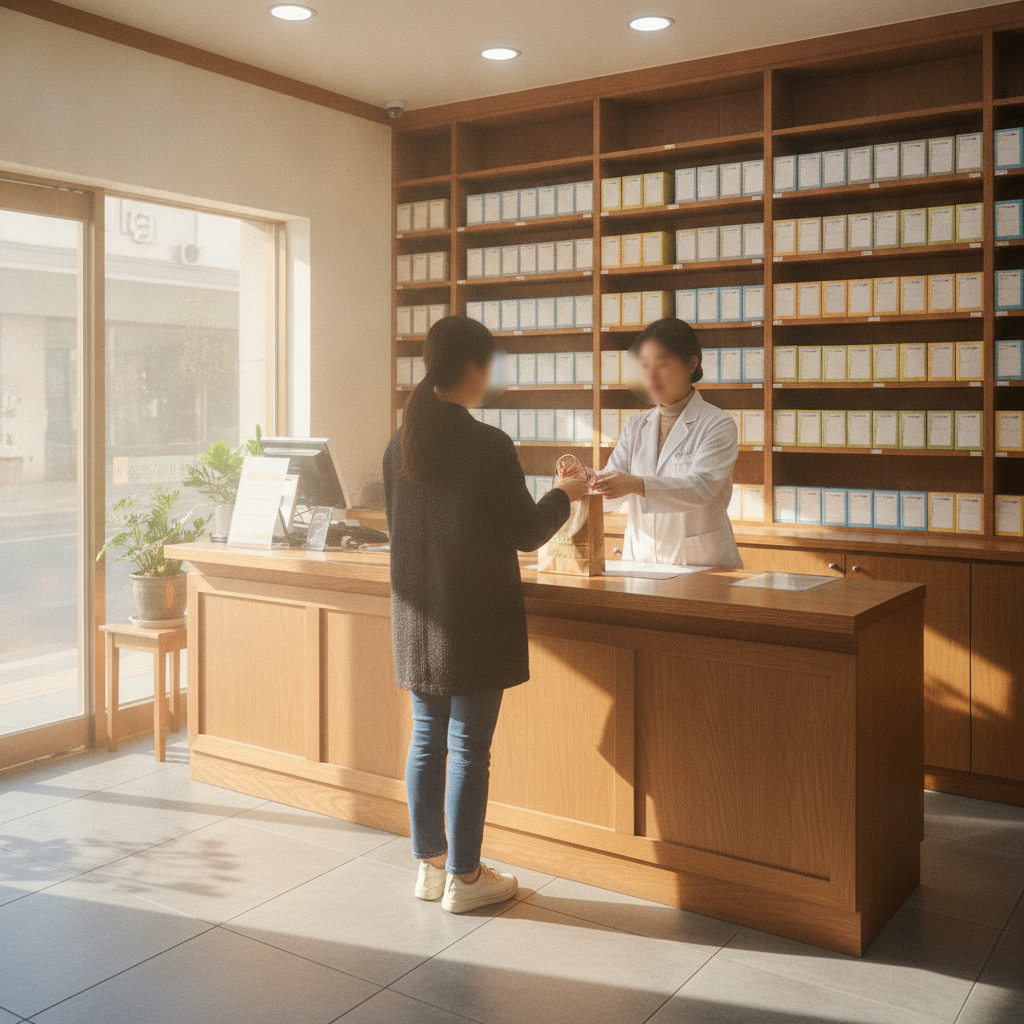
You do not need Korean. Pharmacists near tourist areas and university districts often manage some English, and the transaction is short enough that pointing works.
Two things make it faster:
Describe the symptom, not the drug. Brand names do not travel. Say "stomach", "headache", "cough", "fever" and point. The pharmacist is trained to select from that.
Say if you are taking anything else, or are pregnant. This is the one thing worth typing into a translation app before you walk in.
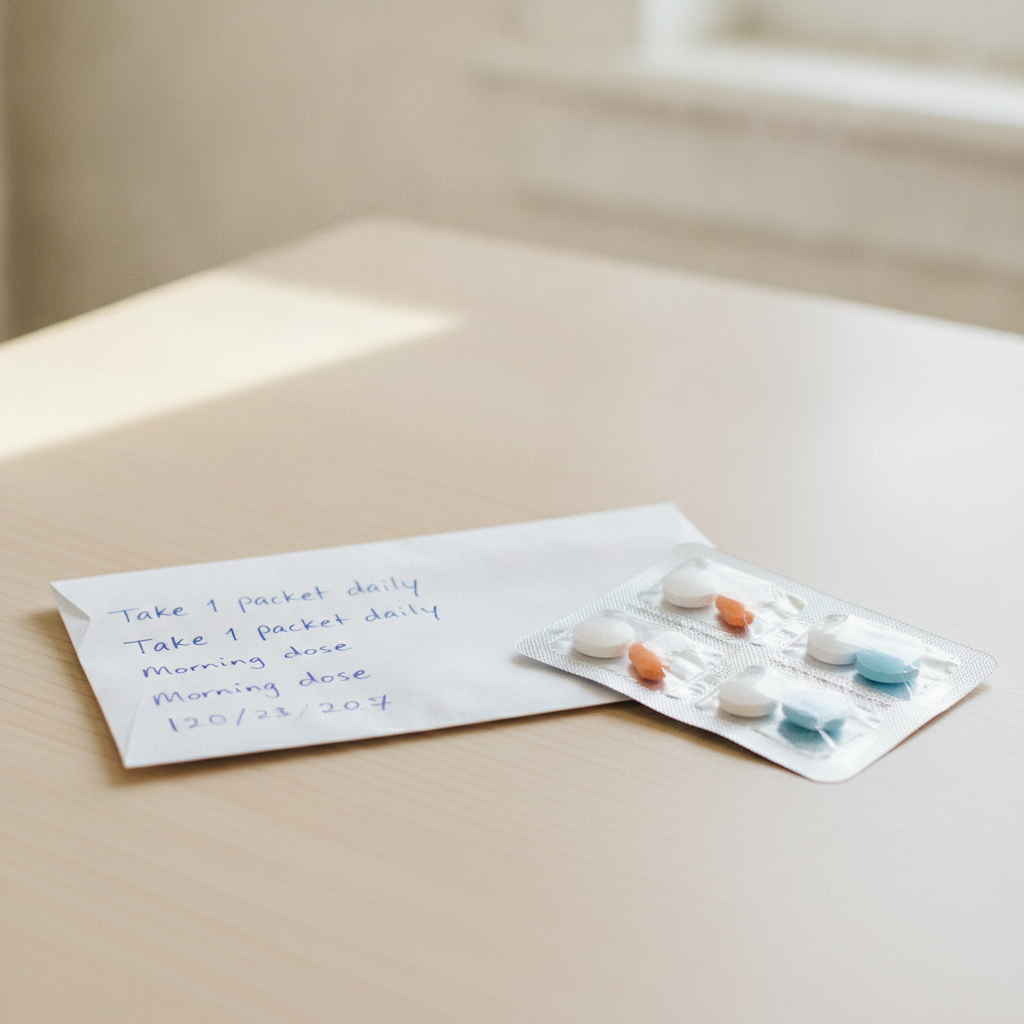
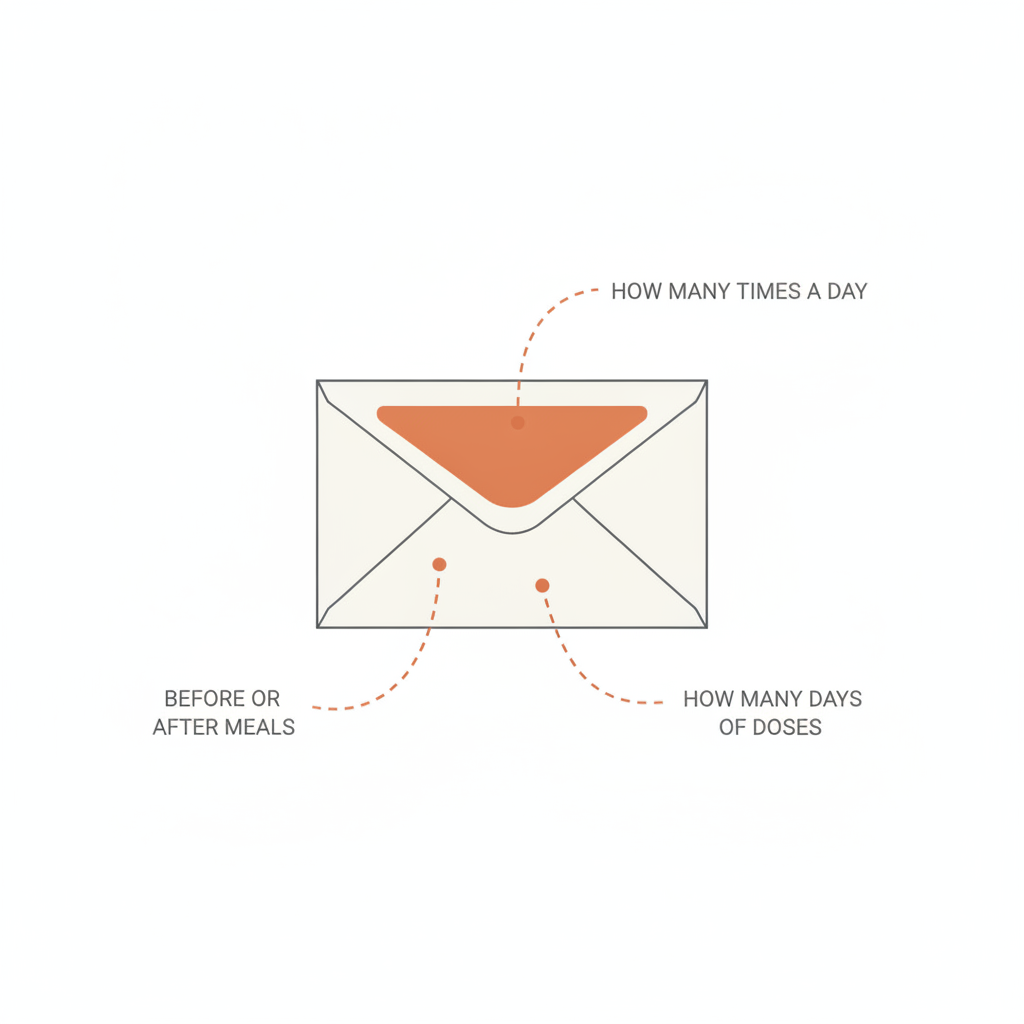
What you get back is often not a box but a paper envelope with the dose written on it, or a small strip of individually packed doses — one packet per dose, already sorted. It looks improvised the first time you see it. It is not; it is the standard way medicine is dispensed here.
When everything is closed
This is the situation my friend was in, and there are two answers.
Public late-night pharmacies (공공심야약국). Cities designate pharmacies to stay open from 22:00 to 01:00, including weekends and holidays. Seoul runs dozens of them spread across every district. They are ordinary pharmacies with a public duty roster, so a real pharmacist is there.
The national pharmacy finder. The site pharm114.or.kr lists pharmacies open right now, including holiday and late-night duty ones, anywhere in the country. Korean-language, but it is a map with pins and opening hours, so it survives a browser translation perfectly well. Bookmark it before you need it.
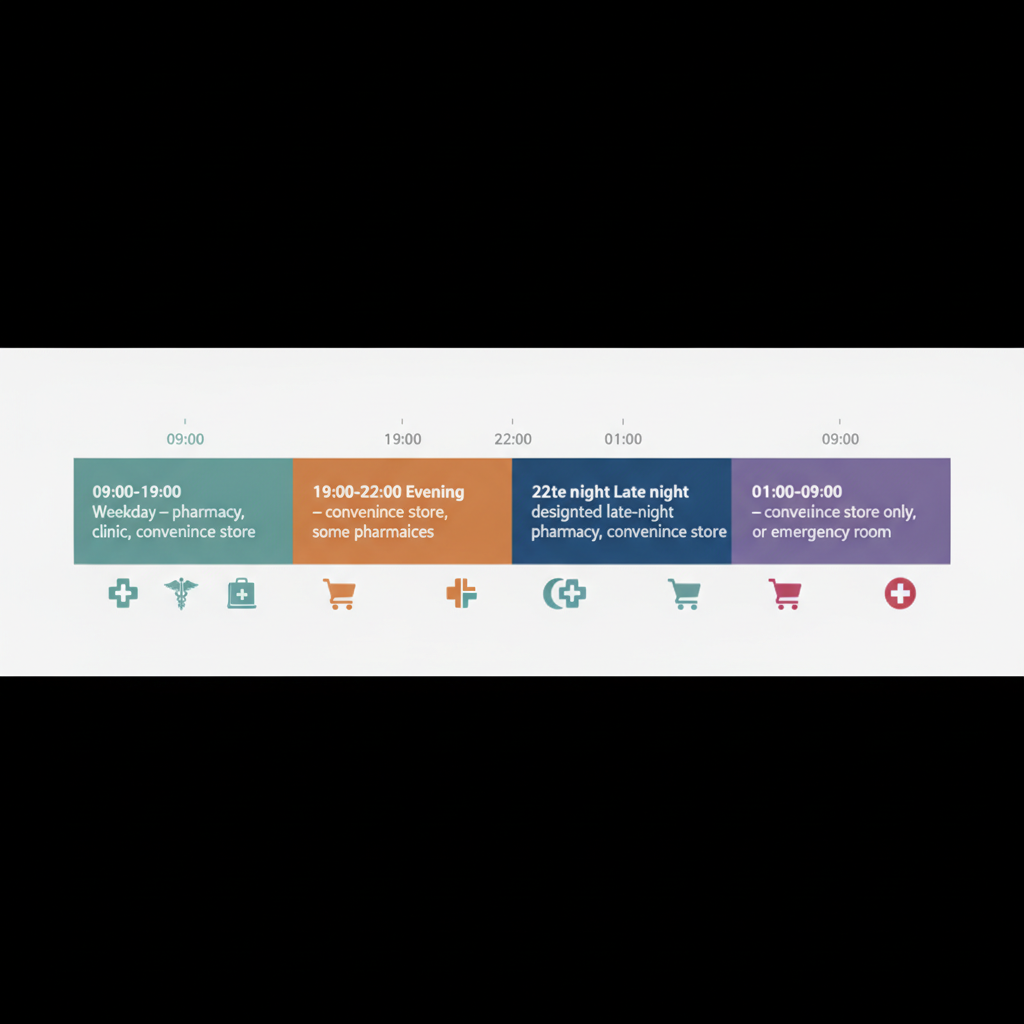
Between roughly 01:00 and 09:00 the honest answer is the convenience store and its 13 items, or an emergency room if it is serious. Emergency rooms are open around the clock and will treat you without insurance, but they cost considerably more than a clinic, so they are for genuine emergencies rather than a bad cold.
FAQ
Can I buy antibiotics at a Korean pharmacy without a prescription?
No. Since Korea separated prescribing from dispensing in 2000, every antibiotic is a prescription-only medicine. You need to see a doctor at a clinic first, which is usually a short walk-in visit, and then take the prescription to a pharmacy — often the one directly next door.
Are pharmacies open on Sunday?
Many are not. A Korean pharmacy typically runs roughly 9:00 to 19:00 on weekdays, and a large share close on Sundays and public holidays. Duty pharmacies cover the gap on a rota, and you can find whichever is open near you at pharm114.or.kr. Designated late-night pharmacies also run from 22:00 to 01:00.
What medicine can I buy at a convenience store?
Only the 13 household items designated by the Ministry of Health and Welfare, covering fever and pain relief, cold remedies, digestive medicine and medicated patches. Nothing outside those four categories, and the staff cannot give you advice about any of it.
Will the pharmacist speak English?
Often enough for a simple exchange, particularly in central Seoul, near universities and in areas with many foreign residents. Describing the symptom rather than naming a drug is what makes it work. A translation app on your phone covers the rest.
Do I need insurance to see a doctor?
You can be treated without it, but you will pay the full cost rather than the insured portion. A routine clinic visit is still far cheaper than an emergency room, so for anything that is not urgent, a local clinic during opening hours is the sensible route. Keep the receipt for your travel insurer.
One more thing
Do the thirty seconds of preparation now rather than at midnight: find the green cross nearest to where you are staying, and save the pharmacy finder site. Korea has one of the densest pharmacy networks anywhere, and the whole problem is never distance. It is only ever hours.
If you are still getting set up here, the first thirty days have an order to them, and what to do when your foreign card is refused is worth reading before you need to pay for anything at a counter. If a night out is what got you here, start with how strong the soju is.
Sources
-
Ministry of Health and Welfare — designation of 13 household medicines for sale in convenience stores: https://mohw.go.kr/board.es?act=view&bid=0027&list\_no=274118&mid=a10503010100
-
Seoul Metropolitan Government — public late-night pharmacies (22:00–01:00): https://news.seoul.go.kr/welfare/archives/567003
-
Korean Pharmaceutical Association — nationwide open-pharmacy finder: https://www.pharm114.or.kr
This article describes how to find and use pharmacies in Korea. It is not medical advice — ask the pharmacist or a doctor about what to take.