Smoking in South Korea: The Indoor Rule Is Absolute. The Outdoor One Is Not.

Indoors, a sign means nothing. Outdoors, it means everything. Get that backwards and it costs money.
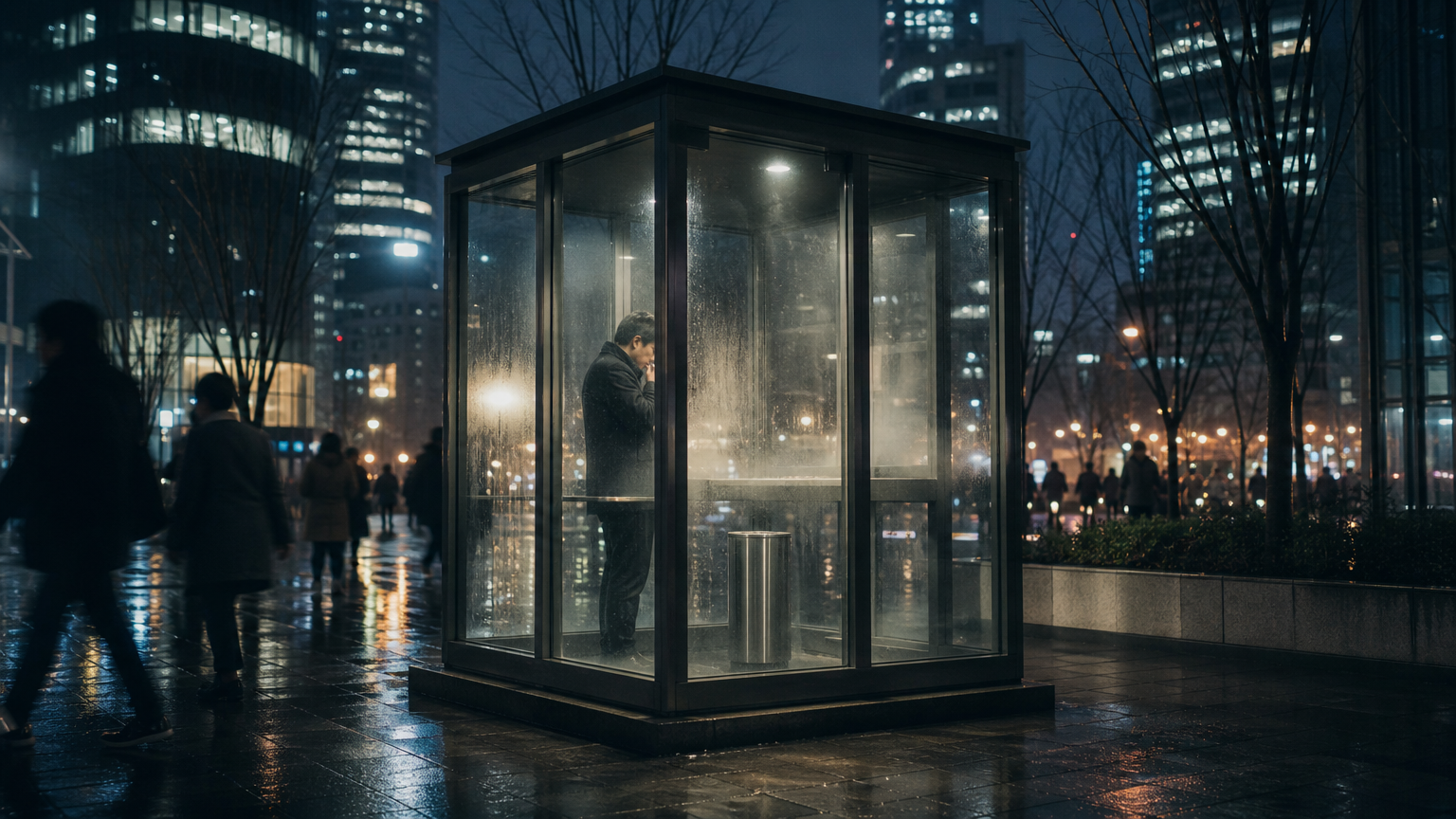
I should say up front that I do not smoke. I never have. What I do have is the ability to read the signs, which turns out to be the part visitors are missing, and a lot of friends who have stood outside a bar in February working out where they are allowed to stand.
Here is the thing almost every English guide to smoking in South Korea gets half right. They tell you Korea banned indoor smoking, which is true, and then they leave you with the impression that outside is therefore fine. That is the wrong shape. The two halves of the rule are built completely differently, and if you carry over the intuition you brought from home you will be wrong in both directions: too cautious indoors, too relaxed outdoors.
So let me lay out how the two halves actually work.
Indoors, there is no version of this where you find a bar that lets you smoke
Start with the part that has no exceptions worth planning around.
Article 9(4) of the National Health Promotion Act requires the owner or manager of a long list of public facilities to designate the entire facility as a non-smoking area and to put up a sign saying so. Not a section. Not after ten at night. The whole building.
The list is longer than people expect. It includes restaurants, cafes and bakeries above a certain floor area, internet cafes and game arcades, tourist accommodation, public bathhouses, indoor sports facilities, large shopping complexes and underground shopping streets, office buildings and factories over 1,000 square metres, performance halls with 300 seats or more, hospitals, schools including the grounds, daycare centres, libraries, and the waiting areas and platforms of airports, ferry terminals, railway stations and bus terminals.
Read that list again and ask what indoor space a visitor actually enters that is not on it.
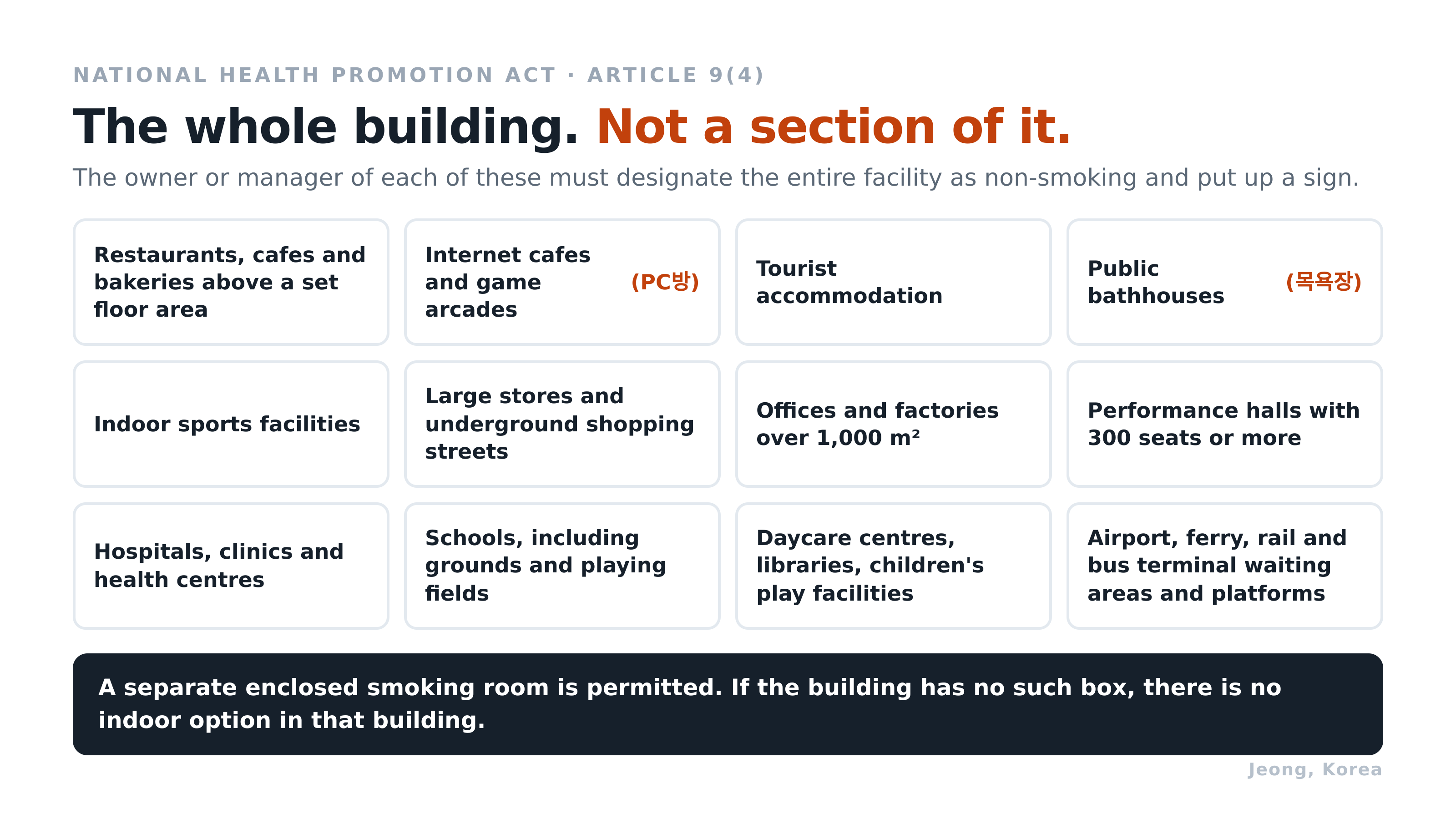
The same clause permits the owner to build a separate enclosed smoking room, and some places have one. A smoking room is a sealed box with its own ventilation, usually near the toilets, and it is the only indoor place in that building where smoking is legal. If there is no such box, there is no indoor option in that building. Standing near a door, or by an open window, or in a stairwell, is not a lesser version of a smoking room. It is just smoking in a non-smoking area.
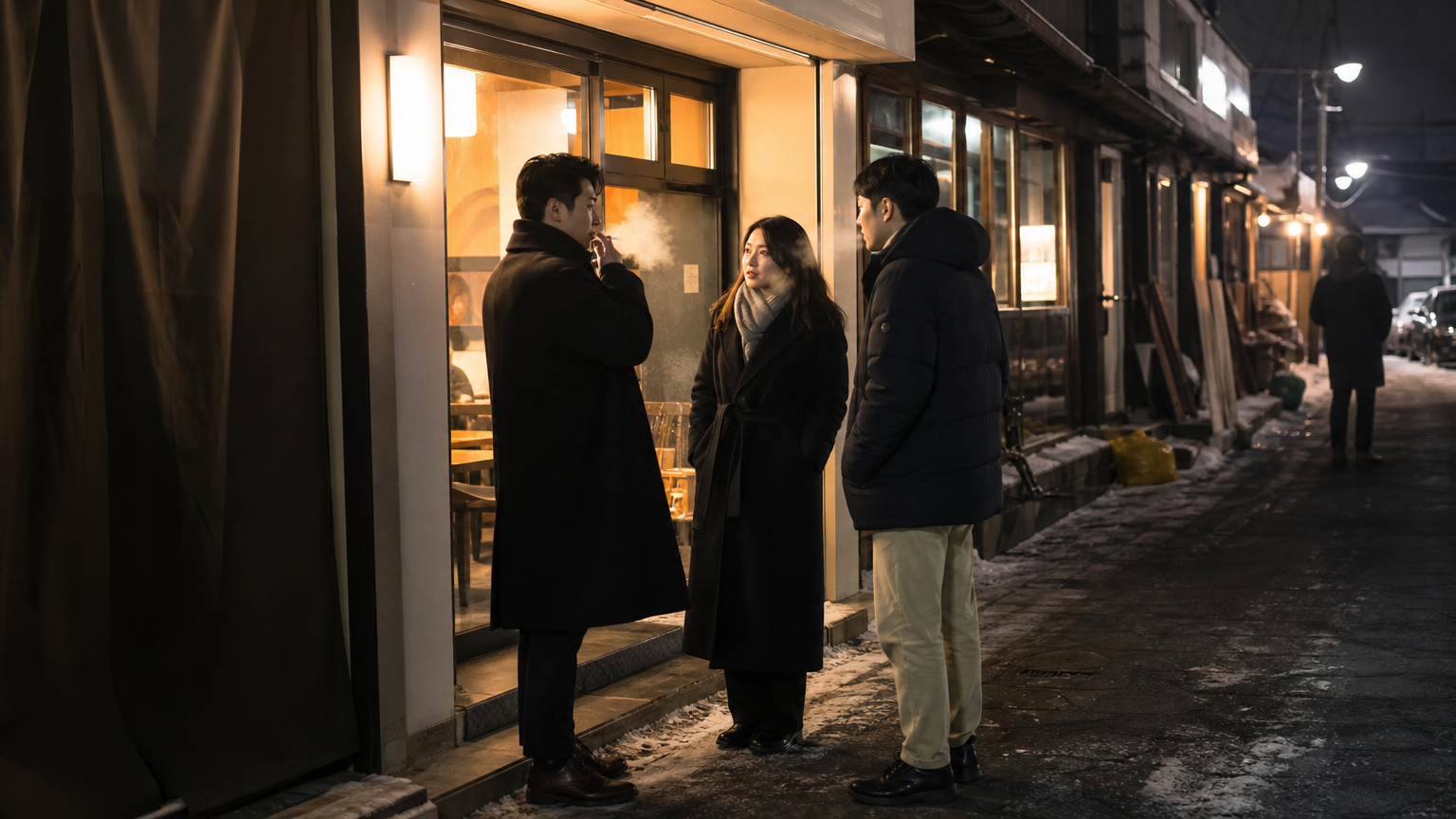
This is why a Korean bar has no smoking section and never will. Bars are food service businesses and food service businesses are on the list. The people you see stepping outside every twenty minutes are not observing a custom. They are complying with a statute.
The same rule is why internet cafes smell the way they do now: PC Bang in Korea: How It Works, and Why Nobody Will Speak to You
So if indoors is settled, why is anyone confused?
Outdoors, the law says almost nothing, and that is the trap
Because outdoors the statute is close to silent, and silence reads as permission until it suddenly does not.
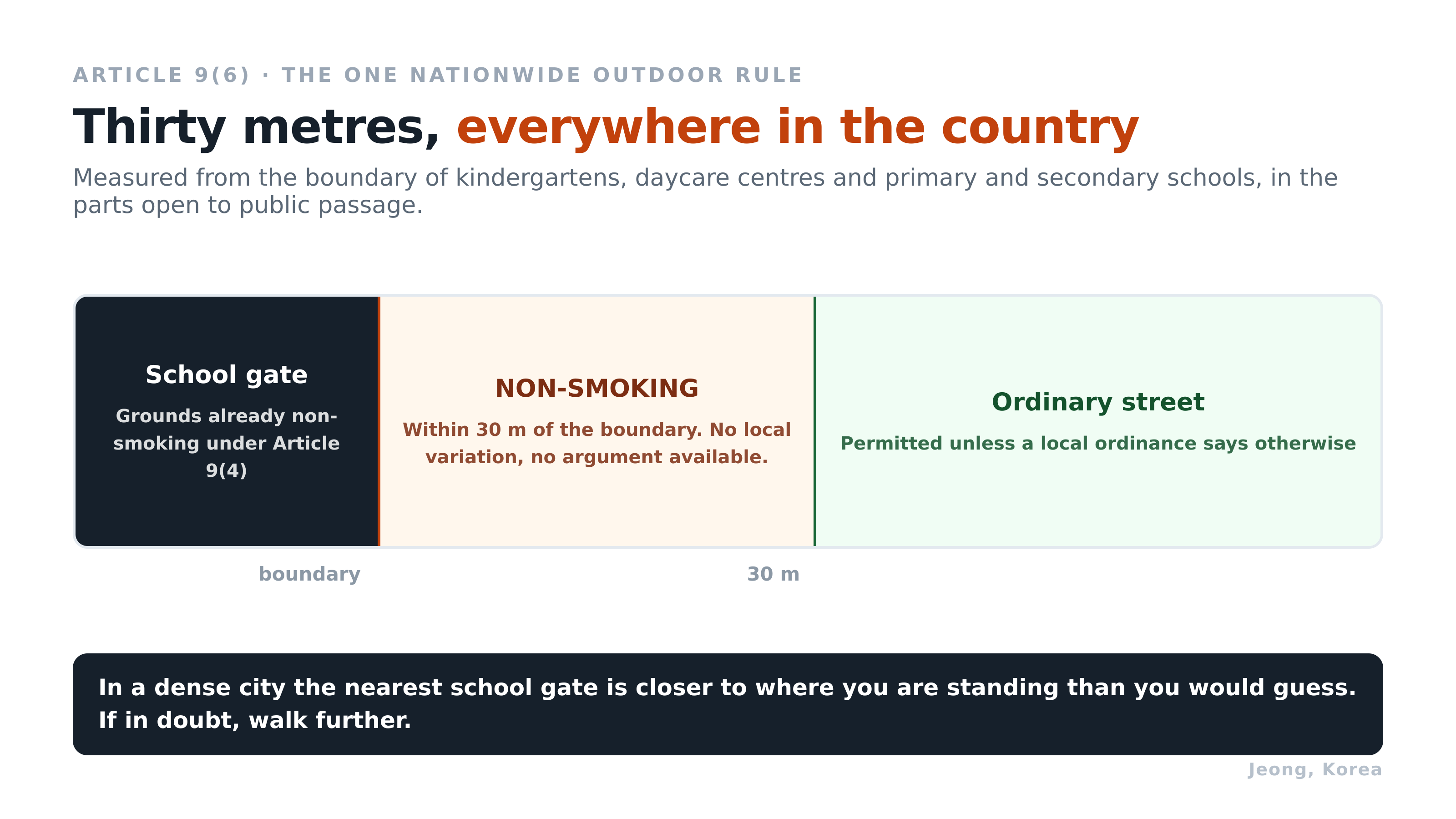
There is exactly one outdoor ban that applies nationwide. Article 9(6) requires local authorities to designate as non-smoking the area within 30 metres of the boundary of kindergartens, daycare centres and primary and secondary schools, in the parts open to public passage. That one is uniform. It holds in every city in the country, and 30 metres from a school gate is further than it sounds.
Everything else outdoors comes from Article 9(7), which says a local authority may designate places in its area as non-smoking by ordinance. May. Not must. So a bus stop, a park entrance, a plaza, a covered walkway, a shopping street: each of those is a non-smoking area only if someone locally decided it should be and wrote it down.
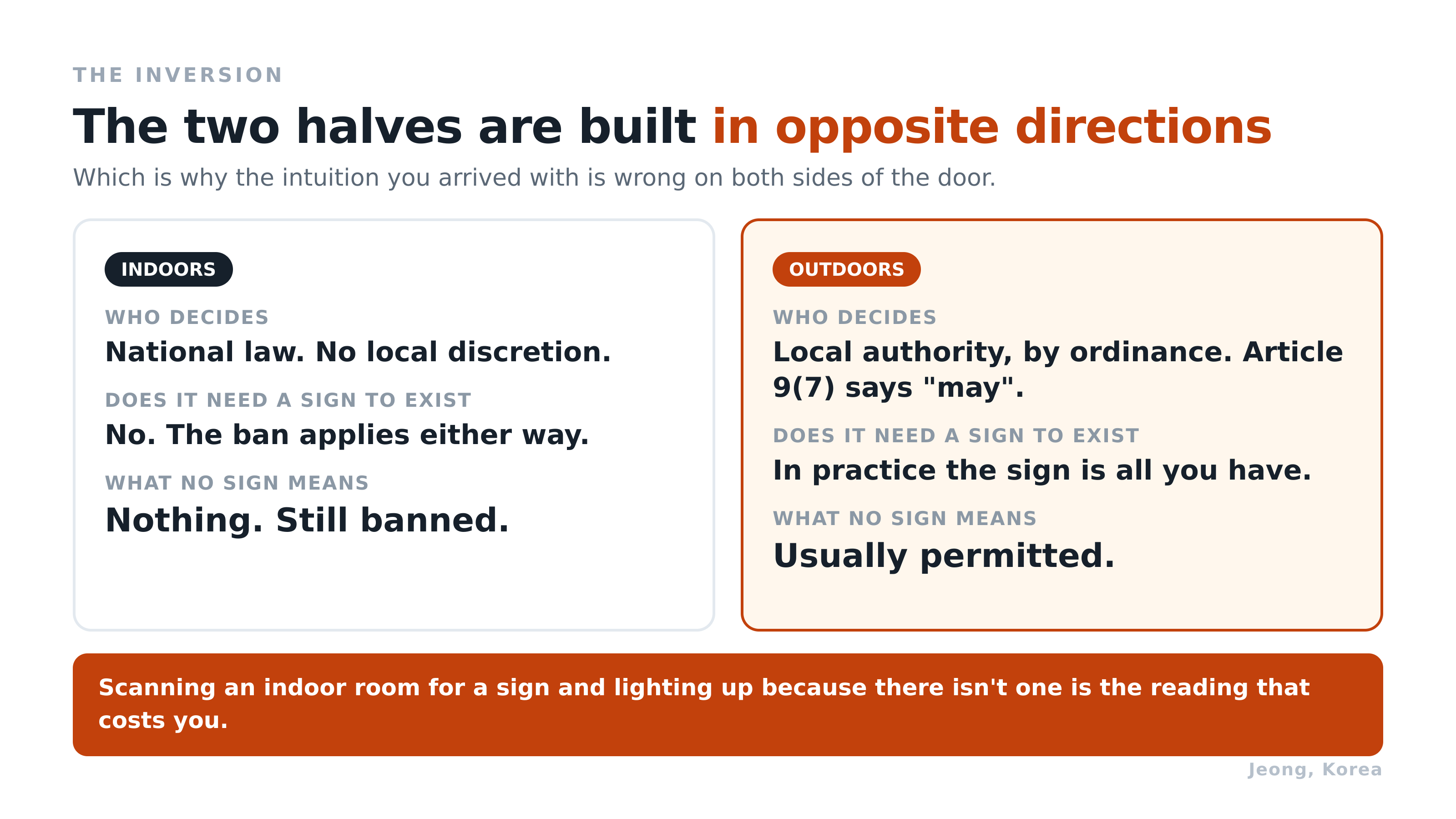
That diagram is the whole argument. Here it is again in words, because the wording is what you will need to remember on a street corner.
| The question | Indoors | Outdoors |
|---|---|---|
| Who decides | National law, no discretion | Local authority, by ordinance |
| Does it need a sign to exist | No, the ban exists anyway | Yes, in practice that is all you have |
| What no sign means | Nothing, still banned | Usually permitted |
Indoors, the absence of a sign tells you nothing, because the ban applies whether or not anyone put one up. Outdoors, the presence of a sign is essentially the whole rule, because without one there is usually no ban to break.
That is the inversion. A visitor scans an indoor room for a sign and, finding none, lights up. Then they walk outside, see no sign there either, and assume the same logic holds. One of those two readings is wrong, and it is the first one.
Article 9(8) is the clause that bites: no person may smoke in an area designated under any of the provisions above. Article 34(3) sets the penalty at up to 100,000 won. It is an administrative fine rather than a criminal matter, and Article 34(5) allows the local authority to reduce or waive it if the person completes a designated education or smoking-cessation programme. Nationality is not a factor anywhere in the text.
Worth knowing about smoking in South Korea generally: enforcement is patchy and uneven, which is exactly what makes it unpredictable rather than safe.
The drinking customs that send everyone outside in the first place: Korean Drinking Culture: The Rules Are Real, and So Is the Way Out
So how do you actually find a legal spot without reading local ordinances all day?
Look for the box, and when you cannot find it, ask
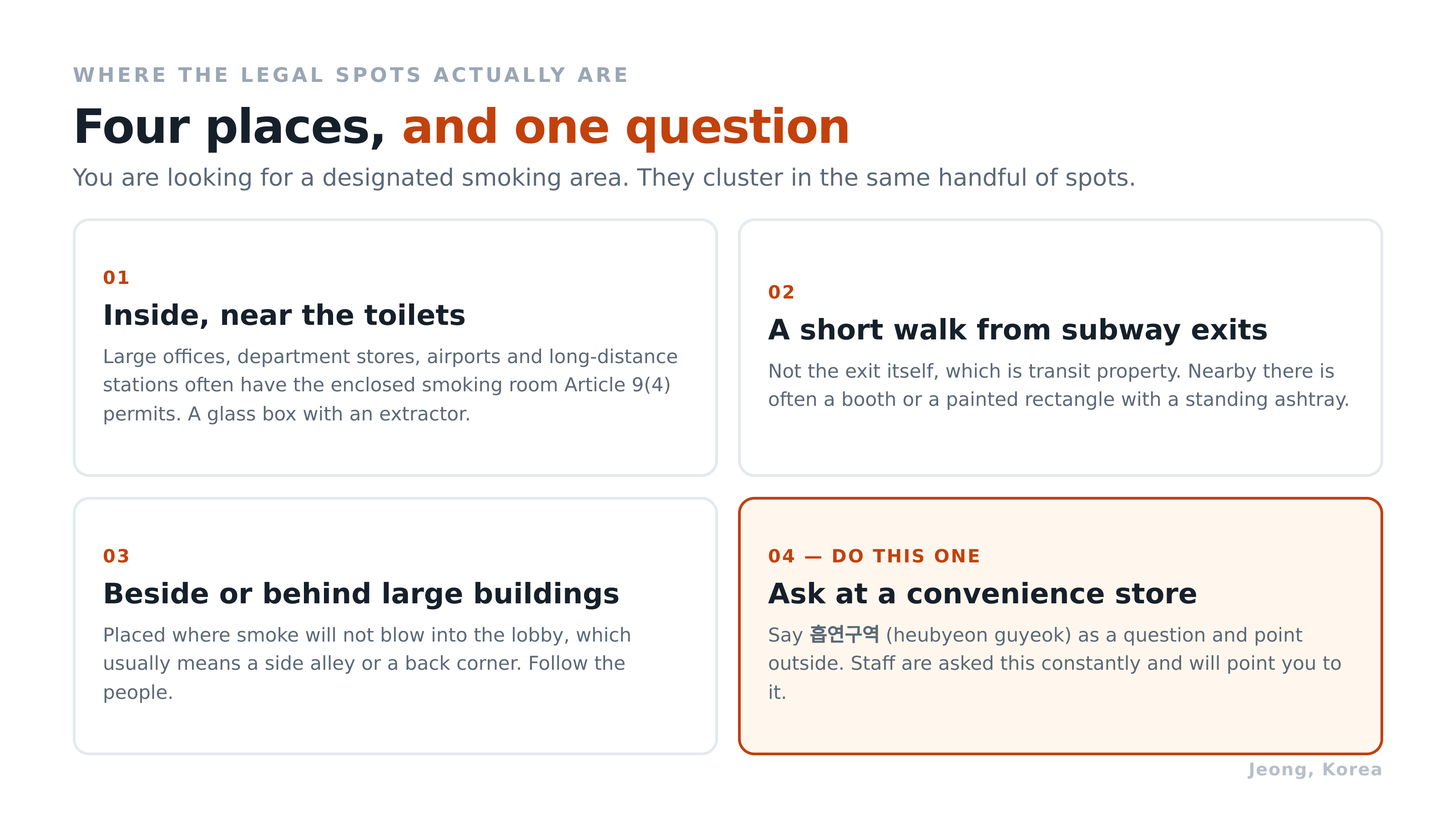
The practical answer is that you look for a designated smoking area, and there are only about four places they tend to be.

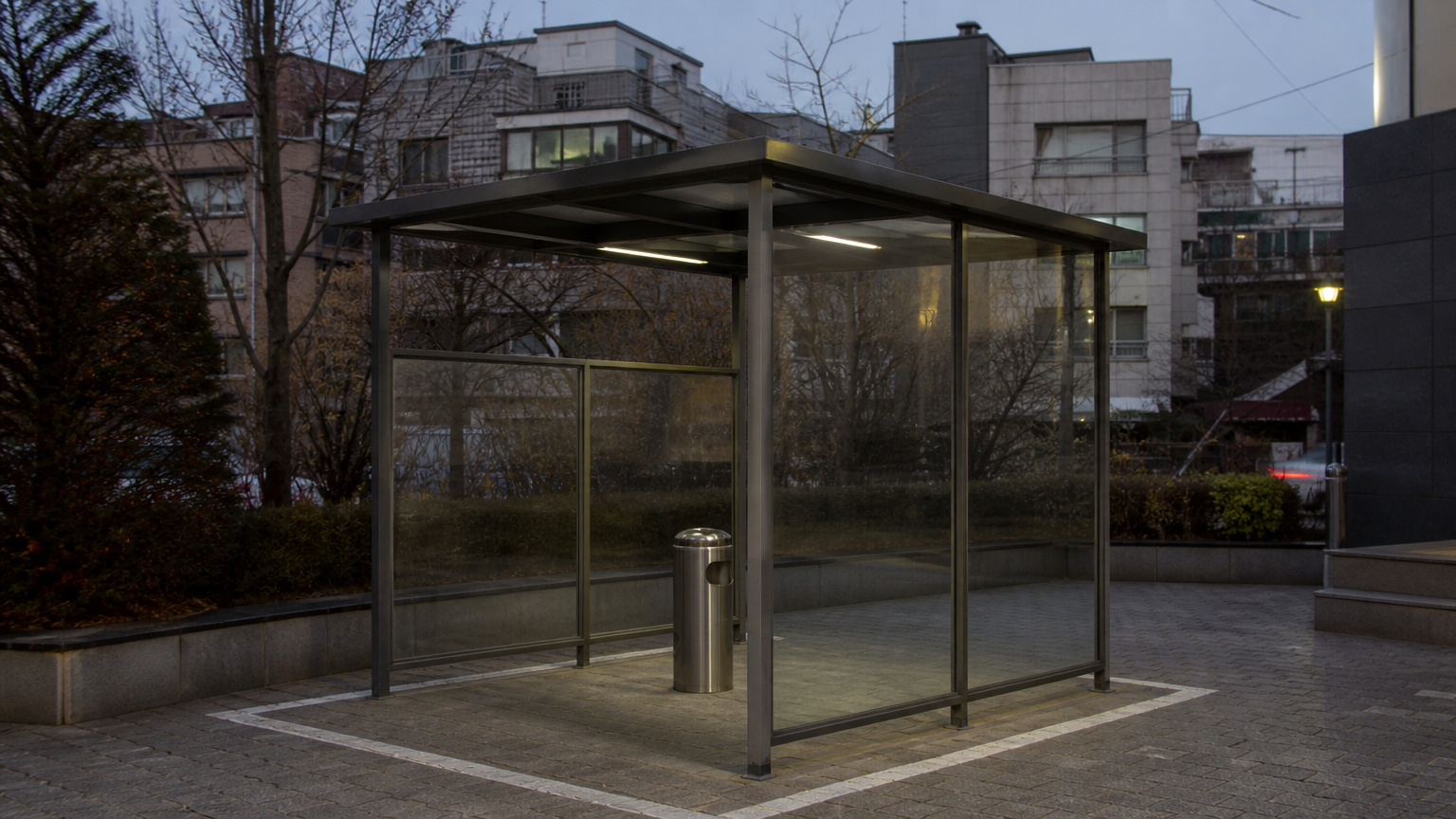
Inside the building, near the toilets. Larger offices, department stores, airports and long-distance stations often have the enclosed smoking room Article 9(4) permits. It looks like a glass phone box with an extractor. If the building has one, that is your answer and you do not need to go outside at all.
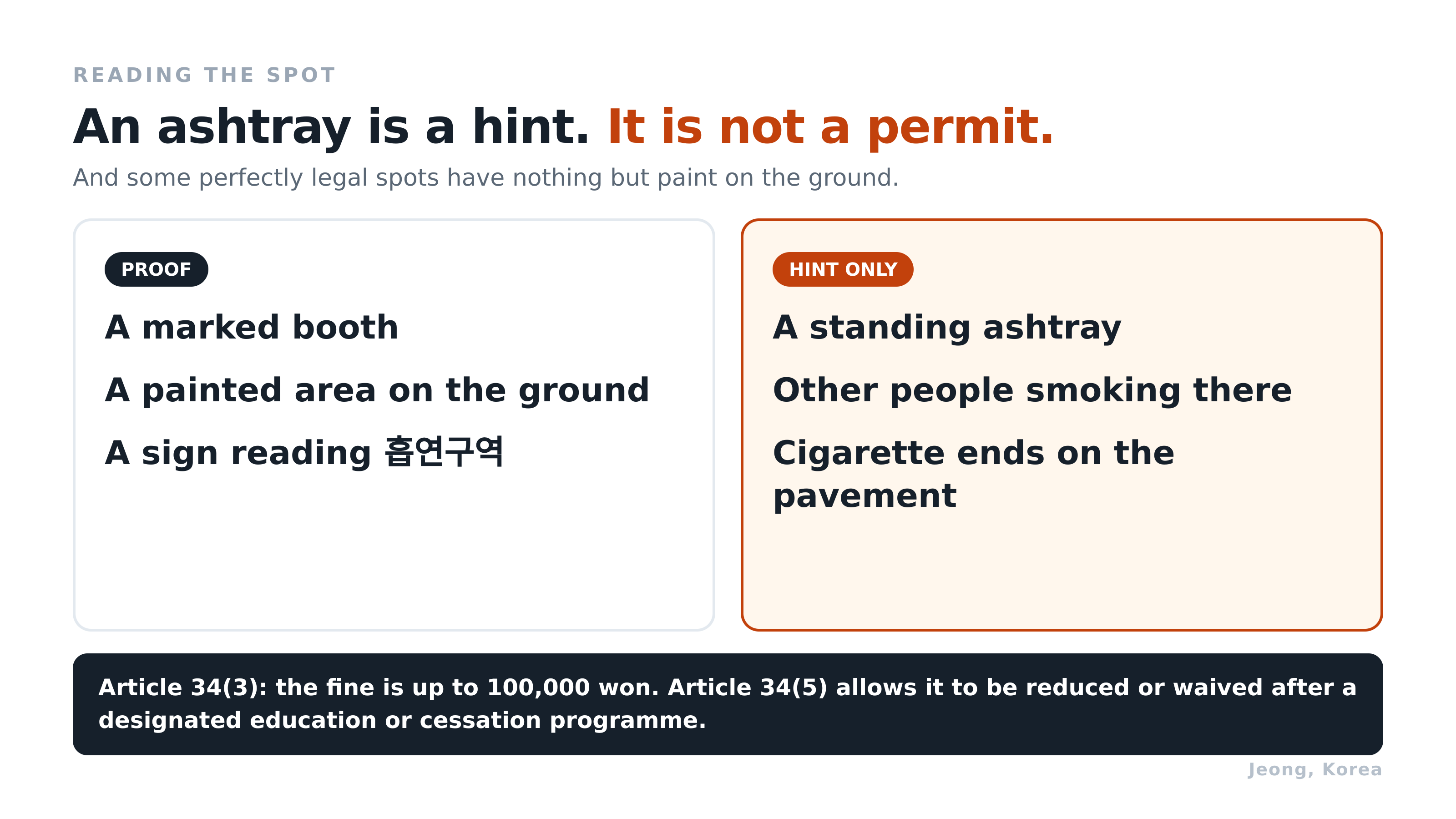
Just outside subway exits. Not at the exit itself, which is transit property, but often within a short walk of it there is a marked spot, sometimes a booth, sometimes a painted rectangle with a standing ashtray.
Behind or beside large buildings. Office towers put them where the smoke will not blow into the lobby, which usually means a side alley or a back corner. Follow the people.
Convenience store staff know. This is the one I would actually do. Walk into the nearest convenience store and ask. The word you want is 흡연구역 (heubyeon guyeok, smoking area). Say it as a question and point outside, and you will get an answer and usually a pointed finger. Staff get asked this constantly.
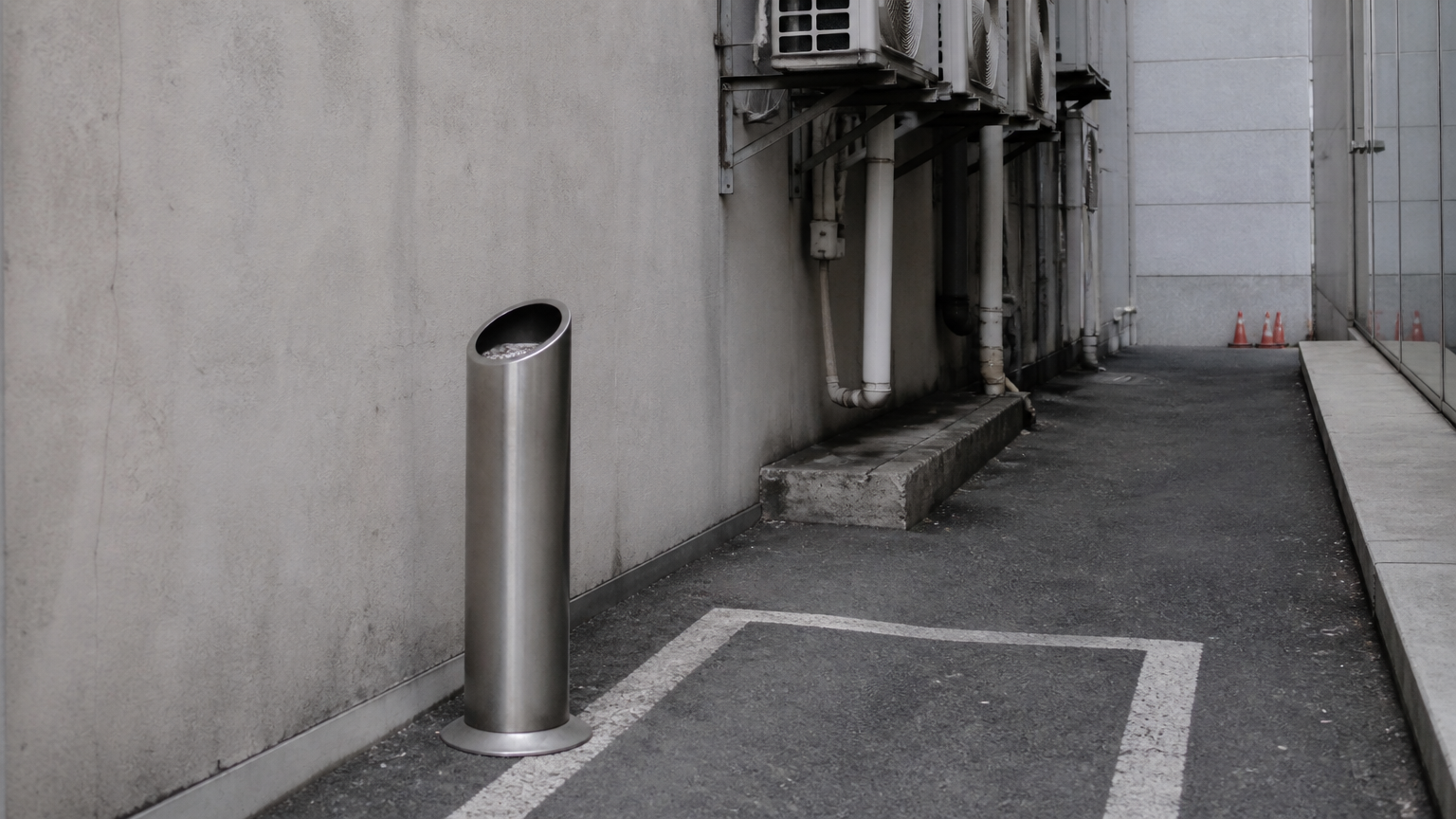
One warning about ashtrays. A standing ashtray outside a building is often a sign of a designated area, but it is not proof of one, and the reverse is also true: some legal spots have nothing but paint on the ground. The ashtray is a strong hint, not a permit.
And if you are near a school, a kindergarten or a daycare, just walk further. Thirty metres from a boundary is a rule with no local variation and no argument available, and school gates in a dense city are closer to wherever you are standing than you would guess.
The short version
I am not writing this to talk anyone out of a cigarette. That is not my business, and a visitor is not going to change a habit because a blog asked.
What I am saying is that the mental model you arrived with is upside down, and it will cost you in the one direction you were not watching. Indoors, assume it is banned and look for the enclosed box; the missing sign proves nothing. Outdoors, assume it is allowed unless there is a sign or you are within thirty metres of a school; the sign is the rule.
Smoking in South Korea is not aggressively policed and the fine is capped at a level that is annoying rather than ruinous. But the annoyance is avoidable, and the fix is a single question asked at a convenience store counter.
FAQ
How much is the fine for smoking in a non-smoking area?
Article 34(3) of the National Health Promotion Act sets it at up to 100,000 won. It is an administrative fine, and Article 34(5) allows the local authority to reduce or waive it for someone who completes a designated education or smoking-cessation programme.
Can I smoke on the street in Korea?
Usually yes, but not always, and the exceptions are set locally. The only nationwide outdoor ban is within 30 metres of the boundary of a kindergarten, daycare centre or primary or secondary school under Article 9(6). Beyond that, an outdoor ban exists only where a local authority has made one by ordinance under Article 9(7).
Are there smoking rooms in Korean bars and restaurants?
Not usually. Article 9(4) requires those businesses to designate the entire premises as non-smoking, and while the same clause permits a separate enclosed smoking room, small food-service venues rarely have the space to build one. Expect to step outside.
Do the rules apply differently to foreigners?
No. Nothing in Article 9 or Article 34 makes nationality a factor. The fine applies to any person smoking in a designated non-smoking area.
Where can I find the rules on smoking in South Korea written down?
Articles 9 and 34 of the National Health Promotion Act, published by the National Law Information Center, cover the indoor bans and the fine. The outdoor designations are not there. Each one sits in the ordinance of the local authority that made it, which is why no single national list of outdoor smoking areas exists.
What should I look for to know a spot is legal?
A marked booth, a painted area, or a sign reading 흡연구역. A standing ashtray is a useful hint but not proof on its own. When in doubt, ask at a convenience store.
Sources
National Health Promotion Act, Articles 9 and 34 (국민건강증진법) — National Law Information Center
Korean term in this article: 흡연구역