Driving in Korea: What the Law Actually Says (and the Rule Most Guides Get Wrong)

Almost every guide tells you to bring a Geneva Convention permit. The statute names two conventions, and the one they leave out is the one half of Europe issues under.
That single omission is why people arrive at a rental counter with a document they were told was useless, or leave one at home because a blog said it would not be accepted. The rules for driving in Korea are not vague and they are not up to the person behind the desk. They are set out in one article of the Road Traffic Act, and it is short enough to check before you book anything.
So this is worth reading before you reserve a car, rather than at the counter in Jeju with the keys on the other side of it.

The statute names two conventions, not one
An international driving permit issued under either the 1949 or the 1968 convention works here.
The Road Traffic Act lists the qualifying documents by source, and the first two are the Convention on Road Traffic concluded at Geneva in 1949 and the Convention on Road Traffic concluded at Vienna in 1968. Both are named, in the same sentence, with no hierarchy between them. The widespread advice that only a Geneva permit counts is not a cautious reading of the law — it is a misreading of it.
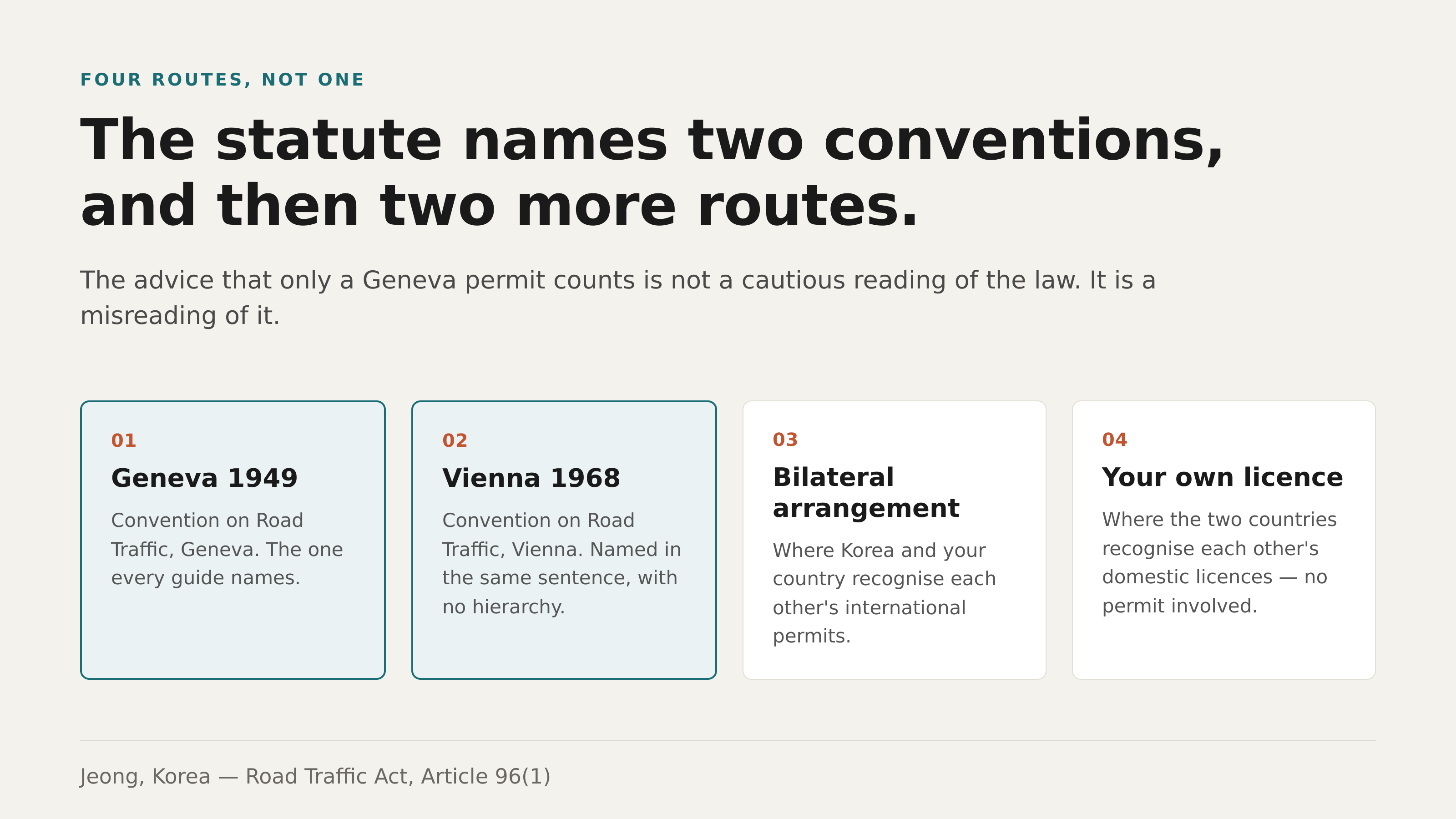
The article does not stop at those two either. It also recognises permits issued under any bilateral arrangement in which Korea and another country agree to recognise each other's international permits, and — separately — foreign licences themselves where the two countries have agreed to recognise each other's domestic licences.
That last category is the one nobody mentions. For drivers from a country with such an arrangement, the ordinary licence in your wallet can be the qualifying document, with no international permit involved at all.
So the first thing to check is not "is my country in the Geneva convention" but "which of the four routes do I fall under". Most people fall under one of them, and a fair number fall under two.
And once you qualify, there is a clock you are probably reading wrong.

The year runs from your arrival, not from the permit
You may drive for one year from the date you entered the country.
The wording is specific: the holder may drive for one year from the date of entry into Korea, notwithstanding the ordinary requirement to hold a Korean licence. It is not one year from the date the permit was issued, and it is not the permit's own validity period. Those are separate clocks and only one of them is the one Korean police are counting.
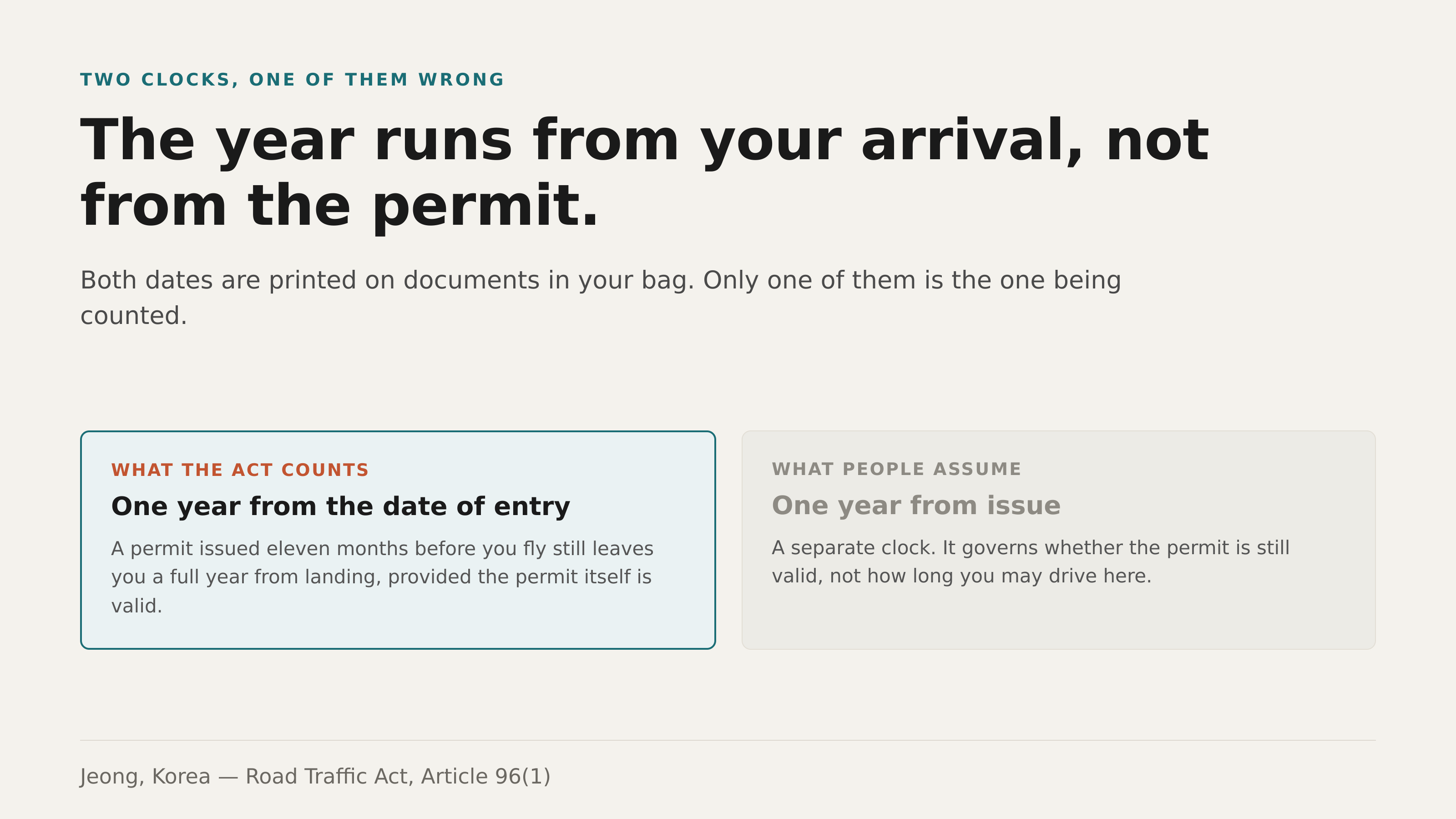
That difference cuts both ways. A permit issued eleven months before you fly does not leave you with one month here — it leaves you with a full year from landing, provided the permit itself is still valid. In the other direction, a long stay does not extend on its own: the year runs from entry whether you drove on day one or not.
There is a second limit in the same sentence that people skip. The types of vehicle you may drive are limited to those written on the permit itself. A permit endorsed for cars does not quietly cover a motorcycle because you rented one.
Which raises the question the rental desks actually care about.
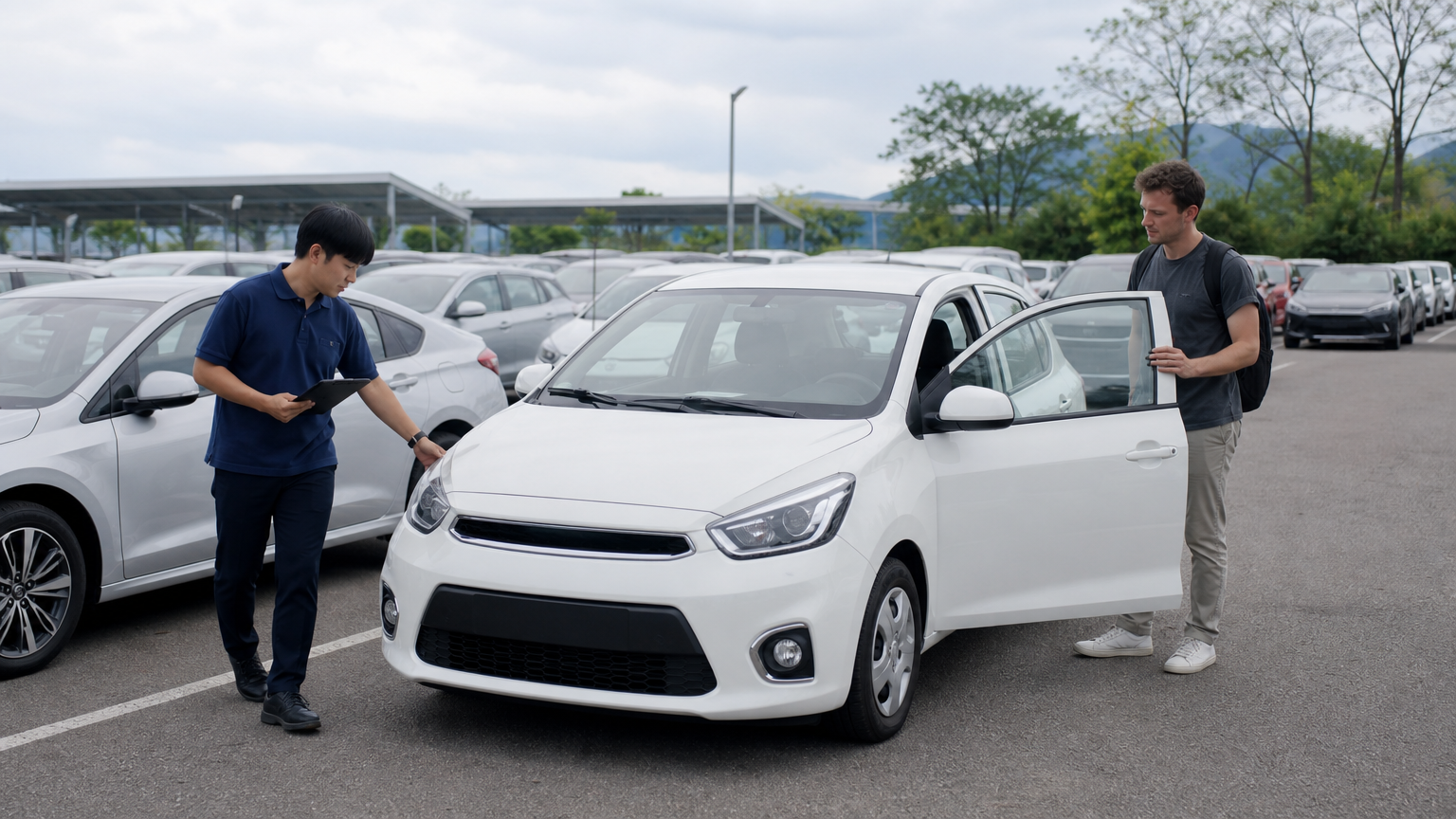
Renting is allowed, even though commercial driving is not
The same article bans commercial driving and then carves out the exact thing you want to do.
A person driving on a foreign-issued international permit may not drive a commercial vehicle under the passenger transport or freight transport statutes. Read alone, that sounds like it might catch rental cars, since a rental fleet is a business vehicle in ordinary language.
It does not. The provision has an explicit exception: it does not apply where you hire a vehicle from a car rental business and drive it yourself. Renting is the carved-out case, written into the ban.
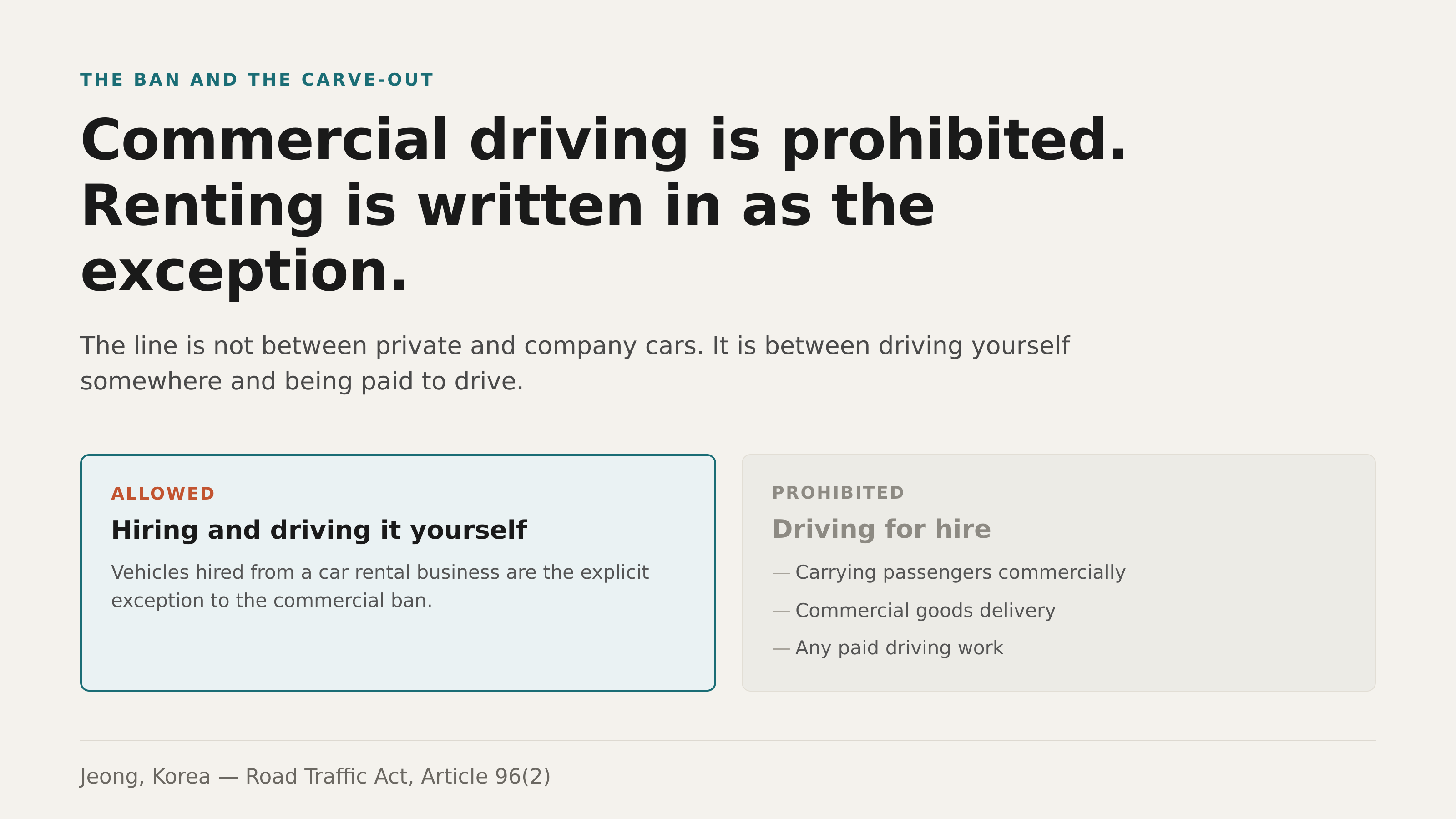
What stays prohibited is the thing that sounds similar and is not — driving for hire. You cannot pick up passengers, you cannot deliver goods commercially, and no visitor's permit turns into a work authorisation because a car was involved. The line is not between private and company cars. It is between driving yourself somewhere and being paid to drive.
One more exclusion sits at the end of the article, and it is worth knowing if it applies to you: a person who falls under the disqualification grounds for a Korean licence, and whose disqualification period has not passed, may not drive here at all, permit or no permit.
So what do you actually hand over at the counter?
What you need in your hand
Three documents, and the common mistake is bringing two.
| Document | Why it is needed |
|---|---|
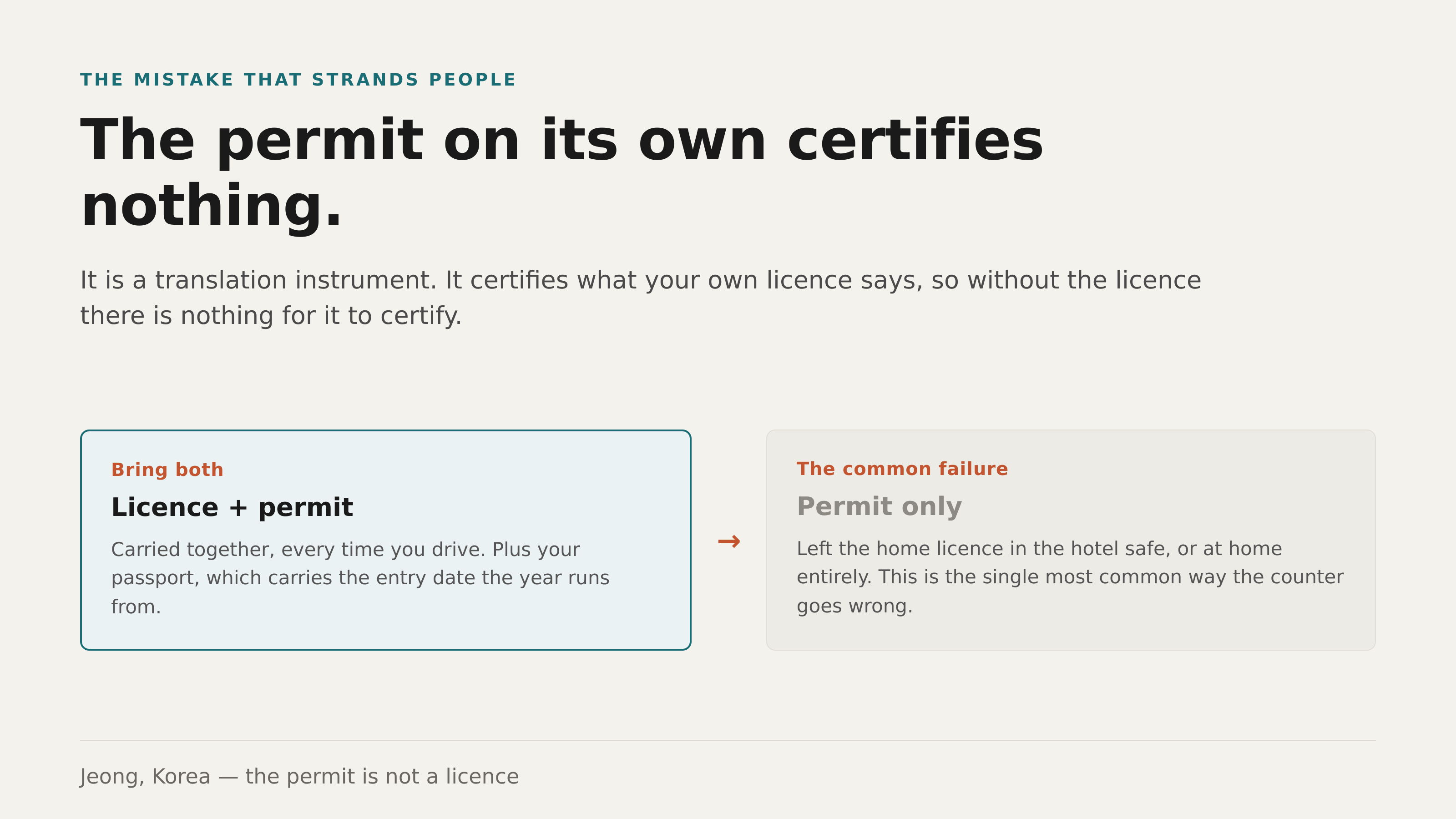
| Your original home licence | The international permit is a translation instrument, not a licence in itself |
| The international driving permit, or a recognised foreign licence | The qualifying document under the Act |
| Passport | Identity, and the entry date the one-year clock runs from |
Carry the home licence and the permit together, every time you drive. This is the single most common failure, and it is not a technicality invented by rental companies — the permit certifies what your own licence says, so on its own it certifies nothing.
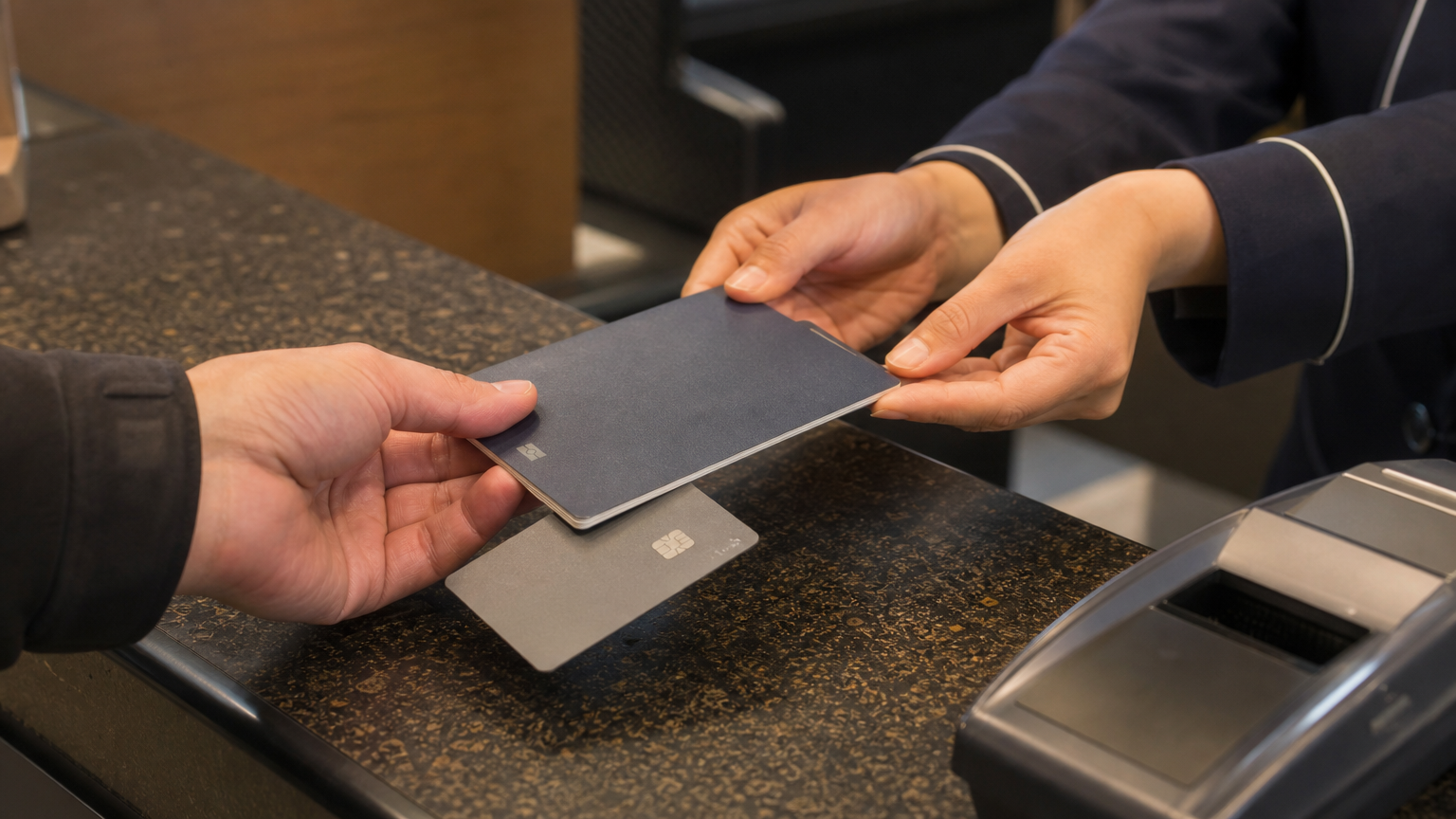
Rental companies add their own conditions on top of the law, and those vary by company rather than by statute: minimum age, minimum driving experience, and a credit card in the driver's name for the deposit. Check them when you book rather than at the desk, and if your card has been refused elsewhere in Korea, that has its own separate cause worth sorting out before a deposit is on the line.
There is one more thing to settle before you decide to drive at all.
Whether you should, which is a different question
Qualifying to drive and wanting to are not the same decision.
Navigation is the first thing to plan around. The mapping app you use at home does not give driving directions here, so a Korean navigation app is not a preference but a requirement — and that is a whole problem of its own that is easier to solve on the sofa than in a car park.
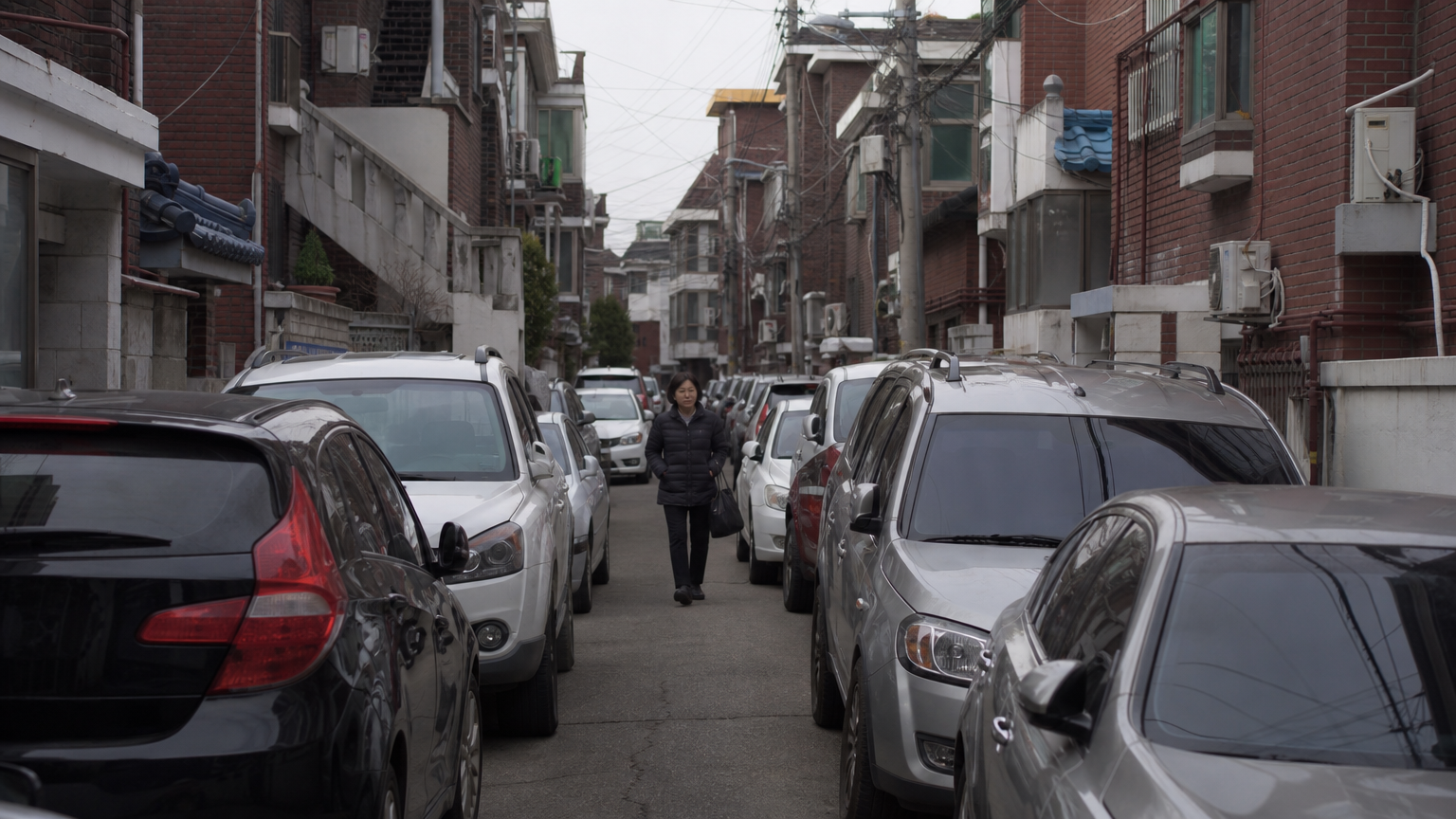
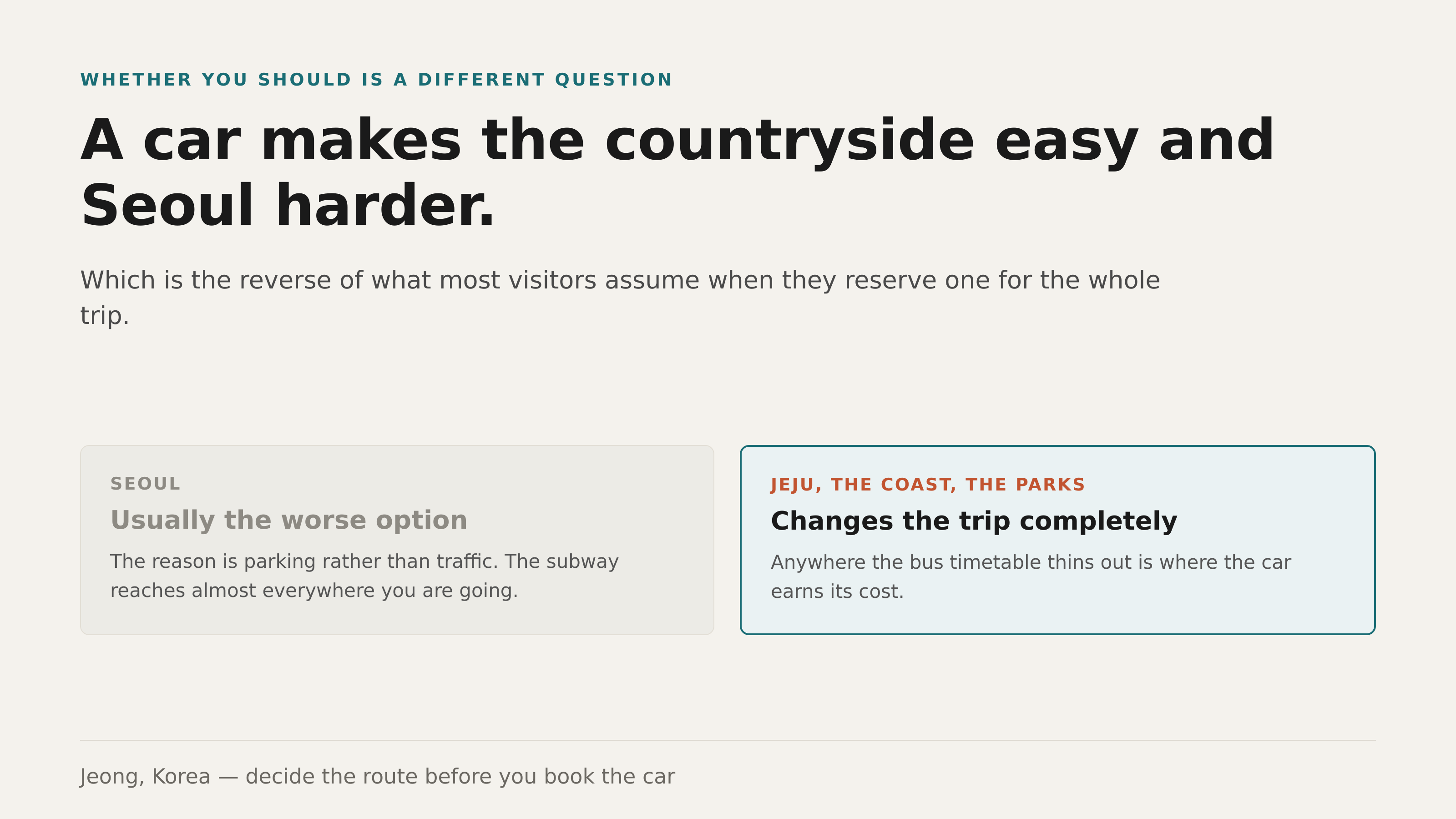
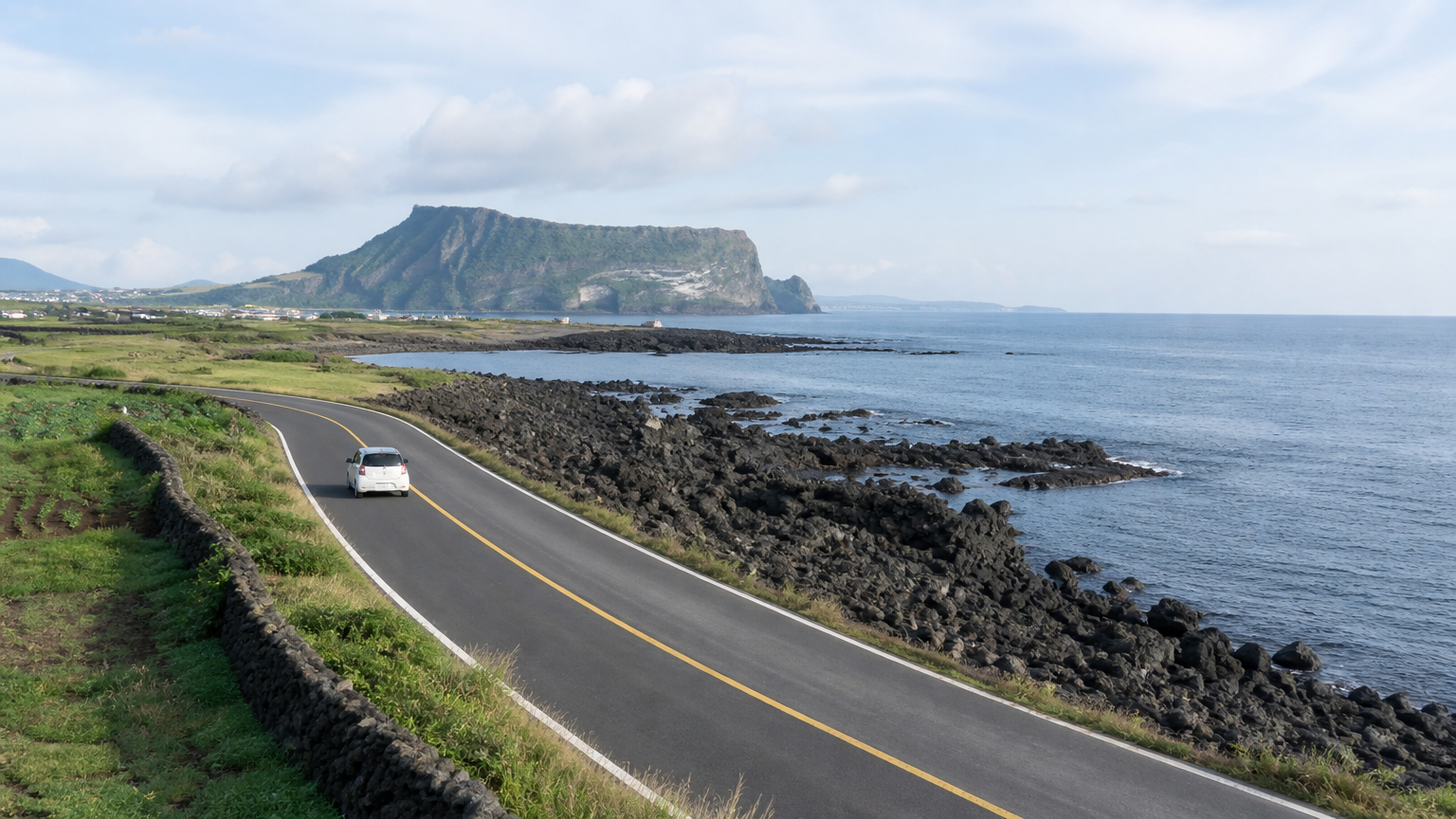
Then there is the question of where you are going, which is the part of driving in Korea that actually decides the trip. For Seoul itself, a car is usually the worse option, and the reason is not traffic so much as parking. For Jeju, the coast, the national parks and anywhere the bus timetable thins out, a car changes the trip completely. That split is the actual decision, and it has nothing to do with paperwork.
The short version
If you hold an international driving permit under either the Geneva or the Vienna convention, you can drive in Korea for one year from the day you landed, in the vehicle classes written on the permit, and you can rent a car to do it.
Bring your home licence as well as the permit — that is the mistake that actually strands people. And check your route before you book: driving in Korea makes the countryside easy and Seoul harder, which is the reverse of what most visitors assume when they reserve a car for the whole trip.
FAQ
My permit is from the 1968 Vienna convention. Is it valid in Korea?
Yes. The Road Traffic Act names both the 1949 Geneva and the 1968 Vienna conventions as qualifying sources, in the same provision.
Is the one-year period counted from the permit's issue date?
No. The Act counts one year from the date you entered Korea. The permit's own validity is a separate condition that also has to hold.
Can I drive on my home licence alone, without an international driving permit?
Only if your country and Korea have an arrangement recognising each other's domestic licences — that is a separate route listed in the same article. Otherwise you need the permit alongside the licence.
Can I rent a car on an international permit?
Yes. Commercial driving is prohibited, but hiring a vehicle from a rental business and driving it yourself is written in as an exception.
Can I drive for a delivery app while I am here?
No. That is commercial driving, which the provision prohibits for foreign-issued permits, and it is a separate question from whether you are allowed to work at all.
What happens after the year is up?
The permission under this article ends. Continuing to drive means moving onto a Korean licence rather than renewing anything at the rental desk, and driving in Korea past that point without one is unlicensed driving.
Does the permit cover a motorcycle or a larger vehicle?
Only if that class is written on the permit. The Act limits you to the vehicle types recorded on the document itself.
References
-
Road Traffic Act (도로교통법), Article 96(1) — a holder of an international driving permit issued under the 1949 Geneva Convention on Road Traffic, the 1968 Vienna Convention on Road Traffic, a bilateral arrangement recognising international permits, or a recognised foreign licence under a mutual recognition arrangement, may drive for one year from the date of entry into Korea; permitted vehicle types are limited to those recorded on the document
-
Road Traffic Act (도로교통법), Article 96(2) — commercial vehicle driving under the passenger and freight transport statutes is prohibited, except where the driver hires a vehicle from a car rental business
-
Road Traffic Act (도로교통법), Article 96(3) — a person within a disqualification period for a Korean licence may not drive
-
Jeong, Korea, Google Maps Korea — why navigation has to be solved before you drive
-
Jeong, Korea, Why Your Foreign Card Gets Rejected in Korea — the deposit problem at the rental desk