Lost and Found in Korea: Why It Probably Comes Back, and the Law Behind It

You left it on the table. In most countries that is the end of the story.
Here it is the beginning of a paperwork trail. The thing you walked away from does not sit there waiting to be stolen — it gets picked up, and then it enters a process that is written into law, with a deadline and a payment attached. Knowing that the process exists changes what you should do in the first hour, and it changes where you should look.
So this is worth reading before you need it, because the useful window is short.

What happens to a thing after you walk away from it
The object does not stay where you left it. It goes into a system.
Korean law puts an obligation on whoever picks it up. A person who finds property lost by someone else must promptly return it to the owner, or hand it in to a police station — and that includes the small neighbourhood posts, not just the main station. There is no discretion in the wording and no category of "finders keepers" underneath it.
That is why the trail so often ends at a police desk rather than at the counter of the café. Staff who find a phone at closing time are doing what the statute says when they walk it round the corner.
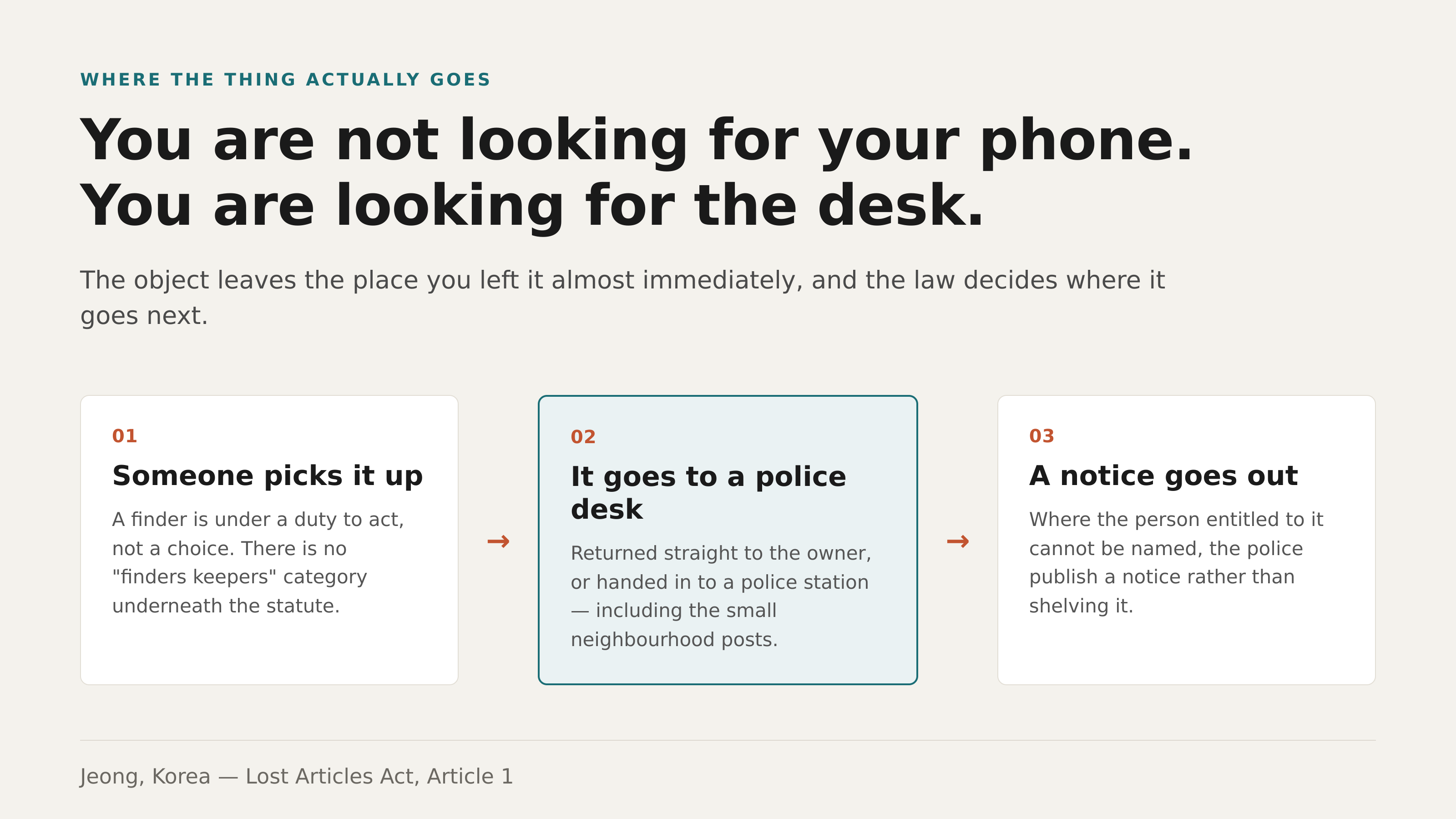
Once it is handed in, the station has its own duty. The police return the item to the person entitled to it, and where that person's name or address is not known, they publish a notice.
So the first thing to understand is that you are usually not looking for your phone. You are looking for the desk it was handed to.
But why would a stranger bother walking it there at all?

The finder gets paid, and it is not a tip
This is the part that surprises people, and it is the engine underneath everything else.
Under the Lost Articles Act, a person who gets their property back must pay the finder between 5 and 20 percent of the value of the item. The verb in the statute is an obligation, not a suggestion. It is not gratuity and it is not a scam if someone raises it — it is the law that made them hand your bag in rather than leave it on the bench.
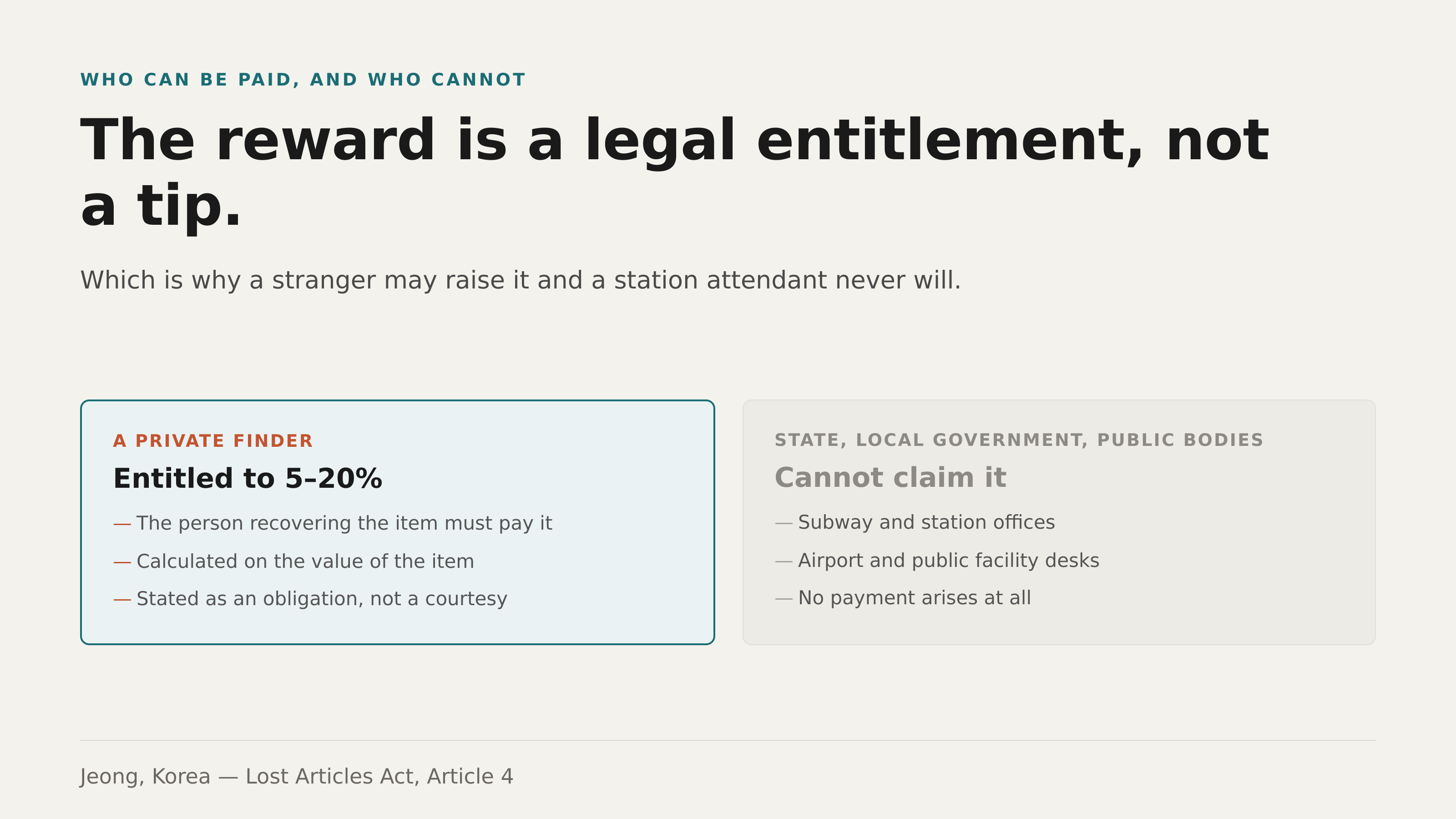
There is one carve-out worth knowing, because it explains why nobody ever asks you for money at a subway office. The state, local governments and other designated public bodies cannot claim the reward. So when a station attendant finds your umbrella, no payment arises. When a stranger in a coffee shop finds your wallet, it can.
In practice most private finders never claim it, and plenty refuse when offered. But if the subject comes up, now you know it has a statutory range behind it rather than a number someone invented on the spot.
And there is a second reason the system pulls in the same direction.

If nobody claims it, it belongs to the person who handed it in
The reward is the short-term incentive. Ownership is the long one.
After the public notice has gone out, if the owner does not assert their rights within six months, the finder acquires ownership of the property. That is in the Civil Act, and it is the quiet reason the whole chain holds together: handing an item in is not a favour with no upside. It is the only route to both the reward and, eventually, the object itself.
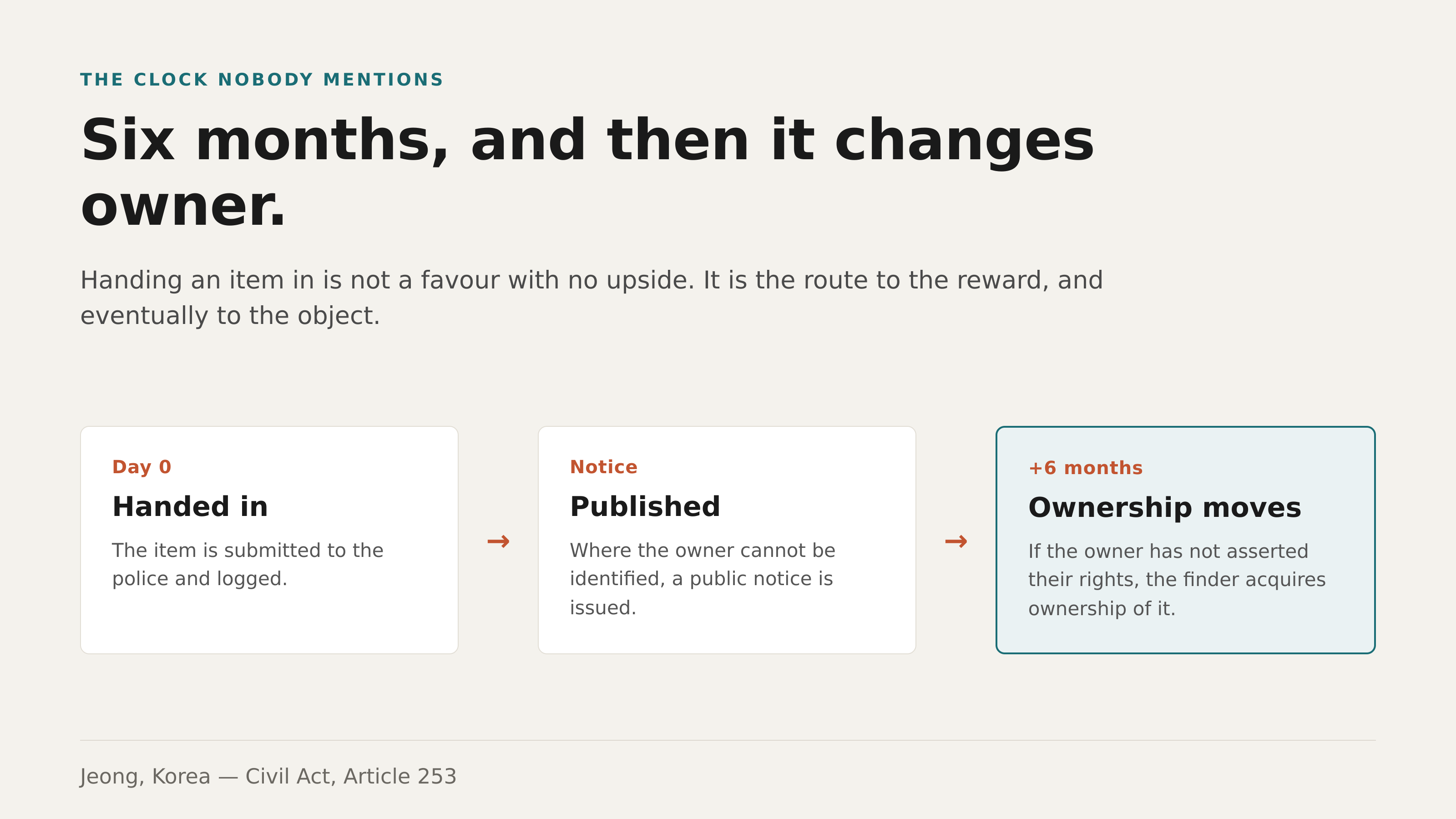
Read the three provisions together and the behaviour stops looking like national character and starts looking like design. Hand it in, because you must. A notice goes out. The owner pays you a percentage if they turn up. If they never do, after six months it is yours.
None of that requires anyone to be unusually kind. It just means the easy path and the honest path are the same path — which, over enough years, is what a habit is made of.
So where do you actually go?
What to do, in order
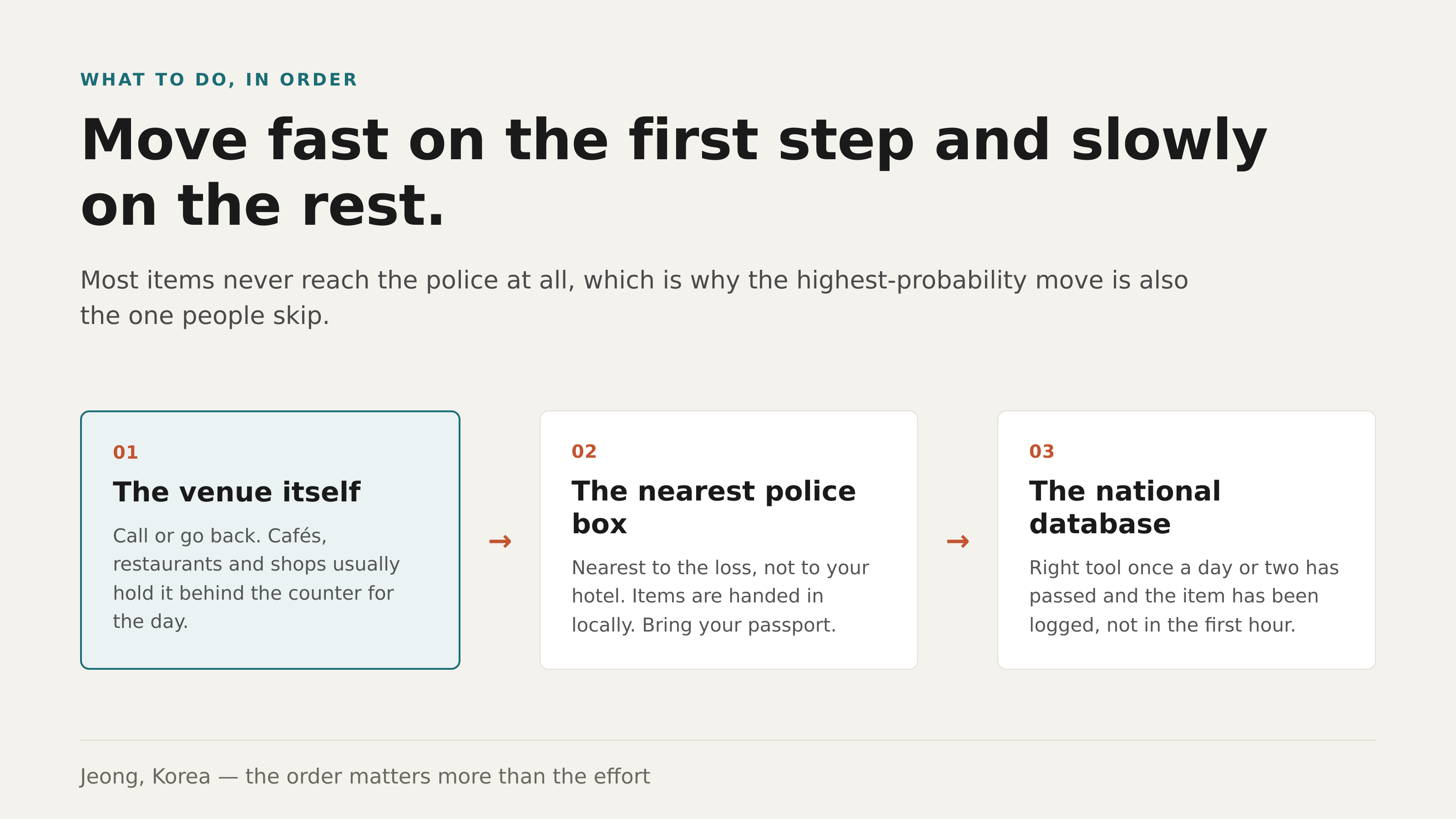
Move fast on the first step and slowly on the rest.
Go back to the place itself first, or call it. Most items never reach the police at all, because the café, restaurant or shop simply holds it behind the counter for the day. This is the highest-probability move and the one most people skip because they assume it is already gone.
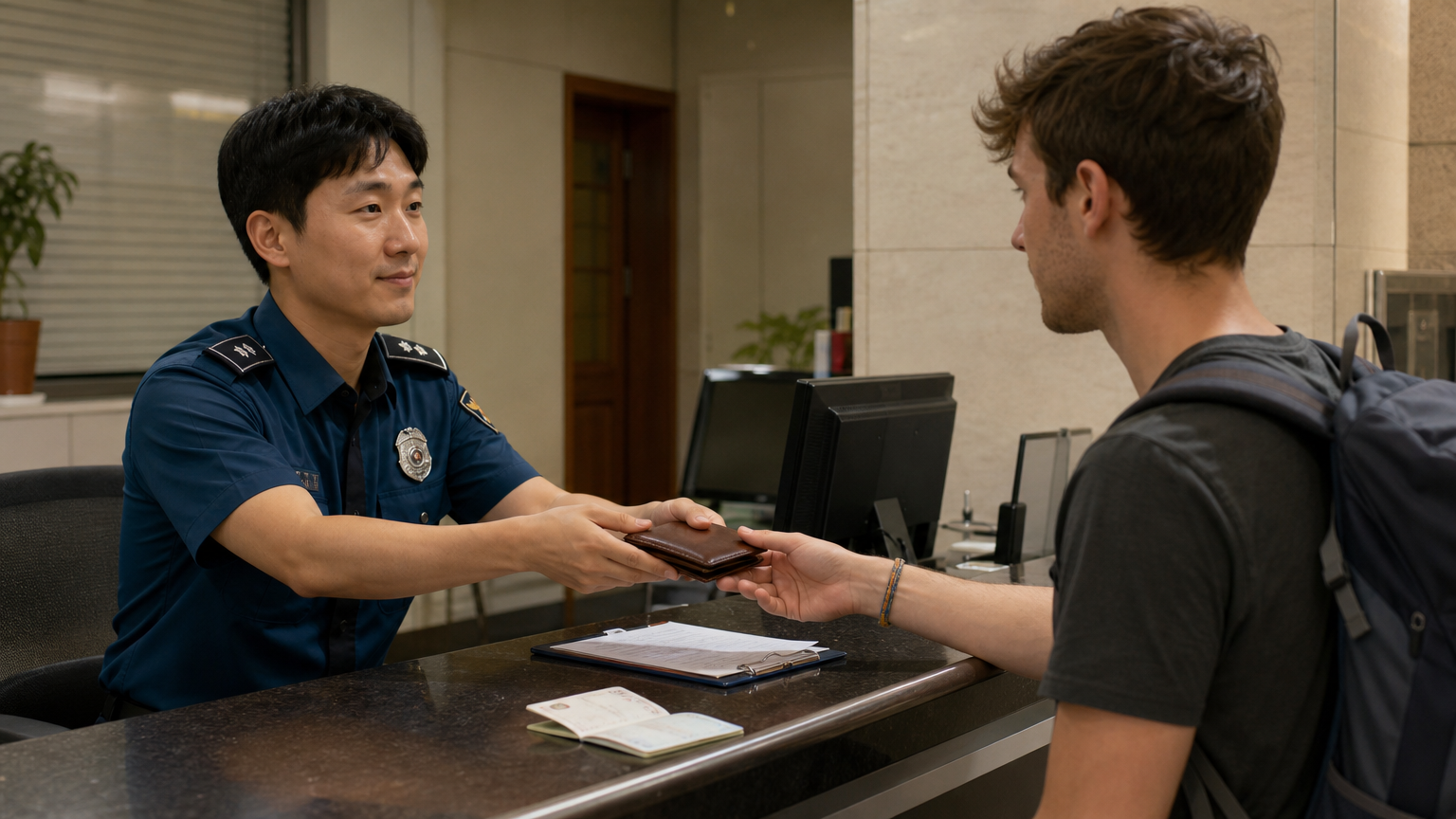
If that fails, go to the nearest police box to where you lost it. Not the one near your hotel — the one near the loss. Items are handed in locally, and a neighbourhood post is a normal place to walk into for this. Bring your passport.
| Where you lost it | Where to go first |
|---|---|
| Café, restaurant, shop | Back to the venue — most are held at the counter |
| Street, park, station concourse | Nearest police box to that spot |
| Subway train or platform | The station office, then the line's lost property centre |
| Taxi | The ride record in your app, then the police |
| Airport | The terminal's lost property counter before you leave the building |
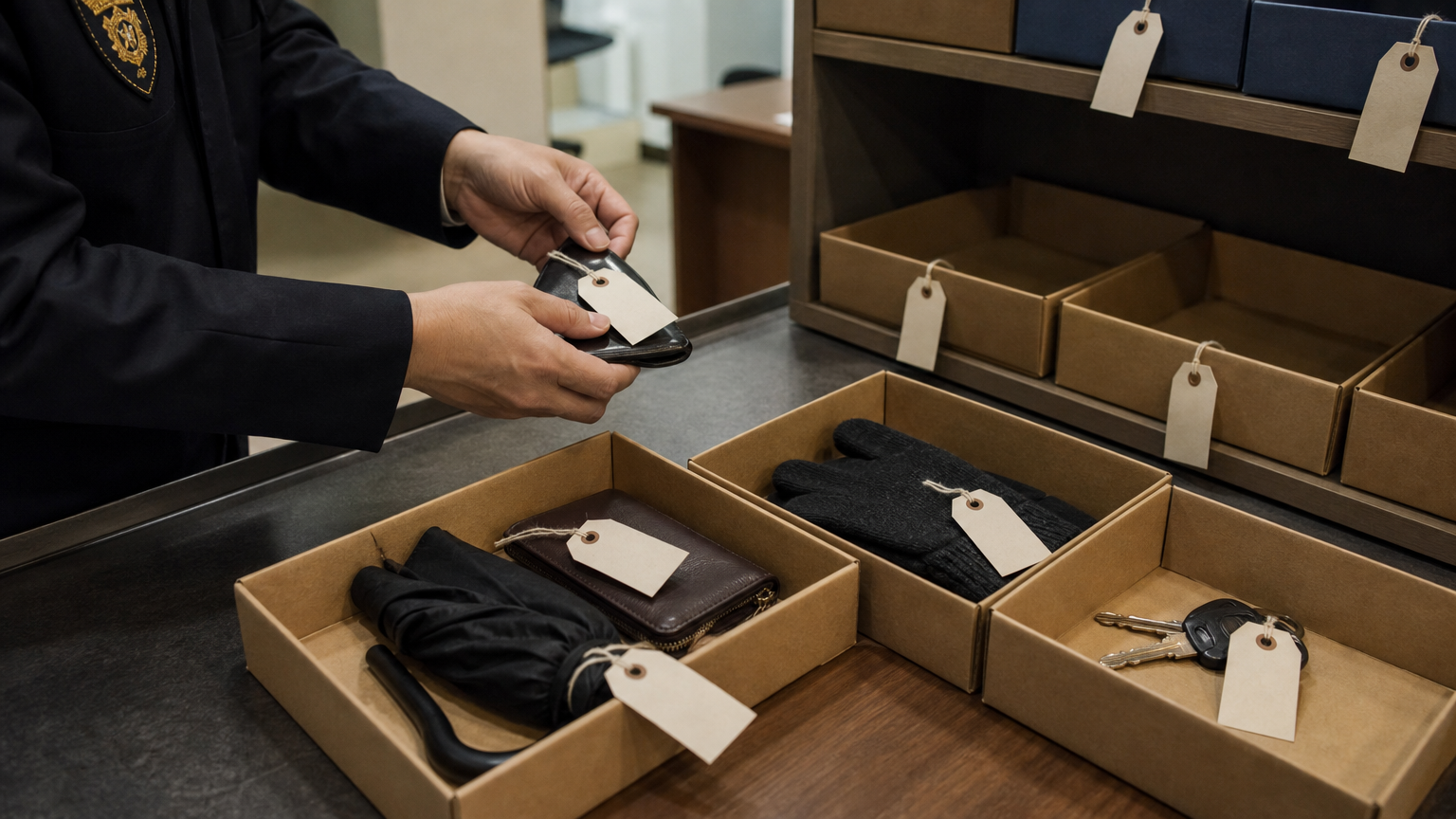
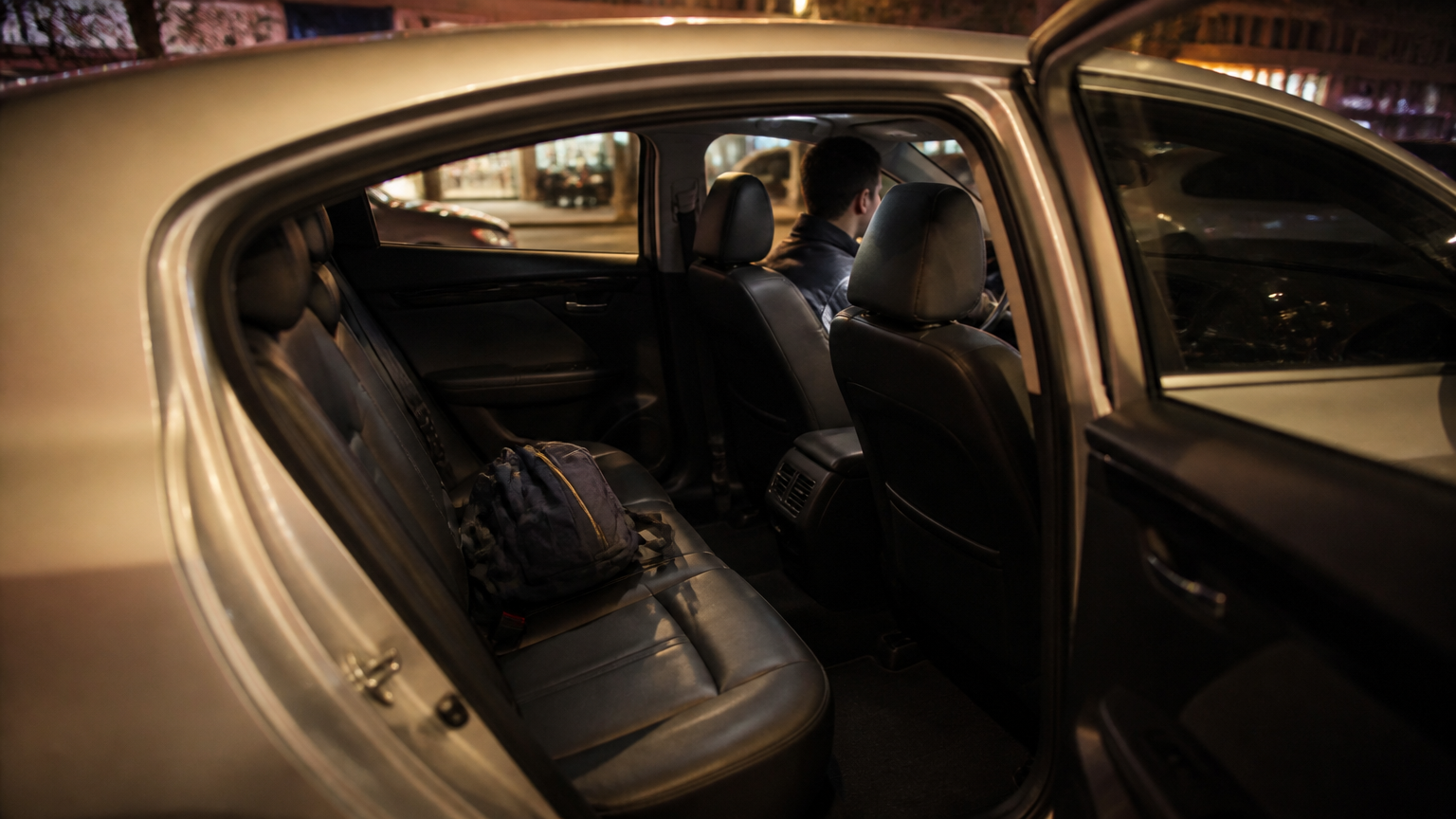
For anything left in a taxi, the ride record is what matters — you need the vehicle, and the app has it even when your memory does not. That is one more reason to have used a Korean ride-hailing app rather than flagging one down, which we wrote about separately. Subway losses follow the line rather than the station, so an item lost on one line does not travel to another line's office — the transfer rules that confuse people are the same reason the lost and found is split this way.
The police also run a national lost and found database that pools items handed in across the country, and it is the right tool once a day or two has passed and the item has been logged. Go in through the police civil affairs portal rather than through a link in an older guide — the standalone address that guides have been citing for years no longer answers, and a dead link is a bad reason to conclude that your bag is gone.
One case is different, and it is the one people ask about most.
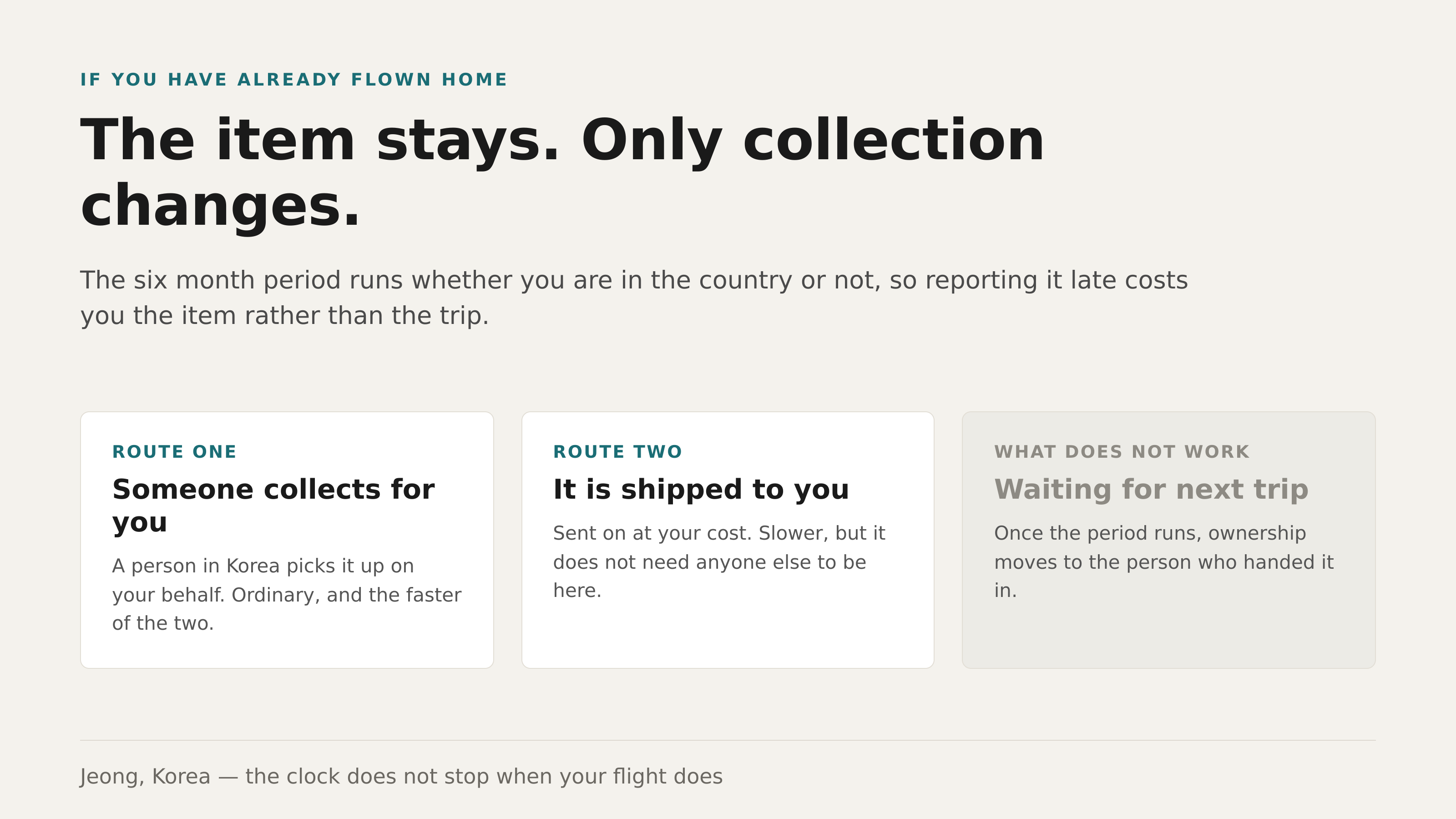
If you have already left the country
The clock does not stop when your flight does, and the item does not get thrown away.
The item sits in the lost and found exactly as it would if you were still here, and the six month notice period keeps running. What changes is only the collection problem, and that has two ordinary answers: someone in Korea collects on your behalf, or the item is shipped to you at your cost. Neither is exotic and neither depends on you being present.
What does not work is waiting to sort it out on your next trip without telling anyone. Once the period runs, ownership moves, and it moves to the person who did the right thing.
The short version
If you lose something in Korea, assume it still exists. That assumption is correct far more often than it would be at home, and it is correct for structural reasons rather than sentimental ones.
Call the venue, then walk into the nearest police box, then check the national lost and found once the item has had time to be logged. Bring your passport, and do not be startled if the person who found it is entitled to a percentage — that entitlement is written into the statute, and it is the reason your phone is sitting on a desk instead of nowhere.
There is a version of this that is worth noticing while you are still here. The habit only looks like trust from the outside. From the inside it is a rule, followed so consistently that it stopped needing to be enforced — which is a fairly good description of a lot of things in this country.
FAQ
How long do the police keep a lost item?
A public notice goes out when the owner cannot be identified, and the owner has six months from that notice to claim it. After that period ownership passes to the finder under the Civil Act.
Do I really have to pay a reward?
If a private individual found it, yes — the Lost Articles Act sets the range at 5 to 20 percent of the item's value and states it as an obligation. In practice many finders do not claim it. Public bodies cannot claim it at all.
I lost it on the subway. Where does it go?
To the station office first, then to the lost property centre for that line. Items do not move between the lines' offices, so start with the line you were actually on.
I left it in a taxi. Is it gone?
Not necessarily. Find the ride record in the app you booked with, since identifying the vehicle is the whole problem. If you hailed the car on the street with no record, the police database is the remaining route.
Do I need to speak Korean to report it?
It helps, but a police box is a counter transaction rather than a conversation. Bring your passport, have the item and the location written down, and a translation app covers the rest.
Does this apply to a wallet with cash in it?
Yes, and cash is the case where the reward is most likely to be raised, because the value is not in dispute. The same 5 to 20 percent range applies.
I have already flown home. Is it worth reporting?
Yes. The item stays in the system and the six month period is running either way. The only thing you need to arrange is collection — in person by someone here, or by shipping at your expense.
References
-
Lost Articles Act (유실물법), Article 1 — a finder must promptly return the item to the owner or hand it in to a police station, including neighbourhood posts; where the person entitled to it cannot be identified, the police publish a notice
-
Lost Articles Act (유실물법), Article 4 — the person recovering the item must pay the finder between 5 and 20 percent of its value; the state, local governments and other designated public bodies cannot claim it
-
Civil Act (민법), Article 253 — where the owner does not assert their rights within six months of the public notice, the finder acquires ownership
-
Jeong, Korea, Korea Taxi App Guide — why the ride record is what you need
-
Jeong, Korea, Seoul Subway Map — why lost property follows the line rather than the station