Insadong: The Starbucks Wrote Its Name in Hangeul Nine Years Before the Rule Existed

Somewhere on this street there is a Starbucks whose sign does not say Starbucks. It says 스타벅스, in Korean letters. It is reported as the first store the company ever opened in a local script.
Everyone who notices it assumes there is a rule. There is a rule now. It arrived nine years afterwards.
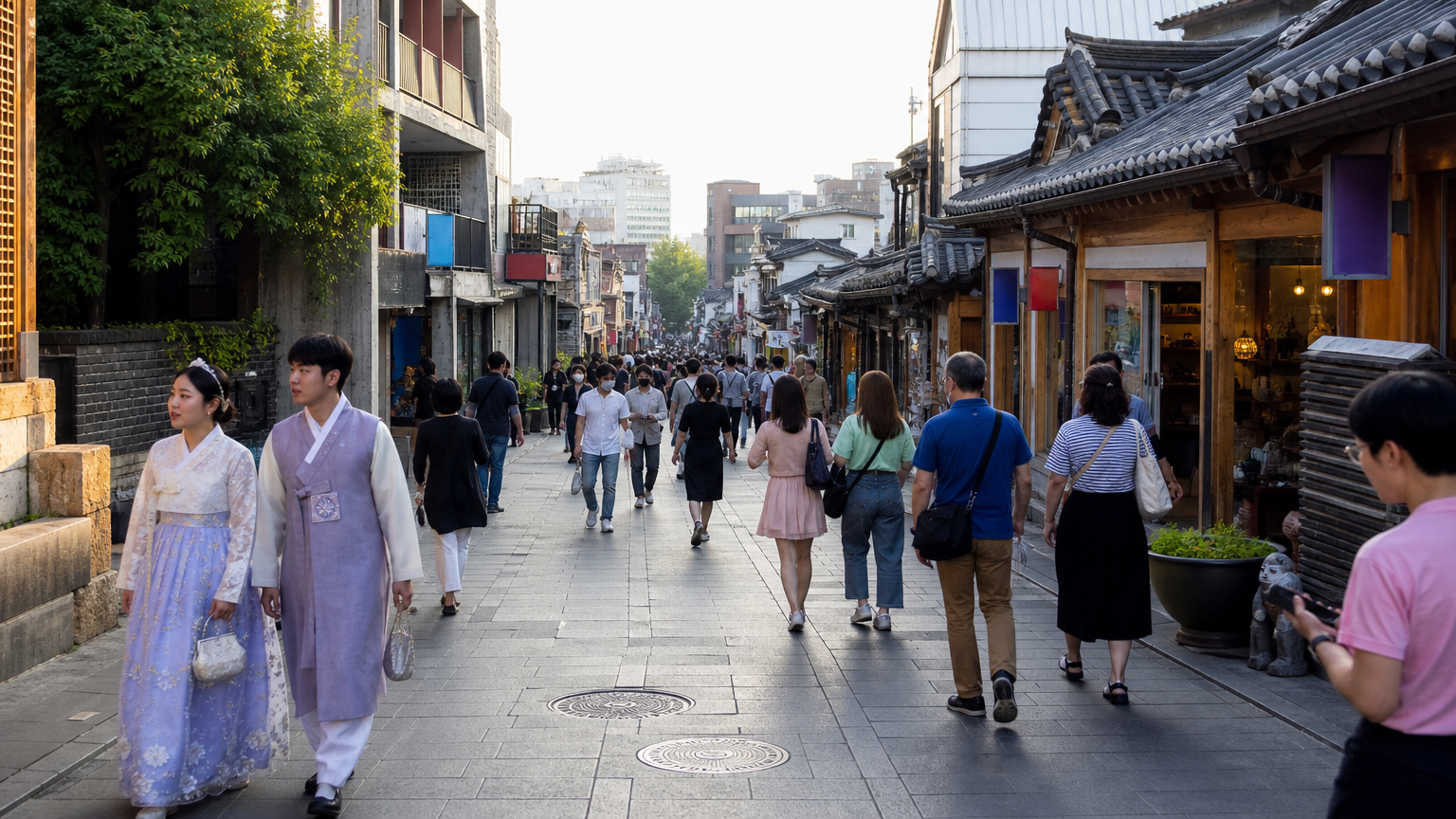
The sign came first, in 2001
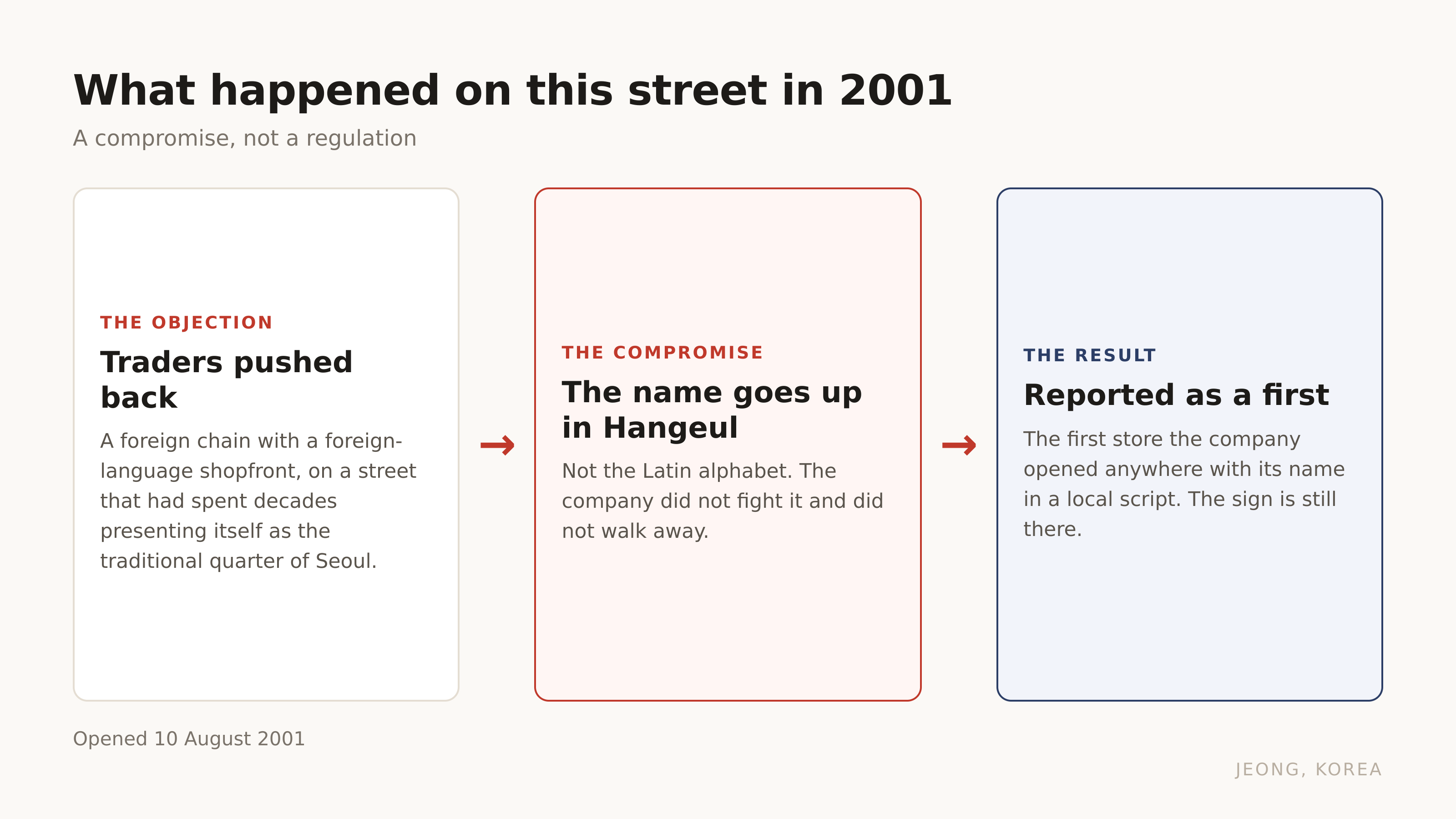
The shop opened on 10 August 2001, and it was not welcome. Traders on the street objected that a foreign chain with a foreign-language shopfront would damage a street that had spent decades presenting itself as the traditional quarter of Seoul.
What happened next is the interesting part. The company did not fight it and did not walk away. It compromised, and put the name up in Hangeul instead of the Latin alphabet.
That sign is still there. Whatever you think of the coffee, a global chain agreeing to be spelled in the host country's script, in 2001, was not a normal outcome.
So when did it become a rule?
The protections arrived afterwards, in two steps
Two things followed, and neither of them caused the sign.
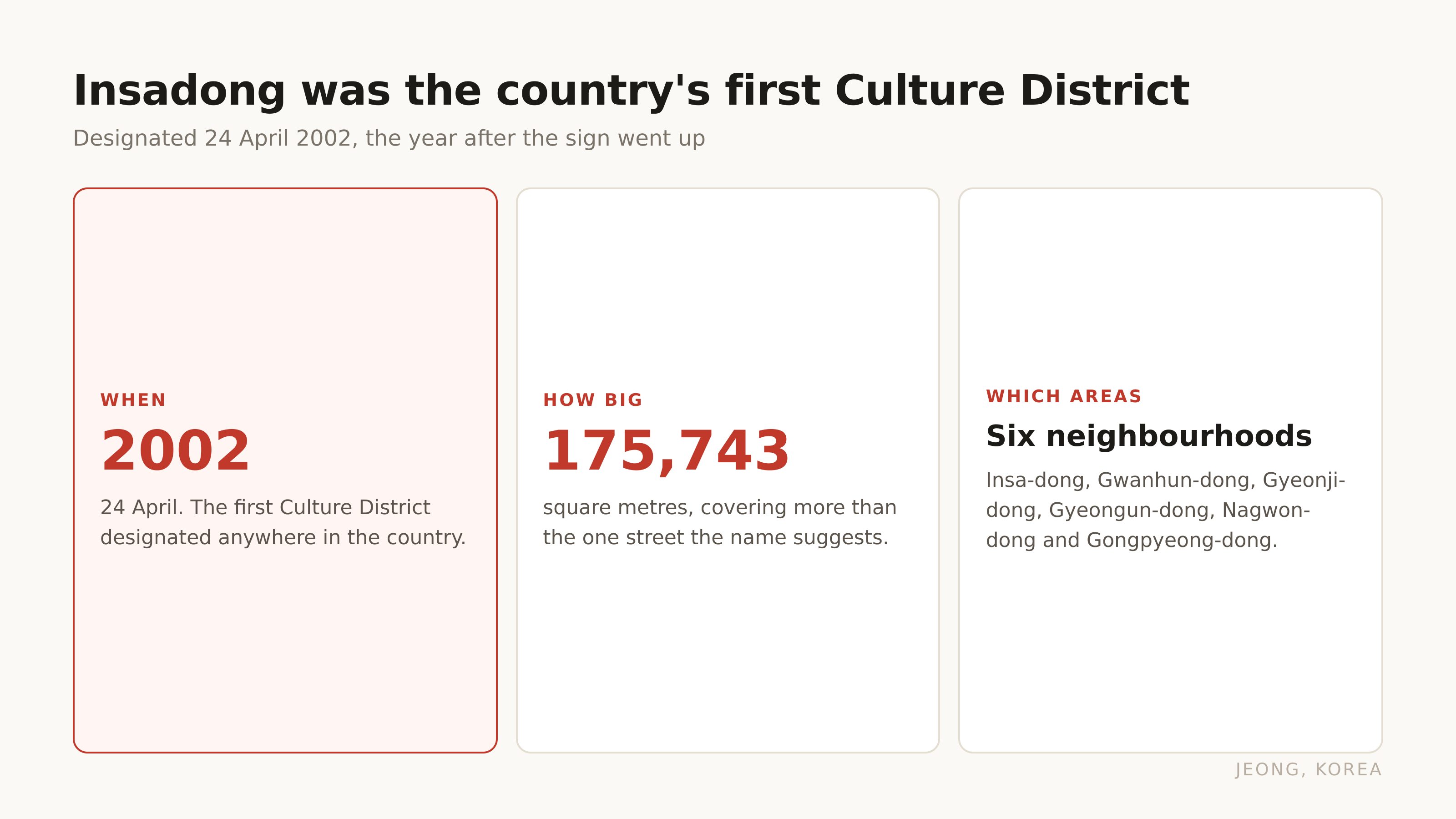
April 2002. Insadong was designated a Culture District, the first one in the country, covering about 175,743 square metres across Insa-dong and the neighbouring areas of Gwanhun-dong, Gyeonji-dong, Gyeongun-dong, Nagwon-dong and Gongpyeong-dong. The designation exists to protect and encourage a specific kind of business here rather than to decorate the street.
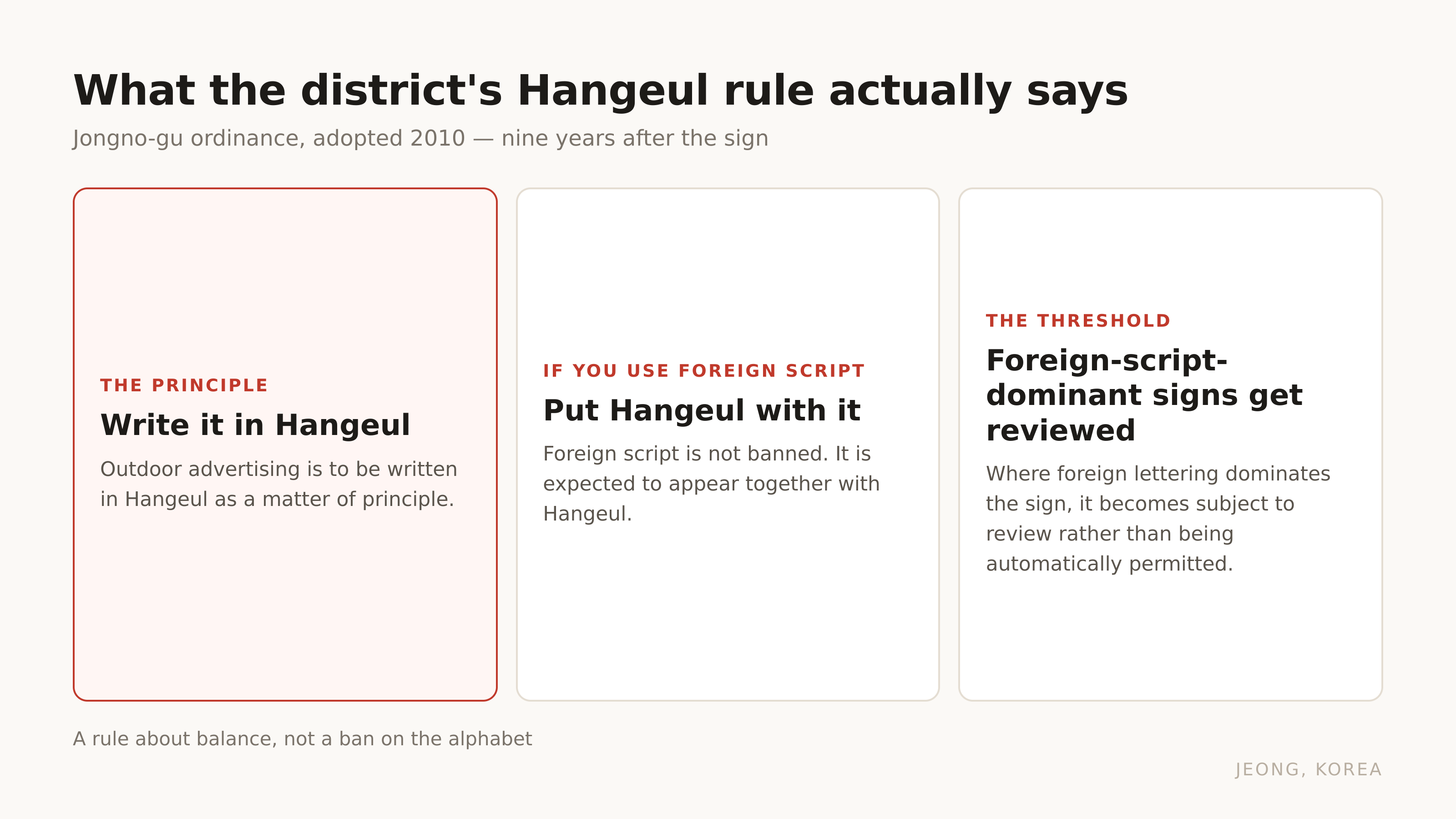
2010. Jongno-gu, the district that contains Insadong, adopted a Hangeul ordinance. Its rule on signage is that outdoor advertising should as a principle be written in Hangeul, and where foreign script is used it should appear together with Hangeul. Signs where foreign script dominates are subject to review.
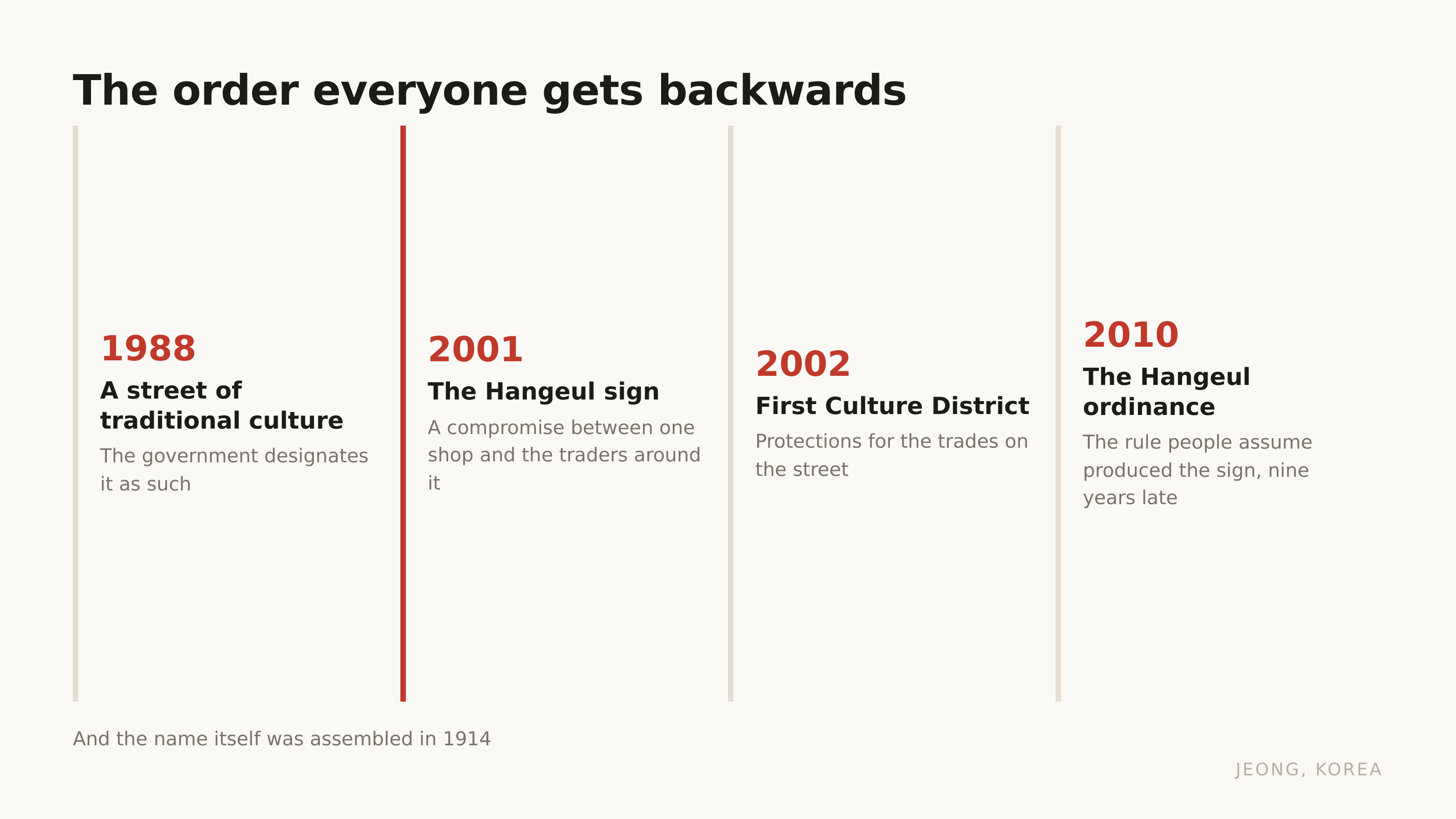
So the order runs: shop, then district, then ordinance. If you are told the Starbucks sign is because of the law, the law is younger than the sign by nine years.
| Year | What happened |
|---|---|
| 1988 | The government designates Insadong a street of traditional culture |
| 2001 | The Starbucks opens with a Hangeul sign |
| 2002 | Insadong becomes the country's first Culture District |
| 2010 | Jongno-gu adopts its Hangeul ordinance |
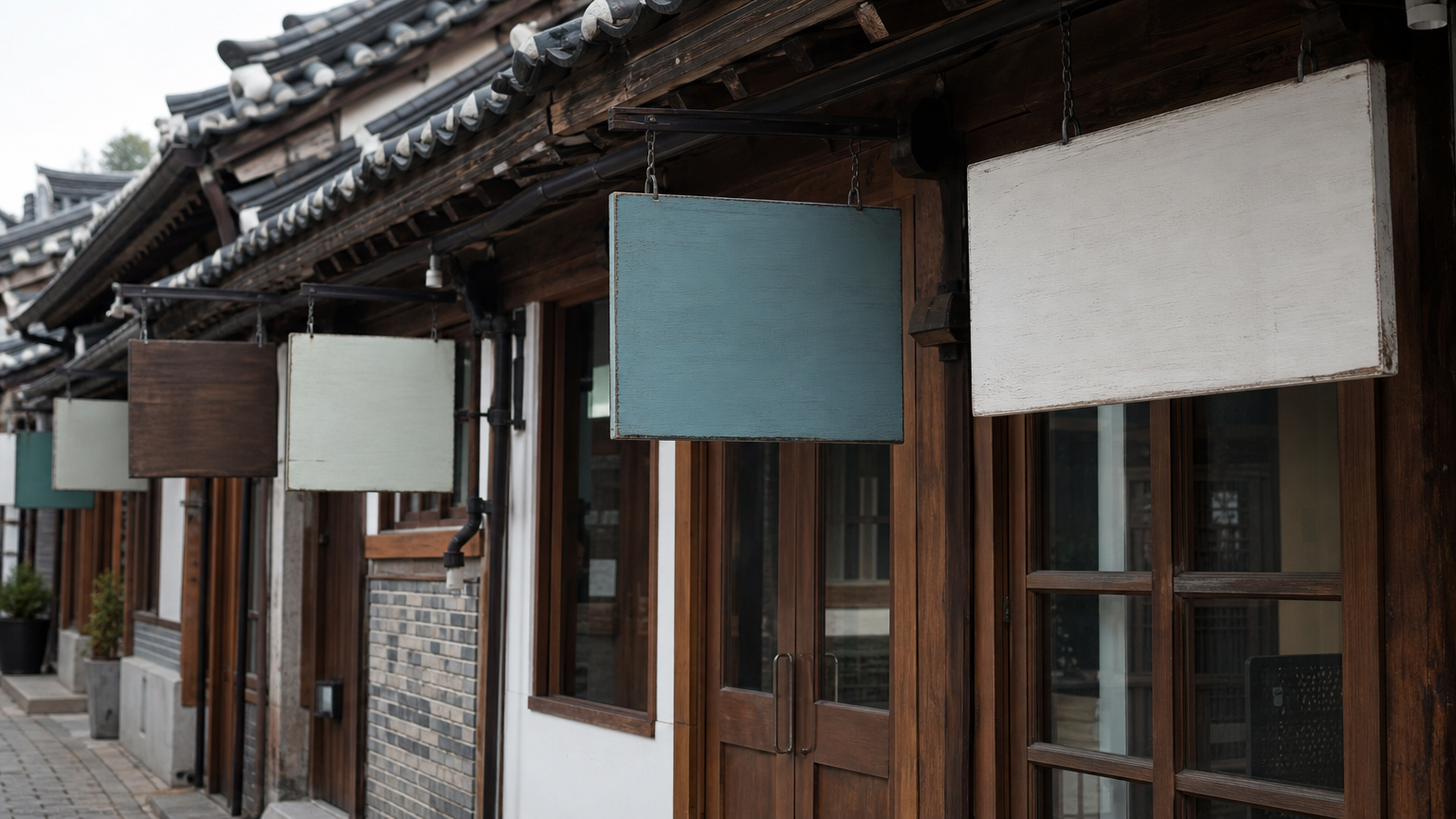
What is the designation actually protecting?
A Culture District protects trades, not looks
This is the part that changes how the street reads once you know it.
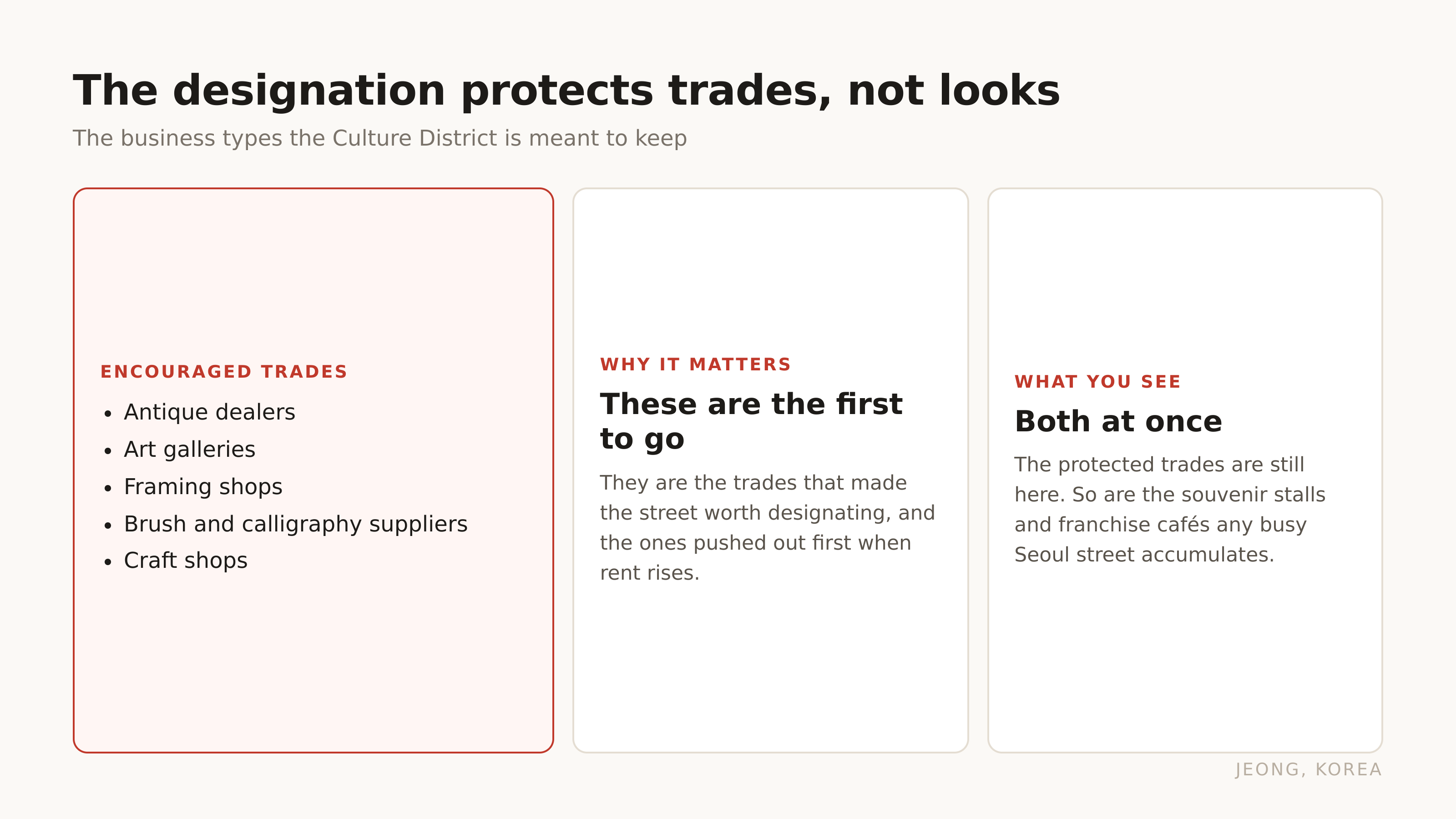
The designation comes with encouraged business types, and the list is specific: antique dealers, art galleries, framing shops, brush and calligraphy suppliers, craft shops. Those are the trades the district is meant to keep, because those are the trades that made the street worth designating and the ones that get pushed out first when rent rises.
It is a working definition of what Insadong is supposed to be, and it is also why the street feels like it is arguing with itself. The protected trades are still there. So are the souvenir stalls and the franchise cafés that any busy street in Seoul accumulates. You are looking at both at once.
If you are shopping rather than browsing, what Koreans actually buy, and what your own country will let back in is worth reading before you spend anything here, because a lot of what is sold on this street is aimed squarely at visitors.
And the name itself?
The name is two older names cut in half
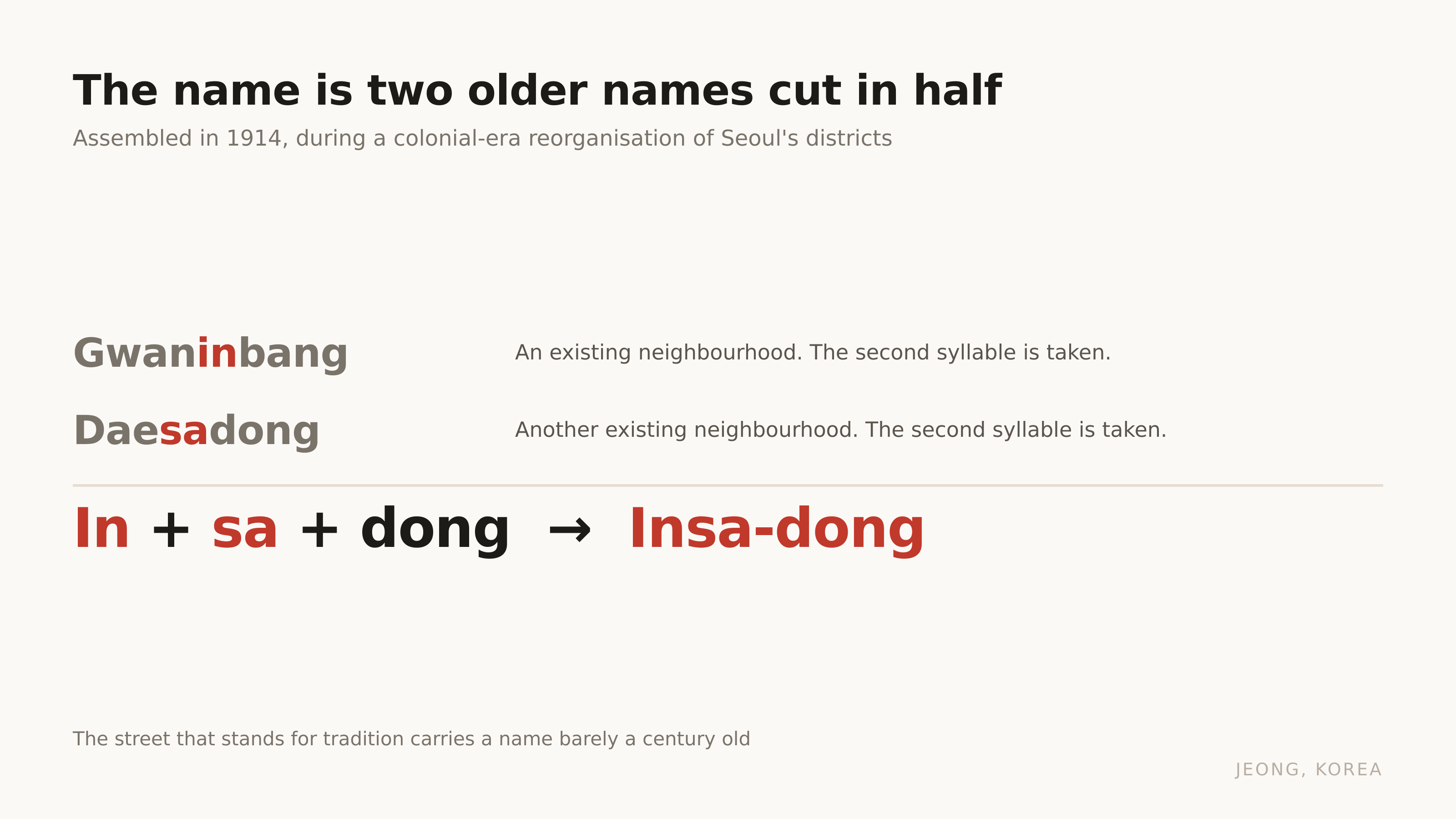
Insa-dong is not an old name. It was assembled in 1914, during the colonial reorganisation of Seoul's districts, by taking one syllable each from two neighbourhoods that already existed: Gwaninbang and Daesadong.
The in is the middle syllable of Gwaninbang. The sa is the middle syllable of Daesadong. The street that now stands for tradition carries a name barely a century old, stitched together by an administrative merger.
Which is a very Seoul thing, and it puts the Starbucks story in proportion. This is a place that has been continuously deciding what it is.
What to actually do on the street
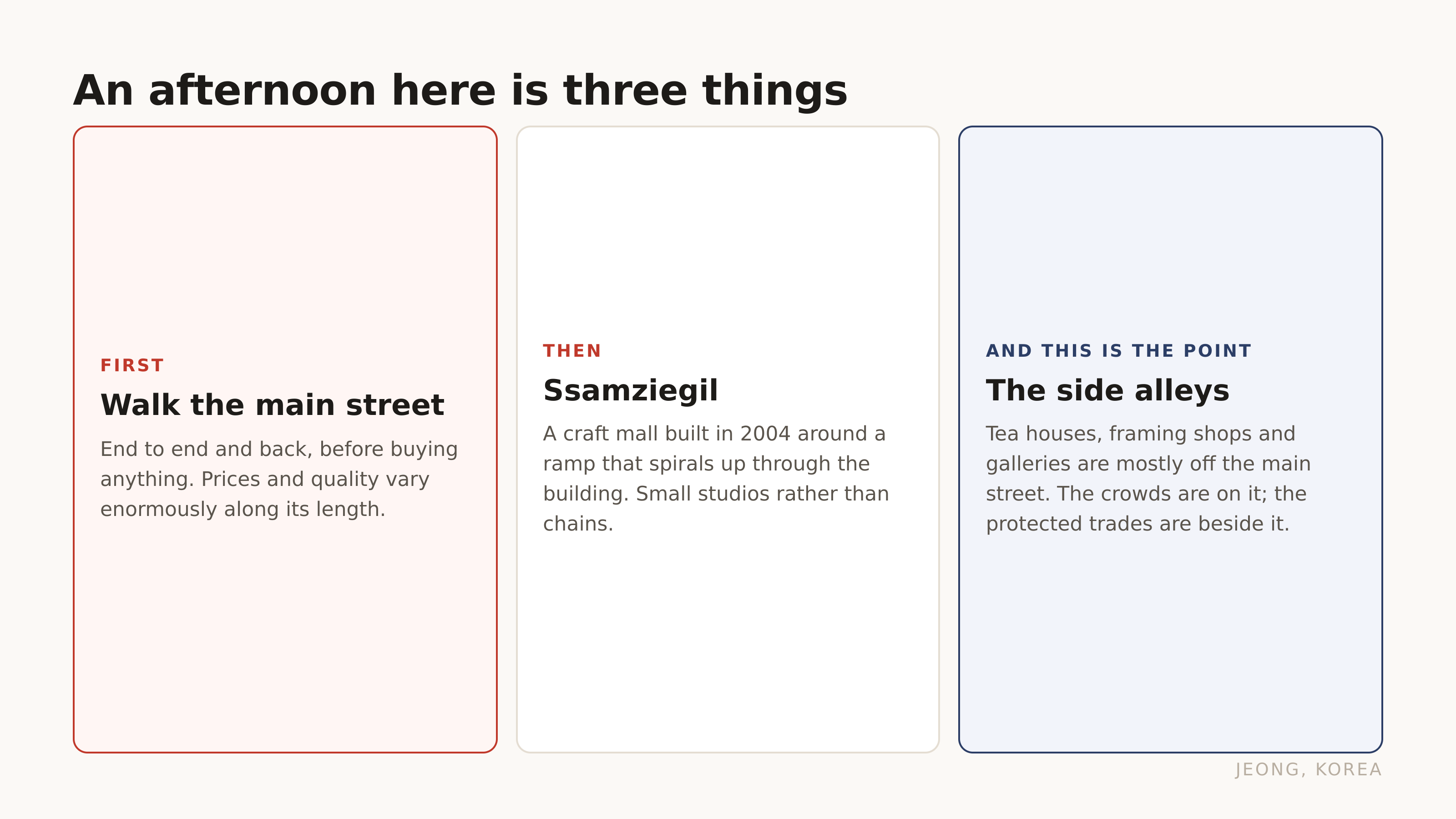
Practically, an afternoon here is three things.
The main street. Insadong-gil is short enough to walk end to end and back without planning around it. Do exactly that before you buy anything, because prices and quality vary enormously along its length.
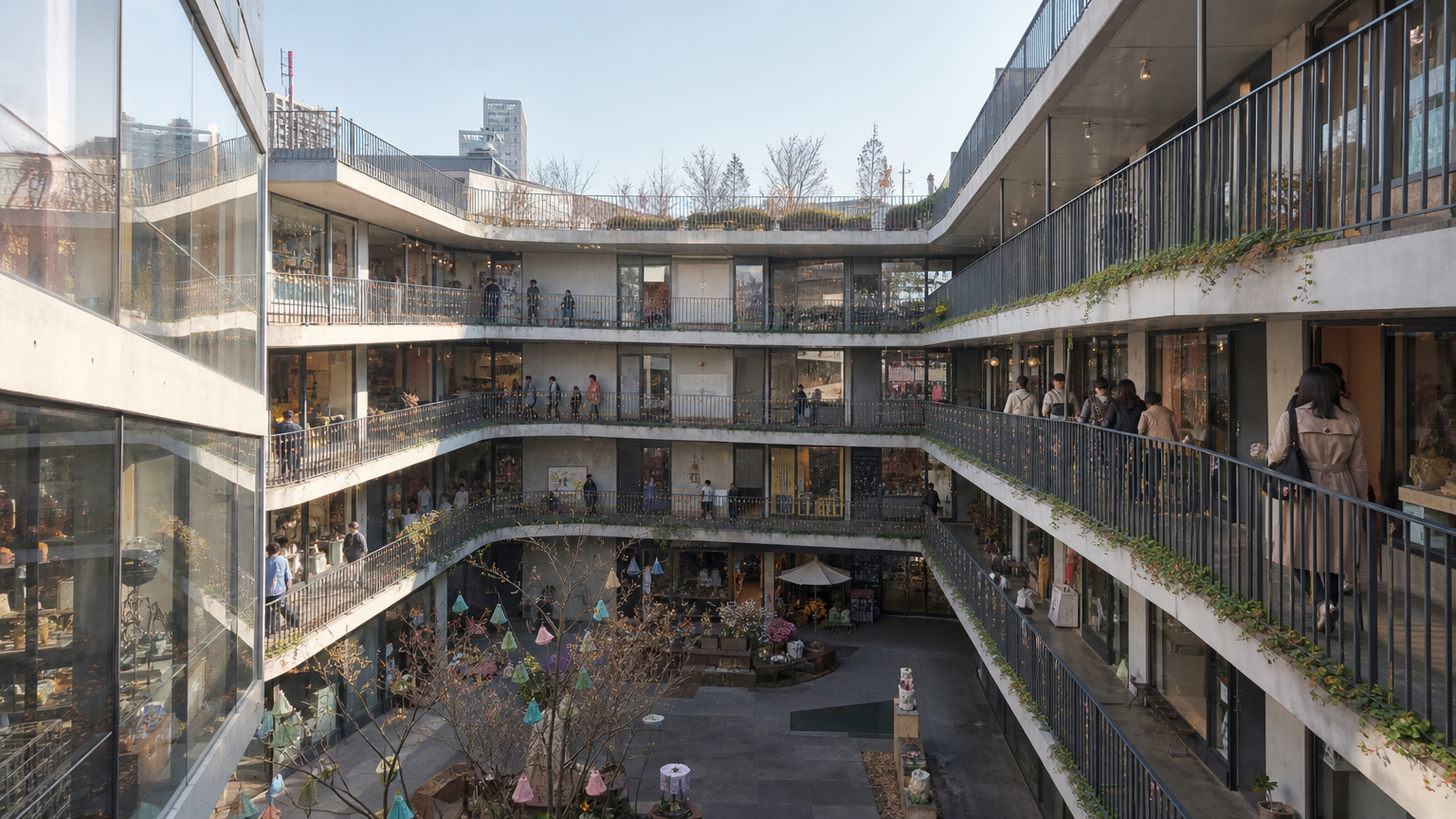
Ssamziegil. A craft mall built in 2004 around a continuous spiral ramp, so you walk up through it without using a staircase. Small studios and craft shops rather than chains.
The side alleys. The tea houses, the framing shops and the galleries are mostly off the main street rather than on it. The main street is where the crowds are; the alleys are where the protected trades still operate.
Insadong also sits within walking distance of the palaces, which is why so many people arrive here already dressed for one. Hanbok rental prices, and the free palace admission rule explains that arrangement.
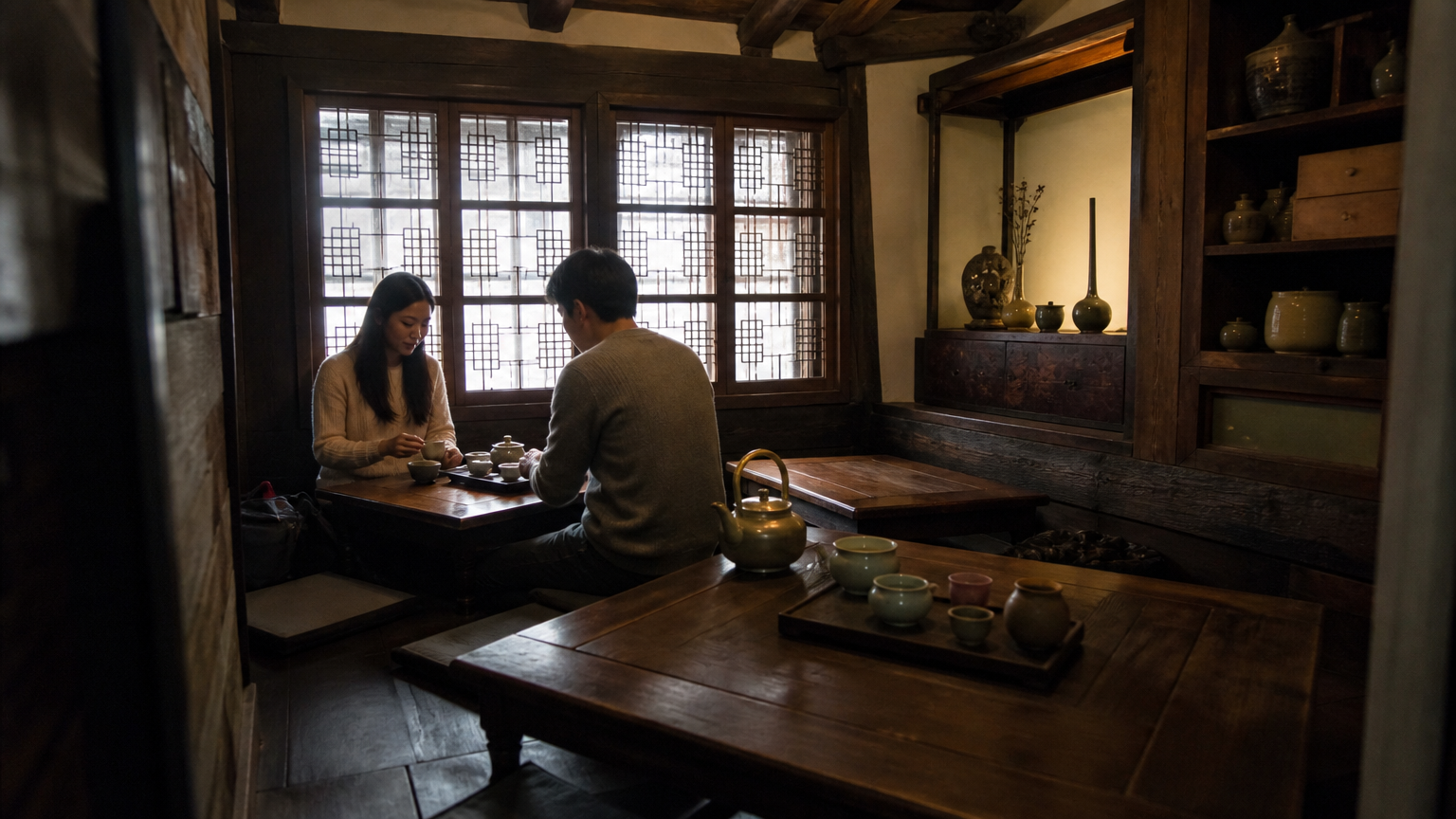
And if you want to sit down, the tea houses here are a different institution from the cafés that have taken over the rest of the city. Why Seoul has so many cafés covers the other half of that.
FAQ
Why is the Starbucks sign in Korean in Insadong?
The store opened in 2001 after local traders objected to a foreign-language shopfront, and the company compromised by putting its name up in Hangeul. It is reported as the first Starbucks anywhere to use a local script. The district's Hangeul ordinance came later, in 2010.
What is a Culture District?
A designation that protects and encourages particular trades in an area. Insadong was the first in the country, designated in 2002, and the encouraged businesses include antique dealers, galleries, framing shops, brush suppliers and craft shops.
Is Insadong worth visiting?
For crafts, tea houses and galleries, yes, but the main street is heavily aimed at visitors. The side alleys hold more of what the designation was meant to protect.
How long does Insadong take?
An afternoon. The main street is walkable end to end, and the palaces are within reach on foot from there.
One sentence is enough
A coffee chain agreed to be spelled in Korean letters here in 2001, the district protections that people assume produced that sign arrived in 2002 and 2010, and the street's own name was assembled from two older ones in 1914.
That is the last of the Seoul neighbourhoods in this run. Each of them turned out to be older, newer, or more divided than its reputation, which is the only reliable thing about naming places in this city.
References
-
Korean press coverage of the Insadong Starbucks — the store opened on 10 August 2001 after objections from local traders, and put its name up in Hangeul rather than the Latin alphabet
-
Local culture district records for Insadong — designated the country's first Culture District on 24 April 2002, covering about 175,743 m² across Insa-dong, Gwanhun-dong, Gyeonji-dong, Gyeongun-dong, Nagwon-dong and Gongpyeong-dong, with encouraged trades including antique dealers, galleries, framing shops, brush suppliers and craft shops
-
Jongno-gu Hangeul ordinance, adopted 2010 — outdoor advertising to be written in Hangeul as a principle, foreign script to appear together with Hangeul, with foreign-script-dominant signs subject to review