Chuseok Gift Sets: Spam Is 58% of a Year's Sales, and That Number Has a War Behind It

Ask any Korean household. They have all received one of these boxes. Almost no visitor knows what it means.
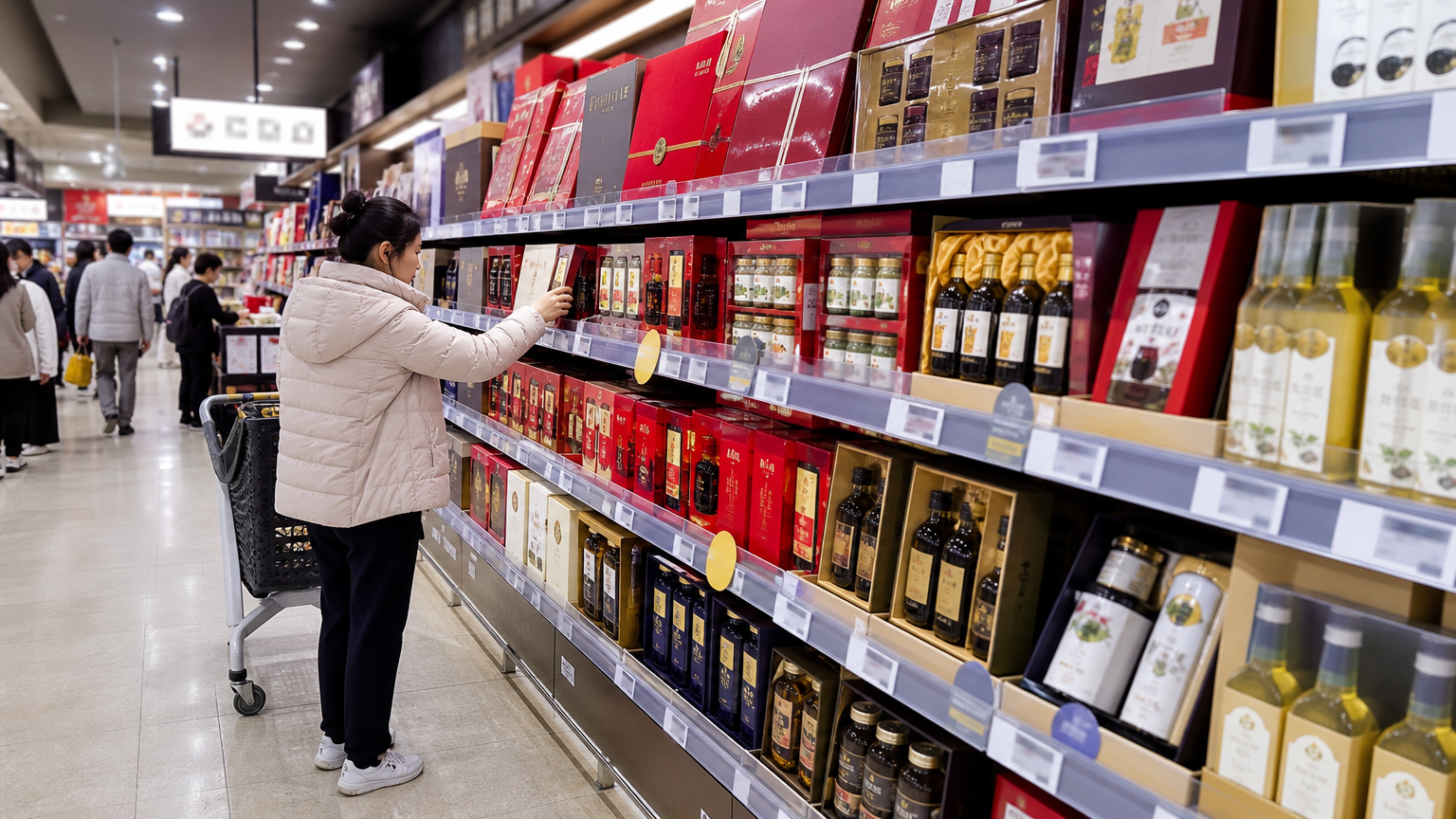
Walk into a department store in the two weeks before the holiday and you will find a floor given over to stacked cartons of tinned meat, cooking oil and dried seaweed. This is what a Chuseok gift actually is, why the contents look like that, and what to carry if someone invites you home.
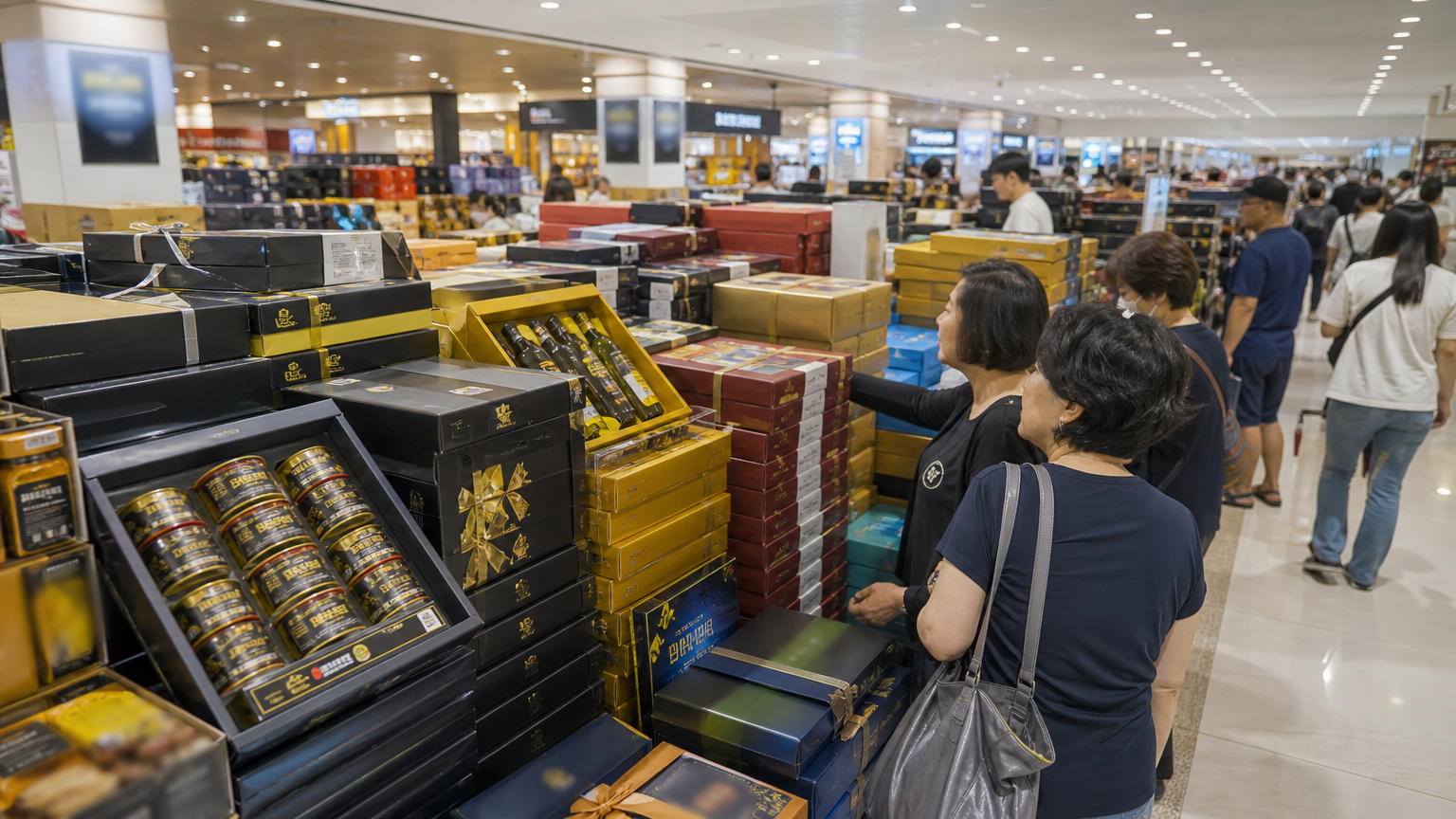
I have carried these boxes on the subway. I have received enough of them that my mother once ran a spreadsheet. And every foreign friend I have brought to the gift floor has stopped in the same place and asked the same question, which is some version of: why is there a velvet-lined presentation case containing Spam?
It is a fair question. It is also the wrong one, because it assumes the box is a joke. It is not. The contents of that box are a list of things that were once very hard to get, and the list has barely been rewritten since.
The box is not a novelty, and the numbers say so
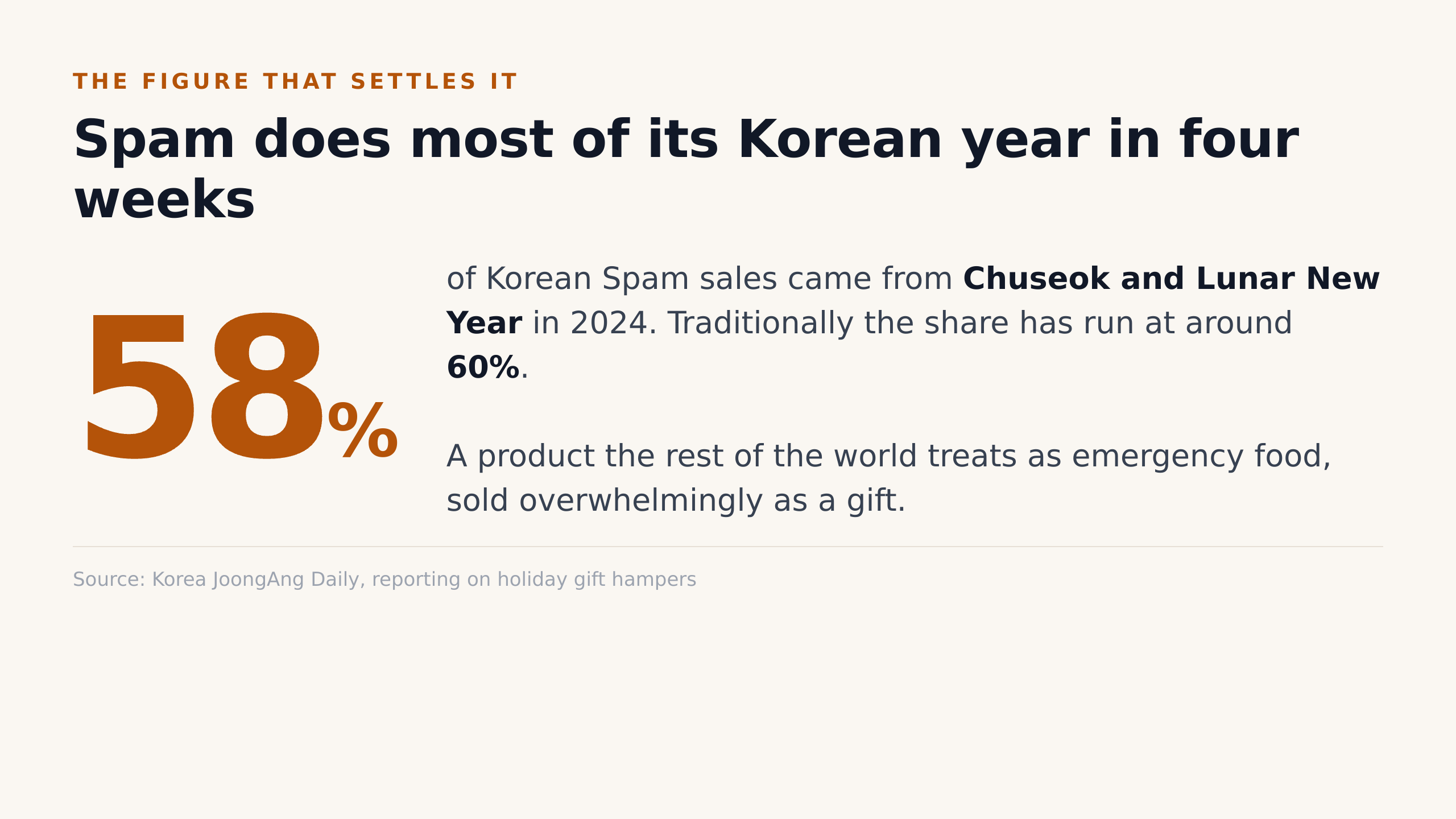
Start with the one figure that settles the argument.
According to Korea JoongAng Daily's reporting on the holiday hamper trade, around 60 percent of Spam sales in Korea have traditionally come from the two big holidays — Chuseok and Lunar New Year. In 2024 that figure was 58 percent.
Read that again. A product most of the world treats as emergency food does more than half of its annual Korean business in about four weeks, as a gift.
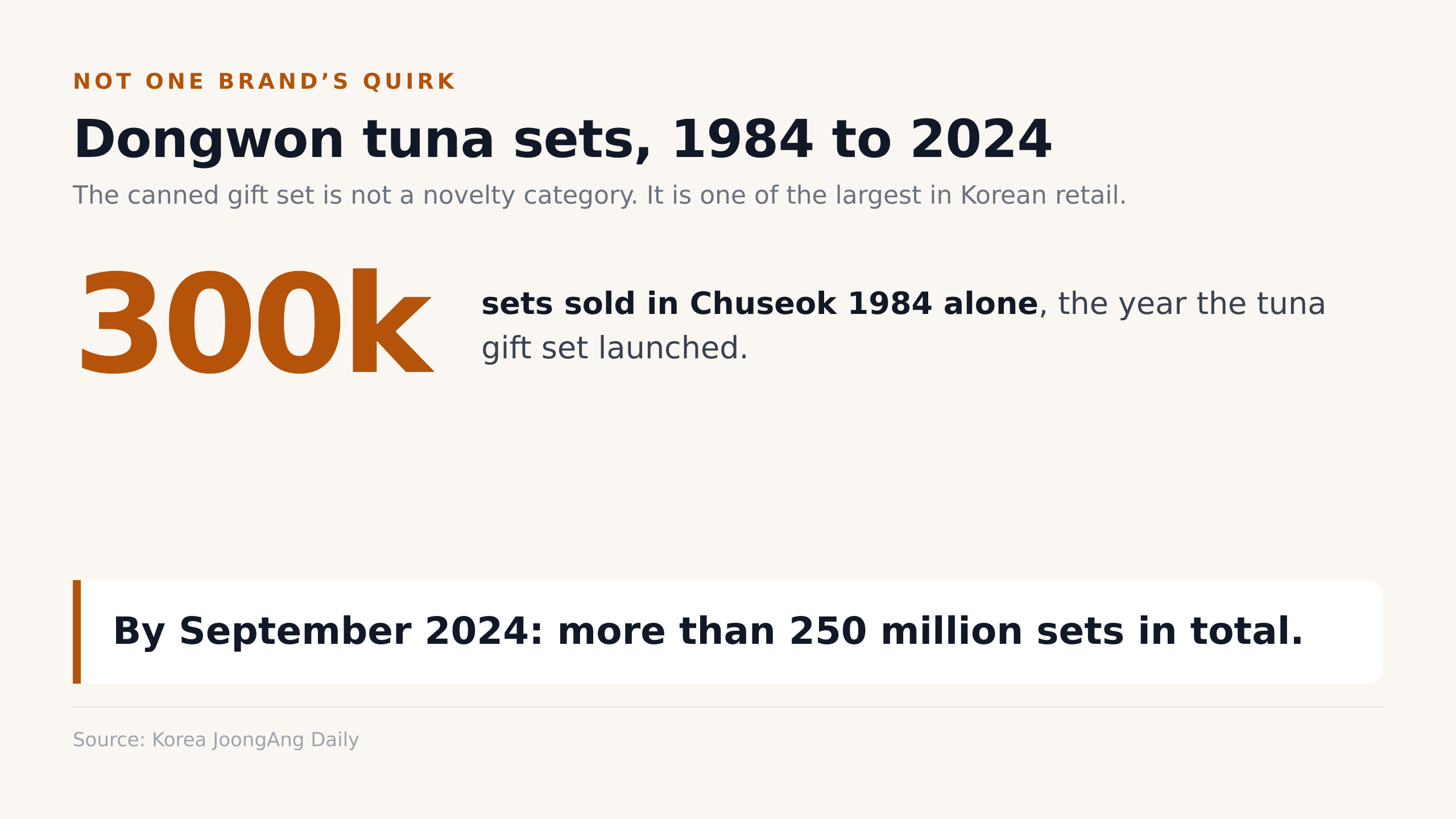
That is not a quirk of one brand. Dongwon launched tuna gift sets in 1984 and sold over 300,000 of them that Chuseok alone. By September 2024 the company had sold more than 250 million sets in total.
A thing that sells 250 million units as a present is not a novelty item. It is an institution.
So if it is not a joke, what is it?
The contents are a record of what used to be scarce
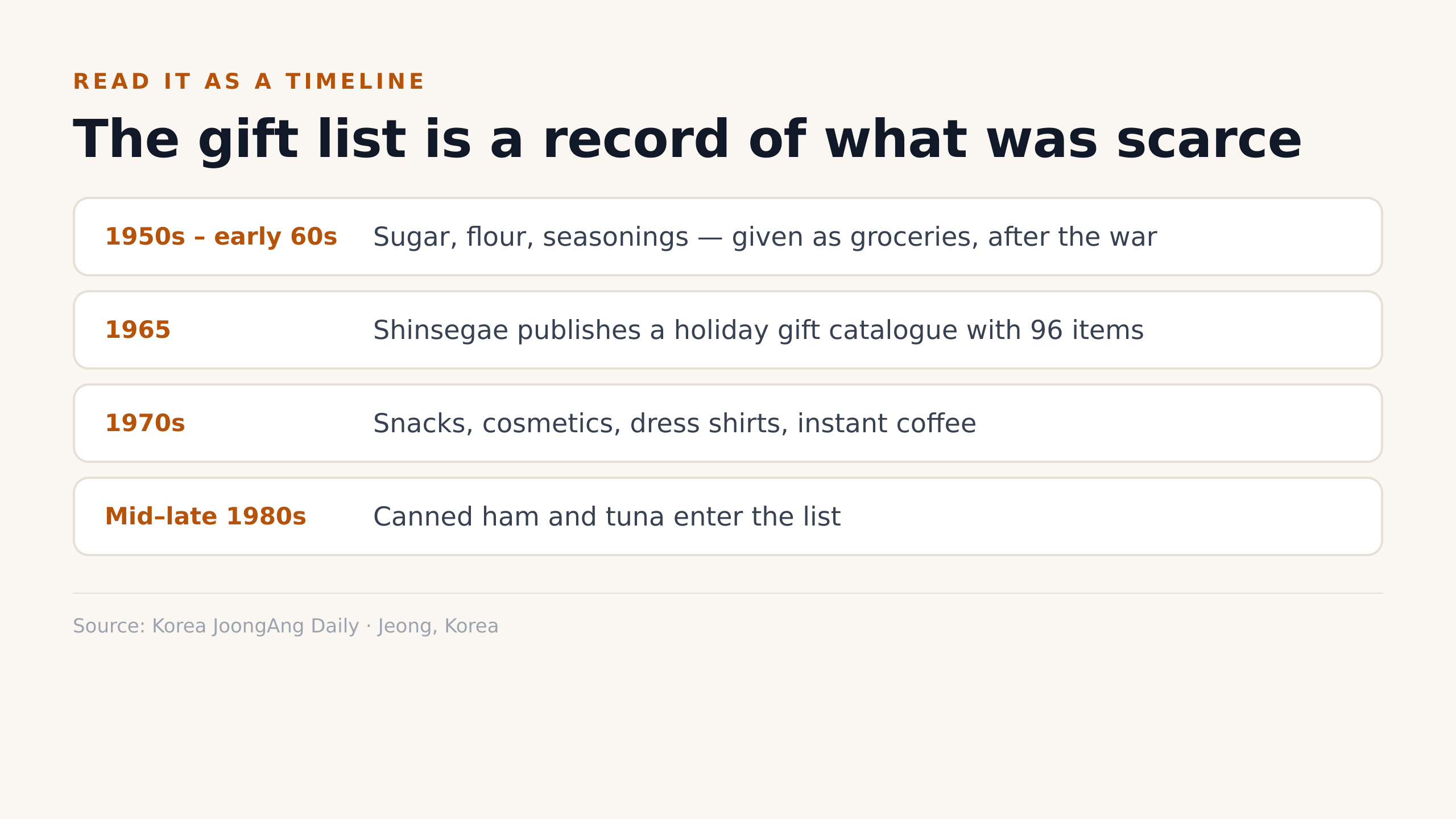
Here is the part that reframes the whole floor. Read the gift catalogue as a timeline rather than a menu, and it stops being strange.
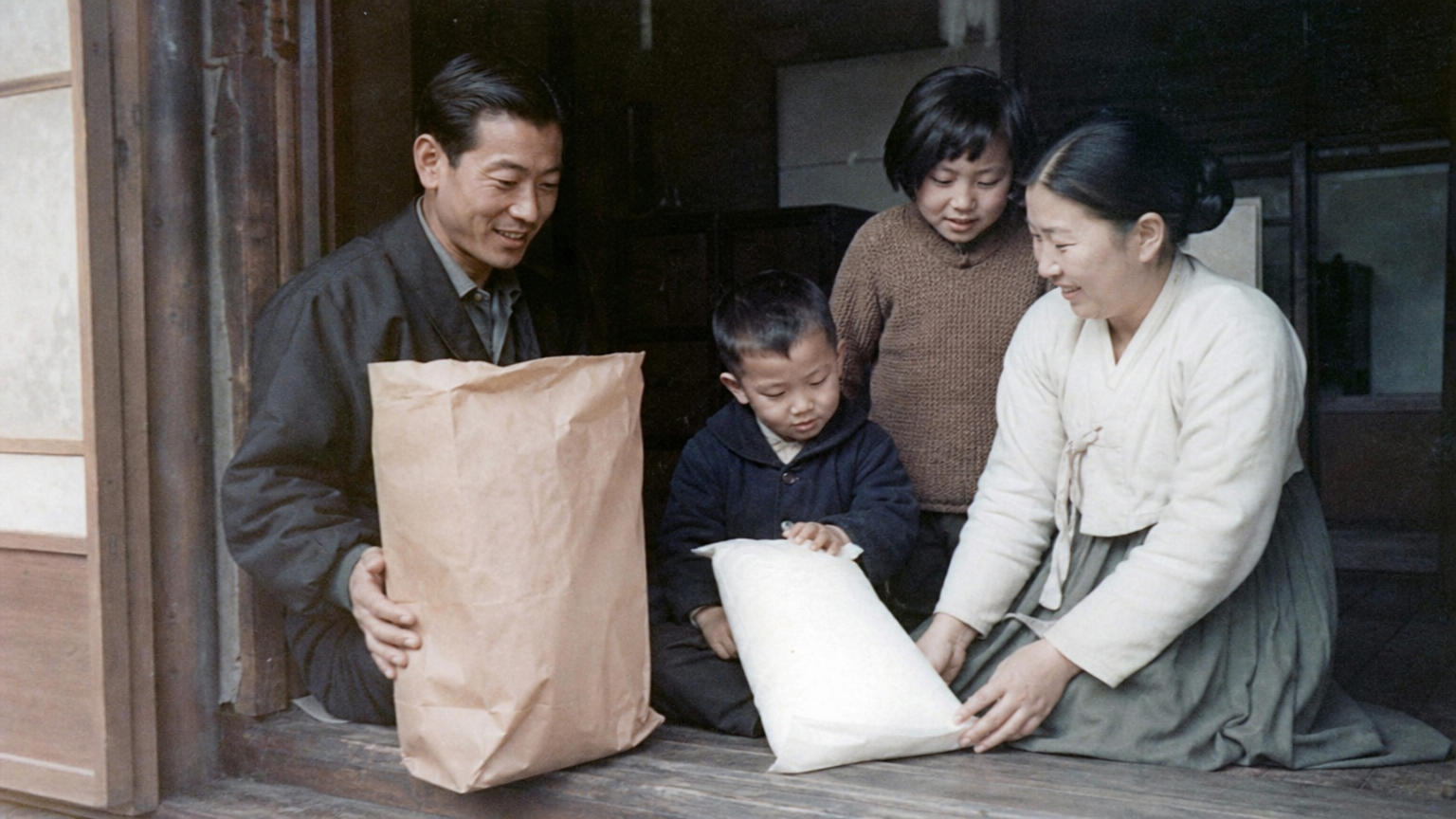
In the 1950s and early 1960s, the popular holiday gifts were sugar, flour and seasonings. Not as a gesture. As groceries. The country was coming out of the Korean War, and the things you gave people were the things they could not easily buy.
Shinsegae published a holiday gift catalogue in 1965 with 96 items in it — the beginning of the gift set as a retail category rather than a private arrangement between families.
By the 1970s the list had moved to assorted snacks, cosmetics, dress shirts and instant coffee. Still the same logic: slightly out of reach, faintly imported, worth having.
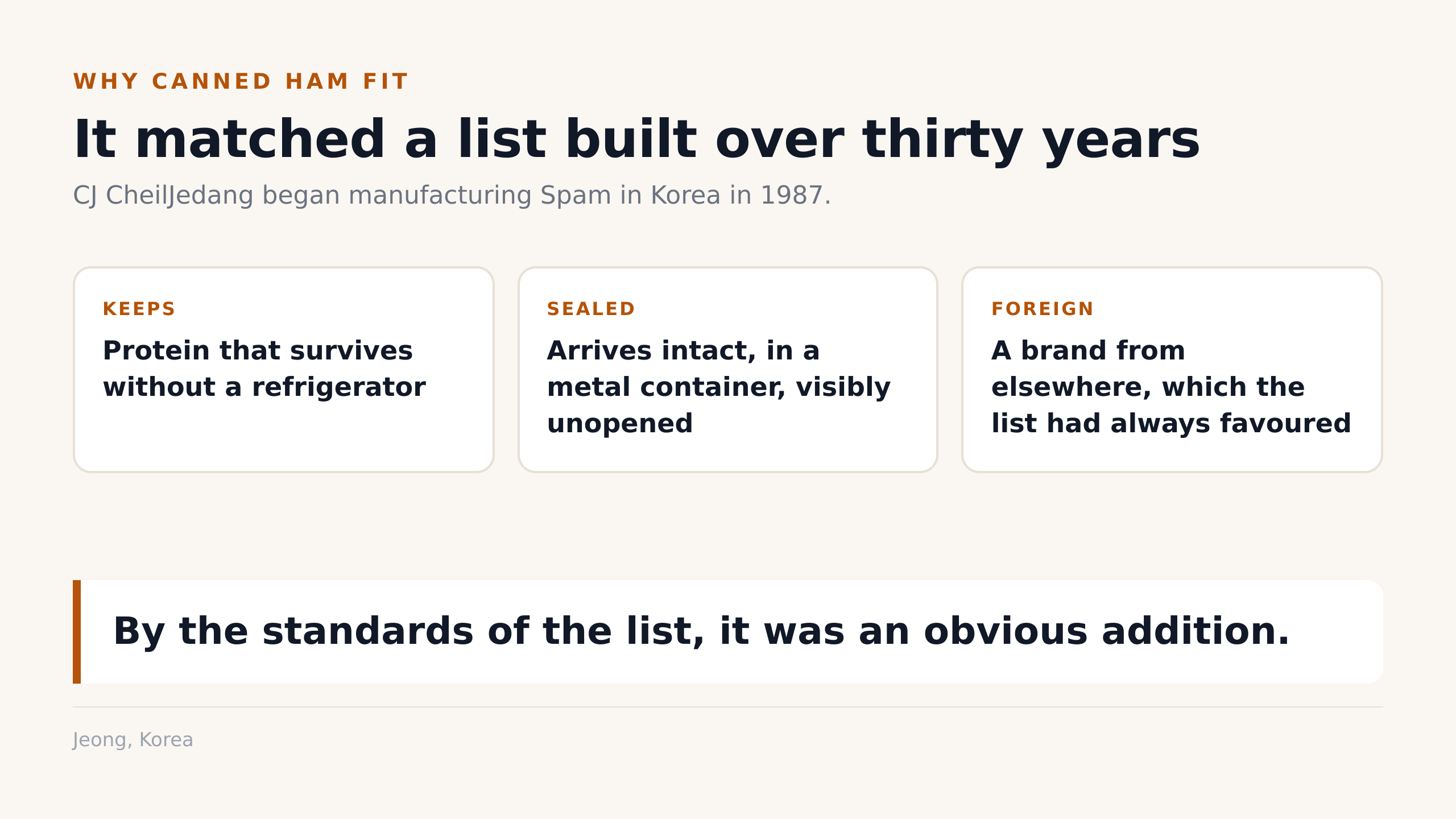
Canned ham and tuna arrived in the mid-to-late 1980s. CJ CheilJedang began manufacturing Spam domestically in 1987. Tinned protein that kept without a refrigerator, in a sealed metal container, from a foreign-sounding brand — by the standards of the list it had been building on for thirty years, it fit perfectly.
| Era | What the gift set held |
|---|---|
| 1950s to early 60s | Sugar, flour, seasonings |
| 1965 | Shinsegae catalogue, 96 items |
| 1970s | Snacks, cosmetics, dress shirts, instant coffee |
| Mid to late 1980s | Canned ham, tuna |
| 1984 | Dongwon tuna sets launch |
| 1987 | CJ CheilJedang makes Spam in Korea |
The list never got rewritten from scratch. It accumulated. That is why a modern gift floor holds red ginseng next to cooking oil next to tinned meat — three different decades of scarcity, stacked on the same shelf.
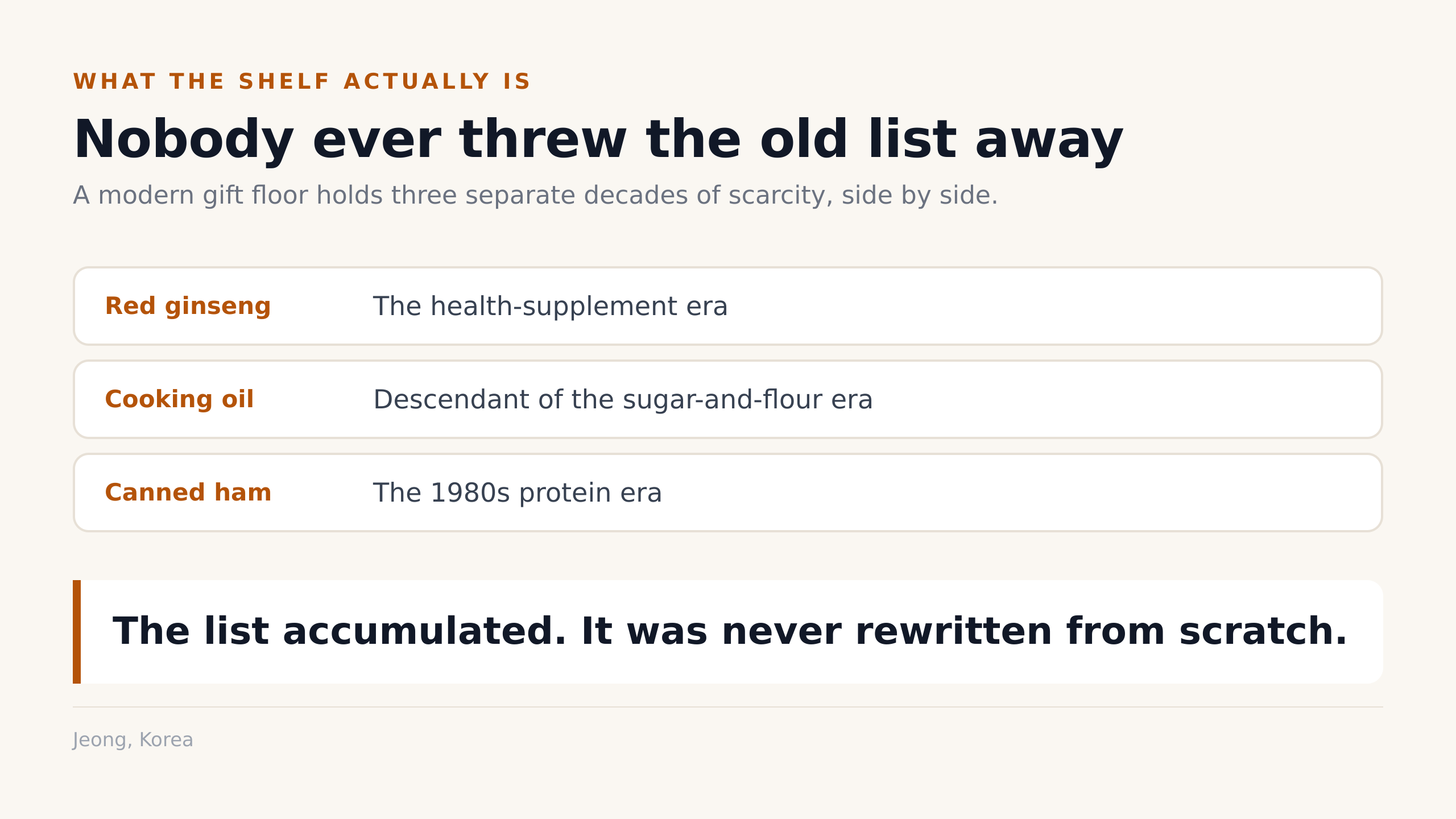
So the box is not about Spam. It is about the fact that nobody threw the old list away. Once a category becomes what you give, it stays what you give, long after the reason has gone.
Which leaves the practical question — if you are the one holding the invitation, what do you bring?
What to actually carry if you are invited
A Chuseok gift is not expected of you. Say that first. A visitor invited to a Korean home during the holiday is a guest, not a participant in the gift economy, and arriving empty-handed will not be held against you.
But if you want to, the received wisdom is measurable. A Korea Chamber of Commerce survey put fruit at 43.8 percent as a preferred holiday gift, health supplements at 32.4, meat at 30.5, and processed foods fourth at 22.2.
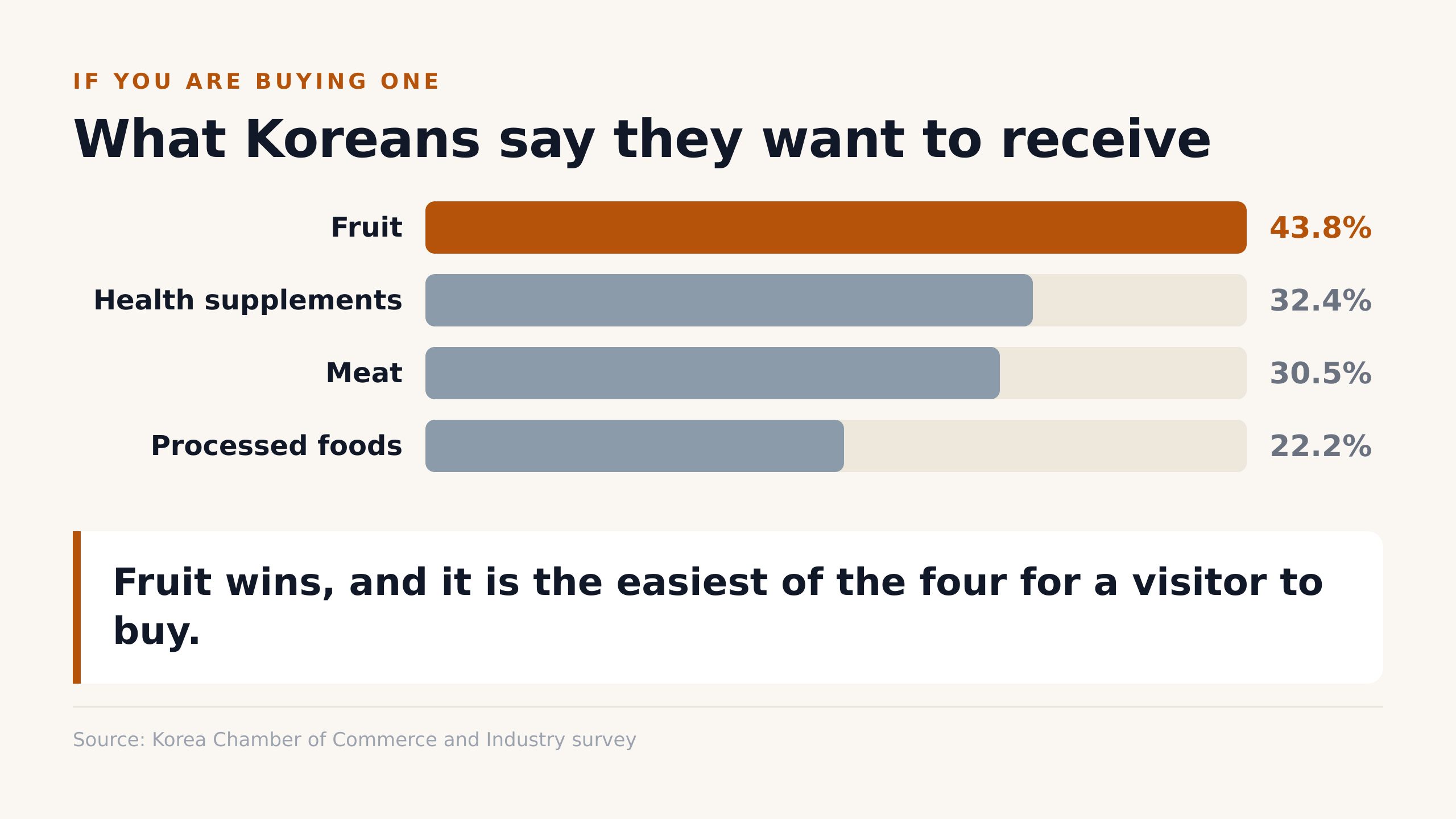
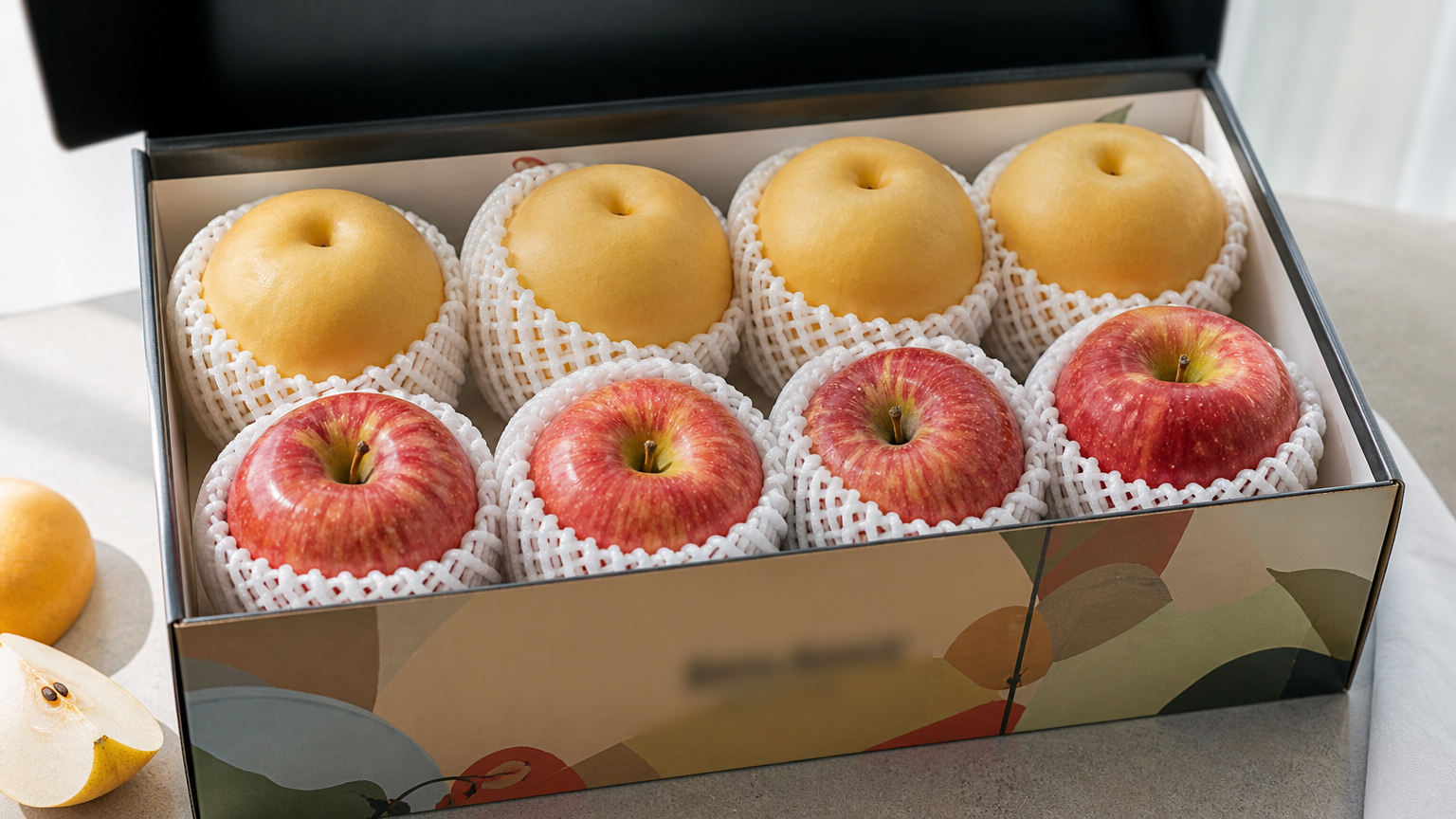
Fruit wins, and it is the easiest thing on that list for a visitor to buy. A boxed set of apples or Korean pears from any large supermarket is unambiguously correct, needs no explanation, and costs whatever you want it to cost.
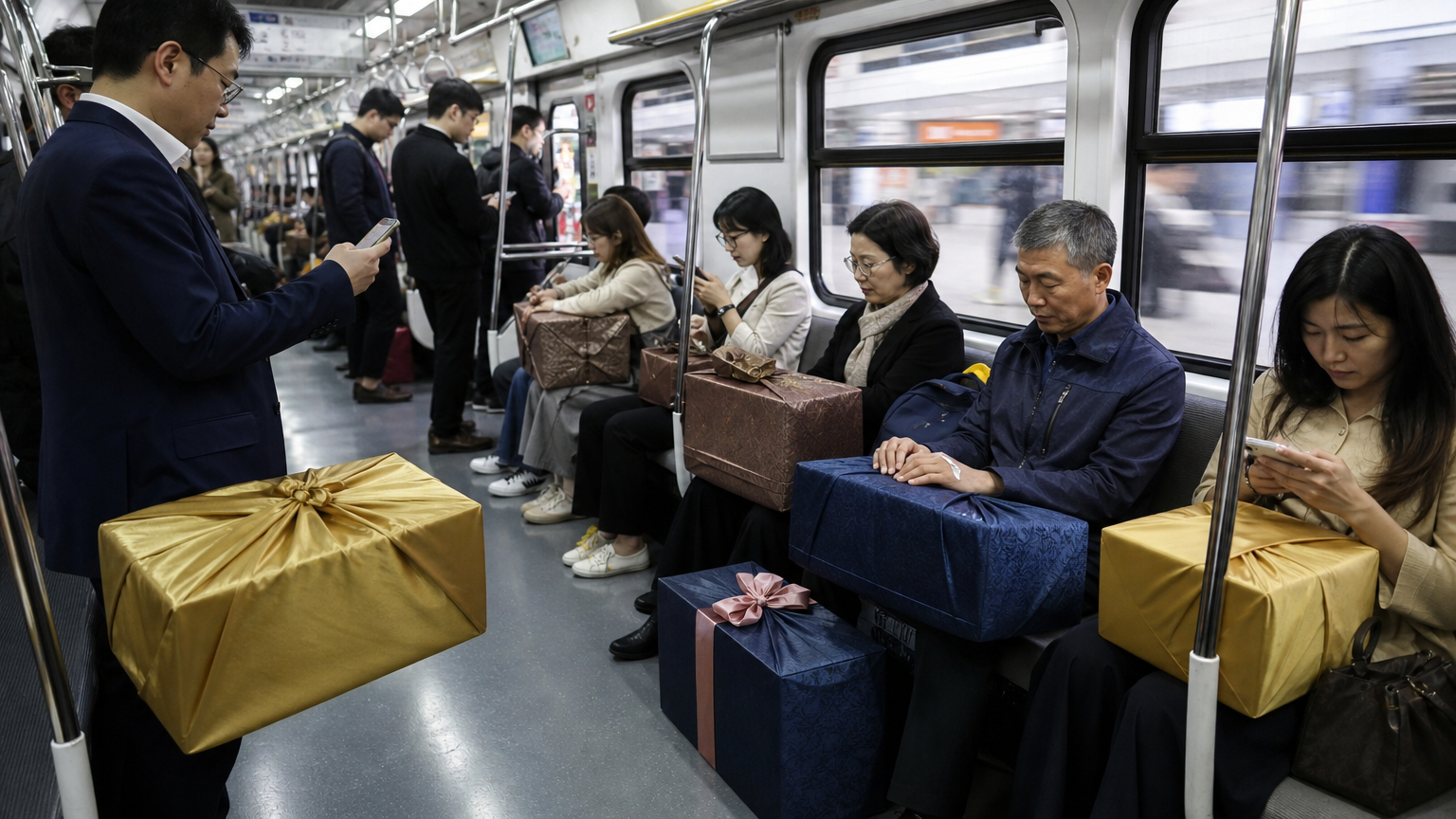
Three things worth knowing before you buy:
Buy it boxed. The packaging is not waste, it is the format. A loose bag of apples reads as groceries; the same apples in the printed box read as a gift.
Do not bring alcohol unless you know the household. It is not offensive, it is just a guess about people you have not met.
Skip the Spam. Not because it is wrong — it is extremely not wrong — but because a set of it is a specific gesture between people with a shared history of the thing, and as a visitor you will be making a reference rather than a gift.
If you are shopping for things to take home rather than to hand over, that is a different list entirely, and I have written it up as what Koreans actually put in their own carts. Cosmetics in particular have their own rules, which I covered in the guide to Olive Young and how the tax refund works.
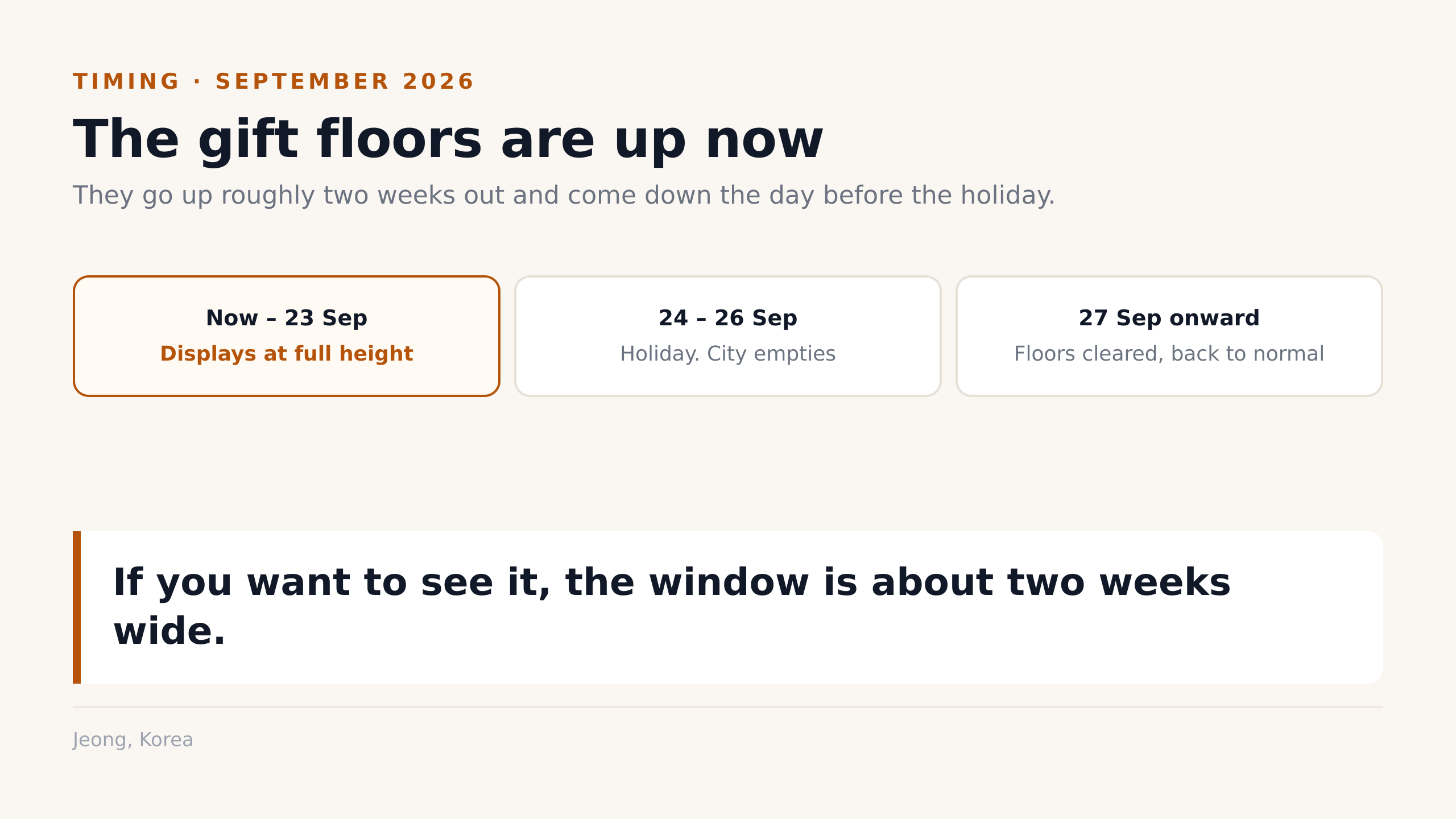
One timing note. The gift floors go up about two weeks out and come down the day before the holiday, and the holiday itself runs 24 to 26 September this year. If you want to see the display at full height, the window is roughly now until the 23rd. After that the city empties — which is its own experience, and one I would recommend, described in what an empty Seoul during Chuseok is like.
FAQ
Why is Spam considered a good gift in Korea?
It entered the Chuseok gift catalogue in the mid-to-late 1980s, when tinned protein was still a genuine luxury, and it never left. Roughly 58 to 60 percent of Korean Spam sales still happen around the two big holidays.
Do I need to bring a gift if I am invited to a Korean home for Chuseok?
No. A foreign guest is not expected to. If you would like to anyway, a boxed set of fruit is the safest choice by a wide margin.
How much should a Chuseok gift cost?
There is no fixed figure and the range on any gift floor is enormous — the same category is sold at several price points on purpose, so that the format works at any budget. Pick the tier you are comfortable with rather than trying to match a number.
When do the gift displays appear?
About two weeks before the holiday. In 2026 that means roughly the second week of September through 23 September.
The velvet-lined Spam is the single most reliable thing on a Korean gift floor to make a visitor laugh, and I understand why. But the joke depends on knowing Spam as cheap, and for most of the time this list has existed, it was not.
What you are looking at is a country's memory of scarcity, still sitting on a shelf, still being handed between families twice a year. Buy the fruit. Look at the Spam properly on the way out.
Sources: Korea JoongAng Daily, reporting on holiday gift hampers · Korea Chamber of Commerce and Industry survey on preferred holiday gifts