Gamcheon Culture Village, Busan: I Grew Up Here, and My House Is a Café Now

The Little Prince statue arrived in 2012. I moved out in 2013. Before that, this was just my neighbourhood.
The statue is the piece everyone queues to sit beside now, and it went up about ten months before I left. I lived on that hillside from the second grade of elementary school until the day I graduated high school — 2002 to 2013, eleven years of walking those stairs twice a day. Guides call it Korea's Santorini, or Busan's Machu Picchu. To me the coloured houses were addresses. One of them was where we bought meat. Another was the supermarket my family used.
Both are shops for visitors now.
This is not a warning to stay away. Gamcheon Culture Village is worth the trip, and I will tell you exactly how to get there. But almost everything written about it in English describes a photo spot, and a photo spot is not what it is.
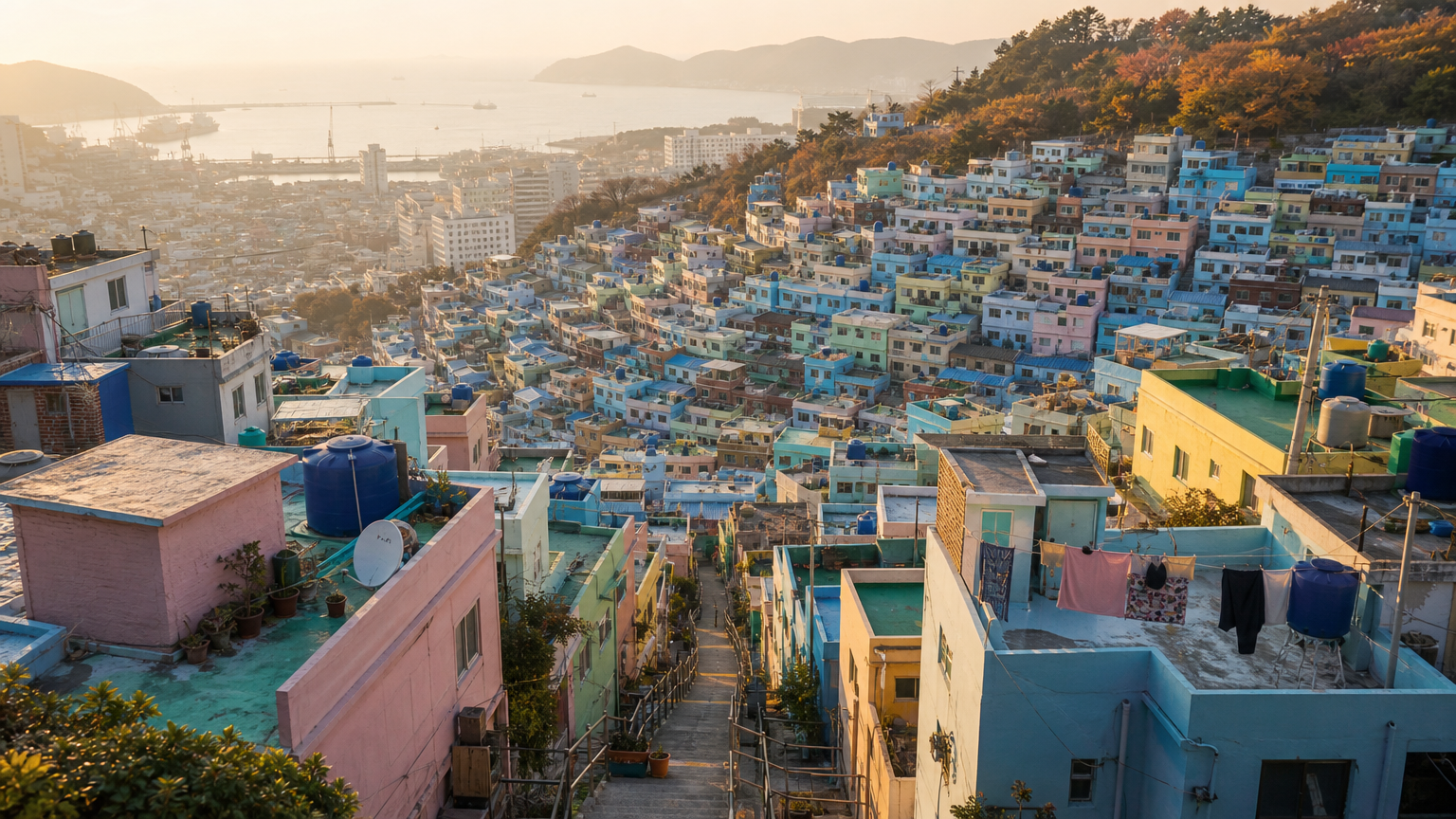
The village was not built to be looked at
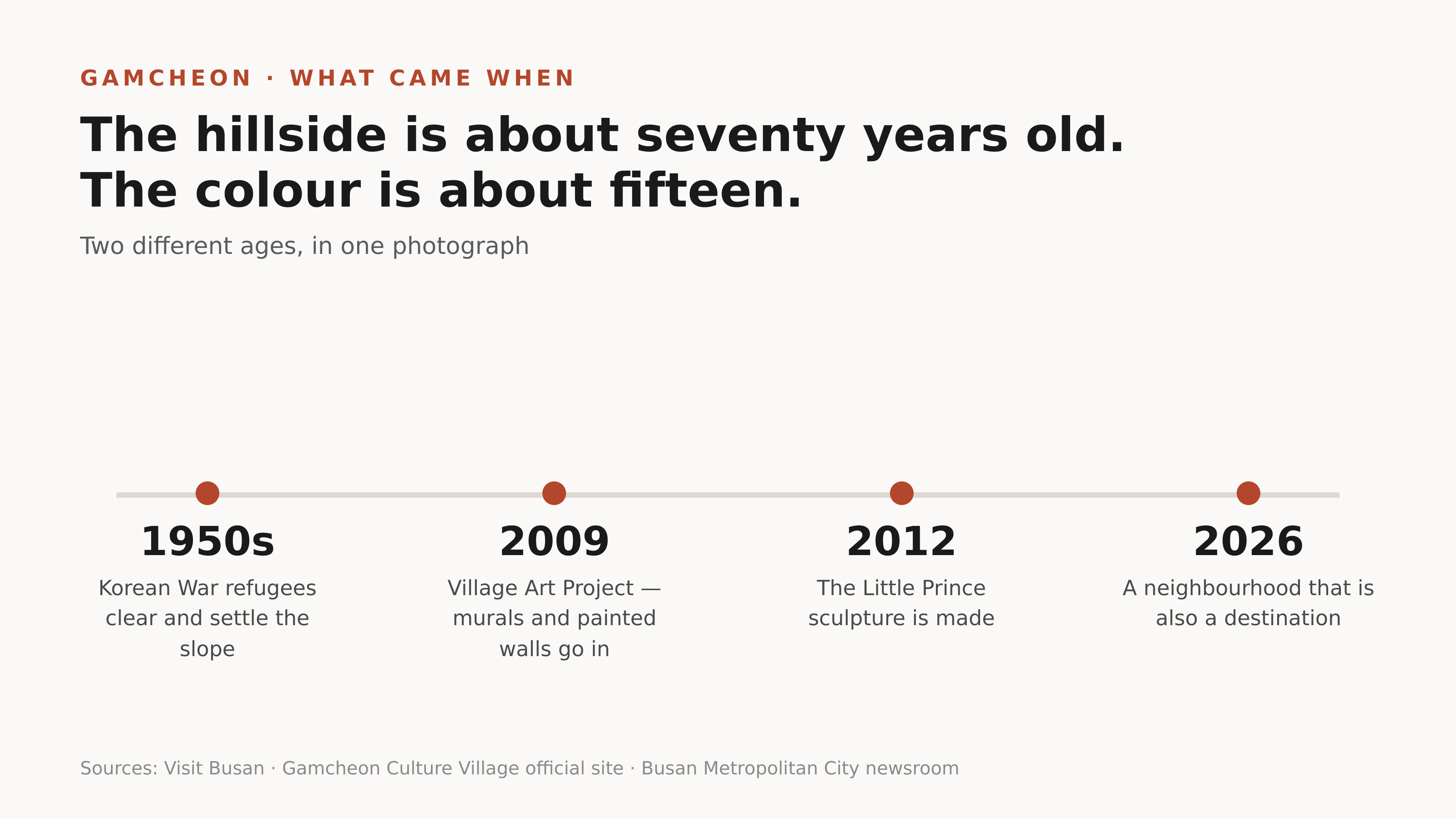
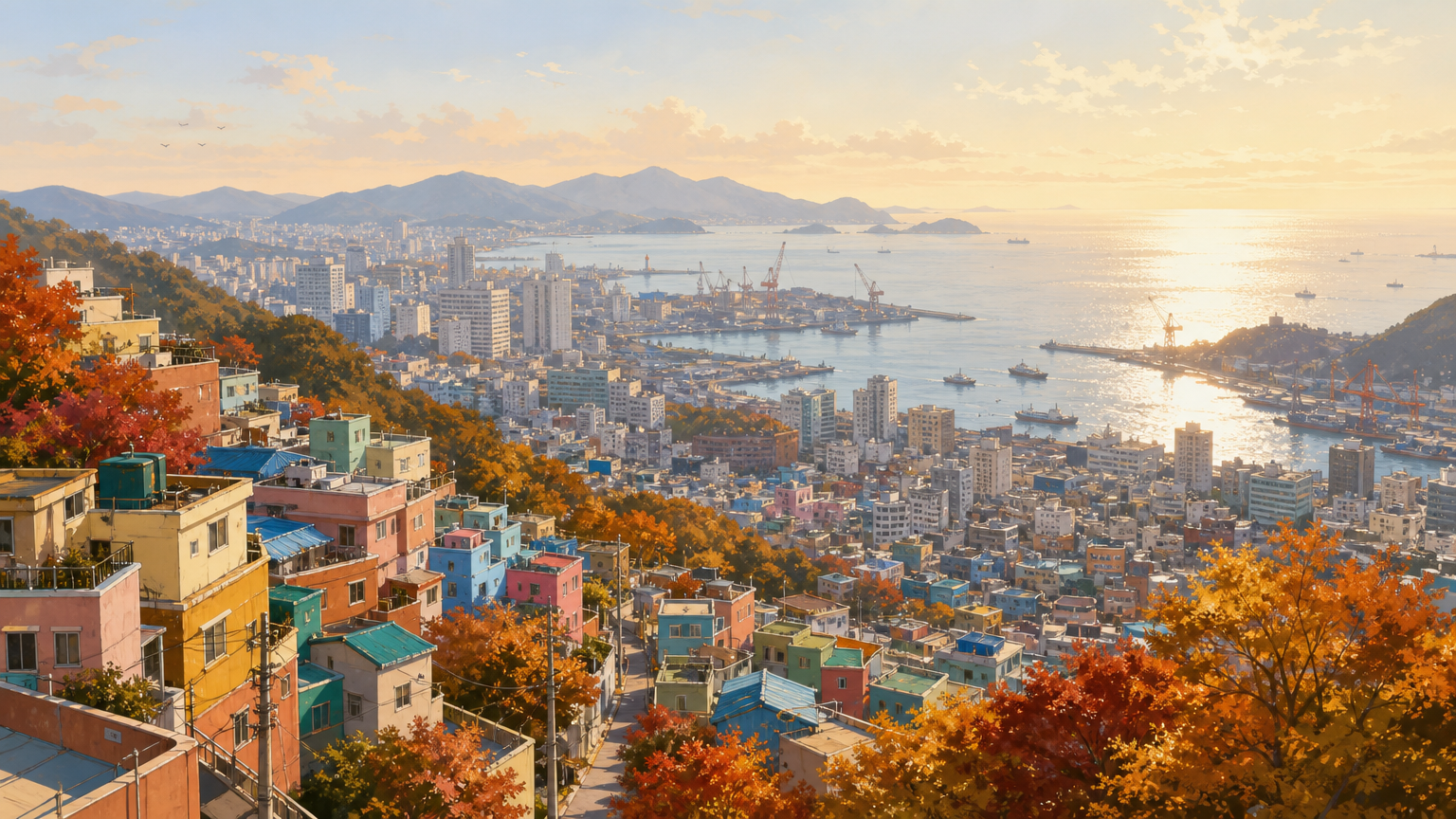
The hillside was housing long before it was scenery.
Busan's official tourism page puts the origin plainly: the village began when refugees during the Korean War cleared and settled the steep slope. People built where they could, which is why the houses step down the hill in rows instead of sitting on flat ground. Nothing about that layout was designed for a view. It was designed so the house behind you still got light.
The colour came half a century later. In 2009 the village was selected for the Ministry of Culture, Sports and Tourism's Village Art Project, and that is when the murals, the painted walls and the sculptures went in. The Little Prince and the desert fox — the piece with the queue — was made in 2012 under a separate public art programme.
So the version of Gamcheon Culture Village that appears on your feed is about fifteen years old. The village underneath it is about seventy. If you want to understand why a city fills a hillside with houses in the first place, the same war explains what people from Busan actually eat — the food and the housing arrived together.
So what changed once the cameras came?
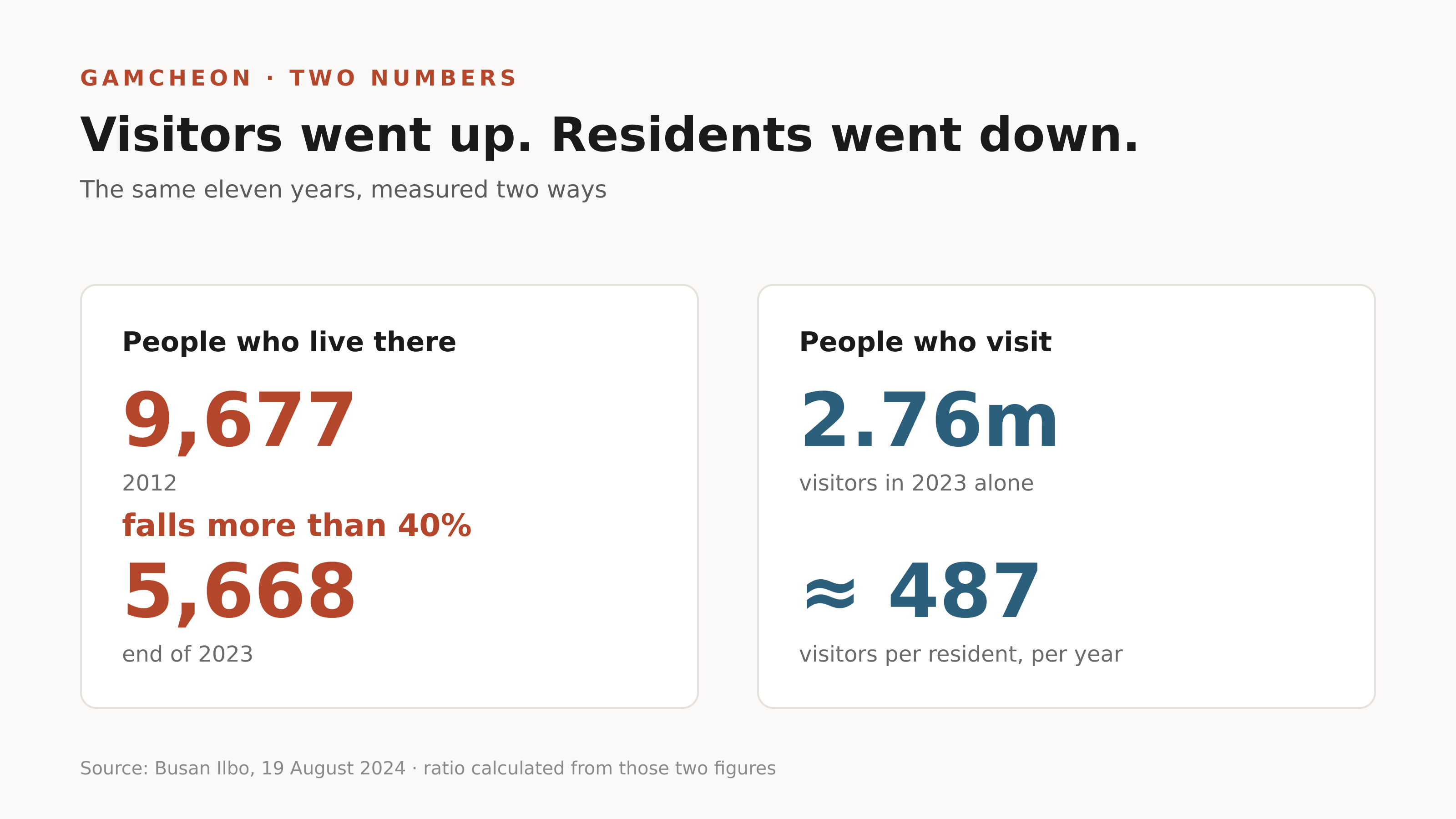
Two numbers that moved in opposite directions
Visitors went up. Residents went down.
That happens because a house that becomes a café stops being a house. The building is still standing, the paint is brighter than it ever was when I lived there, and one fewer family sleeps on the hill.
The figures are not small. Busan Ilbo reported that the village had 9,677 residents in 2012 and 5,668 at the end of 2023 — a fall of more than 40 per cent in eleven years. Over roughly the same stretch the visitor count went the other way: 2.76 million people came in 2023 alone.
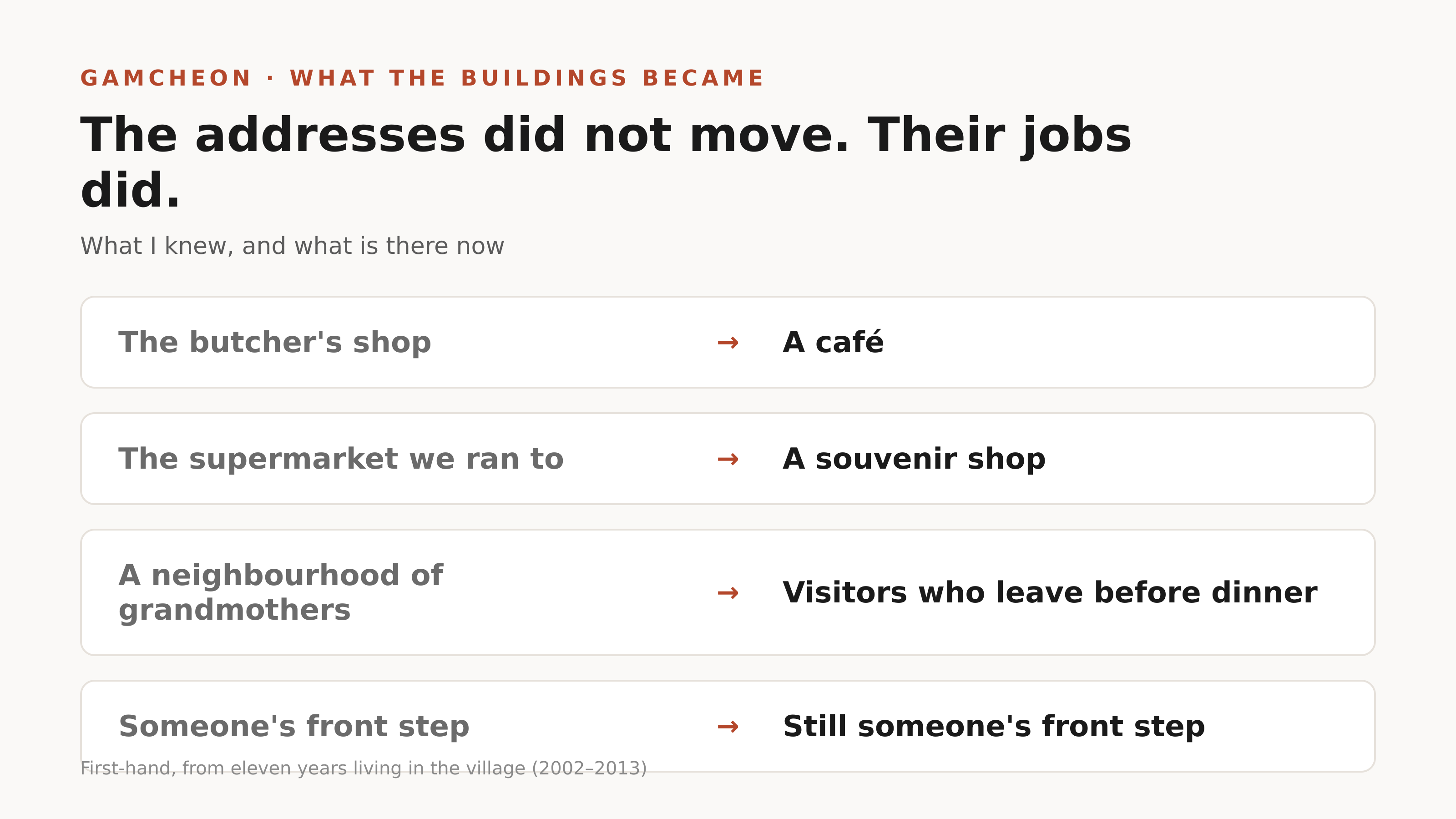
I can give you the small version of those numbers. The butcher's shop is a café. The supermarket we ran to for anything we had forgotten is a souvenir shop. It used to be a neighbourhood of grandmothers, quiet in the afternoons, and now it is busy with people who will leave before dinner. My aunt lived right beside the spot where the Little Prince statue went up, and she found it hard. Nothing dramatic. Just a queue outside your window that did not used to be there.
People ask me where to eat up there and I struggle, because the places I would have named are gone. If you come across a Goraesa fish cake counter, buy one — that is the fish cake I grew up on in Busan and it is still the best. I cannot promise it is still where I remember it.
None of that means you should skip it. It changes how you walk, not whether you go.
How to get there, and the one thing the city asks of you
Go. Just go the way you would visit a neighbourhood rather than an attraction.
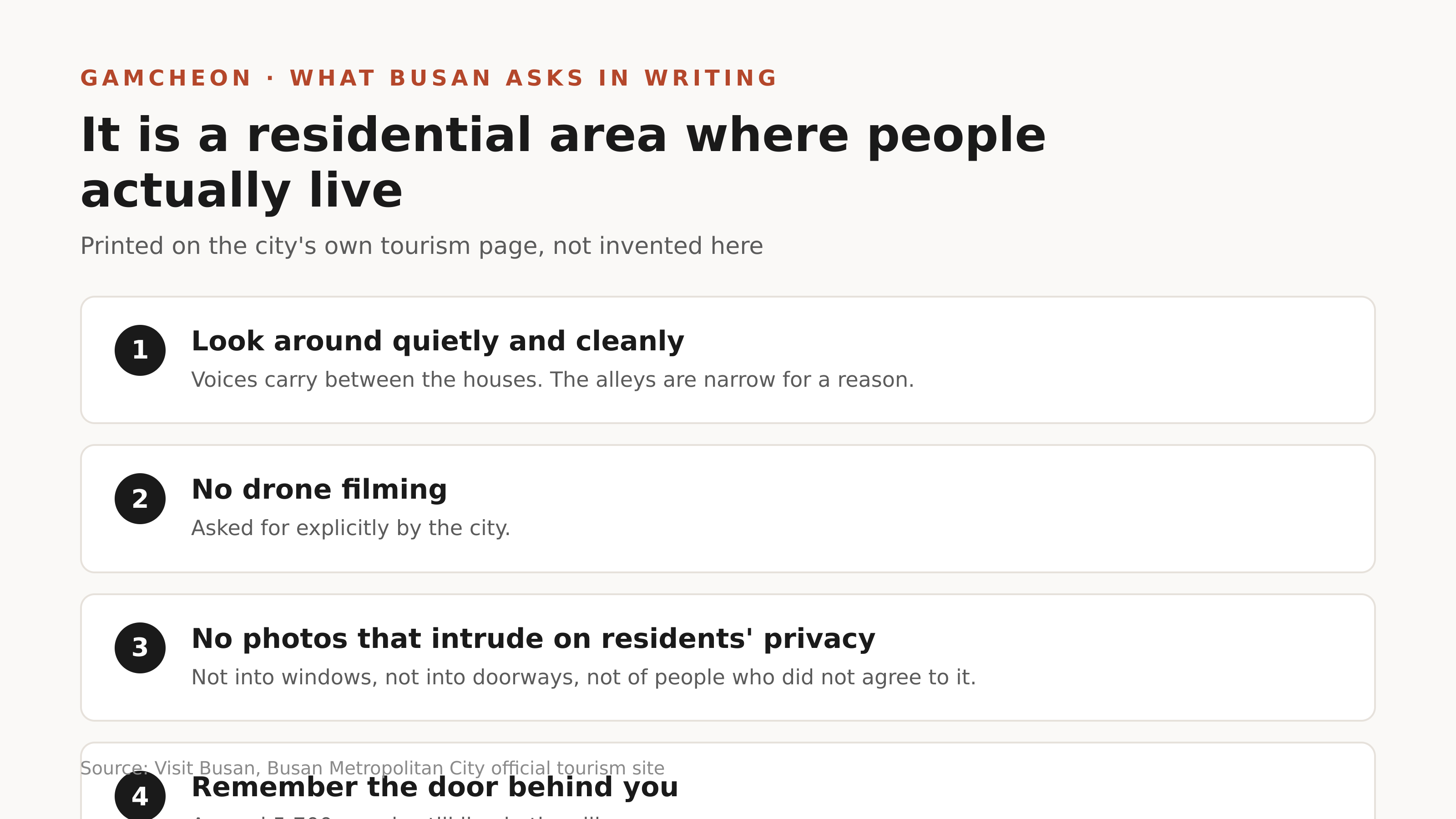
The reason is not sentiment on my part. It is printed on the city's own tourism page, which asks visitors to remember that this is a residential area where people actually live, to look around quietly and cleanly, to refrain from drone filming, and not to photograph or film anything that intrudes on residents' privacy.
The practical part is simple.
| Item | Detail |
|---|---|
| Admission | Free (parking charged separately) |
| Hours | 09:00–18:00 March to October, 09:00–17:00 November to February, open year-round |
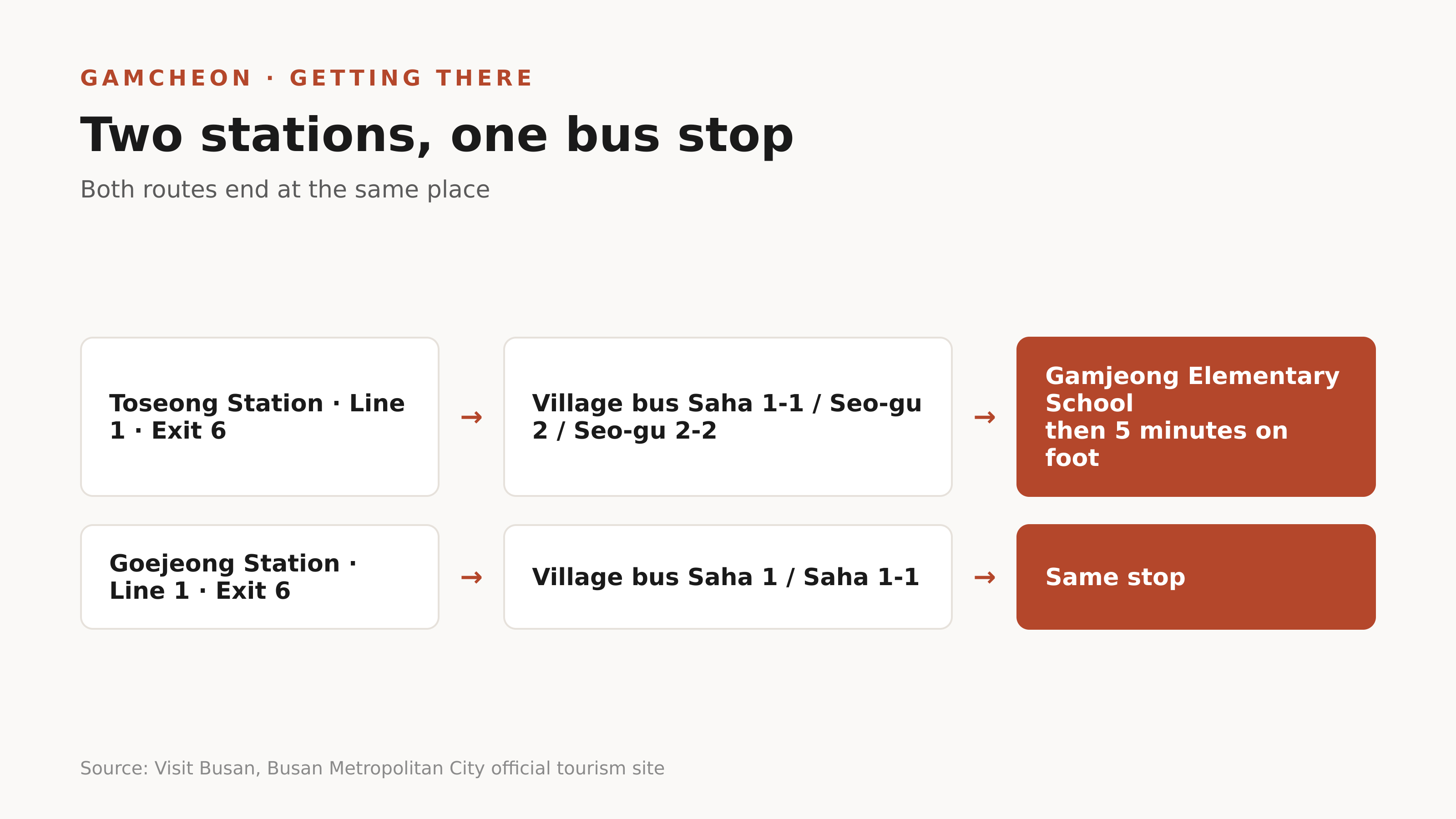
| From Toseong Station, Line 1 | Exit 6, then village bus Saha 1-1, Seo-gu 2 or Seo-gu 2-2, off at Gamjeong Elementary School, 5 minutes on foot |
| From Goejeong Station, Line 1 | Exit 6, then village bus Saha 1 or Saha 1-1, same stop |
| Village map | Around 2,000 won at the information centre |
Two things the guides skip. First, the fares and transfers work exactly like the rest of the city, so if you have already read how the Busan subway has only two fares, you know what to tap and when. If you are heading there straight from the airport, that first leg is its own decision, and the light rail from Gimhae Airport does not go downtown.
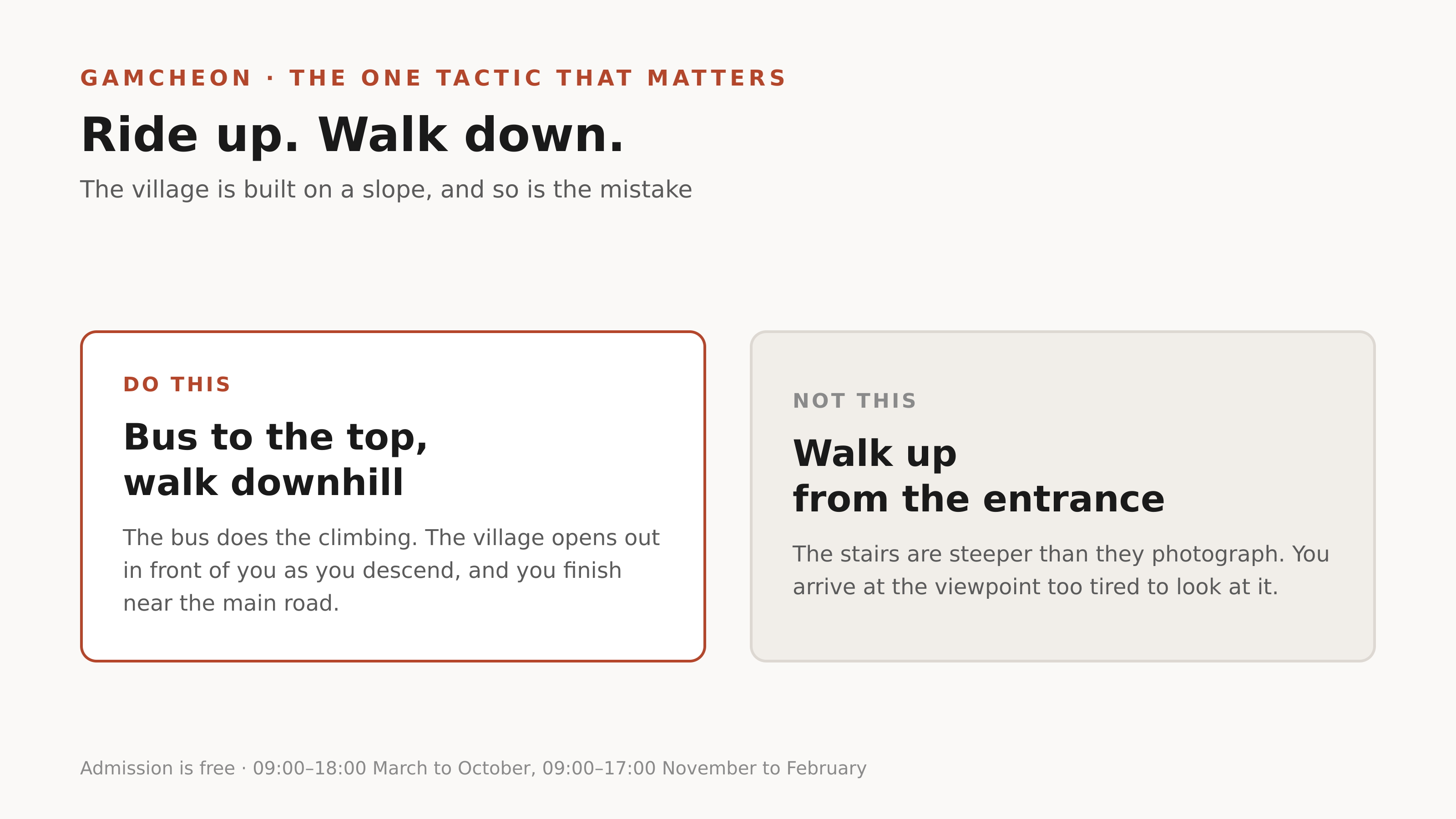
Second, ride up and walk down. The bus climbs the hill for you and the village unfolds downhill on foot. Doing it the other way round is the most common mistake I watch people make, and the stairs are steeper than they photograph.
What is actually worth your time up there
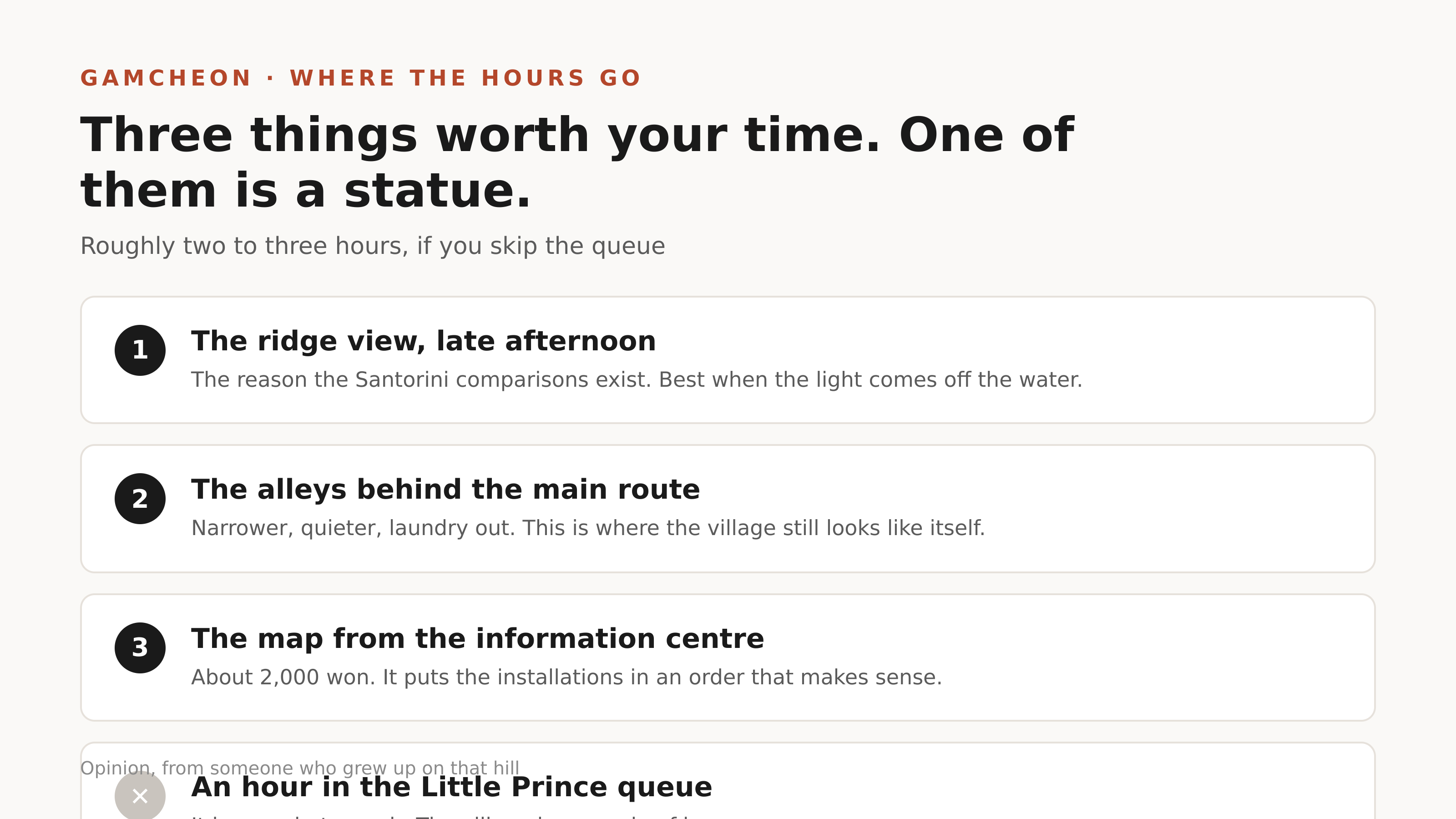
Three things, and only one of them is a statue.
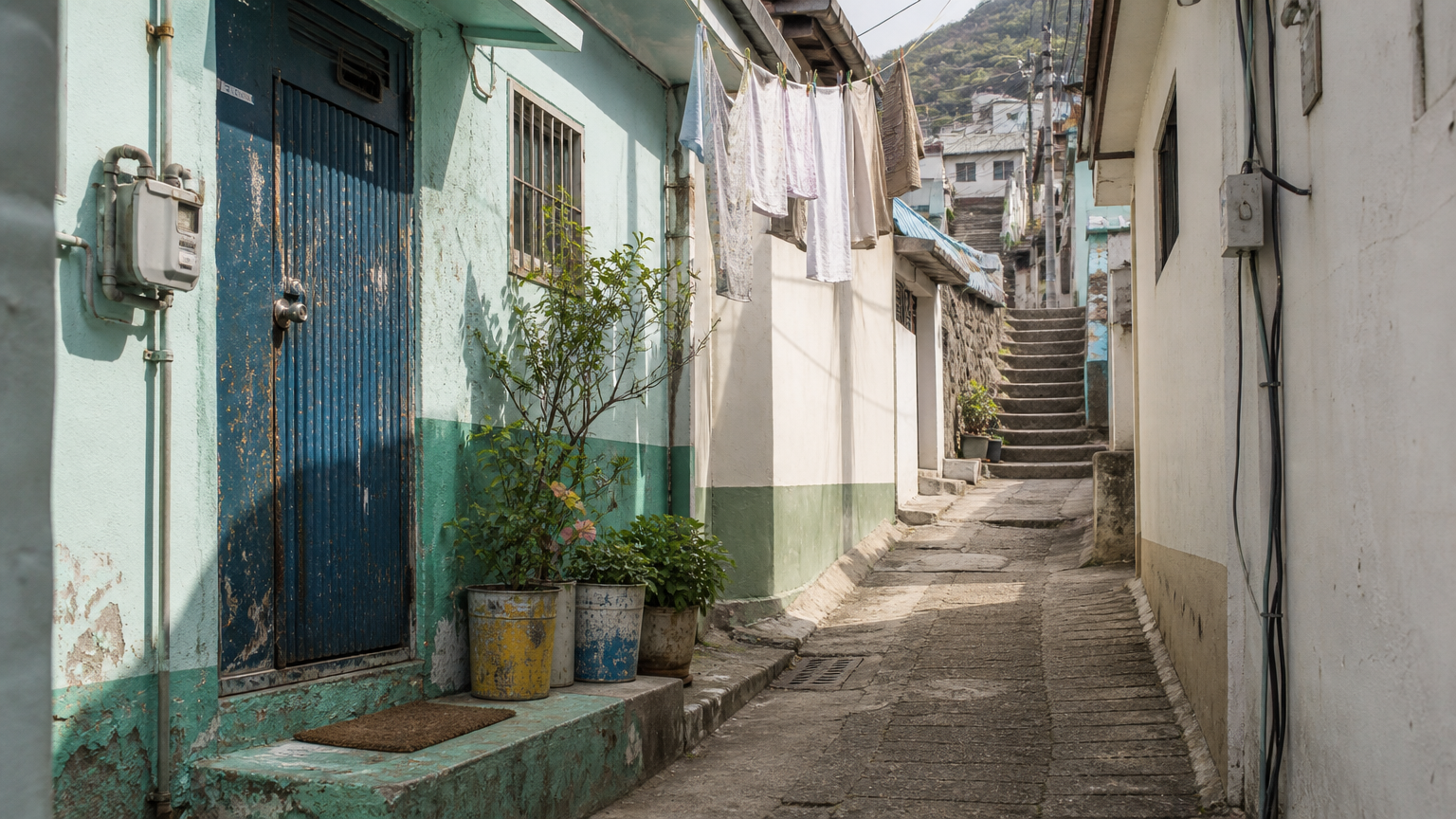
The view from the top ridge is the reason the Santorini comparisons exist, and it is genuinely good in the late afternoon when the light comes off the water. The alleys behind the main route are where the village still looks like itself: narrower, quieter, laundry out, doors that are obviously doors to homes. And the map from the information centre walks you through the installations in an order that makes sense, instead of leaving you to follow whoever is in front of you.
What I would not spend an hour on is the queue. The Little Prince viewpoint is one photograph. The village is a couple of hours.
FAQ
Is Gamcheon Culture Village free to enter?
Yes. There is no admission fee. You pay only for parking, for the village map at the information centre if you want one, and for whatever you buy inside.
How long should I spend there?
Two to three hours covers the main route, the ridge view and a coffee stop. Add the back alleys and it becomes half a day.
Is it a real village or a tourist attraction?
Both, and that is the whole point. Around 5,700 people still live there. The cafés and shops are real businesses, and the houses between them are real houses.
What should I not do there?
Do not fly a drone, do not photograph residents or into their homes, and keep your voice down in the alleys. Busan asks for all three in writing.
Walk it like an address
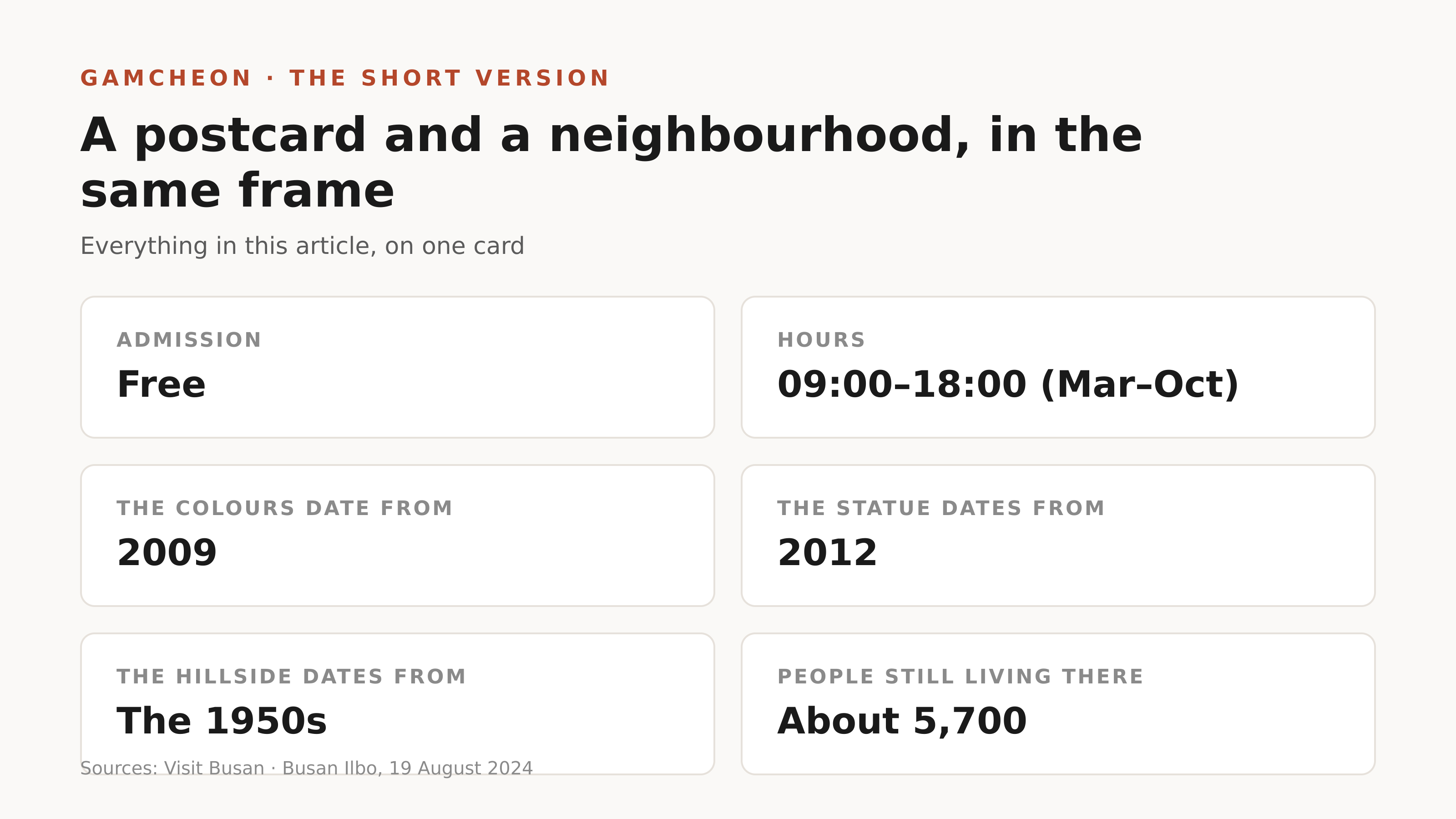
Gamcheon Culture Village is one of the few places in Korea where the postcard and the neighbourhood are the same object. The colours are from 2009, the statue is from 2012, and the hillside is from the 1950s. Around 5,700 people are still on it.
You can walk the same stairs I walked to school for eleven years. Take the photograph. Just remember that the door behind you is somebody's front door.
References
-
Visit Busan, Busan Metropolitan City official tourism site — visitor information, opening hours and the etiquette notice quoted above
-
Busan Metropolitan City newsroom — interview with resident artist Na In-ju, on the Little Prince sculpture made in 2012
-
Official village site — 2009 Village Art Project
-
Busan Ilbo, 19 August 2024 — resident and visitor figures