Busan Subway: There Are Only Two Fares, and the Day Pass Has a Catch

Seoul charges you for the distance you travel. Busan charges you one of two prices, and the line between them is drawn at ten kilometres.
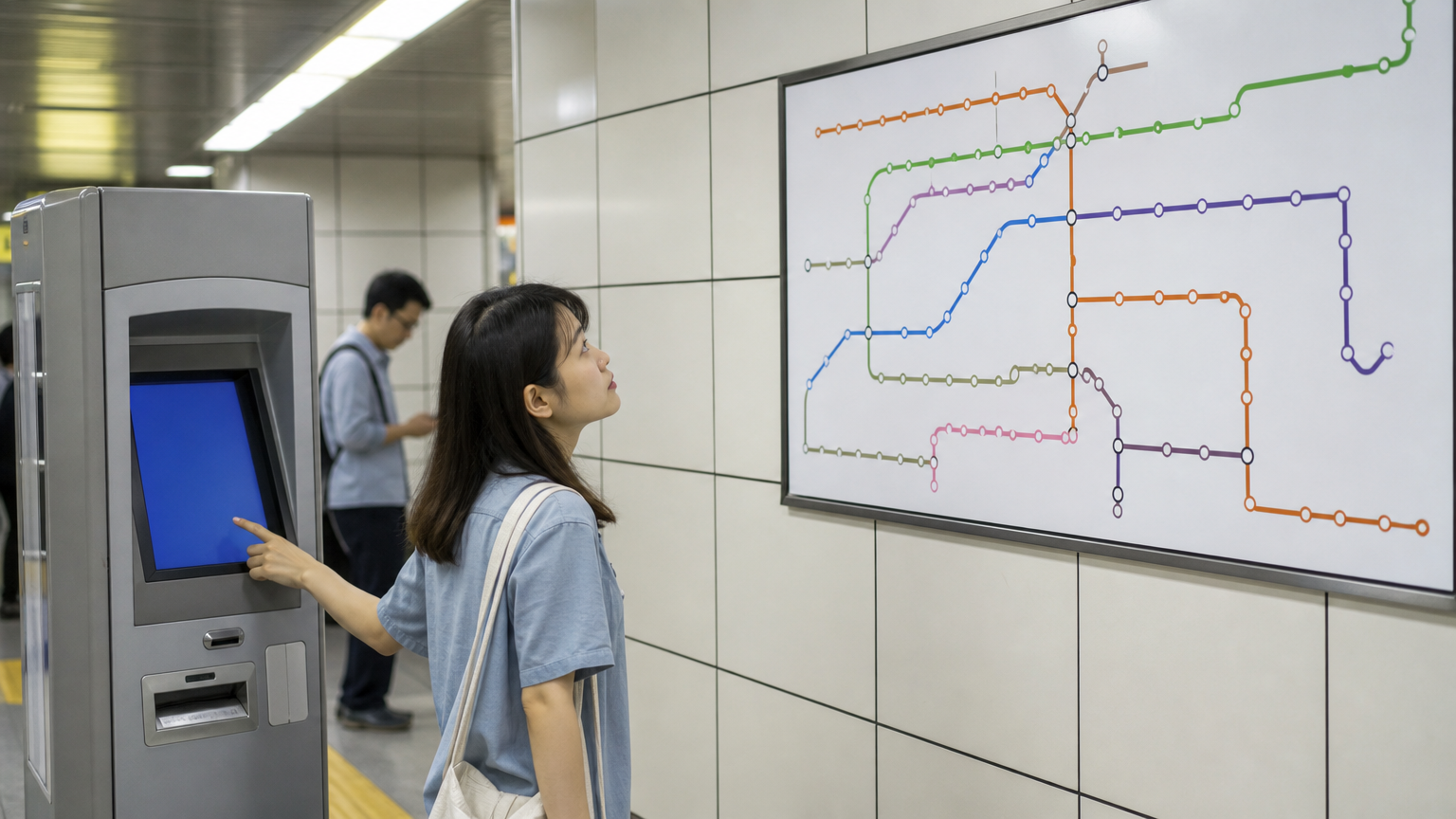
That is the entire fare system, and it is the only thing about riding the Busan subway that will surprise someone who learned to ride in Seoul. The trains work the same way. The signs are bilingual in the same way. Your card taps the same way. What changes is the arithmetic, and it changes in a direction that is sometimes generous and occasionally irritating.
If you have never tapped through a Korean gate at all, start with the card that opens them — the same one works in both cities: T-Money Card in Korea
Two zones, one boundary, no gradient
Busan Transportation Corporation splits every journey on Lines 1 to 4 into two bands measured from the station where you got on.
Zone 1 — up to 10 km. 1,600 won with a transport card, 1,700 won for a single-journey ticket.
Zone 2 — beyond 10 km. 1,800 won with a card, 1,900 won for a ticket.
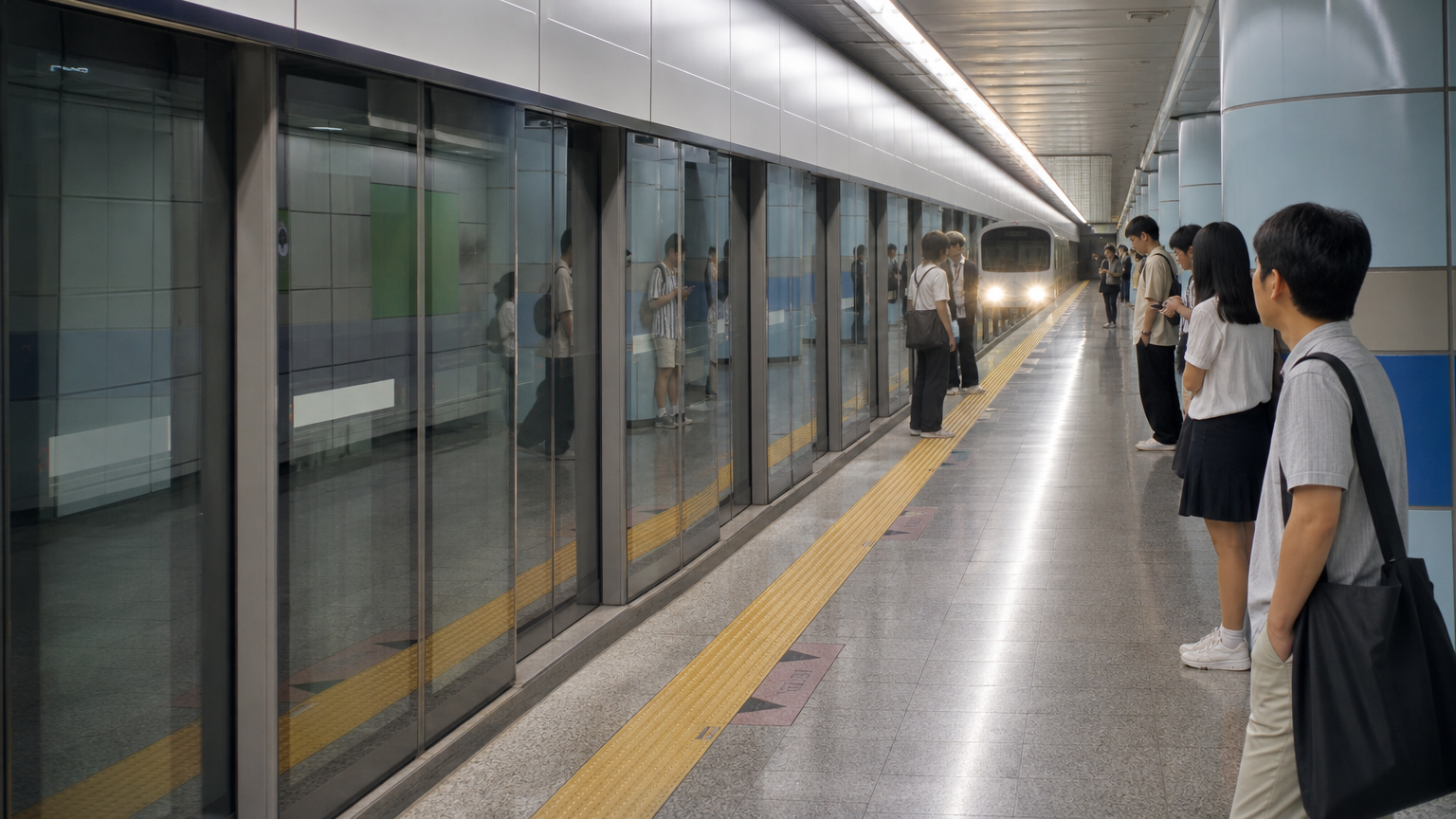
There is no sliding scale inside a zone. Two stops and nine stops cost the same. This is why the system feels cheap in the city centre and why nobody in Busan thinks twice about riding four stops to a restaurant.
It also means the boundary is a real edge rather than a gentle slope. Cross it by one station and 200 won appears. Nothing warns you; the gate simply takes a different amount.
It used to be worse. There was a third zone for journeys over twenty kilometres until 1994, when it was abolished and folded into Zone 2. What is left is the simplest fare structure of any major Korean subway.
So does the day pass save you money, or is it a tourist trap?
The day pass is real, and it is narrower than it looks
Busan sells passes through its mobile app: a one-day pass at 6,000 won, a three-day pass at 13,000 won, and a one-month pass at 45,000 won covering 45 rides.
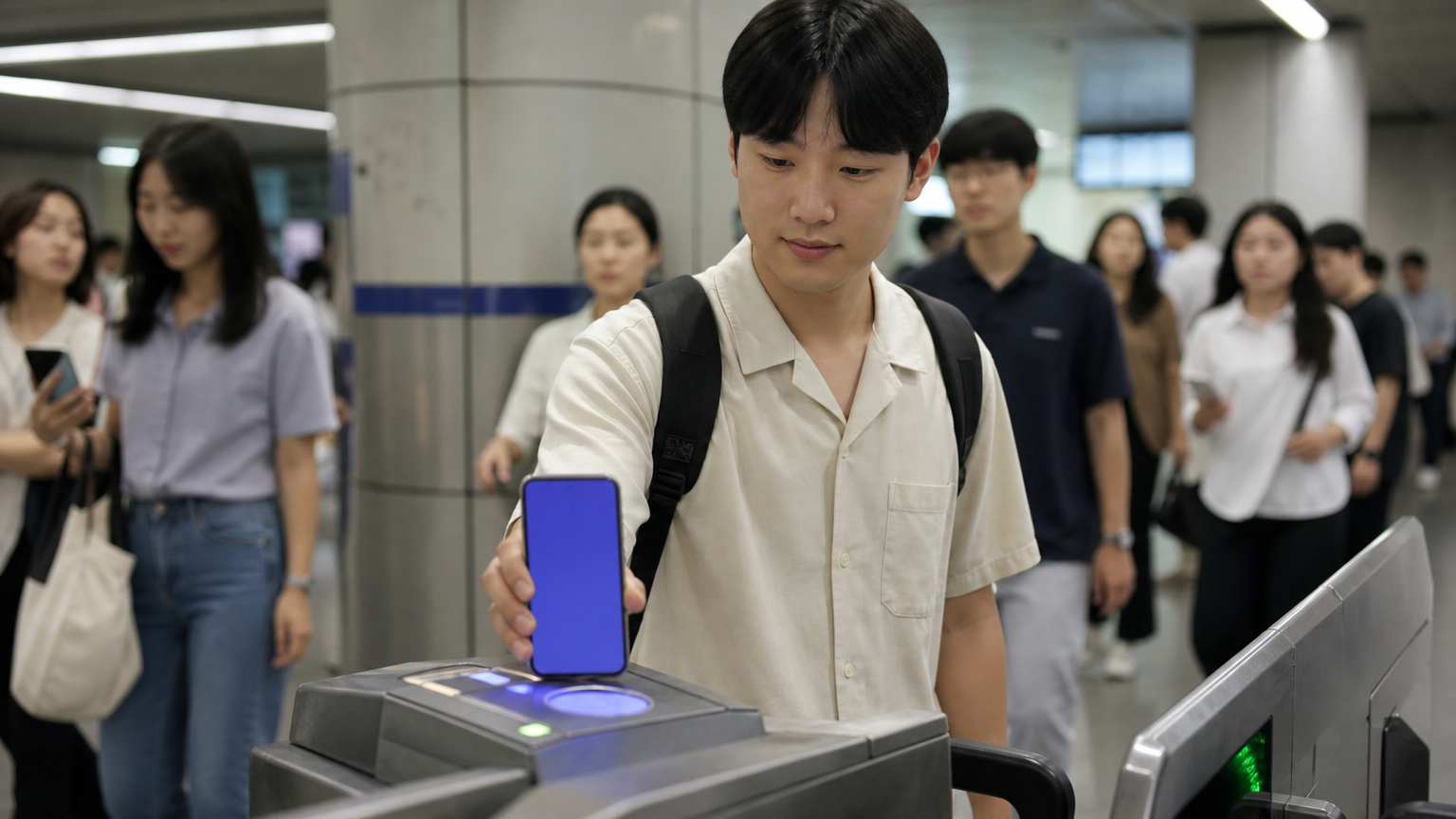
The one-day maths is quick. Four Zone 1 rides cost 6,400 won. The pass is 6,000. So the pass wins from your fourth ride onward, and on a day when you are hopping between neighbourhoods it wins comfortably.
The three-day pass wins sooner. Three rides a day across three days is 14,400 won against 13,000.
Now the catch, and it is a genuine one.
The passes cover Lines 1 to 4. That is all they cover. Not the Donghae Line. Not the Busan–Gimhae Light Rail. Not city buses.
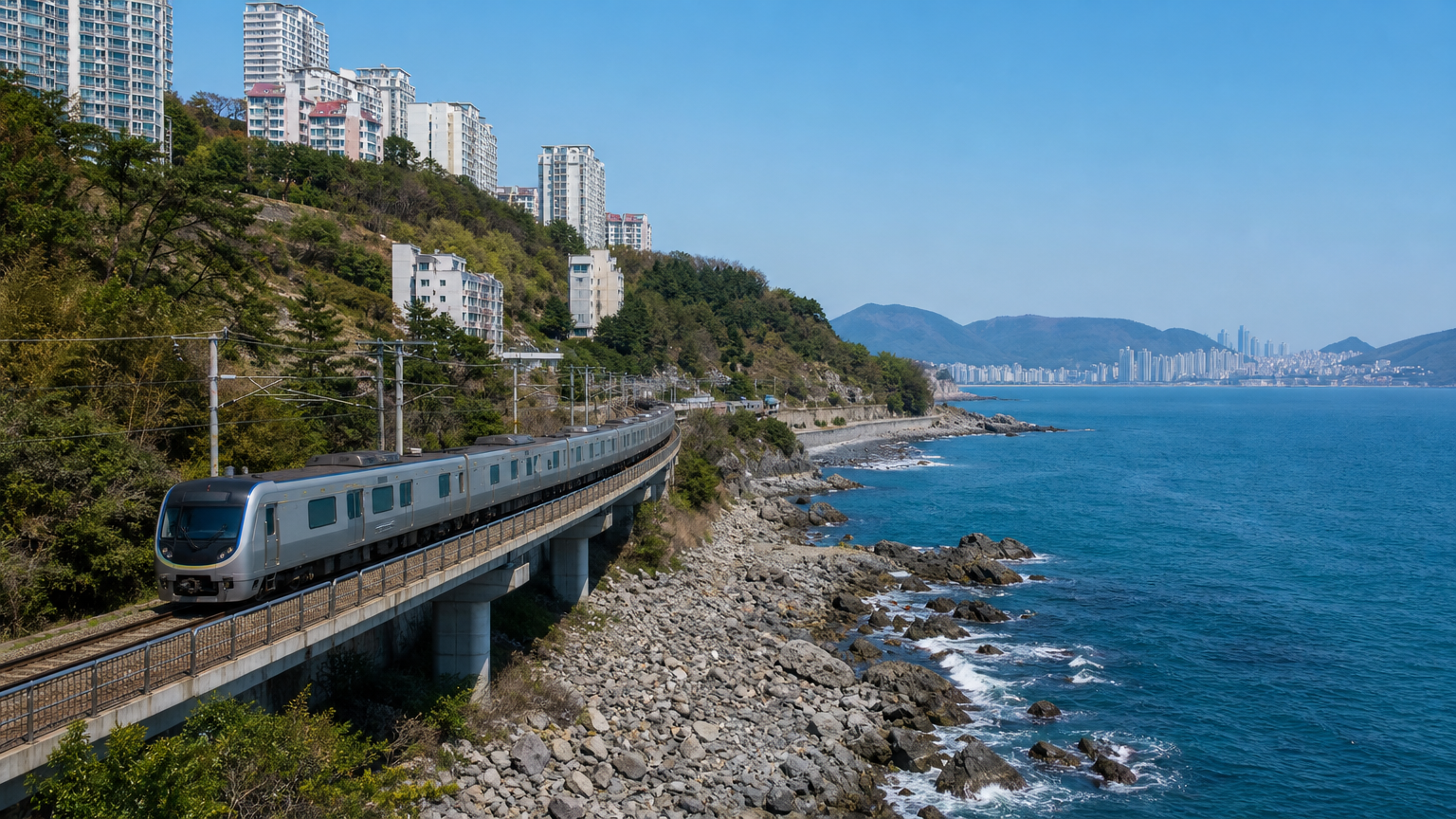
Those two exclusions are exactly the two lines a visitor is most likely to want. The light rail is how you reach Gimhae Airport. The Donghae Line runs up the eastern coast toward Songjeong and Gijang. Buy a three-day pass on the assumption that it covers your airport run and it will not.
This is not a trick. It is a different operator, which in Korea generally means a different product. But it is the one piece of Busan fare knowledge that costs money to learn by experience.
What carries over from Seoul, and what you can stop worrying about
Most of it carries over. Your transport card works. Transfers between subway lines work the way they do in Seoul — tap out, tap in, no penalty inside the window. Station numbering, colour coding and platform signage follow the same national conventions, so the reading skills transfer intact: Seoul Subway Map: How to Actually Read It
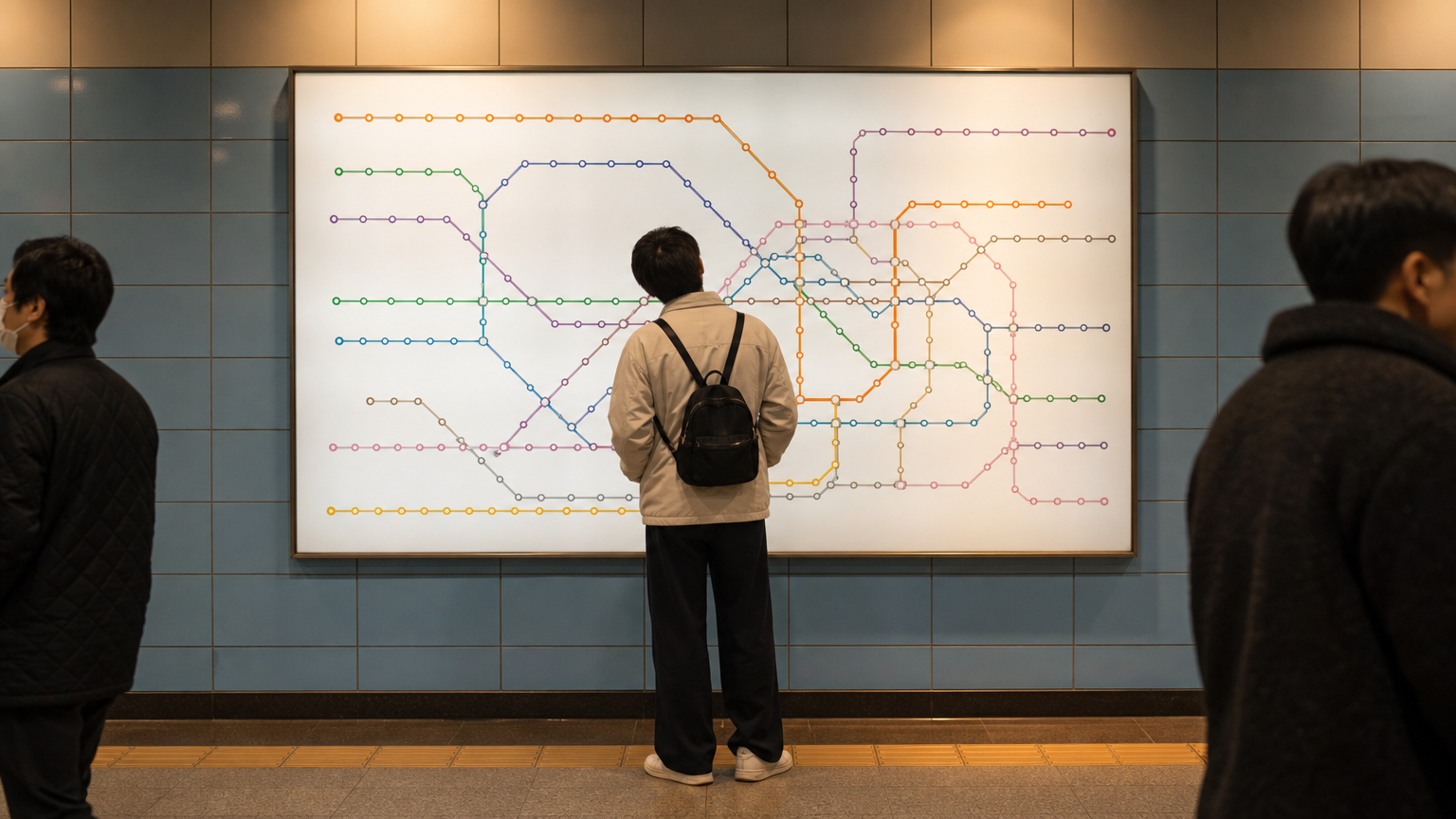
The practical consequence is that you do not need to prepare for Busan as a separate system. You need to know one number — ten kilometres — and one restriction, which is what the pass does not cover.
And because the fare is flat inside a zone, the honest advice is to stop optimising. Pick the station nearest to where you actually want to be rather than the one that shaves a stop off the journey. It costs the same.
Where it takes you is a separate question, and the food answers most of it: Busan Food: What People From Busan Actually Eat
FAQ
Does my Seoul transport card work in Busan?
Yes. A standard Korean transport card works on the Busan subway and on city buses. What does not carry over is any Seoul pass or season ticket — those are Seoul products.
Is the Busan day pass worth it?
From your fourth ride in a day, yes. Below that you are paying for convenience rather than saving money. And it only covers Lines 1 to 4, so if your day includes the airport light rail or the Donghae Line, count those separately.
How do I know whether I am in Zone 1 or Zone 2?
The ticket machine tells you when you enter your destination, and a Korean map app will show the fare before you set off. Ten kilometres from your starting station is the boundary, but it is measured along the line rather than across the map.
Are fares the same for buses?
No. Buses have their own fares, and the subway pass does not include them. Transfer discounts between subway and bus exist for card users, which is another reason to tap a card rather than buy tickets.
The short version
Busan does not charge by distance. It charges 1,600 won with a card for anything within ten kilometres of where you boarded and 1,800 won beyond it, with single-journey tickets 100 won dearer in each band. The day pass at 6,000 won pays for itself on your fourth ride and the three-day pass at 13,000 won pays for itself faster, but both cover Lines 1 to 4 only — not the Donghae Line, not the airport light rail, not buses. Everything else you learned riding in Seoul still applies.
Ride Line 2 far enough east and the map runs out of city and starts offering you sand. Which of those beaches is actually open depends on the date, and in September the answer narrows to exactly one.
References
-
Busan Transportation Corporation — Urban Railway Fares: Zone 1 up to 10 km (1,600 won card / 1,700 won single ticket), Zone 2 beyond 10 km (1,800 won card / 1,900 won single ticket)
-
Busan Transportation Corporation — mobile passes: one-day 6,000 won, three-day 13,000 won, one-month 45,000 won for 45 rides; valid on Lines 1–4 only, excluding the Donghae Line, the Busan–Gimhae Light Rail and city buses
-
Busan Metro third fare zone (journeys over 20 km) abolished in 1994 and absorbed into Zone 2