Gimhae Airport to Busan: The Light Rail Does Not Go Downtown, and the Bus Is Not Second Best

There is a train at Gimhae Airport. It will not take you to Busan.
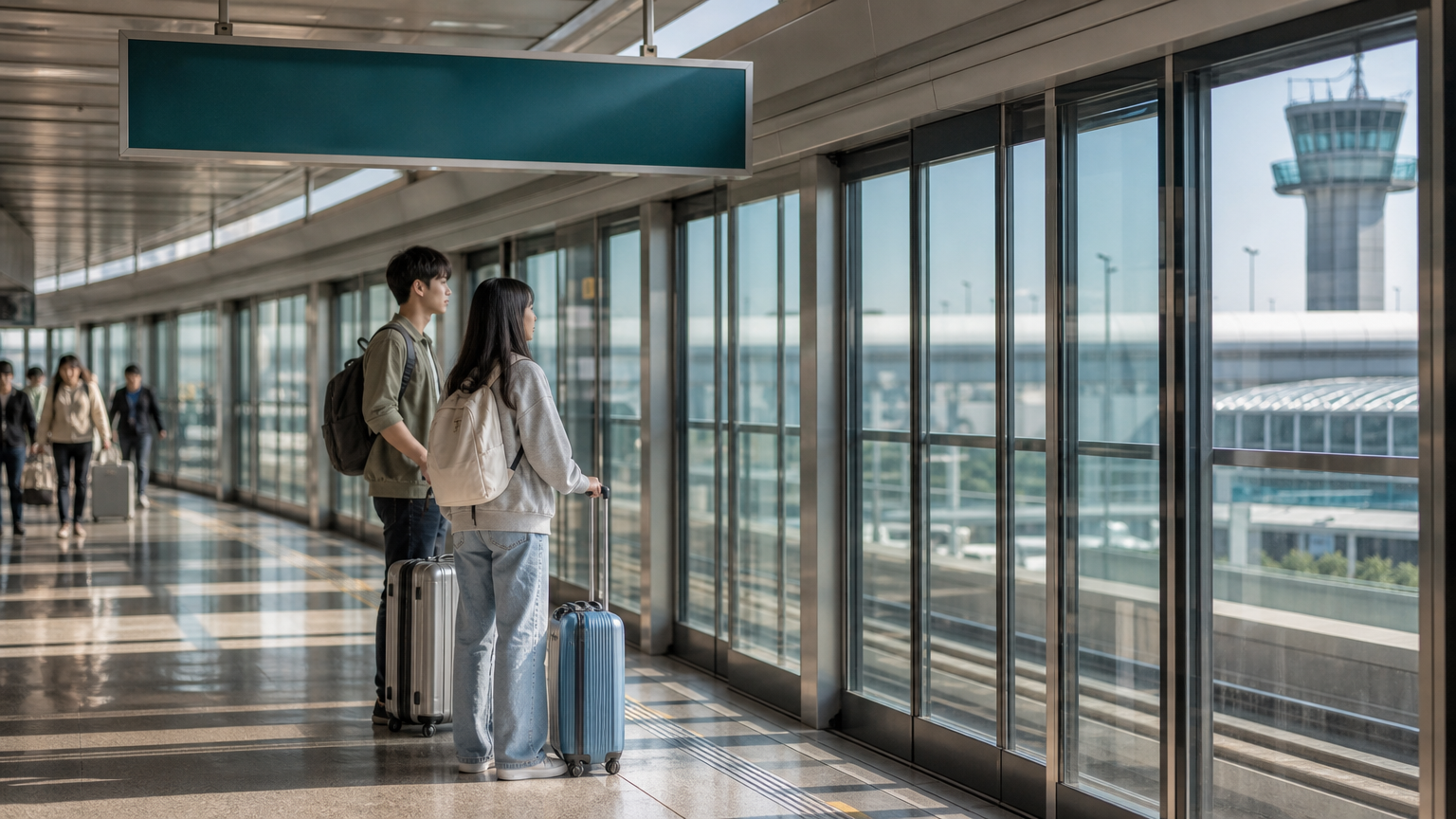
That sentence needs a qualifier, so here it is: the Busan–Gimhae Light Rail runs through the airport, and one end of it does reach Busan. It reaches Sasang, on the western edge, where you get off and change to the subway. What it does not do is what the Airport Railroad does in Seoul or what you might expect from the words "airport" and "light rail" sitting next to each other on a sign. There is no one-seat ride from this airport into the middle of Busan.
Getting from Gimhae Airport to Busan is straightforward. It just is not the arrangement you have been trained to expect.
The light rail is a commuter line that happens to pass an airport
The Busan–Gimhae Light Rail links Sasang, in western Busan, to Gayadae in Gimhae — a city in South Gyeongsang Province, next door. Twenty-one stations, and the airport is one stop on the way.
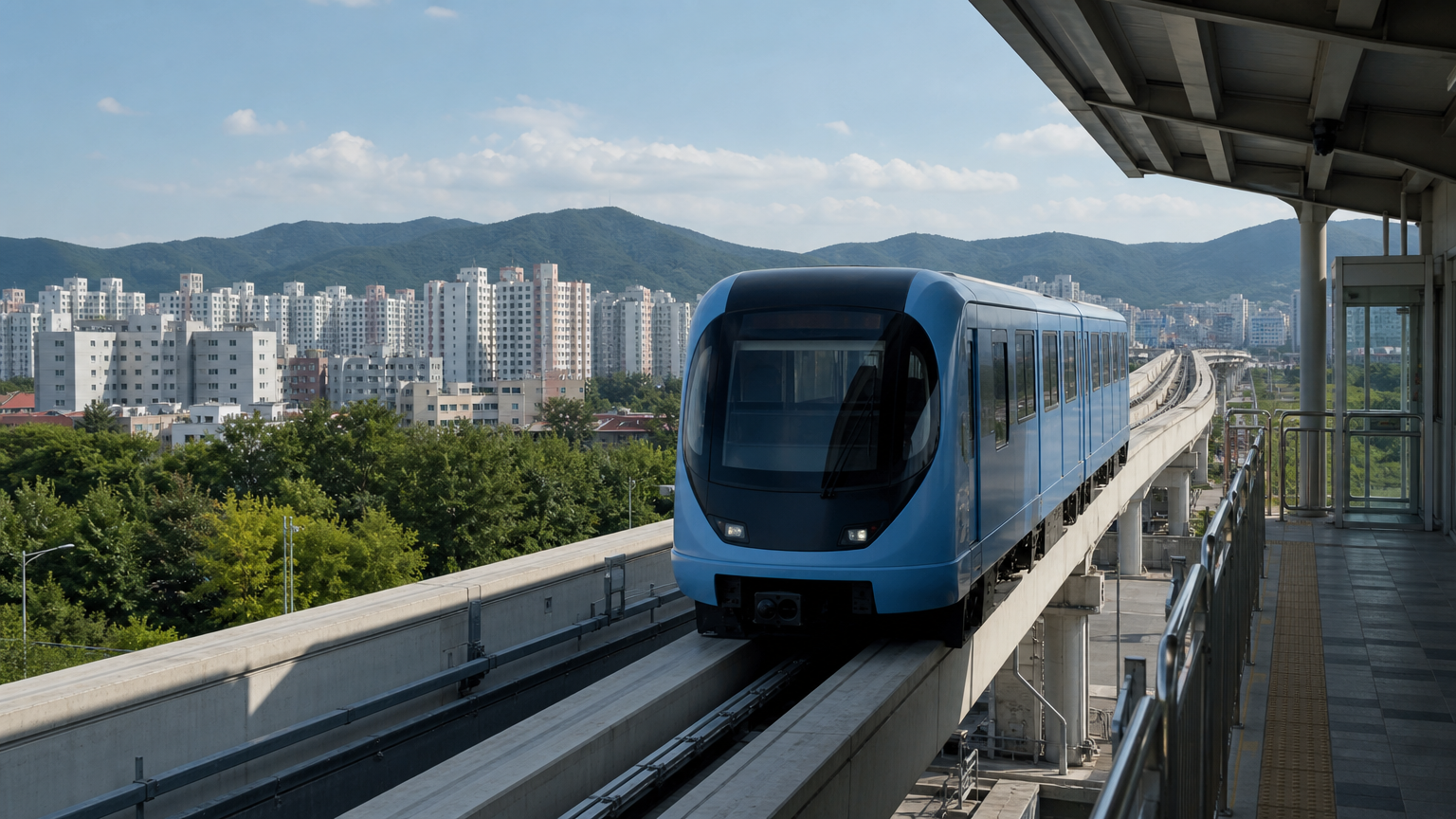
That geography is the whole thing. The line was not built to move arriving passengers into Busan. It was built to connect two cities, and the airport sits between them.
So from the airport platform you have two useful moves, and both of them are transfers:
Sasang — change to Line 2. Line 2 runs east along the coast and is the one you want for Seomyeon, Gwangalli and Haeundae.
Daejeo — change to Line 3. Line 3 cuts across the north of the city and connects onward to Line 1 at Yeonsan and Line 2 at Suyeong.
If you arrived on a domestic flight, the boarding half of the journey has a trap of its own: Domestic Flights in Korea: The Number on Your Boarding Pass Is Your Place in Line
So the train is two transfers. What does the bus cost you?
The limousine bus is not the fallback option
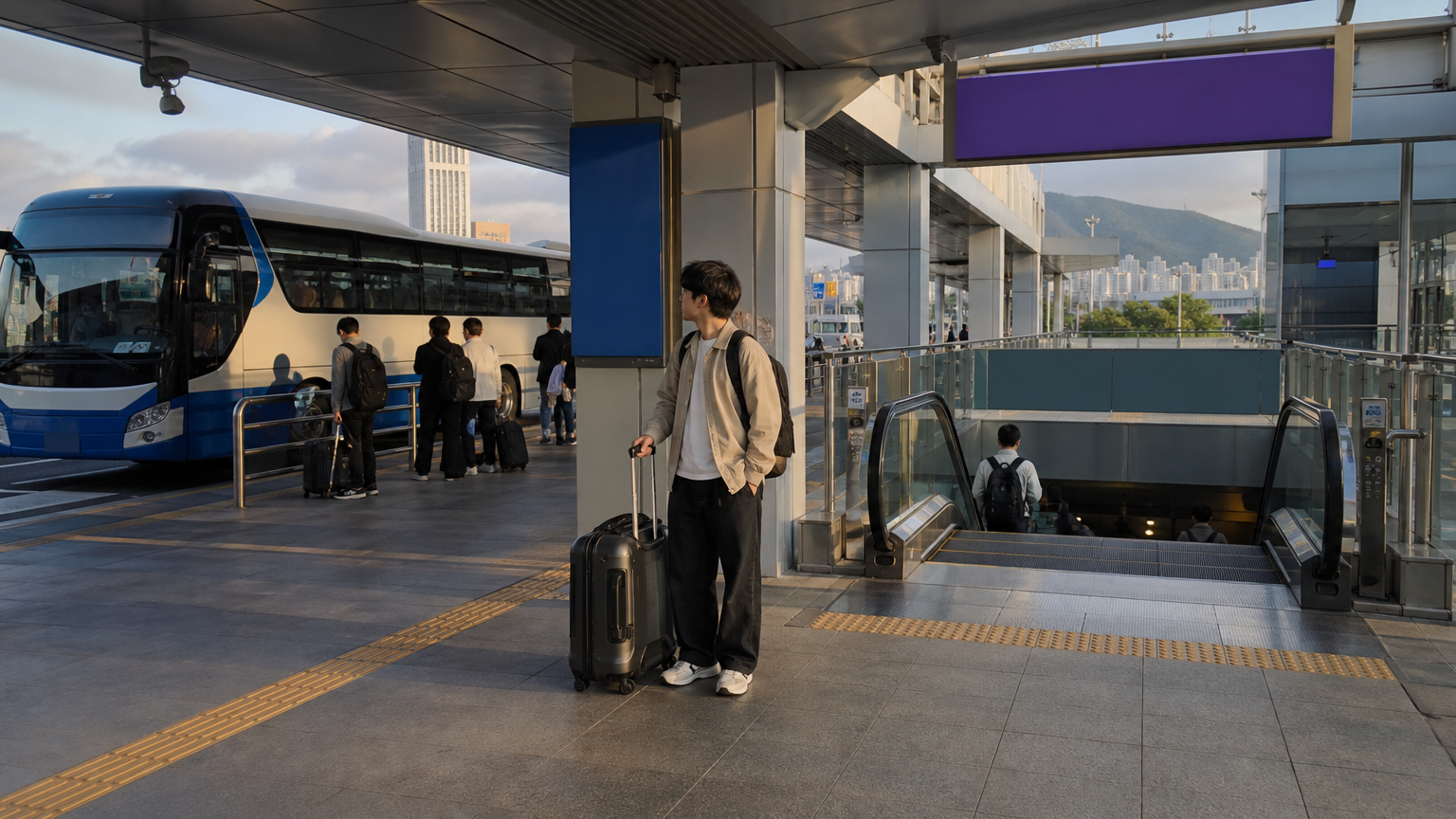
In Seoul the airport bus is the thing you take when you have too much luggage to face the subway. At Gimhae it is frequently the better choice on its own merits, because of where the two routes go.
Limousine 1 — Gimhae Airport, Seomyeon, Busan Station, Seo-gu Office. This is the spine of the old city. Seomyeon is the commercial centre, Busan Station is where the KTX arrives, and the route ends in the western districts.
Limousine 2 — Gimhae Airport, Gwangalli, BEXCO, Marine City, Haeundae Paik Hospital. This is the eastern beach corridor. If your accommodation is anywhere near the water on that side of the city, this bus goes past it.
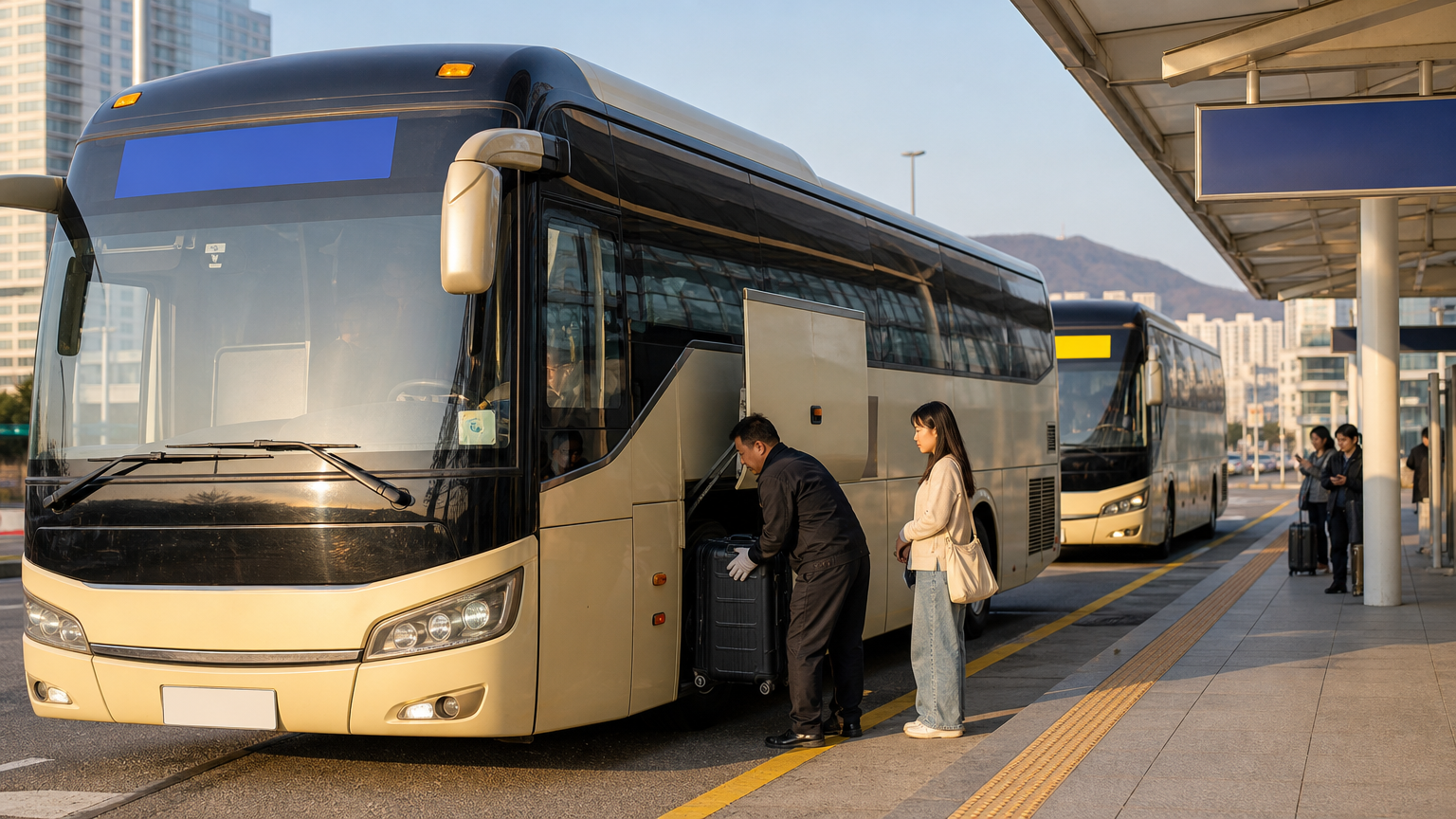
Here is the part that matters. Busan's own tourism guidance puts the airport at roughly an hour from the city, and the journey to Haeundae takes about an hour by rail as well. The train is not faster. It is the same hour with two changes and your luggage on and off three vehicles.
When the times are equal, the direct vehicle wins.
And the thing everyone assumes about transfers?
What the transfer actually costs, and what it does not
There used to be a surcharge for crossing between the Busan, Gimhae and Yangsan systems — a few hundred won added on top when you changed from the light rail to the subway or a city bus. That surcharge has been abolished. The wide-area transfer is now free.
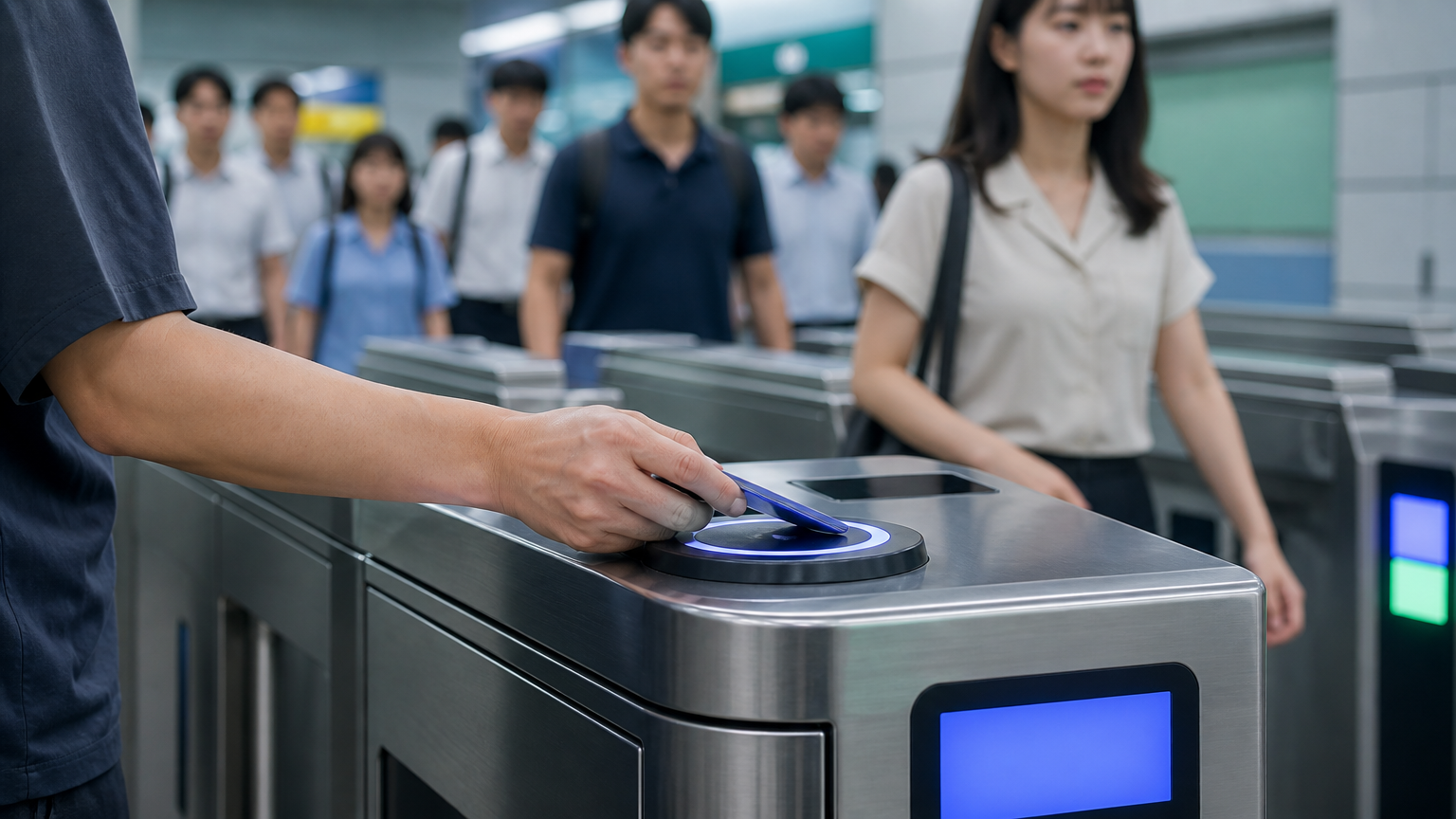
Two conditions survive, and they are the ones that trip people up:
You must tap a transport card. A single-journey paper ticket buys you one ride and nothing else. Transfer benefits exist only for card users.
You have thirty minutes. The clock starts when you tap out of the first vehicle. Stop for coffee between the light rail and the subway and you have bought yourself two separate journeys.
One more thing worth knowing before you buy anything: Busan sells one-day and three-day subway passes, and they cover Lines 1 to 4 only. The light rail from this airport is not included. If you land, buy a three-day pass at the airport station expecting it to cover the ride into town, it will not.
FAQ
Which is faster from Gimhae Airport, the train or the bus?
To Haeundae they are close to the same — around an hour either way. The train wins on frequency and on avoiding traffic; the bus wins on not making you change twice with your bags. Pick by destination, not by speed.
Are the domestic and international terminals the same building?
No. Gimhae has separate domestic and international terminals, so check which one your flight uses before you arrange a pickup or tell a driver where to meet you.
Can I use the same transport card I used in Seoul?
Yes. A standard Korean transport card works on Busan's subway and buses. The thing that does not transfer is the pass — Busan's day passes are their own product and cover Lines 1 to 4 only. Here is what the card itself is and does: T-Money Card in Korea
What if I land late at night?
Check the last light rail and last limousine departure before you fly, not after you land. If both have gone, a taxi is the remaining option and the fare from the airport into the city is a known quantity rather than a negotiation.
The short version
There is no airport express at Gimhae. The light rail is a commuter line between Sasang and Gimhae that happens to stop at the airport, so reaching central Busan by rail means changing at Sasang for Line 2 or at Daejeo for Line 3. The limousine buses run direct — route 1 to Seomyeon and Busan Station, route 2 to Gwangalli and Haeundae — and take about the same hour. The inter-city transfer surcharge is gone, but transfer benefits still need a card and still expire after thirty minutes, and the Busan day pass does not cover the light rail you rode in on.
Once you are in the city, the fare rules change shape again. Busan does not charge by distance the way Seoul does. It draws one line at ten kilometres and charges you one of two prices, which makes some journeys a bargain and one particular journey annoying.
References
-
Korea Airports Corporation, Gimhae International Airport — Public Transport guidance (separate domestic and international terminals)
-
Busan–Gimhae Light Rail Transit — route between Sasang and Gayadae, 21 stations; transfer to Busan Metro Line 2 at Sasang and Line 3 at Daejeo
-
Busan Metropolitan City — Gimhae Airport Limousine route information (Route 1: Seomyeon, Busan Station, Seo-gu Office / Route 2: Gwangalli, BEXCO, Marine City, Haeundae Paik Hospital)
-
Visit Busan — airport located approximately one hour from the city centre
-
Busan–Gimhae–Yangsan wide-area transfer: former surcharge abolished; transfer benefits require a transport card and a 30-minute window
-
Busan Transportation Corporation — one-day and three-day passes valid on Lines 1–4 only