Temple stay in Korea: there are two kinds, and only one of them wakes you at four
A temple stay comes in two versions. The one everybody pictures — up at four, 108 bows — is only one of them.
That picture is why most people who are curious about this never book. They imagine a week of monastic discipline, decide they would not last the first morning, and go and look at a temple as a day visitor instead. What they are picturing is real, but it is one of two program types, and the other one asks almost nothing of you. Sorting out which is which takes about a minute, and it changes the question from whether you could survive a temple stay in Korea to which kind you would actually enjoy.
It is one national programme, not a hundred separate ones
You do not have to research temples one at a time.
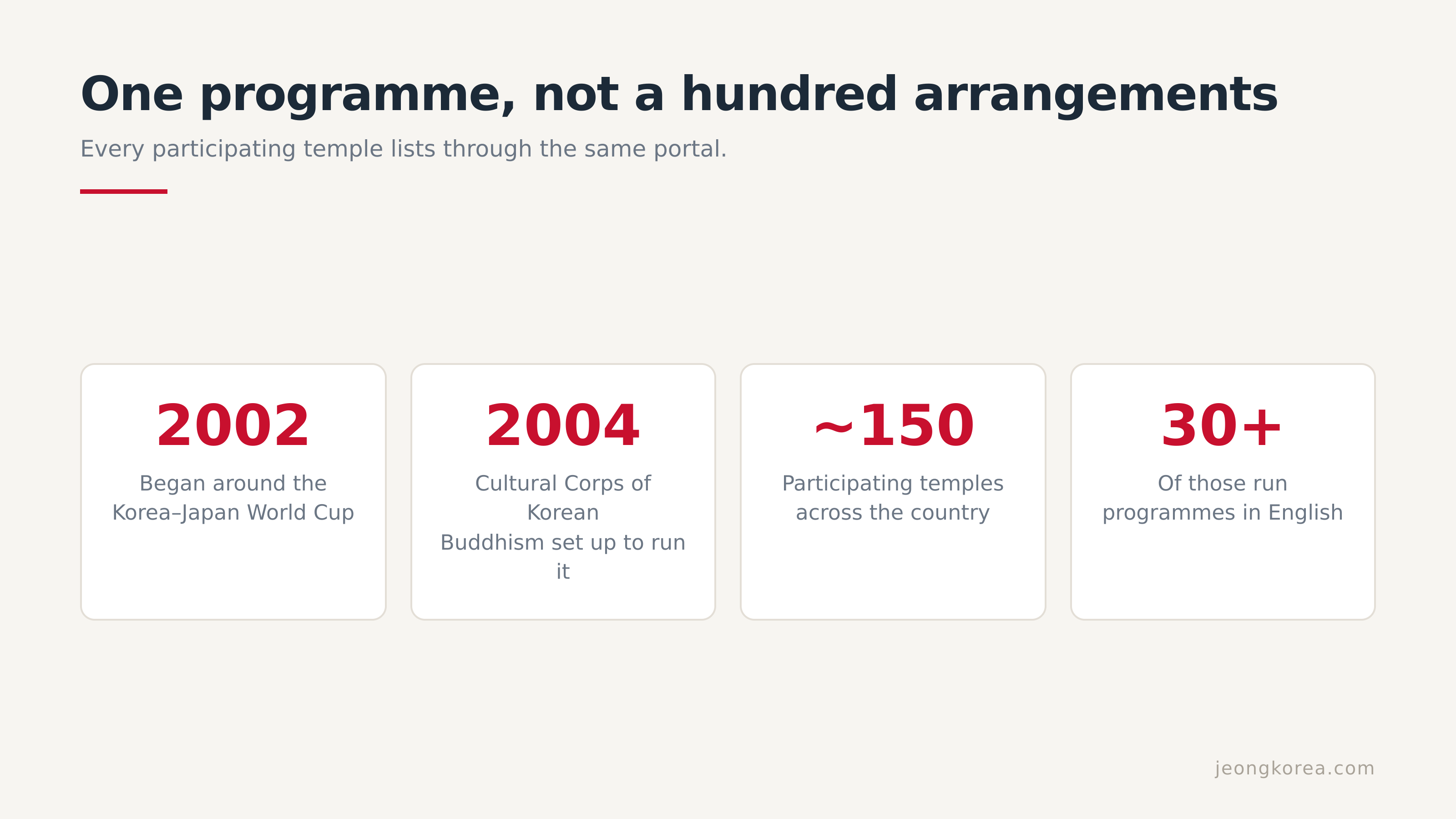
That is because this is a single organised programme rather than an arrangement each temple invented for itself. It began in 2002, around the Korea–Japan World Cup, when temples opened their gates to visitors who suddenly needed somewhere to sleep, and it worked well enough that the Cultural Corps of Korean Buddhism was set up in 2004 to run it properly.
Today around 150 temples take part across the country, and more than thirty of them run programmes in English. All of them list through the same official portal, with the program type, the dates and the language shown on each entry.
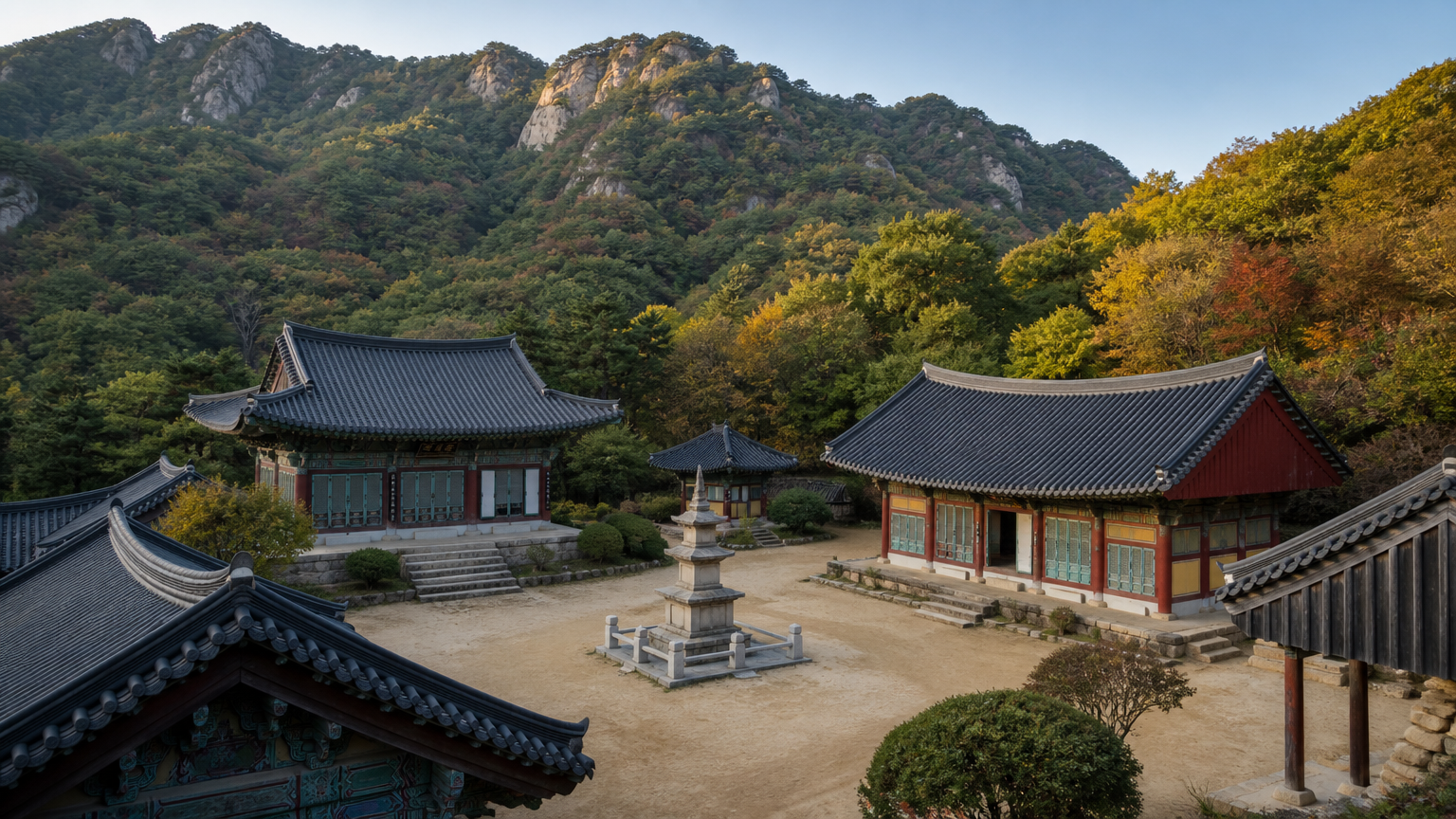
So do not search temple names one by one. Open the portal, filter, and read the schedules side by side — the differences that matter are in the timetable, not in the scenery.
If you have only seen Korean temples from the outside, Bulguksa Temple: there is no direct bus to Seokguram and you see the Buddha through glass is the day-visitor version of the same place.
So what do you actually do once you are there?
Only one of the two types wakes you at four
The four in the morning part is optional.
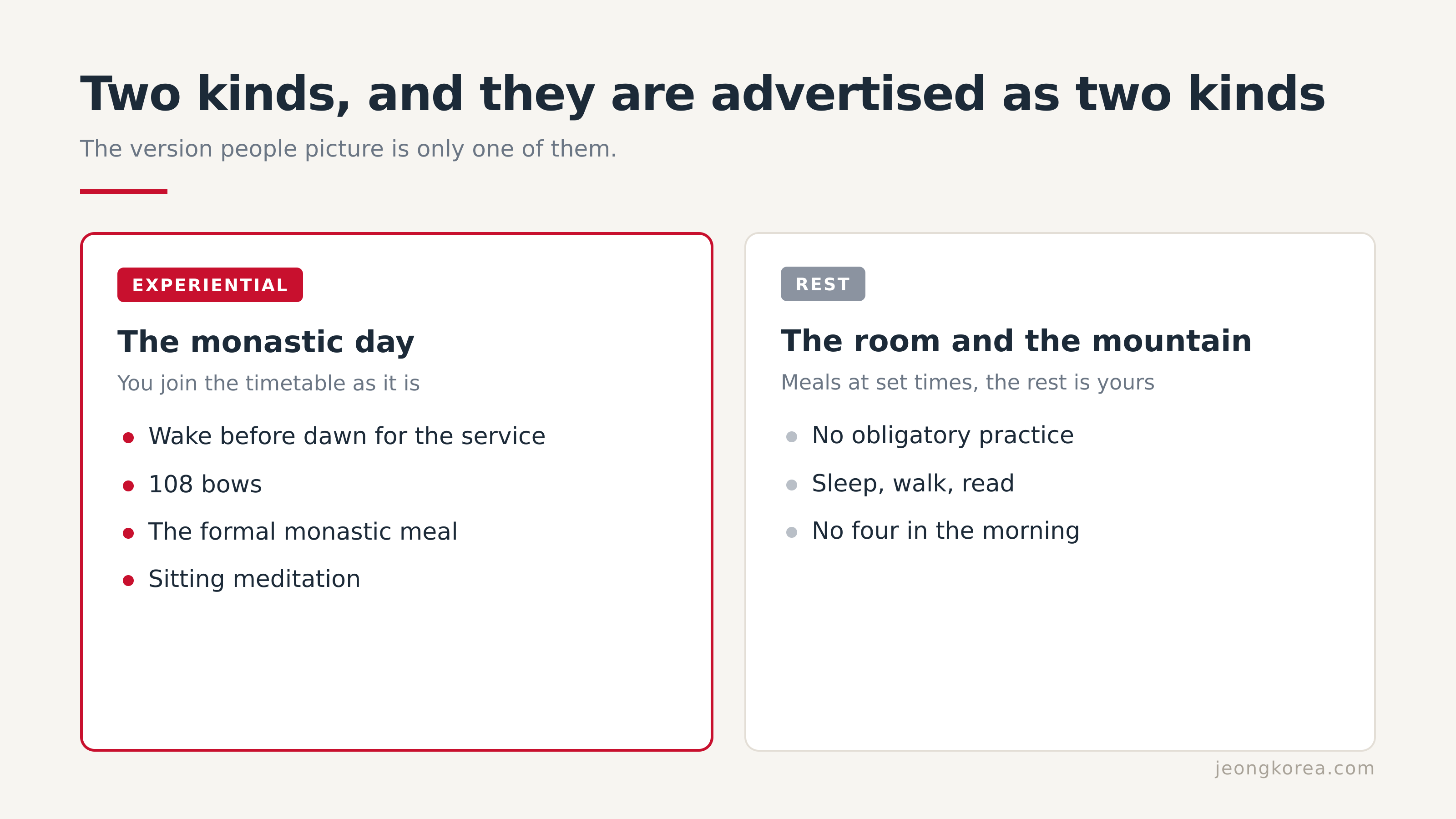
It is optional because the programmes split into two kinds, and they are advertised as two kinds. The experiential type puts you into the monastic day: the dawn service, the 108 bows, the formal monastic meal, sitting meditation. The rest type gives you the room, the meals and the mountain, and leaves the rest of the hours to you.
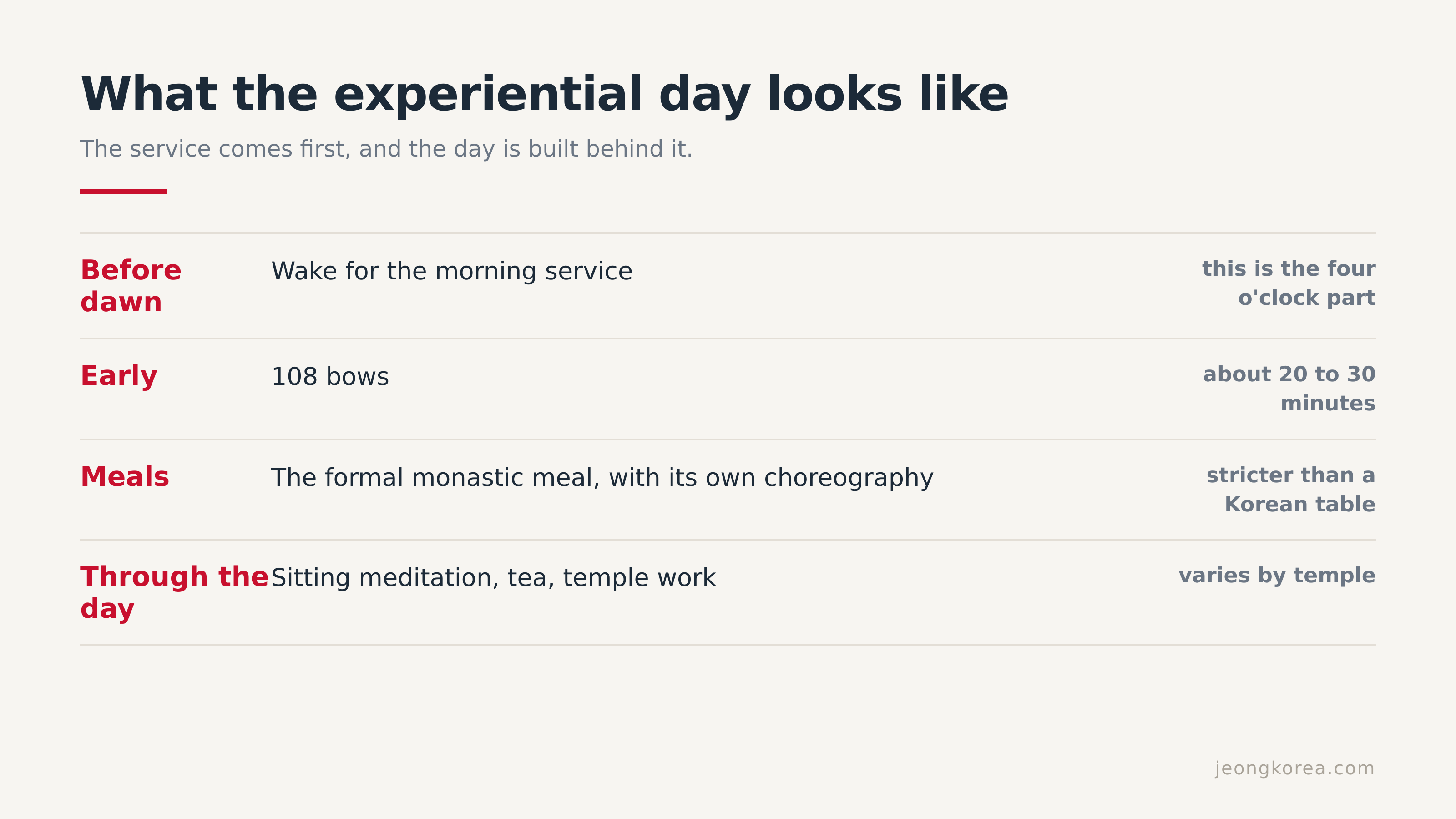
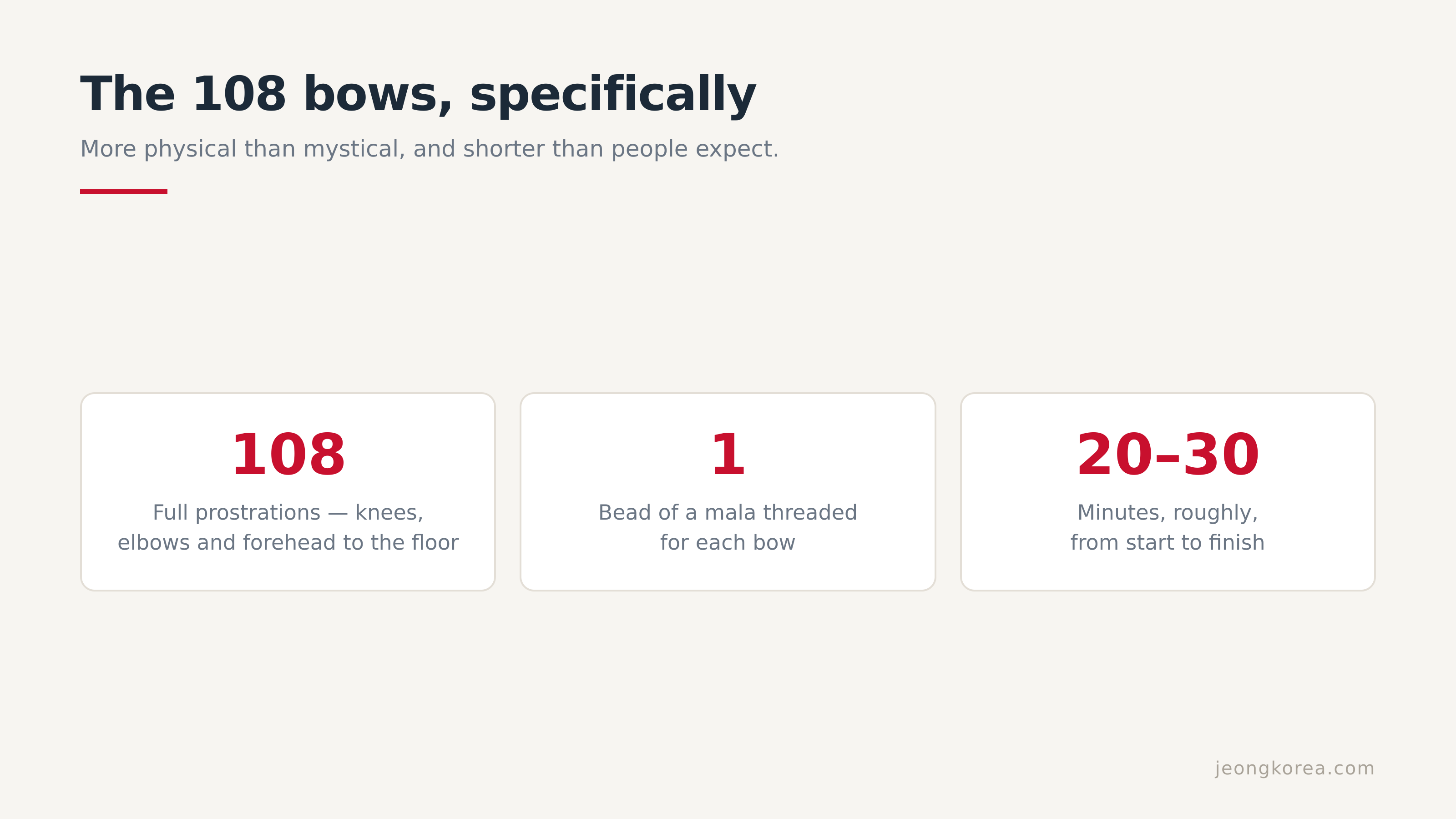
The 108 bows are the part people brace for, and they are more specific than they sound. You perform 108 full prostrations — knees, elbows and forehead to the floor — threading one bead of a mala for each one, and it takes something like twenty to thirty minutes. It is repetitive rather than mystical, and it is the reason experiential programmes wake you before dawn: the service comes first and the day is built behind it.
The formal meal has its own choreography, and it is stricter than an ordinary Korean table — though Korean dining etiquette: rules Koreans actually follow will already have you most of the way there.
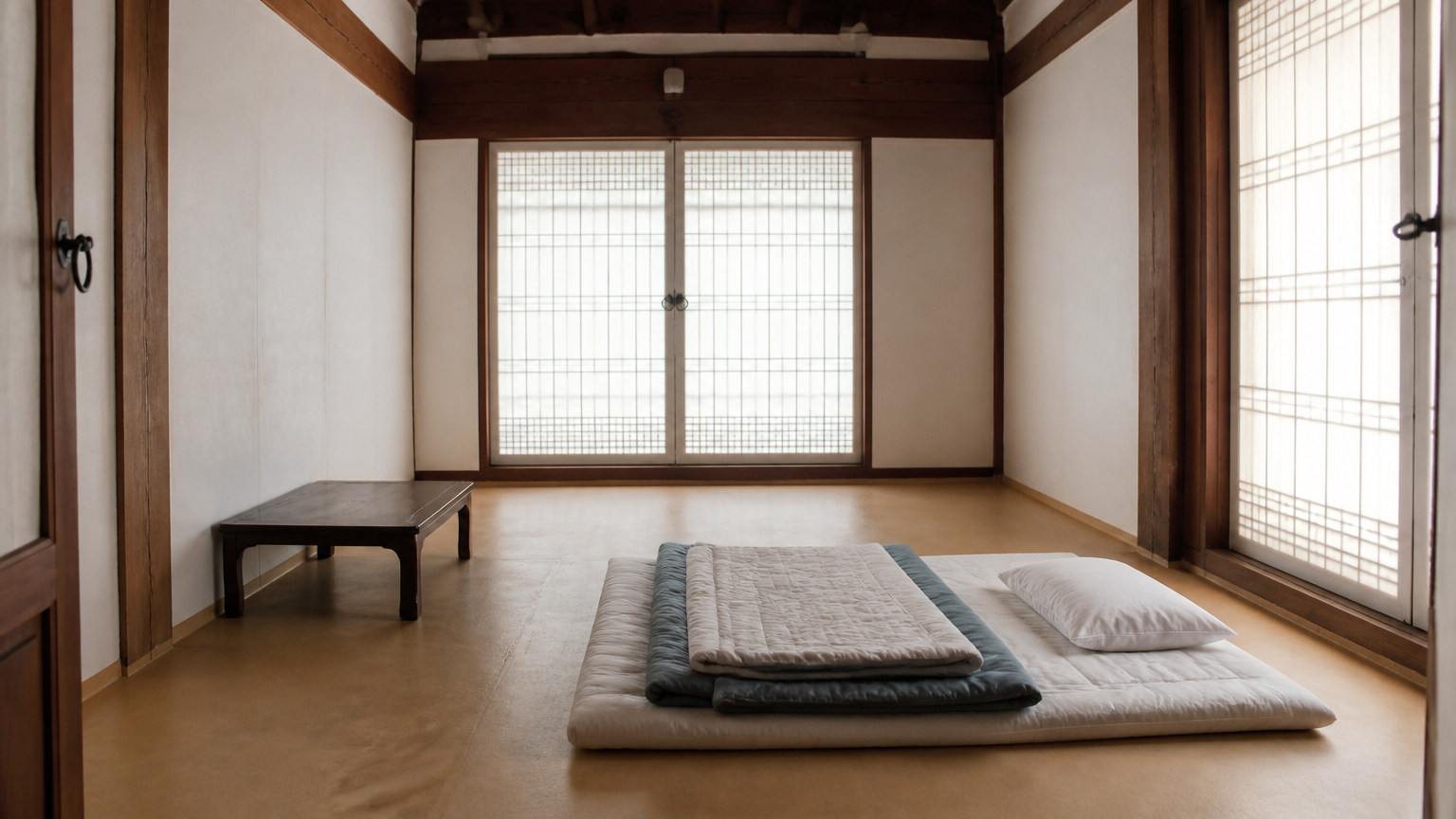
So the question is not whether you could handle it. It is which of the two you are booking, and that is a choice you make on the booking page rather than something you discover at four in the morning.
Which leaves the part that actually takes a minute.
Three filters, and you are done
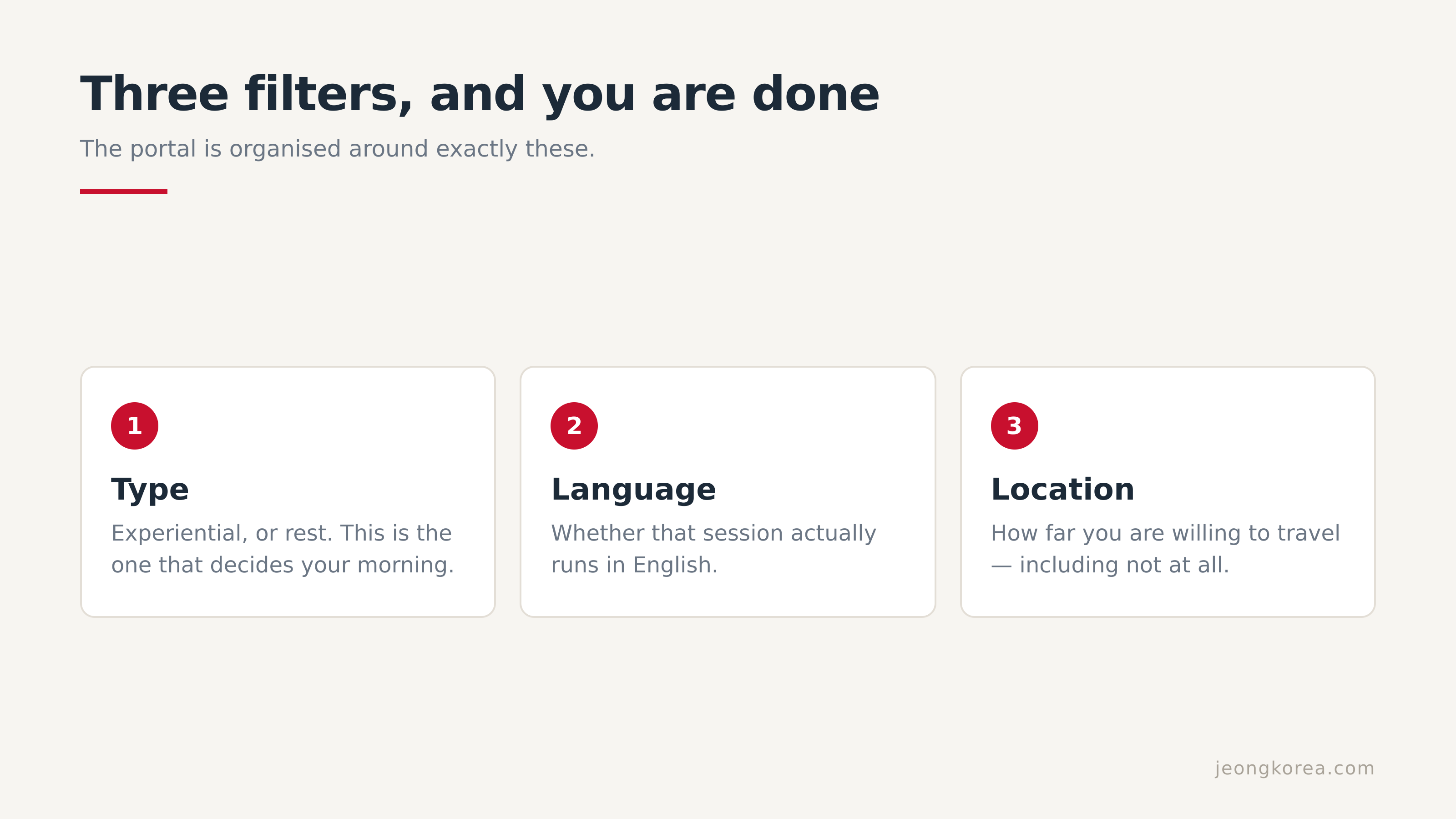
Almost everything else follows from three decisions.
They are the three the portal itself is organised around, which is convenient, because it means you are not guessing at what matters. Type: experiential or rest. Language: whether the programme runs in English. Location: how far you are willing to go.
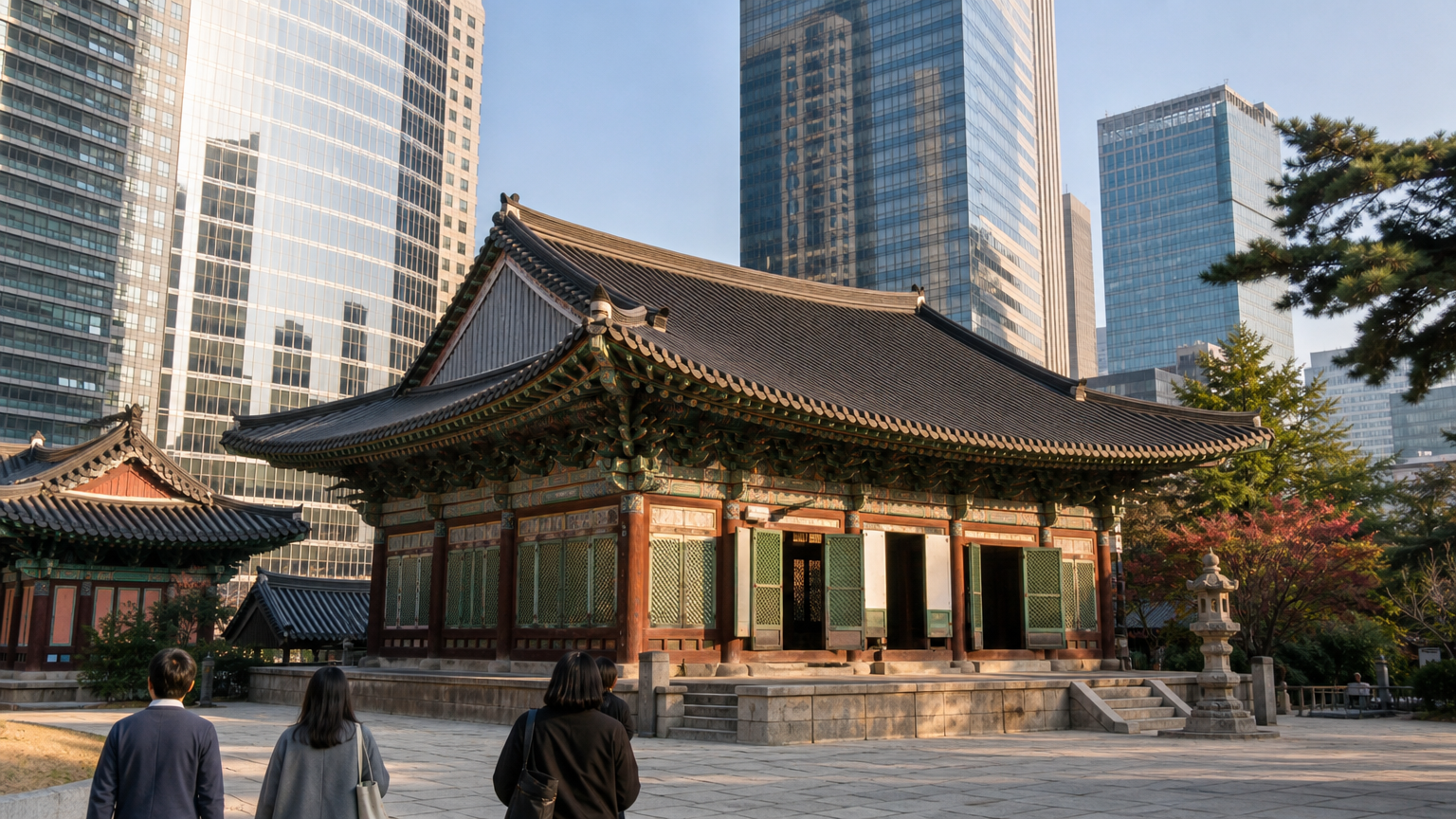
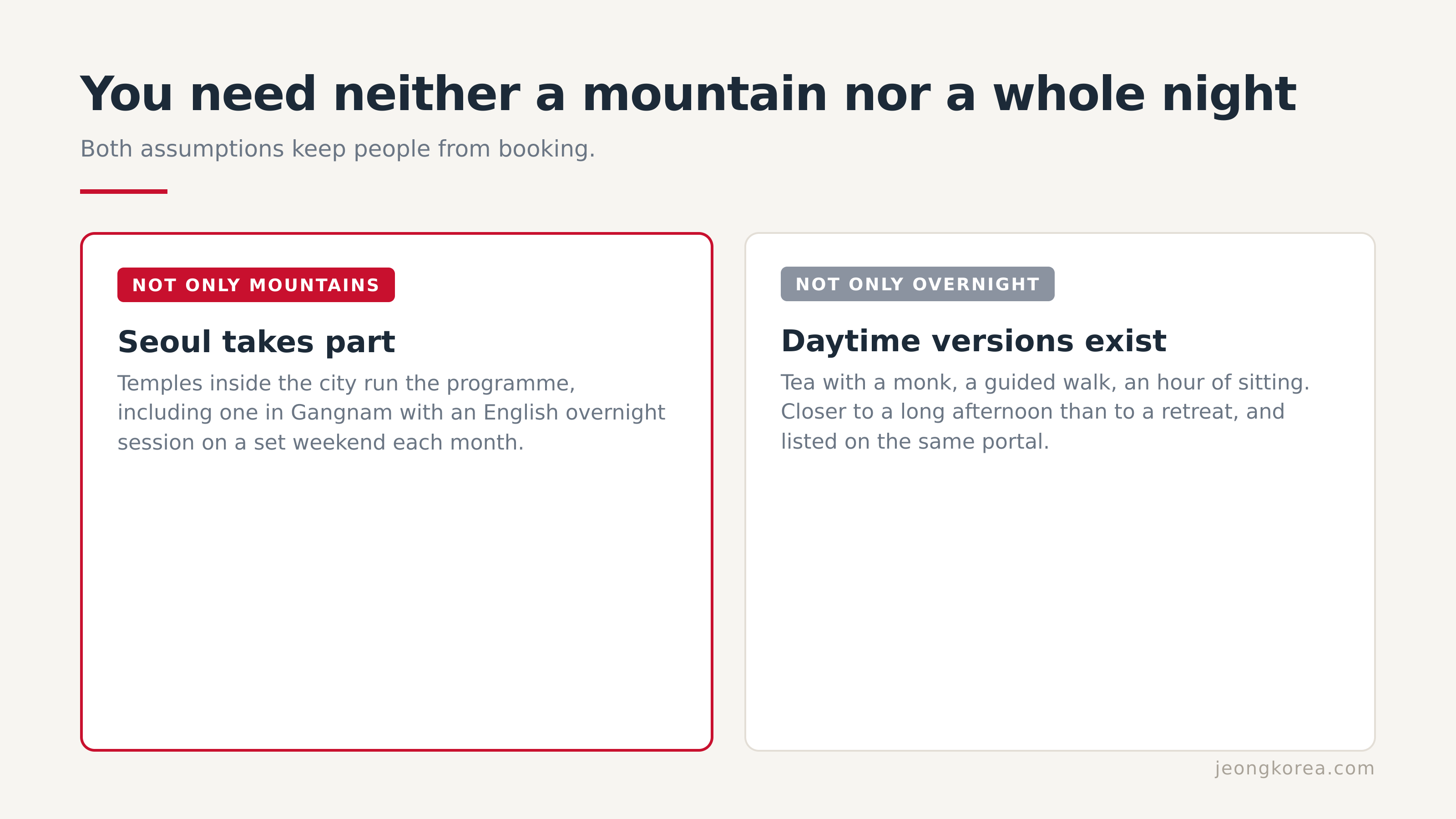
That third one is where people assume wrongly. A temple stay does not require a mountain and two trains — Seoul has temples in the programme, including one in Gangnam that runs an English overnight session on a fixed weekend each month. And if a whole night is more commitment than you want, several temples run short daytime programmes instead: a tea ceremony with a monk, a guided walk, an hour of sitting. It is closer in spirit to a long afternoon than to a retreat.
It is worth saying what this is not. It is not a spa and it is not a cheap hostel — if what you want is somewhere warm to lie down for a night, Jjimjilbang in Seoul: overnight prices and rules is the honest answer to that and costs a fraction of it. This is worth doing when the point is the timetable itself: eating when they eat, sleeping when they sleep, and finding out what the hours feel like from inside.
Prices differ by temple and by programme, and they are listed on each entry, so read the page for the session you want rather than a figure quoted somewhere else. The same page tells you the age limit, which some temples set at fourteen.
FAQ
Do I have to do the 108 bows?
Only in an experiential programme. A rest programme has no obligatory practice — you keep to the meal times and the rest of the day is yours.
Is there a temple stay in Seoul?
Yes. Several temples inside the city take part, including one in Gangnam that runs an overnight programme in English on a set weekend each month. You do not have to travel to a mountain for it.
What are the 108 bows, exactly?
108 full prostrations, forehead to the floor, threading one bead of a mala with each. It takes roughly twenty to thirty minutes and it is physical rather than solemn.
Can I do a shorter version?
Yes. Some temples run daytime programmes with no overnight stay — tea with a monk, a guided walk, a short sitting. They are listed on the same portal as the overnight ones.
Book earlier than you think
A temple stay in Korea is one programme, not a hundred. Around 150 temples take part, over thirty run it in English, and everything goes through one portal. There are two types, and only the experiential one wakes you at four. Seoul has temples in the programme, and there are daytime versions if a night is too much.
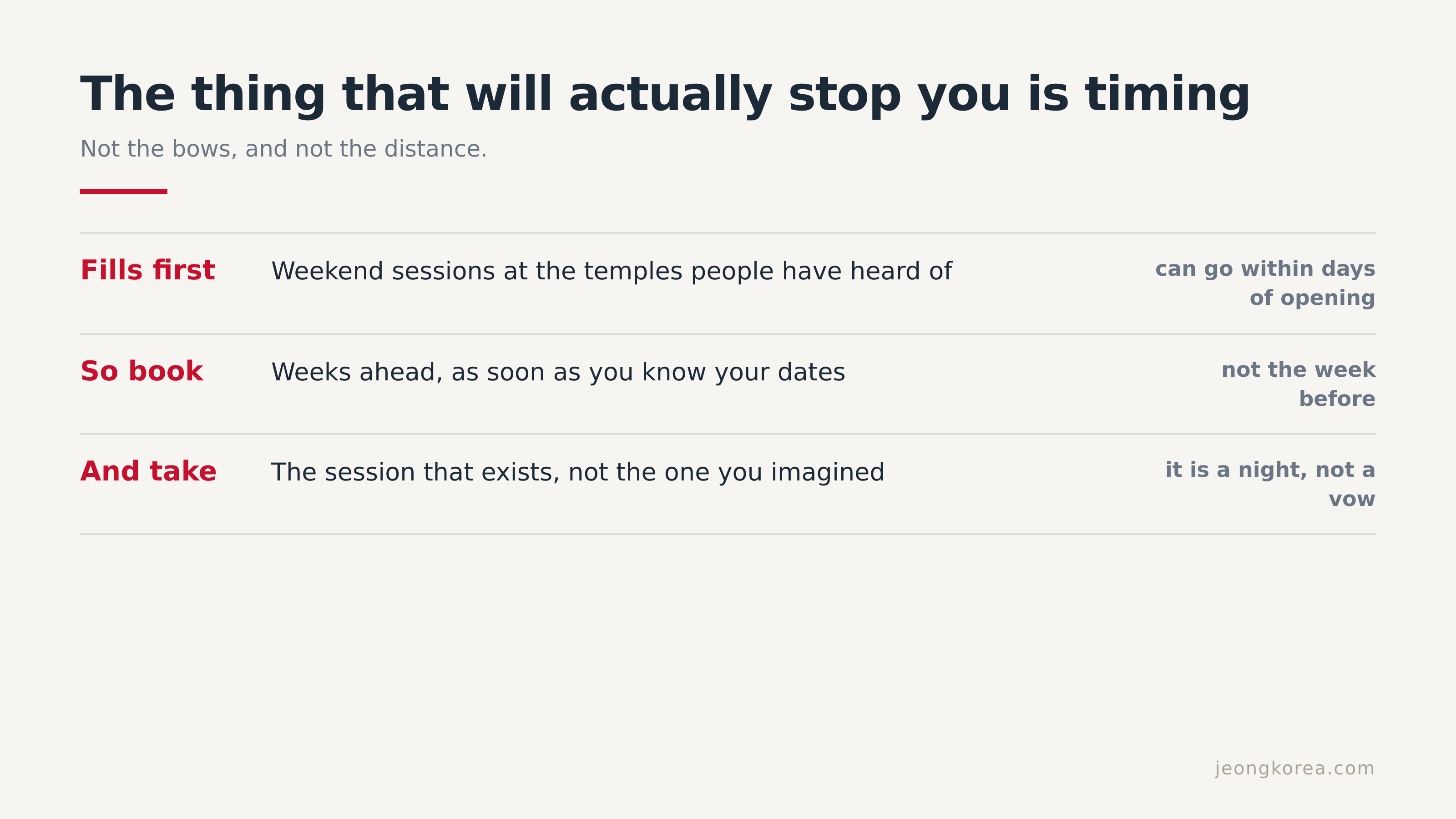
The one thing that will actually stop you is timing. The well-known temples fill fast, and popular weekend sessions can be gone within days of opening — the temples people have heard of are exactly the ones that go first. It is not a queue you can join on the day.
So if you already know roughly when you will be in Korea, open the portal now rather than the week before. Pick the type first, then the language, then the distance, and take the session that exists rather than the one you had imagined. It is a night, not a vow.
References
-
Cultural Corps of Korean Buddhism — established 2004 to operate the Templestay programme
-
Templestay official portal — programme types, participating temples and English availability
-
Korea.net — Templestay introduced in 2002 around the Korea–Japan World Cup