Suwon Hwaseong Fortress: the wall is free and open all night, and the drama scenes are not on it

Everyone who finished Lovely Runner searches for Hwaseong Fortress. The scenes are not there.
That gap is why so many people come back from Suwon vaguely disappointed. They arrive with a UNESCO site in their head, walk a long stone wall, take a photo of a gate, and go home wondering where the yellow umbrella was. The wall and the drama are two different days out, and the map does not tell you that. So before you block out a day for Suwon Hwaseong Fortress, it is worth knowing which of the two you are actually going for — because the answer changes where you start, how long you stay, and how much you spend.
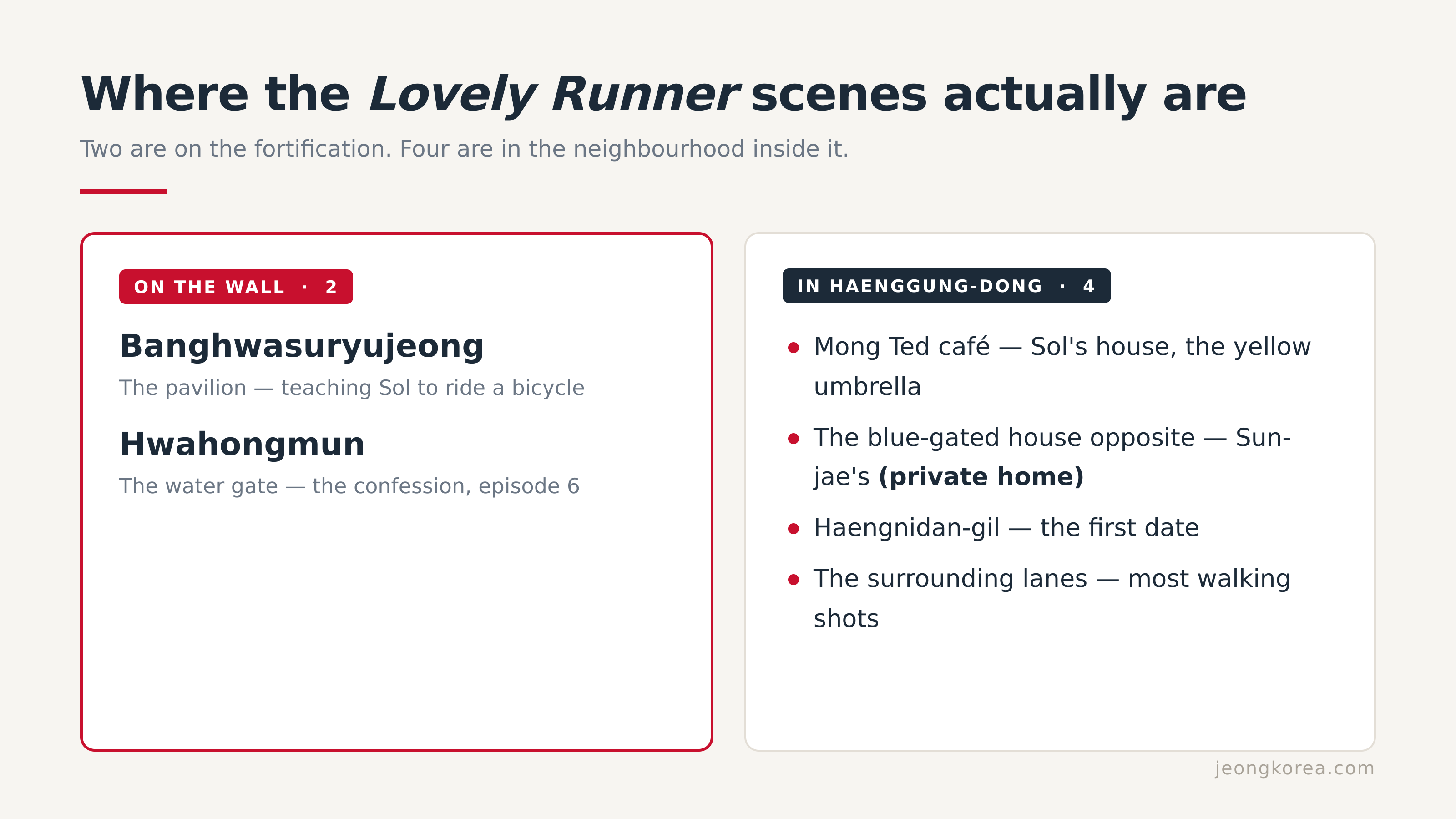
Only two of the drama's locations are on the wall
The scenes you remember are almost certainly not on the fortification.
That is because the production spent most of its time in Haenggung-dong, the residential quarter that sits inside the wall, rather than on the wall itself. It is an ordinary neighbourhood of low houses and converted hanok, and it photographs the way the show looked because that is where the show was.
In practice the split is clean. Two locations are on the fortification: Banghwasuryujeong, the pavilion where Sun-jae teaches Sol to ride a bicycle, and Hwahongmun, the water gate used for the confession in episode 6. Everything else is down in the neighbourhood — Mong Ted, the café that stood in for Sol's house with the yellow umbrella; the blue-gated house directly across from it that played Sun-jae's; and Haengnidan-gil, the café street used for their first date. Gyeonggi Tourism Organization eventually published its own walking course for these, which tells you how many people were arriving without one.
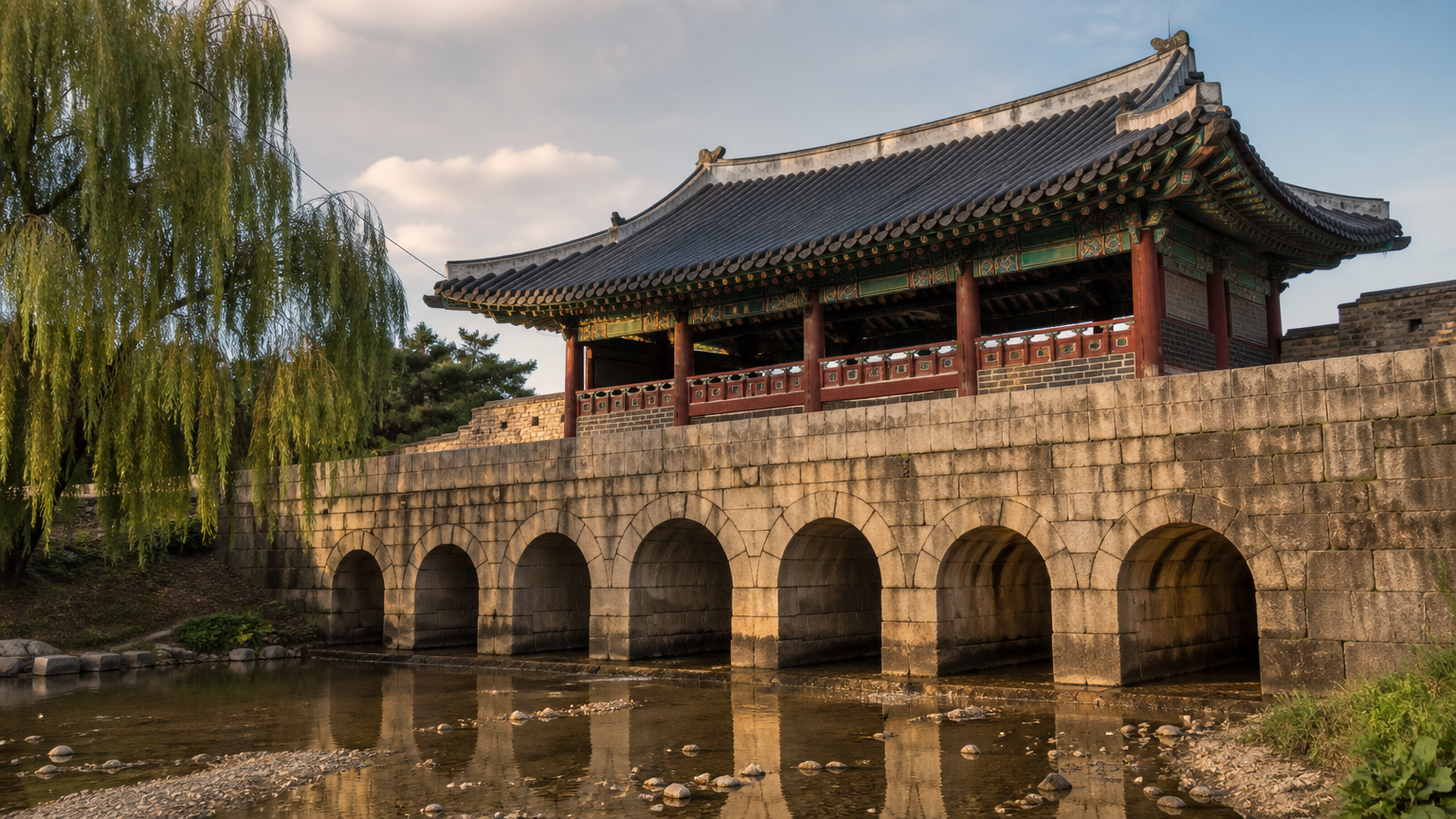
So a day planned around Suwon Hwaseong Fortress will physically walk you past the scenes without ever entering them. If the drama is why you are going, Haenggung-dong is the destination and the wall is the backdrop.
If you like the idea of a heritage site that takes more than one visit, Gyeongju: three separate UNESCO listings and why one day does not cover them is the same problem at a much larger scale.
So what exactly are you paying for, then?
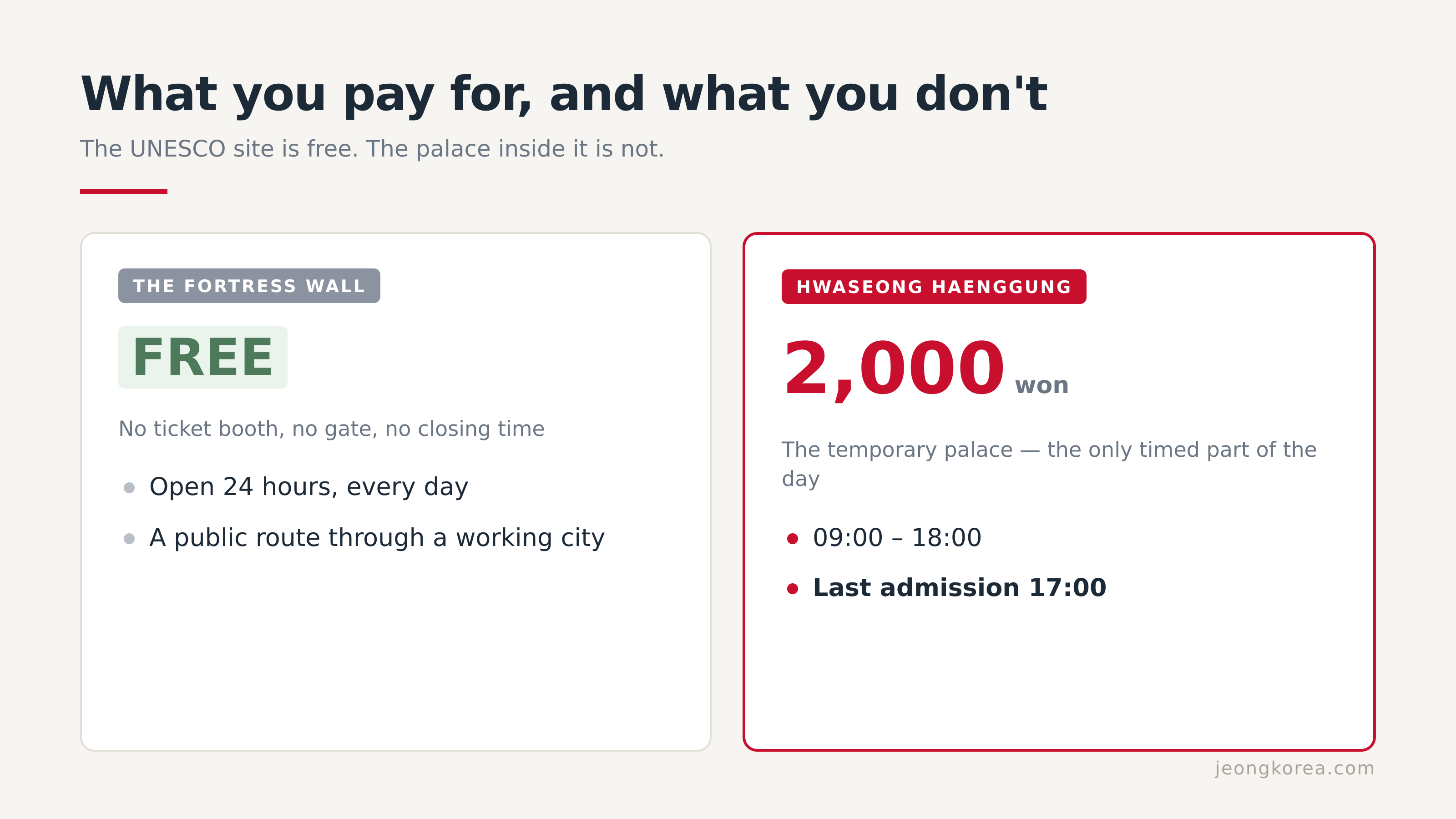
The UNESCO site is free. The palace is not.
Almost nothing here costs money, which is unusual enough that people assume they have misread it.
The reason is structural: the wall runs straight through the middle of a working city. It is not a fenced compound with a gate and a ticket booth — it is a public route that ordinary people walk to work along. There is no entrance fee for Suwon Hwaseong Fortress and no closing time, so the wall is open at two in the morning if that is when you want it.
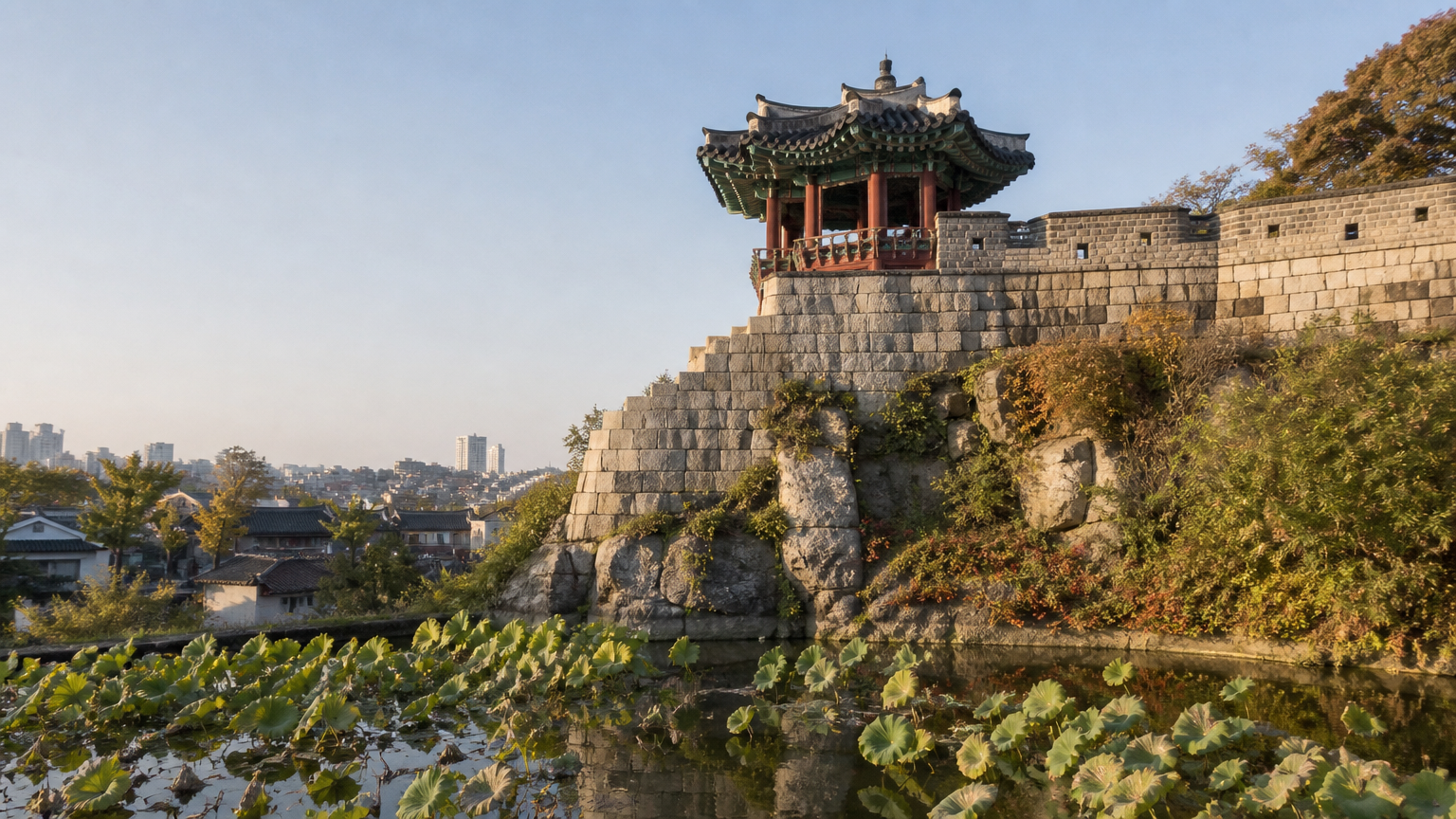
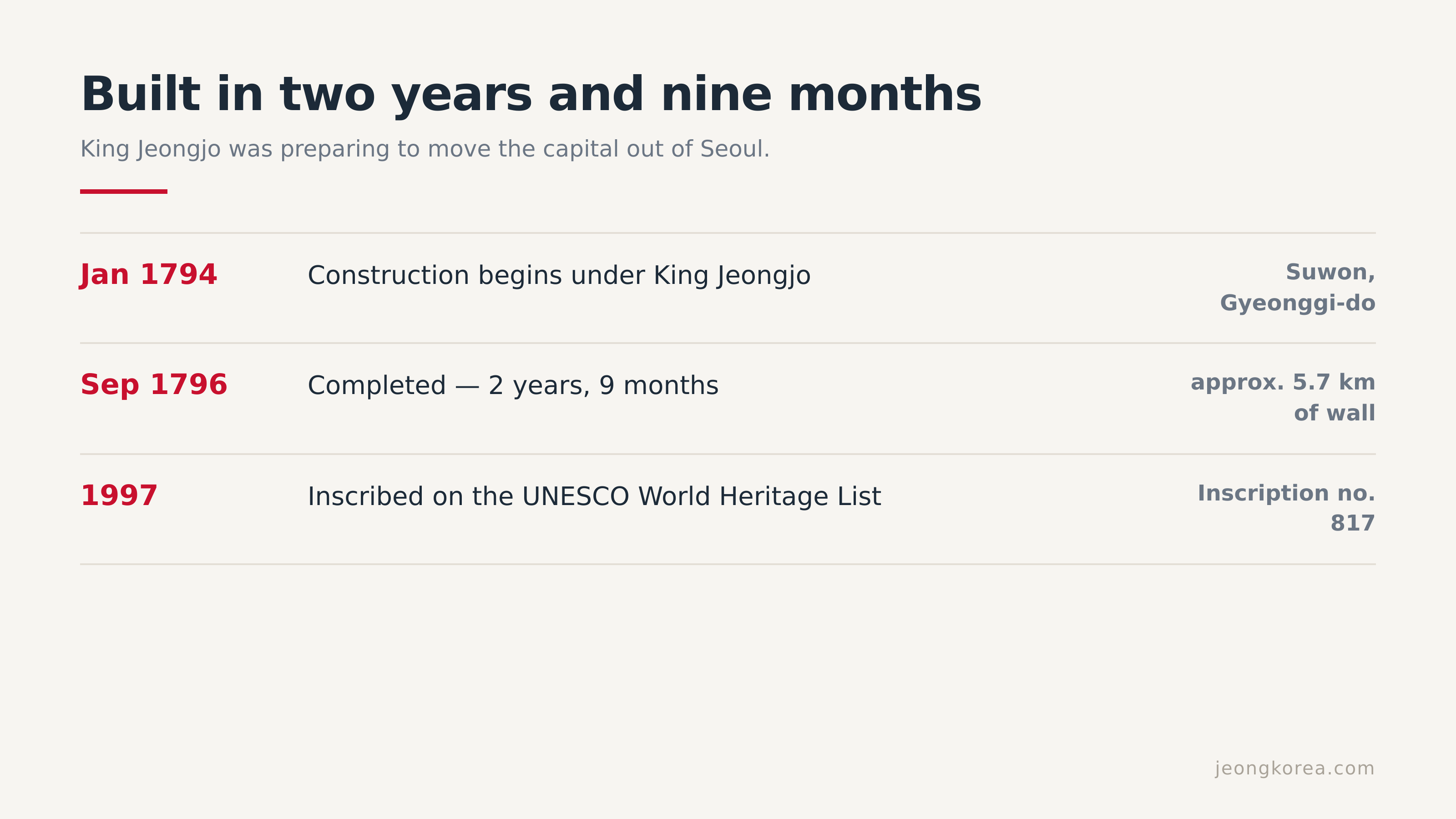
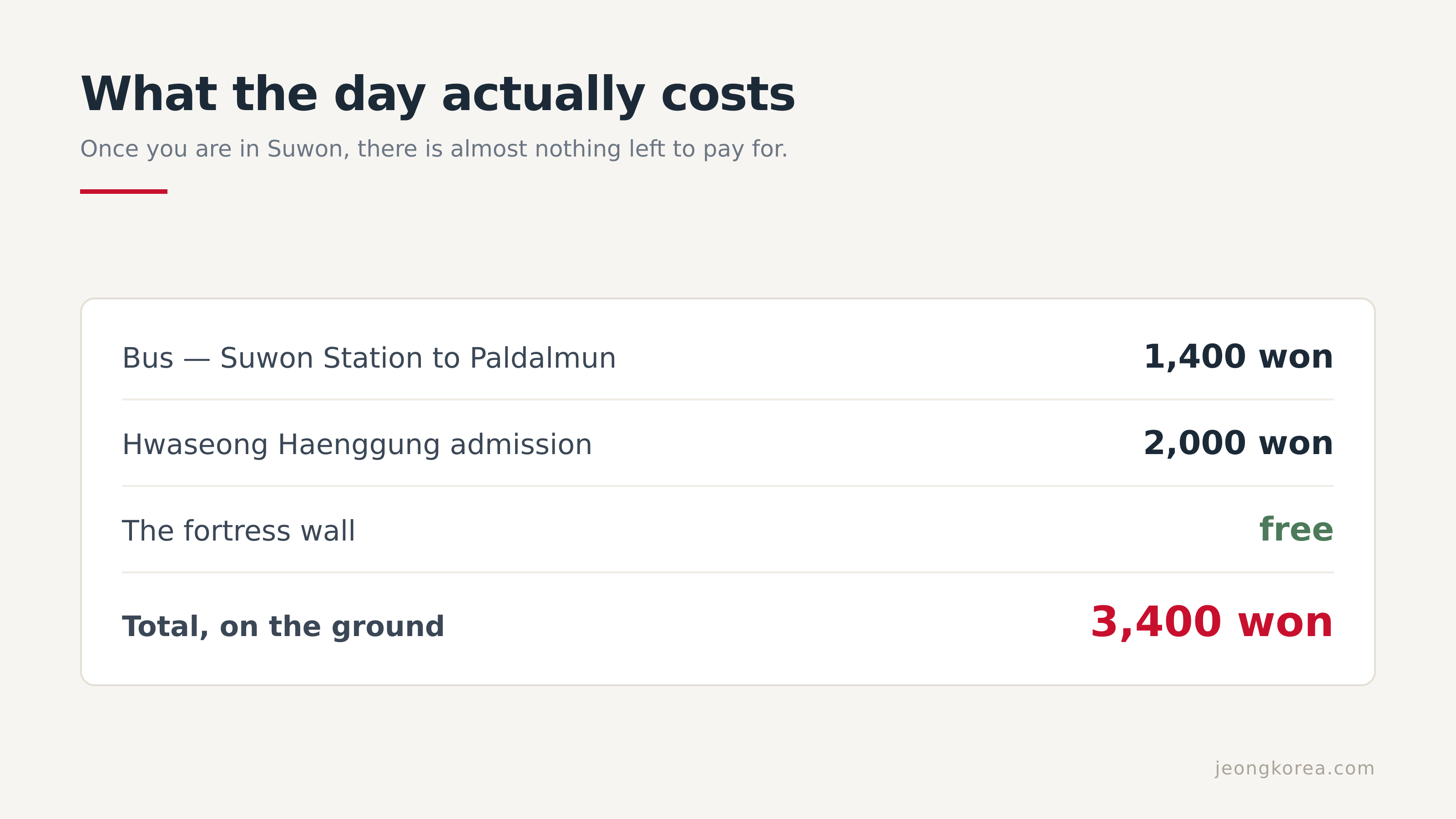
The one thing you do pay for is Hwaseong Haenggung, the temporary palace inside the wall, and it is 2,000 won. It opens 09:00–18:00 with last admission at 17:00, so it is the only part of the day that has a deadline. For scale on what that 2,000 won buys: the fortress was built between January 1794 and September 1796 — two years and nine months — for King Jeongjo, who was preparing to move the capital here from Seoul, and the whole site was inscribed by UNESCO in 1997.
So budget for one ticket, not two, and put the palace in the middle of your day rather than the end.
The pricing logic is the exact inverse of the capital's palaces, which is worth reading about first — Gyeongbokgung Palace tickets: 3,000 won is the easy part, the Tuesday and the hanbok are not.
Which leaves the part nobody plans for: getting there.
Suwon Station is on Line 1. The fortress is not.
You can reach Suwon on the subway, and that is where the easy part ends.
Suwon Station sits in the south-west of the city while the fortress wraps the older centre to the north, so arriving by rail puts you near the city but not near the site. This catches people out precisely because the subway map makes it look solved.
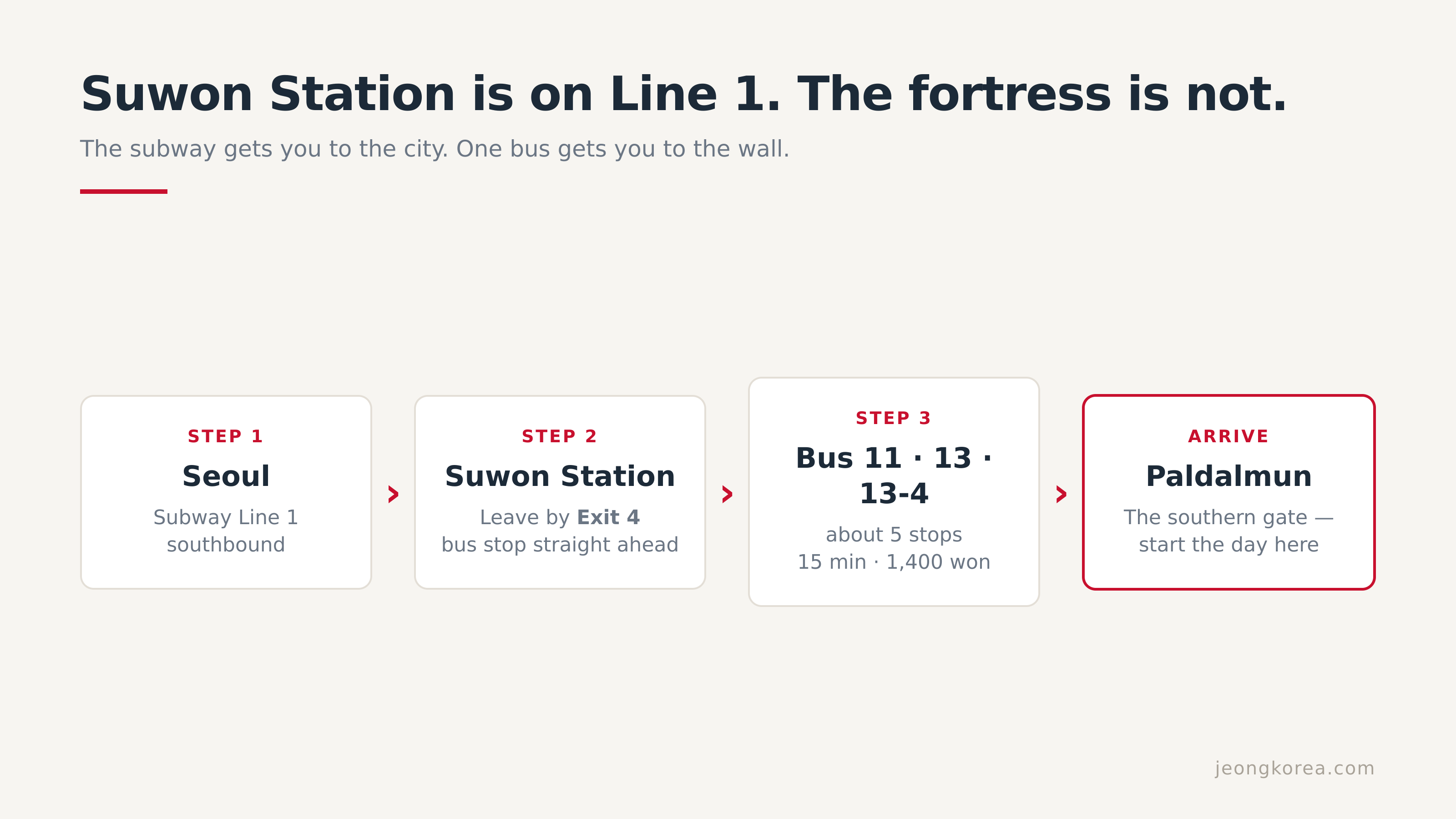
From Suwon Station, leave by Exit 4 and take bus 11, 13 or 13-4 to Paldalmun, the southern gate. It is about five stops, roughly fifteen minutes, and 1,400 won. Walking it is possible and takes around half an hour, mostly along a main road, which is fine on a cool day and unpleasant in August. If the transfer itself is the part you are unsure about, Seoul subway map: how to read it and transfer rules covers the system you will use to get down here in the first place.
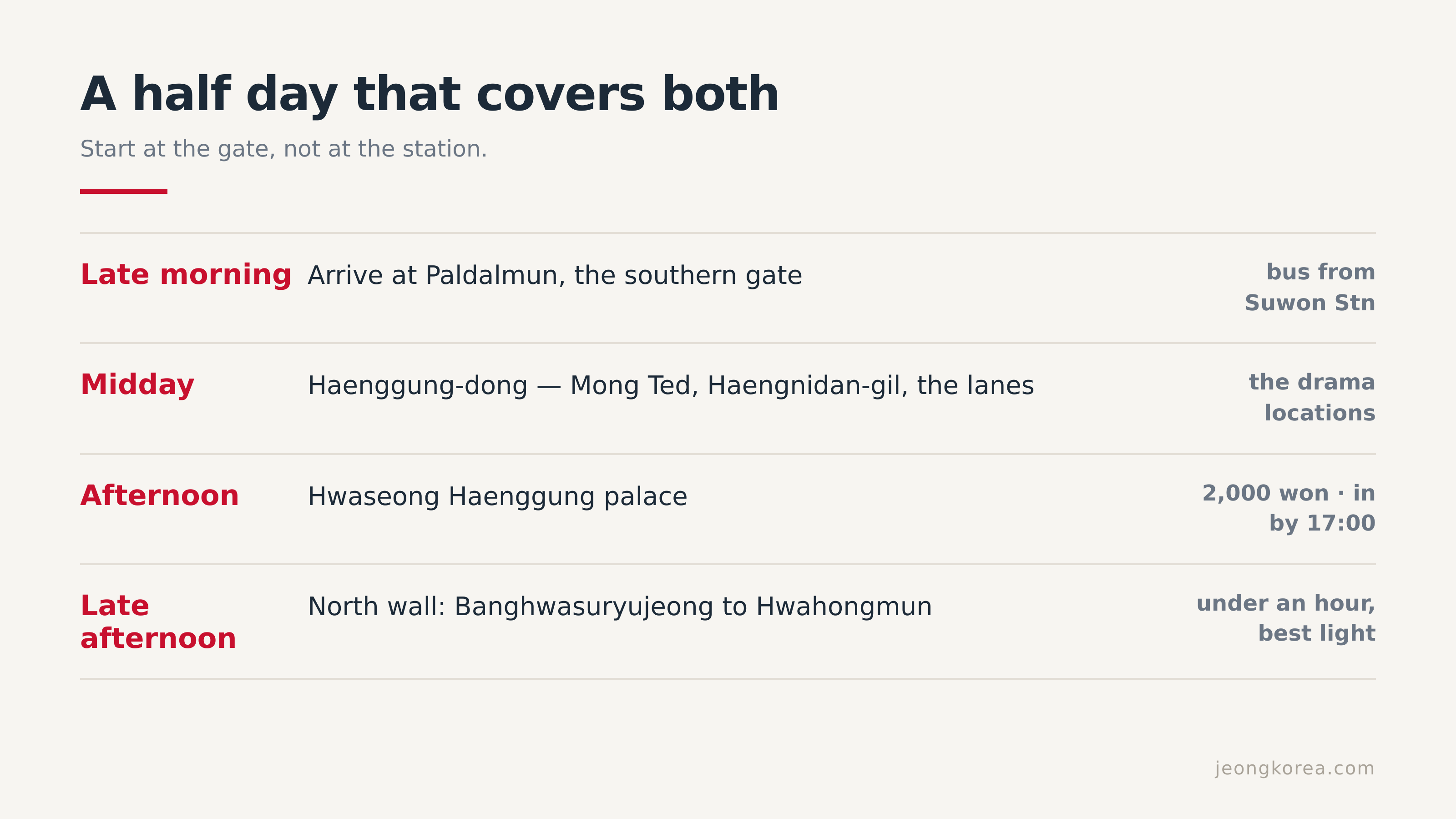
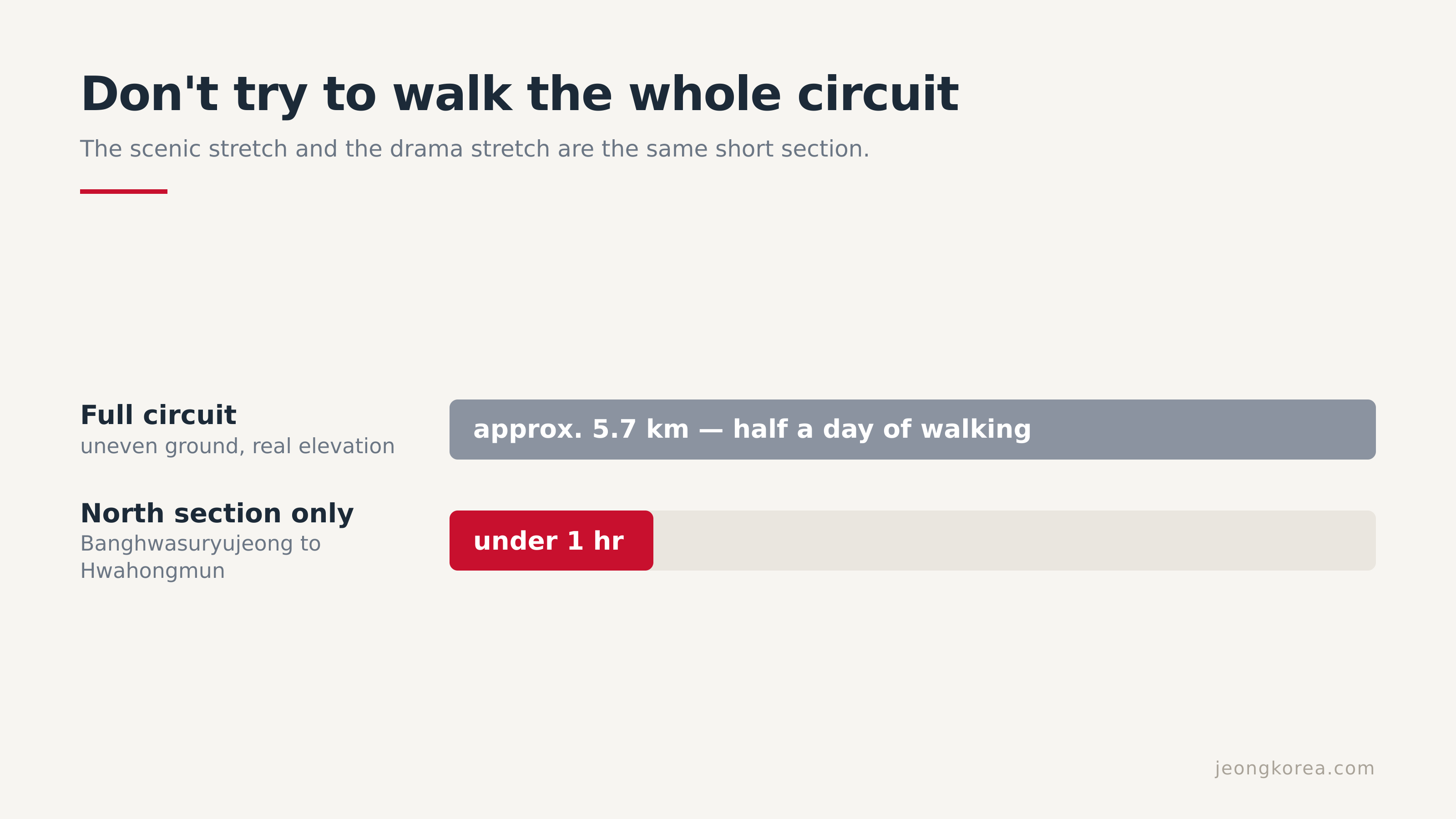
So build the day from Paldalmun rather than from the station. Start at the southern gate, spend the middle of the day in Haenggung-dong and the palace, then walk the northern stretch of wall between Banghwasuryujeong and Hwahongmun in the late afternoon when the light is worth the climb. That is a half-day plan with room in it, and it covers both the heritage and the drama. Trying to walk the full circuit instead — the wall runs about 5.7 kilometres — turns the day into an endurance exercise and leaves no time for the neighbourhood at all.
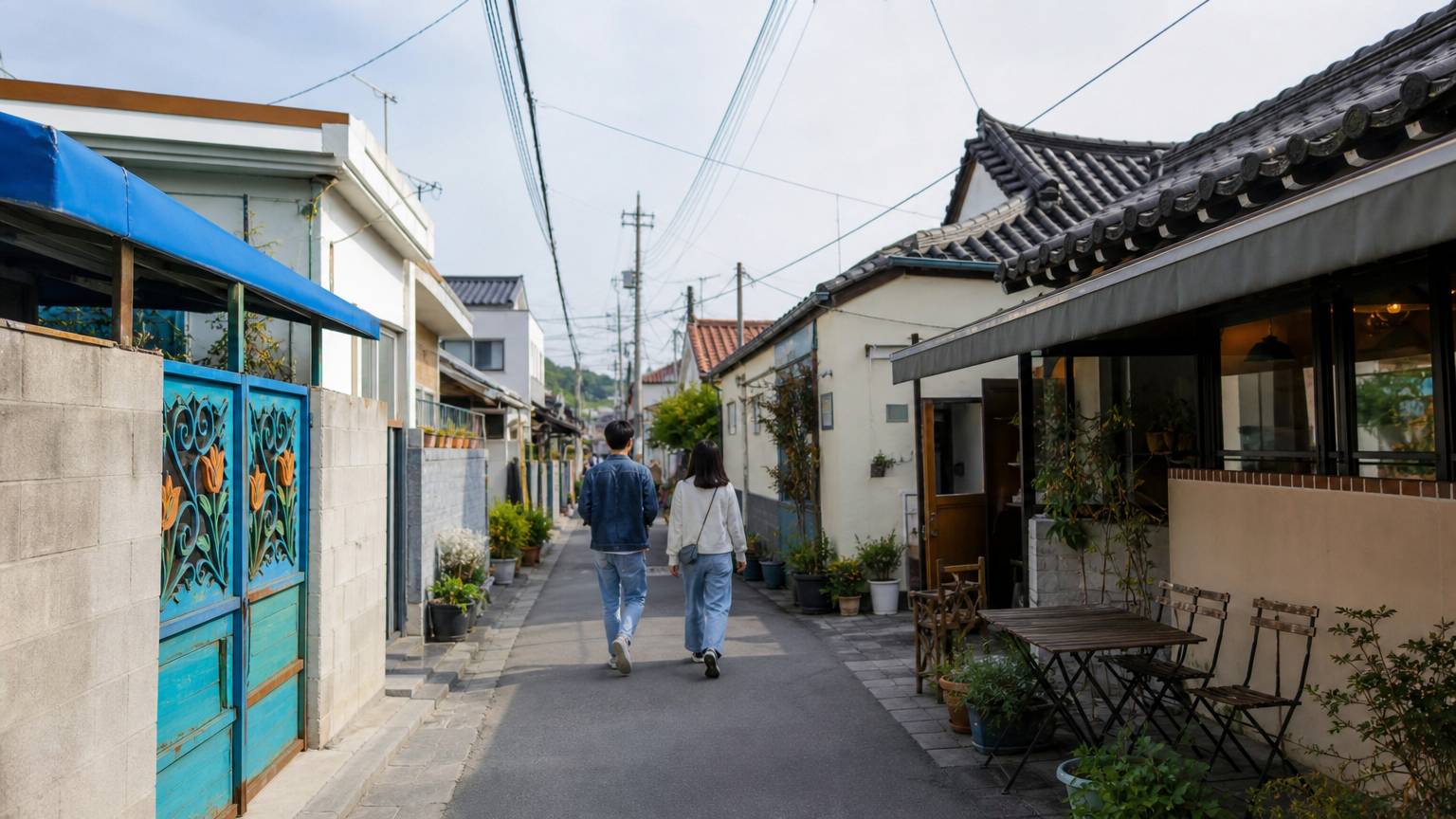
One request while you are down there. The house with the blue gate is somebody's home. People live behind it, they did not choose to appear in a drama, and the street is narrow. Photograph it from across the road and keep away from the gate and the doorbell.
FAQ
Do I have to walk the whole wall?
No, and most people should not. The full circuit is roughly 5.7 kilometres of uneven ground with real elevation. The northern section between Banghwasuryujeong and Hwahongmun is the scenic part and the drama part at once, and it takes well under an hour.
If I only want the drama locations, how long do I need?
About three hours, including a coffee. The Haenggung-dong locations sit within walking distance of one another, and the two on the wall are a short climb from the same neighbourhood.
Can I go inside Sun-jae's house?
No. It is a private residence and always has been. The same goes for most of the blue and grey gates on that street — the only interior you can actually enter is Mong Ted, which is a working café.
Is Suwon a realistic day trip from Seoul?
Yes, comfortably. Suwon Hwaseong Fortress is a straight run down Line 1 and then one short bus, and because the wall never closes there is no opening time to race.
What it actually costs
Two of the drama's locations are on the wall and the rest are in the neighbourhood inside it. The wall itself is free and never shuts; the palace is 2,000 won and closes at six. Suwon Station is the subway stop, but Paldalmun is where the day starts.
I sent a friend from Japan down here on exactly this plan. She went with her mother, who was over from Japan visiting, and what came back was not a fortress photo — it was the two of them on the café street, and a message saying they had stayed longer than they meant to. That is the part the UNESCO listing does not advertise: it is an easy place to bring a parent, because there is no queue to stand in and nothing you have to keep up with.
Add it up. Subway from Seoul, a 1,400 won bus, a 2,000 won palace ticket. The entire day out at Suwon Hwaseong Fortress costs less than one meal in Seoul, and the only part of it you can be late for closes at five.
References
-
UNESCO World Heritage Centre — Hwaseong Fortress (inscription 817, 1997)
-
Gyeonggi Tourism Organization official blog — Lovely Runner filming spots in Haenggung-dong
-
VISITKOREA — Suwon Haenggung-dong walking course