Nami Island: The Address Is in Chuncheon and the Boat Leaves from Gapyeong

One line on the map decides the day.
People search the island, get a pin, point a car or a route planner at it, and end up somewhere with no way across. Others get to the right town but treat the crossing as an afterthought and lose an hour they had allocated to the trees.
It is not a confusing place. It is a place where the address and the entrance are in two different provinces, and almost nothing in the way the trip is normally planned makes that obvious.
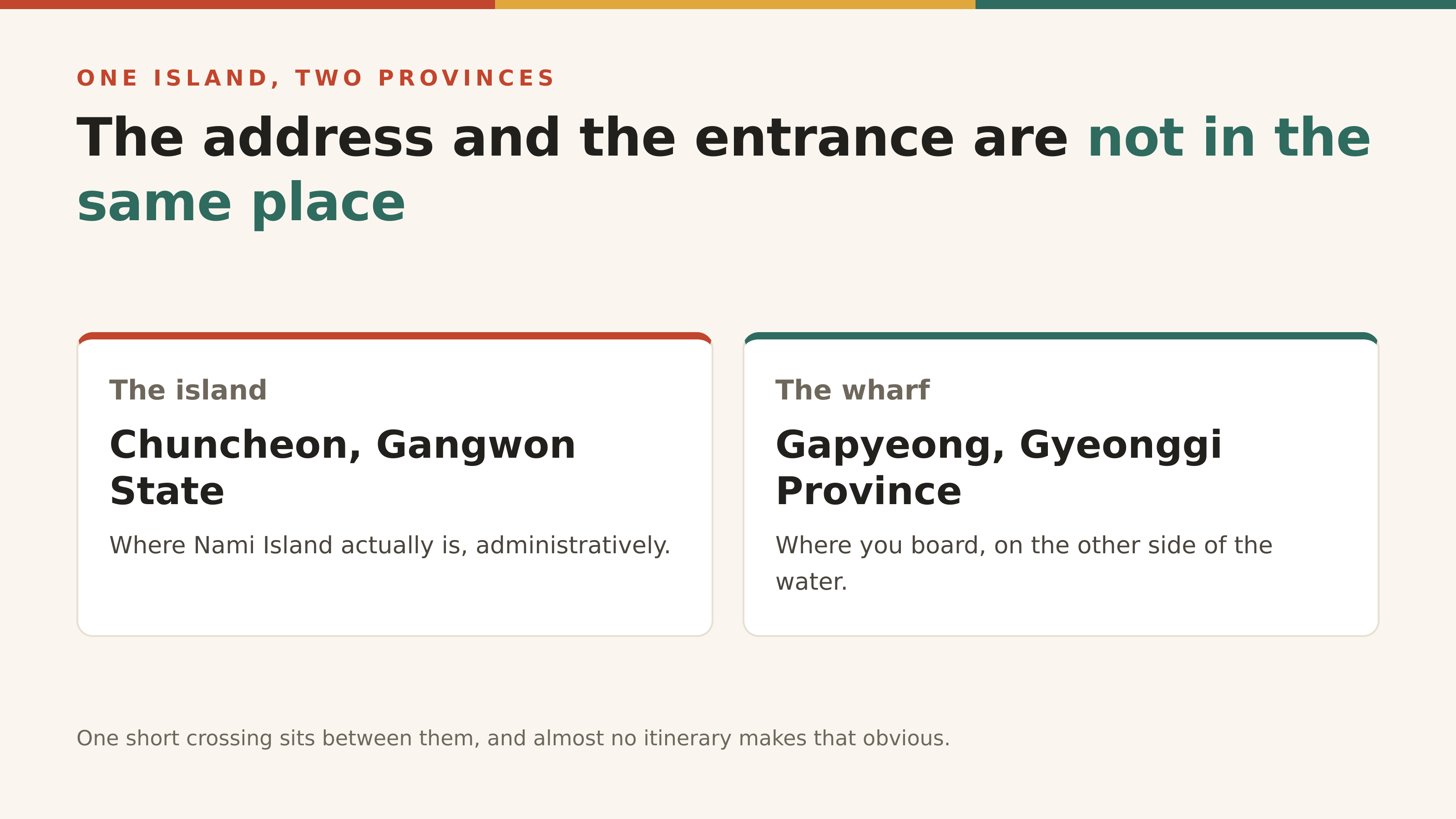
Search for the island, but travel to the wharf
The pin you want is not the pin you get.
Nami Island sits in the Bukhangang river, and it lies close enough to the eastern bank that it belongs administratively to Chuncheon, in Gangwon State. The wharf you actually leave from is on the other side of the water in Gapyeong, in Gyeonggi Province. Two provinces, one short crossing between them.
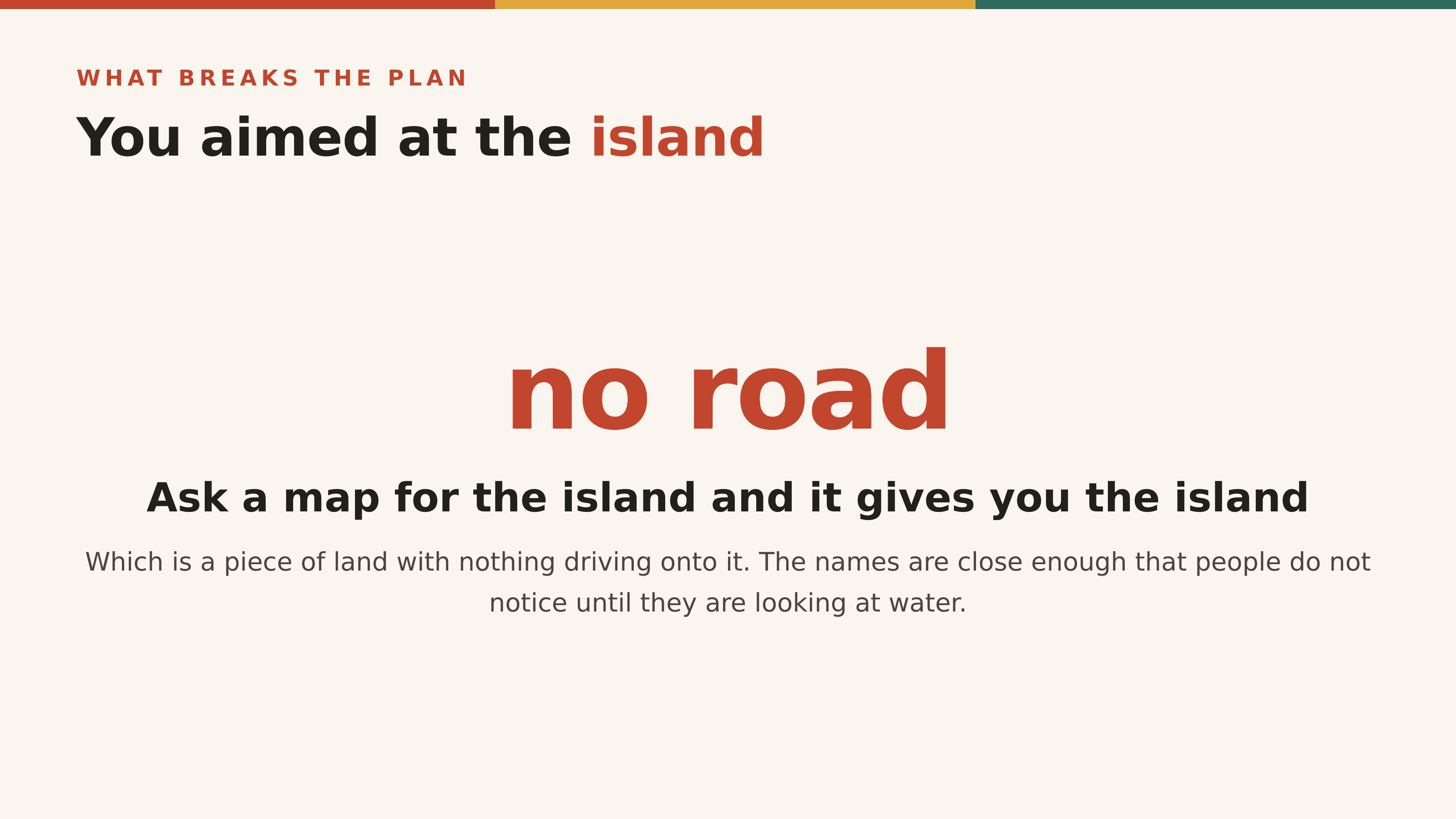
That single split is what breaks the planning. Ask a map for the island and it will happily give you the island, which is a piece of land with no road onto it. Ask for the wharf in Gapyeong and you get somewhere a bus, a train or a car can actually deliver you. The names are similar enough that people do not notice they have aimed at the wrong one until they are looking at water.
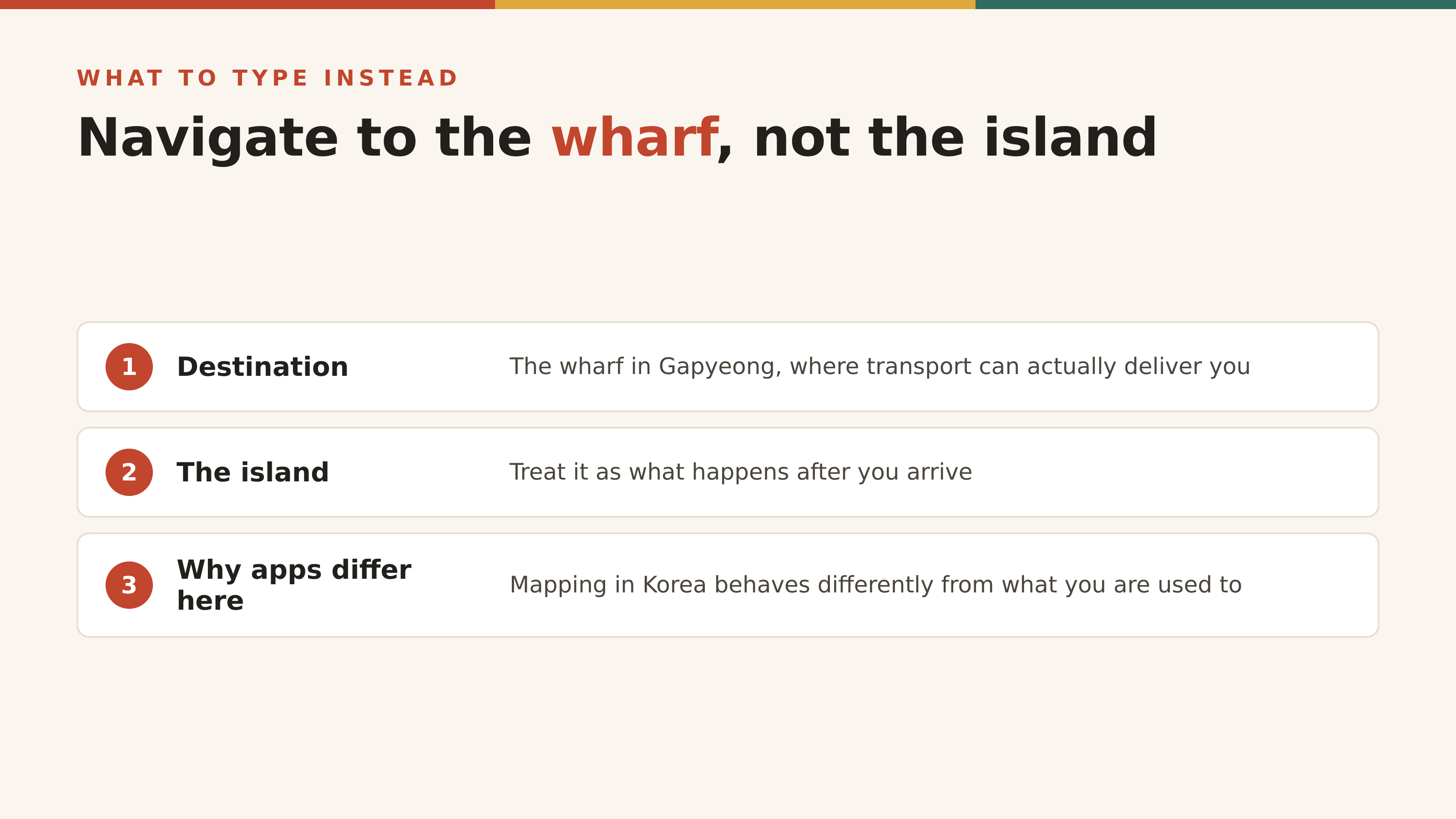
So make the wharf the destination in whatever you are navigating with, and treat the island as the thing that happens after you arrive. If your map app has been behaving oddly in Korea generally, that has its own explanation, and google maps korea covers why directions come out strange here.
Once you are standing at the water, what decides the rest of the day?
The crossing has a timetable and your plan probably does not
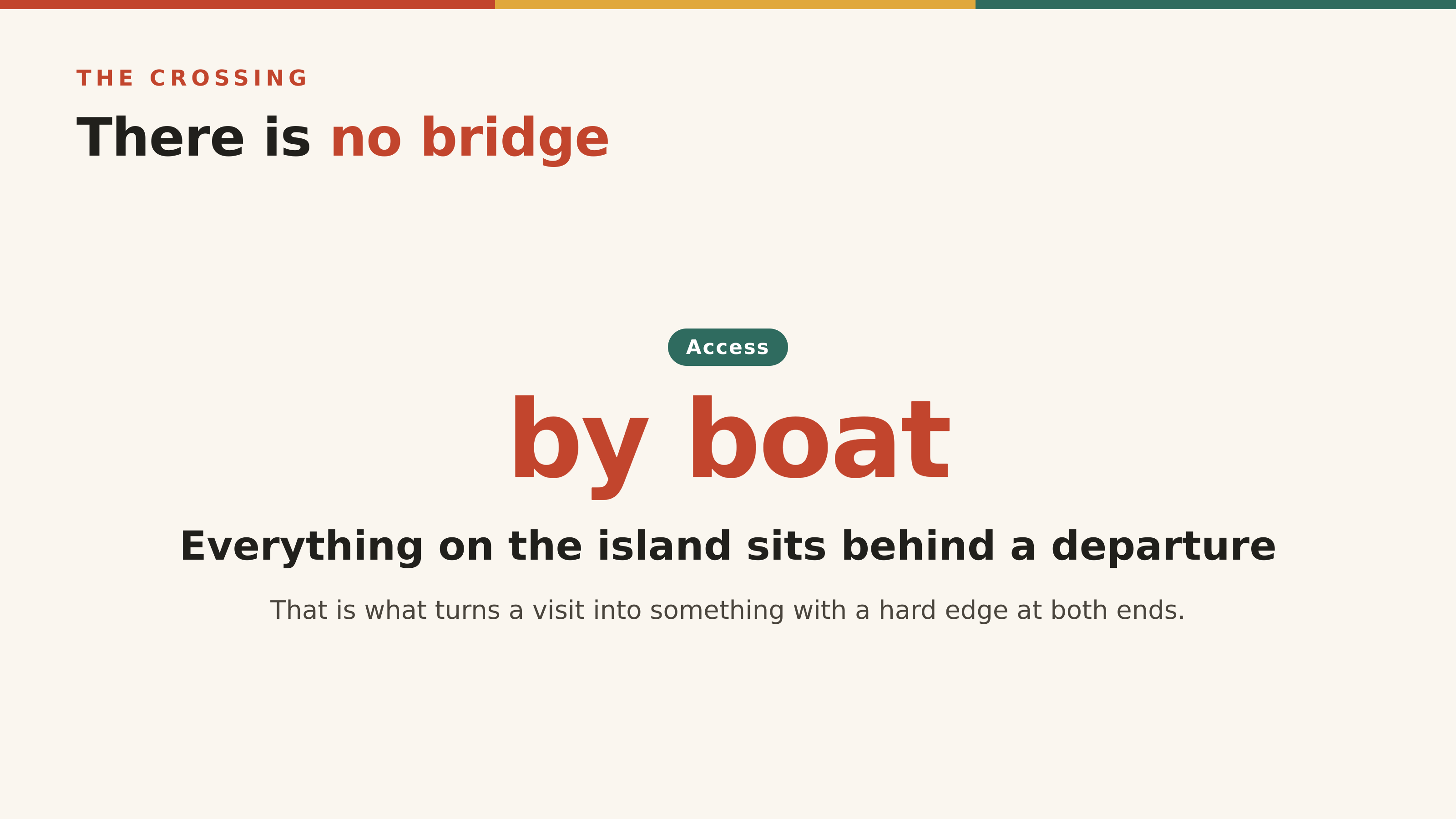
There is no bridge, so everything on the island sits behind a boat.
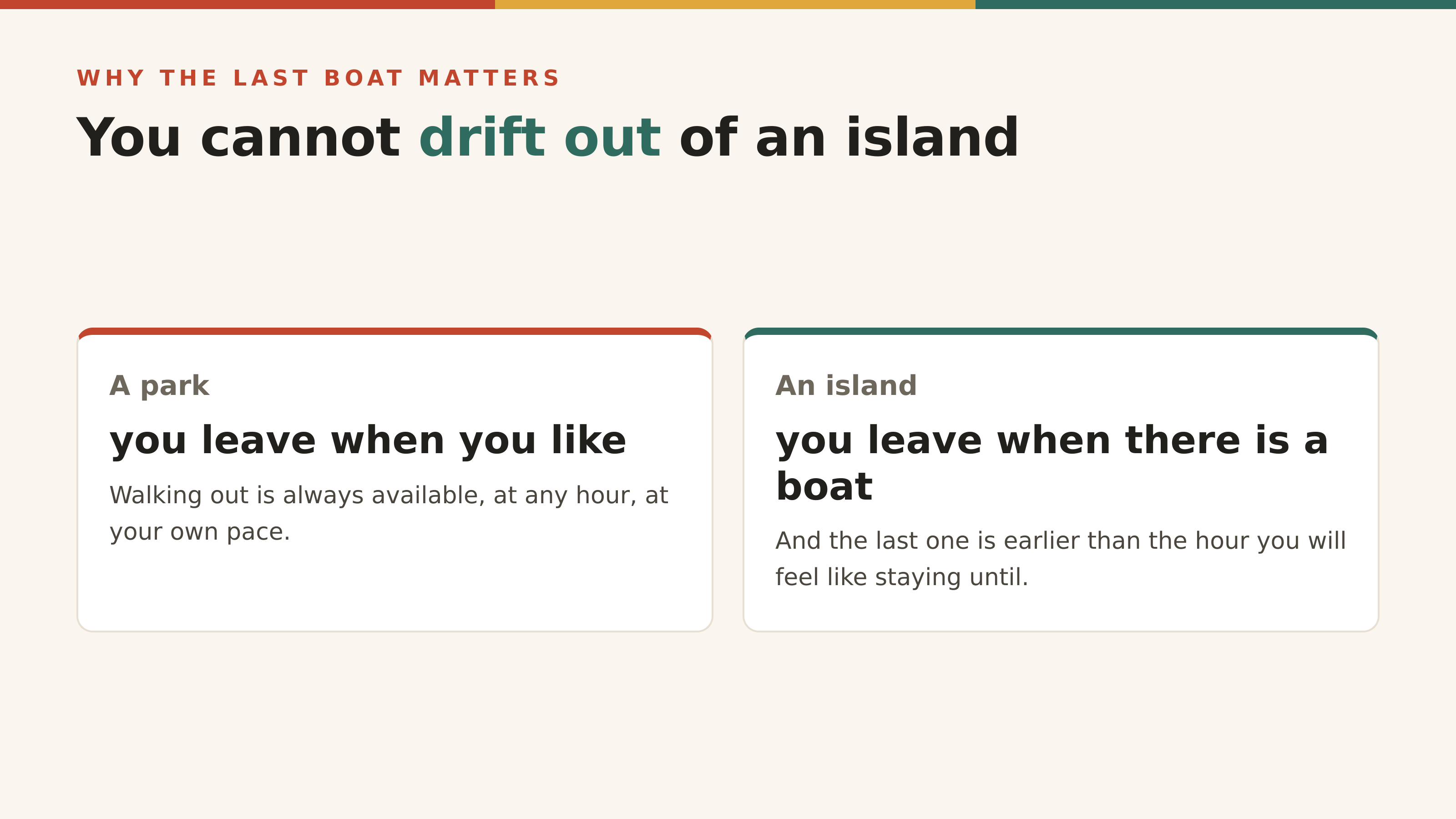
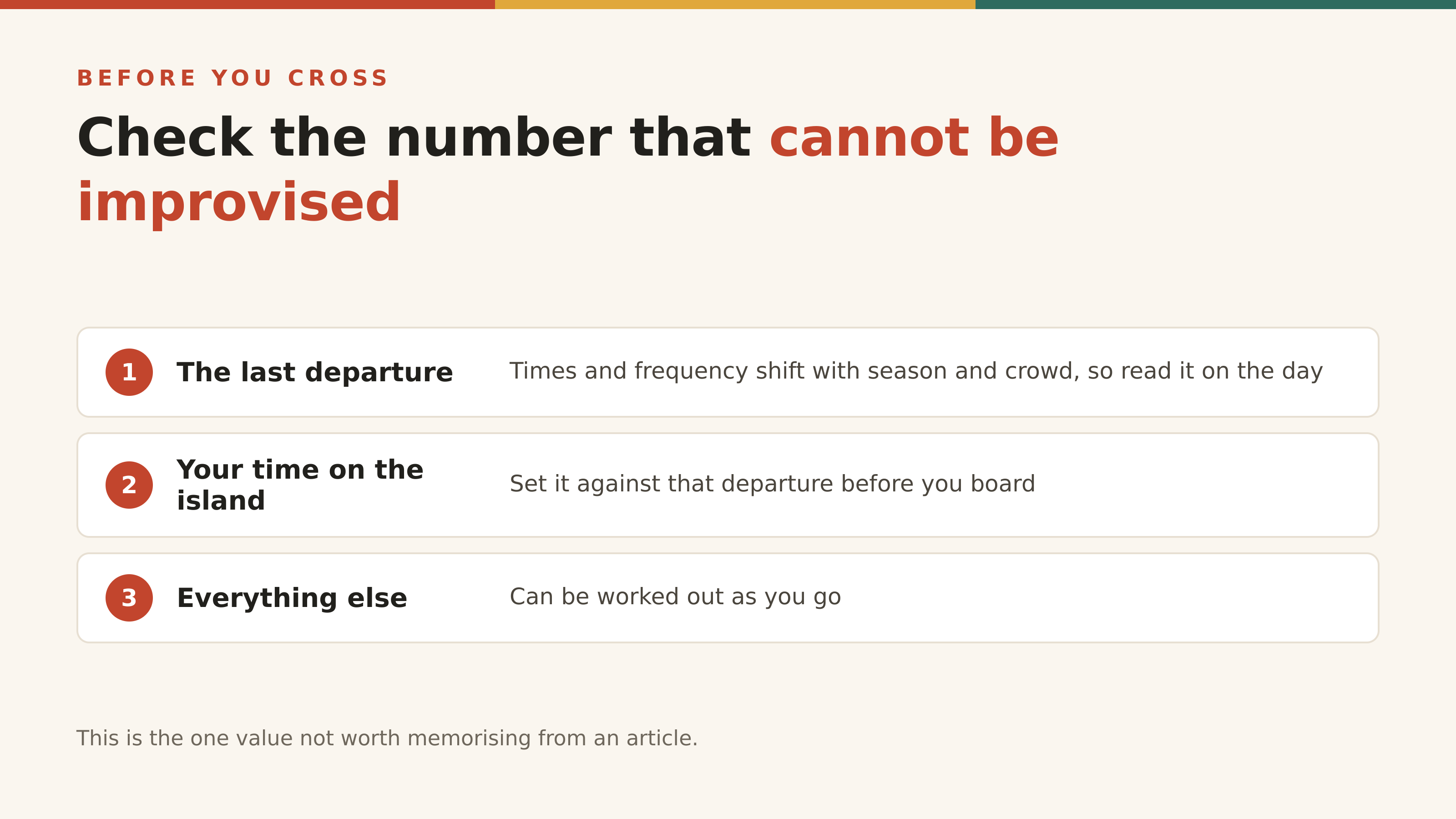
That matters more than the crossing time itself, which is short. It matters because it turns your visit into something with a hard edge at both ends. You cannot drift off the island the way you drift out of a park. You leave when there is a boat, and the last one is earlier than the hour you will feel like staying until, particularly once the light goes.
Sailing times and frequency change with the season and the crowd, so the number worth having is not one you can memorise from an article. Look at the last departure on the day, before you cross, and set it against how long you actually want on the island. Everything else on the trip can be improvised. That one cannot.
Two practical consequences follow. Buy or top up your transport card before you go rather than at the wharf, since t money card in korea explains what it does and does not cover. And decide on the way out, not on the way back, whether you are eating on the island or back on the mainland, because that choice quietly eats forty minutes at exactly the wrong end of the day.
And if the trees are the reason you are going at all?
Choose the week, not the day
For an island people visit to look at trees, the week you pick does more work than the hour you arrive.
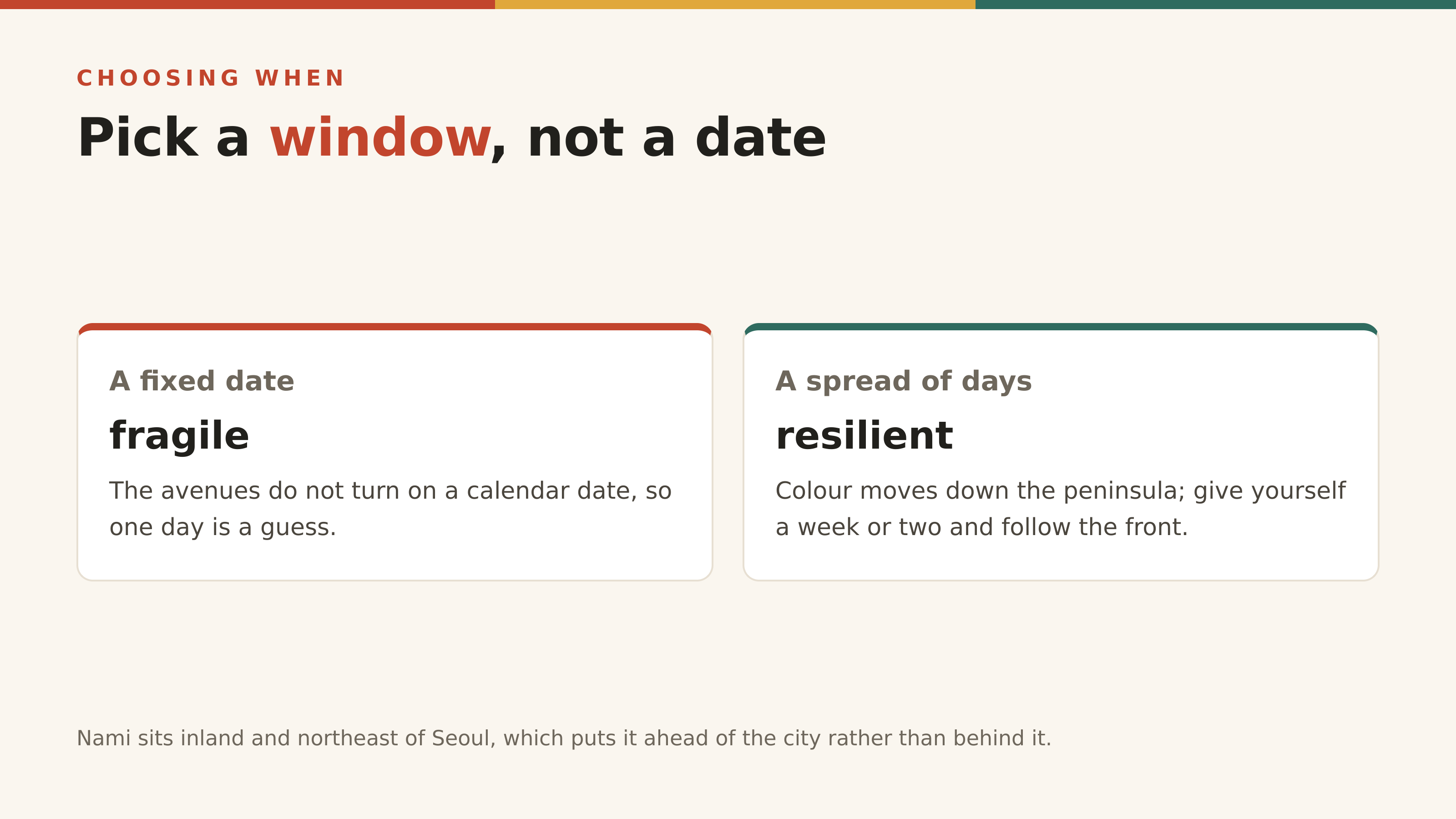
The reason is that the tree-lined avenues everyone photographs do not turn on a fixed calendar date. Colour moves down the peninsula rather than arriving everywhere at once, so the useful question is not "when is autumn" but "when does it reach this latitude". Nami sits inland and northeast of Seoul, which puts it ahead of the city rather than behind it.
That is why a plan built around a specific date is fragile and a plan built around a window is not. Give yourself a spread of a week or two and check the front as it moves. We wrote the general version of this argument in autumn in korea, and it applies to this island more sharply than to most places, because the avenues are the entire point of the visit.
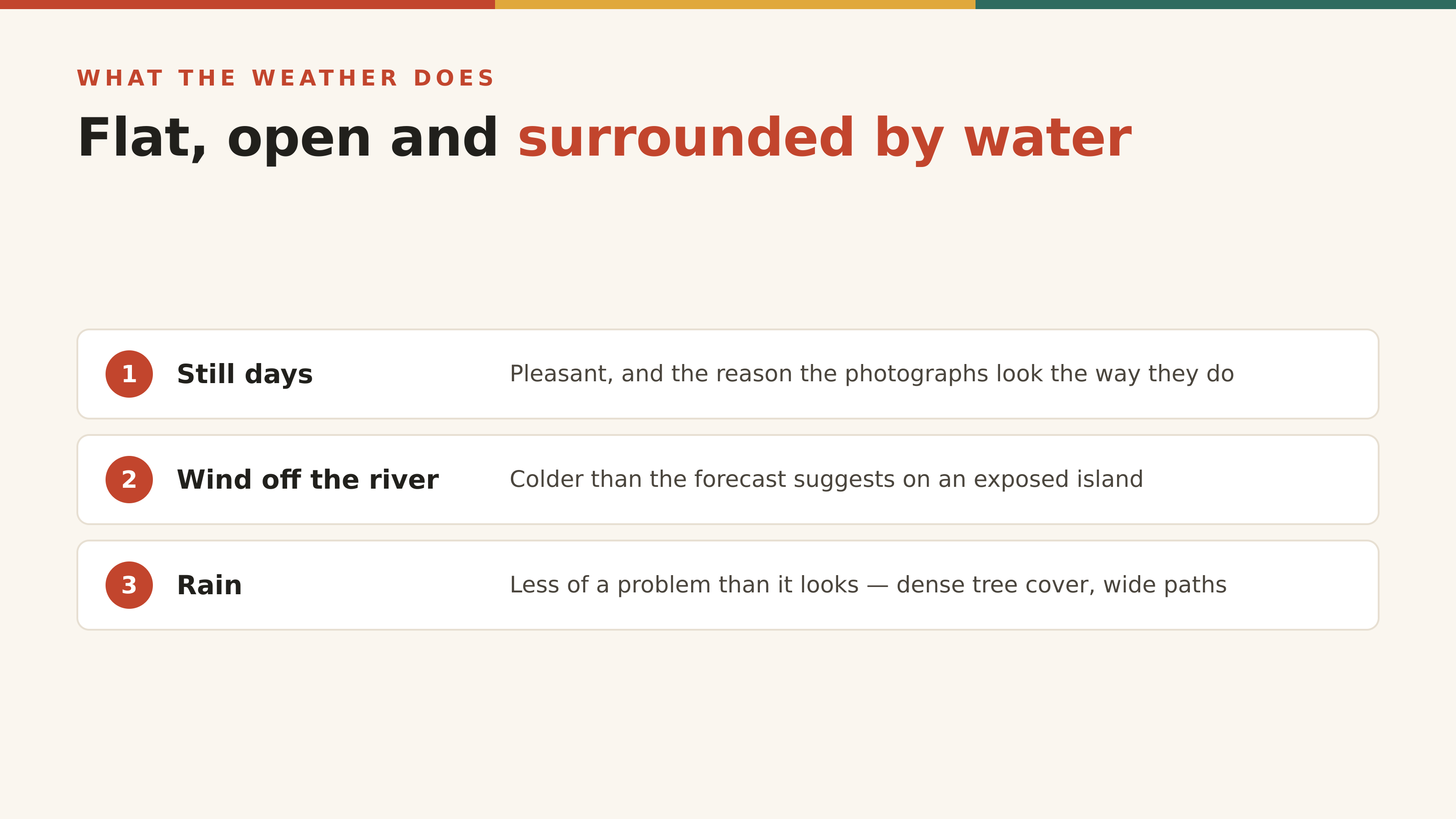
Weather does the rest. The island is flat, open and surrounded by water, which is pleasant on a still day and unpleasant in wind in a way the photographs never show. Rain is less of a problem than it looks, since the tree cover is dense and the paths are wide, but wind coming off the river is worth checking before you commit to a long afternoon.
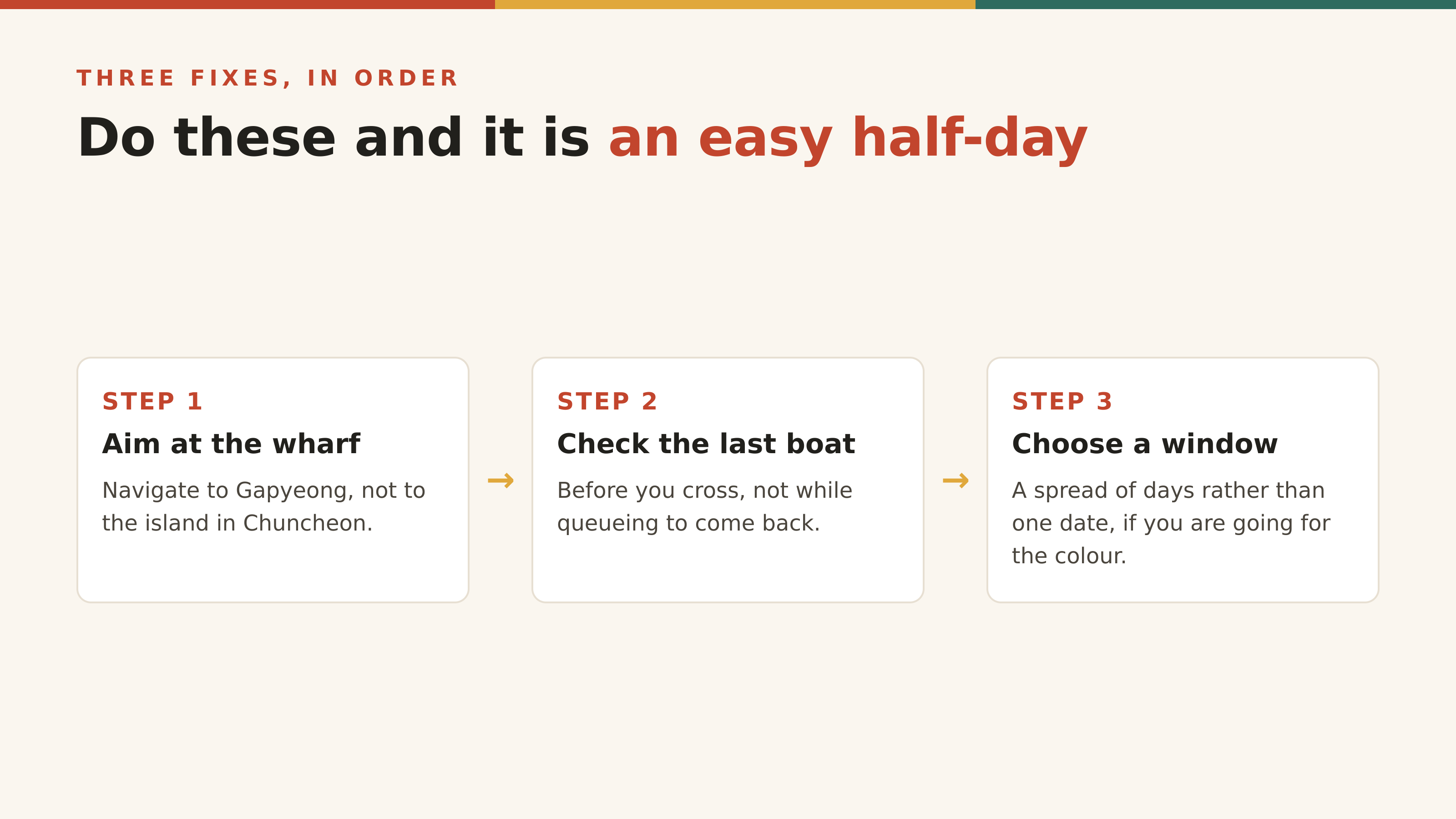
What to fix before you leave
Three things, in this order. Navigate to the wharf in Gapyeong rather than to the island in Chuncheon. Check the last boat before you cross, not after. And choose a window of days rather than one date if you are going for the colour.
Do those and Nami Island is an easy half-day. Skip the first one and you may not get onto it at all.
If you are only in Korea for a week and trying to decide whether this is worth a day out of Seoul, the honest answer depends entirely on the season you are here in. Ask that question first.
FAQ
Where is Nami Island, exactly?
The island itself belongs to Chuncheon in Gangwon State, but the wharf you board from is in Gapyeong, in Gyeonggi Province. Navigation apps will route you to whichever one you named, so name the wharf.
How do I get to Nami Island from Seoul?
You travel to Gapyeong and cross from there. The island has no road onto it, so whatever combination of train, bus or car you use, the journey ends at the wharf and the last stretch is over water.
When is the best time to go?
If you are going for the autumn colour, pick a window rather than a date, and remember that this area is inland and northeast of Seoul so it turns ahead of the city. Outside autumn the island is quieter and the same walk takes noticeably less time.
What is the one thing people forget?
The last boat. There is no bridge, so the end of your day is set by the departure timetable rather than by when you feel like leaving. Check it before you cross rather than while you are queueing to come back.
References
- Nami Island administrative location and wharf location — Digital Gapyeong Cultural Encyclopedia, Academy of Korean Studies