N Seoul Tower: Getting Up the Mountain Costs 1,500 Won. Getting Inside Costs 29,000.

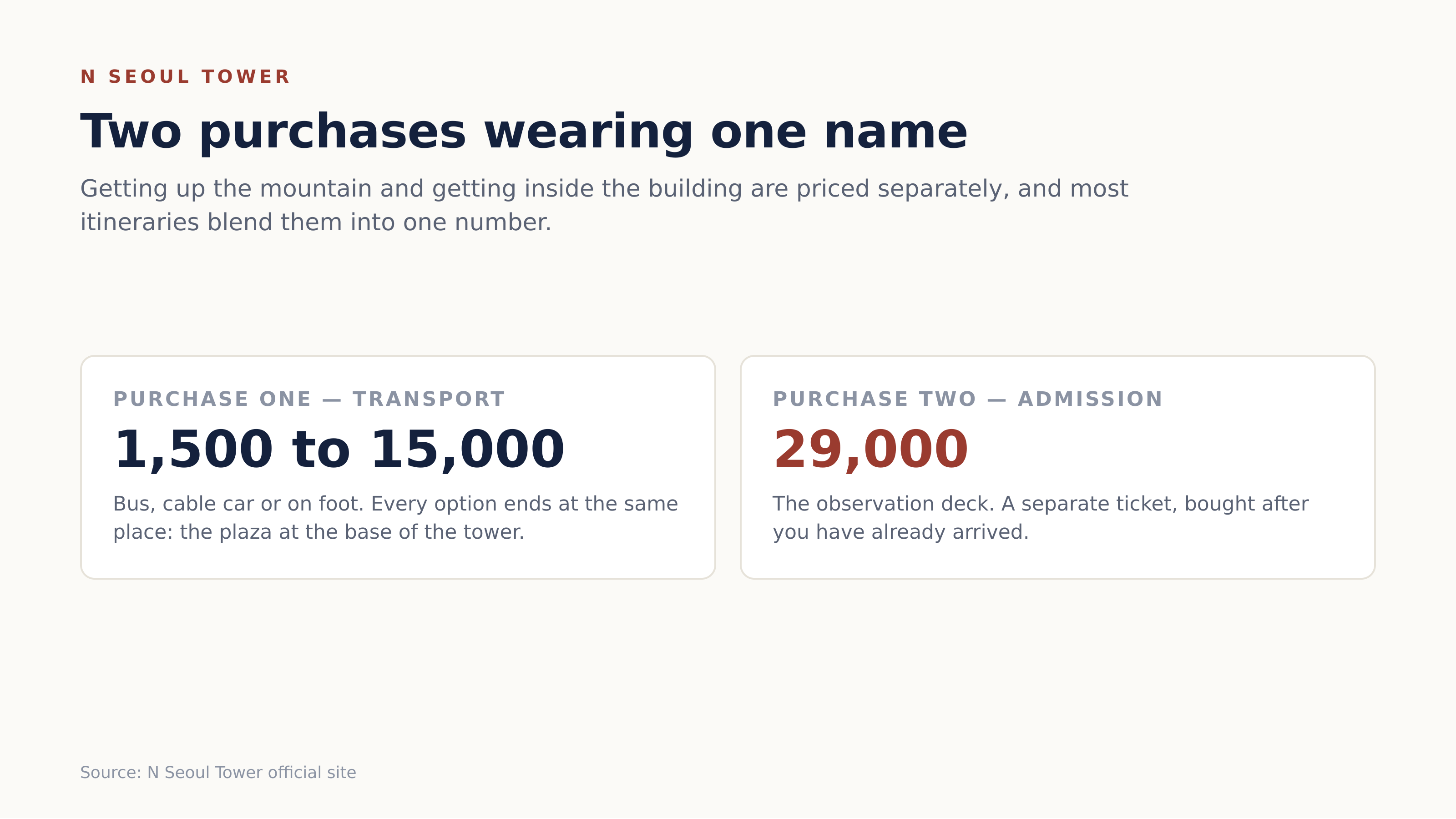
There are three ways up Namsan. They cost 1,500, 12,000 and 15,000 won. None is the tower's price.
That is because getting up the mountain and getting inside the tower are two separate purchases, and almost every itinerary online blends them into one number. People arrive at the top having already spent 15,000 won on a cable car, discover there is another fee waiting at the lift, and decide the whole hill was a tourist trap. It is not. It is just two decisions wearing one name.
This article separates them. First how you get up, then what the tower itself charges, then how a Korean actually picks between the two.
Three ways up, and the cheapest is a normal city bus
The transport decision is where most of the money is won or lost, and the bus wins it.
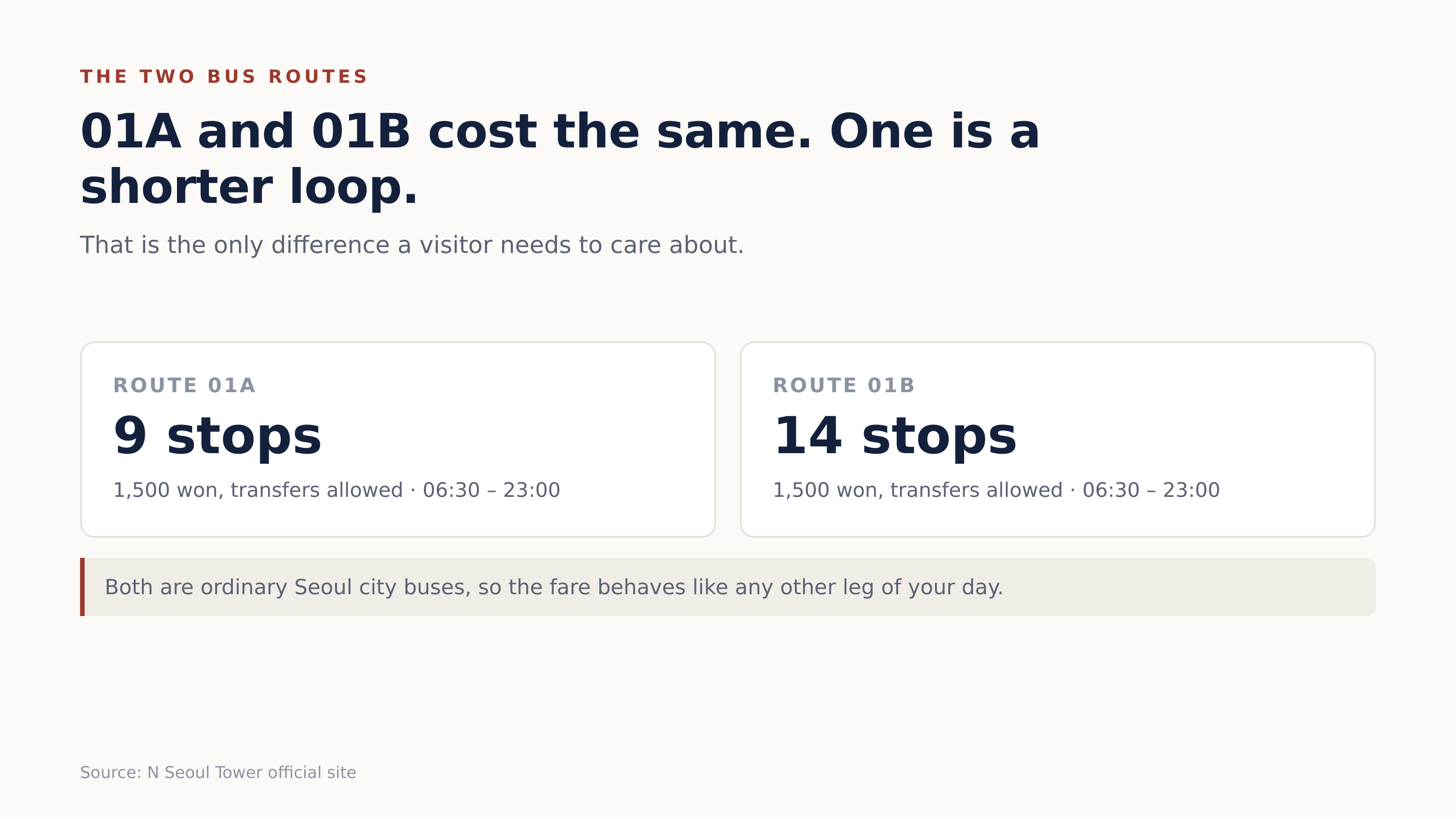
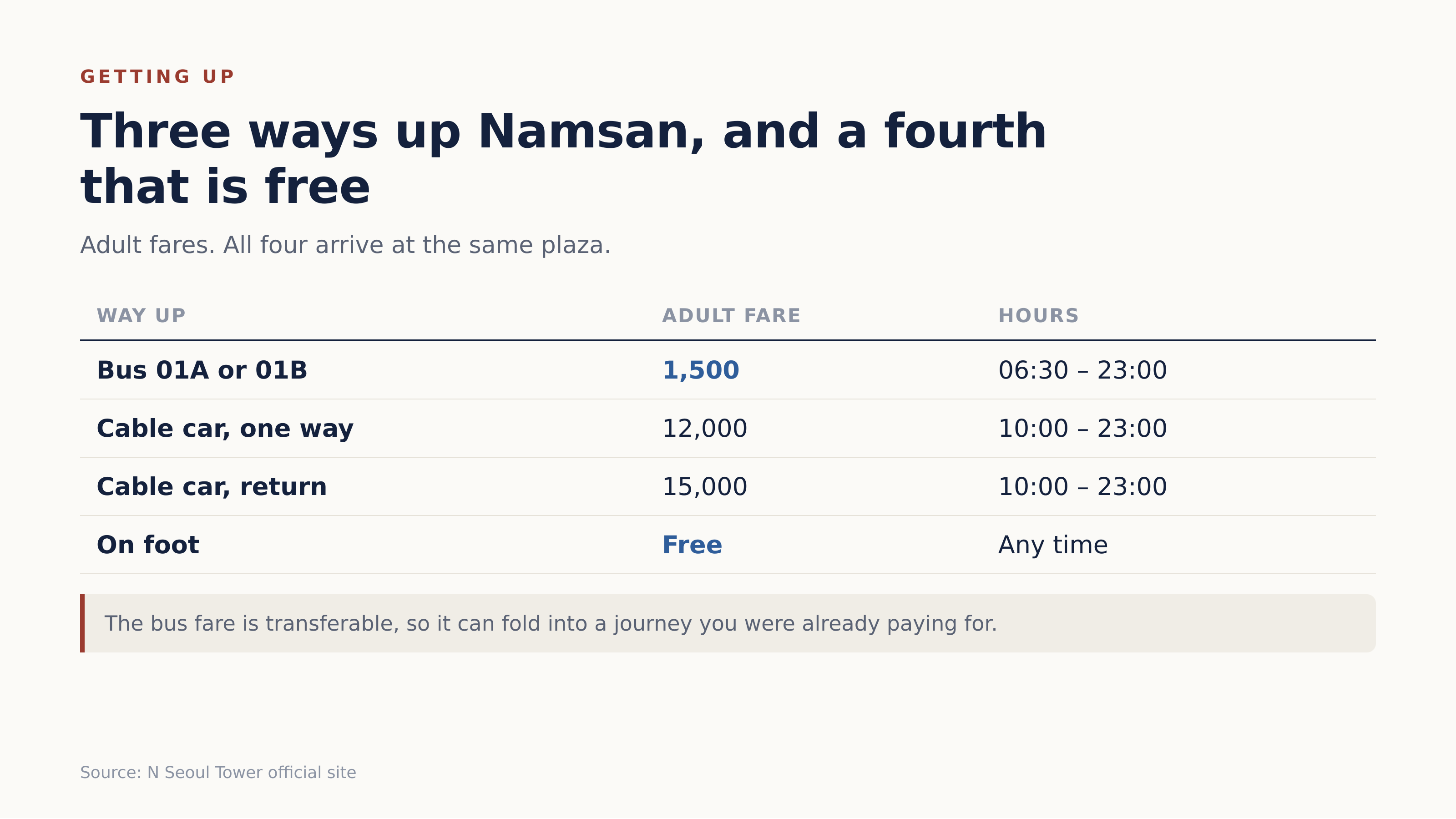
Two circular bus routes run up Namsan — 01A and 01B — and both cost 1,500 won with transfers allowed, which means the trip can fold into a journey you were already paying for. They run from 06:30 to 23:00, so they cover the sunset window and the late evening that people come for. Route 01A makes nine stops and 01B makes fourteen, which is the only real difference to a visitor: one is a shorter loop.
The cable car is the option everyone photographs. It costs 15,000 won return or 12,000 won one way for an adult, with youth fares at 11,500 and 9,000 won, and it runs on the same 10:00 to 23:00 evening schedule as the tower. Groups of thirty or more pay 13,500 won return.
| Way up | Adult fare | Hours |
|---|---|---|
| Bus 01A or 01B | 1,500 won, transferable | 06:30 to 23:00 |
| Cable car, one way | 12,000 won | 10:00 to 23:00 |
| Cable car, return | 15,000 won | 10:00 to 23:00 |
| On foot | Free | Any time |
Then there is walking, which costs nothing. Namsan is a public park with paths running up it, and plenty of Seoul residents treat the climb as the point of the trip rather than an obstacle before it. If that idea appeals, it is worth reading how we pick a mountain in the first place in our guide to hiking in Seoul and why we take visitors up Inwangsan rather than the famous one.
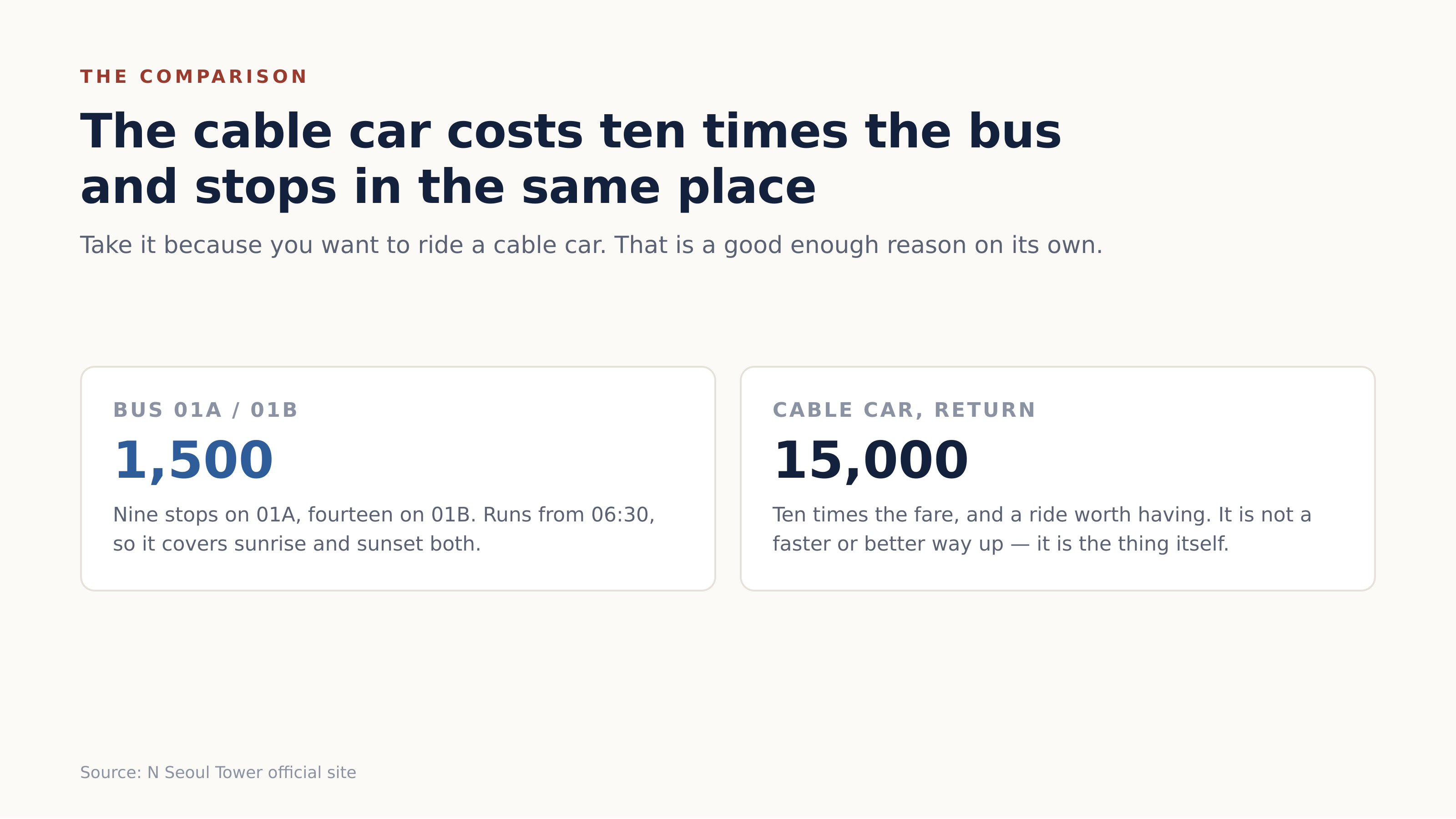
The blunt comparison is that the cable car costs ten times the bus and both stop at the same place. Take the cable car because you want to ride a cable car, which is a fine reason, not because you think it is the way up.
So if 1,500 won puts you at the foot of the tower, what is the 29,000 won for?
The tower charges separately, and it charges a lot
N Seoul Tower tickets are for the observation deck, and they are the expensive part of the day.
An adult pays 29,000 won and a child pays 23,000 won. Adult means thirteen and over, child means three to twelve, and there is a senior rate from sixty-five with ID. The deck keeps the same long hours as the cable car, 10:00 to 23:00, which is genuinely useful — this is one of the few paid attractions in Seoul you can still enter at ten at night.
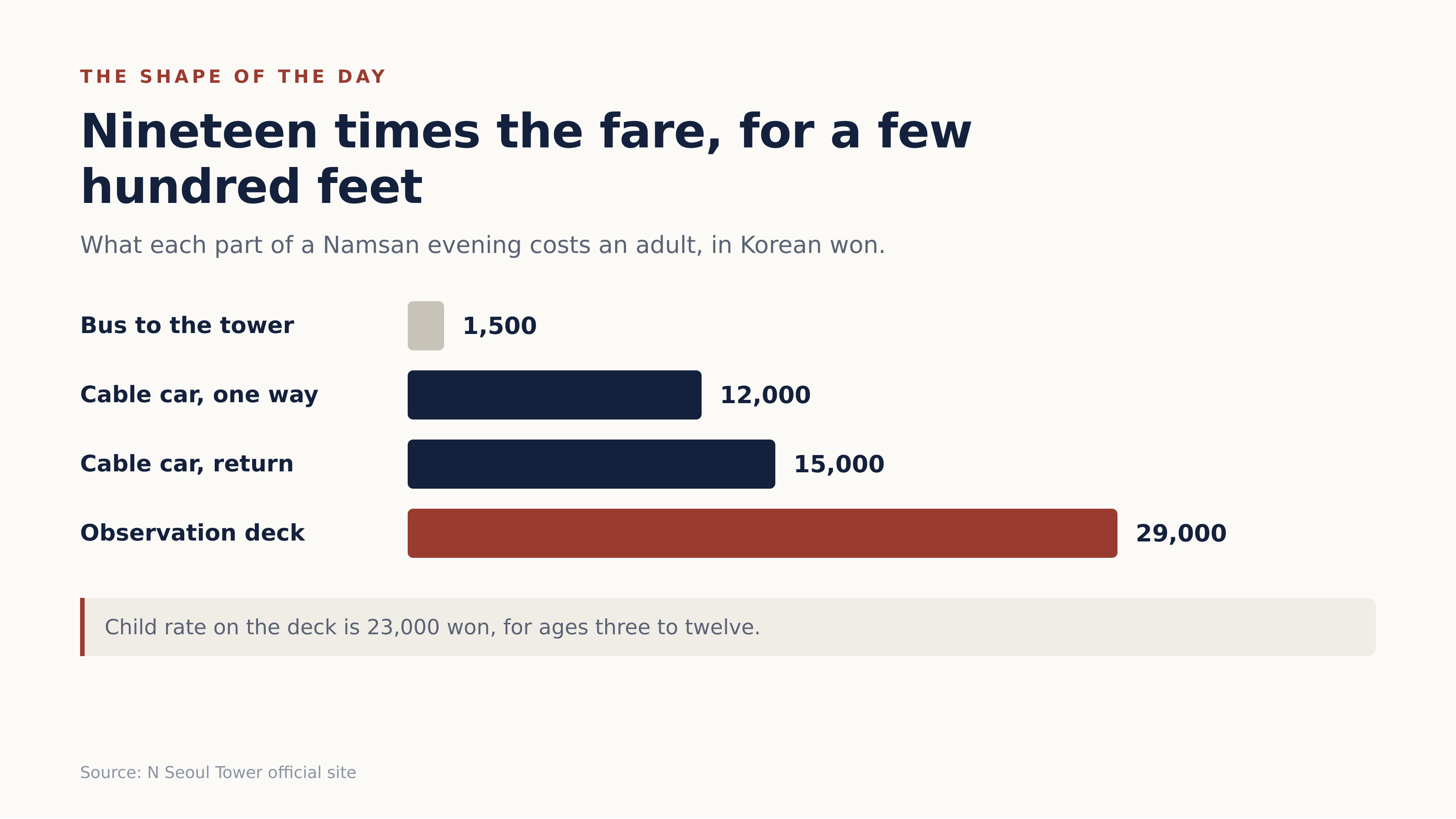
Put beside the transport, the shape of the day becomes obvious. Getting up the mountain by bus is 1,500 won. Going up inside the building is 29,000. That is roughly nineteen times the fare, for a change in altitude of a few hundred feet.
| What you are paying for | Adult |
|---|---|
| Bus to the tower | 1,500 won |
| Cable car return | 15,000 won |
| Observation deck | 29,000 won |
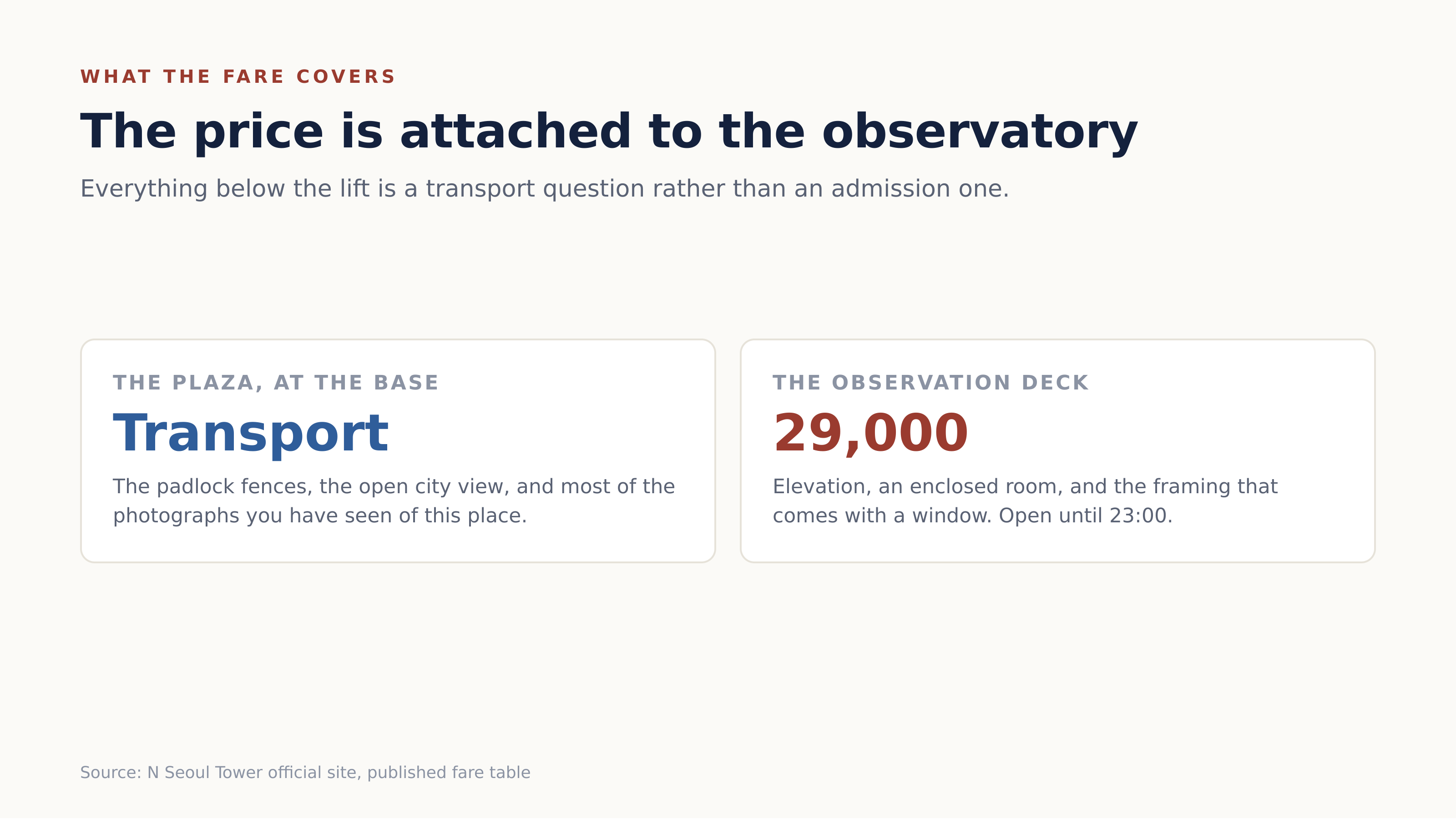
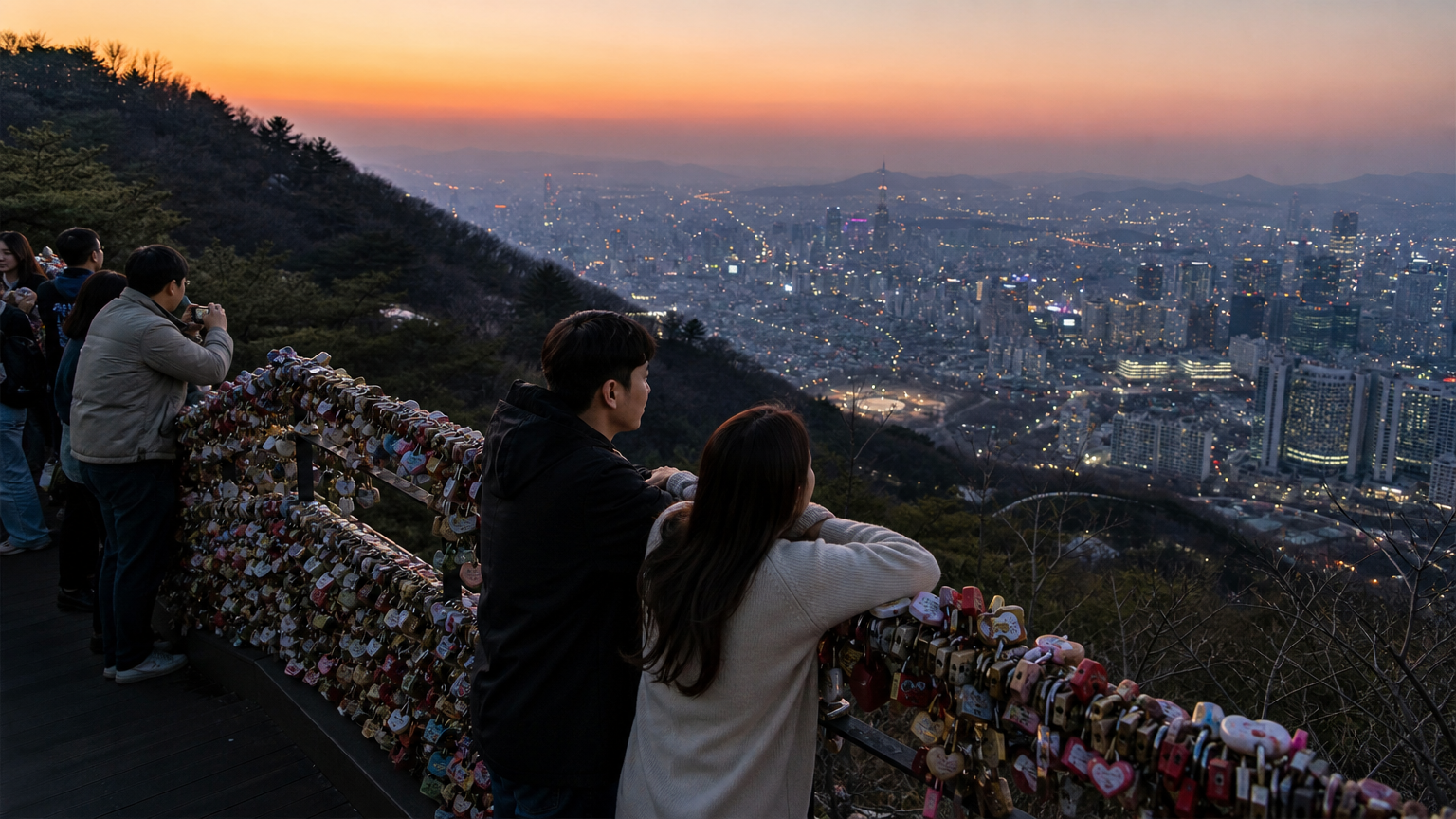
What the fare table tells you is precise: the price is attached to the observatory. Riding up to the plaza at the tower's base is a transport question and nothing more. That is where the fence of padlocks is, where the city spreads out below you, and where most of the photographs you have seen of this place were actually taken.
So N Seoul Tower tickets are a real decision rather than an automatic one. Which brings us to how to make it.
How to decide whether to go inside at all
Buy the deck ticket if you want height and glass; skip it if you want the view and the air.
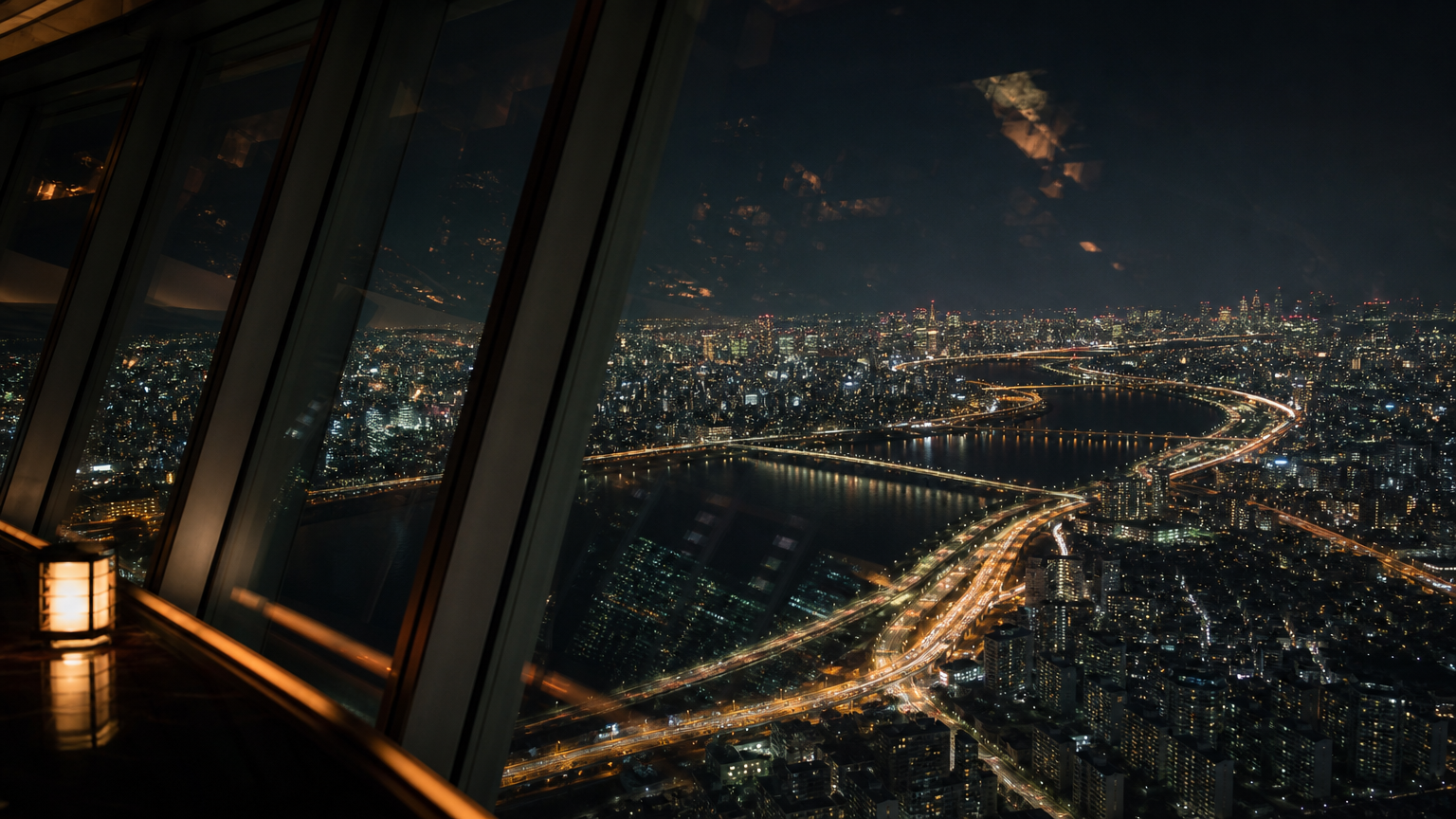
The reason is that the two experiences are less different than the price gap suggests. From the plaza you are already on top of a mountain in the middle of a city, looking at the same skyline. What 29,000 won adds is elevation, an enclosed room, and the framing that comes with a window. Some people want exactly that. Many discover afterwards that they wanted the terrace.
There is a pattern to how locals use the hill, and it is closer to the way we use the riverside than the way anyone uses an attraction. People come up in the evening, walk, sit, look, and go home. It is the same instinct behind what we do at the Han River on an ordinary evening — a free outdoor place with a view, treated as somewhere to spend time rather than somewhere to tick off.
So work it out in this order. Decide first whether you are going inside, because that decides your budget. Then pick your transport, because if you are already spending 29,000 won on the deck, the 1,500 won bus keeps the day sane. If you are not going inside, the cable car ride becomes the treat and it earns its price.
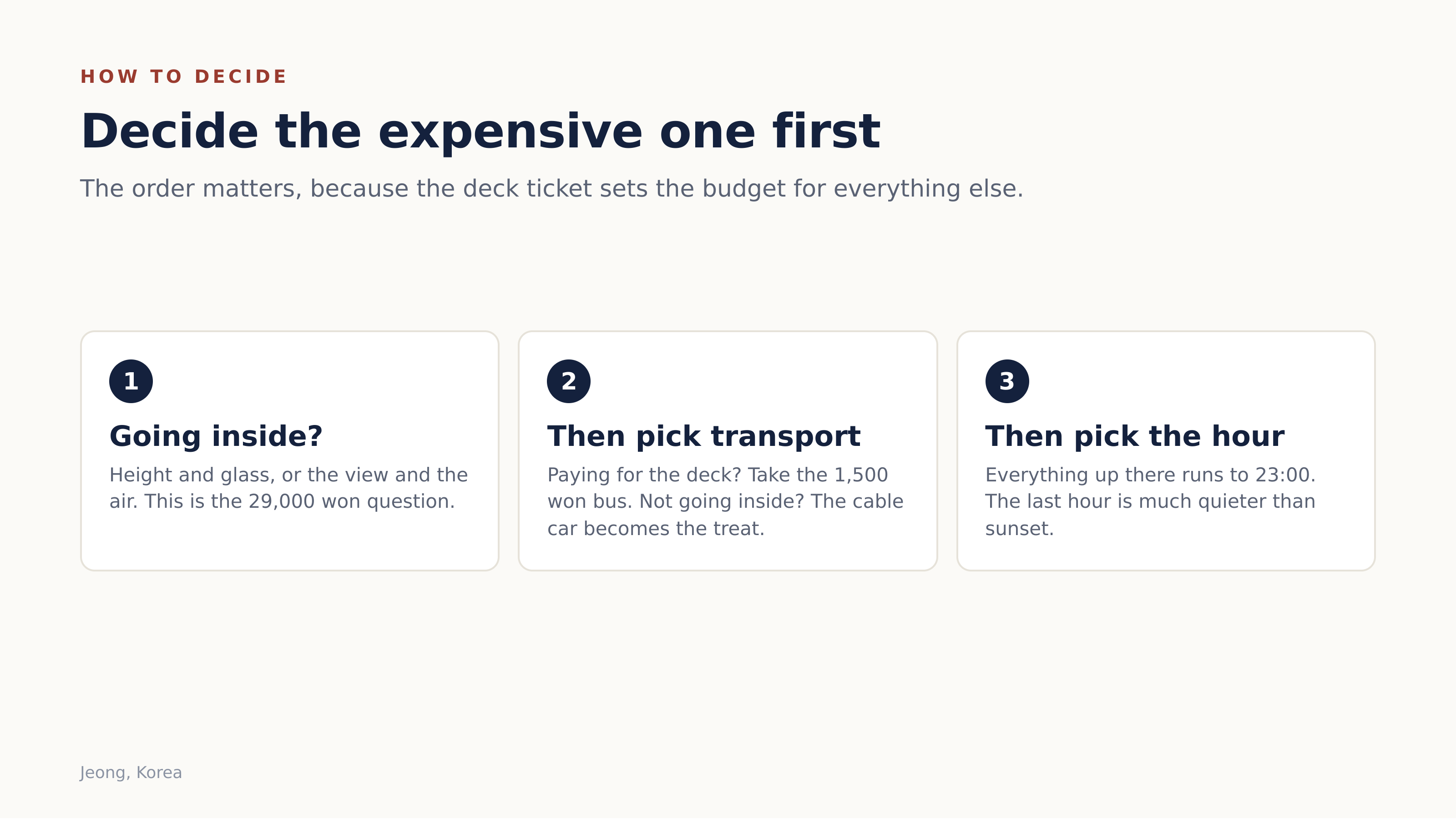
The short version
Two purchases, not one. Fifteen hundred won gets you up the mountain, fifteen thousand gets you up it in a glass box, and twenty-nine thousand gets you into the building at the top.
Decide the last one first. Then go in the evening, because everything up there runs until eleven at night and the city is worth more after dark than before it.

FAQ
Do I need N Seoul Tower tickets to enjoy the view?
The published fare covers the observation deck. Reaching the plaza at the base of the tower, where the padlock fences and the open city view are, is a matter of transport rather than admission — a 1,500 won bus will put you there.
Is the cable car worth it instead of the bus?
Only as an experience in itself. It costs 15,000 won return against 1,500 won for the bus and ends at the same place. If the ride is something you want to do, take it one way at 12,000 won and take the bus back down.
How late can I go up?
The cable car and the observation deck both run from 10:00 to 23:00, and the two bus routes run from 06:30 to 23:00. Evening is the usual choice, and the last hour is much quieter than sunset.
What counts as a child fare for N Seoul Tower tickets?
For the observation deck, adult is thirteen and over and child is three to twelve, with a senior rate from sixty-five on production of ID. The cable car uses a youth fare covering thirty-six months to twelve years.
References
- N Seoul Tower official site — observation deck fares, opening hours, cable car fares and bus route information