Naengmyeon: It Was a Winter Dish, and the Split Is the Flour, Not the Broth

Your first thought will be that something is missing. Nothing is.
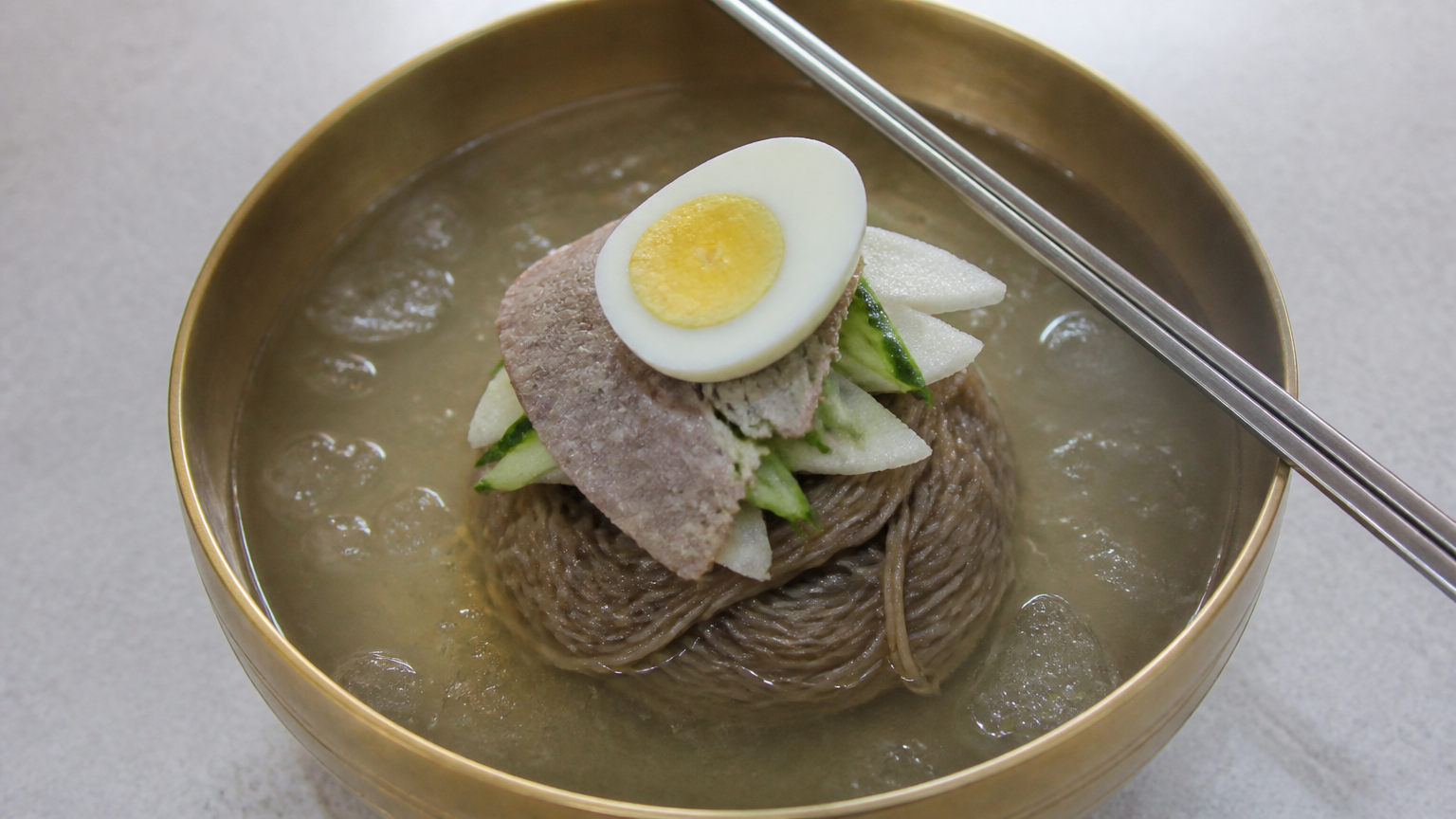
This is the third and last part of the grill series, and it is the part that happens after the meat. You have eaten pork, you have argued about beef, and then somebody at the table orders cold noodles to finish.
Two things about naengmyeon are almost universally believed and both are wrong. The first is that it is a summer food. The second is that the difference between the two famous kinds is whether it comes in broth.
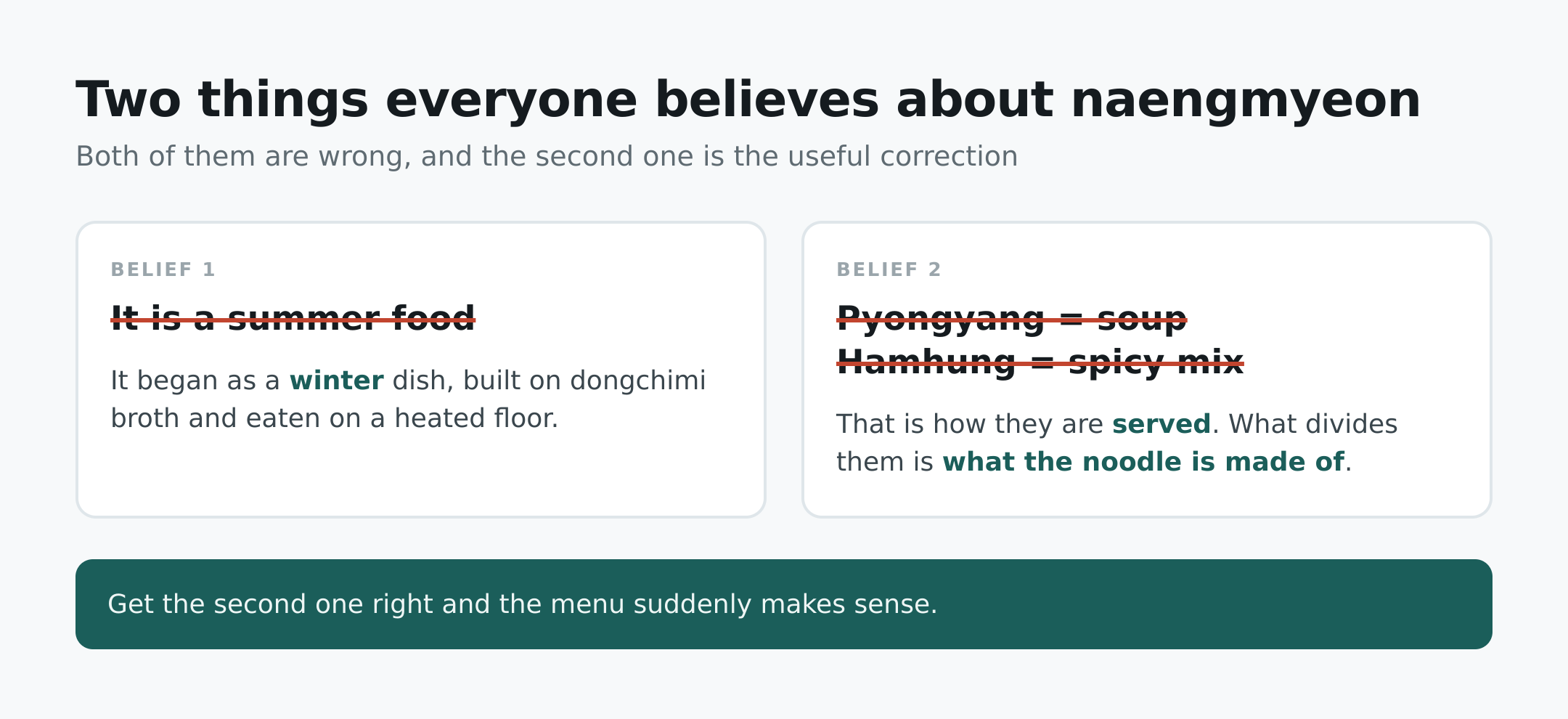
It was a winter dish
Cold noodles in the cold. That is the original, and it is not a quirk — it is the whole logic of the dish.
The broth that made naengmyeon worth eating was dongchimi, the thin, sour, watery radish kimchi that comes into its own in deep winter. Old writing about Pyongyang treats winter naengmyeon as the thing an exile misses most about home, not a hot-weather cooler.
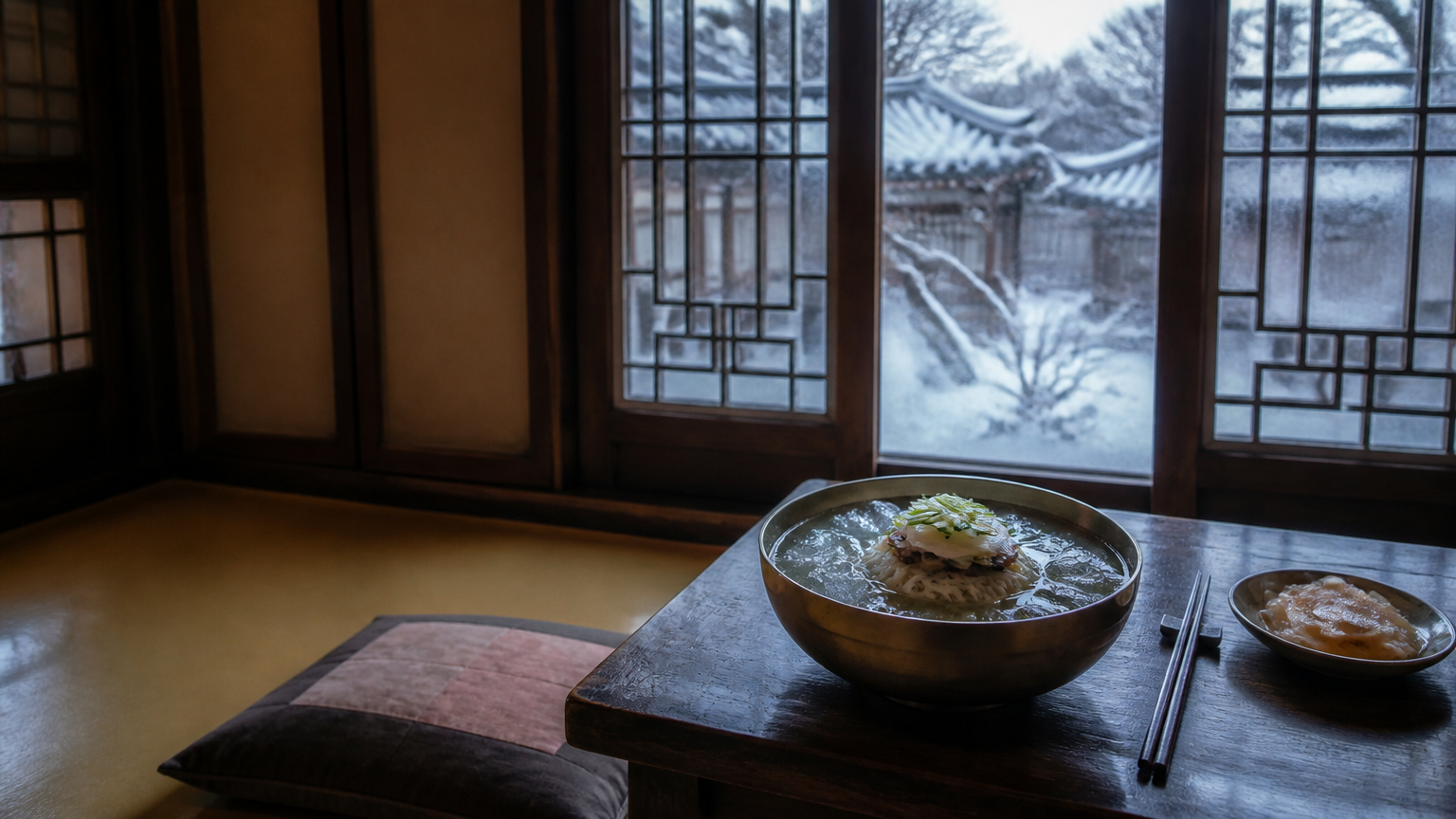
Picture the actual scene and it stops being strange: a heated ondol floor, the room warm from underneath, and a bowl of icy buckwheat noodles in your hands. The contrast is the point. Eating it in August is the modern habit, and the modern habit is fine — but it is a reversal, not the tradition.
If you want the rest of the sequence that leads to this bowl, Korean BBQ in Seoul: The Three Koreans Name, and Why No App Will Get You In is where the evening usually starts.
So what actually separates the two famous kinds?
The split is the flour, not the broth
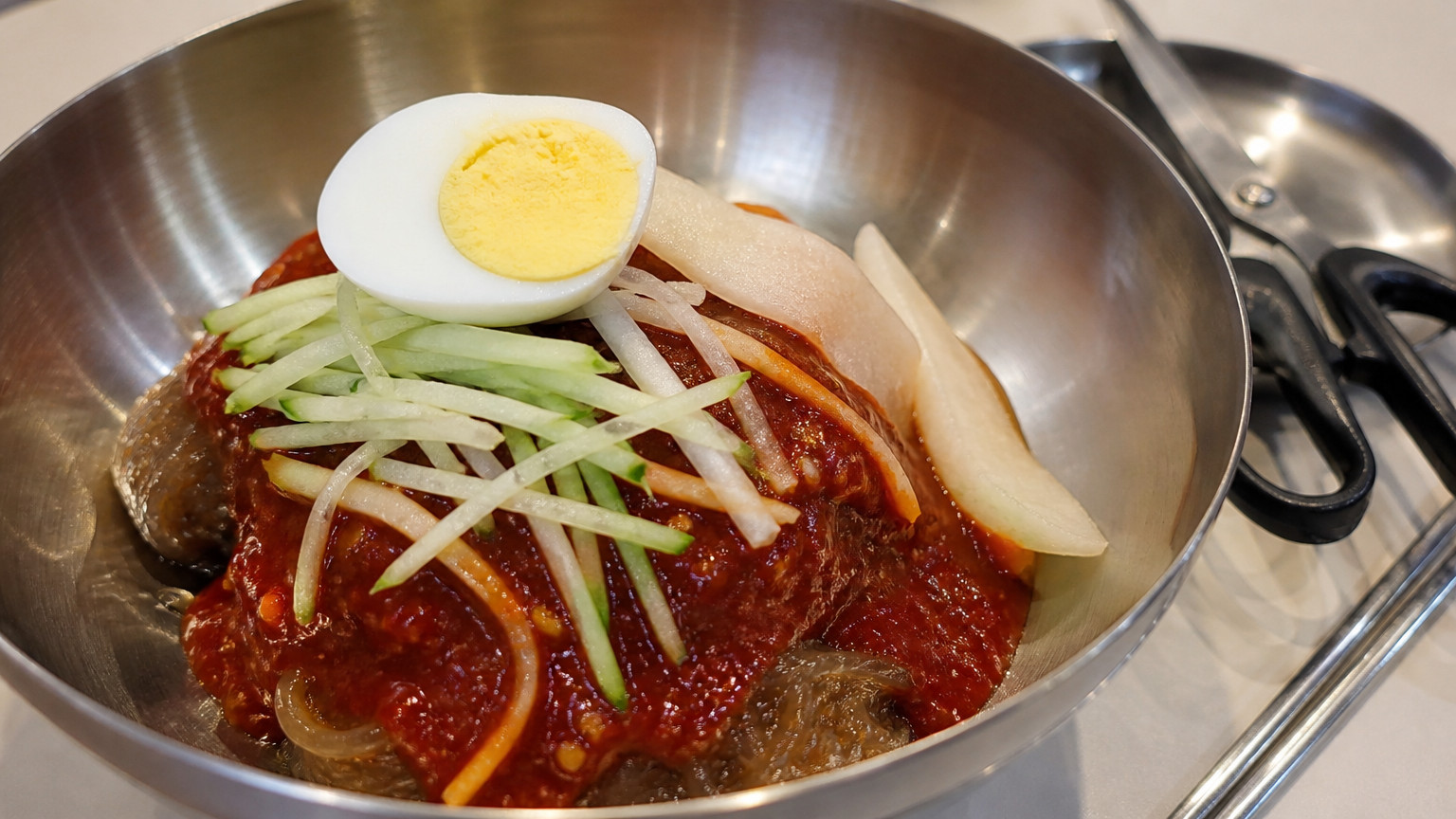
Almost every guide will tell you Pyongyang naengmyeon is the soupy one and Hamhung naengmyeon is the spicy mixed one. That is a description of how they are usually served. It is not what makes them different.
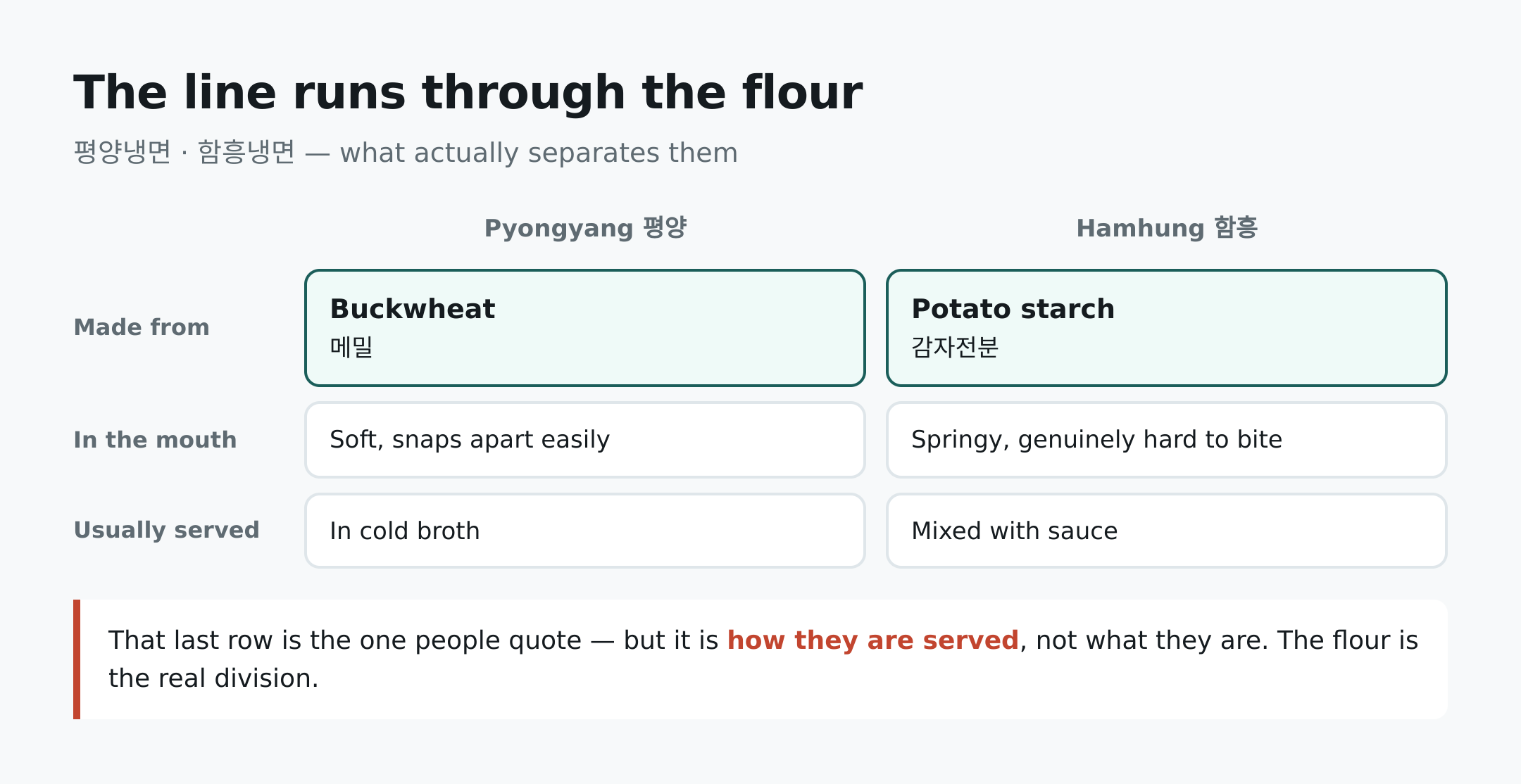
The real division is what the noodle is made of.
| Pyongyang style | Hamhung style | |
|---|---|---|
| Noodle | Buckwheat | Potato starch |
| Texture | Soft, breaks easily | Springy, very hard to bite through |
| Usually served | In broth | Mixed with sauce |
Buckwheat noodles are fragile. Potato starch noodles are famously, almost comically chewy — the kind you genuinely have to work at. If you have ever wondered why one bowl needs scissors far more urgently than the other, that is why.
The geography explains the rest. Pyongyang and the Pyeongan region get much less rain than the south, so rice and wheat struggled there and buckwheat did not — it grows in cool, dry, poor soil. Hamhung sat next to the Kaema Plateau and its potatoes, and under Japanese occupation a potato starch industry grew up around them. Starch noodles came out of that industry.
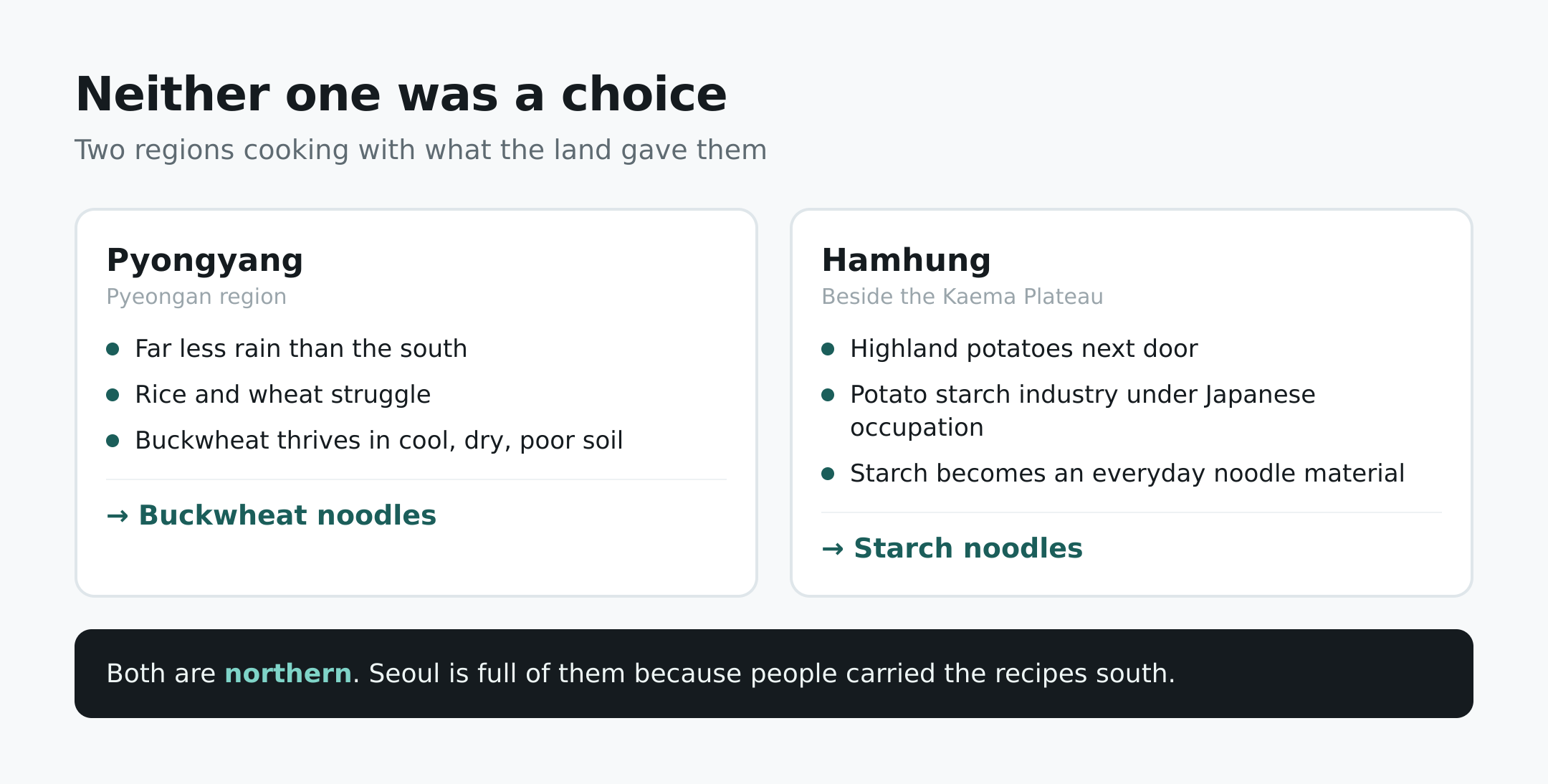
So the two styles are not two recipes someone chose between. They are two regions cooking with what they had, and both of them are northern. The reason Seoul is full of them is that people carried them south, and the restaurants that matter still trace themselves to families who left the north.
So how do you order without embarrassing yourself?
What to expect, and what to do at the table
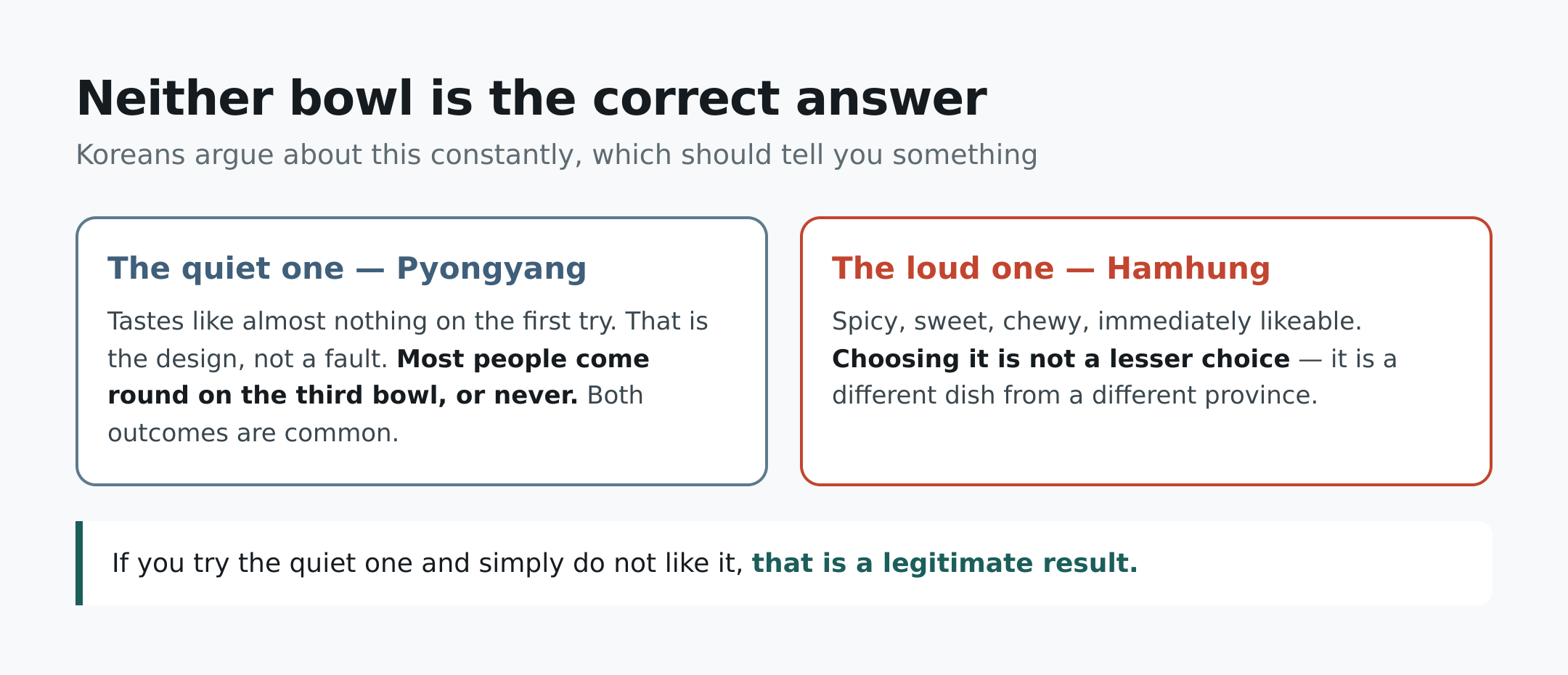
Expect the Pyongyang broth to taste like almost nothing at first. That reaction is so common it has a name among Koreans — the flavour is deliberately restrained, closer to cold beef stock than to anything sharp, and it is built to be tasted rather than to announce itself. People do not fall in love with it on the first bowl. Plenty fall in love on the third.
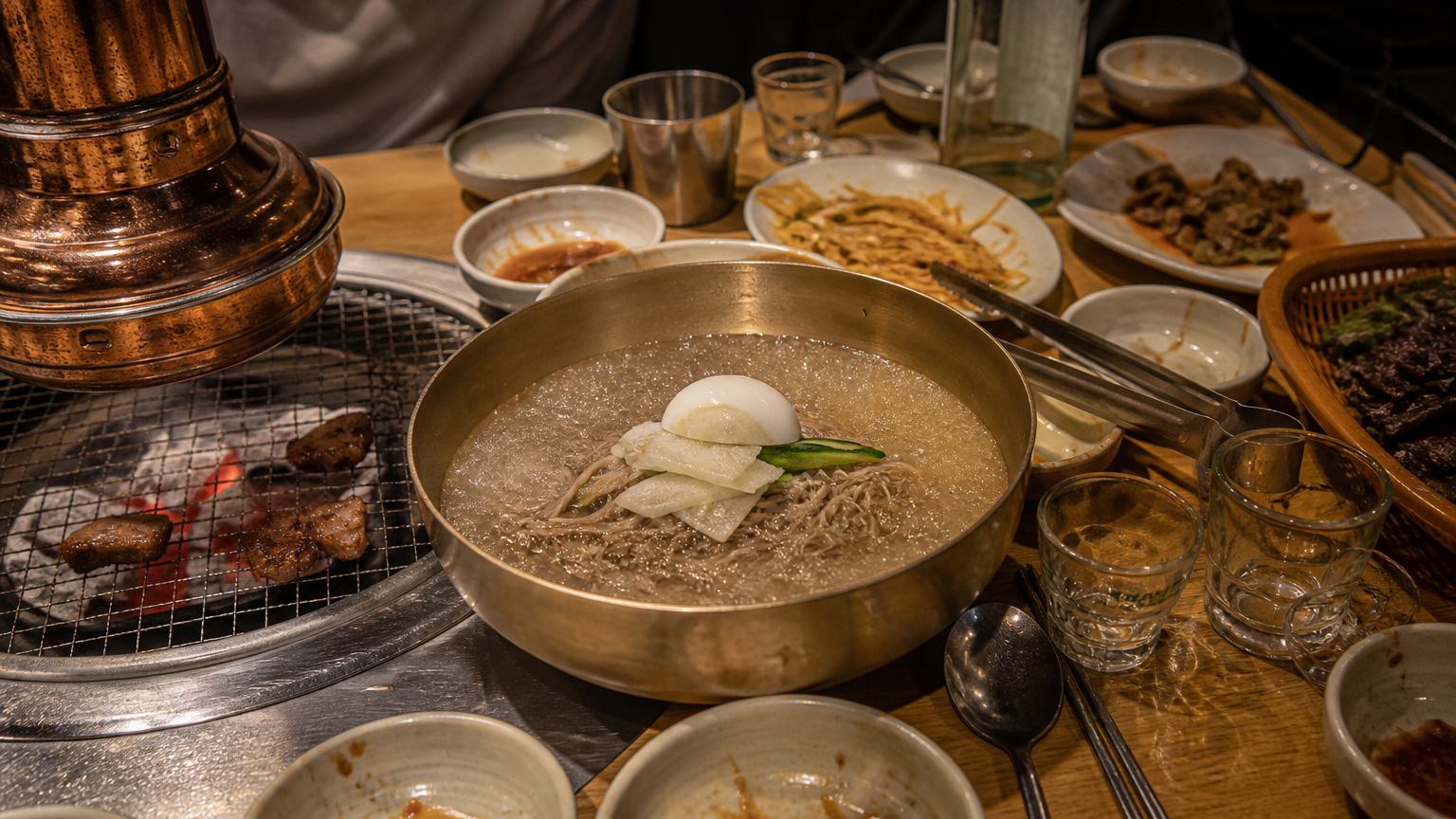
Taste the broth before you add anything. Vinegar and mustard will be on the table, and you can use them, but a good broth is the thing you paid for. Adding both before your first sip is the one move that will get you a look.
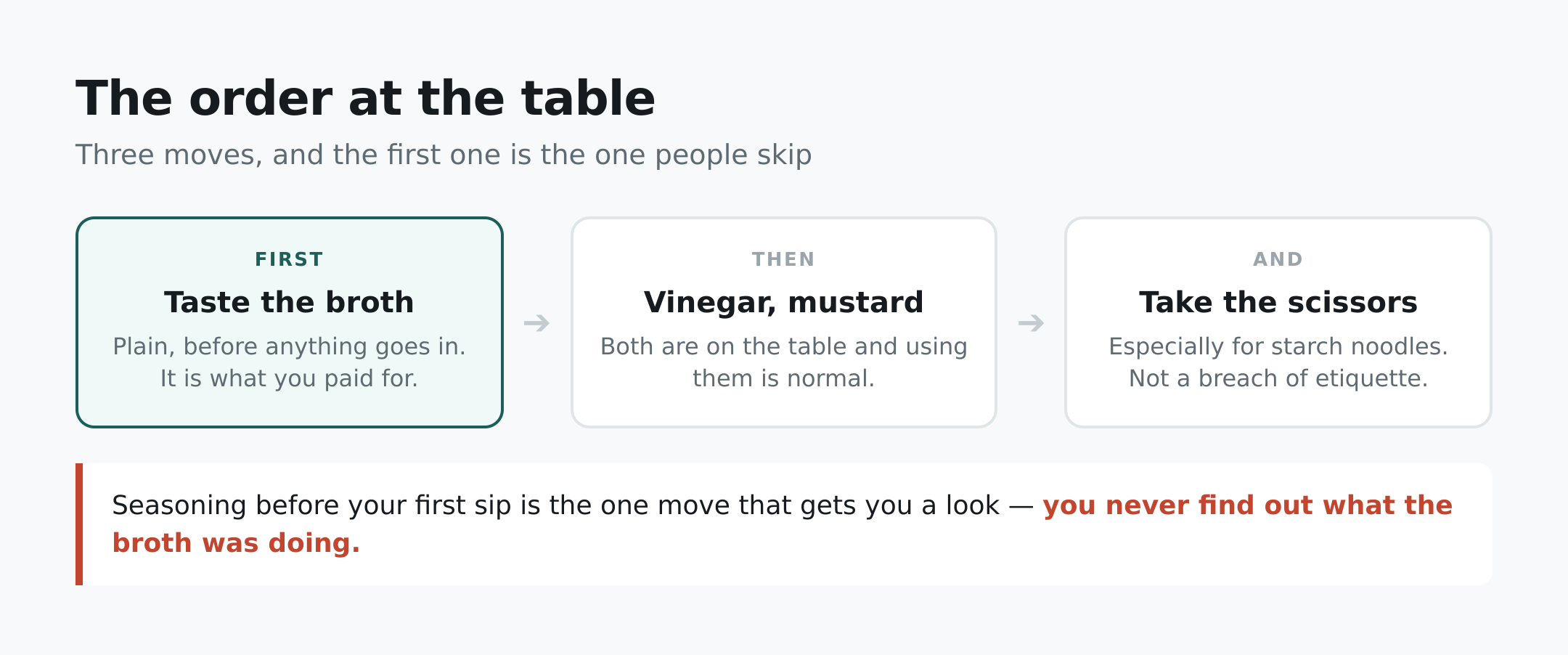
Scissors will be offered, and you should say yes for the starch noodles. This is not a failure of etiquette. Hamhung-style noodles resist teeth in a way that surprises first-timers, and cutting them is completely normal.
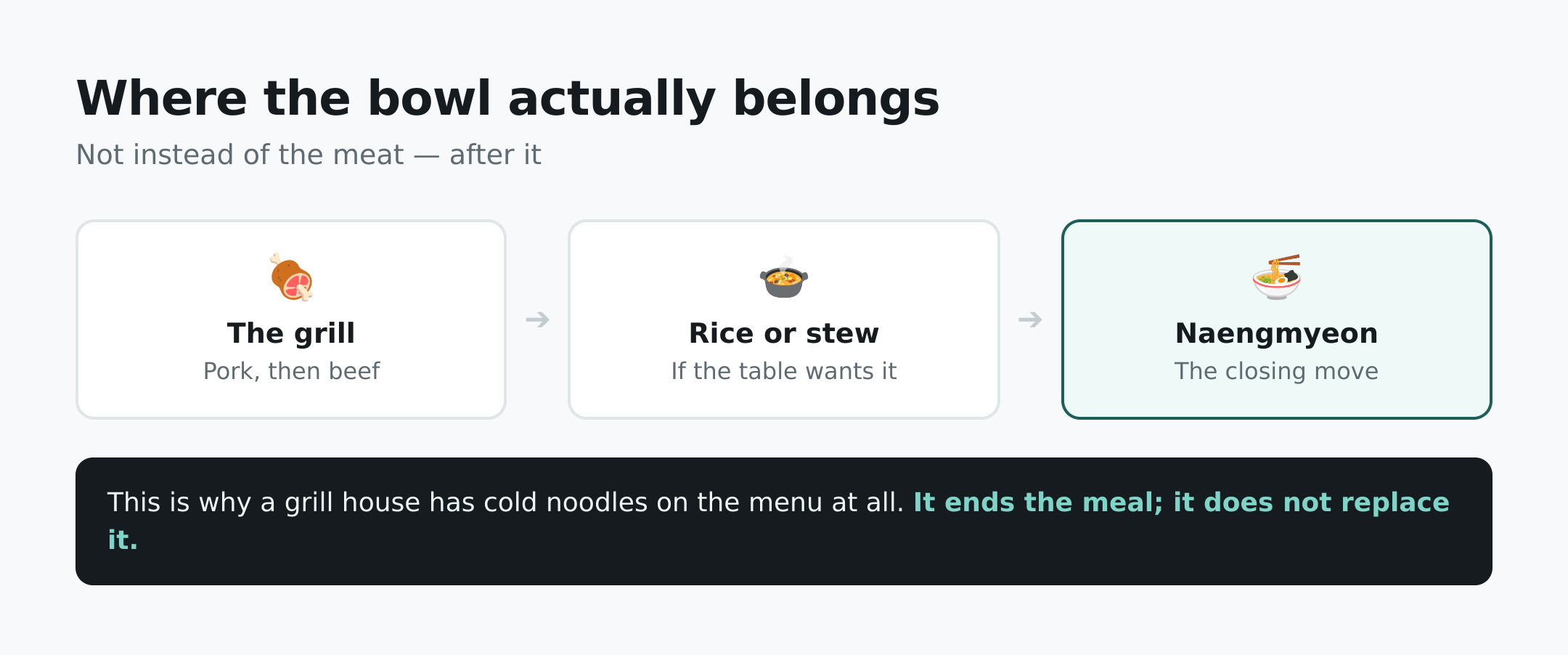
And order it after the grill, not instead of it. Cold noodles at the end of a meat meal is not a light alternative — it is the closing move, and it is the reason a grill house has them on the menu at all. If you are working out what to put on the grill first, Hanwoo: The Menu Has to Tell You Where the Cow Was Born, and Domestic Is Not the Answer You Think covers how to read what you are being sold.
One last thing worth saying plainly: if you try the Pyongyang bowl and simply do not like it, that is a legitimate result. It is an acquired taste and Koreans argue about it constantly. The Hamhung bowl is loud, spicy and immediately likeable, and choosing it is not a lesser choice.
Naengmyeon is a northern winter food that the south turned into a summer one, and the line between its two famous versions runs through the flour, not the bowl. Taste before you season, take the scissors, and give the quiet one more than one attempt.
That closes the grill series: the pork, the beef, and the bowl that ends the meal.
FAQ
Is naengmyeon a summer food?
It is eaten that way now, but it began as a winter dish built around dongchimi, a watery radish kimchi at its best in the cold. Icy noodles on a heated floor was the original idea.
What is the difference between Pyongyang and Hamhung naengmyeon?
The noodle. Pyongyang style uses buckwheat and is soft; Hamhung style uses potato starch and is very chewy. Broth versus mixed sauce is how they are usually served, not what defines them.
Why does the broth taste so bland?
It is meant to be restrained. Pyongyang broth is closer to cold beef stock than to a sharp soup, and it rewards attention rather than demanding it. Most people need more than one bowl.
Should I add vinegar and mustard?
Taste it first. Both are on the table and using them is normal, but seasoning before your first sip means you never find out what the broth was doing.
Is it rude to cut the noodles?
No. Scissors are offered for exactly this reason, and starch noodles in particular are very hard to bite through.
References
Regional accounts of buckwheat cultivation in the Pyeongan region and potato starch production near the Kaema Plateau, including the starch noodle dishes that developed there under Japanese occupation. Historical descriptions of winter naengmyeon and dongchimi broth in writing about Pyongyang. Noodle composition and texture differences cross-checked across Korean culinary references.