Jeonju Hanok Village: The Houses Are From the 1930s, and They Were Built as a Protest

Almost everyone walks into Jeonju Hanok Village believing they have walked into the Joseon dynasty. The roof lines say so. The photographs say so.
The houses are about ninety years old. They went up around 1930, they were built by Koreans who were being pushed out of their own city centre, and the whole neighbourhood exists because of an argument. That is a better story than the one on the postcard, and it is the one that makes the village worth an afternoon rather than twenty minutes.
Here is what actually happened, and what it changes about how you walk it.
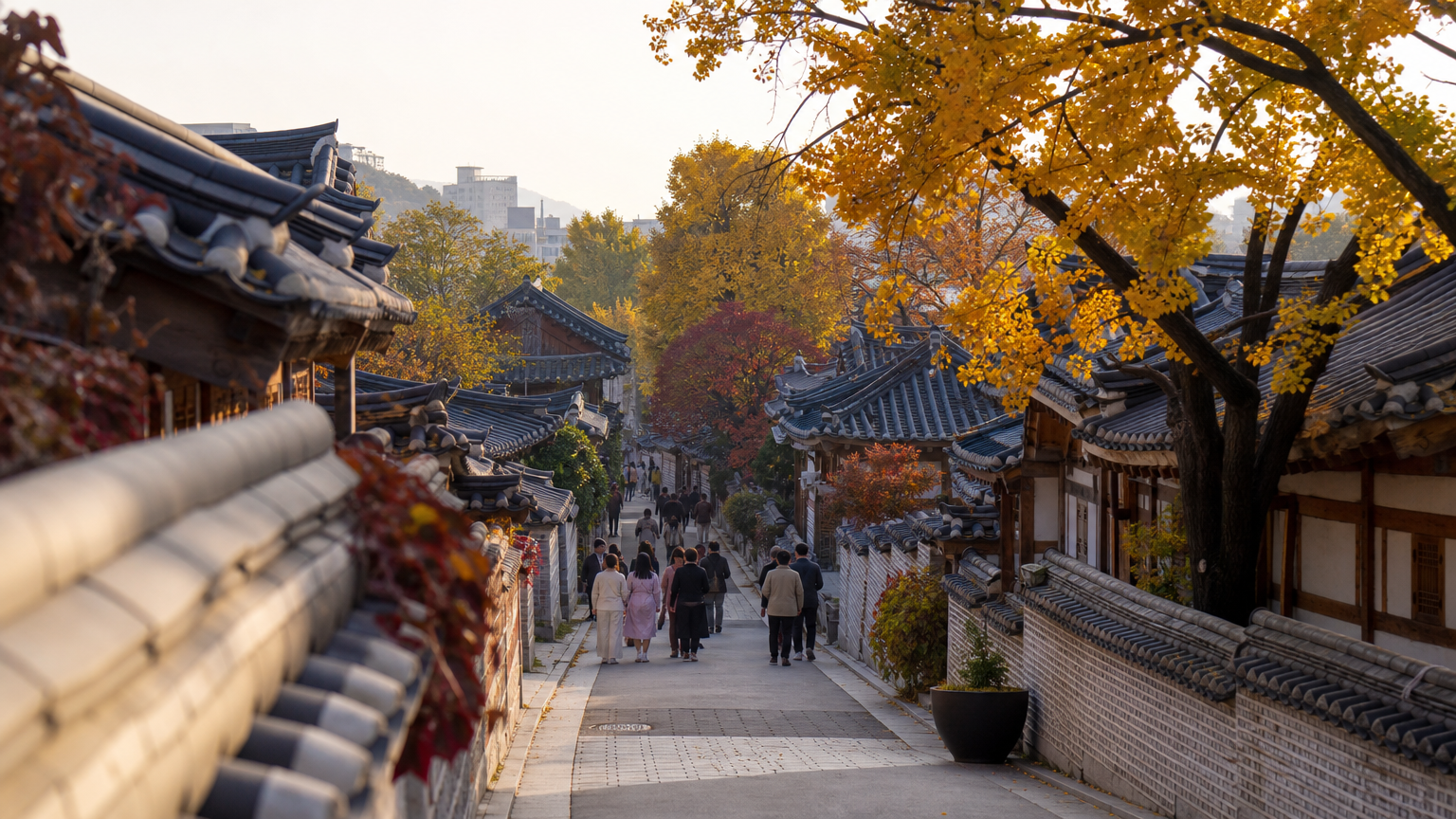
The fortress came down in 1911, and that is where the village starts
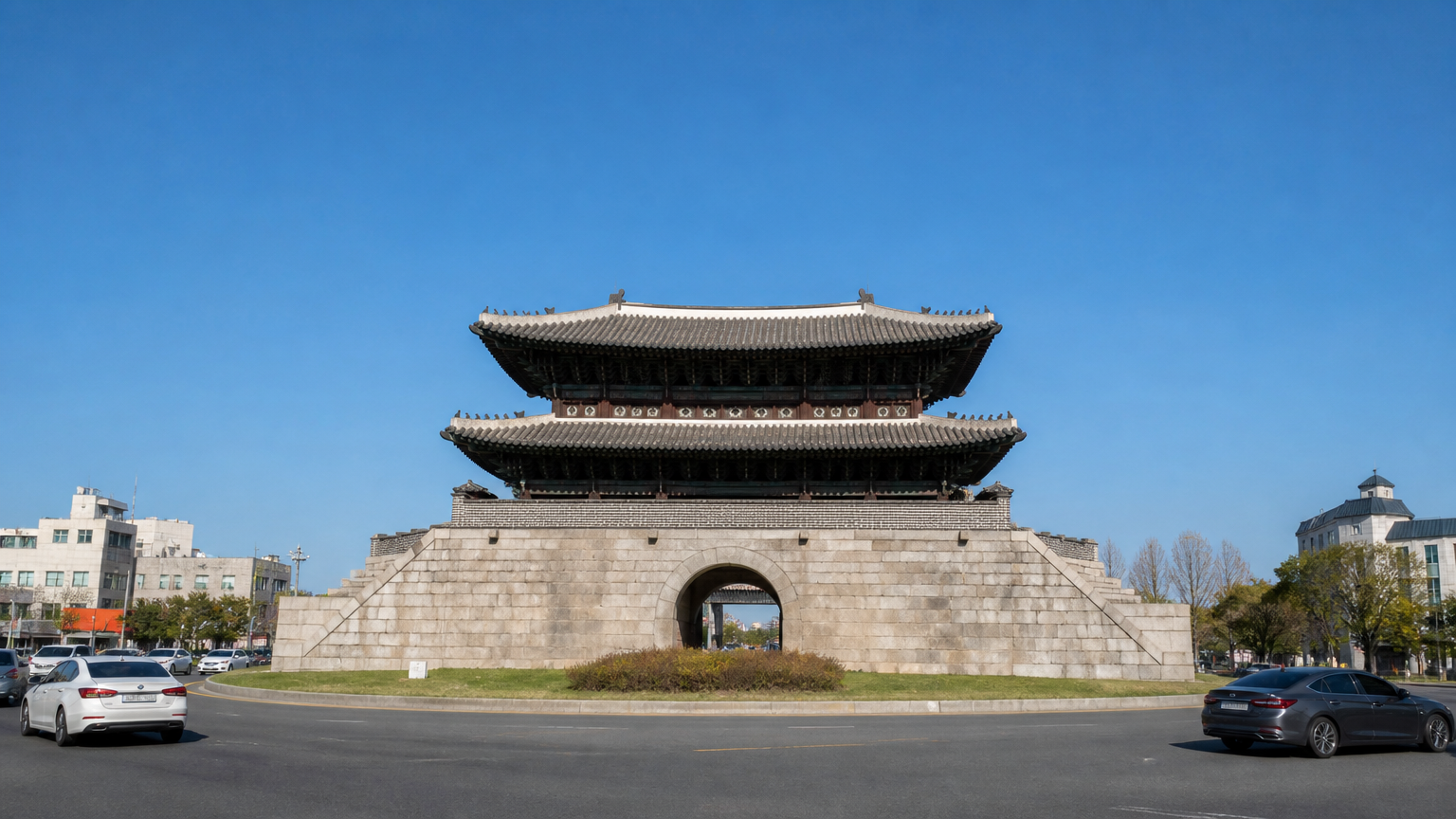
Jeonju used to be a walled city. Jeonju Fortress enclosed the old centre, and Pungnammun, the south gate, is the piece of it still standing in the middle of a traffic circle today.
In 1911 the Japanese colonial administration demolished the walls. Japanese merchants who had been trading in a small area near the stream moved inside the line the walls used to occupy, into what are now the Jungang-dong and Daga-dong blocks. Three rounds of street replanning through 1934 put a grid over the old town and turned it into the largest commercial district in the city, and that arrangement held until 1945.
The road you walk along on the south side of the village, Taejo-ro, follows where the southern wall used to run. That is the reason the village has the shape it has. It is not a plan. It is the outline of something that was removed.
So the Koreans who lived in the walled centre did not stay in it.
The houses went up around 1930, and they were an argument
From around 1930, Korean residents moved out beyond Pungnammun and began building hanok in Gyo-dong and Pungnam-dong, the two neighbourhoods that make up the village today.
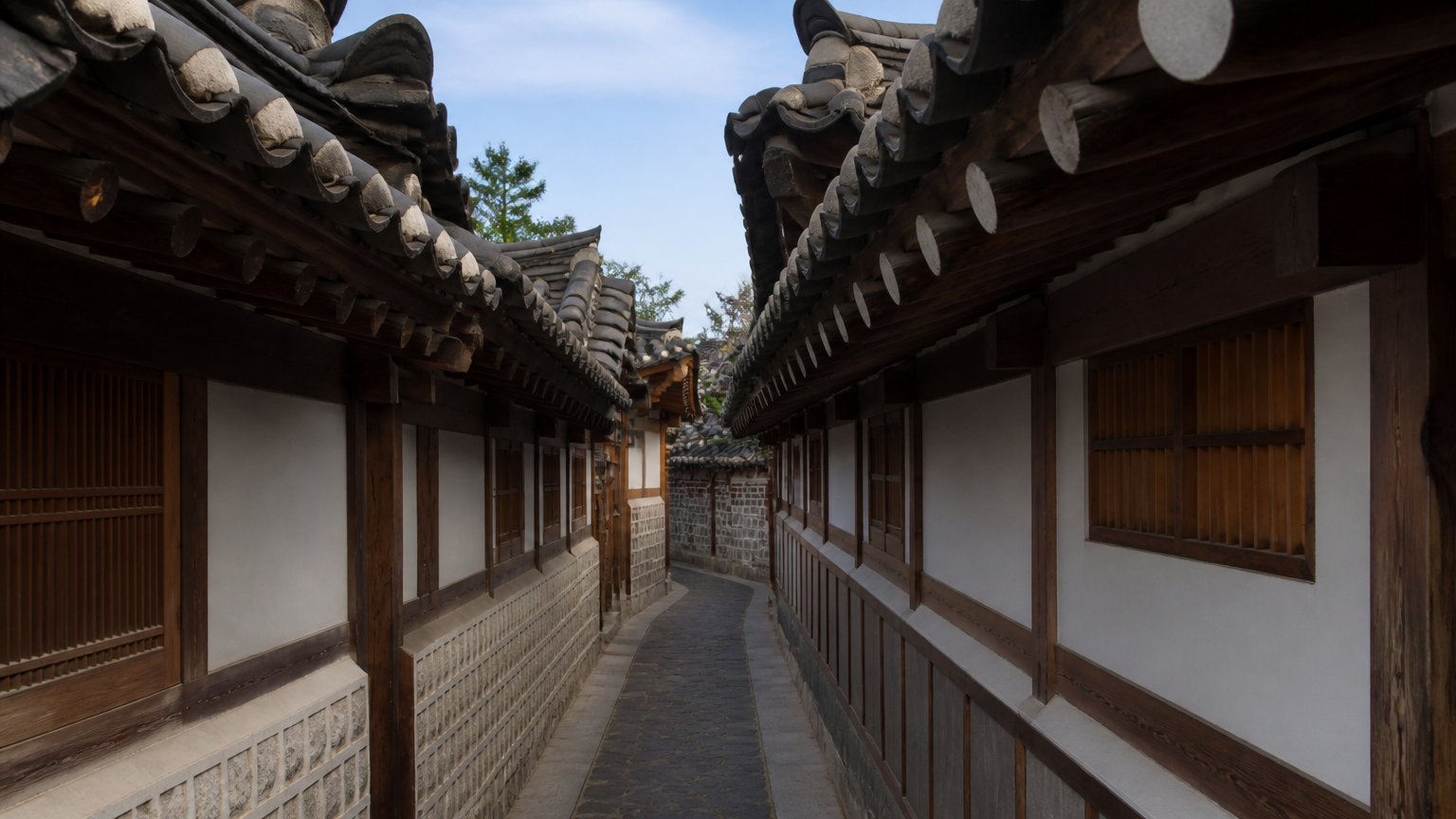
They did not build them quietly. Provincial records describe the cluster as a deliberate response to the spread of Japanese-style housing in the centre, put up as a statement of national feeling at a moment when there were not many statements available. Hundreds of tiled roofs went up in a few years, packed tightly together on small plots, which is why the village looks the way it does from above. It was not laid out by an architect. It accumulated, quickly, on the wrong side of a wall that no longer existed.
That is why the village reads as dense rather than grand. These were ordinary houses built by people making a point, not aristocratic estates. Once you know that, the tight lanes stop looking quaint and start looking like what they are.
Which explains why the three famous buildings inside it do not match each other at all.
Three landmarks, three different centuries, one afternoon
The village is small enough to walk in an afternoon, and its main sights are separated by about six hundred years.
| Landmark | Date | What it actually is |
|---|---|---|
| Gyeonggijeon | Main hall built 1410 | Royal shrine holding the portrait of King Taejo, founder of the Joseon dynasty |
| Jeondong Cathedral | Begun 1908, completed 1914 | Catholic church on the site where believers were executed, just outside the old south gate |
| The hanok themselves | Around 1930 onward | Houses built by Koreans moving out of the colonised centre |
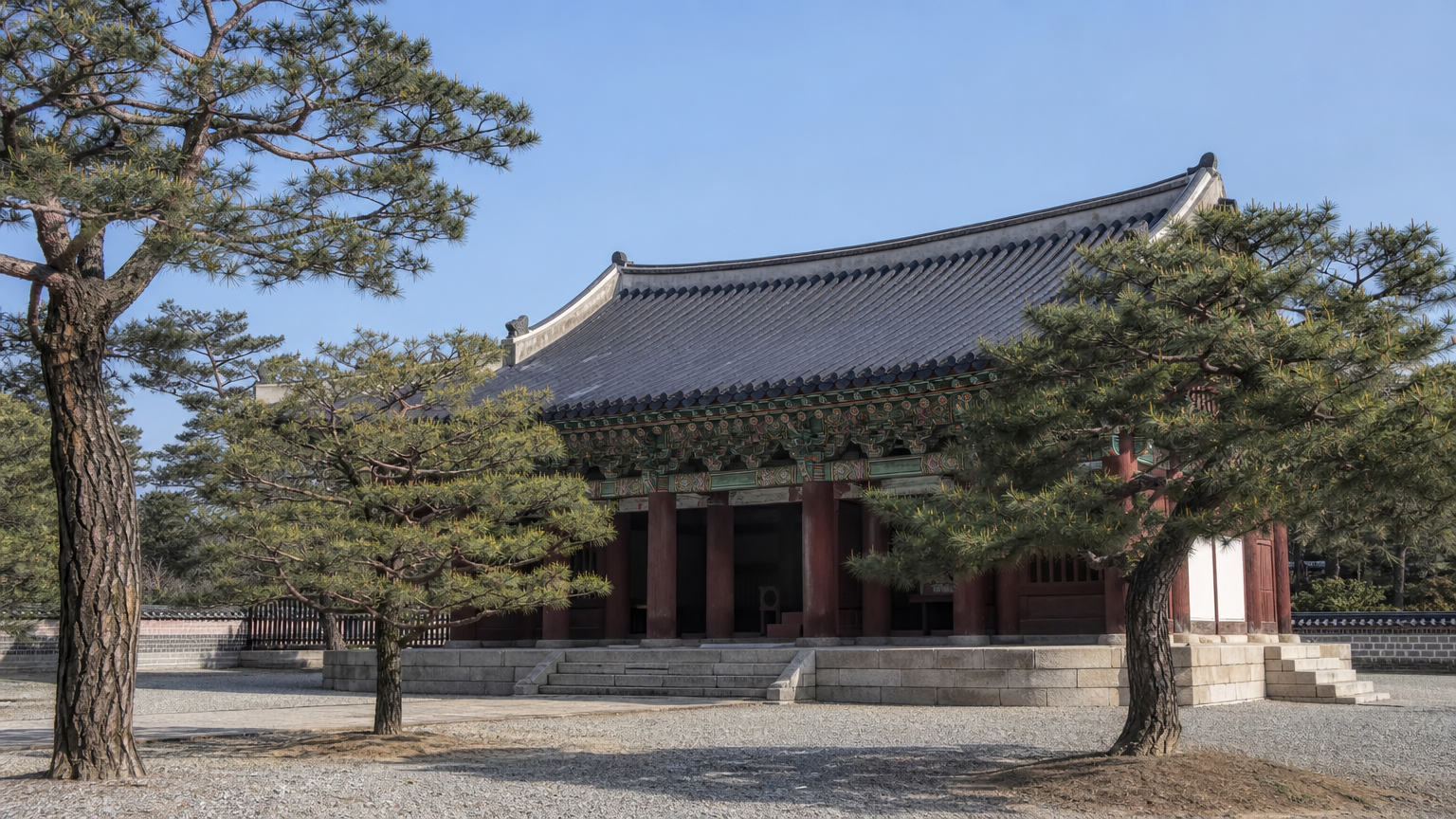
Gyeonggijeon is the oldest thing here by centuries. It was built in 1410, in the eleventh year of King Taejong, to enshrine the portrait of Yi Seong-gye, who founded the dynasty and whose family came from Jeonju. That is the reason a royal shrine sits in this particular city at all.
Jeondong Cathedral faces it across the road, and the road between them used to be a wall. Gyeonggijeon was inside the fortress. The cathedral site was outside it, because it is a martyrdom ground, where Catholics were executed at the gate. Construction started in 1908 and finished in 1914. Its foundation stones are said to have come from the fortress wall near Pungnammun, which would mean the church that stands on the execution site was partly built from the wall the executions happened beside.
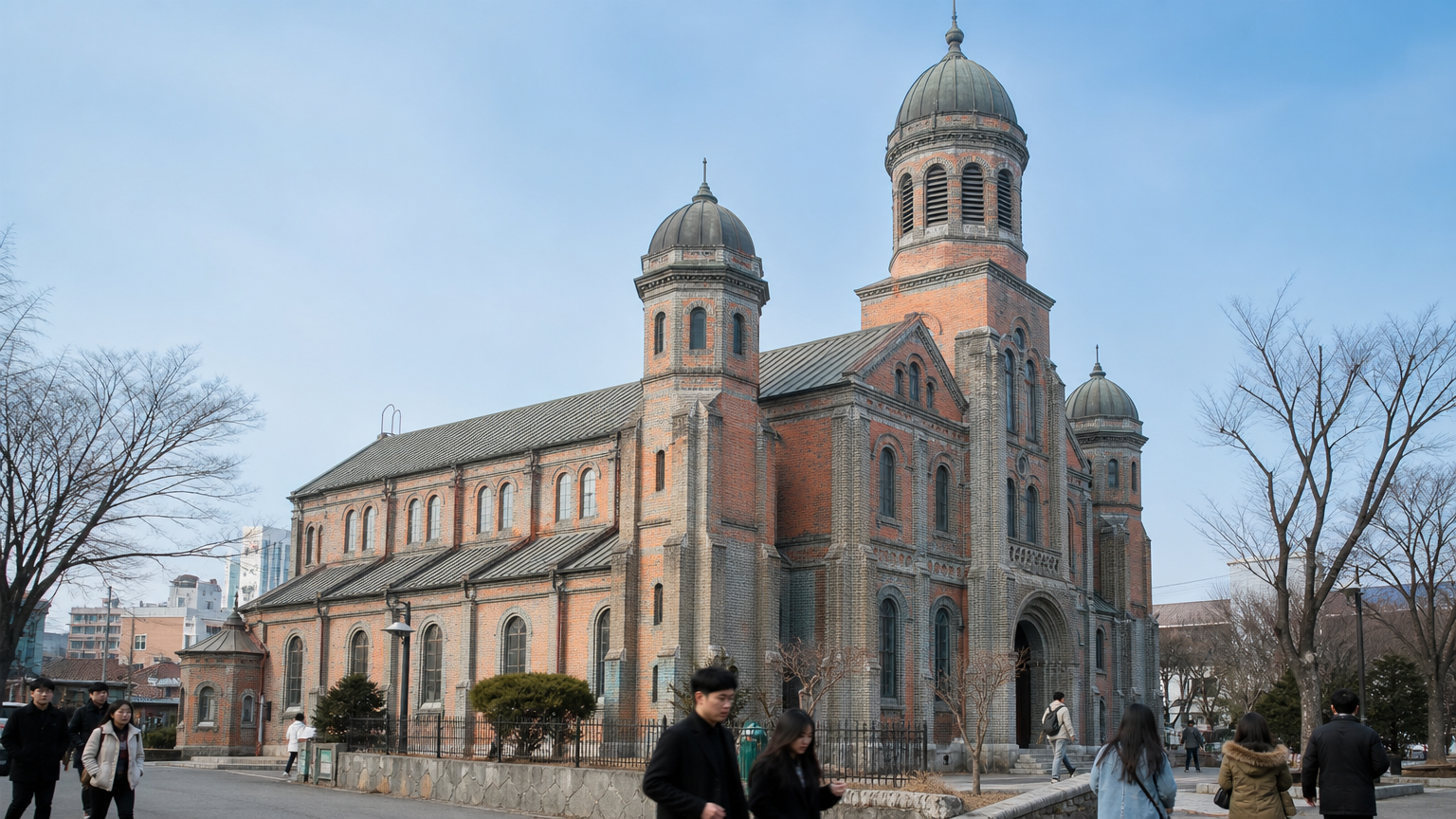
Stand between the two buildings and you are standing on the line. Shrine on one side, cathedral on the other, and around both of them a neighbourhood built in the 1930s by people who had been pushed out.
Hanbok rental is as common here as it is around the Seoul palaces, and the pricing traps are identical, so Hanbok Rental in Seoul: Prices, Where to Go, and the Free-Palace Rule That Trips People Up is worth reading before you hand over a card.
Autumn is when the roof lines photograph best, and the timing is a national question rather than a local one: Autumn in Korea: Don't Pick the Dates, Pick the Latitude.
FAQ
Is Jeonju Hanok Village a real neighbourhood or a reconstruction?
It is real. These are actual houses on actual plots, and people live and work in them. It is not a rebuilt folk village. What it is not is old in the way visitors assume, because the building went on from around 1930 rather than in the Joseon period.
How long do I need there?
An afternoon covers the village properly, including Gyeonggijeon and the cathedral. If you are also eating your way through it, give it a full day and stay the night, because the streets change completely once the day visitors leave.
Is Gyeonggijeon worth paying to enter?
Yes, and it is the one paid site in the village that earns it. It is the shrine that explains why Jeonju matters historically, and the portrait hall is the point of the whole complex rather than a side room.
Why is there a large European cathedral in the middle of it?
Because the site is a martyrdom ground. Catholics were executed just outside the south gate of the fortress, and the church was built there deliberately, starting in 1908 and finishing in 1914. It sits outside the old wall line for exactly that reason.
The short version
Jeonju Hanok Village is not a Joseon village. The fortress walls came down in 1911, Japanese merchants took over the commercial centre, and from around 1930 Korean residents moved beyond Pungnammun into Gyo-dong and Pungnam-dong and built hundreds of hanok there as a deliberate response. Inside that 1930s neighbourhood sit a royal shrine from 1410 and a cathedral finished in 1914, facing each other across a road that used to be a wall. An afternoon covers the walking. Knowing the dates is what makes the afternoon worth it.
Sources
Korea Heritage Service, national heritage portal, Jeondong Cathedral (Historic Site) entry: construction period 1908 to 1914, martyrdom site outside Pungnammun, and the account of foundation stones taken from the fortress wall. https://www.heritage.go.kr/heri/cul/culSelectDetail.do?pageNo=1\_1\_1\_0&ccbaCpno=1333502880000
Jeollabuk-do official tourism service: formation of the hanok cluster in Gyo-dong and Pungnam-dong from around 1930, the 1911 demolition of Jeonju Fortress, and the three rounds of street replanning through 1934. https://tour.jb.go.kr/travel/info/view.do?category\_top\_id=a&menuCd=DOM\_000000102003002000&contentsSid=38&ctnt\_id=20976
Jeonju Hanok Village official heritage listing: Gyeonggijeon main hall built 1410 to enshrine the portrait of King Taejo. https://hanok.jeonju.go.kr/contents/place