Domestic Flights in Korea: The Number on Your Boarding Pass Is Your Place in Line

Everyone at the gate knew which line was theirs. Nobody had read a sign. The number was on their boarding pass. The announcement calling it was in Korean.
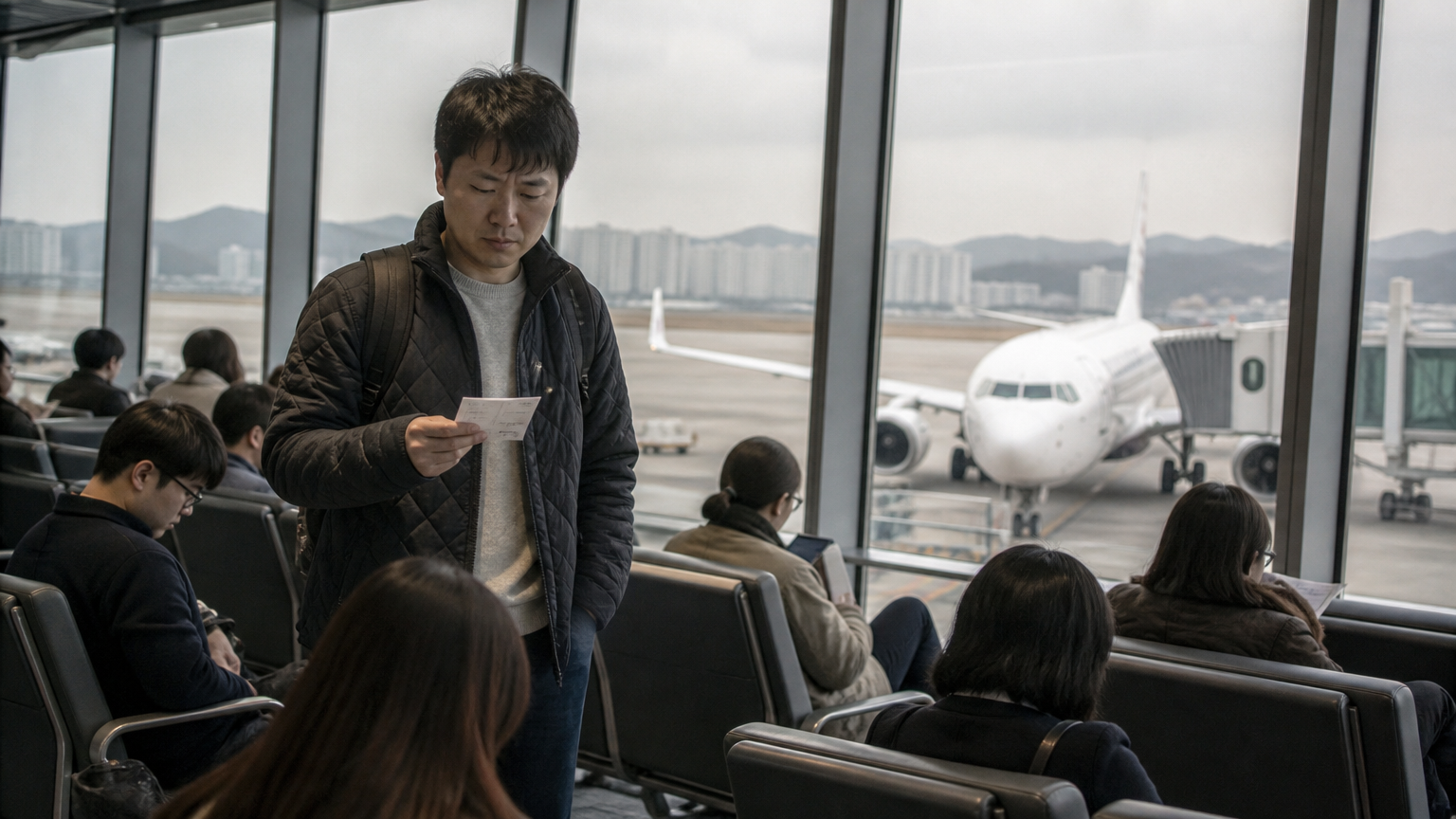
I was flying Jeju to Gimpo, and one passenger in front of me stood up when the queue formed, looked at both ends of it, and sat back down. Then stood up again. He had done nothing wrong. He was holding the same piece of paper as everyone else and had no way to know it was telling him when to move.
If you are taking domestic flights in Korea for the first time, this is the one thing worth knowing before you reach the gate. It is not a rule about etiquette. It is a rule about geometry.
The rule is one sentence: the back of the plane goes first
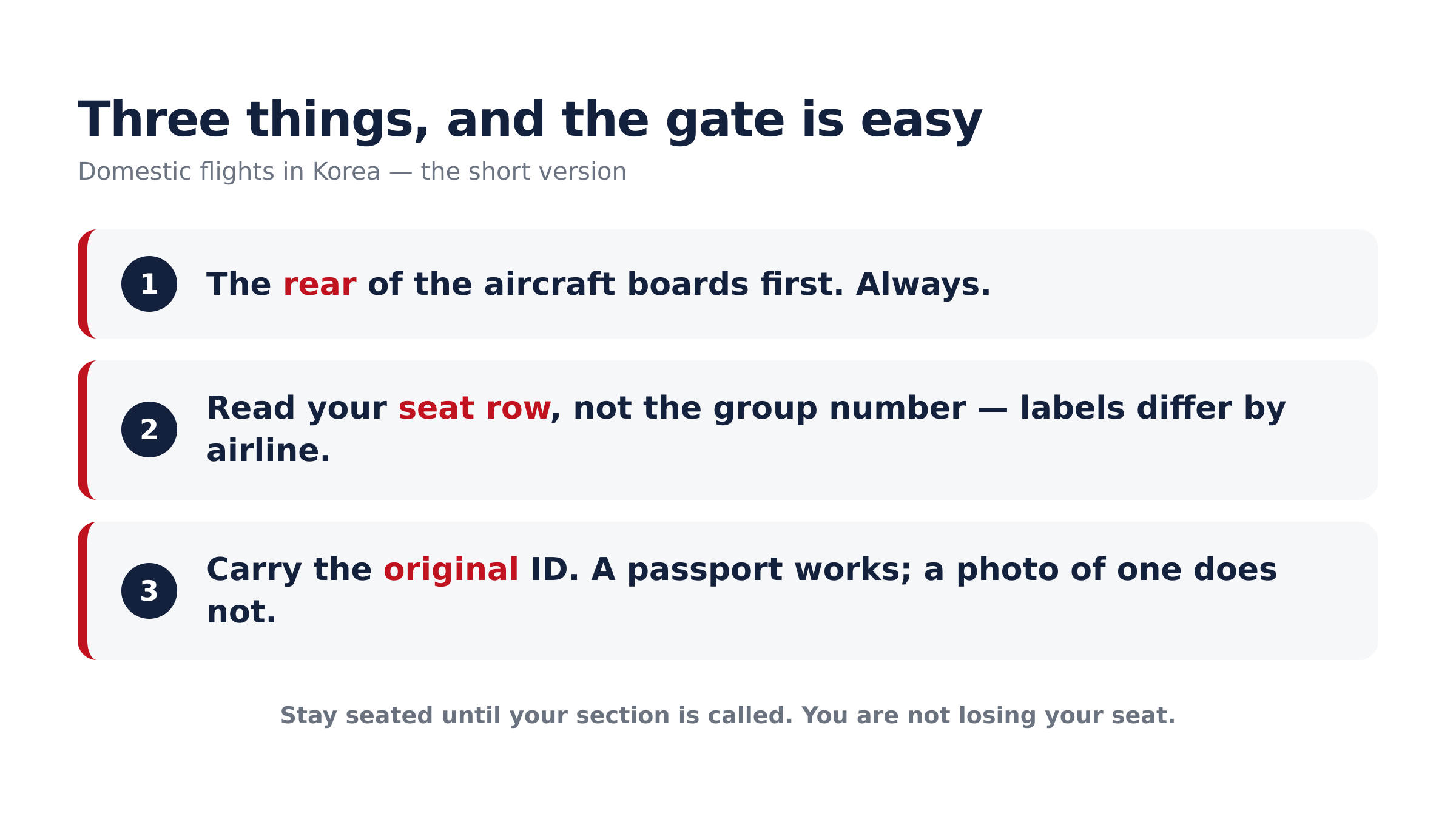
Boarding runs from the rear of the aircraft forward.
The reason is the aisle. When the front rows load first, every passenger behind them waits in the jet bridge while bags go into overhead bins one at a time. Filling the tail first keeps that jam from forming, which is why airlines here call the method "Back to Front."
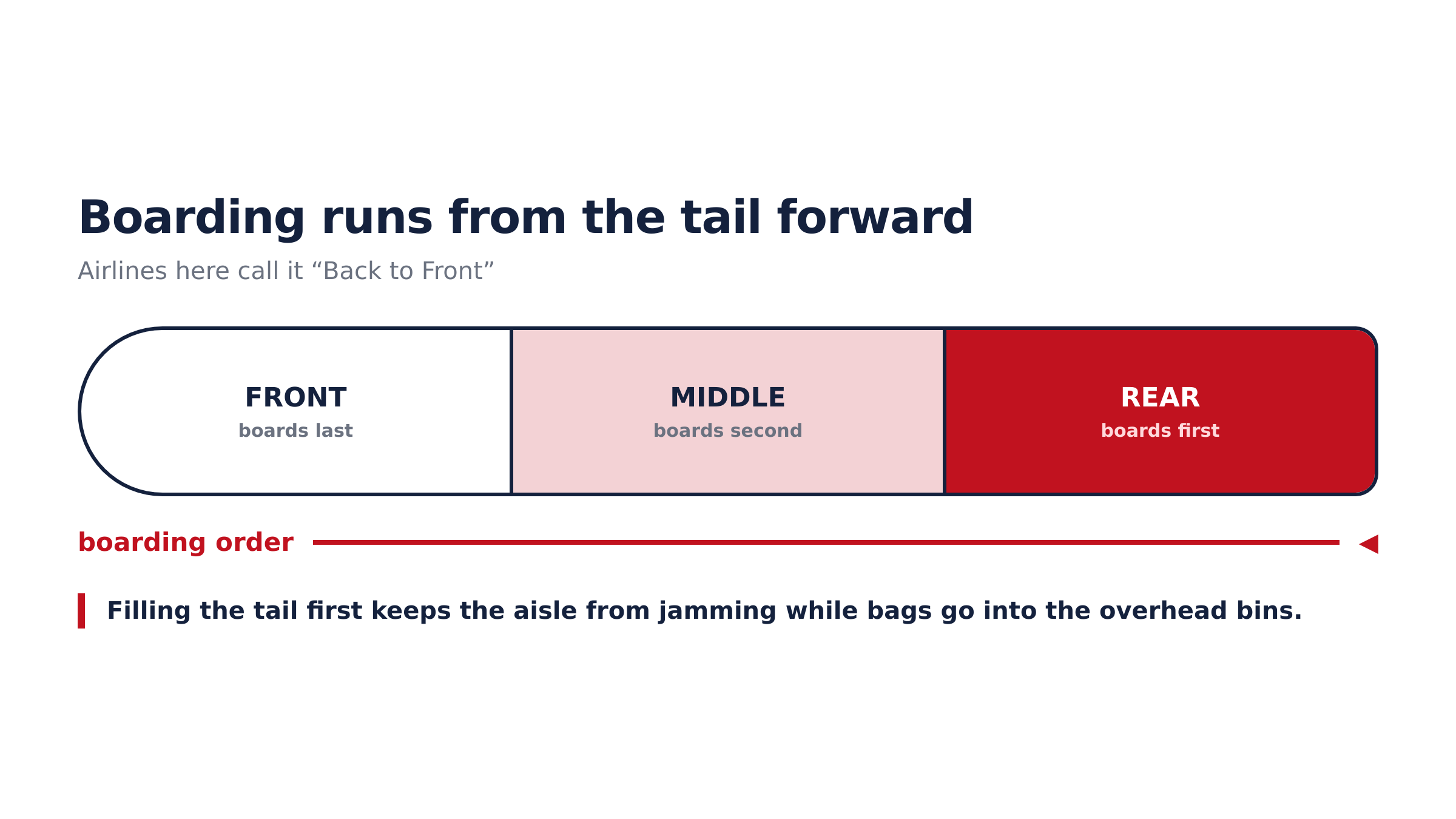
Korean Air adopted it on 10 June 2020 for economy passengers across all of its domestic and international routes, and states that the zone number is printed on the boarding pass so passengers can check their own boarding order. The number of zones is not fixed — it is subdivided according to the size of the aircraft.
So the line you are looking at is not the line for the plane. It is the line for one group, and yours may not have been called yet.
If you have not booked yet, the airport you fly into changes more than you would expect: Flights to Jeju Island: The Airport You Land At Decides Whether You Need a Visa
So what is that number, exactly?
Read your seat row, not the group number
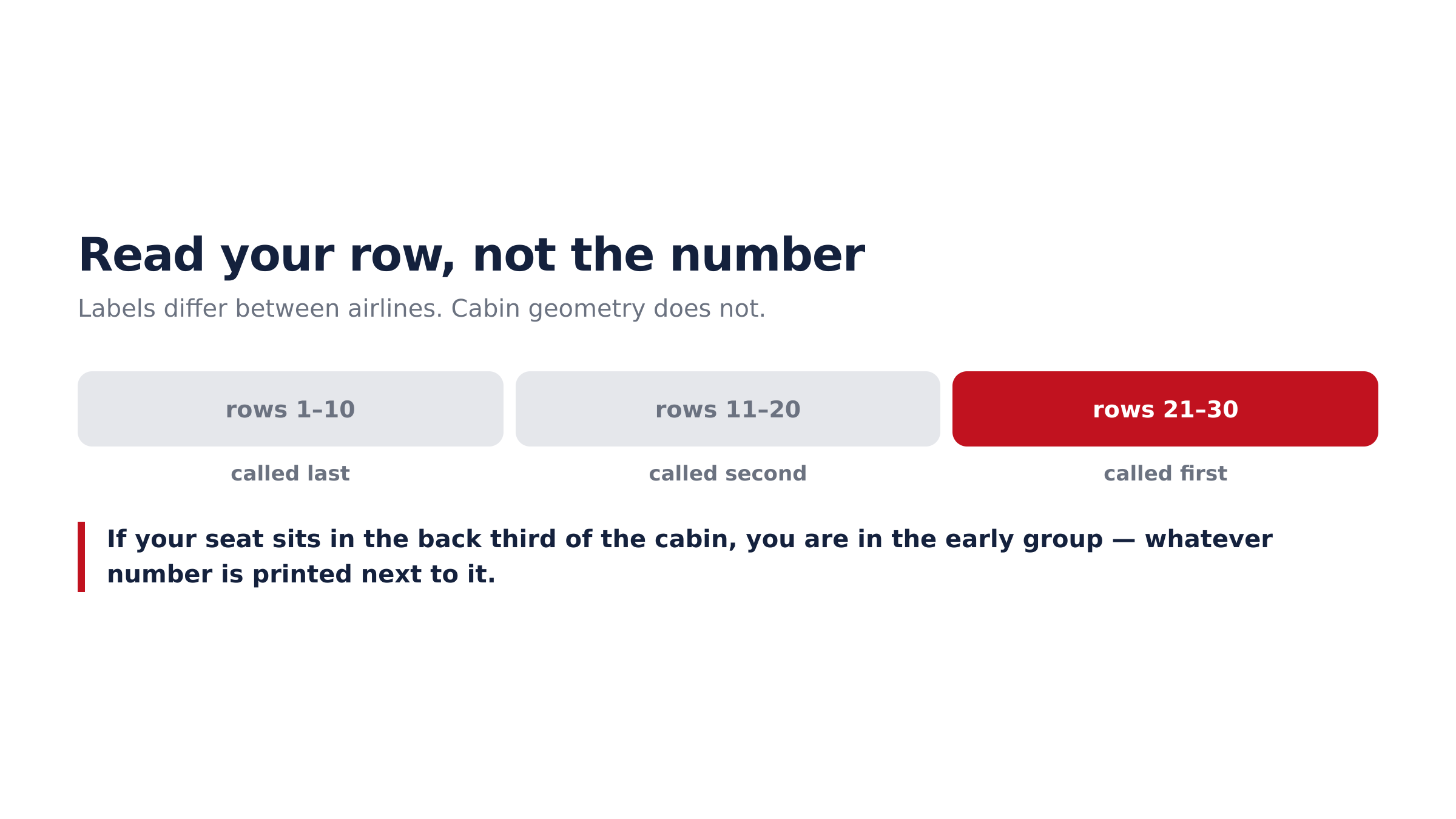
The number on your boarding pass is a zone, not a seat.
Here is where it gets slippery, and where I would not blame anyone for standing in the wrong place. The label is not standardised. Korean Air prints a zone number. Asiana Airlines splits economy into three zones and, from 11 June 2025, assigns the lower numbers to the rear rows. Jeju Air prints the boarding order on the pass as a plain 1, 2, 3.
That means "Zone 1" does not reliably mean "first." On one carrier the rear is zone 1; on another the rear carries the highest number and that group is called first anyway.
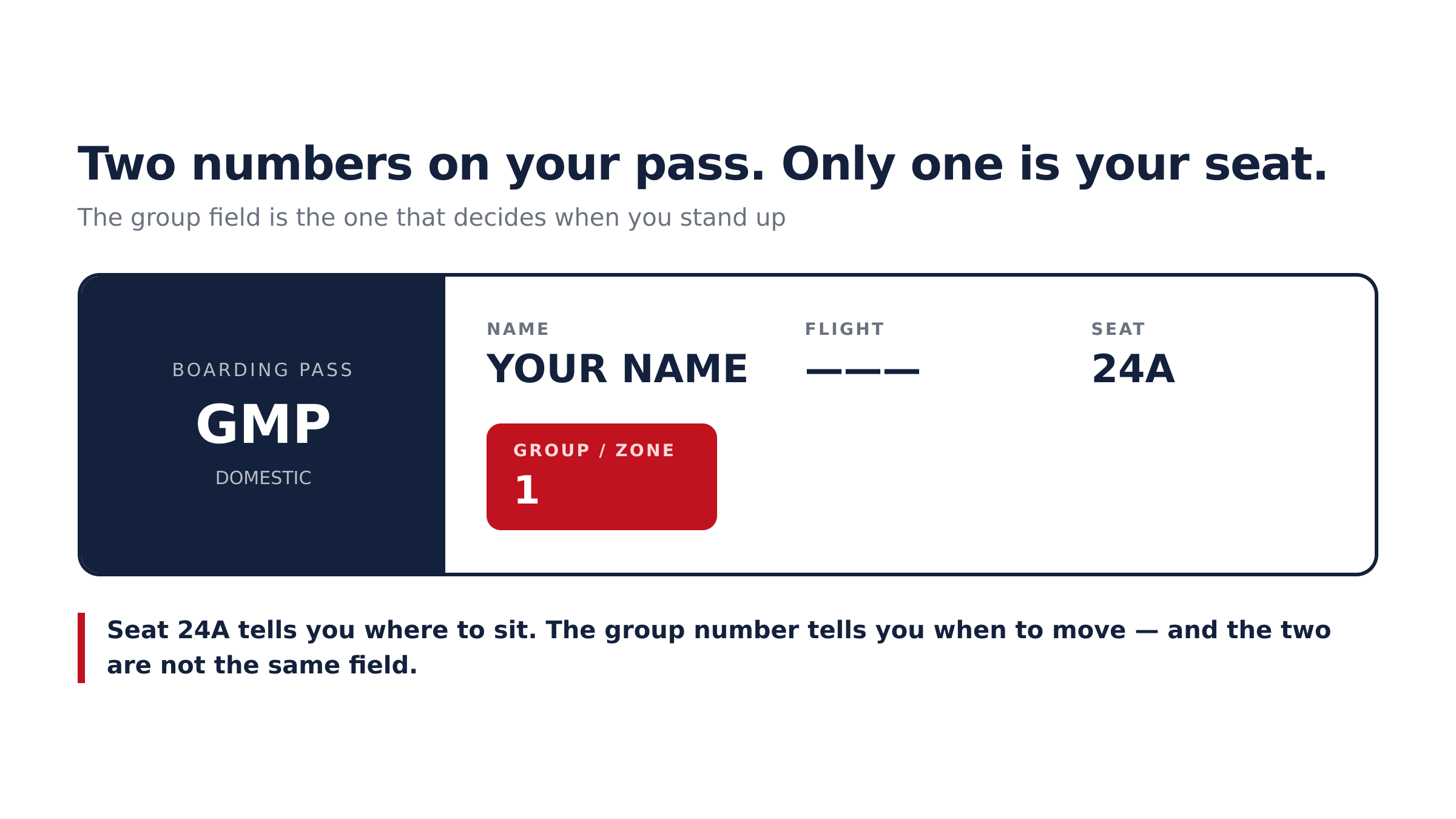
There is one thing that never flips, though: the rear of the aircraft boards before the front. So the reliable move is to ignore the arithmetic and look at your seat row instead. If your seat is in the back third of the cabin, you are in the early group. If it is near the front, you will be called later — and standing up early buys you nothing but time on your feet.
And before any of the numbered groups move?
What actually happens at the gate, in order
Priority boarding comes first, and it ignores the numbers entirely.
Korean Air states that passengers travelling with infants or small children, elderly passengers, and passengers who need assistance may board ahead of the zone order regardless of their zone number. So the first movement you see at the gate is usually not group 1. It is this.
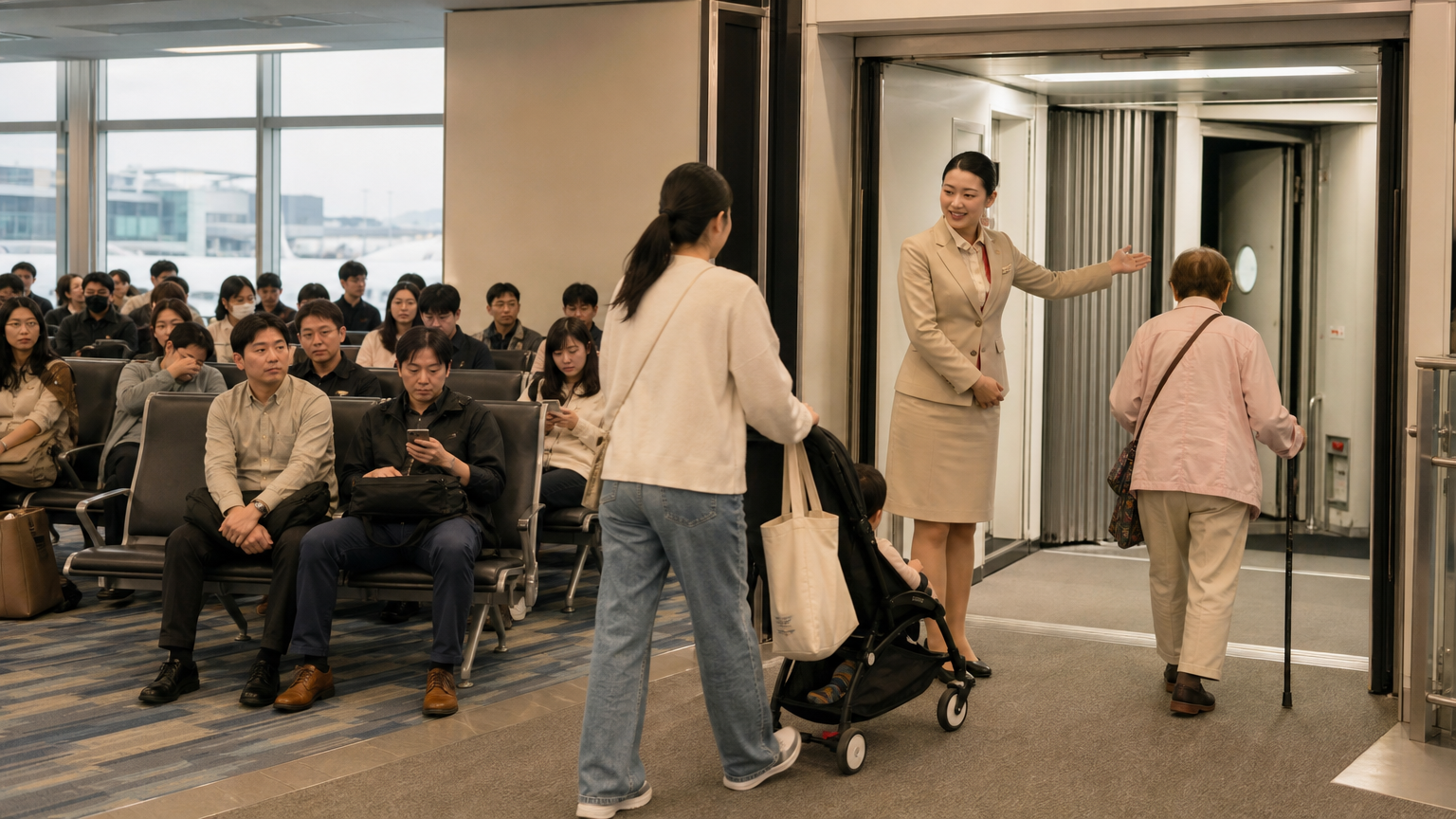
Three more things decide whether the gate goes smoothly for you.
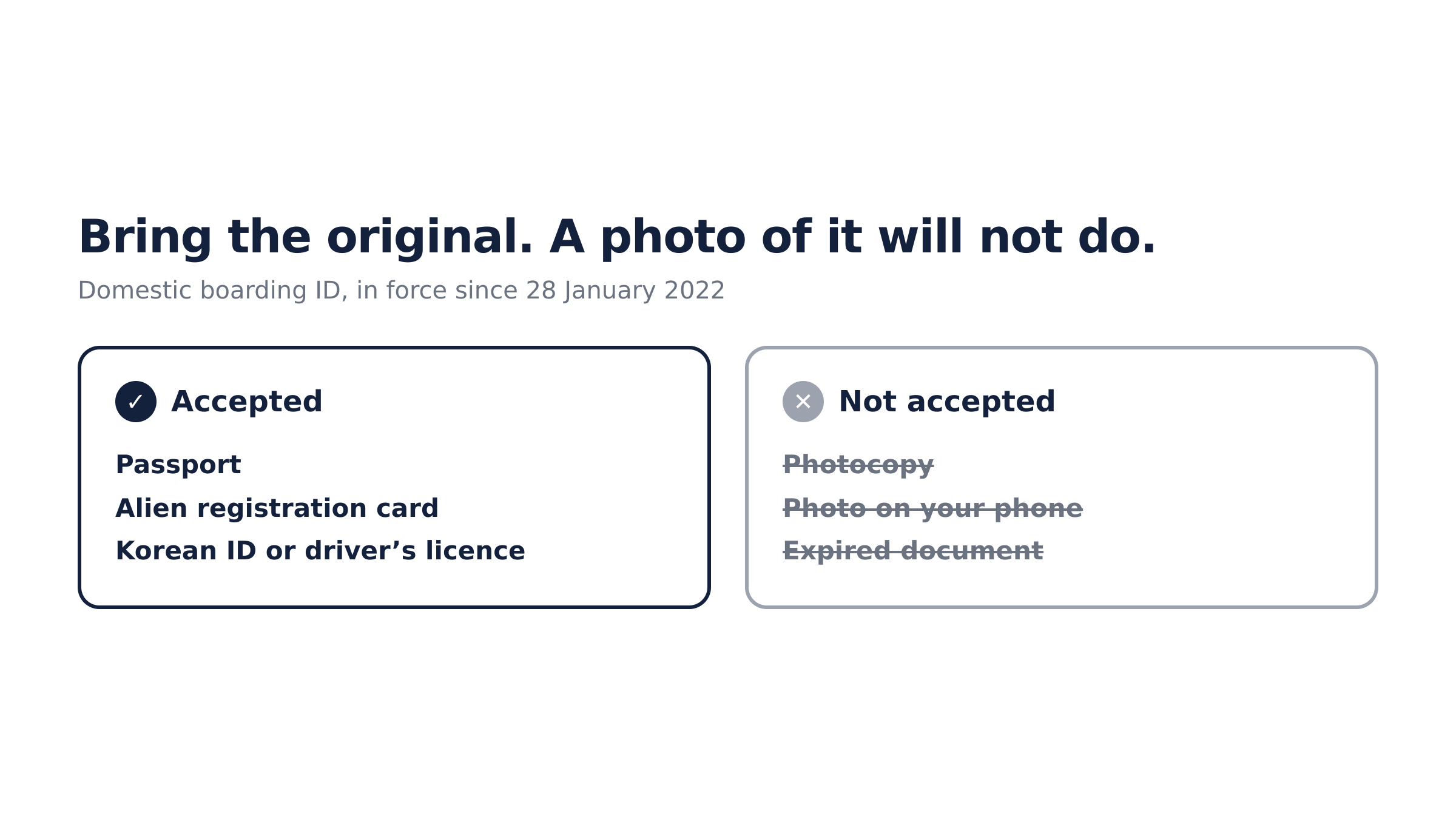
Bring the original ID. Since 28 January 2022, boarding a domestic flight in Korea requires an original identity document — photocopies and photos on your phone are not accepted. As a foreign visitor, your passport works. If you live here, your alien registration card does.
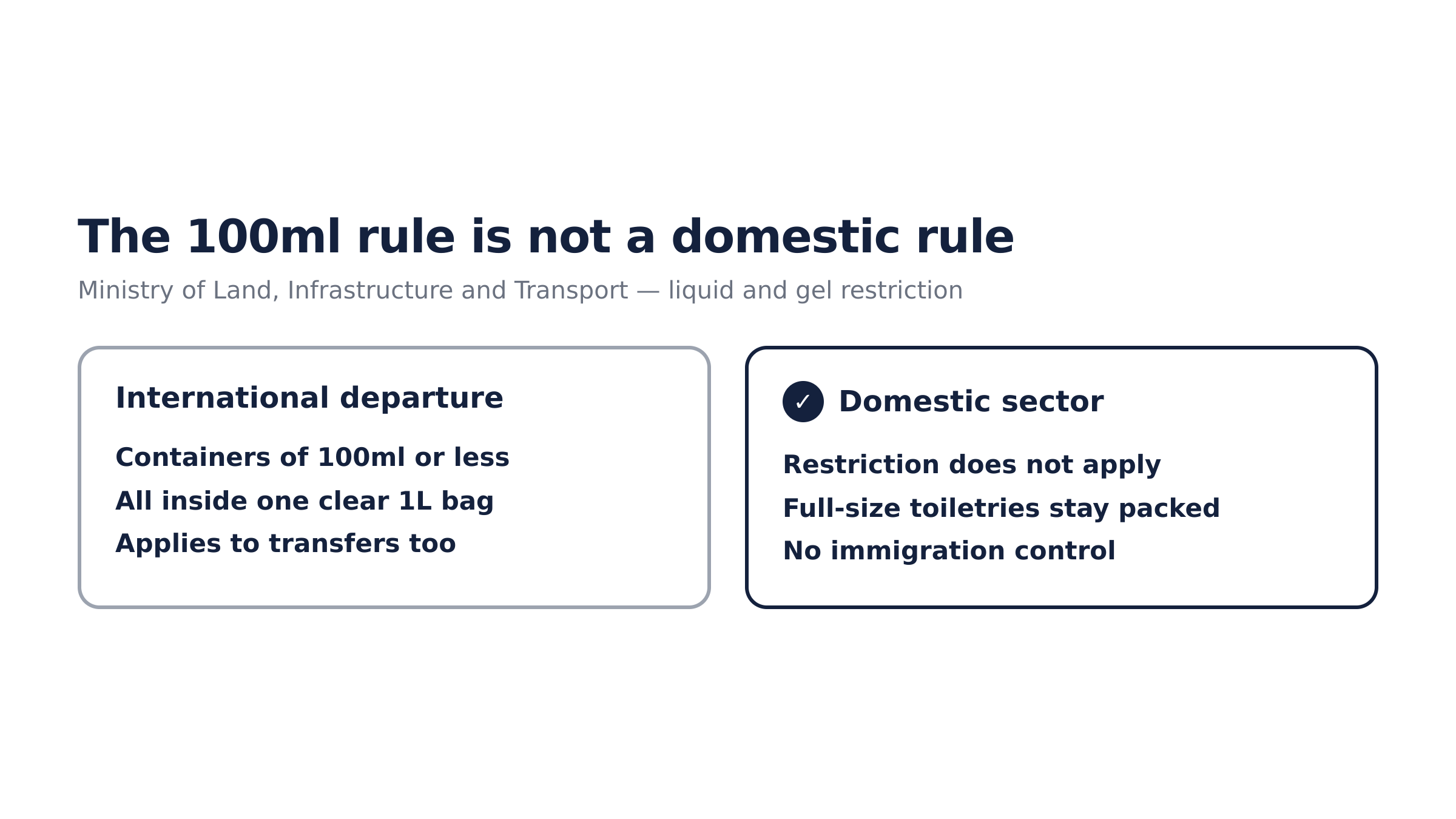
Do not repack your toiletries. The 100ml liquid limit you know from international departures is a rule for international flights. The Ministry of Land, Infrastructure and Transport applies the liquid and gel restriction to international departures and transfers, not to domestic sectors. Your full-size sunscreen can stay in your carry-on.
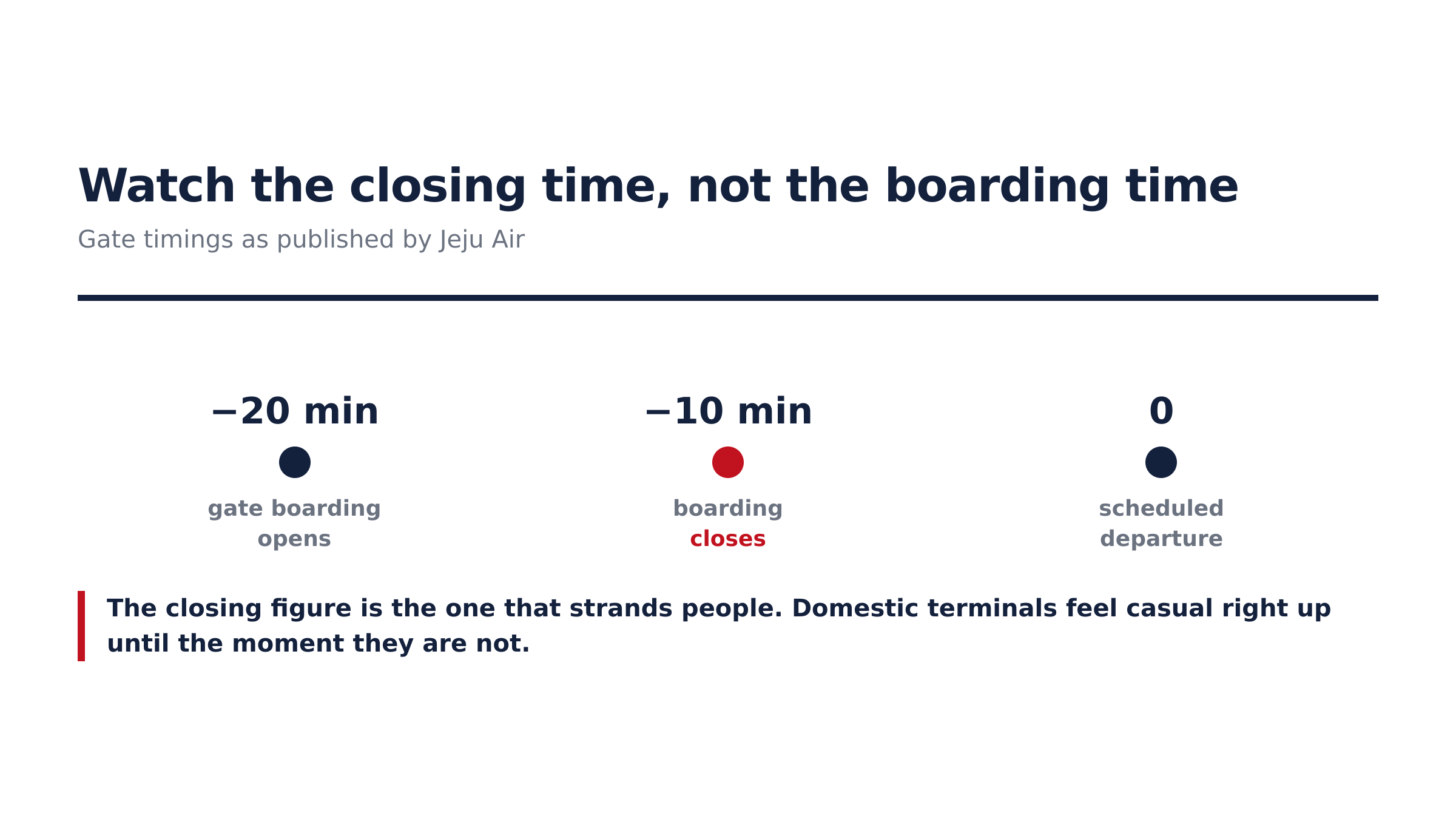
Watch the closing time, not the boarding time. Jeju Air, for example, states that gate boarding runs from 20 minutes before departure to 10 minutes before, and that boarding closes 10 minutes before departure. That closing figure is the one that strands people. Domestic terminals feel casual right up until the moment they are not.
FAQ
There is no number printed on my boarding pass. What do I do?
Look at your seat row and wait for staff to call the rear section. Not every carrier prints a zone, and mobile boarding passes render the field differently. Rows in the back third of the cabin go early on domestic flights in Korea, whatever the pass says.
If I board last, will I lose my seat?
No. Your seat is assigned and held. The only thing you compete for by boarding early is overhead bin space near your row.
Can I fly domestically on just my passport?
Yes. A passport is a valid original ID for domestic boarding. What is not valid is a photograph of it.
Do I clear immigration for a domestic flight?
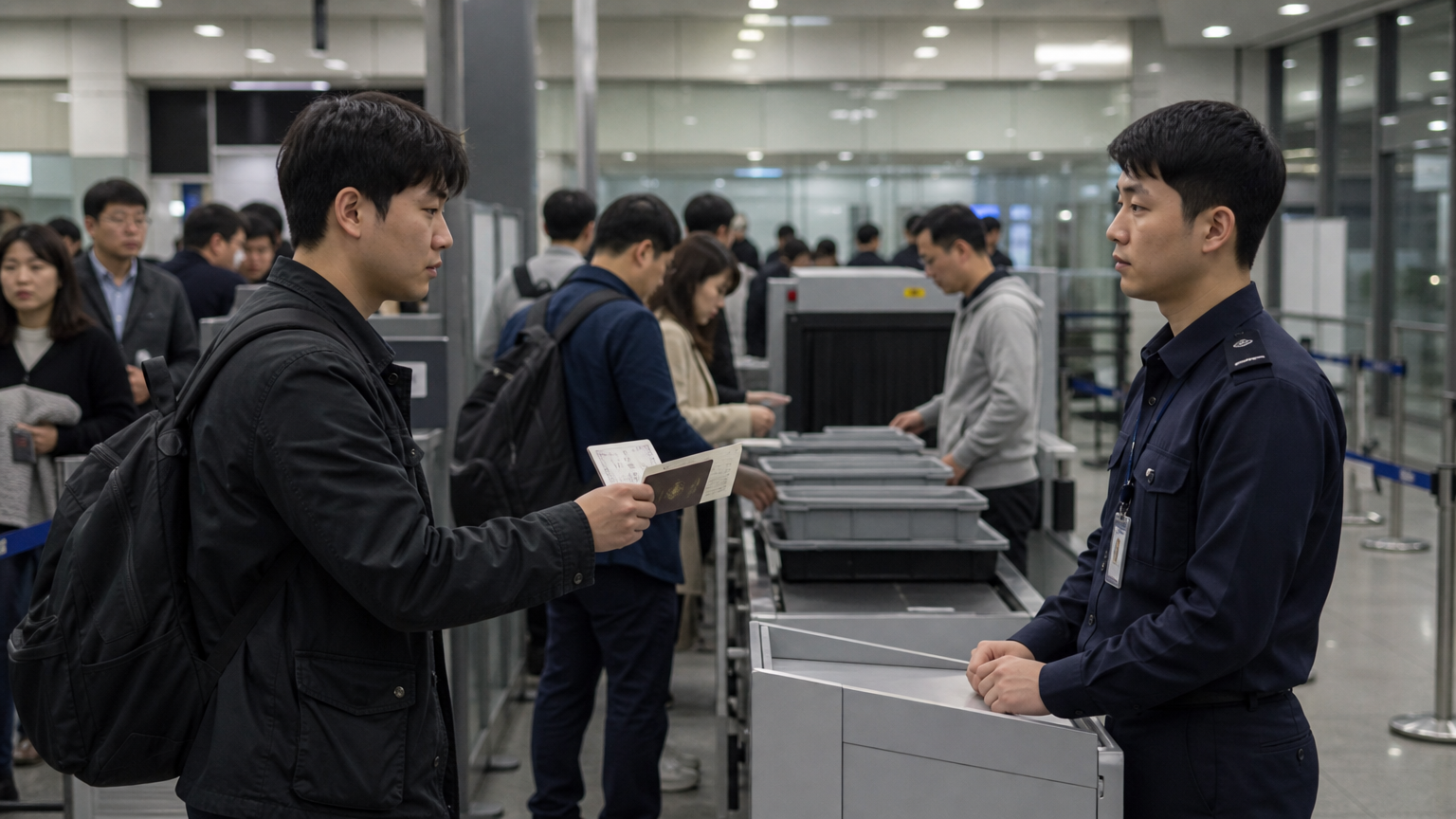
No. There is no immigration control on domestic sectors — only the security screening at the departure gate entrance, where staff check your boarding pass against your photo ID.
The short version
Domestic flights in Korea board from the tail forward. The number on your pass is your group, the label for that group is not consistent between airlines, and the thing that never changes is that back rows go first. Check your row, stay seated until your section is called, and carry the original of your ID.
Once you land at Gimpo, a different puzzle starts. Five rail lines meet under that airport, and two of them will carry you away from Seoul rather than into it. That is the next one.
References
-
Korean Air Newsroom, "대한항공, 'Back to Front' 방식 존 보딩(Zone Boarding) 시행"
-
Asiana Airlines zone boarding, reported 10–11 June 2025 (Hankyung, News1, Kukmin Ilbo and others)
-
Jeju Air boarding gate guidance, official site
-
Jeju Air boarding-order printing on boarding passes, reported by Digital Times
-
Ministry of Land, Infrastructure and Transport, guidance on liquid and gel carry-on restrictions
-
Domestic ID requirement effective 28 January 2022, airline notices (Korean Air, Asiana Airlines, Air Seoul)