Jeju Airport: Express or Local Is the Only Bus Decision That Matters

One word on the bus decides your afternoon. It is printed on the front. Most visitors never look.
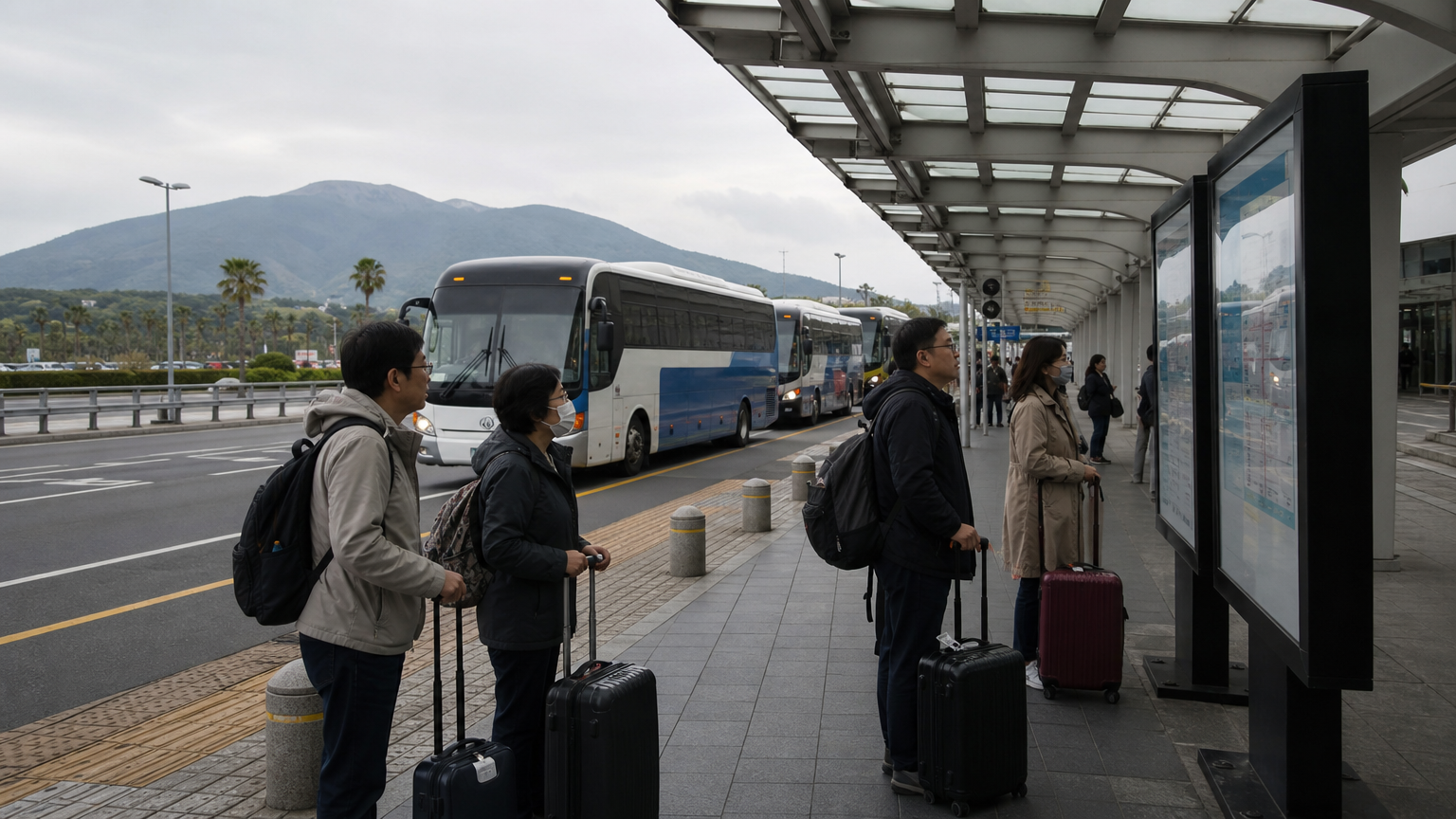
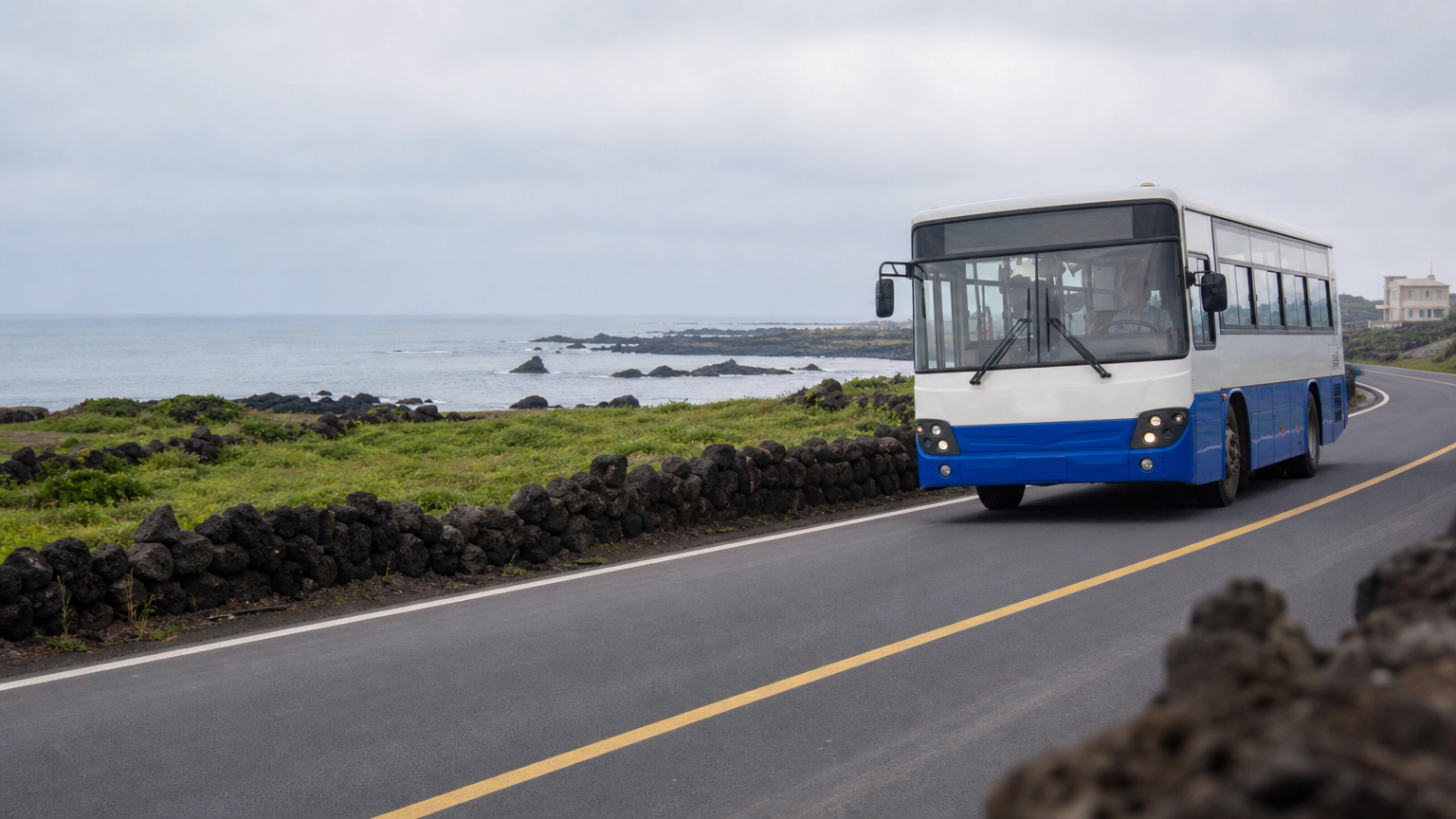
Jeju has no subway. When you walk out of arrivals, the island's entire public transport system is a row of bus stops along the kerb, and they are not interchangeable. Two buses leaving from twenty metres apart can take you to the same town by very different routes, on very different fare systems, in very different amounts of time.
The good news is that you only have to understand one distinction. Everything else at Jeju Airport follows from it.
Express and trunk are not two speeds. They are two systems.
An express bus is called geuphaeng. A trunk bus is called ganseon. They look similar and they are charged in completely different ways.
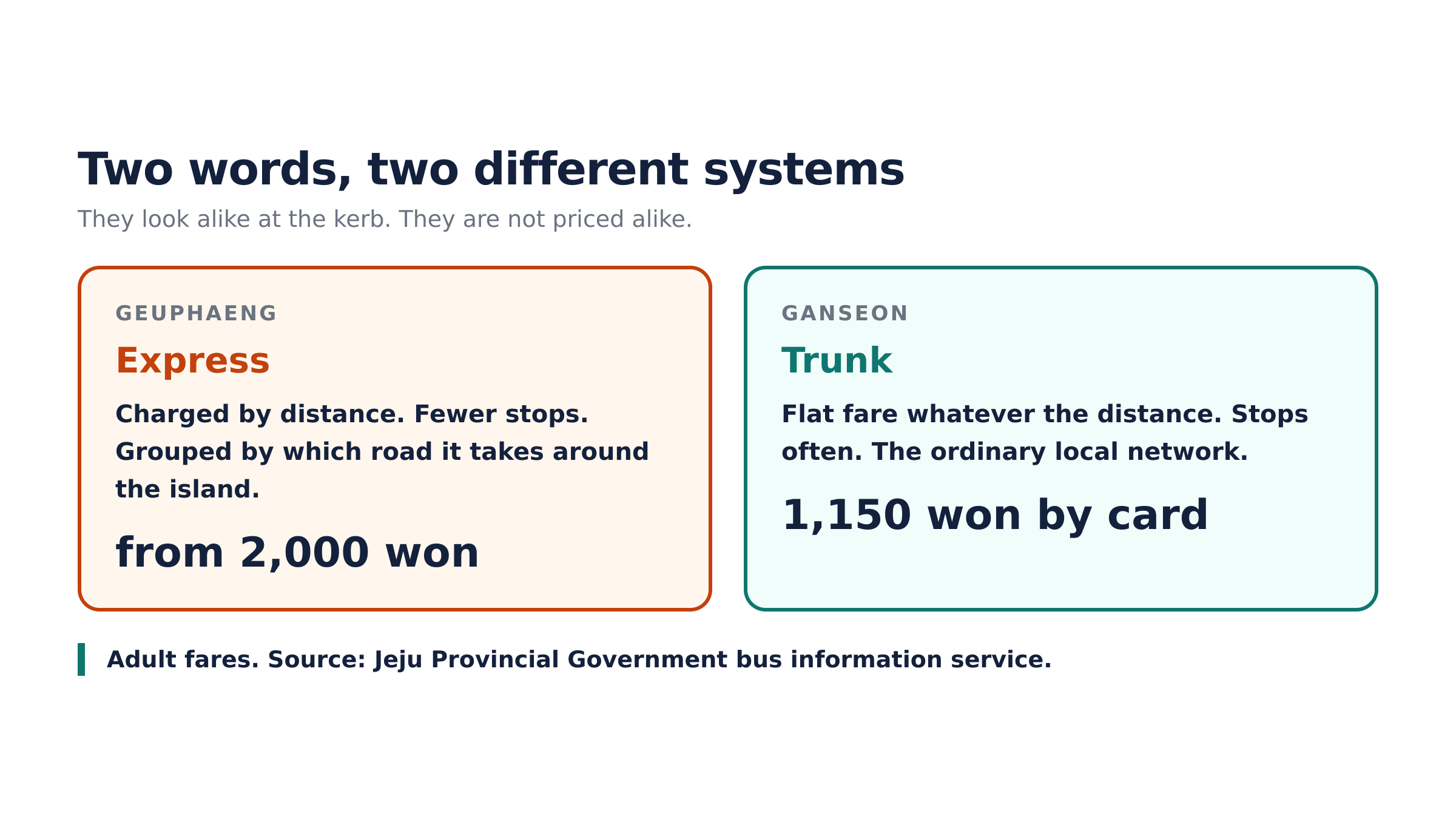
The Jeju Provincial Government's bus information service sets the trunk fare as a flat amount — 1,150 won by card for an adult, 1,200 won in cash — no matter how far you ride.
Express is distance-based instead. It starts at 2,000 won for the first 20 kilometres, and adds 500 won for every additional 5 kilometres.
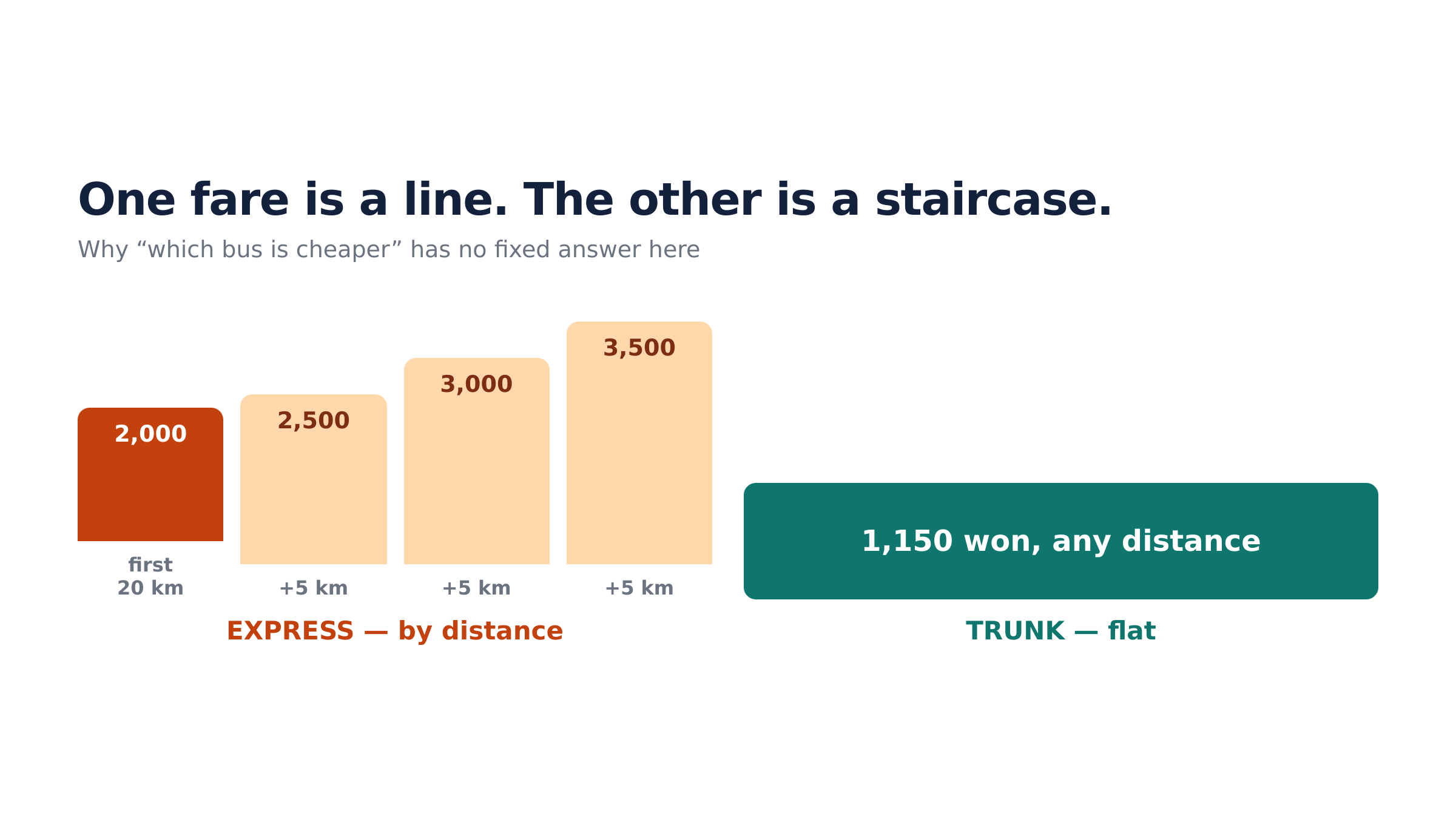
That single difference is why "which bus is cheaper" has no fixed answer on this island. Crossing to the far side, the express costs several times the trunk fare and saves you a long chain of stops. Going a short distance within Jeju City, the trunk bus wins on both counts.
If you have not landed yet, the flight itself has a rule worth knowing: Domestic Flights in Korea: The Number on Your Boarding Pass Is Your Place in Line
So which one is waiting outside arrivals?
The kerb is sorted by direction, not by destination
Both are. Korea Airports Corporation organises the stops outside Jeju Airport into groups, and the grouping is geographic.
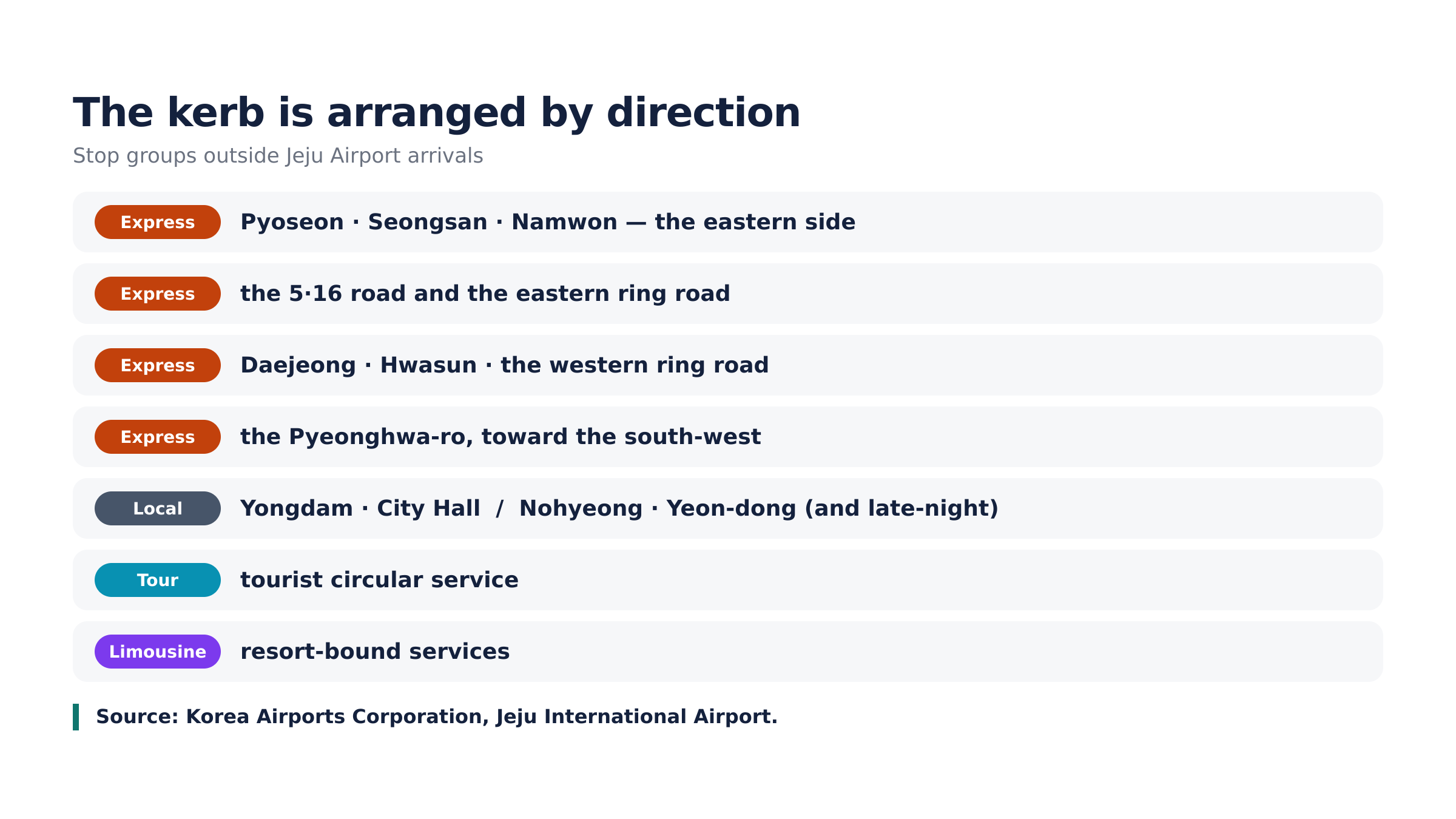
The express groups are split by which road they take around the island — one set runs toward Pyoseon, Seongsan and Namwon on the eastern side, another follows the 5·16 road and the eastern ring road, another heads for Daejeong, Hwasun and the western ring road, and another takes the Pyeonghwa-ro toward the south-west.
Alongside them sit the ordinary and late-night services for Yongdam and City Hall, for Nohyeong and Yeon-dong, a tourist circular service, and the limousine buses.
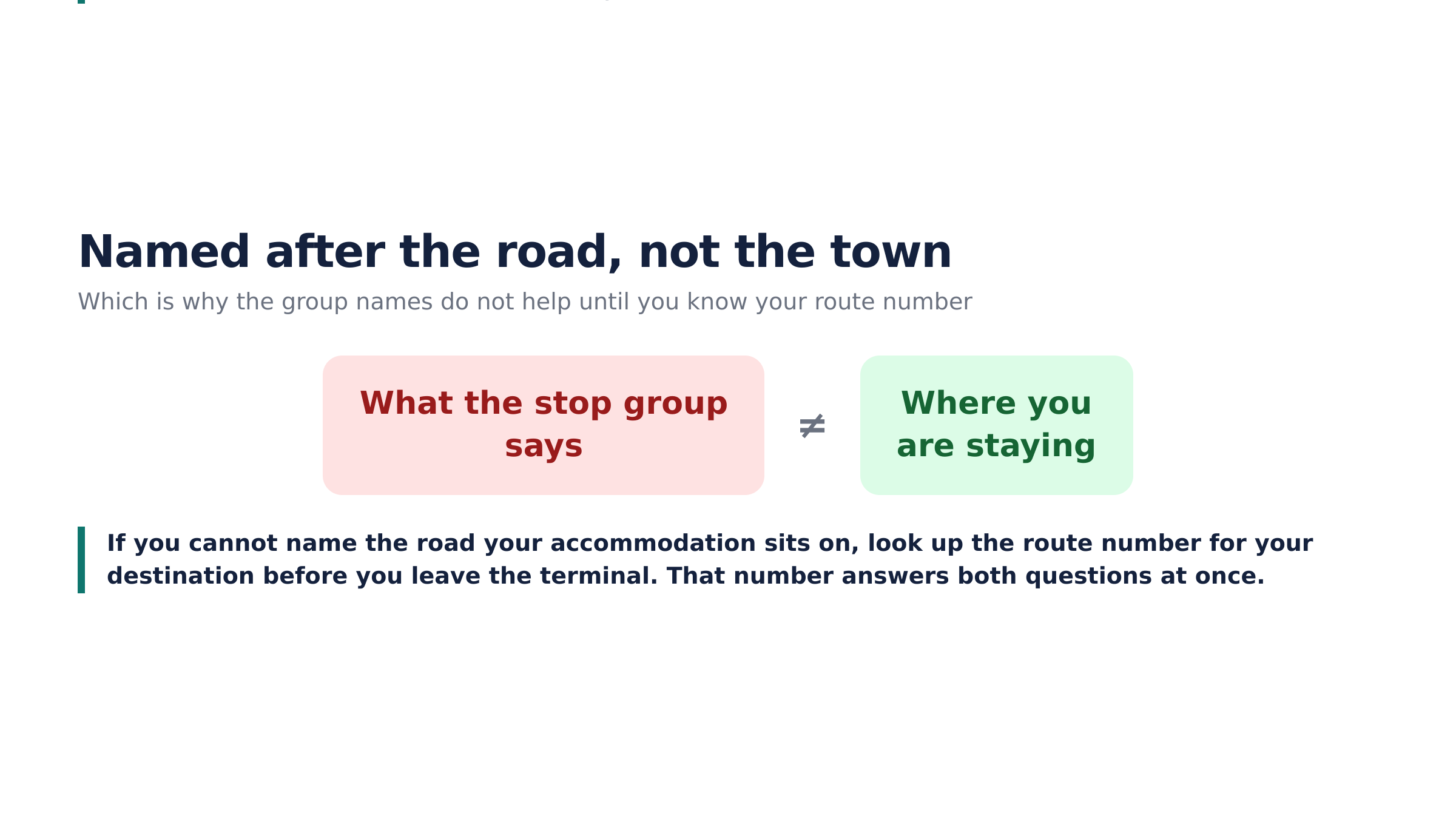
Reading that list as a visitor, the useful shortcut is this: the express groups are named after the road, not the town. If you do not know which road your accommodation sits on, the group names will not help you, and you should check the route number for your destination before you leave the terminal.
And the fare, once you know the number?
Check the fare against your destination, not the bus
Because express fares scale with distance, the number on the fare board is a starting fare, not your fare.
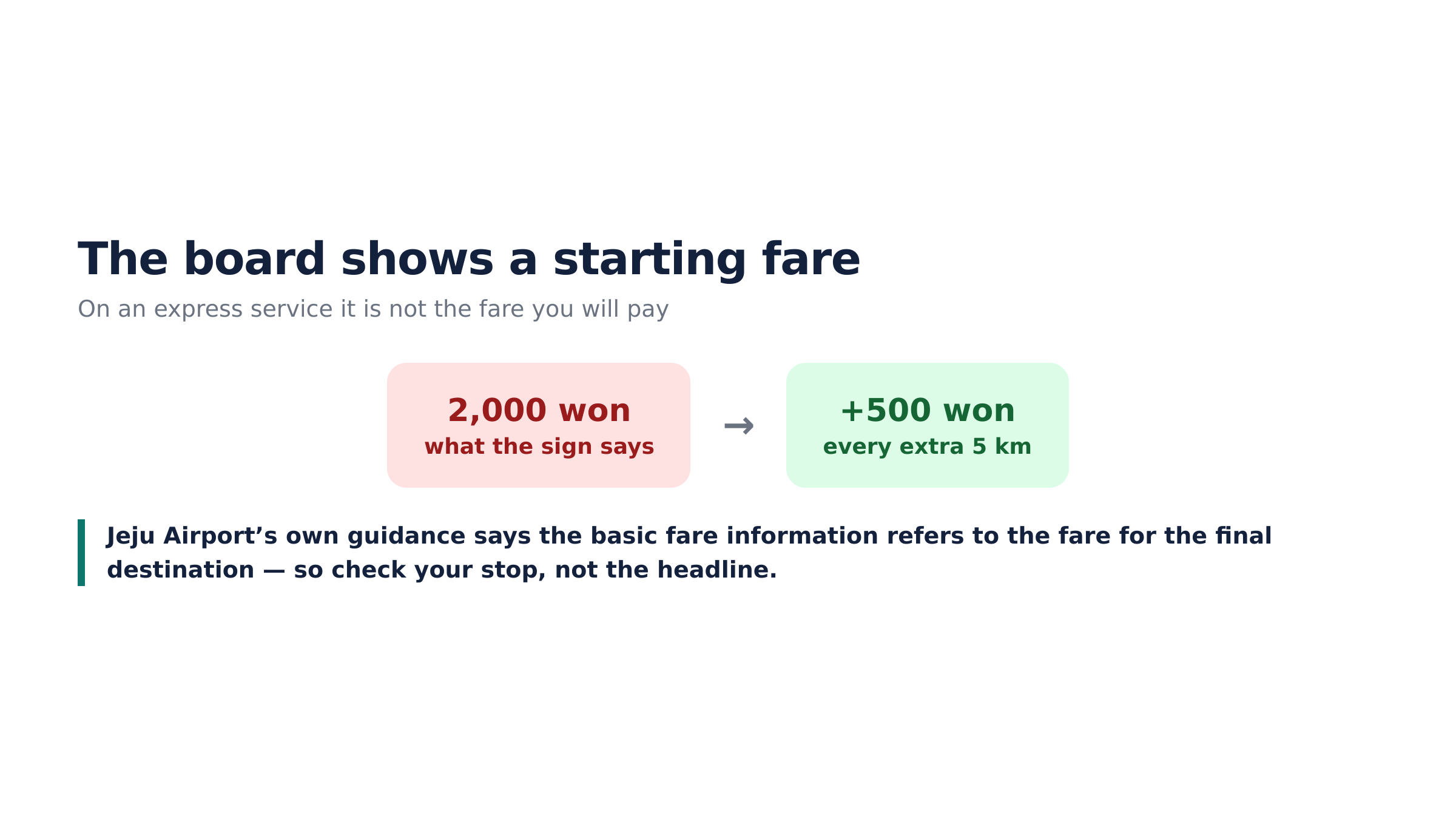
Jeju Airport's own transport page makes this explicit — it notes that the basic bus fare information refers to the fare for the final destination, and it points travellers to the national bus information services rather than publishing a single figure.
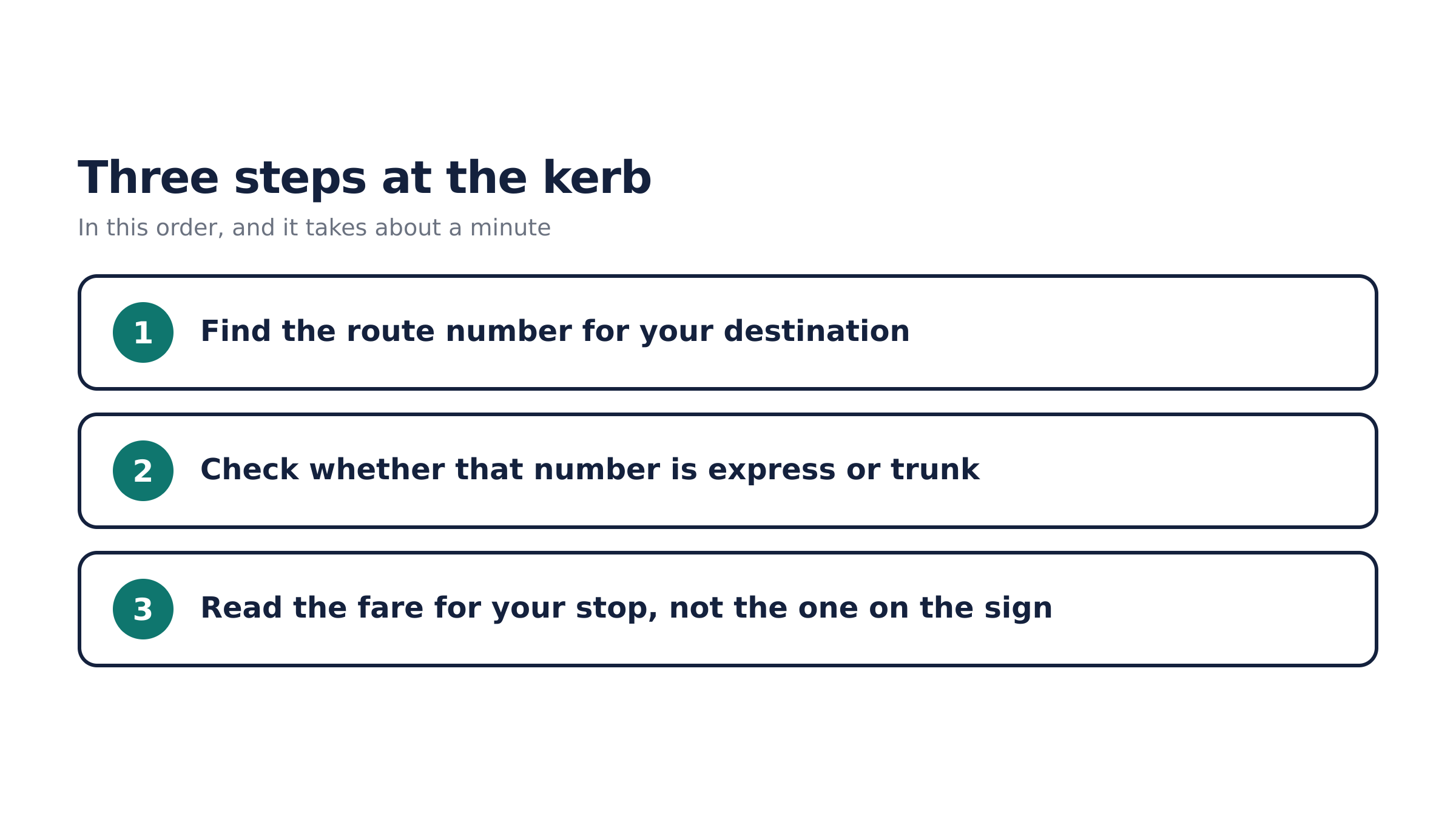
So the sequence that actually works at the kerb is short. Find your destination's route number first. Check whether that number is express or trunk. Then read the fare for your stop, not the headline fare.
FAQ
Is there a train or subway from Jeju Airport?
No. Jeju has no urban rail at all. Buses and taxis are the whole system, which is why the bus decision carries more weight here than it would at an airport on the mainland.
Can I pay with a T-money card?
Yes, Korean transport cards work on Jeju buses, and the card fare is slightly cheaper than cash on trunk services.
Do express buses run to Seogwipo?
Yes. Several express groups cross the island toward the south, taking different roads to get there. Which one suits you depends on whether your destination is in central Seogwipo, the newer western district or along the coast.
Is the limousine bus worth it over the express?
It depends on your luggage more than your budget. Limousine services are aimed at travellers with suitcases heading to resort areas, while express buses are ordinary public transport that happen to be quick.
The short version
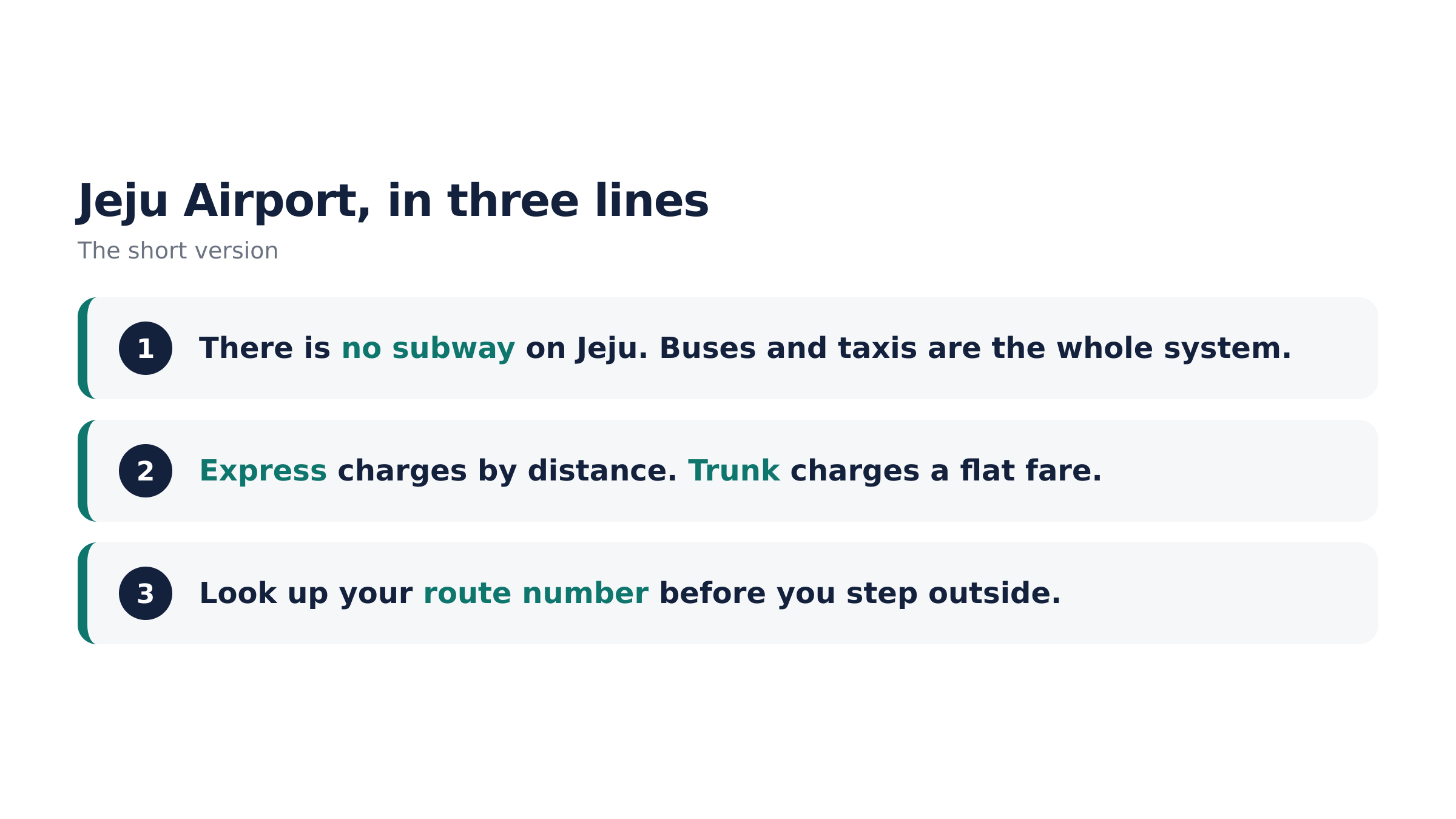
At Jeju Airport, ignore everything except whether your bus is express or trunk. Trunk buses charge a flat fare and stop often. Express buses charge by distance, start at 2,000 won for the first 20 kilometres, and are grouped by which road they take around the island. Look up your route number before you step outside, and read the fare for your destination rather than the one on the sign.
Get that one choice right and Jeju opens up quickly. Get it wrong and you will see a great deal of the island you had not planned on seeing — which, to be fair, is not the worst outcome available here.
References
-
Korea Airports Corporation, Jeju International Airport — Public Transport guidance (bus stop groupings; note that fare information refers to the final destination)
-
Jeju Provincial Government bus information service — trunk bus adult fare of 1,150 won by card and 1,200 won in cash; express bus fare of 2,000 won for the first 20km plus 500 won per additional 5km