Hallasan Hike: Only One Trail Reaches the Summit Right Now, and You Need a Booking

Most Hallasan trails do not reach the top. Two of them do. One is shut until 30 September. The other has a checkpoint. No booking, no summit.
Hallasan is the highest mountain in South Korea and it sits in the middle of Jeju, which makes it look like a single obvious thing to climb. It is not — it has seven trails going up different sides, only two of them end at the crater lake, and the reservation system that guards those two is narrower and stranger than most guides describe. This is what actually applies, what is closed right now, and what to do if the booking is gone.
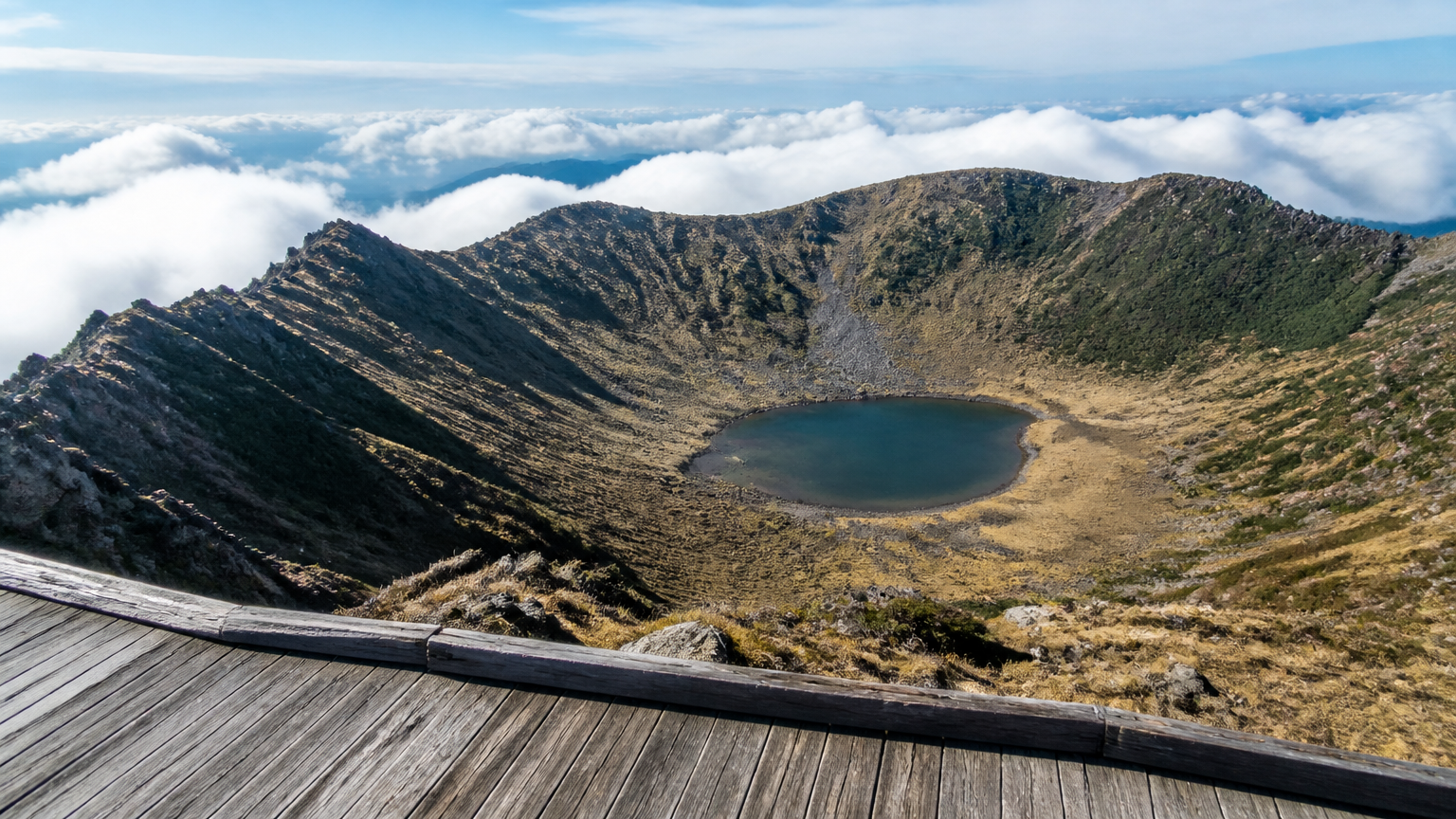
The mountain is 1,947 metres and the summit is Baengnokdam, a crater lake at the top. That is the photograph everyone has seen and the reason most people put a Hallasan hike on the itinerary at all.
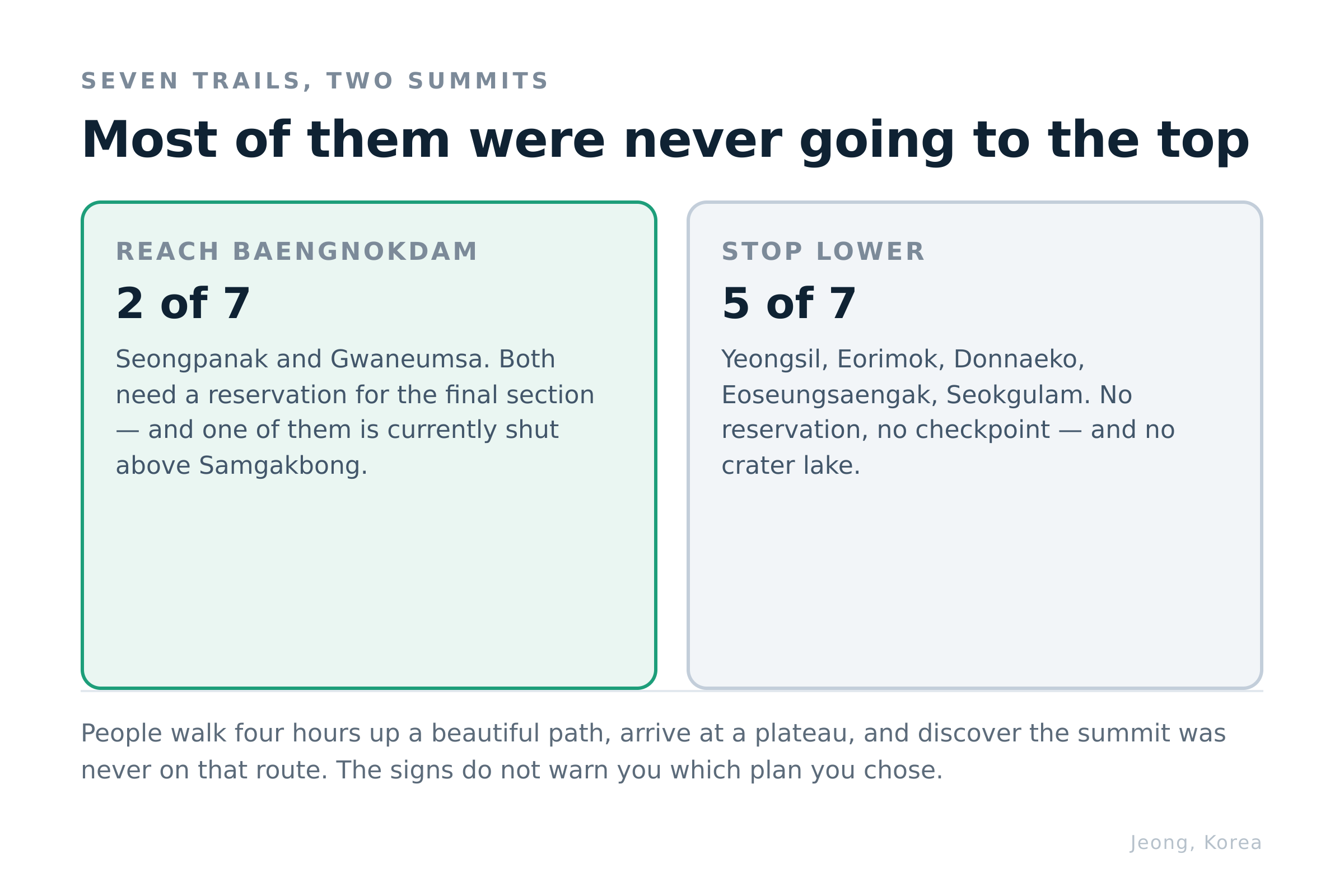
The trouble is that "hiking Hallasan" and "reaching Baengnokdam" are two different plans. A Hallasan hike can mean either one, and the trail signs do not warn you which you have accidentally chosen. People walk four hours up a beautiful path, arrive at a plateau, and discover the summit was never on that route.
Most of the trails do not go to the top
Five of the seven end somewhere else, and that is by design.
Hallasan National Park runs seven marked courses: Seongpanak, Gwaneumsa, Yeongsil, Eorimok, Donnaeko, Eoseungsaengak and Seokgulam. Only Seongpanak and Gwaneumsa continue to the crater. The rest top out lower — Yeongsil and Eorimok, the two most popular of them, both end at the Witseoreum shelter on the western shoulder rather than at the summit.
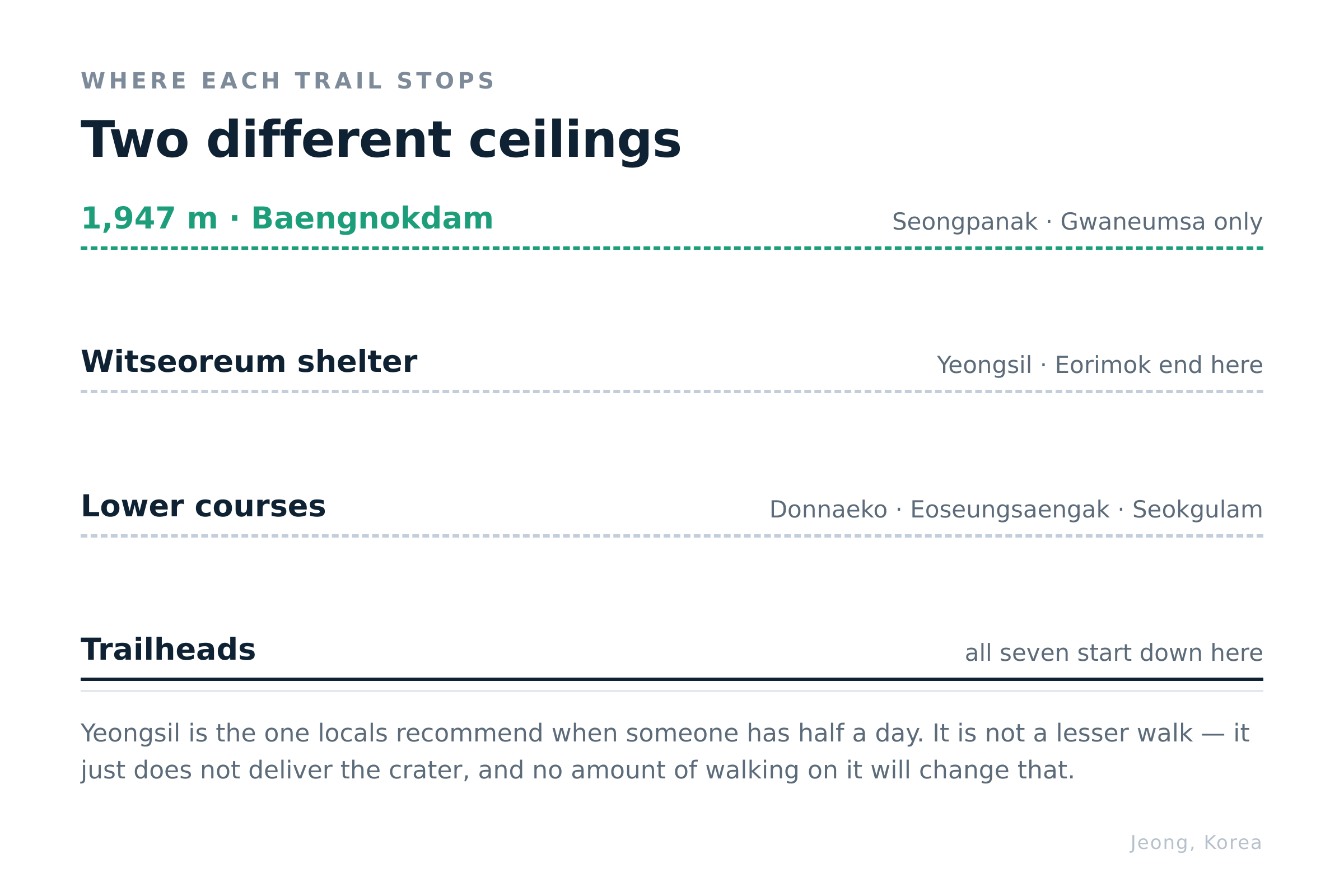
That is not a lesser walk. Yeongsil in particular is the one locals recommend when someone has half a day, and the Yeongsil–Eorimok traverse is a well-trodden route across the high plateau. It simply does not deliver the crater lake, and if that is the thing you came for, no amount of walking on it will help.
Here is how the seven divide.
| Trail | Reaches the summit | Reservation |
|---|---|---|
| Seongpanak | Yes | Required for the summit section |
| Gwaneumsa | Yes — but closed to the summit until 30 Sept 2026 | Required for the summit section |
| Yeongsil | No — ends at Witseoreum | Not required |
| Eorimok | No — ends at Witseoreum | Not required |
| Donnaeko | No | Not required |
| Eoseungsaengak | No | Not required |
| Seokgulam | No | Not required |
So the choice is smaller than it looks. If you want Baengnokdam, you are choosing between two trails, and this year one of them is out.
The closure, and what it leaves you
Gwaneumsa is shut above Samgakbong for two months.
Jeju's World Heritage Office closed the section between Samgakbong and Baengnokdam from 1 August to 30 September 2026 for rockfall-prevention repairs and maintenance of ageing facilities. For that period, the only way to stand at the crater is Seongpanak. 🗺 Seongpanak trailhead 🗺 Gwaneumsa trailhead
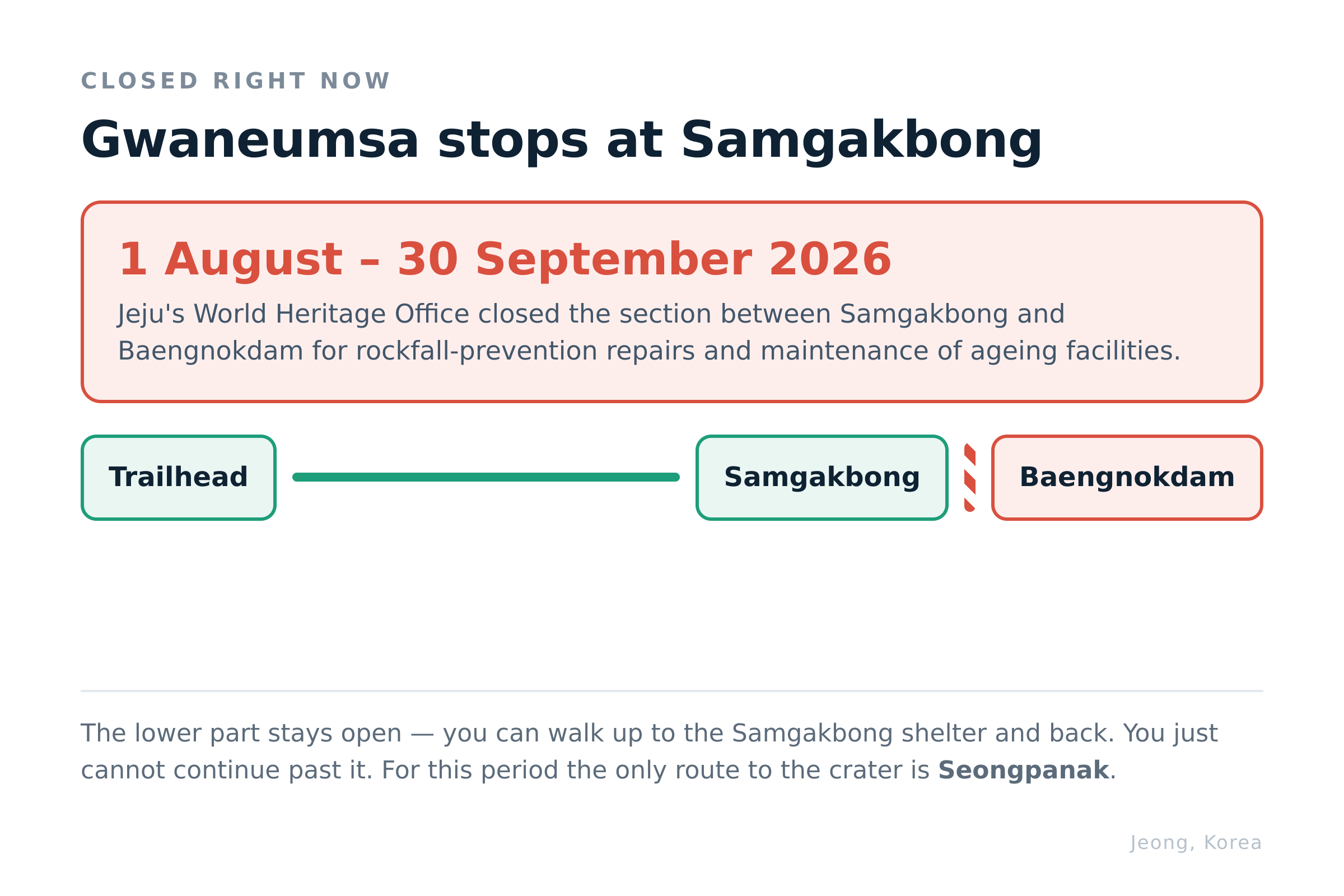
The lower part of Gwaneumsa stays open, so you can still walk up to the Samgakbong shelter and back. You just cannot continue past it.
And this is where the second misunderstanding lives.
The booking is on the summit, not on the mountain
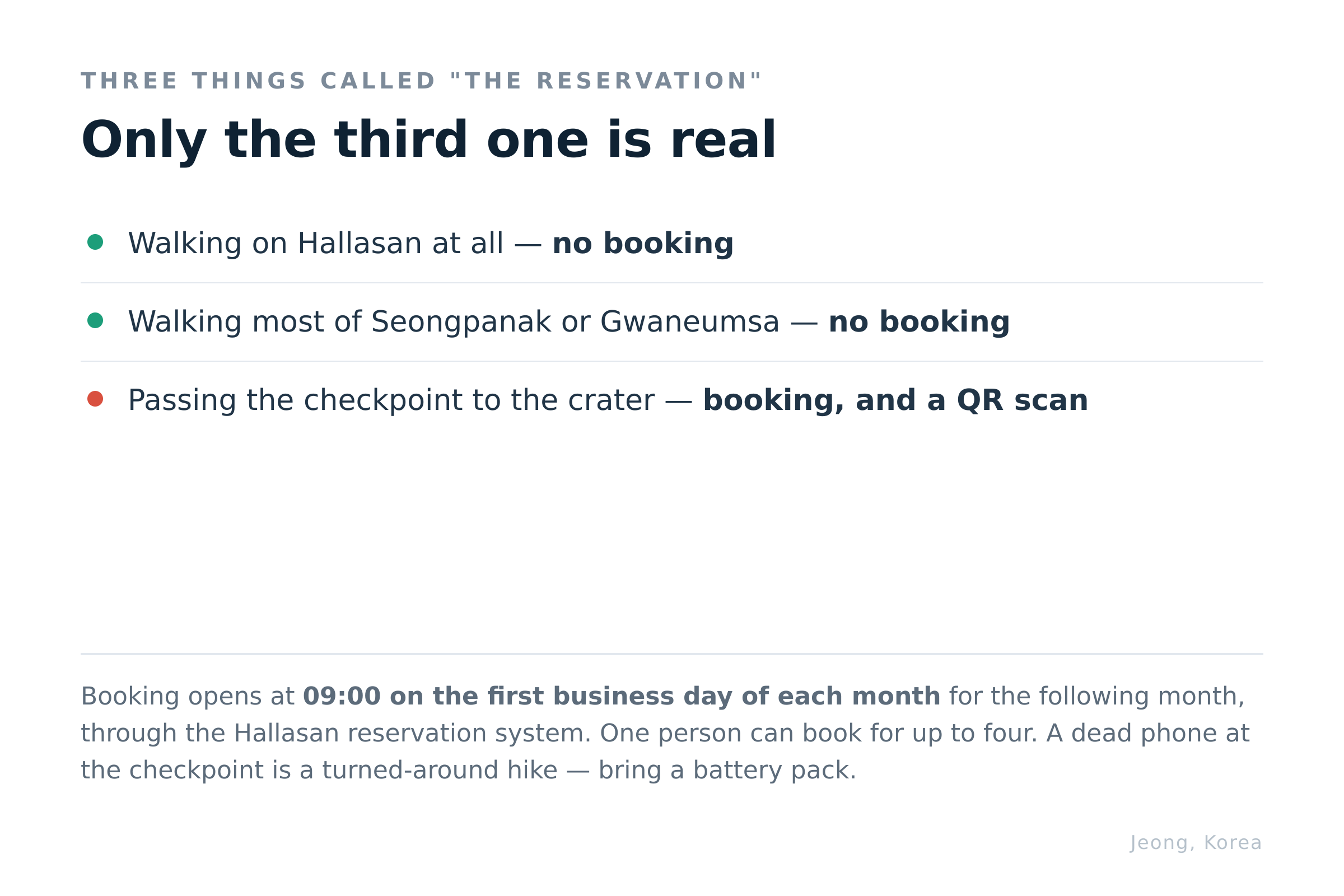
You do not need a reservation to walk Hallasan. You need one to finish it.
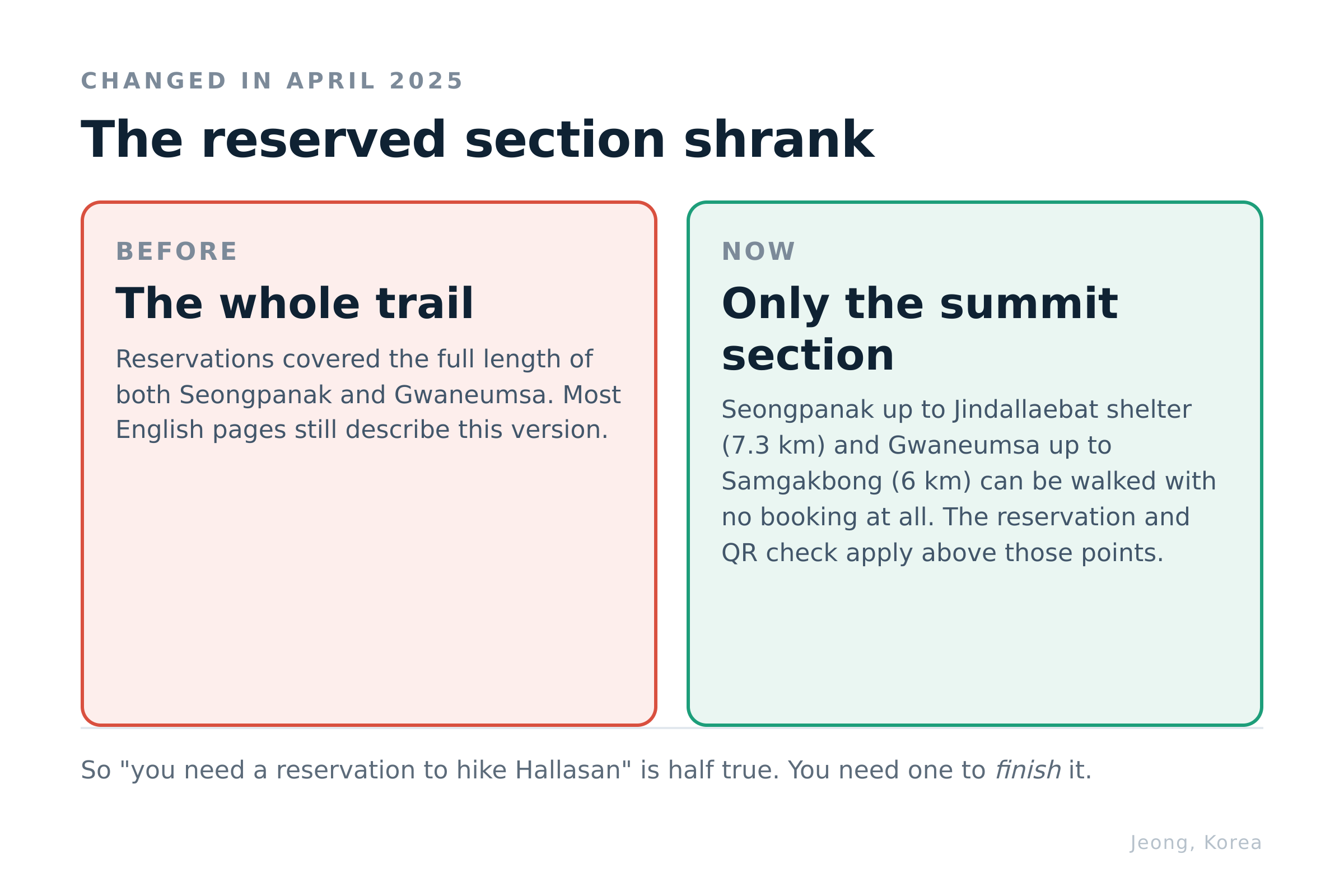
This changed in April 2025 and most English pages have not caught up. Reservations used to cover the whole of both trails. Now the lower sections are open to anyone: Seongpanak up to the Jindallaebat shelter (7.3 km) and Gwaneumsa up to Samgakbong (6 km) can be walked without booking anything. The reservation applies to the section above those points, and there is a QR verification at the checkpoint.
So there are three different things people call "the Hallasan reservation," and only the third one is real:
-
Walking on Hallasan at all — no booking
-
Walking most of Seongpanak or Gwaneumsa — no booking
-
Passing the checkpoint to the crater — booking, and a QR check
The daily numbers reported when the system was introduced were 1,000 people on Seongpanak and 500 on Gwaneumsa. Those figures come from Korean press coverage of the scheme rather than from a page I could open on the reservation site today, and the April 2025 revision changed the reserved section — so treat them as the order of magnitude, not gospel, and look at live availability before you plan around a number.
Booking opens on the first business day of each month at 09:00, for the following month, through the Hallasan reservation system. One person can book for up to four people. Popular dates go quickly; ordinary weekdays often do not go at all.
So what do you actually do?
How to plan it
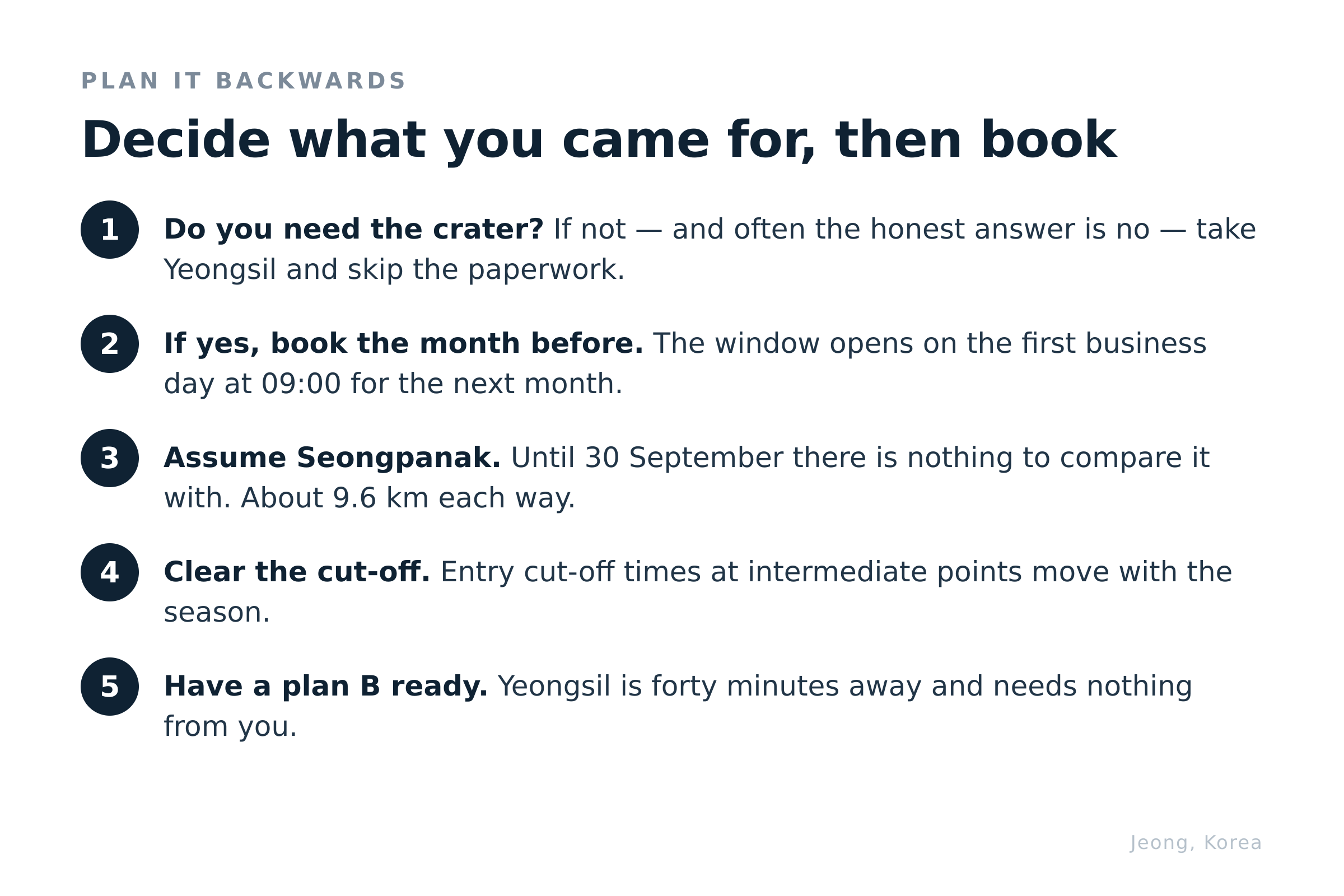
Plan a Hallasan hike backwards from the checkpoint.
Decide first whether you need the crater. If the answer is no — and for a lot of people it honestly is — you have five trails with no booking, no checkpoint and no 09:00 scramble on the first of the month. Yeongsil is the one to take. 🗺 Yeongsil trailhead 🗺 Eorimok trailhead
If you do need it, book the month before. The window opens on the first business day at 09:00 for the whole of the next month. Booking a fortnight out for a Saturday is how people end up not going.
Assume Seongpanak. Until 30 September it is the only route to the top, so there is nothing to compare. It is about 9.6 km each way and most people take somewhere around four and a half hours up.
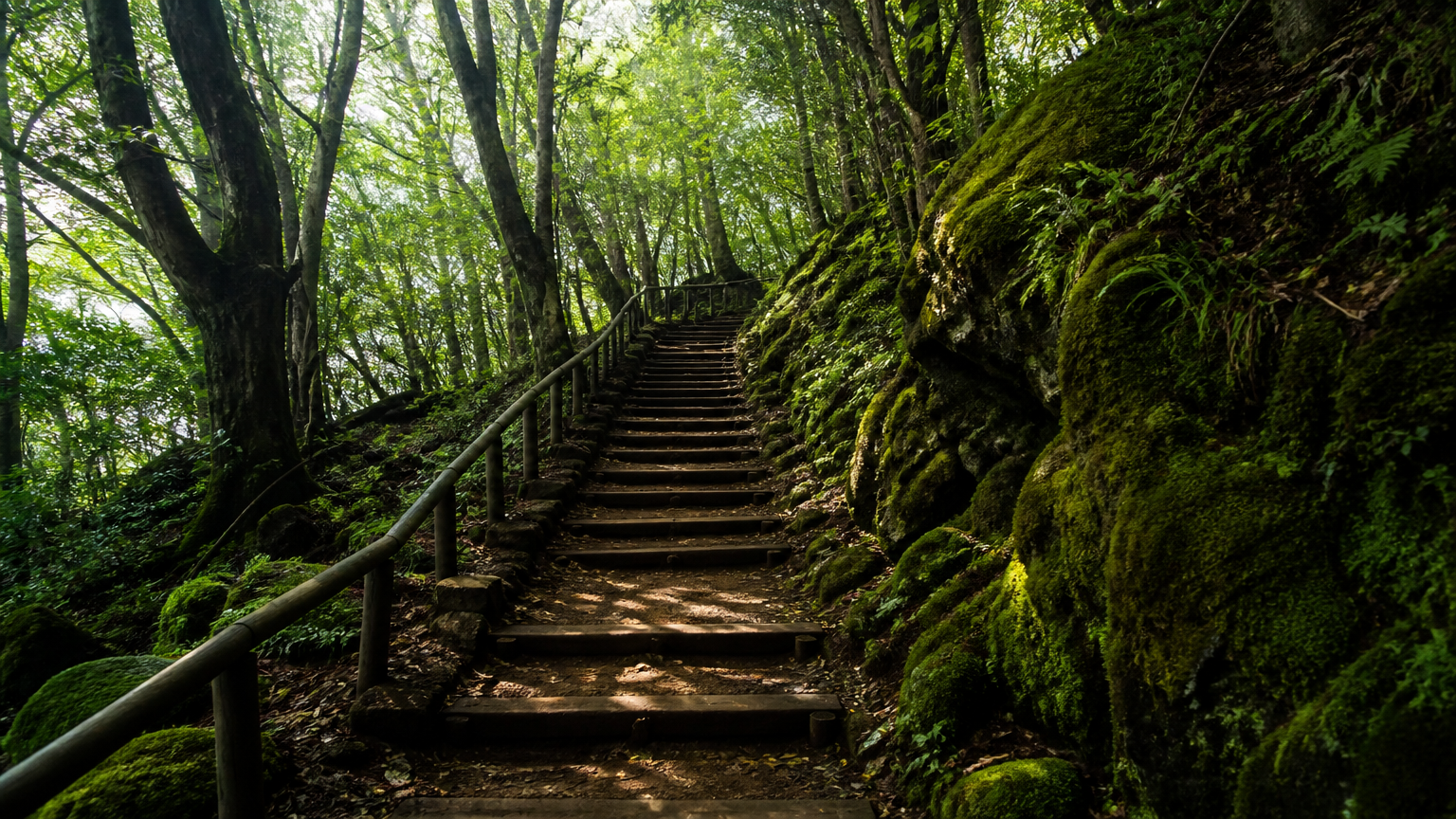
Start early enough to clear the cut-off. The park enforces entry cut-off times at intermediate points, and they move with the season — the shelter above Seongpanak stops letting people through well before the light goes. Check the current cut-off for your date rather than assuming the summer one.
Bring the booking and something to show it on. The check is a QR scan, so a dead phone is a turned-around hike. Bring a battery pack.
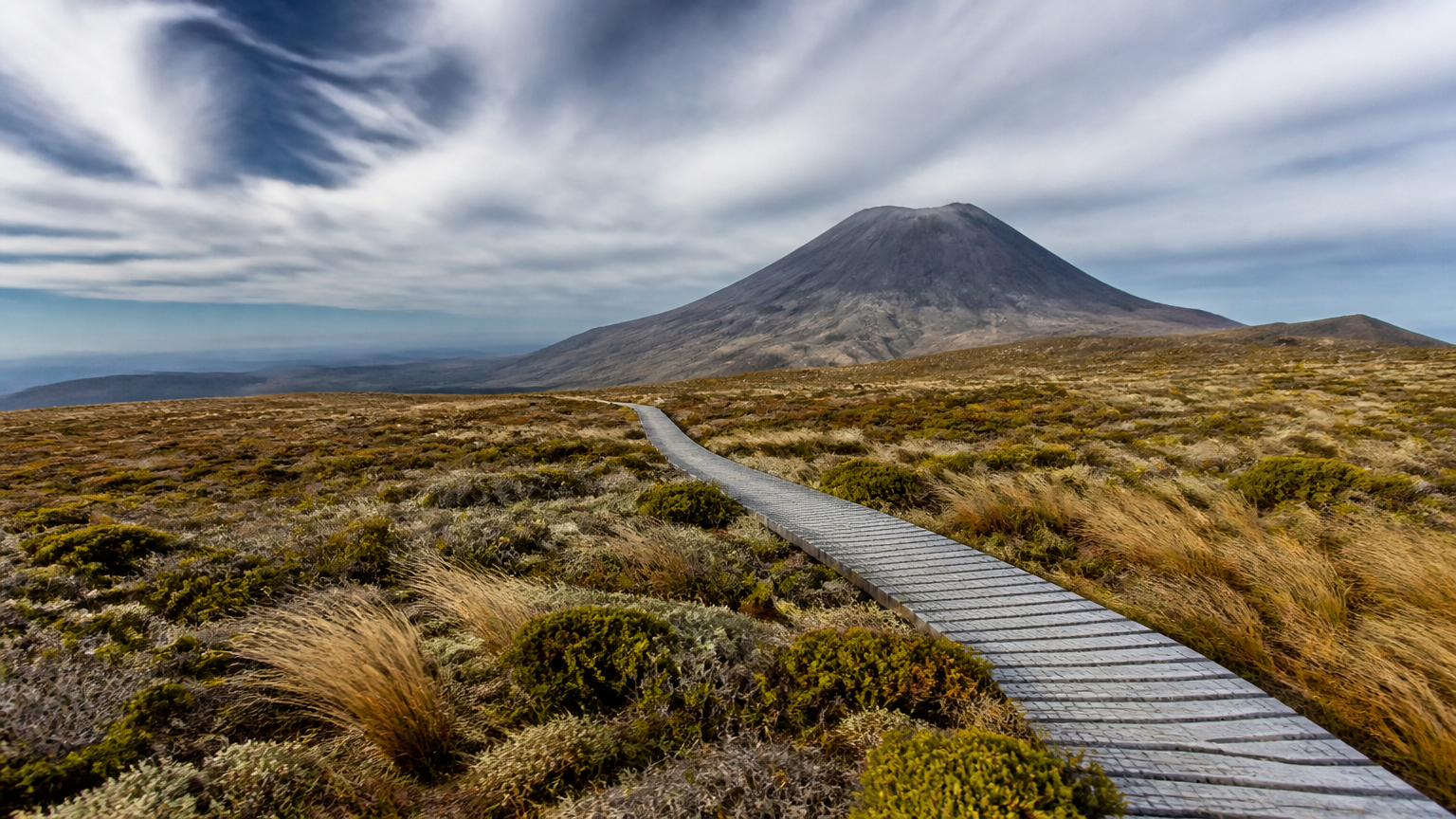
Have a plan B in your pocket. If the reservation is gone, or the weather closes the upper section on the day, Yeongsil is forty minutes away and needs nothing from you. Deciding that in advance is the difference between a good day and a wasted one.
FAQ
Do I need a reservation to hike Hallasan?
Only for the summit section. Since April 2025, Seongpanak up to the Jindallaebat shelter and Gwaneumsa up to Samgakbong can be walked without booking. Continuing to Baengnokdam requires a reservation and a QR check at the checkpoint. The other five trails need no booking at all.
Which trails go to the summit?
Only Seongpanak and Gwaneumsa. Yeongsil, Eorimok, Donnaeko, Eoseungsaengak and Seokgulam end lower — Yeongsil and Eorimok finish at the Witseoreum shelter.
Why is the Gwaneumsa trail closed?
The section from Samgakbong to Baengnokdam is closed from 1 August to 30 September 2026 for rockfall-prevention repairs and facility maintenance. The lower part of the trail remains open.
So how do I reach the summit right now?
Seongpanak, with a reservation. It is the only route to the crater while the Gwaneumsa upper section is shut.
When can I book, and how?
Bookings open at 09:00 on the first business day of each month for the following month, through the Hallasan reservation system. One person can book for up to four.
How long is the Hallasan hike?
Seongpanak is roughly 9.6 km each way and commonly takes around four and a half hours to the top. Allow for the descent as well and treat it as a full day.
What if I cannot get a reservation?
Take Yeongsil or Eorimok instead. Neither needs a booking, both reach the high plateau at Witseoreum, and locals rate Yeongsil highly on its own merits.
Can I hike Hallasan in winter?
Yes, and it is spectacular, but entry cut-off times at intermediate points get earlier and conditions demand proper gear. Check the current cut-offs for your date before you go.
Decide what you came for
The mountain will give you a good day either way. What it will not do is let you improvise the summit — that part has a gate on it, the gate has a calendar, and the calendar opens at nine in the morning on the first of the month.
So decide early which hike you are doing. If it is the crater, book it the month before and take Seongpanak, because until the end of September there is no second option. If it is not, take Yeongsil, walk to Witseoreum, and skip the paperwork entirely.
Either way you will want a car to reach the trailhead in the dark, which is its own subject in Korea.
References
-
Trail list and which courses require reservation — Hallasan National Park, Jeju Province
-
Hallasan reservation system, booking window and QR verification — Hallasan Trail Reservation System
-
Gwaneumsa Samgakbong–Baengnokdam closure, 1 Aug – 30 Sept 2026, Jeju World Heritage Office — Korean press reporting
-
Daily quotas of 1,000 (Seongpanak) and 500 (Gwaneumsa) as reported at the scheme's introduction — Korean press reporting
-
April 2025 revision reducing the reserved section to the summit sections only — Korean press reporting