Trash in Korea: The Bag Is a Receipt, and It Only Works in One District

There are four things to separate here, and one of them decides which shop is allowed to sell you the bag.
That sentence is the whole problem in miniature. You go to the convenience store for a bin bag, you are asked which district you are in, and the question makes no sense until you know that the bag is not really a bag. It is a fee. Once that clicks, every other rule about trash in Korea stops being arbitrary.
So this is worth five minutes before your first bin day, rather than at eleven at night with a full bag and no idea why the one under the sink is the wrong colour.
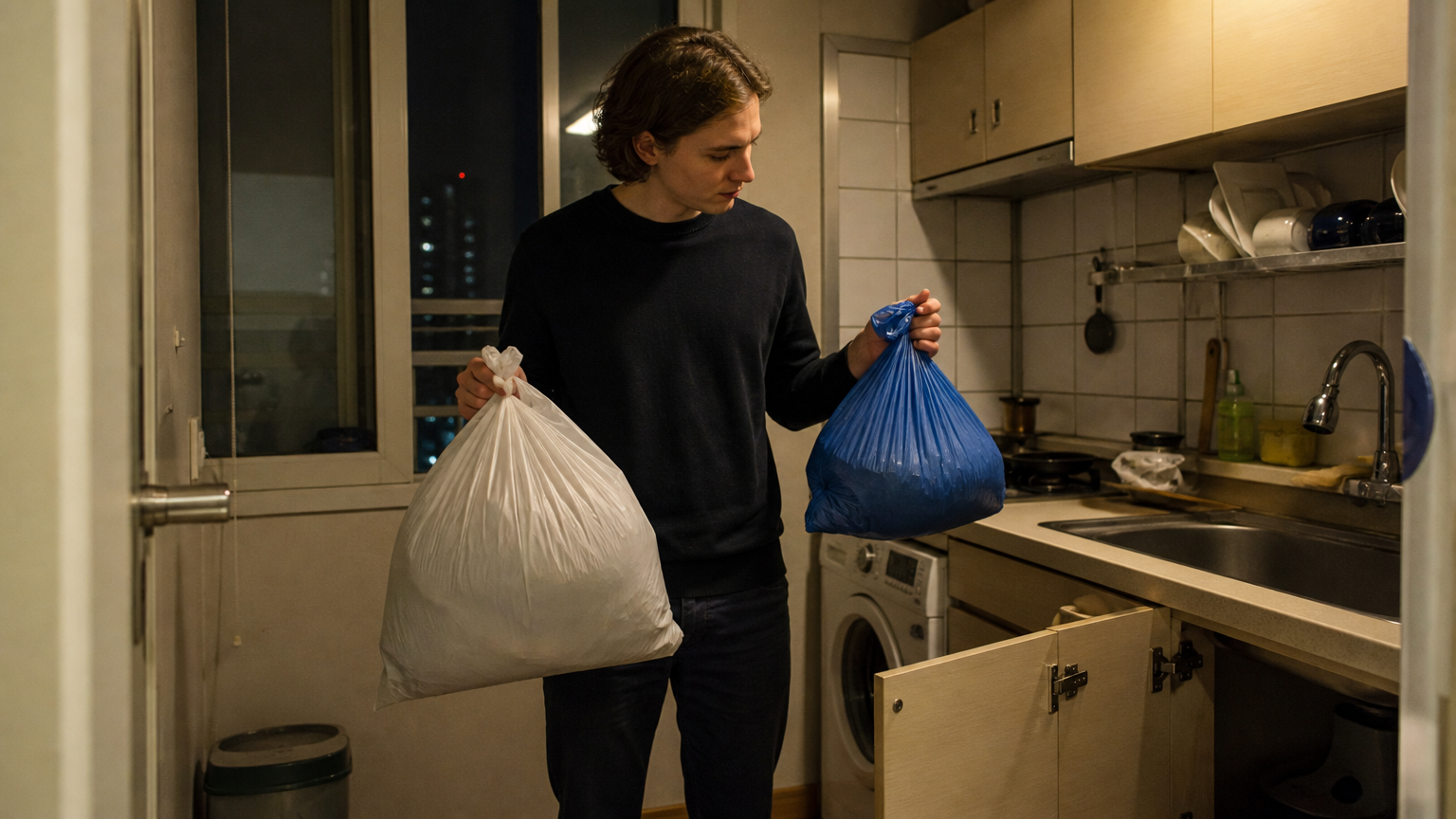
The bag is the fee, paid in advance
You are not buying a bag. You are buying disposal.
Korean law lets the local authority charge for handling household waste, and it specifies how: the fee is collected by selling volume-rate bags — the ones marked as designated waste bags — rather than by billing you afterwards. The price on the bag is the disposal charge, and the plastic is just the receipt it is printed on.
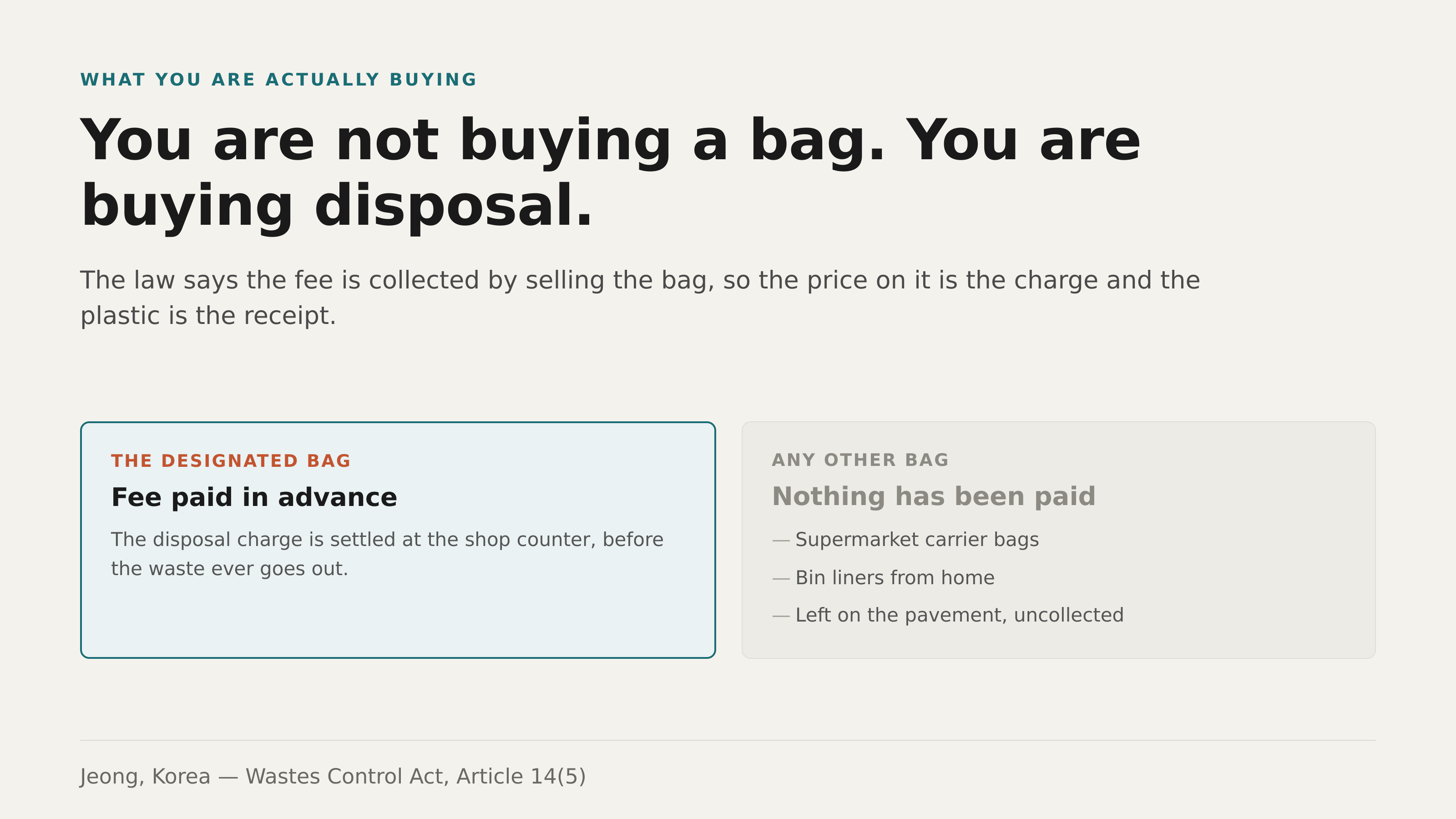
That single fact answers most of the questions people arrive with. Why can't I use a supermarket carrier bag? Because no fee has been paid on it. Why is the bag so expensive for what it is? Because you are not paying for plastic. Why does the bin lorry leave some bags behind? Because those ones have not been paid for, and leaving them is the enforcement.
It also tells you the rule is not about tidiness or environmental virtue. It is a billing system, and the bag is how the bill is settled.
Which explains the question the shop assistant asked you.
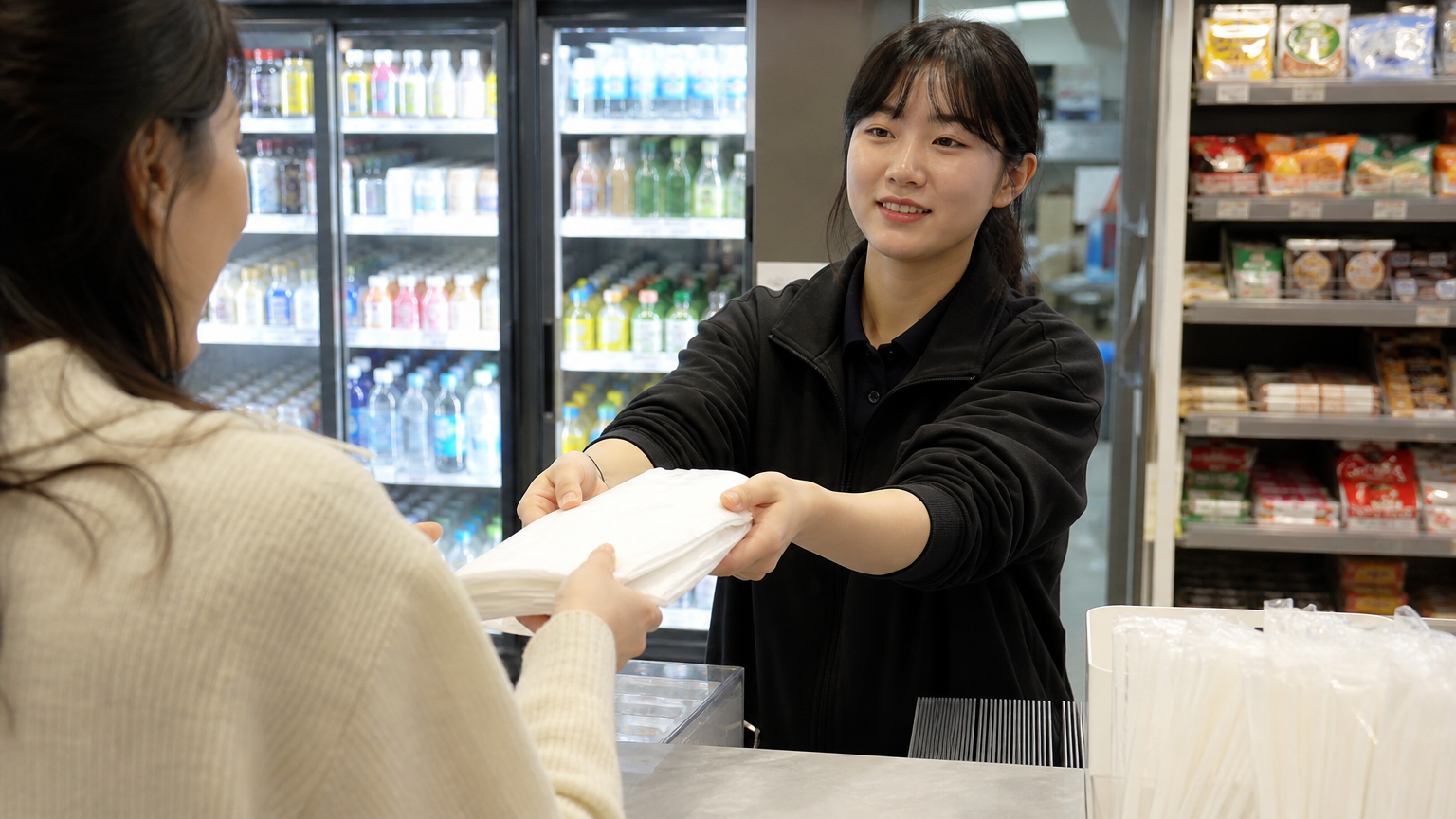
Why it only works in one district
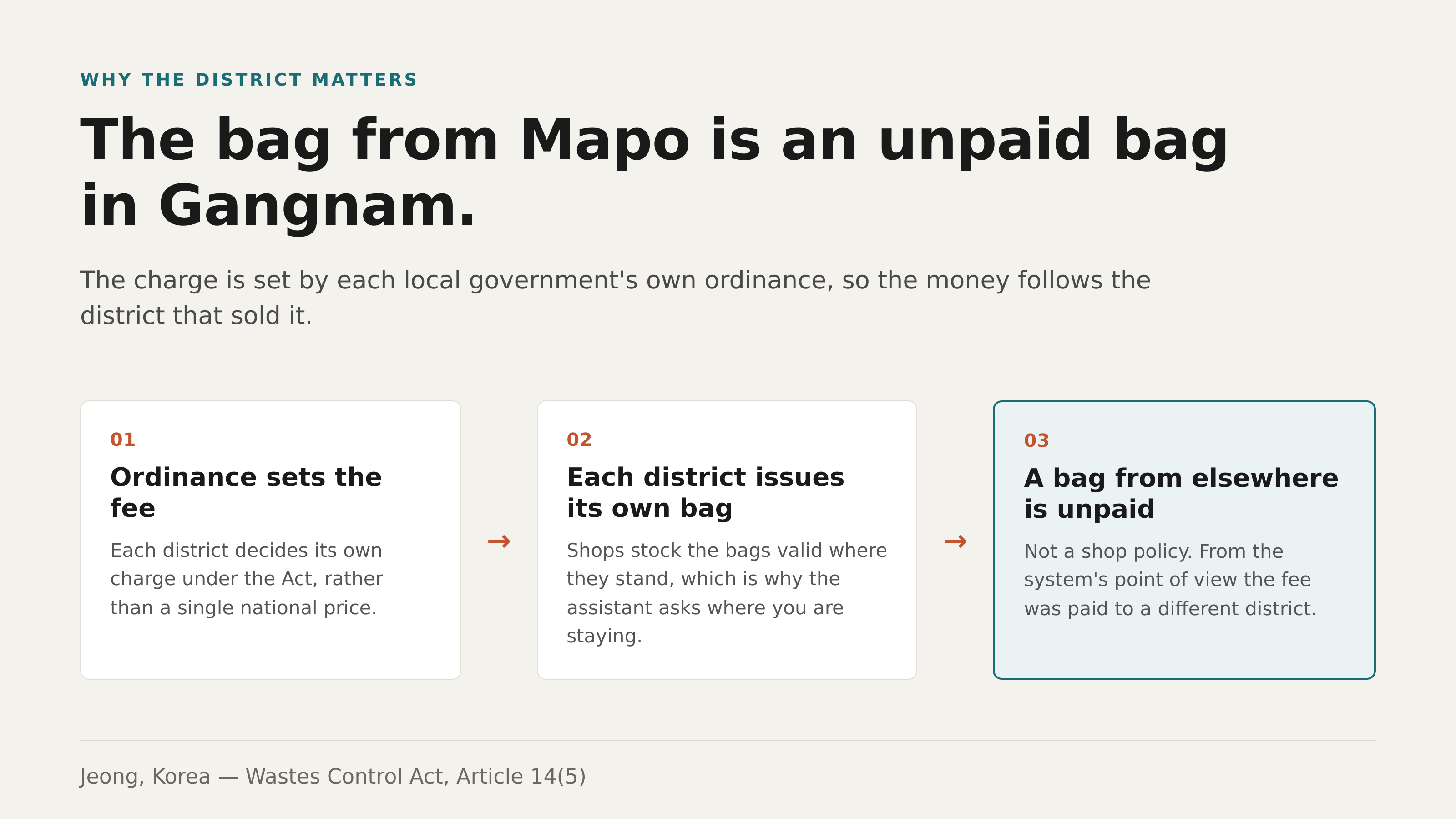
The bag you bought in Mapo is not valid in Gangnam, and that is not a shop policy.
The same provision says the fee is charged as prescribed by the ordinance of the local government concerned. The charge is set by each district, so each district issues its own bags, and the money from a bag sold in one district funds collection in that district. A bag from somewhere else is, from the system's point of view, an unpaid bag.
In practice this is easier than it sounds, because the shops near you sell the bags for where you are. A convenience store stocks the bags of its own district — which is one more errand the corner shop quietly handles — and so do supermarkets. Ask for the designated waste bag and say the size you want.
The trap is not buying the wrong one at the shop. It is arriving with leftovers from a previous stay, or moving across a district line mid-trip and assuming the roll under the sink still works.
And one of the four categories is not bagged by volume at all.
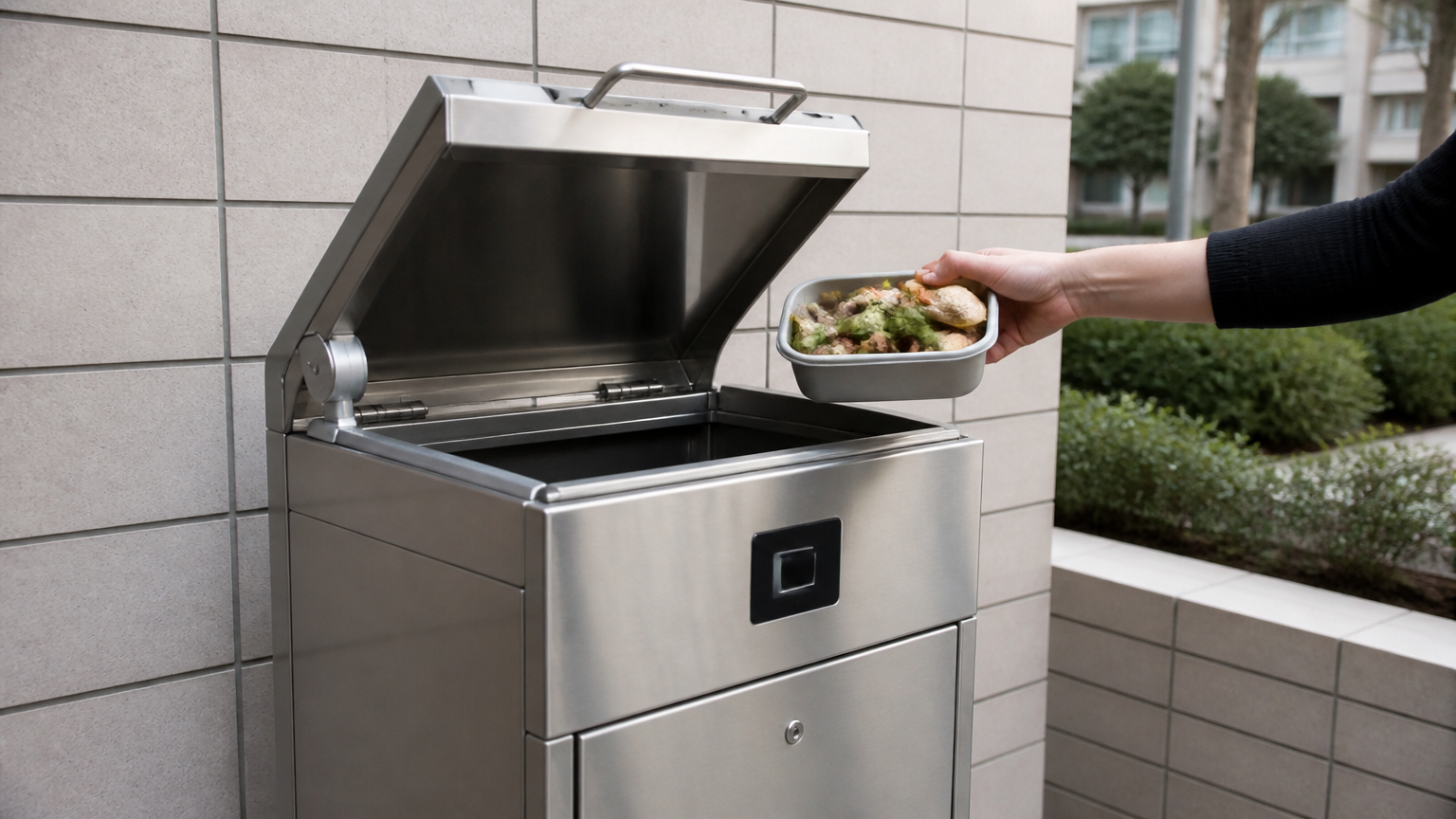
Food waste is weighed, not just bagged
Food waste is charged separately, and it is charged by how much of it there is.
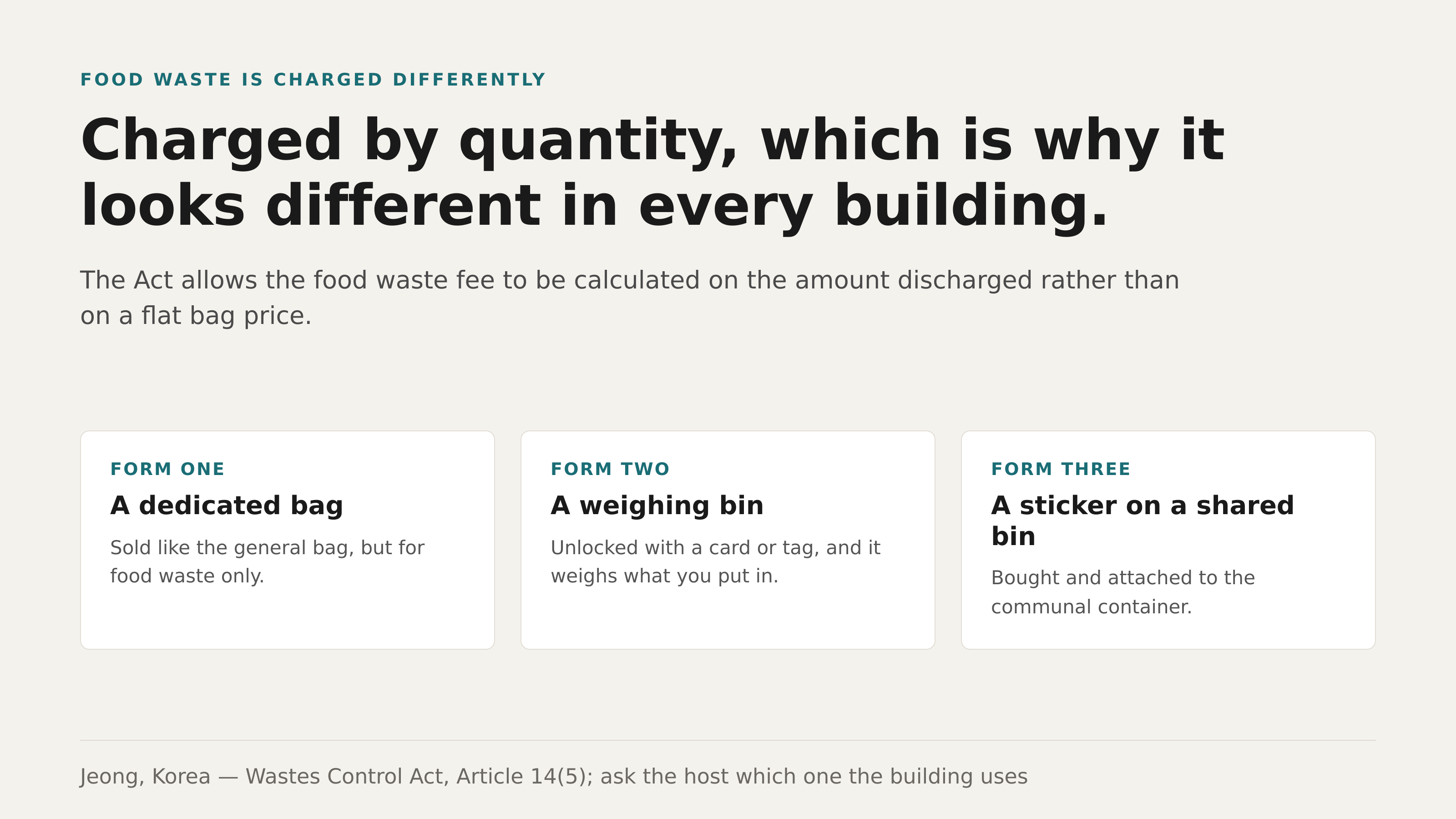
The same article of the Wastes Control Act treats it as its own case: for food waste, the fee may be charged on an amount calculated according to the quantity discharged. That is a different mechanism from the flat volume-rate bag, and it is why the food waste system looks different from building to building — a dedicated bag in one place, a weighing bin you unlock with a card in another, a sticker on a communal container in a third.
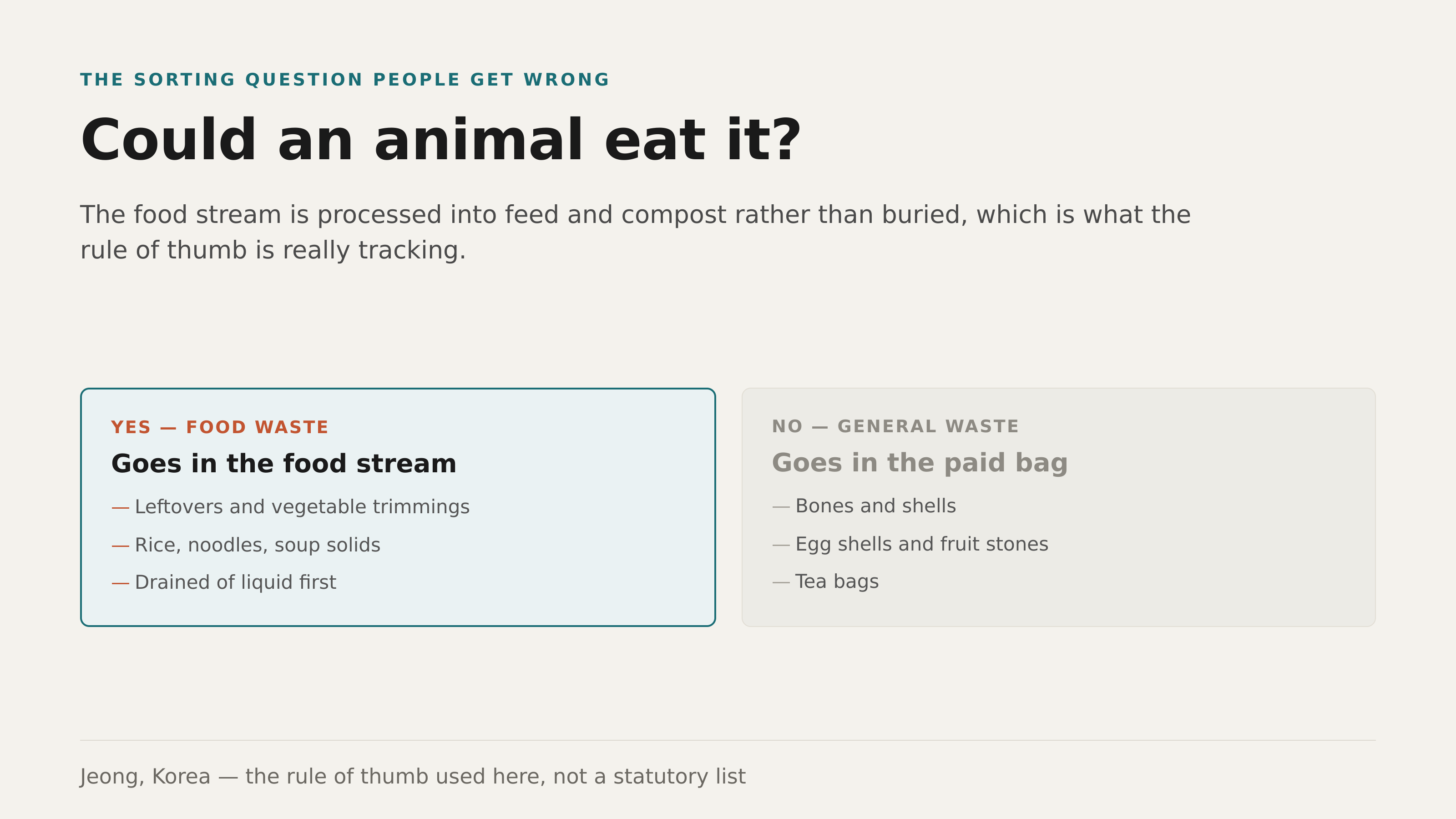
What does not change is that food waste has to be separated at all. The sorting rule people here use is a rough one: if an animal could eat it, it is food waste, and if it could not, it is general waste. Bones, shells, tea bags and fruit stones fall on the general side of that line more often than visitors expect, because the food waste stream is processed into feed and compost rather than simply buried.
Liquid is the other half of it. Drain the container before it goes in, because you are being charged by quantity and water is quantity.
Recyclables, meanwhile, work the opposite way round.
Recyclables do not need a paid bag
The thing you expected to be complicated is the free one.
Paper, glass, cans, plastic and clear plastic film are separated out and put in the building's collection point without a volume-rate bag. There is no disposal fee to pay on them, which is the whole incentive design: the more you separate, the smaller the bag you have to buy.
| What it is | How it goes out |
|---|---|
| General waste | Designated volume-rate bag, bought in that district |
| Food waste | Separate stream, charged by quantity — bag, weighing bin or sticker |
| Recyclables | Sorted into the building's collection point, no paid bag |
| Large items such as furniture | Reported in advance and a fee sticker attached |
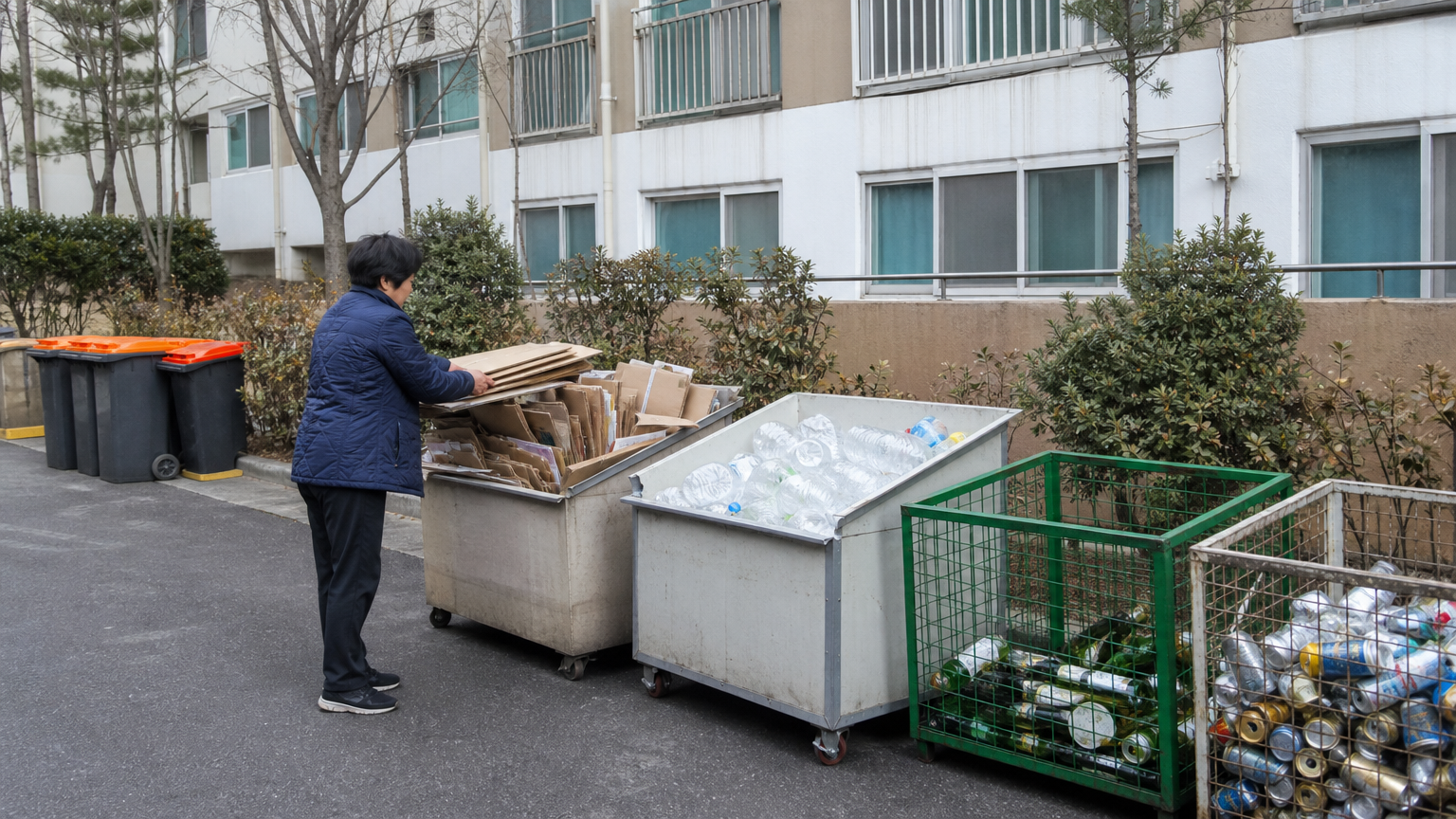
Rinse containers before they go out, and flatten what flattens. A greasy container is not recyclable and ends up back in the paid stream, which is a small, irritating way to pay twice.
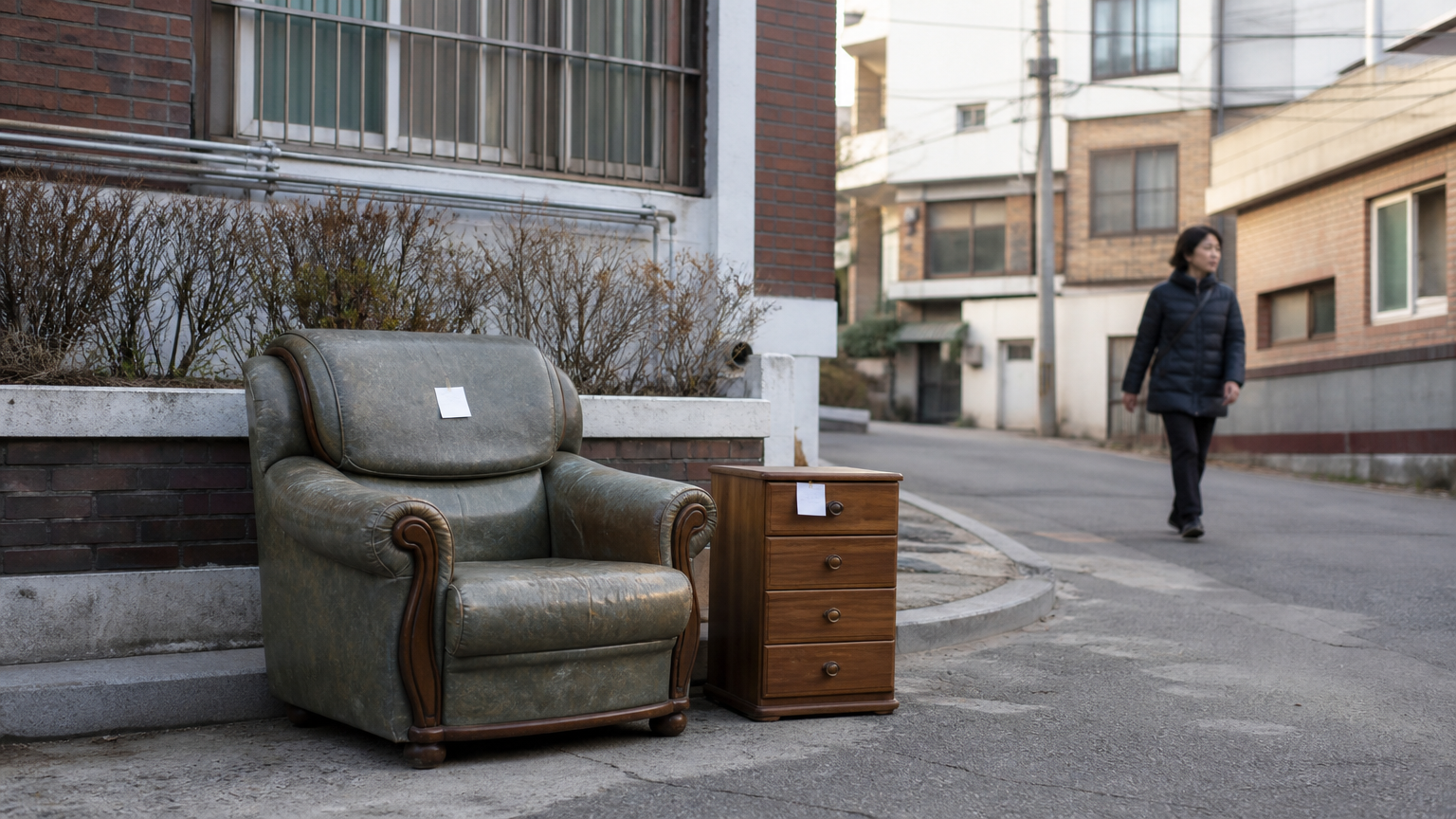
Large items are the fourth category and the one visitors almost never hit — a mattress or a chair cannot go out in any bag. It has to be reported to the district in advance and carries its own fee, paid by attaching the sticker you get in return.
So what happens if you simply put it out wrong?
Getting it wrong is a fine, not a telling-off
Dumping household waste is an offence with a fixed ceiling.
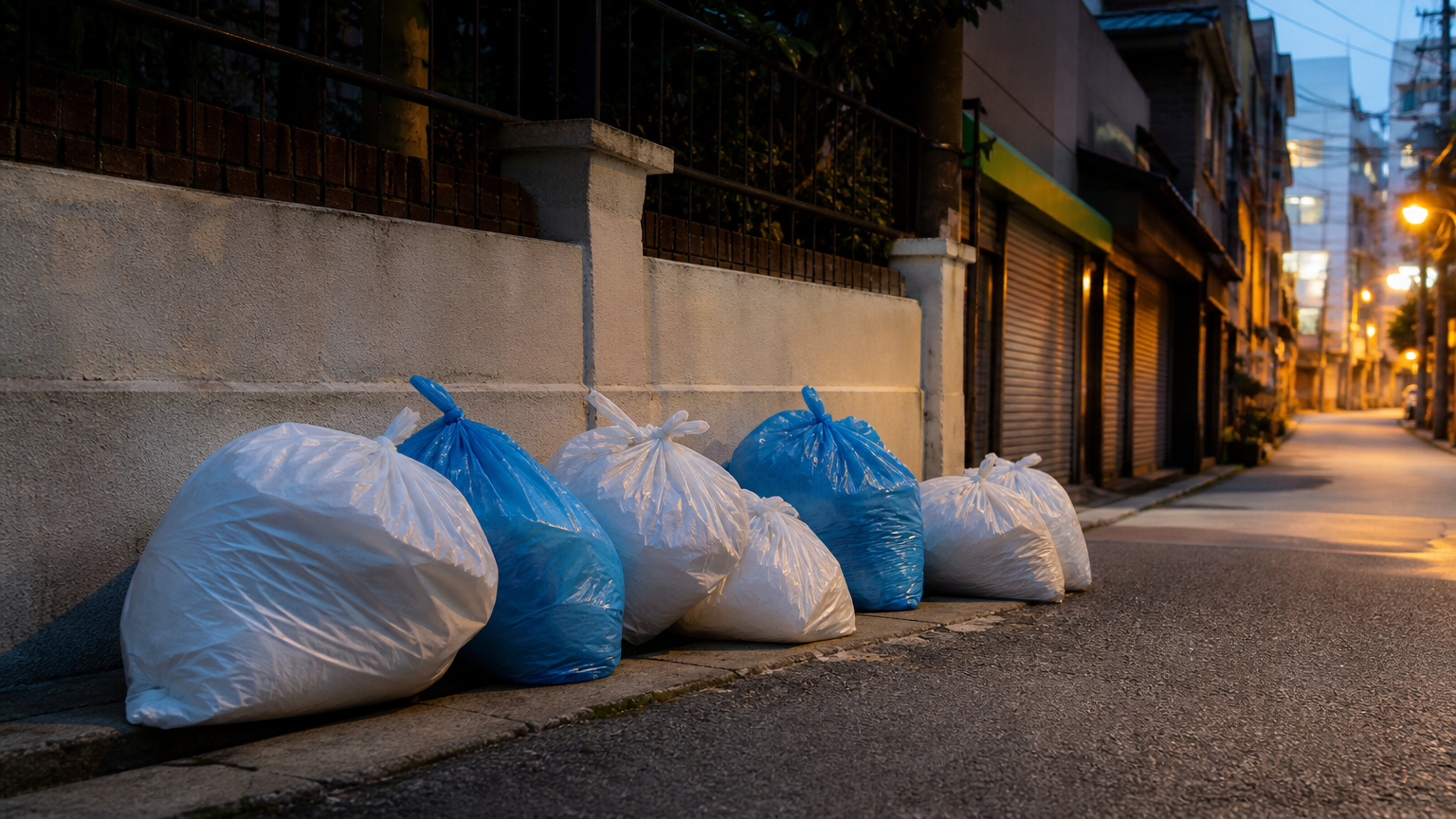
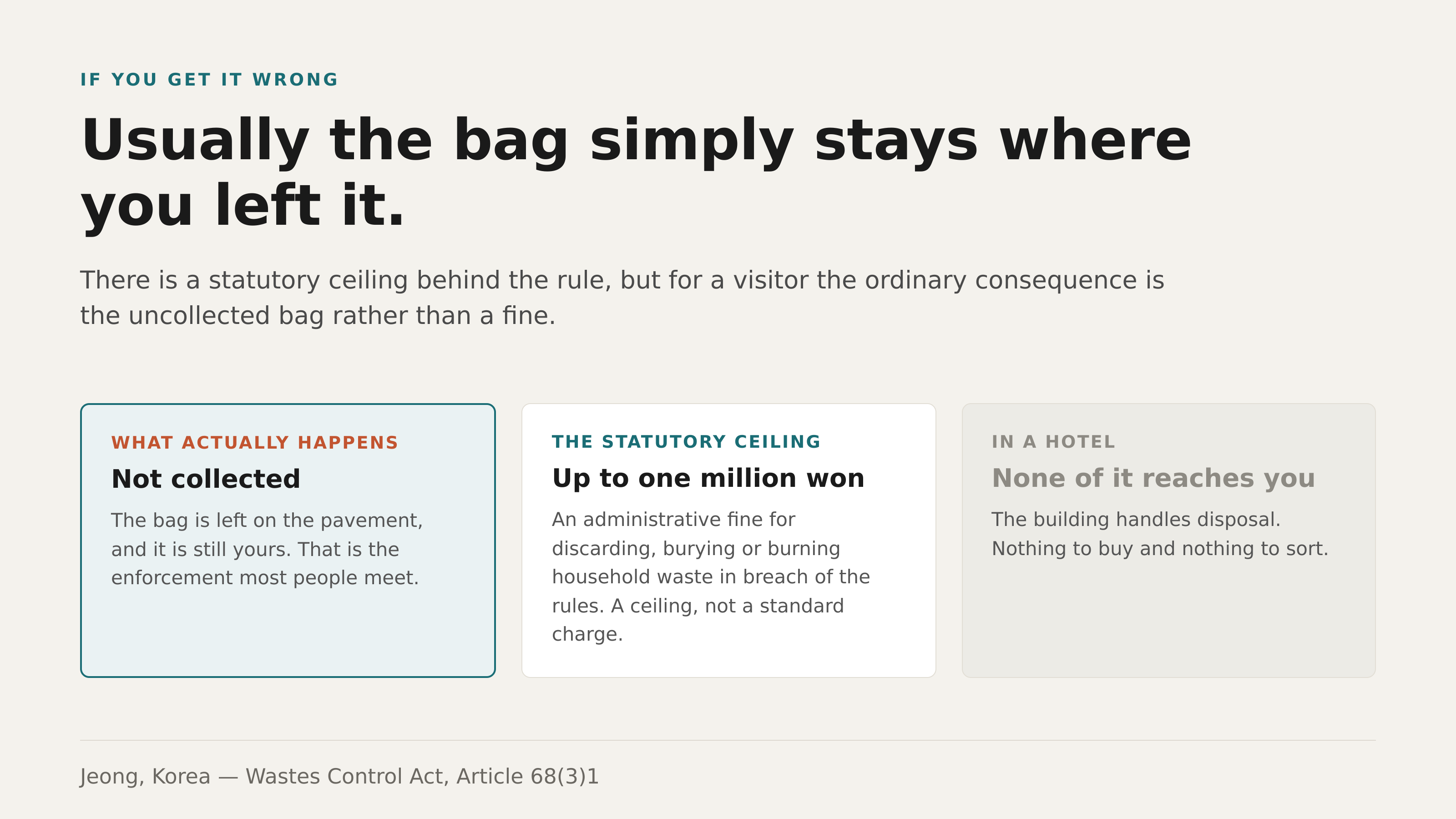
Under the Wastes Control Act, discarding, burying or burning household waste in breach of the disposal rules carries an administrative fine of up to one million won. That is the statutory ceiling rather than the amount you would actually be charged for one wrong bag, and the practical outcome for a visitor is usually simpler than a fine: the bag is left on the pavement, and it is still yours.
If you are in a hotel, none of this reaches you — the building handles it. If you are in a guesthouse or a short-term rental, it does, and the host's instructions are the ones that matter, because they know which district they are in and which food waste system the building uses. Ask on arrival rather than on your last morning, when the answer determines what you can do with a week of accumulated bottles. It is the same category of small admin as the first-week checklist for anyone staying longer.
The short version
Almost everything about trash in Korea follows from one habit: buy the designated bag in the district you are staying in, and buy it locally. Keep food waste separate and drained. Put recyclables out without a paid bag. Leave furniture alone unless you have reported it.
The reason all of this feels stricter than home is that it is not a recycling scheme with a fee attached — it is a fee with a recycling scheme attached. Once you can see the bill inside the bag, trash in Korea becomes one of the easier things to get right here, and one of the few where doing it properly is also the cheapest thing to do.
FAQ
Where do I buy the bags?
Convenience stores and supermarkets in the district you are staying in. Ask for the designated volume-rate bag and give the size, and the shop will have the ones valid where it stands.
I have bags left over from another district. Can I use them?
No. The fee is set by each district's ordinance and funds collection there, so a bag from elsewhere counts as unpaid. Keep them for your next stay in that district instead.
How do I know if something is food waste?
The rule of thumb used here is whether an animal could eat it. Bones, shells, egg shells and fruit stones generally go into general waste rather than food waste, because the food stream is processed into feed and compost.
Do recyclables need a paid bag?
No. They are separated into the building's collection point without a volume-rate bag, which is the point of separating them.
What if I am staying in a hotel?
Then trash in Korea never reaches you. The building handles disposal, and there is nothing for you to buy or sort.
What happens if I put the wrong thing out?
Usually the bag is simply not collected. The statutory ceiling for improper disposal of household waste is an administrative fine of up to one million won, but the ordinary outcome is that your bag stays where you left it.
How do I get rid of a suitcase or furniture?
Not in any bag. Large items are reported to the district in advance, and a fee sticker is attached to the item before it goes out.
References
-
Wastes Control Act (폐기물관리법), Article 14(5) — the local authority may collect a fee for handling household waste, charged by selling designated volume-rate bags as prescribed by the ordinance of the local government concerned; for food waste, the fee may be charged on an amount calculated according to the quantity discharged
-
Wastes Control Act (폐기물관리법), Article 68(3)1 — discarding, burying or burning household waste in breach of Article 8(1) and (2) carries an administrative fine of up to one million won
-
Jeong, Korea, Korean Convenience Store Food — the shop that also sells the bags
-
Jeong, Korea, Living in Korea as a Foreigner — where this sits in the first-week admin