Luggage Storage in Seoul: Lockers, Prices, and the Last-Day Problem

Checkout is at eleven. Your flight is at nine in the evening. That leaves ten hours in a city you like, spent dragging a suitcase behind you.
It is the most avoidable bad day in travel, and Seoul has an unusually good answer to it: the subway system runs its own locker network, 5,511 compartments across 332 locations in 269 stations. Almost anywhere you want to be, there is a locker within a few minutes' walk.
Here is how it works, what it costs, and what to do on the days it does not work.
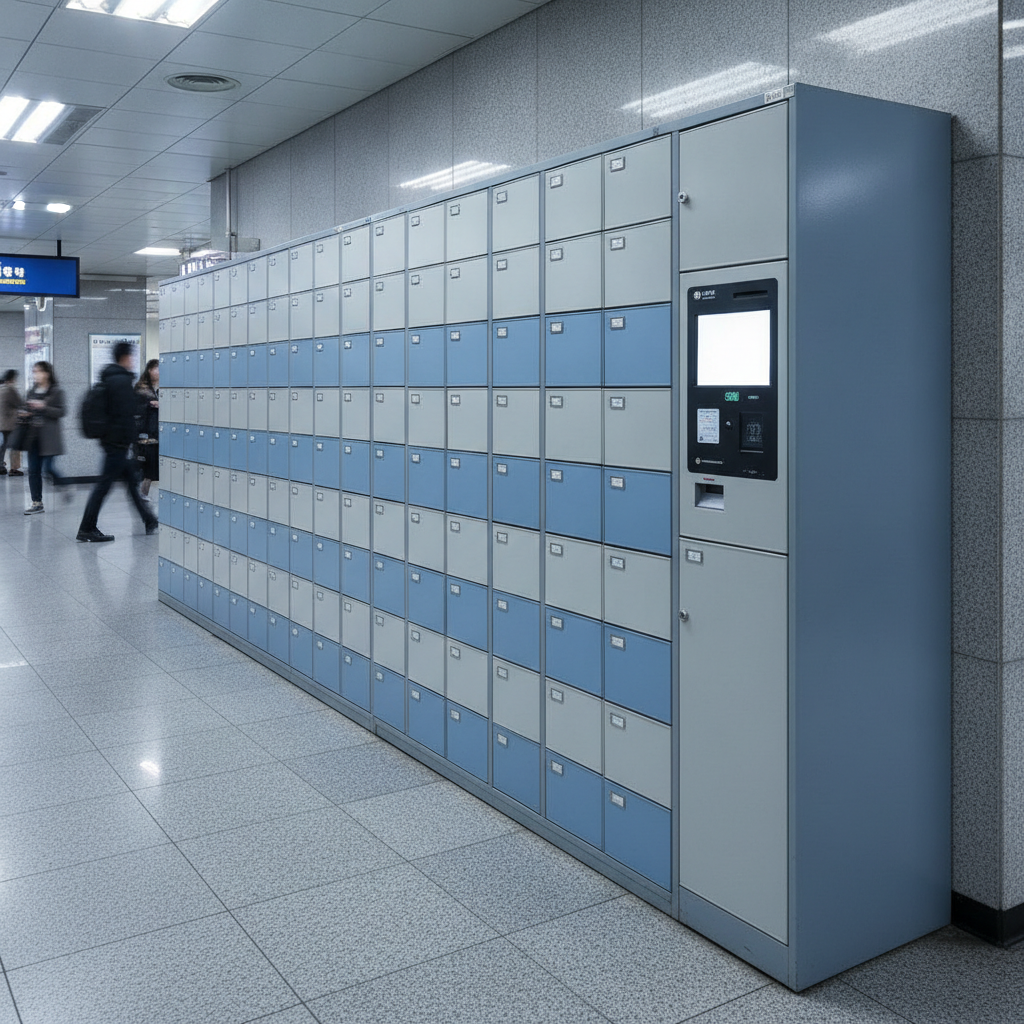
The subway locker system
They are called 또타라커 (T-locker), they are operated by Seoul Metro, and they are the default answer for luggage storage in this city. Three sizes, all the same depth.
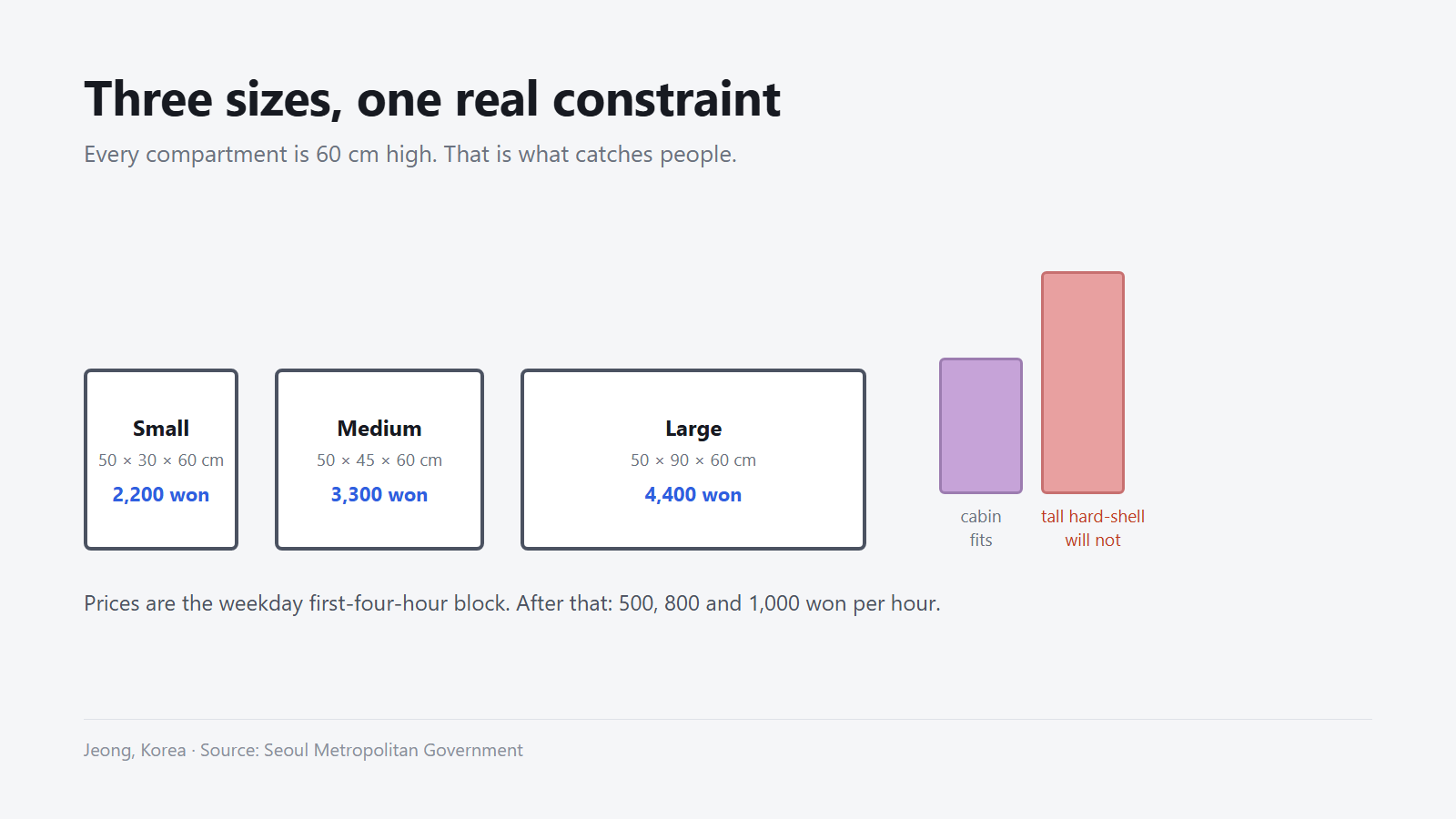
| Size | Dimensions (W × D × H) | Fits | Weekday, first 4 hours | Each additional hour |
|---|---|---|---|---|
| Small (소) | 50 × 30 × 60 cm | Backpack, day bag, shopping | 2,200 won | 500 won |
| Medium (중) | 50 × 45 × 60 cm | Cabin-size suitcase | 3,300 won | 800 won |
| Large (대) | 50 × 90 × 60 cm | Full-size checked suitcase, or two cabin bags | 4,400 won | 1,000 won |
Two things to read carefully in that table. The 60 cm height is the real constraint — a tall hard-shell suitcase that will not lie flat is the usual failure. And the pricing is a four-hour block, not per hour, so a ninety-minute stop costs the same as a four-hour one.
Source: Seoul Metropolitan Government.
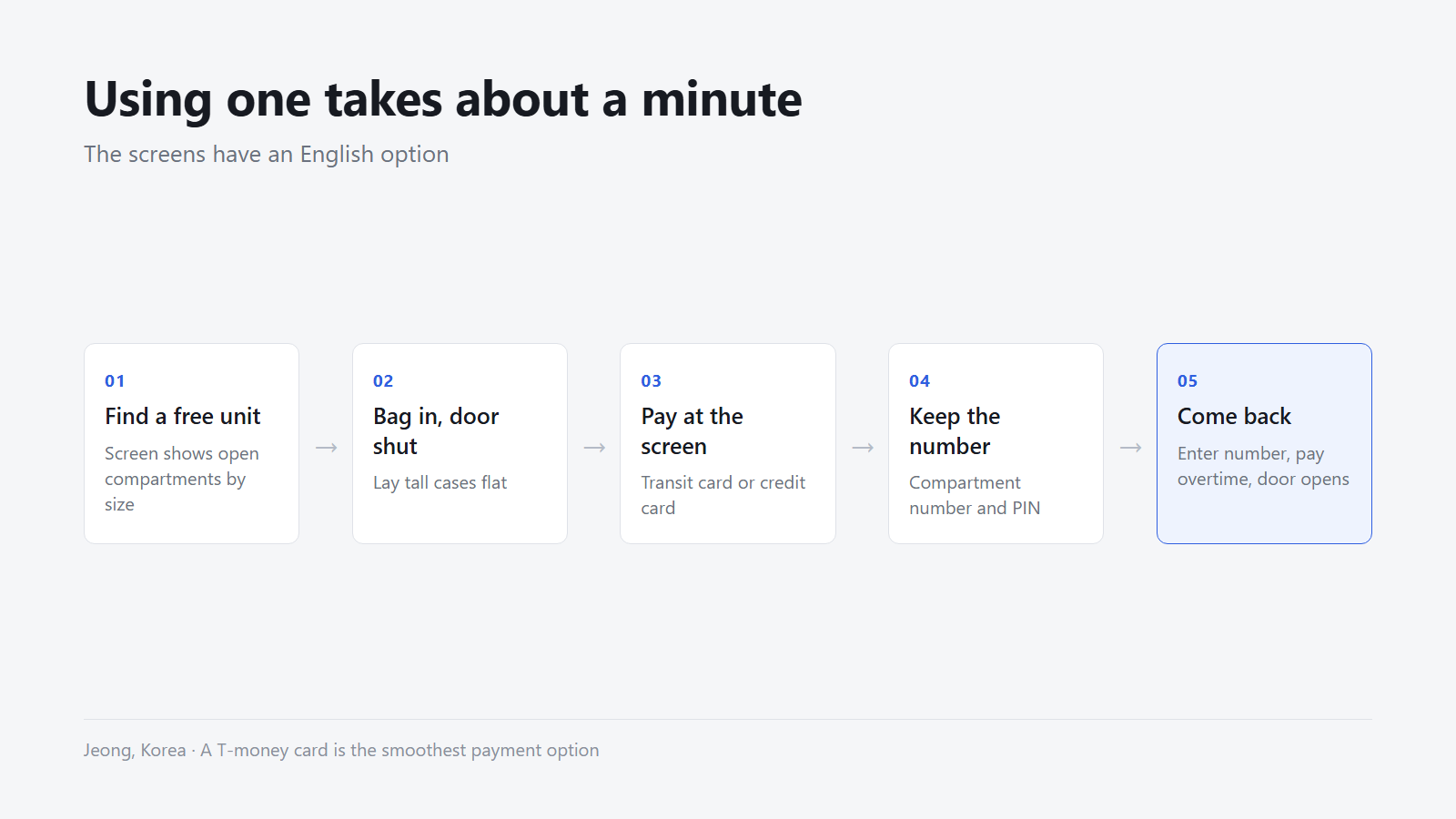
How to actually use one
The screens have an English option. The sequence is short.
-
Find a free compartment. The touchscreen shows which are open, colour-coded by size.
-
Choose the size, put the bag in, close the door.
-
Pay with a transit card or a credit card at the screen.
-
Take the receipt or note the compartment number and your PIN.
-
When you come back, enter the number, pay any overtime, and the door opens.
Payment is the part that catches people. A T-money card works everywhere and is the smoothest option, so if you already have one from riding the subway, use that. If you have not sorted a transit card yet, the T-money guide covers it.
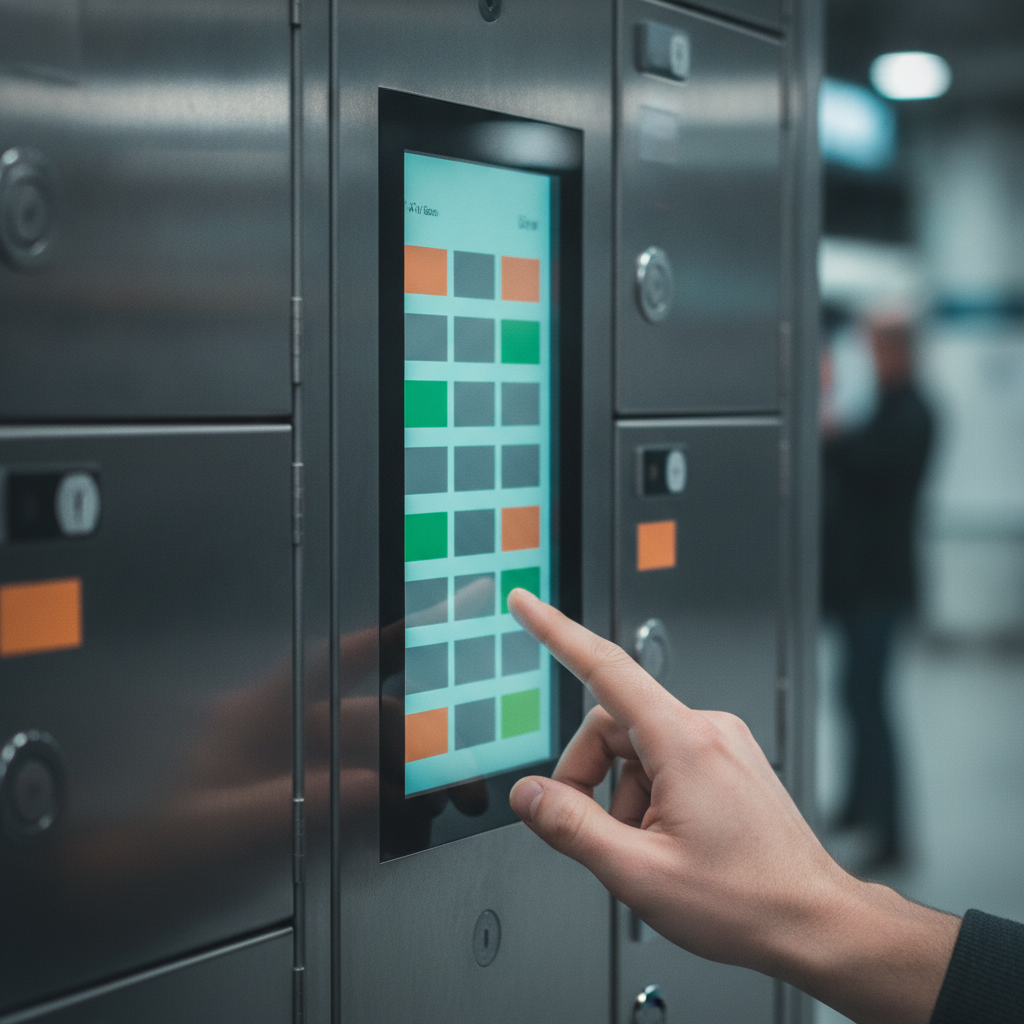
There is also an app, T locker 또타라커, which shows you live availability at nearby stations. On an ordinary weekday you will not need it. On a Saturday afternoon in Myeongdong you very much will.
Where the large ones actually are
Small lockers are everywhere. Large ones are not, and that is the practical problem.
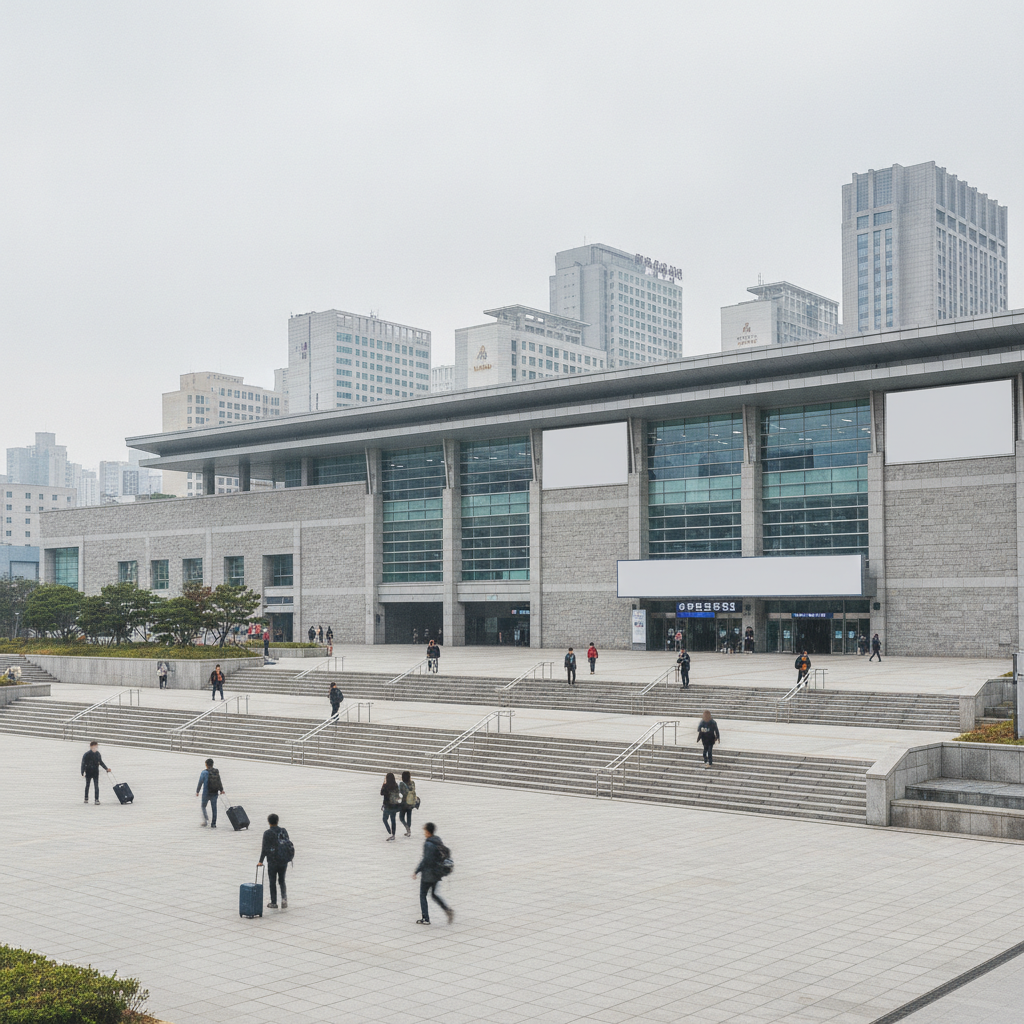
Big stations are your best bet: Seoul Station, Hongik University, Myeongdong, Dongdaemun History and Culture Park, Express Bus Terminal. These are transfer hubs with high visitor traffic, so they have more large compartments than a residential station will.
Seoul Station deserves a separate note because it has several separate banks of lockers run by different operators — the KTX concourse upstairs, the subway level, and the airport railroad connection. They are not one pool. If the first bank is full, walk to the next one rather than giving up. The station's coin lockers generally run from 05:00 to midnight, which matters if your flight is very early or very late.
When lockers will not work
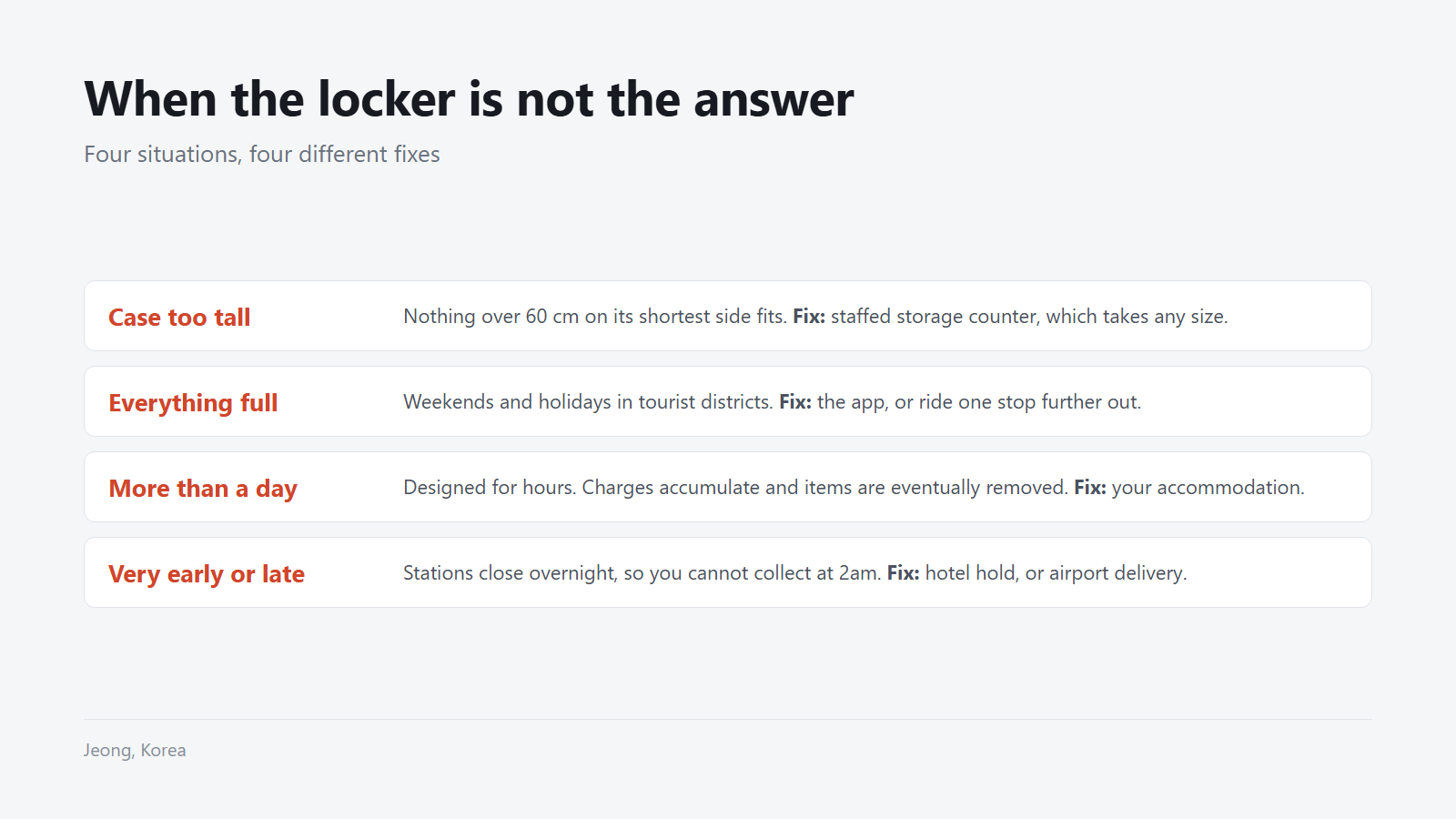
Four situations, and all four have a different answer.
-
Your suitcase is too tall. Nothing above 60 cm on its shortest side will fit. Large hard-shells often fail here.
-
Everything is full. Weekends and holidays in tourist districts. The app is the fix; failing that, walk to the next station along the line, which is almost always emptier.
-
You need more than a day. The system is designed for hours, not days. Overtime charges accumulate and stored items are eventually removed.
-
You are leaving very early or arriving very late. Station operating hours close the lockers overnight.
The alternatives, in the order I would use them
Your accommodation, first. Almost every hotel, guesthouse and hostel in Seoul will hold bags after checkout and before check-in, free, no questions. This is the single most underused option and it is better than a locker in every way except location. Ask at reception the night before.
Staffed storage counters. Major department stores, some tourist information centres, and dedicated storage shops in Myeongdong and Hongdae take bags by the day. They cost more than a locker but take any size, and some are open later than the stations.
Airport baggage delivery. Services operate between Incheon Airport and hotels in Seoul, so your suitcase travels separately while you do not. This is the answer for the arrival day as much as the departure day — land, hand over the bag, go straight into the city with nothing. Book it in advance rather than hoping at the counter.
The last-day plan that actually works
Here is the sequence I give visiting friends, and it has never gone wrong.
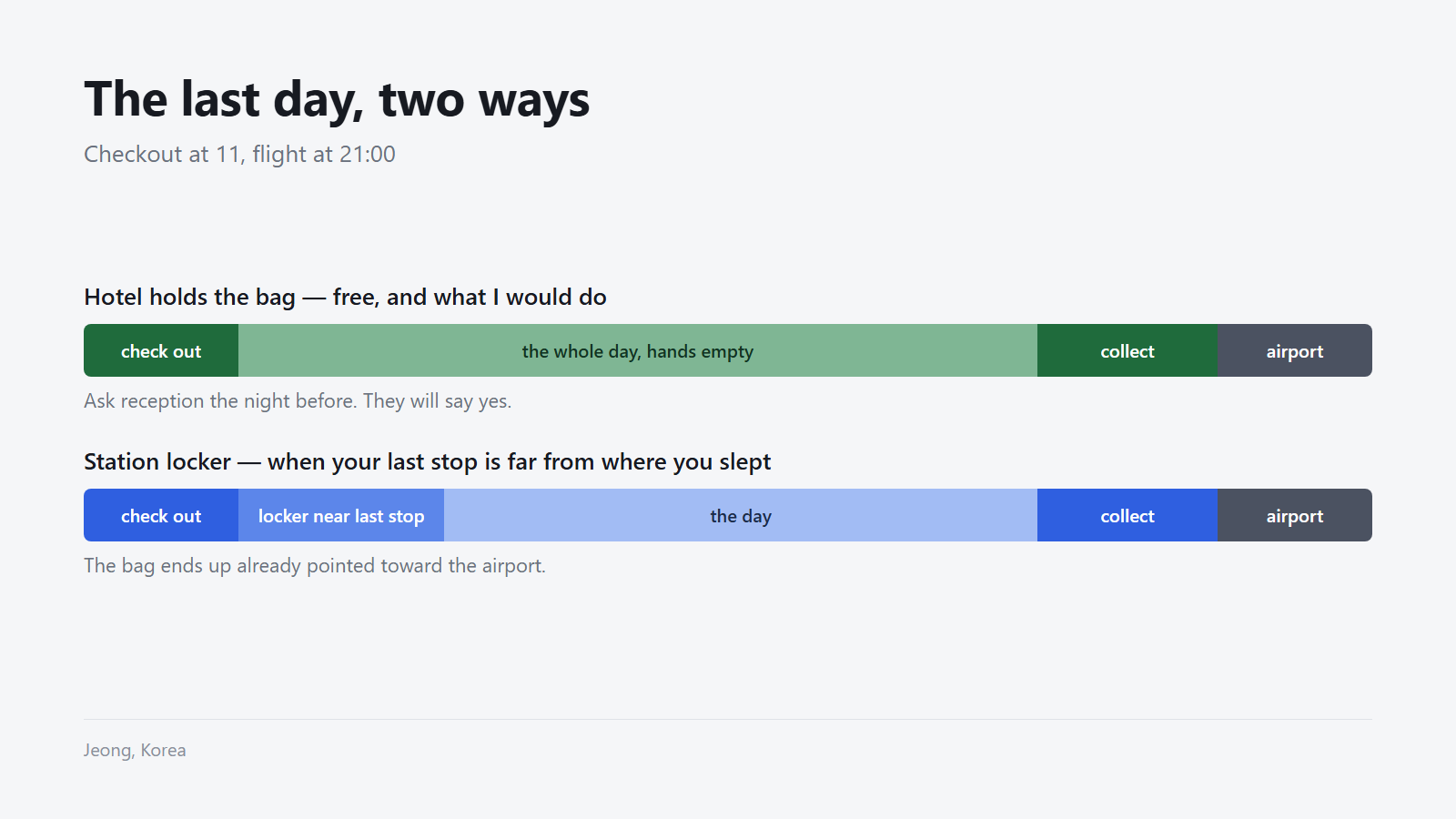
The night before, ask reception whether they will hold bags the next day. They will say yes. In the morning, check out, leave the suitcase there, and take only what you need. Spend the day wherever you like. Come back an hour before you need to leave for the airport, collect the bag, and go.
If your accommodation is genuinely far from where you want to spend the day, that is when the locker network earns its place: take the bag to a large station near your last stop in the morning, and collect it on the way to the airport in the evening. That way the suitcase is already pointed in the right direction.
What it costs against the alternative
For a normal departure day the arithmetic is not close.
| Option | Typical cost | Best for |
|---|---|---|
| Hotel or guesthouse hold | Free | Almost everyone |
| Subway locker, medium, 8 hours | Around 6,500 won | Bags you want near your last stop |
| Staffed storage counter | Higher, varies by shop | Oversized bags, long hours |
| Airport baggage delivery | Highest | Arrival day, or a heavy bag you never want to carry |
The locker is not the cheapest option. It is the most flexible one, and on a day where you are moving across the city rather than returning to where you slept, flexibility is what you are buying.
A note on what not to leave
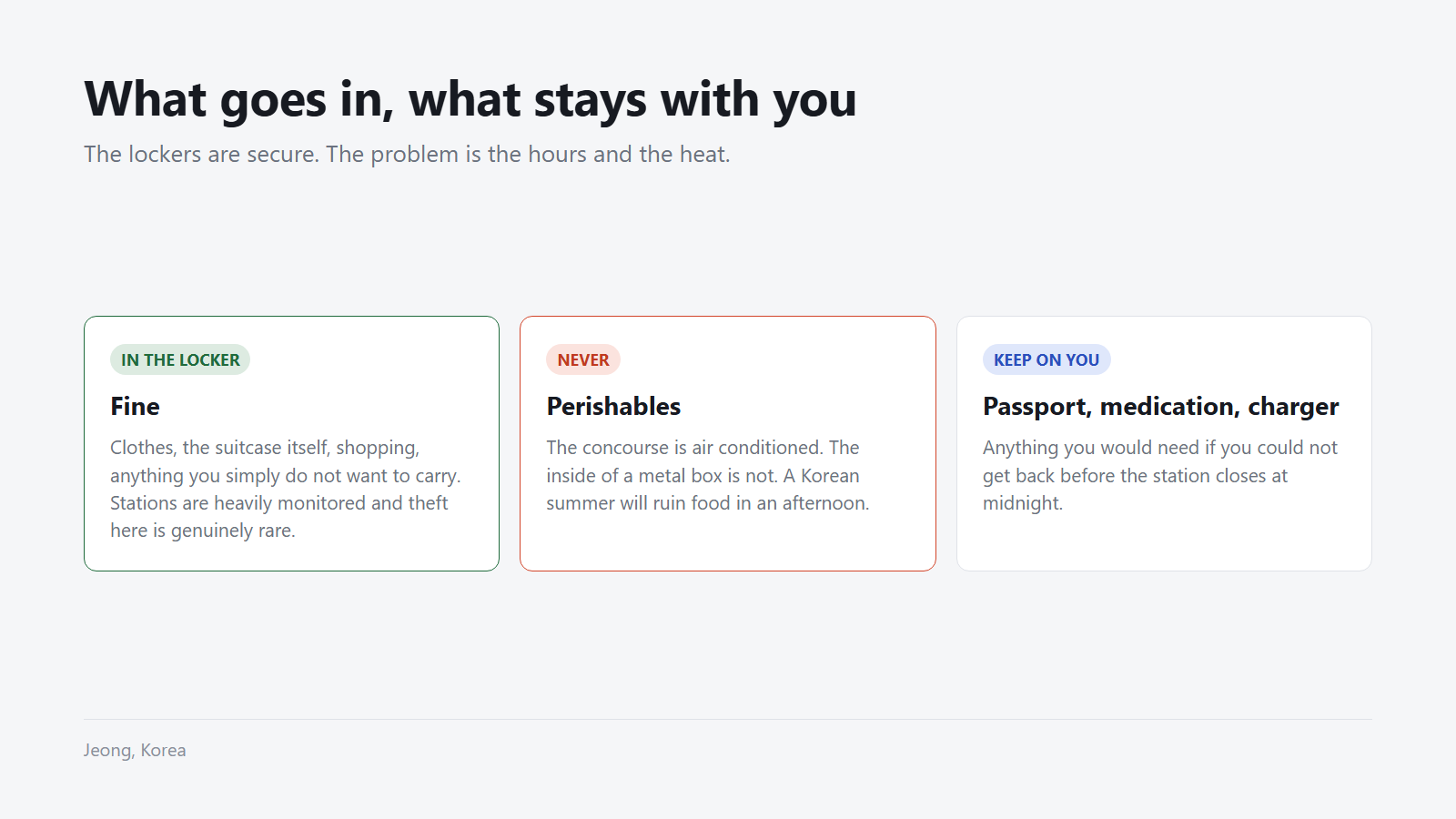
Standard sense applies, but two things specific to here. Do not leave anything perishable in a locker in a Korean summer — the stations are air conditioned, the locker interiors are not especially. And do not leave a bag beyond the operating window expecting to collect it at two in the morning; you will be standing in front of a closed gate.
Beyond that, the lockers are secure and the stations are heavily monitored. Losing something to theft here is genuinely rare.
FAQ
How much does luggage storage cost in Seoul?
Subway lockers charge by four-hour block: 2,200 won small, 3,300 won medium, 4,400 won large on weekdays, with hourly overtime after that. A full day in a medium locker lands around 6,500 won. Hotels and guesthouses will usually hold bags for free, which is cheaper than any locker.
Will a large suitcase fit in a subway locker?
In a large compartment, usually yes — it is 90 cm wide and 50 cm deep. The limit that catches people is the 60 cm height. A tall hard-shell that cannot be laid down will not go in, regardless of the other dimensions.
Can I store a bag overnight?
Technically the lockers do not lock you out at a set number of hours, but the stations themselves close overnight and charges keep accumulating, so you cannot retrieve it until morning. For anything longer than a day, use a staffed storage counter or your accommodation.
Do I need a Korean card to pay?
No. The screens accept transit cards and credit cards, and a T-money card is the smoothest option. If you have been riding the subway you already have what you need.
Are there lockers at Incheon Airport?
Yes, and there are also baggage delivery services running between the airport and Seoul hotels. If you are landing early with a hotel check-in hours away, sending the bag ahead is usually the better move than carrying it into the city.
What if every locker at the station is full?
Open the T locker app to see live availability nearby, or simply ride one stop further out. Availability improves sharply as soon as you leave the main tourist stations, and a five-minute detour beats hauling a suitcase all day.
The short version
Ask your hotel first. It is free and they will say yes.
If that does not fit your day, the subway network is the fallback: three sizes, four-hour blocks, 60 cm of height to work with, and an app that tells you where the free ones are. That combination covers essentially every luggage storage problem a visitor has in this city.
And if you are still working out how to move around, the subway map guide is the layer underneath all of this.
Sources
- Seoul Metropolitan Government media hub, on the T-locker network, sizes and pricing: https://mediahub.seoul.go.kr/archives/2013639
Prices and operating hours change. Check at the screen before you rely on this.