Health Insurance in Korea: Six Months Is the Rule, and Four Kinds of Status Skip the Wait

One provision in Korea's health insurance law stops benefits outright. It applies to the group most new arrivals fall into. Which group you are in is what the six-month rule decides.
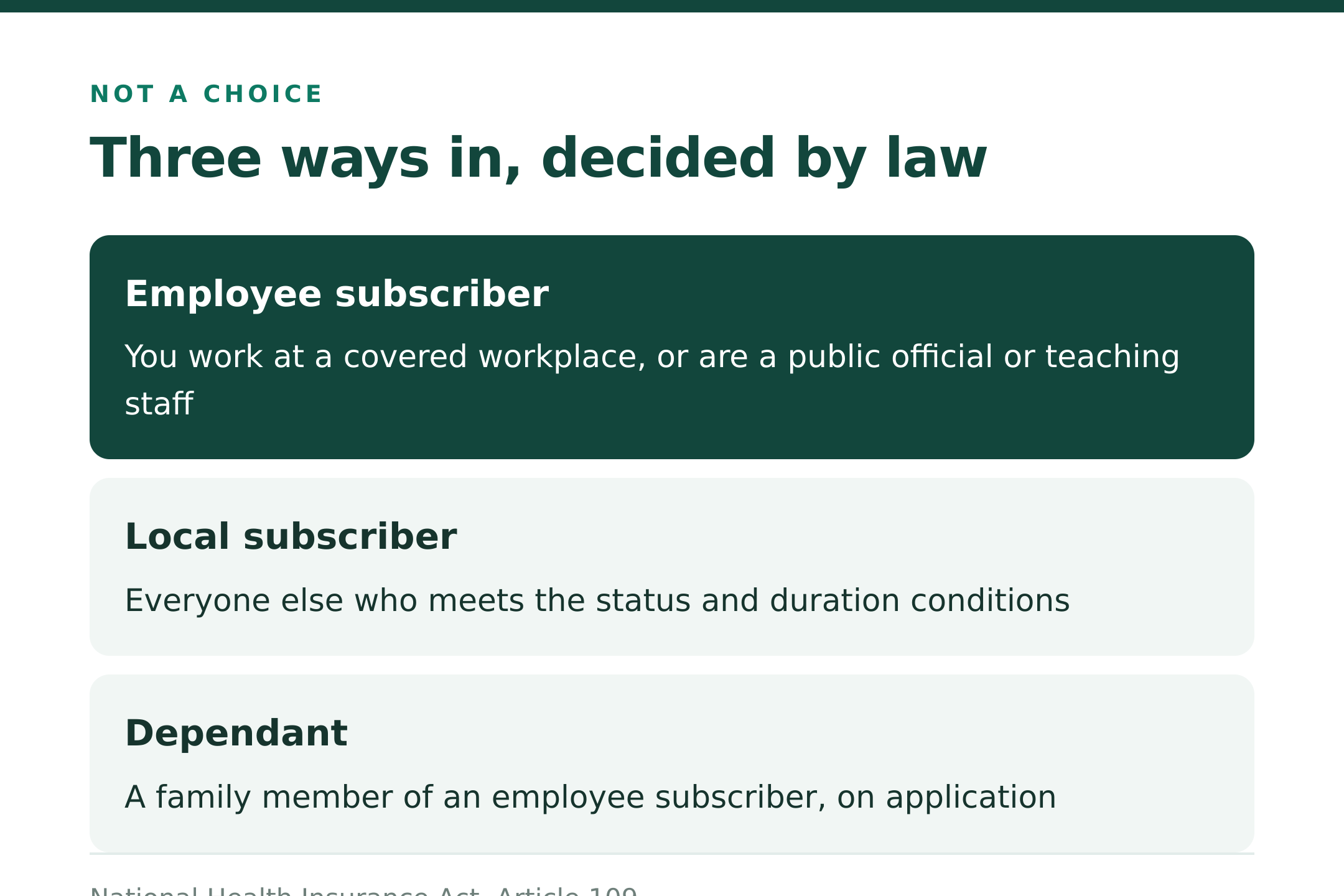
Whether you join as an employee, as a local subscriber, or as a dependant is decided by law rather than by choice. This article covers which of the three applies to you, what the six-month clock actually measures, who skips it, and what happens if the premium goes unpaid.
A lot of new arrivals treat the scheme as something to sort out eventually, somewhere between the phone contract and the bank account. It sits on the list next to errands that can wait a week.
It is not really that kind of item. The National Health Insurance Act sets out, in one article devoted to foreign residents, the conditions under which you become a subscriber, and becoming one is not an application you choose to submit. If you meet the conditions, you are in.
Today I want to walk through the three routes in, the exceptions to the waiting period, and the one provision that has the sharpest consequences attached to it.
If you are employed, the question is already answered
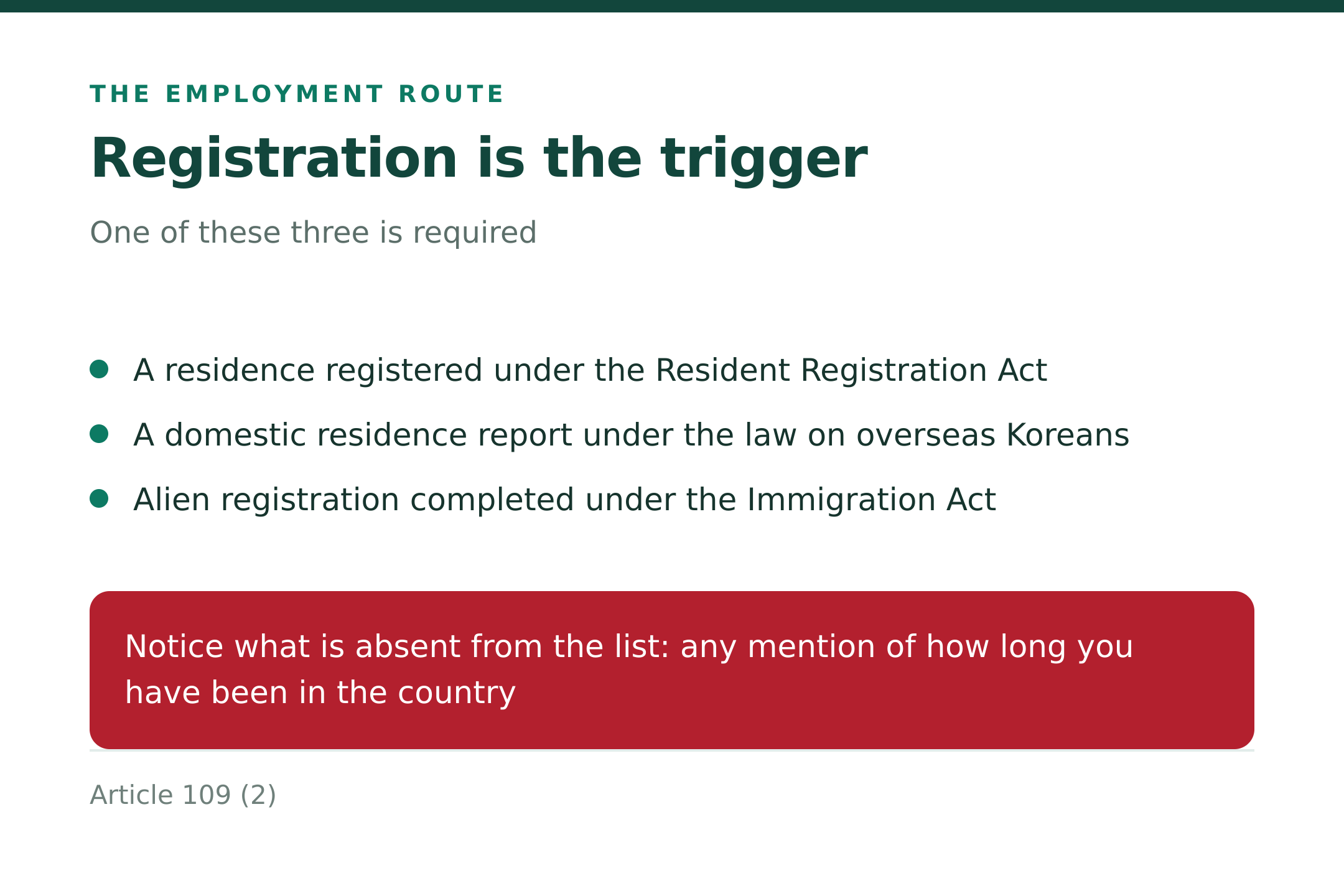
The Act deals with employees first. A foreign resident who works at a covered workplace, or who is a public official or a teaching staff member, becomes an employee subscriber, provided they have done one of three things:
-
registered a residence under the Resident Registration Act
-
filed a domestic residence report under the law on overseas Koreans
-
completed alien registration under the Immigration Act
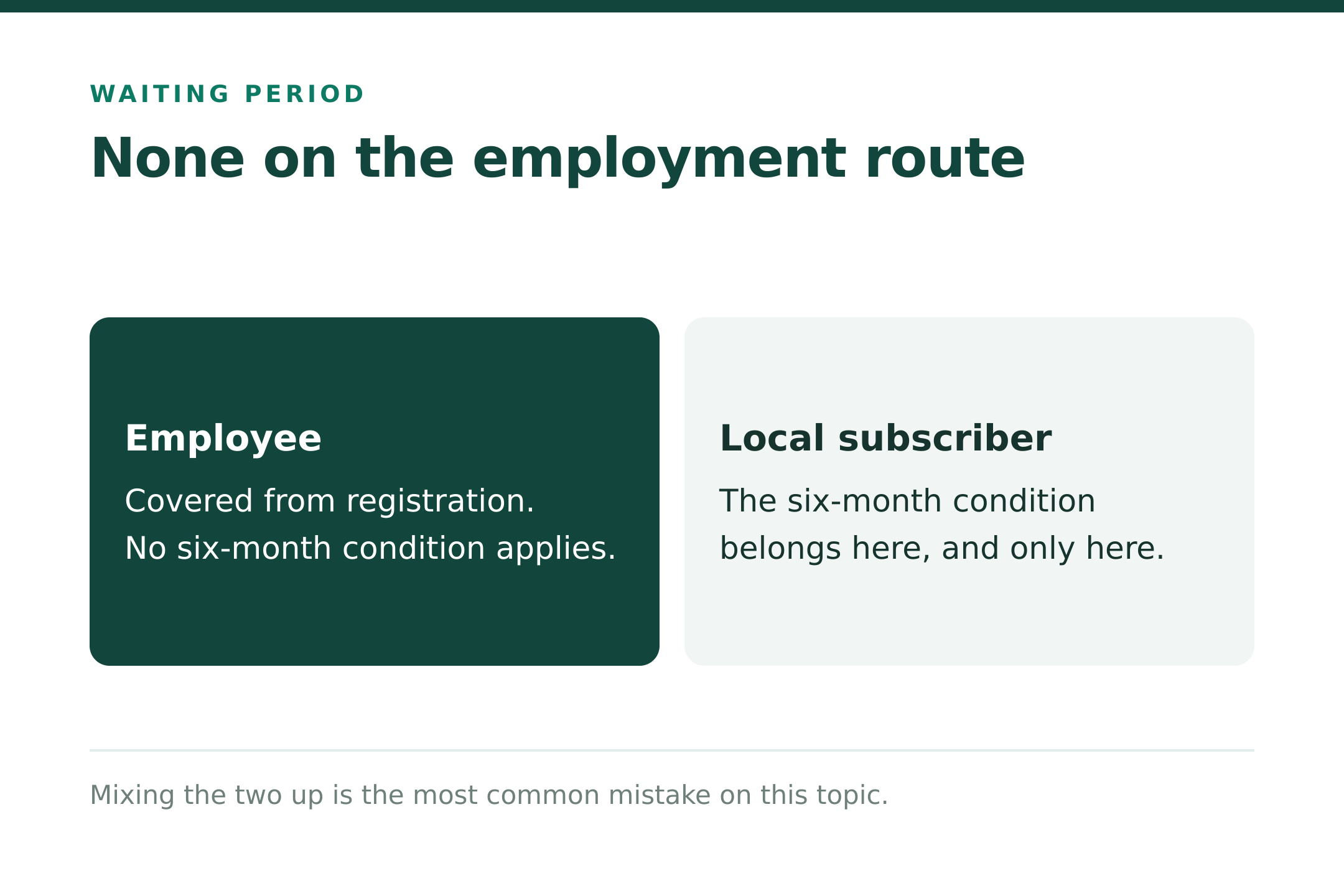
Notice what is missing from that list: any mention of how long you have been here. For the employment route there is no waiting period at all. The registration is the trigger.
The contribution comes out alongside payroll, which is why many people on an employment visa never consciously join anything. They notice the scheme the first time they hand a card over at a clinic. Which clinic to walk into is its own question, and hospital in Seoul covers why Koreans rarely start at the largest one.
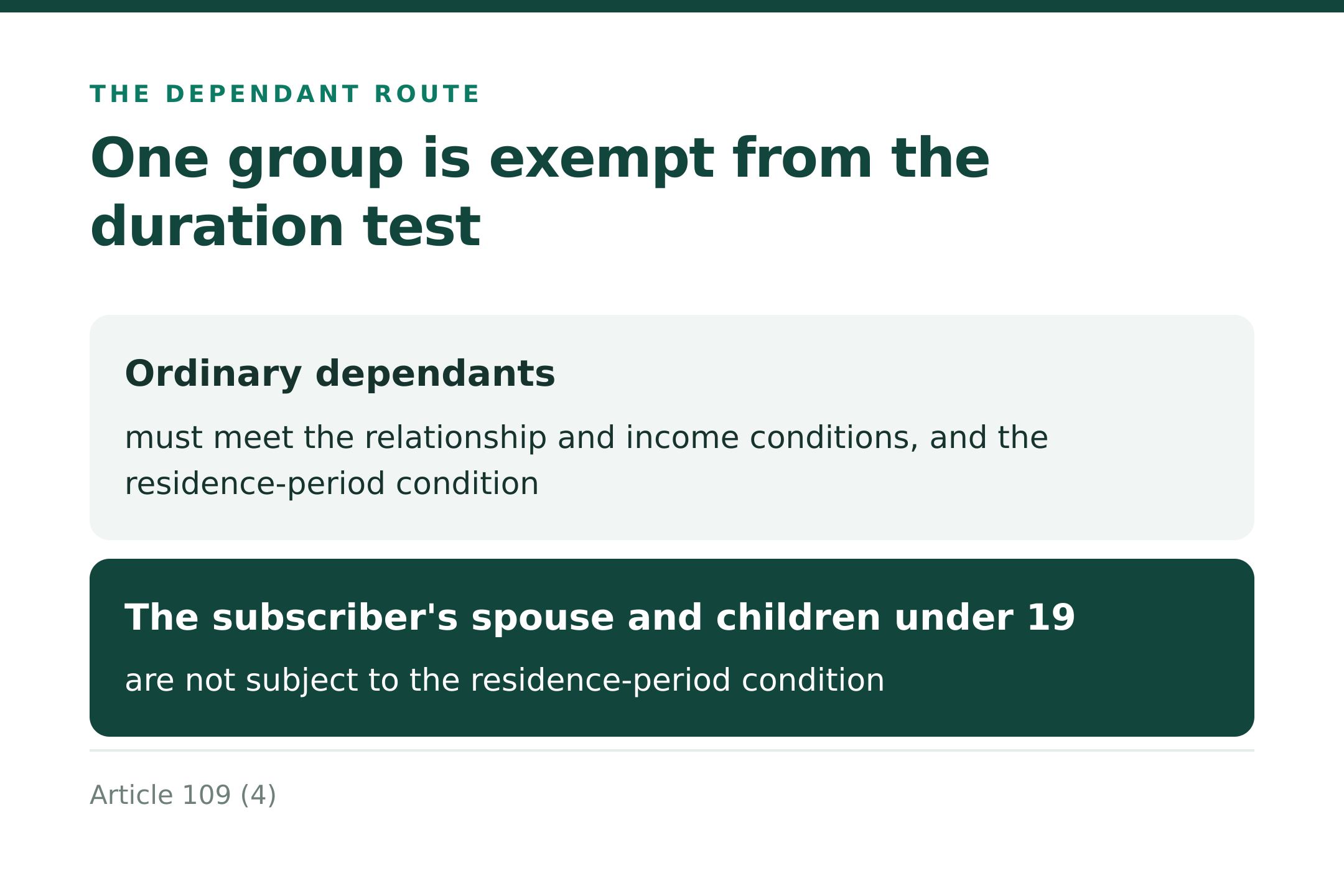
There is also a dependant route. A family member of an employee subscriber can apply to be covered as a dependant, subject to the relationship and income conditions that apply to everyone. The residence-period condition applies here too, except for the subscriber's spouse and children under 19, who are exempt from it.
So what about everyone who is not employed here?
For everyone else, the clock is six months
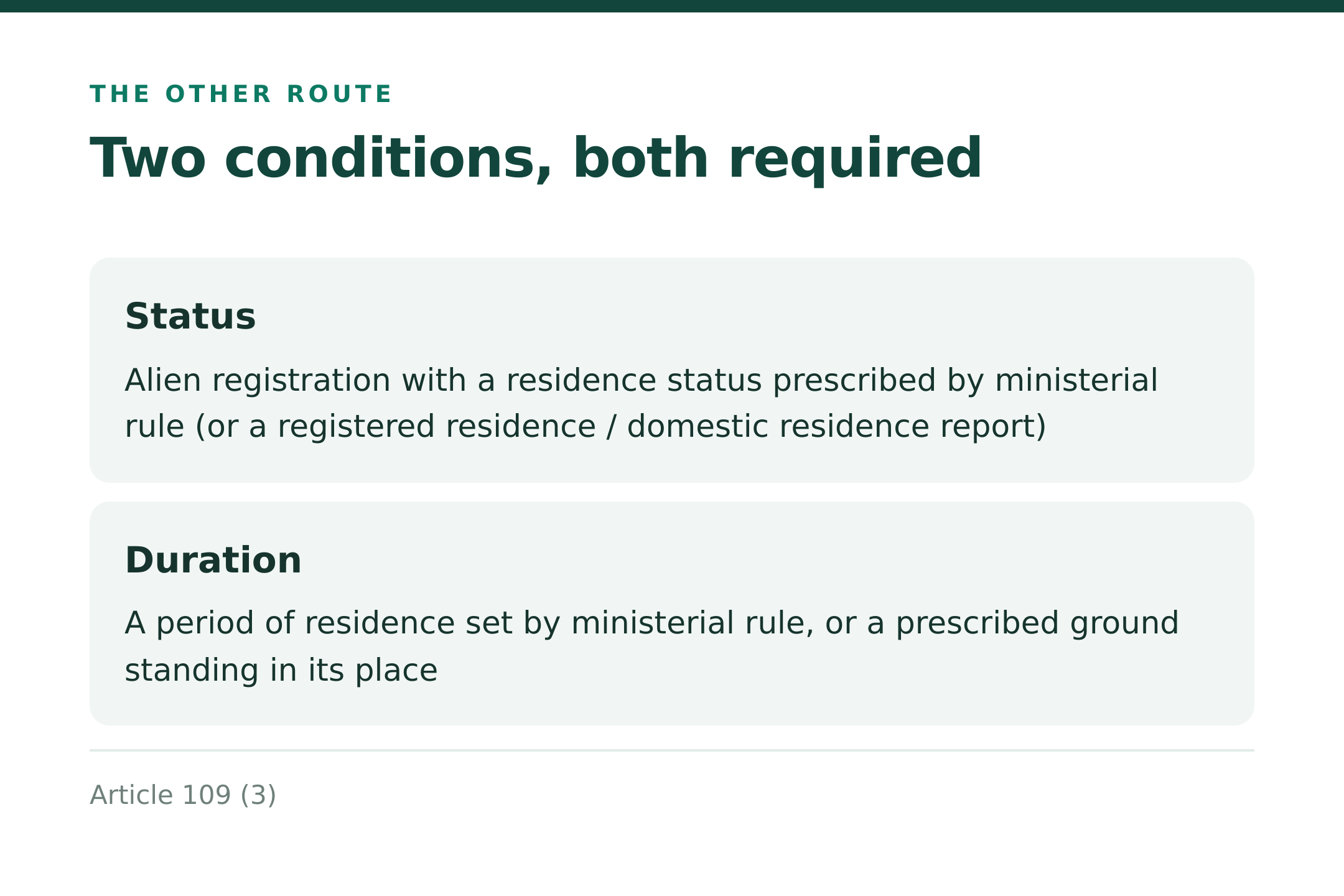
If you are not an employee subscriber, the Act routes you to the local subscriber category, and it attaches two conditions. You need the right residence status, and you need to satisfy a duration requirement that the Act leaves to ministerial regulation.
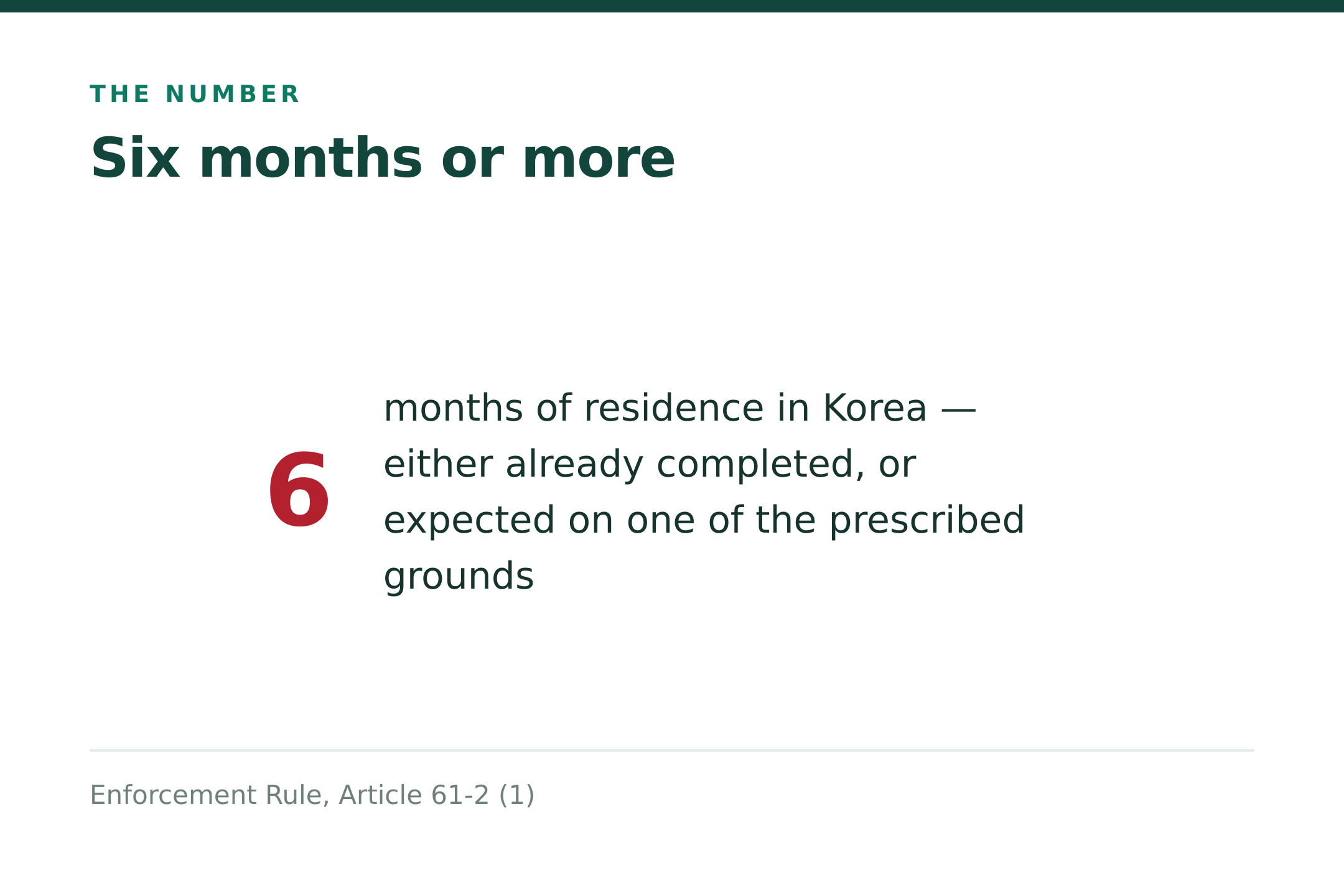
That regulation puts the number at six months or more of residence in Korea, either already completed, or expected on the grounds listed below.
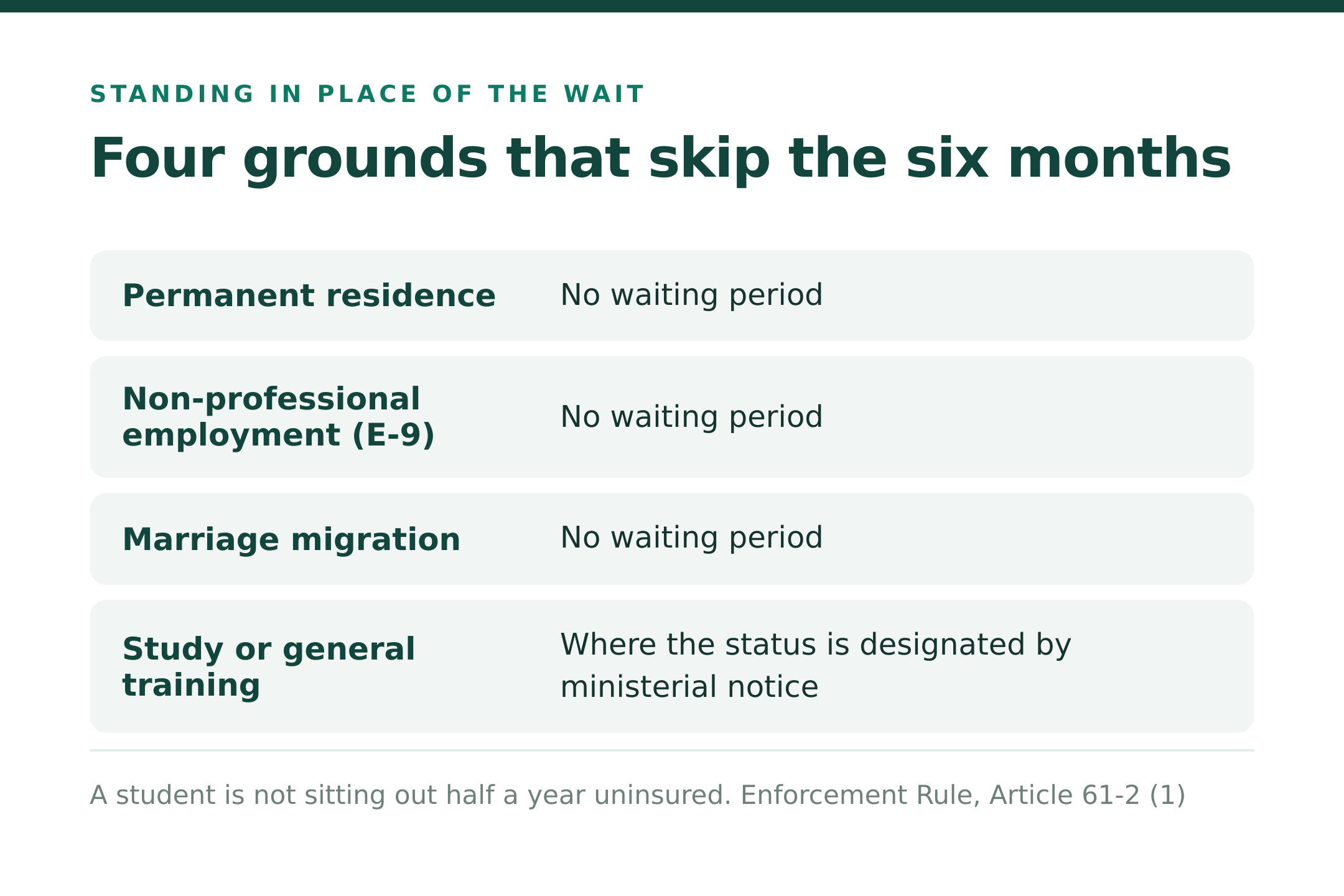
And those grounds are the interesting part, because they are not a duration at all. The regulation lists four situations that stand in place of the six months.
| Status | Effect |
|---|---|
| Permanent residence | Counts without waiting out six months |
| Non-professional employment (E-9) | Counts without waiting out six months |
| Marriage migration | Counts without waiting out six months |
| Study or general training status designated by the Ministry | Counts without waiting out six months |
A student, in other words, is not sitting out half a year uninsured. The study category is written in as one of the grounds, which is a detail worth knowing before you buy a separate travel policy to bridge a gap that may not exist.
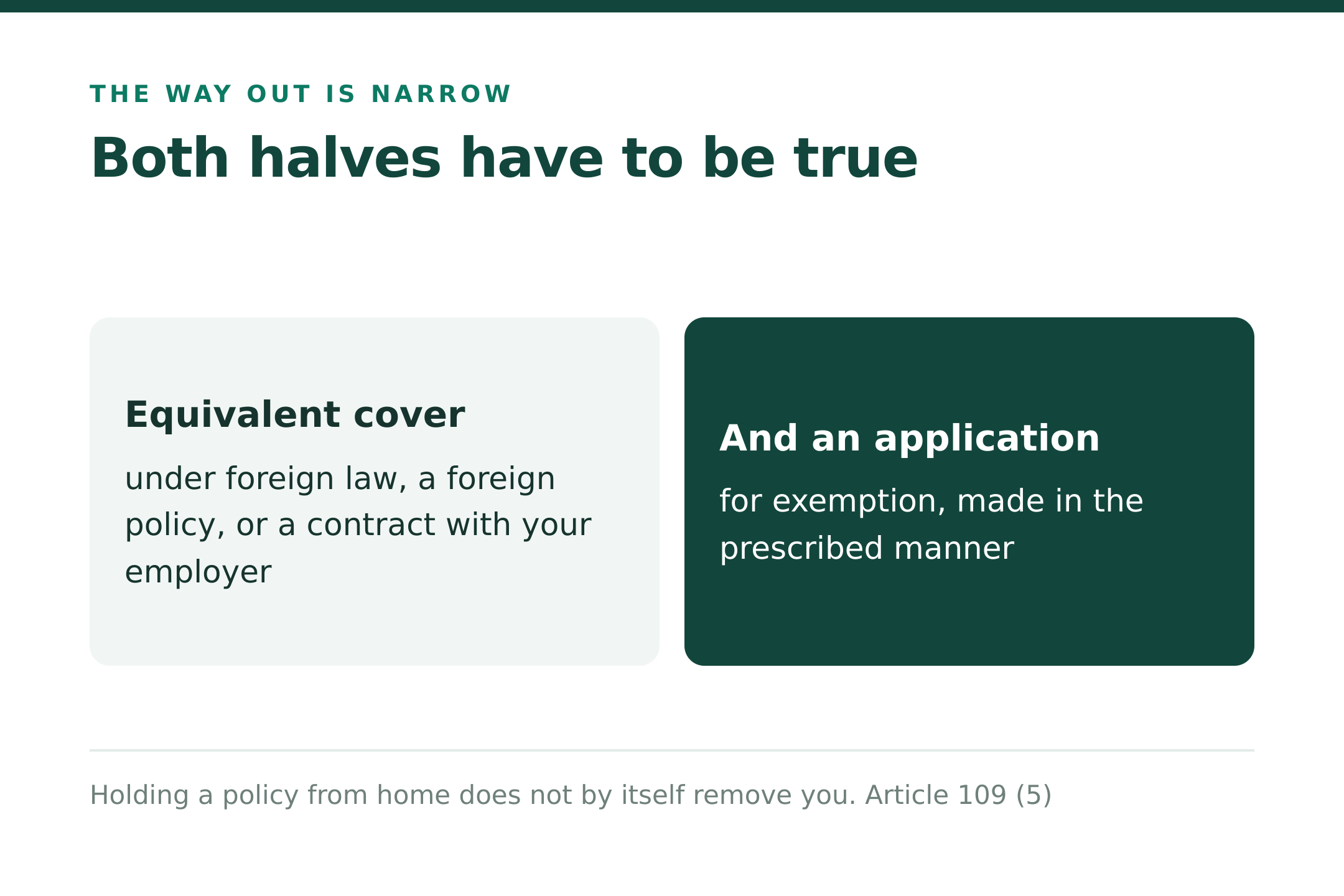
There is a door out, and it is narrow. The Act says a person cannot be a subscriber where they can receive medical cover equivalent to the scheme's benefits under foreign law, a foreign insurance policy, or a contract with their employer, and an exemption has been applied for in the prescribed manner. Both halves have to be true. Simply holding a policy from home does not remove you.
Setting up the payment side usually means a local account, and that has its own friction, which opening a bank account in Korea goes through.
Then what happens if a payment slips?
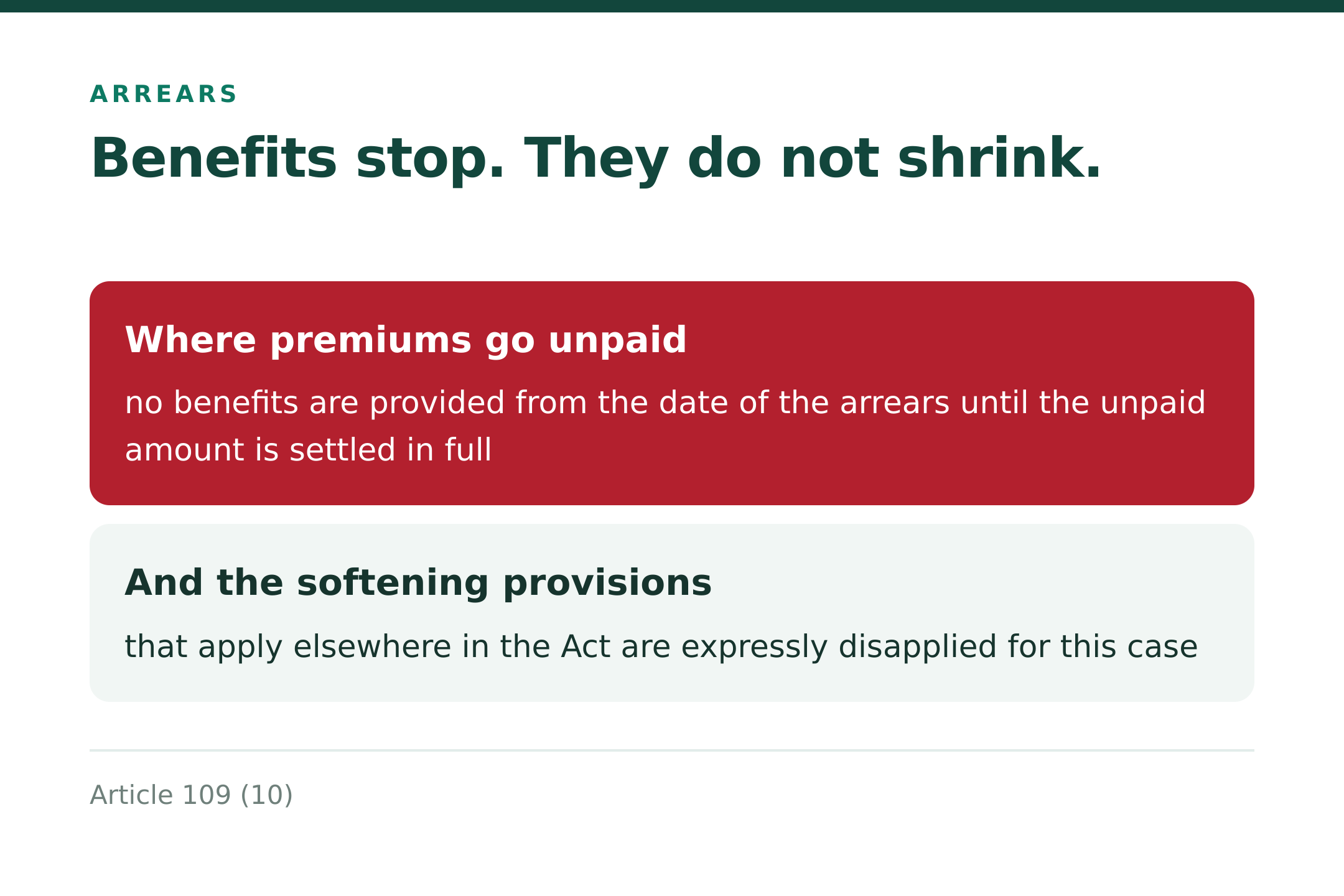
Missing a payment does not reduce the cover. It stops it.
This is the provision to read twice. For local subscribers in this category, the Act says that where premiums go unpaid for a period set by presidential decree, the insurer shall not provide benefits from the date of the arrears until the unpaid premiums are settled in full.
Not a reduced rate. Not a penalty added to the bill. Benefits stop, and the stoppage reaches back to the date the arrears began.
The ordinary softening provisions that apply elsewhere in the Act are switched off for this case, because the same paragraph says they do not apply. So the usual routes that let an ordinary subscriber keep cover while a debt is worked out are not available on this path.
The payment timing is unusual too, and it catches people who are used to paying for a month after living through it. For the affected group, the Act sets the deadline at the 25th day of the preceding month. The premium is paid ahead of the month it covers, not behind it.
| Item | Ordinary expectation | What the Act sets |
|---|---|---|
| Timing | Pay after the covered period | Pay by the 25th of the month before |
| Effect of arrears | Debt accumulates, cover continues | Benefits stop from the date of arrears |
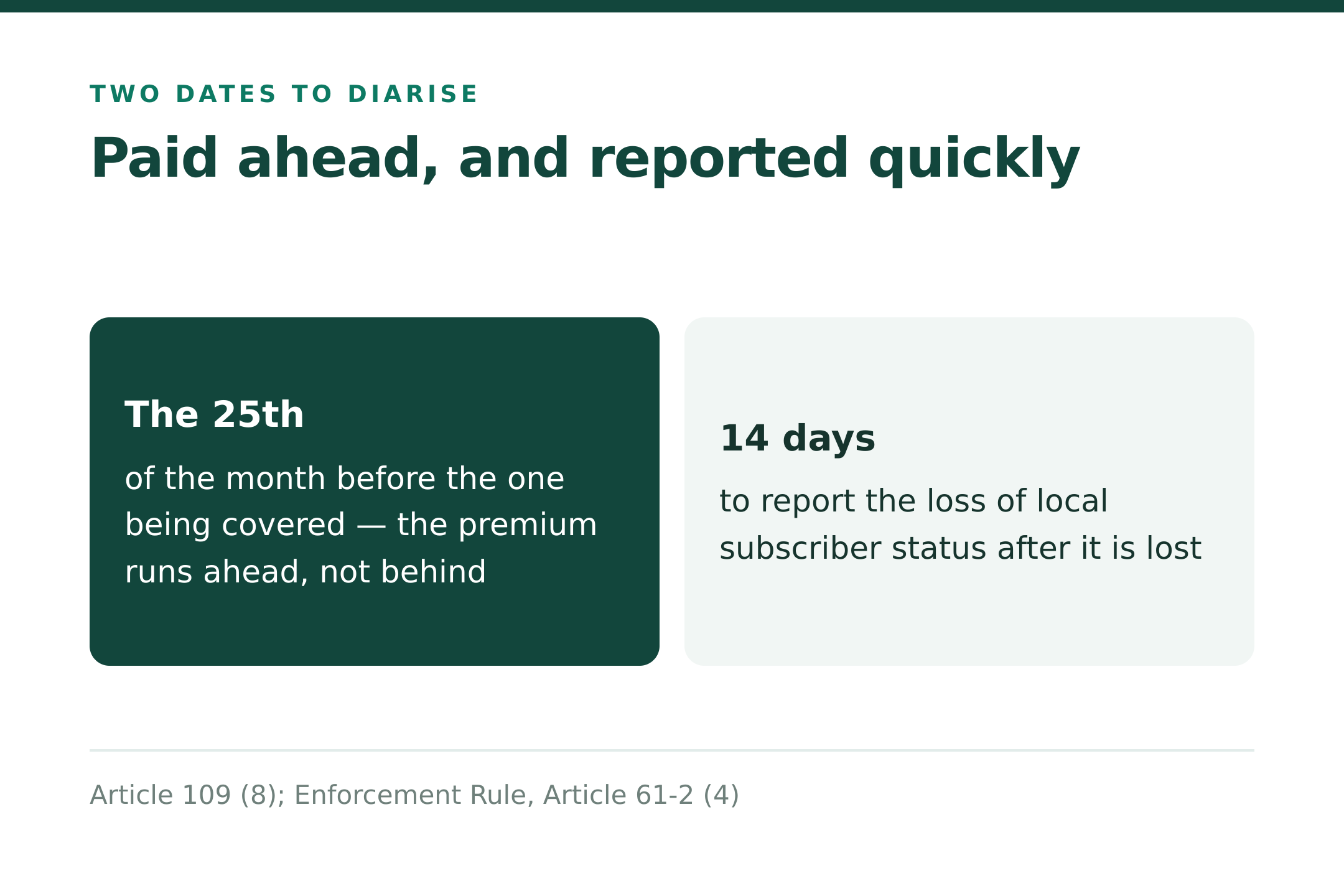
One more piece of housekeeping sits at the end of the regulation. If you lose local subscriber status, the notification is due within 14 days of losing it. It is a small deadline, and it is the kind that is easy to miss while packing.
Frequently Asked Questions
I have been here two months on a work visa. Am I covered?
If you are working at a covered workplace and have completed alien registration, the employment route applies and there is no waiting period attached to it. The six-month condition belongs to the local subscriber route, not the employee one.
I am a student. Do I wait six months?
Study and general training statuses designated by the Ministry are listed among the grounds that stand in place of the six-month period. The designation is set by ministerial notice, so confirm your specific status with the insurer rather than assuming.
I already have insurance from my home country. Can I opt out?
Only if two things are true: the foreign cover is equivalent to the scheme's benefits, and an exemption has actually been applied for in the prescribed way. Holding a foreign policy by itself does not exclude you.
What happens to my cover if I fall behind?
For the affected group of local subscribers, benefits are not provided from the date of arrears until the amount is paid in full, and the provisions that would ordinarily soften that outcome are expressly disapplied.
In short
There are three ways into Korean health insurance, and which one you take is not a preference. Employees are in on registration with no waiting period. Everyone else goes through the local subscriber route, where the condition is six months of residence, unless your status is permanent residence, E-9, marriage migration, or a designated study or training category, in which case the wait does not apply.
The part worth setting a reminder for is the payment. It falls due by the 25th of the month before, and arrears do not simply accrue as debt, because benefits stop from the date they begin. If you are on the local subscriber path, treat the premium the way you treat rent rather than the way you treat a utility bill.
Sources
-
National Health Insurance Act, Article 109 (special provisions for foreigners) : available at the Korean Law Information Center
-
Enforcement Rule of the National Health Insurance Act, Article 61-2 (acquisition of local subscriber status by foreigners) : available at the Korean Law Information Center