Seoul Bike Rental: Ttareungi Is the Easy One, the Scooter Needs a Licence

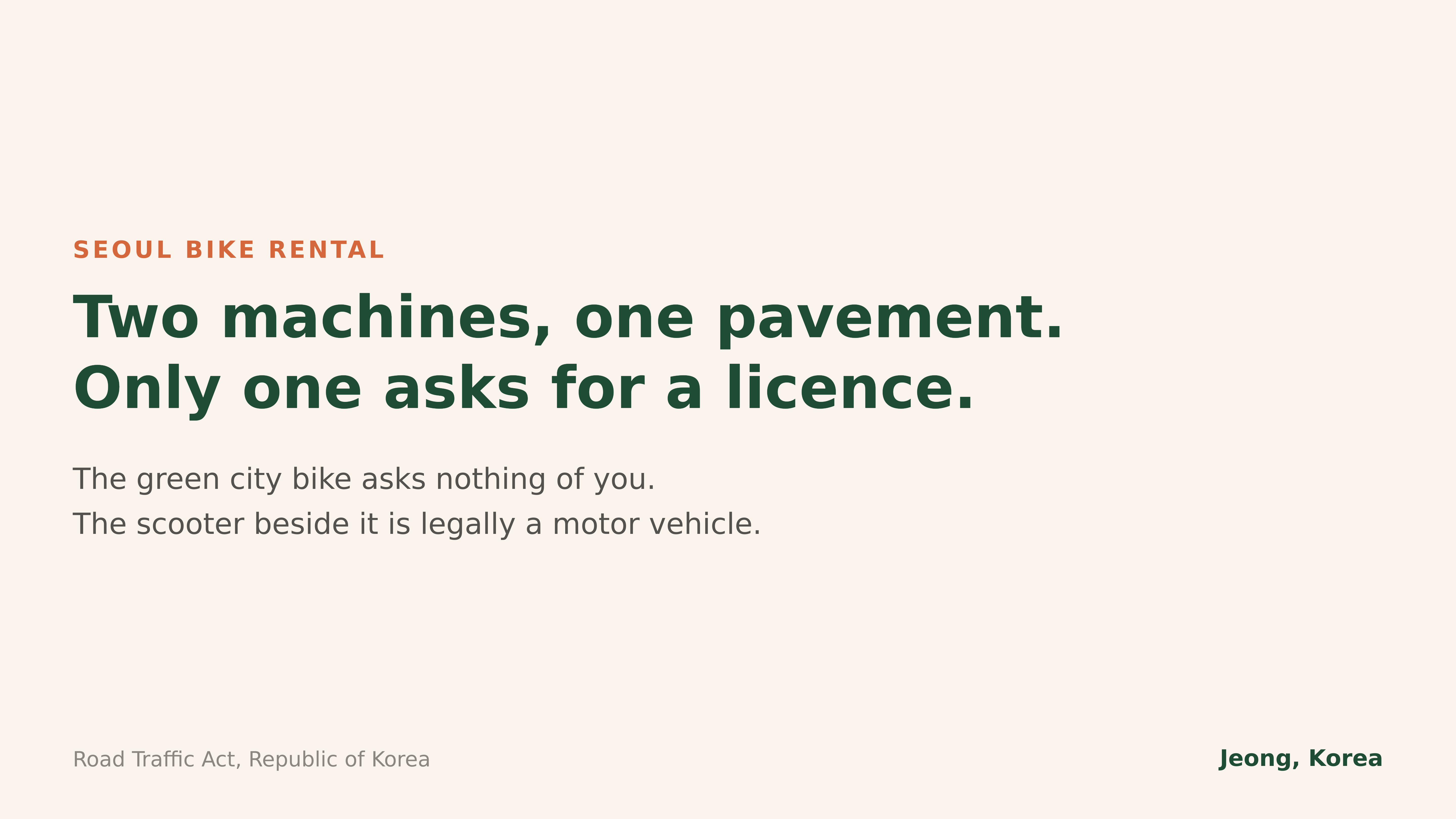
They stand next to each other on the same pavement and open with a phone. One of them asks nothing of you. The other is legally a motor vehicle.
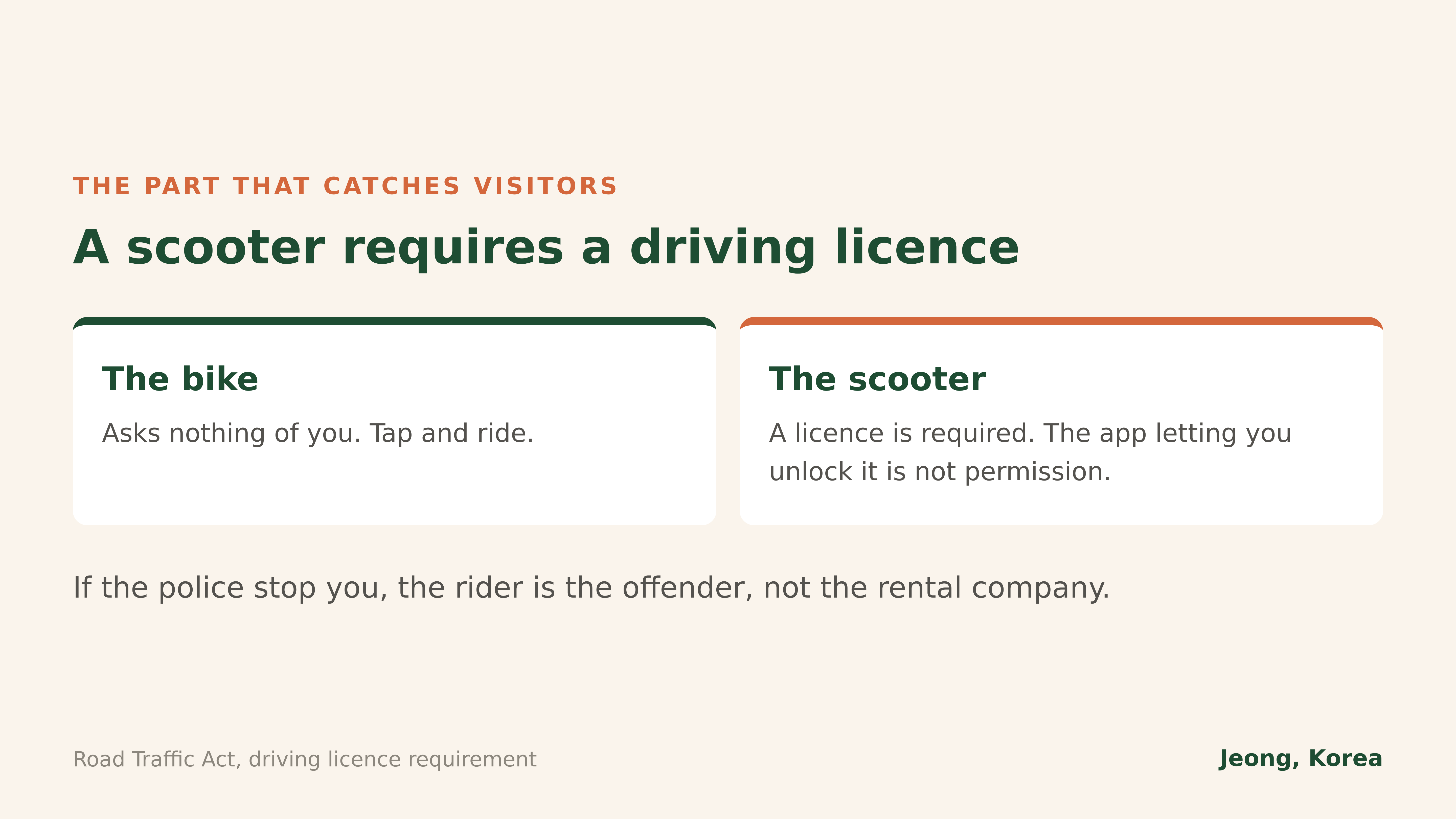
Riding the second one without the right licence makes you the offender, not the rental company.
Say you are staying near Yeouido and want to ride along the Han River on Saturday. You walk out and find two rows of machines at the corner: green city bikes on one side, electric scooters on the other. Both have a QR code. Both look like the same kind of decision.
They are not. A Seoul bike rental and a scooter rental sit in different categories under Korean traffic law, and the gap shows up in what you need before you get on, what you have to wear, and who pays if the police stop you. We will go through the bike first, because that part really is simple, and then the part that catches visitors.
The city bike costs about as much as a coffee
Seoul's public bike rental system is called Ttareungi, and the pricing is the least complicated thing about the city.
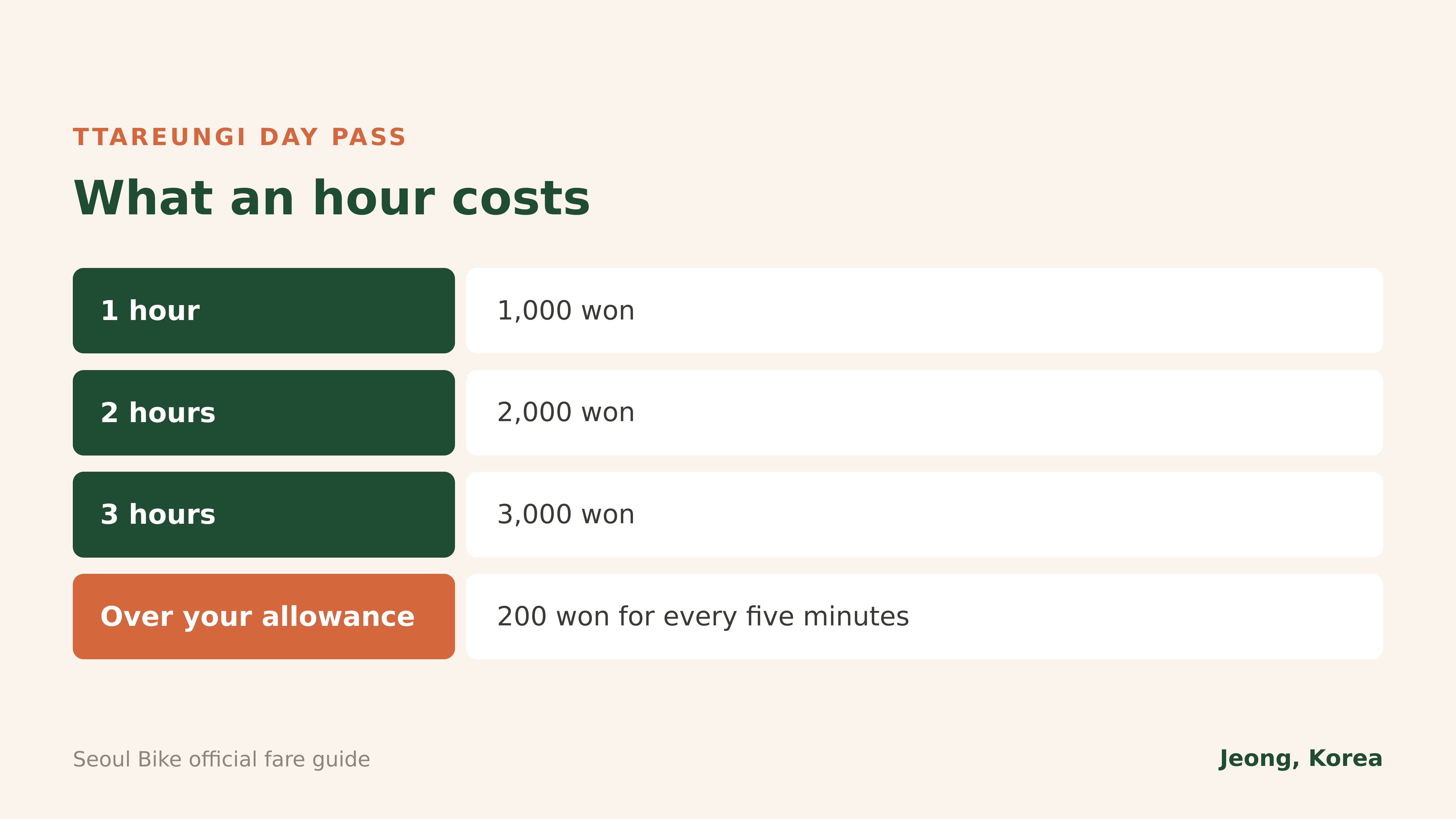
A day pass costs 1,000 won for one hour, 2,000 won for two hours, and 3,000 won for three hours. If you go over your allowance, the meter adds 200 won for every five minutes, which adds up faster than people expect on a long river ride.
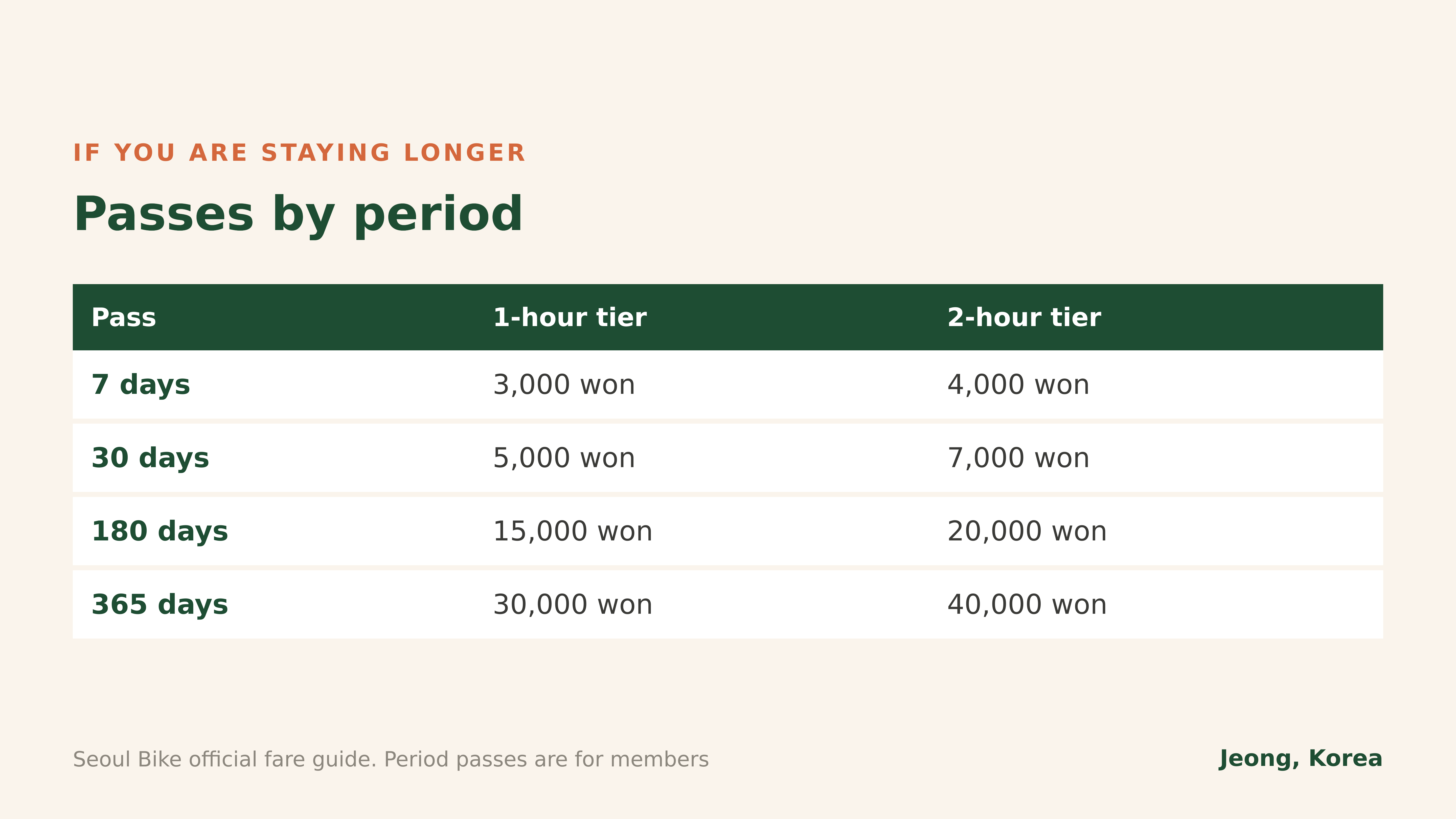
If you are staying longer, passes run by period instead. A seven-day pass is 3,000 won for the one-hour tier and 4,000 won for the two-hour tier. Thirty days costs 5,000 or 7,000 won on the same split, and a year costs 30,000 or 40,000 won.
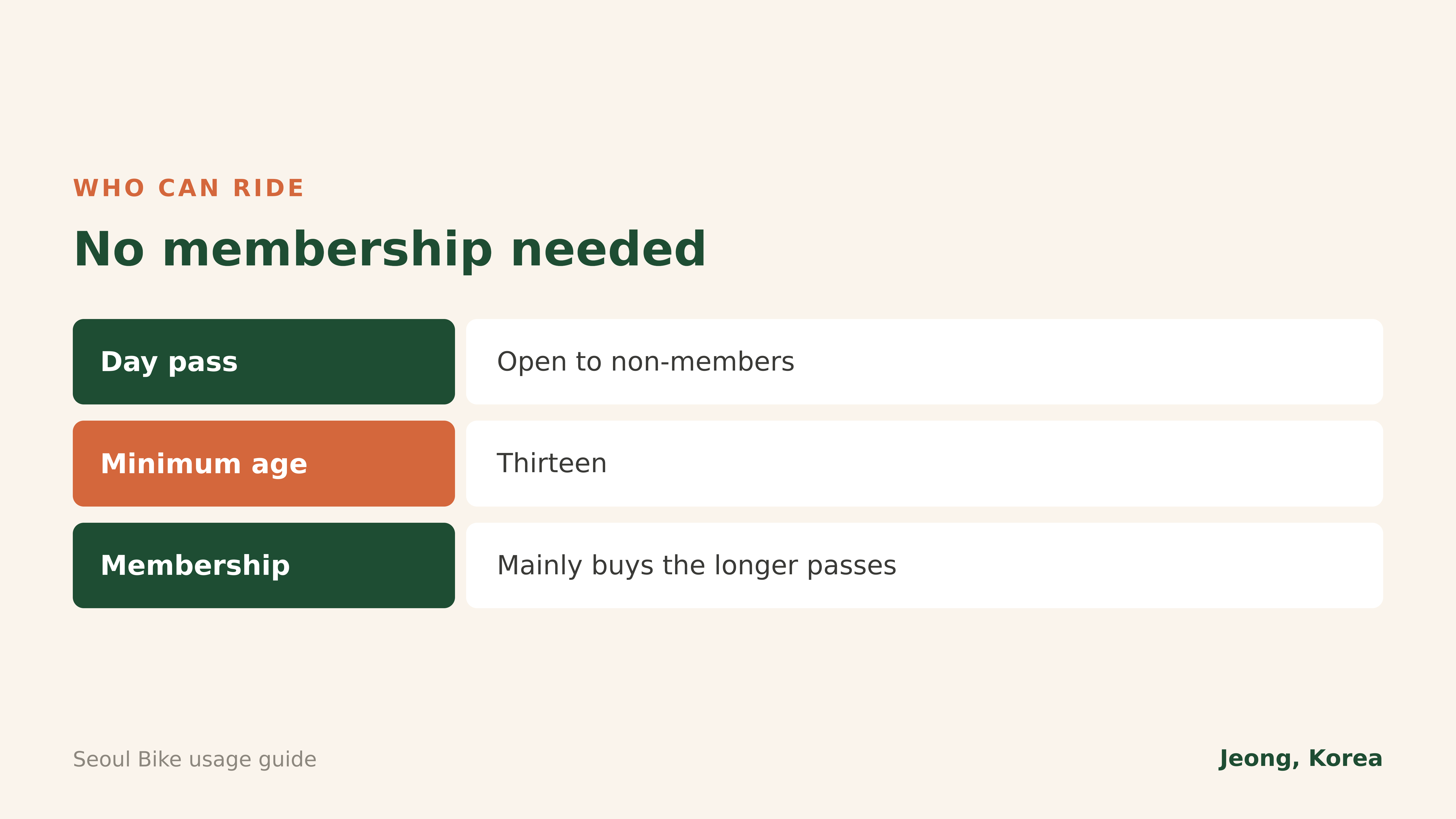
You do not have to register as a member to ride. Day passes are open to non-members, with one condition: the rider has to be at least thirteen. Membership mainly buys you the longer passes.
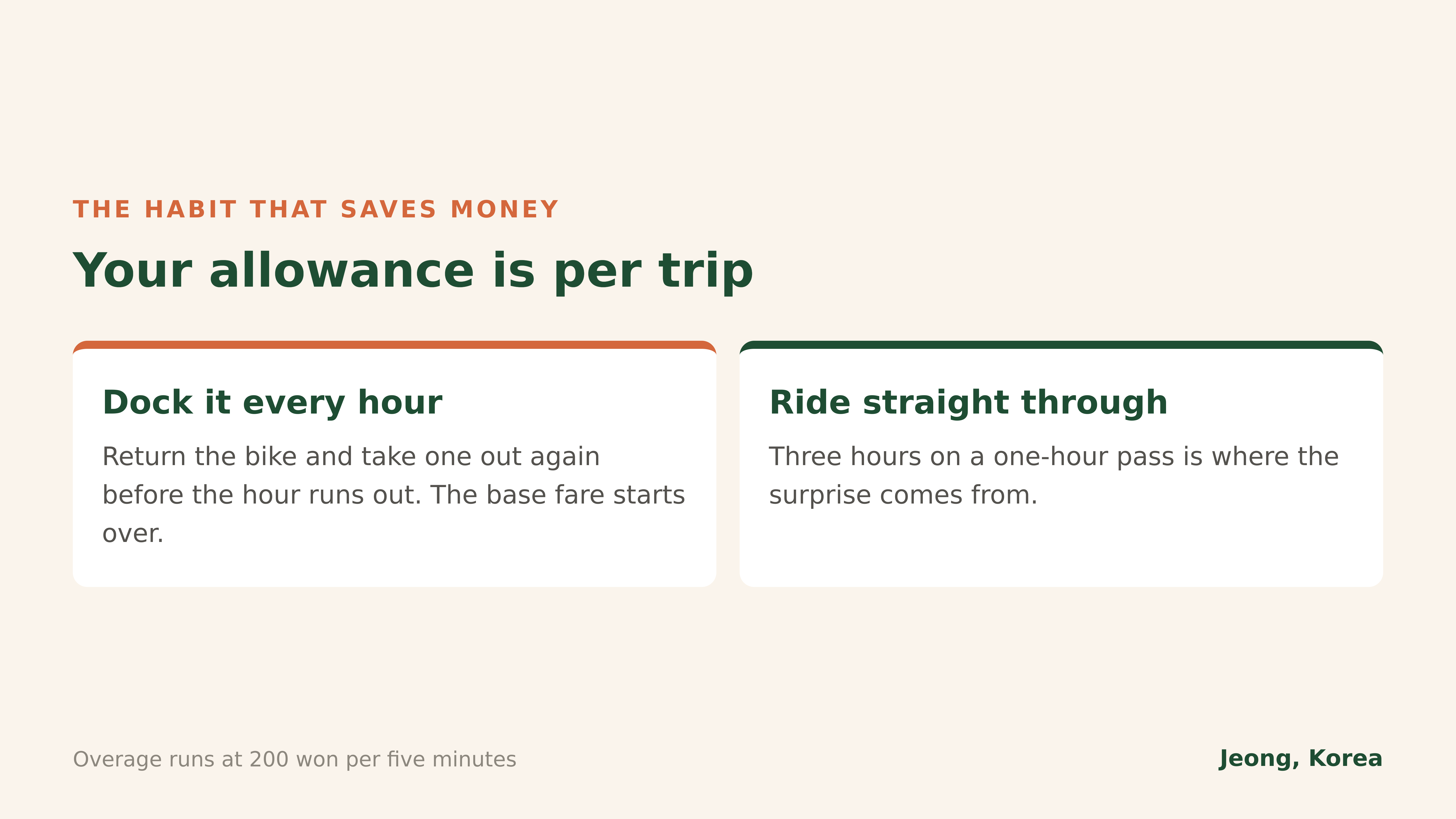
The important habit is the hourly reset. Your allowance is per trip, not per day, so docking the bike and taking it out again before the hour runs out is what keeps you on the base fare. People who ride the river for three hours straight on a one-hour pass are the ones who get a surprise.
If you are heading for the river anyway, The Han River: What Locals Actually Do There (and How to Do It Yourself) covers what is actually worth stopping for along the way.
So why is the machine parked next to it a different story?
The scooter is classified as a motor vehicle
This is the sentence that matters.
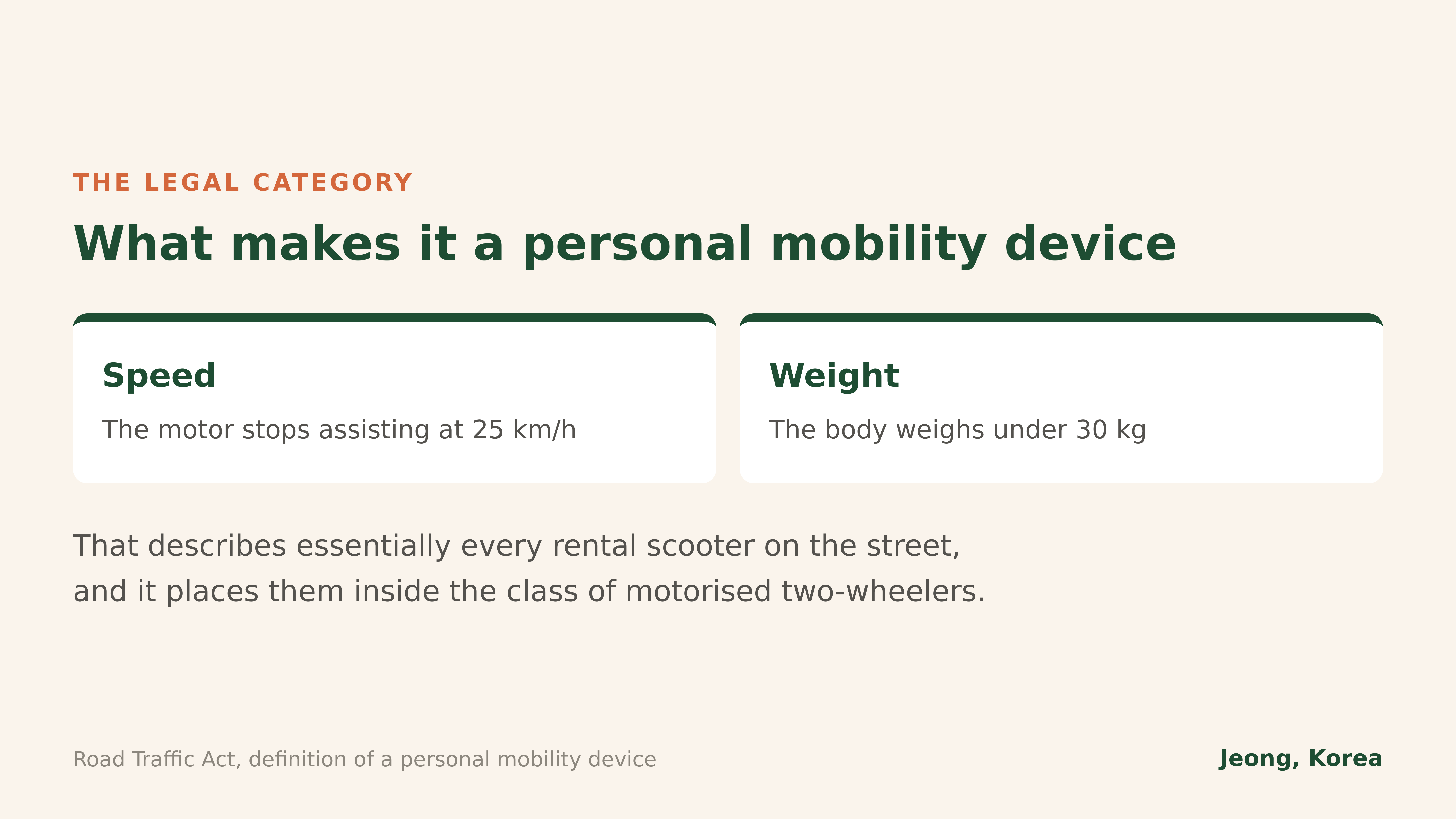
Korean law has a category called a personal mobility device. A scooter falls into it when the motor cuts out at twenty-five kilometres per hour and the body weighs under thirty kilograms, which describes essentially every rental scooter on the street. That category sits inside the wider class of motorised two-wheelers, and driving anything in that class requires a driving licence.
So the bike asks nothing of you and the scooter asks for a licence. The rental app may or may not check. The law does not care whether it checked.
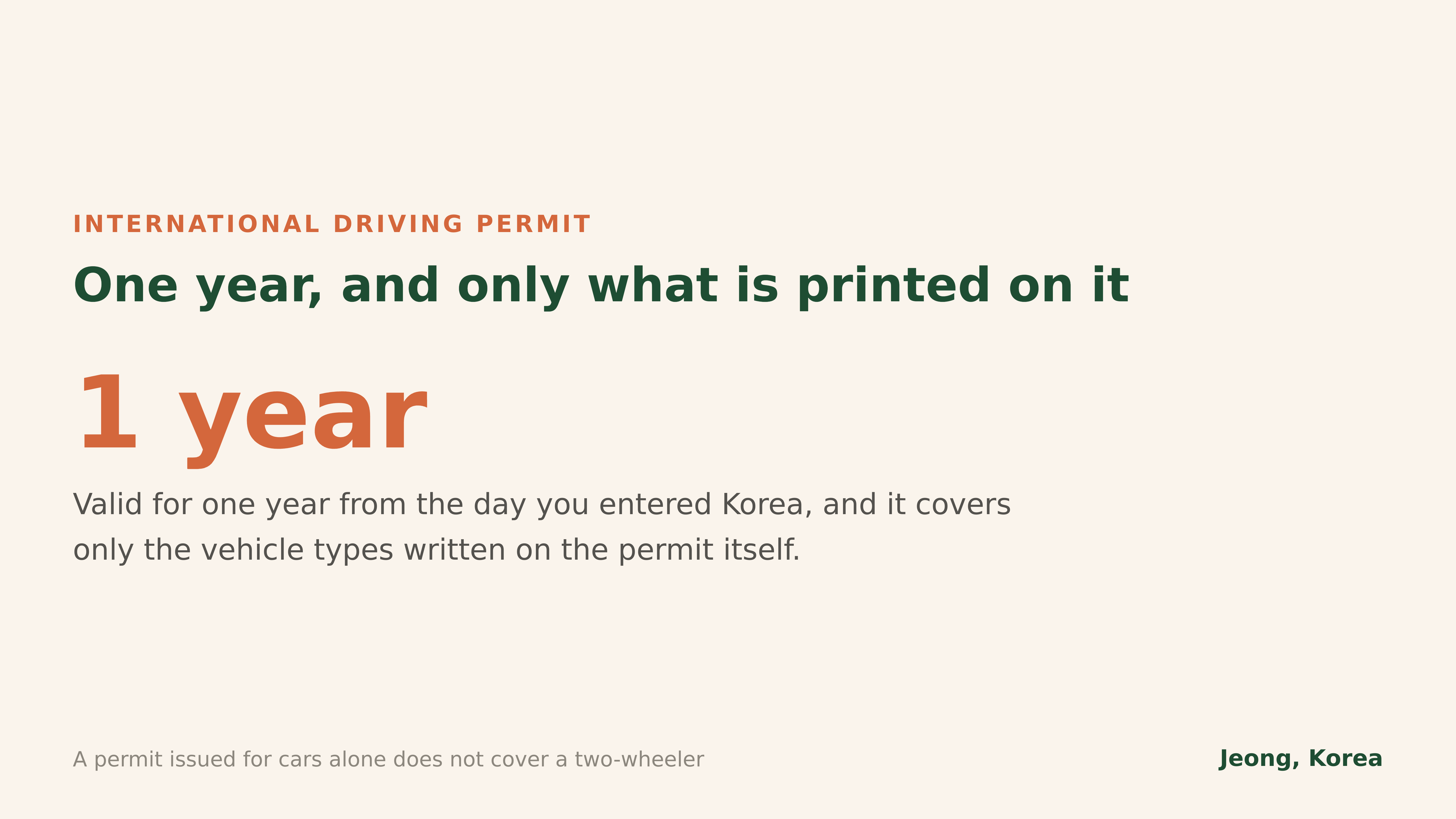
If you are visiting, the question becomes what your own licence covers. An international driving permit lets you drive in Korea for one year from the date you entered the country, but only the vehicle types written on the permit itself. A permit issued for cars alone does not cover a two-wheeler, and that is the gap most visitors fall into without knowing it.
The practical reading is blunt. Unless your permit carries the motorcycle category, the scooter is not available to you, however easy the app makes it look.
And if you do qualify?
Helmets, passengers, and where you leave it
Three rules that get enforced.
Helmets first. The law requires protective headgear for riders of bicycles and personal mobility devices on bicycle paths and on public roads, and it requires you to make your passenger wear one too. In practice you will see plenty of people ignoring this on bicycles. On scooters it is the thing officers actually look for.
Passengers are the second rule. A personal mobility device has a seating capacity, and carrying more people than it allows is prohibited outright. Two adults on one scooter is not a grey area.
After dark, you need a front light and a rear light, or reflective gear. Rental scooters usually have lights built in. Rental bicycles are a different matter, so an evening ride along the river deserves a check before you set off.
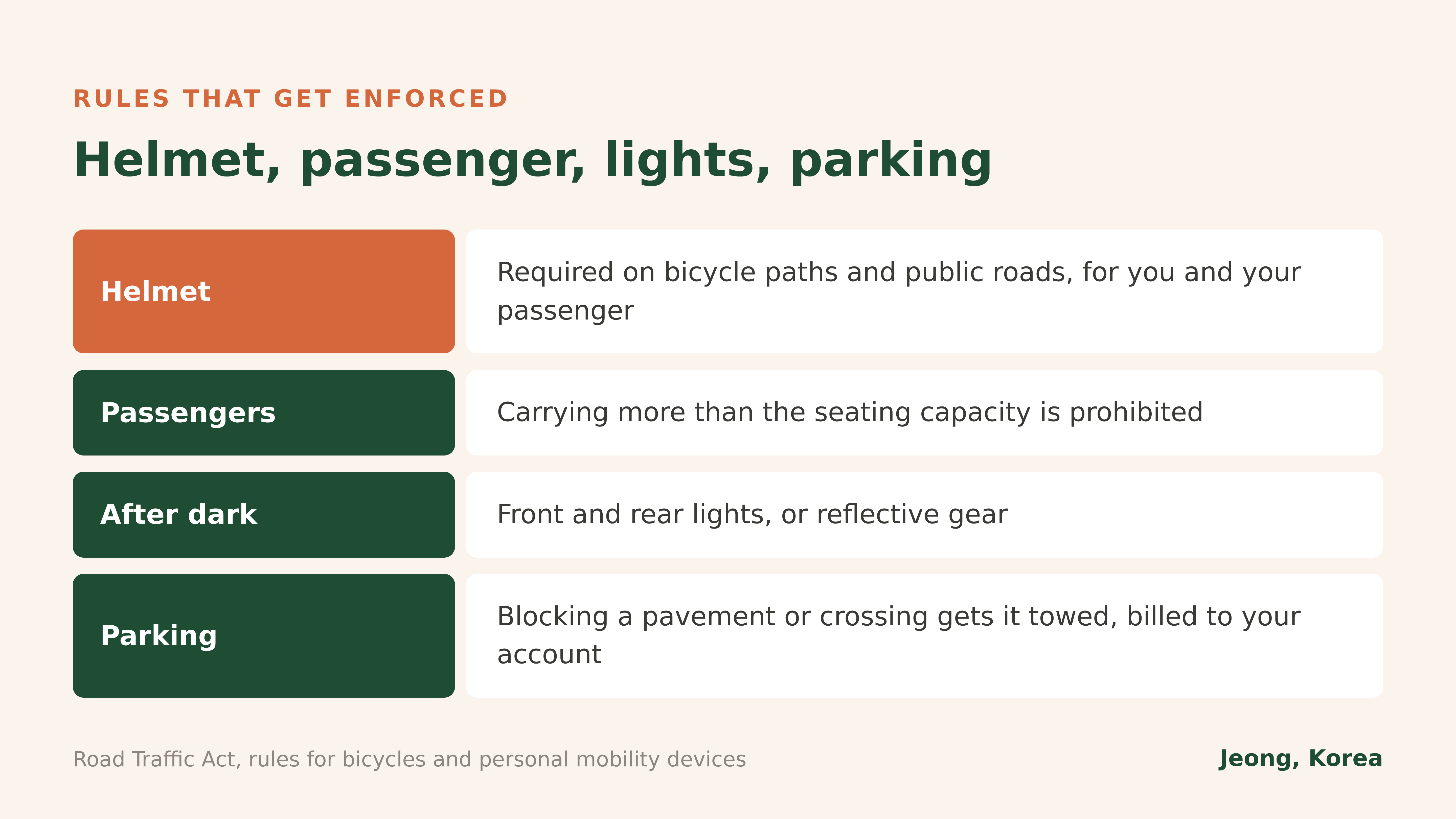
Then there is parking, which is where most complaints come from. Leaving a scooter across a pavement, a crossing or a bus stop gets it towed, and the towing and storage charges land on the account that rented it. Docking stations solve this for bicycles. For scooters, the rule of thumb is to park it where it would not annoy someone pushing a pram.
What to do on Saturday morning
Pick by what you are carrying, not by what looks faster.
-
For a river ride with no licence involved, take a Ttareungi day pass and dock it every hour.
-
For a scooter, check your international permit for a two-wheeler category first.
-
Wear the helmet, especially on a scooter.
-
Park where a pram could still pass.
Getting to the river is its own small puzzle if you are new to the network. Seoul Subway Map: How to Actually Read It (and the Transfer Rules Nobody Explains) sorts out the part before the bike.
FAQ
Can I use a foreign card for a bike rental?
Payment support for overseas cards has been inconsistent, and it is the step where visitors most often get stuck. The app offers an English interface and a non-member day pass, so try the purchase before you walk to a docking station rather than after.
Do I really need a licence for a rental scooter?
Yes. A personal mobility device is legally a motorised vehicle in Korea, so a driving licence is required. The app letting you unlock it is not permission.
Does my international driving permit cover a scooter?
Only if the permit lists a two-wheeler category. It is valid for one year from the day you entered Korea, and it covers only the vehicle types printed on it.
What happens if I skip the helmet?
Helmet use is a legal requirement for riders of bicycles and personal mobility devices on bicycle paths and roads. Scooter riders are the ones who get stopped for it.
The short version
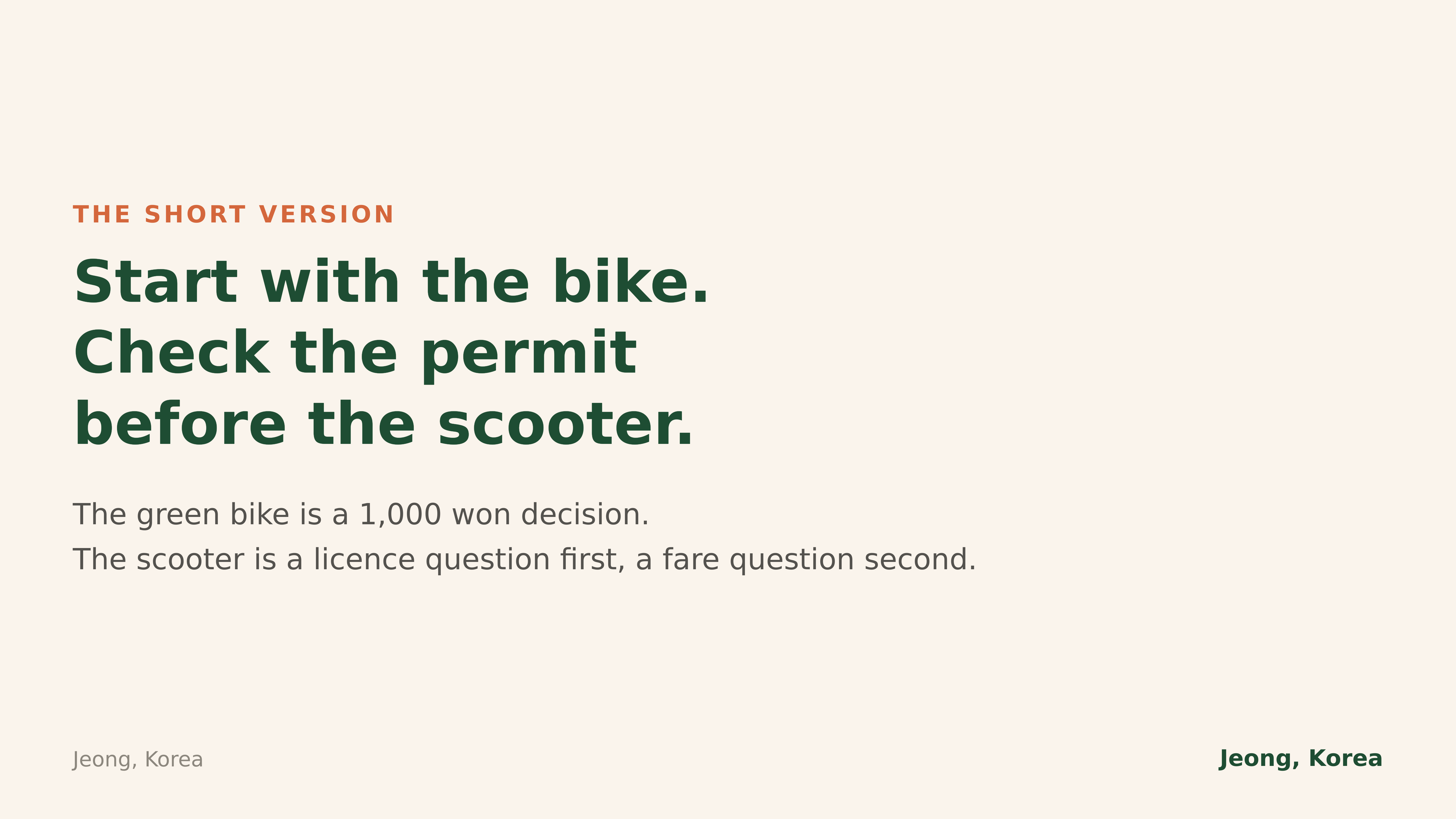
The green bike is a 1,000 won decision and nothing else. The scooter parked beside it is a vehicle in the eyes of the law, and the licence question comes before the fare question.
If you have been putting off riding because the whole thing looked complicated, start with the bike this weekend. The scooter can wait until you have checked what your permit actually says.
References
-
Road Traffic Act, Republic of Korea: definitions of personal mobility devices, the driving licence requirement, rules for protective headgear and passengers, and the terms for driving on an international driving permit. Available through the Korea Law Information Center.
-
Seoul Bike (Ttareungi) official fare and usage guide, Seoul Metropolitan Government.