The Ferry to Jeju: Two of the Ports People Search For Are Gone

Search for a boat from Busan to Jeju. You will find timetables. Prices. Deck plans. Photographs of the cabins. You will also find that the ship made its last crossing in December 2022, and nobody replaced it.
The ferry to Jeju is real and it runs most days of the week. It just does not leave from the two cities most people type into the search box. This guide covers which ports still have a crossing, roughly how long each one takes, what the boat costs you in time compared with flying, and the single situation where taking it is clearly the right call.
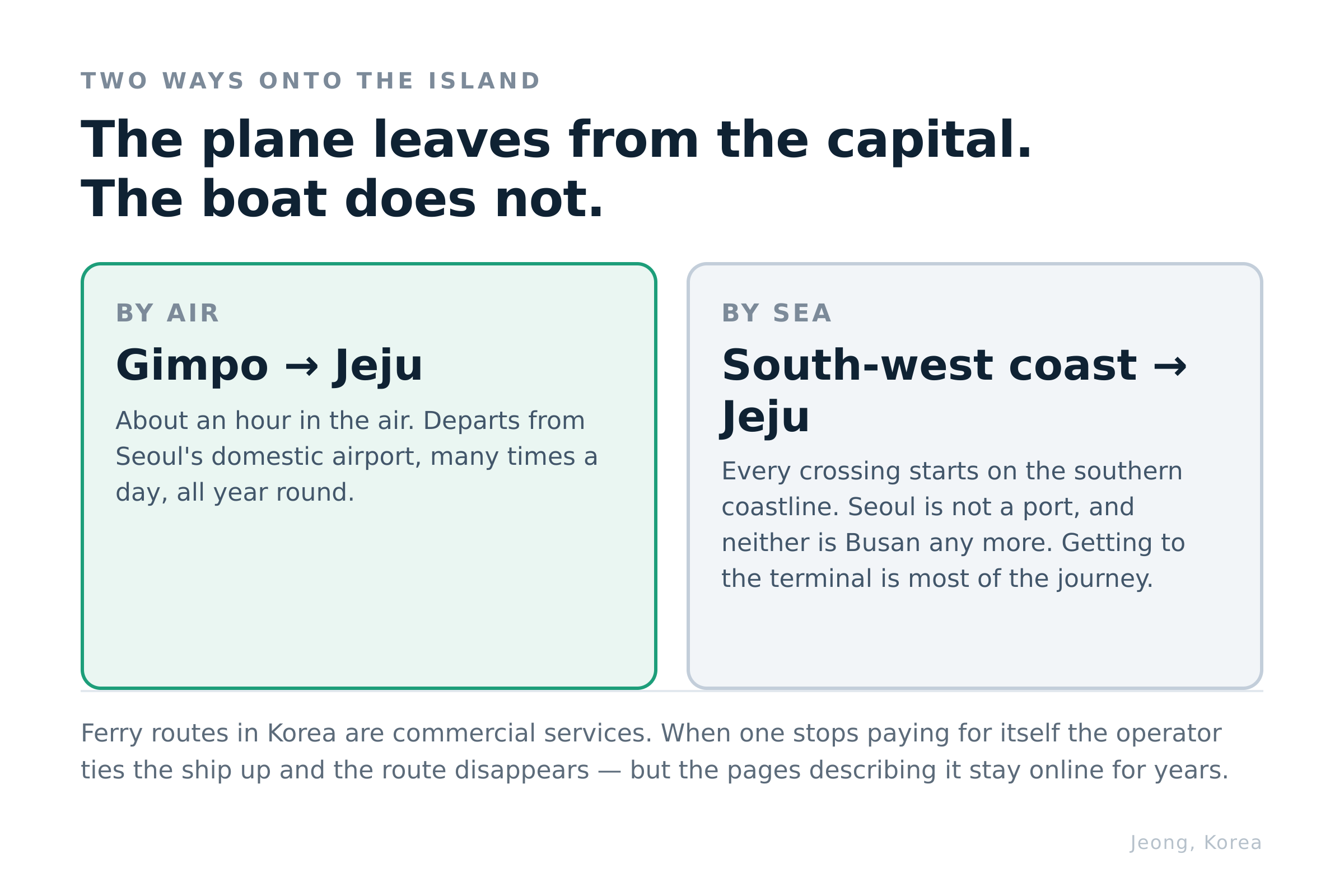
Jeju is an island, so there are two ways in: a plane or a boat. The plane is straightforward and I covered it separately. The boat is where people get stuck, and they get stuck for a specific reason — the internet has not caught up with the ports.
Ferry routes in Korea are commercial services. When one stops paying for itself, the operator ties the ship up and the route quietly disappears, but the pages describing it stay online for years afterwards. That is the whole problem in one sentence.
So here is what is actually sailing.
Which ports the ferry to Jeju actually leaves from
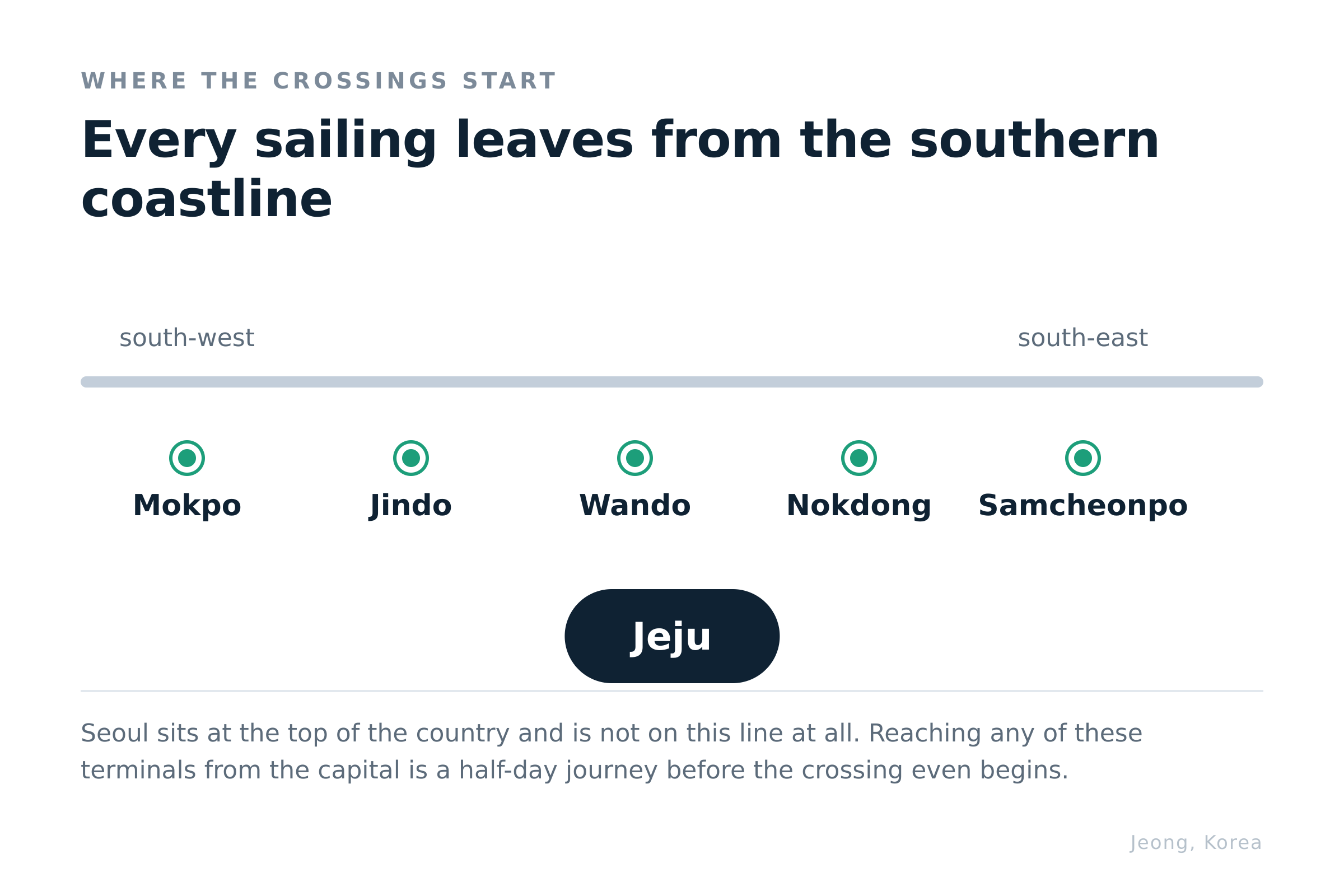
Every crossing to Jeju departs from the south or south-west coast. None of them leaves from Seoul, and as of now none leaves from Busan either.
These are the routes listed on Korea's national passenger-ship booking system:
| Departure port | Operator | Crossing time | Note |
|---|---|---|---|
| Wando | Hanil Express | about 2 hours 40 minutes | the most frequent service |
| Mokpo | Seaworld Express Ferry | about 4 hours 30 minutes | larger ships with cabin decks |
| Nokdong (Goheung) | Namhae Gosok Ferry | about 3 hours 30 minutes | typically a morning departure |
| Jindo | Seaworld Express Ferry | about 1 hour 30 minutes | fastest, and the most weather-sensitive |
| Samcheonpo (Sacheon) | — | — | listed on the booking system |
And these are the two that people keep looking for:
| Route | Status |
|---|---|
| Busan to Jeju | Last sailing 15 December 2022. No replacement operator. |
| Yeosu to Jeju | Ended December 2024 when the operator withdrew and moved the vessel to Wando. |
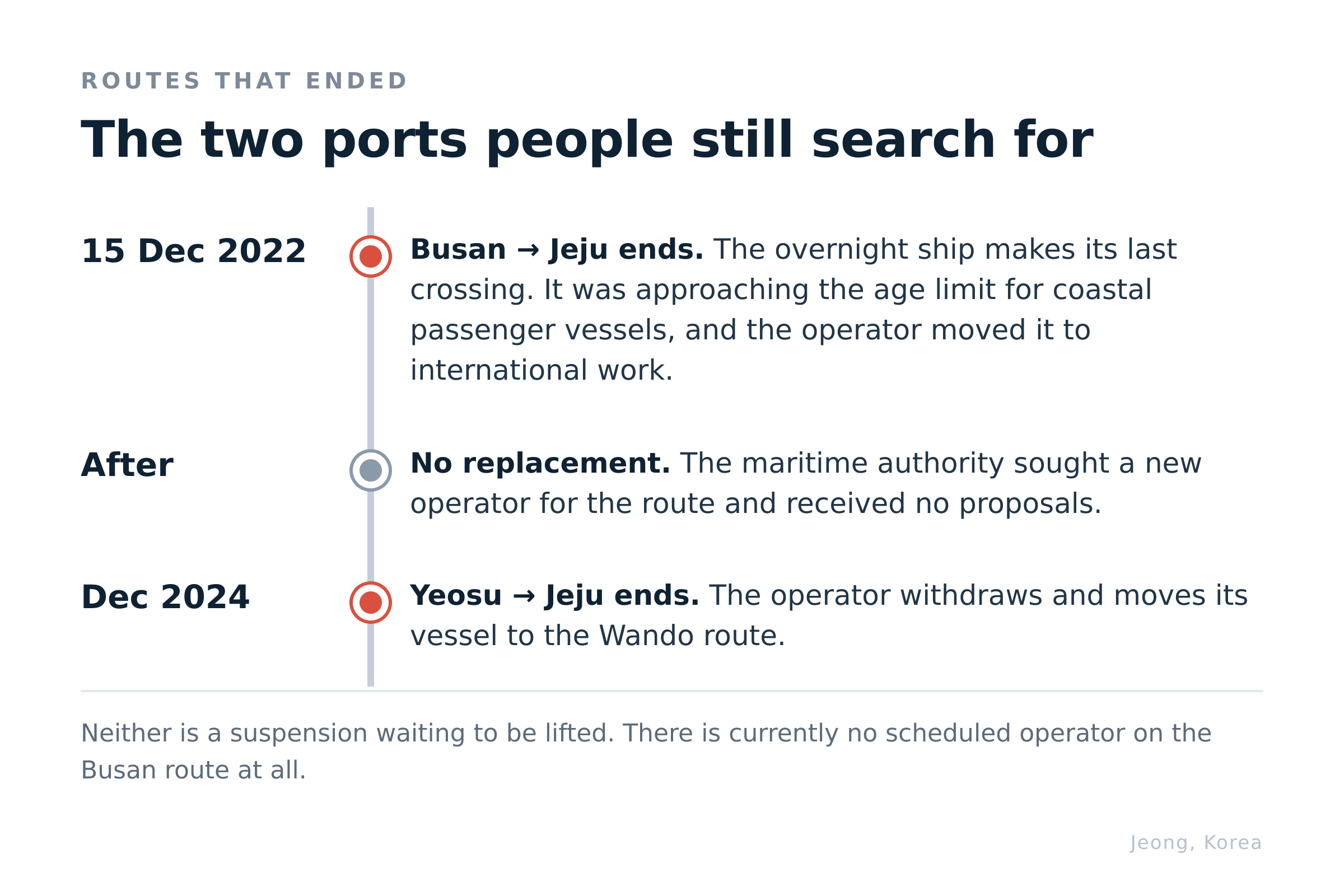
The Busan case is worth understanding because it explains why it has not come back. The ship that ran it was approaching the age limit for coastal passenger vessels, and the operator judged it more useful on an international route than on this one. The maritime authority later tried to recruit a new operator for the Busan run and received no proposals. So this is not a suspension waiting to be lifted — there is currently no scheduled operator on that route at all.
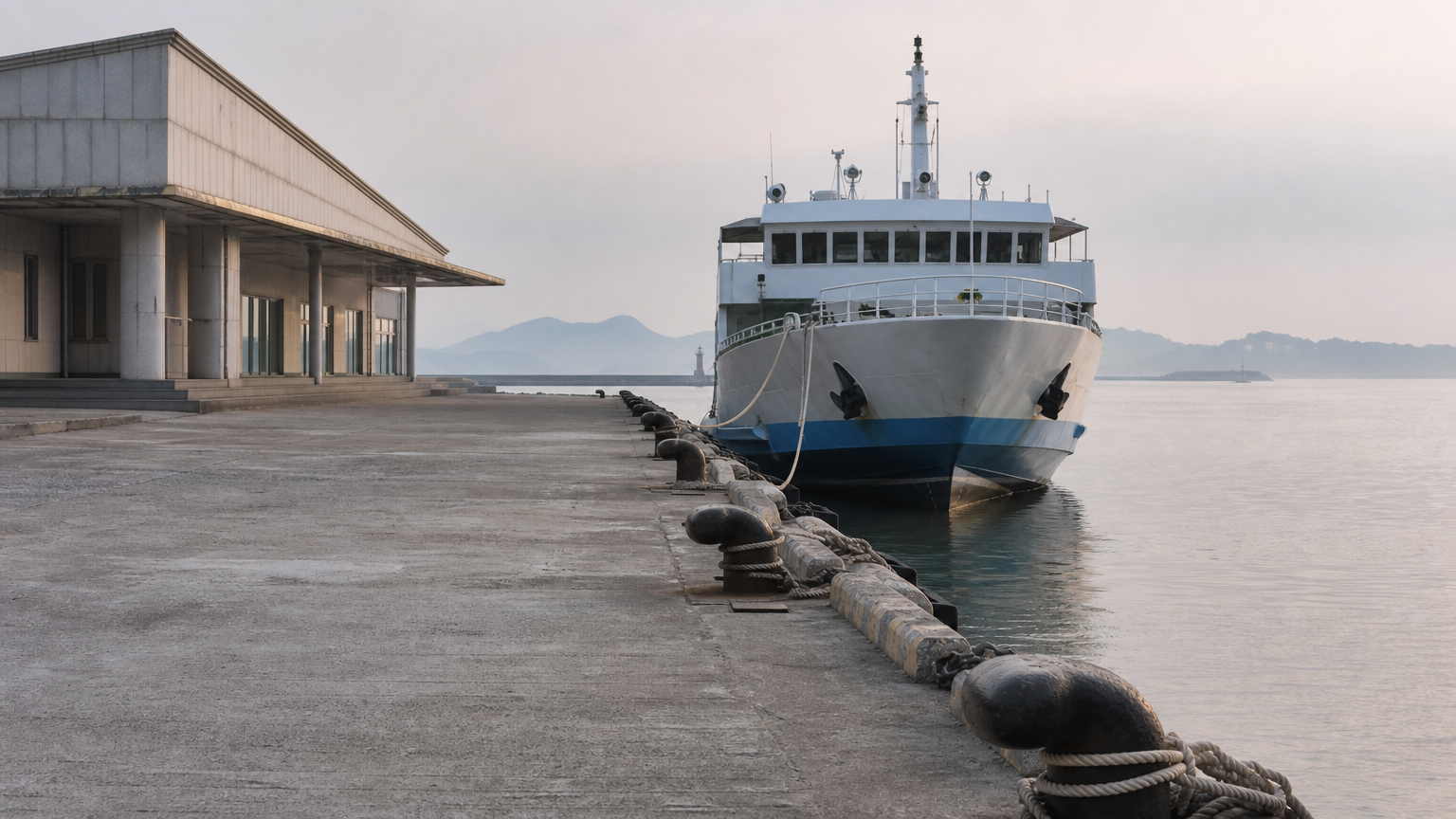
Which matters most if you were planning around it. If your itinerary said "train to Busan, boat to Jeju," the second half of that sentence does not exist. You are flying from Busan, or you are travelling further west to reach a port.
If you are starting from Seoul rather than the coast, the shape of that trip is its own subject — I set it out in Seoul to Jeju: there is no train, and the ferry does not leave from Seoul.
So if the boat still runs, how much of your day does it take?
What the crossing actually costs you in time
More than the crossing time, and that is the number people get wrong.
The sailing itself is between roughly an hour and a half and four and a half hours depending on the port. But none of those ports is somewhere you already are. Wando, Mokpo, Nokdong and Jindo are all on the south-west coast, several hours from Seoul by rail or coach, and the connection has to line up with a sailing that may run once or twice a day.
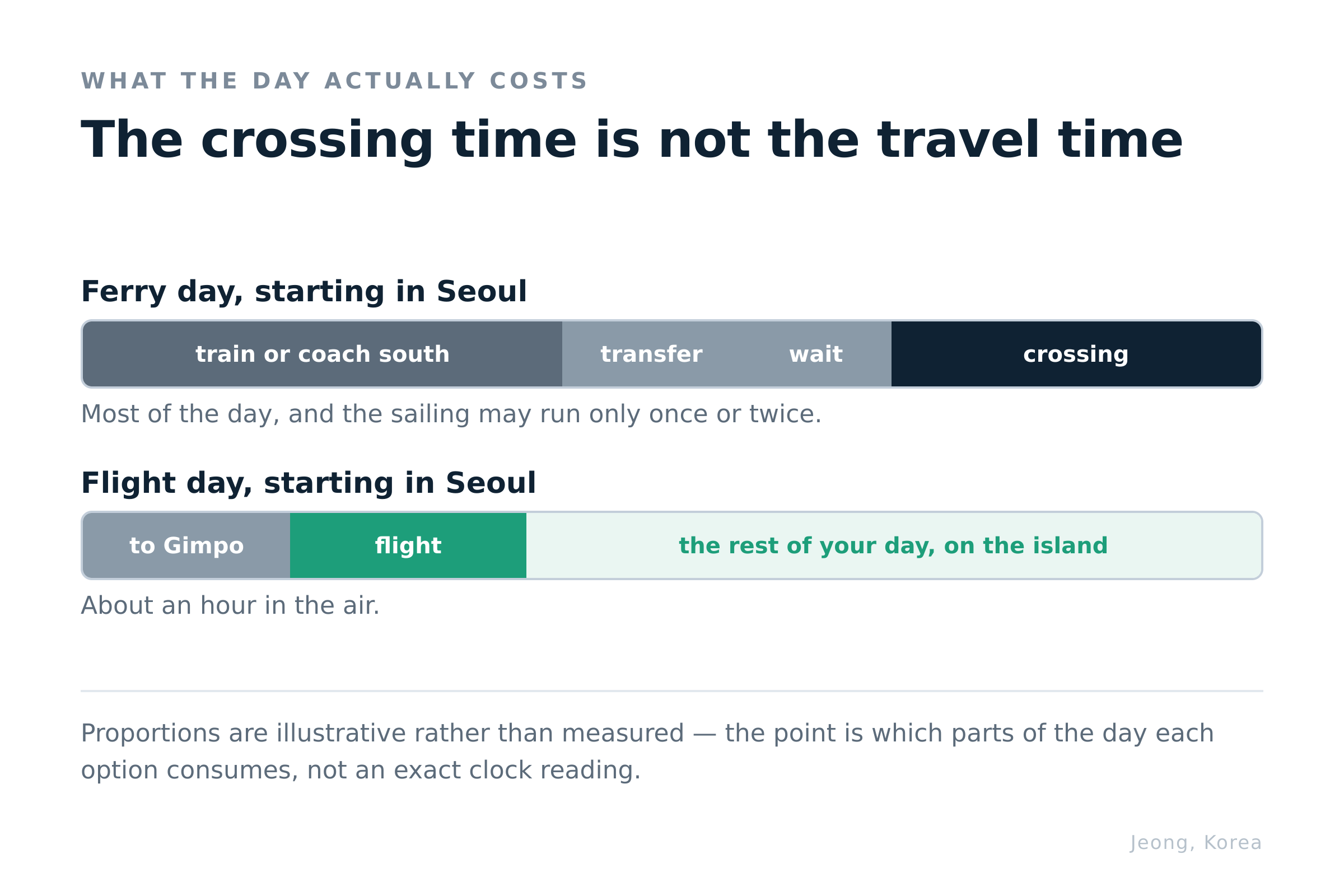
Add it up honestly and a ferry day from Seoul looks like this: a morning train or coach across the country, a transfer to the terminal, a wait, then the crossing. A flight from Gimpo is about an hour in the air.
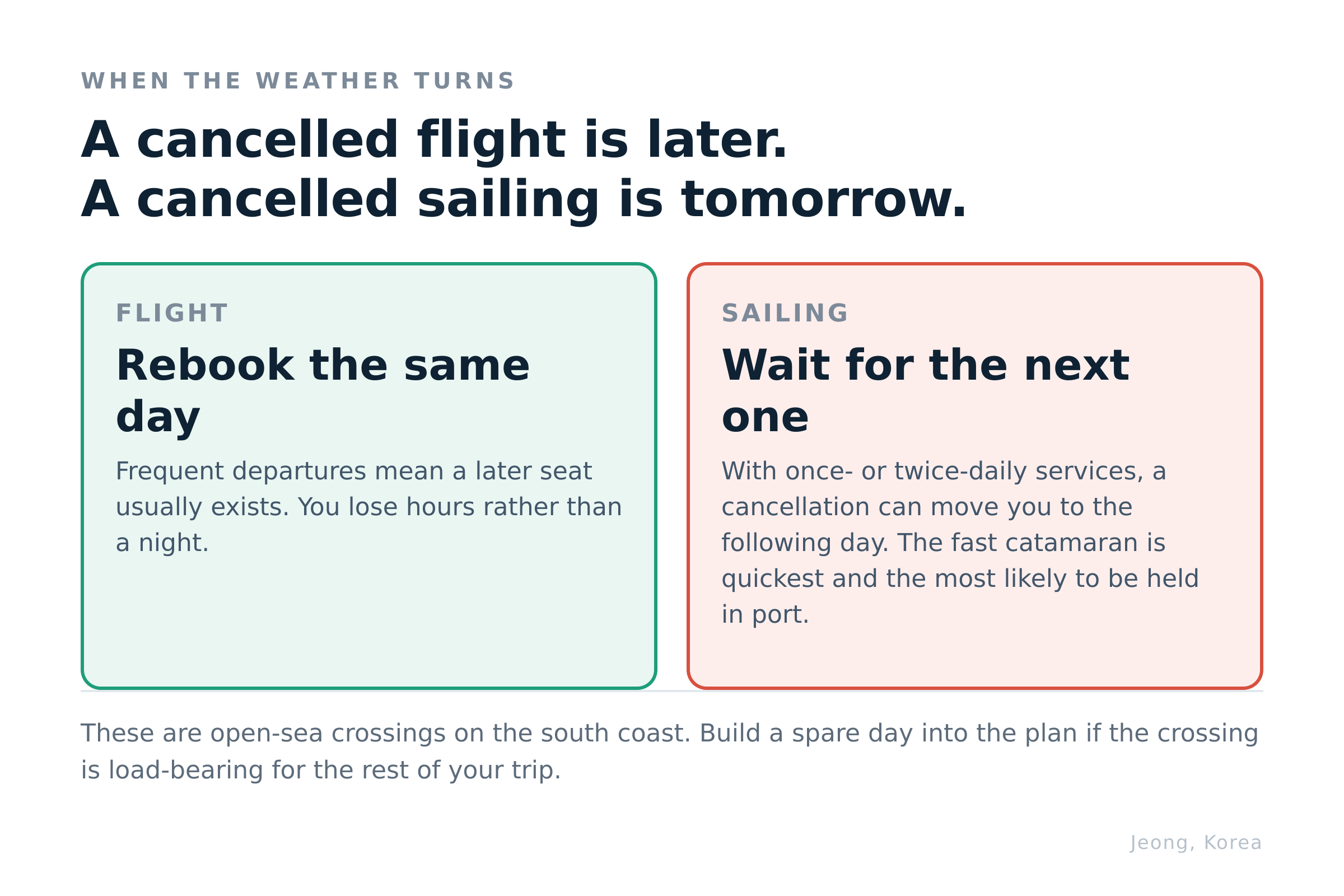
There is also weather. These are open-sea crossings on Korea's south coast, and sailings are cancelled when conditions require it. The Jindo catamaran is the quickest and also the one most likely to be held in port. A flight has the same exposure, but you will usually rebook onto a later flight the same day, whereas a cancelled sailing can mean tomorrow.
So the honest summary is that the boat is not the budget option and it is not the fast option. Which raises the obvious question — why does anyone take it?
The one reason that actually justifies the boat
Because you can drive onto it.
That is the whole case, and it is a strong one. The main services are car ferries, so your vehicle crosses with you and you drive off at the other end. Jeju is a place where having a car changes what the trip can be — the interior roads, the coastal route, the trailheads and the villages away from the bus lines all open up — and no aircraft will carry your car.
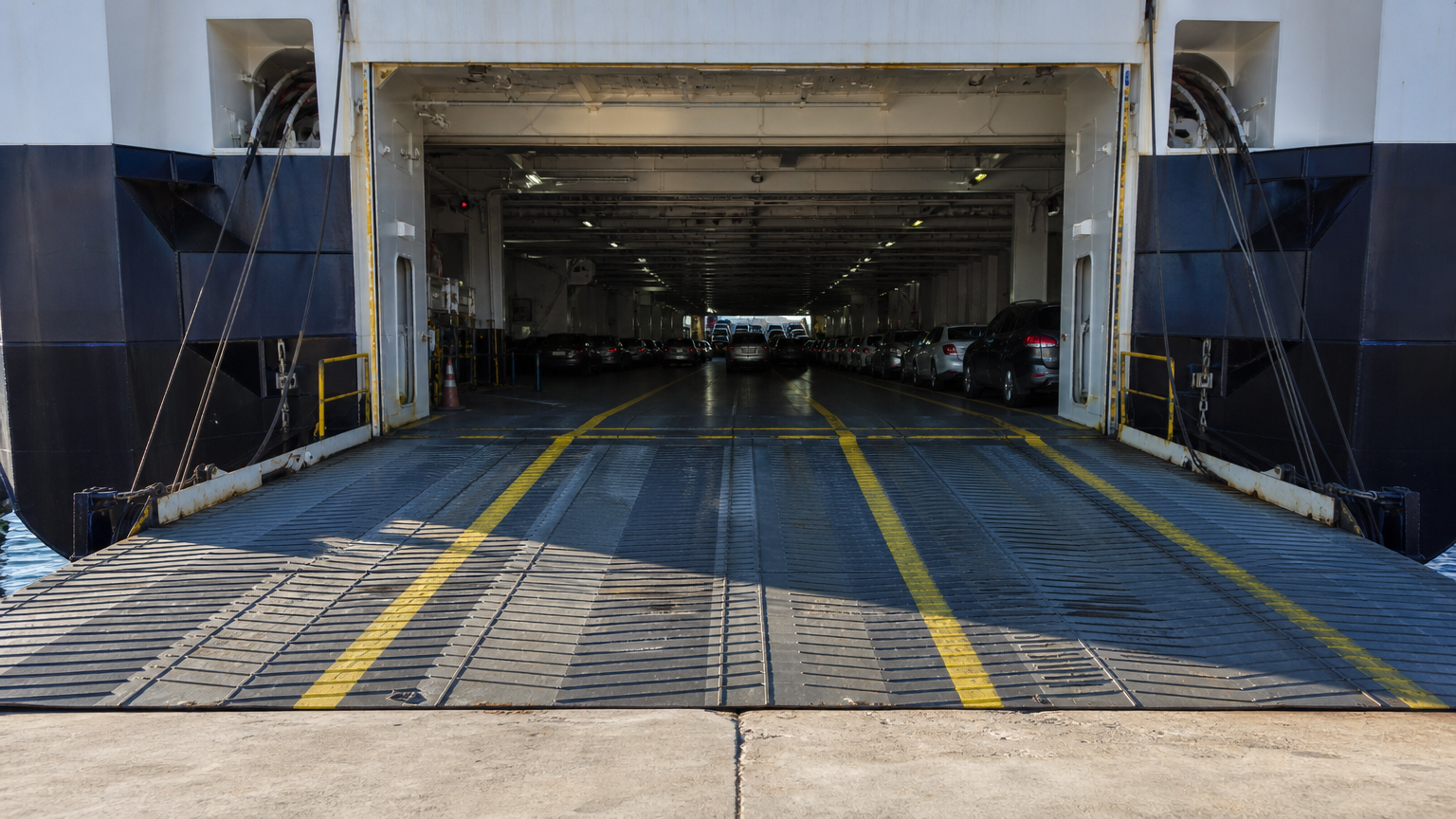
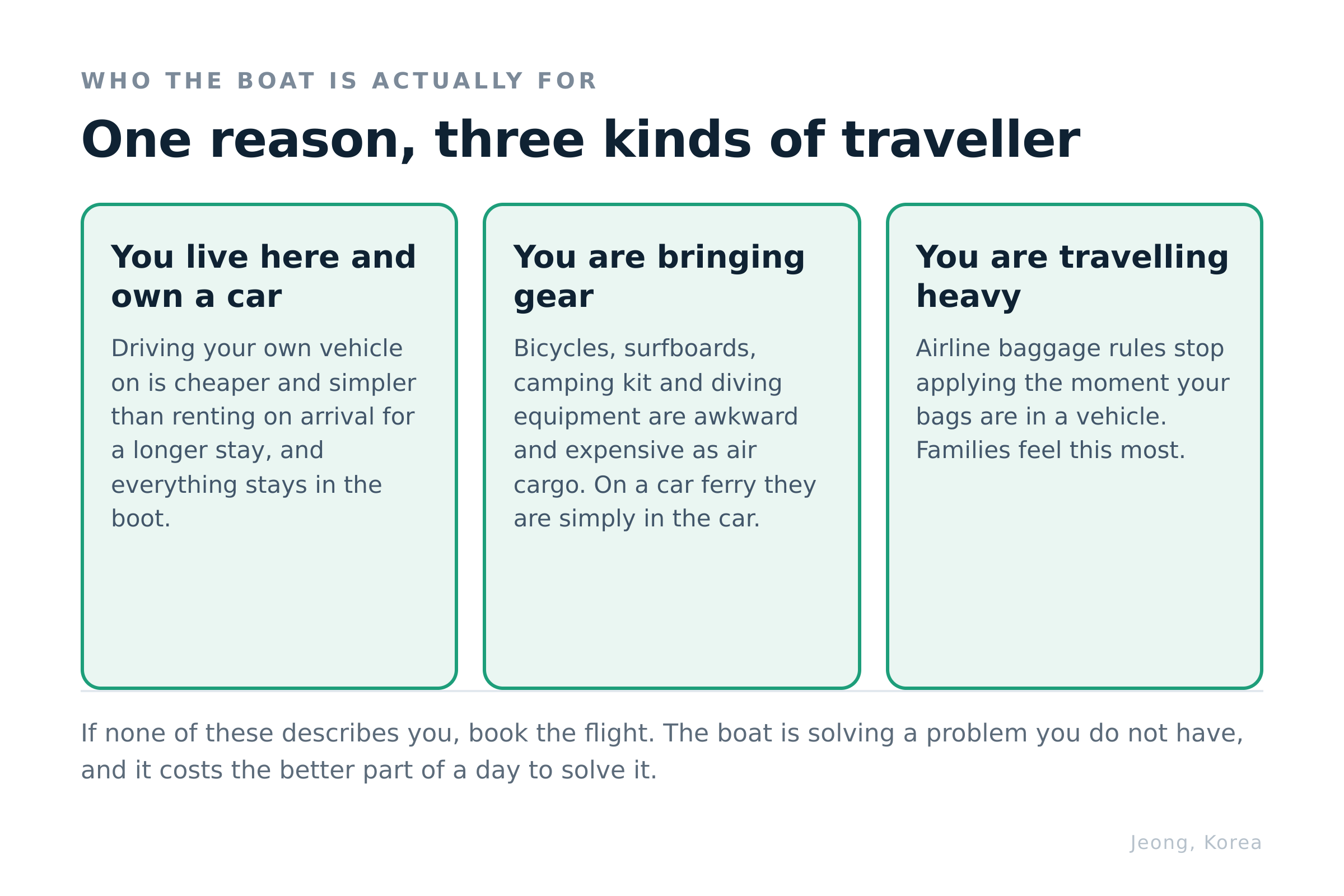
This matters to three groups in particular.
People who live in Korea and own a car. Driving your own vehicle onto the boat is far cheaper and simpler than renting on arrival for a longer stay, and everything you would otherwise pack into a suitcase just stays in the boot.
People travelling with camping or sports gear. Bicycles, surfboards, camping equipment and diving kit are awkward and expensive as air cargo. On a car ferry they are simply in the car.
People travelling with family or a lot of luggage. Airline baggage rules stop applying the moment your bags are in a vehicle.
If none of those describes you, book the flight. That is not me being dismissive of the boat — I like the boat. It is that the boat is solving a problem you do not have, and it will cost you the better part of a day to solve it.
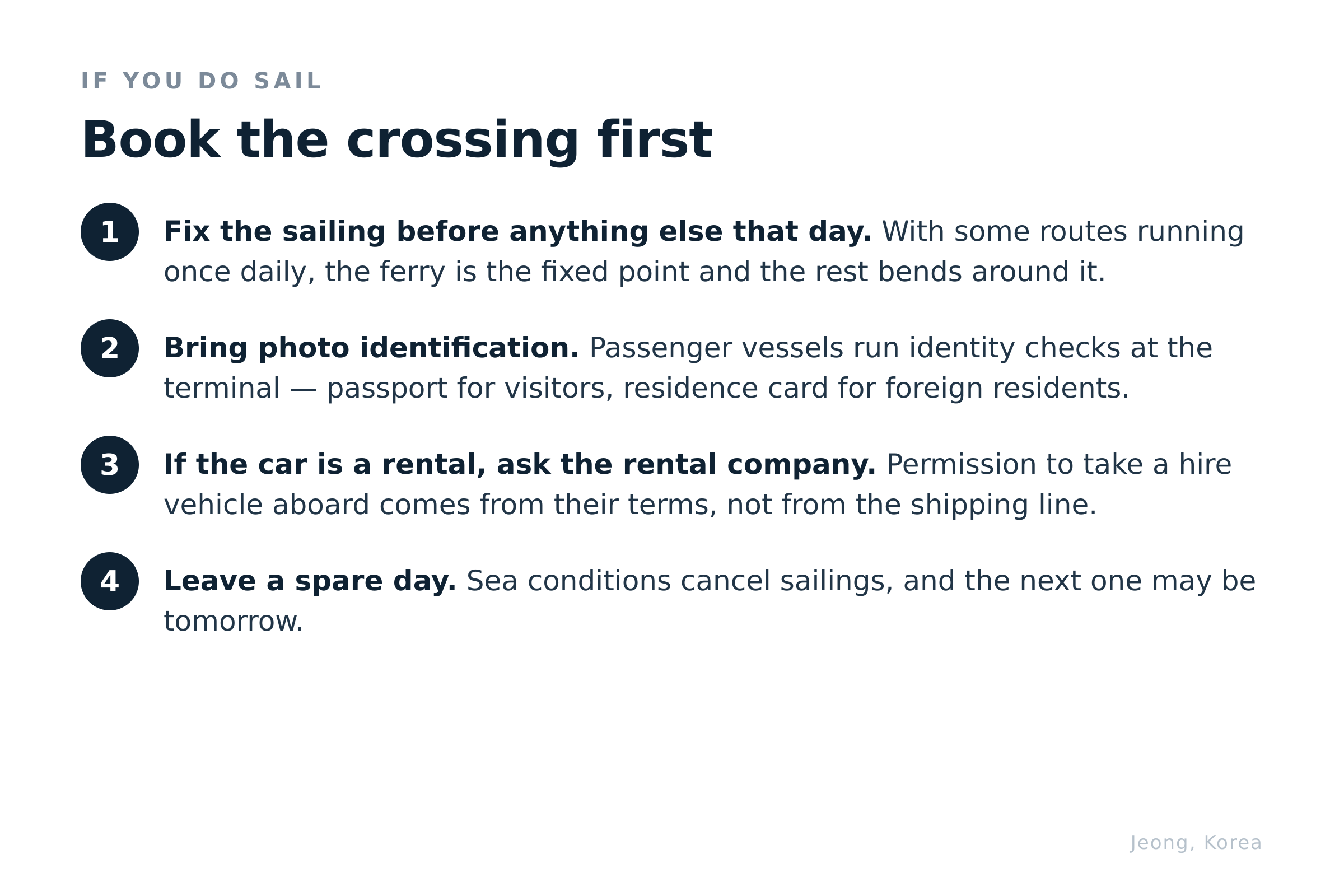
One practical note if you do sail. Bring photo identification. Passenger vessels in Korea run identity checks at the terminal, so a passport for visitors or a residence card for foreign residents needs to be in your hand rather than in your bag. And if the car is a rental, confirm with the rental company before you book the crossing — permission to take a hire vehicle on a ferry is set by the company's own terms, not by the shipping line.
Book the sailing before you book anything else on that day, too. With some routes running only once daily, the ferry is the fixed point and everything else has to bend around it.
FAQ
Is there a ferry from Busan to Jeju?
Not at present. The overnight service made its last crossing on 15 December 2022 and no operator has taken the route over since. A later attempt by the maritime authority to recruit an operator drew no applicants. If you are starting from Busan, fly, or travel west to a port that still has a sailing.
Is there a ferry from Yeosu to Jeju?
No. That service ended in December 2024 when the operator withdrew and moved its vessel to the Wando route.
Can I catch a boat to Jeju from Seoul?
No. Seoul is not a departure port. Every crossing to Jeju leaves from the south or south-west coast, so the trip begins with a train or coach across the country before you reach the terminal.
How long does the ferry to Jeju take?
It depends on the port. Roughly an hour and a half from Jindo, about two hours forty from Wando, about three and a half from Nokdong, and about four and a half from Mokpo. Confirm current times with the operator, since schedules change by season.
Can I take a car on the ferry to Jeju?
Yes. The main services are car ferries and carrying a vehicle is the strongest reason to choose one. If the car is a rental, check the rental company's terms first — that permission comes from them, not from the shipping line.
Do I need my passport to board?
Yes, bring photo identification. Identity is checked at the terminal. Foreign residents can use a residence card.
Does arriving in Jeju by ferry count as visa-free entry?
Not for a domestic sailing. Article 197(1) of the Jeju Special Act covers foreigners entering Korea through an airport or seaport in Jeju, which is about crossing an international border. If you are already inside Korea and taking a domestic ferry, you are not entering the country and the provision does not apply to that leg.
Are sailings cancelled often?
They are cancelled when sea conditions require it, and the fast catamaran is the most affected. Build a spare day into the plan if the crossing is load-bearing for the rest of your trip.
Take the boat when the boat is the answer
Two of the ports people search for are gone, four or five are still sailing, and the crossing takes between an hour and a half and four and a half hours from a coastline that is itself half a day from Seoul. Those are the facts, and on their own they argue for flying.
The exception is real though. If your car is coming with you — with the bikes, the boards, the tent, the family and all the bags in it — the ferry to Jeju stops being the slow option and becomes the only option. That is a good enough reason. It is just worth knowing that it is the reason, before you spend a day finding out.
If you are not driving, book the flight instead and use the day you saved on the island.
References
-
Passenger vessel routes and booking — Korea Shipping Association coastal passenger ship reservation system
-
Jeju Special Act (Act on Special Self-Governing Province of Jeju and the Development of a Free International City), Article 197 — Korea Law Information Center
-
Route operators: Hanil Express, Seaworld Express Ferry, Namhae Gosok Ferry — operator schedules
-
Busan to Jeju service withdrawal, December 2022, and subsequent operator recruitment — Busan Regional Office of Oceans and Fisheries reporting