Tap Water in Korea: It Passes the Test, and I Still Have a Purifier
I am Korean. I have lived here my whole life. There is a water purifier in my kitchen anyway.
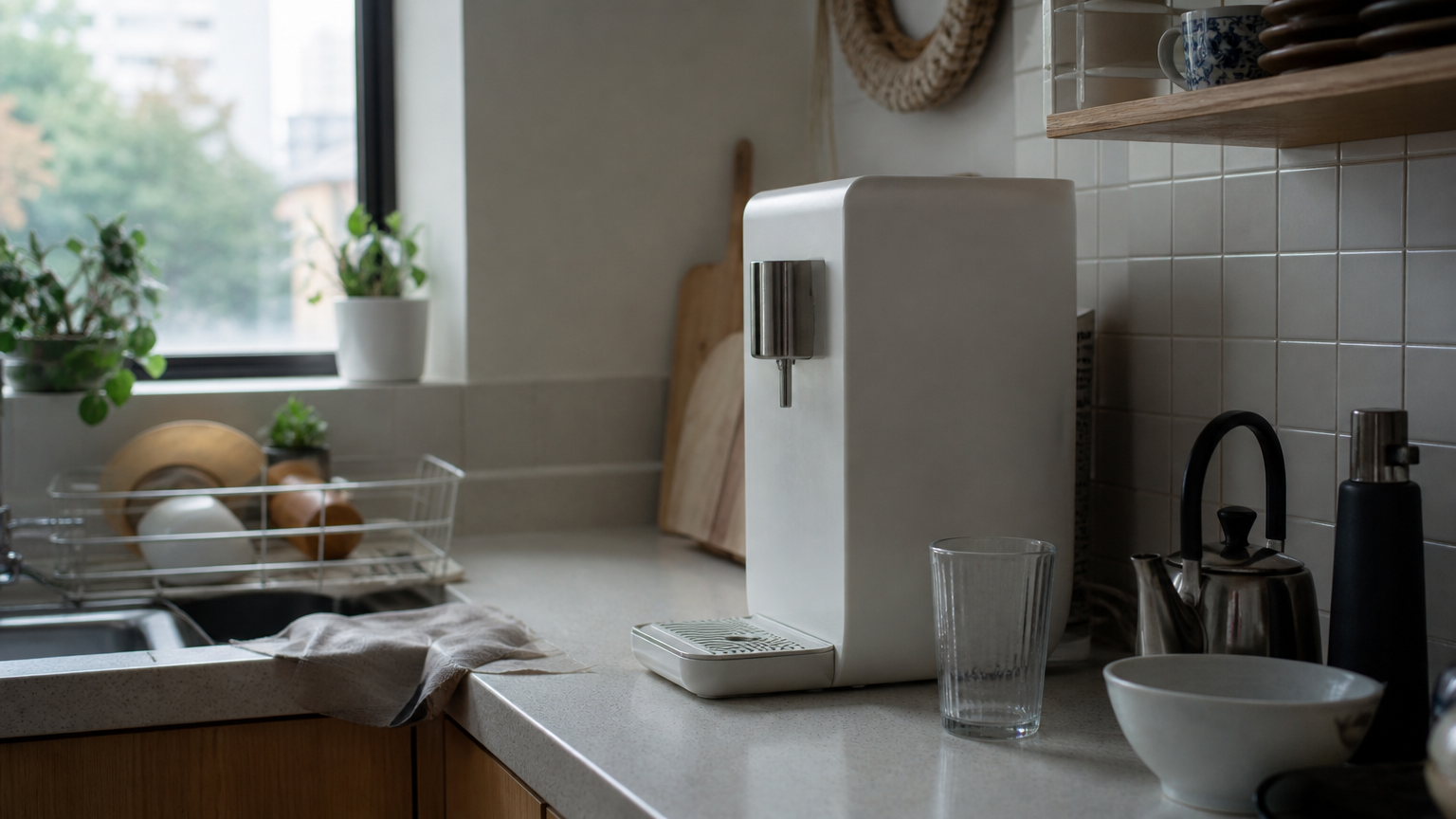
All three of those are true at once, and the gap between them is the thing nobody explains to visitors.
The water is fine. It is treated, it is monitored, and the standard it has to meet is written into national law in terms that are, if anything, fussier than what most countries bother to legislate. That is the answer to the question you searched for, and I am giving it to you in the first paragraph rather than making you scroll.
The part that confuses people comes next. If the water is fine, why is there a purifier in every Korean kitchen, a water dispenser in every office, and a wall of bottled water in every convenience store? Visitors watch us not drink it and reasonably conclude we know something they do not.
We do know something. It just is not what you would guess, and it has almost nothing to do with the water leaving the treatment plant.
The law does not only ask whether the water is safe
Start with what the standard actually says, because it is stricter than the usual "it meets safety standards" line suggests.
Article 26(1) of the Water Supply and Waterworks Installation Act lists what may not be present in water supplied through the mains for drinking. There are four categories.
| # | Category in Article 26(1) | What it covers |
|---|---|---|
| 1 | Pathogenic microorganisms, or substances at risk of such contamination | Bacteria and the conditions that let them in |
| 2 | Inorganic or organic substances harmful to health | Metals, industrial chemicals |
| 3 | Substances that may have an aesthetic effect | Taste, smell, colour, cloudiness |
| 4 | Other substances harmful to health | The catch-all |
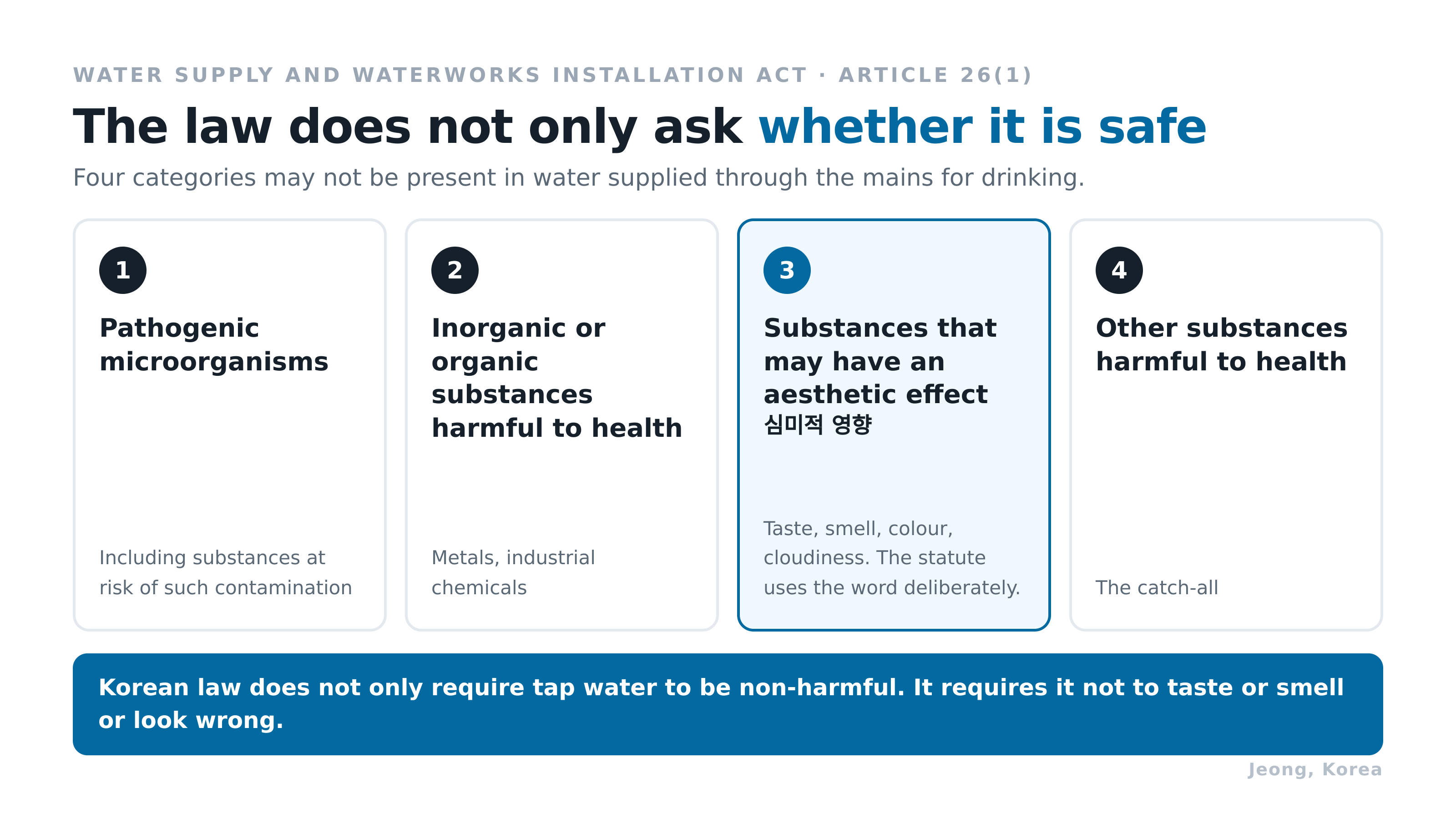
Look at the third one. 심미적 (simmijeok) means aesthetic, and the statute uses that word deliberately. Korean law does not only require tap water to be non-harmful. It requires it not to taste or smell or look wrong.
That is a higher bar than "safe," and it is written at the level of an Act rather than buried in a guidance note. Article 26(2) sends the detailed numbers to a ministerial ordinance, the Rules on Drinking Water Quality Standards and Testing, which sets out the standards in an annexed table covering microorganisms, harmful inorganic substances, harmful organic substances, disinfectants and disinfection by-products, aesthetic substances, and radioactivity.
So the legal position on tap water in Korea is not ambiguous. Water arriving through the mains has to clear a bar that includes how it tastes.
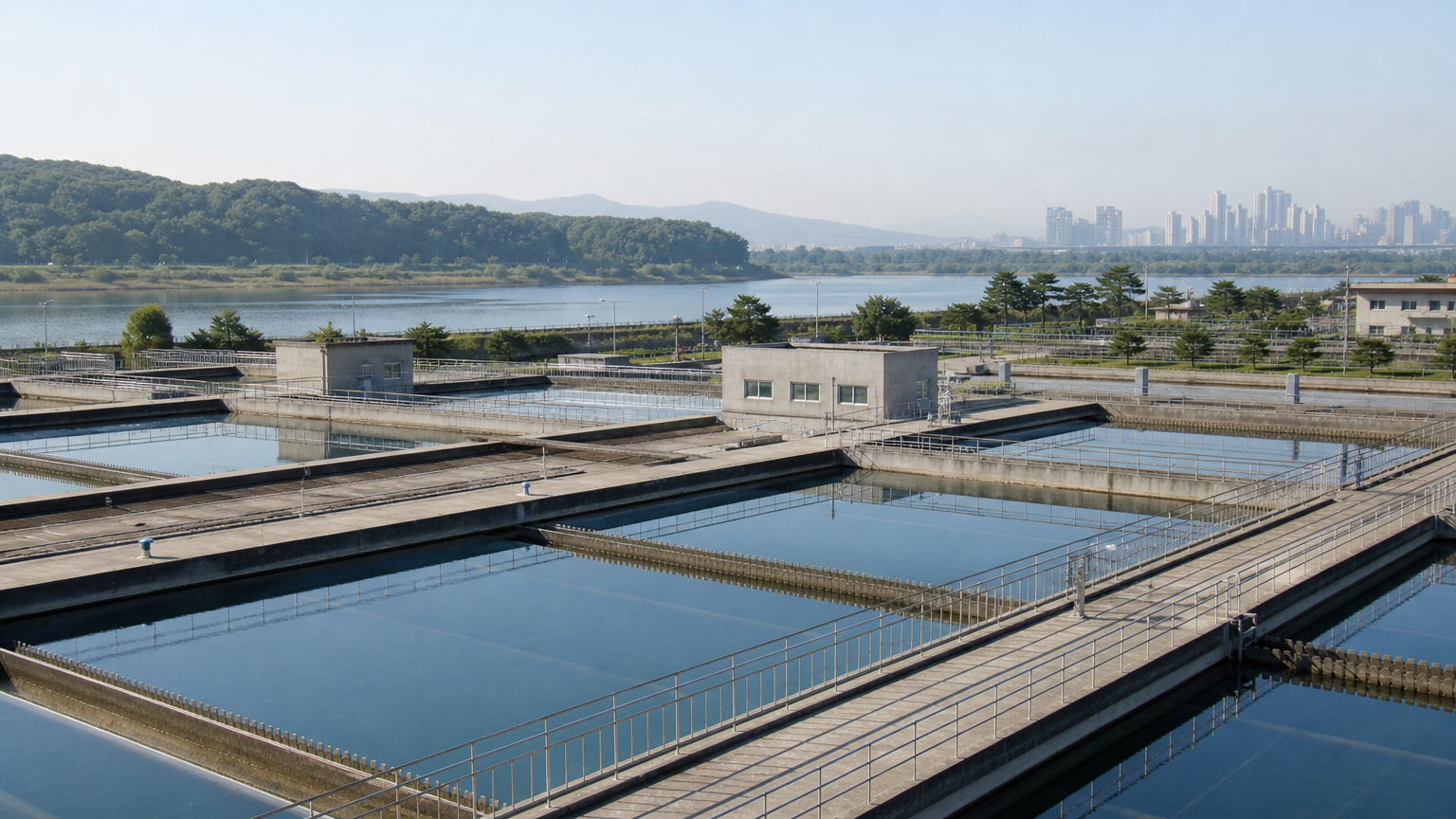
Which makes the behaviour of every Korean household look even stranger. Here is where that comes from.
More of the first-month practicalities: Living in Korea as a Foreigner: Your First 30 Days, In the Right Order
The habit was formed in three specific years, and it never went away
The reason Koreans do not drink from the tap is not a fact about the water. It is a memory, and you can date it almost exactly.
Between 1989 and 1991 the country had three consecutive scares about what was coming out of household taps. The Christian Science Monitor, reporting from Seoul in May 1991, described heavy metals found in the capital's tap water in 1989 and trihalomethane in 1990, and then the incident that ended the argument.
In mid-March 1991 an electronics factory owned by the Doosan Group, sitting upstream of ten million people on the Nakdong River, released some thirty tons of phenol into the water. The river supplies drinking water to a large part of the southeast. Chlorination turned the phenol into something that smelled, and people noticed at the tap before anyone told them.
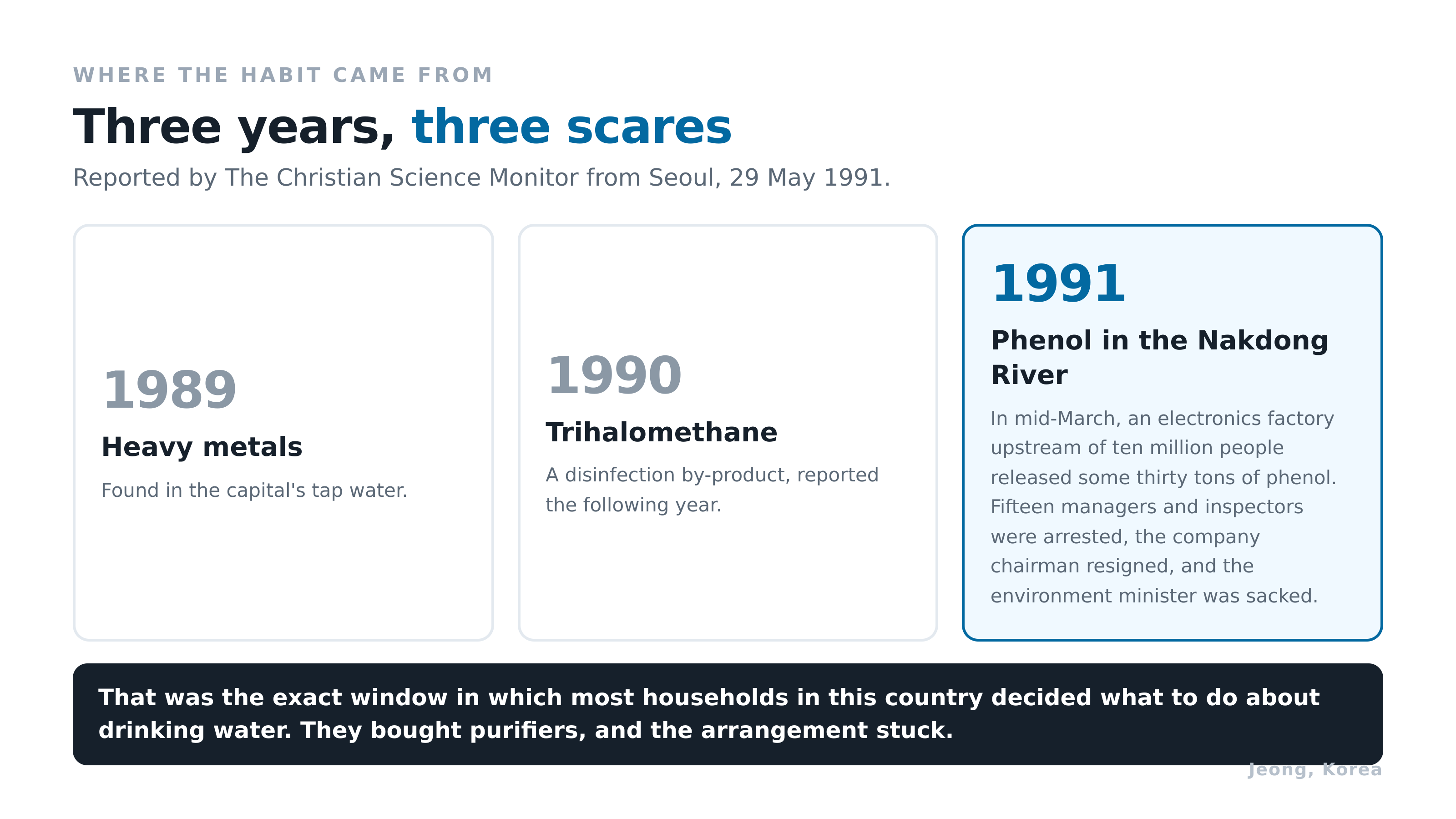
The fallout was severe by the standards of the time. Fifteen factory managers and local government inspectors were arrested. The company chairman resigned. The environment minister was sacked. Consumers organised a boycott of Doosan products, which at the time included the country's leading beer. The same report described "frightening revelations of pollutants coming out of their faucets" as the thing driving public anger.
Now think about the timing. That was the exact window in which the generation who set up most of the households in this country were deciding what to do about drinking water. They bought purifiers and boiled kettles, and the arrangement stuck, the way household arrangements do. The purifier in my kitchen is downstream of a decision made before the water was fixed.
That is the honest answer to "why don't Koreans drink it." Not chemistry. Inheritance.
If you want the wall of bottled water in context: Korean Convenience Store Food: What to Order, How to Heat It, and the Rules Nobody Explains
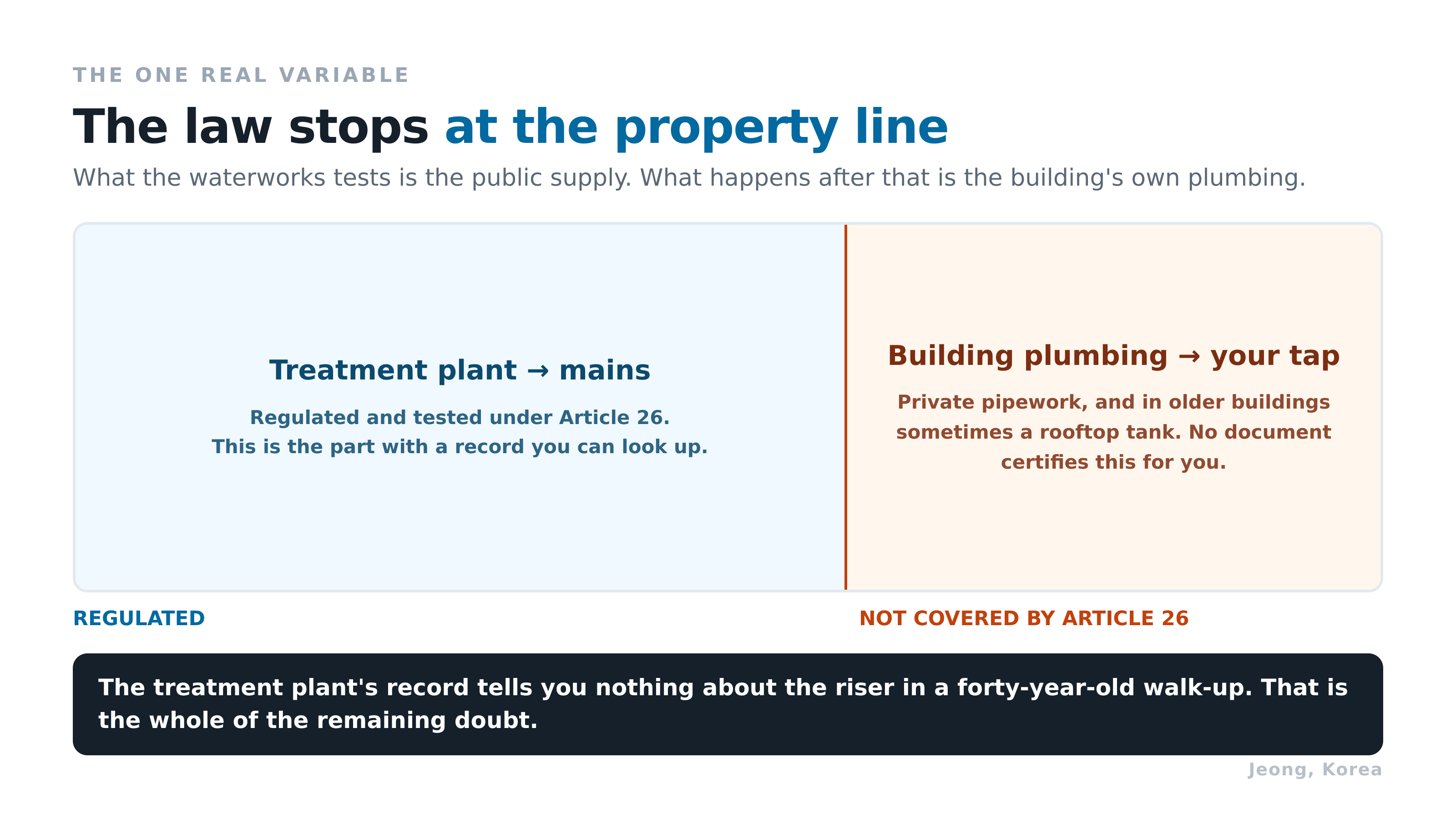
Which leaves the obvious question, and the diagram above has already pointed at it. Is there anything real left to worry about, or is it purely habit now?
There is one real variable, and it is not the treatment plant
There is a genuine technical caveat, and it sits in the last hundred metres.
Article 26 governs water supplied through the mains. What the law regulates, and what the waterworks tests, is the water in the public supply. Once it crosses into a private building it runs through that building's own plumbing, and in older buildings that can mean decades-old pipe and, in some cases, a rooftop storage tank.
That is the part nobody can certify for you from a document. The treatment plant's record tells you nothing about the state of the riser in a forty-year-old walk-up in a neighbourhood that has not been redeveloped.
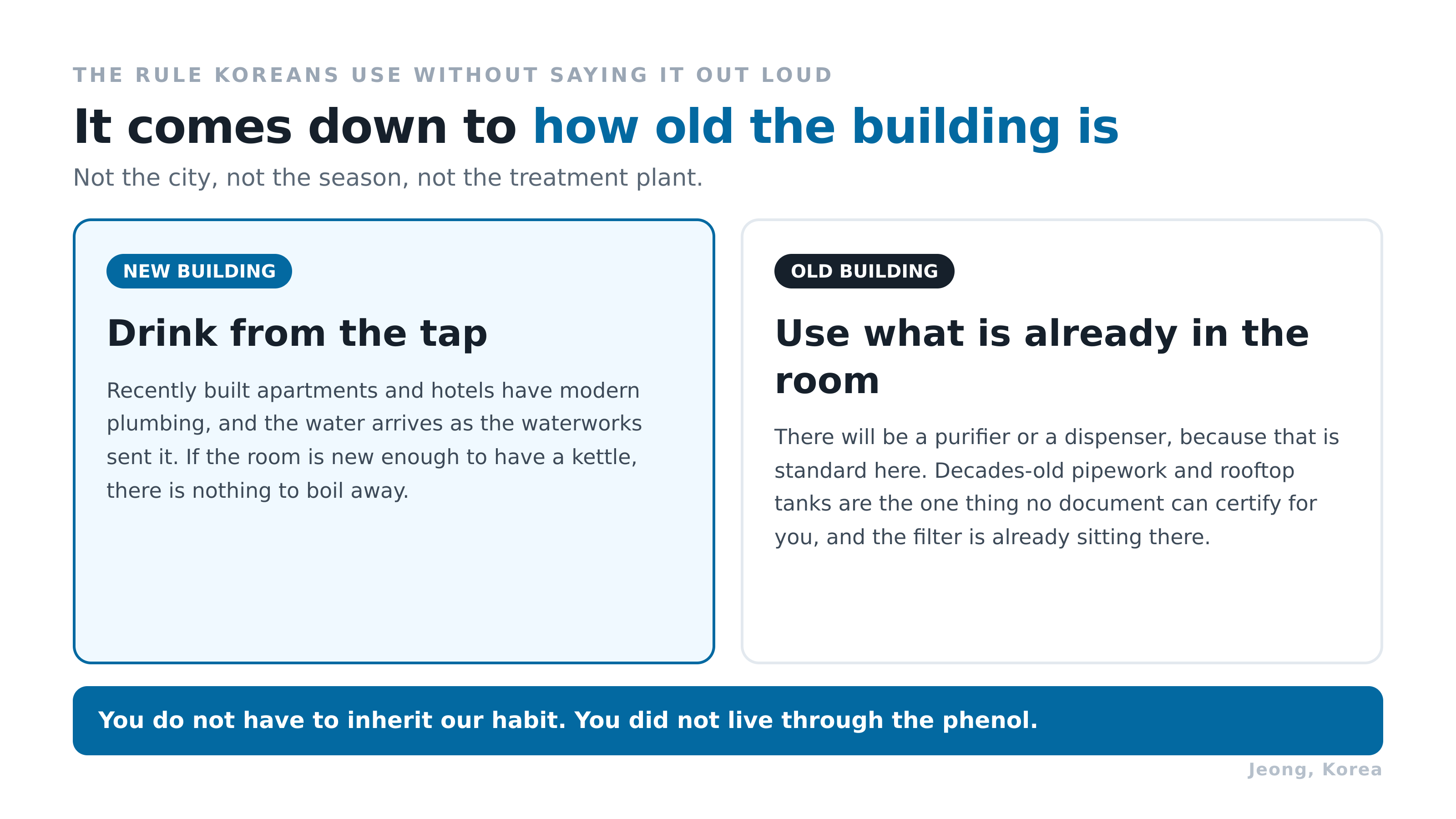
So the practical rule that Koreans use without ever articulating it looks like this.
In a new building, the tap is genuinely fine. Recently built apartments and hotels have modern plumbing and the water arrives as the waterworks sent it.
In an old building, use what is already in the room. There will be a purifier or a dispenser, because that is standard here, and it costs you nothing to use it.
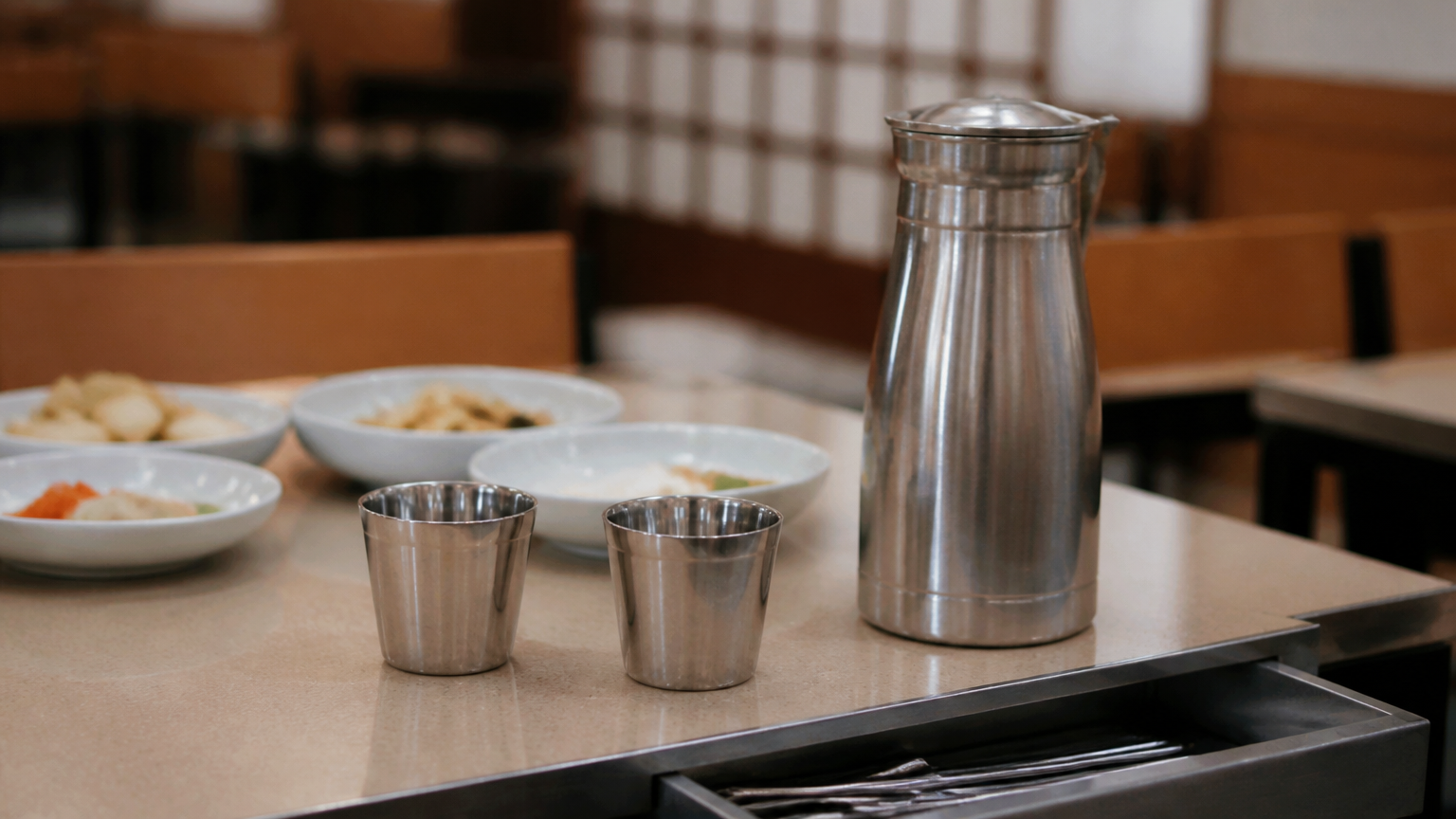
In restaurants and cafes, drink the water they bring you. It is free, it is always offered, and it comes from a filtered dispenser. This is what Koreans actually drink all day, and it is the answer to the question of what we do instead.
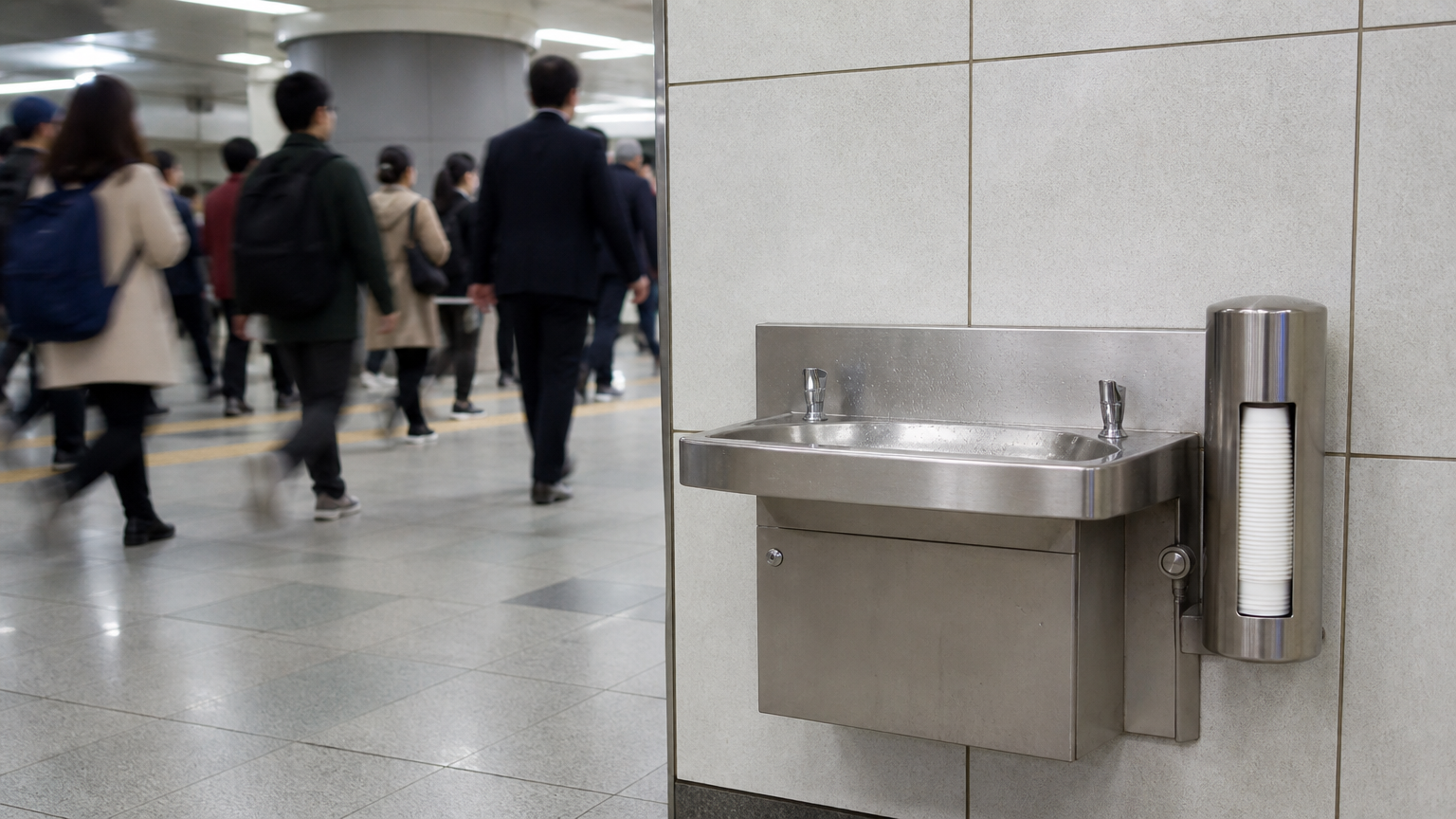
In public buildings, look for the 음수대 (eumsudae), the drinking fountain. Subway stations, libraries, government offices and parks have them, and they are free.
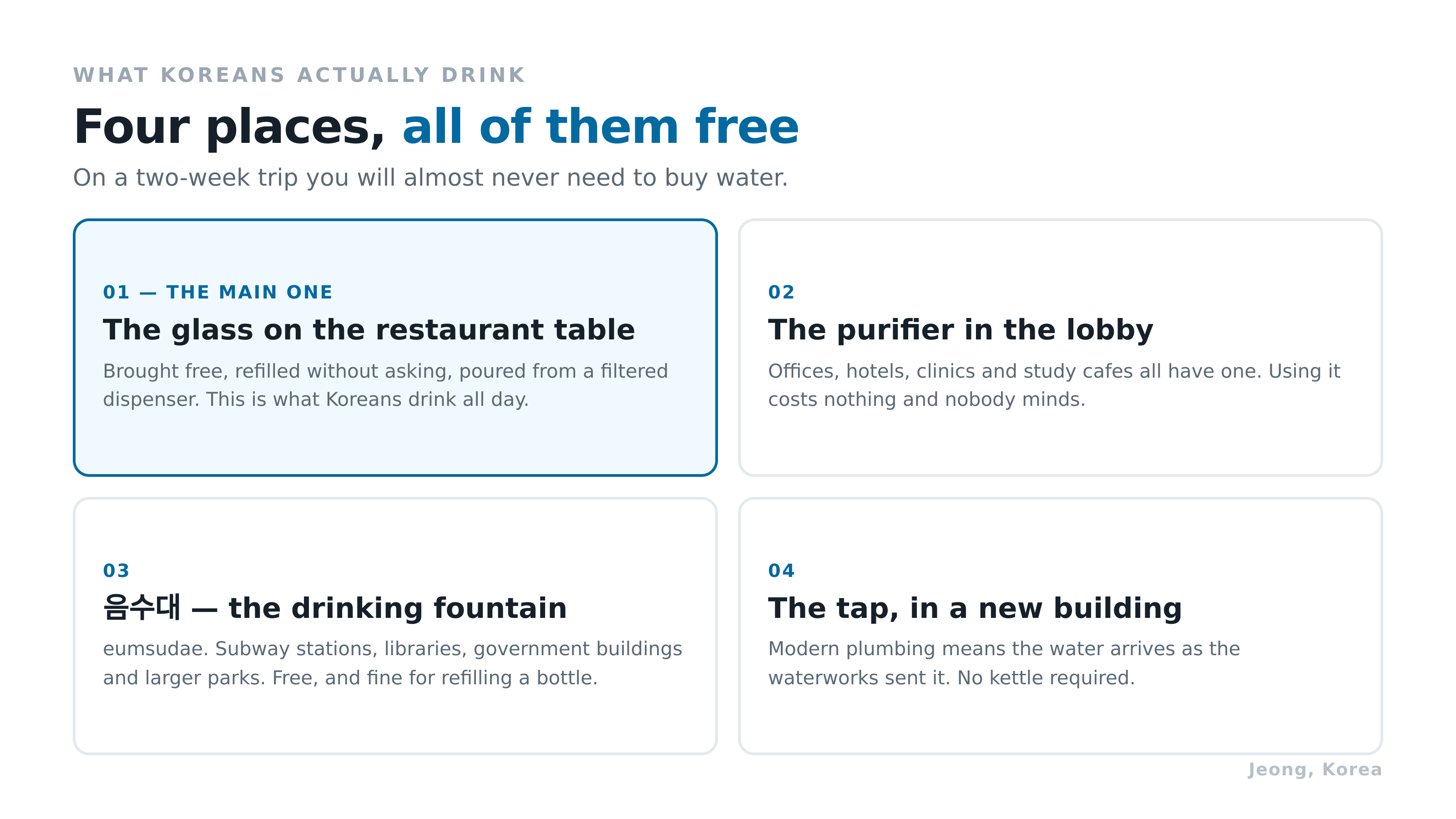
For a visitor on a two-week trip, that adds up to something simple: you will almost never need to buy water. Between the free water on every restaurant table, the dispensers in every lobby, and the fountains in public buildings, the bottled water aisle is a convenience rather than a necessity.
One thing I would not do is boil tap water in a hotel kettle out of caution. If the building is new enough to have a kettle in the room, the water is fine, and boiling does nothing about the only category the pipes could plausibly affect.
The short version
The question people arrive with is "can I drink tap water in Korea," and the answer is yes. The better question is "what do Koreans do," and the answer to that one is that we drink filtered water out of a habit formed in 1991 and never reviewed.
You do not have to inherit our habit. You did not live through the phenol.
So you have a choice for your trip, and it is a smaller one than it looks. You can spend two weeks buying and carrying bottles, and paying for something the tap already does. Or you can drink the glass they put on your table, refill from the fountain in the station, and use the purifier in the lobby when there is one, which is exactly what the person sitting next to you is doing.
FAQ
Is tap water in Korea safe to drink?
Yes. Water supplied through the mains has to meet the standards set under Article 26 of the Water Supply and Waterworks Installation Act, which prohibits pathogenic microorganisms, harmful inorganic and organic substances, and substances affecting taste, smell or appearance.
Then why do Koreans use water purifiers?
The habit dates to a run of contamination scares between 1989 and 1991, ending with the Nakdong River phenol release of March 1991. Households bought purifiers then and the arrangement was never revisited. It is inherited behaviour rather than a current assessment of the water.
Does it matter how old my building is?
It can. The law and the testing cover the public supply, not the plumbing inside a private building. In an older building with aged pipework or a rooftop tank, use the purifier or dispenser that will already be there.
What do Koreans drink in restaurants?
Filtered water from a dispenser, brought to the table free and refilled without asking. Ordering bottled water in a Korean restaurant is unusual and in most places not even possible.
Where can I refill a bottle for free?
Look for a 음수대, a drinking fountain. Subway stations, libraries, government buildings and larger parks have them, and cafes will normally refill a bottle if you ask.
Should I boil tap water in Korea before drinking it?
There is no need. Boiling addresses microorganisms, which the treated supply already deals with, and does nothing about the building plumbing that is the only real variable.
Sources
Water Supply and Waterworks Installation Act, Article 26 (수도법) — National Law Information Center
Rules on Drinking Water Quality Standards and Testing, Article 2 and annexed table 1 (먹는물 수질기준 및 검사 등에 관한 규칙) — National Law Information Center
"Water Shocks Rouse South Korea", The Christian Science Monitor, 29 May 1991
Korean terms in this article: 심미적, 음수대